Tape Crackers: An Oral History Of Jungle Pirate Radio. Rollo Jackson is a London-based filmmaker who grew up immersed in the city's dance music culture of the mid-90's. His films, whether for the likes of Hot Chip, Man Like Me, or Warp Records bare the traits of someone whose formative years were spent clad in the brash hues of a Versace print shirt and the bright white of a fresh pair of Reeboks. Whatever his subject, the spirit of too many late nights spent doing homework to the crackling sounds of pirate radio, or of weekends spent in booming, sweaty warehouses on the outskirts of London is always threaded throughout. Rollo presents a documentary DVD entitled Tape Crackers, an oral history of Jungle music and an affectionate, touching, and, at times, incredibly funny, tale of bedroom obsessiveness. Told through Michael Finch's tape collection which he recorded while growing up in Islington, North London, it's also an untold (or more accurately unheard) history of UK underground music of the last 10 years - Jungle, Garage and Grime are all knitted into the story through the MCs and DJs who manned the decks and mics. Movers of the underground today such as Riko Dan and B Live are on some of the tapes played in the film. The D90s might be dusty but this music still sounds ultra-crisp. Warning, may contain: late days of Dream FM, middle days of Kool FM/MC Ruff and DJ Uproar on Dream FM/MC Fize and DJ Swiftly/Riko Dan on Pressure FM/Evil B on Rude FM/DJ Target and Maxwell D on Rinse FM/DJ Brockie, MC Five-O and MC Moose on Kool FM in 1993/DJ SL with Strings, Koji and Flinty Badman (Ragga Twins) + Demon Rockers.
Поиск:jungle radio
Все
- A1: Original
- B1: Bladerunner Remix
DJ Ron's forgotten classic 21st Century finally gets the release it deserves, arriving on 12" black vinyl alongside a brand-new Bladerunner remix Originally recorded for DJ Ron's debut album Quintessence back in 1997, Hospital Records proudly welcomes it back into the world in style. The A side carries the original in all its glory. 21st Century is a timeless and futurefacing weapon - analogue at heart, hand-controlled automation and carefully curated sounds take you centre stage, giving it a unique, personal texture and depth that has lost nothing with age. Flip it over and Bladerunner steps in with an equally powerful B side remix, bringing his own vision to a track that was always ahead of its time. Born and bred (and still resident) in Hackney, career-long Rinse/Kool FM DJ, the first jungle/ D&B artist to record an Essential Mix for BBC Radio 1, host of the London Something podcast and more, DJ Ron is a multi-faceted creative and an uncontested foundational figure within jungle and drum & bass. This 12" is long overdue. The first time that DJ Ron's '21st Century,' taken from his unsung debut album, will be available digitally & physically alongside a fresh remix from Bladerunner. One for the heads - this one is all about flying the flag for DJ Ron, one of the foundational figures of jungle and drum & bass.
- A1: Original
- B1: Monk-One Remix
Nickodemus is a globally respected DJ and producer who has been touring nonstop since the mid-1990s, consistently drawing capacity crowds at clubs and festivals worldwide. As a producer, he has released five acclaimed albums (Soul & Science, A Long Engagement, Endangered Species, Sun People and Moon People) and curated eleven volumes of the influential Turntables on the Hudson compilation series. His work bridges hip-hop, house, jazz, and global sounds, highlighted by collaborations and cultural milestones including the Jungle Brothers' genre-defining legacy and the enduring house-rap classic "I'll House You" with Todd Terry. Nickodemus' hit "Mi Swing Es Tropical" (with Quantic & the Candela All-Stars) has surpassed 50 million streams and featured prominently in the film Chef. He has received extensive international press (Billboard, Rolling Stone, The FADER, Paste) and widespread radio support from tastemakers such as Gilles Peterson, BBC 6 Music, KCRW, and KEXP.
b B1: Monk-One Remix [feat. Monk-One]
[b] B1: Monk-One Remix [feat. Monk-One]
- 01: Taste This Sound
- 02: Make Me Dance
- 03: Go Let Your Freedom Grow
- 04: Fight!
- 05: Tic Toc
- 06: No More
- 07: Once Again
- 08: Feel It
- 09: Aria
- 10: Falling Down
Until We Are Free is the debut album from fabric, a collective of musicians from diverse backgrounds united by a shared goal: to fuse irresistible rhythms and grooves with a direct, socially conscious message that draws vital attention to the contradictions of modern life. The project's name itself evokes the idea of a living, dynamic ensemble—a creative intertwining of different threads, from musical genres to founding musicians and guest collaborators, all actively woven into the social fabric.
The record blends funk, soul, and Afrobeat with a sharp, contemporary urban attitude, resulting in a sound that functions simultaneously as sonic resistance and an invitation to the dancefloor.
It finds its place in a lineage that runs from Fela Kuti and ESG to The Comet Is Coming, Sault and Jungle.
At its core is the conviction that music and civic engagement can coexist seamlessly without being didactic. While the lyrics—entirely in English—tackle themes of rights, equality, and freedom, the groove remains the heartbeat: constant, pulsing, and relentless.
Mixed by Tom Campbell (whose credits include Sault, Little Simz, Adele, Michael Kiwanuka, and Jungle) and featuring art direction by Raissa Pardini, Until We Are Free is a soundtrack for complex times. It is an invitation to refuse neutrality and isolation, and to imagine—together—new possibilities for movement, resistance, and the future.
fabric's singles "Taste This Sound" and "Fight!" have been featured in FIP's Spotify Playlists "FIP Radio (en live)" and KEXP's "New This Week" and "KEXP Rotation".
Unncecessary is the first EP released on his own label by Nocturnerror, extremely appreciated by the Bass scene led by Zuli, who many times has played his tracks in Web Radios such as NTS, Rinse FM, etc..
“Unnecessary" is the title of the second release on A Flooded Need. Previously tangled in the most slippery meanders of electronic music with strong punk and wave reminiscences, 1/2 of Hyperlacrimae alongside 11xxx27, Nocturnerror approaches this work in a totally different way. The six tracks of the EP, in fact, represent a melting pot of hybrid influences between audacious bass music, cinematic and cacophonic IDM, totally deconstructed techno - stripped of its dance component - and dirty rave jungle.”
Insert — Web zine
Foundations Records brings you their hotly anticipated third release from Sonar's Ghost on Rinse Out EP - a bold four-tracker of breakbeat jungle, atmospheric jungle and jungle-tekno.
Sonar's Ghost
Starting out DJing in the peak hardcore era of 1992, Dominic Stanton rose as a post-hip-hop and ragga kid, cutting his teeth at free parties across the Shires. Drawn into the new directions of hardcore and jungle, he earned early gigs at the legendary Sanctuary, Milton Keynes, performing as Dom-unique.
Learning the art of beat-chopping on the Amiga 500, Dom landed his first release on Reinforced Records in 1995 and continued releasing into the 2000s as Static Imprints and Sonar Circle. Inspired by Dego and the evolving trajectory of 4hero, Dom began moving into more unexplored territory, producing eclectic, soulful beats under the name Domu.
After a brief hiatus, Sonar's Ghost was born - an outlet to explore the years Sonar Circle missed, from 1991 to 1995. Creating alternate journeys through that era, Sonar's Ghost reimagines the original sound palette using original sources, new blends of beats, and a lifetime of musical influence. For Dom, Sonar's Ghost is his happy place.
The Foundations release blends the eras and directions Dom loves most - from '93 bouncy darkside through to '03 drum funk - with authentic drums and samples integral to the vibe.
Here's the support on radio:
- Makossa (Radio FM4 Vienna)
- Distant Planet (Infrared FM)
- Sun People (Sub FM)
- Alex Ruder (KEXP Seattle)
- Haus of Beats (Txapa Irratia)
- Tom Ravenscroft (Rinse FM)
- Jon1st (Subtle Radio)
- Martha (NTS / BBC R1)
- Harper (Czworka Polskie Radio)
- Gremlinz (89.5FM Toronto)
- N-Type (Rinse FM)
- Michelle (NTS)
- Mathieu Schreyer (KCRW, LA)
- Darkerthanwax (The Lot Radio)
- Bevin Campbell (PBSFM Aus)
- Errol Anderson (NTS)
- Ian (94.9 CHRW)
- OPR8 (Sub FM)
- Tramma (Noods)
- Carlos Contreras (Tilos Radio Budapest)
- Jay Scarlett (BR Puls Munich)
- DJ Tuco (91.90FM Prague)
- Ed2000 (Cashmere / The Face)
- Vinyl Junkie (Eruption Radio)
- Klaus Fiehe (1WDR)
- Benji B (BBC 1Xtra)
On June 5th, Tectonic Recordings will release Beatrice M.’s debut LP, Sinking, on a vinyl triple pack and digital download. The vinyl edition will be split across 3 separate 12” vinyl releases, packed in matching printed disco bags. This is part 1 of 3.
Beatrice M. pushes the needle forward for a sound and scene that nestles among a niche that blends UK dubstep, techno, and the golden era of tech house. The Paris-born artist is in their mid-20s and has been building up a grassroots following and plenty of momentum over the last few years, through their Bait label and its output of sonically resonant artists, alongside numerous remixes and collaborative and solo releases for labels such as Tectonic, Tempa, and Rinse. There are plenty of accolades coming in for Beatrice's work too, with notable DJ mixes for respected heavyweights such as Mixmag as well as featuring in Resident Advisor’s best mixes of 2025.
Beatrice is known for making deep explorations into the history of the scenes that have interested them, tracking and highlighting connections between dubstep, tech house, jungle and beyond across various self-produced, one-off radio shows, often taking a journalistic approach to subjects of true passion. They travel across Europe on a packed-out DJing schedule, avoiding air travel, and doing it mainly by train. Many of the LP's tracks started life as sketches put together on these long journeys, as the sights of different countries rolled past the window.
Having taken inspiration from Tectonic artists such as 2562, the label – a home to music that was originally placed in the dubstep-techno crossover spectrum—feels like the perfect place to host Beatrice M.'s debut album Sinking, beginning a new chapter for this kind of sound.
Opening track ‘Ever’ plunges us into deep waters with a sense of dubwise command. The momentum picks up on ‘Ocean’, where the vocal snippet "everyday life" circles around reverbed stabs and intricate hi-hat moves. ‘Motion’ sets the pace with its jumpy but rolling rhythm, leading straight into the eyes-down, party-time energy of ‘Disco Corner’.
On June 5th, Tectonic Recordings will release Beatrice M.’s debut LP, Sinking, on a vinyl triple pack and digital download. The vinyl edition will be split across 3 separate 12” vinyl releases, packed in matching printed disco bags. This is part 2 of 3.
Beatrice M. pushes the needle forward for a sound and scene that nestles among a niche that blends UK dubstep, techno, and the golden era of tech house. The Paris-born artist is in their mid-20s and has been building up a grassroots following and plenty of momentum over the last few years, through their Bait label and its output of sonically resonant artists, alongside numerous remixes and collaborative and solo releases for labels such as Tectonic, Tempa, and Rinse. There are plenty of accolades coming in for Beatrice's work too, with notable DJ mixes for respected heavyweights such as Mixmag as well as featuring in Resident Advisor’s best mixes of 2025.
Beatrice is known for making deep explorations into the history of the scenes that have interested them, tracking and highlighting connections between dubstep, tech house, jungle and beyond across various self-produced, one-off radio shows, often taking a journalistic approach to subjects of true passion. They travel across Europe on a packed-out DJing schedule, avoiding air travel, and doing it mainly by train. Many of the LP's tracks started life as sketches put together on these long journeys, as the sights of different countries rolled past the window.
Having taken inspiration from Tectonic artists such as 2562, the label – a home to music that was originally placed in the dubstep-techno crossover spectrum—feels like the perfect place to host Beatrice M.'s debut album Sinking, beginning a new chapter for this kind of sound.
Given Beatrice M.’s reputation as a prolific collaborator, the LP naturally features a few heavy-hitting joint efforts. Bristol-based Sir Hiss features on the subby, 140bpm techno thumper ‘Juice’, while the LP title track, ‘Sinking’, brings forward Beatrice M.’s fresh take on influences from Tectonic’s past in a bass-driven 4/4 number that demands physical movement. ‘Dear Dubstep’ allows a moment to reflect, placing us in a spacious aqua-cave where atmospheric sounds are punctuated by wumping sub-bass, before we surface with ‘Help’ to catch our breath in the melancholy of the moment.
On June 5th, Tectonic Recordings will release Beatrice M.’s debut LP, Sinking, on a vinyl triple pack and digital download. The vinyl edition will be split across 3 separate 12” vinyl releases, packed in matching printed disco bags. This is part 2 of 3.
Beatrice M. pushes the needle forward for a sound and scene that nestles among a niche that blends UK dubstep, techno, and the golden era of tech house. The Paris-born artist is in their mid-20s and has been building up a grassroots following and plenty of momentum over the last few years, through their Bait label and its output of sonically resonant artists, alongside numerous remixes and collaborative and solo releases for labels such as Tectonic, Tempa, and Rinse. There are plenty of accolades coming in for Beatrice's work too, with notable DJ mixes for respected heavyweights such as Mixmag as well as featuring in Resident Advisor’s best mixes of 2025.
Beatrice is known for making deep explorations into the history of the scenes that have interested them, tracking and highlighting connections between dubstep, tech house, jungle and beyond across various self-produced, one-off radio shows, often taking a journalistic approach to subjects of true passion. They travel across Europe on a packed-out DJing schedule, avoiding air travel, and doing it mainly by train. Many of the LP's tracks started life as sketches put together on these long journeys, as the sights of different countries rolled past the window.
Having taken inspiration from Tectonic artists such as 2562, the label – a home to music that was originally placed in the dubstep-techno crossover spectrum—feels like the perfect place to host Beatrice M.'s debut album Sinking, beginning a new chapter for this kind of sound.
The album's lead single and sole vocal track, ‘In Touch’, showcases Beatrice M.’s split UK-France upbringing. The track unites French MC Kaba and UK MC Jinnal for a bass-driven anthem that seamlessly trades French and English lyrics. Next up is a vinyl exclusive track: the ‘Remedy Mix’ VIP of ‘Poison’, a rolling, bass-driven tech house/techno crossover version of a track originally released on the Tectonic Sound collection from last year.
‘Here’ sees Beatrice M. collaborating with Jay Carder to create a soulful broken-beat flavoured track as ‘Years’ rounds off the journey with contemplative melancholy, providing a deep and dubby closer.
And another new volume of the Meeting Of The Minds series is here, with 4 new collaborations I've done with other producers in the jungle scene!
"Casual Loop" is a collaboration that me & Submerse started working on in 2023 but it was another one of the tracks that I had lost due to my computer being stolen in early 2024, & I hadn't fully backed up everything I had done for a few months, including this track. This meant I had to re-do a lot of the work I had done with what Submerse had started but I was lucky enough to get it near identical to how it was sounding and ready for release. Submerse has been on Future Retro London a few times, with his EP release (FR033) & a track featured on the atmospheric VA EP (FR049) that came out late last year, I'm a huge fan of his musicality & his melodies, which made this track really fun to work on, even with all the obstacles faced!
My first interaction with Quaad goes way back to 2013, when he asked me for a guest mix for a radio show called The After Party that was on C89.5FM in Seattle (which is still up on my SoundCloud for anyone curious) and then before he started his current label (Heavy Sounds), he had started a label with Wetman called Vivid Recordings, which he was sending me the releases on (but I think in standard fashion, I kept forgetting to check them!). But it wasn't until 2022 when me & Dwarde played in Seattle with him and I saw his live Amiga set where he was playing a lot of his own music, & from then on, I was better aware of what he was doing & I got to hang out with him & know him a bit better, which is when I then fully started following what he was doing. Then eventually, we ended up doing a track together (he also uses FL Studio, just like me) and "Judge Dredd" is the end result of that.
Samurai Breaks is also someone that I've known of for a long time but didn't really properly connect with until recent years where I saw what he was doing with his label Super Sonic Booty Bangers, which also does events in Sheffield which I played for in 2024. It was quite an interesting collab because I don't think many people would have necessarily expected our styles to really gel well together but I think we managed to hit a nice midpoint between his craziness & mine haha
Fixate is most likely another person that people would not have anticipated as someone that I would collaborate with, mainly because the style of tune people know him for is more tied with the footwork/halftime sound that became popular in the 2010s, as well as his output as 1/2 of dubstep duo Leftlow, but he has made some jungle in the past & I'm always down for the challenge of stepping outside of my comfort zone to work with people who are not mainly based in the newskool jungle scene but have an appreciation for it. I found out about him through the releases he had on Exit Records from 2015 onwards, plus he was also a part of Richie Brains (the project in 2016 involving many artists forming a loose collective) so I was aware of what he was doing but I properly got to know him from when I went bowling with him, Dwarde & LMajor back in 2022 and then he sent me something to work on early last year (another FL Studio producer btw!), which I took my sweet time in starting it but eventually got done & here we are! And for those wondering, the track title (May Contain Traces) alludes to me & Fixate's shared allergy towards nuts (although his is a lot more severe than mine), which was the only thing I could think of to name the track after when it came down to it!
Pixl has been sending me so much of the music that he's been doing solo as well as his collabs with Duburban, Ark X & Peeb. I've been playing quite a few of them on my shows on NTS Radio & it only made sense to eventually put together a full release of them, so here is Old Citrus by him & Peeb, representing the atmospheric style of jungle that they are both excellent at.
Big up to both of them on this release & to Equinox for his fantastic remix of Old Citrus.
He runs a label called Western Lore which I've featured on previously, with 2 different remixes I did of Plastic Face by Response & Pliskin, as well as a track featured on the first Blunted Breaks compilation. It only made sense to eventually work on a joint label project as his label is a key figure in the current wave of jungle music, plus I hadn't put any music from him on Future Retro London yet so now I can finally tick him off the list!
Big up to Dead Man's Chest for his work on the collaborations & for his involvement in making this release a reality.
Two decades into his winding voyage through music, culture and creativity, Tom Trago has become part of the densely woven fabric of the Dutch electronic scene - a producer, DJ, label owner, collaborator, remixer, radio host and DJ's DJ who is renowned not only for his impressive productivity, but also the genuine depth and variety of his work. While it was Trago's distinctive DJ sets that once grabbed headlines - he famously held residencies at renowned Amsterdam institutions Trouw and De School, and for a decade spent much of his time jetting between some of the most renowned clubs in Europe - in recent years Tom has cut down on appearances. Today, he chooses to be far more selective about where (and when) he DJs or performs live, often working with a handful of cherished venues and festivals while ensuring that his travels are sustainable and inspiring. Instead of the grind of touring and hedonistic night-time activity, Trago has chosen to focus on music-making, alongside semi-regular forays into radio broadcasting (NTS, Radio Radio, BBC Radio and EchoBox). He now spends most of his days producing and remixing at his new SR-3 studio in Alkmaar and his seaside home-come-studio in Bergen aan Zee. As part of these lifestyle and career changes, Trago took time to look deeper, not only inside himself, but also for musical inspiration. Tom has always loved, and devoted time to, digging into a wide variety of production styles, using this inspiration to develop a trademark personal production style, but in recent years he has taken it even further. Fuelled by a desire to challenge himself, Tom consistently tries new things in the studio while channeling all he's learned during a career that has moved forwards at breakneck speed. Since making his debut in 2006, Trago has released six critically acclaimed albums (two of which, the eclectic, beat-focused, career-spanning, Patta-released archive dive, 18, and the dancefloor excursion, Trembala, appeared in 2022); extensively worked with Dutch electronic music institutions Rush Hour and Dekmantel; collaborated with countless friends and contemporaries (Charlie Soul Clap, Awanto 3, Maxi Mill, Steffi, San Proper, Seth Troxler, and BokBok included); remixed artists including New Order, Carl Craig, Cassius, Tiga and Erol Alkan, and championed a swathe of fellow Dutch producers via the Voyage Direct label he founded in 2009. In 2025 Tom returns to legendary Dutch label Magnetron Music, home to Fatima Yamaha, DMX Krew, Legowelt, Staygold and many other, to release his Magnus Opus; Ignorance.
I first found out about Dope On Plastic from a remix they had done of a track by Ontology (who has released previously on this label) & then later found out more about them when they had been sending tunes to Pete Dev/Null, which I would hear him playing on our radio show on Jungletrain.
Soon after that, whilst touring North America, I'd meet Dope On Plastic in person whilst I was in New York, get to hang out with them and visit their home studio. They showed me a tune at the time they were working on (which ended up being Odyssey) and it sounded sick, like something that I would definitely release on Future Retro London.
When they finished it and sent it over to me, along with some other music they had made around that time, there was more than enough to work with for a full EP & Life Energy is a collection of my favourite tracks of theirs of what they had sent me. Big up to Luca (Dope On Plastic) for their work on this EP, keep an eye out for more music from them in the future!
- A1: Scratch Pad 1
- A2: Messij Received
- A3: God's Gift
- A4: Tentative
- B1: Canada 2048
- B2: Wiped Out
- B3: Body In Motion (Body Plus Mix)
- B4: Onyx (Dark Side Of The Moon)
- C1: Messij Received (Wstwgbe Mix)
- C2: Canada (Drunken Auslander Mix)
- C3: Tentative (Woffenfum Mix)
- D1: Messij (Bobbing Boat Mix)
- D2: Body In Motion (Timeless Techno Mix)
- D3: Doh-T (Am / Fm Mix)
- E1: 95 Future Echoes
- E2: Turbine
- E3: Pencil Neck
- E4: Messij 2005 (New Science Mix)
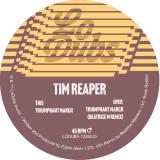
- F1: Canada (Tim Reaper Remix)
- F2: Messij (Sherelle's Messij In A Bottle Hardcore Remix)
- F3: Doh-T (Mantra Remix)
- F4: Canada (Niknak Remix)
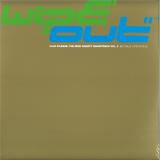
The legacy of wipE′out′′ has transcended time and cemented itself as a true transgenerational phenomenon. Launched in 1995, it didn’t just revolutionise the gaming industry, it created a bridge between the gaming ecosystem and the raver community. Its futuristic aesthetics and forward-thinking sound left a mark not only on mainstream audiences but also on the most demanding corners of the underground.
Decades later, the game’s impact is still alive. The release in 2023 of The Zero Gravity Soundtrack on Lapsus Records proved once again that wipE′out′′’s accompanying audio will go down in history as much more than just an anti-gravity racing game soundtrack.
This is why we decided to go deeper into the slipstream and build the second volume you’re now holding in your hands. Drawn from the original archives of Tim Wright, aka CoLD SToRAGE, this new collection surfaces unreleased cuts, pieces that couldn’t fit on the first edition, and a suite of self-authored ambient reworks that translate pure velocity into wide-screen atmospherics engineered for the long straights, the drone of airbrakes, the blue hour between checkpoints. It also reconnects the circuit, gathering selections and variants tied to later chapters of the saga — wipE′out′′ HD and wipE′out′′ Pure — plus alternative mixes that, until now, only existed in the Sega Saturn dimension of the franchise.
Finally, the material takes a leap into the future in the hands of four remixers especially chosen for this release: Tim Reaper, SHERELLE, Mantra, and NikNak, who collectively forge links between CoLD SToRAGE’s pioneering musical vision, the sound world of the game, and the contemporary breakbeats and drum & bass vanguard.
Expect the DNA you remember — accelerated breaks, trance-vector synths, jungle influences, sub-bass rumbling neatly beneath the craft’s hull, and at times even echoes of classic hardstyle — now revealed with new angles and air. The previously unheard material carries the same aerodynamic design sense that made these tracks feel faster than the track map itself, while the ambient versions open the field of view with melodies hovering at the lip of overdrive. Without a doubt, here you’ll find a strong sense of nostalgia. But this isn’t just nostalgia; it’s also proof that this sound world continues to evolve when you ease off the throttle.
For the faithful — crate-digging ravers, speed-run obsessives, and design nerds — this is an essential expansion pack: compiling rarities, restoring context, and reframing the emotional core of wipE′out′′ for late nights and early mornings alike. Bridging memory and momentum, club and console, rush and afterglow. Strap in.
Detailed tracklist, with annotations by Tim Wright aka CoLD SToRAGE
· Scratch Pad 1: “This track was composed using incomplete tracks that were developed around the time of the first wipE′out′′. It’s so long because it was used for a marathon-length Psygnosis promotional video.”
· Messij Received: “Messij was a firm favourite with wipE′out′′ fans, so it made sense that there’d be more where that came from — this was one of those re-workings.”
· God’s Gift: “I was always very fond of Erasure’s track Love to Hate You with the canned crowd FX sounds. God’s Gift was a tongue-in-cheek reference to how some musicians think they are just that. This was way before I even played live as CoLD SToRAGE.”
· Tentative: “I wasn’t sure about introducing some wacky beats and distorted sounds into one of the tracks, because it was kinda heading away from the other tracks, hence Tentative — but it turned out OK.”
· Canada 2048: “When wipE′out′′ 2048 was launched I decided to re-make Canada as a kind of tribute, but in a slightly new-tech, laid-back way, using Propellerhead Reason and all software synths.”
· Wiped Out: “Based on a few riffs from a MIDI file unused at the time of the original wipE′out′′ game compositions, this featured on my debut album MELT.”
· Body in Motion (Body Plus Mix): “A more trippy interpretation of Body in Motion that featured on non PlayStation versions of the game e.g. Sega Saturn.”
· Onyx (“Dark Side of the Moon”): “Onyx was my sole contribution to wipE′out′′ Pure on the Sony PSP handheld gaming console. This version was something I developed in a darker style, that eventually erupts into a crescendo.”
· Messij Received (WSTWGBE Mix): “Like I say, Messij was a hit with most wipE′out′′ fans, so when I was asked to compose more music for non-PlayStation versions, I adapted this tune into a parallel-universe version for PC and Sega Saturn. By the way, WSTWGBE refers to Who Said This Was Going To Be Easy?”
· Canada (Drunken Ausländer Mix): “In early 2018 I released a fresh album called Ch'illout′′, a re-working of many of my wipE′out′′ tracks in an ambient, Sunday-morning vibe style — it was a few years’ work, here and there.”
· Tentative (Woffenfum Mix): “Another chilled re-working of one of my wipE′out′′ tracks, the mix named with a nod to a good friend of mine, Carl Woffenden — someone who I've worked with for many years in the games industry.”
· Messij (Bobbing Boat Mix): “A nice cheesy computer blip-blop start belies its deep and upbeat chilled-out melodic finale.”
· Body in Motion (Timeless Techno Mix): “Another classic track given the chilled-out vibe mix, as featured originally on my Ch'illout′′ album. This one’s a really trippy, deep-space take on the original.”
· DOH-T (AM / FM Mix): “The idea with this chilled-out mix was to imagine all the melodic parts of this varied track being broadcast on terrestrial radio, so each theme drifts in and out through the radio static.”
· ’95 Future Echoes: “Originally developed as a companion album for wipE′out′′ HD, this track actually has its roots in a tiny loop of a song that never progressed to anything special back in the mid-’90s when I was composing for the original game.”
· Turbine: “Also from my wipE′out′′ HD album, it leans heavily into the upbeat, uplifting tunes from the original game, but also steals a bit of vibe and energy from The Prodigy, with those distorted flute sounds.”
· Pencil Neck: “This excerpt from my wipE′out′′ HD album features lots of sounds centre-stage and forward from Propellerhead Reason’s Subtractor virtual synth. I learned to love this more than my JD-800!”
· Messij 2005 (New Science Mix): “Yet another take on the track that still raises a smile, this time through a mix of samples from the original and Propellerhead Reason — the ‘new science’ when compared to an Amiga 1200 running Bars and Pipes.”
Seoul-based producer and DJ Yetsuby conjures immersive, layered soundscapes that glide between breakbeat, jungle, and leftfield bass. As one half of the duo Salamanda and co-founder of Computer Music Club, she has released music on labels like Wisdom Teeth, all my thoughts, Human Pitch, and Métron. And her boundary pushing sets on Seoul Community Radio, Boiler Room, and NTS Radio have brought her experimental Seoul roots to a global audience.
Her new album, 4EVA, invites listeners to wander through strange musical landscapes. Blending digital, analog, and acoustic sounds, Yetsuby explores the magnetic pull between people and music—an experience that feels both cosmic and deeply personal. Effortlessly weaving through genres such as bass, breakbeat, ambient, footwork, contemporary club, and IDM, she creates maximalist compositions that remain cohesive and refined.
The inspiration behind 4EVA is equally surreal. A childhood doodle from her sister, calling her a “brain-ful human,” sparked reflections on loneliness, togetherness, and the joy of navigating both. The album channels these themes of connection, introspection, and the transformative power of music, delivering catchy melodies and restless harmonies that invite listeners to lose themselves in its nuanced rhythms.
Out on Pink Oyster Records in LP and digital formats, 4EVA marks a bold new chapter for Yetsuby. With this release, she emerges as one of electronic music’s most original and exciting voices, defining the sound of Seoul’s underground—and beyond.
Pink Oyster is a new label from Jess Goodchild and Jack Hardwicke (Métron Records)
Part Two[14,92 €]
When The Information Centre first dropped on the pirate radio airwaves in the ealry 90's, there was nothing like it. It was at the birth of Jungle, and the track was a slow but immense classic, spreading accross the UK from its London Roots to become one of the most influential tracks in jungle's long and storied history.
Here we have the original version of the track, masterfully remastered and sounding absolutely gorgeous, plus two brand new and heavy hitting remixes, both of which are being played by the likes of Ray Keith, Nookie, and many others...BIG new remixes for 2025....
Gappa G & Hyper Hypa
Information Center Part Two EP
Part One[14,92 €]
When The Information Centre first dropped on the pirate radio airwaves in the ealry 90's, there was nothing like it. It was at the birth of Jungle, and the track was a slow but immense classic, spreading accross the UK from its London Roots to become one of the most influential tracks in jungle's long and storied history.
Here we have four of the classic remixes from back in the day, lovingly remastered and made available for the first time since those early days...
- A1: Redrum Relics (Intro)
- A2: Murder Backwards Feat Blaq Poet
- A3: Third Grade Roast Feat Young Zee & Kool Keith
- A4: The Metaphor Matador Feat Chino Xl
- A5: $ 1000 Bills (Ghostface Skit)
- B1: Three Times The Treble Feat A-F-R-O & Greg Nice
- B2: Mike Redman Radio_Pt _1 (With Kid Capri)
- B3: Unchanged Feat Sadat X & Masta Ace & Menno Gootjes & Dj Optimus
- B4: Bitches Brew Feat Bless
- B5: Red Men (Redman Skit)
- C1: Lift The Curse Feat O.c. & El Da Sensei
- C2: Mike Redman Radio Pt _2 (With Bobbito Garcia)
- C3: Airlines Feat Random & Eni-Less
- C4: Terrorwrist Feat Chuck D & Dj Lord & Flavor Flav
- C5: Mike Redman Radio Pt _2 (With B-Real)
- D1: No Remorse Feat Blaq Poet & Sticky Fingaz
- D2: The Dutch Breaks (Kurtis Blow Skit)
- D3: Blow Your Mind Feat Schoolly D & Git Hyper & Grandmaster Caz
- D4: Anger Management Feat Turbo B
Gold Vinyl[23,95 €]
Hardcore Rap music is still here! Mike Redman is considered a cult legend known for his unorthodox music production in various genres. He's well known as an artist in the Jungle and Hardcore scene, as a renowned movie score composer and made a name for himself as organiser of the infamous 'Redrum Hip-Hop' events since the 90's which hosted international artists from Guru to Cannibal Ox, Public Enemy, Beatnuts and many more. He also set up Redrum Recordz, a pioneering independent record label focusing merely on anything musically unpolished. Even though Mike Redman (which is his name of birth by the way) was often linked to many Hip-Hop success stories and produced records for artists such as Public Enemy and Big Daddy Kane, Mike has just recently, after many years, decided to produce a solo record featuring the Rap artists he admires and form the foundation of his legacy. With great respect towards his mentors, in a non-profit manner, Mike now releases 'Redrum Relics' featuring Rap icons such as Kool Keith, Chuck D, Schoolly D, Sticky Fingaz, Young Zee, Chino XL, O.C. and many more. This album is truly exceptional and is not made with the intention to be commercially successful, but is a love-letter to a period in time where passion was the motivation. 'Redrum Relics' brings Rap music back to the golden era with a contemporary touch and keeps it unpolished and unyielding as ever. People that tend to say that Hip-Hop is dead might want to reconsider.
*all original recordings from mid 90s Estonian released cassettes. Fascinating interpretations of the UK breakbeat and Jungle sounds recorded when the world felt like a much bigger place.
Since hearing the first breakbeats via the Finnish radio nightly shows introducing the burgeoning UK scene, Virko Veskoja, later head figure of Lu:k, was completely swept away by this new technological language that sounded like machines trying to initiate contact with people. The fluttering rhythm patterns, strings and vocal lines haunting the pathways of the infinite network. Like hip hop taken over by Skynet.
Reimagining it all in mid-90’s Estonia, a fresh and dirt-poor republic newly welcomed to the family of sovereign states on the outskirts of Eastern Europe, was challenging, to say the least. Finally, with the help of entry level music programs, custom-made soundcards and self-built computers by the other Lu:k-head Tõnis Valk, Lu:k took the first tentative steps in the history of Estonian jungle.
Eight Lu:k cuts have been compiled into a handy selection, a true sign of the times when uncertainty came with certain hope and optimism – new territories to chart, new frontiers to conquer. A time of innocence captured so sublimely in Lu:k’s music.
The compilation starts with menacing orchestration that sounds like the birth of a civilization, like in „2001: A Space Odyssey“, or the arrival of Godzilla, only to give way to sweeeet strings and the inimitable Minnie Riperton in “Lovin U”, combining all the essential elements of Lu:k in a track that has remained uncorroded by time since its inception in 1994.
The following “Demo 3” is its antithesis – fast and nervous, a harbinger of the darker days of neurofunk and techstep ahead. More in line with the social realities of the time, when something (or someone) could materialise out of thin air and attack you just as violently as those beats here.
“La:v” was Lu:k’s signature track throughout their brief career that went on only for a few years, 1994-1997. Lifted to heaven’s by Petula Clarks’s wonderful vocals, it perfectly captures the pure essence of creation. “I made it in my bedroom. Something like that just came out. Sorry”, says Virko apologetically.
From the themes of love we are led towards darker scenarios again with “Drunk-Drive”, a more vengeful cut reminiscent of early Ram Records’ nocturnal dangers, skylines shaped by basslines. Previously only available on the uber-rare “Raadiomaja valvelauas” CD compilation from 2005.
“In the Limelight” is lifted from their second album “Dreams in Drums” from 1996 (only released on cassette), and if it’s meant to address their new-found underground celebrity status in Estonia, there is surprisingly little elation here – the track rather consists of introspective strings and beats that sound almost melancholic.
Out of the remaining three tracks, “Proov2mix” and “Kadunud leitud” are the result of a treasure hunt amongst the old, obsolete harddrives – little nuggets that were condemned to obscurity until now. Between them, another vocal-led cut “010”, a non-album track only featured on two comps until now, is a strong reminder of Lu:k’s prodigious ability to handle vocal lines and morph them together with their own weaving synthetic melodies, strong pads and commanding beats.
Lu:k’s music has been largely unavailable for the better part of this century, with original tapes and CD’s changing hands for a small fortune. This vinyl release couldn’t come at a better time, bringing a seminal chapter of Estonian dance music’s mythical history to light again, both for the old-school acolytes and new converts.
All music by Virko Veskoja
Dev/Null is one of my earliest friends in music, having done radio with him (Blog To The Oldskool on Jungletrain) for a decade and previously working with him on TDD, which was on Meeting Of The Minds Vol. 1, as well as collaborations on Globex Corp, Lobster Theremin & other label releases.
I'm happy to be able to release his first solo EP of jungle tunes, as I've been a long time supporter of his music and I think that some of the tunes on this release are some of his best work yet :)
Many thanks to Dev/Null for the work put in for this release and to Dwarde & Sonar's Ghost for their remixes.
- A1: A L’ombra D’una Olivera (U I Dos), Ft. Noelia Llorens “Titana”
- A2: Jota De La Fira De Tots Sants
- A3: Ens Devem A La Faena (Cant De Batre), Ft. Noelia Llorens “Titana”
- A4: Tant Com L’enyor De La Terra (Cant De Batre), Ft. Carles Dénia
- A5: Al-Azraq
- B1: Malaguenya Del Carrer Calvari, Ft. Noelia Llorens “Titana”
- B2: Quan Caiga La Nit
- B3: Esta Casa Sí Que És Casa (Cant De Batre), Ft. Josep Aparicio “Apa”
- B4: Cv-500
‘FAIXA’ is the eponymous debut LP from rural Valencian group FAIXA, emerging from a desire to fuse their curiosity for electronic sounds with experiences of living immersed in the folklore that resonates through the Valencian regions of l’Alcoià and el Comtat.
This atmospheric album speaks to a sound not often heard in the wider Spanish electronic music scene, but reminiscent of other modern revivals of traditional music fused with electronic sounds across Spain right now.
The sound of the album is a constant dialogue between the roots and the future of Valencian generations; traditional vocalists play an essential role in connecting oral traditions such as the “cant de batre” and marches of the “moros i cristians” with leftfield electronic, influenced by sounds typical of dubstep, jungle, or footwork. This historical quality resonates profoundly through songs where vocalists Noelia Llorens “Titana”, Carles Dénia, and Josep Aparicio “Apa” act as channels to a new sonic dimension of traditional music, where the classical and the modern intertwine.
Receiving great feedback across the country in a short period of time, FAIXA’s unique approach to electronic music has gained them mentions and interviews on national and local radio & TV.
Forest Jams continues the journey into the great beyond with Mori Ra’s Mantra–an EP composed of four edits created for any inquisitive earthling and forest wanderer.
Mori Ra is a DJ based in Osaka, Japan his sets are a witches brew composed of balearic, cosmic, and electronic disco ingredients. He has released on other labels such as Rotating Souls, Macadam Mambo, Berceuse Heroique, MM Discos and more. In Mantra, Mori Ra acts as a mysterious wanderer who has stumbled upon the doors of our minds in the middle of the night. When we answer the door he is bearing gifts of creative glory and all we need to do is provide shelter in return. We invite him in so that he can rest, recharge, and continue his journey.
During his visit in our minds Mori Ra shares “Mantra” the secrets of the universe disguised as parables packaged neatly into four tracks. Catharsis begins the journey and immediately throws us into a sound that feels like we are driving a spaceship in Gran Turismo 37, the spaceship simulator. Now that we have successfully crossed the plane and have entered the digital unknown, Seinn O! becomes the story of communication. Seinn O! gave the smoke leaving my mouth color and the shamanistic chants placed me in an atmospheric state with the ability to cross over and communicate in the digital space. Then comes 孫行者 the Grandson Traveler, which embodies the story of the simulation. Imagine the sound of a bustling dystopian city in the matrix–neon signs, dancing billboards, talking vending machines, radioactive wildlife, and overgrown foliage leaking in from the jungle the city is carved into. Mori Ra seems to have melded all of those sounds together to create the soundtrack of the big city where everyone is lost. Finally, before leaving our minds Mori Ra offers the final parable, あの星 That Star. Which becomes the story of realization, the journey back home from the exploration of the mind. That Star brought me into a cave and I could see the opening at the end of it, all I had to do was walk towards it. However, I couldn’t walk. I could only galumph forward, while bouncing up and down to the beat. My arms slivered and guided my body forward as the vocals came in. As I moved forward the opening, the clearing, the destination remained the same distance away. The endless tunnel of the mind gave me a feeling of comfort because I did not want this journey to end.
The EP ends and we will never know who visited our minds that night, but we know we loved the journey. Mori Ra is the steward of our journey through consciousness, and the vessel is “Mantra”.
- A1: Bleu Nuit - Spanish Harlem
- A2: Sepia - Stress
- A3: Bleu Nuit - En Bas De Chez Toi (Live)
- A4: Les Espions - Casse-Tête Jungle
- A5: Avel Nevez - Naufrage (Partie 1)
- B1: Claude Robert Hit Orchestra - Dance The Disco Sound
- B2: Marie-Ange Cousin - Molle Ouate
- B3: Quai 21 - Music Man
- B4: Maderson - Tourne La Page
This compilation features tracks released between 1978 and 1988 in Western France.
Through this compilation, we strove to highlight a little-known regional scene, characteristic of the diverse and sometimes opposing music movements of the 80s. Through this musical journey across the Brittany, Normandy, and Pays-de-la-Loire regions, we sought to showcase a resolutely indie aesthetic, sometimes conceived in some of France’s most unusual studios, such as a bunker and a caravan.
We’ve found it difficult to make attribute an established, well-defined genre to some of the tracks featured on this compilation. They draw, each in their own way, from the rock scene that dominated the 80s in France, from countercultures, from American stars who shone on the country’s radio stations and in its record stores, and even from local folk music.
While one could hear an harmony across the tracks featured on Le Grand Ouest, channeling this manifold energy onto a record required extensive research through the Brittany, Normandy, and Pays de la Loire regions’ discographies. Over the three years since the release of Le Grand Sud-Est, we have meticulously researched the references of artists, musicians, studios, labels, and publishers from each region. We sought to trace each artist to identify and listen to all their works from that period, and, when possible, collect unreleased recordings, left as demo cassettes on the artists' dusty shelves.
The synthesis of this research, presented here under the title Le Grand Ouest, hopes to remind us of the timelessness of the indie scene in our country, through the lens of the 80s Western France’s scene. Whereas Le Grand Sud-Est exhibited the funkiest sides of the Provençale and Rhône-Alpes scene, Le Grand Ouest leans towards a more mellow, introverted music, an expression of groups of friends united by the joy of playing together.
The first 500 copies of the record come with an extensive booklet with unpublished photos, press clippings, and texts for each track.
Announcing Icon Roller's Debut Vinyl and Digital Release: "Anytime EP"
Following the success of Icon Roller's two digital-only releases, we are thrilled to announce the of his debut vinyl EP titled "Anytime EP." This highly anticipated release features four exceptional tracks that have garnered rave reviews and support from some of the most respected DJs and producers in the Jungle scene.
Tracklist Overview
A1. Anytime. The title track, "Anytime," is a masterful blend of influences from Source Direct and Total Science. It features filtered pads, dubbed-out effects, and intricately chopped-up Apache and amen breaks.
This track has received significant praise from Double O, who featured an early version in his Juno Daily mix. Jungle originator Bizzy B has also highly praised this track.
A2. Peaceful & Orderly. "Peaceful & Orderly" starts with a pulsing beep and filtered-down pad, as the filters rise, so does the track's energy, transforming it into a true dancefloor banger.
This track has received significant acclaim from the Bristol Jungle scene and has been played on radio shows by Amy Kisnobo (SWU/RinseFM), Leftarm (Eruption), and Aftershock (Afterdark Radio).
B1. Personal Riddem. Kicking off the B side, "Personal Riddem" is a dark roller featuring a warped, time-stretched melody.
This track has been played by Double O on his Rinse FM show and was featured in Bizzy B's YouTube show "Dubplate Wars," where it won the popular vote against nine other contenders.
B2. For The Listeners. "For The Listeners" is a chilled track that begins with a 2-step flow break and sampled Rhodes. In the second half, it transitions into more jungle territory with a syncopated and pitched break, offering a unique blend of styles that cater to both casual listeners and jungle enthusiasts.
Mastering and Production
The "Anytime EP" has been mastered and cut by Beau Thomas at Ten Eight Seven Mastering, renowned as one of the best in the industry. His expertise ensures that each track is delivered with pristine sound quality, providing an exceptional listening experience.
Stay tuned for the release of "Anytime EP" and join us in celebrating Icon Roller's debut vinyl release.
- A1: Brightness Shallan Davar - Words Of Radiance
- A2: Stratusphere - Forest Fortress
- A3: State Azure - Sapper's Dilemma
- A4: All India Radio - Ancient Invocations
- A5: Mason Bee - Sunu
- B1: Carbon Based Lifeforms - Suburban Tessellation
- B2: Cult48 - Defang (Shrouded Mix)
- B3: Digitonal - Sparrow
- B4: Segerfalk - Where We Never Left
- B5: Ochre - Intrinsic Grey
Green vinyl[48,53 €]
Initially released exclusively in digital format two years ago, the already cult favourite Whispers Of An Ancient World finally makes its way to vinyl courtesy of Mystic & Quantum but in highly restricted numbers. Featuring artwork by Kilian Eng, this red edition offers a mesmerising auditory journey. Ambient landscapes and evocative ancient ceremonies coalesce with explorations through lush jungles, tranquil acoustic melodies, and edgier dub motifs hinting at a looming dystopian future. Contributions from artists such as Diagonal, Mason Bee, and State Azure enrich its allure as the whole thing adds up to a cinematic tapestry that captivates with atmospheric depth.
- A1: Sungu Lubuka - Petelo Vicka Et Son Nzazi
- A2: Mfuur Ma - Groupe Minzoto Ya Zaïre
- A3: M.b.t's Sound - M.b.t's
- A4: Musique Tshiluba - Abeti Et Les Redoutables
- B1: Lalia - Trio Bydoli
- B2: Adeito - Tabu Ley Et L'orchestre Afrisa
- B3: Ngantsie Soul - Les Bantous De La Capitale
- C1: Nganga - Les Frères Soki Et L'orchestre Bella-Bella
- C2: Tembe Na Tembe Ya Nini - Orchestre Celi Bitshou
- C3: Lolo Soulfire - Lolo Et L'orchestre O.k. Jazz
- D1: Femme Ne Pleure Pas - Zaiko Langa Langa
- D2: Kiwita Kumunani - Orchestre O.k. Jazz
- D3: Fiancée Laya - G.o. Malebo
- D4: Ah! Congo - Orchestre National Du Congo
The making of Congo Funk!, our long-awaited journey to the musical heart of the African continent, took the Analog Africa Team on two journeys to Kinshasa and one to Brazzaville. Selected meticulously from around 2000 songs and boiled down to 14, this compilation aims to showcase the many facets of the funky, hypnotic and schizophrenic tunes emanating from the two Congolese capitals nestled on the banks of the Congo River.
On its south shore, the city of Kinshasa – capital of Democratic Republic of the Congo, the country formerly known as Zaïre – is often seen as Africa’s musical Mecca, the city that spawned such immortal bands as African Jazz, O.K. Jazz and African Fiesta, and the place to which aspiring musicians from throughout the continent would go to make a name for themselves.
But the city of Brazzaville on the north shore of the river – capital of the Congo Republic – played an equally important role in spreading Congolese sounds continentally. In addition to producing legendary bands such as Les Bantous de la Capital, it was the powerful transmitters of Radio Brazzaville that allowed the unmistakable groove of Congolese Rumba to be heard as far away as Nairobi, Yaoundé, Luanda and Lusaka thus turning the electric guitar into the continent’s most important instrument!
Although the musical landscape of these cities had been defined by a core group of bands in the late 1950s, the modernisation of Congolese music has been steadily evolving until the events surrounding the Muhammad Ali vs George Foreman boxing match marked a turning point. The promoter of that event known as “Rumble In The Jungle” was none other than the notorious Don King who needed 10 millions dollars to get Ali and Foreman into a boxing ring. The only candidate willing to put this kind of cash on the table was Mobutu Sese Seko, President of the Democratic Republic of the Congo.
Mobutu - the megalomaniac dictator who got to power with the support of the United States and Belgium in exchange for unlimited and affordable access to the riches of the country - had a soft spot for music and it doesn’t come as a surprise that he agreed to a three-day live music festival being organised prior to the “Rumble”. Zaïre 74 - as the festival was dubbed - was meant to hype the boxing match and many stars were invited.
Although a myriads of artists flocked in for the occasion, it was the performance of James Brown on Zairian soil that caused havoc among the younger generation, inspiring hundreds of would-be musicians to take up their electric guitars and reverbs cranked to the max in search of a new sound in which hyperactive Rumba was blended with elements of psych and funk. While the results were very different from the popular music of the three Musketeers - as Tabu Ley, Franco and Verckys were known - they weren’t a complete break with tradition.
These new sounds emerged at a time when the Congolese record industry – previously dominated by European major labels – was experiencing a period of decline due to rising production costs and needed a radical change. The void was filled by dozens of entrepreneurs willing to take chances on smaller scale releases. It was the beginning of a golden age for Congolese independent record labels, and the best of them – Cover N°1, Mondenge, Editions Moninga, Super Contact – preserved the work of some of the region’s finest artists, while launching a generation of younger musicians into the spotlight.
The movement was greatly helped by legendary radio shows but it was the dynamic productions of Télé-Zaïre that set the dynamite on fire. Legend has it that TV shows were so huge that president Mobutu himself ordered RTV du Zaïre to put on daily concerts since it halted criminal activities for the duration of the evening.
Congo Funk! is the story of these sounds and labels, but most of all it is the story of two cities, separated by water but united by an indestructible groove. The fourteen songs on this double LP showcase the many facets of the Congolese capitals, and highlight the bands and artists, famous and obscure, who pushed Rumba to new heights and ultimately influenced the musical landscape of the entire continent and beyond.
There’s something to be said for getting noticed, for standing out from the crowd. West London’s T.Williams is one of those people, having accomplished a full sweep of merited recognition over the years. Emerging onto the house scene in 2010, T.Williams instantly marked himself as a breakthrough artist with a difference; his unique take on house music turning heads.
Far from a newcomer, his path as a musical artist started in the grime scene as Dread.D. Signed at the tender age of 17 with grime anthem Invasion on Jon E Cash’s Black Ops label, Williams went on to have mass success in the grime and bass world selling thousands of singles worldwide. After a five-year reign, Williams found himself veering towards the world of house music. With a new found love for the sound and its sub-genres, T.Williams forged a signature sound influenced by his grime days, jungle, and garage. With a style that undoubtedly impacts, T.Williams’ crossover has been the catalyst for his success. Not only rife with groove and feeling but meticulously produced and engineered with deep rumbling basslines, the unapologetic bounce of grime and smooth vocals that bleed through African infused percussion work.
While in 2010 the industry took note when hit record ‘Heartbeat’ featuring vocalist Terri Walker made an impression, it was throughout 2011 that T.Williams defined himself - releasing solo works on his imprint Local Action and Pattern with remixes for Maya Jane Coles, Ben Westbeech and Skream. Not stopping at pricking the ears of fellow artists and those on the dancefloor, the end of 2011 saw Williams nominated for ‘Best Breakthrough DJ’ by DJ Mag, ‘DJ Stars of 2012’ by Time Out and featured in The Guardian.
Two relationships came to the forefront in 2012 that propelled Williams to greater heights. The first was his weekly show on legendary London station, Rinse FM and the second, Williams’ relationship with label PMR through his remix of Javeon McCarthy’s ‘Lost Time’. The remix was named Record of the Week by BBC Radio 1 and supported by tastemakers Annie Mac and Fearne Cotton. From here T. signed to the label exclusively releasing his debut EP for the label in September 2012, and in the process receiving further support from BBC Radio 1. Further remixes of Mikky Ekko, Wretch 32 and Lianne La Havas followed suit, as well as his biggest to date - Disclosure’s ‘Latch’. Powering dancefloors across the globe, T. went on to play three US tours, numerous festival stages, and deliver a second EP on PMR titled ‘Feelings Within’. The EP once again spanned a number of bases, from club bangers to heartfelt vocal driven tracks alike. Gaining his own monthly residency show with BBC Radio 1, 2013 ended with T. having played over 100 shows across four continents.
2017 marked the launch and release of the first collaborative EP with UK producer Julio Bashmore, via their joint independent Conch Records, a label aiming to push out more underground cross-genre music with heavy rotation from the likes of Moxie and Shy One. With an ever-expanding global tour schedule and further solo releases on the legendary NYC house label Strictly Rhythm turning heads, T.’s upward trajectory has never showed signs of slowing down. Selected to soundtrack the social media campaign for boxer Anthony Joshua in 2019 and now using his technical prowess as a musician to educate the next generation of rising stars at London’s respected Point Blank Music School has cemented his status as one of the UK music scene’s key players.
The latest offering from Astral Black comes in the form of the 'Metropolis N' LP, courtesy of Queens, New York's number premier importer/exporter of Jungle & D&B, NIGELTHREETIMES. Having initially garnered a name for themselves as one of New York City's most versatile club DJ's, with the release of their 'Call Of The Void; project in 2020 Nigel also began to build a reputation as a producer in their own right. Resulting in residencies on Rinse FM & The Lot Radio, radio support from the likes of Tom Ravenscroft & Uniiqu3 and press support from Resident Advisor, OkayPLAYER & Mixmag – amplifying their talents throughout New York City and beyond.
With 'Metropolis N' NIGELTHREETIMES distills their eclectic influences through the lens of rolling 160bpm breaks – taking in Jazz, 8-bit game soundtrakcs, science fiction & jump up D&B. Starting off the LP with the rhodes tinged double header of 'TSQ MELTDOWN' & 'EARLY MORNING FROM 103RD STREET', the latter featuring some of the best double bass work heard on a jungle track since 'Brown Paper Bag'. Elsewhere, on 'ROAD2RAILS' and 'PHANTOM SHORES', the producer ditches the instrumentation in favour of oscillated square waves, dubbed out vocal FX & 8-bit melodies, without ever losing site of the projects underlying sense of optimism. On the album closer 'INTERNATIONAL SPACE STATION', 3X manages to bring together the influences heard throughout the project, tying together a muted rhodes chords, squarewave basslines, flutters of alien melodies and finely tuned, slices breakbeats into a 5 minute symphony.
The consistency and exacting production skills heard throughout the offering elevate this project from another drop in the digital ocean to a landmark opus, from a producer carrying the torch for this timeless sound and making the project worthy of a spot alongside some of the classics this genre has produced.
'Metropolis N' is available Oct 13th on digital and limited edition vinyl via Astral Black.
On April 7th electronic luminary Nathan Fake presents the new longplayer ‘Crystal Vision’ on his own Cambria Instruments imprint, which features collaborations with Clark and Wizard Apprentice.
This is music for music’s sake – recorded without angles, agendas and themes – so Fake was free to simply continue honing his craft and express himself non-literally. Aptly titled, there’s a clarity of execution and ambition, and a peak effectiveness to the record that just sounds right.
Continuing to set a personal bar higher and topping his own best, the mark of master craftsperson is everywhere, but that doesn’t mean it’s polished; There’s plenty of rawness evident, with spiky sonics keeping ears on high alert – full of endorphin-flooded rave energy.
Following a short, scene-setting ‘Arrival’ – a simple major chord arpeggio played on a Jupiter 6 which sounds like curtains opening at dawn, things begin apace with ‘The Grass’, which hurtles like a precision-tuned bullet train through Arctic tundra. The undulating effect of compression is emphasised by the classic techno trope where 2 rhythms jar yet interlock, creating an exquisitely disorientating strobe-like flutter. On the track’s guest, Fake comments, “I fell in love with Wizard Apprentice's ‘I Am Invisible’ and felt our musical styles were similar. Their vocals are smooth and clear and sharp at the same time. They’re like a calm within the storm.”
Inspired by Italo disco but sounding wholly alien and futuristic, ‘Vimana’’s fizzing buzzsaw arpeggiated bassline, popping snares and bright whirling melody are equally an electro trance melange, with an effervescent major chord Arp that kicks in midway.
Reminiscent of what used to be called ‘funky techno’ but with sparklier sounds, ‘Boss Core’ blinds like sunshine bouncing off ice. Using his trusty Boss DR550 drum machine, and inspired by Autechre's ‘Vose In’, the track peaks by reaching that melancholic/euphoric axis for which he is loved.
With chugging slow breakbeats not a million miles from Board Of Canada or trip hop, ‘Crystal Vision’ rolls along, with the melody opening up, revealing more hidden notes as it progresses, building into a fractal, kaleidoscopic mosaic.
An emotional outpouring with serotonin surging through the circuitry, classic breakbeats and layers of lazers, ‘Bibled’ has all the hallmarks of a classic. This is a bonafide festival-set closing, hugging-your-mates, moment – or, with its guitar solo, “a power ballad” – as Nathan calls it.
A minimalistic moment of calm midway through the album, ‘CMD’’s gently comforting dreamscape is conjured with FM stacked and detuned sine waves which are left to breathe, whilst the chunky Chicagoan house jack of ‘Hawk’ brings to mind classic Relief records, but even more detuned and wibbly, and laden with synths.
As the title suggests, ‘Amen 96’ is in Fake’s own words, “me having a go at jungle. I grew up listening to it, and I remember as a teenager it sounded like the most intense and otherworldly music ever. It still does. This track is an experiment to see how my melodic style works against amen breaks”. Closer to the braindance end of the spectrum than ‘proper’ jungle (and all the more interesting for it), Fake channels the spirit of Squarepusher but makes it his own, brimming with melodious twinkle.
A collaboration with Nathan’s close friend and genuine musical hero Clark. ‘Outsider’ finds this dream team alchemising pure gold that’s bigger than the sum of their parts. Skittering, intense, far-reaching end epic, the pair close proceedings on a grandly dramatic note. In 2020 Nathan released the album ‘Blizzards’, which was described by The Quietus as “his best work”, and “his best LP yet” yet by Resident Advisor. The equally well received ‘Blizzards Remixes’ EP which featured Afrodeutsche and Irene Dresel followed in 2021, as did a nationwide UK tour.
An in-demand remixer, Fake has added his magic to tracks by Radiohead, Clark, Perc, Jon Hopkins, GoGo Penguin, Dominik Eulberg, Christian Löffler and Damian Lazarus, working for labels including Ninja Tune, Domino, Warp, Blue Note and Kompakt.
The first release of 2023 on SHERELLE and NAINA’s Hooversound imprint comes from London based DJ, producer and AV artist, Drumskull.
Drumskull is the moniker of Joel Harrison, started during lockdown in 2020. His debut album, ‘Interlocked’ garnered support from the likes of Addison Groove, Ahadadream, Doc Scott as well as receiving radio support from Tom Ravenscroft on BBC Radio 6 and Avalon Emerson on her BBC Radio 1 Residency.
In joining the Hooversound family, he again showcases his style of meshing jungle, footwork with deep house and breaks across two tracks. 'Muscle Memory’ also features two huge remixes from Nottingham’s Lone and LMajor - both making debuts on the label.
The EP wraps up a busy year for Hooversound who also put out releases by RAVETRX, Prayer, Thugwidow and Bruised Skies as well as remixes from Response and Denham Audio. Since launching in 2020, Hooversound has become a go to label that pushes the bass continuum, being championed globally by Resident Advisor, Crack Magazine, FACT, Groove, Mixmag and more.
In the early 21st century, a shadowy figure rose from the dust that settled atop forgotten record collections throughout Africa, leaving behind
a trail of clues in what seemed like a wild good chase, but in October 2013, Luaka Bop will unmask a phantom: the great William Onyeabor.
'...anyone out there making music at the moment will be quite excited by this...' Damon Albarn
'...a synth-slathered prog-funk killer...' - Pitchfork
"talk to @LuakaBop about details of the William Onyeabor comp they are working on today... gonna blow minds!!!!!!!!!' - Four Tet
Promotional Assets
Covers & Remixes by Devendra Banhart, Man Tear (DFA) & Hess Is More, Caribou, Dam-Funk, Justin Strauss, Scientist, Optimo, Prince Language, Illum Sphere, James Holden, Peaking Lights, etc.
Art collaborations with John Akomfrah, Njideka Akunyili, Harrison Haynes, Dave Muller, Odili Donald Odita, Xavier Simmons and music videos by Brian Baderman, Mike Sumner & Kindess. Partnership with Moog, Boiler Room, DubLab, Beats in Space & East Village Radio. Events at Moog Fest, Pop Montreal, Le Comptoir General
Sam Interface (formerly known as SNØW) returns to the seminal R&S Records following the success of last year’s R&S Presents: More Time Records Vol 1, which was a 4 track compilation featuring Ahadadream, Bala Bala Boyz, Bryte & SNØW.
He is the co-founder of London’s More Time Records, on which he has released much of his own music as SNØW (including collaborations with Zed Bias, Fox, Dread MC & more) and can also be found monthly on Rinse FM and Reprezent Radio playing a range of percussive genres including UK Funky, GQOM, Kuduro, Afrobeats and more.
The name change takes him closer to his first alias Interface, under which he had DnB hits with the likes of DJ Die and more, he explains: “When i first released music back in my early DnB days I used the alias “Interface” and so many people still call me Sam Interface - it feels like the most natural name for me.”
The lead track “Underground” (which samples an announcement from the tube) references a range of London-centric genres, combining polyrhythmic percussion with an extremely upfront bass sound which draws influence from and exxagerates recent drill productions.
“Finally”, a collaboration with an old friend & prolific DnB producer Break follows, bringing frantic motion to the release. The third track “Crud” utilises Sam’s signature gully bass production, flooding the speakers with low end on the drop. The EP wraps up with “Pink Dolphins” - a euphoric dancefloor moment which channels the energy and emotion of jungle, drawing on some of Sam’s earliest rave influences.
This is the third of the Mad Dog releases – and is often cited as the best release they did back in the day. Pure hardcore jungle flavours written in 1994 in sunny Bournemouth by Dave ‘Aquasky’ Wallace and Shaun ‘Aurora’ O’Hara.
Originally released by Olly on Underdog Recordings, who shared a house with Dave and also Brent from Aquasky. A hub of hardcore – the studio was on the ground floor, the bedrooms on the second floor and the top floor was the record label and pirate radio that ran for a while!
Around the same time this record was made, Dave was also producing as Fugitive and engineering for Kieron Aquasky’s various drum and bass tracks. On top of that he was making happy hardcore as Rebel Alliance and engineering hip hop for Brent Aquasky. A very busy guy who is still producing in 2024!
Pressed by the mighty Phil ‘The Vinylman’ East on 180g heavyweight vinyl. This release is a bespoke product as no one record is the same. Designed to look like the planet Neptune and part of a 4 vinyl Cosmik series.
OMG!
UILTY RAZORS, BONA FIDE PUNKS.
Writings on the topic that go off in all directions, mind-numbing lectures given by academics, and testimonies, most of them heavily doctored, from those who “lived through that era”: so many people today fantasize about the early days of punk in our country… This blessed moment when no one had yet thought of flaunting a ridiculous green mohawk, taking Sid Vicious as a hero, or – even worse – making the so-called alternative scene both festive and boorish. There was no such thing in 1976 or 1977, when it wasn’t easy to get hold of the first 45s by the Pistols or the Clash. Few people were aware of what was happening on the fringes of the fringes at the time. Malcolm McLaren was virtually unknown, and having short hair made you seem strange. Who knew then that rock music, which had taken a very bad turn since the early 1970s, would once again become an essential element of liberation? That, thanks to short and fast songs, it would once again rediscover that primitive, social side that was so hated by older generations? Who knew that, besides a few loners who read the music press (it was even better if they read it in English) and frequented the right record stores? Many of these formed bands, because it was impossible to do otherwise. We quickly went from listening to the Velvet Underground to trying to play the Stooges’ intros. It’s a somewhat collective story, even though there weren’t many people to start it.
The Guilty Razors were among those who took part in this initial upheaval in Paris. They were far from being the worst. They had something special and even released a single that was well above the national average. They also had enough songs to fill an album, the one you’re holding. In everyone’s opinion, they were definitely not among the punk impostors that followed in their wake. They were, at least, genuine and credible.
Guilty Razors, Parisian punk band (1975-1978). To understand something about their somewhat linear but very energetic sound, we might need to talk about the context in which it was born and, more broadly, recall the boredom (a theme that would become capital in punk songs) coupled with the desire to blow everything off, which were the basis for the formation of bands playing a rejuvenated rock music ; about the passion for a few records by the Kinks or the early Who, by the Stooges, by the Velvet mostly, which set you apart from the crowd.
And of course, we should remember this new wave, which was promoted by a few articles in the specialized press and some cutting-edge record stores, coming from New York or London, whose small but powerful influence could be felt in Paris and in a handful of isolated places in the provinces, lulled to sleep by so many appalling things, from Tangerine Dream to President Giscard d’Estaing...
In 1975-76, French music was, as almost always, in a sorry state ; it was still dominated by Johnny Hallyday and Sylvie Vartan. Local rock music was also rather bleak, apart from Bijou and Little Bob who tried to revive this small scene with poorly sound-engineered gigs played to almost no one.
In the working class suburbs at the time, it was mainly hard rock music played to 11 that helped people forget about their gruelling shifts at the factory. Here and there, on the outskirts of major cities, you still could find a few rockers with sideburns wearing black armbands since the death of Gene Vincent, but it wasn’t a proper mass movement, just a source of real danger to anyone they came across who wasn't like them. In August 1976, a festival unlike any other took place in Mont-de-Marsan – the First European Punk Festival as the poster said – with almost as many people on stage as in the audience. Yet, on that day, a quasi historical event happened, when, under the blazing afternoon sun, a band of unknowns called The Damned made an unprecedented noise in the arena, reminiscent of the chaotic Stooges in their early adolescence. They were the first genuine punk band to perform in our country: from then on, anything was possible, almost anything seemed permissible.
It makes sense that the four+1 members of Guilty Razors, who initially amplified acoustic guitars with crappy tape recorder microphones, would adopt punk music (pronounced paink in French) naturally and instinctively, since it combines liberating noise with speed of execution and – crucially – a very healthy sense of rebellion (the protesters of May 1968 proclaimed, and it was even a slogan, that they weren’t against old people, but against what had made them grow old. In the mid-1970s, it seemed normal and obvious that old people should now ALSO be targeted!!!).
At the time, the desire to fight back, and break down authority and apathy, was either red or black, often taking the form of leafleting, tumultuous general assemblies in the schoolyard, and massive or shabby demonstrations, most of the time overflowing with an exciting vitality that sometimes turned into fights with the riot police. Indeed, soon after the end of the Vietnam War and following Pinochet’s coup in Chile, all over France, Trotskyist and anarcho-libertarian fervour was firmly entrenched among parts of the educated youth population, who were equally rebellious and troublemakers whenever they had the chance. It should also be noted that when the single "Anarchy in the UK" was first heard, even though not many of us had access to it, both the title and its explosive sound immediately resonated with some of those troublemakers crying out for ANARCHY!!! Meanwhile, the left-wing majority still equated punks with reckless young neo-Nazis. Of course, the widely circulated photos in the mainstream press of Siouxsie Sioux with her swastikas didn’t necessarily help to win over the theorists of the Great Revolution. It took Joe Strummer to introduce The Clash as an anti-racist, anti-fascist and anti-ignorance band for the rejection of old-school revolutionaries to fade a little.
The Lycée Jean-Baptiste Say at Porte d’Auteuil, despite being located in the very posh and very exclusive 16th arrondissement of Paris, didn’t escape these "committed" upheavals, which doubled as the perfect outlet for the less timid members of this generation.
“Back then, politics were fun,” says Tristam Nada, who studied there and went on to become Guilty Razors’ frontman. “Jean-Baptiste was the leftist high-school in the neighbourhood. When the far right guys from the GUD came down there, the Communist League guys from elsewhere helped us fight them off.”
Anything that could challenge authority was fair game and of course, strikes for just about any reason would lead to increasingly frequent truancy (with a definitive farewell to education that would soon follow). Tristam Nada spent his 10th and 11th unfinished grades with José Perez, who had come from Spain, where his father, a janitor, had been sentenced to death by Franco. “José steered my tastes towards solid acts such as The Who. Like most teenagers, I had previously absorbed just about everything that came my way, from Yes to Led Zeppelin to Genesis. I was exploring… And then one day, he told me that he and his brother Carlos wanted to start a rock band.” The Perez brothers already played guitar. “Of course, they were Spanish!”, jokes their singer. “Then, somewhat reluctantly, José took up the bass and we were soon joined by Jano – who called himself Jano Homicid – who took up the rhythm guitar.” Several drummers would later join this core of not easily intimidated young guys who didn’t let adversity get the better of them.
The first rehearsals of the newly named Guilty Razors took place in the bedroom of a Perez aunt. There, the three rookies tried to cover a few standards, songs that often were an integral part of their lives. During a first, short gig, in front of a bewildered audience of tough old-school rockers, they launched into a clunky version of the Velvet Underground's “Heroin”. Challenge or recklessness? A bit of both, probably… And then, step by step, their limited repertoire expanded as they decided to write their own songs, sung in a not always very accurate or academic English, but who cared about proper grammar or the right vocabulary, since what truly mattered was to make the words sound as good as possible while playing very, very fast music? And spitting out those words in a language that left no doubt as to what it conveyed mattered as well.
Trying their hand a the kind of rock music disliked by most of the neighbourhood, making noise, being fiercely provocative: they still belonged to a tiny clique who, at this very moment, had chosen to impose this difference. And there were very few places in France or elsewhere, where one could witness the first stirrings of something that wasn’t a trend yet, let alone a movement.
In the provinces, in late 1976 or early 1977, there couldn’t be more than thirty record stores that were a bit more discerning than average, where you could hear this new kind of short-haired rock music called “punk”. The old clientele, who previously had no problem coming in to buy the latest McCartney or Aerosmith LP, now felt a little less comfortable there…
In Paris, these enlightened places were quite rare and often located nex to what would become the Forum des Halles, a big shopping mall. Between three aging sex workers, a couple of second-hand clothes shops, sellers of hippie paraphernalia and small fashion designers, the good word was loudly spread in two pioneering places – propagators of what was still only a new underground movement. Historically, the first one was the Open Market, a kind of poorly, but tastefully stocked cave. Speakers blasted out the sound of sixties garage bands from the Nuggets compilation (a crucial reference for José Perez) or the badly dressed English kids of Eddie and the Hot Rods. This black-painted den was opened a few years earlier by Marc Zermati, a character who wasn’t always in a sunny disposition, but always quite radical in his (good) choices and his opinions. He founded the independent label Skydog and was one of the promoters of the Mont-de-Marsan punk festivals. Not far from there was Harry Cover, another store more in tune with the new New York scene, which was amply covered in the house fanzine, Rock News (even though it was in it that the photos of the Sex Pistols were first published in France).
It was a favorite hang-out of the Perez brothers and Tristam Nada, as the latter explained. “It’s at Harry Cover’s that we first heard the Pistols and Clash’s 45s, and after that, we decided to start writing our first songs. If they could do it, so could we!”
The sonic shocks that were “Anarchy in the UK”, “White Riot” or the Buzzcocks’s EP, “Spiral Scratch” – which Guilty Razors' sound is reminiscent of – were soon to be amplified by an unparalleled visual shock. In April 1977, right after the release of their first LP, The Clash performed at the Palais des Glaces in Paris, during a punk night organised by Marc Zermati. For many who were there, it was the gig of a lifetime…
Of course, Guilty Razors and Tristam were in the audience: “That concert was fabulous… We Parisian punks were almost all dressed in black and white, with white shirts, skinny leather ties, bikers jackets or light jackets, etc. The Clash, on the other hand, wore colourful clothes. Well, the next day, at the Gibus, you’d spot everyone who had been at this concert, but they weren’t wearing anything black, they were all wearing colours.”
It makes sense to mention the Gibus club, as Guilty Razors often played there (sometimes in front of a hostile audience). It was also the only place in Paris that regularly scheduled new Parisian or Anglo-Saxon acts, such as Generation X, Siouxsie and the Banshees, the Slits, and Johnny Thunders who would become a kind of messed-up mascot for the venue. A little later, in 1978, the Rose Bonbon – formerly the Nashville – also attracted nightly owls in search of electric thrills… In 1977, the iconic but not necessarily excellent Asphalt Jungle often played at the Gibus, sometimes sharing the bill with Metal Urbain, the only band whose aura would later transcend the French borders (“I saw them as the French Sex Pistols,” said Geoff Travis, head of their British label Rough Trade). Already established in this small scene, Metal Urbain helped the young and restless Guilty Razors who had just arrived. Guitarist for Metal Urbain Hermann Schwartz remembers it: “They were younger than us, we were a bit like their mentors even if it’s too strong a word… At least they were credible. We thought they were good, and they had good songs which reminded of the Buzzcocks that I liked a lot. But at some point, they started hanging out with the Hells Angels. That’s when we stopped following them.”
The break-up was mutual, since, Guilty Razors, for their part, were shocked when they saw a fringe element of the audience at Metal Urbain concerts who repeatedly shouted “Sieg Heil” and gave Nazi salutes. These provocations, even still minor (the bulk of the skinhead crowd would later make their presence felt during concerts), weren’t really to the liking of the Perez brothers, whose anti-fascist convictions were firmly rooted. Some things are non-negotiable.
A few months earlier (in July 1978), Guilty Razors had nevertheless opened very successfully for Metal Urbain at the Bus Palladium, a more traditonally old-school rock night-club. But, as was sometimes the case back then, the night turned into a mass brawl when suburban rockers came to “beat up punks”.
Back then, Parisian nights weren’t always sweet and serene.
So, after opening as best as they could for The Jam (their sound having been ruined by the PA system), our local heroes were – once again – met outside by a horde of greasers out to get them. “Thankfully,” says Tristam, “we were with our roadies, motorless bikers who acted as a protective barrier. We were chased in the neighbouring streets and the whole thing ended in front of a bar, with the owner coming out with a rifle…”
Although Tristam and the Perez brothers narrowly escaped various, potentially bloody, incidents, they weren’t completely innocent of wrongdoing either. They still find amusing their mugging of two strangers in the street for example (“We were broke and we simply wanted to buy tickets for the Heartbreakers concert that night,” says Tristam). It so happened that their victims were two key figures in the rock business at the time: radio presenter Alain Manneval and music publisher Philippe Constantin. They filed a complaint and sought monetary compensation, but somehow the band’s manager, the skilful but very controversial Alexis, managed to get the complaint withdrawn and Guilty Razors ended up signing with Constantin with a substantial advance.
They also signed with Polydor and the label released in 1978 their only three-track 45, featuring “I Don't Wanna be A Rich”, “Hurts and Noises” and “Provocate” (songs that exuded perpetual rebellion and an unquenchable desire for “class” confrontation). It was a very good record, but due to a lack of promotion (radio stations didn’t play French artists singing in English), it didn’t sell very well. Only 800 copies were allegedly sold and the rest of the stock was pulped… Initially, the three tracks were to be included on a LP that never came to be, since they were dropped by Polydor (“Let’s say we sometimes caused a ruckus in their offices!” laughs Tristam.) In order to perfect the long-awaited LP, the band recorded demos of other tracks. There was a cover of Pink Floyd's “Lucifer Sam” from the Syd Barrett era – proof of an enduring love for the sixties’ greats –, “Wake Up” a hangover tale and “Bad Heart” about the Baader-Meinhof gang, whose actions had a profound impact on the era and on a generation seeking extreme dissent... On the album you’re now discovering, you can also hear five previously unreleased tracks recorded a bit later during an extended and freezing stay in Madrid, in a makeshift studio with the invaluable help of a drummer also acting as sound engineer. He was both an enthusiastic old hippie and a proper whizz at sound engineering. Here too, certain influences from the fifties and sixties (Link Wray, the Troggs) are more than obvious in the band’s music.
Shortly after a final stormy and rather barbaric (on the audience’s side) “Punk night” at the Olympia in June 1978, Tristam left the band ; his bandmates continued without him for a short while.
But like most pioneering punk bands of the era, Guilty Razors eventually split up for good after three years (besides once in Spain, they’d only played in Paris). The reason for ceasing business activities were more or less the same for everyone: there were no venues outside one’s small circuit to play this kind of rock music, which was still frightening, unknown, or of little interest to most people. The chances of recording an LP were virtually null, since major labels were only signing unoriginal but reassuring sub-Téléphone clones, and the smaller ones were only interested in progressive rock or French chanson for youth clubs. And what about self-production? No one in our small safety-pinned world had thought about it yet. There wasn’t enough money to embark on that sort of venture anyway.
So yes, the early days of punk in France were truly No Future!
Istanbul-based producers Grup Ses and Gökalp K present their collaborative album on SOUK Records, showcasing a distinctive fusion of musical styles such as hip hop, grime, dubstep, and jungle. Two years in the making, their self-titled album features contributions from Cologne-based multi- instrumentalist Elektro Hafız, Marseille-based DJ Syr from Scratch Bandits Duo and Ethnique Punch, a Turkish MC & producer now based in Bremen.
Grup Ses project began in 2007, initially focusing on edits and breakcore mash-ups. By 2008, it evolved into a beatmaking project incorporating elements of humor and local materials such as records, tapes, and radio broadcasts, which have become the signature Grup Ses sound. Grup Ses has previously collaborated with sub-labels of Discrepant, releasing two albums on SOUK and three mixtapes on Sucata Tapes.
Gökalp K, the alias of composer and sound designer Gökalp Kanatsız, has been releasing music since 2011. Under this name, he has released two albums and performed as a DJ. Alongside his beat production, he also composes electro-acoustic music and collaborates with creative studios as a sound artist on various interdisciplinary projects.
Xylitol, aka producer and DJ Catherine Backhouse, shifts up the refinement and musical breadth for her second album Blumenfantasie, the follow-up to her Planet Mu debut Anemones.
With Blumenfantasie, Xylitol wanted “to make space and for the music to float and propel at once”, finding routes through the pointillistic figures, cascading synths and the meditative stillness of kosmische musik and bolder breakbeat programming. She reaches this delicate balance through careful subtraction, hoping “to convey a sense of intimacy and sadness but without sentimentality” which she manages with a feel and sound that's raw and intuitive.
Blumenfantasie rolls through detailed jungle workouts that flutter and bleep, through beatless ambience, taking a rare dip below 160 bpm for the elegiac Mirjana, the album’s most explicit nod to Krautrock with a drum break chopped up from Amon Duul II’s anthemic ‘Archangel’s Thunderbird’, through to Halo, a bare bones grime rhythm that calls to mind the missing link between industrial pioneers Nurse With Wound and Wiley's Eskibeat.
Catherine cast her net to draw in experimental audiovisual duo Sculpture and Reading based post-rock band The Leaf Library as collaborators, pulling the former’s whirling eddies of musique concrète into a slice of sublime aquatic jungle, and the latter’s radiophonic folksong into a dark and disorientating breakbeat workout equally indebted to Source Direct as to Broadcast.
Blumenfantasie moves with a confident, self-effacing fluidity which has been informed by DJ Bunnyhausen’s more regular DJ gigs. She speculates ‘if this album feels more cohesive than its predecessor it's likely because I've been DJing a lot more, with Worthing Techno Militia, with central and eastern european electronica collective Slav to the Rhythm, as well as being part of Italo Disco crew Flex. Moving between these zones seemed to open up hidden pathways between the disparate musical trajectories they represent.'
While Anemones contrasted the rough and the delicate, its successor is an album built for the head, hips and heart, with painterly sounds and a sense of intimacy that encourages deep listening while keeping its eyes on the strobelight and its feet on the dancefloor.
- A1: Personality Crisis
- A2: Trash
- A3: Stranded In The Jungle
- A4: Pills
- A5: Give Her A Great Big Kiss
- A6: Hoochie Coochie Man
- B1: Looking For A Kiss
- B2: Jet Boy
- B3: Vietnamese Baby
- B4: Subway Train
- B5: Who Are The Mystery Girls?
- B6: Private World
Twelve tracks from the New York Dolls recorded live for TV and radio in 1973, showcasing a raucous rock’n’roll band in their prime. Two cover versions – Hoochie Coochie Man and Give Her A Great Big Kiss – were never included on either of the band’s two original studio LPs. Comes with full recording details and extensive sleeve notes.
Released in 1967, Open marked a bold debut for Brian Auger & The Trinity, featuring the dynamic vocals of Julie Driscoll. Music and its makers were rapidly evolving in ‘67, the UK's Jazz and R&B scenes were being influenced by pop and psychedelia and socially, musicians of many styles found common ground in London’s clubs like The Cromwellian and The Scotch Of St James where the The Beatles, US legends Wilson Pickett and Jimi Hendrix mingled with the capitals jazzers and pop stars, often loudly jamming together in even louder 'Lord Byron' shirts. 'Open' fully embraced this spirit by fusing together those genres and attitudes of the era. From the outset Auger displays his jazz rooted approach on the A side with 'In and Out' and 'Isola Natale' (later covered by one of his American jazz heroes Richard ‘Groove’ Holmes). Both showcase the Trinity's musicianship and Brian's improvisational flair. Auger himself takes on vocal duties on the raucous ‘Black Cat’, a track that became a club hit. Open is marked by its eclecticism; 'Lament for Miss Baker' is a tender, piano ballad influenced by Duke Ellington, reflecting Auger’s jazz and classical influences whilst 'Goodbye Jungle Telegraph' is a wild and crazy percussive freak out. Brian displayed not only his virtuosity but also his surrealist sense of humour with bizarre sound effects, inspired by Spike Milligan's The Goons' radio show interspersed between the tracks.
Julie Driscoll’s arrival on the album’s B side brings a sharp shift in tone. Her smoky, emotive vocals inject a soulful depth, notably on covers of Otis Redding & Carla Thomas hit 'Tramp', Aretha's 'Save Me' and The Staples Singers ‘Why Am I Treated So Bad". With original numbers 'Break It Up' and 'A Kind Of Love In' we hear the Auger / Driscoll pop infused R&B at its very best, whilst the version of Donovan’s 'Season of the Witch' stretches out into a slow-burning epic. In 2025, Open is viewed as a cult classic and testament to a unique period when genre boundaries were fluid and artistic risk-taking was the norm. Brian Auger & The Trinity’s debut captures the adventurous energy of the late 1960s. 58 years later, its importance in the development of British jazz fusion and progressive bands that followed is undeniable, with The Charlatans Tim Burgess recently commenting on Auger's Instagram that The Trinity were a 'huge influence'.
Fracture & Neptune return to Astrophonica with their first collaborative 12” on the label since 2010.
Two epic, psychedelic, and deeply authentic tracks for both the floor and the head, carrying the unmistakable hallmarks of the duo’s classic sound — A psychedelic concoction of Jazz, Sci-Fi, Dub, and Breakbeat Choppage. Rooted in the lineage of Jungle and Drum & Bass, yet delivered in Fracture & Neptune’s unmistakably unique style.
To celebrate the release, UTILE — responsible for all Astrophonica design — have gone all out on the artwork, creating an iconic, type-based image for both tracks, presented on a full-colour, double-sided printed sleeve. Massive shout to UTILE for being as important to the label as the music.
“Erase Everything” is a journey through LA 2049 via London 1999 — as if Deckard were blasting an AWOL tape in his Spinner. Merging classic breaks and analogue saturation with soaring, cutting-edge pads and city-wide reverb, the result is both devastating and deeply thoughtful.
“Good Stuff” is inspired by a love of digging for samples across Jazz, Hip Hop, and Rock, and by a dedication to crafting kaleidoscopic soundscapes — All that good stuff, blended into one hallucinogenic trip.
Meeting at Islington Sixth Form College in 1996, Charlie (Fracture) and Nelson (Neptune) bonded over their deep love for the defining sound of London at the time — Jungle and Drum & Bass. Countless trips to Black Market Records in Soho, playing on pirate radio stations, and eventually, a makeshift bedroom studio — complete with an E-Mu ESI4000, a Mackie desk, and a few FX units — set the foundation for their journey. Their first release arrived in 2002 on Droppin’ Science, the label run by legendary Hardcore and Jungle pioneer — and fellow breakbeat manipulator — Danny Breaks. A run of mid-2000s releases on Ireland’s Bassbin, Paradox’s Outsider, and London’s Inperspective Records propelled Fracture & Neptune further into the cosmos. In 2009, they founded Astrophonica — initially as a home for their own music, but it quickly evolved into a hub for like-minded artists to experiment and explore freely. Almost 30 years on, they’re back in the studio with APHA034 — with more to come.
With this release, I think I'll be the only one to have released something from every single one of Kenny's solo jungle aliases!
A few years back, he started on an album project where he would combine the works of 2 of his aliases for his Amiga productions, DJ Mindhunter for the hardcore tracks & Retr0n One of the jungle tracks.
If I remember right, I think the plan was to originally release it on his label Green Bay Wax, but he was too preoccupied in the work being put into other projects of his at the time. The release was then going to be coming out on Parallax Recordings, a label based in Berlin, run by Vali, who I've worked with many times in the past for releases on his label but then Vali was also focused on other releases he had scheduled for his label. The tracks sat in limbo for quite a while, whilst I had been playing some of them on radio & in club sets and eventually, Kenny offered for me to release the tracks on Future Retro London.
I asked Vali if he would be OK with this, since the tracks are meant to come out on Parallax & I also wanted him to do the artwork for it (he does all the artwork for his label). He was unsure if he could do the artwork as his capacity for design was quite taken up by his own outlet, but he floated the idea of doing this release as a joint label project so that it would be a bit more able to fit in with his workload.
And like that, the project is now finally out, after some of the featured tracks having been sat around for many years! Big up to Kenny for his wicked tunes & to Vali for co-releasing this project with me, as well as handling the design.