
Search:jupiter jazz

- 1: Converge Collide
- 2: Bakelite Dashboard
- 3: Montage Homage
- 4: Express Train To Jupiter
- 5: Vanishing Exits
- 6: Tumultuous Clouds
- 7: Flawed Optimist
- 8: Hats Off To Pojama
- 9: Chemical Miscalculation
7
Brown Spirits are a super-heavy psychedelic three-piece band who play raw energetic super-charged psych rock heavily influenced by krautrock, freejazz and deep funk music from the 1970s that gives them a truly unique and highly addictive sound. The group record and mix their own music to ¼-
inch analogue tape at home maintaining a strictly DIY-ethic.
Brown Spirits are Tim Wold, Agostino Soldati and Ash Buscombe. The group are from the suburbs of Melbourne, Australia, home to an ever-growing
music scene that includes Amyl and the Sniffers, King Gizzard and The Lizard Wizard, Surprise Chef, Tropical Fuck Storm and more.
The group have already released two superb critically-acclaimed album on Soul Jazz Records – ‘Cosmic Seeds’ and Solitary Transmissions’.
Soul Jazz Records are releasing three new albums from the Australian group on one day. All three albums are super-limited one-off special coloured
vinyl pressings of just 500 copies each that will all be deleted on the day of release.
These three albums were originally released (between 2017-2020) in long-deleted very short run-editions - either self-released in Australia or on an
indie German psych label. No copies of Brown Spirits #2 or Brown Spirits #3 are currently available anywhere in the world. Both of Brown Spirits two
earlier releases for Soul Jazz Records are also sold out on vinyl and these three super-limited special edition LPs will also sell out.

4
Itay Dailes & Eran Ben-Zeev A collaborative EP between veteran producer Itay Dailes and label owner Eran Ben-Zeev.
Two sides, two visions — one spirit. A nod to ’90s traditions, each track offers its own distinct flavor, ranging from deep, dub-infused minimalism to warm analog grooves. A versatile release for selectors who value subtle contrasts and timeless dancefloor tools. Higher State Minimal deep house with a hypnotic pull. Built on warm, dubby pads and a rolling, understated groove, *Higher State* draws the listener into a meditative zone — subtle, emotional, and deeply immersive. Dub Rounds A deep, edgy minimal cut powered by a rolling bassline. Vocal fragments weave in and out, while jazzy chords add a dreamy, soulful lift to the groove. Unicorns Can’t Fly A lush, emotive journey of floating grooves, warm pads, and delicate textures. Designed for late-night introspection while keeping the pulse alive on the dancefloor — equal parts body and soul. Jupiter 1 Diving deeper into raw analog territory, Jupiter 1 pairs a rolling bassline with smooth acid contours. Stripped-back percussion channels early ’90s energy, perfect for long sets and locked-in moments.

Strut proudly presents a new edition of one of Sun Ra's most celebrated albums, Sleeping Beauty, reissued in its original artwork for the first time.
Originally released in 1979 on his independent Saturn label, Sleeping Beauty captures Sun Ra and his Arkestra at their most soulful and serene. A masterclass in cosmic jazz, the album blends lush grooves, celestial soul, and meditative funk with Ra’s singular spiritual vision — a sound both grounded and otherworldly.
The album emerged during an extraordinarily fertile period for Sun Ra in late-‘70s New York. Between 1978 and 1982, Ra “occupied” Variety Recording Studios on West 42nd Street, often staging marathon sessions following late-night Arkestra gigs around the city — from the Village Vanguard to Sweet Basil and even a wedding in Central Park. These were not just recordings; they were rituals. Ra and his core players — John Gilmore, Marshall Allen, June Tyson, Michael Ray, and others — would begin sessions mid-morning, often continuing past midnight, much to the dismay of the studio owner. Out of this creative whirlwind came some of his most enduring work, including A Fireside Chat With Lucifer, On Jupiter, and Sleeping Beauty.
Across its three tracks, Sleeping Beauty showcases the Arkestra’s gentler side. From the dreamy sway of “Springtime Again” to the funk-deep uplift of “Door Of The Cosmos” and the title track’s meditative drift, this is music that floats, beckons, and unfolds. It’s a record of hypnotic beauty and quiet power — cosmic jazz for dreamers and seekers alike.
This new edition features a selected version of the hand-drawn original cover, embossed with the Sun Ra logo and housed in a heavyweight card sleeve. Liner notes come courtesy of Arkestra member Knoel Scott and Sun Ra authority Paul Griffiths. Remastered by Technology Works.
“Music is a language. You see, it’s not notes — it’s a language of the spirit. That’s why it’s so important.” – Sun Ra
9
repress !
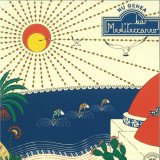
Four years after Nuova Napoli, Nu Genea are back with Bar Mediterraneo, a new album and journey, which projects the sounds of the Neapolitan duo formed by Massimo Di Lena and Lucio Aquilina even further.
Nu Genea's Bar Mediterraneo is an idea of a shared place where people meet and fuse together; a space that leaves its doors open to travellers and their lives, always exposed to the whims of fate. Some of this can be experienced through the multitude of sounds that come together in the tracks, layers of different acoustic instruments, voices and synthesizers merging in a unique musical blend.
Opening up to the voices of many different people, separated by languages but united by the sea and the music, Nu Genea's hometown, Napoli, becomes a true place of encounter.
You can hear this all along. In "Gelbi", a gorgeously deep and propulsive Ney flute plunges into murky waters of the melancholic Tunisian dialect sung by Marzouk Mejri. In "Marechia'", unbridled happiness and sun ooze from the delicate vocals of Célia Kameni and create an acrobatic bridge between French and Neapolitan language. In "Straniero", your soul is arrested from the moment the slow spell-binding mandolin ignites the hypnotic patterns recorded by the legendary Afrobeat drummer Tony Allen. In "Bar Mediterraneo", the title track, bittersweet guitar’s riffs, analog waves and choirs are overwhelming the song giving you what you would like to hear on a boat trip along the Amalfi Coast.
Nu Genea couldn't afford to overlook their firmly anchored roots into the Neapolitan culture and its dialect with "Tienaté", where the power of neapolitan language (interpreted by Fabiana Martone) supports those quarter-tone strings and the uncessant folk-disco groove that spreads to the entire song. In "Praja Magia", repetitive mandolin riffs lead the song, giving space to a choral yet tight vocal line that speaks of Varcaturo, a village close to Napoli. In "Rire", a volley of poetic, deceptively laidback, lyrical fury interpreted by Sicilian Marco Castello intimately combines with a highly musical, multi-textured instrumental backbone and the swoon of a chanson in its heart. In "La Crisi'', the lyrics of a Raffaele Viviani’s poem from 1930 have been adapted to a laidback jazz-funk groove in full NG style. In "Vesuvio", revaluing the evocative verses and powerful mantra of Vesuvio, Nu Genea re-adapted to the dancefloor a folk song by the working-class band E’ Zezi from Pomigliano D'Arco, combining the voices of a school choir with Jupiter-6 arpeggios and bold percussions.
Bar Mediterraneo is the place where people constantly return to transform curiosity into participation, tradition into sharing, unfamiliar into familiar. When travellers come through its “doors”, carrying their treasures of words and emotions, they aren’t strangers any more. They take part in a shared experience, enriching themselves and others by leading to unexpected musical journeys.

9
Colombia's finest purveyor of all things jazzy and musical, Felipe Gordon is back on Local Talk with a double album, but this time around he's going all live.
Together with his 8 piece band, Felipe has recorded a "Live Session" that perfectly explains how live played jazz, funk and fusion work so well with electronic dance music.
Over eight compositions, Felipe and his band explore everything from downtempo jazz-funk (example, check 'Wes'), jazz-fusion (example, check 'Socorro Y Jupiter'), jazz-house (example, check 'Strings Of The Afterlife').
There's even a great disco-funk cover of Gypsy Woman for added dance floor effect.
All together, this is a beautiful session where Felipe and his friends showcase what you can expect when you experience this band live on stage...Bogota style!

- A1: Willow Weep For Me
- A2: Chances Are
- A3: Jumpin' Jupiter
- B1: Stop And Listen
- B2: At Last
- B3: Soul Walk
- B4: Worksong
Mit “Stop And Listen” gelang dem Hammond-B3-Organisten Baby Face Willette 1961 ein Album, das in keiner Soul-Jazz-Sammlung fehlen sollte. Zumal es auch Willettes letzte und beste Aufnahme für Blue Note war. Kritiker nennen diesen Klassiker oft in einem Atemzug mit Grant Greens Blue-Note-Debüt “Grant’s First Stand”, das kurz zuvor mit exakt der gleichen Besetzung eingespielt worden war.
- On Jupiter
- Ufo
- Seductive Fantasy
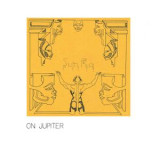
A cosmic fusion of deep funk, interstellar jazz, and avant-garde soundscapes, On Jupiter stands as one of Sun Ra"s most iconic releases. Recorded in 1979 during a prolific period at Variety Arts Studios in New York, this album captures the Arkestra at the height of their creative powers, blending futuristic improvisation with infectious rhythms and otherworldly textures.

11
Der britische Jazz-Produzent Daylight Robbery kehrt mit seinem neuen Album Third Island Suite (auch bekannt als Third Eye Land) zurück, das über Melting Pot Music auf LP und digital veröffentlicht wird. Eine fesselnde Fusion aus Spiritual Jazz, Fusion und Hip-Hop, die in Zusammenarbeit mit dem renommierten New Yorker Pianisten Nick Marks entstand.
Als Nachfolger seines Debütalbums Moons of Jupiter aus dem Jahr 2022 lässt sich Third Island Suite von John Fowles’ metafiktionalem Klassiker The Magus inspirieren und erkundet klanglich eine Welt psychologischer Illusionen und meisterhafter Täuschungen. Das Artwork hat der Kölner Illustrator Jens Roth entworfen.

- A1: Fujitronic (Flute Mix)
- A2: Money Palaver (Extra Warm Mix)
- A3: Jupiter Rising (Disco Dub)
- B1: Otto Part 1 (Synthethic Dub)
- B2: Artificial High (Rhythm Mix)
- B3: Artificial High (Vocal Mix)
- B4: Clave Song (Extra Dubbed Mix)
- B5: Anthem (Room Dub)
- C1: Musical Message (Disco Dub)
- C2: Otto Part 4 (909 Mix)
- C3: Message (Room Dub)
- C4: Tronic Rhythm (Flute Dub)
- D1: Ritm Dub (Piano Mix)
- D2: Kabu Anthem (Cosmic Dub)
14
"No Warranty Dubs" is made by a logic powerhouse combination, Jimi Tenor & Kabukabu meets DJ Sotofett, with most of what you can expect from all parts involved. You're served Afro Dub & Jazz in a bold and classic sonic execution. Through all 15 cuts the echoes are real and rhythms upfront, with proper extended Disco Dubs and versions of Afrobeat and Free Jazz contrasting body and soul. The album is tuneful and rugged, some cuts have vocals & synth swimming alone, while others glue the drummers groove to slick piano from beginning till end.
Followers of Jimi Tenor's life in music will be able to dive into his trademark song writing, signature flute breathing and indistinguishable style of saxophone playing, as well as his tender and electrifuingly psychedelic vocals known from early days of Puu/Sähkö and Warp releases. Kabukabu's heavyweight instrumental performance trancends regular studio recordings with joy and precision as a core element. Kabukabu's Ekow Alabi Savage aka Ekowmania (from last years "Dr.Afrodub" album) embeds deep rhythm knowledge throughout the entire musical landscape. Last in the chain is DJ Sotofett, producing and mixing his probably most classically crafted output to date. With silky gloves and clanking wrenches every element has been tweaked, re-mixed & dubbed excessively to justify a fully musical, psychedelic, warm and rhythmically rich experience.
"No Warranty Dubs" is as warm as the chords of "Money Palaver (Extra Warm Mix)", and as bombastic as opening track "Fujitronic (Flute Mix)". The album reaches it's most tender moments with the sweet "Musical Message (Disco Dub)" and dives straight into obscurity when guest drummer Ilmari Heikinheimo contributes to "Otto Part 4", a rare freejazz cut with TR-909 tickering from start til end. The simplicity of "Tronic Rhythms (Flute Dub)" is worthy a tear in an eye, while brittle souls can scatter to the thunderous horns and drenched rhythms of "Kabu Anthem (Cosmic Dub)".

After a year-long creative process fueled by collective composition and live jam sessions, Gin Tonic Orchestra returns with "Let The Children House" on Floors Records. The EP is a testament to their ever-evolving sound, deeply rooted in live improvisation and the spirit of club music.
Recorded in the heart of the Alps at "Maison des Artistes" in Chamonix, the band surrounded themselves with legendary analog synthesizers—ARP 2600, ARP Odyssey, Clavinet D6, Fender Rhodes MKII, Jupiter 4, Jupiter 8, JX-8P, Korg M1, Moog Subsequent 37, OB-X, Oberheim SEM, Roland MV8000, Wurlitzer—to sculpt a sound pulsating with the hypnotic grooves, euphoric synths, and raw underground spirit of '90s house music. Each track was shaped with care, influenced by the group's diverse influences and their shared vision of an immersive dancefloor experience, embracing the hypnotic trance of repetitive music that blurs the line between consciousness and surrender.
Much like children lost in play, Gin Tonic Orchestra embraced chaos, letting their creativity flow freely, drawing inspiration from their mentors, and the stories passed down through club culture. The result is an EP that not only embodies their musical identity but also carries a bold statement: "Let The Children House" is a call to let artists create without constraints, a message of artistic freedom in an industry often driven by formulas.
With a background that includes a debut EP on Mother Tongue, a standout performance at Nuits Sonores ranked in Resident Advisor's Top 5, and collaborations with UK jazz-funk legend Kaidi Tatham, deep house master Ron Trent, and the H2H project led by Chez Damier & Ben Vedren, Gin Tonic Orchestra continues to push boundaries between live music and electronic culture. Their new release is both a tribute to the past and a step into the future—a journey where house music is not just played, but lived

- 1: Peach Blossom Paradise
- 2: Demon Cicadas In The Night
- 3: The Cold Curve
- 4: Saying Yes To Everything
- 5: Lighthouse
- 6: Revisionist Mystery
- 7: The Meander
- 8: The Wheel Of Persuasion
- 9: Another Tomorrow
- 10: Common Exotic
Prairiewolf make easy listening music for an age of fracture. They almost do it in spite of themselves. No one can seriously question the head music bona fides of the members of this Colorado-based trio.
Guitarist Stefan Beck has already assembled a formidable discography of jewel-toned guitar zone-outs under his Golden Brown moniker. And keyboardist and guitarist Jeremy Erwin and bassist Tyler Wilcox have both made their reputations as chroniclers of the vast world of out-music. Erwin helms the indispensable Heat Warps blog, a performance-by-performance archive of Miles Davis’s labyrinthine electric period. And Wilcox has been covering the ragged edges of psychedelia and experimental rock at Aquarium Drunkard and other publications, not to mention his own virtual basement for heads, the great bootleg blog Doom and Gloom from the Tomb.
These guys come by it honestly. And yet, given their backgrounds, Prairiewolf’s self-titled debut last spring was remarkably free of face-melters, brown acid blowouts, and ascendant spiritual jazz odysseys. Instead, they dropped a record of beautiful, elegant, low-key cosmic groovers that sounded like the piped-in background music to a resort hotel on Jupiter. It was an unlikely psychedelia, brocaded with mid-twentieth century sonic threading from the hi-fi era: vintage synthesizers, smears of spaghetti western, luxe tropical details, the faint schmaltz of space age pop. Imagine something like a Harmonia residency in the airport lounge. And yet somehow it all worked brilliantly. Prairiewolf became last summer’s cool-down standard. After a year woodshedding around Colorado’s Front Range region, the Prairiewolf boys have fired up their trusty Korg SR-120 drum machine for another outstanding collection of suborbital exotica. The appropriately titled Deep Time operates in its own chronology, unspooling at its unhurried pace. All its incongruous period and stylistic references—the new age pulses, Hawaiian steel, shaggy hippie rambles, lysergic guitar spirals, and orchestral synthesizer flourishes—float atop the album’s own singular temporality. Deep Time makes its own time.
From the moment Beck folds his slide guitar, origami-like, into a sound resembling the call of gulls on the tranquil album opener, “Peach Blossom Paradise,” there is a sense of departure from everyday life. The shimmering “Lighthouse” has a similar sunbaked nonchalance, like an afternoon passed day-drinking in a seaside bar. That they named their lush, kaleidoscopic downtempo track “The Meander” pretty much says it all. The ranging, propulsive “Saying Yes to Everything” seems like a nod in the direction of Rose City Band’s brand of wookie krautrock. And the motorik noir of “Demon Cicadas in the Night” also goes hard. Beck and Erwin’s intertwined guitar jam on the eerie album standout “The Cold Curve” evolves into something that sounds like primitive computer music. A genteel bassline from Wilcox on another album highlight, “Revisionist Mystery,” sets the stage for a loopy space jazz turn from guest clarinettist Matt Loewen of Rayonism. The title of post-rock cowboy tune “Another Tomorrow” might refer to the alternative future that so many critics heard in the music of Prairiewolf’s first album. Or it might simply refer to the persistence of time, however deep. Either way,
I’m thankful for the way Prairiewolf make each of their tunes a little oasis or sanctuary, each subsisting according to its own crystalline little logic for a few minutes. It is no simple task to filter out the omnipresent anger and anxiety of everyday life these days. But Prairiewolf are out here making it seem easy.
Brent S. Sirota

12
Hailing from the Democratic Republic of the Congo, Afropop, funk, rock and jazz outfit Jupiter & Okwess returns with the explosive ' Na Kozonga' album, a blast of energy that bewitches the body and feeds the spirit . Their latest invites guests from around the world
From the samba of carioca Rogê to the rap of Brasilian pioneer Marcelo D2 , via the horns of New Orleans' Preservation Hall Jazz Band or the voice of the militant Chilean singer Ana Tijoux , the guitar riffs of French guitarist Yarol Poupaud or soulful voice of American vocalist Maiya Sykes , Jupiter & Okwess have no fear of strange encounters, nor the craziest journeys.
Produced in Los Angeles at the studios of Mario Caldato Jr (Beastie Boys, Seu Jorge, Beck, Bjork, Blur, John Lee Hooker, Manu Chao).
They have toured the US including Central Park Stage, NewOrleans Jazz & Heritage Festival and Outside Lands. They performed on NPR's Tiny Desk and they were booked on Bonarroo 2020 before its cancellation.
Jupiter & Okwess previous album is also available on CD/LP. 'Kin Sonic" was voted Best Album by the NY Times in 2018 and a pick on Obama's playlist that year.
l 12: Bolingo (Ça Va Saravá) feat. Rogê

8
At once a spiritually-charged journey and a shit-kicking party record, American Cream Band comes to Quindi covering all the bases.
American Cream Band was formed by Twin-Cities musician Nathan Nelson around 10 years ago, taking the form of improvised live shows and albums Frankensteined from these sessions into exultant, fully-formed records you can sink your teeth into. The trick with improvised music is to start with intentions, however abstract they might be, and Nelson leads his rolling cast of collaborators into the creative fray with subtle guidance which drives the impulsive musical moment forward.
The band's previous records have manifested on labels like Moon Glyph and Medium Sound, and now Presents arrives in a freewheeling flash of snappy new wave, skronky sax, call and response sass and some krautrock-minded sonic cosmology. The album came together in December 2021, when Nelson took ten musicians to legendary studio Pachyderm in Cannon Falls, Minnesota. Living together, eating together, and with Nelson quietly setting up his low-key magick intentions around Jupiter's planetary frequency and the studio's abundance of elephant statues and carpets, they laid down some drum-heavy sessions that became the building blocks of the record.
'Taste What We Taste' is the perfect example of an exuberant groove pounded on skins as a vessel for a joyous get-down, with the singers and players free to freak out on top. Nelson remains at the centre of the melee, throwing half-sardonic, half-heartfelt calls out for connection. 'Banana' celebrates nonsense and holds down the most serious of beats - a disco-not-disco deadeye dripping in late night sleaze and lysergic potential. On 'Royal Tears', the jagged guitar chops call back to Gang Of Four, while the hot n' heavy sax from Cole Pulice baits James Chance and all the other angular New York un-jazz misfits.
Amongst his other implied intentions for the recordings, Nelson wanted to channel opposites, not least the distinct male-female energies in his vocal sparring with the girls on assistance duties. It wouldn't be right to call them backing singers as they shoot back at his punchy mantras, bringing a certain fierce femininity that tips its hat to The B-52's Cindy Wilson and Kate Pierson, not to mention iconic post-punk bands like Au Pairs, Delta 5 and Bush Tetras.
There's space for the dreamier kosmische which has crept into the American Cream oeuvre in the past, as 'Sirens' opens the album up in a swirling pond of rag tag percussion and molten synths. 'Words Would Handcuff Us' cools the whole riotous assembly down in unmoored perfection, a strung-out Bossa nova seance dusted with celestial drips from analogue spaceships.
Equally treading the line between light and dark, conscious and unconscious, the sacred and profane, Presents is a life-affirming, creep-under-the-skin listening experience - a joyously transient chapter in the evolution of American Cream Band.

12
The latest full-length from Kishi Bashi, Kantos is a work of exquisite duality: a party album about the possible end of humanity as we know it, at turns deeply unsettling and sublimely joyful. In a sonic departure from the symphonic folk of his critically lauded 2019 LP Omoiyari - a career-defining body of work born from his intensive meditation on the mass incarceration of Japanese-Americans during World War II - the Seattle-born singer/songwriter/producer's fifth studio album encompasses everything from Brazilian jazz and '70s funk to orchestral rock and city pop (a Japanese genre that peaked in the mid-'80s). Informed by an equally kaleidoscopic mix of inspirations - the cult-classic sci-fi novel series Hyperion Cantos, the writings of 18th century enlightenment philosopher Immanuel Kant, a revelatory trip to ancient ruins on the island of Crete - Kantos ultimately serves as an unbridled exaltation of the human spirit and all its wild complexities. During the earliest stages of creating songs for the album, Ishibashi's main intent was to return to his highly eclectic musical roots, in part by tapping into his jazz background and by delving into the dance-rock-leaning sensibilities he previously embraced as co-founder of Brooklyn-bred indie band Jupiter One. But not too long into the songwriting process, he stumbled upon an AI-equipped website capable of composing catchy song hooks based on a prompt - a turn of events that quickly catalyzed the existential inquiry at the heart of Kantos. Although his ruminations on AI, transhumanism, and humanity's troubled fate indelibly guided the making of Kantos, Ishibashi nonetheless views the album as "less of a warning about this kind of hubris but more a celebration of the very characteristics that make us human: desire, passion, empathy, and love." "If there's anything I want people to come away with when they hear this record, it's a feeling of excitement about the possibilities of human-created art," he says. "Even as we're learning more about all the amazing things AI can do, I think humans will always be one step ahead in terms of our creativity and innovation. There's still no limit to what we have to offer."

- A* | Blood (1:08)
- A1: Bullies Of The Block (4:55)
- A2: Everything’s Everything (3:47)
- A3: Shammy’s (4:16)
- A** | Heat Mizer (1:08)
- B1: Six Tray (4:39)
- B2: Danger (3:58)
- B3: Inner City Boundaries (4:39)
- B* | Bomb Zombies (1:06)
- C1: Cornbread (4:21)
- C2: Way Cool (4:22)
- C3: Hot Potato (4:30)
- C4: Mary (3:45)
- C5: Park Bench People (4:59)
- D1: Heavyweights (6:11)
- D* | Tolerate (1:01)
- D2: Respect Due (3:53)
- D3: Pure Thought (3:14)
18
2024 Repress
Innercity Griots, the second album from Freestyle Fellowship, is perhaps *the* essential West Coast left-field rap album of the early ’90s. Released in 1993 on 4th & Broadway, it’s a towering, progressive hip-hop masterpiece that expanded rap’s boundaries through lyrical elevation and production innovation. Their talent was ahead of everybody else by light years. This is pure b-boy jazz.
The original single vinyl LP is now hideously scarce, and of course the sound suffers from not being officially released as a double. This Be With re-issue fixes both problems, and for completeness also includes “Pure Thought” from the CD version of the album. This incredible display of imaginative hip-hop sounds better than ever.
Freestyle Fellowship were some of the earliest technically dazzling rappers to come out of California. Mikah 9, P.E.A.C.E., Aceyalone and Self Jupiter - along with DJ Kiilu - forged their famed lyrical dexterity in the ultra-competitive crucible of the Good Life Cafe. Founded in Leimert Park, South Central LA in December 1989, this earthy health-food store and cafe was where the city’s finest microphone fiends would gather to showcase their freestyle skills at the Thursday night open-mic.
Innercity Griots has been described as the Rosetta Stone for rap styles. The group’s dense, vibrant wordplay and enviable interplay quickly earned the attention and respect of the city’s hip-hop underground. Frenetically trading acrobatic rhymes with agility and grace, the Fellowship used their voices as instruments like true virtuosos, spraying improvised raps like a Coltrane sax solo.
With the bulk of the album’s production handled by The Earthquake Brothers, and Bambawar, Daddy-O, and Edman taking over for some of the tracks, Innercity Griots dances between organic and programmed music, largely forgoing sampling and instead built around live jazz jams. The likes of Freddie Hubbard’s “Red Clay” and Miles Davis’s “Black Comedy” were used more as templates for house band The Underground Railroad Band to spiral out from. As Pitchfork noted in their recent 9.0 review of this classic album, “Freestyle Fellowship embodied the style and spirit of jazz on a molecular level. They shared the effortless cool and tough countenance of the great bebop players from the ’50s without verging into jazz-rap parody. Their innate jazziness felt tangible and hard-earned”.
The unusual approach to the music was matched by the Fellowship’s lyrics. Eschewing the tired rap tropes of the time, this multifaceted album instead explores their ruminations on greed and homelessness, weed, sex, survival, insecurity and tribalism.
Remastered by Simon Francis for double vinyl and cut by Pete Norman, we hope this long-overdue re-issue of Innercity Griots satisfies the legions of fans that have since been bewitched by the majesty of this record. It should also introduce some new listeners to yet another overlooked classic.

12
Betamax of The Comet Is Coming and Pete Bennie of Speakers Corner Quartet are Coma World. They have come together again to produce a further batch of rhythmically enlightened Dystopian Jazz, alongside illustrious graphic and sound artist Raimund Wong (Floating World Pictures) for this record - 'Coma Wong' (out 6 October 2023 on Byrd Out). The storm clouds are gathering at sea, with the white horses dancing ever faster on the waves. Coma World chose to ride out the tempest, sail up, speeding along together towards who knows what… Expect drums precision engineered with just the right degree of insouciance, drone-bathed sounds rippling and depth charge bass that explodes beneath the surface across 12 tracks. The Wire on their first album, the self-titled ‘Coma World’: “a bold drum ‘n’ bass affair, a nervy meeting between dub and jazz experimentations with new channels explored track by track”. Tom Ravenscroft on BBC 6 Music on ‘Calamari’ from the new album: “I think this is like my favourite track right now… Love it.”

17
Innercity Griots is an album with a legendary status among fans of hidden Hip Hop gems of the 90's.
At the heart of Innercity Griots is the unique sound and style of Freestyle Fellowship. This group of four talented MCs (Aceyalone, Myka 9, Self Jupiter, and P.E.A.C.E) and their producer, J-Sumbi, created a sound that was both experimental and deeply rooted in the traditions of hip-hop.
The sound of the group is recognizable with a unique jazz-infused style. What really sets the group apart from other jazz-influenced Hip Hop from that era is their incredible lyricism. The raps are packed with dense wordplay, complex metaphors, and social commentary. This all together makes it a rich and rewarding listen.

- A1: Only Love Feat Lou Rhodes
- A2: Letting Go Feat Andrew Ashong
- A3: Afronaut Feat Amp Fiddler & Laville
- A4: Babylonian Triangle Of Captivity Feat Ebi Soda
- A5: Time Gets Wasted Feat Sly5Thave & Denitia
- B1: Automation Feat Oscar Jerome & Joe Armon-Jones
- B2: Running Away Feat Jazz Ahmed & Laville
- B3: Petrol Head Feat Laville
- B4: Detroit Velvet Smooth Feat Yazz Ahmed
- B5: Jupiter Feat Kennebec
10
Four years on from his explorative third full-length ‘Aquamarine,’ Londoner Ash Walker returns with an equally ambitious follow-up, set for release via Night Time Stories on 30th June. Alongside a plethora of award-winning collaborators and combining a dizzy- ing array of sounds, ‘Astronaut’ hears Walker push his astral shower of rhythm and vibes to new heights. If 'Aquamarine’ was the take-off of his audial spaceship, ‘Astronaut’ is the cosmic voyage reaching terminal velocity; a rocket-powered masterclass spanning jazz, blues, soul, funk, and reggae.
An avid record collector, Walker has DJed far and wide... from the infamous Royal Mail squat party to the canals of Venice, spinning vinyl in Brixton with The Specials to scattering dub across San Francisco and LA. His own production output is similarly explor- atory: his journeys have taken him far and wide, from tunnels under the river Thames to recording local percussionists in the Atlas mountains of Morocco. Inspired by a deep dive of sounds from artists includ- ing Duke Ellington, Quincy Jones, King Tubby, Bo Diddley, 4Hero, J Dilla, Pete Rock, Curtis Mayfield, Philip Glass, and Steve Reich; his first two albums, ‘Augmented 7th’ (2015) and ‘Echo Chamber’ (2016) gained attention from the likes of BBC 6 Music DJs Gilles Peterson, Don Letts and Gideon Coe.

8
2023 Repress
it was in february 2015 when japanese producer and sound designer kuniyuki takahashi, sometimes known as koss, releases with the ep 'newwave project '2' a record, that tapped some roots of his musical education: new wave, german electro punk from bands like a daf, ebm from acts like front 242 as well as industrial music.
styles, about kuniyuki claims that they are his 'favourite music'. now, nearly two years after his first newwave project ep, he drops an album that is leaning towards his musical love from the past. compared to his former work, that was rooted in worlds of classic, jazz, house, ambient, and electronic song-writing, his new tunes are full of melodic drifts and rhythmical shifts.
as usual all is loaded with tones and rhythms straight from the heart that filter and modulate human emotions without losing their natural source. to get a sound that is fresh but still leaning to the 1980ees, he used some old synthesisers like a roland jupiter 8, a juno 60, a korg ms 20, an old tape echo machine but also new instruments like the roland aira. furthermore, his modular synthesizers talk too.
instead of having a masterplan, kuniyuki just made sound, drifted on his machines and moved into a territory, that his far away from his former sound. also the use sampled voices and other alienated sound sources of unknown origin inject his new tunes otherworldly atmospheres.
his skills as a fine instrumentalist is evidence as kuniyuki also played the piano, percussions or flute, if he felt their warm sound is needed for his freely grooving tracks. some dance in a house or techno outfits.
other slam like a mix of funk and ebm. tunes like 'puzzle' or 'body signal' are twisted treasures that bemuse deeply. in-between you hear the echoes of cosmic spheres, the darkness of the cold war days and some bewitching tribal jungle vibes. a new, moving, unorthodox and yet catchy side of kuniyuki takahashi.
it is not totally novel to him, as he already released some industrial, ebm and electronic with the project drp in 1990 on the belgium label body records. but for his listeners, that know him for detailed house, jazz and classic or that love him as a man of collaborations who already worked together with artists like innervisions jazz house heavyweight henrik schwarz, the famous japanese pianist fumio itabashi or the british synth-pop protest spoken word icon anne clark, the 'newwave project' sheds a light on a different artistic side of kuniyuki takahashi.
it is diversified, has many rhythmical and atmospheric turns but stays stirring and compelling in all twelve tracks. a true new wave, formed, played in and envisioned with a view on the past that was filtered through the now while feeling the future. the cover art work comes from the swiss artist augustin rebetez - a man who also loves to generate unknown poetic universes in his drawings, sculptures, videos and installations.
