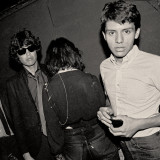
This band, and this album, function as critical missing links that takes one from The Fall to Yard Act, from Television and The Minutemen to Parquet Courts and Sleaford Mods, from punk as a sound to punk purely as an ethos. While any Van Pelt album is a stand alone album, the unique approach they take begs one to enter their world and dig deep in.
RELATED TO: The Lapse, Native Nod, St Vincent, Blonde Redhead, Enon, Jets to Brazil, Vague Angels, Ted Leo and the Pharmacists, American Football, Texas is the Reason.
‘The lines between post-hardcore, indie rock, and emo blurred on the two mid-’90s full-lengths from the Van Pelt.’ Pitchfork
‘New York City’s The Van Pelt are an influential, but too often overlooked indie rock band -- cult favorites for many an emo-inclined crate digger.’ Consequence of Sound
‘...should be mentioned a lot more than they are when you talk about the history of emo.’
Washed Up Emo
Back in the day there was this thing called an A&R guy. They would hang out at small venues looking to throw money at the next big thing. In the early 90s, everyone was looking for the next Nirvana of course. NYC's The Van Pelt had just released an album of anthems called "Stealing From Our Favorite Thieves" that seemed to be just that. The only thing is, they didn't want to sign. Legend has it $2 million was turned down over pierogies and coffee one Monday morning because The Van Pelt didn't want to risk crashing and burning. Instead, they were gunning for a long and stable stride even if that meant they would largely remain out of the public's eye forever.
Lack of willingness to play the game didn't mean people weren't waiting with baited breath for their follow up album though. In 1997 The Van Pelt released "Sultans of Sentiment", an album nearly devoid of the anthems and licks people were expecting. In fact, it's a complete bummer of an album that subjects the listener to the point on life's curve where the hubris of youth gives way to a cresting crashing defeat no kid with heart could ever have seen coming. Seeing as humanity are sick fuckers who revel in the misery of both themselves and others, the popularity of Sultans grew and grew and continues to win new loyal fans even today. It's for this classic album The Van Pelt has never fallen off the radar.
That being said, their swan song "The Speeding Train" was recorded while they were working on their third album. In any other age, in any other way, this song would have been a hit. The Van Pelt broke up mid-recording, released Speeding Train as a single, and the rest of the songs from that session didn't see the light of day until they were released in 2014 as the "Imaginary Third" lp.
Why are we here talking about them today in 2023? Because in preparation for the release of "Imaginary Third" The Van Pelt started playing some reunion shows. Soundchecks revealed to them that this band has a voice that was prematurely muted by their inability to see clearly in the thick of it. Returning to explore just what that is 25 years later has led to this first collection of 9 songs, "Artisans & Merchants". This is not a reunion album. This is vindication for that decision made over pierogies and coffee decades ago. The Van Pelt is a band in it for the long haul, free from whatever trappings the mayflies of trends and markets may bring.
For lovers of The Van Pelt, listening to "Artisans & Merchants" is like hearing the voice of a dear friend you haven't seen in years, a friend you used to share countless beers with over banter that went nowhere other than delivering a solid night. Your friend is older, they've changed. In some ways you're worried for them, looks like they might be teetering on the brink of something. In other ways it's the same old them, a nugget of a soul too unique to ever be altered. It's for those unfamiliar with The Van Pelt though for whom we should be truly jealous. This is a stand alone album, incredible vital song writing in and of itself regardless of the long history this band has. The climax of the single "Image of Health" perhaps describes the beautiful desperation best: "And you never felt more alive / Than when the priest came to read you your rites!"
Поиск:jus nowhere
Все
First time on LP worldwide / New liner notes by Graham Parker / Includes the fan favourites "Blue Horizon," "I'll Never Play Jacksonville Again," and "Socks 'N' Sandals" / Packaged as an LP with bonus 7" single / Remastered for vinyl by the album's original co-producer and engineer, Dave Cook / Graham Parker has been pre-promoting this upcoming LP release from the stage/ Graham Parker's fifteenth studio album, Deepcut to Nowhere, was first released by the independent label Razor & Tie in 2001. Parker recalls, "Within weeks after the release date of Deepcut to Nowhere, I was up early driving from New York State to Boston on what seemed like the most beautiful day in the history of autumn, to rehearse with the Figgs for a festival in Oregon, slated for a few weeks later, followed by a tour to support the album. That day was September 11th, 2001." In the aftermath of the attacks, Parker comments, "The press members I spoke to could barely get past the first track on Deepcut to Nowhere, 'Dark Days,' asking me if I was some kind of 'seer,' or had a mysterious crystal ball. Followed by 'I'll Never Play Jacksonville Again,' the opening salvos of the album seemed to capture imminent trauma, but of course, I was just writing songs." As the 12-song set progresses, Parker's focus expands to include the nostalgic "Blue Horizon" ("as emotionally rich a song as I'll ever write"), a dark-humoured take on the evils of colonialism ("Syphilis and Religion"), and the indignity of wearing socks with sandals. Taken together, Deepcut to Nowhere is among Parker's finest and most varied collections of songs, several of which have gone on to become setlist staples. Deepcut to Nowhere, originally released on CD only, finally makes its worldwide LP debut.
- Blue Eyed Elaine (Ernest Tubb)
- Don't Be Ashamed Of Your Age (Cindy Walker, Bob Wills)
- I Forgot To Remember To Forget (Charliefeathers, Stan Kesler)
- I Love You Because (Leon Payne)
- Pistol Packin' Mama (Al Dexter)
- Saginaw, Michigan (Bill Anderson, Donald Wayne)
- Old Dogs, Children And Watermelon Wine (Tom T. Hall)
- Old Cape Cod (Claire Rothrock, Milton Yakus, Allan Jeffrey)
- Death Of Floyd Collins (Andrew Jenkins, Irene Spain)
- Blue Side Of Lonesome (Leon Payne)
- In The Garden (C. Austin Miles)
- Justthe Other Side Of Nowhere (Kris Kristofferson)
- Old Rugged Cross (George Bennard)
- Where The Blue Of The Night (Bing Crosby, Fred E. Ahlert, Roy Turk)
Jonas Munk closes his ambient trilogy with mammoth drone pieces, multi-layered guitars and hymnal krautrock. "Mirror Phase" concludes a trilogy of minimal ambient albums in Munk's (Causa Sui) own name. These eight compositions, based on guitar and synthesizer loops, marks a return to the warmer sounds Munk is often associated with. Sonic structures that slowly and gradually evolves and changes, like cloud formations in the sky. The title track, "Mirror Phase", is Munk's most expansive drone opus so far. It's a carefully arranged piece where sounds that oscillates with the same interval, but at different phases, are continuously added, hence creating shifting patterns throughout the track's nearly 18 minute duration. Elsewhere, in "Transition", multi-layered guitars creates the sonic equivalent of waves gently splashing on the shore. "At a Distance" creates a haunting, and hypnotic, soundscape by using slightly out-of-tune analog synthesizers, summoning the transcendent krautrock of Popol Vuh. And "Rise", as well as the closing track, "Return to Nowhere", recalls the glistening sounds of his Manual releases. "Mirror Phase" might just be Munk's ambient oeuvre reaching its zenith. The CD edition comes with an extra CD with Jonas Munk's 2021 album, "Altered Light", which has previously only been released on digital download and streaming.
Lili Holland-Fricke and Sean Rogan’s debut album “dear alien” is a constellation of radiant improvised impulses, imagined in lucent fragments of cello, guitar and voice. Spacious, tender and glistening with rich electronic distortion, the record melds a spectrum of processed and natural sound as the artists invite listeners into their dreamlike world of synergetic introspections.
Cultivated through a shared spirit of resourcefulness and play, “dear alien” emerges as an organic meeting place in the compositional output of British-German experimental cellist Lili Holland-Fricke and Manchester-born guitarist and producer Sean Rogan. Having studied their respective instruments at the Royal Northern College of Music, both artists have flourished in eclectic solo and collaborative projects, creating intricate and intimate spheres of sound with a deep appreciation for songwriting and improvisation.
Holland-Fricke’s transition from the classical world to writing her own material, and later vastly expanding her palette with electronics, first converged with Rogan’s distinctive flair for production in 2022 on her EP “birdsong for breakfast” and single ‘draw on the walls’. Now, the duo present an album envisioned through true ‘50/50’ collaboration during the summer of 2023, written across two intensive weeks of improvising and experimenting at Rogan’s Greenwich home studio. A convergence of the artists’ sounds and influences, the music was fostered by the idea of making an album with ‘no plan’ and their shared recent discovery of Arthur Russell, to whom the final track is dedicated.
“dear alien” assembles eight compositions that emerged naturally as the duo created sketches with cello and pedals, guitar, tape loops and poetic vocal musings, forming songs that explore themes of waiting, circling back around, and glitchy communication. Moments of drifting through pillowy layers of sound contrast with saturated visions of electronic modification, where the record’s glowing instrumental contours are pushed to the extremes.
The plaintive shades of ‘half blue’ and meandering deliberations of ‘slow thing’ are teased by the friction of static signals and a sense of ever-mutating sonic mass – a sensibility most acutely realised in ‘dawning’, where cello-vocoder eruptions grow in magnitude, the absence of sound between them burdened with something sinister and unspoken. As the artists expand on this piece, ‘It’s the sound equivalent of squeezing your eyes shut to shield against the brightness of something you don’t want to see, only to find that each time you open them again the world is not softening but getting more relentlessly overwhelming, to the point of being totally blinding.’
Three tracks with lyrics – ‘at first’, ‘dear alien’ and ‘seem asleep’ – refract the album’s wistful and melancholic colours into poetic imagery and metaphors, ushering in reflections on relationship tensions and someone close feeling unknown, with hints towards wider unsettled feelings about climate change. In the spirit of lyrical improv, ‘seem asleep’ compiles lone lines from Holland-Fricke’s journals into a cut-and-paste collage around hopeful patience or futile lingering – either way conjuring a softness that welcomes the hazy ambience of ‘for a. r.’, the final composition which soundscapes the summer days spent making the album. As the artists describe of this track, ‘The music kind of leads somewhere, but then kind of leads nowhere, and just meanders around where it is, content to just be walking in a circle back to where it started.’
Ramkot is a wrecking ball from Ghent, Belgium, playing powerful yet danceable rock music. After two EP’s and building a reputation as one of the most exciting live bands around, the spring of 2023 sees the release of debut album In Between Borderlines, a razor-sharp 25-minute uppercut aiming for both head and hips. They tour extensively, playing a hefty 100 shows in just one year: from steamy venues and sun-drenched festival stages (Pinkpop, Down The Rabbit Hole) to even opening for Metallica in Amsterdam. For their sophomore album, instead of producing it themselves again, Ramkot enlist producer Alain Johannes (QOTSA, Eagles of Death Metal, Them Crooked Vultures), who invites them to the Joshua Tree desert. For three weeks, Ramkot reside in the legendary Rancho De La Luna studio, famous for QOTSA frontman Josh Homme’s The Desert Sessions. ‘We pulled out all the stops, not pushing our foot down on the accelerator all the time, which allows the music to breathe more. There’ll be a couple of softer songs the fans will not be expecting from us.’ But rest assured, every single note still sounds very much like Ramkot. The band will only play a handful of shows this year, including 2000 Trees (UK), Sziget (H), Pukkelpop and Lowlands.
How wild did things get in 1967? So wild that a label (Audio Fidelity) not particularly known for its hipness put out a record with an insert to send away for “psychedelic ornaments” so you, too, could throw an acid party! And the back cover offered “instructions” referencing everybody from Emmett Grogan of the Diggers to Albert Hofmann, the discoverer of LSD. But perhaps the most amazing thing about this album was that, despite its almost comical (though well- informed) attempt to cash in on the psychedelic craze, How to Blow Your Mind and Have a Freak-Out Party wound up being a charming and even entrancing psych-pop gem of a record, albeit one with its requisite share of Eastern-influenced mumbo-jumbo. For its first-ever American vinyl reissue, we’re pressing up just 500 copies in “orange sunshine” vinyl, complete with the insert (you can try sending it in, but don’t get your hopes up). Groovy, man!
Where would a painter paint if it were not on a white canvas? Where would a composer compose if it were not on the stave and the spaces in between the lines? How would a musician play his instrument if there were no melodies composed, written down, painted for him to follow?
The magic of art needs a frame, a somewhat solid container to hold the freedom that can only be found once we integrate some form of structure. And that also holds in every other area of life. We all need a frame, a structure, a rhythm, or else, we fall apart. This human form needs the body, and yet it transcends the limitations of the body - through art.
Consistency being one of them seems oftentimes less tangible, for it resides more in the act of doing, and showing up for the practice, for devoting energy and presence. Strangely, if we consistently show up for our practice, regardless of its form, the solid frame of the hour we devote to playing the instrument, learning a language, doing the sport, sitting silently for that meditation: It feels different every single time. It feels new every single time.
The repetitive consistency in being present again and again allows for nothing short of magic to happen. Magic feeds consistency. Consistency feeds magic. Consistency sets a foundation that strengthens over time. It allows us to slowly but surely develop any kind of skill, to find and hence to embody expertise. On the fertile grounds of such a solid foundation, creativity fosters, and innovation blossoms.
Establishing consistent rituals and routines can bring a sense of comfort and safety into every-day-life. For routine beholds repetition and its frame enables our experience within to change. In the familiar, we dare to explore, maybe even experiment, merely because a part of us remembers we depart from, and always return to, a safe space. We do not get lost. We do not fall apart. As we practice, again and again, we build resilience in overcoming obstacles or literally persevering through challenging situations and stretches of time.
While consistency gifts steadiness and stability, its overdose risks to result in what may appear as uniformity. It feels like constantly - consistently - dancing on the fine line of freedom within a structure. Life is filled with unexpected twists and turns, adjustments need to be made to accommodate change and avoid rigidity. By striking a balance between consistency and flexibility, we can create harmony in our lives, just like a beautiful melody that flows smoothly from one note to the next.
Within the magical waves of music, skills are needed, too. Consistency is key to show up and do the work. It frames the freedom of magic that resides beyond and only beyond effort. Learning to play an instrument, learning to sing, does never happen within the blink of the eye. It takes time. Time to show up for the practice, to do precisely that: practice. Again and again, every single time, again and again. Precision feeds perfection that falls apart inside the structure of a song, a line, a rhythm, dissolving into magic.
Consistency in practicing, in composing and sharing music with the world regardless of the form allows any musician to refine his style, to carve out his uniqueness. For any artistic expression is, after all: Unique. And this uniqueness is born inside the vessel of any structure, over and over again. Sharing music in the form of new releases and public performances nourishes the bond between artist and audience. And for that to unfold, both parties need to show up - while the underlying beat of this never-ending practice is presence fuelled by consistency.
The Zeros is a pioneer punk rock band formed in 1976 in Chula Vista, California. Comparisons with The Ramones are often made when describing the energetic and fierce guitar driven sound of the group. The first singles recorded by the band instantly catapulted The Zeros into a top draw on the local scene and have become legendary. Unfortunately, the band never cut an album during these days. Their debut single was released in 1977 on Greg Shaw's very own Bomp! Records. It included 'Don't Push Me Around' and 'Wimp', two of the greatest punk rock songs of all time, both written by Javier Escovedo. It was followed by another single in 1978, "Wild Weekend" and a third one in 1980, "They Say That (Everything's Alright)". This release compiles all their early singles, some rare tracks (including the previously unreleased 'Left to Right') and songs taken from a 1978 live show. Munste is thrilled to reissue this essential '80s power pop gem as part of a series of releases celebrating Bomp! 50th anniversary.
Camelot, the legendary seat of King Arthur's court in Early Middle Ages Britain, was probably not a real place. A corruption of the name of a real Romano-Briton city, the word "Camelot" accumulated symbolic, mythic resonances over centuries, until achieving its present usage as a near-synonym of "utopia." In the mid-20th century alone, Camelot inspired an explosion of representations and appropriations, among them the violent, affectless Arthurian court of Robert Bresson's 1974 film Lancelot du Lac and the absurdist iteration of Monty Python's 1975 Holy Grail, both of which feature armored knights erupting into fountains of blood; the mystical Welsh world of novelist John Cowper Powys's profoundly weird 1951 novel Porius, with its Roman cults, wizards and witches, and wanton giants; and the nationalist nostalgia of President John F. Kennedy's White House. Unsurprisingly there are fewer Camelots in more recent memory. Camelot, Canadian songwriter Jennifer Castle's extraordinary, moving 2024 chronicle of the artist in early middle age, charts a realer, more rooted, and more metaphorical place than the fabled Camelot of the Early Middle Ages (or its myriad depictions), but it too is a space more psychic than physical. In Castle's Camelot, the fantastic interpenetrates the mundane, and the Grail, if there is one, distills everyday experience into art and art into faith, subliming terrestrial concerns into sublime celestial prayers to Mother Nature, and to the unfolding process of perfecting imperfection in one's own nature. Co-produced by Jennifer and longtime collaborator Jeff McMurrich, her seventh record is at once her most monumental and unguarded to date, demonstrating a mastery of rendering her verse and melodies alike with crisply poignant economy. For all their pointedly plainspoken lyrical detail and exhilarating full-band musical flourishes, these songs sound inevitable, eternal as morning devotions. "Back in Camelot," she sings on the lilting, vulnerable title track, "I really learned a lot / circles in the crops and / sky-high geometry." The album opens with a candid admission of sleeping "in the unfinished basement," an embarrassing joke that comes true. But the dreamer is redeemed by dreaming, setting sail in her airborne bed above "sirens and desert deities." If she questions her own agency_whether she is "wishing stones were standing" or just "pissing in the wind"_it does not diminish the ineffable existential jolt of such signs and wonders. This abiding tension between belief and doubt, magic and pragmatism, self and other, sacred and profane, and even, arguably, paganism and monotheism, suffuses these ten songs, which limn an interior landscape shot through with sunstriped shadows of "multi-felt dimensions" both mystical and quotidian. The epic scale and transport of "Camelot," with its swooning strings, gives way dramatically to "Some Friends," an acoustic-guitar-and-vocals meditation in miniature on Janus-faced friends and the lunar and solar temperatures of their promises_"bright and beaming verses" versus hot curses_which recalls her minimalist last album, 2020's achingly intimate Monarch Season. (In a symmetrical sequencing gesture, the penultimate track, the incantatory "Earthsong," bookends the central six with a similarly spare solo performance and coiled chord progression, this time an ambiguous appeal to _ a wounded lover? a wounded saint? our wounded planet?) Those whom "Trust" accuses of treacherous oaths spit through "gilded and golden tooth"_cynics, critics, hypocrites, gurus, scientists, doctors, lovers, government, the so-called entertainment industry_sow uncertainty that can infect the artist, as in "Louis": "What's that dance / and can it be done? What's that song / and can it be sung?" Answering affirmatively are "Lucky #8," an irrepressible ode to dancing as a bulwark against the "tidal pools of pain" and the "theory of collapse," and "Full Moon in Leo," which finds the narrator dancing around the house with a broom, wearing nothing but her underwear and "big hair." But the central question remains: who can we trust, and at what cost faith, in art or angels or otherwise? Castle's confidence in her collaborators is the cornerstone of Camelot. Carl Didur (piano and keys), Evan Cartwright (drums and percussion), and steadfast sideman Mike Smith (bass) comprise a rhythm section of exquisite delicacy and depth. This fundamental trio anchors the airiness of regular backing vocalists Victoria Cheong and Isla Craig and frames the guitars of Castle, McMurrich, and Paul Mortimer (and on "Lucky #8," special guest Cass McCombs). Reprising his decennial role on Castle's beloved 2014 Pink City, Owen Pallett arranged the strings for Estonia's FAMES Skopje Studio Orchestra. On the ravishing country-soul ballad "Blowing Kisses"_Pallett's crowning achievement here, which can be heard in its entirety in the penultimate episode of the third season of FX's The Bear_Jennifer contemplates time and presence, love and prayer_and how songwriting and poetry both manifest and limit all four dimensions: "No words to fumble with / I'm not a beggar to language any longer." Such rare moments of speechlessness_"I'm so fucking honoured," she bluntly proclaims_suggest a state "only a god could come up with." (If Camelot affirms Castle as one of the great song-poets of her generation, she is not immune to the despairing linguistic beggary that plagues all writers.) Camelot evinces a thoroughgoing faith not only in the natural world_including human bodies, which can, miraculously, dance and swim and bleed and embrace and birth_but also in our interpretations of and interventions in it: the "charts and diagrams" of "Lucky #8," a daydreamt billboard on Fairfax Ave. in LA in "Full Moon in Leo," the bloody invocations of the organ-stained "Mary Miracle," and all manner of water worship, rivers in particular. (Notably, Jennifer has worked as a farmer and a doula.) The album ends with "Fractal Canyon"'s repeated, exalted insistence that she's "not alone here." But where is here? The word "utopia" itself constitutes a pun, indicating in its ambiguous first syllable both the Greek "eutopia," or "good-place"_the facet most remembered today_and "outopia," or "no-place," a negative, impossible geography of the mind. Utopia, like its metonym Camelot, is imaginary. Or as fellow Canadian songwriter Neil Young once sang, "Everyone knows this is nowhere." "Can you see how I'd be tempted," Castle asks out of nowhere, held in the mystery, "to pretend I'm not alone and let the memory bend?"
- Zombie Love
- U Can Call Me
- Taylor Swift = Us Soft Propaganda
- Dirty Luck
- Scared Of Nothing
- F.o.b.f
- Empire Service
- Cyclops
- Cool People
- April Ends
Razorlight were at the forefront of the indie-rock resurgence of the early 2000s, their biggest moments - ‘Golden Touch’, ‘Somewhere Else’, ‘In The Morning’, ‘America’ and ‘Wire To Wire’ - driving three Top 5 albums, nine Platinum album certifications, an NME Award, and live highlights including headlining the Reading Festival and performing at Live 8. After reuniting for live shows in 2021, the classic line-up - Johnny Borrell (vocals/guitar), Björn Ågren (guitar), Carl Dalemo (bass) and Andy Burrows (drums) - will release the new album ‘Planet Nowhere’ on October 25th, their first together since 2008. Razorlight preview the set by sharing its first single, ‘Scared Of Nothing’. Since reuniting, Razorlight have sold-out a headline tour which included a London show at the Eventim Apollo, and played shows as guests to Muse, Kaiser Chiefs and James. But as the ever ambitious Johnny challenged himself, “Who wants to be a greatest hits band?” So he hatched a plan, and late in 2023 booked a five-day session with the legendary producer Youth (The Verve, James) at his Space Mountain studio in Spain. Youth knew what they had to achieve, telling the band, “Razorlight’s quite simple isn’t it? Just a driving bassline, driving drums and a story.” For whatever reason, things weren’t that simple. After four days they had a stack of ideas, but nothing really worth pursuing. And then, as Johnny recalls, something remarkable emerged from out of nowhere. “I’d been down in the barranca, and came back up to find the studio empty. So I picked up this weird six-string bass/guitar hybrid I'd never seen before and wrote this thing. On our last night, I started playing it with the guys. The drums came in hard, the bass pounded. It sounded like shit. Absolute shit. But Youth was there, saying 'Can, Velvets, see where it takes you’ and 'Why don’t you try it like that?' But still, the track just wouldn't budge, locked in its own inertia. Youth says, 'You're getting there, just one more' and almost instantly the song came out, from nothing to something, like a statue coming up out of marble.” That song was ‘Scared of Nothing’ and listening back to the finished track, it’s easy to see why it resparked Razorlight’s mojo. Exuding taut, spiky post-punk energy in a way that’s instantly infectious - the very traits that attracted highfalutin praise from NME back when they started out (“More tunes than Franz, more spirit than The Strokes, and more balls than nearly every band out there”). And as ever, Johnny demonstrates the swaggering, high-intensity charisma that took him from being a figurehead of the Camden scene to rise to become a Vogue cover star. It was also the track which unlocked Razorlight’s creativity, leading the band to return to Spain with Youth for a second session earlier this year, during which they crafted an extensive catalogue of songs for the upcoming album. Other titles vying for inclusion include ‘Zombie Love’, ‘U Can Call Me’, ‘Dirty Luck’ and ‘Cool People’. Since returning, Razorlight have also looked back on their initial achievements, first releasing ‘Razorwhat? The Best of Razorlight’ (complete with the new song ‘You Are Entering The Human Heart’) and then last month issuing the 20th Anniversary Deluxe Edition of their breakthrough debut album ‘Up All Night’. Never a dull moment. Writing a new ending for themselves, Razorlight are back to cast out the boring in your life.
After a nine year hiatus SUN AND SAIL CLUB are back and they've come back swinging! This album is more aggressive than the previous album, as if that was even possible. Same line-up as before featuring Scott Reeder (FU MANCHU/SMILE) on drums, Scott Reeder (KYUSS/THE OBSESSED/FIREBALL MINISTRY) on bass, Bob Balch (FU MANCHU/SLOWER/BIG SCENIC NOWHERE/YAWNING BALCH) on guitar and Tony Adolescent (THE ADOLESCENTS) on vocals. The album starts with a mellow jazz guitar piece and then proceeds to rip your face off until the end of the album, which closes with another solo jazz guitar piece. "Shipwrecked" is their strongest album yet. Fully realized and to the point. Fast and dissonant. "This album is a compilation of riffs collected over a nine year period. Most of the songs were written last year but some of them have been floating around for a while. There is a general sense of unease throughout. I wanted to make an album that went one step further than "The Great White Dope." The songs are faster and more intense at times. It's basically the soundtrack of me beating the shit out of my guitar. Then you factor in Scott Reeder on drums, Scott Reeder on bass and Tony Adolescent on vocals and you've got something more than I could have imagined by myself. This album is raw and pummeling. If you're a glutton for punishment this might be your desert Island record." - Bob Balch Recorded at Jim Monroe's The Racket Room, Casa De Balch, and Scott Reeder's The Sanctuary
Red vinyl, limited to 300 copies. After a nine year hiatus SUN AND SAIL CLUB are back and they've come back swinging! This album is more aggressive than the previous album, as if that was even possible. Same line-up as before featuring Scott Reeder (FU MANCHU/SMILE) on drums, Scott Reeder (KYUSS/THE OBSESSED/FIREBALL MINISTRY) on bass, Bob Balch (FU MANCHU/SLOWER/BIG SCENIC NOWHERE/YAWNING BALCH) on guitar and Tony Adolescent (THE ADOLESCENTS) on vocals. The album starts with a mellow jazz guitar piece and then proceeds to rip your face off until the end of the album, which closes with another solo jazz guitar piece. "Shipwrecked" is their strongest album yet. Fully realized and to the point. Fast and dissonant. "This album is a compilation of riffs collected over a nine year period. Most of the songs were written last year but some of them have been floating around for a while. There is a general sense of unease throughout. I wanted to make an album that went one step further than "The Great White Dope." The songs are faster and more intense at times. It's basically the soundtrack of me beating the shit out of my guitar. Then you factor in Scott Reeder on drums, Scott Reeder on bass and Tony Adolescent on vocals and you've got something more than I could have imagined by myself. This album is raw and pummeling. If you're a glutton for punishment this might be your desert Island record." - Bob Balch Recorded at Jim Monroe's The Racket Room, Casa De Balch, and Scott Reeder's The Sanctuary
After seven years, Japandroids have returned with Fate and Alcohol, their fourth and final full-length. Written in part while the Vancouver duo-guitarist-vocalist Brian King and drummer-vocalist David Prowse-were touring behind their 2017 ANTI- debut, Near to the Wild Heart of Life, the album is at once a return to form and a thrilling step forward, testament to the sort of chemistry that they"ve honed over the course of 18 years and hundreds of shows side-by-side. Their aim was simply to write songs that they"d enjoy playing live, without sacrificing any of the nuance or ambition that marked their previous effort. Nowhere on this record is that more deeply felt than lead single "Chicago," a song whose sheer momentum feels inevitable and true-from the inherent romance of its opening chords to the series of snare-led explosions that see it through. Like the rest of Fate and Alcohol, it was recorded in Vancouver with longtime collaborator Jesse Gander, who also engineered 2009"s Post-Nothing and 2012"s Celebration Rock. "The very first demo we have of "Chicago" was recorded in our jam space on February 4th, 2020," King says, "and if you listen to that, it just sounds like a rough version of what you hear on the record. But it"s all there. That, in some ways, is the most ideal circumstance for a band like us: just having something that really rips in your jam space, something that feels good, something that you"re excited about."
To commemorate the 30th anniversary of Therapy?'s Troublegum album , this 2LP set contains the original album pressed on 180g silver vinyl plus a further 14 tracks rounding up B-sides and bonus tracks of the era pressed on 180g lavender vinyl. By the time Therapy? released Troublegum in 1994 they were already well established, but it was the first time many had encountered the group's intensely melodic blend of hard rock and indie, an arresting combination of old and new, striking in its immediacy. Formed by schoolfriends in Larne, Northern Ireland, Therapy? consistently pushed the rock trio to its limits, often saying that their use of feedback was their fourth instrument. Singer, guitarist and writer Andy Cairns, bassist Michael McKeegan and drummer Fyfe Ewing had been playing together since 1989, and were signed to indie label Wiiija the following year on the strength of their live reputation. After two albums with Wiiija, they were signed to A&M Records, and their 1992 album, Nurse, reached the UK Top 40. The group paired with Mission producer Chris Sheldon and went to Chipping Norton Studios to record a follow-up. The results were stunning. Lead single "Screamager" (on the Shortsharpshock EP) reached the UK Top 10 in March 1993; follow-up "Turn" made the Top 20. By the time Troublegum was released in February 1994, it contained both singles, plus "Nowhere" and "Trigger Inside", further hits from the album. Troublegum is warm and powerful, showing that grunge was not just the preserve of bands from the western seaboard of the US. Mixed without any discernible gaps between tracks, the album offers 45 minutes of attack. Amid the originals, the band's post punk roots are shown by their storming cover of Isolation by Joy Division. Widely acclaimed, Troublegum reached No 5 in the UK charts, went Gold and was nominated for the Mercury Music Prize. It sounds as fresh today as it did in 1994.
- Knives
- Screamager
- Hellbelly
- Stop It You're Killing Me
- Nowhere
- Die Laughing
- Unbeliever
- Trigger Inside
- Lunacy Booth
- Isolation
- Turn
- Femtex
- Unrequited
- Brainsaw
- Pantopon Rose
- Breaking The Law
- C C Rider
- Evil Elvis (The Lost Demo)
- Nice 'N' Sleazy
- Reuters
- Tatty Seaside Town
- Auto Surgery
- Totally Random Man
- Accelerator
- Speedball
- Bloody Blue
- Neck Freak (New Version)
- Opal Mantra
Limited Caramel Beige180g Vinyl[35,71 €]
To commemorate the 30th anniversary of Therapy?'s Troublegum album , this 2LP set contains the original album pressed on 180g silver vinyl plus a further 14 tracks rounding up B-sides and bonus tracks of the era pressed on 180g lavender vinyl. By the time Therapy? released Troublegum in 1994 they were already well established, but it was the first time many had encountered the group's intensely melodic blend of hard rock and indie, an arresting combination of old and new, striking in its immediacy. Formed by schoolfriends in Larne, Northern Ireland, Therapy? consistently pushed the rock trio to its limits, often saying that their use of feedback was their fourth instrument. Singer, guitarist and writer Andy Cairns, bassist Michael McKeegan and drummer Fyfe Ewing had been playing together since 1989, and were signed to indie label Wiiija the following year on the strength of their live reputation. After two albums with Wiiija, they were signed to A&M Records, and their 1992 album, Nurse, reached the UK Top 40. The group paired with Mission producer Chris Sheldon and went to Chipping Norton Studios to record a follow-up. The results were stunning. Lead single "Screamager" (on the Shortsharpshock EP) reached the UK Top 10 in March 1993; follow-up "Turn" made the Top 20. By the time Troublegum was released in February 1994, it contained both singles, plus "Nowhere" and "Trigger Inside", further hits from the album. Troublegum is warm and powerful, showing that grunge was not just the preserve of bands from the western seaboard of the US. Mixed without any discernible gaps between tracks, the album offers 45 minutes of attack. Amid the originals, the band's post punk roots are shown by their storming cover of Isolation by Joy Division. Widely acclaimed, Troublegum reached No 5 in the UK charts, went Gold and was nominated for the Mercury Music Prize. It sounds as fresh today as it did in 1994.
Jade Hairpins waste no time fulfilling their second album's titular demand. From its harmony-drenched opening note to its baroque-anthemic conclusion, Get Me the Good Stuff is positively loaded with musical ideas, an absurdist buffet of sound and aesthetic that comes with one hell of a floorshow as the Hairpins stack those ideas higher and higher, almost daring them to crash to the floor. Instead, those elements - punksploitation, power pop, baggy, funk, and Italo disco are just some touchstones - are not only held aloft, they defy gravity and convention. These pyrotechnics are, in true Jade Hairpins fashion, something of a sleight of hand. While the music swaggers and gallops, Get Me the Good Stuff grapples with anxiety and self-doubt, obfuscating pain and alienation with sparkling wit and some straight-up ravers. Get Me the Good Stuff opens with one of those, "Let It Be Me," in which Jonah Falco shouts lyrics about being alone with one's shortcomings against guitars, synths, and harmonized vocals that are on the verge of closing in. The song is just over 90 seconds long, hitting with the gnarled-barb ferocity of punk and the gleeful insanity of theatrical art rock. It is, in other words, overwhelming. Or it would be if Jade Hairpins - Jonah Falco and Mike Haliechuk - weren't remarkably nimble in their ability to bring unity to sounds by placing them in competition against each other. When those sounds are adjacent, like the glam and disco that saturate "Drifting Superstition," the thrill of those universes colliding in the heat of an absolutely filthy clavichord line turns its lyrics, about the habit of solving personal problems by ignoring them, into a winner's anthem on the order of Bowie or Hot Chocolate. Get Me the Good Stuff arcs towards unequivocal joy as Falco, Jade Hairpins' primary lyricist, breaks these cycles and attempts to run away with his dreams. The arc is roughly analogous to how the album came to fruition. Four years removed from Harmony Avenue, an album of material that proved too strong to be contained within the narrative universe of Fucked Up's Dose Your Dreams, Jade Hairpins have gelled as a live act - with Tamsin M. Leach and Jack Goldstein centering them on stage - and planted their flag in the UK punk scene in which Falco has embedded himself. Working out new material live, Falco noticed that crowds were digging into his unfinished lyrics, and the album tightened around the anxieties of being in the spotlight, of being worthy of attention. At times, those songs are eager to please, like the album's title track in which a winking self-deprecation rubs up against the self-congratulatory bombast of Freddie Mercury, Falco simultaneously turning heads as a shooting star and a burning car. Elsewhere, as in "Better Here Than in Love," Jade Hairpins pitch themselves towards creating gorgeous soundscapes that exist nowhere else, channeling postpunk through the glimmering haze of '80s Japanese electronic music. Theatrical and personal, absurd and true-to-life, playful and serious, Get Me the Good Stuff is album of tremendous personal and artistic growth that signposts towards dozens of potential futures to come. It's not only worth the attention, it continuously rewards it.
Jade Hairpins waste no time fulfilling their second album's titular demand. From its harmony-drenched opening note to its baroque-anthemic conclusion, Get Me the Good Stuff is positively loaded with musical ideas, an absurdist buffet of sound and aesthetic that comes with one hell of a floorshow as the Hairpins stack those ideas higher and higher, almost daring them to crash to the floor. Instead, those elements_punksploitation, power pop, baggy, funk, and Italo disco are just some touchstones_are not only held aloft, they defy gravity and convention. These pyrotechnics are, in true Jade Hairpins fashion, something of a sleight of hand. While the music swaggers and gallops, Get Me the Good Stuff grapples with anxiety and self-doubt, obfuscating pain and alienation with sparkling wit and some straight-up ravers. Get Me the Good Stuff opens with one of those, "Let It Be Me," in which Jonah Falco shouts lyrics about being alone with one's shortcomings against guitars, synths, and harmonized vocals that are on the verge of closing in. The song is just over 90 seconds long, hitting with the gnarled-barb ferocity of punk and the gleeful insanity of theatrical art rock. It is, in other words, overwhelming. Or it would be if Jade Hairpins_Jonah Falco and Mike Haliechuk_weren't remarkably nimble in their ability to bring unity to sounds by placing them in competition against each other. When those sounds are adjacent, like the glam and disco that saturate "Drifting Superstition," the thrill of those universes colliding in the heat of an absolutely filthy clavichord line turns its lyrics, about the habit of solving personal problems by ignoring them, into a winner's anthem on the order of Bowie or Hot Chocolate. Get Me the Good Stuff arcs towards unequivocal joy as Falco, Jade Hairpins' primary lyricist, breaks these cycles and attempts to run away with his dreams. The arc is roughly analogous to how the album came to fruition. Four years removed from Harmony Avenue, an album of material that proved too strong to be contained within the narrative universe of Fucked Up's Dose Your Dreams, Jade Hairpins have gelled as a live act_with Tamsin M. Leach and Jack Goldstein centering them on stage_and planted their flag in the UK punk scene in which Falco has embedded himself. Working out new material live, Falco noticed that crowds were digging into his unfinished lyrics, and the album tightened around the anxieties of being in the spotlight, of being worthy of attention. At times, those songs are eager to please, like the album's title track in which a winking self-deprecation rubs up against the self-congratulatory bombast of Freddie Mercury, Falco simultaneously turning heads as a shooting star and a burning car. Elsewhere, as in "Better Here Than in Love," Jade Hairpins pitch themselves towards creating gorgeous soundscapes that exist nowhere else, channeling postpunk through the glimmering haze of '80s Japanese electronic music. Theatrical and personal, absurd and true-to-life, playful and serious, Get Me the Good Stuff is album of tremendous personal and artistic growth that signposts towards dozens of potential futures to come. It's not only worth the attention, it continuously rewards it.
On their fifth studio album, Mo Kenney embraces the textures of ambiguity and the rich blur of being, failing, and becoming. As they shift through lush arrangements that touch on dreamy folk, sparse alt-country, and warm, hazed-out lo-fi pop, everything is up for interpretation and nothing is fixed. In their lyrics, Kenney opts instead to defy definition, making room for non-linear and fragmentary sentiments that challenge their own feelings about personal growth, acknowledge the slippery and shadowy nature of memory, and build love songs that conjure the bonds of friendship just as much as they hint at romance.
You may recognise this fine fellow as the bass player for such acts as Spoon, Lee Fields' Expressions, Reigning Sound and The Jay Vons. Or perhaps you've heard the man himself wailing away on several well-received 45's released on Wick Records and compiled on the digital EP 'Hey Lovers'.
With 'Do You Still Think of Me?', his debut album for Wick Records, Trokan takes the listener through the full spectrum of 60s influenced music: the moody teen-beat bop of 'Save a Place', the garage dwelling angst of 'Nowhere to Be Found', to the sweet soul sound of the title track. But throughout the records, it's the unique sound of Benny's raspy, vulnerable lead vocal that carries us across this truly stunning collection of modern pop. 'Do You Still Think of Me?' is a breath of fresh air from a well-seasoned veteran. Unquestionably worth the wait.
You may recognise this fine fellow as the bass player for such acts as Spoon, Lee Fields' Expressions, Reigning Sound and The Jay Vons. Or perhaps you've heard the man himself wailing away on several well-received 45's released on Wick Records and compiled on the digital EP 'Hey Lovers'.
With 'Do You Still Think of Me?', his debut album for Wick Records, Trokan takes the listener through the full spectrum of 60s influenced music: the moody teen-beat bop of 'Save a Place', the garage dwelling angst of 'Nowhere to Be Found', to the sweet soul sound of the title track. But throughout the records, it's the unique sound of Benny's raspy, vulnerable lead vocal that carries us across this truly stunning collection of modern pop. 'Do You Still Think of Me?' is a breath of fresh air from a well-seasoned veteran. Unquestionably worth the wait.
Bubblegum XX features features members of Queens of the Stone Age, PJ Harvey, Greg Dulli, Izzy and Duff from Guns & Roses/Velvet Revolver, among other assorted rock luminaries. When Bubblegum was released, Mark chose to let it speak for itself and didn"t have much to say aside from within the small handful of interviews he did at the time. In 2017, he released a book of lyrics and writings called I Am The Wolf and wrote about the album then. Shared here are some of his words about the record. Song favorites include "When Your Number Isn"t Up," and "Strange Religion," a love song I wrote in a Tokyo hotel room. While many of the songs came from a place of dejection and ennui at the end of a tempestuous relationship, "Bombed" in particular came about when, after I had written and recorded it in just a few minutes, I put a microphone in front of Wendy Rae Fowler, my soon-to-be-ex-wife, and had her sing along while simultaneously hearing it for the first time. I loved the result as it reminded me of Royal Trux, a band I liked. When I insisted on using the first and only take of the song, it made her slightly unhappy, but to be fair, that was just one of many things I did that had that effect.
Air is the central element in Antonina Nowacka's third solo album Sylphine Soporifera. The title names an imaginary species and the land they inhabit, inspired by the unreal desert landscape of Paracas and the undulating tree-less hills of the Outer Hebrides, and comes from the writings of Rudolf Steiner, who describes creatures called Sylphs as the spirits of the air, and the Latin word sopor which means deep sleep.
As with all her releases, Nowacka's other-worldly vocals coming as if from beyond the veil, at once haunting, alien and utterly entrancing. "The voice is the most beautiful and resonating instrument,” she says. “When I sing I feel I create a field in between myself and the air in front of me," she explains. "It is not just that I'm singing – something in the space in front of me is happening, and I merge with this sphere.”
She conjures and is inspired by open environments and infinite landscapes: places full of light and air, manifested here in the sound of ocarinas from Budrio in Italy, whistles from Mexico, simple bamboo flutes from Nepal, alongside tremulous zithers, synthetic Hawaiian sounds from a vintage organ and the uncanny wind instrument presets from a 90s synth.
Nowacka’s first album was informed by vocal sketches made in caves in Indonesia, later recorded at a fortress in Poland; she studied Hindustani music in India with vocalist Shashwati Mandal, fell in love with early Cumbia in Mexico and Peru, and has more recently found inspiration in the landscapes of Italy. Hers is a new New Age soundworld that finds its origins everywhere and nowhere. Sylphine Soporifera gathers these sounds, visions and experiences into an album permeated with a sense of hope and fulfilment, that feels like sitting in an enlivening white beam of afternoon sunlight, as dustmotes swirl in the stillness.
- A1: All I Really Want From You Is Love 04:26
- A2: Nowhere To Go But Home 05:48
- A3: In My Time (We Don't Belong) 03:13
- A4: Tonight (I Wanna Make It Out) 05:52
- B1: (I Gotta) Get It Together Again 04:22
- B2: Stara Paris Rescued Me 06:22
- B3: Just Get It Down 02:25
- B4: Let's Throw Some Mud Against The Wall 02:42
- B5: You Know I Feel Alright Now 04:33
Remastered vinyl of the original album which came out on CD only in 2005. Limited to 200 copies on classic black vinyl. This is an album that’s as alive as any could be. Indeed, far from sounding like the last desperate set of half-baked ideas from a once vital band (hello Oasis?) Artists Cannibals Poets Thieves is more like a debut album from a bunch of teenage upstarts: free from cynicism, fired with worldly wonder and chock full of ideas. This is certainly a different outfit from that of 1998, when they first wowed us (via John Peel, naturally) with the utterly essential sprawling noise that was The Things We Make. Long since stripped down by a series of resignations from a five strong collective to a taut three piece featuring founding members Chris Olley, James Flower and Chris Davis, the music has simplified considerably. Gone are the soundscapes of old, and in their place we have a series of sharp basslines, swirling keyboards, cutting guitar lines and the passionate hollering of frontman Olley. Opener All I Really Want From You Is Love is a perfect introduction to proceedings – a truly wonderfully distorted slab of indie rock, recalling early Jesus And Mary Chain in both its fuzz and, crucially, its wonderfully crafted tune. Next, Nowhere To Go But Home sounds like New Order if they’d emerged from Detroit in 1966. Tonight (I Wanna Make It Out) follows likewise with the best bassline Peter Hook never plucked. Throughout, Six By Seven manage to sound so natural, so refreshing free of the flab and introspection that a band on its last legs would usually succumb to. And whilst the momentum is momentarily lost as the drum machine makes an appearance to fashion the Suicide-esque trawl of Stara Paris Rescued Me, it’s not long before Just Get It Down muscles things back on course with a whispered Olley diatribe perched on top of more raw cacophony, before we reach the bitter end via the Depeche Mode-on-smack You Know I Feel Alright Now. Tracklisting:
BLUE VINYL[24,79 €]
SALTPIG is a bit of a mystery. The band just showed up seemingly out of nowhere, album in hand, with the music loudly speaking for itself. As it soon became known, SALTPIG is a two person band with Fabio Alessandrini (formerly of Annihilator) on drums and Mitch Davis handling vocals, guitar and all of the other layers of noise that can be heard on the record. The music that came out of this pairing has elements of doom/stoner/psych/occult metal and others, but they didn't go into it with anything that specific in mind. They just make the music they want to hear. Davis has been working with bands/artists including LA Guns, Damon Albarn, Billy Squier, Stephen Malkmus, Mark Lanegan, Sunbomb and U2, but SALTPIG is obviously a very different animal. For his own band, Mitch created a sound that is much darker. When he started writing the SALTPIG tracks, it pretty quickly turned into this debut album. Most of the tracking was done in their respective studios, with Fabio in Italy, and Mitch in New York where he'd do all of the final recording, production and mixing. It's melodic but embraces dissonance. It's noisy and dirty and evil sounding. Underproduced and real. It embraces imperfections as only a human can do.
Black Vinyl[21,64 €]
SALTPIG is a bit of a mystery. The band just showed up seemingly out of nowhere, album in hand, with the music loudly speaking for itself. As it soon became known, SALTPIG is a two person band with Fabio Alessandrini (formerly of Annihilator) on drums and Mitch Davis handling vocals, guitar and all of the other layers of noise that can be heard on the record. The music that came out of this pairing has elements of doom/stoner/psych/occult metal and others, but they didn't go into it with anything that specific in mind. They just make the music they want to hear. Davis has been working with bands/artists including LA Guns, Damon Albarn, Billy Squier, Stephen Malkmus, Mark Lanegan, Sunbomb and U2, but SALTPIG is obviously a very different animal. For his own band, Mitch created a sound that is much darker. When he started writing the SALTPIG tracks, it pretty quickly turned into this debut album. Most of the tracking was done in their respective studios, with Fabio in Italy, and Mitch in New York where he'd do all of the final recording, production and mixing. It's melodic but embraces dissonance. It's noisy and dirty and evil sounding. Underproduced and real. It embraces imperfections as only a human can do.
Warehouse Find!
As we hurtle towards our 200th Freerange release the quality output you've come to expect from Freerange shows no sign of faltering with Bas Amro bringing you an absolutely stellar EP entitled You And Me. Dutch wunderkind Bas has built himself a solid reputation through only a handful of releases on labels such as Wolfskuil, Kutchuli and most notably his 2011 EP Ten on Freerange which has gone onto become a stone-cold classic in the deep house mecca of Johannesburg. This long awaited follow up delivers on every level and if early feedback and crowd
response is anything to go by looks set to push Bas further into the spotlight where he deserves to be.
You And Me starts in a deceptively understated manner wrapping you in a shroud of warm, dubby stabs underpinned by a rolling groove that can't fail to draw you onto the dancefloor. Things stay deep with hints of Chandler and echoes of Basic Channel until the breakdown arrives, the filters roll up and the whitenoise
shines through bringing a new energy and dynamic to the track. A classic, timeless vibe which we're proud to be bringing you on Freerange. As with his previous release Ten, Bas works hard to deliver not one but two faultless originals so flip over for Across The Street featuring the vocals of Jennifer and you won't be disappointed. A simple, repeating six-measure synth hook drives the track and brings with it a lovely looseness and lack of obvious
structure. Kennifer's sparse, almost improvised sounding vocal drops heighten the sense of space and freefall effect making such a refreshing change to most of todays formulated and conventional house music. Last up is an amazing remix of You and Me from rising start Matt Karmil who brings his own unique and refreshing sound to the EP. Karmil's recent LP on PNN
won rave reviews from all corners and with just two other releases on Beats In Space and International Records Recordings he seems to have burst from out of nowhere but has certainly become hot property in the last 12 months. His forthcoming remix for John Talabot and Axel Boman under their Talaboman is immense and here he treads a similar path focusing on a raw percussion-heavy sound with very minimal tweaks and effects adding subtle colour and interest. These days it's very hard to breakthrough with an original, new approach to house
but Matt Karmil seems to have done it with ease.
From out of nowhere - if nowhere is the febrile, warped and twilit imagination of Julia McFarlane - comes Whoopee, the second album by J.McFarlane’s Reality Guest. Whoopee is an esoteric, kaleidoscopic movie in music form directed by Julia McFarlane and co-conspirator Thomas Kernot. Full of life, breakbeats and smokey vignettes on the fragile nature of interpersonal relationships, Whoopee is a stylistic evolution from everything McFarlane has done before. Surreal, beautiful in parts and replete with the aching wisdom McFarlane’s songwriting has always promised, this Reality Guest pulls back the curtain on a whole scene of naked truth. Recorded in Melbourne in bursts since the release of 2019’s Ta Da, Whoopee features a new sound palette and band member in Kernot. The duo dive deep into electronic pop tropes, mining digital synths, samples, breakbeats and deep bass grooves, largely dispensing with live instrumentation. If Ta Da took twists and turns with your expectations, offering a Dada-ist, monochromatic take on pop music, Whoopee is McFarlane’s subterranean love-sick pinks, reds, greens, purples and blues. Becoming something of a tradition, the album starts with an instrumental intro pilfered from a 90s’ spy film or cinema intro music, puffing up the listener for the heart-squeezing bathos of Full Stops. Over a bleary backdrop of walking bass lines, jazz- inflected keys and smoked-out atmosphere, McFarlane’s poetry narrates the fragile state of a relationship: “You put a full stop where I thought there’d be a comma, I want the story to continue even with all the drama.” Over a palpable pain, the narrator is revelling in the drama of a relationship, addicted to tumult and heightened emotion. On Sensory, a space age bachelor lounge pad ballad, the converse state of the previous song is explored, here the narrator is battling the numbness of being out of the drama, stuck in a sensory-deprivation tank, anaesthesized and battling to emerge from the fog. Wrong Planet explores an otherworldly pop music, hewing a bright hook out of a sense of confusion. A bona-fide, sing-along chorus bursts out of the narrator musing on the absurdity of existing in this reality. It speaks of one of Julia McFarlane’s main talents, her knack of inspecting human relationships and states with a clear perspective, like an alien visiting Earth and realising everything we are is really, really strange. Whoopee is both more accessible than previous Reality Guest work and somehow more obfuscated. Where the production on Ta Da was dry, sharp and strange, this Reality Guest is blurred, almost smeared with the effluvium of 90s+00s culture and existence. Through it all, it’s hard to deny the undeniable pull of the songs. Precious Boy carries on the lounge theme with a whole sampler of cut up sounds fading in and out of the haze as McFarlane’s voice is right up to the speaker cooing and free- associating, maybe in love or maybe in confusion... maybe they’re the same thing? Sometimes the listener is invited to just bathe in the tone of the vocal, as on Apocalypse, where the texture and timbre of the vocal is luxurious, bathing in piano tinkles and double bass throb. On lead single Slinky, a cut up beat reminiscent of Washingtonian Go-Go drum patterns leads, the song slipping through your fingers, elusive and presenting sound as pure pleasure. Closer Caviar jumps back into the broken breakbeats of a surreal funk, fuelled by the sensory pleasure of the music, a hedonistic whirl in rapture, the narrator now living life to the fullest in all its giddy heights and deep troughs. This is the album’s main character fully-actualised and in the terrible, beautiful moment.
Disastroid's latest outing, Garden Creatures, is a record about the darkness in the hidden corners of suburban landscapes - sinister overgrown gardens, secret collections kept in basements, the crime just beneath the surface, the pervasive loneliness under a veneer of normalcy. Accordingly, it's a dark and atmospheric record, trading the stripped-down approach of 2020's Mortal Fools for a thicker, heavier, and more layered sound. Legendary producer Billy Anderson (Sleep, Melvins, Neurosis) builds mixes that range from dark and dreamy to a thick, sludgy crunch, slowly puling the listener through a range of sounds and textures, making sure things stay interesting. Singer/guitarist Enver Koneya's vocals are soulful and sometimes haunting, drifting above Disastroid's characteristically off-kilter, grunge-influenced riffs.
This freakbeat jelly belly delight showcases the Bandits’ vaudeville humor, garage rock & catchy psychedelic pop! Considered a cult classic, this mixed bag of candy-coated fuzz is sure to satisfy your sweet tooth! Our favored stereo mix, pressed on yellow vinyl! Newburgh, New York psych-punks the Jelly Bean Bandits formed in 1966. Originally known as “The Mirror,” the band regularly packed area nightspots like the local Trade Winds, Poughkeepsie's Buccaneer Nightclub, and Burlington, Vermont's Red Dog.
In due time, they recorded a three-song demo reel that resulted in a three-album recording contract with Mainstream Records – however, unknown to Mainstream, these three songs represented the sum total of the Jelly Bean Bandits' repertoire, forcing the band to write enough additional material to flesh out a full-length LP in the course of a week. Amazingly, their eponymous 1967 debut is excellent, a freakbeat cult classic distinguished by emotive guitar and some innovative production techniques – all the more impressive, the album was recorded in a single 12-hour stretch. Mainstream hated the end result, however, and dropped the Jelly Bean Bandits just as they were commencing work on the follow-up – only one song was completed before the sessions were aborted, leaving just one ‘60s studio album from these confectionary con-artists. – Jason Ankeny
"The Jelly Bean Bandits" includes the following tracks: "Poor Precious Dreams", "Going Nowhere", "Goodtime Feeling", "Neon River" and more.
This version of the album comes as a 1xLP pressed on yellow vinyl.
The Bony King of Nowhere is the artistic alias of Belgian artist Bram Vanparys. He made a mark in 2018 with the release of his critically acclaimed album Silent Days. The record received consistent 4- and 5-star press reviews and was hailed as his best album to date. It also earned Vanparys a Music Industry Award (BE) for 'best author-composer'. Silent Days revealed the full potential of the singer-songwriter and his commitment to never repeat himself and keep surpassing his creative abilities.
The new album, entitled Everybody Knows, has been a long time coming, partly due to Vanparys' aforementioned pledge to artistic evolution. The first two tracks he unveiled give a definite hint of what to expect from this album. 'Are You Still Alive' and 'Almost Invisible' carry the quality mark, known colour scheme and scent of The Bony King of Nowhere, but add many more hues and details. The new record showcases the new league Vanparys is playing in. Themes like rusted patterns in society, the obedience of the everyday man, the structural false ignorance of big shots, the toxicity of online communication and other very recognisable but not always pleasant subjects. Inspired by the observations of many sociologists, Vanparys dissects our society, the loneliest ever. This album is not just disconcerting though, in its strength lies a sense of hope and vigour.
The first singles promise a new album with lots of punch and energy, while Vanparys is unveiling the complete complexion of his voice whilst remaining vulnerable and honest. On the album, he is accompanied by multi-talent guitarist Vitja Pauwels (Naima Joris), pianist Hendrik Lasure (Tamino, Bombataz), drummer Simon Segers (Sylvie Kreusch, Stadt) and bass player Jasper Hautekiet.
While the songwriting legends, particularly Neil Young and Bob Dylan, have always kept Bram company, his latest compositions also draw inspiration from more contemporary artists. The influence of PJ Harvey, Blur and Nick Cave are unmistakable when you listen to his music. While staying true to his heartfelt songwriting style and captivating voice, The Bony King Of Nowhere embarks on a journey into uncharted musical and thematic realms.
The last time this band was on tour in support of 'Silent Days', they took a big leap forward while touring 75 shows across renowned venues and festivals in Belgium, The Netherlands, Germany, and France, with a packed Ancienne Belgique in Brussels as one of the highlights. Now the five-man-band, consisting of Jasper Hautekiet, Simon Segers, Thijs Troch (Nordmann), Gertjan Van Hellemont (Douglas Firs), will start this tour with shows in Ekko, Utrecht on March 6 and Ancienne Belgique, Brussels on March 8.4
The Bony King of Nowhere is the artistic alias of Belgian artist Bram Vanparys. He made a mark in 2018 with the release of his critically acclaimed album Silent Days. The record received consistent 4- and 5-star press reviews and was hailed as his best album to date. It also earned Vanparys a Music Industry Award (BE) for 'best author-composer'. Silent Days revealed the full potential of the singer-songwriter and his commitment to never repeat himself and keep surpassing his creative abilities.
The new album, entitled Everybody Knows, has been a long time coming, partly due to Vanparys' aforementioned pledge to artistic evolution. The first two tracks he unveiled give a definite hint of what to expect from this album. 'Are You Still Alive' and 'Almost Invisible' carry the quality mark, known colour scheme and scent of The Bony King of Nowhere, but add many more hues and details. The new record showcases the new league Vanparys is playing in. Themes like rusted patterns in society, the obedience of the everyday man, the structural false ignorance of big shots, the toxicity of online communication and other very recognisable but not always pleasant subjects. Inspired by the observations of many sociologists, Vanparys dissects our society, the loneliest ever. This album is not just disconcerting though, in its strength lies a sense of hope and vigour.
The first singles promise a new album with lots of punch and energy, while Vanparys is unveiling the complete complexion of his voice whilst remaining vulnerable and honest. On the album, he is accompanied by multi-talent guitarist Vitja Pauwels (Naima Joris), pianist Hendrik Lasure (Tamino, Bombataz), drummer Simon Segers (Sylvie Kreusch, Stadt) and bass player Jasper Hautekiet.
While the songwriting legends, particularly Neil Young and Bob Dylan, have always kept Bram company, his latest compositions also draw inspiration from more contemporary artists. The influence of PJ Harvey, Blur and Nick Cave are unmistakable when you listen to his music. While staying true to his heartfelt songwriting style and captivating voice, The Bony King Of Nowhere embarks on a journey into uncharted musical and thematic realms.
The last time this band was on tour in support of 'Silent Days', they took a big leap forward while touring 75 shows across renowned venues and festivals in Belgium, The Netherlands, Germany, and France, with a packed Ancienne Belgique in Brussels as one of the highlights. Now the five-man-band, consisting of Jasper Hautekiet, Simon Segers, Thijs Troch (Nordmann), Gertjan Van Hellemont (Douglas Firs), will start this tour with shows in Ekko, Utrecht on March 6 and Ancienne Belgique, Brussels on March 8.4
LIMITED PRESSING on CLEAR RED VINYL. Formed in 1976, the Zeros were among the pioneers of the Southern California punk scene that included bands such as the Germs, X, and the Weirdos. This album includes all their VINTAGE STUDIO RECORDINGS, SINGLES and DEMOS. Features an INSERT with notes and photos as well as two BONUS LIVE TRACKS (end of side B) RELEASED FOR THE FIRST TIME ON VINYL.
Don't Push Me Around by The Zeros, released 26 January 2024, includes the following tracks: "Main Street Brat", "Beat Your Heart Out", "Cosmetic Couple", "Beat Your Heart Out" and more.
This version of Don't Push Me Around comes as a 1xLP. This release comes with (a) Insert(s).
The vinyl is pressed as a transparent, red disc.
Here it finally is, the first ever official reissue of all recorded material by Zyklome A, and as a bonus one unreleased track plus unreleased live recordings! One of Belgium’s earliest and most primitive hardcore punk bands’ legendary ‘Made In Belgium’ LP has been one of the rarest artifacts in the genre, and although it was bootlegged many times, the reason why an official reissue on vinyl has never been published is complicated. Zyklome A’s story starts in the middle of nowhere: in Bonheiden in early 1980, above a bank office. Brothers Bie and Toon Puttemans started shredding and terrorizing ears and minds with Markus Verbeeck, without any knowledge of anything close to a scene or other people doing what they were doing. Completely isolated, they were struck by lightning with the genius idea of speeding up punk, playing Ramones chords backwards and letting the bank office’s fire alarm go off with their wall of noise. When drummer Bie got to hear other hardcore records through a school mate, he was baffled to hear there were other folks out there doing what they were doing as well. After a fire alarm and family drama too many, the trio moved to a tiny shed in the garden of the Verbeeck family to refine their special blend of primal hardcore. The rest is history! For just 5 years they became one of Belgium’s most active HC bands, befriending many other classic main stays such as The Dirty Scums, Moral Demolition, Vortex, Wulpse Varkens etc., creating pits everywhere, and turning many a nazi skin’s skulls into pulp! When guitarist Toon “forgot” to fulfil his army service, he had to flee Belgium, and as the police harassed the other band members constantly about this, it became next to impossible to maintain Zyklome A. Zyklome A morphed into Ear Damage, with different members. In a later, army free future, a reunion of Zyklome A was not possible due to Toon’s heroin problem. It is strange, and sad to say, that the cards played differently when Toon passed away. Zyklome A played 2 reunion gigs in 2016 with guitarist Pieter Coolen (of Toxic Shock fame) before Markus’ severe back pain sadly also led to his passing. This record is dedicated to Toon and Markus, whose spirits live on through their incredible music. You will find the entire first album plus an extra LP with their part of the split single Moral Demolition, their tracks of the ‘Alle 24 Goed’ compilation LP, their tracks of the ’Second Time Around’ compilation cassette, an unreleased track and a live recording at the height of their game from 1984 in Deventer (which includes covers such as ’These Boots Are Made For Walking’ and ‘Rock ’n Roll Rebel’) and a 76 page book filled with tons of archive material such as flyers, lyrics, drawings, pictures and a lengthy interview with Bie Puttemans on this most possibly last Ultra Eczema release, Zyklome A’s ‘Uitgesproken (1980-1985)’.
- A1: Just When You Thought It Was Over (Intro)
- A2: Constant Elevation
- A3: Nowhere To Run, Nowhere To Hide
- A4: Defective Trip (Trippin')
- B1 2: Cups Of Blood
- B2: Blood Brothers
- B3 36: 0 Questions
- B4: I-800 Suicide
- C1: Diary Of A Mad Man
- C2: Mommy, What's A Gravedigga?
- C3: Bang Your Head
- C4: Here Comes The Gravediggaz
- D1: Graveyard Chamber
- D2: Deathtrap
- D3 6: Feet Deep
- D4: Rest In Peace (Outro)
This record is massive and amazing. Nowhere To Go But Up is Guided By Voices’ third album of 2023 (and thirtyninth overall) and is a sprawling, wild adventure. With virtually no choruses and just two repeated lyrics in forty minutes, GBV is audacious and unafraid. One of the most fully realized works that Guided By Voices has created, Nowhere To Go But Up showcases an expert rock band at the top of their game. The band is on a roll and unstoppable. Following their monumental 40th Anniversary Celebration in Dayton, Ohio, GBV begins their fifth decade with a bang!
- A1: Maureen Mason - I'm Believing (In Love Again)
- A2: Ashaye - What's This World Coming To
- A3: Julie Stapleton - Just Dreaming
- A4: Ashaye - Dreaming (Original Mix)
- A5: Julie Stapleton (Feat. Ashaye) - All The Way (Guitar Mix)
- B1: Maureen Mason - If This Is A Dream
- B2: The Wades - Get Off That (Poison)
- B3: Ashaye - Come Go With Me
- B4: Julie Stapleton - Where's Your Love Gone (Remix)
- B5: Rohan Delano - The Way I Love You
- C1: Ashaye - Dreaming (Jungle Mix)
- C2: Endangered Species - Just A Memory (Vocal Mix)
- C3: Endangered Species - Endangered Species
- C4: Insight (Feat. Ashaye) - Fantasy (Insight Mix)
- D1: Ashaye - Nowhere To Run (Instrumental South Side Mix)
- D2: Insight - Paradise (Para Dub)
- D3: V4 Visions Or Jungle Biznizz - Joy In The Jungle
- D4: Rohan Delano - Inflight
Black Vinyl[44,08 €]
In the midst of the UK house rave-olution of the early-’90s, London’s V4 Visions imprint documented the confluence of street soul, deep house, swingbeat, and jungle sounds emanating from the clubs and pirate radio signals. Over the course of half a decade, V4’s unparalleled 12” output referenced every significant Black British music scene; from lovers rock to jazz-funk, sound system reggae to hip hop, new jack swing to garage, from artists Ashaye, Julie Stapleton, Maureen Mason, Rohan Delano, The Wades, and Endangered Species. This 18-track double LP is the first critical overview of the label, with extensive notes by Simon Reynolds, era-defining photographs, and fresh remasters, all housed in a glorious foil-stamped gatefold tip-on sleeve. Is this a dream?
Polish jazz rebels sneaky jesus are back with their second studio album For Chaching Taphed.The highly imaginative quartet out of Wroclaw comprising Maciej Forreiter (Guitar), Matylda Gerber (Saxophones), Ben Łasiewick i(Bass) and Filip Baczyński (Drums) have won fans around the world for their restless, quirky brand of jazz which takes in breakbeats, twisting chord progressions and improvisation as well as a wealth of musical influences.
The band have been touring their asses off ever since they surprised the world with their debut album For Joseph Riddle in 2021. From out of nowhere their debut LP of 500 copies sold out in a month and they quickly went on to sell close to 1,000 CDs of the album. Fast-forward to 2023 and the band are sharing stages with artists such as Ill Considered and Theon Cross.
For Chaching Taphed was created in complete isolation. The group locked itself in a barn at the Museum of Agricultural Technology in Piotrowice Świdnickie. It worked on its sophomore output surrounded by machinery, trucks and carriages. These new compositions mirror the abstract conversations which the group frequently has just for fun. Contrary to For Joseph Riddle, this album is simple and does not rely on ongoing grooves. This enabled the group to be much more experimental. The band was joined by friends Flautist Mariya Mavko on Piękno Niemożliwe (Impossible Beauty) and her playing is sampled in Hipotetyczny Taras (Hypothetical Terrace). Pięciu Pszczelarzy (Five Beekeepers) closes the album featuring EABS' Jakub Kurek on trumpet. His fiery solo is one of the most intense moments of the album.
Spacer Po Nadodrzu (A walk around Nadodrze) opens the album and is inspired by one of the districts of Wrocław. It is a sonic story depicting a walk through Nadodrze late at night. A steady bass rhythm imitates a careful pace and the responding sax line is a spooky theme that might pop to oneʼs head in a moment of uncertainty.
The album's first single Krztusiec (Whooping Cough) finds the group diving head first into their most recent influences. The trackstarts with drum improvisation, rolling into a solid hip-hop backbeat provided by Ben Łasiewicki on Bass and Drummer Filip Baczyński. Sax and Guitar weave steady but dissonant lines, written by Maciej Forreiter after many hours spent listening to the Ethiopian jazz greats. The track takes off right after that. Matylda Gerber delivers a fiery Sax solo, while the group picks up the tempo and quickens the groove. The essence is the middle section, a dubby collective improvisation. Forreiter, Gerber and Baczyński take turns playing both classic dub phrases and fierce avant grade lines. Łasiewicki keeps everybody in check with a steady bassline. The energy slows down until Baczyński's drum solo, which explores phrasing detached from the rest of the tune.
Second single Chiński Sprzedawca Smażonych Kasztanów (Chinese roasted chestnut seller) is a fusion of breakbeats, energized songo rhythms and motifs inspired by South African melodies. Presenting the group with spacious and rhythmic horn lines, guitarist Maciej Forreiter wrote a chord progression while Beniamin Łasiewicki and Filip Baczyński took care of the rhythm section. This first part of the track suddenly drops out and explodes into the dramatic main motif which includes double sax and fierce guitar playing in harmony, plus the rhythm section playing more and more jungle-esque. Powerful guitar and sax solos feature before we return to the main theme with a completely different rhythmic backdrop.
W Klatce z Bykiem (In a cage with a Bull), starts like a race. The music plays with an incredible nerve and when the theme is right on edge it suddenly stops. It is followed by an animalistic growl on the saxophone and a doom metal-esque bash of downtuned, distorted guitars and heavy drums. In this heavy fashion it slowly approaches the finishing line hitting one final metallic clang.
Piękno Niemożliwe (Impossible Beauty) features wonderful flute playing of Mariya Mavko (Kadabra Dyskety Kusaje). Her work in the opening motif evokes sounds of Polish and Ukrainian folklore. This brief mellow moment serves as a contrast to the usual frantic sounds of sneaky jesus. It is an appreciation of thepolish jazz music of the past, intrinsically-linked to folklore. The band took this idea and reworked it into their own unique style.
Hipotetyczny Taras (Hypothetical Terrace) is built on top of a lengthy vamp in an unusual 7/8 time-signature. The bass anchors the quartet in a simple line, while the rest of the quartet share an emotional conversation. This track is the most open of the whole project and it ends accordingly. The final burst is a call back to the basics ofspiritual jazzand the whole band shows every emotion simultaneously and gracefully fades out.
Pięciu Pszczelarzy (Five Beekeepers) is For Chaching Taphed's conclusion and is a non stop assault of heavy horn lines, punk rhythms and noise. The band is joined by the extraordinary trumpeter Jakub Kurek from EABS, who blends in perfectly with sax and guitar. His exchange of solos with Maciej Forreiter is a combination of classic jazz phrasing and discordant clatter. In the same fierce manner the whole group works within the motif, switching up accents and breaks.
In the short space of two years, sneaky jesus has gone from ambitious upstart looking to break out from its home city playing spit and sawdust venues, to touring Europe as well as prestigious Jazz clubs such as Jassmine in Warsaw. In the process, it has delivered two full-length albums that don't stay in lane or pander to established jazz sub-genres as so many groups do. Some artists make the same record twice or even more than that, but not sneaky jesus. For Chaching Taphed shows the band as restless, experimental, fun, irreverent but purposeful as never before.
“A lot of over-hyped improv / jazz projects out there at the moment and Sneaky Jesus are genuinely excellent and out on their own. Drawing on the expansive atmospherics of a barn as the recording's setting, the album immediately pulls you in with the unsettling 'Spacer Po Nadodrzu' and lifts off on 'Krztusiec', effortlessly moving from angular, abrasive jazz to trippy dub and cinematic intrigue. Tempos shift and intensities shift naturally. The whole set warrants a deep listen from start to finish and watch out for two great guest features from flautist Mariya Mavko and Jakub Kurek bringing some mad fuzz licks to the boisterous closer. Brilliant album.”
Quinton Scott — Strut Records
“Jack With A Feather” was the first vinyl album (after the private cassette only release of “Rowdy Dowdy Day”) by SPRIGUNS OF TOLGUS, just before they shortened their name to SPRIGUNS and signed to Decca, recording two classic progressive folk-rock albums.
Recorded in a cottage in the middle of nowhere, the album offers mostly traditional songs with charming homemade atmosphere, psychedelic touches, male / female vocals (by MANDY MORTON), acoustic/electric guitars, mandolin, dulcimer, fiddle… One of the tracks, “Seamus The Showman”, originally written by Tim Hart of Steeleye Span (future Spriguns producer), landed the band a deal with Decca Records.