With Cruisin', their second album for Telephone Explosion, Toronto's Bernice distils their playful sense of composition resulting in the most affecting collection of their young career. Across fifteen tracks, a special kind of contemporary, jazz-inflected pop unfolds, miraculous for being both fun and musically adventurous, all in the name of emotional resonance. Each groove in the bassbin is matched by a little scratch at the listener's heartstrings. The album was recorded at home with Phil Melanson (Sam Gendel, Andy Shauf) and Thom Gill (Beverly Glenn-Copeland, Joseph Shabason), led by songwriter and vocalist Robin Dann (Martha Wainwright) and producer Matthew Pencer, with additional contributions from longtime members Dan Fortin and Felicity Williams (Bahamas) being captured remotely.
Throughout their eleven years as a group, working at the intersections of several scenes and spotlights (many of which begin and end at Toronto's beloved Tranzac Club), Bernice have developed an idiosyncratic musical language that feels immediately inviting and wonderfully refreshing. The group's two previous releases, Eau De Bonjourno (2021) and Puff: In The Air Without A Shape (2018) received generous nods from both Stereogum and Pitchfork, who described the music as "unusually mesmerizing". With the songcraft a little more crystalline and the vulnerability notched up, Cruisin' feels like the right record to open Bernice up to a much wider audience.
Development of the album began in Spring, 2021 during a writing retreat at the family farm in Bond Head, Ontario. Members of the band luxuriated in slow time, tinkering with lyrics and melodies, sharing meals, knitting. From this communal gathering, the concept of 'dedication' emerged as a guiding theme. Specifically, developing songs in an almost epistolary form; as love letters or check-ins for friends, community members, pets and other more elusive acquaintances (a longtime working title for the project was 'Songs For People').
Lead single 'Underneath My Toe', one of the first pieces developed under this theme, finds the group at their most graceful and direct. Beginning with songwriter/vocalist Robin Dann singing simply 'Hi / I miss you all the time', the composition proceeds to shift subtly between soft jazz balladry and low-bit funk, revelling in the intimate beauty of a long-time-no-see letter to a dear old friend.
Though being a band that so deeply values the art of fartin' around, Bernice couldn't settle on such a straightforward approach. During the creative process, a clarifying question arose: 'Can you cruise to it?'. This somewhat ambiguous aesthetic criteria became a guiding light for the album. 'Sure, it's a beautiful song about building trust with a new nonagenarian friend... but can you cruise to it?'.
Case in point, both follow up singles, 'No Effort To Exist' and 'Second Judy', fall into a more nebulous, bewildering category of song. Undoubtedly affecting, emotionally charged, existentially searching, yet also undeniably juicy. Drum patterns skitter into place while synth tones shift on a dime to meet thematic twists. There's errant whistling and curious overdubs. Then in come elegant backing vocals, elevating the narrative while an unlikely, left-field groove is established. Miraculously, the listener is not just moved, but Cruisin'.
Therein lies the marvel of Bernice: they remind us that the rec room funk of Mario Kart 64 need not exist in mutual exclusivity to a rich tapestry of human emotions. Even as we live through this most cursed timeline, we can look into the heart of things, dwell on the challenges we're called to witness, and find a little levity to carry us through; grab a lil' mushroom and cruise the existential soup.
Buscar:jus phil
- A1: The Chronic (Intro)
- A2: F____ Wit Dre Day
- A3: Le Me Ride
- A4: The Day The Niggaz Took Over
- B1: Nuthin' But A "G" Thang
- B2: Deez Nuuuts
- B3: Lil' Ghetto Boy
- C1: A Nigga Witta Gun
- C2: Rat-Tat-Tat-Tat
- C3: The $20 Sack Pyramid
- C4: Lyrical Gangbang
- C5: High Powered
- D1: The Doctor's Office
- D2: Stranded On Death Row
- D3: The Roach (The Chronic Outro) (The Chronic Outro)
- D4: Bitches Aint's ____
Legendary 7X GRAMMY and Emmy Award-winning artist/producer Dr. Dre celebrates the 30th anniversary of his magnum opus, The Chronic by announcing the album will be re-released. The Chronic, which is not currently available on streaming services, will again be available to fans on all major DSPs .
Steve Berman, Vice Chairman of Interscope Geffen A&M, said: “Dr. Dre is without a doubt one of the most iconic and groundbreaking artists in the modern era. He has also used his platform to fuel some very impactful philanthropic efforts that will ensure his legacy is felt for generations to come. Dre’s solo career all started with the The Chronic, one of the most celebrated recordings of all time.
First released on December 15, 1992, The Chronic peaked at No. 3 on the Billboard 200 and has spent 97 weeks on the chart since its release. The album also spawned three top 40 hits on the Hot 100, including top ten records with "Nuthin' But a “G” Thang" (No. 2) featuring Snoop Dogg and "F— Wit Dre Day" (No. 8). The Chronic topped the Top R&B/Hip-Hop Albums chart for eight weeks, while "Nuthin’ But a "G" Thang" hit No. 1 for two weeks on Hot R&B/Hip-Hop Songs. Last June, Rolling Stone placed The Chronic on its 500 Greatest Albums of All-Time List, boasting how the album "redefined the West Coast Hip Hop sound." Pitchfork also holds the seminal album in high standing, saying The Chronic lives on as a “timeless show of strength” and “gave shape to L.A.’s present and future.” Videos from The Chronic are also available on Dr. Dre’s official YouTube channel.
Last year, Dr. Dre dazzled during the Super Bowl LVI Halftime Show in Los Angeles. His enormous set was star-studded, as Dre performed alongside some of music's biggest stars, including Snoop Dogg, Kendrick Lamar, Mary J. Blige, Eminem, and 50 Cent. Dre commanded the stage – just a few miles from his birthplace of Compton – with a groundbreaking setlist anchored by hits such as "The Next Episode" and the 2Pac-led "California Love." The historic performance earned Dr. Dre his first-ever Emmy for Outstanding Variety Special (Live). The Hollywood Reporter called the halftime show "thrilling and nostalgic," while Billboard credited Dre for his "seismic impact" on music.
Oceans flow through the center of Cinder Well's music and 'Cadence', the
new album from Amelia Baker's experimental folk project,drifts between
two far-flung seas: the hazy California coast where she grew up, and the
wind-torn swells of Western Ireland that she's come to love
Written soon after the release of 2020's acclaimed 'No Summer', Baker returned
to her hometown in central California to record at Harlan Steinberger's nearby
Hen House Studios in Venice Beach. Inspired by this new setting, Baker expanded
Cinder Well's sound to include percussion, provided by her old friend Phillip
Rogers (Haley Heynderickx), as well as trance electric guitar and expansive string
parts courtesy of Cormac MacDiarmada (Lankum). The doom folk and traditional
Irish influences of 'No Summer' are still present but often give way to a more
optimistic and relaxed atmosphere that nods to LA's mythical Laurel Canyon
years. Across nine epic tracks, Baker treads a sonic and lyrical path between the
two coastal towns she calls home, her transcendental voice given new wings by
the record's sweeping arrangements. "Overgrown" is the first major key Cinder
Well song in nearly a decade while the uneasy and pulsating title track is a love
letter to the self for our darkest days. Fittingly, Baker opens 'Cadence' with a song
about selkies-- seals that turn human on land. More than just a bit of folklore,
shapeshifting selkies are a metaphor for Baker herself: a songwriter tied to the
ebb and flow of the ocean (and humanity's) currents, whether they be half a world
away or a few steps from home.
When Leon Michels and El Michels Affair released their first record, Sounding Out The City, in 2005, it was hard to guess what was next for Michels and his then-introduced, now-patented “cinematic soul” sound. Now, four EMA studio albums and scores of tribute and remix projects later all while producing for some of the biggest names in the industry Michels has trademarked his sound, with each project taking audiences somewhere new and pushing the boundaries of what he is known for. The man is a river, not a lake and this time he takes his golden touch into the realm of hip-hop laying down a musical bed for one of the greatest to ever rhyme into a microphone: Black Thought of The Roots crew.
Releasing on Big Crown Records, the LP is called Glorious Game and it is a remarkable debut partnership in more ways than one. Michels provides his bottom-heavy, soul-tinged production for Black Thought who gives us some of the more personal and transparent verses we've ever heard from him. Michels and Black Thought have been in each other's orbit for a while now. The two first met in the 2000s when Thought was first getting familiar with the contemporary soul scene. "Out of that whole world, Menahan Street Band was probably my favorite," recalling the funk and soul group Michels was a founding member of back in 2007. Fast forward a few years and musicians from that collective Dave Guy on trumpet and Ian Hendrickson-Smith on sax are now full time players with The Roots. This connection eventually led Leon and Thought to doing a few fundraising events around NYC and Philly together. "Before long, Black Thought was coming around the studio and would jam with us from time to time," Michels explains. "Then, fast forward to 2020 and COVID lockdowns, he just hit me up out of the blue, wanting me to send him stuff to write to. We both were looking to stay busy."
Being that Black Thought is the co-founder and emcee for, hands down, the best live-band group in hip-hop. Michels took a decidedly different approach to this project and instead of sending recorded tracks of live compositions, he pulled out the sampler and sampled himself and some records from his collection. "I'm a big fan of soul music," as if Michels has to remind us. "And part of hip-hop's appeal to me has always been the sample-based production".
For Glorious Game, Michels would make wholly composed and recorded soul songs in his studio, sample himself, then chop and/or loop up his sounds and create instrumentals for Black Thought. On some tracks he took a more traditional hip-hop approach, starting from samples of other people’s music but then adding live instrumentation on top. But for the most part, it's him reinterpreting his own compositions into something new.
The result is an organic feel of loop-based tracks that breathe and fluctuate enough for Black Thought to ‑ex on. "What I write about is determined by the equation of the producer's energy and my energy," Black Thought says. "It's about where we meet." So armed with Michels sampled and re-sampled soul cinematics, Black Thought rhymes through personal memories and distinctive.
When Leon Michels and El Michels Affair released their rst record, Sounding Out The City, in 2005, it was hard to guess what was next for Michels and his then-introduced, now-patented "cinematic soul" sound. Now, four EMA studio albums and scores of tribute and remix projects later - all while producing for some of the biggest names in the industry - Michels has trademarked his sound, with each project taking audiences somewhere new and pushing the boundaries of what he is known for. The man is a river, not a lake and this time he takes his golden touch into the realm of hip-hop laying down a musical bed for one of the greatest to ever rhyme into a microphone: Black Thought of The Roots crew. Releasing on Big Crown Records, the LP is called Glorious Game and it is a remarkable debut partnership in more ways than one. Michels provides his bottom-heavy, soul-tinged production for Black Thought who gives us some of the more personal and transparent verses we've ever heard from him. Michels and Black Thought have been in each other's orbit for a while now. The two first met in the 2000s when Thought was first getting familiar with the contemporary soul scene. "Out of that whole world, Menahan Street Band was probably my favorite," recalling the funk and soul group Michels was a founding member of back in 2007. Fast forward a few years and musicians from that collective - Dave Guy on trumpet and Ian Hendrickson-Smith on sax - are now full time players with The Roots. This connection eventually led Leon and Thought to doing a few fundraising events around NYC and Philly together. "Before long, Black Thought was coming around the studio and would jam with us from time to time," Michels explains. "Then, fast forward to 2020 and COVID lockdowns, he just hit me up out of the blue, wanting me to send him stuff to write to. We both were looking to stay busy" Being that Black Thought is the co-founder and emcee for, hands down, the best live-band group in hip-hop. Michels took a decidedly different approach to this project and instead of sending recorded tracks of live compositions, he pulled out the sampler and sampled himself and some records from his collection. "I'm a big fan of soul music," as if Michels has to remind us. "And part of hip-hop's appeal to me has always been the sample-based production" For Glorious Game, Michels would make wholly composed and recorded soul songs in his studio, sample himself, then chop and/or loop up his sounds and create instrumentals for Black Thought. On some tracks he took a more traditional hip-hop approach, starting from samples of other people's music but then adding live instrumentation on top. But for the most part, it's him reinterpreting his own compositions into something new. The result is an organic feel of loop-based tracks that breathe and uctuate enough for Black Thought to ex on. "What I write about is determined by the equation of the producer's energy and my energy," Black Thought says. "It's about where we meet." So armed with Michels sampled and re-sampled soul cinematics, Black Thought rhymes through personal memories.
SKY HIGH BLUE COLOURED VINYL
When Leon Michels and El Michels Affair released their rst record, Sounding Out The City, in 2005, it was hard to guess what was next for Michels and his then-introduced, now-patented "cinematic soul" sound. Now, four EMA studio albums and scores of tribute and remix projects later - all while producing for some of the biggest names in the industry - Michels has trademarked his sound, with each project taking audiences somewhere new and pushing the boundaries of what he is known for. The man is a river, not a lake and this time he takes his golden touch into the realm of hip-hop laying down a musical bed for one of the greatest to ever rhyme into a microphone: Black Thought of The Roots crew. Releasing on Big Crown Records, the LP is called Glorious Game and it is a remarkable debut partnership in more ways than one. Michels provides his bottom-heavy, soul-tinged production for Black Thought who gives us some of the more personal and transparent verses we've ever heard from him. Michels and Black Thought have been in each other's orbit for a while now. The two first met in the 2000s when Thought was first getting familiar with the contemporary soul scene. "Out of that whole world, Menahan Street Band was probably my favorite," recalling the funk and soul group Michels was a founding member of back in 2007. Fast forward a few years and musicians from that collective - Dave Guy on trumpet and Ian Hendrickson-Smith on sax - are now full time players with The Roots. This connection eventually led Leon and Thought to doing a few fundraising events around NYC and Philly together. "Before long, Black Thought was coming around the studio and would jam with us from time to time," Michels explains. "Then, fast forward to 2020 and COVID lockdowns, he just hit me up out of the blue, wanting me to send him stuff to write to. We both were looking to stay busy" Being that Black Thought is the co-founder and emcee for, hands down, the best live-band group in hip-hop. Michels took a decidedly different approach to this project and instead of sending recorded tracks of live compositions, he pulled out the sampler and sampled himself and some records from his collection. "I'm a big fan of soul music," as if Michels has to remind us. "And part of hip-hop's appeal to me has always been the sample-based production" For Glorious Game, Michels would make wholly composed and recorded soul songs in his studio, sample himself, then chop and/or loop up his sounds and create instrumentals for Black Thought. On some tracks he took a more traditional hip-hop approach, starting from samples of other people's music but then adding live instrumentation on top. But for the most part, it's him reinterpreting his own compositions into something new. The result is an organic feel of loop-based tracks that breathe and uctuate enough for Black Thought to ex on. "What I write about is determined by the equation of the producer's energy and my energy," Black Thought says. "It's about where we meet." So armed with Michels sampled and re-sampled soul cinematics, Black Thought rhymes through personal memories.
Tape
When Leon Michels and El Michels Affair released their rst record, Sounding Out The City, in 2005, it was hard to guess what was next for Michels and his then-introduced, now-patented "cinematic soul" sound. Now, four EMA studio albums and scores of tribute and remix projects later - all while producing for some of the biggest names in the industry - Michels has trademarked his sound, with each project taking audiences somewhere new and pushing the boundaries of what he is known for. The man is a river, not a lake and this time he takes his golden touch into the realm of hip-hop laying down a musical bed for one of the greatest to ever rhyme into a microphone: Black Thought of The Roots crew. Releasing on Big Crown Records, the LP is called Glorious Game and it is a remarkable debut partnership in more ways than one. Michels provides his bottom-heavy, soul-tinged production for Black Thought who gives us some of the more personal and transparent verses we've ever heard from him. Michels and Black Thought have been in each other's orbit for a while now. The two first met in the 2000s when Thought was first getting familiar with the contemporary soul scene. "Out of that whole world, Menahan Street Band was probably my favorite," recalling the funk and soul group Michels was a founding member of back in 2007. Fast forward a few years and musicians from that collective - Dave Guy on trumpet and Ian Hendrickson-Smith on sax - are now full time players with The Roots. This connection eventually led Leon and Thought to doing a few fundraising events around NYC and Philly together. "Before long, Black Thought was coming around the studio and would jam with us from time to time," Michels explains. "Then, fast forward to 2020 and COVID lockdowns, he just hit me up out of the blue, wanting me to send him stuff to write to. We both were looking to stay busy" Being that Black Thought is the co-founder and emcee for, hands down, the best live-band group in hip-hop. Michels took a decidedly different approach to this project and instead of sending recorded tracks of live compositions, he pulled out the sampler and sampled himself and some records from his collection. "I'm a big fan of soul music," as if Michels has to remind us. "And part of hip-hop's appeal to me has always been the sample-based production" For Glorious Game, Michels would make wholly composed and recorded soul songs in his studio, sample himself, then chop and/or loop up his sounds and create instrumentals for Black Thought. On some tracks he took a more traditional hip-hop approach, starting from samples of other people's music but then adding live instrumentation on top. But for the most part, it's him reinterpreting his own compositions into something new. The result is an organic feel of loop-based tracks that breathe and uctuate enough for Black Thought to ex on. "What I write about is determined by the equation of the producer's energy and my energy," Black Thought says. "It's about where we meet." So armed with Michels sampled and re-sampled soul cinematics, Black Thought rhymes through personal memories.
Kristian Matsson has never remained in one place for very long. Having spent much of the last decade touring around the world as The Tallest Man on Earth, Matsson has captivated audiences using, as The New York Times describes, “every inch of his long guitar cord to
roam the stage: darting around, crouching, stretching, hip-twitching, perching briefly and jittering away…Mr. Matsson is a guitar-slinger rooted in folk, and his songs are troubadour ballads at heart.”
Now, Matsson returns as The Tallest Man on Earth with Henry St., his sixth studio album following 2012’s There’s No Leaving Now, full of “vivid imagery, clever turns-of-phrase, and devastating, world-weary observations” (Under The Radar) and 2015’s Dark Bird Is A
Home, his “most personal record… surreal and dreamlike” (Pitchfork). Henry St. notably marks the first time he recorded an album in a band setting. “My entire career I’ve been a DIY person––mostly fueled by the feeling that I didn’t know what I was doing, so I’d just do everything myself.”
But now, longing for the energy that’s only released when creating
together with others, Matsson invited his friends to come and play.
Nick Sanborn (of Sylvan Esso) produced Henry St., which includes contributions from Ryan Gustafson (of The Dead Tongues) on guitar, lap steel and ukulele, TJ Maiani on drums, CJ Camerieri (of Bon Iver) on trumpet and French horn, Phil Cook on piano and organ, Rob
Moose (of Bon Iver, yMusic) on strings and Adam Schatz on saxophone.
When we established Balmat in 2021, neither of us could have imagined that within two years, we’d be putting out an album by one of our musical heroes: Mike Paradinas, aka µ-Ziq. The British producer has been an inspiration to label co-founders Albert Salinas and Philip Sherburne since the 1990s. In fact, his album-length remix project The Auteurs Vs µ-Ziq was one of the very first pieces of electronic music that Philip bought, way back in 1994. To have the opportunity to release his music now feels like a real full-circle moment.
Paradinas, of course, needs no introduction. Under a slew of aliases, chief among them µ-Ziq, the British artist revolutionized leftfield electronic music in the 1990s—coincidentally, this year marks the 30th anniversary of his debut album, Tango N’ Vectif, for his friend and sometime collaborator Aphex Twin’s Rephlex label—and his label Planet Mu has built up a formidable catalog of visionary, forwardlooking records, mapping virtually every corner of the electronic spectrum. With 1977, he turns the clock backward in a sense, and not just with the album’s title: Rooted in classic ambient and electronic sounds, these 15 tracks evoke the anything-goes spirit of the early ’90s, before the tools and tropes had calcified into cut-and-dried styles.
There’s no shortage of familiar sounds on 1977. There are echoes of raves and chillout rooms and transmissions from the fringes of techno; there are detuned synths and glistening reverb tails and, above all, gauzy vox pads, the eerie glue that holds it all together. The title, he says, is meant to invoke a general sense of nostalgia, bookmarking a year in his boyhood when he became more selfaware. More than anything, 1977 sounds like µ-Ziq distilled: Stripped of his signature breakbeats and customary chaos, Paradinas’ first-ever strictly (well, mostly) ambient album presents the essence of his music in a whole new light.
Along the way Paradinas touches on dark-ambient drones (“Marmite”), horror-film themes (“Belt & Carpet”), jungle breaks (“Mesolithic Jungle”), and even house music (“Houzz 13”), which marks the first bona fide dance-floor moment on Balmat to date). Yet the album never—to our ears, anyway— feels expressly retro. Rather, Paradinas plucks timeless sounds out of the ether and gives them a gentle tap, spinning them into unexpected new orbits. At times, 1977 feels like an experience of extended déjà vu: When we first listened to it, we had the sense that we already knew this music. It was as though we had heard it years ago, perhaps on a battered cassette tape lent to us by a friend, and been searching for it ever since. We hope you feel the same.
Kristian Matsson has never remained in one place for very long. Having spent much of the last decade touring around the world as The Tallest Man on Earth, Matsson has captivated audiences using, as The New York Times describes, “every inch of his long guitar cord to
roam the stage: darting around, crouching, stretching, hip-twitching, perching briefly and jittering away…Mr. Matsson is a guitar-slinger rooted in folk, and his songs are troubadour ballads at heart.”
Now, Matsson returns as The Tallest Man on Earth with Henry St., his sixth studio album following 2012’s There’s No Leaving Now, full of “vivid imagery, clever turns-of-phrase, and devastating, world-weary observations” (Under The Radar) and 2015’s Dark Bird Is A
Home, his “most personal record… surreal and dreamlike” (Pitchfork). Henry St. notably marks the first time he recorded an album in a band setting. “My entire career I’ve been a DIY person––mostly fueled by the feeling that I didn’t know what I was doing, so I’d just do everything myself.”
But now, longing for the energy that’s only released when creating
together with others, Matsson invited his friends to come and play.
Nick Sanborn (of Sylvan Esso) produced Henry St., which includes contributions from Ryan Gustafson (of The Dead Tongues) on guitar, lap steel and ukulele, TJ Maiani on drums, CJ Camerieri (of Bon Iver) on trumpet and French horn, Phil Cook on piano and organ, Rob
Moose (of Bon Iver, yMusic) on strings and Adam Schatz on saxophone.
- A1: Court Is Closed
- A2: Inside Black America
- A3: Times Are Hard, Friends Are Few
- B1: Prelude To Hell
- B2: Needle N' Spoon
- LP 2: Del Jones’ Positive Vibes (1973)
- C1: Vibe-Ing Theme
- C2: Prelude Ta Hell
- C3: Needle 'N Spoon
- C4: Cold Turkey
- D1: Soul Of Black Folks
- D2: Court Is Closed
- D3: Inside Black America
- D4: Times Are Hard, Friends Are Few
Del Jones, a poet, and proto-rapper, recorded Court is Closed in 1973. It was underground Philadelphia’s response to Amiri Baraka’s and Gil Scott-Heron’s indictments of the Black American experience - a call to action not just for his city, but for the nation. The set includes an oversized 10 page booklet by Jeremy Cargill, with contributions by Now-Again founder Eothen “Egon” Alapatt which delves into Jones’ music, milieu and life as an author, activist and orator, shining a light not only on his prescient awareness of hip-hop, but also on the struggles he confronted, and his urgent, current mandate. Court is Closed, equal parts psychedelic rock and deep funk, had a limited release of 500 copies and was rarely heard before Jones overdubbed horns on the album, remixed and augmented it with additional music, and issued it as the better-known Positive Vibes. Here we present both versions of the album on the 23rd release in the deluxe Now-Again Reserve Edition series. Jones’ story, and that of his family, is like his music: a loud, vital voice long silenced. Understanding it now is not just a visceral musical experience, but an essential dissection of racism and classism in America.
Lloyd Cole & The Commotions – Cole, Blair Cowan, Lawrence Donegan, Neil Clark and Stephen Irvine – were formed in Glasgow in 1982, where Buxton-born singer-songwriter Cole was studying Philosophy and English at the University of Glasgow -Their sound swam against the tide of shiny 80s synthesisers, offering intense, melodic, guitar-based pop, topped with droll words packed with literary references.
Given just how loved debut album Rattlesnakes was, it would have been hard for whatever followed to be received as warmly – yet Easy Pieces made a good first of it. It was to sell twice as many copies in its first two weeks as Rattlesnakes had to date, giving the group a Top 5 chart placing on its release in November 1985. Recorded with 80s super-producers Clive Langer and Alan Winstanley, its first two singles, the brooding, gospel influenced Brand New Friend and the forever-jaunty Lost Weekend reached the UK Top 20.
This re-issue faithfully replicates the original 1985 Polydor Records UK release with printed inner sleeve and is pressed onto high quality 180g vinyl.
Rising from the ashes of the recently defunct Shiva Burlesque, the trio of Grant Lee Philips, Paul Kimble and Joey Peters went on to record four studio albums.
This premiere created a mellow and political charged album that beautifully fuses many genres into a mellow Americana release, showcasing Grant Lee Phillips evocative voice and paved the way for what was to come. Warm yet angsty, it wields melancholy like a double- barreled shotgun whose bullet rockets through the soul.
This newly remastered version is pressed on 180g coloured vinyl and is presented in a gatefold sleeve
- A1: Winterwunderland
- A2: Angriff Auf Santa Claus
- A3: Sabotage
- B1: Ein Sack Voller Geheimnisse
- B2: 36 × Elf
- B3: Bruder Justus
- C1: Elf Gegen Drei
- C2: Märchenstunde
- C3: Köder Mit Schleife
- D1: Auf Frischer Tat
- D2: Kurzfinger
- D3: Der Alligator
- E1: Eine Schräge Nachtmusik
- E2: Die Magische Laterne
- E3: 96930 Arctic Code
- F1: Die Übergabe
- F2: Schritte Im Dunkeln
- F3: Eine Schreckliche Überraschung
- G1: Die Frau Vom Polarkreis
- G2: Elf Auf Der Flucht
- G3: Verfolgte Verfolger
- H1: Im Würgegriff Der Rentiere
- H2: Nächstes Weihnachten
- H3: Mitarbeiter Des Monats
Es weihnachtet sehr in Rocky Beach: Auf der Suche nach den passenden Geschenken geraten die drei ??? in einen neuen Fall in 24 Kapiteln.Beim Einkaufsbummel im Kaufhaus Garcy's werden Justus, Peter und Bob Zeugen eines Überfalls. Kein geringerer als der Weihnachtsmann des Garcy´s wird angegriffen. Jemand hat es auf den Sack voller Geschenke abgesehen ... und dieser jemand ist ausgerechnet als Weihnachtself verkleidet. Die drei ??? heften sich an die Fersen des Diebes und finden heraus, auf welches Weihnachtsgeschenk es der Elf abgesehen hat ...Sprecher:innen & MitwirkendeErzähler Axel MilbergJustus Jonas, Erster Detektiv Oliver RohrbeckPeter Shaw, Zweiter Detektiv Jens WawrczeckBob Andrews, Recherchen und Archiv Andreas FröhlichTante Mathilda Karin LienewegOnkel Titus Erik SchäfflerSanta Claus Claus WilckeFotograf Stephan SchadSandy Angela StresemannMutter Pamela PuntiMr. Puckle Christian RudolfMrs. Hatchett Petra KleinertMatty Yoshua Rudolf 1.Security Patrick Berg2.Security Philipp Stumpp3.Security Max König4.Security Tony Curting Pater Achim Schülke Engel Theresa Underberg1.Polizist Patrick Baehr2.Polizist Alexander Mettin3.Polizist Douglas WelbatAngestellte Katrin DeckerLarry Jan LangerLuke Bigelow Harald EffenbergMolly Regine LamsterEmmett Reinhold KammererDurchsage Andrea LüdkeKrankenschwester Scarlett LubowskiMann Helge HalvéBandenchef Lars SchmidtkeBuch und Effekte: André MinningerRedaktion: Maike MüllerRegie und Produktion: Heikedine KörtingTitelmusik: Simon Bertling & Christian Hagitte (STIL)Musik: Constantin Stahlberg, Jens-Peter Morgenstern und Thomas KörtingCover-Illustration: Andreas RuchDesign: Atelier SchoedsackBasierend auf dem gleichnamigen Buch von Marco Sonnleitner, erschienen im Kosmos Verlag, Stuttgart. © 2021Mit freundlicher Genehmigung der Universität Michigan. Based on characters created by Robert Arthur.Die drei ??? © 2022 Franckh-Kosmos Verlags-GmbH & Co. KG(P) & © 2022 EUROPA a division of Sony Music Entertainment GmbH
Following on from the compilation of Contact-U's foundational UK dance music, 'Dancing Inner Space, 1982-84', Freestyle return to the Challenge Records vaults to reissue another killer Rick de Jongh & Andy Sojka production in the form of Distance's Just One More Kiss.
"We usually recorded at Vineyard studio which was situated in a Victorian warehouse site behind Borough underground station (later owned by the Stock, Aitken Waterman production team)", recalls Rick de Jongh, "but for a reason I can't remember we recorded this record at Phil Fearon's home studio in Kensal Rise - he probably gave us a good deal!". Fearon had been a member of the band Kandidate and was at the time the lead singer and songwriter in Galaxy and would later go on to helm the legendary Production House label in the late 80s and into the early 90s. Rick recalls the studio, a converted back bedroom, being as well equipped as any pro studio though not without it's quirks - "the odd electrical glitch would occur, especially when somebody put the kettle on, which would play havoc with sync codes etc. and we would often have to start again!"
Most of the track had been laid down by Sojka & de Jongh before approaching vocalist Janey Hallett. "At the time Janey was a vocalist with Mari Wilson & The Wilsations, who had a big hit a year or so earlier with 'Just What I Always Wanted' and was introduced to us by our regular keyboard player Garry Hughes, who also brought along Julia Fordham - then a fellow singer in the Wilsations - who provided backing vocals on the track."
Challenge Records would again later utilize the backing vocals of both Janey and Julia on some of their forays into the world of Hi-NRG records. In places there is a certain Hi-NRG tinge to this track, and at times Janey's vocal (in combination with the stripped back and heavy electro backing track) bring to mind the US-based latin freestyle sound of the late 1980s. All in all, it is another piece of foundational & criminally undersung UK dance music, which surely has a place in a wide-range of DJ's record bags!
2023 Repress
What you have in your hand is Tappa Zukie's legendary 'Escape from Hell' album.
Originally released in 1977 as a dub follow up to Tapper's exceptional 1976 release 'Tappa Zukie in Dub' (JRLP044).
The 'In Dub' album was cut using the great talents of engineer Philip Smart, but when the tracks were pulled together for its follow up 'Escape to Hell' Philip Smart had left Jamaica for New York and his replacement at the controls was Prince Jammy.Who had just returned from Canada at the request of King Tubby himself.
The purpose was to fill Mr. Smarts position.
Tapper was definitely in good hands and at the time he would tell the Prince was soon to become King Jammy due to his outstanding studio work.
The 'Escape from Hell' set was initially overlooked more to the fact of the small numbers of its original pressing.The album makes great use of Tapper's extraordinary Channel One rhythms cut with Sly and Robbie's The Revolutionary's Band.
Great rhythms matched the magic from King Tubby's studio at the hands of Prince Jammy.
We added the cd release for this album and at Tappers request some alternative dubs and tracks that seem to compliment this set.
So drop the needle on this great album and judge for yourself..
....A FINE ALBUM CUT IN FINE STYLE...
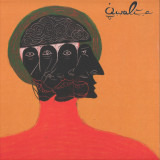
New London based quartet Qwalia, led by drummer Yusuf Ahmed, offer a plethora of influences whilst remaining resolutely itself. Assembled from musicians who play with David Byrne, Joy Crookes, Nubiyan Twist, Frank Ocean, Jordan Rakei, Sampha, Cat Stevens and more; Yusuf is joined by Tal Janes on guitars and vocals, Ben Reed on bass and keyboardist Joseph Costi. Qwalia’s debut album ‘Sound And Reason’ is set for release by Alberts Favourites on 24th March 2023.
The name Qwalia stems from the same sounding word Qualia, a philosophy of mind with the property of being an ineffable experience. Qwalia’s music is an instinctive aural expression of how things seemed in the moment of creation.
In April ‘21, Qwalia spent two days recording completely improvised music at the Fish Factory in North West London. There was no plan or preconceived idea of what the music should sound like or what was going to happen.
“We set up altogether in one room, dimmed the lights, pressed record and just played,” says Yusuf. “We came away with over 13 hours of music, which was consolidated into three albums worth of material. The final record is mainly a result of pulling faders up or down to create space and structure out of what was already there from the live recording. The production process felt akin to a sculptor chipping away excess stone to reveal a statue that was already there, and occasionally putting some makeup on it!”
The band members are Pakistani, Italian, Venezuelan, Jewish and English. A reflection of the fact that cultural categories are infinite; Qwalia’s music unconsciously explores identity, exposing what this can mean. Or perhaps that it doesn’t mean anything at all.
Early support from Mary Anne Hobbs and Gilles Peterson, support to come from Huey Morgan, Cerys Matthews.
- A1: Diamond Door Feat. Princess Shaw
- A2: I’m The Best Rapper In The World
- A3: Choosy Choosy (Feat. Yunoka Berry)
- A4: My Favorite Ghost (Phantom Pains) (Feat. Anjelika “Jelly” Joseph And Nigel Hall)
- B1: Bang Bang Bang
- B2: Who’s The Best? (Dear Young Lb)
- B3: Go Ape Shit (Feat. L-Deez & Cut Chemist)
- B4: Alligator Boots (Feat. Say Sway)
- B5: Greatness On Repeat (Go Me!) (Feat. D Sharp)
“This is me at my most imaginative, freakiest, and yet still most grounded and introspective,” says Japanese American rapper/actor Lyrics Born not only about his new album Vision Board, but also his “self” and his existence. “I feel like a new man! I’m healthier physically, spiritually, mentally, and emotionally.” The lead single and video “Diamond Door” is a pop/rap banger that lands you with an infectious barb and keeps you hooked for days, and is a thinly-veiled tribute to a particular style of female appreciation, but it can also be taken as a welcome mat to the new era of Lyrics Born. The accompanying video which shows Lyrics Born in his current physical form - svelte, stylish and with a confident swagger - reinforces this next chapter in his life. 60 pounds lighter, he lost the weight during the pandemic when he knew he needed to make a change. “Touring was becoming harder, and I was having all these weird health problems, but nothing that anybody could put their finger on,” he explains “My anxiety was high. I was not sleeping well. I was on the verge of really bad health.” And this improvement brought more confidence which shows in his new album. Vision Board is a focused affair that found him stretching his creativity farther and challenging himself to write in a way he’s never written before. Recorded primarily in New Orleans and produced by Rob Mercurio of Galactic (who also produced 2015’s Real People and 2018’s Quite a Life), it posited him in a new environment that helped his creative juices flow even more fluidly. “There’s nothing like recording in the Crescent City. It just gets in your blood, and the results are always funky and wild.” “This is about as psychedelic as I’ve ever been,” LB says. “I’m so proud of this album. I’m in a different space. The world is in a different space, and I wanted to celebrate that, loosen up and really create some imagery and share some emotion that I never have. I was listening to a lot of Shuggie Otis; a lot of obscure psychedelic soul and later Temptations,” he explained. “This is like if Alice in Wonderland was Japanese.” Vision Board was also inspired by another Bay Area rap luminary, although one who’s no longer with us - Gift of Gab. The dexterous Blackalicious MC and fellow Quannum Projects alum had a profound effect on Lyrics Born’s life, both creatively and philosophically. “I asked myself on some of these songs: ‘How would Gab approach them?’” he said. “I’d play with certain cadences, certain styles; I tried to stretch stylistically, lyrically and vocally on every single song. None of the patterns are the same.” Lyrics Born’s vulnerability shines through on the nine-track effort, something he’s not ashamed to admit (nor should he be). At one point during the pandemic, he was losing one friend, peer or family member every other week - from Zumbi of Zion I to Gift of Gab to Digital Underground’s Shock G. While many of the songs are deeply introspective, he had to “write some fun shit,” too. Celebratory horns, uptempo rhythms and fiery bars pepper the project from start to finish, and truly encapsulate Lyrics Born’s evolution of not just a groundbreaking Asian-American MC but also a human being. As the only Asian-American MC to release 10 studio albums, the first Asian-American to play major music festivals like Coachella and Lollapalooza and the first Asian-American to release a greatest hits compilation, Lyrics Born has been breaking barriers his entire life - and he’s not going to stop anytime soon. From the bombastic and tribal “I’m the Best Rapper in the World” with its self-winking boastfulness to the playful scat of “Bang Bang Bang” that slinks like an outtake from West Side Story, to the smooth and seductive “Who's The Best? (Dear Young LB)," to the psychedelic and swoony ”Alligator Boots” with it dreamy “Walk on the Wildside”-esque reverby sway, Vision Board sees Lyrics Born tackling different tones, textures and genres without fear and making them completely his own. It's an eclectic body of work that boasts more synths, more psychedelia and is generally more abstract.
Oriental Beat by Hanoi Rocks gets the redux treatment, officially mixed and revived from the original sessions, and released on March 17th on deluxe vinyl, CD and digital formats. The CD and vinyl come with the song lyrics, checked and approved by Michael Monroe. Dubbed the “re(al) mix”, this 40th anniversary edition was mixed by Petri Majuri at E-Studios in Finland in collaboration with the band. Vocalist Michael Monroe calls this release “the longest and slowest album project ever,” stating that “40 years in the making, it's not just a remix, but the REAL MIX supervised and approved by Hanoi Rocks”. Recorded in London, UK in 1981, for 200 pounds a day, Oriental Beat was made during the height of the British punk + New Wave movement, when the band was hanging out with everyone from Phil Lynott to the Damned. Hanoi Rocks’ original drummer Gyp Casino says of Oriental Beat that: “Back in the days we gave heart, soul and a bit of pain to make this record something else” but the sound of the album, originally released in 1982, did not match their efforts at the time. Bassist Sami Yaffa called it “the worst sounding album of our career” and Michael Monroe said that “the producer of the album didn’t have a clue what the band was about and his mix of the album was horribly wrong”. Oriental Beat’s original engineer Peter Wooliscroft, was not a rock producer, and according to Hanoi Rocks’ manager Richard Bishop he “tried to mix the album to sound like Spandau Ballet”. Released before the band could remix or rerecord it, as the label had run out of money, and the master tapes had gone missing, the band has always considered the original mix of Oriental Beat to be a “disaster”. With the tapes mysteriously showing up in the Universal vault recently, the band was finally able to mix and resequence the album the way they wanted it to sound. Oriental Beat is a defining masterpiece made when Hanoi Rocks was about to explode onto the world scene and written at the absolute peak of lead guitarist Andy McCoy’s creativity as a songwriter. Rhythm guitarist Nasty Suicide says “only now, with stripping it down to the bare essentials and tweaking it to bring out what was really laid down it became our dream come true! THIS is what it's all about” as this definitive edition of Oriental Beat now fully displays the ultimate arrogance and attitude which defined the band.