Second part of the legendary "Screen" series.
It was hard to imagine a follow up to Yellow Screen as it was so successful. The pressure on our shoulders was quite high and rightly so, so we had to outdo ourselves for sure.
The first one to be « see the light » was New-York Philharmonic. A tasty mix of breakbeat, techno and trance. The main melody is just hypnotizing and gives a real feeling of escape. This track was chosen to be the main track of the EP.
Strawberry Milk is the most "underground" track of the EP. It is above all a personal pleasure of producers & composers in studio. We knew that New-York Philharmonic was going to be a hit so we had fun without any pressure on this track. It's a much more "mental" track that still gives off a certain melancholy.
Friday Sickness is without a doubt Mr Sam's favorite of all the tracks in the "Screen" series. It just contains all the elements that make a track perfect. It was as its name indicates composed and finished on a Friday when Mr Sam was sick.
The track was played the next day on CD at La bush and gave the audience a great moment of emotion. Mr Sam knew right away that the track was going to be a big success.
This EP is a perfect symbiosis of Mr. Sam's and Fred Baker's vision and proved that their relationship would only result in one classic release after another. The duo was only at the beginning of a great journey.
Поиск:jus phil
Все
Dooley-O commands you to STICK YOURSELF! But not before stocking his new 45 please. Bankrupt Europeans (who have previously produced for RA The rugged Man, Roc Marciano, Chill Rob G, Chubb Rock, AG, Phill Most Chill, Rise and MC Juice) started a back&forth with 90s legend and Stezo cohort Dooley-O a few years ago, even recorded a couple of demos but it wasn't until 2021 that we all had a chance to do this properly! Hands down two of the hardest and snappiest Bankrupt Europeans beats to complement Dooley-O's incredible punchlines and murderous flow. Dooley-O shows that not only has he not lost a step since the days of releases on Stones Throw and Lewis Recordings, but if anything his skills have sharpened over the years!
The A-Side is Stick Yourself and sees Bankrupt Europeans bring this absolute head nodder of a beat, heavy but very funky and laced with modular synth sounds and cuts from DJ Grazzhoppa throughout. Dooley-O’s tongue-in-cheek rap style is sharper than Rambo’s knife as he proceeds to encourage you to Stick Yourself or risk being taken out by himself. There is this comedic bravado here that has Dooley-O displaying just how good his rap style is, while between the lines he saying ‘I’m that good, I shouldn’t have to take you out, that’s your job But, If I have to do it, it ain’t gonna be pretty.’ Flipping it to the B-Side for track 2 we have Death Blow that hits hard with a brooding intro before the heavy bass and eastern sounds inject more adrenaline into your veins! Dooley-O continues the lyrical assault he began in Stick Yourself. Here he delivers a cold and calculated volley of witty punchlines with ease. His plan here is plain and simple, which is to deliver a brutal Death Blow to all those suckers left walking and talking
Available in black wax in 250 hand numbered copies in a company sleeve with a sticker.
First time ever on vinyl - limited gatefold edition, 180-gram audiophile
pressing. One of the most highly acclaimed trio albums by New York pianist Bill Charlap,
originally released in 1997 on CD by Criss Cross and now reissued for the very first time on vinyl.
Widely known for his work on the Blue Note and Venus labels, his résumé includes performing with many of the leading artists of our time, ranging from Phil Woods, Gerry Mulligan, Wynton Marsalis, Freddy Cole and Houston Person, to singers Tony Bennett and Barbra Streisand. Charlap's album with Tony Bennett,The Silver Lining, The Songs of Jerome Kernwon them both Best Traditional Pop Vocal Album in the 58th Annual Grammy Awards.
Known also for his interpretations of American popular songs, Charlap he has recorded albums featuring the music of Hoagy Carmichael, Leonard Bernstein and George Gershwin.
Jazz critic Scott Yanow gave All Through The Night 4.5 stars on the online jazz platform AllMusic and described it as a superior modern mainstream set.
Bill Charlap: piano
Peter Washington: bass
Kenny Washington: drums
Crystal Clear Vinyl
Unverwechselbar: dEUS sind nach zehn Jahren zurück!
Die legendäre belgische Rockband dEUS meldet sich mit 'How To Replace It', ihrem achten Studioalbum und dem ersten seit zehn Jahren zurück: Unverwechselbar und einfallsreich, melodisch und doch trotzig schräg. Einzigartig. Und vor allem unverkennbar dEUS. Lyrisch gibt sich 'How To Replace It' mysteriös und kreist um Themen wie Romantik, Altern und die Moderne, liefert Fragen und Antworten zugleich und lädt die Zuhörenden zur eigenen Interpretation ein.
Die belgische Band hatte noch nie wirklich eine Philosophie. Und wollte vielleicht auch nie eine haben. Dennoch sind sie bestimmten Grundsätzen treu geblieben: "You don't want to repeat yourself, but you have your style", erzählt Tom Barman, Frontmann der Band, der auf dem Album seine bisher persönlichsten und rauesten Texte präsentiert. "You want to try new stuff and just react to whatever feels fresh at the time."
Auch 28 Jahre nach ihrem Debütalbum bleiben dEUS weiterhin Alternative-Rock-Vordenker, die immer nach vorne drängen, endlos neugierig und kreativ rastlos sind.
On her third album, Berlin-based Dutch-Italian composer and sound designer Aimée Portioli, aka Grand River, asks what guiding forces might be driving, enticing, and affecting us. “All Above” is rooted in her deeply personal philosophy as an artist, blurring the boundaries between electronic music and acoustic music and sculpting familiar ambient forms into personal themes painted with rich emotional colours. Written painstakingly over the last two years, the album is the most ambitious and divergent set of music Portioli has assembled so far, with a wide variety of instrumentation (including voices, strings, organs, guitars, and synthesisers) focused around the piano. She‘s keen to assure listeners that while that instrument isn‘t always heard, it‘s constantly at the forefront of the album, shepherding its emotions and anchoring its mood. It makes sense then that on the opening track ‘Quasicristallo’, the acoustic piano is the first element we hear, recorded closely, so its characteristic rattle and creak can speak as loudly as the familiar tones themselves. When the music blooms into abstraction and processed electronics, it‘s almost imperceptible: reverb mutates into ghostly vapour trails, and distortion forms the keys into another instrument entirely.
“All Above“ follows 2020‘s acclaimed “Blink A Few Times To Clear Your Eyes“ and 2018‘s “Pineapple” released on Donato Dozzy and Neel‘s Spazio Disponibile imprint. Having garnered praise from outlets like Resident Advisor, XLR8R, The Quietus, Inverted Audio, and The Verge, Portioli operates in a unique space within the electronic music scene, straddling the art world and the wider electronic music scene. She‘s developed sound art installations for Rome‘s La Galleria Nazionale and the Terraforma Festival-related Il Pianeta, and has appeared at Barbican, MUTEK, Le Guess Who?, Kraftwerk, and other internationally renowned venues and festivals, often collaborating with Marco Ciceri on A/V presentations. Ciceri also maintains the visual identity of Portioli‘s label One Instrument, a concept imprint that asks artists to create music only using a single device. All this experience is poured into “All Above”, a richly visual album that‘s far more than just an imaginary film score. While on ‘Human’, her piano punctuates a rhythmic synthesised bassline and smudged choirs that can‘t help but trace out the silver screen. The composer is keen to clarify that she doesn‘t think of her music (or sound in general) in visual terms.
Portioli studied as a linguist and used her art to develop an emotional language that‘s not bound by expected cultural constraints. When she adds a different instrument or process, it‘s not to reference a visual cue but to mark a journey through different states of being. Each element embodies a different emotion or mood: the electric guitar represents strength or violence, synthesisers shuttle us into the dream world, and the acoustic instruments highlight intimacy and warmth – even heart. Read like this, the tracks are like meditative poems rather than cinematic vignettes: ‘The World At Number XX’ is seemingly centred around a chugging synthesised arpeggio, but the cosmic, Klaus Schulze-esque pads, strangled guitar and evocative organ tones hint at the open-hearted, literate psychedelia of the 1970s; ‘In The Present As The Future’ meanwhile is breathy and windswept, juxtaposing urgent rhythmic phrases with light, flute-like gusts of harmony.
Dedicated to Editions Mego founder Peter Rehberg, who died suddenly last year, “All Above” demands engagement and refuses to evaporate into the background. The album asks listeners not just to absorb the album as a whole but notice the cracks in the structure and discern the tension they cause. That‘s never more evident than on the closing track ‘Cost What It May’, a piece of music almost jarring when Portioli chops into noisy waves of electric guitar. In the wrong hands, this might sound like a power move – some rock posturing to act as a finale. But Portioli‘s expression is different. She‘s forcing a level of engagement that perceives the negative space as just as necessary as the saturated positive, and what could be more haunting and emotionally resonant than that?
Composed, produced and mixed by Aimée Portioli.
Mastered by Stephan Mathieu.
Cut by Andreas Kauffelt at Schnittstelle, Berlin.
Photography by Federico Boccardi.
Design and layout by Riccardo Piovesan.
If we want to look into the future, we have to start considering the implications more holistically. All too often, science fiction is a dystopian projection of the current era's grimmest realities spiked with pragmatic historical hindsight - but what if instead it was able to reflect our needs, hopes, and dreams? On "SPINE", award-winning Danish composer SØS Gunver Ryberg considers a sustainable alternative, buoyed by interconnectedness, empowerment, and understanding. Channeling her dextrous sound design into advanced, time-bending music that fluctuates through techno, experimental ambient, and soundsystem-vibrating bass music, she maps out an artistic landscape that's futuristic and complex, but never oppressive.
Ryberg is an accomplished producer who's developed her sound over many years, playing concerts and working tirelessly on video game soundtracks, film scores, dance, performance, and multichannel installation pieces. Her first solo album "Entangled" appeared in 2019 on Berlin's esteemed Avian imprint, and was praised for its sensitive approach to noise and abstracted techno, while its EP-length followup "WHYT 030" was nominated for the Nordic Council's prestigious music prize this year. "SPINE" is the inaugural release on Ryberg's own label Arterial, and stands as a thematically dense statement of intent. The label provides a platform to extend Ryberg's artistic goals and reflect not just her world but a world she wants to see develop in the future: somewhere connected and creative, where exploration and free expression is prioritized over genre division and petty compromise.
This philosophy is central to the sounds on "SPINE", which have been carefully sculpted to accurately lay out Ryberg's worldview. Opening track 'Unfolding' presents a sonic ecosystem that flourishes as it spreads itself out, and quivering kick drums vibrate alongside unstable atmospherics. There's the faint fingerprint of Chain Reaction's notional dub techno in there somewhere, but Ryberg interrupts the thought before it can coagulate, assuring the listener that her vision isn't ponderous but playful and optimistic. This mood flickers into view again on the title track 'Spine', as fragmented breaks rumble beneath disorienting synths, faint images of a life we once knew refracted into cosmic beams of light. 'Mirrored Madness' meanwhile is warm, assertive, and optimistic, contrasting skittering cybernetic percussion with dense, enveloping harmonies.
When she pushes rhythm into the background, like on the cinematic 'We tumble on the edges', Ryberg's compositional skill is placed under the microscope. We're presented with the opportunity to examine another dimension of her work, the mystery beneath the stone, hearing saturated, alluring pads infused with hidden harmonies. In these moments, Ryberg implores all of us to consider the environment, asking us to think about the earth's essential nutrients on the dreamy 'Phosphorus Cycle', and what we might do to save ourselves on the delirious 'Where do we go from here'. Ryberg's concern isn't chastising, it's laid out in a warm embrace. The future could still be bright - there's something beautiful in the complexity if you just take the time to look closely.
- 1: A Letter To Dub
- 2: Champian Dub
- 3: Up And Down Dub
- 4: A Spliffing Dub
- 5: Crucial Dub
- 6: Dance Inna Dub Style
- 7: Aarafat Version
- 8: No Funny Dub
- 9: Next To Version
- 10: Live Good Dub
At the beginning of the eighties reggae music became increasingly in tune with what was happening in Kingston’s dance halls… probably more so than at any time since the sound system operators had started to make their own shuffle and boogie recordings in the late fifties. The international audience and the critics were too busy looking for a new Bob Marley to appreciate what was happening downtown and failed to acknowledge that this was a return to the real, raw roots of the music. Brash, confident, young record producers who were totally in tune with the youth audience stepped forward and seized the moment…
Oswald ‘Ossie’ Thomas began his apprenticeship in the music business at the age of
fourteen and served his time as a record salesman for Bunny ‘Striker’ Lee and Winston ‘Niney The Observer’ Holness before moving on to Miss Sonia Pottinger’s Tip Top Records.
“I ended up working in three record stores on Orange Street from 1976 to 1981… Yeah man! Me deh ‘pon me bicycle till I buy my motorcycle! Them days records were coming out left, right and centre… every day!” Ossie Thomas.
It was during his time with Miss Pottinger that Ossie began to produce records for
himself and in 1979 Ossie and Phillip Morgan began the Black Solidarity label based deep in the Kingston ghetto on Delamere Avenue. Phillip initially inspired Ossie to start the label and soon Triston Palma, Phillip Frazer and “a youth named Gary Robertson” joined in although Gary later left for Canada.
The Soul Syndicate rehearsed in the Delamere Avenue area and Tony Chin gave Ossie a cut of a rhythm that he used for Triston Palma’s ‘A Class Girl’… the label’s inaugural release. The record was a sizeable success and paved the way for hit after hit after hit on Black Solidarity. Ossie worked with just about everybody who was anybody during this critical period of the music’s development including vocalists Robert Ffrench, Little John, Sugar Minott, Frankie Paul and most notably Triston Palma.
For this release we have compiled some of the version sides to those releases. Dub still being an integral part of the Reggae Sound System Sound. So sit back and listen to what Black Solidarity, one of the most important and often overlooked labels were bringing to the dance, dubwise, back in those heady 1980’s times.
With grateful thanks to: Paul Coote, Nick Hodgson & Hasse Huss
Red Vinyl
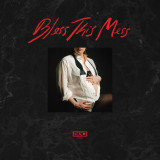
Nachdem Meg Remy, alias U.S. Girls, zuletzt schon in Form der Singles "So Typically Now" und "Bless This Mess" nach zweijähriger Abwesenheit neue Lebenszeichen aussendete, kündigt die kanadische multi-disziplinäre und experimentelle Pop-Künstlerin nun auch ihr neues Album an! "Bless This Mess" erscheint am 24. Februar 2023 bei 4AD und zeugt von der langen künstlerischen Evolution, die Remy unter ihrem musikalischen Alter Ego vollzogen hat: Eigentlich geboren in Illinois, hat sich Remy in den letzten Jahren zu einer der Stimmen und Performer*innen der Torontoer Szene entwickelt. Von den ersten Anfängen in Kellern in Philadelphia und Chicago, als sie durch Delay-Pedals über rohe Loops summte, hin zur selbstbewussten Frontfrau eines achtköpfigen Art-Soul-Orchesters, das die Welt bereist, hat die Vision, sowie das Talent Remys das Projekt über die letzten 15 Jahre zusammengehalten und geprägt. Mit "Half Free" (2015), "In A Poem Unlimited" (2018) und "Heavy Light" (2020) veröffentlichte sie drei Juno Award nominierte Alben (in der Kategorie "Best Alternative Album"), die auch jeweils auf der Shortlist für den Polaris Prize standen. Und das neuste U.S. Girls Album fügt der eh schon ausufernden Palette an Einflüssen, Themen und Sounds noch Bausteine wie Funk, ihre Mutterschaft, griechische Mythologie, langsame Jams, Erwachen und Schmerzen in das lebhafte Hymnen-Treiben hinzu! "Bless This Mess" entstand dabei, während in Remy ihre beiden Zwillings-Jungs heranwuchsen, in Kooperation mit einer ganzen Reihe an Musikern (Alex Frankel von Holy Ghost!, Marker Starling, Ryland Blackinton von Cobra Starship, Basia Bulat, Roger Manning Jr. von Jellyfish und Beck), sowie mithilfe einiger Tontechniker (Neal H Pogue, Ken Sluiter, Steve Chahley, Maximilian Turnbull). Da es weder eine feste Band noch immer gleiches Aufnahme-Personal während der Produktion gab, fühlt sich das neue Album vielmehr wie ein Mixtape an, gleichzeitig befindet sich Remy darauf selbst im stetigen Wandel. Denn während sich ihr Körper der Schwangerschaft anpasst, verändert sich auch ihre Stimme, verlor etwas Raum zum Atmen, bei einigen Gesangsaufnahmen waren ihre Neugeborenen sogar auf ihrem Arm. Keine Überraschung, dass Remy sogar ihre Milchpumpe auf "Pump" sampelte. Und doch beinhaltet das neue Album so viel mehr - mehr Blut, mehr Gefühle, die miteinander verflochtenen Wunder und Wunden des Lebens. Dementsprechend variieren auch die Songs in Tempo, Instrumentierung und geben sich zwischen experimenteller Hingabe, Entdeckungen und Delirium der aktuellen Gefühlslage der Künstlerin hin.
- A1: Ronnie Miller - I Got The Hots For You
- A2: Leaves Of Autumn - Slip Back Into The Magic
- A3: Mirage - Bend A Little
- A4: People - Misty Mood
- A5: Stroke - Without Your Love
- A6: Tom Miles - Old Home Movies
- A7: Jan Lewis Group - Oh Senor
- A8: Synod - Future Shock
- B1: Mikael Neumann - Hey Flicka
- B2: 5-3-74 - Love Is Not For Real
- B3: Babe - It&Apos;S A Long Road
- B4: Jeff Elliott - Magic Sands
- B4: Charles Vickers - Mister Jones
- B5: Aoh - The Answer Lies In Love
- B6: Dianne Elliott - The Ring
- B7: Phil Palumbo &Amp; Pals - It Was A Very Good Year
After 6 years and 7 volumes, the Tramp Records crew invites you to join them on yet another enlightening journey into soulful Jazz, Folk and Funk from the 1970s.
This 8th volume contains nineteen Jazz, Soul and Folk nuggets from between the late 1960s and the late 1970s. One of the many highlights is the opening track by Bobby Cole which is most likely one of the finest independently produced vocal jazz recordings ever put on wax. So true. Oscar Brown Jr. and Mark Murphy sends its regards. But that's just the beginning. Praise Poems Vol.8 covers a wide selection of genres, from big band jazz (Helmut Pistor's Big Rock Jazz Band and Germany's own Ladykiller) to psych-pop (Portraits in Sound, Harve and Charee and Allison & Shaffer), from folk-rock (Flash, Garndarf and the incredible Fang Buzbee) to AOR (The Menagerie and Penn Central), completing the set with a handful of melancholic folk beauties, most notably Hans Hass Jr.'s mind-blowing "Welche Farbe hat der Wind".
Very few compilation series' release as many as eight volumes and those that get that far often start to run out of quality music or meander too far from their original artistic direction. That certainly is not the case with the "Praise Poems" series which leaps from strength-to-strength as our team of compilers and researchers continue to unearth lost and often overlooked music from an era long gone. Many of these records were released in small quantities as private pressings or by small regional labels. Obviously, those labels neither had the budget, expertise, nor options to promote their releases in a sweeping way. Therefore the majority of these artists failed to find the wider audience their music so richly deserved.
- A1: Ringa Ringa (The Old Pandemic Folk Song) (Feat. The Mediaeval Baebes)
- A2: Day One (Feat. Dina Ipavic)
- A3: Are You Alive? (Feat. Penelope Isles)
- B1: You Are The Frequency (Feat. The Little Pest)
- B2: The New Abnormal
- C1: Home (Feat. Anna B Savage)
- C2: Dirty Rat
- C3: Requiem For The Pre-Apocalypse
- D1: What A Surprise (Feat. The Little Pest)
- D2: Moon Princess (Feat. Coppe)
White Vinyl[33,24 €]
DOUBLE BLACK LP : 2 x 140 G Black Vinyl , Sleeve & 2 x Heavy Weight Printed Inner with UV Gloss Finish
Legendary electronic music duo Orbital return Early 2023 with new album “Optical Delusion”, the Hartnoll brothers first studio album since 2018’s Monster’s Exist. Recorded in Orbital’s Brighton studio, “Optical Delusion” includes contributions from Sleaford Mods, Penelope Isles, Anna B Savage, The Little Pest, Dina Ipavic, Coppe, and perhaps most surprisingly, The Medieval Baebes.
Earlier this year, Orbital celebrated their storied history with “30 Something” which, unlike other Best Of’s, contains reworks, remakes, remixes and re-imaginings of landmark Orbital tracks including “Chime”, “Belfast”, “Halcyon”, “Satan”, and “The Box”
SHORT BIOG:
“A human being experiences himself, his thoughts and feelings as something separate from the rest of humanity – a kind of optical delusion of his consciousness. This delusion is a kind of prison for us, restricting us to our personal desires and to affection for a few persons nearest to us. Our task must be to free ourselves from this prison…”
You many have seen this quote attributed to Albert Einstein on social media, the archetypal Smartest Guy Ever apparently having an out-of-character religious epiphany. It certainly leapt out at Paul Hartnoll of Orbital who spotted it in Michael Pollan’s 2018 book How to Change Your Mind: What the New Science of Psychedelics Teaches Us About Consciousness, Dying, Addiction, Depression and Transcendence.
“As soon as I saw ‘optical delusion’ I thought Oh hey, that’s the album title,” says Paul. “It just seemed to say so much about how people construct their own realities, how we see patterns that aren’t there, how we see what we want to see.
“But it’s actually a misquote. He never quite said that. In the German original what he’s really saying is that human experience is as relative as physics. Wouldn’t it be good if we could accept that, and find a kind of universal theory of everything for the human race? Then you look at everything from history to art to your Twitter feed and you think yeah, that’s what we’re all trying to do all of the time…”
Hence ‘Optical Delusion’, the tenth original Orbital album and the latest in a burst of renewed post-pandemic creativity for two brothers who’ve stayed at the top of their game longer than anyone from the post-1988 Class of Acid House.
Now with ‘Optical Delusion’ the Hartnolls dig deeper into the unquiet psyche of our increasingly surreal and disordered world. Sketched out partly during lockdown but fully recorded in the uncertain After Times, the album summons up conflicting emotions and sometimes beguiling images from years when the science fiction doomsdays that the Hartnolls watched on TV as kids finally came true. There are mesmeric tracks with names like ‘The New Abnormal’ and ‘Requiem For The Pre-Apocalypse’ and ‘Day One’. But there are also straight-up bangers and ethereal cosmic dreams, abstract sound wars and deeply human songs of separation and loss.
And it all starts with a bang. Lead single ‘Dirty Rat’, an outright Fall-meets-Front-242 class rant with vocals by Sleaford Mods mob orator Jason Williamson, harks right back to the Hartnolls’ days of politicised anarcho-squatpunk. It began as a remix swap (Orbital did the Sleafords’ ‘I Don’t Rate You’) and morphed into a comic, brutal, bass-driven harangue not so much against our rulers but at the petty, mean-spirited, frightened, Mail-reading voters who put them there: the people who are “blaming everyone in hospital/blaming everyone at the bottom of the English Channel/blaming everyone who doesn’t look like a fried animal.”
Also key to the album is opening track ‘Ringa Ringa (The Old Pandemic Folk Song)’ which returns to an Orbital truism, that time always becomes a loop. This chugging, cyclical Orbital groove gives way to an unnerving past-meets-present timeslip fit for ‘Sapphire And Steel’ as goth maenads The Mediaeval Baebes materialise to sing ‘Ring O’Roses’ – the innocent nursery rhyme whose roots are in the Black Death.
“I’ve always liked folk music and mediaeval sounds,” says Paul, himself an occasional Morris dancer. “I had the basis of that track and I wanted to spin it off somehow.” Trawling his archives he stumbled on The Mediaeval Baebes’ version of ‘Ring O’Roses’ “and my hackles just went up. I was like, my God, this is the original pandemic folk song.”
?his being Orbital, there are collaborations galore on the album, the roles once played by Alison Goldfrapp, Lady Leshurr or David Gray now filled by new talents. London singer-songwriter Anna B Savage contributes a compellingly fragile, Anohni-like vocal to ‘Home’, in which nature reclaims the scorched and vacant mega-cities. ‘Day One’ is a pulsing techno track featuring the singer Dina Ipavic. Paul got in touch with her after working on a score for a sculpture show of giant robotic installations by his friend Giles Walker during the pandemic. First Paul cut up his own score and Ipavic’s vocals on the track The Crane, which appears on the deluxe version of the album. Then he thought, Why not work with her for real? The result is school of ‘Belfast’, a bassy dreamscape with vocalised clouds billowing above.
The pensive ‘Are You ?live?’ adds to the Orbital product range of existential questions (‘Are We Here?’, ‘Where Is It Going?’) in collaboration Bella Union signings Penelope Isles, AKA brother and sister act Lily and Jack Wolter. “They’re our studio mates, they work upstairs!” says Paul happily. “And they’ve both got amazing voices.”
But Orbital are Orbital and never far from the dancefloor. “Eventually the more abrasive bits came back into the fold…” ‘You Are The Frequency’, first of two tracks to feature mysterious vocalist The Little Pest, surrounds the listener with warped voices ordering you to the dancefloor (Phil: “we wanted the idea that the music is kind of absorbing you”). And the second, the sinister ‘What A Surprise’, traps you in a paranoid electronic hall of mirrors.
In another nod to Orbital’s resurgent past the cover artwork once again comes from fine art painter John Greenwood, creator of fantastical grotesques for the covers of ‘Snivilisation’, ‘In Sides’ and Orbital’s most recent album, 2018’s ‘Monsters Exist’. Orbital had just had a slick Mark Farrow cover for ‘30 Something’ – this is a return to the overripe and bulbous techno-organic constructions that somehow express Orbital’s own uncontrollably fertile sound.
There are gaps in the future that Orbital are desperate to fill too; there will be tours and festivals and rooms and fields full of people. Those long paralysed months when we had little to look forward to but a Zoom DJ set made Paul and Phil appreciate the things that make life worth living.
- A1: Ringa Ringa (The Old Pandemic Folk Song) (Feat. The Mediaeval Baebes)
- A2: Day One (Feat. Dina Ipavic)
- A3: Are You Alive? (Feat. Penelope Isles)
- B1: You Are The Frequency (Feat. The Little Pest)
- B2: The New Abnormal
- C1: Home (Feat. Anna B Savage)
- C2: Dirty Rat
- C3: Requiem For The Pre-Apocalypse
- D1: What A Surprise (Feat. The Little Pest)
- D2: Moon Princess (Feat. Coppe)
Black Vinyl[31,05 €]
2 x Solid White LP, 5mm spine Sleeve UV Gloss Finish, 2x Heavy Weight Printed Inner Sleeve UV Gloss finish, marketing sticker.
Legendary electronic music duo Orbital return Early 2023 with new album “Optical Delusion”, the Hartnoll brothers first studio album since 2018’s Monster’s Exist. Recorded in Orbital’s Brighton studio, “Optical Delusion” includes contributions from Sleaford Mods, Penelope Isles, Anna B Savage, The Little Pest, Dina Ipavic, Coppe, and perhaps most surprisingly, The Medieval Baebes.
Earlier this year, Orbital celebrated their storied history with “30 Something” which, unlike other Best Of’s, contains reworks, remakes, remixes and re-imaginings of landmark Orbital tracks including “Chime”, “Belfast”, “Halcyon”, “Satan”, and “The Box”
SHORT BIOG:
“A human being experiences himself, his thoughts and feelings as something separate from the rest of humanity – a kind of optical delusion of his consciousness. This delusion is a kind of prison for us, restricting us to our personal desires and to affection for a few persons nearest to us. Our task must be to free ourselves from this prison…”
You many have seen this quote attributed to Albert Einstein on social media, the archetypal Smartest Guy Ever apparently having an out-of-character religious epiphany. It certainly leapt out at Paul Hartnoll of Orbital who spotted it in Michael Pollan’s 2018 book How to Change Your Mind: What the New Science of Psychedelics Teaches Us About Consciousness, Dying, Addiction, Depression and Transcendence.
“As soon as I saw ‘optical delusion’ I thought Oh hey, that’s the album title,” says Paul. “It just seemed to say so much about how people construct their own realities, how we see patterns that aren’t there, how we see what we want to see.
“But it’s actually a misquote. He never quite said that. In the German original what he’s really saying is that human experience is as relative as physics. Wouldn’t it be good if we could accept that, and find a kind of universal theory of everything for the human race? Then you look at everything from history to art to your Twitter feed and you think yeah, that’s what we’re all trying to do all of the time…”
Hence ‘Optical Delusion’, the tenth original Orbital album and the latest in a burst of renewed post-pandemic creativity for two brothers who’ve stayed at the top of their game longer than anyone from the post-1988 Class of Acid House.
Now with ‘Optical Delusion’ the Hartnolls dig deeper into the unquiet psyche of our increasingly surreal and disordered world. Sketched out partly during lockdown but fully recorded in the uncertain After Times, the album summons up conflicting emotions and sometimes beguiling images from years when the science fiction doomsdays that the Hartnolls watched on TV as kids finally came true. There are mesmeric tracks with names like ‘The New Abnormal’ and ‘Requiem For The Pre-Apocalypse’ and ‘Day One’. But there are also straight-up bangers and ethereal cosmic dreams, abstract sound wars and deeply human songs of separation and loss.
And it all starts with a bang. Lead single ‘Dirty Rat’, an outright Fall-meets-Front-242 class rant with vocals by Sleaford Mods mob orator Jason Williamson, harks right back to the Hartnolls’ days of politicised anarcho-squatpunk. It began as a remix swap (Orbital did the Sleafords’ ‘I Don’t Rate You’) and morphed into a comic, brutal, bass-driven harangue not so much against our rulers but at the petty, mean-spirited, frightened, Mail-reading voters who put them there: the people who are “blaming everyone in hospital/blaming everyone at the bottom of the English Channel/blaming everyone who doesn’t look like a fried animal.”
Also key to the album is opening track ‘Ringa Ringa (The Old Pandemic Folk Song)’ which returns to an Orbital truism, that time always becomes a loop. This chugging, cyclical Orbital groove gives way to an unnerving past-meets-present timeslip fit for ‘Sapphire And Steel’ as goth maenads The Mediaeval Baebes materialise to sing ‘Ring O’Roses’ – the innocent nursery rhyme whose roots are in the Black Death.
“I’ve always liked folk music and mediaeval sounds,” says Paul, himself an occasional Morris dancer. “I had the basis of that track and I wanted to spin it off somehow.” Trawling his archives he stumbled on The Mediaeval Baebes’ version of ‘Ring O’Roses’ “and my hackles just went up. I was like, my God, this is the original pandemic folk song.”
?his being Orbital, there are collaborations galore on the album, the roles once played by Alison Goldfrapp, Lady Leshurr or David Gray now filled by new talents. London singer-songwriter Anna B Savage contributes a compellingly fragile, Anohni-like vocal to ‘Home’, in which nature reclaims the scorched and vacant mega-cities. ‘Day One’ is a pulsing techno track featuring the singer Dina Ipavic. Paul got in touch with her after working on a score for a sculpture show of giant robotic installations by his friend Giles Walker during the pandemic. First Paul cut up his own score and Ipavic’s vocals on the track The Crane, which appears on the deluxe version of the album. Then he thought, Why not work with her for real? The result is school of ‘Belfast’, a bassy dreamscape with vocalised clouds billowing above.
The pensive ‘Are You ?live?’ adds to the Orbital product range of existential questions (‘Are We Here?’, ‘Where Is It Going?’) in collaboration Bella Union signings Penelope Isles, AKA brother and sister act Lily and Jack Wolter. “They’re our studio mates, they work upstairs!” says Paul happily. “And they’ve both got amazing voices.”
But Orbital are Orbital and never far from the dancefloor. “Eventually the more abrasive bits came back into the fold…” ‘You Are The Frequency’, first of two tracks to feature mysterious vocalist The Little Pest, surrounds the listener with warped voices ordering you to the dancefloor (Phil: “we wanted the idea that the music is kind of absorbing you”). And the second, the sinister ‘What A Surprise’, traps you in a paranoid electronic hall of mirrors.
In another nod to Orbital’s resurgent past the cover artwork once again comes from fine art painter John Greenwood, creator of fantastical grotesques for the covers of ‘Snivilisation’, ‘In Sides’ and Orbital’s most recent album, 2018’s ‘Monsters Exist’. Orbital had just had a slick Mark Farrow cover for ‘30 Something’ – this is a return to the overripe and bulbous techno-organic constructions that somehow express Orbital’s own uncontrollably fertile sound.
There are gaps in the future that Orbital are desperate to fill too; there will be tours and festivals and rooms and fields full of people. Those long paralysed months when we had little to look forward to but a Zoom DJ set made Paul and Phil appreciate the things that make life worth living.
Unverwechselbar: dEUS sind nach zehn Jahren zurück!
Die legendäre belgische Rockband dEUS meldet sich mit 'How To Replace It', ihrem achten Studioalbum und dem ersten seit zehn Jahren zurück: Unverwechselbar und einfallsreich, melodisch und doch trotzig schräg. Einzigartig. Und vor allem unverkennbar dEUS. Lyrisch gibt sich 'How To Replace It' mysteriös und kreist um Themen wie Romantik, Altern und die Moderne, liefert Fragen und Antworten zugleich und lädt die Zuhörenden zur eigenen Interpretation ein.
Die belgische Band hatte noch nie wirklich eine Philosophie. Und wollte vielleicht auch nie eine haben. Dennoch sind sie bestimmten Grundsätzen treu geblieben: "You don't want to repeat yourself, but you have your style", erzählt Tom Barman, Frontmann der Band, der auf dem Album seine bisher persönlichsten und rauesten Texte präsentiert. "You want to try new stuff and just react to whatever feels fresh at the time."
Auch 28 Jahre nach ihrem Debütalbum bleiben dEUS weiterhin Alternative-Rock-Vordenker, die immer nach vorne drängen, endlos neugierig und kreativ rastlos sind.
The pandemic affected each of us in different ways. From colossal stars to complete unknowns, it up-ended our lives, and demolished our expectations.
Take Lil Skies. The Philly talent found himself back in his home city, completing a journey that began in pace on his 2017 mixtape ‘Life Of A Dark Rose’. Re-connecting with his roots – his moniker is a nod to his father, while 2019 debut album ‘Shelby’ named after his mother – he’s delivered some of his most potent, open material to date.
‘Unbothered’ is a tight, focussed return – a snappy 14 tracks, is exudes a sense of purpose, retaining the swagger of his debut while upping the word play. It’s an inward journey, one exemplified by those early viral singles ‘OK’ and ‘Havin’ My Way’ but it’s also lit up by some special guests.
Working with alacrity, Lil Skies built ‘Unbothered’ from a series of freestyles, yet every element on the album feels exact, placed with real precision. Using a mere three features – a trilogy that boasts Wiz Khalifa, Lil Durk, and Jodeci – the emphasis is placed on his vocals, on his ability to utilise the voice as an instrument.
‘Trust Nobody’ hinges on fragile paranoia, while ‘Riot’ bristles with a palpable sense of rage. An attempt to channel the repressed – and often extreme – emotions of the past 12 months, ‘Unbothered’ pitches a cool facade against a depth of feeling that often threatens to explode – just check out ‘Think Deep Don’t Sink’ for a mission statement.
Working within clear definitions, ‘Unbothered’ feels more distilled than Lil Skies’ previous work, the sound of someone choosing to work with what they know. Lyrically it’s marked by pain and redemption, lingering on messages of perseverance, and renewal. He may claim to be ‘Unbothered’, but the marks of the pandemic are there for all to see on a brave, at times powerful, new album
Doomsday Outlaw return with their third studio album Damaged Goods, set for release on 3rd February 2023 via Republic of Music.
As Doomsday Outlaw began work on this album, they knew they wanted to step up to the next level and deliver on the promise of their previous albums, keeping the heaviness and the soulful vocals, and turbo-charging it all with some retro rock feelgood vibes.
Channelling Skynyrd, Aerosmith and The Faces through their signature heavy blues stomp, the band worked to expand their signature sound.
Working with Chris D’Adda at Vale Studios (Temples, Deaf Havana) and Dave Draper (The Wildhearts), to put them through their paces, the band have pulled together their best work yet.
Lyrically, the album is a very personal insight into vocalist Phil Poole’s life and motivations. Speaking about Damaged Goods, vocalist Phil Poole said: "This album is a continuation of the stories of my life – played out for all to see, filled with heartbreak and redemption. My own version of therapy, Damaged Goods is the latest chapter in my life."
Bassist Indy added: “It’s been a hard slog these last couple of years with Covid cutting short our European adventures, and generally waiting for live music to see the light at the end of the pandemic tunnel, but these new tunes have kept us going. The excellent response we’ve had to playing the songs live has been great to see, and we can’t wait to get everything out there for people to hear.”
Doomsday Outlaw return with their third studio album Damaged Goods, set for release on 3rd February 2023 via Republic of Music.
As Doomsday Outlaw began work on this album, they knew they wanted to step up to the next level and deliver on the promise of their previous albums, keeping the heaviness and the soulful vocals, and turbo-charging it all with some retro rock feelgood vibes.
Channelling Skynyrd, Aerosmith and The Faces through their signature heavy blues stomp, the band worked to expand their signature sound.
Working with Chris D’Adda at Vale Studios (Temples, Deaf Havana) and Dave Draper (The Wildhearts), to put them through their paces, the band have pulled together their best work yet.
Lyrically, the album is a very personal insight into vocalist Phil Poole’s life and motivations. Speaking about Damaged Goods, vocalist Phil Poole said: "This album is a continuation of the stories of my life – played out for all to see, filled with heartbreak and redemption. My own version of therapy, Damaged Goods is the latest chapter in my life."
Bassist Indy added: “It’s been a hard slog these last couple of years with Covid cutting short our European adventures, and generally waiting for live music to see the light at the end of the pandemic tunnel, but these new tunes have kept us going. The excellent response we’ve had to playing the songs live has been great to see, and we can’t wait to get everything out there for people to hear.”
Few acts have better captured angst and the agony of young love other than The Everly Brothers. As well as those inimitable harmonies, fantastic songs and Chet Atkins' superb production, the Everlys' success owed much to the fact that Don and Phil were barely out of their teens, and so filled every song with real feeling. Their first recordings led to a series of hits that would come to define the harmonious Rock & Roll of the period; Bye Bye Love, Wake Up Little Susie, All I Have To Do Is Dream, Claudette (penned by Roy Orbison), Bird Dog, Devoted To You, Let It Be Me, When Will I Be Loved, So Sad (To Watch Good Love Go Bad), Walk Right Back, Ebony Eyes and Crying In The Rain. For their influence on The Beatles alone, the Everly Brothers are owed a huge debt of gratitude. The collection of songs found here span Country, Folk, Rock & Roll and Pop, and demonstrate just how influential Don and Phil were on popular music, beginning with those very first sessions in front of their parent's microphone.
- A1: Ain't That A Shame
- A2: Blueberry Hill
- A3: I Hear You Knocking
- A4: Be My Guest
- A5: My Girl Josephine
- A6: I Want To Walk You Home
- A7: Margie
- A8: The Fat Man
- B1: I'm Walkin
- B2: Blue Monday
- B3: Jambalaya (On The Bayou)
- B4: Walking To New Orleans
- B5: Whole Lotta Loving
- B6: The Big Beat
- B7: Trouble In Mind
- B8: I Want To Go Home
Few acts have better captured angst and the agony of young love other than The Everly Brothers. As well as those inimitable harmonies, fantastic songs and Chet Atkins' superb production, the Everlys' success owed much to the fact that Don and Phil were barely out of their teens, and so filled every song with real feeling. Their first recordings led to a series of hits that would come to define the harmonious Rock & Roll of the period; Bye Bye Love, Wake Up Little Susie, All I Have To Do Is Dream, Claudette (penned by Roy Orbison), Bird Dog, Devoted To You, Let It Be Me, When Will I Be Loved, So Sad (To Watch Good Love Go Bad), Walk Right Back, Ebony Eyes and Crying In The Rain. For their influence on The Beatles alone, the Everly Brothers are owed a huge debt of gratitude. The collection of songs found here span Country, Folk, Rock & Roll and Pop, and demonstrate just how influential Don and Phil were on popular music, beginning with those very first sessions in front of their parent's microphone.
Meg Baird’s songs are rarely made up of tidy stories. In fact, for Meg, mystery itself is often the
medium. With ‘Furling’, Meg’s fourth album under her own name, she explores the breadth of
her musical fascinations and the environments around them - the edges of memory,
daydreams spanning years, loose ends, loss, divergent paths, and secret conversations under
stars. ‘Furling’ moves through these varied spaces with the slippery, misty cohesiveness of a
dream - guided by an ageless, stirring voice that remains singular and unmistakable.
Since co-founding the beguiling and beautiful Espers in the mid-aughts amid Philadelphia’s
fertile underground music community, Meg’s solo recordings have constituted just a fraction of
her work.
Her first solo LP, the disarmingly out-of-time ‘Dear Companion’ (2007), saw her carve a quiet,
sunlit space away from the flickering swirl of Espers. Since her last solo releases, ‘Seasons on
Earth’ (2011) and ‘Don’t Weigh Down the Light’ (2015), Meg has lent thunderous drumming,
lead vocal, and poetry to Heron Oblivion (Sub Pop) on an album that garnered praise from the
New York Times and made Mojo’s Top Ten Albums Of 2016 list. She collaborated with harpist
Mary Lattimore on the mesmerizingly hazy ‘Ghost Forests’ (2018). She’s played drums with
Philadelphia scuzz-punks Watery Love (In The Red, Richie Records) and explored her deep
familial folk roots in the Baird Sisters (Grapefruit Records). She also contributed her vocal
arrangements to albums from Sharon Van Etten, Kurt Vile, Will Oldham and Steve Gunn, and
toured with Angel Olson, Dinosaur Jr., Bill Callahan, Thurston Moore and Bert Jansch, among
others.
Yet ‘Furling’ is the album that most irreverently explores the span of her work and musical
touchstones. It showcases her natural tether to 1960s English folk traditions. But it also reveals
her deep love for soul balladry, the solitary musings of Flying Saucer Attack and Neil Young
shackled to his piano deep in the foggy pre-dawn, dubby Bristol atmospherics, the melancholy
memory collage of DJ Shadow’s ‘Endtroducing’, and the delicious, Saturday night promise of
St. Etienne.
‘Furling’ was primarily recorded at Louder Studios by Tim Green (Bikini Kill, Nation of Ulysses,
Melvins, Wooden Shjips). Additional piano and vocal recording were captured at Panoramic
Studios in Stinson Beach, CA with Jason Quever (Papercuts). It was mastered in Brooklyn by
Heba Kadry, who mixed Bjork’s ‘Utopia’ and mastered albums for Slowdive, Cass McCombs
and Beach House.
For all its adornments, ‘Furling’ remains deeply intimate. The entire album was performed by
Meg and her long-time collaborator, partner, and Heron Oblivion bandmate Charlie Saufley.
While her prior solo work hinted at more expansive horizons, ‘Furling’ explores the idea of Meg
Baird as a band much more freely. Venturing beyond the musical confines of fingerstyle guitar,
she plays drums, mellotron, organs, synths, and vibraphone over her piano and guitar
foundations. Her distinctive, simultaneously elegiac and uplifting vocals, meanwhile, connect
surreal dream montages, graft sunshine sonics to swooning mediations on romantic solidarity
in trying times, and weave odes to the simple gestures of friendship - and the loss of family and
friends.
This rich sound world makes the songs a varied bunch: ‘Twelve Saints’ mates Pacific sunset
ambience and Pink Floyd pastoral to a meditation on mortality and escape. The infectious and
kinetic ‘Will You Follow Me Home’ contemplates hope and longing through the looking glass of
a Jimmy Miller-era-Stones strut. And in the closing piece, ‘Wreathing Days’, language
disintegrates over tone clusters that feel somewhere between falling and flying.
‘Wreathing Days’ also reveals much about Meg’s mastery of contrast - situating the dear and
delicate adjacent to chaos. And while it’s true that some songs on ‘Furling’ grapple with
humanity’s existential unknowns in stark terms, they primarily revel in the mysteries that hide in
nature and humanity at their most ordinary. ‘Furling’ lives in the notion that whole universes of
experience, enlightenment, elation and ecstasy can bloom in these corners.
- A1: It's Your Love That I Need - The Marvellos
- B1: It's Your Love That I Need (Instrumental) - The Marvellos
- C1: Heartstrings - The Invincibles
- D1: Got A Thing Goin' - The Invincibles
- E1: That's All You Gotta Do - Ben Aiken
- F1: Satisfied - Ben Aiken
- G1: Like I Told You – Carl Hall
- H1: Mean It Baby - Carl Hall
- I1: Just A Little Longer - The Enchanters
- J1: I'll Find A Way - Bobby Reed
- K1: See The Silver Moon - The Apollas
- L1: Go For Yourself - Larry Laster
- M1: If You Should See Her - Ben Aiken
- N1: Lies - Bobby Freeman
• To celebrate Kent’s 40th birthday (admittedly a month late, due to pressing times), we are releasing our first ever box set of singles. This is due to getting access to the Loma vaults and finding some previously unheard soul gems to augment the best of the soul dance tracks from the esteemed imprint.
• Starting with THE discovery of the soulful ‘20s we present LA soul group the Marvellos, whose ‘It’s Your Love That I Need’ – written by the great Willie Hutch – is a Motownesque dancer whose arrangements and melodies are so stunning we also issued the backing track as its instrumental B-side.
• The Invincibles were another fabulous Los Angeles outfit whose four Loma releases were ballads but two great dance tracks, the sublime ‘Heartstrings’ and the manic ‘Got A Thing Goin’’ showed they could really turn it up when needed.
• Ben Aiken’s ‘Satisfied’ is a stone classic Northern Soul dancer - finding the more subtle ‘If You Should See Her’ and ‘That’s All You Gotta Do’ in the vaults makes the Philly singer the best represented artist of the set.
• New York-based Carl Hall is another singer with a released classic - ‘Mean It Baby’ and a great unissued tape vault find – ‘Like I Told You’. The pair sit well together on their new 45 pressing.
• The Enchanters cut several tracks after they left Garnett Mimms; ‘Just A Little Longer’ is a great Drifters-sounding number which we’ve coupled with the beautiful ‘I’ll Find A Way’ by Bobby Reed.
• ‘See The Silver Moon’ by west coast girl group the Apollas would have wowed them at Wigan. The poptastic number has the perfect stomping dance beat, beloved of the Casino’s patrons. Alas it was not heard until 2012 when researcher and co-compiler Alec Palao unearthed the master tape. We paired it with Larry Laster’s terrific ‘Go For Yourself’ which shares the backing track of fellow Northern monsters ‘Lighten Up Baby’ and ‘Somebody Somewhere (Needs You)’, more than holding its own.