Dope 4 tracker with some killer mashups made especially for the festival deejay crowd. "SMELLS LIKE EPA-DUNK", "BROWN EYED GIRL", "JUST A KISS AWAY" and "FAITH". The prolific Swedish producer busts out another alias and gives some classic rock jams new life. Limited pressing.
Buscar:jus
I Talk To Water, the fifth album for Kompakt by Danish producer Kölsch, is the artist’s most personal statement yet. While all the trademarks that make his music so popular and powerful are still present – lush, melodic techno; swooping, trance-like figures; sensuous, shivery texturology – I Talk To Water is also a deep and intimate rapprochement with family and history, a beautiful, finely detailed document of loss and memory, and a tracing of the long, unbroken thread of grief that runs through our lives once we’ve lost those we loved.
The emotional core of I Talk To Water, then, is a cache of recordings by Kölsch’s father, Patrick Reilly, who passed away in 2003 from brain cancer. With time rendered elastic by the pandemic and its associated lockdowns, its sudden, alienating shifts in everyday living, Kölsch found himself reflecting on his father’s passing and ongoing spiritual presence, thinking about how best to memorialise such a significant figure in his own life. Those recordings opened a gateway, of sorts, for Kölsch to move through – a way to bring past and present together and entwine them in a sensitive, poetic manner.
Kölsch’s father was a musician – “touring in the sixties and seventies, in the Middle East especially, he was doing the whole hippy trail, playing guitar, and wrote some songs over the years,” he recalls. “But all in all, he decided to focus on family rather than pursue a musical career.” Reilly kept playing and writing music over the years, though Kölsch hadn’t listened to the material for some time: “I’d never had the guts to listen to it, because I just felt too fragile listening to his voice. It’s such a tough thing to go through.”
During the pandemic, though, Kölsch listened through the fragmented body of work that his father had produced over the years. “I decided I’m gonna finally release my dad’s music twenty years after his passing,” he reflects. “This whole album is about the process of loss, and for me it’s been one of my main driving forces in my musical life, the whole emotional aspect of whatever I’ve done has been based in that feeling that he’s not there anymore.”
Recordings of Reilly appear on three songs across I Talk To Water. His guitars drift pensively across “Grape”, offering a lush thread of melody that Kölsch wraps with clicking, driftwood rhythms and droning, melancholy bass. “Tell Me” is a lovely three-minute art song, a sadly beautiful reflection, minimally adorned with gentle keys and a muted pulse. And on the closing “It Ends Where It Began”, Kölsch lets his father’s acoustic guitar take centre stage for a lament that’s unexpectedly folksy, a guitar soli dream, which Reilly originally recorded in 1996. “He actually recorded it for my first album that never came out,” Kölsch reveals, “and I had it sitting around forever. That is purely him.”
These three imagined collaborations between father and son are poised and delicate. But their relationship also marks the gorgeous music Kölsch has made across the rest of I Talk To Water, from the itchy yet lush “Pet Sound” (titled in tribute to one of Reilly’s favourite albums), the flickering synths and yearning vocal samples that slide through “Khenpo”, the ecstatic shuddering that marks “Only Get Better”, or “Implant”’s slow-motion pans and subtle reveals.
There’s also the title song, where Kölsch is joined by guest Perry Farrell (Jane’s Addiction, Porno For Pyros), singing a mantra for internal reflection: “I talk to water / Searching for myself / Looking for answers / Oceans of you.” Farrell’s appearance brings another timbre, another spirit to the album, aligning neatly with his recent interest in electronic music. “He was completely taken by this idea of talking to water,” Kölsch says, thinking about the ways we collectively lean towards the natural world as a comfort and a listener, a guide through mourning, a way to map out the terrain of the heart. This mapping is something that Kölsch has proven remarkably adept at through the years; dance music for both body and mind, but also both for the here-and-now, and for the hereafter.
“I Talk To Water”, das fünfte Album des dänischen Produzenten Kölsch für Kompakt, ist zweifellos das persönlichste Statement des Künstlers bislang. Während alle Markenzeichen, die seine Musik so beliebt und kraftvoll machen, immer noch präsent sind – üppige, melodische Techno-Tracks; schwebende, tranceartige Elemente; sinnliche, fiebrige Texturen – ist “I Talk To Water” auch eine tiefe und intime Annäherung an Familie und Geschichte. Es ist ein wunderschönes, fein ausgearbeitetes Dokument des Verlusts und der Erinnerung, und es verfolgt den langen, ungebrochenen Faden der Trauer, der durch unser Leben läuft, sobald wir diejenigen verloren haben, die wir liebten.
Der emotionale Kern von “I Talk To Water” besteht aus Aufnahmen von Kölschs Vater, Patrick Reilly, der 2003 an Hirnkrebs verstarb. Durch die Pandemie und ihre damit verbundenen Lockdowns, die plötzlichen, entfremdenden Veränderungen im Alltag, fand Kölsch sich in Gedanken an den Tod seines Vaters und seine fortwährende spirituelle Präsenz wieder. Er überlegte, wie er eine so bedeutende Figur in seinem eigenen Leben am besten verewigen könnte. Diese Aufnahmen öffneten ihm sozusagen ein Portal, um Vergangenheit und Gegenwart miteinander zu verbinden und sie auf sensible und poetische Weise zu verweben.
Kölschs Vater war Musiker – “er tourte in den sechziger und siebziger Jahren, vor allem im Nahen Osten, auf dem Hippie Trail, spielte Gitarre und schrieb im Laufe der Jahre einige Songs”, erinnert sich Kölsch. “Aber alles in allem entschied er sich, sich auf die Familie zu konzentrieren, anstatt eine musikalische Karriere zu verfolgen.” Reilly spielte und schrieb jedoch im Laufe der Jahre weiterhin Musik, obwohl Kölsch das Material lange Zeit nicht angehört hatte: “Ich hatte nie den Mut, es anzuhören, weil ich mich einfach zu zerbrechlich fühlte, seine Stimme anzuhören. Es ist so schwer, das durchzustehen.”
Während der Pandemie hörte sich Kölsch jedoch durch das fragmentierte Werk, das sein Vater im Laufe der Jahre produziert hatte. “Ich beschloss, die Musik meines Vaters zwanzig Jahre nach seinem Tod endlich zu veröffentlichen”, reflektiert er. “Dieses ganze Album handelt von dem Verlustprozess, welcher für mich generell eine der Hauptantriebskräfte in meinem musikalischen Leben ist. Der ganze emotionale Aspekt von dem, was ich getan habe, basierte auf dem Gefühl, dass er nicht mehr da ist.”
Auf “I Talk To Water” sind Aufnahmen von Reilly in drei Songs zu hören. Seine Gitarren ziehen nachdenklich durch “Grape”, bieten einen üppigen Melodiefaden, den Kölsch mit klickenden, treibenden Rhythmen und dröhnendem, melancholischem Bass umwickelt. “Tell Me” ist ein schönes dreiminütiges Kunstlied, eine traurig-schöne Reflexion, minimal geschmückt mit sanften Tasten und einem gedämpften Puls. Und auf dem Abschlusstrack “It Ends Where It Began” lässt Kölsch die akustische Gitarre seines Vaters im Mittelpunkt stehen, ein überraschend folkiger Klagegesang, den Reilly ursprünglich 1996 aufgenommen hatte. “Er hat es tatsächlich für mein erstes Album aufgenommen, das nie veröffentlicht wurde”, enthüllt Kölsch, “und ich hatte es ewig liegen.”
Diese drei erdachten Kollaborationen zwischen Vater und Sohn sind ausgewogen und zart. Aber ihre Beziehung prägt auch die wunderschöne Musik, die Kölsch im Rest von “I Talk To Water” geschaffen hat, angefangen bei dem nervösen, aber üppigen “Pet Sound” (benannt als Hommage an eines von Reillys Lieblingsalben), den flimmernden Synthesizern und sehnsüchtigen Vocal-Samples in “Khenpo”, den ekstatischen Erschütterungen in “Only Get Better” oder den langsamen Schwenks und subtilen Enthüllungen in “Implant”.
Es gibt auch den Titelsong, in dem Kölsch von Gast Perry Farrell (Jane’s Addiction, Porno For Pyros) begleitet wird, der ein Mantra für die innere Reflexion singt: “I talk to water / Searching for myself / Looking for answers / Oceans of you.” Farrells Auftritt bringt eine weitere Klangfarbe, einen weiteren Geist in das Album, der gut zu seinem jüngsten Interesse an elektronischer Musik passt. “Er war völlig fasziniert von der Idee, mit Wasser zu sprechen”, sagt Kölsch und denkt darüber nach, wie wir kollektiv zur Natur als Trost, Zuhörer, Führer durch die Trauer neigen, um die Gelände des Herzens zu kartieren. Diese Kartierung ist etwas, in dem Kölsch im Laufe der Jahre erstaunlich geschickt war; Tanzmusik für Körper und Geist, sowohl für das Hier und Jetzt, als auch für das Leben danach.
Switzerland's music trailblazer embarks on an exhilarating journey as LOT Records launches its inaugural release with the sensational album, "Slam 1987," presented by the visionary artist Quenum. This album represents a true testament to Quenum's unwavering commitment to his distinct minimalistic style.
With a keen focus on crafting a sonic experience that resonates with the most discerning of audiences, Quenum's years of expertise shine through in each of the album's four classic tracks. Expect a mental, atmospheric, and rhythmically dense exploration, artfully constructed with razor-sharp beats that captivate the senses, taking your auditory senses on an unforgettable voyage.
"Slam 1987" is a sonic masterpiece, pushing the boundaries of experimental and minimal music, featuring mesmerizing drone pads and precision-engineered beats that cut through the air like a knife. This musical gem is further enhanced by a groovy deep tech remix by the talented Argentinian artist, Lucio Agustin. His remix is a versatile gem that seamlessly fits into warm-up sessions and peak-time sets, delivering a bass-driven groove complemented by a tantalizing amen break, infusing a touch of spice that truly delights.
Moreover, "We can do it" and "Recyclade" redefine the frontier of experimental and micro-house, enveloping listeners in an otherworldly, mental, and atmospheric embrace. Their meticulous attention to detail within the rhythmic fabric is a testament to their years of experience, resulting in an auditory adventure that will enrapture music enthusiasts across the globe. "Slam 1987" is not just an album; it's a sonic odyssey that invites you to immerse yourself in the boundless creativity of Quenum. Prepare to embark on a unique and mesmerizing auditory journey that will leave an indelible mark on your musical soul.
Dead Fader is the alter ego of John Cohen - former Brighton resident, now based in Berlin - who has worked relentlessly since 2007 to realise his vision of electronic music. His tracks are characterised by pioneering sound explorations, which on one hand oscillate between sonic extremities and on the other hand carefully craft cinemascope sound worlds. The album became a very personal exploration for Cohen, as the themes are inquiring emotional states, and the writing process was predominantly influenced by falling in love whilst making the album. Furthermore, the film Interstellar visually influenced the album, mapped as an image for Cohen's tracks to exist in. I have watched his talent, his confidence in his ability and his output just grow and grow beyond what most humans are capable of imagining, never mind making. I think that comes from a place of wonder and exploration, a place where emotion, energy and experience are important, the long and narrow, the deaf arena, the blood forest and the glass cathedrals. Dead Fader rips you backwards through the portal as existence explodes around you, but you don't perish in the fire. It's just a ride.' - Barry Pendergast, former partner in Dead Fader T
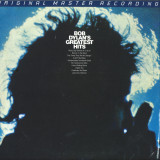
Ten songs that ultimately changed the world. Ten songs pulled from precedent-establishing albums recorded between 1963 and 1966. More than five-million copies sold. In every way, Bob Dylan's Greatest Hits is a fundamental collection for every music lover, and the perfect choice for those seeking an introduction into the legend's vast career. For this is a collection so prized, even the cover photo won a Grammy.
Greatest-hits volumes are often hit-and-miss propositions not because of what they contain, but because of what's missing. Filtering the top selections from the six formative, life-altering albums Dylan made between 1963 and 1966 is an arbitrary process but one performed impeccably on this set. Home to his biggest chart successes as well as his most influential songs, Bob Dylan's Greatest Hits is a veritable template for any aspiring singer-songwriter, an American history lesson, and a seminal release for anyone new to his work – as well as for audiences that find some of his deeper cuts an acquired taste. Every signature facet of Dylan is represented, and done so authoritatively. Serious, protest folk anthems ("Blowin' in the Wind," "The Times Are A-Changin'") sit alongside defiant rock statements ("Positively Fourth Street"), landscape-changing epics ("Like a Rolling Stone"), beautiful blues-inspired odes ("I Want You"), and surrealist dreamscapes ("Subterranean Homesick Blues"). Infused with literary poetry, impassioned emotion, and career-making performances, this material doubles as a definitive account of American culture and society, and functions as a soundtrack to the era's social movements.
Gathered in one place, it's no wonder the songs here gave Dylan what remains the biggest-selling album of his career.
Mella Dee Presents RYAN, a new project from one of the UK’s most prolific electronic producers. Exploring a darker, experimental side of the mastermind behind ‘Techno Disco Tool’, the new project sees RYAN take things underground with new track ‘Static Movement’. Alongside the track, RYAN has announced his forthcoming EP Connected Experiences, a 4-track collection of essential club tools due for release on August 11 via DJ and Body Movements co-founder Saoirse’s imprint trUst. The landmark release will be the first time the label head has featured another artist's music and is testament to the direction of Mella Dee’s new musical project, RYAN.
Already doing damage in the club circuit with support from the likes of Ben UFO, Shanti Celeste, Midland and more, ‘Static Movement’ sees RYAN. go back to basics with a drum machine and analog synths, ending with an infinite groove. Speaking on the track, RYAN. explains: “Trust the process. My name is RYAN. This is a collection of music I wrote for the purpose of dancing. Those moments we can all get lost together and connect through experience. trUst is a label built on love and connection. I just want to thank Saoirse for the trust she has shown and the love she gives.”
Label boss Saoirse adds: “This is the first time I've invited another artist to release on trUst and I'm so delighted it's from my close friend the absolute don from Doncaster - Mella Dee. Tracks I've been playing in every set over the past year with Static Movement being one of my most ID'd tunes ever. Once I heard it I knew this had to be the first track released on the label from someone else. Ryan is one of the best producers I know, completely and wholly committed to the dancefloor and I'm thrilled I will be releasing the first of his new project under 'Ryan'. I had complete trust in him to deliver a solid EP.”
Real name Ryan Aitchison, Mella Dee reached international notoriety with his anthemic 2017 single ‘Techno Disco Tool’, reaching number 1 in BBC Radio 1’s Dance Music Chart as well as one of Annie Mac’s ‘Tracks of the Decade’ (and was even played during her final show on Radio 1). A year later, the Warehouse Music label head won ‘Best Breakthrough Label’ at the DJ Mag ‘Best of British’ awards and he was also named one of Mixmag’s ‘Stars of the Year’, cementing himself as one of the most sought after names in dance music. Since then Mella Dee has delivered his debut Essential Mix for the legendary BBC Radio 1 series, curated a mix for Resident Advisor’s prestigious Podcast series, performed a debut Boiler Room set to rapturous acclaim, toured North America multiple times and joined the elusive Circoloco family for a summer of shows at DC10 and their momentous festival in Thailand. Ryan has also curated tours for his own Warehouse Music label, taking over illustrious venues all over Europe including his hometown at the infamous Doncaster Warehouse.
Having explored rather obscure and downtempo territory with Mr. G's album Pearls Don't Lay On the Shore earlier this year, CHILDHOOD returns with another discernig 12" dedicated to the dancefloor. Welcome to PLACE OF CONNECT PT.01!
Ed Davenport, who has mainly focussed on his INLAND moniker in recent years, brings back another distinctive side of his personality delivering three unique, raw and pumping house cutz under his real name.
The A-side starts off with Suntazia, an acid break beat anthem that sheds light and euphoria onto any dance floor, and is followed by the true jacking groove that is Inertia.
The B-side is made up of Electricity, a wonderful testimonial to those magic moments on the dance floor, when everybody in the room just moves and moves... beyond the need of unnecessary gimmicks and sonic spectacles.
Sept duos pour guitar acoustique et piano préparé is the second duo recording from Stephen O'Malley and Anthony Pateras. Their first together, Rêve Noir (2018), took an electro-acoustic scalpel to a 2011 duo concert for electric guitar and piano, using Revox and digital treatments to twist and smear gig documentation into ghostly echoes and fractured drones. Here, in contrast, the music is entirely acoustic and presented as it was performed, without overdubs. Both players’ choices of instruments are notable: this is O'Malley’s most extensive recording on steel string acoustic guitar (playing an instrument whose previous owners include Marissa Nadler and Glenn Jones) and Pateras return to the prepared piano, which he has rarely employed in recent years, after spending much of the first decade of the 21st century exploring its possibilities.
Recorded during O'Malley’s residency at La Becque on Lake Geneva in the summer of 2021, from the first moments of the opening ‘déjà revé’ the music immediately establishes the distinctive landscape of chiming tones and hovering clouds of resonance explored throughout its one-hour running time. Pateras’ preparations create tolling bell-like tones alive with complex overtones, alongside which O'Malley’s open strings and natural harmonics add a sparkling clarity. While Pateras’ music often uses a densely chromatic harmonic language, these duos are remarkable for their modal simplicity. However, the interaction between the pure intervals of O'Malley’s just-intoned strings and the unstable harmonies created by the piano preparations suspends the music in an oneiric state of hazy ambiguity. Without obvious reference to tempo or meter, the music floats in what the composer Ernstalbrecht Stiebler has called a ‘bottomless sound space’, the temporal placement of events determined by bodily rhythms and the performers’ own listening to (and enjoyment of) the sounds being made.
Heard one way, this music can seem striking in its consistency, almost environmental. Attending more carefully, the listener hears the pitch sets and tunings changing throughout the album’s length. Each piece has its own character, subtly distinguished from the others through mood, pacing, and timbre. On ‘déjà voulu’, for instance, O'Malley makes prominent use of slide, the woozy, bending pitches weaving through a series of lush arpeggiated chords from the piano. ‘Déjà senti’, on the other hand, is particularly spare, the gestures spaced out to the extent that they often float in isolation against the background of fading resonance. Much of ‘déjà su’ is built around a slowly pulsing single prepared piano tone, creating an almost ominous tension, whereas the sparkling guitar harmonics and arpeggios of the closing ‘déjà raconté’ have a gently triumphal air. While the music’s calm, rippling surface is immediately entrancing, these seven duos – in the tradition of the best improvised music – also reward close listening, which reveals sonic details and focuses the listener’s attention on how the music unfolds spontaneously from decision to decision, from gesture to gesture.
Recorded during a period when O'Malley and Pateras were grieving the loss of recently departed friends and collaborators, these seven duos possess a reflective, at times almost mournful quality. More importantly, though, they are imbued with other qualities that can arise from personal loss: a clarity that allows one to clear away the inessential, to begin again, to renew one’s faith in friendship and music.
This is the second time out for the Wormholes on AllChival following on from their You Never See the Stars When it Rains anthology release. This one is a previously unreleased album recorded in a concise burst of seven nights in Dublin’s Sun Studios in the spring of 1996. It was originally envisaged as being The Wormholes’ second album, the follow up to their 1994 debut Chicks Dig Scars. Unfortunately the end result of the sessions - Parijuana - would not only be ignored by their label of the time (Roadrunner Records) - but would also just as quickly be dismissed by the band themselves.
Eamonn Crudden, the manager of the band, had manged to extract some money from Roadrunner to record demos of new tracks as soon as the release cycle for their debut was over. The budget was so tight that it covered studio time but was not even enough to buy the master tapes. With things going south with the label – a classic 90’s tale of the A&R man who championed their cause heading off elsewhere the minute they signed - the intention was to go in and aim to record an album rather than demos - with the intention of releasing it on another independent label to keep the momentum around the band going.
However by this stage the Wormholes were totally wrapped up in listening to Can, Faust and generally exploring music based on casual recording, improvisations and extemporization. For them the album was too ‘rock’ and – having been dropped by Roadrunner - they no longer felt under any obligation to release it. To them it was time for a fresh start. Their next recordings would not be ‘for’ anyone but themselves. Today bassist Anto Carroll admits that “at times we were our own worst enemies” and with the benefit of hindsight both he and guitarist Graham Blackmore wish they had gone ahead and released this album at the time. However, back then, they thought they could do better and they did go on to make inventive and unique sounding versions of some of these songs with Stan Erraught producing just a short time later. These recordings were eventually released by Dead Elvis in 1999 - along with a couple of ‘adjusted’ tracks from the Sun Studios sessions - on Parijuana: 4 Years in Captivity.
It’s highly unlikely that listeners today will share the band’s view that the abum was too ‘clean’. This version of Parijuana is dirty, raw, messy with plenty of experimentation and extemporisation. The songwriting is as strong as that on their Chicks Dig Scars debut. The music is played with a new confidence and swagger, very much the sound of a band rooted in a wave of US ‘lo-fi’ finding their own sound. It’s the missing link between their conventional Pavement/Sebadoh influenced debut to the more drawn out, free roaming and extemporised second album proper Scorpio The Album.
- A1: Bô'vel - Coming Back
- A2: Sam - Life (Club Mix)
- A3: Marcelle Moncrieffe - Take Me There
- B1: Kofi - Step By Step
- B2: Pure Silk - What You Do For Me
- B3: Jenny B - Sexy Eyes
- C1: Sonja Ryshard - Step Back
- C2: Cavalier - Don't Touch
- C3: Purely Fizzycal - Straight To The Top
- D1: Dennis Planter - I Still Dream Of You
- D2: Taffy - Passion
- D3: Weekend In Paris - Hold Your Head Up
Der Londoner DJ/Kurator Sam Don hat mit seinen Comps 'For The Love Of You' neues Licht auf das Reggae-Subgenre des Lovers Rock geworfen. Seine tiefgründigen, aber zugänglichen Tracks haben vielen die Ohren für das Genre geöffnet. Mit der neuen Compilation 'Just A Touch' strahlt Sam seine Fackel auf den UK Underground Soul aus und präsentiert nach sorgfältiger Recherche einige der süßesten Soul-Schnitten aus dem UK. 'Während die USA vor allem für Soulmusik bekannt sind, hat Großbritannien aufgrund des Schmelztiegels der Kulturen und Musikstile seine eigene Sicht auf das Genre geschaffen.' - Sam Don
- A1: Flug 8 - Puerto Rico (The Velvet Circle Mix)
- A2: The Black Frame - Sacrosanct (Mount Obsidian Remix)
- A3: The Novotones - Liberty Bell
- A4: Sascha Funke - Mathias Rust
- A5: La Finca - What Clouds Say
- B1: Paulor - The Last Coke In The Desert
- B2: Mount Obsidian - Fade Feat Charlotte Jestaedt
- B3: The Velvet Circle - Our Tribe
- B4: Seb Martel Feat Las Ondas Marteles - Dark Mambo (Joerg Burger Mix)
- B5: Mount Obsidian - Marole Feat Charlotte Jestaedt
Kompakt unveils the third volume of Jörg Burger’s Velvet Desert Music compilation series, dedicated to music that hits the sweet spot between the cinematic, the (pop) ambient, and the psychedelic. With Velvet Desert Music Vol. 3, Burger and his friends wander afar, taking trips away from, or adjacent to, the dancefloor that’s acted so long as the crucible for the Kompakt aesthetic. Like its predecessors, it’s a gorgeous, lambent collection of late-night mood music.
Because it’s such a broad church, Velvet Desert Music admits all kinds of new experiences, as well, with Burger looking for music that "leads out of the desert into the velvet universe". Indeed, of all the volumes in the series, this third instalment feels closest to an album made by a true collective. The roster has changed, with new contributors Flug 8 and Seb Martel, both with his trio Las Ondas Marteles and with Chocolate Genius and Zsela as La Finca, joining regulars The Novotones, Mount Obsidian, The Golden Bug, Paulor and Sascha Funke.
Burger himself reappears, too, alongside Fritz Ackermann (of The Novotones), Max Würden and Thore Pfeiffer, in The Velvet Circle. Their contributions are pure lush life electronica: “Our Tribe” hitches a ride with a low-slung groove, flickering psychedelic reels of acoustic guitar traipsing across moody bass and taffeta layers of drone; their opening remix of Flug 8’s “Puerto Rico” gently introduces the album with softly tangling electronic tones, while guitars, drenched in reverb, pirouette in the background. A Mount Obsidian remix of “Sacrosanct” by Burger’s The Black Frame -project is a swirling treat for the ears.
La Finca’s electronics and voice miniature, “What Clouds Say”, is a masterclass in poetic restraint; Martel’s “Dark Mambo”, remixed by Burger, is one of the collection’s big surprises, for it indeed does what the title says, a drifting, surrealist take on the mambo form, full of pensive chords, rich with unrequited longing, a breathy saxophone whispering under the song’s sly rhythmic carriage.
Elsewhere, The Novotones chime in with a slyly propulsive, Krautrock-esque charmer, “Liberty Bell”, and the guitar-led tone-drift of “Valley of Oblivion”; Paulor’s “The Last Coke in the Desert” is a chiming, lilting dreamscape; Mount Obsidian are joined by vocalist Charlotte Jestaedt for two modern takes on early-hours art song, “Marole” and “Fade”; Sascha Funke’s “Mathias Rust” is a lavish dancefloor dream, vocal samples drifting through the song as it slowly envelops the listener in its opulent radiance.
This is just a taste of the rich pleasures of Velvet Desert Music Vol. 3, a triumph of a compilation that takes the psychedelic visions of its predecessors and looks for the desert within, a dusty kiss, a road-movie hallucination flickering on the listener’s eyelids, a cinematic projection from deep inside the mind.
'After a first album as a duo released on Okraina Records: "Le Corps Défendant", Delphine Dora and Mocke invite us to join them again in listening to a new album. We slip into it as if in a dream, the music carries us away with its floating images.
Heard before on a handful of disturbingly beautiful solo albums and in collaborations such as Midget!, Arlt, Chevalrex, Mohamed Lamouri, Mocke (Dominique Dépret's nom de plume) is a subtle and inventive guitarist, who draws melancholic arpeggios, with a beautiful languor, that walk the line between tensions and tears. Delphine Dora has been heard with Roxane Métayer, Sophie Cooper, Andrew Chalk, Jackie McDowell, Helena Espvall, Valentina Magaletti ... meeting in a moment of improvisation, a solitary sincopated voice blooming between the black and white keys of her piano, tuning betwist these keys, or at other times in the gap of the right note. Here improvisation feeds on melody, or is it the other way round?
Recorded in an old church in the village of Mauzun in the Puy-de-Dôme, by Cyril Harrison, "L'invisible est multiforme" is an invitation to join them, to let these abstract songs erase our obsessive thoughts of the day, to open ourselves to the vibrant poetry of the air and the evening, to finally forget ourselves. Each note played by these four intertwined hands is like a slight break in the fabric of time, sliding one over the other, reminding us of mortality and its beauty. Ritornellas flow out of mechanical clocks, fragile, taking care not to hurt the silence. Both seek to dig and open up new paths to enrich their duet, to open up imaginary landscapes. Sometimes the guitar cuts through the fabric of an organ, fractures the song, just as the rain erases a landscape, redrawing it. But very quickly, both of them continue to follow this new path, improvising what will serve as a framework, a perspective, a language. There is a kind of praise for slowness in this "invisible", a desire to hold back the song, not to let it slip away, to let the listener's ear enter its course, to share the last note, its illumination. Each of these thirteen short sound pieces merge into a common colour, a vibration close to the different tonalities, which inter-penetrate, like a cubist painting. Words cannot take away the mystery of this record, words can only fail to describe the music, you must hear it.'
- Michel Henritzi
South London Soul Band Trambeat, influenced by the floor shaking sound of 1960's Motor City. With brand new single, "Don't Hold Back"
Trambeat were formed in 2012 by guitarist Graham Potter and drummer Des" Jammy" James. Graham and Des had played together in several bands previously and already had a good musical understanding. Trambeat's manifesto; to write original songs influenced by a love of Northern Soul, Motown, Rocksteady and RnB. But also to look forward and include elements of more contemporary genres. Bass player Nipper Smith, Saxophonists Robin Ogleby and Nadia Barbosa, and organist Emer O'Hanlon were recruited to form the core band and Trambeat set about recording and gigging with various vocalists until, in 2016, Aimee Grinter became Trambeat's permanent lead singer.
Written by Graham Potter and Des James, "Don't Hold Back" is in some ways a comeback single for Trambeat. The pandemic years took their toll on many bands and Trambeat in particular, with the loss of founding member Robin Ogleby being a very hard blow. Following a tribute single in 2021 to raise money for Robin's charities, and a couple of festival gigs in the summer of 2022, theyndidn't have much appetite for writing new material, and were unsure whether to continue as a band without Robin. It was during a jam between Graham and Des in late 2022 that the bones of "Don't Hold Back" came together. The drums and rhythm guitar clicked into an infectious dance groove with echoes of vintage Motown. The band members came together in the studio with renewed enthusiasm and laid down the track in just a day. The band, who remained close,even during this hiatus, realised how great it was to be back in the studio together again. Graham's lyrics, as well as the euphoric feel of the track, reflected this new optimism within the band. "Don't Hold Back" is a celebration of life, of deep friendships and most of all, of love!
Plays on Gary Crowley's show on BBC London.
Regularly played by Button Down Radio, Heavy Soul (Cambridge), The Influential Factor show on Solid Front Radio (album of the week for TTN), Mod Radio UK (various shows), The Edward B'stard Radio Show, several stations in Germany and Edge Radio and couple of others in Australia
Ed Sheeran’s brand-new album Autumn Variations will be available for pre-order on the 24th August at 5pm before a worldwide release on the 29th September. It will be available to stream on all platforms as well as purchase physically as a CD or various limited Vinyl editions.
Ed Sheeran is an era-defining artist who has sold over 52 million albums and 150 million singles across the world. Through his fusion of thought-provoking songwriting, universal pop and multi-genre influence, his rich tapestry is not only perfectly suited to his audience but it’s something that transcends generations.
Since surfacing on the UK circuit in 2010 with his ‘No.5 Collaborations Project’ – an eight-track EP featuring his favourite grime artists of the time – the Suffolk-raised recording artist has resonated with fans across the world through his peerless songcraft and versatility. And now, with six consecutive UK No.1 albums to his name – ‘+’ (2011), ‘x’ (2014), ‘÷’ (2017), ‘No.6 Collaborations Project’ (2019), ‘=’ (2021) and ‘-‘ (2023) – Sheeran continues to reaffirm his status as one of the most in-demand pop stars on the planet.
Prior to the release of ‘=’ (October 2021) – an album that’s now surpassed five million global sales - Sheeran secured two UK No.1 singles in the UK with ‘Bad Habits’ and ‘Shivers’, which sat atop the UK’s Official Singles Chart for a combined total of 15 weeks. Moreover, the LP saw him take home 2 x EMA’s for ‘Best Artist’ and ‘Best Song’; an American Music Award for ‘Favourite Male Pop Artist’; British GQ’s ‘Solo Artist of the Year’; 4 x Los40 Awards; a BRIT Award for ‘Songwriter of the Year’ alongside a nomination for ‘Song of the Year’ at the 2022 GRAMMY’s.
Sheeran’s most recent album, Subtract, secured Ed his sixth No.1 album. Produced by Aaron Dessner, the album was anchored in his love of singer/songwriter compositions and written against a backdrop of personal grief and hope. Ed’s most critically-acclaimed album to date, it housed the heart wrenching UK No.1 single ‘Eyes Closed’ – a song about his late friend, Jamal Edwards.
But it’s not just his recorded music that’s seen the former Glastonbury headliner become one of the sought-after artists of the 21st century. Possessing a mystical ability to turn 90,000 capacity venues into the pub back-rooms that he first started playing in, Ed made history in 2015 after becoming the first-ever artist to play Wembley Stadium solo - without a band, just with his guitar and loop pedal - over three, consecutive sold out nights. Move forward to the summer of 2019 and Ed would re-enter history books after the completion of his mammoth two-year Divide tour, officially becoming the most-attended tour of all time after it culminated with special homecoming shows in Ipswich, Suffolk. Beginning last summer, Ed is currently travelling the world on his ‘+ - = ÷ x Tour’ (pronounced ‘The Mathematics Tour’), which saw him return to Wembley Stadium for a five-night run last June.
Ed Sheeran, who was awarded an MBE for his services to music and charity in 2017, is the proud recipient of 1 x IFPI Award (best-selling global artist of 2017); 4 x Grammys; 4 x Ivor Novello’s; 7 x BRIT Awards (including two consecutive wins for ‘Global Success’ in 2018 and 2019); 7 x Billboard Awards + more. Moreover, to this day, his blockbusting third studio album ‘÷’ remains the fastest-selling album, ever, by a male artist in the UK, while the LP’s lead single, ‘Shape of You’, maintains its status as the most-streamed song in Spotify’s history.
At the end of 2019, Sheeran was presented with the Official Chart Company’s first-ever ‘No.1 Artist of the Decade’ award following a host of accomplishments in his native UK including the most No.1’s across the UK’s Official Singles and Albums chart from the years 2010-2019. Most recently, Ed scored two more feats with the OCC after becoming the first British Solo Artist to claim 52 weeks – an entire year – at No.1 on the Official UK Singles Chart, with only Elvis Presley and The Beatles achieving more overall weeks at the top, as well as becoming the first-ever artist with four albums spending an entire year or more in the UK Top 10.
- A1: Billy Boomer - I Like What She’s Doing
- A2: P.j. City - Straight Forward (Non-Stop)
- A3: Maxwell - Realize
- A4: Cecil Lyde - I’ll Make It On My Own
- B1: Mixed Generation Enterprize - Take To The Sky
- B2: Mark Meadows - You And Me
- B3: Alice Cohen & Fun City - Save The Best ‘Til Last
- C1: Banda 22 - A Luz Que Brilha Meu Viver
- C2: Zé Da Lata - Mistério Brilhante
- C3: Rogers Mitchell - Dame Solamente Amor
- C4: The Eleventh Commandment - Then I Reach Satisfaction (Vinyl Only)
- D1: Billy Boomer - You Can’t Hide
- D2: Freedom - High On You
- D3: The Lost Family - Blow My Mind
- D4: The Family Tree – As
Pink Vinyl[30,04 €]
Compiling the follow-up to a very successful first album is always a tricky task, but just 12 months since the release of volume one in the 'With Love' series, miche has excelled himself once again with another glorious, deep dive into the world of rare soul. 15 tracks of independently released music, created by magnificent artists with stories to tell and primed for rediscovery.
The ambition to celebrate under-the-radar artists has remained, but instead of a facsimile of volume one, what we have here is a selection shaped by life changes. Volume two is for the dancers; still soulful, still ultra-rare and slept-on records from the USA, Chile, Brazil and beyond, but the dynamics of the collection have shifted slightly. It represents a move from being immersed in a week in week out environment of beautiful, soulful music in a cosy, dimly lit hi-fi bar to playing livelier, more energetic, dancefloor-focused music in nightclubs. This volume will get you on your feet, make you move and unleash whatever it is that makes you get down.
One of the jewels in the crown of this compilation is a joyous, anthemic gospel version of Stevie Wonder's 'As' by The Family Tree (a project produced by the fantastic Julius Brockington). We are also treated to a rare and sought-after Pennsylvanian funk / AOR bomb by Maxwell, a stunning modern soul tune 'High On You' by Freedom, and self-released Brazilian 45s by Banda 22 and Zé Da Lata. P.J. City's 'Straight Forward (Non-Stop)' is gospel-disco perfection, and we also have 'Dame Solamente Amor’, a sublime, soul beauty from Chile by Rogers Mitchell. Many of these artists featured in this compilation aren't household names, but they deserve their moment to shine, to be heard, loved and appreciated for their artistry.
As Miche says it, “I hope this compilation helps in some way to keep this glorious music alive and play a part in connecting generations of music lovers from the worldwide soul family. As always, it has been made ‘With Love’.”
Colored Repress!
CLUB U NITE RECORDS presents:
Manhattan Project "Juicy Fruits EP" - 4 juicy tracks full of deepness!
Let's start the jam with "Just Chillin", a shuffle beat monster with a smooth baseline, followed by the raw grooving minimal track "I Need U" that kicks you straight to the dance floor.
The B-side starts with the juicy track "I'm Cumming" which should give you a lot of pleasure with some dope organ chords.
The EP ends with "I Believe", a swing beat track that shows you what oldschool deephouse is all about!
Tibi Dabo returns with ‘Overture’, a from his forthcoming Crosstown Rebels album, with remixes from Map.ache and Aline Umber.
A label favourite having dropped his ‘Isla’ EP on Crosstown Rebels back in 2022, ahead of his much-anticipated debut LP comes this third superb taster from it. The superb ‘Overture’ is an eight-minute gem with super smooth percussion and elastic grooves, with wispy sci-fi chords and gentle synth modulations. It’s full of future feels and catchy drum funk that is sophisticated and smartly detailed with chopped-up vocal fragments.
First to remix is Liepzig’s Map.ache, co-founder of Kann Records and half of Manamana. His take builds with fatter drums that are just as infectious, while rippling synth loops weave in and out as flashy basslines cut loose, and balmy pads add extra cosmic absence to a hypnotic mix of the heady and the physical.
Aline Umber, a collaborative live project from French composers, producers and DJs Aline Brooklyn and Aman Umber, are second to remix. They run the Airfunk label and are no stranger to playing cult spots like Rex Club in Paris. Their ‘23% Eventide’ mix is a blissed-out and synth-laced trip with subtle, smeared chords and starry-eyed keys that have you gazing off into the distance as you get lost in the warm drums.
E.P. of low slung and tripped out Cologne style mind melters. Grischerr achieves a live and open sound in these grimy productions which adds to the immersive atmosphere conjured up across all tracks. It's inspiring stuff!
Lucas Croon doses up the psychedelic measures with a flipped version of 'The Man That Never Smiled' topping off the E.P. just nice.. RH TIP!