"Omoiyari" means to have empathy and consideration for others, and act on it. This fall, the American indie-folk multi-instrumentalist and singer-songwriter Kishi Bashi is set to release the companion album to his forthcoming documentary song film, titled Music from the Song Film: Omoiyari. Consisting of two LPs_"The Songs" and "The Score"_the release showcases what is essentially the soundtrack to Omoiyari, the feature-length motion picture co-directed by Kishi Bashi, aka Kaoru Ishibashi or "K," which is being released via MTV Documentary Films in November. Focusing on K's own six-year journey of discovery surrounding his research of the incarceration of 120,000 Japanese Americans that followed the attack on Pearl Harbor in 1941, the film is part social justice documentary and part song-film experiment. The album includes K's live improvisations, which are featured in the documentary, many recorded on the sites where the concentration camps stood. Written during and about the artist's transformational dive into his personal identity and serving as a broad survey of the Japanese American experience as well as the incarceration_Music from the Song Film: Omoiyari serves as an evocative musical accompaniment to the lessons of empathy and compassion portrayed in the film and highlights the process and power of one of modern indie's most talented musicians.
David Byrne is a modern renaissance man - and that’s not just a cliché. From the heady days as co-founder of the celebrated art new-wave group Talking Heads (1976-88) through his own constantly evolving and innovative solo music career, he has pursued his muse on many different artistic fronts. He’s been the driving force behind a body of work that has been both intellectually daring and commercially successful...and he shows no signs of slowing down decades later. This show, captured on November 28, 2001, came on the heels of his hit single, “Like Humans Do” and the release of the album Look Into The Eyeball, which was another typically eclectic musical stew reflecting a variety of styles and influences, from Philly soul to a D.C. Go-Go inspired groove and his first-ever Spanish composition, “Desconocido Soy.” Critics at the time called it his best work in years, and his performance on the Austin City Limits stage shows why. Joined by Austin’s own eclectic tango ensemble Tosca, Byrne takes us down many different musical roads in his ACL debut. Of course, besides the brilliant songwriter and performer that he is, he’s also an accomplished performance artist, photographer, web journalist, film writer / director, composer of motion picture soundtracks, and founder of his own world music label, Luaka Bop Records. He also has a collection of Grammys, Oscars and Golden Globes on his mantel. His music may be complex and poetic, but he makes no bones about his ultimate intent: “I want to move people to dance and cry at the same time. - Terry Lickona (Producer Austin City Limits)
Bathed in a green haze, the crowd oozed to the mutant rock and roll roaring from the basement's dusty depths — everything and everyone was sweaty and sticky. But as Speedy Ortiz crammed into the back corner, their grins just inches away from ours, D.C.’s Dougout became a moshed-and-sloshed sauna of 20-somethings delirious on rock euphoria.
After spending much of the new millennium bored out of my skull by network soap indie, Speedy Ortiz — not to mention its pals in Pile, Ovlov, Grass is Green and the rest of New England’s burgeoning basement scene — was rock's wild howl. The songs were unpredictable, yet weirdly memorable, swaggering with a winky and wry sense of self. Riffs would twist with a topsy tenderness, then slam a ruptured discord. Sadie Dupuis' sphinxian-yet-sensitive lyrics were not only matched but accentuated by her coil-sprung vibrato. How could Speedy Ortiz not immediately become my new favorite band?
What began as a short-lived solo project recorded in Dupuis' off-hours as a rock camp counselor became a four-piece band in Northampton, Mass., by the end of 2011: Dupuis on guitar and vocals with drummer Mike Falcone, bassist Darl Ferm and guitarist Matt Robidoux. They made cool mixtapes, cracked inside jokes and gushed about teenagers that opened for them on tour. They freaked out (via LiveJournal) when they met the bassist from Polvo or Helium's Mary Timony, but also rolled their eyes at '90s indie-rock comparisons. The band's first single — the gender-bending got-laid grunge yowler "Taylor Swift'' — elicited that rare response of the simultaneous giggle and headbang. The Sports EP amped up the taut yet rubbery riffery.
Released July 9, 2013, Major Arcana is filled with wedding chapel exorcisms, oiled-down attractants and criminally twisted puny little villains — this is Dupuis' haunted lexicon as she scales the toxic Aggro Crag of a breakup. And while Dupuis wrote these songs, the band's convulsing arrangements and diverse influences sprawled the squigglier edges of feedbacked fuzz to mete out matters of the heart. Falcone — who, it's worth noting, has a knack for vocal harmony — swung as much as he smashed the drums. In easily tipoverable songs, Ferm's burly bass and percussive overdubs gave the unruly glee its momentum. Robidoux ripped skronky guitar solos and countered Dupuis' riffs with decorative splatter. Over a four-day marathon session at Sonelab in Easthampton, recording engineer Justin Pizzoferrato sparked the studio imagination of Speedy Ortiz — not only leaning into gritty tones but layer-caking dense dynamics that made these songs pop and pulverize.
For all her sweet-toothed seething, Dupuis was not easy on herself. Everyone's allowed the idiot growing pains of your 20s and the misery that follows, but I can only imagine the emotional exhaustion that playing these songs on the road, night after night, must have wrought. "But you left something on my lips: a mark so sick," she repeats over the doomy destruction that ends the album. Thinking back to the many Speedy Ortiz shows I caught in those early years, including an unofficial after-after party for my own wedding, "MKVI" often served as the noisy down-and-out closer — heads would bang in solidarity as the crowd became co-authors in the chaos, the biting phrase now a hex, Speedy Ortiz forever our coven. —Lars Gotrich
To celebrate the 10th Anniversary of Major Arcana, Speedy Ortiz release a remastered edition on Carpark Records.
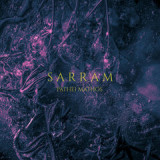
S A R R A M, the ambient and post-rock vessel of Sardinian solo artist Valerio Marras, announces the release of his fifth album "Pathei Mathos" on Subsound Records, and presents the captivating title track featuring revered multi-faceted artist Lili Refrain on vocals. S A R R A M is a dark ceremony inspired by the wild, ancient landscape of Sardinia A crushing but yet graceful composition where drone, electronica, doom, postrock blend to invite the listener to an intense sound journey. Dealing with learning through suffering as a central theme,"Pathei Mathos" -- which features appearances from renowned experimentalists Lili Refrain, Dalila Kayros, Tobias Vethake (Sicker Man) -- is a deep trip in the darkness surrounded by pulsating soundwaves, crushing droning layers, ethereal voices and floating cellos. About the album, S A R R A M says: "As every record, it describes a part of my living, my existence through sound and frequencies. It's something deep and authentic, something that can be felt, something real. The experience of my last two records "Silenzio" and "Albero" brought me to "Pathei Mathos": I needed to go further once again, pushing my borders even more and doing something I've never done before: composing. Nevertheless: sometimes it's just about floating together into huge waves of sound.
Tin Fingers takes on a darker, melancholic direction on their second full album. Felix Machtelinckx' weeping vocals, preaching, searching, and trying to understand God, form the leitmotif. With rich melodies, haunting piano sounds, improvisations, first takes and no overdubs, Tin Fingers is searching for pureness and keeping things human and simple. The band is playing together intuitively, without a computer, without ego, just for the sake of music
The creation of the album was very fluent and spontaneous. Singer Felix wrote the backbones of the songs and the lyrics on acoustic guitar and piano. He wanted to have songs ready in order to be able to record and write arrangements fast. With an eye for details but without overthinking, keeping the ideas fresh. 'I wanted to stay in love with the music.' he explains. 'It needed to go fast, very fast, in just two weeks the entire album was recorded and ready to be mixed.'
In the studio, the band especially focused on picking the right mood rather than playing the right notes.
They were fed up with working on a computer for many hours, overthinking production choices, and adding instruments on top of each other as if they were Lego blocks. This time they decided to work in a more traditional way, going for first takes, jams, and essentially working with analog gear. No computers, no screens, no distractions. Only four humans in a studio trying to make a sound together by keeping things spontaneous and raw. They said goodbye to perfection and worked towards an unfinished product, a snapshot.
Tin Fingers also didn't want to sound like any other artist on this record. They decided not to listen to music during the sessions, and to never express ideas by referencing other bands. Just before the studio session, however, bass player Simen Wouters broke the rules and shared Bonnie 'Prince' Billy's, I See Darkness. Its dark and searching sound ended up inspiring the band unmistakably.
Once the recording was finished, the band decided to keep the volatile rhythm going and asked reputable NYC-based mixer and producer D. James Goodwin to finish the job. Goodwin, known for his analog folk productions with a real American punchy sound but a tender touch, proved the right man for the job. He opened up the songs and kept things poetic, minimal but impressive.
out of Stock
Last delivered 2 years ago available to reorder, subject to availability
Boy bands and girl groups were a huge factor in 90’s and 00’s pop culture. From the Backstreet Boys and Take That to the Spice Girls, Sugababes and many more great pop-bands, they sparked mass hysteria among their young fanbase. Being one of the first bands in the late 80’s, New Kids On The Block kicked off the hype, although in the 60’s bands like Jackson 5 and The Supremes had been around for quite some time.
The pop genre sparked a whole new breed of both boys and girl bands, with #1 hits all around, fueled by the sing-a-long lyrics, catchy videos on MTV, magazines and tours targeting a young audience around the world. Girlz ‘n Boyz Collected represents the legendary 90’s and 00’s girl- and boy bands including Backstreet Boys, Spice Girls, Sugababes, Take That, Atomic Kitten, New Kids On The Block and many more acts.
The 2LP Girlz ‘n Boyz Collected is available as a limited edition on blue
(LP1) and pink (LP2) coloured vinyl and includes an insert.
out of Stock
Last delivered 2 years ago available to reorder, subject to availability
Following his versatile Alone With Everybody EP, FD returns to The North Quarter with a stunning 16 track debut album: Better Days.
Largely written in a three month window, FDs (real name Freddie Dixon) new long player on The NQ undoubtedly brings the best of the Zurich-based/London-born producer. Better Days is an album that delivers a rare synergy of drive, harmony between subtle & raw and just sheer fun. A versatile yet coherent project drawn from a large pool of sketches, finalised in intricate detail with focused studio dedication.
Drawing influences from Dub, Jazz, Hip Hop, Soul and the Mid 90's Drum & Bass “GoldenAge”, Better Days bridges the gap between genres, as FD enlists carefully considered vocal collaborations. Manchester donny Fox shines on the dubbed out Better Man and Washington DC soul diva Cecily shows shades of Minnie Riperton on Sycamore. Meanwhile Ribs is lifted to one of the album's stand out tracks with Maverick Soul on the keys and the enigmatic Issac Rosie on the boards.
For some the better days in life are in their childhood memories: nostalgia-infused wonderings of the mind to a care-free time without today's online distractions. Although FD’s debut album 'Better Days' is inspired and informed by a period earlier in life, his best days musically are definitely in the present. To put it into the man's own words:
"I’ve been wanting to do an album for quite a while now, but the circumstance never felt right. Once I started working with The North Quarter that all changed – it feels like being part of a team all pushing in the same direction, all supporting one another, all wanting to do the best for each other. Once we’d done the first EP together, for me, it was only a question of when."
out of Stock
Last delivered 4 years ago available to reorder, subject to availability
As 2019 winds to a close, Polish producer Satl delivers a statement of intent with hisThe North Quarter debut release on Amsterdam boutique label. Consisting of 9 tracks his “Things We Can’t See” project draws from a varied palette of influences includingJazz, R&B and Dub Techno to stunning effect.
The Rotterdam resident possesses a refinement and depth beyond his years, making him one of the leading lights in a new generation of Drum & Bass producers and on “ThingsWe Can't See”, a coming of age of sorts, he truly manages to rise above himself. With work on a follow up already underway this is just the beginning of his relationship withThe North Quarter.
out of Stock
Last delivered 4 years ago available to reorder, subject to availability
The GRAMMY Award-winning band, Blues Traveler, is back with their fifteenth full-length
album, Traveler’s Soul . This album, similar to Traveler Blues, a blues covers album that
earned the band a GRAMMY nomination, is a covers album paying tribute to R&B and soul
classics with featured artists such as Pat Monahan from Train, Valerie June, Alisan Porter,
Daisha McBride, and many more.
The GRAMMY Award-winning band, Blues Traveler, is back with their fifteenth full-length
album, Traveler’s Soul . This album, similar to Traveler Blues, a blues covers album that
earned the band a GRAMMY nomination, is a covers album paying tribute to R&B and soul
classics with featured artists such as Pat Monahan from Train, Valerie June, Alisan Porter,
Daisha McBride, and many more.
“A piece of music never truly comes to An end. Revisiting a theme illustrates this idea that life goes on.” These are the words of Wayne Shorter, uttered in 2018 upon the release of Emanon, his final opus. On this record, the octogenarian uses dusky hues to shade in the passions of his youth - drawing and science-fiction, as well as the causes he has defended all his life - the fight against ecological upheaval and structural racism. This sentiment did not fail to resonate with Julien Lourau, who has reached a stage in life where he has begun to look back over certain pages written by the man he has always considered one of the masters of his trade. Five years later, this Parisian native has also chosen to revisit his glory days, offering reworked versions of specific tracks composed by his titular elder throughout the 80s. “When I play this music, I find myself back in my teenage bedroom. These are my standards, and they remind me of autumn in Rambouillet.” At that time, after practising his scales, Julien would also play Dungeons & dragons, and immerse himself in SF as well as heroic fantasy - epic influences which are not without a certain connection to the dreamworlds Shorter conjured up, as another fan of landscapes beyond the grasp of reality.
This album features four themes taken from Atlantis, which came out in 1985, and two from Joy Ryder, released three years later. To these, he has added a composition penned at around the same time for Sportin’ Life, the penultimate LP by Weather Report. This is rounded off by a tune taken
from Native Dancer, the record which, ten years earlier, in 1975, brought together this saxophonist who learnt his trade alongside Art Blakey, before joining Miles’ second quintet, and Brazilian Milton Nascimento.
“Between Native Dancer and Atlantis, Shorter did not release anything under his own name, but he took the time and care to really perfect his writing. Upon his return, he injected a very Brazilian form of subtlety into his compositions, especially rhythmically. And from a harmonic point of view, these themes are extremely sophisticated, and reveal truly singular colours. In fact, he decided to display the score as if it constituted the liner notes of Atlantis.”
Julien Lourau is a fan of every Wayne Shorter era, from his Blue Note days, where Mr Gone defined the bases of a truly unique repertoire, all the way to his final quartet - a reference like no other. He decided to focus on this “highly electric” period, which is not necessarily Shorter’s best known, nor his most widely appreciated - despite being a unanimous reference, Shorter has nonetheless never had a direct descendent. In Lourau’s line of sight there lies a desire to focus on typically South American tonic accents which characterise this repertoire, twinned with the ambition to switch up their actual sound “by attempting to open up onto a production highly influenced by eighties fusion". However, he admits that modifying the structures of these most unique of worlds constituted a fresh challenge. “There’s this labyrinthine harmonic system where you’ve no idea how it holds together, but where it’s actually impossible to touch the slightest element without the whole edifice wavering. It is in fact a very difficult thing to achieve!”
In order to successfully transcribe all this creativity free of obstacles, Julien Lourau once again called upon the help of Mathieu Debordes. From January 2023 onwards, Mathieu endeavoured to break down all the musical elements, on paper, before creating any actual music. The record was therefore constructed on the faith of these scores, without necessarily transiting through a creative residency - just two live gigs, to make sure the setup worked. Besides Mathieu Debordes and his synthesisers, Julien Lourau has assembled an ad hoc team by his side. On the bass, according to the track, we can hear erstwhile companion Sylvain Daniel or a new acolyte on the fretless bass, Joan Eche Puig.
Stéphane Edouard, on percussion, even dives headfirst into an unlikely proto-rap of sorts, on Pearl On The Half Shell (where, on the original version, Bobby McFerrin adjusted his interventions in a rather madcap style). Aesthete and drummer Jim Hart as well as pianist Leo Jassef also figure on this release - both were present on previous project devoted to label
CTI. “At sixteen, I wanted to sound like Michael Brecker rather than Ben Webster - that was equated with modernity in those days”, adds Julien with a smile, as for him, all this rings out a little like a logical next step, a joyful immersion into the fountain of youth. And if, for this record, he plays the soprano more than ever, the saxophone Shorter set in his sights on, he never tries to replicate an unattainable ideal note by note. What would be the point?
“Wayne Shorter is not just a saxophonist’s saxophonist. In fact, I don’t know a single person who has risen to challenge of his solos. I have not done it myself either, but on the other hand, I have retained a lot of his phraseology. His way of approaching the instrument reveals a more evanescent language, a work on colour and shape. Keeping this in mind has allowed me to gravitate towards certain elements, that in hindsight, I find echoes of in my work, even in Groove Gang.” Shorter etches out these phrases, creating a groove within which Lourau had traced subtle punctuation, managing, from a highly written base, to create fresh apertures, promises of a great escape. Emblematic of this standpoint, his regal version of Ponte de Areia, originally a wonderful dialogue between Milton Nascimento and Wayne Shorter. Here, the Frenchman takes liberties with the original melodies, without ever growing distant from the original spirit, extending one section with delicacy, offering a rubato development and then a groove “like a little suite”. Julien Lourau also renews with an accomplice from last century, Magic Malik, who lends his high-pitched vocals to the track. Though they had not recorded together for more than twenty years, the two of them got on as if they had only ceased collaborating yesterday, everything flowed naturally. The track was wrapped up in just one take, much like other themes, such as opener Who Goes There where the flautist deploys smooth, enchanted and smoky wisps.
Fundamentally, reflecting of the sleeve which features a child playing with a ball, image that could symbolise the sun just as much as the moon, Julien Lourau manages to translate the ambiguous candour which characterizes Shorter’s work - solar and crepuscular at the same time, that of a visionary and poet definitively situated outside of all chronology, but with whom Julien shares surprising and ‘timely’ coincidences. Shorter was born August 25, 1933, the same day as Julien’s father, “if we take time zones into account”, and who died on Lourau’s birthday, March 2, 2023. Should we take this as a random fact? Or could we not see here the sign of a destiny connecting the agnostic Frenchman to the man who, as a fervent Buddhist, believed in the transmission of his spiritual flow ?
Five groups, one mythical studio - documenting the emergence of a generation!
The initial postulate was simple: five groups, one emblematic studio and 24 hours for each to imagine and record two unreleased tracks with one objective - the will to document a French jazz scene in the midst of renewal.
In these last few years, several innovative currents have shaken up the world of jazz and attracted new fans. They have bubbled up from Los Angeles, impregnated with hip-hop culture (Kamasi Washington, Terrace Martin, Thundercat), or from London, tinged with African rhythms (Nubya Garcia, Kokoroko, Ezra Collective). Meanwhile, in France, a new scene is emerging, carrying with it more of a dancefloor-oriented sound influenced by electronic music - an obvious kinship with the French Touch explosion of the late 90s.
Historically, every movement has been assimilated to a certain neighbourhood, to specific clubs where late at night, young guns stayed up to imagine the jazz of tomorrow - the Cotton Club for the jazz of the 20s, Minton’s Playhouse in Harlem for Be-Bop, the Black Hawk in San Francisco for West Coast jazz, Birdland in New York for Hard-Bop or a lot more recently, the Total Refreshment Centre which has been the playing field for the new London scene.
In Paris too, this new sound is associated with actual venues, places which have allowed these groups to form, create a repertoire and forge an aesthetic - Le Baiser Salé for Monsieur Mâlâ, La Gare/Le Gore for Photon, La Pêche in Montreuil for Ishkero, La Petite Halle for Underground Canopy and also le Duc des Lombards and le 38 Riv’ for Alex Monfort; it’s in a live context that this music will always continue to evolve.
Keeping this “live” spirit, with all its spontaneity, was actually the guiding line for the elaboration of this Studio Pigalle compilation. Each take was recorded in the most organic way possible, bringing all the musicians together in the same room to limit post-production alterations before the final cut was assembled, in just one day, by studio in-house sound engineer, Felix Rémy.
A feeling of urgency permeates a record guided by an artistic production taking care to crystalise the essence of this artistically free-range generation whose childhoods were rocked just as much by Bill Evans and Roy Hargrove as by J Dilla and Jeff Mills. One of the two tracks recorded is geared towards the dancefloor, and the other, more cosmic/ambient gives freer rein to individual interpretation.
There were therefore many possible ways of interpreting these guidelines for the five formations which number among the most distinctive on the current French musical landscape, and the occasion, for some, to rummage through their archives! With Transe (Mbappé) and Da Verdere (Vella), Monsieur
Mâlâ present us with two unreleased tracks issued from the very first rehearsals of the quintet reworked especially for this compilation. “Seen the aesthetic range of this group, it all worked out very naturally in the studio”, recounts keyboardist Nicholas Vella “Recording like they did in the sixties with all the channels live and working with small imperfections was a very interesting task, even when it came to the mix, we had to make do with the takes we had... “
“Our group is very recent, and with this session, in just two tracks, we had the opportunity to present the entirety of our musical universe,” says Photons pianist Gauthier Toux. “All too often, we assimilate this fusion between jazz and dance music to computers and post-production modifications. For “Dessine”, we kept the first take, and we must have recorded just three or four for the other track with more of a techno bent. In one day, we understood that we could play our entire repertoire live, from A to Z”.
“When the Komos label offered me this project, it immediately spoke to me”, remembers Alex Monfort “Straight away, I thought of “Since I Met You”, a track with a nine/four time signature which really is reminiscent of a new- soul groove, but with this extra cosmic vibe! I wrote the words to the chorus and Nina Tonji placed her voice on the track, adding her own verses. For “Tonight”, the up-tempo track, I wanted to head off in more of a hybrid direction inspired by Kaytranada or the Black Radio series by Robert Glasper. A cross-over between jazz and hip-hop which really does represent my world, and I also tried to place vocals centre stage (Emcee Agora)”.
“We truly resonated with the way Antoine Rajon imagined this compilation and the recording session”, confide Warren Dongué and Jérémy Tallon from Underground Canopy. “When arriving in this studio we felt as if we had gone backtothe70s! Inkeepingwiththespiritofthisera,heknewhowtoletus keep our spontaneity, without recording in too many takes, and that’s how we like to work”.
“We managed to adhere to the themes of the compilation without changing our instrumentation, we wanted to remain faithful to the sound of Ishkero on these new compositions and take them somewhere else” – says drummer TaoEhrlich -“Withoutaddinganyelectronics.Thesessionwassupervisedin a truly subtle and benevolent manner. From a human perspective, it was also a wonderful experience”.
Whether turned towards hip-hop, ethnic or electronic music, the artists featured on this Studio Pigalle compilation represent the eclecticism of a new generation in the process of writing the first chapters of its history. Open to experimentation, these artists continue to hold high an immutable love for improvisation and creation in the moment... another definition of the word Jazz!
lim. two color Vinyl. Gatefold Cover with sticker and download code on postcard.
Welcome Back, friends, to the Yacht Soul cruise that never ends!
This theme, explored at length in the previous installment of this series, is a fertile one that just keeps on giving, and give it certainly does on the tracks we have dug up for your perusal, enlightenment, edification and enjoyment on Yacht Soul 2.
For those just joining us, the concept here concerns R&B and soul artists mining the songbooks of their white contemporaries for cover versions that serve the dual purposes of potentially garnering some crossover radio airplay as well as introducing great songs to segments of the listening public who might otherwise miss them. Some of these versions might have come about because they were personal favorites of the artist in question, others might have been strongly suggested by their labels or by the publishing company, but all of them provide an entirely new perspective on what were already fantastic songs to begin with.
So there you have it--a further dig into this nebulous concept that reveals more unexpected connections and crossed paths. Understanding the hows and whys of the way these particular covers and collaborations came to be is as fascinating as just enjoying the music itself, and there really is a lot of great music to dig into this time around! We hope you enjoy listening to it as much as we did putting it together.
VITAL SALES POINTS:
- Second volume from the YACHT SOUL series. First volume is the second best selling "Too Slow To Disco" compilation so far.…
- Extensive Global Promo by Tobias Kirsch/Germany and Special Requests UK
- Record Relase Parties planned.
out of Stock
Last delivered 2 years ago available to reorder, subject to availability
"Stop Violence Against Women" has been the life-long credo from Rico Puestel and "Make A Way (For Women)" is a stomping protest of 11 minutes and 11 seconds that proclaims the fortitude of women! Playing this one out there is more of an solidary act than just "a track being played"...
What Rico himself has to say about it: "With my 2022 Friebe-projects 'Jenni' and 'Jenni II', I started to make a public appearance on this topic of violence against women musically. Back in childhood days, I already felt an intensely unjust manner and imbalance regarding women in society and an almost predetermined non-equality. The violence always seemed so ever-present, even in the smallest details of behaviour and the associated self-understanding of men within their deeper planted attitude towards. I always felt an honourable glory and profound importance in women that seems impeccable and unreachable for men. It's clear that men would just be memories and ghosts without women... Musically speaking, while grewing up with Gabba and Trance i. a. in the 1990s, I simply feel no charm to nowadays reflection on these times with productions and releases that somehow just sound insincere and scheming. I'm missing the real attitude, feel and groove that doesn't even care if it's Techno, House or whatever and I'm also missing some of the stylistic approaches as well as the spirit from the "Minimal"-era. Based on all those thoughts, "Make A Way (For Women)" became this clenched fist - raised for good!"
out of Stock
Last delivered 23 months ago available to reorder, subject to availability
Cat Power veröffentlicht am 10. November ein Live-Album Cat Power Sings Bob Dylan: The 1966 Royal Albert Hall Concert via Domino.
Cat Power Sings Dylan: The 1966 Royal Albert Hall Concert" wurde am 5. November 2022 in der berühmten Londoner Royal Albert Hall aufgenommen und zeigt Chan Marshall wie sie Song für Song eines der legendärsten und transformativsten Live-Sets aller Zeiten nachspielt. Im Mai 1966 fand das Konzert in der Manchester Free Trade Hall statt, das aufgrund eines falsch beschrifteten Bootlegs lange Zeit als "Royal Albert Hall Concert" bekannt war. Bei dem Originalauftritt wechselte Bob Dylan in der Mitte des Konzerts von der akustischen auf die elektrische Gitarre, was den Zorn der Folk-Puristen auf sich zog und den Verlauf des Rock 'n' Roll für immer veränderte. "Cat Power Sings Dylan: The 1966 Royal Albert Hall Concert" würdigt liebevoll Dylans Spuren in der Geschichte und bringt eine bezaubernde Vitalität in viele seiner am meisten verehrten Songs, einschließlich "She Belongs to Me" und "Ballad of a Thin Man"."
and Sebastian Kokus and the prolific Ulf Schütte, the Hamburg-based trio has tirelessly expanded upon its sound and extended its musical style. After 2022’s »S/T« documented the results of their first jam sessions as a newly-founded group, »V.A.« started even more modestly and became an even bigger undertaking. Originally conceived as a small one-off release, it grew into a full record which sees the group embracing dub music, collaborating with Peaking Lights’ Aaron Coyes and inviting other artists—No UFO’s, Seekers International, Coco Em—who reworked select tracks in true dub style. »V.A.« is marked by inconsistency, openness, and heterogeneity in the best sense of those words: ever-changing, constantly surprising and consistently in motion.
The starting point for »V.A.« was a Hamburg concert in December 2022 together with Coyes, who played a solo set as Peaking Lights. On the request of the event organiser, Cloud Management teamed up with him for a jam session after the gig, laying the foundation for a track that the group took to the studio before sending it to Coyes to record vocals for it. Another song quickly followed and even though the band initially intended to release »PST« and »0rten Pitch« as standalone 7” single, they soon decided to have others create versions of the two tunes to round them off in the form of a 12” EP. Once more though, one thing led to another and now »V.A.« collects five original pieces by Cloud Management as well as three—four on the digital version—remixes by other artists.
Collaborating with Leipzig-based Canadian producer No UFO’s, the Canadian Seekers International collective, and Kenyan multi-disciplinary artist Coco Em came about organically. As fans of their friend Konrad Jandavs’ work for labels such as Spectrum Spools, Root Strata and his own Nice Up International, Korf, Kokus and Schütte asked him for a remix and granted him full creative freedom for his take on »PST«. Jandavs also connected them with the prolific Richmond-based soundsystem worshippers, who present their take on the same track on this record as well as a version of »Electric CD.« Also this track appears three times on the record, having been re-rubbed by Emma Mbeki Nzioka, who was introduced to the the trio by its label Altin Village & Mine.
There isn’t really a common thread running through the rough digi-dub of No UFO’s take on »PST«, Seekers International’s traditionally-minded yet infinitely playful dub-psychedelia and Coco Em’s bass-heavy, percussive, pulsating take on »Electric CD.« However, as a group dedicated to staying in flux at all times, Cloud Management ended up embracing the creative differences between their own work and those of their respective collaborators. In calling it »V.A.,« they paid tribute to their somewhat loose, but conceptually consistent concept of giving various artists full creative licence over their own work. Neither a true album in the strict sense of the world nor just a compilation, »V.A.« is actually the essential Cloud Management record: ever-changing, constantly surprising, consistently in motion.
For over a decade, Dean Johnson’s rustic tenor and simply strummed acoustic guitar have been perking up ears around the Pacific Northwest and beyond. Johnson has gradually built a devoted fan base — strictly through live performances and word of mouth — singing existential cowboy waltzes, ballads about wishing one could find a way out of heaven, honest confessionals, and other heartbreakers from a unique perspective. The phrase “hidden gem” would seem appropriate here, but it’s a misnomer when talking about Dean Johnson. He shines bright, in plain sight, and it was only a matter of time before people stopped to take a look. Dean’s gentle and passionate approach to songwriting has inspired many, and his work provides the listener the opportunity to believe once more that a song can be more than the sum of its parts. If you catch even a phrase of his melodies or the sobering tone of his voice, it waltzes its way into your heart like a letter written, signed, sealed, and delivered just for you. His debut album 'Nothing for Me, Please' (Mama Bird Recording Co.) was recorded at Mashed Potato Records in New Orleans with the help of Sam Gelband and Charlie Meyer, Dean’s bandmates in The Sons of Rainier; as well as Mashed Potato regulars Sam Doores (The Deslondes), Duff Thompson and Steph Green. The record is a hazy, relaxed daydream – anthems for those who know the sweetness and coldness of quiet moments, the power and the pain of love. Whether you’ve been waiting patiently these many for Dean to release these songs, or you’re just now coming across his work for the first time, the name Dean Johnson, much like his songs, won’t soon leave your mind.
Flora Yin Wong’s ravishing interiority finds lucid expression on an absorbing second album for Modern Love, manifesting her instrumental storytelling in a syncretic bind of supernatural themes with hyperrealist, concrète sound design.
Through ten parts, Flora crystallises the ennui that followed an uncanny, disorienting trip to East and Southeast Asia. “On an unexpected stopover in Hong Kong after five years away, my friends took me to a Bazi reader one night - something I was curious about, but much of a ritual for them - ” Flora recalls. “My father told me that when I was born, he had obtained an auspicious reading that since stayed like a guiding talisman with me. It was almost past midnight but people were still lined up, rather shaken and visibly upset, to see the old man. He had kind eyes and asked me why I was there and I said I was at a crossroads. He asked me my time and date of birth, and told me to pick one of his four little white canary birds as a vessel for divination.”
This was the final stretch of an ultimately aimless few months across the continent, including a 20 year overdue return with her father to his adoptive family in his hometown Kuala Lumpur - for many reasons, ended up as a strange and uncanny trip. She spent solitude in a haunted house during the quiet snowfall of Kyoto, where she might have offended some spirit... and nights in mountain temples with South Korean monks, and an equally strange feeling return to the Island of the Gods.
“It culminated in what felt like a final disillusionment with Asia - sudden deaths and a breakdown in beliefs - somewhere I never really have or will be able to connect with. The process of the reading summoned a final blow to my gut - an overwhelming sense of rootlessness, and understanding that all there is is emptiness and entropy. No birth-divined protection, just a measurement of the night sky based off nothing and everything.”
Heavy with a sense of nightmarish dissociation and grief, Flora read about Giuseppe Tartini’s ‘Violin Sonata in G Minor’, aka the Devil’s Trill Sonata, a notoriously tricky c.18th composition which attempted to transcribe music heard in a dream, which the composer felt he could never fully bring into reality. It’s this soporific motif that binds and underpins ’Cold Reading’, finding Flora chasing the dragon of fleeting fantasy through passages of etched melancholy, pinched with hypnagogic jerks that linger in the memory.
From her use of the ‘Devil’s Trill’ Sonata in ‘All My Dreams are Nightmares’ through evocations of subtropical humidity in the Bryn Jones-esque, resonant hand-played percussion of ‘Konna’ and ‘Banjar’, to a breathtaking dreampop denouement ‘Nectar Dripping’ and the Enya-like lush of ‘Beautiful Crisis’, Flora blooms her ideas with an openended ambiguity so often missing from so called Ambient music, ushering the listener into a soundworld that disturbs and displaces, just as much as it calms.
Reggie Soul real name Reginald Stone is just one of many illusive recording artists who had a very limited recording career for a handful of small independent Chicago labels then disappeared into obscurity, Reggie reputedly left Chicago in the mid 1970’s for the lone star state of Texas never to be seen or heard from again!
Reggie’s recording legacy is the sum total of 3, 45 singles two of which he recorded under the supervision of respected Chicago songwriter and producer Clarence Johnson., firstly the funk outing “I Got Jody” backed with the soulful “I Feel So Bad” for Red Balloon Records, “I Feel So Bad” was composed by Lee Sain who recorded his own version under the title of “Baby Don’t Leave Me” for the Broach label. Reggie Soul’s “I Got Jody” also came out as a B-side on Nation Time Records, the A-side was a version of the James Brown song “Soul Walkin’ but this side was credited under the mis-credited artist name of Reggie Smith?
Finally, Reggie’s third release “My World Of Ecstasy/Mighty Good Loving” was released on the Scott Brothers own Capri Records label in 1968. Both sides of the 45 were written by Reggie with Charles and Walter Scott, arrangements were provided by John Jackson and Bill McFarland who provided the horn section to many of the Scott’s future productions. The Scott Brothers of which there were several (all musicians) had begun their own careers during the late 1950’s recording under the group name of The Masquerades on the Formal label. Often referred to as The Scott Brothers Orchestra with Howard Sephus Scott at the head of their growing musical dynasty they formed their own company Capri Productions circa 1968, their initial recording productions were Fred Johnson (Shi-Lush Records) and the aforementioned Reggie Soul & The Soul Swingers. The Scott’s were also the house band in one of Chicago’s Southside’s most popular night clubs ‘The Bonanza Lounge on 7641, South Halsted. The Scott’s often used the Bonanza as a source of finding future artists for their labels, such as The Soul Majestics, Judson Moore, Bobby Jones & Duke Turner amongst others, they even recorded a live performance on The Bonanza Lounges’ resident comedian Randolph Browner which gained a release on the Shi-Lush label.
“My World Of Ecstasy” like several Capri 45 releases were heavily imported into the UK, often sold in soul packs before finding favour with aficionados of the Crossover Scene in the late 1980’s with it’s popularity still remaining high to the present day.
Soul Junction through their licensing deal with Scot-Tees Publishing would like to present the first release of their Capri Records series.
Hailing from Cape Town, tenor saxophonist Winston Mankunku Ngozi (1943-2009) is a venerated
figure in the pantheon of South African jazz. Inspired by Coltrane while rooted in indigenous folklore,
he released the classic album Yakhal’ Inkomo at the outset of his career with the Mankunku Quartet in
1969. Backed by the Cliffs, Alex Express documents Mankunku’s return to the studio in 1975 with a
handful of new and original compositions and his inimitable tone on full display. Shaking off the burden
of Yakhal’ Inkomo, which was heralded as an earnest manifesto for modern South African jazz, the
album is a carefree affair that leans into township grooves with joyful exuberance. In addition to a
collaborative project with Mike Makhalemele entitled The Bull and the Lion, Alex Express is the first of
just two rare snapshots of Mankunku in the 1970s. Disillusioned by the recording industry, it would
take until his resurgence in the 1990s for Mankunku to flesh out his recorded legacy.
Repress! With all due respect to New York, Los Angeles, Atlanta, and Miami, the epicenter of the rap universe in 2016 just may be Chicago. With young stars ranging from Chief Keef to Chance The Rapper to Lil Bibby to Vic Mensa, the Windy City continues to push the boundaries of hip-hop music and culture.
The latest artist to emerge from this hotbed of talent is Mick Jenkins, a gifted lyricist who has built a strong buzz online with a series of acclaimed mixtapes. Now, one of those collections will be available in physical format for the first time ever, with a limited-edition vinyl pressing of “The Waters” set to hit stores soon. Originally released online in late 2014, “The Water
‘Blind On A Galloping Horse’ serves as David Holmes’ first solo album since 2008’s ‘The Holy Pictures’. A 14-track interrogation of the last decade, time spent watching a decaying, fraying Britain visibly buckling in real time while tending to his own battles with mental health. Holmes’ soundtrack to this inquiry is at times claustrophobic, often euphoric, driven by the rattle and snap of analogue drum machines, wild oscillations of droning analogue synths and the voice of Raven Violet, which beguiles and commands in a way that could part oceans. On this album, there are songs of hope for an age of uncertainty; love songs to leap the barricades to and, on ‘Necessary Genius’, a comprehensive roll call of the great and good - those ‘dreamers, misfits, radicals, outcasts’ that we’ve lost and just a few who’ve managed to cling on in the churn of the 21st century. And there are elegiac electronics evocative of an endless Europe where pulsating, crackling rhythm tracks fuse with dreamlike textures and the underground pulse of psychedelic therapy to form something unique that feels nothing less than radical. CD in 4pp digisleeve with 8pp booklet. Double vinyl in 300gsm gatefold sleeve with reverse side print and 180gsm reverse side print inner sleeves.
The words "Wolde Senayet" are scrawled in silver ink across a black-and-white image of Peter Tosh on the cover of Best Of 1978 - 1987. these words are an honorific Rastafarian title meaning "Son of Thunder", which does this collection justice. The 14-track compilation is seamless in their quality and are more than representative of Tosh's vision - one that has been adopted and reworked in all sorts of reggae subgenres since his death.
Listen to classics like "Bush Doctor," "Mystic Man," "Oh Bumbo Klaat," "The Day the Dollar Die," and ofcourse the single version of "(You Gotta Walk And) Don't Look Back" with Rolling Stones frontman Mick Jagger.
Best Of 1978 - 1987 is available on vinyl for the first time as a limited edition of 2000 individually numbered copies on silver coloured vinyl. This 2LP is housed in a gatefold sleeve, including a 4-page photo booklet.
"For every copy of one of the great and collectible rock albums one finds on Peru's stalwart MAG label, one has a dashed dream about finding Tarkus, one of South America's whispered hard rock holy grails. I've never found one, and I've been looking for the better part of two decades. It's a fiery set of Black Sabbath style jamming and worthy of its praise." - Eothen Alapatt aka Egon (Now Again) The Peruvian-Argentinian band Tarkus was only together for six months and recorded only one album, but the record's unprecedented sound and the limited number of copies released made it legendary for fans of hard rock in Latin America. Recorded under the influenced by the Argentinian groups Almendra, Pappo, Manal and Led Zeppelin and Black Sabbath from the United Kingdom. Details: The only album released by Peruvian band Tarkus (featuring members of Telegraph Avenue), from 1972, is a heavy psych/hard rock masterpiece with echoes of Led Zeppelin, Black Sabbath and Deep Purple. Only a handful of promotional copies were made available at the time of its release, making it for years a true lost classic and one of the rarest records of Latin American rock. Tarkus was born after the 1971 split of Telegraph Avenue, one of the most popular Peruvian bands at the time. TA member Walo Carrillo was joined by Argentinian musicians Guillermo Van Lacke, whom he had met previously in Lima, and 16-year-old Darío Gianella. They got together and started making music very influenced by bands such as Black Sabbath, Led Zeppelin, Cream, Deep Purple_ They immediately developed a heavy, hard rock sound uncommon in Peru, and asked former Telegraph Avenue member Alex Nathanson to join them. They recorded their first album between April and May of 1972 for the MAG record label, which was expecting something closer to Telegraph Avenue and didn't know how to market such a heavy sound. Soon after, guitarist and main composer Darío Gianella decided to leave the band to follow his religious faith, just before they presented their debut LP live. As a result, the band disintegrated without making their official debut and only a few copies of the album were actually distributed. Time has given this LP the significance it rightly deserves as one of the foundations of Latin American hard rock, and Munster is proud to present this new vinyl reissue.
Following much love for his EPs, remixes and club sets, the virtuosic DJ/producer Simo Cell’s debut album 'Cuspide des Sirènes' doesn’t disappoint. In fact, it takes things to a whole new level.
With a fantastical menagerie of anthropomorphism, sounds create characters and tools; the mermaid-like Sirens, the mind controlling Octopus and the Magic Conch Shell:
“Have you heard of the legend of 'Cuspide des Sirènes'? This is not a simple tale, but an incredible tapestry woven over many years and through countless wondrous adventures. I will recount the legend as it was recorded in the ancient scrolls.
The album’s story explores the themes of magic, enchantment, charm, and allure, but also personal fears. The protagonist (me) embarks on a quest to find the hidden lake and confront his own demons, in order to understand and master his own power.
The protagonist is armed with a powerful conch shell. As he embarks on his journey, he will encounter Sirens who will teach him various chants. These melodies hold unique powers and grant the main character the strength to confront and overcome any danger that may arise.” Simo Cell
Musically, the LP is a continuation of Simo’s journey that began with the ‘YES.DJ’ EP, with a synthesized/modernized take on noughties hip hop, bass music, trap, ghetto house and ghetto tech – but here he broadens the scope, massively.
Exploring new pathways through magical landscapes, via infused melodies, emo and pop, the sensations are bright and addictive, like a sugar and endorphin cocktail. There’s a screen sheen and video game quality too, sounding like the high-octane score to an action flick from the year 3000, with unimaginably wild SFX.
'Cuspide des Sirènes' is the kind of record to stop someone in their tracks, to ask “what IS this?”, provoking bass face, perplexion, fascination and manic glee, all at once. Not so much organised chaos as intricately-crafted-borderline-unhingement, the album is slightly bonkers, in a very good way. There’s a boundless sense of childlike, unencumbered imagination at play, and an abundance of fun, but there are moments of serious-deep-beat-science for the heads, and introspective passages too.
There’s a lot going on, with detail, layers, flourishes, arrangement, melodies and myriad fresh sounds – but it’s never too much; just a really engrossing listen – the kind that that ruins ones appetite for prosaic, vanilla dance music, rendering such 2D pursuits boring and obsolete.
Ideally, the album is meant to be experienced as a seamless narrative from start to finish, so leave any inhibitions or preconceptions at the door, and let the pied piper of electronic futurism lead you way down the rabbit hole.
out of Stock
Last delivered 2 years ago available to reorder, subject to availability
Chicago artist Justin Kay was hugely prolific in his day and world under several different nom de plume. Now some of his best work is being revisited for a series of posthumous releases. He traversed several different sound worlds with equal aplomb from bright pop to sludge metal via IDM. Under his Cosmic AC alias he manages to mix up equal parts ambient bliss with breakbeat action, raw techno and emotive house. The standouts of this Continuations album come thick and fast from the high speed jungle breaks of 'Blue Whirl' to the jazzy downtempo delights of 'Hedge Clipper' and plenty in between. See also the majestic pop serenity of closer 'WTWIRDYMTBOWSA.'
out of Stock
Last delivered 2 years ago available to reorder, subject to availability
A defining album of the 90s, Last Splash by The Breeders turns 30 this year. To celebrate, the band have returned to the original tapes to give it its first-ever remaster, and by doing so have also unearthed two lost tracks that will delight fans. Recorded by the "classic" Breeders line-up of Kim Deal, Kelley Deal, Josephine Wiggs and Jim Macpherson and featuring singles "Cannonball" and "Divine Hammer", Last Splash was "an alt-rock classic" (Pitchfork"s Top 100 Records of 1990s) on release; a fast seller too, quickly attaining Platinum status in the US. Despite having had the boxset treatment on its 20th birthday, the album was still left to be remastered so 10 years on, the original y" tapes were taken out of the archives and have been lovingly worked on by Kim Deal, Benjamin Mumphrey and Miles Showell (Abbey Road). Never sounding so good, the album for its 30th anniversary, it"s getting the ultimate vinyl pressing. Entitled Last Splash (the 30th Anniversary Original Analog Edition), this new version has been cut at half speed at Abbey Road by Miles Showell, now spanning two LPs and running at 45rpm. A Japanese cd edition will also be available. This edition contains an exclusive, one-sided etched 12" which features two previously unreleased tracks - "Go Man Go" and "Divine Mascis" ("Go Man Go" is a track that Kim co-wrote with Black Francis while "Divine Mascis" is a different version of "Divine Hammer" with Dinosaur Jr."s J Mascis on lead vocals). Both tracks originate from the original sessions and were left forgotten until the sessions were exhumed to create this new master. The attention to detail continues to the album"s art, which equally celebrates Vaughan Oliver"s iconic sleeve. With Vaughan sadly no longer with us, his long-time design partner Chris Bigg has gloriously reimagined the album"s sleeve for this new version.
out of Stock
Last delivered 2 years ago available to reorder, subject to availability
Polish artist Satl is one of the most diverse and prolific artists to break through in the Drum & Bass realm in the last decade. After a multitude of music on Amsterdam label The North Quarter he is now set to release his most ambitious and eclectic project: Gloom.
This is a project that sees a more mature artist, one that has developed and refined his sound. In what is a clear departure from his previous material, Satl has managed to craft his own exciting take on dark electronic music taking influences from UK Bass music, Techno and beyond.
“I never wanted to be boxed in to one style/genre, but I think I just wasn’t brave enough as an artist to really push this agenda forward until now,” Satl explains. “I think this collection represents where I am at the moment, a ‘new me’, and I’m definitely planning to stay here for a little while, while always looking to the future.”
Gloom has been a mostly solitary creative undertaking for Satl, who explored the boundaries of his Waldorf Blofeld, Elektron Digitakt, FL Studio, Reason, VCV Rack and a handful of plugins over the course of about two years. The album is entirely produced by him and sees just a handful of vocal collaborators: Tru Thought’s own Rhi, New York’s Frank Carter III and L.A.-based vocalist Saigo.
A coming-of-age project, Gloom is the end product of Satl honing his craft and exploring the limits of his own creativity.
out of Stock
Last delivered 20 months ago available to reorder, subject to availability
Today we announce The Vinyl Collection, Vol. 2, an 11-LP boxset to follow 2021’s Vol. 1, which includes the remainder of Billy’s catalogue: Glass Houses, The Nylon Curtain, An Innocent Man, The Bridge, Storm Front, River of Dreams. It exclusively features Fantasies & Delusions & Live from Long Island on vinyl for the first time. The boxset includes a 60+ page booklet that highlights the era through photos, quotes, and an essay by Rob Tannenbaum. All albums remastered from original sources at Sterling Sound.
"The Vinyl Collection, Volume 2" vereint Billy Joels monumental erfolgreiche Alben aus dem späteren Teil seiner Karriere: "Glass Houses" (1980), "The Nylon Curtain" (1982), "An Innocent Man" (1983), "The Bridge" (1986) und "Storm Front" (1989), "River of Dreams" (1993). Außerdem gibt es 2 Titel zum ersten Mal auf Vinyl: die Doppel-LP "Fantasies & Delusions" und die 3er-LP "Live from Long Island" aus dem Jahr 1982. Alle Songs stammen von den Original-Album-Mastern, Zudem ist ein über 60-seitiges Booklet mit Billys persönlichen Anmerkungen und einem Essay von Rob Tannenbaum enthalten
On his third voyage as Skyway Man, artist + producer James Wallace is still seeking answers beyond the stars and still coming back with more questions in the form of ten brilliant songs. On its surface, 'Flight of the Long Distance Healer' registers as another concept album replete with aliens and alternative philosophy, but this time around, Wallace coats the glass with a vital layer of self-reflection. Like a West Coast Dr. John—but more preoccupied with flying saucers than voodoo dolls—Skyway Man is in the business of opening new aural worlds, cracking open reality just enough to get the message through. 'Flight of the Long Distance Healer' sparkles and blinks, whispers and moans—hugely enjoyable music rendered in imaginative and gleaming style. There are hints of the polyrhythmic cinematic sensibility from Wallace’s contributions to the Joe Pera television series, rhythms of the Stax-inspired Spacebomb house band, and ripples of the current East Bay scene outside San Francisco. In a real showcase for the extended Skyway Man family, Wallace has coaxed personal and masterful performances from the likes of Erin Rae, Vetiver’s Andy Cabic, pedal steel wizard Spencer Cullum, Kelly McFarling, and more. Cooking up genres in such a way as to keep their nutrients intact; he packs prog, blues, glam rock, acid folk, swamp boogie, and future folk into a beautiful Martian bouillon.
The last twelve months have been a whirlwind for Henry Counsell and Louis Curran, the men who make up Joy (Anonymous). Having established themselves during the Covid-19 era by playing impromptu meet-ups on London’s South Bank, they have graduated to bigger venues, travelled to far-flung locales and recorded their second album, Cult Classics, while maintaining the spontaneous energy and irrepressible joy that made their name. Their music revels in the euphoria of being alive and all the feelings, good or bad, that come with it. It invites us into a community, draws us close and promises the night of our lives.
Recorded over the course of a year, the blueprint for Cult Classics was laid down over a two-week span at Imogen Heap’s Round House in east London. Joy (Anonymous) invited friends old and new to visit - they’d record live instruments in jam sessions upstairs and then retreat to a second room to flip and loop and generally mess with the sounds, moulding them into sizzling dance tracks. “Loads of people were coming up to me like ‘I thought this was going to be a dance record?’” Louis says, remembering the quietly beautiful music they’d be recording. “I’d be like, don’t worry about that, just keep playing.” He’d send it back to people later and they’d be floored - “That was my bit and you’ve made it... jungle!”
It was an organic and creatively fulfilling approach, one that didn’t allow any of the music to get stale or stagnate. As they built the tracks from the sounds they’d collected, Joy (Anonymous) would weave the new songs into their famously improvised live sets, testing them, refining them, taking note of the audiences’ reactions. In a year punctuated by a lot of travel, they’d also incorporate the voices of people they met along the way - “Beazley’s Poem”, which opens the record, features the words of a man who was working security at a Fred Again show at New York’s Terminal Five. “He was basically doing the opposite of his job and being a hype man, climbing on the fence and ramping up the crowd - we ended up hanging out with him - like, who’s this legend?” Louis explains. “He just speaks really amazingly about his life, all these amazing thoughts and opinions - he started jumping on the mic when we were playing, preaching these amazing messages to the crowd, like that we all need to be nicer to each other. The first time we played the record in its entirety, he introduced us and that’s the recording we’ve used.”
Joy (Anonymous) remain dedicated to the spirit of spontaneity. They shut a street down with a surprise waterside party in New York. On a trip to Copenhagen they played an impromptu set in a cafe, which turned into a house party and a night-long good time. In Lithuania, they ended up playing in a decommissioned prison. It’s harder, perhaps, to keep that spirit alive now that they are operating more within the confines of the music industry but they will keep lugging their kit to wherever the party calls for as long as they can. “I think if we lose that, we’ve kind of lost what makes us us,” Henry says.
Bursting with multi-genre reference points and disparate influences, Cult Classics is very much a dance album. The samples we made ourselves or we took from music that is quite different to dance music, but we definitely wanted to shout out a lot of the dance influences that we love,” Henry says. They listened to a lot of Daft Punk and Basement Jaxx as well as The Prodigy (“more rage stuff”), taking songwriting tips from their dance forebears, but also recording bits that felt more like jazz and motown (see: A Place I Belong and the lovely album closer, You’re In Or You’re Out). Emir Taha’s gentle classical guitar runs like a thread throughout Cult Classics, washing into the undertones of the record, tying it all together.
The album follows the beat of a night out, from frenetic, sweaty movement to the gentler winding down as the dawn breaks. At times it is euphoric, celebratory and pure, whirling fun, at others it seeks the joy in the darker emotions that life throws our way. 404 is designed to encapsulate everything about the Joy (Anonymous) journey so far. Skittering beats and ghostly vocals give way to vibrating house chords: sirens blare as we approach a dubstep drop. It’s dramatic and wild, ratcheting up, seeming to settle then hitting you with an intense and frantic breakdown before the ghostly vocal returns to lull us back into the world. It has the feel of a hungry cat playing with a mouse, toying with it before letting it get away.
What sounds like someone playing the spoons on playful, housey How We End Up Here is actually Louis’ restless habit of clicking his rings on everything, one of a myriad of calling cards and easter eggs that day one fans will recognise. They rework Miley Cyrus and Swae Lee’s Party Up The Street into a French-electro-inspired future classic, adding a note of melancholy to a tune that you can imagine hearing blaring from every car on a summer drive. The lyrics on Cult Classic are generally reassuring, inspirational, originally drawn from Henry in stream-of-consciousness freestyles. You’re fine the way you are, they seem to say - the repeated “No need to try” of A Place I Belong, the assurance that “It’s in me all the time” on In Me All The Time. Even the summery but regretful Did You Wrong hints at the growth that is possible from less than ideal behaviour. For Joy (Anonymous), joy isn’t about just being “happy” all the time - it’s about relishing every element of your being.
The name ‘Joy (Anonymous)’ is taken from the work Henry did with Alcoholics Anonymous groups: it is a way to build a community around sharing joy. Their impromptu live sets are known as ‘meetings’; they encourage fans to share moments of joy to their website. They care deeply about the scene they’ve come up in and are determined not to leave it behind. Every show is another chance to reach out and connect with people who love to come together and revel in music as loud as it can go.
Support slots for Fred Again and The Streets, wild B2Bs with Fred and Skrillex, and a set at Four Tet’s Finsbury Park all-dayer this summer have given the duo the opportunity to live out childhood dreams and introduced their infectious live shows to new audiences at huge venues.
With an album as assured and joyful as Cult Classics on the horizon (and a killer collab with The Blessed Madonna coming up), they’re only going to reach higher heights. But the essence of Joy (Anonymous) remains on the South Bank. Between shows at Ally Pally in September, they dragged their camping chairs and gear back down to the banks of the Thames: and it just felt right.
Sven Torstenson's notorious Drugs is a loopdigga's fever dream, bursting with breaks for days and featuring possibly the most iconic cover of all library music's cult classics. First released in 1980, it's now a hyper-rare and seriously sought-after electronic album full of experimental soundscapes and samples just waiting to be flipped. It's both terrifying and terrifyingly good. So much so, it's been brilliantly sampled by Kendrick Lamar and Chance The Rapper.
The sleeve describes Drugs as containing "the newest dimensions of electronic sounds. Dramatic underscores for all problems of today's life and society, at the border between reality and delusion." That's pretty spot-on. The fast moving "Euphoria" is an incredible, unignorable opener. It's loaded with disorientating effects and really needs to be heard to be believed. It's followed by the gorgeous "Soft Hallucinations", containing quiet, meditative and beautiful sounds - as the title suggests. One listen and you'll want to live in the warm embrace of this beatless, harmonic gem. Sinister squelchy synth stabs don't distract from the sheer beauty of the track's main (gentle) thrust. They only serve to elevate its trippy magic.
Next up, "Sky Move"'s agitated and repetitive rhythm makes it an intense listen but with a broad melody that will appeal to many. "Destroyed Dreams" utilises a muffled church organ and it sounds heavenly to begin with but it gradually invites increasingly distorted elements. Yes, you've had trips like this, we're pretty certain. Mental! Talking of bad trips, never have they sounded so good as "Horror Trip"; this fractured drama-synth just needs some some dusty beats to hold it up - get involved.
"Floating Illusions" almost sounds like a beatless Spiritualized bomb from the early-mid 90s; melodic, synthy, church organ-drenched. The mournful, dramatic "Lost Chance" pulses along on a bed of acidy synths whilst "The Morning After" is the sonic equivalent of the extreme fear and doom experienced in the aftermath of the previous night's carnage. Whilst somewhat uncomfortable listening, again, it's pretty compelling thanks to the myriad effects being expertly utilised. Fascinating. The sprawling, fragmented "Random Thoughts" is described as containing "confused melody phrases" - yeah, pretty much sums this one up.
The B-Side is ushered in by "Heroin" and it's as sketchy as you might think, all mysterious minor chords with a dominating - but not overbearing - bass refrain. Next up, the dream-like synthy fanfare of "Night Trip" climaxes after a few minutes of dramatic, ecclesiastical sounds whilst "Day Trip" layers its melody over a repetitive rhythmic base.
Next up, one of the *REAL* highlights makes itself known. Absolutely not to be missed, "Dealer's Corner" is all shifting tenors from quiet to hectic and back around again. The hectic parts are like a totally synthed-out-the-eyeballs jazz-funk collective wigging out with the latest electronic toys from 1980. This one totally SMOKES.
The dramatic "Sad And Hopeless" is appositely replete with dissonant, minor church-organ chords whilst "Riding Pegasus" uses a creepy ostinato bass melody to create irrational bleepy menace that's ripe for sampling. The penultimate track, "Hopeless Chaos" is another disorientating trip, a bleepy confection of sounds and phrases whilst closer "Goin' Mad" is all electronic percussion with an unpleasant rhthymic feel and irritating melody. Music to annoy your partner with!
Established in Munich in 1965 by Gerard and Rotheide Narholz, Sonoton introduced library music to Germany. Initially intended to cater to the country's new TV market, the library also provided an avenue for Gerhard Narholz's astonishing musical prolificacy, and soon became a haven for a wide range of European composers and musicians. In 1969, Sonoton struck a deal with the British label Berry Music for international publishing rights, exposing its catalog to a worldwide audience; when Berry was bought out by EMI in 1973, Sonoton transitioned into a full-fledged international label, with successes in the library and commercial fields and many innovations to its credit. Now a worldwide operation with hundreds of producers and composers under its employ, Sonoton nonetheless remains an independently run business still helmed by its founders - a remarkable achievement in an era when nearly every other major library has been absorbed by a multinational conglomerate.
The audio for Drugs has been remastered by Be With regular Simon Francis, ensuring this release sounds better than ever. Cicely Balston's expert skills have made sure nothing is lost in the cut whilst the original, iconic sleeve has been restored here at Be With HQ as the finishing touch to this long overdue re-issue.
out of Stock
Last delivered 2 years ago available to reorder, subject to availability
In this accompanying remix set, "Earth 2.23: Special Lower Frequency Mix", the Bug has taken a bit of "Seven Angels" and laced it with feedback and big bass, allowing grime luminary Flowdan to climb atop it with his dark, staccato visions. Responsible for many transformational records himself, Justin K. Broadrick of Jesu and Godflesh crawls inside "Teeth" to lash at it with punishing drum machines and sordid layers of new distortion, building it into some brokedown palace of industrial mayhem. Loop's Robert Hampson makes good on the premise of ambient metal with his 30-minute hypnotic beauty, while longtime Earth cohort and longtime Built to Spill multi-instrumentalist Brett Netson seems to float the sound through a benighted graveyard on his clever "Teeth" revamp. These are not obvious directions for Earth's impact. Again, Earth 2 was never an obvious record. 30 years on, have we yet to grasp the enormity of Earth 2, an album that has continued its slow cycle of influence, uninterrupted? Probably not. Hell, most of us don't even know there are horses on the cover. VERY limited indies only LOSER copies pressed on lovely CURACAO BLUE vinyl!
out of Stock
Last delivered 2 years ago available to reorder, subject to availability
OLAYA SOUND SYSTEM, Peruvian band founded 15 years ago and with a discography of 6 CDs, present their first vinyl release, comprising some of their most outstanding productions recorded between 2015 and 2022. Their songs explore the sounds of Andean cumbia and chicha, with elements of psychedelia, reggae and Afro-Latin rhythms of global relevance, projecting with its music an innovative new chapter in the development of Peruvian tropical music of the 21st century.
Just like Chico Trujillo, Frente Cumbiero or Son Rompe Pera are also doing, OLAYA SOUND SYSTEM are reaching a global impact modernizing tropical music.
This album is released on the recently revamped Peruvian label Rey Record, one of the essential and most iconic record labels during the golden days of cumbia and chicha, decades ago. Olaya Sound System was founded in Chorrillos, Lima (Peru), in 2009 and since then they have developed a very particular exploration of the sounds of Andean cumbia and chicha, with elements of psychedelia, reggae and Afro-Latin rhythms of global relevance, projecting with its music an innovative new chapter in the development of Peruvian tropical music of the 21st century. Both on the dance floor and in meditative listening, Olaya Sound System take us with this LP on a journey through bucolic landscapes of the Andes, the Amazon and the infinite Pacific Ocean, essential locations that constitute their native Peru and that have inspired very perceptibly their sound. This album, the band's first release on vinyl, comprising some of their most outstanding productions recorded between 2015 and 2022. Cultivators of a very particular tropical musical style, they collect and adapt the Peruvian traditions of the cumbia, chicha and huayno genres, and then blend them with a melting pot of contemporary Latin and global influences such as reggae, salsa, rock, among others.
Emerging from the Peruvian independent scene, Olaya Sound System reflect relevant social topics in its lyrics, such as the search for individual and collective consciousness, with a strong content of social issues. The band has become, from their native Peru, in one of the most interesting projects that modernize tropical music today, just like groups like Chico Trujillo, Frente Cumbiero or Son Rompe Pera, are also doing from different Latinamerican territories, reaching a global impact
New York-based label Kindergarten Records is thrilled to unveil Ayesha’s debut album, ‘Rhythm is Memory’ – 10 boundary-pushing tracks, a shape-shifting percussive journey with electric moments.
While intended for maximum dancefloor impact, Ayesha’s first LP is also conceptually thought-provoking and playful, exploring how bodies store and channel creative knowledge.
A self-taught producer, Ayesha relies on her instincts to make music: sensing what her body wants to feel and hear. To her, essential to building a groove is channeling what is already inside us –
memories – whether they are based on lived experience or coded in the body: culturally, ancestrally, or intergenerationally. The result is this Indian-American producer’s distinct rhythmic voice, with its
many configurations boldly expressed across her debut album.
Kindergarten first released Ayesha’s material in 2020 with her ‘Natural Phenomena’ EP, a four-track journey which she described as “an undulating love letter to nature and the dancefloor, a space
where her biophilia collides with her yearning for the dancefloor.” Subsequently, she continued to build upon her luminous, scintillating sound with a contribution to ‘Fluo II’ titled “Aspara Dub”, followed
by “Varanasi” and “Downpour” on ‘Ether’, a split release with Sha Ru in 2021. With each release, Ayesha's sound evolved, adding shades, layers, and perpetual rhythmic nuance to a mind palace of
dancefloor possibilities.
That is why her and Kindergarten are a perfect match -- driven by their mutual fascination with exploratory sonics and a shared commitment to the community that inspires them. Kindergarten
Records has shaped itself into a trailblazing label, uniting a diverse and innovative collective of local and international producers, while embodying a strong familial atmosphere.This debut LP represents
a significant step-up for both the artist and the imprint, as they strive harmoniously towards a shared goal: delivering a sonic experience full of colorful, otherworldly bass-fueled expansion.
‘Rhythm is Memory’ captures Ayesha’s signature love for driving techno and organic percussion, while at moments veering into newer electro territory while keeping it psychedelic, spacious, dubby, and
always playful. This feels intuitively right for a producer at a crossroads in her career. All tracks intricately weave together pulsing drum grooves, slinky synths, nuanced melodies, and delightfully
unexpected twists. No single genre can do justice to describing this project as Ayesha delicately nods to many, reveling in the spaces between.
Undoubtedly, across A and B sides, 'Rhythm is Memory' imparts the joy of sonic experimentation to listeners and dancers. Ayesha invites us into her creative process and its steady evolution – rooted in
many days and nights of exploration, reflection, and repetition. "The ritual practice of cultivating and tending a garden is what comes to mind if I were to visualize this record. Beautiful things can emerge
from care and consistent attention," says Ayesha. While she refers to her specific experience making 'Rhythm is Memory,' this powerful album culminates a decade of working in nightlife for Ayesha – a
project slated to leave an indelible mark on the underground. To mark this impressive milestone in their catalog, Kindergarten Records is proud to return to pressing vinyl after a hiatus since 2020,
recognizing the significance of putting out a physical release to behold such a moment in both the label's and the artist's trajectory.
out of Stock
Last delivered 2 years ago available to reorder, subject to availability
Swiss vocal acrobat Andreas Schaerer and Finnish
guitarist Kalle Kalima have some things in common. As
artists, each is essentially in a category completely of his
own. Both are musicians who can always conjure
something special from their chosen instruments. Both are
known on the international jazz scene for the completely
distinctive and original ways their music constantly crosses
genres.
Both have played together for several years in the quartet,
A Novel Of Anomaly. And now they have recorded a first
album together in which the focus is on the two of them.
However, for this ‘evolution’ (as the album title has it), they
have also involved - and drawn inspiration from - a
musician whom they both admire, Tim Lefebvre. The
American bassist has worked with many pop and jazz
stars, notably Sting, Elvis Costello, David Bowie, Mark
Guiliana, Wayne Krantz... Lefebvre’s involvement in the
Michael Wollny Trio’s breakthrough was, incidentally,
anything but tangential. In other words, his playing is at
home in practically every context.
Listeners familiar with Schaerer’s and Kalima’s previous
work may find ‘Evolution’ somewhat surprising. “An album
is such a different platform from playing live on stage,”
explains Schaerer. “Over the course of our many
recordings, we have become increasingly aware quite how
differently one has to play.” That awareness has also
resulted in a particularly careful focus on the postproduction phase of ‘Evolution’.
With ‘Evolution’, Schaerer, Kalima and Lefebvre have redrawn the roadmap for the production of a jazz album.
New avenues are constantly opening up in these complex
but also catchy songs which are just made for repeated
listening... and, of course, listening to the album is also a
reminder that it will all sound completely different again
when heard live.
Reiko Kudo first debuted on the Tokyo underground music scene in 1980 with NOISE, a duo which apart from herself under her then maiden name Reiko Omura on voice, guitar and trumpet featured Tori Kudo on organ. Their only album TENNO (1980 on Engel) is probably one of the most outstanding and uncompromising records of all time.
Like other pioneering female producers from Japan such as NON (of NON BAND), PHEW and HACO, who had all begun their startling careers in the early days of the japanese Punk era, Reiko Kudo can surely be regarded as one of the most unique, uncategorisable and daring voices in the entire field of electronic and experimental music ever.
RICE FIELD SLOWLY RIPING IN THE NIGHT was REIKO KUDO's second album under her own name. It features TORI KUDO (MAHER SHALAL HASH BAZ) and SAYA and TAKASHI UENO (TENNISCOATS) on various instruments. The recordings took place in 2000 at Reiko' s and Tori's house in the rural surroundings of Shikoku island.
All recorded music on this album sounds like it originates in a parallel dimension where time and key signatures simply don't exist, Some might describe this as outsider music, but this doesn't really begin to do justice to the quality of the tracks, there is nothing accidental or forced here, this is simply music created in a very different way. Yet again REIKO KUDO had conceived of something utterly beautiful.
"After producing the album "Souvenir de mauve" with Maher Shalal Hash Baz which we released on our label Majikick, the idea came to us, to release Reiko Kudo's work. For Reiko's work, we brought our recording equipment from Tokyo to Shikoku and recorded the entire album at her house.
The piano was positioned in a room with a high ceiling. We would set up our small recording equipment in the room and started to record. The basic tracks were recorded without any rehearsal and just a few overdubs were added on top of it. To have a distant sound on the recording, Tori played trumpet in the next room. The choir was standing outside the house, singing "Enya-totto, enya-totto" through the open window. It was early spring, I remember that it was still a bit cold and the members of the choir were freezing outside.
Reiko plays only at certain times of the day, so that we were able to complete only two or three recordings a day. Therefore we had plenty of free time. We went to a hot spring, to a cafe, or we tried pottery on a spinning wheel at Tori's workshop. It was a very rewarding time.
When this album was finished, we brought it to her to listen to. She said happily "I think this is the best work I have ever done." We felt that all our efforts were richly rewarded. Secretly, we thought the same, so we are delighted that this album will be re-issued." - Saya and Ueno (Tenniscoats), Tokyo 2018
Originally released on Majikick Records, Japan, 2000 Restauration and mastering by Detlef Funder at Paraschall Mastering, Düsseldorf. Vinylcut at Calyx, Berlin Translation by Miki Yui and Claus Laufenburg. Many thanks to Reiko Kudo, Tori Kudo, Saya and Takashi Ueno, Satoru Higashiseto.
William Eggleston is a famed photographer and musician credited for iconic album covers such as Spoon's Transference and Jimmy Eat World's Bleed American. 512 was inspired and recorded at the Parkview Apartments in Memphis, Tennessee where Eggleston lived for almost ten years. The apartment was full of art and inspiration: cameras, naturally, but also high-end stereo tube amplifiers and objects that you'd rush towards money in hand at your local flea market. But also a gigantic nine foot Bosendorfer grand piano and a massive grand vintage JBL theater speaker console. His home was overwhelmed by music. By recording there the album captures not just his performances, but also the vibe of the place; it often felt as though there were artists lurking in the aether listening along. His visitors over the years were no small change: Lee Friedlander, Carl Sagan, Dennis Hopper , Paul McCartney and many others came to see him and listen to his hypnotic "Musik". You can hear local traffic, a dog barking, weather; reality, in other words. But there was another space layered on top, a kind of surreality echoing his music, as you can imagine a gathering of musicians listening in, eager to join him. Thus came along 512 which features the legendary Brian Eno on bells and production from Leo Abrahams (Regina Spektor, Paul Simon, Jon Hopkins)."