Swan Song
The vinyl LP at the heart of this éthiopiques 31 tracks 2 to 11 was one of the very last vinyl records ever released in Ethiopia. But above all it represents, we felt, the absolute masterpiece of the Ethiopian Groove – the Swan Song of Swinging Addis. The album leaves a clear idea for posterity of the level of sophistication and mastery that modern Ethiopian music had achieved, before being crushed under the Stalino-military heel of the Derg – as the bloody revolution that was unfolding came to be called.
Ethiopia1976.
The Revolution that broke out in February 1974 rolled on in a ruthless march. The whole of Ethiopian society was utterly stunned. The bouquets of flowers handed joyfully to the first tanks of the coup d'état were to wilt very rapidly. From September 1976 to February 1978, 18 months of Red Terror (the name given by the junta itself) spilled blood throughout the country. This fratricidal conflict took its heaviest toll among students and youth. The shift from feudalism to a cruel and primitive Stalinism left the country's citizens deeply traumatised, and snuffed out any pretence of activism, whatever the sector of society. This ice age was to last for seventeen long years.
ሙሉቀን፡መለሰ Mulukèn Mellèssè Muluqän Mälläsä
It was three tracks by Muluken that served as the opener for éthiopiques-1 more than 25 years ago. Seven more tracks appeared on éthiopiques-3 and 13, all accompanied by The Equators, which was soon to become the Dahlak Band.
The first track, Hédètch alu, also the very first piece that Muluken ever recorded, left audiences both unsettled and amazed. Reflecting the singer's extremely young age (he was just 17 at the time), this angelic voice mystified many, who thought they were in fact listening to a feminine voice. He was not yet 22 when he released his last vinyl record in 1976 with Kaifa Records (KF 39LP), one of the very last to be issued in Ethiopia, before the cassette tape became the dominant medium for music distribution – and before the new revolutionary regime put a stop to all independent musical life, via an unspeakable barrage of prohibitions and other persecutions.
Mulu qèn, literally, “A well filled day”. This tender maternal intention wasn't enough to ward off the cruelty of fate. His mother's premature death drove Muluken to leave his native Godjam, in northeast Ethiopia, to live with an uncle in Addis Ababa. Born Muluken Tamer, he took his uncle's last name – Mèllèssè.
The spelling Muluken appeared in his administrative records. Transcription of Amharic to the Latin alphabet, both in Ethiopia and for scholars, gives rise to controversies and quibbles that can never be neatly settled. French allows for a closer approximation of the original pronunciation, thanks to its battery of accent marks, confusing as they may be to anglophones.
Between rather accommodating administrative record-keepers and the various versions that pop up in interviews given by the artist, Muluken's year of birth oscillates between 1953 and 1955…
1954? One thing is certain: the artist's talent made itself known very early indeed, because he got his start in 1966-67, at the age of 13 or 14. Photos from the period attest to his extreme youth. It's a strange sort of initiation for a very young teenager to become a sensation in the heart of Addis's nightlife at the time, Woubé Bèrèha – the Wilds of Woubé. And what's more, in the club of the Queen of the Night, the Godjamé Assègèdètch Alamrèw herself, the very same that was portrayed by Sebhat Guèbrè-Egziabhér in his novel-memoir Les Nuits d’Addis Abeba2… The legendary female club owner who is remembered to this day by the capital's ageing boomers.
Muluken first tried his hand at the drums, before he grabbed the microphone. He emigrated briefly to the Zula Club, across the street from the old Addis Post Office, one of the ground-breaking bars of the burgeoning musical scene, before joining the Second Police Band in 1968, for around three years. He spent a few months with the short-lived Blue Nile Band founded by saxophonist Besrat Tammènè. As the musical scene grew increasingly successful, and pulled slowly but decisively away from its institutional ties, Muluken released his first 45rpm single in February 1972 (Amha Records AE 440). It was included in two LP Ethiopian Hit Parade compilation albums in September of the same year. All in all, Muluken released eight two-track 45s and the same number of original cassette tapes between February 1972 and 1984, the year that he departed for permanent exile in the USA. After converting to Pentecostalism in 1980, Muluken gradually abandoned all secular musical activity. In 1985, at the end of a concert in Philadelphia, he decided to quit concerts and recording for good. Mèlakè Gèbré, the historic bass player from the Walias band who was playing with him that night, recalls that everything appeared so irredeemably diabolical in Muluken's eyes, that it was to be the end of his contribution to Ethiopian Groove.
The end of the story, the beginning of a legend.
Dahlak Band, forgotten by History
Aside from his personal history and vocal talents, it must be remembered that Muluken Mèllèssè was one of the biggest names in the musical innovations that marked the end of the imperial period. These éthiopiques aim to convince those who are just discovering this hidden gem... As for Ethiopians themselves, they are to this day captivated by this singular and atypical figure in the Abyssinian pop landscape – even though he withdrew from public life some 40 years ago. Incorrigible devotees of poetic twists, of more or less hidden meanings, Ethiopians appreciate above all the care Muluken took in choosing his lyrics and the writers who penned them, such as Feqerte Haylou, Alemtsehay Wodajo and, here, Shewalul Mengistu (1944-1977). Love songs, written by women, a far cry from the conventional drivel that pleases sappy sentimentalists.
Muluken is equally acclaimed for his perfectionism when it came to music, the opposite of the overly casual approach that is all too common. He remained a faithful partner of musicians who came from a lineage that borrowed from several inventive and pioneering bands (Venus, Equators, Dahlak). Amongst them were certain artists who began their musical lives with Nersès Nalbandian at the Haile Sellassie Theatre and who come of age in around 1973 – at just the wrong time, you might say. Among them were the pillars Shimèlis Bèyènè (trumpet), Dawit Yifru (keyboards) and Tilayé Gèbrè (sax & flute). Most notably Tilayé Gèbrè, certainly one of the most important musicians, composers and arrangers of his generation, of the end of the imperial era, and of the early years of the Derg.
It was only in 1981 that a miraculous opportunity arose for Tilayé to escape the Stalinist paradise of the dictator Menguistou Haylè-Maryam. Once again it was Amha Eshèté (1946-2021) who provided a solution. The spirited and courageous producer, who had been in exile in Washington since 1975, succeeded, thanks to his incredible perseverence, in bringing the Walias Band to the USA. It was, in fact an extended Walias Band comprising ten musicians3, six of whom chose to slip away after a few concerts and the recording of an LP (The Best of Walias, WRS 100). Tilayé Gèbrè was one of these. He has been living in the USA ever since. There he joined the then-nascent Ethiopian diaspora, which lived largely unto itself, and was making only very modest headway in the American musical market. It seems unfair that Tilayé Gèbrè and the Dahlak Band were not able to benefit earlier from the public recognition that they do deserve.
A similar draining away of the top-rate talents would lead to the reorganization of the major groups of the “Derg Time”. The remaining artists spread themselves around between Ibex Band (renamed Roha Band), Ethio Star Band and a remodeled Walias Band. That spelled the end of the Dahlak Band.
With this record, produced by the essential Ali Abdella Kaifa a.k.a. Ali Tango, we can appreciate everything that the Derg not only destroyed, but also prevented from flourishing. This gem of Ethiopian-style afrobeat came out in 1976 (and, by way of a parenthesis, before the FESTAC 1977 in Lagos, which was attended by an impressive delegation of Ethiopian musicians — although Fela was already personna non grata in his own country). Despite everything that might distinguish this ethio-groove from Fela’s music – no colonial axe to grind, no question of political confrontation with the authorities, no claims to negritude or Africanism for the Ethiopian musicians, and less extrovertion! –, this LP fits beautifully into the saga of intense and electrified soul of the new “African” groove that Fela and Manu Dibango embodied so well from that point onwards.
In restoring this record to its place in the afrobeat epic, it can be seen that, if nothing else, the timeline bestows a legitimate pedigree and a historical primacy to works that had no international impact when they were originally released.
Warning! Masterpiece!
Search:just her
Manny Corchado should be a household name for all boogaloo fans. A true boogaloo gem that blends Manny Corchado's explosive rhythm with the melodic touch of salsa legend Nelson y sus Estrellas. His classic track 'Pow-Wow' is one of the most sought-after singles among collectors and DJs-not just for its A-side, but also for the absolute dance floor bomb hidden on its B-side: 'Chicken and Booze.' This instrumental recording features an irresistible rhythm section that could practically serve as the definition of the boogaloo genre itself. In this case, it plays at a faster tempo than other similar hits, making it even more effective on the dance floor. The horn arrangements create a catchy hook, spiced up with percussion breaks, all while driving its addictive, fast-paced groove. On the B-side of this single, we find another version of the same song-this time re-titled 'Aguardiente y Pollo' in Spanish-performed by Nelson y sus Estrellas. The tropical and salsa orchestra, founded in Venezuela by pianist, composer, and bandleader Nelson González Rojas, keeps the same punch and dance-driven focus as Corchado's version, but adds more melodic and sophisticated arrangements, in the style of the other tracks featured on the band's 1977 album, where this stunning cut was originally included (available here on a 45 for the first time). This Latin vinyl 45er is pure dance floor dynamite!
- Dragging Dirt
- Shadow
- Echo
- Tiber Creek
- Nothing
- Voice In Headphones
- Context
- God Knows
- Underwater
- Context Ii
Lillian King's debut album In Your Long Shadow is out October 24th. It is about letting the wind in, Lake Michigan in the winter, and the silence of a long summer evening. And really it's about the grief of losing her dad, Neil King Jr. When her dad died in September 2024, grief permeated every facet of Lillian's life. The loss is felt in everything, but especially when doing the things her dad loved the most -- the simple everyday good things that make life worth living: cooking, walking the longer way to work, swimming in cold water. In the throes of grief it feels impossible to find anything that doesn't just make you sadder, but when Lillian did find those things, she grabbed onto them. Soon it was clear that the best coping mechanisms weren't gin and tonics, but talking to her mom and sister as much as possible, and producing an album. The album arrangement came together in a couple of weeks as Lillian brought bandmates and friends Robert Salazar and Nick DePrey new and old songs to build on. Robert played the drums, while Nick played keys (with a smattering of bass and guitar). The process was collaborative and intimate, and only got better when Jack Henry (producer of albums by Friko and Free Range) joined to record and mix it. Some of the songs on this album are years old, including "Underwater", which Lillian wrote one late night in Montreal a decade ago. However, most came together in the months approaching recording."Dragging Dirt" was written just a week before getting into the studio. Despite the bummer material, the recording process was spontaneous and light hearted. The song "Echo" came together unexpectedly during a break between songs. In the midst of recording In Your Long Shadow, Lillian had concerns about making a "grief album." Her sister Frances, as usual, had the right advice: "Every album from now on is going to be a grief album." In Your Long Shadow is about loss as much as it is about living with it. Take it outside on a walk.
- Desire
- Loner
- Haha
- Drip Drop
- Month
- Disappear
- Flood
- Letter
- Nobody
- No Time
- Moonlight
- Apart
- Flying
"I want nothing more than to be a loner," Emily Kempf sings early on Flower of Devotion, the new album by Chicago trio Dehd. It's a startling admission coming from a songwriter who, just a year ago on Dehd's critically acclaimed Water, wrote eloquently about the joys and pains _ more than anything, the necessity _ of love, compassion, and companionship. But then, "admission" isn't really the right word here, given the stridency of Kempf's tone. "Loner" is a declaration. The record ups the ante on Dehd's sound & filters in just enough polish to bring out the shining and melancholy undertones in Jason Balla and Emily Kempf's songwriting, even as it captures them at their most strident. Balla's guitar lines at times flirt with ticklish cosmic country, while at others they reflect the dark marble sounds of Broadcast. Kempf, meanwhile, establishes herself as a singer of incredible expressive range, pinching into a high lonesome wail, letting loose a chirping "ooh!," pushing her voice below its breaking point and letting it swing down there. When she and Balla bounce descending counter-melodies off one another over McGrady's one-two thumps, or skitter off over a programmed drum pad, they sound like The B-52s shaking off heartache. What makes Flower of Devotion so impressive is how its creation seems to have strengthened its creators, both as individuals and as a unit, even as they've stared down their own limitations. It's also striking just how much fun they seem to be having in the process. "It's okay to be lighthearted in the face of despair," Kempf says. It's a theme that runs through the album, from the opening back-and-forth build of "Desire" to the click-clacking chorus of "Haha," which finds them deflating their own history. Flower of Devotion was recorded in April and August of 2019 in Chicago. It will be released on Fire Talk Records on July 17th 2020.
- A1: More To Come
- A2: Colors
- A3: Remember
- B1: This Moment
- B2: Kick Off
- B3: The Dawn
Huge news! jazz pianist Ai Furusato is finally releasing her first-ever vinyl LP!
The analog edition features a brand-new remaster by Shinya Matsushita (PICCOLO AUDIO WORKS), bringing out even more warmth and detail in her piano
sound. The first pressing comes as a limited clear vinyl - don’t miss it!
At just 12 years old, she became the youngest person ever accepted into the prestigious Berklee College of Music.
Now 14, Ai Furusato continues to capture the world’s attention as one of the most promising young jazz pianists of her generation.
- 1: Type Of Way
- 2: Differences
- 3: Man Of The Year
- 4: Wwyd
- 5: Flex (Ooh, Ooh, Ooh)
- 6: Milk Marie
- 7: Blah Blah Blah
- 8: 15 Shots
- 9: They Don't Know
- 10: Walk Thru (Feat. Problem)
- 11: Investments
- 12: I F*Ck Wit You Girl
- 13: Can't Judge Her
- 14: The Most
- 15: Reloaded
Celebrating over a decade of hip-hop excellence, Legacy of Hits delivers 15 career-defining tracks from Rich Homie Quan, one of Atlanta’s most influential voices. From the breakout anthem "Type of Way" to the multi-platinum-certified smash Flex "(Ooh, Ooh, Ooh)", this collection captures Quan’s ability to craft both raw street records and timeless radio staples that shaped the sound of Southern rap.
The set includes fan favorites like “Differences”, "Walk Thru (feat. Problem)”, "They Don’t Know”, "Blah Blah Blah”, “Reloaded" and "15 Shots, giving fans a complete retrospective of his impact. With production from heavyweights such as Yung Carter, Metro Boomin, London on Da Track, Trauma Tone, and Yizzle, the project stands as a true testament to Quan’s consistency, resilience, and influence.
Available in both vinyl and CD formats with exclusive collectible packaging, Legacy of Hits is more than just a greatest hits, it’s a landmark release that celebrates Rich Homie Quan’s journey, artistry, and legacy.
- Brown Is The Color
- Tame
- No Yawn
- All Odds No Chants Feat. Sara Persico & Elvin Brandhi
- Im Bann Der Wehenden Fahnen
- No Place Like
- Home
- Spellbound To Ancestral Curse
- Though The Trees Feat. Iceboy Violet
- Nowhere Everywhere Feat. Elvin Brandhi & Sara Persico
- Who, Me?
The notion of home isn’t precise, even a dictionary will offer multiple definitions. A home can be a place where you live, a place where you belong, where you originate from or a place where you’re given care; it can be a physical space, a land, a people or even a person. The concept isn’t completely universal, but everyone possesses a unique idea of what home means to them. On her fifth album, Ziúr considers not just what home symbolizes from her perspective, but the word’s resonance to the diverse community that surrounds her, and how their stories have impacted her over the years. Indeed, it’s the first time she’s felt it necessary to examine her own nationality. In the past, she’s deliberately avoided labelling herself as German, feeling disconnected from her country’s politics, culture and even the German language itself. In 2025, the idea of Germanness is in flux and progressives are under attack from all sides. The country’s politics aren’t only being turned inward by the growing throng of far-right voices, but by scared moderates, opportunists and those blinded by comfort, willing to ignore hatred to maintain their privilege. Stepping up to provide a different narrative, Ziúr scours her soul, writing and singing in German for the first time and proposing growth and evolution, not fear and regression. “I never considered being part of Germany,” she explains. “But I am.”
A solemn mood permeates the album’s opening track ‘Brown is the Color’, and Ziúr sings in measured, slow-motion breaths over noisy synth oscillations and doomed piano flourishes. Already, it’s a significant departure from her last run of releases, veering away from the frenetic, satirical chaos of 2023’s Hakuna Kulala-released ‘Eyeroll’ or its fantastical, dubby predecessor ‘Antifate’. Ziúr pulls on real world insights here, tracing her oldest, dearest musical inspirations to present her origins to anybody who might be listening. “Cold world is holding up,” she laments with a metallic crunch. “To let go of your heart, let me go.” And her voice emerges from the shadows completely on ‘Tame’; unprocessed, Ziúr sounds naked and vulnerable on ‘Tame’, curving her precise words around broken, lopsided rhythms and jangling new wave guitars. It’s pop music in its own way, inverted and reconstructed to fit snugly into her well-established sonic landscape. On ‘No Yawn’, brittle, downsampled hi-hats and industrial scrapes ping-pong around distorted riffs, provided by James Ó Ceallaigh aka WIFE; “You fail to sugarcoat your half-ass attempt,” she deadpans, “to build your promised wonderland on quicksand.” Even the beatless ‘All Odds No Chants’, a collaboration with Elvin Brandhi and Sara Persico, reveals another room in Ziúr’s autobiographical suite, mirroring György Ligeti’s enduringly influential choral works with its gnarled, dissonant vocal harmonies.
- Weera
- Share Your Care
- Mekong
- Interlude 1 - Sam Law
- Fortune
- Horizon
- Morlam Plearn (Luk Khrueng Surprise)
- Interlude 2 - Look That Way!
- Barn Nork
- Hell Money
- Chaiyo!
- Interlude 3 - Conversations At The Catfish Lake
- Myna
In the summer of 2021, Brighton-based, Scottish-Thai songwriter Helen Ganya's grandmother passed away
The grief hit the artist hard, not only because it marked the loss of her last remaining grandparent, but also because it felt like her links to being half- Thai were disintegrating, roots quaking and shifting in uncharted territories. Ganya grew up in Singapore, but spent her summers in the northeast of Thailand where her mum's side of the family is from, visiting her grandmother. Where would all those memories go now that the person at the centre of them was gone? What was her relationship to this place without that glue? And so, in an attempt to process it all, Ganya began to write. "I got my diary and wrote every single memory of my time as a child in Thailand, spending time with her, my grandad, my aunts and cousins and everything," she explains, "I had these snapshots of memories that I just wrote down because I just suddenly panicked: it was like, who am I, then?" It was for this reason that, while Helen Ganya was waiting for her acclaimed 2022 album, polish the machine, to come out, she was already working on what would become her arresting new record, Share Your Care. Ganya has been releasing music since 2015 (formerly under the moniker Dog in the Snow). In the records she's put out over the years, she's shown a proclivity towards dark and artful rock and off- kilter sounds, garnering praise from the likes of the Sunday Times, Uncut, Clash, Loud & Quiet and more. But Share Your Caremarks a new era, building on Ganya's past sonic worlds and interspersing them with traditional Thai instrumentation, resulting in a plush, luminous, psych-tinged affair that is full of feeling. The result is a triumphant, abundant record, teeming with heart and cinematic warmth.
- A1: Welcome
- A2: Manny & Nellie's Theme
- A3: King Of The Circus
- A4: Jub Jub
- A5: Coke Room
- A6: My Girl's Pussy
- A7: Miss Idaho
- A8: Voodoo Mama
- A9: Gold Coast Rhythm (Wallach Party) (Wallach Party)
- A10: Ain't Life Grand
- A11: Babylon
- B1: Morning
- B2: Kinescope Cacophony (Melody Track) (Melody Track)
- B3: Night On Bald Mountain
- B4: Herman's Hustle
- B5: Gold Coast Sunset
- B6: Champagne
- B7: Wild Child
- B8: New York
- B9: See You Back In La
- C1: Red Devil
- C2: I Want A Man
- C3: Orientally Yours
- C4: Gimme
- C7: Meet Miss Laroy
- C8: Call Me Manny
- C9: Hearst Party
- C10: Damascus Thump
- D1: Toad
- D2: Blockhouse
- D3: Jack's Party Band
- D4: Gold Coast Rhythm (Jack's Party) (Jack's Party)
- D5: Levantete
- D6: Senor Avocado
- D7: Heyo
- D8: Gold Coast Rhythm (Juan Bonilla) (Juan Bonilla)
- D9: Te Amo Nellie
- D10: Gold Coast Rhythm (Sidney's Solo) (Sidney's Solo)
- D11: Manny & Nellie's Theme (Reprise)
- D12: Epilogue
- C5: Singin' In The Rain
- C6: Pharoah John
Babylon, der über zwei Stunden Originalmusik enthält, ist ein originelles Epos, das im Los Angeles der 1920er Jahre spielt, mit Brad Pitt, Margot Robbie und Diego Calva in den Hauptrollen und einem Ensemble mit Jovan Adepo, Li Jun Li und Jean Smart. Der Film ist eine Geschichte von übergroßem Ehrgeiz und unverschämten Exzessen, die den Aufstieg und Fall zahlreicher Charaktere in einer Ära ungezügelter Dekadenz und Verderbtheit im frühen Hollywood nachzeichnet. Der Soundtrack besteht aus 48 Musikstücken von Oscar-Preisträger Justin Hurwitz (La La Land).
Here are 4/5 of the early work of Dj Ultramars, before he created his own label, Mars Assault Records.
Dj Ultramars drew inspiration from records from the begining of Hard Techno; from some work of the Spiral Tribe, but also just from the musical impression he had after attending his my first free parties.
Those tracks corresponds to a certain moment in the history of the free party movement, so a release on Toolbox Killerz was logical.
The tracks have been edited so that the arrangements would be more relevant to nowadays standards, and to alow a better sound quality on vinyl. Back in 1997, we didn't know better about vinyl cutting & premastering, so we went to a legacy cutting studio that had made all the cuts for Rock & Pop for decades, and they didn't understand the specifics of such Tekno music. Therefore on their first release, those tracks didn't make much sense without the highest frequencies... This time we have their ultimate cuts, the way they should always have been cut on vinyl, thanks to the legendary Hervé @ DK mastering studio.
- Ben Zanatto
- Stop
- Devil's Dance
- Dead And Gone
- Stranded
- Killing Zone
- 100: Years
- Things To Come
- Blast 'Em
- Endrina
- White Knuckle Ride
- Sick Sick World
- Tattoo
- That's Entertainment
- Clockwork Orange
- The Brothels
- Just A Feeling
- Brixton
- Emperor's Lap Dog
- I Wanna Riot
- Kill The Lights
- Blacklisted
- X-Mas Eve (She Got Up And Left Me)
- Fuck You
Rancid is without question one of the most successful and influential punk bands ever, not to mention being among the most prolific. Their nonstop songwriting and marathon studio sessions often result in far too many songs to fit onto their albums. True Rancid fans know that in addition to their classic long players, many of their finest tracks have been released as single B-sides, bonus tracks, on compilations, or in some cases have remained in the band's vault. That is why B sides and C sides is no mere throwaway record, but an essential part of this classic band's catalog. The songs collected here represent a cross section of everything that has made this band so beloved worldwide, including their creative genre hopping from blazing punk rock to danceable ska, to reggae, rockabilly, and more, all executed with some of the most impressive playing in the history of underground music. The songs range from fan-favorites like "I Wanna Riot" to obscure hidden gems from rare or hard-to-find compilations, and a handful of studio recordings that were completely unreleased before this album, several coming from the fertile recording sessions for the band's sprawling 1998 masterpiece Life Won't Wait. Originally released on CD in 2007, most of the tracks range from the band's early days through their sixth album, Indestructible, although the 2012 track "Fuck You," from the Pirates Press Records compilation Oi! This is Streetpunk! Volume 2 was added to place a definitive final word on the collection when it was pressed on vinyl. With the album being out of print and hard to find in its own right for the past ten years, Pirates Press Records is thrilled to partner with our friends in Rancid to remedy that situation and make this essential piece of punk rock history available to their many fans across the globe - this time as an incredible double 12" with super deluxe coloured vinyl and matching sleeve art!
“Stuck in My Head / Home is Behind” marks the most profound and personal release from Jamie Collomb, known to many as Oneduz - artist, father, husband, and co-founder of The Global DNB Collective. This vinyl project, created with unwavering passion and intention, was Jamie’s proudest work, a true reflection of his artistic soul.
Tragically, Jamie passed away unexpectedly just as the record entered production. Featuring original tracks by Eclipsed Shadows and Noisesmith, and powerful remixes by two of Jamie’s heroes: drum & bass legends Blame, and longtime friend and inspiration Danny Styles. This release stands as both a musical statement and a lasting tribute.
Following Jamie’s passing, his creative partner Andy (Syntax Era) and GDNBC designer Ryan Feyler (Drbblz) came together to carry his vision across the finish line. Every detail of this release honors Jamie’s legacy.
All profits from this album will go directly to support Jamie’s wife, Shanda, and their two young children, Porter and Hadley. This is more than a record, it’s a celebration of Jamie’s life, his music, and the community he helped build.
- A1: Get Up I Feel Like Being A Sex Machine
- A2: Brother Rapp (Part I & Part Ii)
- A3: Bewildered
- A4: I Got The Feeling
- B1: Give It Up Or Turnit A Loose
- B2: I Don’t Want Nobody To Give Me Nothing
- B3: Licking Stick
- C1: Lowdown Popcorn 9.Spinning Wheel
- C2: If I Ruled The World
- C3: There Was A Time
- C4: It’s A Man’s Man’s Man’s World
- D1: Please, Please, Please
- D2: I Can’t Stand Myself (When You Touch Me)
- D3: Mother Popcorn
James Brown wants to know one thing before he and his band begin Sex Machine. “Can I get into the thing, really?,” he asks. His cohorts enthusiastically respond in the affirmative. And for the next hour and change, Mr. Dynamite gets into it and more, turning in a sweat-soaked, feet-moving, hip-swiveling, emotion-purging, in-the-red, drop-everything-you’re-doing-and-dance performance for the ages. Ranked by Rolling Stone among the 500 Greatest Albums of All Time, the sweeping 1970 effort towers as a testament to Brown’s inimitable legacy as well as the peak powers of his voice, vibrancy, and bands.
Sourced from the original master tapes, pressed at Fidelity Record Pressing, and housed in a Stoughton gatefold jacket, Mobile Fidelity’s numbered-edition 180g 33RPM 2LP set presents Sex Machine in audiophile sound for the first time. It explodes with the energy the lightning-strike music demands. Dynamic, immediate, present, airy: Everything from the brassiness and fluidity of the horns to the snap and decay of the snare to the swell and carry of the organ comes across in full-range perspective.
Then there’s Brown’s superhuman singing, which here emerges with a purity, naturalism, and transparency that ensure you feel everything. Screeching, shouting, pleading, moaning, preaching, stinging, commanding, testifying, crooning, humming: The Godfather of Soul contributes one of the finest vocal performances known to man. This definitive 55th anniversary reissue of Brown’s monster funk statement further exhibits a combination of clarity, solidity, separation, and imaging that helps bring to light what he and his crack ensembles committed to tape. Both in the studio and on the stage.
Just how lifelike does this reissue sound? Senior Mobile Fidelity Sound Lab engineer Krieg Wunderlich, who handled the remaster, notes: “There were some artifacts that sounded a bit like mistracking. But they turned out to be breath blasts on the vocal microphone. That is part of history. JB was workin' hard, and breathin' hard. And there was an edit the timing of that was truly strange. Again, a part of history.”
Originally marketed as a live album, Sex Machine contains six songs recorded in the studio and later overdubbed with canned crowd noise and reverberation. Save for “Low Down Popcorn,” the tracks on the latter half stem from a phenomenal performance captured in October 1969 at Bell Auditorium in Brown’s adopted hometown of Augusta, GA. The special relationship between the singer, the audience, and the location is palpable.
As the 1960s gave way to a new decade, Brown experienced immense success and dealt with unexpected change. Soul Brother Number One soon expanded his idea for an official live album captured in Augusta when the ensemble that backed him on that date morphed into the original version of the world-famous J.B.’s just months after the show. The virtuosic abilities, sticky chemistry, and rhythm-forward nature of the J.B.’s prompted him to book a one-off session in Cincinnati, OH, on a late July night.
Anchored by brothers William “Bootsy” Collins and Phelps “Catfish” Collins, the group — as well as two different drummers — laid down a nearly 11-minute rendition of “Get Up I Feel Like Being Like a Sex Machine” and a thrilling medley of “Bewildered,” “I Got the Feeling,” and “Give It Up or Turnit a Loose.” A pair of then-recent studio singles cut in separate locations in 1969, “Brother Rapp” and “Low Down Popcorn,” each featuring his prior group, took care of the second LP worth of material that complements the originally planned live set.
Complicated? Somewhat. Unusual? Definitely. But just as he elevated the expectations for all present and future R&B artists, Brown not only makes it all work. He makes it positively electrifying.
“Get Up I Feel Like Being Like a Sex Machine” is alone deserving of a dissertation on the art of funk music, seeing it moves up and down akin to an oil derrick, witnesses Brown unleashing a trademark series of grunts, squeaks, and “good god” asides, and glides to a hypnotic groove that won’t quit. Or look to the syncopated rhythms of “Brother Rapp (Part I and Part II),” one of multiple pieces here that signify the point where Brown began viewing every instrument as a percussive tool. Brown closes the three-song medley with his new band with a skedaddling “Give It Up or Turnit a Loose,” which provides jolts on the order of sticking your finger into a socket.
Not that the actual live material falls short in any way. Setting an insistent tempo for the vitality that follows, “I Don’t Want Nobody to Give Me Nothing” positions Brown as a role model, leader, and self-sufficient entrepreneur. All simmer and boil, the short and sweet “Licking Stick” dares you to keep pace. The floating, almost comforting “Spinning Wheel” spotlights the instrumental prowess of Maceo Parker and company, and functions as a seamless segue into the tender, horn-saluted “If I Ruled the World.”
And Brown and his mates still aren’t done. Just try to resist the one-two closing punch of “I Can’t Stand Myself (When You Touch Me)” and “Mother Popcorn.” Mercy.
Ain’t it funky? Sure ‘nuff.
- Old Friend
- Black Haired Boy
- Wine
- This Morning
- Swedish Man
- Cocaïne
- Deep Rest
- Broken Heart
Agathe Plaisance, a self-taught visual artist and musician, creates a universe where the softness of folk origins gradually metamorphoses, giving way to sonic explorations that push the door open to other worlds. Her light-and-dark electronic pop plunges us into her inner world, with deeply intimate lyrics about illness, addiction, the relationship with oneself and with others. The Lynchian atmosphere created by the synth layers surround an ethereal voice, echoing the work of artists such as Cat Power and Mazzy Star. Through a live performance of continuous tension, the woman in the making explores herself and seeks to transcend her pain in order to reinvent herself. With this new album, Agathe Plaisance delivers an intense and introspective work, born from a period of deep depression. She explores with honesty her anger, losses, fears, and addictions, while also casting a clear-eyed gaze on those of others. Despite the darkness that runs through the record, glimpses of hope, love, and light begin to surface, offering a path toward healing. Deep Rest is more than just a title - it's a metaphor, a play of shadow and light at the heart of the project. The artist transforms pain into a tool for reinvention. Her folk beginnings gradually give way to more electronic and experimental sounds - a shift that mirrors her personal rebirth.
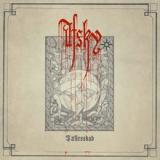
Faellesskab reveals their most critical and emotionally charged work to date, a deeply personal voyage into the heart of Nordic black metal, where raw emotion and melodic depth keep reveling in sorrow and longing beauty. Translating to "Community", Faellesskab's six tracks weave a strong musical oeuvre within the Afsky canon; their walls of haunting melancholia, interwoven with vital intensity, have never been more powerful. Yet, this new work also sees the band at its sharpest in social criticism, as Ole Luk of Afsky notes: Faellesskab - Overture to the Downfall. Here, community is praised like herd animals fleeing responsibility.
A parade of moral superiority, where truth is trampled in the name of consensus. Where unity means silence, and doubt is a crime. Six songs of shame disguised as care, of freedom suffocated, and of the solitary few who still dare to question. A chorus of hollow words, where silence screams the loudest. Welcome to the celebration - the curtain hasn't just risen, it's been torn away! Afsky will mark the release with a special show in Copenhagen on October 17, graced by a full European album release tour kicking off the following week. Two singles are set to be unveiled in the lead-up to the release. While Afsky continues to refine their signature sound, this release is set to be another landmark in the band's uncompromising discography.
The LP and CD are the first reissues of this album from 1976. The LP is re-issued in its original format due to demand that has driven the value of the pressing on All Platinum to in excess of £400. The CD is the first issue here in this format and comes complete with two preceding singles and a post album release of the 12' mix of My Man Is On His Way' in 1978, the only 12' release on all Platinum. This makes the CD the complete collection of Retta Young songs including her UK Top 40 chart hit (Sending Out An) S.O.S. which appeals to both northern soul and disco audiences. The complete album is a gem for connoisseurs of quality modern soul from the 70s.
This album cover is quite mysterious, isn't it? Let's uncover what's behind it. The first notes of the opening track immediately set the tone: the journey begins. Take the album title literally and allow yourself to be comforted by the tenderness the British band is about to offer.
Dream pop is a genre of its own, characterized by a warm sound, enveloping bass lines, dreamy synths, and beautiful vocals. With "No Rush," Tokyo Tea Room guides the listener through an exploration of their emotions and an escape from everyday life.
Each of the 12 tracks on this project exudes the same tender energy, yet stands out with creative and meticulously crafted compositions. This project is poised to become a staple of the genre.
Ten years after her first release, electronic musician Mor Elian presents her debut album Solid Space. Showing her full artistic range, the LP drifts between dream-like listening states and experimental club spaces. Written in a transitional time, these compositions arrived in emotional, unfiltered bursts. Solid Space brings together ambient textures, early IDM structures, and experimental electronics, with distant, hazy vocals converging into a single, subconscious flow. It is released by adventurous electronic music label topo2 on November 28, 2025. The record is pressed on 180 grams of ICCS-certified bio-vinyl, housed in a heavy full-colour sleeve, and comes with a download-code to the full release. Mastering is done by Ike Zwanikken, mixing by Gramrcy, artwork courtesy of Kees de Klein, and poetry written by Eelco Couvreur. Additional production and mixing on track 7 by Carrier.
—
in the half-sleep: a voice
not anyone’s, just sound.
what it touches, it mirrors
learning to name itself.
a throat opens —
to hum through bone
to say nothing correctly.
we coexist as opposites
in our mother tongue, dreaming
the things we were never meant to touch.
there is a channel
between pulse and sentence —
a being moving through
the being that once answered to me.
to feel and not own the feeling,
each of us made visible
by the other.
- 1: Intro
- 2: Simple Things
- 3: Forever
- 4: Road To Braemar
- 5: Before & After
- 6: Mirrors
- 7: Days Of Lily
- 8: Stepping Stones
- 9: Hope
- 10: Bravery
- 11: Chances
- 12: Stepping Out
Drawing from her constant searching for her own unique sound she filters her love of rhythm and groove through her Nordic sensibility to create an accessible, compelling blend of excitement and introspection. Growing up on the island of Saaremaa in her native Estonia, Britta Virves was a keen piano student playing a strictly classical repertoire. A chance encounter introduced her to jazz: "I wanted to learn guitar. So I went to my teacher Tit Paulus, and he told me to stay with piano, and introduced me to Keith Jarrett, Herbie Hancock, Bill Evans - my mind was blown - a new world opened up." Britta immersed herself in the music and her talent soon attracted attention.
Moving to Sweden to further her studies, she was soon touring Europe with the acclaimed Norrbotten Big Band, under the direction of Joakim Milder, working closely with featured guest vocalist Genevieve Artadi and accompanying Artadi on a duo tour opening for Louis Cole. Each tune on the album draws inspiration from an aspect of Britta's own life. "Simple Things" has the directness of a pop song married to the depth of jazz, as Genevieve Artadi's ethereal vocals float over an insistent backbeat that supports limpid depths of harmony.Other tracks include "Bravery", whoch showcases the subtlety and dynamic control of the rhythm team and is one of Britta's favorite tracks on the album - "I feel it's like a big waterfall that's rushing down and making its path just by flowing naturally." By contrast, "Chances" plays with a neatly delivered set of accents that tie the roots effortlessly
The duality of "man" is a subject that has been explored in art for centuries, from writings of the Bible to Descartes, all the way up to filmmakers like Lynch, Cronenberg, & Carpenter. Who is your "true self" & what do they want? With their sixth studio album "Wish Defense" (again for longtime home Trouble In Mind Records), Chicago trio FACS take a good, long look in the mirror to face themselves. The return of original member Jonathan Van Herik - who stepped away from the group just before their debut album "Negative Houses" was released in 2018 - replacing longtime bassist Alianna Kalaba brings renewed vigor & a marked angularity from the band's more recent output. The songs still hit hard, but the approach is sideways - the roles have changed since Van Herik's original tenure & his previous time with Case & powerhouse drummer Noah Leger in Disappears; now on bass, Van Herik was originally the group's guitar player and features on the debut, while current guitarist Brian Case played bass. This role reversal has helped the band's dynamic, offering up a different musical perspective than before, now revisiting the trio's long-going collaboration with some distance and time. Case notes that the lyrics on "Wish Defense" revolve around doppelgängers or "doubles", tackling the idea of facing yourself and observing your ideas and motivations. Look no further than the album's title track; "Enter the mirror / Double walker / An intimate / Wish defense / Is it real? / You beside me / The detail / Terrifying / Abject self / Your grief / A public / Performance". Case lays out the entire album's theme in one stanza; Are your actions & emotions your true self? Or are they a performative aspect of that "other" person you put forward? Case says that ultimately the sentiment is "_don't let the bastards get you down, there's something beyond this moment, like hope - but not in the naive belief that ultimately people are good". "Wish Defense"s artwork is also a subtle reference to "Negative Houses"' art, returning to that album's black & white starkness & minimalism. The album's checkerboards everywhere are offset reflections of themselves, mirrored with the album's lyrics printed front & center on the cover. Everything is out in the open. A final note; "Wish Defense" is the last album engineered by Steve Albini. Two days were recorded at Electrical Audio in early May of 2024 before Steve's untimely passing, with renowned engineer & friend Sanford Parker stepping in to finish the session 24 hours later, tracking the last bits of vocals and overdubs. Longtime collaborator John Congleton mixed the album as Albini would have; in Electrical Audio's A room, off the tape, using Albini's notes about the session.