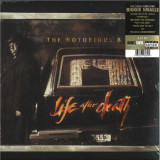
- A1: Life After Death (Intro)
- A2: Somebody's Gotta Die
- A3: Hypnotize
- A4: Kick In The Door
- B1: #!*@ You Tonight (Feat R Kelly)
- B2: Last Day (Feat The Lox)
- B3: I Love The Dough (Feat Jay Z & Angela Winbush)
- B4: Whats Beef?
- C1: Big (Interlude)
- C2: Mo Money Mo Problems (Feat Mase & Puff Daddy)
- C3: Niggas Bleed
- C4: I Got A Story To Tell
- D1: Notorious Thugs
- D2: Miss U
- D3: Another (Feat Lil Kim)
- D4: Going Back To Cali
- E1: Ten Crack Commandments
- E2: Playa Hater
- E3: Nasty Boy
- E4: Sky's The Limit (Feat 112)
- F1: The World Is Filled... (Feat Too Short & Puff Daddy)
- F2: My Downfall (Feat Dmc)
- F3: Long Kiss Goodnight
- F4: You're Nobody (Til Somebody Kills You) (Til Somebody Kills You)
Suche:k boy
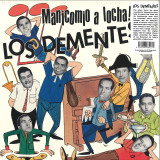
This album marks the debut recording for Venezuela's Velvet label by pianist Ray Pérez and his trombone-led salsa band Los Dementes. Heavy dance numbers and the distinctive vocals of Perucho Torcat make this historic 1967 rarity a sought-after collector's item. Now the LP has been lovingly restored, mastered from the original tapes, with its original artwork intact, preserving the legacy of Los Dementes for today's generation of salsa lovers everywhere. First time reissue. Salsa pianist, vocalist, composer and arranger Ray Pérez, acquired his nickname "Loco" by being a free, independent spirit, an innovator and iconoclast who was initially branded as "crazy" for the freshness and audacity of his sound. Amazingly, he is not that well known in the US, where he spent some time in the late 1960s and salsa was king during the 1970s. Yet he was quite popular in his home country from the beginning, especially amongst the working class of Caracas and Maracaibo, who adopted Cuban music played by New York Puerto Ricans as their own and called it "salsa" years before the term was employed by US labels like Fania as a marketing tool. Pérez is revered in Venezuela, as well as in Mexico and Colombia, and his storied career, which spans seven decades and thousands of concerts, has yielded more than 35 albums recorded by his various bands, including Los Dementes, Los Kenya, and Los Calvos, all of which are collector's items today. At the start of 1967 Pérez debuted Los Dementes, with vocalists Claudio Zerpa and Perucho Torcat backed by an ace band featuring only trombones in the brass section. Titled "¡Alerta mundo! Llegaron los 'The Crazy Men'" the record was released on the small Venezuelan label Prodansa. Soon after, Prodansa folded and Los Dementes were left without representation or much compensation for their efforts, being paid only in records. In the end of February of that year, Pérez returned to Caracas from a stint in Maracaibo in order to finish his first LP with the well-established and larger Velvet label, entitled "Manicomio a locha". In the first quarter of 1967, Velvet unleashed a trilogy of salsa records in order to compete with rival label Palacio and their recent success with Federico y su Combo Latino: "Porfi '67 Salsa & Boogaloo" by Porfi Jiménez y su Orquesta, "Guasancó" by Sexteto Juventud and lastly "Manicomio a locha". The LP begins appropriately with the boisterous title track, written by the band's conguero Carlos "Nené" Quintero, who would become a legend in coming years. Torcat describes a jam session in mental institution and introduces the band, with tasty solos by trombonist Rufo García followed by Ray on piano. Already you can hear something was different about Ray and his "Crazy Men"-a sound as wild and innovative as what was happening in New York with Eddie Palmieri, but with a more unhinged, raw feeling in line with Willie Colón and other younger Nuyorican bands. Next up is an intriguing track sung in a mix of Italian, English, Spanish and Papiamento by Pérez himself, performed in the complicated rhythm of the mozambique, an Afro-Cuban carnival beat developed in the early 1960s. This is followed by the heavy dancer 'Rico guaguancó', penned by Angelito Pérez, which changes from the guaguancó to the mozambique rhythm mid-way through, proving that Los Dementes were "different from the rest" as the lyrics say. 'Puerto Libre', sung by Torcat, is dedicated to the Venezuelan island of Margarita in the Oriente region, and the independent spirit of its working people. The rhythm changes from guaguancó to guajira and back again but remains danceable all the way through. The side closes out with a "3 in 1" medley inspired by the popular formula of the mosaicos of Billo's Caracas Boys, seamlessly knitting together several different tempos, rhythms, moods and compositions. Side two starts strong with the fierce yet satirical 'Corte e' patas', then 'Alma Cumanesa', a typical folk song refashioned as a guaguancó. This is followed by the funky 'Guajira con Boogaloo'. The tune echoes the sound of young Latin New York, pointing out the connection between Cuban and African American soul music. The pace picks up again with 'Fiesta de trombones', a hot descarga and then the album closes with another medley. Though this marks the end of a rather short album, it also signaled the emerging success of Los Dementes and their involvement with the salsa boom in Venezuela, quickly selling out of its initial run of 1000 records and making for a memorable debut on the Velvet label. Now this rare and sought-after LP has been lovingly restored, mastered from the original tapes, with its original artwork intact, preserving the legacy of Los Dementes for today's generation of salsa lovers everywhere.
Two insanely funky dancefloor bangers recorded in the late '60s in Peru by the long time Coco Lagos associate and top percussionist Mario Allison. Astonishingly hard-to-find boogaloo and descarga tunes from the vaults of MAG records. First time reissue on 7" vinyl. Peruvian artist Mario Allison was born into a family of musicians. One of his brothers was part of groups like Los Golden Boys, others were percussionists and singers. His North American ancestry familiarized him with the use of English from an early age. He met Coco Lagos through a mutual friend, César González, and the three of them soon became regulars at the recording sessions taking place at MAG studios. The connection between them was formidable to the point of coordinating without the need for prior rehearsals. Mario Allison was a self-taught timbalero and his performances are said to have been full of energy and passion. At concerts it was not uncommon for female audiences to react by screaming and freaking out every time Allison performed a solo. After years working at MAG's studio as session player, in the late '60s he was offered the opportunity of recording his own stuff under his name. Mario Allison then worked on a repertoire focused on boogaloo, descarga and, mainly, pompo. This single comprises two insanely funky dancefloor bangers recorded in that period; hard-to-find boogaloo and descarga tunes from the vaults of MAG records. First time reissue on 7" vinyl.
Sniffany & The Nits are a deranged, genuinely troubling punk band
from London featuring members of Joanna Gruesome, Ex-Void and
The Tubs. Their debut album, ‘The Unscratchable Itch’, is released
via PRAH Recordings.
Drawing a through line between the British post-punk of The Fall and
the new wave of insolent hardcore typified by bands like Lumpy &
The Dumpers, The Nits have developed a knack for writing unhinged
punk earworms.
But it’s Sister Sniffany, and her singular lyrical and performance style,
who elevates the band beyond the sum of their influences. Her lyrics
inhabit the same world as her “macabre, visceral” (It’s Nice That)
cartoons - a world of hidden humiliations, girl abjection, crumpled
lager cans, clam chowder and lumpy, over-stuffed dollies.
Over the course of ‘The Unscratchable Itch’, Sniffany ventriloquises a
cast of pathetic, unbalanced characters: A secretarial administer tails
her Casanova husband to a suburban swingers party: “I can smell
him from here: a mix of Vaseline, foot cream and Stella beer.” A poor
old grandmother’s glasses fog up as she chastises her
granddaughter: “You self-entitled selfish little twat! / Left me to die in a
popcorn-walled flat! / Spotty little smelly little prick! / Making your poor
grandmother sick!”
But these characters aren’t detached, impersonal creations. As
Sniffany explains: “In Sniffany & The Nits I like to exorcise and exhibit
the deeply shameful parts of myself that I see as the toxic aspects of
my own femininity.” These are confessional songs about love
addiction, jealousy, possession, self-loathing and “egg smashingfury.” Though occasionally they are literally just about Sex & The City,
red-pilled incels or grandmothers.
O Williams (drums), Max ‘Wozza’ Warren (bass) and Matt Green
(guitar) have been entrenched in the UK DIY scene for years, having
played in the aforementio ned bands, as well as countless others.
Warren also runs the influential left-field label Gob Nation - a home
for ‘egg punks’ across the country. As such, the band veer between
atonal no-wave guitar assault, straight-up hardcore, goth/anarcho or
whatever takes their fancy, while remaining identifiably Nit-like.
Always grounded by a pounding, pogo-ing rhythm section, The Nits
provide the perfect backdrop for Sister Sniffany’s wild, relentless live
performances. See them live at 2022’s End of the Road Festival.
Cream vinyl LP.
1998 esce l’atteso secondo album di Alexia dal titolo “The Party”. L'album contiene quattordici brani tra cui i due singoli più gettonati dell’estate 1998 ovvero “Gimme love” e “The music I like”. L’album si aggiudica numerosi dischi d’oro e di platino con le sue oltre cinquecentomila copie vendute. “Gimme love” e “The music I like” sono stati al no. 1 delle classifiche quasi simultaneamente, vendendo un totale di più di centomila copie, un vero record nel mercato italiano. Nell’estate del 1998 Alexia domina la scena musicale in vetta alle classifiche, più di ogni altra artista italiana della dance music. In quel periodo, in Inghilterra, esce il remix di “Uh la la la”. E’ il primo singolo di Alexia ad uscire in quel mercato e diventa subito un successo, top ten in classifica. Questo particolare remix é contenuto
nell’album “The Party” come bonus track.
PRONTO are back, this time seeing Greenskeepers don James Curd team up with Grammy award-winning Marius De Vries. Alongside composing the scores for a whole host of big films, De Vries has produced for the likes of Massive Attack, Madonna, David Bowie, Bjork, Pet Shop Boys to name but a few. So you know a matchup with Chicago house head Curd is going to hit with something special.
A disco-infused house bomb with a very special guest on those sweet vocals, ‘Auditory Gates’ gets the remix treatment from two producers at the top of their game, Jacques Renault and Oliver Dollar, who each put their trademark spin on it.
SECOND TITLE IN THE LOCKDOWN TRILOGY 'CLAUSTROPHOBIC
UNIVERSE' NOW AVAILABLE ON VINYL.In 2020, Polish Prog multiinstrumentalist Mariusz Duda (Riverside, Lunatic Soul) decided to
conduct an experiment
He set out to create a third music world, independent of his band 'Riverside' &
solo project, Lunatic Soul. A world which would differ stylistically from the
previous two & underline the first steps he took in music.
30 years ago, a certain shy boy fascinated by the works of Jean Michel Jarre,
Vangelis & Tangerine Dream, locked himself up in his room & started to think up
his original music stories. He recorded them on cassette tapes, created covers
for them & arranged them on the shelf next to those of his masters. 30 years
later, when the world was taken over by a pandemic & an international lockdown,
Mariusz was beamed back to his childhood bedroom, where he was reading &
drawing comic books, playing games, listening to lots of music from cassette
tapes... & recording his own electronic sounds. "Why not do it again?" he thought
to himself, feeling inspired. "Why not create a new project where I will play only
the keyboards? And why not sing it just like I used to when I was a kid? Simply
'Mariusz Duda'".
And that's exactly what he did. Between 2020 & 2021, he recorded & released
online three electronic albums that make up the "Lockdown Trilogy".
'Claustrophobic Universe' is not an album inspired by books about astronomy &
astrophysics. It's an album about a journey into our mind. The universe here is a
metaphor for our escape from reality, escape to the place where we soothe our
response to stimuli.
MARIUSZ DUDA'S SECOND IN THE TRILOGY IS OUT VIA KSCOPE
- A1: Rock This Mother
- A2: Talk To Me Girl
- A3: You Can Find Me
- A4: Check This Out
- A5: Jesus Going To Clean House
- A6: Hope You Understood
- A7: Is It What You Want
- A8: Love Is Everlasting
- A9: This Is Hip-Hop Art
- A10: Opposite Of Love
- A11: Do You Know What I Mean
- B1: Saving All My Love For You
- B2: Look Out Here I Come
- B3: Girl You Always Talking
- B4: Have A Great Day
- B5: Take My Hand
- B6: I Need Your Love
- B7: Your Town
- B8: Talk Around Town
- B9: Booty Head/Take A Little Walk
- B10: I Love My Mama
- B11: I Never Found Anyone Like You
Cassette[11,72 €]
As the sun sets on a quaint East Nashville house, a young man bares a piece of his soul. Facing the camera, sporting a silky suit jacket/shirt/slacks/fingerless gloves ensemble that announces "singer" before he's even opened his mouth, Lee Tracy Johnson settles onto his stage, the front yard. He sways to the dirge-like drum machine pulse of a synth-soaked slow jam, extends his arms as if gaining his balance, and croons in affecting, fragile earnest, "I need your love… oh baby…"
Dogs in the yard next door begin barking. A mysterious cardboard robot figure, beamed in from galaxies unknown and affixed to a tree, is less vocal. Lee doesn't acknowledge either's presence. He's busy feeling it, arms and hands gesticulating. His voice rises in falsetto over the now-quiet dogs, over the ambient noise from the street that seeps into the handheld camcorder's microphone, over the recording of his own voice played back from a boombox off-camera. After six minutes the single, continuous shot ends. In this intimate creative universe there are no re-takes. There are many more music videos to shoot, and as Lee later puts it, "The first time you do it is actually the best. Because you can never get that again. You expressing yourself from within."
"I Need Your Love" dates from a lost heyday. From some time in the '80s or early '90s, when Lee Tracy (as he was known in performance) and his music partner/producer/manager Isaac Manning committed hours upon hours of their sonic and visual ideas to tape. Embracing drum machines and synthesizers – electronics that made their personal futurism palpable – they recorded exclusively at home, live in a room into a simple cassette deck. Soul, funk, electro and new wave informed their songs, yet Lee and Isaac eschewed the confinement of conventional categories and genres, preferring to let experimentation guide them.
"Anytime somebody put out a new record they had the same instruments or the same sound," explains Isaac. "So I basically wanted to find something that's really gonna stand out away from all of the rest of 'em." Their ethos meant that every idea they came up with was at least worth trying: echoed out half-rapped exhortations over frantic techno-style beats, gospel synth soul, modal electro-funk, oddball pop reinterpretations, emo AOR balladry, nods to Prince and the Fat Boys, or arrangements that might collapse mid-song into a mess of arcade game-ish blips before rallying to reach the finish line. All of it conjoined by consistent tape hiss, and most vitally, Lee's chameleonic voice, which managed to wildly shape shift and still evoke something sincere – whether toggling between falsetto and tenor exalting Jesus's return, or punctuating a melismatic romantic adlib with a succinct, "We all know how it feels to be alone."
"People think we went to a studio," says Isaac derisively. "We never went to no studio. We didn't have the money to go to no studio! We did this stuff at home. I shot videos in my front yard with whatever we could to get things together." Sometimes Isaac would just put on an instrumental record, be it "Planet Rock" or "Don't Cry For Me Argentina" (from Evita), press "record," and let Lee improvise over it, yielding peculiar love songs, would-be patriotic anthems, or Elvis Presley or Marilyn Monroe tributes. Technical limitations and a lack of professional polish never dissuaded them. They believed they were onto something.
"That struggle," Isaac says, "made that sound sound good to me."
In the parlance of modern music criticism Lee and Isaac's dizzying DIY efforts would inevitably be described as "outsider." But "outsider" carries the burden of untold additional layers of meaning if you're Black and from the South, creating on a budget, and trying to get someone, anyone within the country music capital of the world to take your vision seriously. "What category should we put it in?" Isaac asks rhetorically. "I don't know. All I know is feeling. I ain't gonna name it nothing. It's music. If it grabs your soul and touch your heart that's what it basically is supposed to do."
=
Born in 1963, the baby boy of nine siblings, Lee Tracy spent his earliest years living amidst the shotgun houses on Nashville's south side. "We was poor, man!" he says, recalling the outhouse his family used for a bathroom and the blocks of ice they kept in the kitchen to chill perishables. "But I actually don't think I really realized I was in poverty until I got grown and started thinking about it." Lee's mom worked at the Holiday Inn; his dad did whatever he had to do, from selling fruit from a horse drawn cart to bootlegging. "We didn't have much," Lee continues, "but my mother and my father got us the things we needed, the clothes on our back." By the end of the decade with the city's urban renewal programs razing entire neighborhoods to accommodate construction of the Interstate, the family moved to Edgehill Projects. Lee remembers music and art as a constant source of inspiration for he and his brothers and sisters – especially after seeing the Jackson 5 perform on Ed Sullivan. "As a small child I just knew that was what I wanted to do."
His older brother Don began musically mentoring him, introducing Lee to a variety of instruments and sounds. "He would never play one particular type of music, like R&B," says Lee. "I was surrounded by jazz, hard rock and roll, easy listening, gospel, reggae, country music; I mean I was a sponge absorbing all of that." Lee taught himself to play drums by beating on cardboard boxes, gaining a rep around the way for his timekeeping, and his singing voice. Emulating his favorites, Earth Wind & Fire and Cameo, he formed groups with other kids with era-evocative band names like Concept and TNT Connection, and emerged as the leader of disciplined rehearsals. "I made them practice," says Lee. "We practiced and practiced and practiced. Because I wanted that perfection." By high school the most accomplished of these bands would take top prize in a prominent local talent show. It was a big moment for Lee, and he felt ready to take things to the next level. But his band-mates had other ideas.
"I don't know what happened," he says, still miffed at the memory. "It must have blew they mind after we won and people started showing notice, because it's like everybody quit! I was like, where the hell did everybody go?" Lee had always made a point of interrogating prospective musicians about their intentions before joining his groups: were they really serious or just looking for a way to pick up girls? Now he understood even more the importance of finding a collaborator just as committed to the music as he was.
=
Isaac Manning had spent much of his life immersed in music and the arts – singing in the church choir with his family on Nashville's north side, writing, painting, dancing, and working various gigs within the entertainment industry. After serving in the armed forces, in the early '70s he ran The Teenage Place, a music and performance venue that catered to the local youth. But he was forced out of town when word of one of his recreational routines created a stir beyond the safe haven of his bohemian circles.
"I was growing marijuana," Isaac explains. "It wasn't no business, I was smoking it myself… I would put marijuana in scrambled eggs, cornbread and stuff." His weed use originated as a form of self-medication to combat severe tooth pain. But when he began sharing it with some of the other young people he hung out with, some of who just so happened to be the kids of Nashville politicians, the cops came calling. "When I got busted," he remembers, "they were talking about how they were gonna get rid of me because they didn't want me saying nothing about they children because of the politics and stuff. So I got my family, took two raggedy cars, and left Nashville and went to Vegas."
Out in the desert, Isaac happened to meet Chubby Checker of "The Twist" fame while the singer was gigging at The Flamingo. Impressed by Isaac's zeal, Checker invited him to go on the road with him as his tour manager/roadie/valet. The experience gave Isaac a window into a part of the entertainment world he'd never encountered – a glimpse of what a true pop act's audience looked like. "Chubby Checker, none of his shows were played for Black folks," he remembers. "All his gigs were done at high-class white people areas." Returning home after a few years with Chubby, Isaac was properly motivated to make it in Music City. He began writing songs and scouting around Nashville for local talent anywhere he could find it with an expressed goal: "Find someone who can deliver your songs the way you want 'em delivered and make people feel what you want them to feel."
One day while walking through Edgehill Projects Isaac heard someone playing the drums in a way that made him stop and take notice. "The music was so tight, just the drums made me feel like, oh I'm-a find this person," he recalls. "So I circled through the projects until I found who it was.
"That's how I met him – Lee Tracy. When I found him and he started singing and stuff, I said, ohhh, this is somebody different."
=
Theirs was a true complementary partnership: young Lee possessed the raw talent, the older Isaac the belief. "He's really the only one besides my brother and my family that really seen the potential in me," says Lee. "He made me see that I could do it."
Isaac long being a night owl, his house also made for a fertile collaborative environment – a space where there always seemed to be a new piece of his visual art on display: paintings, illustrations, and dolls and figures (including an enigmatic cardboard robot). Lee and Issac would hang out together and talk, listen to music, conjure ideas, and smoke the herb Isaac had resumed growing in his yard. "It got to where I could trust him, he could trust me," Isaac says of their bond. They also worked together for hours on drawings, spreading larges rolls of paper on the walls and sketching faces with abstract patterns and imagery: alien-like beings, tri-horned horse heads, inverted Janus-like characters where one visage blurred into the other.
Soon it became apparent that they didn't need other collaborators; self-sufficiency was the natural way forward. At Isaac's behest Lee, already fed up with dealing with band musicians, began playing around with a poly-sonic Yamaha keyboard at the local music store. "It had everything on it – trumpet, bass, drums, organ," remembers Lee. "And that's when I started recording my own stuff."
The technology afforded Lee the flexibility and independence he craved, setting him on a path other bedroom musicians and producers around the world were simultaneously following through the '80s into the early '90s. Saving up money from day jobs, he eventually supplemented the Yamaha Isaac had gotten him with Roland and Casio drum machines and a Moog. Lee was living in an apartment in Hillside at that point caring for his dad, who'd been partially paralyzed since early in life. In the evenings up in his second floor room, the music put him in a zone where he could tune out everything and lose himself in his ideas.
"Oh I loved it," he recalls. "I would really experiment with the instruments and use a lot of different sound effects. I was looking for something nobody else had. I wanted something totally different. And once I found the sound I was looking for, I would just smoke me a good joint and just let it go, hit the record button." More potent a creative stimulant than even Isaac's weed was the holistic flow and spontaneity of recording. Between sessions at Isaac's place and Lee's apartment, their volume of output quickly ballooned.
"We was always recording," says Lee. "That's why we have so much music. Even when I went to Isaac's and we start creating, I get home, my mind is racing, I gotta start creating, creating, creating. I remember there were times when I took a 90-minute tape from front to back and just filled it up."
"We never practiced," says Isaac. "See, that was just so odd about the whole thing. I could relate to him, and tell him about the songs I had ideas for and everything and stuff. And then he would bring it back or whatever, and we'd get together and put it down." Once the taskmaster hell bent on rehearsing, Lee had flipped a full 180. Perfection was no longer an aspiration, but the enemy of inspiration.
"I seen where practicing and practicing got me," says Lee. "A lot of musicians you get to playing and they gotta stop, they have to analyze the music. But while you analyzing you losing a lot of the greatness of what you creating. Stop analyzing what you play, just play! And it'll all take shape."
=
"I hope you understood the beginning of the record because this was invented from a dream I had today… (You tell me, I'll tell you, we'll figure it out together)" – Lee Tracy and Isaac Manning, "Hope You Understand"
Lee lets loose a maniacal cackle when he acknowledges that the material that he and Isaac recorded was by anyone's estimation pretty out there. It's the same laugh that commences "Hope You Understand" – a chaotic transmission that encapsulates the duality at the heart of their music: a stated desire to reach people and a compulsion to go as leftfield as they saw fit.
"We just did it," says Lee. "We cut the music on and cut loose. I don't sit around and write. I do it by listening, get a feeling, play the music, and the lyrics and stuff just come out of me."
The approach proved adaptable to interpreting other artists' material. While recording a cover of Whitney Houston's pop ballad "Saving All My Love For You," Lee played Whitney's version in his headphones as he laid down his own vocals – partially following the lyrics, partially using them as a departure point. The end result is barely recognizable compared with the original, Lee and Isaac having switched up the time signature and reinvented the melody along the way towards morphing a slick mainstream radio standard into something that sounds solely their own.
"I really used that song to get me started," says Lee. "Then I said, well I need something else, something is missing. Something just came over me. That's when I came up with 'Is It What You Want.'"
The song would become the centerpiece of Lee and Isaac's repertoire. Pushed along by a percolating metronomic Rhythm King style beat somewhere between a military march and a samba, "Is It What You Want" finds Lee pleading the sincerity of his commitment to a potential love interest embellished by vocal tics and hiccups subtlely reminiscent of his childhood hero MJ. Absent chord changes, only synth riffs gliding in and out like apparitions, the song achieves a lingering lo-fi power that leaves you feeling like it's still playing, somewhere, even after the fade out.
"I don't know, it's like a real spiritual song," Lee reflects. "But it's not just spiritual. To me the more I listen to it it's like about everything that you do in your everyday life, period. Is it what you want? Do you want a car or you don't want a car? Do you want Jesus or do you want the Devil? It's basically asking you the question. Can't nobody answer the question but you yourself."
In 1989 Lee won a lawsuit stemming from injuries sustained from a fight he'd gotten into. He took part of the settlement money and with Isaac pressed up "Saving All My Love For You" b/w "Is It What You Want" as a 45 single. Isaac christened the label One Chance Records. "Because that's all we wanted," he says with a laugh, "one chance."
Isaac sent the record out to radio stations and major labels, hoping for it to make enough noise to get picked up nationally. But the response he and Lee were hoping for never materialized. According to Isaac the closest the single got to getting played on the radio is when a disk jock from a local station made a highly unusual announcement on air: "The dude said on the radio, 107.5 – 'We are not gonna play 'Is It What You Want.' We cracked up! Wow, that's deep.
"It was a whole racist thing that was going on," he reflects. "So we just looked over and kept on going. That was it. That was about the way it goes… If you were Black and you were living in Nashville and stuff, that's the way you got treated." Isaac already knew as much from all the times he'd brought he and Lee's tapes (even their cache of country music tunes) over to Music Row to try to drum up interest to no avail.
"Isaac, he really worked his ass off," says Lee. "He probably been to every record place down on Music Row." Nashville's famed recording and music business corridor wasn't but a few blocks from where Lee grew up. Close enough, he remembers, for him to ride his bike along its back alleys and stumble upon the occasional random treasure, like a discarded box of harmonicas. Getting in through the front door, however, still felt a world away.
"I just don't think at the time our music fell into a category for them," he concedes. "It was before its time."
=
Lee stopped making music some time in the latter part of the '90s, around the time his mom passed away and life became increasingly tough to manage. "When my mother died I had a nervous breakdown," he says, "So I shut down for a long time. I was in such a sadness frame of mind. That's why nobody seen me. I had just disappeared off the map." He fell out of touch with Isaac, and in an indication of just how bad things had gotten for him, lost track of all the recordings they'd made together. Music became a distant memory.
Fortunately, Isaac kept the faith. In a self-published collection of his poetry – paeans to some of his favorite entertainment and public figures entitled Friends and Dick Clark – he'd written that he believed "music has a life of its own." But his prescience and presence of mind were truly manifested in the fact that he kept an archive of he and Lee's work. As perfectly imperfect as "Is It What You Want" now sounds in a post-Personal Space world, Lee and Isaac's lone official release was in fact just a taste. The bulk of the Is It What You Want album is culled from the pair's essentially unheard home recordings – complete songs, half-realized experiments, Isaac's blue monologues and pronouncements et al – compiled, mixed and programmed in the loose and impulsive creative spirit of their regular get-togethers from decades ago. The rest of us, it seems, may have finally caught up to them.
On the prospect of at long last reaching a wider audience, Isaac says simply, "I been trying for a long time, it feels good." Ever the survivor, he adds, "The only way I know how to make it to the top is to keep climbing. If one leg break on the ladder, hey, you gotta fix it and keep on going… That's where I be at. I'll kill death to make it out there."
For Lee it all feels akin to a personal resurrection: "It's like I was in a tomb and the tomb was opened and I'm back… Man, it feels so great. I feel like I'm gonna jump out of my skin." Success at this stage of his life, he realizes, probably means something different than what it did back when he was singing and dancing in Isaac's front yard. "What I really mean by 'making it,'" he explains isn't just the music being heard but, "the story being told."
Occasionally Lee will pull up "Is It What You Want" on YouTube on his phone, put on his headphones, and listen. He remembers the first time he heard his recorded voice. How surreal it was, how he thought to himself, "Is that really me?" What would he say to that younger version of himself now?
"I would probably tell myself, hang in there, don't give up. Keep striving for the goal. And everything will work out."
Despite what's printed on the record label, sometimes you do get more than one chance.
Gather your loved ones, Together is here. Duster's fourth album is a 13-song exploration of comfortable, interplanetary goth. A sonic vaseline of submerged guitars, solder-burned synths, and over-driven rhythm tracks. "I know people say, `Oh Duster music so sad, we've even said it ourselves before," Clay Parton said. "But it's a lot more like absurdism than nihilism."
Tom Galley begann das Projekt Phenomena in den 80er Jahren und auf den ersten 3 Ausgaben gab es große Namen der Hardrock Szene (unter anderem Glenn Hughes, Cozy Powell, Don Airey, Neil Murray, Brian May, Mel Galley, John Wetton) zu bestaunen.
Auch bei dem vierten Phenomena Album (welches im Jahre 2006 erschien) hatte Galley wieder illustre Namen wie Tony Martin (u. a. BLACK SABBATH), Keith Murrell (MAMA´S BOYS) und Glenn Hughes (u. a. DEEP PURPLE), die AOR der besten Klasse abliefern!
- 1: Radiant Boys
- 2: Steam
- 3: 1 2 I Love You
- 4: Grooving In Green
- 5: Crow Baby
- 6: The Undertow
- 7: Strange Head
- 8: Slow Drip Lizard
- 9: Walk Into The Sun
- 10: Deep
- 11: Kill The Delight
- 12: Big Soul Kiss
- 13: Lights Go Out
- 14: Love Hit
- 15: Don't Take It Lightly
- 16: Electric Shades
- 17: The Face Of The Dragonfly
- 18: Snake Dance
- 19: Deep
- 20: High Times
- 21: Close To The Heart
- 22: South Country
- 23: Avalanche Of Love
THE MARCH VIOLETS came out of Leeds in the early 80"s, label-mates of Sisters of Mercy. Releasing six singles, they were a constant presence in the UK indie charts, hitting the top two spots with Snakedance, Deep and Walk Into The Sun. They never got around to recording an album - their only "80"s long-players, Natural History in the UK and Electric Shades in the USA, were compilations. Eventually they signed to a major label and were groomed for a USA breakthrough, performing in the 1987 Some Kind of Wonderful movie. However they were asked to make too many compromises and split up. Their early eighties career was thankfully well-documented by the BBC, who broadcast six sessions between 1982-86 - three for John Peel, and one each with Kid Jensen, Janice Long and Richard Skinner. Chronicling their development with lead singers Simon Denbigh, Rosie Garland and Cleo Murray and backed by bassist Lawrence Elliot and guitarist Tom Ashton, these sessions include nine unreleased songs and alternative versions of their indie hits. Here is the unheard history of The March Violets.
- 1: The Beach Boys - Surfin' Safari
- 2: The Bel Airs - Mr. Moto
- 3: The Frogmen - Underwater
- 4: The Chantays - Pipeline
- 5: Duane Eddy - Peter Gunn
- 6: The Tornadoes - Bustin' Surfboards
- 7: The Fireballs - Vaquero
- 8: The Lively Ones - Guitarget
- 9: The Surfmen - The Ghost Hop
- 10: Kenny & The Ho-Daddies - Surf Dance
- 11: Dick Dale And His Del Tones - Miserlou
- 12: The Ventures - Walk, Don't Run
- 13: The Lively Ones - Crying Guitar
- 14: The Frantics - Werewolf
- 15: The Mar-Kets - Surfin
- 16: The Sentinals - Latin'la
- 17: The Gamblers - Moon Dawg!
- 18: The Challengers - Bulldog
- 19: Link Wray & The Wraymen - Rumble
- 20: Don And The Galaxies - Avalanche
We have dug for you inside the Californian rock of 60s surf music to extract the pearls of the genre. Enjoy ! Originals Versions Remastered
(Remastered)
1st Time EVER on LP for the 40th Anniversary Remasters
‘Theatre of Pain” is certified 4x platinum in the US and their first top 10 album – making it all the way to #6. Includes the timeless classic, with the record-setting video “Home Sweet Home” and first top 40 hit “Smokin’ In The Boys Room” (#16)
‘Land of Dreams’, Mark Owen’s first solo record in over nine years.
Mark Owen is one of Britain's most celebrated music stars. As part of pop group Take That, he has won eight BRIT Awards, scored 12 UK No.1 singles, eight UK No.1 albums, sold over 45 million records and played live to millions of fans around the world. He released his first solo album, Green Man, after Take That first split in 1996 and, since then, he has released a further four solo albums. His last, 2013’s The Art Of Doing Nothing, was his highest charting album to date.
Mark’s distinctive vocals drive the first single, You Only Want Me, layered over upbeat instrumentation and a rousing chorus with the end result a punchy, singalong pop track. The track was written by Mark and Will Bloomfield (The Vaccines, Freya Ridings, Tom Grennan, Holly Humberstone) and was produced by Jennifer Decilveo (Miley Cyrus, Marina, Anne-Marie, Demi Lovato).
‘Land of Dreams’, Mark Owen’s first solo record in over nine years.
Mark Owen is one of Britain's most celebrated music stars. As part of pop group Take That, he has won eight BRIT Awards, scored 12 UK No.1 singles, eight UK No.1 albums, sold over 45 million records and played live to millions of fans around the world. He released his first solo album, Green Man, after Take That first split in 1996 and, since then, he has released a further four solo albums. His last, 2013’s The Art Of Doing Nothing, was his highest charting album to date.
Mark’s distinctive vocals drive the first single, You Only Want Me, layered over upbeat instrumentation and a rousing chorus with the end result a punchy, singalong pop track. The track was written by Mark and Will Bloomfield (The Vaccines, Freya Ridings, Tom Grennan, Holly Humberstone) and was produced by Jennifer Decilveo (Miley Cyrus, Marina, Anne-Marie, Demi Lovato).
Lunatika, The Hague's latest 'trap' or 'drill' rap sensation, for all heavy 'banteng' soldier man-boys' (and, sure, all the lady-boys too!) man drill and bass, whipping and kicking and booming, 'all dem a' Holland's 'Dirty Mud West Coast Sound' incl. quite some reggae dub and N.O.L.A. bass influences, I dare say, 'respect due to all'... Part 2/2. Mastered by Guy Tavares.
Toronto-based musician and producer David Psutka aka ACT! (fka Egyptrixx / Anamai / Ceramic TL) will release his latest project ‘Strange Bounty / About Life’ for his own Halocline Trance imprint.
‘Strange Bounty / About Life’ is Psutka’s debut album proper as ACT! following the release of the “sonic mixtape” ‘Universalist’ in 2018 and the augmented reality soundtrack ‘Grey Matter AR’ in 2021; a series of Snapchat filters created by artist Karen Vanderborght and soundtracked by ACT! which explored the poetic and existential potential of AR and social media.
The new album represents a refinement of aesthetic and compositional ideas that exist across Psutka’s various projects and collaborations. It is a bold blend of new psychedelia braided with ecstatic groove. It’s a collage of physical sound, composition and freeform electronics that is simultaneously original, bold, and balmy whilst retaining a certain timeless familiarity and the obvious, indelible hallmarks of Psutka’s creative vision.
“‘Strange Bounty / About Life’ is in some ways my most refined record. The previous period of solo material was quite experimental and spontaneous, whereas this was written slowly and with more intentionality, and as a result, feels very clarified. Robin Dann of Bernice, and Alanna Stuart of Bonjay both contributed lovely vocal work to the record and it was written and performed primarily on guitar. I think it is fair to call this an 'experimental guitar record'.” David Psutka (ACT!)
On opener ‘Oblivion Shuffle’ synths trickle and squelch beneath vintage arcade bleeps, an off-kilter rhythm and mournful vocals. The palette of faintly dystopian electronics, unnerving ambience and scorched, wonky rhythmic pulses reoccur across the album on tracks like ‘Separation Code Is Togetherness Meta’, ’50 Million Motives For Making’, ‘Peace Javelin Heaven Bound’ and ‘Street Racer’.
Elsewhere on the record the guitar is more obviously prominent, and its presence allows the thematic subtleties of ACT’s music to flourish. It becomes clear after numerous listens that there is a push and pull at play across the whole project; one of optimism vs existentialism, of anxiety vs hope - a consistent theme of Psutka’s back catalogue. The track titles themselves even begin to reveal juxtaposition contained within and a deeper inspection of the lyrics reveals more.
‘Lotto’ and ‘Rebuild Your Body’ and title track, ‘Strange Bounty / About Life’ all feature slick classic soul hooks, silky vocals and smooth Balearic guitar licks over the idiosyncratic beats and distinctive electronic instrumentation. A perfect melding of the two seemingly disparate stylistic directions on the album. A real testament to the refinement promised by Psutka on this project.
In addition to ACT!, Psutka has released music with numerous projects including Anamai, Egyptrixx and Ceramic TL, he has collaborated widely with artists such as Junior Boys, Ipek Gorgun, and Kuedo as well as Jessy Lanza (2016) and an official remix for Massive Attack’s ‘Hymn of the Big Wheel (2012). The contributions on this album, from Robin Dann and Alanna Stuart, reflect the deeply collaborative nature of the Halocline Trance label and the Toronto creative scene more broadly.
Many of Psutka’s releases have received critical acclaim from media outlets such as Pitchfork, Exclaim, The Quietus and Resident Advisor. As a live performer, he has toured extensively including performing at Sonar Festival, Roskilde, Mutek, MOMA PS1 Warm-UP and CTM Festival. He’s also presented sound installations at various institutions such as Galeria Civica Commune di Modena, and Art Gallery of Ontario (AGO).
In 2015, Psutka launched Halocline Trance as a home for his various sound projects, events and collaborations. Now a creative collective and label, it has grown to include a diverse array of artists including Casey MQ, Xuan Ye, Myst Milano, Colin Fisher and others. The label is described as “genre-agnostic” and conceptually open, supporting work across a wide spectrum of creative fields including soundtrack recording, AR design and traditional artist albums. Their impeccable roster also includes, theorist/improviser Eldritch Priest, and AR/VR artist Karen Vanderborght. In recent years, Halocline Trance has established itself as a platform that facilitates many of Canada’s most exciting creative music projects. Many of the releases have received critical acclaim from outlets including Pitchfork, Exclaim, Bandcamp and Resident Advisor.
- A1: Boy Meets Girl So What
- A2: Governing Takes Brains
- A3: An Address To The Better Off
- A4: Hands Off Or Die
- A5: What Our Boys Are Fighting For
- B1: Keep An Open Mind Or Else
- B2: We Are All Born Creeps
- B3: The Home Secretary Briefs The Forces Of Law And Order
- B4: I’m Not A Patriot But
- B5: Throw Him Out He’s Breaking My Heart
- A1: Should The Bible Be Banned
- A2: St Francis Among The Mortals
- A3: The Myth Of The North-South Divide
- A4: We Are All Bourgeois Now
- A5: Two Criminal Points Of View
- B1: This Nelson Rockefeller
- B2: The New Left Review #1
- B3: The Lion Will Lie Down With The Lamb
- B4: All Your Questions Answered
- B5: The New Left Review #2
- A1: Who Will Rid Me Of These Turbulent Proles? 7
- B1: You Had To Go And Open Your Big Mouth 7
2LP + 7'' 2022 Repress
This limited edition set contains the original LP plus a 10 track bonus LP and a bonus 7” with 2 previously unreleased tracks.
Remastered and pressed on colour vinyl with a reworked sleeve by original designer Andy Royston.
Including the singles Boy Meets Girl, So What; Should The Bible Be Banned; Keep An Open Mind Or Else & This Nelson Rockerfeller.
Originally released in 1989. The Enraged Will Inherit the Earth is a musical molotov cocktail that’s a mixture of power chords and virile, virtuous lyrics.
The songwriting is tightly forged and their knack for producing raw pop is at its finest here. The Enraged Will Inherit The Earth is a powerful weapon that didn’t get enough of a user base to make its intended impact. If the question was ever proposed, “can art be a weapon?” I think this album answers with a bold and resounding “yes.”