- A1: He's The Keeper
- A2: Sweet Pea, My Sweet Pea
- A3: It's Written In The Stars
- A4: Wishing On A Star (Single Version)
- A5: From The Floorboards Up
- A6: Come On / Let's Go
- A7: Wild Blue Yonder
- A8: Have You Made Up Your Mind
- A9: Echoes Round The Sun
- A10: All I Wanna Do (Is Be With You)
- B1: Push It Along
- B2: 22 Dreams
- B3: No Tears To Cry
- B4: Wake Up The Nation
- B5: Fast Car / Slow Traffic
- B6: Starlite
- B7: That Dangerous Age
- B8: When Your Garden's Overgrown
- B9: The Attic
- B10: Flame-Out!
- B11: Brand New Toy
Search:k brand
- Spacetime
- Phase
- Composer
- Earthling
- Next 2 Me
- Rendezvous
- Future See Millenium
- Ghost Train
- Smoke Machine
- Holding U Closer
- How Did I Know
- Over End
- Only An Emotion
- Tenzillionlightyears
- Chasing Storms
- Tsechu
- A Thousand Stars Breathing
- Phoenix
- Forever
- Tangerine
- Arp80
- Crushed
- Almost Had It All
- Time Travel
Logistics makes a highly anticipated return after a three-year hiatus, with a whopping 24-track album.
Released across four 12 inch records, housed in spined sleeves, and presented in a premium two-piece lift-off box with scratch resistant matt laminate, matt varnish, and with fully printed packaging throughout. It is a beautiful presentation of this new LP from a Hospital Records legend.
Dropping almost out of the blue, the current reception from fans, artists & industry heads off the back of the 'ambush' announcement has been incredible. The album campaign is illusive, but rewarding to fans who have been waiting so long for brand new music from Logistics, they've now got 24 brand new tracks to get stuck into!
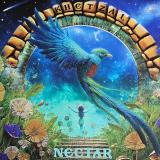
Five years after his previous album, Khetzal returns with Nectar, a brand-new digital double album accompanied by a limited physical vinyl EP. Matthieu Chamoux, a name that needs little introduction, is the creator of Corolle, still considered a milestone of 21st-century Goa-trance. With Nectar, he once again delivers his unmistakable signature: spiritual, Eastern-influenced, blissful Goa-trance. With Nectar, he dives back into his signature world of spiritual, Eastern-tinged, blissful Goa-trance. The first CD weaves a brand-new fairytale-like journey, with four standout tracks also pressed onto vinyl. Alongside these, you'll find a second bonus cd, set of unique live remixes, complete with violin, breathing fresh energy into classics like Ganesha Pramana and Listening Winds. Enjoy the journey
We can't believe it ourselves! Brandnew music by the original Hip Hop Band. Prince Paul, Daddy-O, Wise, Delite & Bobby Simmons are currently working on a new album. Stetsasonic is back and what a track they have cooked up for their return after 30 years!
Limited 300 press only. 50copies left.
Avril Lavigne - LET GO (20th ANNIVERSARY EDITION) - Let Go celebrates 20 years as one of the most influential pop punk albums of the early 2000's. Originally released in June of 2002, Let Go became an instant sensation with hits such as "Complicated," and "Sk8ter Boi" dominating the charts and airwaves. Certified 7X Platinum, the album has cemented it's lasting legacy in the pop punk world and beyond. To commemorate it's 20th anniversary, an expanded edition of the original album will be released featuring 6 bonus tracks, including a brand-new recording of "Breakaway" by Avril, reimagined 20 years later.
Even in these most turbulent of times, dub musician and fatigued onlooker Elijah Minnelli remains an inexplicable stalwart on the lower rungs of the Breadminster County Council.
His latest record ‘Clams As A Main Meal’ continues his astute siphoning of council funds, this time with help from the Breadminster Board of Abstinence. As a further mark of respect, the original head of the Board, Dr. K'houldoux, graces the cover art in his infamous ‘Looming Moon of Desire’ guise.*
As fine a backdrop as any for Minneli’s off-brand dub experiments, and ‘Clams...’ is the truest representation of his varied wheelhouse yet...
We find vocal appearances from dub goliath Dennis Bovell and Welsh-language singer Carwyn Ellis. A pair of tracks which build on 2024’s acclaimed ‘Perpetual Musket’, a collection of folk songs reworked alongside reggae vocalists, released by FatCat Records. It garnered glowing reviews, with nods from The Guardian and The Quietus concluding with prominent appearances on their respective yearly round-up lists.
Elsewhere, the album finds Minnelli in a more experimental mode, all wheezing contraptions and cockeyed bass, creaking with the weight of creation, a satisfying tactility laid seam-side up.
As well as ‘Perpetual Musket’, the new album follows years of sold out 7" singles, handmade and self-released. Online, the tracks have amassed global streams numbering in the millions. His tracks have found play across an eclectic range of radio mixes and dance floors, most notably the likes of Andrew Weatherall, Batu, Optimo and Zakia Sewell (BBC6Music).
It is perhaps worth mentioning that this everbuilding interest in his work is at great odds with the growing suspicions amongst his fellow townsfolk, who see his Breadminster County Council Music Initiative as nothing more than an empty cash-grab.
Further Reading on the Breadminster Board of Abstinence
In the late 70s, Breadminster was awash with the last vestiges of the hippy era. Though the flared silhouette of the lower leg remained, the utopian ideals that had once flowed merrily around the youth's shaded ankles had begun to wane. LSD and free love had led to a sharp spike in population and a generation of children raised by air-headed psychonauts unprepared for the bleary-eyed strictures of parenthood.
Aware of the crisis, the County Council entrusted Dr. Paulinque K'houldoux to spearhead a pushback, and it was his pro-abstinence movement - a mixture of education initiatives and radical renutrition campaigns - that came to impact Breadminster's census deep into the new millennium.
Being a pseudo-archipelago Breadminster has fundamentally limited resources, however deep-seated ties to distant coastal villages meant that oysters were a regular part of the local diet. K'houldoux pinpointed this as a factor in the town's overpopulation, and believed that simply replacing these with clams (a “lesser mollusk”) would help lower the erotic urges of the people. It was his “anti-aphrodesia” movement that first championed the idea of “Clams As A Main Meal,” and the slogan “Consider Abstinence” carried the message yet further.
The Breadminster Board of Abstinence soon became involved in all cultural happenings in the area, with K'houldoux MCing at prominent festivals and performances, sometimes dressed as the “Looming Moon of Desire” - an idea of his relating to the tide, seafood, menstrual cycles, and his privately held celestial predilections.
It was in 1981 that it was revealed Dr. K'houldoux had never fully qualified as a doctor and was seeking exile in Breadminster due to a series of botched bracelet heists in which he had previously been involved. K'houldoux was subsequently extradited to Basingstoke, where he served 3 of a 12-year sentence, owing to the lunar-oriented prisoner health campaigns he helped implement.
It has been a strange twist of bureaucratic fate that the Breadminster Board of Abstinence has never stopped receiving public funding, despite its lack of clear utility. And while its roots are tied to a rose-tinted past, the Board continues to sponsor cultural events and projects to this day.
An extract from: Eugeniq Schooner's article in Sydney Parishioner: “Clams, Breadminster and Countercultural Abstinence Trends” (2008)
- Coast
- Heathcliff
- Wasteland
- Brand New City
- Hide
- Cherry Hard Candy
- Avalanche
- Doom
- Over Our Heads
- Angel Wings
- Don't Want To
- You In Rehab
- Coast Ii
BLUE COLOURED EDIT[24,79 €]
Allison and Katie Crutchfield have formed a new band called Snocaps. Their 13-track debut album, released digitally as a surprise, will be made available on April 17, 2026 in vinyl & CD formats. An indie-rock record that recalls Allison"s band Swearin" and Katie"s early records as Waxahatchee, Snocaps was born out of the twin sisters" desire to work on music together as they had in their teens and twenties. Allison and Katie are backed by friends and close collaborators Brad Cook and MJ Lenderman. The album was produced and almost entirely engineered by Cook, and all four musicians play multiple instruments across the record. After a handful of shows at the end of 2025, Snocaps will be put on ice for the foreseeable future, although, as Katie says, "Allison and I have been, in some way, shape or form, doing this together for over 20 years," so it is practically a given that they will work together on music at some point again in the future.
Two jewels in the crown of the soulful electronic music scene in NYC unite for a spellbinding EP on Rhythm Section International. ”Full Circle” is a brand new body of work from Musclecars & Toribio.
To call this 12” simply epic would almost be doing it a disservice. The breadth of musicality and execution of ideas contained across 3 compositions is nothing short of miraculous. I use the word composition intentionally: these are not merely tracks - these are 3 movements making up a concerto - with a dub thrown in for good measure!
The record kicks off with a soulful house behemoth, “ That’s My Story” featuring NJ legend Roland Clark on vocals giving sweet sweet testimony. In many ways, this track feels like a coming together of the trios influences. The lyrics contextualise it, giving it this intimate, confessional feel. The latin drums shuffling amidst the 909 kick drive it forward and the organ swimming freely amongst it all takes us to church. It’s a timeless track - paying homage to the various New York traditions laid down by Louis Vega, Timmy Regisford, Joaquin Claussell , Ron Trent et al - all heroes and collaborators of the composers who - with this effort - have surely now earned their place in the pantheon of American Soul Music.
‘
Be Honest’ maintains the confessional tone with the lyrics but takes things right back down in terms of tempo. Is it a love song, an ultimatum or a cry for help? Whichever way you interpret it, this track is Toribio’s time to shine as a lead vocalist and he hits all the notes, leaving not a dry eye in the house. This is a delicate tour de force, delivered with such raw emotion and vulnerability it allows the instrumentation takes a back seat - just a gentle groove, swelling strings and some unresolved chords are all that’s required to transform us to the main character of this story. We’re left hanging, and it’s oh so relatable.
Agua De Florida serves as an uplifting, fast paced finale to the concerto and this one’s all about the trumpet - masterfully performed by Melbourne born, London based virtuoso Audrey Powne. If Herb Alpert was making house music - I imagine this is what it would sound like. Throbbing bass and noodling synths join the melee and crank the joy up to 11. If the EP is a story arc over 3 tracks, then we’re definitely not left hanging with this one. All is resolved, things are moving onwards and upwards and the circle is complete.
- A1: The Bird
- A2: Heart Don't Stand A Chance
- A3: The Waters (Feat. Bj The Chicago Kid)
- A4: The Season / Carry Me
- B1: Put Me Thru
- B2: Am I Wrong (Feat. Schoolboy Q)
- B3: Without You (Feat. Rapsody)
- B4: Parking Lot
- C1: Lite Weight (Feat. The Free Nationals United Fellowship Choir)
- C2: Room In Here (Feat. The Game & Sonyae Elise)
- C3: Water Fall (Interlude)
- C4: Your Prime
- D1: Come Down
- D2: Silicon Valley
- D3: Celebrate
- D4: The Dreamer (Feat. Talib Kweli & Timan Family Choir)
Ten years ago, Anderson .Paak didn't just release an album; he staged a full-scale takeover of the soul and hip-hop landscape. Released on January 15, 2016, Malibu served as the definitive arrival of an artist who had spent years grinding in the underground before a star-making turn on Dr. Dre’s Compton. While his previous work hinted at his potential, Malibu was the moment the world met the "Cheeky Andy" persona in full—a virtuosic drummer, a raspy-voiced crooner, and a sharp-witted rapper all rolled into one. The album is a sprawling, sun-drenched journey through the Southern California coast, blending 1970s funk, church-reared gospel, and gritty boom-bap into something that feels both nostalgic and entirely futuristic. With a heavyweight production lineup including 9th Wonder, Madlib, Kaytranada, and Hi-Tek, the record maintains a warm, analog texture that was a breath of fresh air in an increasingly digital era. It’s an album that breathes, full of intentional imperfections and the kind of "in-the-pocket" groove that can only come from a seasoned live performer. Beyond the infectious, dance-floor-ready energy of tracks like "Am I Wrong" and "Come Down," the album is a deeply autobiographical masterwork. .Paak uses the 65-minute runtime to unpack his life story with startling clarity, touching on his mother’s gambling addiction, his father’s incarceration, and his own brushes with homelessness with a sense of resilience that never feels heavy-handed. He weaves these heavy themes through a lens of triumph, grounded by vintage surfing documentary samples that give the project its cinematic, coastal atmosphere. It’s a celebratory record born out of struggle, anchored by his impeccable technicality on the drums and a guest list—featuring ScHoolboy Q, Rapsody, and The Game—that feels hand-picked to complement his specific brand of West Coast swagger. A decade later, Malibu stands as a modern classic and the blueprint for the soulful revivalism that would eventually lead .Paak to global superstardom and Grammy-winning heights. It remains a testament to the idea that the most profound music often comes from the most personal places, proving ten years on that the best way to move forward is to stay rooted in the groove.
- A1: The Bird
- A2: Heart Don't Stand A Chance
- A3: The Waters (Feat. Bj The Chicago Kid)
- A4: The Season / Carry Me
- B1: Put Me Thru
- B2: Am I Wrong (Feat. Schoolboy Q)
- B3: Without You (Feat. Rapsody)
- B4: Parking Lot
- C1: Lite Weight (Feat. The Free Nationals United Fellowship Choir)
- C2: Room In Here (Feat. The Game & Sonyae Elise)
- C3: Water Fall (Interlude)
- C4: Your Prime
- D1: Come Down
- D2: Silicon Valley
- D3: Celebrate
- D4: The Dreamer (Feat. Talib Kweli & Timan Family Choir)
Ten years ago, Anderson .Paak didn't just release an album; he staged a full-scale takeover of the soul and hip-hop landscape. Released on January 15, 2016, Malibu served as the definitive arrival of an artist who had spent years grinding in the underground before a star-making turn on Dr. Dre’s Compton. While his previous work hinted at his potential, Malibu was the moment the world met the "Cheeky Andy" persona in full—a virtuosic drummer, a raspy-voiced crooner, and a sharp-witted rapper all rolled into one. The album is a sprawling, sun-drenched journey through the Southern California coast, blending 1970s funk, church-reared gospel, and gritty boom-bap into something that feels both nostalgic and entirely futuristic. With a heavyweight production lineup including 9th Wonder, Madlib, Kaytranada, and Hi-Tek, the record maintains a warm, analog texture that was a breath of fresh air in an increasingly digital era. It’s an album that breathes, full of intentional imperfections and the kind of "in-the-pocket" groove that can only come from a seasoned live performer. Beyond the infectious, dance-floor-ready energy of tracks like "Am I Wrong" and "Come Down," the album is a deeply autobiographical masterwork. .Paak uses the 65-minute runtime to unpack his life story with startling clarity, touching on his mother’s gambling addiction, his father’s incarceration, and his own brushes with homelessness with a sense of resilience that never feels heavy-handed. He weaves these heavy themes through a lens of triumph, grounded by vintage surfing documentary samples that give the project its cinematic, coastal atmosphere. It’s a celebratory record born out of struggle, anchored by his impeccable technicality on the drums and a guest list—featuring ScHoolboy Q, Rapsody, and The Game—that feels hand-picked to complement his specific brand of West Coast swagger. A decade later, Malibu stands as a modern classic and the blueprint for the soulful revivalism that would eventually lead .Paak to global superstardom and Grammy-winning heights. It remains a testament to the idea that the most profound music often comes from the most personal places, proving ten years on that the best way to move forward is to stay rooted in the groove.
- A1: The Bird
- A2: Heart Don't Stand A Chance
- A3: The Waters (Feat. Bj The Chicago Kid)
- A4: The Season / Carry Me
- B1: Put Me Thru
- B2: Am I Wrong (Feat. Schoolboy Q)
- B3: Without You (Feat. Rapsody)
- B4: Parking Lot
- C1: Lite Weight (Feat. The Free Nationals United Fellowship Choir)
- C2: Room In Here (Feat. The Game & Sonyae Elise)
- C3: Water Fall (Interlude)
- C4: Your Prime
- D1: Come Down
- D2: Silicon Valley
- D3: Celebrate
- D4: The Dreamer (Feat. Talib Kweli & Timan Family Choir)
Ten years ago, Anderson .Paak didn't just release an album; he staged a full-scale takeover of the soul and hip-hop landscape. Released on January 15, 2016, Malibu served as the definitive arrival of an artist who had spent years grinding in the underground before a star-making turn on Dr. Dre’s Compton. While his previous work hinted at his potential, Malibu was the moment the world met the "Cheeky Andy" persona in full—a virtuosic drummer, a raspy-voiced crooner, and a sharp-witted rapper all rolled into one. The album is a sprawling, sun-drenched journey through the Southern California coast, blending 1970s funk, church-reared gospel, and gritty boom-bap into something that feels both nostalgic and entirely futuristic. With a heavyweight production lineup including 9th Wonder, Madlib, Kaytranada, and Hi-Tek, the record maintains a warm, analog texture that was a breath of fresh air in an increasingly digital era. It’s an album that breathes, full of intentional imperfections and the kind of "in-the-pocket" groove that can only come from a seasoned live performer. Beyond the infectious, dance-floor-ready energy of tracks like "Am I Wrong" and "Come Down," the album is a deeply autobiographical masterwork. .Paak uses the 65-minute runtime to unpack his life story with startling clarity, touching on his mother’s gambling addiction, his father’s incarceration, and his own brushes with homelessness with a sense of resilience that never feels heavy-handed. He weaves these heavy themes through a lens of triumph, grounded by vintage surfing documentary samples that give the project its cinematic, coastal atmosphere. It’s a celebratory record born out of struggle, anchored by his impeccable technicality on the drums and a guest list—featuring ScHoolboy Q, Rapsody, and The Game—that feels hand-picked to complement his specific brand of West Coast swagger. A decade later, Malibu stands as a modern classic and the blueprint for the soulful revivalism that would eventually lead .Paak to global superstardom and Grammy-winning heights. It remains a testament to the idea that the most profound music often comes from the most personal places, proving ten years on that the best way to move forward is to stay rooted in the groove.
Dompe Delivers Peak-Time House Energy on New Reload EP.
Definitive Recordings welcomes a brand-new three-track EP from Dompe, showcasing his unmistakable blend of classic house foundations, driving grooves, and modern club attitude.
Dompe aka Dominic Wagner is a DJ and producer driven by relentless passion and an instinctive feel for the dancefloor.
Known for pairing distinctive vocals with finely crafted basslines and arrangements, his sound is always moving forward while staying rooted in house tradition. Based in Berlin since 2011, Dompe founded Jackfruit Recordings in 2017 as his personal creative playground, releasing a steady stream of music that has earned both national and international attention. His doublevinyl album ‘Hippie Crack’ sold out quickly and charted strongly on Beatport, followed by ‘French Collection’. In 2025, Dompe made his debut on Definitive Recordings with a standout remix of the label classic ‘Let It Go’ by John Acquaviva, Olivier Giacomotto and Dan Diamond further cementing his connection to the imprint.
Now returning with a full EP, Dompe opens with ‘Reload’, a classic house groover built around a tight rhythm, a looping piano motif, and a chopped, repeated male spoken-word vocal that locks into the groove. It’s raw, hypnotic, and instantly effective on the floor. ‘Wave’ shifts into more percussive territory, drawing on classic tech house energy. Built almost entirely around drums, the track evolves through rolling percussion, catchy vocal snippets, and sharp house synth work before snapping back into a full percussive drive designed for late-night momentum. Closing the EP, ‘Sundown’ delivers a no-nonsense house stomper. Big 909 drums, a 90s-inspired piano theme, and a vocal sample declaring ‘ecstasy’ capture the peak-time feeling of a packed club
in full flow: direct, euphoric, and unapologetically house.
- A1: The Bird
- A2: Heart Don't Stand A Chance
- A3: The Waters (Feat. Bj The Chicago Kid)
- A4: The Season / Carry Me
- B1: Put Me Thru
- B2: Am I Wrong (Feat. Schoolboy Q)
- B3: Without You (Feat. Rapsody)
- B4: Parking Lot
- C1: Lite Weight (Feat. The Free Nationals United Fellowship Choir)
- C2: Room In Here (Feat. The Game & Sonyae Elise)
- C3: Water Fall (Interlude)
- C4: Your Prime
- D1: Come Down
- D2: Silicon Valley
- D3: Celebrate
- D4: The Dreamer (Feat. Talib Kweli & Timan Family Choir)
Ten years ago, Anderson .Paak didn't just release an album; he staged a full-scale takeover of the soul and hip-hop landscape. Released on January 15, 2016, Malibu served as the definitive arrival of an artist who had spent years grinding in the underground before a star-making turn on Dr. Dre’s Compton. While his previous work hinted at his potential, Malibu was the moment the world met the "Cheeky Andy" persona in full—a virtuosic drummer, a raspy-voiced crooner, and a sharp-witted rapper all rolled into one. The album is a sprawling, sun-drenched journey through the Southern California coast, blending 1970s funk, church-reared gospel, and gritty boom-bap into something that feels both nostalgic and entirely futuristic. With a heavyweight production lineup including 9th Wonder, Madlib, Kaytranada, and Hi-Tek, the record maintains a warm, analog texture that was a breath of fresh air in an increasingly digital era. It’s an album that breathes, full of intentional imperfections and the kind of "in-the-pocket" groove that can only come from a seasoned live performer. Beyond the infectious, dance-floor-ready energy of tracks like "Am I Wrong" and "Come Down," the album is a deeply autobiographical masterwork. .Paak uses the 65-minute runtime to unpack his life story with startling clarity, touching on his mother’s gambling addiction, his father’s incarceration, and his own brushes with homelessness with a sense of resilience that never feels heavy-handed. He weaves these heavy themes through a lens of triumph, grounded by vintage surfing documentary samples that give the project its cinematic, coastal atmosphere. It’s a celebratory record born out of struggle, anchored by his impeccable technicality on the drums and a guest list—featuring ScHoolboy Q, Rapsody, and The Game—that feels hand-picked to complement his specific brand of West Coast swagger. A decade later, Malibu stands as a modern classic and the blueprint for the soulful revivalism that would eventually lead .Paak to global superstardom and Grammy-winning heights. It remains a testament to the idea that the most profound music often comes from the most personal places, proving ten years on that the best way to move forward is to stay rooted in the groove.
Melchior Productions Ltd. returns to his own My King Is Light imprint with a brand-new 12″—this time alongside Romanian-Russian pianist-producer Mischa Blanos, one third of the acclaimed Amorf trio, Jupiter Tracks pt. 1 is a beautiful record, deep and emotional, as if beamed in from another world—yes, Jupiter.
Across “Push,” “First Eva,” and “Spirit Of 23,” the pair interlace meticulous programming and crystalline sound design into an ever-shifting strain of minimal house. Dispensing with overt drama, the EP zooms in on nuance: textures flicker between digital shimmer and tactile grit, while Melchior’s trademark restraint leaves ample space for Blanos’s melodic Midas touch to radiate quietly.
- A1: Prince Fatty Rockers Remix
- B1: Prince Fatty Rockers Dub
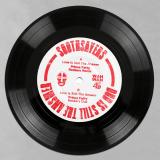
Wah Wah 45s are very excited to announce a brand new remixes from dub donPrince Fattyfor beloved Afro-reggae outfitSoothsayers.
Love Is Still The Answeris a beautifully uplifting song, written and sung by long time Soothsayers member and collaboratorJulia Bielabout the eternal power of love and its ability to overcome hate. It appears in its original incarnation on the band's recent, critically acclaimed album,Fly Higher.
Mike Pelaconi, AKA Prince Fatty has been part of the Wah Wah 45s and Soothsayers extended family for many years, and here he delivers a typically crowd pleasing mix, in both vocal and dub form, from the world of Rockers Reggae, calling legendary reggae drummerHorsemaninto the studio, and crafting a lush rocksteady remix with a new horn arrangement and stripped back instrumentation.
"In a world that feels more divided and chaotic than ever,Love Is Still the Answer is a reminder that real change can still come from within. We may feel powerless in the face of global turmoil, but when we choose love - actively, consistently, even in tough situations - we reclaim strength for ourselves. This song calls us back to our shared humanity, to the energy that connects us all. It's an invitation to tune into what really matters, and to rediscover beauty where we may have forgotten to seek it." Robin Hopcraft (Soothsayers)
a A1: Prince Fatty Rockers Remix [feat. Julia B.]
[a] A1: Prince Fatty Rockers Remix [feat. Julia B.]
- A1: Les Masques - Il Faut Tenir (1969)
- A2: Isabelle Aubret - Casa Forte (1971)
- A3: Christianne Legrand - Hlm Et Ciné Roman (1972)
- A4: Jean Constantin - Pas Tant D'chichi Ponpon (1972)
- A5: Billy Nencioli & Baden Powell - Si Rien Ne Va (1969)
- B1-: Marpessa Dawn - Le Petit Cuica (1963)
- B2: Jean-Pierre Sabar - Vai Vai (1974)
- B3: Sophia Loren - De Jour En Jour (1963)
- B4: Isabelle - Jusqu’à La Tombée Du Jour (1969)
- B5: Sylvia Fels - Corto Maltesse (1974)
- C1: Frank Gérard - Comme Une Samba (1972)
- C2: Ann Sorel - La Poupée Des Favellas (1971)
- C3: Charles Level - Un Enfant Café Au Lait (1971)
- C4: Andrea Parisy - Les Mains Qui Font Du Bien (1970)
- C5: Audrey Arno - Quand Jean-Paul Rentrera (1969)
- C6: Aldo Frank - T’as Vu Ce Printemps (1970)
- D1: Christianne Legrand - Cent Mille Poissons Dans Ton Filet (1972)
- D2: Clarinha - Lemenja (1970)
- D3: Hit Parade Des Enfants - Aquarela (1976)
- D4: Jean-Pierre Lang - Tendresse (1965)
- D5: Magalie Noël - Une Énorme Samba (1970)
- D6: Françoise Legrand - La Lune
Ever since the late 1950s bossa-nova revolution, Brazil’s influence on French music has been undeniable. Pierre Barouh, Georges Moustaki and a vast array of lesser known artists, all made the Musica Popular Brasileira (MPB) an axis of promotion at the service of a cool and metaphysical, modern and mixed Brazilian lifestyle. Some were seduced by the poetic languors of the bossa, some were looking for fun, and others just loved the American hybridization of jazz-bossa, jazz-samba.
What is bossa nova? One of its creators, Joao Gilberto said: "Its style, cadence, everything is samba. At the very start, we didn't call it bossa nova, we sang a little samba made up of a single note - Samba de uma nota so .... The discussion around the origins of bossa nova is therefore useless”. It is nevertheless useful to remember that these magnificent Brazilian songs, which the guitarist describes as samba, were shifted and balanced around improbable chords. "I like things that lean, the in-betweens that limp with grace," said Pierre Barrouh, quoting Jean Cocteau.
With emotion, arrangements for violin and supple guitar licks, bossa nova rapidly changed. A transformation that can be heard in the Tchic, tchic, French Bossa Nova 1963-1974 compilation, the result of a cultural reappropriation, which traveled through the United States and supplemented itself in France.
A musical revolution that has remained significant, bossa nova was born in Rio. From 1956 to 1961, Brazil lived through its golden years. In five years, the country had invented its modernist style. Elected president in 1956, Juscelino Kubitschek de Oliveira, an elegant man with a broad forehead, brandished a promising slogan: "Fifty years of progress in five years". He quickly got to work. Not worried about increasing debt, he launched the project for a new federal capital, Brasilia, designed by the communist architect Oscar Niemeyer. Volkswagen opened state-of-the-art factories and created the “fusquinha”, the Beetle. In Rio, the Vespa made its first appearance. The Arpoador Surf Club crew run into the “girl” from Ipanema, Helô Pinheiro - the tanned garota ("chick"), between a flower and mermaid, who at 17 walked by the Veloso bar, where the fiery author and composer, Tom Jobim and Vinicius de Moraes, were getting drunk on whiskey. From then on, bossa symbolized cool.
In 1958, Joao Gilberto recorded Chega de Saudade, which the directors of Philips denied, calling it "music for fagots". The marketing director, who believed in it, secretly pressed 3000 78-inch vinyls and distributed them at schools around Rio, creating a tidal wave.
American jazzmen then took over. In particular, trumpeter Dizzy Gillespie and guitarist Charlie Byrd. In November 1962, the Brazilian Ministry of Foreign Affairs funded a "Bossa-Nova" concert at Carnegie Hall in New York, inviting the genre’s pioneers. Unprepared, the show soon turned to disaster. But the troupe was invited to the White House by Jackie Kennedy. The first lady loved "the new beat" and in particular Maria Ninguem, a song by Carlos Lyra, later covered by Brigitte Bardot.
In Brazil, the 1964 military coup quickly ended this euphoria. The destructive atmosphere that ensued pushed many Brazilian musicians to leave, if not to exile. Thus, Tom Jobim, Sergio Mendes and Joao Gilberto arrived to the United States. In New York, Joao Gilberto met saxophonist Stan Getz. At the time, he was married to the Bahianese Astrud Weinert Gilberto, who had a German father. She had never sung before, but she knew how to speak English. Getz therefore asked her to replace her husband on The Girl From Ipanema. The Getz/Gilberto record with Tom Jobim on piano, was released in March 1964. Phil Ramone, the "pope of pop" was in charge of sound.
Bossa nova arrived in Paris through the classic “guitar-voice” channel (Pierre Barouh, Baden Powell, Moustaki…) But France loved jazz and Paris had already welcomed its American contributors. All these good people were to pass through Saint-Germain-des-Prés. The cabaret l'Escale became the Mecca of Latin American sound where one could find Pierre Barrouh and his friends, such as the Camara Trio, samba-jazz aces, whose only record was published by the Saravah label. With a band strangely called Les Masques (a band that included Nicole Croisille and Pierre Vassiliu, among others), the Camara Trio recorded an interesting Brazilian Sound, including the track Il faut tenir which is present on this tasty compilation of rarities.
Other enlightened musicians can also be found on the compilation, such as Jean-Pierre Sabar (songwriter for Hardy, Auffray, Leforestier ...) and the French pop rock organist Balthazar. In 1975, Sabar recorded Aurinkoinen Musiikkimatka on a Finnish label, which featured the crazy Vai, Vai, included on this record. We are now following the footsteps of Brazilian electronic musicians such as Sergio Mendes, Eumir Deodato or Marcos Valle who created funk and disco sounds on their keyboards and synthesizers. A style that influenced Véronique Sanson when she wrote Jusqu’à la Tombée de la nuit in 1969 for Isabelle de Funès, the niece of Louis and a great friend of Michel Berger - Sanson did end up singing this track on her 1992 Sans Regret record.
The pinnacle of exoticism and travel, Sylvia Fels’ Corto Maltese includes bongos, sea mist and ocean sounds. The title was taken from Jacky Chalard’s concept album written in 1974, Je suis vivant, mais j’ai peur (I am alive, but I am scared), based on Gilbert Deflez’s science fiction novel.
However, bossa nova extended the scope of popularity. "In the 1970s, I was a fan of Sergio Mendes, Getz / Gilberto. I fell in love with this music that I knew because I had been an orchestral singer, " explained Isabelle Aubret, who in 1971 delivered a composite record of covers by the very funky Jorge Ben, Orfeu Negro, Tom Jobim, Vinicius de Morais and Jean Ferrat. "I recorded this album for Meys Records in Paris, far from Brazil, with wonderful musicians, François Raubert, Roland Vincent, Alain Goraguer...". The latter wrote the arrangements for Casa Forte, a very percussive title borrowed from Edu Lobo, one of the initiators of the bossa who spent time in California. "Jazz and bossa came together and produced very rhythmic music. I love singing, it allows me to dream, to have fun, to feel a high on stage, and these songs brought me joy, made me swing, my singing felt like a dance.”
The world tours of French singers and their desire for the tropics, often brought them to Rio with its hills, forests, caipirinhas and tanned bodies. There are surprises though, like this Iemenja (Iemenja is the goddess of the sea in the Afro-Brazilian candomblé religion). Not unlike the composer and musician Jean-Pierre Lang, based in Sao Paulo, Claire Chevalier taught Brazil to Brazil. In 1970, the singer and painter published a 45-inch vinyl, Mon mari et mes amants (My husband and my lovers), under the improbable pseudonym of Clarinha (little Claire). She was then living in Rio, with her husband, Joël Leibovitz, who founded a band called Azimuth, and who owned a record label specialized in "sambas enredos" songs for samba school parades.
For its B side, she asked Pierre Perret to come up with lyrics for a song composed by Carlos Imperial: "Oh goddess of the sea, o goddess Iemenja, I bring a white rose to adorn your long hair ..." . "Perret came to see us, and we had fun, remembers Joël Leibovitz. We wrote Lemenja for fun, we recorded it at the Havaí studio, behind the Central do Brasil the central station. Erlon Chaves, the arranger who worked with Elis Regina, joined us" adding his share of Afro-Brazilian percussions and funky brass to the mix.
There is a common misunderstanding in Franco-Brazilian history: that bossa, admittedly hedonistic, is perceived as funny, even though the poets who wrote the texts are often philosophizing on the human condition. Its French interpreters pull it towards a carnival inspired universe, far removed from its fundamental essence. Thus, Jean Constantin covered the famous Samba da minha terra, an ode to the art of samba written by the classic Bahian composer Dorival Caymmi, renaming it with the enticing title of Pas tant de tchi tchi pompon: "On your pier there is no tchi tchi / when you arch your back, you know everything is alright ”(lyrics by Gérard Calvi). This expedited bossa aims for the absurd, but retains a certain elegance.
Indeed, Jean Constantin was not an idiot, the rather large man had a huge mustache and liked fantasy, (Les pantoufles à papa, Le pacha, inspired by cha-cha-cha-cha, salsa and jazz) but he was also the lyricist of Mon manège à moi interpreted by Edith Piaf, the composer of Mon Truc en plume by Zizi Jeanmaire and the soundtrack of François Truffaut’s 400 Blows. Le Poulpe, published in 1970, from which this bossa is extract, was arranged by Jean-Claude Vannier, an accomplice of Serge Gainsbourg’s Melody Nelson. In short: "There is enough of samba / By looking at the parasol / Because my poor cabeza / Is going to die in the sun".
Even the American actress Marpessa Down, who was at the heart of the bossa nova revolution with her role as Euridyce in Marcel Camus’ film Orfeu Negro, winner of the 1959 Cannes Palme d'or, fed the clichée with Je voudrais parler au petit cuica - "Tell me how you manage to always make people want to dance / It's true, I must admit that I cannot resist your magic" - in consequence, once can hear the cuica, a little drum inherited from the Bantu.
But bossa nova had many angles. Societal, of course, pushing actresses who were symbols of women's liberation like Brigitte Bardot, Jeanne Moreau, or Sophia Loren to engage in the exercise of accelerated bossa. In February of 1963, Sophia Loren made a record in French in Rome, Je ne t'aime plus, featuring the song De jour en jour, a bossa written by two Italians, Armando Trovajoli and Tino Fornai, which was released a little later by Barclay. Bossa accompanied the 1960s, a decade of moral liberation. Ann Sorel, who interpreted La Poupée des favellas, caused a sensation with L’amour à plusieurs, a provocative song written by Frédéric Bottom and Jean-Claude Vannier. As for the actress Andrea Parisy, she displayed her bourgeois cheekiness in Marcel Carné's Les Tricheurs before interpreting Les mains qui font du bien. And Magalie Noël, the friend of Boris Vian, who sung Johnny fais-moi mal, was hired to sing Une énorme Samba, composed by Alain Goraguer (arranger to Gainsbourg, Bobby Lapointe and Jean Ferrat) with lyrics by Frédéric Botton.
But in the end, of what wood is bossa nova made of? The answer is given by Christianne Legrand, daughter of Raymond the conductor, and sister to Michel the composer: "With me, with jà" - jà means "immediately" in Portuguese. In 1972, the singer, an expert in vocal jazz and a member of the Double Six, published Le Brésil de Christianne Legrand. Two songs included on the Tchic Tchic compilation that demonstrate how bossa, jazz, funk, rock, etc. work like a swiss army knife: the music is used to denounce broken systems, or miracles, HLM et ciné roman, Cent mille poissons dans ton filet, two songs from the O Cafona soundtrack, a successful telenovela broadcast, at the time in black and white, on TV Globo. The first was adapted in French by the fighter and friend of the Legrand tribe, Agnès Varda. The second is content with a play on words, jostling them into a summer fun.
Véronique Mortaigne
- 1: Taking You On
- 2: Dangerous Ways
- 32: Much 2 Do
- 4: I Don't Wanna Be A Whore
- 5: Shaking Out The Days
- 6: Pain Pills Never Expire
- 7: Mean Mr.mustard
- 8: Water Valley Throwdown
- 9: River
- 10: Hell & Back
Wenn du es weißt, dann weißt du es. Die Shows von Dash Rip Rock sind ein ausgelassener Spaß - eine explosive Mischung aus Respektlosigkeit, Verzerrung und rohem Gitarrensound. Dieses legendäre Trio aus der Louisiana Music Hall of Fame und langjährige Indie-Größen verbinden Roots Rock, Garage Rock, Country-Punk und Southern Swagger und werden von der New York Times für ihre ,Flüssigkeit in der amerikanischen Roots-Musik mit einer kräftigen Dosis Punkrock-Spirit" und von SPIN als ,unbestreitbar die größte Rockband des Südens" gelobt. Mit über siebzehn Underground-Klassikern, einer treuen, genreübergreifenden Fangemeinde aus Rock, Americana und Punk und einem Radiohit aus den 1990er Jahren mit ihrer ironischen Hymne ,Let's Go Smoke Some Pot" liefert Dash Rip Rock weiterhin mitreißende Live-Shows. Gründer, Leadgitarrist, Sänger und Songwriter Bill Davis wird oft als Pionier des Country-Punk, Cowpunk und Alt-Country bezeichnet - Genres, die Rock, Outlaw Country und Punk-Attitüde miteinander verbinden. Die Austin Chronicle lobt Davis als ,das Gehirn hinter Dashs Muskeln, einen Bar-Poeten mit einem ausgeprägten Sinn für Humor und einem unverschämten Talent für gute Riffs". Mit ,A Song in Everyone" kehrt Dash Rip Rock mit einer brandneuen LP zurück, die in Mississippi mit Matt Patton von den Drive-By Truckers aufgenommen wurde.
- A1: Original
- B1: Bladerunner Remix
DJ Ron's forgotten classic 21st Century finally gets the release it deserves, arriving on 12" black vinyl alongside a brand-new Bladerunner remix Originally recorded for DJ Ron's debut album Quintessence back in 1997, Hospital Records proudly welcomes it back into the world in style. The A side carries the original in all its glory. 21st Century is a timeless and futurefacing weapon - analogue at heart, hand-controlled automation and carefully curated sounds take you centre stage, giving it a unique, personal texture and depth that has lost nothing with age. Flip it over and Bladerunner steps in with an equally powerful B side remix, bringing his own vision to a track that was always ahead of its time. Born and bred (and still resident) in Hackney, career-long Rinse/Kool FM DJ, the first jungle/ D&B artist to record an Essential Mix for BBC Radio 1, host of the London Something podcast and more, DJ Ron is a multi-faceted creative and an uncontested foundational figure within jungle and drum & bass. This 12" is long overdue. The first time that DJ Ron's '21st Century,' taken from his unsung debut album, will be available digitally & physically alongside a fresh remix from Bladerunner. One for the heads - this one is all about flying the flag for DJ Ron, one of the foundational figures of jungle and drum & bass.
- 1: Un Go Go Para Ti
- 2: Dame Un Besito
- 3: El Son De Los Ros
- 4: El Ayayero
- 5: Tu Bello Cuerpo
- 6: La Cuzqueñita
- 7: Santa Rosa De Lima
- 8: El Leoncito
- 9: Sabor A Felca
- 10: La Maconita
- 11: Duérmete Mi Niña
- 12: La Chusquita
- 13: Manzanita Coloradita
- 14: Mi Per
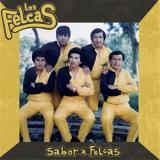
Los Felcas were one of the best bands to come out of Peru during the golden years of the cumbia and tropical sounds explosion. This compilation brings together their finest recordings, taking from albums and obscure 45s, blending a wide range of influences-from psychedelic vibes to rhythms closer to guaracha and chicha-and now being reissued for the first time. In Lima, founding member, guitarist Florentino "Tino" León, quickly joined the Peruvian cumbia tropical movement led by electric guitarists Enrique Delgado (Los Destellos) and Berardo Hernández "Manzanita". This new style was soon practiced by other groups from Lima, such as Los Ecos, Los Beta 5, Los Diablos Rojos, and, a bit later, by bands from the rest of the country. This movement became a massive phenomenon. Nelson Ferreyra and the multifaceted singer Pablo Villanueva Branda "Melcochita", who had become fans, introduced them to the MAG record label. In mid-1973, they recorded their first 45 RPM singles, with 'Sabor a Felcas' being their most popular release. They recorded several albums during the late 70s and 80s, mostly on MAG: "La Blanquiñosa", "Tu bello cuerpo", "La cusqueñita" y "Manzanita coloradita". In the early 1990s, chicha music became popular in Argentina, especially in the north, where 'Boquita perfumada' by Los Felcas was a hit.