
Cerca:k de
Acid Jazz Records are proud to announce an
exclusive licensing agreement with Albarika Store,
the legendary record label that defined the sound
of Benin and influenced the entire region of West
Africa and beyond.
This is the first exhaustive trawl of the archive and
will see the label presented in a way that ensures
its historical importance is recognized.
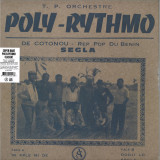
‘Segla’ is a hens’ teeth-rare Poly Rythmo album
from 1978 that was originally released without a
sleeve as ALS059. Recorded at EMI Lagos, Nigeria,
as per most of the Poly Rythmo recordings for
Albarika, the sound quality is from the tapes is
dynamic and fresh.
Transferred from the original tapes and
remastered by Grammy award-winning engineer
Frank Merritt at The Carvery, the album is
presented with beautiful artwork and packaging to
match the sonics. This is the music as it should be
heard.
Over the next few years a comprehensive reissue
campaign is planned, overseen by Florent
Mazzoleni and David Hill for Albarika Store, with
Dean Rudland as executive producer for Acid Jazz.
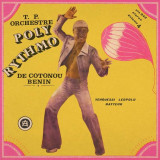
Albarika Store is home to many rare recordings, from more traditional folkloric and Sato styles, to the funk, blues and psych inspired workouts of the All Mighty Orchestre Poly Rythmo de Cotonou, as they referred to themselves. Many of the original records are sought after by DJs and collectors as prime examples of Afro-funk, Afro-Latin and Afropsych sounds.
The next in the series of reissues by Acid Jazz presents a straight reproduction of the incredibly hard to find Poly-Rythmo ‘Vol. 4’ album, originally from 1978.
For DJs and dancers this album has long been about the killer track ‘Aiha Ni Kpe We’, an incendiary Afrobeat recording which will activate any dancefloor anywhere. “Every time I listen to the Orchestre Poly Rythmo… Wow, I just discover something new in the music” - Gilles Peterson
This is the first exhaustive trawl of the archive and will see the label presented in a way that ensures its historical importance is recognized. Trips to West Africa have secured original master tapes and the process of transferring is ongoing. Over the next few years a comprehensive reissue campaign is planned.
Acid Jazz Records continue their exclusive
licensing agreement with Albarika Store, the
legendary record label that defined the sound of
Benin and influenced the entire region of West
Africa and beyond.
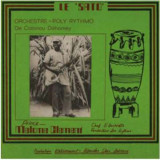
Recorded and issued in 1974, ‘Le Sato’ is one of
the earliest releases on the Albarika label and it is
also one of the deepest.
Sato is the term for the traditional rhythms that
soundtrack Vodun (Voodoo) rituals and
ceremonies in Benin. Performance of Sato is
reserved for these sacred rites, which evoke the
spirits of the dead and can last for several days
and attract hundreds of people. Sato rhythms
cannot be played outside of Vodun.
A large ceremonial Sato drum is used, which
measured over 1.5m in height. This drum is played
using wooden stick beaters, the drummer dancing
while playing. The Sato drummers are supported
by percussionists and other drummers playing
smaller drums. Together, they create unique,
layered, trance-inducing polyrhythms.


More dancefloor dynamite from Benin's almighty Orchestre Poly-Rythmo de Cotonou Dahomey, this time in the form of 'Gbeti Ma Djro'. Confusingly described on the centre label of the 1971 original issue as ’Soul’, this is in fact a prime slice of Afro-psych-funk complete with wails and grunts over fierce drums and picked guitar. 'Angelina II’ is a much warmer affair that rides a shuffling mid-tempo pachanga groove. Both tracks were transferred, restored and mastered from the original 1/4 inch tape.
![Potatohead People & De La Soul - Baby Got Work (DJ Jazzy Jeff & Kaidi Tatham Remix) [feat. Posdnuos & Kapok]](https://www.deejay.de/images/l/4/7/978647.jpg)
After making a worldwide splash in late 2020 with their De La Soul collab "Baby Got Work" feat Kapok, Potatohead People are back with a brand new must cop release that crosses both sides of the Atlantic as the Magnificent DJ Jazzy Jeff and legendary UK producer and keyboard player Kaidi Tatham team up to remix the forementioned track.
Bringing the energy up and out into a classic Hip-Hop vibe, Jeff & Kaidi infuse a head knockin' drum break complete with classic JJ scratches, synth bass, and Rhodes chords on top of Posdnuos's rhymes about getting your head down, putting your boots on and getting to work - helping to make the world better place for all of us. Vancouver collaborator Kapok sings aboout the shortness of our lives, and the potential in all of us to get the work done that we need to do. It's an allusion to the desperate times we're live in, with a hopeful call to action for all of us to roll up our sleeves and get down to the business of change.
The original "Baby Got Work" is included on the B-Side of the remix due to popular demand!
a 01: Baby Got Work (DJ Jazzy Jeff & Kaidi Tatham Remix) feat. Posdnuos & Kapok

10
The album features a notable line-up of musician such as: Sami Yaffa (New York Dolls/Joan Jett), Dave Richmond (Serge Gainsbourg/Elton John), Christophe Deschamps (Jean-Michel Jarre), Kath Guifford (Stereolab), Will Crewdson (Adam & The Ants/The Selecters), Danny Ray (Bo Diddley/Brian Setzer)...Mastered at the legendary Abbey Road Studios and cut to vinyl across a 180g LP in a gatefold sleeve with booklet. L'homme de l'ombre immerses you from start to finish in a sonic and lyrical journey that rewards your mind and emotions. Here you will find the glamorous rock attitude of Marc O's musicianship colliding brilliantly with the wise and witty writing of french philosopher Bruno Pons Levy. The result is not so much a double identity, but an intangible and powerful third element, much like the mathematical equation described in the song The triangle squared (Le triangle au carré). This song is emblematic of Marc O's persona: a musician of style and vision, crossing cultures and decades to collaborate with a remarkable team and create this, his most personal album. Press quotes: Ten well realised, vintage aesthetic fantasies ****" MOJO "Singular debut set that lurches from glam-punk to Air-meets-Gainsbourg purr, infectiously Pulp-ish electro-rock and gauche, Bowie-esque panther strut. Formidable! 8/10" UNCUT "Never less than fascinating, this is an important and hugely enjoyable work ****" RECORD COLLECTOR "Propelled by his core rhythm section and lyricist collaborator, they address some weighty subjects with passion ****" SHINDIG! "Blends aggressive and powerful textures and melancholic soundscapes to break down language barriers and deliver a powerful, evocative and stunning album" LOUDER THAN WAR "The music is as strong as Pons Levy's lyrics, mingling melodic rock with chanson in the grand tradition ****" RNR


LTD 100 copies / Printed Sleeve
A real brain destruction, so hard that it turns mental.
A side begins with a long bugcore electric spiking electro... A fakir track !
The second tune is experimental as well, destruction of jungle, of breakcore, of noises... Spiky too ! Fakir too !
The flip opens with a speedcore destructured tunee, keep your breath and drown into this mental distrurbance !
The finish, Zenkout... is a crunchy speedcore tune, shaking your body with a non-stop fatal kick.
A superb EP again from Les Neiges Noires De Laponie !

- A1: Conjunto Típico Corazón De La Selva - Alegría En La Selva (02:47)
- A2: Los Pihuichos De La Selva - La Carachama Coqueta (02:46)
- A3: Los Pihuichos De La Selva - Chupizinatay Yacui (02:37)
- A4: Los Pihuichos De La Selva - Shamuy Pacarina (02:32)
- A5: Los Pihuichos De La Selva - El Montañés (02:41)
- A6: Los Pihuichos De La Selva - El Huancahui (02:38)
- A7: Los Pihuichos De La Selva - Flautero De La Montaña (02:31)
- A8: Los Pihuichos De La Selva - El Jornalero (02:30)
- B1: Los Pihuichos De La Selva - La Danza Del Trapichero (02:32)
- B2: Conjunto Típico Corazón De La Selva - Picaflor Loretano (02:31)
- B3: Conjunto Típico Corazón De La Selva - Ushpagallo (02:56)
- B4: Conjunto Típico Corazón De La Selva - Punchacacho Tutacacho (02:50)
- B5: Los Pihuichos De La Selva - De Dónde Vienes Loretano (02:31)
- B6: Conjunto Típico Corazón De La Selva - Bailando En La Selva (02:52)
- B7: Los Pihuichos De La Selva - La Huayranguita (02:34)
15
Andrés Vargas Pinedo is a prominent composer of Amazonian popular music from Peru. He is blind and has excelled as a player of the quena and the violin. He was born in the city of Yurimaguas but he developed as an artist in Lima, for thirty years he has worked as a traveling musician on a street in the San Isidro district of Lima. Throughout his career, he has formed and joined various popular music groups. This compilation presents fifteen songs of his authorship, belonging to his first two groups: Conjunto típico Corazón de la Selva and Los Pihuichos de la selva, active between 1965 and 1974, and which helped define the sound of Amazonian popular music.
These years saw the emergence of an Amazonian popular music movement led by Vargas Pinedo as well as groups such as Los Solteritos, Flor del Oriente or Selva Alegre. These artists based their music on the rhythms of the Amazonian folklore (pandilla, sitaracuy, movido, cajada, chimayche) and were nourished by influences from the coast and the highlands of Peru, as well as by the tropical rhythms of Brazil, Colombia and Ecuador, achieving a musical synthesis that is an invitation to collective celebration and endless dance. A sound that is defined by a constant and hypnotic rhythmic base of kick and snare drums, upon which the quena and violin develop imaginative melodic lines. Sometimes there is a singing voice, sometimes the voices playfully appear as sounds that identify Amazonian popular speech or that emulate jungle animals.
The fifteen tracks gathered in 'El fabuloso sonido de Andrés Vargas Pinedo: Una colección de música popular amazónica' (1966-1974) / 'The fabulous sound of Andrés Vargas Pinedo: A collection of Amazonian popular music' (1966-1974) are a good introduction to the work of an essential creator of Peruvian music, whose sound expresses the spirit of the Amazonian people and summarizes the transition from tradition to the popular in the context of the emergence of a record industry of Amazonian music. Andrés Vargas constitutes a fundamental basis for the music of the Amazon, as his work synthesizes diverse influences, having that original root as its main motive.
This compilation is presented in vinyl format and includes a brochure with extensive information and photos. The audio has been remastered directly from the original tapes. Edition of 300 copies. Art by Jordy García (Blumoo Posters).


Take a ride down to São Paulo, Brazil for a remarkable one-off recording session between Colombia's Romperayo and Brazilian producer / musician DJ Tudo. Featuring the latter's suitably titled house band, Sua Gente de Todo Lugar (the People From Everywhere) as well as the wild boys of Romperayo, including band leader and drummer mastermind Pedro Ojeda. The music captured at this meeting is a truly unique combinati..

10
Sdban Records will reissue several installments of the legendary library series 'A Special Radio ~ TV Record' on vinyl. These were originally released on Belgian imprint 'Selection Records' between 1976 and 1981.Selection N°20 is the soundtrack to the 1978 Belgian cult movie 'In Kluis' made by Belgian composer, arranger, pianist and keyboardist Koen De Bruyne (1946 - 1977).

- 01: Kontrole
- 02: En Toen Was Er Niets Meer
- 03: Twijfels
- 04: (Aka Ik Wil Eruit)
- 05: Pijn
- 06: They Wanted Us Away
- 07: Sick In Your Mind
- 08: The Scream
- 09: He Lives In His Dreams
- 10: If There Is Something
- 11: Neo I (Rise And Fall)
- 12: Neo Ii (I Wanna Be On My Own)
- 13: Neo Iii (Living On The Edge)
- 14: Neo Vii (Lean On Me)
- 15: Im Not Afraid Of You
- 16: The Last Time
- 17: I Lost Control Again
- 18: My Night
18
De Brassers were one of the most notorious bands in the Belgian new wave/punk history. With their no nonsense attitude they scared the shit out of the local catholic community of Hamont. De Brassers were a local mixture of the Sex Pistols (in the lowest gear) and Joy Division (they always performed a cover version of Joy Division’s Shadowplay), combining a criticism of bureaucracy and politics with experiences of psychological and existential tensions. The doomed sound they produced tells a lot about the dark atmosphere of the late seventies and early eighties: the fear of atomic bombs, cold war pessimism, police violence against squatters, the first cases of AIDS, and the grim years of Reagan & Thatcher.
This compilation takes you back to that time. All tracks from their first 7″ "En Toen Was Er Niets Meer” & their self-titled 12″, plus rare & unreleased tracks taken from various live performances & the cassette “Levend”. If you’re in for a raw slice of Belgian history let de Brassers immerse you in a cold wave of punk.

10
On "APHEXions", the Brussels pianist with French roots Dorian Dumont - key member of the electro jazz band ECHT! - is expressing his love for one of his greatest musical heroes: Aphex Twin. Contrary to what one would expect, there are no electronics involved in this album, but he carefully transcribes a wide selection of Richard David James' music to grand piano, giving the songs a whole new dimension. Rave classics like Polynomial-C and Xtal are being stripped to the core while on tracks like Nannou, Kesson Daslef or Fingerbibb he stays truthful to the minimalistic aesthetics from the original tracks.
As an accomplished jazz pianist, he improvises on the various themes and injects it with a tinge of blues here and there. As a result, this homage record captures both the simple beauty and the unruly complexity of Aphex Twin. But above all, it sounds like refreshing new music that immediately puts Dorian Dumont on the map as a solo pianist!

"In the fall of 1987, Serge Gainsbourg's success was at its zenith, both literally and figuratively: as his sixtieth birthday approached, he was preparing to take over the arena at the Porte de Pantin. Recorded during concerts on March 23, 24 and 25, 1988, Le Zénith de Gainsbourg would not appear until a year later, on April 10, 1989. In 2021, Le Zénith de Gainsbourg will now be released on two CDs offering for the first time five previously unavailable songs: In addition to unreleased tracks, meticulous cleaning work track by track has significantly improved sharpness and a more performance-friendly mix. Reviews in London Macadam, France in London, R2, Mojo and L’Echo
Ads London Macadam, France in London, and L’Echo"

Almost all records are a snapshot, a musical ribbon bow that documents a very specific moment in time or simply ties-off everything up to that point. Indigo De Souza’s I Love My Mom, her debut LP initially released in 2018, was the latter; a collection of the best songs she’d written in the few years that preceded it, recorded quickly and breathlessly and thrown out into the world.
Consisting of ten songs, I Love My Mom feels both raw and unabashed. Indigo pulled a band together for the first time, and was quickly encouraged to commit her songs to tape. Recorded at her friend’s house, they played almost everything live in just a few days, and released the record naturally, with little fanfare. That the record quickly took on a life of its own, deeply resonating with those who heard it, is a testament to Indigo’s songwriting which took inspiration from the unique worlds created by Arthur Russel, Sparklehorse, The Microphones, as well as contemporaries such as LVL UP and Happyness.
Two of the songs have racked up more than a million streams each on Spotify: “Take O Ur Pants” and “How I Get Myself Killed.” The former balances an often breezy lead vocal with gnarly undercurrents of guitar before the whole thing lets rip in its punchy chorus, while the latter, the album’s opening track, finds a different mood entirely, a slacker rock gem that repeats its chorus as a chest-beating mantra. Elsewhere, “Good Heart” furthers the dichotomy which sits at the record’s core, each moment of quiet introspection soon met by a cacophonous burst of energy.

Maurice Ravel is a French composer born March 7, 1875 in Ciboure and died December 28, 1937 in Paris. The greatest French composer during his lifetime after the death of Claude Debussy, he was one of the main representatives of Impressionist music at the start of the 20th century. Known worldwide for his Bolero, his most famous works also include the ballet Daphnis and Chloé, the Concerto pour la main gauche or even the orchestration of Pictures at an exhibition by Modeste Moussorgsky.

10
The rich sounds of Maloya and Séga music, originating from the Réunion island (as well as Mauritius and Seychelles for Séga), have recently been brought to the ears of the Northern hemisphere's music lovers. Hailing from the French Alps, where Réunion-natives and young "metropolitan" French youngsters have been sharing parties, food and music for years, Les Pythons De La Fournaise are a flavoursome electric "Séga" band and they have already put out a couple of albums over the last decade.
This time, they are interpreting Séga and Maloya songs under the form of a - nearly – all-acoustic orchestra : "L'Orchestre Du Piton" !
This Long-Player has got a particular sound and character, starting with a powerful four-woman choir (often sung in unison, in accordance with the Maloya tradition). The "lead" is a different singer on almost every song, which brings a variety of tone and vocal texture to the album.
Instead of keys, organ or synth, Les Pythons went for accordion ; they also brought into the studio an array of percussion, ranging from classic bongos and bells to typical instruments of the Indian Ocean : theKayamb, the Pikeur, the Sati and most notably the Roulèr– the king of them all, majestic barrel-shelled bass drum.
On songs like "Anon Manz Demiel" (Let's go and eat honey), two crazy electric guitars with intertwined riffs add a fresh element to the sound – somewhat echoeing with Esquivel's exotica and Congolese rumba at the same time !
And the most unusual fact on this record : there is no bass guitar. Perhaps the band had a statement to make; in our modern music culture where bass plays a central role, they prove that one can move to other sounds – and appreciate the more organic deepness of percussion.
Whether or not you look into the meaning of the songs (mostly from the Réunion repertoire with a couple of Mauritian exceptions and one original "Pythons" composition), you will feel the mood of the Creole lyrics – a deep love story in "Maloya Tantine", an hymn to slowness and indolence in "Tou Dou", a clumsy chat-up scene in "Malbaraise"...
And overall, a joyful, fresh and sparkly energy emanates from this "Orchestre" sound, from this exceptionally talented crew. Oté !
