Dire Straits never made a big to-do about its final run. In classic understated British fashion, the band simply let its music speak for itself. And how. Originally released in September 1991, On Every Street became the group's swan song – a lasting testament to the influence, musicianship, and integrity of an ensemble whose merit has never been tainted by cash-grab reunions or farewell treks. It remains an essential part of the Dire Straits catalog and a blueprint of the distinctive U.K. roots rock the collective played for its 15-year career.
Sourced from the original master tapes, housed in gatefold packaging, and pressed at RTI, Mobile Fidelity's 180g 45RPM 2LP set of On Every Street presents the album like it has always been meant to be experienced: in reference-grade audiophile sound. Recorded at AIR Studios in London and produced by Dire Straits leader Mark Knopfler, it features all of the band's sonic hallmarks – wide instrumental separation, visceral textures, seemingly limitless air, broad soundstages, atmospherics that you can almost reach out and feel. Each element is made more vibrant, physical, and lifelike on this collectible reissue, which marks the first time this 60-minute work has been available at 45RPM speed.
Afforded generous groove space and black backgrounds, the songs from On Every Street burst with nuanced details and vibrant colors. Dire Straits' playing appears to float, their intricate performances organized amid hypnotic, fluid, three-dimensional arrangements. Mobile Fidelity's definitive-sounding set also brings into transparent view Knopfler's finely sculpted guitar lines, expressive tones, and laid-back vocals – as well as the balanced accompaniment from his band mates. Here's a record on which you can hear the full blossom and decay of individual notes, and imagine the size and shape of the studio. It is in every regard a demonstration disc. And it happens to be filled with timeless fare.
Remarkably, On Every Street almost never came to light. Dire Straits initially dissolved in September 1988 after touring behind its blockbuster Brothers in Arms and suffering the departure of two members. At the time, Knopfler professed his desire to work on solo material; bassist John Illsley also explored side projects. But Knopfler's decision in 1989 to form the country-leaning Notting Hillbillies reignited a spark to reconvene his primary band and craft a fresh batch of songs. Six years removed from Brothers in Arms, Knopfler, Illsley, keyboardist Alan Clark, and keyboardist Guy Fletcher teamed with A-list session pros – steel guitarist Paul Franklin, percussionist Danny Cummings, saxophonist Chris White, guitarist Phil Palmer included – to create what still stands as an unforgettable farewell.
The platinum record brings the band full circle in that it returns Dire Straits to a quartet formation; finds the group refreshingly out of step with the era's prevailing trends; and sees Knopfler and Co. knocking out song after song with the deceptive ease of a punter tossing back a pint at a pub. That subtle cool, clever poise, and innate control – signature traits that no other band ever matched – dominate On Every Street. Knopfler's clean, virtuosic six-string escapades unfurl with dizzying melodicism and economical efficiency. Led by his winding fills and focused solos, Dire Straits traverse a hybrid landscape of rock, jazz, country, boogie, blues, and pop strains with near-faultless prowess.
More than any other entry in the group's oeuvre, On Every Street welcomes quick detours down back alleys and into the depths of human souls. What makes it more brilliant is its staunch refusal to cater to commercial expectations or take advantage of prior successes; every passage feels true, every measure echoed in the service of song. It's evident in the humorous satire of "Heavy Fuel," closeted desperation of the witty "Calling Elvis," and shake-and-bake bounce of "The Bug." It pours from the album's darker corners, as on the high-and-lonesome melancholy of the title track and bruised emotionalism of "When It Comes to You."
Hinting at the open-minded approaches and boundless curiosity he'd embrace as a solo artist, Knopfler doesn't limit himself when it comes to style or subject matter. Look no further than "You and Your Friend," a shuffle whose all-inclusive lyrics encourage an array of interpretative meanings. Another of the album's deep cuts, "Iron Hand," comes on as one of the band's most memorable moments – the narrative addressing the abuses of power at the 1984 Battle of Orgreave during the U.K. miners' strike. Given cinematic heft by the expert production, the true-fiction account puts into perspective the richness, poetry, and depth of On Every Street.
"Every victory has a taste that's bittersweet," sings Knopfler on the title track. At least that bittersweetness seldom sounded so damn good on record.
Buscar:k line
The music Charles Mingus and his group recorded during his landmark 1960 sessions for Candid Records produced three of the most revered jazz albums of the era. INCARNATIONS is a new masterpiece thoughtfully assembled from rare and unreleased material from those sessions that stands proudly in the Mingus canon of masterworks. All but one of the tracks here are from the November 11th, 1960 sessions Mingus and producer Nate Hentoff put together. The date was split into two halves: one a pure Mingus-led date, featuring a six-piece band that expanded into an octet for two additional tunes, and another, a partial reunion of a collective that had assembled in opposition against George Wein’s Newport Jazz Festival that past July. (That collective, calling themselves The Jazz Artist Guild, would release the album Newport Rebels, on Candid in 1961.) Of special note here is the one track recorded during the Mingus October 20th 1960 sessions. It is a previously unreleased track titled “All The Things You Are (All.)” Found on a tape that contained material from both of these fall 1960 dates, the piece has its roots in an Art Tatum rendition of “All the Things You Are,” which Mingus had recorded before in various settings. Featuring Booker Ervin, Eric Dolphy, Charles McPherson, Ted Curson Lonnie Hillyer, Roy Eldridge, Jimmy Knepper, Britt Woodman, Tommy Flanagan, Paul Bley, Dannie Richmond and Jo Jones. With audio restored and remastered by Bernie Grundman, and liner notes by Pitchfork and New York Times contributor Hank Shteamer, this album is a must have for any Mingus fan.
An avant-garde masterpiece, a vocal-instrumental suite, a work of collective improvisation, directly addressing the racial and political issues of it’s day, We Insist! Max Roach’s Freedom Now Suite is one of the most important artistic statements of Civil Rights Movement and one of the most groundbreaking jazz albums of all time. Max Roach was already almost a decade into his career as one of the most influential jazz drummers and composers when he teamed up with lyricist Oscar Brown Jr. to collaborate on a piece they planned to perform at the centennial of the Emancipation Proclamation in 1963. Recorded just months after the February 1960 Greensboro sit-ins, the album stands as an early musical testament to the burgeoning rage, anger and passion that would take the Civil Rights Movement from its early victory in Montgomery in 1955 into a future that would dramatically alter race relations in the United States. The second release from the newly launched New York City based jazz label Candid Records, and produced by label co-founder, famed music critic and social activist, Nat Hentoff, the album is a bold statement, focused on civil injustices in black history ranging from slavery to contemporary racial prejudices, and featuring some of the finest jazz musicians ever, including Abbey Lincoln, Coleman Hawkins, Eric Dolphy, Booker Little, and Michael Babatunde Olatunji. The five movements of the work are organized as a historical progression through African-American history, a shape similar to the one in Duke Ellington’s Black, Brown and Beige. The Freedom Now Suite moves from slavery to Emancipation Day to the contemporary civil-rights struggle and African independence. The LP includes extraordinary liner notes written by Hentoff himself, giving a context and insight that adds to the experience of hearing these magnificent performances.
Kane Pour is a songwriter and multimedia artist who lives in Gainesville, FL, and has been making loop and guitar-based electronic music since 2004. His work often leans into the subtle and murky emotions that dwell beneath the surface, calling forth themes of care, sadness, and tenderness of the human soul. With a wide sonic palette and sense of humor, he puts his love of harmony and space first, slowly dimming through soft landscapes of various textures. The Last Wave is a spiritual successor to Sun People Sleepwalker, an album Kane Pour released as Pospulenn in 2010. The album is a series of ambient guitar meditations on reconciling painful memories, growing, and reclaiming identity. The Last Wave was recorded at the onset of the Covid pandemic when Pour was home isolating. He put together the songs and walked around at night listening to them, feeling intense loneliness in the present, but finding comfort in having time to reflect on his past. The tone and aesthetic of the album evolved over time but Pour named it The Last Wave because he thought it might be his last album or the last living remnant of his soul left after the world fell apart.
"My favorite singer in the place was Karen Dalton. She had a voice like Billie Holiday's and played the guitar like Jimmy Reed." - Bob Dylan // Karen Daltons Capitol-Debüt aus dem Jahr 1969 ist endlich wieder erhältlich! Light in the Attic freut sich, eine brandneue Ausgabe dieser herzzerreißenden und bluesigen Einführung in die berauschende Welt von Dalton und ihrem tiefen Brunnen voller musikalischer Geheimnisse zu präsentieren. Weltmüde und vom Blues erfüllt, war Daltons unübertroffene interpretatorische Tiefe und emotionale Bandbreite wie keine andere. "It's So Hard To Tell Who's Going To Love You The Best" wurde 1969 für Capitol aufgenommen und reihte sich ein bei klassischen amerikanischen Songwritern wie Lead Belly, Fred Neil und Tim Hardin. Diese Neuveröffentlichung ist die endgültige, rein analoge Version von Daltons umwerfendem Debüt, mit neu gemastertem Audiomaterial von den Original-Capitol-Mastern, dem Original-Artwork von 1969 in einem erweiterten Klappcover, ungesehenen Fotos des Albumfotografen Joel Brodsky und einem Essay, in dem Karens Freunde und musikalische Mitstreiter zu Wort kommen, vom Albumproduzenten und Bassisten Harvey Brooks bis zum Musiker Peter Stampfel von den Holy Modal Rounders. - Features new all-analog mastering by Kevin Gray at Cohearent Audio, direct from the original analog tapes - Pressed at RTI - Includes liner notes by Brian Barr - Featuring unseen photos by legendary photographer Joel Brodsky - LP housed in an expanded gatefold jacket
“Byrd in Flight”, Donald Byrd’s 1960 album, showcases his exploration of hard bop and soul jazz. With a stellar lineup featuring Hank Mobley and Duke Pearson, Byrd innovatively blends intricate compositions with improvisation. This release captures Byrd’s growth, employing complex arrangements that push the boundaries of hard bop. The album’s fusion of soulful elements with traditional jazz solidifies its significance in Byrd’s evolution as a bandleader and composer.
Debut album by Korean psychedelic fuzz masters and the perfect introduction to Sanullim’s unique world.
Formed in the early 70s by the three Kim brothers while they were still in University, Sanullim managed to release their first album in 1977 despite censorship, misunderstanding from their record company and rudimentary recording techniques problems. Fuelled by piercing psychedelic fuzz guitars, Farfisa styled garage organ, keyboards and sweet melodies, the created a very unique sound, unheard in Korea at the time. Including some of their most iconic songs like “Already Now” and “"Likely Late Summer" (famous for its inclusion on the “Love, Peace & Poetry” series.
*Original artwork in hard cardboard sleeve
*Sourced from the original masters
*Insert with liner notes by Hugh Dellar (Shindig!) and rare photos / memorabilia
“Their debut album featured a blistering fuzz guitar sound that bleeds in and out of the mix as well as what sounds like a tinny Farfisa set behind the sweetest of pop vocal melodies, and the nine tracks stretch out into strangely hypnotic diversions. It’s easy to grasp how psych and garage heads coming to these tracks cold would find much to dig here, and also simple to see how the recordings could be mistaken for something cut many years earlier” – Hugh Dellar (Shindig!)
Debut album by Korean psychedelic fuzz masters and the perfect introduction to Sanullim’s unique world.
Formed in the early 70s by the three Kim brothers while they were still in University, Sanullim managed to release their first album in 1977 despite censorship, misunderstanding from their record company and rudimentary recording techniques problems. Fuelled by piercing psychedelic fuzz guitars, Farfisa styled garage organ, keyboards and sweet melodies, the created a very unique sound, unheard in Korea at the time. Including some of their most iconic songs like “Already Now” and “"Likely Late Summer" (famous for its inclusion on the “Love, Peace & Poetry” series.
*Original artwork in hard cardboard sleeve
*Sourced from the original masters
*Insert with liner notes by Hugh Dellar (Shindig!) and rare photos / memorabilia
“Their debut album featured a blistering fuzz guitar sound that bleeds in and out of the mix as well as what sounds like a tinny Farfisa set behind the sweetest of pop vocal melodies, and the nine tracks stretch out into strangely hypnotic diversions. It’s easy to grasp how psych and garage heads coming to these tracks cold would find much to dig here, and also simple to see how the recordings could be mistaken for something cut many years earlier” – Hugh Dellar (Shindig!)
Third album, originally released in 1978, by legendary Korean psychedelic band Sanullim. From heavy-fuzz psychedelic garage to slow burners, including the monster sidelong track “You Are Already Me”, the title track (which sounds like a Korean Blue Cheer) and more! *Original artwork in hard cardboard sleeve *Sourced from the original masters *Insert with liner notes and rare photos / memorabilia “This time, whilst the fuzz guitar and strangely basic bass and drum patterns are more familiar, it’s the frequently gruff, howling vocals that are the most noticeably different element of the sound” – Hugh Dellar (Shindig!)
Pittsburgh Downtempo hits its pinnacle with the 7th full length from THE LAST TEN SECONDS OF LIFE. Over the past decade, TLTSOL have cemented themselves as the undisputed kings of the Downtempo/Deathcore crossover movement. NO NAME GRAVES is the first full length to show the true power of the line up we saw in 2022's 'Disquisition On an Execution' EP, which featured new members Tyler Beam (vocals), Andrew Petway (Bass) and Dylan Potts (drums). Featuring production by Grant McFarland & Carson Slovak (Rivers of Nihil, Signs of The Swarm) and artwork by Caelan Stokkermans (The Acacia Strain, Lorna Shore) & guest vocal appearances by Ricky Myers of Suffocation, Ben Mason of Bound in Fear and Devin Swank of Sanguisugabogg,
HAVEN are proud to present the second record in their black label series focused on the crossover between sounds on the UK bass music spectrum and hard techno dynamics. This time UK break-beat maestro Mani Festo joins the label for the first time with an EP of hardcore-
inspired dance-floor weaponry alongside a remix from Swedish experimentalist PederMannerfelt.
The A side kicks off with 'Hunterr' with booming vocal cuts, pounding 4-4 kicks and break-beat rhythms sprinkled throughout for a prime UK hardcore and techno genre crossover slab of club material. This is followed by the Peder Mannerfelt remix where the Swedish legend brings his left-of-field sensibilities to the fore, submerging the vocals in to a ghostly high-frequency spectrum whisper alongside a looping bass-line and sludgy drum rhythms to close out the first side.
The B side starts with 'Swarmm' - a broken beat roller filled with screeching synth zaps and a mammoth break-beat in the second half. Up next comes 'Poison' with its eerie atmospheres and drones sat behind a 4-4 rhythm and charging break-beats in another dance-floor killer. Finally 'Machine' closes the EP with its syncopated electro rhythms and funky UK swing alongside chugging bass plucks and arpeggiated melodies in one more crossover hammer.
One of the most respected British bands in the mid 80's post punk era, Sad Lovers & Giants played highly atmospheric music made of melancholic melodies and epic guitar riffs. An overtly romantic attitude that slowly developed towards an even more open (pop) sound approach. Originally released in 1987 on Midnight records »Mirror Test«, the band's third studio effort, arrived as the fruit of an updated line up and a clear step in such direction. A very harmonious collection of songs, some of which are still recognized among the best in the band's entire catalog.
HJirok is a mythical figure, conceived as a fictional character by Iranian-born Kurdish singer and artist Hani Mojahedy. Together with versatile music producer And Toma of Mouse On Mars, she combined a variety of sounds collected during their joint travels to Iraqi Kurdistan and elsewhere with heavily processed recordings of Sufi drum rhythms and setar melodies. The result is a driving, dubbed-out, and deeply intricate soundscape that perfectly sets the stage for Mojahedy's extended, unconventional vocal techniques and polyglot lyrics. Both informed by tradition and rigorously forward-looking, »Hjirok« (with a lowercase J) is at once a profoundly personal album and a universal utopian promise. As a ghost from the past, HJirok draws on Mojtahedy's memories to mould a new future out of them.
The foundation for »Hjirok« was laid in the city of Erbil in the Kurdish part of Iraq. During one of their stays in the region, Mojahedy and Toma recorded the three percussionists Hadi Alizadeh, Jawad Salkhordeh and Serdar Saydan as well as setar player Ali Choolaei from Motahedy's backing band while they were playingthe rhythms and notes that she had grown up with in the house of her grandfather in the Iranian city of Sanandaj. Her memories of that place revolve around hypnotic Sufi music, dervishes in deep trance, and ecstatic singing. Much like this music seemed to open a portal to other dimensions, the inhabitants of the house lived in a sort of alternative reality: It provided them with a hideaway from political circumstances. Following the Iranian revolution in 1979, a Kurdish rebellion ensued but was met with the utmost brutality by the new regime, which resulted in the death of thousands.
It is no coincidence that the music on »Hirok« would draw on rhythmic patterns that were passed on from one generation to the next for hundreds of years. »The project is rooted in the figures of the Sufi dervishes and thus a culture that precedes today's political, social, cultural, and religious systems,« explains Mohtahedy. »The Sufi sound travelled around the entire world. I like to think of it as a dialogue between peoples-one based on the rhythms of the drums and the sound of their voices.« Toma adds that by electronically transforming the recordings and enriching them with field recordings from both rural and urban spaces, they were able to use the stories told by the drums and the setar to create an entirely new narrative.
The story told by these eight pieces is hence a deeply personal, but also inherently political one. Moitahedy herself left Iran in 2004 and relocated to Berlin in 2010. Having continued to use her art as a platform to tirelessly advocate for the rights of the Kurdish people and women under oppressive regimes, she has not been allowed to return to her country of origin ever since. »Hani is singing for equality and there are people who are afraid of that-her femininity, her strength.« Toma says. Much like earlier Hirok sound installations addressed human-made climate change and other systemic ills, also »Hjirok« can hardly be disconnected from far-reaching struggles for liberation and equality.
This is also true on a thematic and even linguistic level. »The lyrics are about a promise,« Mojahedy says, citing Kurdish writer Ebdulla Pesêw as an inspiration. »At their core, these are about that day on which violence and fear become a thing of the past; what they tell you is ot not give up, to keep hoping,« she adds. The promise embedded in them is an emancipatory one. These contents are mirrored on a linguistic level: The lyrics were written in both Kurdish and Farsi, blurring the lines between the two languages and thus, Kurdish and Persian cultures.
Mojahedy, or rather HJirok, conveys these philosophical themes with elegance. Herversatile vocal performance is only loosely basedo n established styles. »Of course everything started with traditional rhythms, but we kept pushing things further and further, so Idid the same with my voice,« Mojahedy explains. »There were no boundaries.« The same can be said of the field recordings that she and Toma used. Whether it's conversations between members of the Pesmerge, the Kurdish armed forces, having a chat in meadow full of bunnies or the humming and buzzing of metropolises like Tehran: »Hirok« paints a sonic picture that is quite literally autopian one; that of a non-place in which different soundscapes, cultures and ways of life coexist peacefully.
What the album conjures up from Mojahedy's memory is not only a very specific place during a unique time in history as experienced by a single person. It is also ametaphorical home open to anyone who wishes to enter - promise of a better, more egalitarian future for everyone. Hence, HJirok will bring it on tour, presenting the material as an audio-visual live show that makes use of the photo and video material that Mojahedy and Toma have collected during their travels through Kurdistan.ja
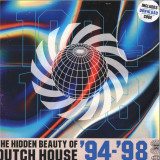
Chicago? Absolutely! Detroit? Definitely! For many, however, a significant chapter in the coming-of-age story of House music was also written in The Netherlands.
This 8-track compilation is the result of a nationwide search for lost Digital Audio Tapes (DAT’s), dusty home-studio recordings, and other relics from those early days. The distinctive "House" sound eventually evolved into a rainbow of local styles and grooves. Back then, DJ’s played their heart out and didn’t limit themselves to any particular musical genre. Following that spirit, this compilation contains everything that makes the Dutch sound so special, from energetic Breaks to atmospheric Deep House.
These are not your usual suspects, not even the most revered diggers have this collection at their fingertips. It's raw, pure material from the time when house parties were fresh and dirty at the same time. Back when the only dress code was a wide smile from ear to ear. Four sides with two tracks each, ensuring maximum DJ enjoyment. Now get out there and spread the Dutch 90's House vibes!
The fresh-faced folk pop band Stornoway seem promising: They play with guileless vigor, have a light-stepping chemistry as a unit, harmonize well. Their lead singer Brian Briggs has a lovely, pure high tenor, the kind of voice that effortlessly conveys simple longing. And yet, on their second album, Tales from Terra Firma, they continue to be almost crushingly dull, making well-appointed and cheerfully empty music that successfully communicates next to nothing.
Their Achilles Heel is a simple and unfortunate one, the same on Tales as it was on 2010's Beachcombers Windowsill. Stornoway are clearly in love with Celtic and British folk, and yet they can't write a memorable melody to save their lives. Try to sing along to the verse melody of "Zorbing", their most well-known tune, and pay attention to what your face muscles are doing; most likely furrowing with the effort of recall. Each of Tales' painstakingly arranged nine songs sinks underneath the weight of this insurmountable problem, which is a shame.
If you're making folk-pop, an inability to write a catchy melody is a difficult deficiency to overcome. Stornoway try valiantly with their complex arrangements, which quickly grow exhausting. “You Take Me as I Am” is cluttered with horn charts and pointlessly banging piano. “(A Belated) Invite to Eternity” builds to a full Explosions in the Sky crescendo, with glimmering tremolo guitar and a “Tonight, Tonight”-style sweeping string section, but having built zero momentum and generated zero heat until that point, their planned fireworks display fizzles.
“Farewell Appalachia” follows the same pattern, with celesta, finger-picked acoustic and electric guitar all tracing an emptily pretty circle with nothing in the center. The melody of "The Great Procrastinator" is almost cleanly written enough to be memorable-- and then the ersatz Dixieland jazz interlude crashes in. Stornoway are deft players, and the transitions are tightly managed, but this is praise on the same order as praising the brushwork in a hotel-room painting.
Briggs’ lyrics are filled with uncomplicated images of the good old British countryside, but his lyrics trample over all these dew-covered fields with wordy, awkward phrasing: "And in the gathering dew, I was lucid as a floodlight,” goes a line from “(A Belated) Invitation to Eternity”. “There's a hunger in the air/ A lemon swollen in the trees" he bleats on “Knock Me on the Head”. On “The Great Procrastinator”, he sings that he is “a scientist with far too many metaphors and far too little data to conclude in time.” They don’t read particularly well, and they don’t sound much more natural when sung.
Tales From Terra Firma is a peculiar record-- carefree music that feels leaden; tuneful-sounding songs that offer no tunes to hold onto. They seem an odd fit for 4AD, a label mostly home to singular voices. They may be a mercenary signing, an attempt to ride the coattails of Mumford and Sons' success. But Mumford and Sons, as head-smack simple and pandering as they are, have a pretty crucial ingredient in their arsenal: they write anthems. In that regard, they have Stornoway pretty thoroughly beat.
The Edits Collection label is fast becoming essential with a third irresistible offering in a little over a year. This latest one opens with some soul drenched boogie and disco featuring a heart-aching vocal hook and snappy grooves, then gets more deep and jazzy with 'Disco Is A Feeling'. The flip side opens with the steamy 'Take U 4 A Ride' with its explosive Philly strings and busy percussive lines and '10.15' then slow it down with a more steamy and sexy late-night sound that is all big loved-up vocals and freewheeling synths. All four of these are glorious weapons to have handy.
- A1: Moon's Milk Or Under An Unquiet Skull (Part One)
- A2: Moon's Milk Or Under An Unquiet Skull (Part Two)
- B1: Bee Stings
- B2: Glowworms/Waveforms
- B3: Summer Substructures
- B4: A Warning From The Sun (For Fritz)
- C1: Regel
- C2: Rosa Decidua
- C3: Switches
- C4: The Auto-Asphyxiating Hierophant
- C5: Amethyst Deceivers
- D1: A White Rainbow
- D2: North
- D3: Magnetic North
- D4: Christmas Is Now Drawing Near * Featuring – Robert Lee, Rose Mcdowall
- E1: Copal
- E2: Bankside
- F1: The Coppice Meat
- F2: Ü Pel (Insense Offering)
Red in Clear Vinyl[57,35 €]
First compiled as a double CD in 2002, Moon's Milk (in Four Phases) is a suite of four EPs that Coil released seasonally via their in-house Eskaton imprint across 1998. The line-up for these sessions were John Balance, Peter "Sleazy" Christopherson, Drew McDowall, and William Breeze. Recorded primarily at their home studio in Chiswick, London on the eve of a permanent relocation to the small seaside town of Weston-Super-Mare, the collection has long loomed as a pivotal and pinnacle work in the group's discography, but has never been officially reissued, or repressed on vinyl. Time has only ripened its tapestry of regal strangeness. Arranged sequentially in tribute to the equinoxes and solstices, Moon's Milk captures Coil at a revelatory crossroads, leaning deeper into improvisation, spontaneity, and sound design. "Moon's Milk or Under an Unquiet Skull" initiates the proceedings on Spring Equinox, a two-part netherworld organ séance woven from vocal drones, cathedral keys, seasick strings, and opiated undertow. From there, Summer Solstice skews lighter but no less incantational, with Balance embracing his voice-as-instrument across lucid dream torch songs ("Bee Stings"), purgatorial spoken word ("Glowworms/Waveforms"), sultry chamber pieces ("Summer Substructures"), and falsetto ravings ("A Warning From The Sun (For Fritz)"). Autumn Equinox exudes more of a pensive and twilit mood, from the Rose McDowall-sung folk ballad "Rosa Decidua" ("I hear your voice sing near to me / I've put away the poisoned chalice (for now) / And lie down amongst the flowerbeds") to hall-of-lords hallucination "The Auto-Asphyxiating Hierophant" to the liminal string-plucked classic "Amethyst Deceivers," featuring excellent alien guitar by Breeze layered with Balance's oft-quoted couplet: "Pay your respects to the vultures / For they are your future." The album's final chapter, Winter Solstice, is its most swooning, remote, and ceremonial. Opener "A White Rainbow" stirs strings, layered choral vocals, and shivering rhythm into an imploding burial hymn. "North" oscillates bleakly, a ghost in the machine murmuring opaque prophecy ("This black dog has no owner / This black dog has no odour"), while "Magnetic North" is its inverse, a guided meditation of gently flickering software and surreal chakra poetics ("Red rose filling the skull / Yellow cube in the lower pelvis / Silver moon crescent below the navel"). The suite fades to grey with a traditional English carol ("Christmas Is Now Drawing Near"), rendered like an executioner's song by Rose McDowall's doomed, beautiful voice. The Dais box set includes the entirety of the rare Moon's Milk Bonus Disc CD-R / 2019 Threshold Archives Copal CD, which includes three collaborations with Thighpaulsandra. This material is as rich and intoxicating as the previous four phases, ranging from electro-acoustic singing bowl rituals ("Copal") to dissonant electronic recitations of visionary Angus MacLise poetry ("The Coppice Meat") to ominous classical melancholia ("Bankside"). Once again, Coil confirm the vastness of their confounding, infinite alchemy, explored and refined across decades of experimentation - both sonic and bodily. From postindustrial to post-everything, theirs is an art untethered, in the wilds of its own design.
Fresh produce from the man behind the synths. 8008 EP is the sixth edition in Varum's discography. Showcasing his signature style of bouncy beats with just the right hint of breaks thrown in. True to its creator, this EP is not playing it shy when it comes to bold synth-lines and making the best of the drum machines at hand. A wild ride in various tempi and vibes.
Wewantsounds continue its extensive Meiko Kaji reissue program in partnership with Teichiku Records and Meiko Kaji herself, with the release of "Gincho Wataridori," her debut album from 1972. This is the first time the album is reissued since release and it comes with its original Japanese artwork and newly remastered audio. Famous for her 70s exploitation movies ("Lady Snowblood", the "Female Prisoner Scorpion" and "Stray Cat Rock" series) and revered by Quentin Tarantino, Meiko Kaji also released a string of great albums on Teichiku mixing Japanese Pop and cinematic grooves. This reissue comes with deluxe Gatefold sleeve LP, OBI strip and a 2-p insert featuring new liner notes by Hashim Kotaro Bharoocha.
Here comes the Booom!!! Edits label with another sublime selection of deep house burners. This third volume is from the artist who goes by the name of Earls Booom!!! Edits takes the form of four cuts titled 'NEP.' Th opener is awash with smoky pads and sombre chords over a mid-tempo and dusty groove, but things pick up on the second cut with its gorgeous r&b vocals swirling over warm and humid bass and drums as cosmic synth lines rise out of the mix. On the flip, there is a congo-heavy rhythm topped with a deft little r&b hook nice more and the closer brings more pumping grooves but still with a big heart. These are steamy backroom sounds of the highest order.