* Clear with Purple Center Vinyl * Fully printed inner sleeves * Liner notes by Larry Mizell Jr. // The album is named for the combs used to maintain an Afro hairstyle, and that's significant. The group's Ishmael "Butterfly" Butler said it summed up what they wanted to do with it: "It means the utilization of the natural, a natural style," he has said. Like with 1993's debut _Reachin' (A New Refutation of Time and Space)_, 'utilizing the natural' meant creating hip hop that blended jazz with the formidable rap skills of the aforementioned Butterfly, Craig 'Doodlebug' Irving and Mary Ann 'Ladybug Mecca' Vieira. Unlike that debut, it meant broadening to include guests such as Gang Starr's Guru, Jeru the Damaja, and Jazzy Joyce. Following the gold-selling commercial success of their debut, they here set out to prove their artistic prowess. This is intelligent, alternative hip hop that sounded like party music. Its lyrics are dense with wit, social commentary and politics - and its original inner sleeve was modeled on the newspaper of the Black Panther movement.
Suche:k line
"Phoenix" is the highly-anticipated, expansive next album in the musical evolution of alto saxophonist and composer Lakecia Benjamin, and first for Whirlwind. The album was produced by the multi- Grammy- award winning Terri Lyne Carrington and featuring a star- studded line up of specially curated guests; Dianne Reeves, Georgia Anne Muldrow, Patrice Rushen, Sonia Sanchez, Angela Davis and Wayne Shorter. The band comprises trumpeter Josh Evans, Victor Gould on keys, Orange Rodriguez on synths, drummer Enoch (EJ) Strickland, percussionist Nêgah Santos and bassist Ivan Taylor. Trumpeter Wallace Roney Jr., Rhodes organist Anastassiya Petrova and bassist Jahmal Nichols all join for one track each.
The album opener, “Fainted Fog,” reintroduces this fuller, panoramic version of Helios. Woozy synths give way to a propulsive drum pattern as the track’s characteristics populate in the haze. A piano plays between the beat, and another synth solos overtop, ascending towards the peak with an exhale of live kicks and looping guitar. For every bold moment on Espera, there are more muted, counter-balancing stretches; “Intertwine” offers one of the most meditative. Strums mingle with keys in the front half before the beat returns to deliver a hypnotic nod.
Kenniff sees each song as integral to the whole — “if you took one out, it would be like tearing a page from a book,” he says — but still functional independently, like a series of self-contained epics. “All The While” best represents this intention; a song in three equal parts constructed on a resonant drum sequence. Shimmering synth notes surface first, then pastoral guitar and piano flutters, converging at the end to evaporate into the ether.
Repress
Part 2 of the Needs (not wants) retrospective, comes with an insert with a collage of archival photo's and liner notes by Gerd Janson. Re-mastered by François Kevorkian.
Sometimes, three words are enough to tell it all. Accordingly, the core story of Needs – the musical adventure of brothers Lars and Marek Bartkuhn and their partner Jan “Yannick” Elverfeld – can be understood from the inspiration behind this compilation’s title. Paying homage to the title of a lesser-known Marshall Jefferson and Ce Ce Rogers production for Strictly Rhythm, Needs (Not Wants) typifies their aesthetic, ethos, innovations and modus operandi.
Materializing in this collection of some of the outfits’ best takes (from 1999 to 2006), moments of glory and predictive flashes of genius paint a beautiful picture of what can happen if devotion and imagination are paired with moxie and skill.
Santilli returns to Mad Habitat after a European sojourn on Growing Bin! The Eora-based multi-instrumentalist is one half of Angophora, but his solo work exists in the lineage of electro-acoustic visionaries like Steve Tibbetts. With each subsequent release, Santilli strikes the balance between mining his well-defined personal aesthetic and expanding his vision.
The instrumental palette of this record is centered around guitar and synthesizer, bolstered by an incredible array of idiophones and membranophones. There is no shortage of spellbinding moments, like the glacial synths that pan across “Mirrors”, the cascading beauty of “Colours” or the woodland symphony of “Hollow” - the latter even recalls the environmentally-focused work of Waak Waak Djungi’s Peter Mumme.
There’s a common thread across this album in the way it evokes the expanse of nature that Santilli spends much of his time in. All 9 tracks feel like a glimpse into an exquisitely realized scene and across all of them, Santilli's music is suffused with an unhurried sense of ease. The music here feels immersive and panoramic as a result, and we’re grateful to share a glimpse into the worlds Santilli captures.
Celebrating dubwise origins, Mole Audio delivers two fresh remixes of their very first release: Andy Martin ft. Gavsborg’s Plato & Caves.
Gavsborg is a towering figure in Jamaica’s dancehall scene. So when Andy found an acapella, he set to work on a renegade edit. Subsequently approved and embraced by Gavborg himself, Andy’s interpretation provided the launch point for Mole Audio – and is re-envisioned twice more here.
Paired with the original A-side, the first B-side remix comes courtesy of Dub War’s legendary Bill Fuller. A progenitor of London bass music, Bill’s records as Dubwar are prized among collectors. Pairing hypnotic beats with spacious textures, an insistent analog bass line weaves its way through an infectiously dystopian atmosphere.
Taking a minimalistic house-driven approach, Andy’s all-new Mad Magnetism Version brings Gavsborg’s original vocal to a prime time environment. Sizzling high hats and diving bass drops combine to keep the dancefloor in motion before insistent dub chords further elevate the urgent atmosphere.
Combined with the original and Nit Yardman’s remix, the resulting package once again showcases Mole Audio’s unique approach to modern dub aesthetics.
A name which requires no introduction, Masonna to this day stands as an unparalleled and absolutely unique voice from the golden era of noise. During the mid-90s Maso Yamazaki released a series of savage CDs on the legendary “Good Alchemy” series from Alchemy records. Originally released in 1996, “Ejaculation Generater” manages to cram 32 tracks of Masonna’s signature vocal noise in a nearly unrelenting half an hour. The artists personal favourite in a vast discography, “Ejaculation Generater” is now made available for the first time since its original release. The original liner notes by Jojo Hiroshige have been translated into english for the first time by Kato David Hopkins (R.I.P.). Mastered for both vinyl and digital editions by Rashad Becker.
Freak Frequency was a fitting title for the new material Greg Obis was planning for Stuck, the frenetic and twisted post-punk outfit he formed in 2018. Inspired by the doomy social economics of Mark Fisher’s Capitalist Realism, the bleak worldbuilding of horror games Demon’s Souls and Bloodborne, and the bombastic yet arty satire of Devo, Obis channelled his audio analogy into Freak Frequency, an album ringing out with explosive sounds and ideas.
Stuck formed after Obis’ previous projects, Yeesh and Clearance, called it quits in short proximity. Obis is on guitar and vocals, which span from booming theatrics to ecstatic yelps. The project’s rhythm section is completed by shoegaze guitarist-turned-chugging bassist David Algrim and tightly wound drummer Tim Green—also a graphic designer, and the artist responsible for Stuck’s distinctively unified visual aesthetic. Original co-guitarist Donny Walsh contributed freely inventive lines for the first few years of the project, including on Freak Frequency; Ezra Saulnier of Red Tunic, the newest member of the band, now brings calculated contrapuntal riffs to match Obis’ parts.
The building blocks of Stuck include the egg punk eccentricities of Uranium Club and The Coneheads filtered through noise rock power, à la Jesus Lizard or Slint; that melange is glittered with the precision microtones of Unwound and Women. “I want the feeling of immersion and chaos and tension, with a big guitar amp playing a big chord,” says Obis of his inspirations, citing friends and peers Cloud Nothings and Preoccupations. “But I want it delivered by having a lot of smaller points of light poking through.”
In fact, writing for Freak Frequency began while Content’s recording was still underway—beginning with “Scared,” which features acoustic layers under feedback squalls. “Time Out,” with motoric guitars in the sputtering lineage of Wire, was also composed in late 2019. Obis wrote it about the cycles of compulsion and shame woven into social media use, and the way negativity drives algorithmic engagement. It became an exciting exercise for the group in ramping up speed; “I thought I knew how far I could push Tim’s tempos,” Obis recalls. “But Tim kept insisting we do it 20 bpm faster than what I had. He is an absolute monster for playing that.”
Album opener “The Punisher,” a spiral staircase of disembodied guitars and rhythmic slams over a 2/4 beat, came in the aftermath of the January 6 insurrection. It felt immediately emblematic to Freak Frequency, and Obis describes it as his favorite Stuck track: one he wishes he could write again and again. “It hits all the boxes that Stuck can do: it’s goofy, but there’s a lot of intricate guitar interplay, and at the end, there’s a big payoff,” he explains. The last song written was “Do Not Reply,” a pre-album single that came to Obis after engineering for Melkbelly and channelling their earworm melodies. Algrim wouldn’t let it on the record unless Melkbelly’s front person Miranda Winters dueted on vocals; she was happy to oblige, and the gritty epic closes Freak Frequency.
With slippery snark, percussive heft, and funhouse mirrors of sludge, Freak Frequency delivers its needed screeds with gratifying nuance. If Stuck’s interpretation of this messed-up world goes down like a bitter pill, it’s only because its sugar coating is too delicious to keep from eating.
- A1: Don't Stop
- A2: Message From The Other Side
- A3: 3 A.m. At Moëf Gaga
- A4: When The Rain Is Falling ('85 Interlude)
- A5: Talk Too Much (Instrumental)
- B1: Jump In The Water (24-Track Mix)
- B2: Armer Teufel Am Morgen Nach Dem Maskenball
- B3: Close To You ('86 Interlude)
- B4: September Garden (Instrumental)
- B5: Message From The Other Side (Alternative Instrumental Mix)
"Don't Stop" is the third album retrospectively released by Ghia. As the subtitle "Early Works & Artefacts 1984-1987" implies, it features some of their earliest compositions as well as tracks that were recorded during the same period as their "Curaçao Blue" LP.
The album is a fusion of diverse music styles. Listeners will delight in a range of genres, including electro, funk, soul, jazz-funk, synth pop, and even rap/hip-hop, all woven together as a cohesive work that remains mostly instrumental. As a whole, "Don't Stop" represents Ghia's funkiest and most experimental release to date. Notably, the LP features a rap version of Hermann Hesse's controversial German poem "Armer Teufel am Morgen nach dem Maskenball" ("Poor Devil the Morning After the Costume Ball") from 1926, accompanied by a drum machine rhythm and funky guitar. This poem depicts a person who drank too much the night before, telling the story and describing his hangover. The title track "Don't Stop" and the thrilling minimal electro-funk tune "3 A.M. at Moëf Gaga" both evoke old-school electro influences. The latter references the Spanish discotheque Moëf Gaga, located on the Balearic coast, which the dynamic duo of Lutz Boberg and Frank Simon frequented during their 1980s holidays. While the exact music played at 3 A.M. is unknown, listening to Ghia's track will undoubtedly capture the mood of the place.
One of the key tracks of the album is "Message From The Other Side", which could easily be noted as one of the nicest European synth-funk instrumental pieces ever. The track is based on a sick synth bass line, sparkled with DX7 chord hits, funky guitar, and a delightful "marimba" solo in the last third. The solo was actually played on Boberg's keyboard, using a special sound cartridge. This particular track had to be edited and technically revised by Marian Tone and DJ Scientist as the existing demo version of the song could not be used as is. With its stunning groove, this track will surely be a DJ's favorite.
Listening to the complete album, there is more of Boberg's keyboard wizardry: could you believe that the trumpet solo on "Jump In The Water" as well as the short but stunning slap bass solo on "Talk Too Much" were both played by on the DX7? However, this new release, unlike the jazzy "Curaçao Blue", is not about solos or virtuous playing - it clearly shows the duo's direction towards more electronic composition and clear song structures. The versions of "September Garden", "When The Rain is Falling" as well as "Talk Too Much" are actually instrumental mixdowns of vocal songs. And again, we get a blissful take of "Close To You", here a version from 1986. This soulful jazz-funk ballad could already be heard on "Curaçao Blue" while the final vocal version with singer Lisa Ohm can be found on the recently released "This Is" LP. This shows that the Ghia composers, Boberg and Simon, were perfectionists - tracks were reworked again and again, making them better and better.
The album was mastered and restored with great care, and we are pleased to provide you with a perfect example of mid 1980s home-recording pleasures, tinged with a youthful spirit and providing a sound that cannot be recaptured anymore nowadays. Alongside "This Is" and "Curacao Blue" it should be another perfect addition to any 80s groove collection as well as a great pick for DJs that love and play disco, leftfield electro and funk. The LP is limited to 500 copies.
Diese Neuauflage des 1968er Klassikers 'Members, Don't Git Weary' des US-Jazzdrummers Max Roach auf Arc Records wurde vom mehrfachen Grammy-Gewinner Bernie Grundman (Steely Dan, Michael Jackson, Prince, Dr Dre) von den analogen Original-Masterbändern in Mono gemastert, auf 180g Vinyl gepresst und enthält eine 4-seitige, farbige Beilage mit neuen Liner Notes von Charles Tolliver und Gary Bartz sowie nie zuvor veröffentlichte Bilder. Deluxe-Format in der charakterischen Arc Records-Bandage.
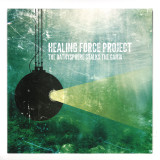
Healing Force Project continues its sonic journey towards territories of dub/reggae derivation. In this case, creating for Analog Versions, two tracks with a dark flavor, introspective but never banal. In the piece "The Bathysphere Stalks The Ganja", which gives the title to the 10inch record, there is a well-defined rhythmic gait, obviously with a markedly dub timbre and a structure that almost transforms into a jungle mantra, almost giving the listener a feeling of sensory loss. Continuing on this type of production and composition, "Jah Connection" develops on a slow groove in the first bars of the track, and then opens up to contexts close enough to the breakbeat and with a voice that repeatedly punctuates the riddim that is created step by step. Bottom line: whoever listens to this project just has to let themselves be carried away by these timeless sounds.
Bourassa is back and serving us a scorching new summer hit. This time, label boss Smolny doesn't hold back, unleashing a powerful holiday anthem titled "Need Love." If you're truly in dire need of some love, this track is definitely for you!
It starts off slowly and nostalgically, seasoned with a distinct amen break. The growing tension sends shivers down your spine, while a beautiful trance chord intertwines with a long pad in the background. Adding to the flavor is a twisted female vocal that seductively flirts with your senses. It all culminates in a euphoric experience, gradually building up to release the accumulated energy. Finally, everything explodes as a strong and expressive bass line hits you like a ton of bricks.
The following track "Running" takes a more tranquil approach, transporting us to a dreamy realm. Broken drums keep propelling us forward, never allowing us to pause. The melodic chord gracefully emerges, creating a chill atmosphere and setting the mood. After the breakdown, grooving bongos complete the picture.
The B-side features two fantastic remixes of the title track, "Need Love." The first one is a fierce breakbeat roller from Denham Audio. With its powerful bass and mesmerizing droplets cascading in the background, it creates a distinct hypnotic atmosphere. The change in bassline to the typical speed garage sound delivers an even more potent punch at the end.
The second remix is crafted by SLG, who flawlessly captures the sound of the '97s, creating a track in the progressive trance style from that era. A brilliantly composed bass line constantly propels the track forward, building tension alongside the melodic line. A real dance floor killer!
Dark Entries has a surprise delivery! Malebox brings us six previously unreleased funk-fueled jams from the archives of the cybernetic disco titan himself, Patrick Cowley. Best known for his chart-topping disco anthems, Cowley left us with an incredible body of work before his tragic death in 1982 due to AIDS-related illness. Since 2009, Dark Entries has been working with Cowley’s friends and family to uncover the singular artist’s lesser-known sides, including his soundtracks for gay pornographic films on compilation albums School Daze, Muscle Up, and Afternooners.
But Malebox gives us more of the Cowley we know and love: churning disco-funk and hi-NRG tracks that are spacey and sleazy, gritty and sublime. Recorded from 1979-1981, these six tracks illuminate what was one of Patrick’s most creatively exciting periods. “If You Feel It” and “Love Me Hot” were both early Paul Parker demos; the former is a peak hour hi-NRG bomb, while the latter dips into Cowley’s zoned-out space disco sound. Jeanie Tracy’s soulful vocals feature on the demo version of “Low Down Dirty Rhythm”, which was later re-recorded by Sarah Dash. The slower, less-varnished rendition here hits with a wild psychedelic edge. Meanwhile, Patrick’s gifts for careful orchestration and infectious melodies shine on “Floating” and “Love and Passion”, which were likely demo tracks for Loverde. The songs on Malebox display the vitality and inventiveness of a brilliant composer taken from us too soon.
Malebox sleeve design was by Gwenaël Rattke, and features a hyper-color retro collage. Also included is an air mail envelope containing a letter from Patrick Cowley to French disco producer Pierre Jaubert as well as liner notes and hand-written lyrics. Malebox will be released on November 12th , which is the 40th anniversary of Patrick’s passing.
Chet Baker's Live In Rosenheim is the live recording at the 5th Rosenheimer Jazz Liv(f)e Tage on April 17th, 1988. It is his last recording as a quartet featuring Nicola Stilo on flute, Marc Abrams on bass, and Luca Flores on piano. Chet can be heard on trumpet, vocal and piano with a choice of tunes including Hank Mobley's "Funk In Deep Freeze”, Duke Ellington's "In A Sentimental Mood", Arthur Jobim's "Portrait In Black And White" and more tracks.
Live In Rosenheim is available as a 35th anniversary edition of 1500 individually numbered copies on white coloured vinyl and includes liner notes on the back sleeve.
Mercury Prize-nominated Portico Quartet has always been an impossible band to pin down. Sending out echoes of jazz, electronica, ambient music and minimalism, the group created their own singular, cinematic sound over the course of three studio albums, from their 2007 breakthrough 'Knee-Deep in the North Sea', and 2010 John Leckie produced 'Isla', to the self titled record 'Portico Quartet' in 2012. Now rebooted as Portico Quartet after a brief spell as the three-piece Portico, the group are set to release their fourth studio album Art In The Age Of Automation this August on Manchester's forward thinking indy jazz and electronica label Gondwana Records. It's an eagerly anticipated return, with the band teasing both a return to their mesmeric signature sound and fresh new sonic departures in their new music. Featuring the singles Endless and A Luminous Beam.
Rare 1986 Funk/Soul From Alabama.
Originally released as a private pressed cassette tape only.
First Time On Vinyl.
Released in collaboration with the Numero Group.
180g BLACK vinyl limited to 500 copies w/obi strip. Non-Returnable.
Armed with little more than his Peavey T-60 guitar and a Jumbo Fuzz pedal, Errol Stubbs and his bar-band cohorts cranked out a self-released tape of funked-up disco soul in 1986. With no label or distribution to speak of, Errol would simply put on his best suit and sell the cassettes by hand. The tape languished into obscurity…until now!
The story of Errol Stubbs begins in Birmingham, Alabama in 1959. The youngest of five, he was surrounded by music as a child–his aunt taught piano at Daniel Payne College while his older brother, Avery Beavers, was an accomplished jazz trumpeter. Under the guidance of Avery, Errol started playing trumpet at the age of nine, though he gravitated toward songwriting and quickly picked up the guitar. Inspired by blues greats the likes of Albert King, Buddy Guy, and Little Milton, 12-year-old Errol began mimicking the sounds that filled southern airwaves. As a teenager, he played at barbecues, fish fries, and dive bars across the Magic City. After a brief stint at Jefferson State studying music, Errol’s passion for songwriting beckoned him away from the classroom.
Stubbs bounced around bar bands before settling on a live lineup and saving enough dough to take his vision to the recording studio. Over the course of two days, his well-rehearsed band recorded Turning it Out mostly live to tape at the Sound Of Birmingham Studio. Located on Birmingham’s east side, the state-of-the-art studio kept the lights on by recording commercial jingles but was more than happy to open their doors to local talent.
Taking notes from guitar god Ernie Isley and funk legend Rick James, the resulting recordings are drenched in cosmic phaser-fuzz guitar work, slapping bass lines, and sexual disco innuendos. Big brother Avery lends a hand on Clavinet for “Sweat,” while studio owner/engineer Don Mosley adds a tasteful dose of Moog synthesizer across a handful of cuts.
Soon after the Sound Of Birmingham sessions, Errol released the private pressed EP “Dancin’ Fancy,” b/w “Spaced Out On Your Love,” the latter of which was featured on Numero Group’s 2019 compilation Visible and Invisible Persons Distributed In Space.
The seven-song cassette Turning It Out was sold in local record stores and from night club stages, but only a few copies made their way out of Birmingham.