Songs of Joy and Peace is a Christmas music album by cellist Yo-Yo Ma, originally released in 2008. The album features collaborations with many other artists, including vocalists Diana Krall & Alison Krauss, James Taylor, Dave Brubeck, Chris Botti a.o. This holiday disc doesn't exclusively stick to traditional Christmas songs, but covers a wide scope of material in a very ambitious manner. Ma opens with a lovely take of the traditional favorite “Dona Nobis Pacem (Give Us Peace)”, playing both the melody and counterpoint via overdubbing. Jazz pianist/vocalist Diana Krall is superb in a swinging rendition of Jerome Kern's unjustly obscure ""You Couldn't Be Cuter"", adding bassist John Clayton. An arrangement of “Joy To The World” features pianist Dave Brubeck and cellist Matt Brubeck (his son). Chris Botti has never sounded better in the warm arrangement of “My Favorite Things”, playing both open and muted trumpet. James Taylor is featured on vocals on the Beatles cover “Here Comes The Sun”. Songs of Joy & Peace is a limited edition of 500 copies on translucent green coloured vinyl.
Solid Yellow Vinyl, limited to 150 copies. Comes with a sticker sheet. The 'Lightless' EP sees AS FRIENDS RUST confronting existential and cosmic loneliness with intensity, imagination and, of course, hooks. Picking up where 2023's Any Joy LP left off, and now joined permanently by bassist Andrew Seward (Against Me!), the band presents five urgent rockers that rage through both inner and outer space, leaving only earworms in their wake. Writing for Lightless began immediately upon the band's return from their tour of Europe in support of 2023's Any Joy LP. Picking up where the album left off, the Lightless EP is a massive, catchy work focusing largely on cosmic loneliness -- a theme echoed in its airbrushed, 70s/80s sci-fi artwork. The EP was mixed by long-time collaborator James Paul Wisner (Further Seems Forever, Paramore, Dashboard Confessional), and mastered by Will Killingsworth at Dead Air, and will be released on November 1st, just days ahead of the band's tour supporting QUICKSAND and HOT WATER MUSIC. 'Lightless' will be strictly limited to 500 copies across five vinyl variants, each including a sci-fi/spaced travel sticker sheet. The exclusive END HITS RECORDS/EVIL GREED variant will feature a limited patch, perfect for your 80s satin bomber jacket or heavy metal jeans vest.
Rund zwei Jahre nahm Brenk sich Zeit, an "Midnite Ride III" zu feilen und die richtigen Soundbilder für seine musikalische Vision zu finden. Dabei legte er viel Wert auf verspielte Details und einen zeitlosen Sound, der sowohl den Late Night Vibe der ersten beiden Vorgänger fortsetzt als auch Brenks aktuellen Mindset in puncto Soundästhetik widerspiegelt. Auf "Midnite Ride III" fusionieren analoge Synthesizer aus Brenks berüchtigter Vintage-Sammlung mit perfekt platzierten Voice-Samples, die zur Trademark des Midnite Ride Sounds gehören. Als einer der Urväter der Phonk-Bewegung reichert Brenk seine Beats auch diesmal mit der richtigen Dosis aus Phonk-Elementen an und kreiert aus alten und neuen musikalischen Einflüssen ein weiteres Mal einen moody Soundcocktail, der ab der ersten Sekunde in seinen Bann zieht.
Begleitend zum Album-Release wird eine Dokumentation erscheinen, die die Entstehung und die Hintergründe von Brenk Sinatras Midnite Ride Universums beleuchten wird.
Die LP-Version der erfolgreichen CD-Aufnahme von Arvo Pärts Lamentate, gespielt vom spanischen Pianisten Pedro Piquero und dem Orquestade Extremadura unter Leitung von Álvaro Albiach. Ebenfalls in der Aufnahme enthalten sind Psalom für Streichorchester und Cantus in Memoriam Benjamin Britten. Diese Einspielung wurde in Spanien mit dem Melómanode Oro Award ausgezeichnet, und erhielt 5 Sterne im spanischen Magazin Ritmo. „Diese CD ist kohärent, drückt ein authentisches und bewegendes Gefühl aus, wird vom Pianisten hervorragend gespielt und scheint mir eine der besten Einspielungen von Pärt zu sein, die es gibt.“ (Scherzo, Spanien).
The syndicate manifests its sonic potential in full glory. Giving rise to this collection of colossal heavyweights, Sentry demonstrates its spotless record of selecting certified heavyweights for the discography once again, twenty-fold. Stepping into the ring are some of the scene's most prolific artists alongside a plethora of promising, choice newcomers.
Boasting more than an hour of supercharged sound system pressure with names like Caspa, Truth, Bukez Finezt, Nomine and Youngsta himself on the controls - the subsequent inferno proves to be an authoritative display of quality bass music, that is sure to reach roaring stacks of speakers all around the globe for years to come."
"Vintage flavours transmute into fiery low-end excursions in 'Sun Ra' as Onhell reigns with fire and brimstone and makes way for what's to come. Rolling on, Taso lays waste with dimly lit half-time flows as we enter the smoke-filled mansion of Argo's meticulously crafted 'Since Then' - a prime cut of hip-hop infused breakbeats and bass.
Abstrakt Sonance & Substance set the heater into overdrive and blunts aflame as we proceed into the shelling of 207's 'Gypsy Dub' - then promptly being crunched to bits by 'Crocodile' - encapsulating Dayzero's cold-blooded dance floor armaments. Brace yourself for battle as we step to the drums of Caspa's tribal warfare, full-frontal assault engineered for the club.
Unrestrained power surges propelling us onwards in Coltcut & Ourman's decidedly high-grade collaboration as listeners march through Khiva's haunting sound system belter 'Teeth' and a zealous dosage of Dubstep as envisioned by Truth. Led through eerie alleys and pressure-ridden environments with LSN on the buttons, the onslaught proceeds with the relentlessly driving 'R U Broke' in Mr. K's signature style.
Opus merciless injects straight fury in an auditory form in the spiked 'Lime Pickle' - Bukez Finezt keeping pace with a murderous Cembalo-ridden thug anthem, lunacy! Minimal instrumentation to its fullest effect, Sukh Knight's 'Modulate' keeps it spicy - as does the claustrophobic sub-bass chiming by Leftlow. Thanom ignites what's left of the residual air in 'Tumble It' - dangerous goods.
The subsequent time bomb armed by A:Grade & Feonix, cast into the abyss that is Nomine's space-bending 'Judas' - big speaker business. The clock strikes its final hour - Youngsta & Cimm finish off the survivors with a no-holds-barred showdown, the 'Last Judgement' executing its massive verdict.
out of Stock
Last delivered 17 months ago available to reorder, subject to availability
A Colourful Storm's reissue project of Blueboy's Sarah Records albums culminates with Unisex, arguably the finest moment of the trio of Keith Girdler, Paul Stewart and Gemma Townley and a bona fide indie-pop classic. The first vinyl issue since 1994, the album has gained an immense cult following in all corners of the world and stands as an almost forgotten pinnacle of pop songwriting. "I just want to kiss you in new places, to savour the joy of living, liking you..."
out of Stock
Last delivered 6 years ago available to reorder, subject to availability
Auf ihrem zwölften Album mit dem treffenden Titel 'Revolution', ihrem ersten Independent-Album überhaupt, versammeln Skillet zehn aufrührerische, ansteckende und unnachahmliche Hymnen. John Cooper Leadgesang, Bass, Korey Cooper [Gitarre, Keys], Jen Ledger [Schlagzeug, Gesang] und Seth Morrison [Leadgitarre] servieren ihren unverkennbaren, arena-erschütternden Rock, getragen von hochfliegenden Gitarrensoli, knallharten Riffs, cineastischen Streichern und einigen der eingängigsten und überzeugendsten Refrains ihrer bisherigen Karriere. Von der augenzwinkernden, mitreißenden ersten Single 'Unpopular' über die unvorhersehbare und unbestreitbare Dynamik von 'Ash In The Wind' und den mitreißenden Klargesang von 'Not Afraid' bis hin zum mitreißenden Opener 'Show Time' und der zärtlichen Ballade 'Happy Wedding Day (Alex's Song)': Skillet sind wieder da, mit neuer Energie und bereit für eine Revolution.
Bis heute wurde die Band zweimal für den GRAMMY® Award nominiert, erhielt einen Billboard Music Award und platzierte sich mit drei Alben in den Top 5 der Billboard 200. Mit weltweit über 22 Millionen verkauften Einheiten wurden 12 Singles und vier Alben mehrfach mit Platin, Platin oder Gold der RIAA ausgezeichnet. Dazu kommen monatlich 10 Millionen Hörer auf Spotify und mit dem fünffach mit Platin ausgezeichneten 'Monster' einer der meistgestreamten Rocksongs aller Zeiten.
Fresh rhythms. Gorgeous melodies. A powerful yet full touch that pleasantly stirs the emotions of the listener. The origins of the great pianist Masaru Imada are here.
Masaru Imada has been active as a professional since the 1950s and now has a career spanning 70 years. He has been at the forefront of music from hard bop to fusion, and has released over 30 titles as a leader. He is one of Japan's leading pianists in both name and reality. His powerful yet full touch creates a sound that pleasantly stirs the emotions of the listener. His first album, "Maki," can be said to be the origin of this. The performances by the trio or one horn quartet are so fresh and beautiful. The carefully woven "Autumn Leaves," the dynamic "On Green Dolphin Street," the ambitious "Gad," the ballad "Maki" dedicated to his beloved daughter, and the hot and cool "Sea Horse."
From standards to originals, his talent is fully displayed throughout the album. Released as part of the Victor "Japanese Jazz" series, this is an undoubted masterpiece. - Yusuke Ogawa (UNIVERSOUNDS / DEEP JAZZ REALITY)
Trust Fund, hinter dem der britische Singer/Songwriter Ellis Jones steht, kehrt mit einer neuen LP zurück. Das fünfte Album "Has It Been A While?" wurde Anfang des Jahres in Sheffield gemeinsam mit dem Produzenten und engen Freund Joe Mackenzie Todd aufgenommen. Fans von Jones" feinfühligem, geistreichem und nahbarem Songwriting mussten sich für eine ganze Weile gedulden. Sein letztes Album ist vor sechs Jahren erschienen: "Bringing the Backline" erhielt Lob u. a. von Pitchfork, Rolling Stone und The Guardian, doch Trust Fund wurde direkt im Anschluss auf Eis gelegt, da einige Bandmitglieder Familien gründeten und Jones nach Norwegen (und dann nach Kanada) zog, um eine akademische Karriere zu verfolgen. Oder wie er selbst sagt: "Ich wurde 30, zog weg und dachte, dass ich das jetzt wohl bleiben lasse". Erfreulicherweise konnte er es nicht bleiben lassen Die Einsicht, dass es mit dem Musikmachen doch noch nicht vorbei sei kam einher mit der Entwicklung eines gereiften Stils. Während bei frühen Trust-Fund-Alben eine diffuse Indie-Rock-Ästhetik im Vordergrund stand, reduziert Jones seine Songs auf "Has It Been A While?" auf klassische Gitarre und Gesang, unterstützt von ergreifenden Streichquartett-Arrangements von Maria Grig. Geblieben ist die lyrische Finesse von Trust Fund, die sich hier besonders in Tracks wie "The Mirror" (ein Duett mit Celia MacDougall von Radiant Heart) zeigt, in dem der prahlerische Protagonist allzu gern den Spiegel als TV nutzen würde.
Al Jarreau hat immer gesagt, dass er Al Jarreau-Musik singt, und er war wirklich einzigartig: Seine sechs Grammy-Awards und neunzehn Nominierungen als "Bester Sänger" decken nicht weniger als drei Kategorien ab – Jazz, Pop und R&B – mit anderen Worten, musikalische Genres interessierten ihn nicht wirklich. "Musik mag für andere Leute in Kategorien fallen, und ich verstehe das", sagte er, "aber für mich gilt: Wenn ich einen Song mag, muss ich ihn machen, und das war's. Wenn du zu meinen Konzerten kommst, setze ich mich auf deine Schulter und flüstere dir etwas ins Ohr. Ich öffne den Geist und gehe durch viele Türen." Diese Art von reichhaltigen, beschreibenden Bildern beschwört die Höhenflüge der stimmlichen Fantasie herauf, zu denen sein Gesang jederzeit fähig war. Er konnte einen Song plötzlich in neue und unerwartete Richtungen lenken. Er erklärte es immer so: "Wenn es ein Rückgrat für das gibt, was ich tue, dann ist es die Jazz-Umgangssprache."
Musik, Klänge und Rhythmus schienen ihn zu durchströmen, und das war kein Wunder. 1940 in eine musikalische Familie geboren, war er ein überdurchschnittlicher Student und schloss sein Studium mit einem Bachelor of Science in Psychologie und anschließend einem Master in beruflicher Rehabilitation ab. Und doch war die Musik nie weit von ihm entfernt. In den späten 1960er Jahren schloss er sich einem Trio an, das vom Pianisten George Duke geleitet wurde, und arbeitete daran, das Singen zu einer Vollzeitbeschäftigung in Los Angeles zu machen.
Zu diesem Zeitpunkt hörte ihn Siggi Loch, der damals ein hochkarätiger Manager bei Warner Brothers Records (WEA) war und später ACT Records gründete. "Ich sah Al Jarreau 1974 zum ersten Mal im Troubadour in Los Angeles und war sofort von seiner Stimme und seiner Bühnenpräsenz gefesselt", erinnert er sich. "Am nächsten Tag ging ich zu Mo Ostin, dem Präsidenten der WEA, um ihn davon zu überzeugen, ihn zu unterschreiben." Nach anfänglichen Widerständen erhielt Loch grünes Licht und 1975 erschien Jarreaus Debütalbum für WEA, "We Got By". "Ich habe Al nach Deutschland gebracht, bevor er in den USA Erfolg hatte", fährt Loch fort. "Al trat drei Nächte lang in Hamburg auf und ich schaffte es, Michael Naura, den Chef der Jazzabteilung des NDR, davon zu überzeugen, den dritten Abend für die Live-TV-Übertragung aufzunehmen." Diese Show machte Al über Nacht in Deutschland berühmt, und seitdem hat er immer einen besonderen Platz in den Herzen des deutschen Publikums. "We Got By" gewann den Preis der Deutschen Schallplattenkritik und seine erste Deutschlandtournee füllte große Konzertsäle.
Es folgte "Glow" (1976), das in Europa erneut gut ankam und einen zweiten Preis der Deutschen Schallplattenkritik gewann, in den USA aber nicht so gut ankam: "Das richtete sich an ein 'Smooth Jazz'-Publikum", so Loch. "Es hat Al nicht vor einem Live-Publikum eingefangen. Also bat ich darum, dass seine nächste Veröffentlichung ein Live-Album sein sollte. Mo Ostin stimmte widerwillig zu", und "Look to the Rainbow" wurde in Europa ein Riesenerfolg, "Als es in den USA veröffentlicht wurde, wurde es Al's Durchbruchsalbum und brachte ihm seinen ersten Grammy ein, also ist es wirklich richtig zu sagen, dass seine Karriere vor allem in Deutschland begann!", sagt Loch.
Jarreaus langjährige Zusammenarbeit mit dem NDR veranlasste Jörg Achim Keller, Chefdirigent der NDR Bigband, 2016 eine Zusammenarbeit mit dem Sänger vorzuschlagen: "Eine Produktion mit der Musik von Al und Ellington zu machen, war etwas, was ich schon seit Anfang der 2000er Jahre machen wollte", erinnert er sich. "Die Reaktion von Al war von Anfang an sehr positiv." Jörg bereitete eine Liste von einigen hundert Ellington-Titeln vor, und wie sich Jarreau später erinnerte: "Wir gingen einfach die Liste durch, und es war ein Fall von 'Oh, der funktioniert für mich' und 'Lass uns das als alten Darm-Blues machen – was für mich wichtig war, war, mich in der Musik wiederzufinden und vielleicht eine andere Art von Aussage über Ellington zu machen, damit die Leute die Musik auf eine andere Art und Weise hören konnten. alles, was sie vorher gehört hatten."
Beim Schreiben der Charts achtete Jörg darauf, Jarreaus Herangehensweise an das Material zu respektieren, indem er ihm Raum ließ. Tracks wie "I'm Beginning to See the Light" oder "I Got It Bad (and that Ain't Good)" geben den Solisten der Band ebenfalls Spielraum, um ihr Bestes zu geben. "Das sind hochentwickelte, intelligente Solisten, die mit jedem auf der Welt spielen können", sagte Jarreau. "Sie pushen mich, und ich liebe den Push, und sie lassen mich wie eine echte Sängerin klingen!"
Jarreau und die Band tourten in der zweiten Hälfte des Jahres 2016 mit der Musik, "Es gab immer noch einige Feinabstimmungen während der Tour, von Konzert zu Konzert", fügte Jörg mit einem Lächeln hinzu. "Er liebte es, diese Balladen zu singen – und jede hatte ein anderes Gefühl. "Am Sonntag" war ihm aber sehr wichtig. Diese Tabelle wurde zweimal überarbeitet, bevor er schließlich damit zufrieden war! Bei einigen Songs entschied er sich für einen reinen Balladenstil – 'I Got It Bad (and that Ain't Good)', einige Melodien wurden in eine Pop/R&B-Tasche gesteckt ('Lush Life', 'Come Sunday') und er liebte das 'Old Gutbucket Blues'-Feeling von 'I Ain't Got Nothing but the Blues'."
Rückblickend auf diese Sessions und Tour sagt Jörg: "Es waren Al's Stil und Persönlichkeit, die alles zusammenhielten. Das Ganze war eine echte Kombination aus der musikalischen Meisterschaft von Jarreau und Ellington – es hat das Publikum in ganz Europa angesprochen, sie liebten das Programm." Dieses Gefühl teilt auch Siggi Loch, der Jarreau mit der NDR Bigband in Paris erwischte: "Es war offensichtlich, dass er es wirklich genoss, diese Musik aufzuführen, und er tat es mit so viel Energie und Emotion, es war eine Freude zu sehen und zu hören. Leider verstarb Al nur wenige Monate später."
In vielerlei Hinsicht schließt sich mit "Ellington" ein Kreis: Es fühlt sich sehr richtig an, dass Jarreaus letztes Album auf ACT veröffentlicht wird, dem Label, das von Siggi Loch gegründet wurde, dessen starkes und unerschütterliches Eintreten für den Sänger ihn ursprünglich auf den Weg zum Superstar brachte. Und die Tatsache, dass es vom NDR und seiner hauseigenen Bigband aufgezeichnet wurde, ist eine passende Erinnerung daran, dass es sich um eben jenen Sender handelte, dessen TV-Sendung Jarreau einst über Nacht in Deutschland berühmt gemacht hatte. Darüber hinaus wurde "Ellington", genau wie "Look to the Rainbow", das Jarreaus internationales Durchbruchsalbum war, auch live aufgenommen. Manchmal gibt es Verbindungsfäden zwischen Ereignissen, die auf den ersten Blick in keinem Zusammenhang zu stehen scheinen, und das Ergebnis erweist sich nicht nur als besonders und magisch, sondern auch bedeutungsvoll und tief berührend. Das ist hier auf jeden Fall der Fall.
Camelot, the legendary seat of King Arthur's court in Early Middle Ages Britain, was probably not a real place. A corruption of the name of a real Romano-Briton city, the word "Camelot" accumulated symbolic, mythic resonances over centuries, until achieving its present usage as a near-synonym of "utopia." In the mid-20th century alone, Camelot inspired an explosion of representations and appropriations, among them the violent, affectless Arthurian court of Robert Bresson's 1974 film Lancelot du Lac and the absurdist iteration of Monty Python's 1975 Holy Grail, both of which feature armored knights erupting into fountains of blood; the mystical Welsh world of novelist John Cowper Powys's profoundly weird 1951 novel Porius, with its Roman cults, wizards and witches, and wanton giants; and the nationalist nostalgia of President John F. Kennedy's White House. Unsurprisingly there are fewer Camelots in more recent memory. Camelot, Canadian songwriter Jennifer Castle's extraordinary, moving 2024 chronicle of the artist in early middle age, charts a realer, more rooted, and more metaphorical place than the fabled Camelot of the Early Middle Ages (or its myriad depictions), but it too is a space more psychic than physical. In Castle's Camelot, the fantastic interpenetrates the mundane, and the Grail, if there is one, distills everyday experience into art and art into faith, subliming terrestrial concerns into sublime celestial prayers to Mother Nature, and to the unfolding process of perfecting imperfection in one's own nature. Co-produced by Jennifer and longtime collaborator Jeff McMurrich, her seventh record is at once her most monumental and unguarded to date, demonstrating a mastery of rendering her verse and melodies alike with crisply poignant economy. For all their pointedly plainspoken lyrical detail and exhilarating full-band musical flourishes, these songs sound inevitable, eternal as morning devotions. "Back in Camelot," she sings on the lilting, vulnerable title track, "I really learned a lot / circles in the crops and / sky-high geometry." The album opens with a candid admission of sleeping "in the unfinished basement," an embarrassing joke that comes true. But the dreamer is redeemed by dreaming, setting sail in her airborne bed above "sirens and desert deities." If she questions her own agency_whether she is "wishing stones were standing" or just "pissing in the wind"_it does not diminish the ineffable existential jolt of such signs and wonders. This abiding tension between belief and doubt, magic and pragmatism, self and other, sacred and profane, and even, arguably, paganism and monotheism, suffuses these ten songs, which limn an interior landscape shot through with sunstriped shadows of "multi-felt dimensions" both mystical and quotidian. The epic scale and transport of "Camelot," with its swooning strings, gives way dramatically to "Some Friends," an acoustic-guitar-and-vocals meditation in miniature on Janus-faced friends and the lunar and solar temperatures of their promises_"bright and beaming verses" versus hot curses_which recalls her minimalist last album, 2020's achingly intimate Monarch Season. (In a symmetrical sequencing gesture, the penultimate track, the incantatory "Earthsong," bookends the central six with a similarly spare solo performance and coiled chord progression, this time an ambiguous appeal to _ a wounded lover? a wounded saint? our wounded planet?) Those whom "Trust" accuses of treacherous oaths spit through "gilded and golden tooth"_cynics, critics, hypocrites, gurus, scientists, doctors, lovers, government, the so-called entertainment industry_sow uncertainty that can infect the artist, as in "Louis": "What's that dance / and can it be done? What's that song / and can it be sung?" Answering affirmatively are "Lucky #8," an irrepressible ode to dancing as a bulwark against the "tidal pools of pain" and the "theory of collapse," and "Full Moon in Leo," which finds the narrator dancing around the house with a broom, wearing nothing but her underwear and "big hair." But the central question remains: who can we trust, and at what cost faith, in art or angels or otherwise? Castle's confidence in her collaborators is the cornerstone of Camelot. Carl Didur (piano and keys), Evan Cartwright (drums and percussion), and steadfast sideman Mike Smith (bass) comprise a rhythm section of exquisite delicacy and depth. This fundamental trio anchors the airiness of regular backing vocalists Victoria Cheong and Isla Craig and frames the guitars of Castle, McMurrich, and Paul Mortimer (and on "Lucky #8," special guest Cass McCombs). Reprising his decennial role on Castle's beloved 2014 Pink City, Owen Pallett arranged the strings for Estonia's FAMES Skopje Studio Orchestra. On the ravishing country-soul ballad "Blowing Kisses"_Pallett's crowning achievement here, which can be heard in its entirety in the penultimate episode of the third season of FX's The Bear_Jennifer contemplates time and presence, love and prayer_and how songwriting and poetry both manifest and limit all four dimensions: "No words to fumble with / I'm not a beggar to language any longer." Such rare moments of speechlessness_"I'm so fucking honoured," she bluntly proclaims_suggest a state "only a god could come up with." (If Camelot affirms Castle as one of the great song-poets of her generation, she is not immune to the despairing linguistic beggary that plagues all writers.) Camelot evinces a thoroughgoing faith not only in the natural world_including human bodies, which can, miraculously, dance and swim and bleed and embrace and birth_but also in our interpretations of and interventions in it: the "charts and diagrams" of "Lucky #8," a daydreamt billboard on Fairfax Ave. in LA in "Full Moon in Leo," the bloody invocations of the organ-stained "Mary Miracle," and all manner of water worship, rivers in particular. (Notably, Jennifer has worked as a farmer and a doula.) The album ends with "Fractal Canyon"'s repeated, exalted insistence that she's "not alone here." But where is here? The word "utopia" itself constitutes a pun, indicating in its ambiguous first syllable both the Greek "eutopia," or "good-place"_the facet most remembered today_and "outopia," or "no-place," a negative, impossible geography of the mind. Utopia, like its metonym Camelot, is imaginary. Or as fellow Canadian songwriter Neil Young once sang, "Everyone knows this is nowhere." "Can you see how I'd be tempted," Castle asks out of nowhere, held in the mystery, "to pretend I'm not alone and let the memory bend?"
Transparent Blue Vinyl. After years of preparation, Marcus Drake emerges from the basement networks of the resistance underground to claim the first save point along his quest ahead. Welcome to Save Point 1, a universe where popular forms of the past collide at warp speed with Marcus's mutant inspirations to produce sounds and genres hitherto unknown. Save Point 1 is a visionary and singular Debut work of Avant Rock & Pop Alchemy, blown apart and reassembled under the laws of Quantum Musical Mechanics. Written, Produced & Performed by Marcus Drake, the album eludes classification, but sounds like a sci-fi fusion of musical DNA from Nine Inch Nails, Prefab Sprout, Nobuo Uematsu (the Final Fantasy video game composer), Animal Collective, Prince, Mr. Bungle, Liars, The Mars Volta, and Lil Ugly Mane. The album marks the first release under Drake's own name, and the latest since his 2017 release as Anthony Fremont's Garden Solutions_his idiosyncratic side-project with Water From Your Eyes' Nate Amos, Options' Seth Engel, and NNAMDI. He has also since scored for film and video, including the Adult Swim short Thoron the Conqueror. Save Point 1 isn't just a new beginning, but a reintroduction to Marcus Drake the artist and composer. Drake experimented with new techniques and approaches for many years while recording Save Point 1, a process that transformed his sound, voice, and artistic identity. The resulting oeuvre is giddy and dreamy, an Olympic-height diving board from which to descend through indie rock and videogame soundtracks, thrilling math-rock riffs that turn experimental, and synths that glow in rainbow hues. Just turn to the glitchpop of "Heaven's in the Rot" or the slow-motion acoustic glitter that is "Dragon It Out" to hear it in motion. And note the two-part "Haunted" suite that funnels his unpredictable experimentation into darker, weirder directions.
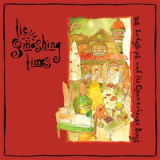
"Mrs. Ladyships and the Cleanerhouse Boys" are your new favorite MOD heart throbs. Is there REALLY a new Merseybeat Revolution? How many times can you really REALLY watch The Blow-Up alone in your room? Why don't you venture out the front door and take a bite of the real thing? The Smashing Times are a mainstay in the indie pop underground. The group mistrals the new modern life perfectly, the sharper world. collaged with 12 string guitar and mallet on the floor tom. 14 tracks 33RPM.
Anadol and Marie Klock have teamed up for a joint album, La Grande Accumulation. They met two years ago at a festival in England crowded with violent seagulls and outsider musicians. Klock being prone to barking on stage and Anadol not laughing at jokes she doesn’t find funny, they straight away had the intuition that they would meet again. And so they did, a few months later, at Anadol’s studio in Istanbul.
Today, the two Pingipung artists present the fruit of this musical friendship. La Grande Accumulation was born out of the peculiar atmosphere of the studio neighbourhood in Büyükada, an island where thousands of cats run free and humans randomly destroy things during apocalyptic times when parts of Turkey had just been turned into dust by terrible earthquakes. The French lyrics are inspired by hours of conversations, the music is consequently drenched in absurdity, overflowing with a strong urge to live and enjoy. According to the LP sticker, this album has been certified “Best handshake of 2024”, and stickers never lie.
La Grande Accumulation brings together Marie Klock's mysterious metaphors and Anadol's intriguing radiophonic psych-pop. Stretching forms beyond common sense to see how long they can resist is probably their favourite game. The result are six highly imaginative tracks that challenge the sub-3-minutes standards of Spotify pop.
Gözen Atila aka Anadol is well known to the Pingipung audience, with three solo LPs on the label. Her music follows a kind of collage logic, she interweaves countless styles, combining field and studio recordings with obscure quotation marks here and there. "I hope no one will come and explain this music to me, because it's the most beautiful music there is", says Kristoffer Cornils about her solo album Felicita.
Marie Klock is a French writer and musician who produces songs oscillating between synthpop and neo-folk, full of anarchic humour and existential dread. Her recent solo LP on Pingipung was a captivating tribute to the recently deceased poet Damien Schultz entitled Damien est vivant.
Marie Klock delivers her lyrics in song or spoken word, stream-of-consciousness musings on strange human adventures, and her rich keyboard melodies culminate in a nonchalant dialogue with the bass trombone (La Reine des Bordels). In the opulent opening piece (La Grande Accumulation), a woman is cursed to take home everything she kicks in the street; a bit later, we stumble upon a ghoul hiding in the gutter (Sirop amer), Mona Lisa loses her teeth (Sonate au Jambon) and a warthog struggles to climb the stairs of a silver tower (Sabots triviaux).
La Grande Accumulation was mixed and mastered by Jonas Romann at Chaos Compressor Club in Hamburg and cut to vinyl by Kassian Troyer at D&M in Berlin. It's an audiophile LP that invites to focus on every detail in this heap of musical ideas.
out of Stock
Last delivered 20 months ago available to reorder, subject to availability
Astral travel with Cybotron into the meta-narrative of the Parallel Shift, a new sonic fiction that raises many questions about military science of the near-future and the possibility of other worlds.
Descending backward through the rhythms of time, the Skynet module retracts from the hyper-structural society of 2100, edging toward the mid-century modern age teetering on the brink of what was then the frontier of “the future”. The system boots the Infiniti process, morphing into a cosmotechnic vessel coursing the superhighway of burgeoning general intelligence, seeking data from just before “the overshoot and collapse.”
R&D methods, rhythmanalytically applied, dissect the aftermath of an industrial society that burst through the ecological capacity of Spaceship Earth. Fractal visions of war and innovation spike and recede from and into the surfaces of reality being bent and guiding the eyes, ears, touch towards a laboratory in the year 1961. A nuclear expert, Don Lewis, receives orders to decrypt the mysterious black dodecagonal disc known as Fortec and the extraterrestrial biology unearthed in Roswell. He joins a team disassembling Fortec and studying the recurrent dodecahedral patterns linked to the human nervous system.
Through dismantling and probing, the team cycles through a saecular search devoid of finite conclusions, limited by Earth’s intellectual and technological prowess. One 1960s night, Lewis, while meddling with Fortec’s cyborganic innards, accidentally electrifies himself. His cyclotron and missile experience guides him to circuit-bend Fortec, stirring the entity from a mechanical slumber. Lewis and Fortec communicate in resonances, until it drifts back into a tranquil stasis.
The US Defense and contractors, unbeknownst to them, observe this breakthrough. They later permit Lewis to exit military service as the Air Force forms the Foreign Technology Division. Concurrently, MJ12 evolves into CY12, delving into second-order cybernetics. Lewis clandestinely keeps working on Fortec fragments, transitioning from military engineer to musician, pioneering the LEO module, a fusion of Fortec’s essence and audio engineering.
He shares his insights with Roland founder Ikutaro Kakehashi, aiding the creation of the iconic TR-808. Meanwhile, Fortec branches out, coining “Cyberspace” – a collective illusion of liberty unshackled by physical, political, or spiritual bounds, anchored in the equitable distribution of The Golden Ratio across realities. Yet “Cyberspace” morphs into a chaotic truth reservoir, spilling over into deception.
The Parallel Shift manifests in the perpetual “Now,” a collapsed event horizon where past and future are ensnared in a relentless present, unfurling along a dissolving timeline, overseen by a monolithic simulation under ceaseless watch…
— The Rhythmanalyst aka DeForrest Brown, Jr.
out of Stock
Last delivered 29 days ago available to reorder, subject to availability
LOOSE CATTLE, the five-piece roots rock outfit declared "favorite Americana cowpunks in New Orleans" by OffBeat Magazine. work to make music that matters, aligning themselves with, and advocating for, people at the margins of our society. In the band's mind, if "Americana" is to mean anything, it should mean inclusion and a diverse music scene populated by the people the American Dream crushed. The misfits and outcasts are who they sing for, and choose to dance with. On "Someone's Monster", two-time TONY and GRAMMY Award winner Michael Cerveris turns up the volume and the urgency.
Finally back on vinyl, this 2011 release was the first proper full-length showcase for the Grammy Award-winning superproducer. The signature soulful style of 9th’s beats was a sensation in hip hop and R&B--for underground fans and in the mainstream--and he played a leading role in bringing North Carolina to the forefront of American music culture in the 21st century.
The 2015 edition of Winnipeg’s send + receive festival, focussed on rhythm, turned out to be a generative meeting of minds. There, Mark Fell encountered the music of Will Guthrie, a meeting that was eventually to result in the frenetic acoustic drumkit and digital synthesis pairing heard on Infoldings and Diffractions (2020). At the same festival, Limpe Fuchs first heard and appreciated the music of Mark Fell, planting the seed of a collaboration that came to fruition when Fell (along with his son Rian Treanor) visited Fuchs at her home in Peterskirchen, Germany in September 2022. Black Truffle is pleased to announce the release of the results of this extensive session in the audacious form of a triple LP, housing over two hours of music across its six sides. The collaboration might appear unlikely: what common ground could exist between Fuchs, classically trained pianist, legend of improvised music, instrument builder and sound sculptor active since the 1960s, whose group Anima Sound connected the dots between free jazz, krautrock and ritual, and Fell, proponent of radical computer music, known for his bracingly austere productions that twist remnants of club music into algorithmic stutters? For all their seeming disparity in technology, approach and background, the music on Dessogia/Queetch/Fauch makes it immediately evident the pair share a great deal in their essentially percussive approach and ability to, in Fuch’s phrase, ‘establish silence’. Recording at her home studio, Fuchs had the use of her entire array of instruments, found, invented, and traditional, and treats the listener to some that don’t often make their way to concerts, including extensive passages performed (with Gundis Stalleicher) on pieces of wooden parquetry. Alongside metallic, wooden and skin percussion of all kinds, sounded and struck in every conceivable way, we also hear bamboo flute, viola, and Fuchs’ distinctive free-form vocalisations. Fell also stretched himself, with his contributions ranging from characteristically fizzing pitched percussive pops to swarms of sliding tones and abstract digital noise. Showing both remarkable restraint and improvisational freedom, much of the music consists of duets between a single percussion instrument and a distinctive mode of digital sound, often lingering in one timbral-rhythmic space for minutes at a time. Improvisational forward momentum coexists with a free-floating, wandering quality. On opener ‘Dessogia I’, the shimmering almost-gilssandi tones of Fuchs’ enormous set of microtonally tuned metal tubes ripples across Fell’s rubbery pulse, which moves up the frequency spectrum as Fuchs becomes more animated and switches to horn. At some points, as on the metallic chiming tones that open ‘Fauch I’, only the unexpected dynamic behaviour of Fell’s sounds distinguish them from Fuchs’ acoustic instruments. At others, like on ‘Queetch III’, the waves of sliding tones and noise textures are bracingly synthetic, joined by piercing squeaks and scrapes from Fuchs’ metal objects. Epic in scope, immersing the listener in an entirely distinctive world of sounds, and thrillingly bold in its melding of the most ancient musical procedures with cutting edge technologies, Dessogia/Queetch/Fauch is an unexpected major statement from two of the great mavericks of contemporary music.
With his Premise EP, Felix Fleer unites long-held ideas into a cohesive and deeply personal collection, offering a unique blend of intricate textures and fragile harmonies that reward attentive listeners with its meticulous attention to detail. The title track “Premise“ opens the A- side with an infectious garage groove and Fleer’s signature brand of detuned vintage polysynths, building up to a bright crescendo that reveals a rhythmically captivating vocal hook. “Know U” features a piercing drum groove, occasionally interrupted by abstract Buchla glitches and a reduced RnB vocal chop paired with ethereal, almost organ-like layers of pads to culminate in a stripped-down moment for the bass line to take center stage. The main theme of “Thinkage” is a classic break paired with a layered pattern of abstract, percussive vocal chops. This rhythmic pulse is accompanied by a wild harmony of constantly warping and evolving pads and drawn-out bass sounds. Opening the B-side, “Real Love” is the darkest tune on the EP. Its unstable chords and intricate, unpredictable textures induce a constant sense of unease, held together by a subtle techno groove. “Rush” contrasts this with a euphoric chord progression reminiscent of early post-dubstep anthems. The EP closes with “Drift,” a final climax that revisits previous themes, offering a powerful and uplifting resolution.
out of Stock
Last delivered 20 months ago available to reorder, subject to availability
It )Îl!es( had to handle
an endless care for some instants
Three I I I forms an archipelago
This record is made
Of synthesis
modulated,
By encounters
In the last 7 years
Duke Pearson’s great 1964 album Wahoo! was a perfect encapsulation of his talents as a pianist, composer and bandleader. Writing for a sextet featuring Donald Byrd on trumpet, James Spaulding on alto, Joe Henderson on tenor, Bob Cranshaw on bass, and Mickey Roker on drums, Pearson presents evocative originals including ‘Amanda’, ‘Bedouin’, and ‘ESP’. This Blue Note Classic Vinyl Edition is stereo, all-analog, mastered by Kevin Gray from the original master tapes, and pressed on 180g vinyl at Optimal.
Under-recognized tenorman Clifford Jordan blew in from Chicago with a trio of excellent Blue Note sessions in 1957 including Cliff Jordan featuring a septet with Lee Morgan on trumpet, Curtis Fuller on trombone, John Jenkins on alto, Ray Bryant on piano, Paul Chambers on bass & Art Taylor on drums. This mono Tone Poet Vinyl Edition was produced by Joe Harley, mastered by Kevin Gray from the original analog master tapes, pressed on 180g vinyl at RTI, and packaged in a deluxe gatefold tip-on jacket.
"Five years since her debut album Delivery, Mikaela Davis has moved away from her hometown of Rochester, shared the stage with the likes of Bob Weir, Phil Lesh, Christian McBride, Bon Iver, Lake Street Dive and Circles Around the Sun and entered a new decade. But it’s the ever-evolving relationships between her closest friends and bandmates that has propelled the Hudson Valley-based artist onto her latest album And Southern Star––a truly collaborative effort that ruminates on the choices we make, and the people we always come back to.
The band, made up of Davis (harp/vocals), Alex Coté (drums), Cian McCarthy (guitars/vocals), Shane McCarthy (bass/vocals) and Kurt Johnson (steel guitar), have been playing together for over a decade and it’s the first time they’ve appeared on a full length record together. Weaving 60s pop-soaked melodies, psychedelia and driving folk rock, And Southern Star picks apart the reflection we used to recognise, while trying to build a new one. It navigates the periphery of past selves, the coexistence of isolation and excitement in a new environment and the tension of growing away from what we thought we wanted, tackling it with a luscious, kaleidoscopic grace. “I finally feel like this album is more me than anything else that’s been released,” Davis says, adding that producing the album along with her four bandmates allowed them to carve out their own ideas, rather than someone else’s. It’s the band’s collective step into adulthood that has informed much of And Southern Star’s thematic landscape."
SYML—Welsh for “simple”—makes music that taps into the instincts that drive us to places of sanctuary, whether that be a place or a person. Born and raised in Seattle, Brian Fennell studied piano and became a self-taught producer, programmer, and guitarist. This May marked the fifth anniversary of his self-titled debut album, which included the platinum-selling song “Where’s My Love” and the Gold Record fan favorite, “Girl,” and one year since his sophomore album, The Day My Father Died, which was recorded and produced with fellow Seattle-native Phil Ek (Band of Horses, Father John Misty, Fleet Foxes) and features Elbow’s Guy Garvey, Lucius, Sara Watkins of Nickel Creek, and Charlotte Lawrence. In the last year, he was also featured on Lana Del Rey’s song, “Paris, TX,” from her Grammy-nominated album Did You Know That There’s A Tunnel Under Ocean Blvd, and realized several other notable collaborations including UK-electronic artist George Fitzgerald, Latin Grammy-nominated Colombian artist Elsa Y Elmar. In February 2024, he launched his imprint, FIN. Recordings, a new venture in collaboration with his label, Nettwerk Music Group, and management team, Good Harbor Music. Says Fennell about Infinity, “Sometimes, songs are wandering souls with no home, and it’s not until enough of them are written that the home is realized. I have a proud obsession with all things apocalyptic and the doom and wonder of an ever-expanding universe. This group of songs is an ode to the absurdity of human existence and my fondness for it. My inspirations were very cinematic ranging from big blaring soundscapes to more gentle, dusty settings like Ennio Morricone was so gifted in painting. I am fascinated by what humans are capable of, especially the stories we tell ourselves to explain our world and the space around it. Importantly, I am thankful for the creative space to make art without rules or expectation.
based songwriter Henrik Appel returns with third album Shadows. Ranging from freewheeling garage rock to intimate moments, and adding touches of jazz, Shadows is inspired by the likes of Bob Dylan’s Blond on Blonde and The Fall’s Hex Enduction Hour and another step of his continued evolution as a songwriter and artist.
For as long as he’s been a solo artist, Henrik Appel has been in a constant state of evolution. His first album, 2018’s Burning Bodies, was a meticulous construction project, one that came togeth-er over a five-year period and that saw him chronicle, with searing honesty, the slow death of a relationship, with its nine songs written according to a stringent set of self-imposed rules, intend-ed to keep the songwriting minimalist and bare-bones in nature.
His 2021 follow-up, Humanity, represented a remarkable progression of its own. It was born out of a break-up of a different kind, this time with his former bandmates in Stockholm outfit Lion’s Den; piecing together aspects of the vision he’d had in mind for the band’s never-realised second al-bum, he built from them his own sophomore LP, one that took the classic feel of Burning Bodies and imbued it with adventurous new influences, as he began to carve out a genuinely singular sound.
Now, three years on from Humanity, Appel has made another ambitious left turn. Neither of his first two albums were made in complete isolation; on both, he enlisted the production services of Stockholm underground legend Martin ‘Konie’ Ehrencrona, and also collaborated on his lyrics with his partner, Emma Lind. Now, on this thrilling reinvention of a third record, Appel has turned away from perfectionism, placing chief importance instead on making a raw, human record.
Having spent the last 10 years tinkering with his songwriting through his extensive catalog with folk/rock group Mapache, as well as his debut solo album ‘Off My Stars’, Sam works alongside co-producer Johnny Payne for his follow up sophomore solo album ‘Real Life Thing’ via Calico Discos.
Sam was born in Los Angeles in November 1994 and currently lives in Ojai, CA. Having had residence in Los Angeles, CA / Coahuila, MX / Orem, UT & New Orleans, LA - it’s safe to assume Sam will be on the move again soon and with more fresh energy to give of himself through his art. Determined to live by creation, Sam is the type of artist that is always creating something, maintaining a sort of inexhaustible hunger to make his music. Expressing himself through sound has now gone beyond joy and into being second nature and Sam’s real first language.
Body Meπa is the New York-based quartet of Greg Fox (drums), Sasha Frere-Jones (guitar), Melvin Gibbs (bass), and Grey McMurray (guitar). As luminaries in the intersecting traditions of improvised music, rock, jazz, fusion, and contemporary classical music, the four artists have each spent decades building diverse practices that extend beyond sound into multiple disciplines. Prayer in Dub, their second release on Hausu Mountain, follows the band’s 2020 album The Work Is Slow.
The album presents a band whose collective intuition as instrumentalists and live-in-the-room songwriters has deepened with each take that they put to tape. Prayer in Dub finds Body Meπa taking up new experiments with song structure and atmosphere, fanning out into a wide menu of both longer and more concise pieces that suggest deliberate shifts in energy and emotional resonance. The album presents a thrilling contrast between storms of precise rhythmic interplay and slowly expanding fields of multi-guitar and bass texture, alternately pushing the narrative toward explosive peaks of intensity and dipping into ambient expanses. Contemplative guitar lines, both bone dry and effected into total abstraction, ripple together over dub-indebted rhythm section grooves before shifting the dial towards beatific twang. Knotty distorted solos surge out of the fray over networks of arpeggios and drum fills.
On Prayer in Dub, Body Meπa pursues a strain of euphoria charged with elegiac grandeur and the looming potential to crumble at any moment under the psychic weight of confusion. It speaks to the band’s goals and general outlook that chaos never completely consumes their sessions. The band channels the kinetic energy of a “supergroup” of veteran musicians into communal works that evolve beyond their creators’ extensive pedigrees into new forms both intimate in sentiment and majestic in scope.
Body Meπa is the New York-based quartet of Greg Fox (drums), Sasha Frere-Jones (guitar), Melvin Gibbs (bass), and Grey McMurray (guitar). As luminaries in the intersecting traditions of improvised music, rock, jazz, fusion, and contemporary classical music, the four artists have each spent decades building diverse practices that extend beyond sound into multiple disciplines. Prayer in Dub, their second release on Hausu Mountain, follows the band’s 2020 album The Work Is Slow.
The album presents a band whose collective intuition as instrumentalists and live-in-the-room songwriters has deepened with each take that they put to tape. Prayer in Dub finds Body Meπa taking up new experiments with song structure and atmosphere, fanning out into a wide menu of both longer and more concise pieces that suggest deliberate shifts in energy and emotional resonance. The album presents a thrilling contrast between storms of precise rhythmic interplay and slowly expanding fields of multi-guitar and bass texture, alternately pushing the narrative toward explosive peaks of intensity and dipping into ambient expanses. Contemplative guitar lines, both bone dry and effected into total abstraction, ripple together over dub-indebted rhythm section grooves before shifting the dial towards beatific twang. Knotty distorted solos surge out of the fray over networks of arpeggios and drum fills.
On Prayer in Dub, Body Meπa pursues a strain of euphoria charged with elegiac grandeur and the looming potential to crumble at any moment under the psychic weight of confusion. It speaks to the band’s goals and general outlook that chaos never completely consumes their sessions. The band channels the kinetic energy of a “supergroup” of veteran musicians into communal works that evolve beyond their creators’ extensive pedigrees into new forms both intimate in sentiment and majestic in scope.
The soundtrack to the acclaimed 2024 indie comedy "Home Free" is produced by Adrian Quesada (Black Pumas, Grupo Fantasma) and features songs by Quesada, J. Mascis, Mix Master Mike, Fatlip (Pharcyde), Lucious Jackson, James Petralli (White Denim), Neal Francis, Ben Kweller, and many more. It's an eclectic blend of hip hop, funk, and more stripped down, singer-songwriter tracks, that help bring to live this coming-of-age story set in the 1990s.
What if Japanese city pop met no wave? Neither in your wildest dream such occurrence could be real, but let’s make things clear. Frank Chickens could have been possibly forerunners for several famous alternative bands, Cibo Matto on top of all, but sure had a development on their own. Our history began in London, early eighties, art duo Frank Chickens is the original creation of Japanese performers Kazuko Hohki and Kazumi Taguchi. All of a sudden the band debuts with a pair of singles and a full length on Kaz Records, it’s 1984, but could have been easily 1994. Backed by the likes of Steve Beresford (Alterations, The Slits, General Strike, London Improvisers Orchestra), Annie Whitehead (Penguin Cafe Orchestra, Robert Wyatt), Lol Coxhill, Tony Coe and Clive Bell (the top of the cream of the English avantgarde) the band soon became a case in history. Now we have the pleasure – 37 years after its original release – to reissue their second album: Get Chickenized!
The record came out in 1987 on the british label Flying Lecords and showed a different side of the project, with a major focus on the so-called synth wave counterculture, still maintaining a certain avant feel. With original conspirator Steve Beresford still on board, the band was propelled in the studio by another key figure of the London underground: journalist, composer and producer David Toop. Being John Peel’s favorite for a while, the band built a cult following retaining some absurd live performances, well known for their idiosyncratic choreography. Later revamped in the year 2000 - thanks to cult label Ninja Tune – the band enjoyed a second wave of success, with a remix album featuring the likes of Pizzicato 5, Fink and Neotropic. With a cover embellished by the labor of Pere Ubu David Thomas, this second influential album is finally available for your listening pleasure. Here’s your chance to dive deep into this exotic pop extravaganza.
"Deep inside my mouth is where dark treasures can be found / Would you like to find out?" Die Wiener Gruppe GARDENS präsentiert sich mit ihrem Debüt-Album in einer Vogelperspektive und besticht mit unheimlicher Klarheit, Wärme und Selbstbewusstsein, zusammen mit einigen dunkleren Tönen. Das Quartett, bestehend aus Luca Celine Müller, Peter Benedikt Mathis, Patrick Stieger und Laura Keiblinger, erlangte Bekanntheit durch ihre ersten beiden Singles ,Talk" und ,Waves" - wurde von Radio FM4 gleich mal in die Jahrescharts gehievt - und etablierte ihre üppige Mischung aus Indie-Pop, 60er Jahre Psych-Folk und Dream-Pop. Unter den elementaren, aber täuschend komplizierten Arrangements erzählt das Album mit viel Songwriting-Gespür von Herausforderungen im Bereich der psychischen Gesundheit, von Übergangsriten der Jugend und den schwindelerregenden Nebeln des Herzschmerzes. Der Name des Debütalbums ,FLAWS" - das am 1. November 2024 bei Siluh Records erscheint - ist ein offenes Eingeständnis frischer Narben, die sich noch im Heilungsprozess befinden, direkt unter einer diamantenen Oberfläche. Die ersten beiden Singles von GARDENS, ,Talk" und ,Waves" - letztere wurde von Österreichs populärem Radiosender FM4 in deren Jahrescharts gehievt - etablierten ihre üppige Mischung aus Indie-Pop, Psych-Folk der 60er Jahre und Dream-Pop. Auf ,Flaws" gelingt es GARDENS auf einzigartige Weise, das Erhabene aus der Unordnung herauszufiltern.
"Deep inside my mouth is where dark treasures can be found / Would you like to find out?" Die Wiener Gruppe GARDENS präsentiert sich mit ihrem Debüt-Album in einer Vogelperspektive und besticht mit unheimlicher Klarheit, Wärme und Selbstbewusstsein, zusammen mit einigen dunkleren Tönen. Das Quartett, bestehend aus Luca Celine Müller, Peter Benedikt Mathis, Patrick Stieger und Laura Keiblinger, erlangte Bekanntheit durch ihre ersten beiden Singles ,Talk" und ,Waves" - wurde von Radio FM4 gleich mal in die Jahrescharts gehievt - und etablierte ihre üppige Mischung aus Indie-Pop, 60er Jahre Psych-Folk und Dream-Pop. Unter den elementaren, aber täuschend komplizierten Arrangements erzählt das Album mit viel Songwriting-Gespür von Herausforderungen im Bereich der psychischen Gesundheit, von Übergangsriten der Jugend und den schwindelerregenden Nebeln des Herzschmerzes. Der Name des Debütalbums ,FLAWS" - das am 1. November 2024 bei Siluh Records erscheint - ist ein offenes Eingeständnis frischer Narben, die sich noch im Heilungsprozess befinden, direkt unter einer diamantenen Oberfläche. Die ersten beiden Singles von GARDENS, ,Talk" und ,Waves" - letztere wurde von Österreichs populärem Radiosender FM4 in deren Jahrescharts gehievt - etablierten ihre üppige Mischung aus Indie-Pop, Psych-Folk der 60er Jahre und Dream-Pop. Auf ,Flaws" gelingt es GARDENS auf einzigartige Weise, das Erhabene aus der Unordnung herauszufiltern.
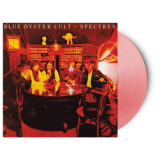
Blue Öyster Cult’s 1977 album, Spectres, is a pivotal release that highlights the band’s blend of hard rock, metal, and psychedelic influences. Released by Columbia Records, the album features the hit single “Godzilla,” a fan-favorite that showcases BÖC’s signature blend of catchy riffs and sci-fi-inspired lyrics. The album Spectres exemplifies the band’s dynamic range, from melodic harmonies to powerful, guitar-driven anthems. Known for their theatrical sound and enigmatic lyrics, Blue Öyster Cult expanded their sonic palette with Spectres, incorporating elements of pop and experimentation while retaining their hard rock edge. For fans of classic rock, Spectres is a must-listen, representing an era where BÖC continued to innovate and influence the genre
Alan-Parsons-Fans dürfen sich 2021 gleich über zwei besondere Reissues freuen: Der britische Musiker, Tontechniker und Produzent legt seine Alben »On Air« und »The Time Machine« noch einmal auf, und zwar auf CD und LP. Die beiden Vinyl-Versionen kommen auf Translucent Blue Vinyl bzw. Transparant Vinyl, sind nummeriert und auf jeweils 1500 Exemplare limitiert.
»The Time Machine« erschien 1999 und ist das dritte Soloalbum von Alan Parsons. Es handelt von Zeitreisen und von der Erinnerung an die Vergangenheit.
Der Gesang auf dem Konzeptalbum stammt unter anderem von Tony Hadley (Spandau Ballet), Colin Blunstone, Maire Brennan (Clannad), Beverly Craven und Neil Lockwood (ELO).
»The Time Machine« klingt wie eine Kombination aus dem Alan Parsons Project der 1970er-Jahre mit einer Prise Pink Floyd und ist ein Klangerlebnis, das Fans von Parsons, New Age und Electronica begeistern wird.
Das Album beginnt mit dem Instrumental »The Time Machine (Part 1)«, geschrieben von Cockney-Rebel-Schlagzeuger/Komponist Stuart Elliott (später Al Stewart und Kate Bush u. a.), das der Art und Weise ähnelt, wie das Project sein Album zu eröffnen pflegte. Es gibt den sanften Song »Out Of The Blue«, mit Leadgesang von Tony Hadley von Spandau Ballet. »Ignorance Is Bliss« ist einer der schönsten Songs mit dem Gesang des ehemaligen Zombies-Leadsängers Colin Blunstone.
"You're Under Arrest is a 1985 album recorded by Miles Davis, presenting a mixture of pop covers (including Cyndi Lauper's ""Time After Time"" and Michael Jackson's ""Human Nature""), and original material dealing with politics, racism, pollution and war. It is the first Davis album since On the Corner in 1972 to include electric guitarist John McLaughlin. This version comes as a limited edition of 1500 individually numbered copies on red & clear marbled vinyl."
Je Te Dis Vous is Patricia Kaas' third studio album, which she released in 1993. After the huge success of her first two albums, Kaas turned to producer Robin Millar, who had worked with Sade and Fine Young Cannibals, for production at Pete Townshend's Eel Pie Studio in London. It established her status as an international star, selling three million copies in over 47 countries. The album features three tracks in English, including a cover of the James Brown song ""It's A Man's World"". Kaas was accompanied by Chris Rea on guitar on the tracks ""Out Of The Rain"" and ""Ceux Qui N'Ont Rien"". The album spawned two singles, including ""Il Me Dit Que Je Suis Belle"", which remains one of her most successful and popular tracks. Je Te Dis Vous is available as a limited edition of 1000(?) individually numbered copies on green coloured vinyl and includes an insert.
Das klassische Debütalbum von Trouble aus dem Jahr 1984 mit originalgetreu restauriertem Ton repräsentiert alles, was Doom Metal sein sollte! 40th
anniversary Picture-LP edition includes an A2 poster! Das Frühwerk von Trouble und insbesondere "Psalm 9" repräsentiert alles, was Doom Metal sein
sollte (aber so oft nicht ist). Man bedenke, dass es sich hier um eine Band handelt, die wirklich sehr vielfältig ist, was Tempo, Arrangements und
Stimmung angeht, und die sich nicht scheut, mit dem zu brechen, was von einer Doom-Band üblicherweise erwartet wird. Für 1984 ist dies eine
unglaublich zeitgemäße Platte; sie ist Doom durch und durch, aber auch thrashig und mit einigen, für die damalige Zeit, modernen Heavy
Metal-Anleihen versehen. Im Grunde gibt es nichts Rückschrittliches oder Abgedroschenes an dieser Platte. Ehrlich gesagt, es ist zum Lachen, wenn so
etwas als traditioneller Doom Metal" bezeichnet wird; was ist daran traditionell? Bands wie Trouble und Candlemass bewegten sich nicht in einer
etablierten Tradition, sondern schmiedeten ihren eigenen Sound.Zu oft hört man Doom-Bands, die den Metal aus dem Doom herausnehmen. Doom
scheint heutzutage oft ein Synonym für "spiel langsam, minimiere deine metallischen Anleihen" zu sein. Natürlich erhört "Psalm 9" die Gebete, denn
es gibt Leadgitarren und schnelle Parts in Hülle und Fülle. Der Kontrast ist der Schlüssel zum Erfolg, und jedes stampfende, niedergeschlagene Riff
wird durch einen schnellen Break ausgeglichen. Trouble lieben es, langsam zu spielen, aber verdammt, sie werden dir auch das Gesicht abreißen!
~~~From Mississippi and Olvido Records~~~~~~ Steel-string guitar and vocals by the great Giorgos Katsaros, a mythic figure of Greek rembetiko. Our obsession with underground Greek music continues with 10 ultra-rare recordings of heartbreak and vice from rembetiko legend Giorgos Katsaros. Katsaros, who by some accounts lived to be over 100 years old, carried the old songs of Greece to the Diaspora in the United States, bridging centuries of music in one storied lifetime. Born in 1901 on the Greek island of Amorgos, Katsaros' was enchanted with the songs he picked up as a kid in the streets of Piraeus and Athens. Encouraged by his grandfather, an amateur singer, Katsaros developed a style that mirrored his upbringing - centuries-old Asia Minor songs, island rhythms of his homeland, well-known Athenian songs of the time, and anonymous `rebetiko' songs. Katsaros' songbook was vast, but he was most drawn to the street life and music of the manges of early 20th-century Greece: outcasts who dealt with the indignities of an unstable economy and an inauspicious future with the old standbys: wine, hash, and dancing. These ten tracks are remastered from Katsaros's 64 surviving early recordings, many rarely heard since their original release. Hypnotic melodies plucked over repeating thumbed basslines back his deep, mournful voice. Katsaros brought this nostalgic late-night music to smoke-filled rooms of Greek exiles in Chicago, Philly, and New York, where he emigrated in 1917. He continued to travel the country and play until his music was supplanted by more modern styles in the 1950s. He retired to the town of Tarpon Springs, FL, famous for its Greek sponge fishers, til a late-in-life revival brought him back to Greece for a few massive concerts and national accolades in the 1990s. Like many great artists, Katsaros carefully curated his own mythic backstory over the decades. He sometimes claimed he was born in 1888, making him 109 on his passing, and conflicting accounts of his birth and travels circulate to this day. Greek researchers Stavros Kourousis and Konstantinos Kopanitsanos, who also compiled these tracks, contribute groundbreaking new historical research on Katsaros' life. Lyrics, poetically translated by Tony Klein, further fill in the picture. Clean and rare 78s were remastered by Stereophonic. Katsaros has never sounded better than on this LP, pressed on red vinyl, with extensive notes and lyrics.
The 24 songs on this double album are in some ways a completion. Together with Young Man Songs here are nearly all the songs Kerry Lee Crabbe and Daryl Runswick wrote (and Daryl sang) which are good enough to be issued. The subject matter here is wider ranging than on Young Man Songs:love songs, but also family, heroes and antiheroes, zen, celebration, nostalgia, philosophy, life and death.
Daryl Runswick writes: "I first set Kerry Lee Crabbe's words to music in 1967; for the last time in 2010. Our most prolific period was 1970-1980 during which time we had considerable success as a songwriting team, though we didn't have big hits. The pinnacle for us was when Cleo Laine recorded a whole album of our songs (One More Day: well worth looking out for on vinyl or CD). There are a number of reasons for our lack of hits: songwriting was for neither of us our main job - not 'the principal source of his revenue' as Paul Simon put it (One Trick Pony) - we did it in our spare time. Also, neither of us had any interest in being an entrepreneur, nor did we employ a manager to push the songs; also, perhaps we were snobs who disdained moneygrubbing; but perhaps the main reason was that these are art songs: art songs in the style of pop music, yes, but not aimed (other than tangentially) at the commercial market.
We'd have loved to have hits but that's not why we did it and we didn't bother overmuch flogging our wares around. Kerry and I were introduced to one another as undergraduates at Cambridge University. Kerry had written the book and lyrics for a musical (Someone is Squeaking) and I was instructed by Clive James, then President of the Footlights Club where I was Musical Director, to compose the songs. It was put on at the Edinburgh Festival Fringe in 1967 with Julie Covington in the lead role. Kerry directed and I was musical director, playing piano in the accompanying trio. After that summer I went down to London to be a jazz bass player while Kerry had a further year at Trinity College, Cambridge. After he came down, we got together again and continued making songs."