LP + insert. A cosmically poetic duo playing Afro-Roots-Electro with a clear nod to spiritual jazz. Esinam Dogbatse (flute, synths, vocals, fx, percussion) | Sibusile Xaba (guitar, vocals, percussion).
ESINAM & Sibusile Xaba is a meeting of nomadic, wandering and kindred spirits in music. Both artists draw upon their ancestry: Belgian-Ghanaian(ESINAM) and Kwazulu Natal-South Africa (Sibusile Xaba) through a unique connection, a deep artistic and spiritual level, they use rhythms and grooves to translate stories to the audience. Their vocal chanting enhances trance to rhythmic patterns that grace us by melodies of the future and past.
On April 25th 2025, ESINAM & Sibsile Xaba will release their first joint album entitled 'Healing Voices'.
This album is a reflection of the kaleidoscopic multitude of musical inspirations running through the veins of two very talented solo artists. Both multi-instrumentalists, they provide many different layers to their music. Each track is a reflection of their cross-pollination. Musically inspired by Ghanaian Highlife and traditional songs from Zulu and Ewe culture, but with a distinct contemporary interpretation where their acoustic sound is enhanced by electronic gadgets.
As multi-instrumentalists, the two artists translate messages from their ancestors through rhythms and grooves. Their vocal chanting enhances trance to rhythmic patterns that grace us by melodies of the future and past.
Thanks to their Belgian-Ghanaian and South-African roots, they are unique in their being, strong in their union and connected on deep artistic and spiritual levels. The collaboration between ESINAM and Sibusile Xaba is bringing healing to body and soul.
In 2018 Esinam discovered Sibusile Xaba during his European (solo)tour. She was enchanted by his musical energy and craftsmanship and invited him as a vocal guest feature on the track 'Flowing River', from her debut album 'Shapes in Twilights of infinity'. When she was asked at the first edition of WOMAD Festival in South Africa if she wanted to collaborate with a 'local artist', she didn't have to think twice.
So in October 2022, Esinam and Sibusile seized this opportunity to dive into the rehearsal and recording studio, and discover and combine each other's musical universes to shape up new music together.
In May 2023 this collaboration continued with rehearsals, recordings and a first European tour with performances in Belgium, The Netherlands, France, Germany and Slovenia.
In March 2024 they released the first single 'Africa Wola' out of the fothcoming album. In November 2024, they released a remix of their first single by South-African DJ and producer DaCapo and played at Visa for Music in Morocco.
Suche:k soul
- Ishi
- Many
- Tonbo
- Horo Horo
- Mushi Dance
- Spells
- Nami
- Wakaranai
- Dottsu
- Kodama
- Tent
- Metallic Gold
- Omajinai
- Ghost
Taba voices a subtle yet surprising shift for the Japanese musician and producer Satomimagae. Observing and absorbing the fleeting scenes and sounds of life flowing outside of her home studio, Taba unfolds as a series of vignettes that document the personal and the universal. Satomi sings beyond herself in an orbit of souls and systems known and unknown, seen and unseen, in the present and in the strange flux of memory, leaving linear songwriting to rest for circuitous stories expanded and expansive in tone and texture. Following the logic of taba, a Japanese term for a bunch, bundle or grouping together of different things, the album is assembled as a loose collection of short stories. Shapeshifting into something like a poet-narrator, Satomi casts her writer's eye to the often perplexing shapes that form from quotidian events and exchanges defining our increasingly alienated age. Where Satomi's last full-length, 2021's Hanazono, bloomed from the lush soil of a private inner sphere, the bird's eye of Taba searches to place the artist_somewhere, somehow_within a wider, wilder world. Collaborations with other artists and musicians close to Satomi's universe further elevate the album's sweeping sonics. Synthesizer lines from Norio, who also helps define the album's visual identity through photo and video, enliven the tender ballad "Kodama." The bell-like Rhodes piano ringing in and around Satomi's guitar on "Dottsu" is played by Akhira Sano, who created the cover art for her 2021 Colloid EP. Yuya Shito's clarinet was the missing puzzle piece that completed "Spells," and it was also Yuya who mixed Taba with an ear for its organic textures and elegantly frayed edges, giving utterance to a distinctly different energy than Satomi's earlier expressions. The tonal and rhythmic play that lay the foundation of these songs also animates a colorful palette of melodic gestures, noisy resonances and pointed moments captured by Satomi's close-at-hand recorder. While Taba is still carried by the innate intimacy that has defined Satomi's music to date, these songs channel her newly spacious and inquisitive songwriting approach, unlocking unusual layers in the process. Some are subsumed in the speculative poetics of sound design, while others peer through the window of bedroom pop. Gathering imagistic reflections, tracing vast ideations and quietly lingering in humble moments, Taba connects vivid lines between the individual and the collective, the constructed and the cosmic, the articulated and the felt. Satomi's sonic tales gain an eloquent coherence by the simple fact of existing in conversation, humming a harmony of parts that buzzes with the tangled circuitry of a life in motion. Taba is the fifth album from Japanese musician, songwriter and dream traveler Satomimagae, following her 2021 album Hanazono and the 2023 reissue of her debut album Awa, both for RVNG Intl. On Taba, Satomimagae leaves linear songwriting to rest for circuitous stories expanded and expansive in tone and texture, unfolding as a series of vignettes that document both the personal and the universal. Some of the songs on Taba feature intimate moments captured on Satomi's hand recorder, poetic moments of sound design animated by tonal and rhythmic bedroom pop foundations. As with Hanazono, Taba's album artwork features a wooden block print by Satomi's sister, the artist Natsumi Magae.
- 1: Good Clothes Feat. Demae (Prod. Chris Keys)
- 2: Teen Summit
- 3: My Nigga Feat. $Ilkmoney, Quelle Chris & Big Kahuna Og (Prod. Shungu)
- 4: Lil One (Intro)
- 5: Lil One (Prod. Micall Parknsun)
- 6: Checkonme Feat. Lojii (Prod. August Fanon)
- 7: Nottooshabby Feat. Quelle Chris, Nickelus F & $Ilkmoney (Prod. Child Actor)
- 8: Lord Forgives, I Hold Grudges Feat. Denmark Vessey & Pink Siifu (Prod. Denmark Vessey)
- 9: The Times (Prod. Mono En Stereo)
- 10: Forever Dream (Interlude)
- 11: Forever Dream (Prod. Chris Keys)
- 12: Corner Pocket Feat. Quelle Chris & Bbymutha (Prod. Alchemist)
- 13: Dr Phil (Skit) Feat. Sycho Sid
- 14: Yougotme!! (Prod. Quelle Chris)
- 15: Foreverever Dream (Interlude)
- 16: Say Thank You Feat. Pink Siifu & Turich Benjy (Prod. Foisey)
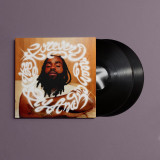
Fly Anakin is a rapper and producer who approaches his craft in a way few contemporaries can. Vigilant yet unorthodox, DIY-minded yet prolific, the Richmond, Virginia multihyphenate’s razor-sharp lyrics, ear for soulful production, and collaborative synergy are the result of over a decade of fundamental mastery. Described by Madlib as “one of the illest MCs,” the Mutant Academy cofounder was in his pocket well ahead of his acclaimed solo debut, Frank (2022). After years of consistent releases with his collective, Anakin broke major ground in 2020 with his and Pink Siifu’s joint project FlySiifu’s, followed by their $mokebreak EP in 2021. A student of the East Coast’s golden age, Anakin transmutes its spirit into music that’s both classicist and pioneering, having worked with the likes of Freddie Gibbs, redveil, BbyMutha, and MAVI. With the release of a Mutant Academy debut album completed, and his solo album (The) Forever Dream imminent, Anakin has cemented his place as a leader in rap’s underground Renaissance.(The) Forever Dream commemorates a new era of freedom for Anakin, who rarely approaches bodies of work without a preconceived concept. Executive produced by Quelle Chris, the project, which features the likes of Denmark Vessey, The Alchemist, BbyMutha, and Pink Siifu, includes songs that Anakin believes are some of his most experimental and ambitious. “The album is me and Quelle kicking it, smoking, learning each other, and playing video games,” he says of the project’s inspiration and recording process. “It was time to make some mindless music, to tackle production I would’ve otherwise picked up.” The long anticipated project comes after years of Anakin and Quelle developing a strong rapport, stemming back to 2019. “Quelle is one of the best collaborators ever—he’s not biased but he knows what he likes, open minded but stubborn at the right times,” Anakin says of his collaborative relationship with the Grammy nominated producer. “On the low we just alike but polar opposites, we can do no wrong together.”
- 1: Good Clothes Feat. Demae (Prod. Chris Keys)
- 2: Teen Summit
- 3: My Nigga Feat. $Ilkmoney, Quelle Chris & Big Kahuna Og (Prod. Shungu)
- 4: Lil One (Intro)
- 5: Lil One (Prod. Micall Parknsun)
- 6: Checkonme Feat. Lojii (Prod. August Fanon)
- 7: Nottooshabby Feat. Quelle Chris, Nickelus F & $Ilkmoney (Prod. Child Actor)
- 8: Lord Forgives, I Hold Grudges Feat. Denmark Vessey & Pink Siifu (Prod. Denmark Vessey)
- 9: The Times (Prod. Mono En Stereo)
- 10: Forever Dream (Interlude)
- 11: Forever Dream (Prod. Chris Keys)
- 12: Corner Pocket Feat. Quelle Chris & Bbymutha (Prod. Alchemist)
- 13: Dr Phil (Skit) Feat. Sycho Sid
- 14: Yougotme!! (Prod. Quelle Chris)
- 15: Foreverever Dream (Interlude)
- 16: Say Thank You Feat. Pink Siifu & Turich Benjy (Prod. Foisey)
Fly Anakin is a rapper and producer who approaches his craft in a way few contemporaries can. Vigilant yet unorthodox, DIY-minded yet prolific, the Richmond, Virginia multihyphenate’s razor-sharp lyrics, ear for soulful production, and collaborative synergy are the result of over a decade of fundamental mastery. Described by Madlib as “one of the illest MCs,” the Mutant Academy cofounder was in his pocket well ahead of his acclaimed solo debut, Frank (2022). After years of consistent releases with his collective, Anakin broke major ground in 2020 with his and Pink Siifu’s joint project FlySiifu’s, followed by their $mokebreak EP in 2021. A student of the East Coast’s golden age, Anakin transmutes its spirit into music that’s both classicist and pioneering, having worked with the likes of Freddie Gibbs, redveil, BbyMutha, and MAVI. With the release of a Mutant Academy debut album completed, and his solo album (The) Forever Dream imminent, Anakin has cemented his place as a leader in rap’s underground Renaissance.(The) Forever Dream commemorates a new era of freedom for Anakin, who rarely approaches bodies of work without a preconceived concept. Executive produced by Quelle Chris, the project, which features the likes of Denmark Vessey, The Alchemist, BbyMutha, and Pink Siifu, includes songs that Anakin believes are some of his most experimental and ambitious. “The album is me and Quelle kicking it, smoking, learning each other, and playing video games,” he says of the project’s inspiration and recording process. “It was time to make some mindless music, to tackle production I would’ve otherwise picked up.” The long anticipated project comes after years of Anakin and Quelle developing a strong rapport, stemming back to 2019. “Quelle is one of the best collaborators ever—he’s not biased but he knows what he likes, open minded but stubborn at the right times,” Anakin says of his collaborative relationship with the Grammy nominated producer. “On the low we just alike but polar opposites, we can do no wrong together.”
- 1: Good Clothes Feat. Demae (Prod. Chris Keys)
- 2: Teen Summit
- 3: My Nigga Feat. $Ilkmoney, Quelle Chris & Big Kahuna Og (Prod. Shungu)
- 4: Lil One (Intro)
- 5: Lil One (Prod. Micall Parknsun)
- 6: Checkonme Feat. Lojii (Prod. August Fanon)
- 7: Nottooshabby Feat. Quelle Chris, Nickelus F & $Ilkmoney (Prod. Child Actor)
- 8: Lord Forgives, I Hold Grudges Feat. Denmark Vessey & Pink Siifu (Prod. Denmark Vessey)
- 9: The Times (Prod. Mono En Stereo)
- 10: Forever Dream (Interlude)
- 11: Forever Dream (Prod. Chris Keys)
- 12: Corner Pocket Feat. Quelle Chris & Bbymutha (Prod. Alchemist)
- 13: Dr Phil (Skit) Feat. Sycho Sid
- 14: Yougotme!! (Prod. Quelle Chris)
- 15: Foreverever Dream (Interlude)
- 16: Say Thank You Feat. Pink Siifu & Turich Benjy (Prod. Foisey)
Fly Anakin is a rapper and producer who approaches his craft in a way few contemporaries can. Vigilant yet unorthodox, DIY-minded yet prolific, the Richmond, Virginia multihyphenate’s razor-sharp lyrics, ear for soulful production, and collaborative synergy are the result of over a decade of fundamental mastery. Described by Madlib as “one of the illest MCs,” the Mutant Academy cofounder was in his pocket well ahead of his acclaimed solo debut, Frank (2022). After years of consistent releases with his collective, Anakin broke major ground in 2020 with his and Pink Siifu’s joint project FlySiifu’s, followed by their $mokebreak EP in 2021. A student of the East Coast’s golden age, Anakin transmutes its spirit into music that’s both classicist and pioneering, having worked with the likes of Freddie Gibbs, redveil, BbyMutha, and MAVI. With the release of a Mutant Academy debut album completed, and his solo album (The) Forever Dream imminent, Anakin has cemented his place as a leader in rap’s underground Renaissance.(The) Forever Dream commemorates a new era of freedom for Anakin, who rarely approaches bodies of work without a preconceived concept. Executive produced by Quelle Chris, the project, which features the likes of Denmark Vessey, The Alchemist, BbyMutha, and Pink Siifu, includes songs that Anakin believes are some of his most experimental and ambitious. “The album is me and Quelle kicking it, smoking, learning each other, and playing video games,” he says of the project’s inspiration and recording process. “It was time to make some mindless music, to tackle production I would’ve otherwise picked up.” The long anticipated project comes after years of Anakin and Quelle developing a strong rapport, stemming back to 2019. “Quelle is one of the best collaborators ever—he’s not biased but he knows what he likes, open minded but stubborn at the right times,” Anakin says of his collaborative relationship with the Grammy nominated producer. “On the low we just alike but polar opposites, we can do no wrong together.”
In 2017, Grammy-nominated artist Joan Osborne released the critically acclaimed album,Songs of Bob Dylan. Her artistic and soulful reinterpretations of the selection of Dylan songs was an eye-opening moment in an already celebrated career. Eight years after milestone recording, Osborne will release the stunningDylanology Live . The captivating recording finds the gifted vocalist performing in front of a live audience, with special guests Amy Helm, Robert Randolph and Jackie Greene featured throughout. Songs include "Spanish Harlem Incident", "Buckets Of Rain" "Masters Of War", "Tonight I'll Be Staying Here With You" and "High Water (For Charley Patton)".
- Lost At Birth
- Rebirth
- Nighttrain
- Can't Truss It
- I Don't Wanna Be Called Yo Niga
- How To Kill A Radio Consultant
- By The Time I Get To Arizona
- Move! (Featuring Sister Souljah)
- 1: Million Bottlebags
- More News At 11
- Shut 'Em Down
- A Letter To The New York Post
- Get The Fuck Outta Dodge (Featuring True Mathematics)
- Bring Tha Noize (With Anthrax)
Apocalypse 91... The Enemy Strikes Black by Public Enemy, released 25 April 2025, includes the following tracks: "Nighttrain", "I Don't Wanna be Called Yo Niga", "By the Time I Get to Arizona" and more.
This version of Apocalypse 91... The Enemy Strikes Black comes as a 2xLP.
The vinyl is pressed as a translucent, green disc. Another vinyl is pressed as a translucent, green disc.
- Spin It To Win It
- Spot On A Planet
- Mrs Perfect
- Crazy Times
- The Hole
The Modbirds kombinieren souligen Ska und mitreißenden Punk. Obwohl sie erst 2023 gegründet wurden, bringen sie mit Mitgliedern von Los Placebos und The Porters einen reichen Schatz an Bühnenerfahrung mit. Ihr Live-Debüt bei "Ska im Westend" in Dortmund hat sofort gezeigt, dass sie gekommen sind, um zu bleiben. Jeden Frühling kehren die Zugvögel aus ihren Winterquartieren zurück! Also aufgepasst, denn auch die Modbirds sind im Anflug mit ihrer ersten Mini-LP "Spin it to win it". (Release Date 25.04.25) Mit ihrem musikalischen Mix aus Ska, Reggae und Punk feiert die Band in fünf Songs verteilt auf zwei Seiten ihre Liebe zum Vinyl, lässt vergangene Jugendlieben aufleben und schwelgt in den Erinnerungen an unbeschwerte Zeiten. Getrieben von druckvollen Bläsern, eingängigen Melodien und dem tanzbaren Offbeat werden aber auch gesellschaftliche Missstände oder das Thema mentale Gesundheit besungen. Also nicht den Arm am einarmigen Banditen ziehen, sondern den Tonarm auf den Plattenteller legen mit 45RPM im 12-Inch Format für den bestmöglichen Vinyl-Sound:, eben "Spin it to win it" - hier sind The Modbirds! Ska, Reaggae, Soulpunk, klassisch schwarzes oder farbige 12"-Vinyl erhältlich.
- A1: Theme From The Men (Instrumental)
- A2: Type Thang
- A3: Rolling Down A Mountainside
- A4: (If Loving You Is Wrong) I Don't Want To Be Right
- A5: Joy Pt 1
- B1: Joy Pt 2
- B2: Wonderful
- B3: Someone Made You For Me
- B4: Title Theme
- B5: Hung Up On My Baby (Instrumental)
- C1: Chocolate Chip
- C2: Chocolate Chip (Instrumental)
- C3: Come Live With Me
- C4: Body Language
- C5: Disco Connection
- D1: St. Thomas Square
- D2: Rock Me Easy Baby Pt 1
- D3: Rock Me Easy Baby Pt 2
- D4: Juicy Fruit (Disco Freak) Pt 1
- D5: Juicy Fruit (Disco Freak) Pt 2
The wonderfully favourable response to our first CD and double vinyl volume of the original A and B sides of the singles of the late great Isaac Hayes – as originally released on Stax’ Enterprise subsidiary between 1969 and 1972 – has forced us to bring forward, this month, the release of “Hot Buttered Singles 2” to cater for what Ace is sure will be just as great a level of popular demand.
This volume picks up where “Hot Buttered Singles Vol 1” left off with Hayes’ final 45 of 1972, and carries his seven inch story through to 1976 – by which time Stax was defunct, and Hayes’ was on his own Hot Buttered Soul label via ABC Records. It features eight US R&B chart hits including the much sampled ‘Hung Up On My Baby’ and ‘Chocolate Chip’, Hayes’ biggest hit of this period ‘Joy’ and the ever-popular 1976 instrumental ‘Disco Connection’, which finally gave Hayes’ his second UK Top 20 hit after ‘Shaft’.
All tracks match the original single edits, and wherever possible are taken from digital transfers of the original Enterprise singles masters. Where the original 45s came in two parts, they also do so here. And where original singles masters no longer exist, as was the case for two tracks, Ace’s engineers have re-created them beat for beat from the longer album versions. (Have fun guessing which two they were…)
- A1: In The Groove – The Cheques
- B1: Arabian Jerk – The Merits
CITY 101 is a double dancer’s delight. The Cheques infectious ‘In The Groove’ comes with instructions over a pulsating organ-lead track. That singing Louisianian organist, Tony Nardi, would go on to form Salt & Pepper in Thailand where he recorded the funky ‘Man Of My Word’. This very 60s-style mover has crossed over from the mod scene to northern soul dancefloors and beyond.
‘Arabian Jerk’ by the Merits was a Goldwax production out of Memphis. It is a mod meets exotica gem; perfect for the belly-dancer in your life. Both of these tracks were issued at the time but now fetch very high prices – if ever available.
After a strong first release on Fuse Imprint with 'The Wall', resident Phara returns to his home base for a mirage of introspective tracks. Furthering his research of emotive club music, 'Soft Glow, Fierce Light' seems more than appropriately named. Shimmering melodies, swinging rhythms, and a comforting ambiance, Phara proves that his constantly evolving musical persona and relationship with the Brussels club are built to last.
Beginning with 'Unfold', the Belgium-native sets the board with a warm introduction. Reminiscent of his recent endeavor as In Glass, a balance is struck between the slower tempo dub techno of his secondary alias and the higher club energy that he's been known to bring as Phara. Steady at first, filters open wide half way through the track to ensure maximum euphoria off or on the dance floor. 'Flow' follows in suit and here the producer keeps the level constant and tense with intricate melodic design. A steady groove with blossoming synth lines make 'Flow' a beauty to witness unravel. Warm chord stabs make for a nostalgic EP and shows once more that the seasoned producer frequently enjoys prioritizing emotion over drive. Flipping the vinyl to the other side, 'Wave to Wave' points a finger to all things dub, even a discrete appreciation of house music, through the harmony of his keys to the sound design of his square bass, and its common borders with techno. Juggling in snare rolls and rides throughout, Phara sets the tone with a soothing piece of work for lovers of the eyes-closed genre. To conclude, 'Solitude' brings a polished vintage effect to the project that 'Wave to Wave' introduced, this time with heightened intensity worthy of a set closer. Punchy stabs make this a particularly extraverted track, fitting into almost any record bag - Room 01 or Motion Room friendly. Thundering claps over an electric melody, these kinds of tracks aren't new to Phara. Pouring soul into his tracks, Phara proves once again to be a truly central artist in developing the Fuse sound and continuing his stylistic journey.
- Sisters Of The Moon
- Fire And Brimstone
When we last heard from Southern California's rock n' roll sorcerers Death Valley Girls, band orchestrator and mastermind Bonnie Bloomgarden was summoning the element of water and celebrating its tempestuous power on the triumphant 2023 single "I Am a Wave." Surrounded by a new cast of supporting musicians, Bloomgarden returns from a brief hiatus to pay homage to the magic of celestial bodies and to honor yet another classical element on a new two-song single. On side A, Death Valley Girls cover the Fleetwood Mac track "Sisters of the Moon," harnessing the original version's witchy mystery while bolstering its thunderous chorus by beefing up its ominous riffage. Bloomgarden's channeling of Stevie Nicks is downright eerie, pulling off such s striking timbral similarity you might almost mistake this rendition as a more electrified and tripped-out alternate take from the original Tusk sessions. On the flipside, Death Valley Girls pay reverence to the element of fire by taking on the Link Wray classic "Fire and Brimstone," summoning the original's swagger while transforming its tent-revival stomp into a mash-up of Phil Spector's girl-group majesty, Motown's hip-shaking soul, and punk's bombast. Surrounded by an ensemble of like-minded celestial witches, Bloomgarden takes Death Valley Girls' sound to new heights while elevating two beloved `70s tunes into modern day religious experiences.
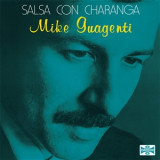
- Salsa Con Charanga
- Sonaremo El Tambo
- Delirio
- La Peluca
- La Puerta Del Dolor
- A Los Muchachos De Belén
- Ensaya Chamaco
- El Tibiri Tabara
"Salsa con charanga" is really a feast for all salsa music lovers, a true jewel, which deserved much better when it originally came out in 1978. In addition to being a great salsa album, has the distinction that was released on Orfeon, a Mexican record label, due to the diligent work of the extraordinary producer Bobby Marin, and which miraculously received air play when powerhouse Fania label and few others ruled radio in the salsa music world. It comprises eight great, solid tracks; some, new interpretations from other albums in which Mike Guagenti participated with his handsome and captivating voice - a crooner with a salsero soul -, that, at times, could remind us of the late Tito Rodríguez, and even Ray Ramos. "The Mike Guagenti album," as indicated by Marin, "is a compilation of recordings by other artists. Originally a salsa album, I brought in Cuban Pupi Legarreta (violin and flute) and [Panamanian] Mauricio Smith (flute) to give it a charanga sound." With the exception of the cut 'Salsa con charanga,' which is an instrumental, the rest feature vocals by Guagenti. "Salsa con charanga" has developed a cult following, and finding a copy of the original could be quite expensive. Luckily, this officially licensed and restored edition will fill that void.
Lisbon-based producer & DJ, Helder Russo is a standout figure in Portugal's electronic music scene. Helder's work has gained acclaim since his early releases on Groovement, Tomorrow Is Now, Kid! & most recently, Percebes.
His 2019 release 'Onfrico' & the 2021 anthem 'Cascalho' showcased his unique blend of Chicago House, Detroit Techno, London-inspired breaks & rich African influences. As a true ambassador for Portuguese dance music, his music is highly regarded.
Now, Helder presents his debut album 'Nha Joia' (Creole for 'My Jewel'), a heartfelt tribute to his beloved mother. This collection features the 80's cop show inspired 'Parsley park', the infectious 'Whippit', the emotional 'Nha Joia', the Outkast-reminiscent 'Muscanite', the futuristic techno soul of '11.22' & the gritty 'Badio' & 'Sampa'.
This album is brilliant, honest, & complete - Recommended for fans of Carl Craig, Underground Resistance, Larry heard, Kamasi Washington & Thundercat. Sleep now, cry later.
- Honey
- Come Down Softly To My Soul
- How Does It Feel?
- I Believe It
- Revolution
- Let Me Down Gently
- So Hot (Wash Away All Of My Tears)
- Suicide
- Lord Can You Hear Me?
Spacemen 3 began assembling their third album, 1988's Playing With Fire, at perhaps the freest, most confident point in their career. Recording began with the band road-tested and rugged, even amidst the functional volatility that famously motivated their course. The sessions' first offering came in the form of "Revolution," a single of heroic Stooges-devotion and the most commercially successful release the group had to date. High expectations for the album were soon exceeded, as Playing With Fire would become Spacemen 3's crowning studio achievement and cement their rightful place on the vanguard of otherworldly rock 'n' roll.
An exquisite mix of stuttering tremolo guitars and wistful melodies, Playing With Fire sheds any trappings of revisionism and furnishes a nuanced grade of psychedelia. Epic entries like "Suicide" (named after the notorious NYC band) and the mesmeric "How Does It Feel?" catch Spacemen 3 at their celestial apex, the very point where their collective writing, performance and production would crest and wondrously splinter.
Includes download card and new insert with liner notes by Marc Masters.
In addition to being members of Miles Davis' band, John Coltrane, Red Garland and Paul Chambers recorded several projects together without the trumpeter. Soultrane is a superb quartet album featuring the three musicians along with drummer Art Taylor (he and Chambers were both members of the Red Garland Trio). The LP was recorded in between the two Miles Davis Sextet sessions that produced the album Milestones. Among the highlights are a lengthy reading of Tadd Dameron's "Good Bait", and Trane's earliest and probably best version ever of Billy Eckstine's ballad "I Want to Talk About You", which would become a favorite inthe saxophonist's live repertoire.
180-gram VIRGIN VINYL LIMITED EDITION. The Complete Album | Bonus Track
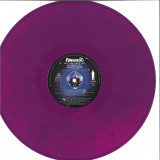
Purple Vinyl
House music, nightlife entertainment and DJ/Producer virtuoso Louie Vega has proven over and over again that he's a master chemist in the studio. His latest release is an uptempo and speaker-knocking remix of Funkadelic's 'Ain't That Funkin' Kind of Hard on You' (produced by George Clinton and & G Koop) from the album 'First Ya Gotta Shake the Gate'.
The original version is nothing short of a classic, but it's as if the song had never been invited to a Louie Vega post-midnight global extravaganza. Was the song not aware that spellbound dancing and high BPMs were the standard for House Music Normally, such a blaring disregard for nightlife decorum would relegate a song to the pits of sonic hell, but we're talking about George Clinton here!The original opens up with a G-funk groove that screams Westside and lowriders. The listener is then blessed with Clinton as he adds his sage, soulful and pimpadelic vocals, complemented by Funkadelic singers asking him about the pains of the funk. The semblance of a beat that could drive the dancefloor into the morning hours is there, but in no way has it blossomed into its full glory. Enter Louie Vega.
His remix immediately greets listeners with a decadent spread of instrumentation and chutzpah. The original song's DNA populates the first thirty seconds of the remix but then an explosion takes place and the song assumes a new identity. The transcendent experience is akin to taking the elevator to a rooftop party and once the doors open- boom! The remix begs you to dance, the G-funk groove is now in your face instead of being laidback and percussion takes a front seat to take you away. The song is alive, there's no other way to describe it.
Be sure to buy your vinyl at an outlet near you! the Louie Vega remix of Funkadelic's 'Ain't That Funkin' Kind of Hard on You' on Vega Records!
The Ibex Band, with Giovanni Rico and Selam Woldemariam at the creative helm, provided the musical backbone for legends like Aster Aweke, Girma Beyene, Tilahun Gessesse, Mulatu Astatke, and Mahmoud Ahmed, including the iconic album Ere Mela Mela, shaping modern Ethiopian music as we know it today. This 1976 album (Ge’ez Year 1968) played a pivotal role in that legacy and has now resurfaced to set the record straight.
There’s a tendency to talk about the seventies as a golden age of Ethiopian music. There are good reasons for that, and just as good reasons against it. However, the notion of a golden past privileges the role of Western explorers and suggests that the pinnacle of Ethiopia’s musical culture is something only a foreigner can appreciate and unearth. It downplays the complexities of Ethiopia’s culture and history, creating an artificial divide between then and now. And it underestimates the constantly evolving sound that has followed.
The legendary musical outfit The Ibex Band, later metamorphosed into The Roha Band, has played a central role in defining the sound of many of the greatest stars on the music scene of Ethiopia from the mid-seventies onwards–but their golden output has never really waned. The story of the origins of the band that provided the musical backbone for greats such as Aster Aweke, Girma Beyene, Tilahun Gessesse, backing the solo career of group member Mahmoud Ahmed as well as backing Mulatu Astatke and many others has yet to be properly told.
Two misconceptions plague the image of Ethiopian music, one is that the music is pure because it is, by some notion, unexploited, the other is that it is all traditional. To begin with, a combination of political changes between the late sixties and the mid-nineties created an environment where only the most dedicated and skilled musicians struggled on and pursued a musical career against fierce odds. The whole Ibex Band, with Giovanni Rico and Selam “Selamino” Seyoum Woldermarian at the creative helm, are arguably the origo of the vibrant scene in the mid-seventies, and the said pair are foremost responsible for not only navigating the band through troubled times, but also modernizing the 6/8 chickchicka rhythm to a contemporary form. Giovanni laid the rhythmic foundation with heavy looped basslines that reinvented traditional melodies as dance music, and with Selamino’s innovative guitar work they influenced scores of musicians from Abegaz Kibrework Shiota to Henock Temesgen. Even Giovanni’s Fender bass and Selamino’s Gibson guitar inspired younger musicians in their choice of instruments. Not only in choice of instruments but also in sound–even as the digital revolution hit Ethiopian music, a lot of popular music still took its cue from the masters from Ibex and Roha.
Ibex emerged out of the ashes of the sixties group the Soul Echos band, adding Giovanni and Selamino to their ranks and taking their cues from a slew of influences, such as Motown and The Beatles, fused with traditional music. A tighter-knit unit than most bands at the time – Ibex has remained six to seven members throughout their whole career, compared to many bands that were as large as fifteen or sixteen men strong when Ibex set out. Their playing has been viciously focused, economical yet heavy. Just a year before the recording sessions of the album in your hands, Giovanni and Selamino made a contribution to the popular musical lexicon of Ethiopia that was simply defining the popular sound: their arrangement and recording of bandmate Mahmoud Ahmed’s solo effort and real commercial breakthrough tune and eponymous album, Ere Mela Mela, from 1975.
Selamino has never limited himself to being an adroit lead guitarist, but has always been a scholar of history, and as such he has probably contributed as much to modern Ethiopian music with his guitar playing and compositions as with a deepened understanding of modern or contemporary – Zemenawi – Ethiopian music. Selamino’s contributions serve as a metaphor for those of the whole band, at one and the same time creating and defining a new, danceable and updated sound anchored in Giovanni’s bass, whilst also elevating the broader scene through their support for others on the scene and on top of that, increasing the understanding of the music.
There is an understandable desire to romanticize the musical heyday Ibex and Roha were at the forefront of, because so much of the output is sorrowfully hard to come by. Ibex creativity was nothing short of ridiculously fierce compared to many of their Western contemporaries. Based on their sheer recorded output alone they could have usurped the title “hardest working in show business” from James Brown, recording more than 250 albums or 2500 songs in the seventies and eighties. Some only surface as cassettes today, others were never given full LP release, and some are simply impossible to find today. In the light of that, it’s nothing short of a miracle that the recording Stereo Instrumental Music from 1976 (Ge’ez Year 1968) has resurfaced. Unearthed in perfect condition on a chrome cassette, this is musical history comes alive–to set the future straight. Stereo Instrumental Music was recorded in collaboration with Karl-Gustav Lundgren, a Swedish national working for the Radio Voice of the Gospel. It took two sessions at the Ras Hotel ballroom in Addis Ababa. The Ibex Band was the first band in Ethiopia to employ a four-track recorder for their recording (the first available in the country, lent by Karl-Gustav). Later the same week, Giovanni and Selamino realized that, lengthwise, the recorded material fell short of what they wished for, so they recorded four more tracks in one more session on a single-track recorder. The Ras Hotel and Ghion Hotel, where the Ibex Band held musical residencies were to Ethiopia in general and Addis Ababa in particular what Motown was to the USA and Detroit a few years earlier – a hotbed of musical creativity and showmanship.
The most astonishing thing about Ethiopian music of the last half century is how tradition and modernity are intertwined. Because of this feature, it’s kind of hard to tell when there ever was or when we are in a “golden age”. So much of music from the past has been criminally neglected, but because of the hardships in the past, it would be an oversimplification to say that said past was a golden age. Probably, the golden age is what we are approaching, because for the first time both the past and future are accessible, and the monumental contributions from before can lay a firm foundation for a thriving music scene today. The Ibex Band stands firmly in the past, present and the future. That, if anything, is golden.
The detailed history of Stereo Instrumental Music is in many ways unique. To begin with, it couldn’t have been recorded earlier (there were no four-track recorders available) and it really couldn’t have been recorded afterwards either, at least not in the years directly following, because of the toll the musical scene took from the unfavorable political climate that followed when the nascent Derg regime and rival groups tried to assert themselves, the musical equipment lent from The Voice of Gospel Radio simply disappeared from Ethiopia when the radio station folded in 1977. Karl-Gustav Lundgren,
the Swedish foreign national who assisted during the recording, worked with the Ethiopian Evangelical Church Mekane Yesus at the time, recalls how they only had about fifteen minutes to get the microphones in place for the recording as to not alert neither the management at Ras Hotel nor the authorities and most importantly, to complete the recording before the curfew came into effect at midnight. In leaping to the opportunity to use previously unavailable equipment to push their sound forward and improvising to meet the logistical challenges, the Ibex Band displayed the very avant-gardism and adaptability that explains their longevity as a band through the years. The recording of Stereo Instrumental Music is from a given time in history, but it sounds as beyond time.
Much of the energy that burst out of the scene that Stereo Instrumental Music came out of dissipated or got sidetracked during the societal changes Ethiopia went through in the 1970s and 80s. Whilst leaders might have professed to be revolutionary, the work ethic of the Ibex Band can truly be described as that. They never called it quits, but adapted, toured extensively abroad in Africa, Europe, and the Middle East, and found ways to work even in the face of the curfew that curtailed a lot of musical life. They even played major arenas in the nineteen eighties, despite said curfew and restrictions. The whole extent of their legacy has never been told, but their music speaks louder than words, so therefore… tune in to the Ibex Band’s Stereo Instrumental Music.