The Bronx in the 1970s, marked by the presence of notorious gangs, presented a complex and challenging urban landscape. Amidst the crumbling infrastructure and economic decline, neighbourhoods bore the scars of disinvestment, reflected in abandoned buildings and neglected public spaces. The prevalence of street gangs, such as the Ghetto Brothers, contributed to an atmosphere of heightened tension and occasional violence. Graffiti adorned subway cars and buildings, expressing both social unrest and the vibrant creativity of the community. Despite the challenges, there was a resilient spirit among residents, evidenced by grassroots efforts to address social issues. The Bronx during this era was a dynamic yet tumultuous mix of cultural expression, social struggle, and the determined spirit of a community facing adversity. The Ghetto Brothers, originating from the Melendez family who moved from Puerto Rico to the South Bronx in the 1950s, faced challenges involving violence and crime. Despite this, Benjy, a key figure, directed the group towards community improvement. The Ghetto Brothers embraced music, crafting a potent, NYC-flavored musical fusion that caught the attention of record mogul Ismael Maisonave (Salsa Records). Their collaboration resulted in the recording of eight tracks in a single electrifying day at Manhattan's Fine Tone Studios, skillfully produced by Latin studio maestro Bobby Marin (Harvey Averne, La Lupe, Brooklyn Sounds…). This musical odyssey showcases the band's ability to seamlessly blend genres, creating a NYC-flavored stew that captivates listeners with its authenticity. The hypnotic rhythms, infectious guitar riffs, and impassioned vocals reflect the Ghetto Brothers' commitment to expressing their unique experiences and uplifting their community through the universal language of music. "Power-Fuerza" is not just an album; it's a sonic testament to the Ghetto Brothers' fusion of resilience, cultural richness, and musical innovation. Each track is a vibrant tapestry, weaving together the
raw energy of the South Bronx streets and the soulful melodies born from the trio's Puerto Rican heritage. Embrace the timeless resonance of the Ghetto Brothers’ “Power-Fuerza”, one of the best Latin funk albums ever recorded…

Suche:k sub
With her captivating voice and richly detailed songwriting, Sarah Jarosz has emerged as one of the most compelling musicians of her generation. A four-time Grammy Award-winner and ten-time nominee at the age of 30, the Texas native started singing as a young girl and became an accomplished multi-instrumentalist by her early teens. After releasing her full-length debut Song Up in Her Headat 18-years-old, she went on to deliver such critically lauded albums as Follow Me Down, Build Me Up From Bones, and Undercurrent, in addition to joining forces with Sara Watkins and Aoife O’Donovan to form the acclaimed folk trio I’m With Her. Her fifth studio album, World On The Ground, produced by John Leventhal, went on to win the Grammy award for Best Americana Album. In 2021 Jarosz released the Grammy-nominated Blue Heron Suite, a much-anticipated song cycle which she composed after being the recipient of the FreshGrass Composition Commission.
The seventh album from Sarah Jarosz finds the highly decorated songwriter at the apex of change. A Texas native, she’s spent most of her adult life living in New York City, but shortly before writing the album Jarosz left her adopted home to join her soon-to-be husband in Nashville, TN. The geographic shake-up led to a sonic one as well for Polaroid Lovers. For the first time in her career she opened herself up to collaborators, leading to writing sessions with Daniel Tashian, Ruston Kelly and Natalie Hemby. The creative reorganization of her writing process evolved to include a much richer and more electric sound in the studio and being in Nashville meant access to a world of hot shot players. She tapped guitarist Rob McNelley (Miranda Lambert, Carrie Underwood), Tom Bukovac (Tom Petty, Vince Gill) on guitar and organ, her husband- bassist Jeff Picker (Nickel Creek), and drummer Fred Eltringham (Sheryl Crow, Lucinda Williams) for the album recording. Tashian took the helm as producer and the whole album was laid down at the legendary Sound Emporium.
As it goes with all change, Jarosz’s major life events had her feeling contemplative. While sitting on the precipice of adulthood, Polaroid Lovers finds her reflecting on past loves, childhood dreams, the places she lived in and all the versions of herself that she’s been. Although the listener experiences the sonic shift forward, the album’s subject matter is a photo album of the past. Jarosz has never sounded more assured. Polaroid Lovers is filled with the kind of confidence that comes from hard won life experiences and the conviction of someone who truly knows herself.
Two sublime unreleased scores from Basil Kirchin. Need we say more.
So here we are. The next Trunk / Kirchin assignment. Basically some more unreleased music from the unpredictable and slightly chaotic Kirchin Tape Archive.
Very Limited Black Vinyl.
These tapes were labelled up as follows:
Assignment K (with lots of pencil scribbles everywhere). The Strange Affair (with lots of pen scribbles everywhere).
As usual with Basil tapes / things there is little else to go on, no tracklist, no list of musicians, no singer names, no dates or anything. I have actually tried to establish the name of the singer on the song from Side One (we have called it “Love Is To Walk Away “ as it is unnamed) but having played it to a handful of knowledgeable collectors and enthusiasts who I would count as experts in this field, no one has a clue who it might be. If you think you know please get in touch. We know who it isn’t.
We can tell you that Assignment K dates from 1968, was a film about a toy maker who has a double life as an international spy. It was directed by Val Guest, who’d just finished trying to rescue the cinematic hotchpotch that was Casino Royale - he had been brought in by the Bond producers after Peter Sellers had walked off the movie. We imagine Assignment K may have been a slightly less stressful few months of shooting. As for the Kirchin score that we have here, we can tell you very little indeed, apart from the fact that the bass player was Ron Prentice (an ex blacksmith turned musician and craftsman) who worked on several Bond scores, but we know little else. And we only know this because it says so in the academic tome “Jazz On The Screen” by David Meeker.
The Strange Affair is also from 1968, and was not only controversial but also a reasonably unsuccessful movie. Directed by David Greene who also directed, amongst other films, I Start Counting and the quite brilliant Sebastian. In this rather grubby flick a policeman called Peter Strange (played by Michael York) falls for an underage girl (played by Susan George), finds himself compromised by a pair of pornographers and gets lured into an errand for a smack gang. We can tell you little else because I have no more information about it all.
But we do know that this music has all the classic Kirchin mid-period sonic hallmarks that have always set him apart.
"Cross My Heart" is a tribute to the harmonica player and singer James Cotton, one of Boney Fields" heroes and companions on the road, is certainly the most representative track of this thrilling groove mood that authentic blues musicians know how to infuse. Boney Fields possesses that almost funk tone matured enough to tickle our ears and make us tap our feet. By revitalizing, for example, "The Thrill Is Gone" in the spirit of its original author (Roy Hawkins), Boney Fields perpetuates the tradition of spirited orchestras of yesteryears without compromising the modernity of its irresistible tempo. Much more personal than all his previous albums, "Just Give Me Some Mo" is also the expression of introspection, that of a man who remembers without drowning in dark nostalgia. He thinks of the courage of his mother bravely facing obstacles in an unequal America. "Back in the Day" is not a sad song. It makes one stronger and nurtures faith in the future. This melody is certainly the most touching of the six compositions written by Boney Fields. From "Control of you" to "Something" holding me" or "I know yes I Know" he invites us into his intimate biography, the story of a large family shaken by inevitable upheavals that must be faced, the destiny of a combative musician who resists adversity. Boney Fields chose to let his soul speak. This effort of truth had to be supported by the artistic direction of a master. By enlisting Sebastian Danchin for the production of this album, Boney Fields turns to a historian of African-American culture whose keen ear has already won over Little Milton, Mighty Mo Rodgers, Toni Green, and Jean-Jacques Milteau, among others... Their exchanges uncovered a perfect understanding of "Chicago Blues" the brassy vigor of which they experienced firsthand 40 years ago. Surrounding oneself with the right people is quite a challenge. Fortunately, Boney Fields knows how to spot true talents. He was convinced that the Senegalese guitarist Hervé Samb would also be a good musical director. Hadn"t he been the first to highlight the expressive power of this luminous composer and arranger? The enduring vitality of the blues, when narrated with precision and insight, always manages to find its legitimacy. The months of reflection, of questioning, will not have been in vain. They have given substance and depth to this thrilling record which, we wager, will be a milestone. Boney Fields has waited long enough. Does he want more? We will give him more! "Just Give Me Some Mo" will now be a shared leitmotif, that of an insatiable conductor and that of enlightened admirers.
Studio One was founded by Clement "Coxsone" Dodd1 in 1954, and the first recordings were cut in 1963 on Brentford Road in Kingston.1[2] Amongst its earliest records were "Easy Snappin" by Theophilus Beckford, backed by Clue J & His Blues Blasters, and "This Man is Back" by trombonist Don Drummond. Dodd had previously issued music on a series of other labels, including World Disc, and had run Sir Coxsone the Downbeat, one of the largest and most reputable sound systems in the Kingston ghettos.
In the early 1960s, the house band providing backing for the vocalists were the Skatalites[3] (1964–65), whose members (including Roland Alphonso, Don Drummond, Tommy McCook, Jackie Mittoo, Lester Sterling and Lloyd Brevett) were recruited from the Kingston jazz scene by Dodd. The Skatalites split up in 1965 after Drummond was jailed for murder, and Dodd formed new house band the Soul Brothers (1965–66), later named the Soul Vendors (1967) and Sound Dimension (1967-). From 1965 to 1968 they played 9 a.m. to 5 p.m., 5 days a week, 12 rhythms a day (about 60 rhythms a week) with Jackie Mittoo as music director, Brian Atkinson (1965–1968) on bass, Hux Brown on guitar, Harry Haughton (guitar), Joe Isaacs on drums (1966–1968), Denzel Laing on percussion, and on horns (some initially and some throughout): Roland Alphonso, Dennis 'Ska' Campbell, Bobby Ellis, Lester Sterling, among others on horns during the era of Rock Steady. Headley Bennett, Ernest Ranglin, Vin Gordon and Leroy Sibbles were included among a fluid line-up, to record tracks directed by Jackie Mittoo at Studio One from 1966-1968.
During the night hours at Studio One from 1965-1968, singers like Bob Marley, Burning Spear, The Heptones, The Ethiopians, Ken Boothe, Rita Marley, Marcia Griffiths, Judy Mowatt, Alton Ellis, Delroy Wilson, Bunny Wailer[4] and Johnny Nash, among others, would put on headphones to sing lyrics to original tracks recorded by the Soul Brothers earlier each day. These seminal recordings included "Real Rock" (by Sound Dimension), "Heavy Rock", "Jamaica Underground", "Wakie Wakie", "Lemon Tree", "Hot Shot", "I'm Still In Love With You", "Dancing Mood", and "Creation Rebel".
Jackie Mittoo, Joe Isaacs, and Brian Atkinson left Studio One in 1968, recorded drums and bass for Desmond Dekker's and Toots' biggest hits at other Kingston studios, then moved to Canada. Hux Brown stayed in Jamaica to record on the soundtrack The Harder They Come, The Harder They Fall, and toured in Nigeria with Toots and the Maytals and Fela Kuti. The Soul Brothers (a.k.a. Sound Dimension) formed the basis of reggae music in the late 1960s, being versioned and re-versioned time after time over decades by musicians like Shaggy, Sean Paul, Snoop Lion, The Clash, String Cheese Incident, UB40, Sublime, and countless other Billboard originals and remakes trying to emulate their original Rock Steady sound at Coxsone's Studio One.
The label and studio were closed when Dodd relocated to New York City in the 1980s.
Studio One was founded by Clement "Coxsone" Dodd1 in 1954, and the first recordings were cut in 1963 on Brentford Road in Kingston.1[2] Amongst its earliest records were "Easy Snappin" by Theophilus Beckford, backed by Clue J & His Blues Blasters, and "This Man is Back" by trombonist Don Drummond. Dodd had previously issued music on a series of other labels, including World Disc, and had run Sir Coxsone the Downbeat, one of the largest and most reputable sound systems in the Kingston ghettos.
In the early 1960s, the house band providing backing for the vocalists were the Skatalites[3] (1964–65), whose members (including Roland Alphonso, Don Drummond, Tommy McCook, Jackie Mittoo, Lester Sterling and Lloyd Brevett) were recruited from the Kingston jazz scene by Dodd. The Skatalites split up in 1965 after Drummond was jailed for murder, and Dodd formed new house band the Soul Brothers (1965–66), later named the Soul Vendors (1967) and Sound Dimension (1967-). From 1965 to 1968 they played 9 a.m. to 5 p.m., 5 days a week, 12 rhythms a day (about 60 rhythms a week) with Jackie Mittoo as music director, Brian Atkinson (1965–1968) on bass, Hux Brown on guitar, Harry Haughton (guitar), Joe Isaacs on drums (1966–1968), Denzel Laing on percussion, and on horns (some initially and some throughout): Roland Alphonso, Dennis 'Ska' Campbell, Bobby Ellis, Lester Sterling, among others on horns during the era of Rock Steady. Headley Bennett, Ernest Ranglin, Vin Gordon and Leroy Sibbles were included among a fluid line-up, to record tracks directed by Jackie Mittoo at Studio One from 1966-1968.
During the night hours at Studio One from 1965-1968, singers like Bob Marley, Burning Spear, The Heptones, The Ethiopians, Ken Boothe, Rita Marley, Marcia Griffiths, Judy Mowatt, Alton Ellis, Delroy Wilson, Bunny Wailer[4] and Johnny Nash, among others, would put on headphones to sing lyrics to original tracks recorded by the Soul Brothers earlier each day. These seminal recordings included "Real Rock" (by Sound Dimension), "Heavy Rock", "Jamaica Underground", "Wakie Wakie", "Lemon Tree", "Hot Shot", "I'm Still In Love With You", "Dancing Mood", and "Creation Rebel".
Jackie Mittoo, Joe Isaacs, and Brian Atkinson left Studio One in 1968, recorded drums and bass for Desmond Dekker's and Toots' biggest hits at other Kingston studios, then moved to Canada. Hux Brown stayed in Jamaica to record on the soundtrack The Harder They Come, The Harder They Fall, and toured in Nigeria with Toots and the Maytals and Fela Kuti. The Soul Brothers (a.k.a. Sound Dimension) formed the basis of reggae music in the late 1960s, being versioned and re-versioned time after time over decades by musicians like Shaggy, Sean Paul, Snoop Lion, The Clash, String Cheese Incident, UB40, Sublime, and countless other Billboard originals and remakes trying to emulate their original Rock Steady sound at Coxsone's Studio One.
The label and studio were closed when Dodd relocated to New York City in the 1980s.
Comes with a biographical interview insert telling the fascinating story behind Fantasy Train and the creation of their unique 1984 album for the first time.
File together with: Donnie & Joe Emerson - Dreamin' Wild and Jr. & His Soulettes - Psychodelic Sounds albums.
"From a southern small town this after school project is hard to describe other than there's nothing else like it. Teens exploring soul, funk and rock and this album is their interpretation of all three. Catchy tunes, plenty of effects and earnest vocals. Fantasy Train is one of the freshest sounds I've heard in many years of digging." Rich Haupt (Rockadelic).
"Cool teen rock meets DIY modern soul laden with psyched guitars, weird sci-fi effects, and alternate male/female vocals. There's also cheesy synth-wave realms and dreamy late night gospel overtones." Taro Miyasugi (Vinyl Anaconda).
"Fantasy Train is a unique, genre-bending album cooked up in the sweltering Southern heat that impresses me with a special kind of style and panache. It is an amazing venture - their sound is clearly rooted in the soul of the '60s and the funk of the '70s but flourishes even further with the added electro-swagger of the '80s, and there is a certain genius to its fluidity. I don't really believe in genres anyway. The band's wild imagination and their excellent musical use of a laser pistol made clear to me that this album was one of a kind." Sam Swig (Mystery Brew).
- People In The Street
- Crazy Town
- My Place
- Day And Night
- Shameful Lady
- Janie's Tomb
- It's Raining
- Don't Try To Call Me
- The Other Sidewalk
- What's The Hurry
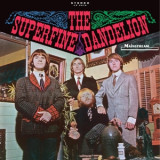
"Flower power psych pop that’ll blow you away! Exploring the jangly folk and garage sounds of the late ‘60s, the Superfine Dandelion picks a wide variety of colorful folk, country and jug band influences and puts a psychedelic tint on their all-original compositions. Our favored stereo mix, pressed on blue vinyl!
Formed in 1967, this Phoenix, AZ band would only last for a year before parting ways, leaving behind just one album – a fate many Mainstream artists ultimately faced, no matter how quality their style and sound was. The Superfine Dandelion features Mike McFadden (formerly of the garage rockin’ Mile Ends) and Rick Anderson (founding member of the Tubes) showcasing the sound of the Summer of Love – kaleidoscopic, sunny & groovy!
“While the cheeriest cuts have the sunny folk-pop/rock feel of, say, some of the L.A. folk-rock issued by the Dunhill label (‘Don't Try to Call Me’ recalls P.F. Sloan) or the Monkees, their self-titled LP had a good deal of sub-Jefferson Airplane folk-psych-rock, with plenty of minor chords, harmonies, and wistful lyrics. Then ‘Janie's Tomb’ and ‘It's Raining’ have a jokey jug band vibe, like a cross between the Charlatans and the Lovin' Spoonful.” – Richie Unterberger (AllMusic)"
.
- Clover
- Muppet Face
- Mousey Toy
- Pox
- Baby Captain
- Saturn
- Rose Of Sharon
- Ale
- Bog People
- Dangerous You Shouldn't Be Here
- Yellow Raspberry
Repressed on vinyl for the first time in 15 years - As conceptual as Xiu Xiu's fusion of post-punk, gamelan, synth pop, folk, and noise might seem, the group's music never feels overly cerebral or detached. On the contrary, it's usually brimming over with often contradictory emotions: love, hate, sex, violence, fear, and humor cling together so tightly in Jamie Stewart's songs that they can't be separated. Harsh and beautiful words and sounds remain intertwined on La Foret, which ranks among Xiu Xiu's subtlest, and scariest, albums.
"Known for their unique blend of punk rock, post-punk, folk, alternative rock and all kinds of musical sub-cultures, New Model Army refuses to belong to any club or style. Formed in Bradford in 1980, the band's lineup has changed over the years, with Justin Sullivan being the constant and central figure. They have released numerous albums and continue to tour and record music, maintaining a dedicated fanbase. Their music often addresses themes related to social and political issues, personal struggles, and the human condition, making them a significant presence in the alternative rock and post-punk music scenes. The 2019 studio album “From Here” ranked # 13 in the UK Album charts, and the 2023 live album “Sinfonia” hit #1 in the UK Music Video-Charts, making it the highest charting album in the band’s history.
Described as ""Dark Motown"" by Justin himself, “Unbroken” features a diverse collection of tracks that touch on topics ranging from social and political commentary to deeply personal reflections. The album is a powerful and emotionally intense body of work ranging from rebellious tracks as “I Did Nothing Wrong”, to contemplative songs like “First Summer After”. With this album, the band continues to push the boundaries of their signature sound while staying true to the themes that have made them a force to be reckoned with in the music world. “Unbroken” is the first studio album since 2019’s long-player “From Here” and the 16th studio album of the band. It will is available in as a CD Hardcover Mediabook, Heavyweight Black LP Gatefold"
FAZI are a post-punk band based in the ancient Chinese city of Xi'an. However, there is much more to their story than meets the eye_ With five immersive full-length records and a brief stint on peak-time commercial TV already establishing the four-piece at the forefront of a truly pioneering wave of alternative music in China, the Euro-pean re-release of their latest offering, `Folding Story', represents an incredible new beginning for a band who have already spent years honing their craft - transforming timeless traditions of love, life and death into a perpetual dance of fre- netic, krautrock energy and sprawling, shoegaze panoramas. Fittingly, `Folding Story' is itself a cyclic experience of rebirth, renewal and a return to origin. Album opener `Invisible Water' is a contemplative start as frontman Peng Liu's yearning vocals reach out across synthesisers reminiscent of sonar and the hypnotic lapping of water on an un- known shore. Described by Peng as an "artistic conception of amniotic fluid in the mother's body", this motif returns at the end of the album's final track, `Way to Atman', this time as a gentle tide washing away the ash of a spent funeral pyre. Just as the album and its protagonist is born at the beginning and dies at the end, by deliberately opening and closing `Folding Story' with the sounds of water, Fazi invite listeners to flow through the record on a never ending loop, to listen to a story without pause, one that rises from a whisper to a roar only to subside as quickly as it arrived. First released in 2022 on pioneering Chinese record label Space Circle, `Folding Story' is a collection of 10 tracks that serve as stories themselves as well as part of a universal narrative in constant flow. A phenomenal accomplishment, its forthcoming re-release in Europe via Pelagic Records will ensure that Fazi continue to blow as many minds and ruffle as many feathers as possible. Gatefold sleeve, silver offset ink, printed on special all-black cardboard. FFO Joy Division, Suicide, Savages, Cabaret Voltaire, Iceage, Gilla Band, Fontän
The vinyl edition of Klein's 2022 album: »STAR IN THE HOOD« plays like a cracked, tarnished mirror of contemporary numbing music, replacing long-form expression with tighter, more explosive and sometimes completely freeform transmissions that will wake you up from your overly comfortable environmental music slumber. Opening with cycling ghost drones, dialog and piano motifs that blur into heartfelt noise, »black star« is all loping, looping piano and chthonic vocals spiked with cheese-grater noise and chipmunked chirps. It’s Klein’s delirious vocal runs that push the album to the next level though; like her style-defining »Lagata« and the Hyperdub-released »Tommy,« she subverts the raw material that makes up R&B, turning memorable hooks into blurry impressions that will glue to your mind like a diva moment on a Suburban Bass cut.
She keels into longform on »schooled,« fogging organ drones into hazed clouds that gust into imposing shapes over a 10-minute duration, rekindling the dialog between contemporary noise and gospel music. Grandiose classical sounds receive a similar treatment on ‘Friend in the Mirror’, pulled into disorienting shapes that dispel any notions of class gatekeeping; in the final third, Klein’s voice interrupts the mood, before machine-gun percussion reminds us not to get too comfortable. If yr in search of beauty, »postcode wars« finds Klein fuzzing euphoric chords into an afterparty woosh of half-heard voices and dribbling synths. She simultaneously channels rapture and wrath, poignantly torching the contemporary societal skeleton without losing her near-at-hand community in the process.
Midway through the album there’s a thematic pivot signalled by the brief »shorty alert,« a trilling mass of carnivalesque vocal quirks that sound like spiders spitting DMT into yr eardrums. From here, things get darker and more unsettling: there’s doomed subterranean ambience on »signed and delivered«, Disney-esque piano motifs, blown-out lo-fi outsider rawk on »Swerve,« and speaker garbling free eccentric soul on »brand new day,« each struck through with that unmistakable high-vs-low culture posturing. It all brings us to the album’s unsettling one-two punch of ‘haha hehe business’, maybe the foamiest track we’ve heard from her this year, and the zonked »winter« - a piece that’s as crystal clear as Klein gets, an unprocessed heartstring-tugging vocal performance over acoustic guitar twangs.
- Reaktor (1983)
- Unser Abv (1983)
- Stehen Bleiben Ist Verrat (1983)
- Warum (1983)
- Can't You See (1983)
- Die Angst Der Allgemeinheit (1983)
- Rosa Beton (1983)
- Wir Glauben (1983)
- Maschinengewehr (1983)
- Scheiss Stadt Berlin (1983)
- 16: Jahre Im Exil (1983)
- Müde (1983)
- Reaktor (2022)
- Unser Abv (2022)
- Stehen Bleiben Ist Verrat (2022)
- Warum (2022)
- Die Angst Der Allgemeinheit (2022)
- Rosa Beton (2022)
- Wir Glauben (2022)
- Maschinengewehr (2022)
- Scheissstadt Berlin (2022)
- 16: Jahre Exil (2022)
- Müde (2022)
A tape with the rather factual title “Rosa Beton – Demo 83” gained currency in 1983, albeit among an inner circle, or as it says in a lexical note on the band: Rosa Beton “achieved beyond-regional fame in and around Berlin”. Unlike some other bands that were merely rumoured to exist, this name was widely recognized in the East Berlin punk scene and the demo tape was received with some delight. It had been made in the suburb of Hönow, or more precisely in music enthusiast Thomas Wagner’s childhood bedroom. The band was less a classic combo than a short-lived pro- ject run, for a brief underground season, by 16-yearold Wagner and Ronald Mausolf, who was known as “Mausi” and had just come of age. An old clunker of a four-track machine served as an impor- tant nutritional supplement for the duo, allowing bass and vocals to be overdubbed separately. For a project without a professional background, especially for an illegal punk band in the East, this conventional procedure was clearly exceptional. Punk bands would usually record vocals and instruments simultaneously and on a cassette recorder. Recording gear was not readily available in the GDR, and it was disproportionately or prohibitively expensive. The adversities that had to be overcome in starting up a punk band were certainly challenging for teenagers. Rooms for rehearsals were few and far between despite wide- spread vacancies, and public space was taboo thanks to the state. Concerts, whether in flats and studios or under the protection of the Protestant church, remained rare events and, moreover, risky; starting with the party-loyal neighbour alerting the People’s Police as if there were a war on, to the ever-present “digging activity” of the Stasi. The only planned appearance by Rosa Beton never materi- alised. Whether it was the goddesses of fate who averted a show or the Stasi who prevented it can no longer be reconstructed. In any case, Rosa Beton never played live and thus joined a long list of GDR punk bands that, in the early 1980s, did not make it out of illegality into a public sphere, not even into a conspiratorial one. ausi compensated for the band’s lack of live performances by at least distributing a few copies of the demo tape. Among others, at the Kult, the Kulturpark Plänterwald, which provided an initiation field for the Berlin punk scene and a hotspot with a pull beyond it. The punks adapted the Kulturpark to their understanding of an amusement park.
They would thrash about to Schlager music and pogo to third-rate Ostrock bands, make fun of overwhelmed provincials, hang out and exchange half-baked ideas as superior knowledge. In between, the punks liked to ride the chain carousel, there was a certain liking for chains. The Kulturpark management made quite a fuss about the riot the punks put on. Initially they were banned from the chain carousel, then, when the punks switched to bumper cars, they were banned from the bumper cars, then from the roller coaster, and finally from the ghost
Karl-Marx-Stadt (now Chemnitz) was one of the GDR’s subcultural hubs in the late 1970s and 80s. The industrial city in Saxony produced an impressively wide informal cultural programme beyond state structures. Bands such as Die Gehirne, Knut Baltz Formation, Die Arroganten Sorben, Kartoffelschälmaschine, AG Geige or the projects of cassette label klangFarBe created a complex artistic environment, in which Tropenkoller ran its spiritual exercises from 1986 to 1989. The “introverted experiment” remained distinct yet was exemplary of a KarlMarx-Stadt sound that considered dissonance a non-ideological form of harmonics. A first and only tape appeared in 1988. The extravagant packaging illustrated the edition’s exclusive nature; no more than twenty-five copies were released by Tropenkoller into the limited coterie of its open circle. tapetopia is a series of vinyl releases based on cassettes from East Germany’s 80s underground, particularly from the East Berlin "Mauerstadt" music scene, featuring original layouts and track lists. For over 30 years after their initial “release” the music on these tapes was neither available on vinyl nor CD, but they were important statements in the canon of the GDR subculture. Contrary to the small print runs of the time, many of the bands were considered cult in the underground,but suspect in the higher floors.
tapetopia 010 FO 32 extra hart arbeitendes rastermaterial für kontakt did not emerge from the usual underground milieu – their setting was the base of the 4th Flotilla of the GDR People’s Navy! The propaganda unit PrK 18 had among its recruits some who turned the logistics for agitation against the intentions of the system. Inside a barracks, but under the state radar, the paramilitary music corps FO 32 boarded an NVA studio and recorded industrial tracks and dark ambient. The experimental military band gave an illegal concert; they had previously been heard on the radio programme “Parocktikum”, a pirate gig from the ranks of the People’s Navy on GDR radio. In 1989, a first FO-32 tape was shared among just a few friends. Shortly after, an abridged mix of material was released on the illegal Trash Tape label in an edition of no more than one hundred copies. The vinyl version on tapetopia is based on the original tape. The tapetopia series, using the original layouts and track lists, publishes cassette editions from the GDR underground of the 1980s, especially from the “walled-in” scene in East Berlin. More than three decades after their initial “release”, these tapes have yet to be heard on either vinyl or CD, even though they made an audible mark in the canon of GDR subculture. Despite the tiny original editions of the time, many of the bands were considered cult in countercultural circles, which made them highly suspect in informed circles.
tapetopia 008 Der Expander des Fortschritts was founded in 1986. The “risk group” described itself as “pop musique concrète” or “abstract pop”. Der Expander des Fortschritts relied on disharmony and ruptures, which resulted in radio plays in a song format; the GDR as a realsocialist satire provided its material. Even the band’s name was a cultural appropriation of the superstructure by the substructure: “progress” was a fetishized word in the GDR, factory sports clubs would add it to their name, solidarity concerts would use it as a motto. The title “Urknall · Horde · Mensch” resulted from an Expander-typical translation of “Weltall, Erde, Mensch”, a compendium ceremoniously presented to each initiator on the occasion of their socialist youth initiation. In 1988, the band released the tape album on their own label Irrmenschkassette, a big bang in a tiny edition. The tapetopia series, using the original layouts and track lists, publishes cassette editions from the GDR underground of the 1980s, especially from the “walledin” scene in East Berlin. More than three decades after their initial “release”, most of these tapes have yet to be heard on either vinyl or CD, even though they made an audible mark in the canon of GDR subculture. Despite the tiny original editions of the time, many of the bands were considered cult in countercultural circles, which made them highly suspect in informed circles.
tapetopia 007 Corp Cruid I was the only release of the planned tap series BleiBeil. The tracks were recorded over a longer period of time in 1988 – and in changing constellations that corresponded to the lineup of the East Berlin underground band Ornament & Verbrechen. 30 copies were circulated exclusively among friends. Concerts were not part of the plan, also due to the band’s rejection of a playing permit; there was no interest in being tolerated by the cultural apparatus, which treated projects like Corp Cruid with contempt or even hostility. Even before the GDR collapsed, in November 1989, almost half of the Ornament & Verbrechen musicians had left the country. Ensembles as remote from the state as Corp Cruid sounded like a faint scratch on the Wall of Sound of a hysterical system. The tape survived on a master tape and on a few copies; today the GDR is only its background noise.
The tapetopia series, using the original layouts and track lists, publishes cassette editions from the GDR underground of the 1980s, especially from the “walled-in” scene in East Berlin. More than three decades after their initial “release”, these tapes have yet to be heard on either vinyl or CD, even though they made an audible mark in the canon of GDR subculture. Despite the tiny original editions of the time, many of the bands were considered cult in countercultural circles, which made them highly suspect in informed circles
90's techno tracks from this Rotterdam techno pioneer David Spanish (also one half of Im Kellar). This is a worthy re-issue a mid 90's release on the Communique sub-label founded by Woody McBride. Including 3 previously unreleased tracks found on the original session tapes. Excellent and relevant house and techno tracks.
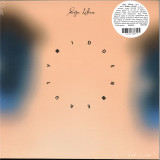
Sign Libra's third album Hidden Beauty is an intimate voyage through feminine nature, guided by the arts of subtext, musical collage, and mysterious allusions. Elegantly arranged, enigmatic, and mischievous, Hidden Beauty seeks to "release the invisible and bring fragility to the surface." From the rainforests of Closer to the Equator (Sounds of the Dawn, 2016 / Antinote, 2018) to the surreal lunar landscape of Sea to Sea (RVNG Intl., 2020), Agata Melnikova, the Latvian musician behind the Sign Libra symbol, has developed a signature blend of evocative composition with lyricless, ethereal vocalizing. Hidden Beauty attends to a closer space than her first two albums, a playfully layered pastiche of refined references, drawing musical inspiration from the assortment of Erik Satie, the early work of Mylène Farmer and Laurent Boutonnat, and 90s R&B. The first inklings of Hidden Beauty arrived in 2019, with the basic contours of the album sculpted in 2020 and early 2021. Like Sea to Sea, Hidden Beauty was invented as a solitary creative effort, but this time under uniquely hermetic impositions. Tethered to the world only by screen, the artist sought inspiration from an unlikely array of activities: new, unorthodox approaches at composing, learning French, a virtual pedagogical practice, and plenty of jubilant dancing in her flat, sunglasses on, to 90s dance music. Hidden Beauty moves inward from the distant spaciousness of Sea to Sea in favor of a "chamber-like" sound, reflecting the intimate environs of its creation. Balancing the New Age balletic resonance of Closer to the Equator and the cosmic-dancerly tracks of Sea to Sea, Hidden Beauty combines deft, postmodern arrangements with popular, contemporary suggestions. The reverb drenching her previous recordings is sponged up in the songs of Hidden Beauty, giving the exercises contained within a feeling of presence, and closeness. And always Agata's crystalline vocal furnishings, less a lead vocal than a first instrument, the ever-returning counterpoint in a beatific swirl. The other hidden elements of this work are plenty, and perhaps best left concealed for the listener's enjoyment. Or perhaps they are hidden in plain sight and sound, depending on what the puzzle pieces reveal to your imagination. Sign Libra's Hidden Beauty will be released in vinyl, Japanese import CD, and digital editions on November 3, 2023. A portion of the proceeds from this release will benefit Coral Guardian, a non-governmental organization working internationally and with local communities to protect coral ecosystems.
Two Berlin techno icons merge their art for a first collaborative EP on Amsterdam's Delsin Records. The two prolific producers have been playing a series of back to back DJ sets in the past months before they joined forces in the studio. The result is a flawless combination of their own unique styles, atmospheric break-beats from Answer Code Request matching the impeccable grooves and deep subs of Amotik.