Buscar:ghetto brothers

Estilos
Todo
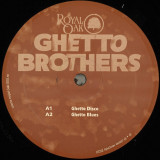
GHETTO BROTHERS - GOT THIS HAPPY FEELING

This single comprises two stand out tracks from “Power-Fuerza” (1972), one of the best Latin funk albums ever recorded, with all the right ingredients to shake dance floors worldwide. Produced by boogaloo-don Bobby Marin, these tracks are a vibrant tapestry, weaving together the raw energy of the South Bronx streets and the soulful melodies born from the band's Puerto Rican heritage. The Bronx in the 1970s, marked by the presence of notorious gangs, presented a complex and challenging urban landscape reflected in abandoned buildings and neglected public spaces. The prevalence of street gangs, such as the Ghetto Brothers, contributed to an atmosphere of heightened tension and occasional violence. The Ghetto Brothers, originating from the Melendez family who moved from Puerto Rico to the South Bronx in the 1950s, faced challenges involving violence and crime. Despite this, Benjy Melendez, a key figure, directed the group towards community improvement. The Ghetto Brothers embraced music, crafting a potent, NYC-flavored musical fusion that caught the attention of record mogul Ismael Maisonave (Salsa Records). Their collaboration resulted in the recording of eight tracks in a single electrifying day at Manhattan's Fine Tone Studios, skillfully produced by Latin studio maestro Bobby Marin (Harvey Averne, La Lupe, Brooklyn Sounds…) This musical odyssey showcases the band's ability to seamlessly blend genres, creating a NYC-flavored stew that captivates listeners with its authenticity.

No en stock

Haga su pedido ahora y le encargaremos el artículo en nuestro proveedor.

11,35

Ültimo hace: 20 Meses
GHETTO BROTHERS - POWER-FUERZA LP

The Bronx in the 1970s, marked by the presence of notorious gangs, presented a complex and challenging urban landscape. Amidst the crumbling infrastructure and economic decline, neighbourhoods bore the scars of disinvestment, reflected in abandoned buildings and neglected public spaces. The prevalence of street gangs, such as the Ghetto Brothers, contributed to an atmosphere of heightened tension and occasional violence. Graffiti adorned subway cars and buildings, expressing both social unrest and the vibrant creativity of the community. Despite the challenges, there was a resilient spirit among residents, evidenced by grassroots efforts to address social issues. The Bronx during this era was a dynamic yet tumultuous mix of cultural expression, social struggle, and the determined spirit of a community facing adversity. The Ghetto Brothers, originating from the Melendez family who moved from Puerto Rico to the South Bronx in the 1950s, faced challenges involving violence and crime. Despite this, Benjy, a key figure, directed the group towards community improvement. The Ghetto Brothers embraced music, crafting a potent, NYC-flavored musical fusion that caught the attention of record mogul Ismael Maisonave (Salsa Records). Their collaboration resulted in the recording of eight tracks in a single electrifying day at Manhattan's Fine Tone Studios, skillfully produced by Latin studio maestro Bobby Marin (Harvey Averne, La Lupe, Brooklyn Sounds…). This musical odyssey showcases the band's ability to seamlessly blend genres, creating a NYC-flavored stew that captivates listeners with its authenticity. The hypnotic rhythms, infectious guitar riffs, and impassioned vocals reflect the Ghetto Brothers' commitment to expressing their unique experiences and uplifting their community through the universal language of music. "Power-Fuerza" is not just an album; it's a sonic testament to the Ghetto Brothers' fusion of resilience, cultural richness, and musical innovation. Each track is a vibrant tapestry, weaving together the

raw energy of the South Bronx streets and the soulful melodies born from the trio's Puerto Rican heritage. Embrace the timeless resonance of the Ghetto Brothers’ “Power-Fuerza”, one of the best Latin funk albums ever recorded…

Reservar26.01.2024

debe ser publicado en 26.01.2024

24,79

Ültimo hace: 2026 Años
Ghetto Brothers - Ghetto Disco EP

repressed !

The two Dons that dominated many club nights in the early 90's with their club orientated techno tracks that were loaded with funk, raw energy, and fresh sounds never heard before!! Blake Baxter and Orlando Voorn also known as the Ghetto Brothers

No en stock

Haga su pedido ahora y le encargaremos el artículo en nuestro proveedor.

10,71

Ültimo hace: 17 Meses
Various - Randy's 50th Anniversary  Chapter Two (2x12")
 
25
También disponible

Chapter One[36,35 €]


RANDY'S 50th ANNIVERSARY CHAPTER ONE / VARIOUS - First time on vinyl for Chapter Two second part of the acclaimed previously CD only set that was released to celebrate the 50th Anniversary of Randy's Records. From Augustus Pablo's groundbreaking 'Java' to Carl Malcolm's UK pop crossover hit 'Fattie Bum Bum' Chapter Two showcase classic after classic from a all-star line up of the 70's reggae music greats including Black Uhuru, Horace Andy, Dennis Brown, Gregory Isaacs, The Heptones & Big Youth. Beautifully packaged with inner sleeves featuring rare photos and liner notes by reggae historian, Dennis Katz.

Reservar27.03.2026

debe ser publicado en 27.03.2026

36,35

Ültimo hace: 2026 Años
Various - Randy's 50th Anniversary Chapter One (2x12")
  • A1: Java - Augustus Pablo
  • A2: Hospital Trolly - I Roy
  • A3: King Of Babylon - Junior Byles
  • A4: Don't Go - Horace Andy
  • A5: A Little Love - Jimmy London
  • A7: Cheater - Dennis Brown
  • A9: For The Love Of You - John Holt
  • A10: Too Late To Turn Back Now - Alton Ellis
  • A11: Be Thankful - Donovan Carless
  • A12: Woman Of The Ghetto - Hortense Ellis
  • A13: Children Of The Ghetto - Senya
  • A14: Lonely Soldier - Gregory Isaacs
  • A16: Going To Zion - Black Uhuru
  • A17: Ordinary Man - Lloyd Parks
  • A18: Ordinary Version 3 - Impact All Stars
  • A19: Hold Tight - African Brothers
  • A20: Righteous Man - Keith Poppin
  • A21: Created By The Father - Errol Dunkley
  • A22: The Race - The Gladiators
  • A24: My Guiding Star - The Heptones
  • A27: No Jestering - Carl Malcolm
  • A28: Knotty No Jester - Big Youth
  • A29: Fattie Bum Bum - Carl Malcolm
  • A25: Something On Your Mind - Hubert Lee
  • A26: Country Boy - Charley Ace & Dirty Harry
También disponible

Chapter Two[36,35 €]


RANDY'S 50th ANNIVERSARY CHAPTER ONE / VARIOUS - First time on vinyl for Chapter Two second part of the acclaimed previously CD only set that was released to celebrate the 50th Anniversary of Randy's Records. From Augustus Pablo's groundbreaking 'Java' to Carl Malcolm's UK pop crossover hit 'Fattie Bum Bum' Chapter Two showcase classic after classic from a all-star line up of the 70's reggae music greats including Black Uhuru, Horace Andy, Dennis Brown, Gregory Isaacs, The Heptones & Big Youth. Beautifully packaged with inner sleeves featuring rare photos and liner notes by reggae historian, Dennis Katz.

Reservar27.03.2026

debe ser publicado en 27.03.2026

36,35

Ültimo hace: 2026 Años
Various - Randy's 50th Anniversary LP 2x12"
  • A1: Java - Augustus Pablo
  • A2: Hospital Trolly - I Roy
  • A3: King Of Babylon - Junior Byles
  • A4: Don't Go - Horace Andy
  • A5: A Little Love - Jimmy London
  • A6: Cheater - Dennis Brown
  • B1: For The Love Of You - John Holt
  • B2: Too Late To Turn Back Now - Alton Ellis
  • B3: Be Thankful - Donovan Carless
  • B4: Woman Of The Ghetto - Hortense Ellis
  • B5: Children Of The Ghetto - Senya
  • B6: Lonely Soldier - Gregory Isaacs
  • C1: Going To Zion - Black Uhuru
  • C2: Ordinary Man - Lloyd Parks
  • C3: Ordinary Version 3 - Impact All Stars
  • C4: Hold Tight - African Brothers
  • C5: Righteous Man - Keith Poppin
  • C6: Created By The Father - Errol Dunkley
  • C7: The Race - The Gladiators
  • D1: My Guiding Star - The Heptones
  • D2: Something On Your Mind - Hubert Lee
  • D3: Country Boy - Charley Ace & Dirty Harry
  • D4: No Jestering - Carl Malcolm
  • D5: Knotty No Jester - Big Youth
  • D6: Fattie Bum Bum - Carl Malcolm

Beginnend mit dem fröhlichen Ska von Lord Creators Unabhängigkeitshymne 'Independent Jamaica' zeigt das Chapter One Album den wahren Verlauf der jamaikanischen Musik in den 1960er Jahren mit einer virtuellen Who's Who der Reggae-Musik, darunter Bob Marley, Peter Tosh, Toots & The Maytals, Rico, Skatalites, John Holt & Alton Ellis. Wunderschön verpackt mit Innenhüllen mit seltenen Fotos und Liner Notes von Steve Barrow von Blood & Fire.

Disponible

En el almacen y preparando para el envío

31,72
Various - Randy's 50th Anniversary LP 2x12"
  • A1: Java / Augustus Pablo
  • A2: Hospital Trolly / I Roy
  • A3: King Of Babylon / Junior Byles
  • A4: Don’t Go / Horace Andy
  • A5: A Little Love / Jimmy London
  • A6: Cheater / Dennis Brown
  • B1: For The Love Of You / John Holt
  • B2: Too Late To Turn Back Now / Alton Ellis
  • B3: Be Thankful / Donovan Carless
  • B4: Women Of The Ghetto / Hortense Ellis
  • B5: Children Of The Ghetto / Senya
  • B6: Lonely Soldier / Gregory Isaacs
  • C1: Going To Zion / Black Uhuru
  • C2: Ordinary Man / Lloyd Parks
  • C3: Ordinary Version 3 / Impact All Stars
  • C4: Hold Tight / African Brothers
  • C5: Created By The Father / Errol Dunkley
  • C6: The Race / The Gladiators
  • D1: My Guiding Star / The Heptones
  • D2: Something On Your Mind / Hubert Lee
  • D3: Country Boy / Charley Ace & Dirty Harry
  • D4: No Jestering / Carl Malcolm
  • D5: Knotty No Jester / Big Youth
  • D6: Fatty Bum Bum / Carl Malcolm

Von Augustus Pablos bahnbrechendem „Java” bis zu Carl Malcolms UK-Pop-Crossover-Hit „Fattie Bum Bum” präsentiert Chapter Two einen Klassiker nach dem anderen von einer All-Star-Besetzung der Reggae-Größen der 70er Jahre, darunter Black Uhuru, Horace Andy, Dennis Brown, Gregory Isaacs, The Heptones und Big Youth. Wunderschön verpackt mit Innenhüllen mit seltenen Fotos und Liner Notes des Reggae-Historikers David Katz.

Disponible

En el almacen y preparando para el envío

31,72
Various - When The Two Thousands Clash - Electronica In The new Millennium
  • A1: Emerge / Fischerspooner
  • A2: Seventeen / Ladytron
  • A3: Strict Machine/ Goldfrapp
  • A4: Girls On Pills / The Droyds
  • A5: Hooked On Radiation (Pet Shop Boys Orange Alert Mix) / Atomizer
  • B1: Fuck The Pain Away / Peaches
  • B2: Do I Look Like A Slut? (Original Version) / Avenue D
  • B3: Galang / M.i.a
  • B4: Kernkraft 400 (Dj Gius Mix) (Radio Edit) / Zombie Nation
  • B5: Poney Pt. 1. (Edit) / Vitalic
  • B6: The Game Is Not Over / T. Raumschmiere Feat. Miss Kittin
  • C1: Over And Over (Naum Gabo Remix) / Hot Chip (7.05)
  • C2: Banquet (Phones Disco Remix) / Bloc Party (5.25)
  • C3: E Talking (Nite Version) / Soulwax (6.08)
  • C4: ?Zdarlight» / Digitalism (5.44)
  • D1: Daft Punk Is Playing At My House (Edit) / Lcd Soundsystem (3.23)
  • D2: Hustler / Simian Mobile Disco (3.43)
  • D3: We Share Our Mother's Health / The Knife (4.09)
  • D4: Missy Queen's Gonna Die / Tok Tok Vs. Soffy O (4.13)
  • D5: What Was Her Name (Radio Edit) / Dave Clarke Featuring Chicks On Speed (4.44)
  • D6: I Am The Fly / Adam Sky And Crossover (4.59)
  • E1: We Are Your Friends / Justice Vs. Simian
  • E2: Take Me Out (Daft Punk Remix) / Franz Ferdinand
  • E3: Slow (Chemical Brothers Remix Edit) / Kylie Minogue
  • F2: Warm Leatherette / The Normal
  • F3: Empire State Human / The Human League
  • F4: Tryouts For The Human Race / Sparks
  • F5: Telephone Operator / Pete Shelley
  • F6: Nag Nag Nag / Cabaret Voltaire
  • E4: Let's Make Love And Listen To Death From Above / Css
  • E5: Solta O Frango / Bonde De Rolê
  • E6: Club Action / Yo Majesty
  • F1: Numbers / Kraftwerk

‘When The 2000s Clashed: Machine Music For A New Millenium’ is the story of how, 25 years ago, a new form of electronic music – known as electroclash - reignited a tired clubland and gave the indie scene and mainstream pop a shot in the arm in the process. Over this 3LP highlights set, carefully curated from the 5CD box of the same name (also released, 3rd October) the collection showcases the back-to-basics electronic beats that heralded in a new generation of exciting and innovative new artists - Hot Chip, Peaches, LCD Soundystem, and Ladytron, to name a handful. It also shows how the sound and attitude of electroclash plugged into the decade’s cutting-edge indie bands, (Franz Ferdinand, Bloc Party), and became intrinsic to the way chart pop would sound in the first decade of the 2000s (Kylie, Goldfrapp).

The collection also shows how the scene’s underground DIY ethos evolved and inspired the next generation of electronic buccaneers (Simian Mobile Disco, Justice Vs. Simian). ‘When The 2000s Clashed’ brings together a dazzling, diverse selection of artists, producers and remixers from right across the 2000s zeitgeist – from The Chemical Brothers and Daft Punk, from M.I.A. to Soulwax and many points in-between. For good measure, there’s also one side of LP3 given over to the original post punk and electronic sounds (including Kraftwerk, The Human League and Cabaret Voltaire) who’d played such a big influence on the electroclash sound. ‘

When The 2000s Clashed’ was compiled and sequenced for Demon / Edsel by Jonny Slut, founder of London’s electroclash citadel Nag Nag Nag. Established in 2002, in a small Soho venue called Ghetto, ‘Nag’ quickly became THE hottest club, first in London and then in the whole world. A glorious mess and hedonists’ hotspot, a night at ‘Nag Nag Nag’ (if you could get in!) saw the capital’s club kids, students and creatives rub up alongside names from the fashion and music worlds - Björk, Pet Shop Boys, Kate Moss, Boy George, Alexander McQueen, and Pam Hogg were among the regulars. Madonna visited, so did John Peel, Yoko Ono asked to perform and did, Throbbing Gristle’s Chris and Cosey DJ’d, so did Marc Almond, and Too Many DJ’s.

Justin Timberlake was refused entry (too many bodyguards)… even Cilla Black was spotted getting down! Jonny shares these reminisces – and many more - in the collection’s sleevenotes. Named after the 1979 Cabaret Voltaire classic, ‘Nag, Nag, Nag’ became the first place to hear the seemingly endless flow of thrilling new tunes coming from every direction during that decade of dance. Many of them are included on this collection.

Disponible

En el almacen y preparando para el envío

47,27
Sirus Hood, Trangaz - Ghetto Corazon EP

Mood Child unleashes Sirus Hood and Trangaz’s ‘Ghetto Corazon’ EP, a blazing fusion of African, Latino, and Asian influences.

Label father Sirus Hood and Mood Child favourite Trangaz join forces to craft two original bangers, ‘Ghetto Corazon’ and ‘Boothy’, while Manda Moor, Mood Child's mother, spices things up with two different versions of remixes of the second track.

‘Ghetto Corazon’ is one of those tracks that ignites the dancefloor and highlights a DJ set. It’s primal, unique, tribal, and groovy. It has a Techno vibe with its high BPM and killer kick drum that has the power to tremble any dancefloor.
We can sense the Latin roots with the Spanish vocal singing "mi corazon" and the African flair with its broken swing percussion pattern.

‘Boothy’ is a playful acid-led tune enhanced by a unique hi-hat game, with vocals from Trangaz himself talking about the DJ booth adventures. The vocal depicts situations that are bound to happen in any club.

Manda Moor delivers two different remixes of ‘Boothy’: a ‘Punchy’ and a ‘Spicy’ remix. Her ‘Punchy’ rendition is vinyl only and adds a dirty punch to the original, while her ‘Spicy’ version has all the essence of the ‘Manda Moor groove’ - an addictive drum pattern with her unique style that is recognised right away. She is known for her picante sound, adding the perfect spice to this EP.

This release showcases the best of the heat from three minds with different roots. An irresistible melting pot, with early supports from all stars like the king Carl Cox and The Martinez Brothers.

Sirus Hood & Trangaz ‘Ghetto Corazon’ EP drops via Mood Child on 22nd March 2024.

Disponible

En el almacen y preparando para el envío

13,40
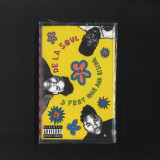
De La Soul - 3 Feet High and Rising (TAPE)

Finally back on tape, officially reissued. Must have! 3 Feet High and Rising is the debut studio album by hip hop trio De La Soul and was released on March 3, 1989 It marked the first of three full- length collaborations with producer Prince Paul, which would become the critical and commercial peak of both parties. Critically, as well as commercially, the album was a success. It contains the singles, "Me Myself and I", "The Magic Number", "Buddy", and "Eye Know". The album title came from the Johnny Cash song "Five Feet High and Rising". It is listed on Rolling Stone's 200 Essential Rock Records and The Source's 100 Best Rap Albums. When Village Voice held its annual Pazz & Jop Critics Poll for 1989, 3 Feet High and Rising was ranked #1. It was also listed on the Rolling Stone's The 500 Greatest Albums of All Time. Released amid the 1989 boom in gangsta rap, which gravitated towards hardcore, confrontational, violent lyrics, De La Soul's uniquely positive style made them an oddity beginning with the first single, "Me, Myself and I". Their positivity meant many observers labeled them a 'hippie' group, based on their declaration of the 'D.A.I.S.Y. Age' (Da. Inner. Soul. Yall). Sampling artists as diverse as Hall & Oates, Steely Dan and The Turtles, 3 Feet High and Rising is often viewed as the stylistic beginning of 1990s alternative hip hop (and especially jazz rap).

Disponible

En el almacen y preparando para el envío

14,08
Orlando Voorn - Space Funk Ep

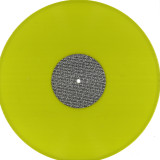
Limited Edition COLOR green lime Vinyl – 75 units Hand numbered

Orlando Voorn is a Dutch DJ and electronic music producer. As a solo artist he has released work since the early 80s under a large amount of aliases containing Balance, Frequency, Baruka, Basic Bastard, Fix, Dope Dog, Boy, Stalker and The Nighttripper. He also produced tracks with Blake Baxter under the name Ghetto Brothers and with Jeff Porter as Designer Loops.
Voorn won the Dutch DMC DJ Championships in 1986 which meant the beginning of a large number of released tracks. As a professional DJ he released his first club tracks under the record label Lower East Side Records. Together with Detroit techno music pioneers Juan Atkins, Derrick May and Blake Baxter he produced tracks under various labels. Voorn's music is characterized by its variety of styles such as Techno, Drum n bass, Ambient, Hip hop and Electro. By many people Orlando Voorn is considered the first one to establish a connection (in music) between Detroit and Amsterdam.

Disponible

En el almacen y preparando para el envío

12,19
De La Soul - 3 Feet High and Rising MC LP (Tape)

Finally back on tape, officially reissued. Must have! 3 Feet High and Rising is the debut studio album by hip hop trio De La Soul and was released on March 3, 1989 It marked the first of three full- length collaborations with producer Prince Paul, which would become the critical and commercial peak of both parties. Critically, as well as commercially, the album was a success. It contains the singles, "Me Myself and I", "The Magic Number", "Buddy", and "Eye Know". The album title came from the Johnny Cash song "Five Feet High and Rising". It is listed on Rolling Stone's 200 Essential Rock Records and The Source's 100 Best Rap Albums. When Village Voice held its annual Pazz & Jop Critics Poll for 1989, 3 Feet High and Rising was ranked #1. It was also listed on the Rolling Stone's The 500 Greatest Albums of All Time. Released amid the 1989 boom in gangsta rap, which gravitated towards hardcore, confrontational, violent lyrics, De La Soul's uniquely positive style made them an oddity beginning with the first single, "Me, Myself and I". Their positivity meant many observers labeled them a 'hippie' group, based on their declaration of the 'D.A.I.S.Y. Age' (Da. Inner. Soul. Yall). Sampling artists as diverse as Hall & Oates, Steely Dan and The Turtles, 3 Feet High and Rising is often viewed as the stylistic beginning of 1990s alternative hip hop (and especially jazz rap).

Disponible

En el almacen y preparando para el envío

13,40
Orlando Voorn - Diligence 12" Sampler

Dutch Techno master Orlando Voorn has opened up his archive for the first of what will be an ongoing artist focused series brought to you by Above Board Projects. The compilation will be spread across 2 double 12" volumes and will feature tracks from many of Voorn's pseudonyms including; Fix, Baruka, The Ghetto Brothers, Mute & many more. With this initial release we are proud to introduce the lead-in sampler 12" for Voorn's forthcoming 2-part archival collection entitled 'Diligence'. Each track has been carefully selected and programmed in conjunction with Orlando Voorn and this 12" even features the unreleased and previously unheard gothic 1992 techno masterpiece 'DX Me Silly' which was very kindly excavated from the DAT archive specifically for this project. The 12" also features the classic sounds of Fix's 'Life Beyond The Clouds' featuring Detroit legend Blake Baxter. Orlando Voorn's association with Detroit has been long running since day one and some of the music contained within this compilation celebrates that while showcasing some of the more overlooked tracks from the man's more than extensive catalogue. In short, this is a must have for any serious Techno fan! All tracks fully licensed and remastered with the full permission of Orlando Voorn. Remastering and lacquers by Curvepusher. Compiled and directed by the Above Board Projects team. Design and layout by atelier Superplus. 2019

Disponible

En el almacen y preparando para el envío

9,87
Kingston Sounds - Return To Orange Street’ 14 Roots Rock Reggae Classics LP

From 1968 through to the mid 1970’s the reggae beat began to slow down,some say due to the extreme heat hitting down onto Kingston Town and its surrounding enclaves. People needed something less strenuous to dance to. The Ska and Rocksteady Sounds (see 101 Orange Street KS007) that rocked Jamaica previously, had now found a slower tempo and become more ‘Dread’ lyrically to suit the times. Reggae music has always moved within the social climate it found itself in and this set here, as we ‘Return To Orange Street’ was ROOTS ROCK REGGAE TIME....

The Rastafarian message that runs through this collection of ‘Reality’, sometimes labelled ‘Sufferers’ music,is strong and works on many levels. It can come across on a heavy rhythm and vocal cut. Its example represented here by Prince Jazzbo’s ‘Dread in a Earth’ and ‘I Roy’s ‘Roots Man Time’, moving through to the popular new sounds of the DJ’s working over an old rhythm and alongside its existing vocal. As with Busty Brown working with Delroy Wilson's ‘Know Your Friend’ and Mr Jah Stitch working over Johnny Clarke’s ‘Roots Natty Roots’ to produce an even more dreader ‘True Born African’. The heartfelt lyric can also convey this message as we can see when Horace Andy laments ‘Where is the Love’ and Delroy Wilson again shows us on his ‘Who Cares’ cut. The great Twinkle Brothers also put the message across on their two cuts we have here, ’Too Late’ one of their lost classics if ever there was one and the thoughtful ‘It’s Not Who You Know’,being another prime example.

Orange Street itself is always at the heart of all reggae's musical changes and some singers also ride these waves as Mr Cornell Campbell shows us here with two cuts. The mournful ‘Too Be Loved’ and his uplifting ‘Girl of My Dreams’, which uses the same rhythm as our previously mentioned Prince Jazzbo’s 'Dread in a Earth’. Showing us that firstly you can’t keep a good rhythm down and secondly that two if not more great songs can work from the same source point. The light hearted ‘Vengeful’ lyric also worked in this period when artists spared off to each other on records to vent their frustrations. As we can hear here with Mr Lee Perry’s ‘You Funny Boy’. The song snipping back at a previous employer over what he felt were his misdoings to an under appreciated Mr Perry. We have culled these tracks together to show that the Dread Roots feel of the 1970’s came across in many guises and even in earlier songs these sentiments were also prevalent. As represented in Slim Smith’s almost bluesy feel in ‘Trying To Find a Home’, never a truer statement in Kingston's ghetto areas.

Well we hope you enjoy this musical journey and make a connection with messages portrayed here, as Mr Monty Morris points out on his contribution to this collection ‘Times Are Dread’.... Dread indeed.....

No en stock

Haga su pedido ahora y le encargaremos el artículo en nuestro proveedor.

13,03

Ültimo hace: 3 Meses
Jackie Mittoo - Reggae Magic LP 2x12"

Jackie Mittoo’s ‘Reggae Magic’ is a new collection from the great Jackie Mittoo. The album features a mixture of classic tunes and rarities from the period 1967-74, when Mittoo was at the height of his musical powers. Mittoo’s solo career began after the end of The Skatalites in 1965. He began pushing new musical boundaries, creating a uniquely identifiable organ-led funky reggae sound that owed as much to Booker T and The MGs, Jimmy Smith, Stax and Motown as to the post-ska and emergent rocksteady island rhythms of Kingston, Jamaica. His solo work at the legendary Studio One spanned seven albums and hundreds of singles.

Aside from producer and founder Clement ‘Sir Coxsone’ Dodd, it’s hard to think of anyone more central to the sound and success of Studio One than Mittoo; keyboard player extraordinaire, songwriter, arranger, musician, truly the Keyboard King at Studio One. Jackie Mittoo had been the youngest founding member of The Skatalites (at age 16), probably the most important group in Jamaican music. After they split, he became leader of the three pivotal groups at Studio One – The Soul Brothers, The Soul Vendors and Sound Dimension. He also became musical director for Studio One, helping create countless hits for singers Ken Boothe, Bob Andy, The Wailers, John Holt, Delroy Wilson and more – unforgettable tunes like Alton Ellis’ ‘I’m Still in Love with You’, Marcia Griffiths’ ‘Feel Like Jumping’, The Heptones’ ‘Baby Why’ and others. Between 1965 and 1968, many of the tunes created at Studio One can be attributed to Mittoo – timeless instrumental tracks, recorded either under his own name or those of The Soul Brothers, Soul Vendors and Sound Dimension, that have become the basis for literally 1000s and 1000s of Jamaican songs over many decades, giving the music an unsurpassed longevity.

The endurance of his music was as a direct result of significant developments in Jamaican music in the 1970s, namely the creation of three important new styles: Dub, Deejay and Dancehall. In the early 1970s Mittoo’s instrumental tracks were used as the musical source for a series of classic Studio One dub albums. At the same time Deejays at Studio One, including Dillinger, Prince Jazzbo and Dennis Alcapone, began toasting over these same popular rhythms to create their own new songs. In the mid-70s, a new generation of Studio One singers and deejays, including Sugar Minott, Freddie McGregor, Johnny Osbourne, Michigan & Smiley and others, began once again creating new melodies over these original instrumentals, signalling the birth of a new Jamaican style that became known as ‘dancehall’.

As dancehall swept across the island, rival producers copied these now classic rhythms. These original Jackie Mittoo-driven tunes spread like a virus throughout Jamaican music; be they the instrumental cuts to tunes such as Alton Ellis’ ‘Mad Mad’ , ‘I’m Just A Guy’, Larry Marshall’s ‘Mean Girl’, Slim Smith’s ‘Rougher Yet’, and instrumentals such as Mittoo’s classic ‘Hot Milk’ or ‘One Step Beyond’, The Sound Dimension’s ‘Real Rock’, ‘Heavy Rock’, ‘Full Up’, ‘Drum Song’, ‘Rockfort Rock’ … and the list goes on. These tracks became a constant soundtrack to the island, emitting from the ever-present sound of speaker boxes strung up around dancehalls. This recycling travelled even farther afield; The Sound Dimension’s instrumental ‘Real Rock’, updated by Willie Williams on his classic ‘Armageddon Time’ was in turn covered by The Clash. Lily Allen sampled Mittoo’s debut solo single ‘Free Soul’ for number one hit ‘Smile’; Dawn Penn’s ‘You Don’t Love Me (No, No, No)’, accompanied by The Soul Vendors, was revived by Penn and producers Steely & Cleevie in 1994, since covered by Rihanna, Ghostface Killah, Stephen Marley, Damian Marley and Beyonce. And so it goes; an endless time-leaping, continent-hopping diasporic musical map of the world with all roads essentially leading back to one man – Jackie Mittoo.

No en stock

Haga su pedido ahora y le encargaremos el artículo en nuestro proveedor.

28,78

Ültimo hace: 5 Meses
Various - Eddie Pillier & Dean Rudland Presents...
  • A1: Super Strut - Apostles
  • A2: Escucha Mi Funk - The Hightower Set
  • A3: Testify - Mains Ignition
  • A4: Russian Roulette - Night Trains Featuring Afrika Bambaataa
  • B1: From The Ghetto (Modern Tone Family Mix) - Dread Filmstone
  • B2: Delancey Street .. The Theme - The Ballastic Brothers
  • B3: Trans Euro X-Press (Ballistic Step) - X-Press 2
  • B4: Farside - Jaziac Sunflowers

Back in the early 1990s as Acid Jazz began a period of extraordinary commercial success where acts like the Brand New Heavies and Jamiroquai sold millions of records, and US groups such as A Tribe Called Quest, The Roots and Digable Planets were actively influenced by what was being played in London, the whole scene was being fuelled by a small number of clubs, led by Gilles Peterson’s Sunday afternoons at Dingwalls but taking in nights in Leeds, Bari, Munich, Tokyo, Stockholm and New York. In those clubs funky jazz, latin boogaloo and 70s soul soundracks competed for time on the dance floor with import records from New York, and the latest sounds coming out of bedrooms and makeshift basement studios that created contemporary sounds out of the past.

Acid Jazz’s Eddie Piller and Dean Rudland have put together this compilation of the sort of sounds that we were playing at the time. They are releases on Acid Jazz and other label’s that surrounded the scene and they were mainly made by people we knew from either around the club scene, behind the counters of our favourite record shops, or from trips to New York or Europe. They range from The Ballistic Brother anthem ‘Blacker’ to the jazz house of A-Zel - a Roger Sanchez mix that still sounds fresh today. We have the Humble Soul’s instrumental version of ‘Beads Things And Flowers’ which at the time was only available as a DJ special on Acetate. There is the presence of A Man Called Adam before they went to Ibiza, and the early Mo’ Wax (before they went Trip Hop) single by Marden Hill ‘Come On’.

These records could fill a dance floor in seconds and we feel that they are today largely forgotten, as they were non-album, underground club records. It’s time to celebrate them!

No en stock

Haga su pedido ahora y le encargaremos el artículo en nuestro proveedor.

28,53

Ültimo hace: 6 Meses
Peckings Brothers - Serial Killers
  • A1: Merciful Dubwize
  • A2: Ghetto Dubwize
  • A3: Lorna Dubwize
  • A4: Bound Street Dubwize
  • A5: Belly Dubwize
  • A6: Gambling Dubwize
  • B1: The Duke Dubwize
  • B2: The Dutchess Dubwize
  • B3: Peanut Vendor
  • B4: Ruler Dubwize
  • B5 19: 69 Horns
  • B6: Sunday Dinner Dubwize
Reservar30.06.2025

debe ser publicado en 30.06.2025

20,13

Ültimo hace: 2026 Años
CREATE-A-MESS - THE WRECKAGE MC (TAPE)
También disponible

LP[18,45 €]


From his early days signed to Ninjatune as one half of Dynamic Syncopation, Jonny’s love of Hip Hop led to a fruitful collaboration with Atlanta underground legends, Mass Influence, the mighty Chill Rob G, Apathy, EV.ON, Juice Aleem, Phi Life Cypher, Yeshua Da PoEd the list goes on. In 2009 he then went on to form Soundsci with former Mass Influence Emcee Audessey AKA Jack Jones and the Herbaliser’s Ollie Teeba. Soon the crew expanded to include U-George and digger supreme DJ/Emcee Oxygen. The crew released a solid run of LP’s, Ep’s and singles with highlights including Soundsational (Ubiquity Records), the Library sampling ‘My Boosey Weighs a Ton’ (Cavendish Library) and their final LP ‘Walk The Earth’ (Fresh Pressings) with Emcee Supastition joining the roster.

After having helped out his Soundsci crew members U-George, Ollie Teeba and Jack Jones on their solo LPs it is now Jonny’s turn to complete the circle and release his own solo project. ‘The wreckage’ sees Jonny flex his bold yet intricate production style. Carving a new facet into the Hip Hop jewel, expect to hear previously unheard samples and breaks, abrupt breakdowns and exciting rhymes from his circle of friends who lace ‘A’ grade verses over hypnotic drums. The roll call of Emcee’s includes J Scienide, Eddie Meeks from Southern Vangard Radio, Canada’s Ghettosocks and Nilla. NYC stalwart DJ and Emcee Emskee, Jesus Mason and of course his Soundsci brothers: Jack Jones, U-George and Oxygen. The cuts and scratches are provided by DJ Ollie Teeba.

Every track on ‘The Wreckage’ takes the listener on a new sonic adventure and will demand multiple listens to capture the twists and turns Jonny has fed into his diabolical infernal machine, true Hip hop science.

Reservar31.01.2025

debe ser publicado en 31.01.2025

14,08

Ültimo hace: 2026 Años
CREATE-A-MESS - THE WRECKAGE LP
También disponible

MC[14,08 €]


From his early days signed to Ninjatune as one half of Dynamic Syncopation, Jonny’s love of Hip Hop led to a fruitful collaboration with Atlanta underground legends, Mass Influence, the mighty Chill Rob G, Apathy, EV.ON, Juice Aleem, Phi Life Cypher, Yeshua Da PoEd the list goes on. In 2009 he then went on to form Soundsci with former Mass Influence Emcee Audessey AKA Jack Jones and the Herbaliser’s Ollie Teeba. Soon the crew expanded to include U-George and digger supreme DJ/Emcee Oxygen. The crew released a solid run of LP’s, Ep’s and singles with highlights including Soundsational (Ubiquity Records), the Library sampling ‘My Boosey Weighs a Ton’ (Cavendish Library) and their final LP ‘Walk The Earth’ (Fresh Pressings) with Emcee Supastition joining the roster.

After having helped out his Soundsci crew members U-George, Ollie Teeba and Jack Jones on their solo LPs it is now Jonny’s turn to complete the circle and release his own solo project. ‘The wreckage’ sees Jonny flex his bold yet intricate production style. Carving a new facet into the Hip Hop jewel, expect to hear previously unheard samples and breaks, abrupt breakdowns and exciting rhymes from his circle of friends who lace ‘A’ grade verses over hypnotic drums. The roll call of Emcee’s includes J Scienide, Eddie Meeks from Southern Vangard Radio, Canada’s Ghettosocks and Nilla. NYC stalwart DJ and Emcee Emskee, Jesus Mason and of course his Soundsci brothers: Jack Jones, U-George and Oxygen. The cuts and scratches are provided by DJ Ollie Teeba.

Every track on ‘The Wreckage’ takes the listener on a new sonic adventure and will demand multiple listens to capture the twists and turns Jonny has fed into his diabolical infernal machine, true Hip hop science.

Reservar31.01.2025

debe ser publicado en 31.01.2025

18,45

Ültimo hace: 2026 Años
VARIOUS - WE'VE GOT A GROOVY THING GOING - THE LATION SOUL OF... LP 2x12"

Those in the know are well aware of Bobby Marin's work, and the fact that he was behind the scenes for some of the best boogaloo and salsa of the '60s and '70s. Yet, until now, no one has explicitly put Bobby's name in the headline and given him his due on the cover of a properly credited Latin soul compilation. This compilation comprises twenty four essential boogaloo, Latin funk, rock and afro disco gems, each one bearing the mark of quality: "A Bobby Marin Production", including songs by Ricardo Marrero, the Ghetto Brothers, Ocho, Louie Ramírez_ A freshly curated overview of his fascinatingly complex back catalog in these genres. Since the late 1980s there have been numerous Latin soul and boogaloo compilations, and certainly much has been written about the history of the music too and an an excellent documentary (We Like It Like That, by Mathew Ramírez Warren) have brought the music to a broader audience. Generally, when discussing the "first wave" of Latin soul and boogaloo, it's the bands and their leaders, the singers and the songs that get all the recognition. But what of the producers, composers, and arrangers behind the music? Over the years, one of the best old-school New York Latin music producers, Bobby Marin, has occasionally been given some well-deserved credit and popped up sporadically in articles or liner notes (Wax Poetics, Fania, Gladys Palmera). However, to the casual public, he is not a household name, even among some fans of boogaloo. There are even some contemporary Latin soul compilations that contain mostly material licensed, produced and / or written by Bobby (or his brother, Richard), and a tip of the hat must go to Bobby's friend Dean Rudland for all his work in this area, as well as to Rocafort Records for digging up the long-lost Nitty Gritty Sextet album. Yet, until now, no one has explicitly put Bobby's name in the headline and given him his due on the cover of a properly credited Latin soul compilation. This collection aims to change that and give the man his Latin soul "props" for the first time on a freshly curated overview of his fascinatingly complex back catalog in this genre.

Reservar04.10.2024

debe ser publicado en 04.10.2024

29,37

Ültimo hace: 2026 Años
DE LA SOUL - 3 FEET HIGH AND RISING 7" Boxset
 
27

3 Feet High and Rising is the debut studio album by hip-hop trio De La Soul, and was released on March 3, 1989. It marked the first of three full-length collaborations with producer Prince Paul, which would become the critical and commercial peak of both parties. It contains the singles, “Me Myself and I”, “The Magic Number,” “Buddy,” and “Eye Know”. The album title came from the Johnny Cash song “Five Feet High and Rising”. It is listed on both Rolling Stone’s 200 Essential Rock Records and The Source’s 100 Best Rap Albums. When Village Voice held its annual Pazz & Jop Critics Poll for 1989, 3 Feet High and Rising was ranked #1. It was also listed on Rolling Stone’s The 500 Greatest Albums of All Time.

Released amid the 1989 boom in gangsta rap, which gravitated towards hardcore, confrontational, violent lyrics, De La Soul's uniquely positive style made them an oddity beginning with the first single, “Me, Myself and I.” Their positivity meant many observers labeled them a “hippie” group, based on their declaration of the “D.A.I.S.Y. Age” (Da. Inner. Soul. Yall). Sampling artists as diverse as Hall & Oates, Steely Dan and The Turtles, 3 Feet High and Rising is often viewed as the stylistic beginning of 1990s alternative hip hop (and especially jazz rap). 3 Feet High & Rising was chosen by the Library of Congress to be added to the National Recording Registry for its cultural significance and general excellence.

This special boxset release of De La Soul’s 3 Feet High and Rising includes twelve 7” custom singles pressed on splatter vinyl and housed in custom sleeves, housed in a box that includes a 7” pinup and a double-sided 7” slipmat, and is available first at record stores as part of RSD Black Friday. "

No en stock

Haga su pedido ahora y le encargaremos el artículo en nuestro proveedor.

65,50

Ültimo hace: 21 Meses
VARIOUS - BROWN ACID: THE EIGHTEENTH TRIP
También disponible

Black[28,15 €]


EIGHTEEN AND I LIKE IT… (MISC. COLOURED VINYL))if you survived trips 1-17 with one tiny speck of psychedelic sunshine intact, Brown Acid The 18th Trip will be your coming of age nightmare. Vintage underground '70s hard rock, coming at you from bizarre angles, local scene wasteland America when everybody was out for themselves and the drugs went bleak. The guitars kill, the attitude is twisted, even the sex is headed down the wrong road. Real people, no compromise, pure and potent. Get stoked, take the 18th Trip and know that the artists will get paid for pulverizing your soul! "People… are you ready?, 'cause the music now is getting so heavy"… Back Jack out of St. Louis, Missouri in 1974 launch our trip with "Bridge Waters Dynamite". It's an invocation to rock flashing on Mark Farner whooping up a Grand Funk crowd, then getting to the point quickly with berserk guitar assaults. Heavy riff with power chord stalks beneath as you take their advice… get loose and blow up the past. Smokin' Buku Band dropped my jaw with the audacious track "Hot Love" coming on like some fractured fever dream burlesque of Led Zep moves out of Hollywood in 1980. Swooping elongated vocals above, a total Zep chord move at the end of each verse. Writer/producer Steve Shauger aka Shag Stevens gets a brilliantly messed up sound quality here, the ideal polar opposite of slick. The extended guitar break is an epitome of serendipitously crude virtuosity, simply outrageous! Coming at you from way outta left field is "Moby Shark" by Atlantis, a hilarious and strange Baltimore pre-punk vibed dose of D.I.Y. meets hard rock. Lon Talbot is the mastermind, the flip side of this impossibly rare Mekon Records label single was featured in an obscure 1978 B-movie titled "The Alien Factor". Follow the lyrics closely, when the ominous jaws jaws jaws start coming after you you you… the song's big hook is so preposterously catchy the shark attack feels like good news. Inquiring minds should know that the band formerly known as Atlantis can now be found by searching for the Lon Talbot Group! Tommy Stuart and the Rubberband's "Peeking Through Your Window" from 1970 opens with a spooky organ riff, slips into a gushy fuzz/organ groove akin to "Mustache In Your Face” by Pretty. The singer creates downright creepy vibes, a stalker peeking through the girl's mind like a peeping Tom at the window up to no good. The lyrics evoke a disturbing scenario. Tommy Stuart also made a strange LP titled Hound Dog Man in 1977 and some terrific rare garage singles under the names Magnificent Seven and The Omen & Their Love in the mid '60s. Nothing better than an angry two chord guitar attack with cowbell to set the stage for this rant about getting "Ripped Off" by love. Taken from their rare 1977 LP on Dynamite Records, Chicago Triangle was Marvey Esparza, Dave Guereca, Jose 'Tarr' Perez and Robert Aguilera. They unleash such strong brain-scrubbing wah wah frenzy in the guitar break here that it seems to perversely mock it's own intensity! Like I said, Brown Acid the 18th Trip comes at you from all kinds of uncanny angles. Damnation of Adam Blessing out of Cleveland, Ohio unleashed a stone killer psychedelic hard rock classic "Cookbook" in the late '60s, this track "Nightmare" from 1973 has them cooking again at full power. A different singer, name change to Damnation and then Glory, unleashing a deadly dose of dark progressive heavy rock drama peaking when spooky 'oooo-wa-oooo' background vocals emerge during a bizarre spoken bit. It unfolds like a mini-epic and includes some remarkably brutal guitar and turbulent organ, too. "Swing your sword, all aboard… bid farewell to the dreamer" Dalquist exclaims. Cynical view of human nature, idealism is over, war is coming, it always does. Opens with a cold menacing riff and atmosphere reminiscent of "Synthezoid Heartbreak" by Maya. Mournful despondent vocals ride an insistent churning groove, gnarly guitar break moves into free noise territory. This rare track is from a local various artists benefit album titled Kangaroo Jam issued for the Waco Family Abuse Center in Texas circa 1980. The Pawnbrokers "Realize" is prime proto heavy rock emerging out of psychedelic garage roots in 1968 Fargo, North Dakota. Unusual arrangement, terrific sustain guitar tones like on the first Blue Cheer LP, even a rip on Hendrix "Manic Depression" with unison voice and guitar ascent near the end. They made three 45s and were active from '65 to '69. Hats off to Blake English, Kent Richey, Paul Rogne and Steve Harrison, you nailed it in just a hair over two minutes! As pure and creative as the original psychedelic garage hard rock gets. Parchment Farm from Union, Missouri gigged with the likes of ZZ Top and Foghat back in the day and unleashed the amazing "Songs Of The Dead" in 1971. Primitive riff/chord pattern dosed with some funky prog moves, sky turning black, 'is this heaven or hell' type disoriented confusion… may as well grab your guitar and sing songs to the dead. Robert 'Ace' Williams on bass, Paul Cockrum on guitar, Gary Reed on keys and Micky Waterman on drums, replacing Mike Dulany (R.I.P.) Cool that they use the Blue Cheer misspelling from Vincebus Eruptum for the band name! Ominous organ, thick minimalist fuzz riff, funky psychedelic wah wah flashes and freaky sex combine in one twisted dance titled "Rockin' Chair" by Brothers Of The Ghetto. Out of Chicago in 1975 with some Santana atmospherics and a delicious fuzz wah screamin' guitar break, the groove is highlighted by an off the wall vocal which sounds eerily detached in a subtly sleazy way. Rene Maxwell is the writer of this hard-rock boogie-down hybrid straight out of the twilight zone. It was issued on Ghetto, a subsidiary of the peculiar Kiderian label that released the Creme Soda LP. Now that your head is totally skewered, go Back Jack and play side one again! (Words by Paul Major)

Reservar19.04.2024

debe ser publicado en 19.04.2024

29,83

Ültimo hace: 2026 Años
VARIOUS - BROWN ACID: THE EIGHTEENTH TRIP
También disponible

Coloured[29,83 €]


EIGHTEEN AND I LIKE IT… (MISC. COLOURED VINYL))if you survived trips 1-17 with one tiny speck of psychedelic sunshine intact, Brown Acid The 18th Trip will be your coming of age nightmare. Vintage underground '70s hard rock, coming at you from bizarre angles, local scene wasteland America when everybody was out for themselves and the drugs went bleak. The guitars kill, the attitude is twisted, even the sex is headed down the wrong road. Real people, no compromise, pure and potent. Get stoked, take the 18th Trip and know that the artists will get paid for pulverizing your soul! "People… are you ready?, 'cause the music now is getting so heavy"… Back Jack out of St. Louis, Missouri in 1974 launch our trip with "Bridge Waters Dynamite". It's an invocation to rock flashing on Mark Farner whooping up a Grand Funk crowd, then getting to the point quickly with berserk guitar assaults. Heavy riff with power chord stalks beneath as you take their advice… get loose and blow up the past. Smokin' Buku Band dropped my jaw with the audacious track "Hot Love" coming on like some fractured fever dream burlesque of Led Zep moves out of Hollywood in 1980. Swooping elongated vocals above, a total Zep chord move at the end of each verse. Writer/producer Steve Shauger aka Shag Stevens gets a brilliantly messed up sound quality here, the ideal polar opposite of slick. The extended guitar break is an epitome of serendipitously crude virtuosity, simply outrageous! Coming at you from way outta left field is "Moby Shark" by Atlantis, a hilarious and strange Baltimore pre-punk vibed dose of D.I.Y. meets hard rock. Lon Talbot is the mastermind, the flip side of this impossibly rare Mekon Records label single was featured in an obscure 1978 B-movie titled "The Alien Factor". Follow the lyrics closely, when the ominous jaws jaws jaws start coming after you you you… the song's big hook is so preposterously catchy the shark attack feels like good news. Inquiring minds should know that the band formerly known as Atlantis can now be found by searching for the Lon Talbot Group! Tommy Stuart and the Rubberband's "Peeking Through Your Window" from 1970 opens with a spooky organ riff, slips into a gushy fuzz/organ groove akin to "Mustache In Your Face” by Pretty. The singer creates downright creepy vibes, a stalker peeking through the girl's mind like a peeping Tom at the window up to no good. The lyrics evoke a disturbing scenario. Tommy Stuart also made a strange LP titled Hound Dog Man in 1977 and some terrific rare garage singles under the names Magnificent Seven and The Omen & Their Love in the mid '60s. Nothing better than an angry two chord guitar attack with cowbell to set the stage for this rant about getting "Ripped Off" by love. Taken from their rare 1977 LP on Dynamite Records, Chicago Triangle was Marvey Esparza, Dave Guereca, Jose 'Tarr' Perez and Robert Aguilera. They unleash such strong brain-scrubbing wah wah frenzy in the guitar break here that it seems to perversely mock it's own intensity! Like I said, Brown Acid the 18th Trip comes at you from all kinds of uncanny angles. Damnation of Adam Blessing out of Cleveland, Ohio unleashed a stone killer psychedelic hard rock classic "Cookbook" in the late '60s, this track "Nightmare" from 1973 has them cooking again at full power. A different singer, name change to Damnation and then Glory, unleashing a deadly dose of dark progressive heavy rock drama peaking when spooky 'oooo-wa-oooo' background vocals emerge during a bizarre spoken bit. It unfolds like a mini-epic and includes some remarkably brutal guitar and turbulent organ, too. "Swing your sword, all aboard… bid farewell to the dreamer" Dalquist exclaims. Cynical view of human nature, idealism is over, war is coming, it always does. Opens with a cold menacing riff and atmosphere reminiscent of "Synthezoid Heartbreak" by Maya. Mournful despondent vocals ride an insistent churning groove, gnarly guitar break moves into free noise territory. This rare track is from a local various artists benefit album titled Kangaroo Jam issued for the Waco Family Abuse Center in Texas circa 1980. The Pawnbrokers "Realize" is prime proto heavy rock emerging out of psychedelic garage roots in 1968 Fargo, North Dakota. Unusual arrangement, terrific sustain guitar tones like on the first Blue Cheer LP, even a rip on Hendrix "Manic Depression" with unison voice and guitar ascent near the end. They made three 45s and were active from '65 to '69. Hats off to Blake English, Kent Richey, Paul Rogne and Steve Harrison, you nailed it in just a hair over two minutes! As pure and creative as the original psychedelic garage hard rock gets. Parchment Farm from Union, Missouri gigged with the likes of ZZ Top and Foghat back in the day and unleashed the amazing "Songs Of The Dead" in 1971. Primitive riff/chord pattern dosed with some funky prog moves, sky turning black, 'is this heaven or hell' type disoriented confusion… may as well grab your guitar and sing songs to the dead. Robert 'Ace' Williams on bass, Paul Cockrum on guitar, Gary Reed on keys and Micky Waterman on drums, replacing Mike Dulany (R.I.P.) Cool that they use the Blue Cheer misspelling from Vincebus Eruptum for the band name! Ominous organ, thick minimalist fuzz riff, funky psychedelic wah wah flashes and freaky sex combine in one twisted dance titled "Rockin' Chair" by Brothers Of The Ghetto. Out of Chicago in 1975 with some Santana atmospherics and a delicious fuzz wah screamin' guitar break, the groove is highlighted by an off the wall vocal which sounds eerily detached in a subtly sleazy way. Rene Maxwell is the writer of this hard-rock boogie-down hybrid straight out of the twilight zone. It was issued on Ghetto, a subsidiary of the peculiar Kiderian label that released the Creme Soda LP. Now that your head is totally skewered, go Back Jack and play side one again! (Words by Paul Major)

Reservar19.04.2024

debe ser publicado en 19.04.2024

28,15

Ültimo hace: 2026 Años
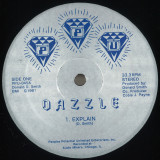
Dazzle - Explain

Dazzle rolled deep. Very deep. In the 1980s, it wasn't unusual for the Milwaukee-based group to show up at various Midwest night clubs in a caravan of 30-40 cars and vans. Their live following was hard won over a career that spanned 20+ years, many line up changes, and a handful of project names. Friends, family, and fans made the journey with them weekend after weekend, a testimony to both the musical prowess of the group and the tight-knit community that they emerged from.

Donald Smith, band leader, was there the whole time - joined by many of his siblings and friends - first as founder of the Ghetto Players, a early 70's nine-piece which also included siblings Michael, Ronald, and Charles. They played hard funk in the style of early Kool and the Gang, and although they sadly left no recordings, the strength of their live act managed to catch the eye of local Milwaukee R&B music entrepreneur Cobie Joe Payne. Cobie had made a couple of records locally in the early/mid 70s as a singer, including the impossibly weird and amazing rare afro-blues-funk 45 "Sweet Thing", but had never enjoyed national success. When the Ghetto Players disbanded in the early-mid 70s, Donald soon put together a new group, C on the Funk (the 'C' referring to lead vocalist and sibling Charles), under Payne's tutelage. Sister Lorrie Smith came in as the drummer, the line-up being fleshed out by brothers David and Melvin Johnson, and friend Robert Mitchell. After a few years as a strictly live attraction, they drove to Chicago and produced a single, "In the Disco" / "A Place" for Payne's small record label Sweet Thang Records in 1980. Lacking the financial backing needed to supply the local R&B disk jockey's "promotional fees" , this single sadly languished in obscurity, gathering dust inside the local tavern jukeboxes and manilla promo envelopes that comprised Payne's DIY distribution network.

C on the Funk were traveling the Mid West extensively at this point, and making some important friends on the road. Ike Wiley Jr. of the Dazz Band/Kinsman Dazz took particular interest and the band was re-christened Dazzle, partially as a tie-in with Dazz, partially to embrace the new sounds that would distinguish the 70s disco scene from what record collectors and DJs would now refer to as the "Boogie" era. There no doubt was a stigma attached to the word "Disco" as the eighties began, and as we see in this collection C On the Funk's "In the Disco" is remixed and transformed into the psychedelic synth instrumental of Dazzle's "Disco's Out", a title which embodies both the next-step approach Smith and company were pushing for, and humorously comments on the state of black dance music in the early 1980s. The Dazzle recording, done in Chicago in 1982, updated the sound and featured an expanded line up, most notably a second synth player (Charles Washington), and a percussionist/second lead vocalist (Greg McDonald). The added synth textures and deep percussive grooves give the Dazzle recordings an elegant late night vibe that resonate just as well in a good pair of headphones as they do on the dance floor. The trance inducing cough syrup-warble of "Explain" may best exemplify this here. Sadly, a pressing flaw in the 12" halted production and promotion, and the EP and the songs within were lost to the ages. The group, having done a much better line in the live music business, followed that path instead all the way to the early 90s. --bio provided by andy noble

No en stock

Haga su pedido ahora y le encargaremos el artículo en nuestro proveedor.

15,34

Ültimo hace: 2 Años
Ethiopians / Soul Brothers - Freeman / Shanty Town

Studio One was founded by Clement "Coxsone" Dodd1 in 1954, and the first recordings were cut in 1963 on Brentford Road in Kingston.1[2] Amongst its earliest records were "Easy Snappin" by Theophilus Beckford, backed by Clue J & His Blues Blasters, and "This Man is Back" by trombonist Don Drummond. Dodd had previously issued music on a series of other labels, including World Disc, and had run Sir Coxsone the Downbeat, one of the largest and most reputable sound systems in the Kingston ghettos.
In the early 1960s, the house band providing backing for the vocalists were the Skatalites[3] (1964–65), whose members (including Roland Alphonso, Don Drummond, Tommy McCook, Jackie Mittoo, Lester Sterling and Lloyd Brevett) were recruited from the Kingston jazz scene by Dodd. The Skatalites split up in 1965 after Drummond was jailed for murder, and Dodd formed new house band the Soul Brothers (1965–66), later named the Soul Vendors (1967) and Sound Dimension (1967-). From 1965 to 1968 they played 9 a.m. to 5 p.m., 5 days a week, 12 rhythms a day (about 60 rhythms a week) with Jackie Mittoo as music director, Brian Atkinson (1965–1968) on bass, Hux Brown on guitar, Harry Haughton (guitar), Joe Isaacs on drums (1966–1968), Denzel Laing on percussion, and on horns (some initially and some throughout): Roland Alphonso, Dennis 'Ska' Campbell, Bobby Ellis, Lester Sterling, among others on horns during the era of Rock Steady. Headley Bennett, Ernest Ranglin, Vin Gordon and Leroy Sibbles were included among a fluid line-up, to record tracks directed by Jackie Mittoo at Studio One from 1966-1968.
During the night hours at Studio One from 1965-1968, singers like Bob Marley, Burning Spear, The Heptones, The Ethiopians, Ken Boothe, Rita Marley, Marcia Griffiths, Judy Mowatt, Alton Ellis, Delroy Wilson, Bunny Wailer[4] and Johnny Nash, among others, would put on headphones to sing lyrics to original tracks recorded by the Soul Brothers earlier each day. These seminal recordings included "Real Rock" (by Sound Dimension), "Heavy Rock", "Jamaica Underground", "Wakie Wakie", "Lemon Tree", "Hot Shot", "I'm Still In Love With You", "Dancing Mood", and "Creation Rebel".
Jackie Mittoo, Joe Isaacs, and Brian Atkinson left Studio One in 1968, recorded drums and bass for Desmond Dekker's and Toots' biggest hits at other Kingston studios, then moved to Canada. Hux Brown stayed in Jamaica to record on the soundtrack The Harder They Come, The Harder They Fall, and toured in Nigeria with Toots and the Maytals and Fela Kuti. The Soul Brothers (a.k.a. Sound Dimension) formed the basis of reggae music in the late 1960s, being versioned and re-versioned time after time over decades by musicians like Shaggy, Sean Paul, Snoop Lion, The Clash, String Cheese Incident, UB40, Sublime, and countless other Billboard originals and remakes trying to emulate their original Rock Steady sound at Coxsone's Studio One.
The label and studio were closed when Dodd relocated to New York City in the 1980s.

Reservar26.01.2024

debe ser publicado en 26.01.2024

24,79

Ültimo hace: 2026 Años
Larry Marshall - Lonely Room

Larry Marshall

Lonely Room

7"-VinylCLD4502
Studio One
26.01.2024

Studio One was founded by Clement "Coxsone" Dodd1 in 1954, and the first recordings were cut in 1963 on Brentford Road in Kingston.1[2] Amongst its earliest records were "Easy Snappin" by Theophilus Beckford, backed by Clue J & His Blues Blasters, and "This Man is Back" by trombonist Don Drummond. Dodd had previously issued music on a series of other labels, including World Disc, and had run Sir Coxsone the Downbeat, one of the largest and most reputable sound systems in the Kingston ghettos.
In the early 1960s, the house band providing backing for the vocalists were the Skatalites[3] (1964–65), whose members (including Roland Alphonso, Don Drummond, Tommy McCook, Jackie Mittoo, Lester Sterling and Lloyd Brevett) were recruited from the Kingston jazz scene by Dodd. The Skatalites split up in 1965 after Drummond was jailed for murder, and Dodd formed new house band the Soul Brothers (1965–66), later named the Soul Vendors (1967) and Sound Dimension (1967-). From 1965 to 1968 they played 9 a.m. to 5 p.m., 5 days a week, 12 rhythms a day (about 60 rhythms a week) with Jackie Mittoo as music director, Brian Atkinson (1965–1968) on bass, Hux Brown on guitar, Harry Haughton (guitar), Joe Isaacs on drums (1966–1968), Denzel Laing on percussion, and on horns (some initially and some throughout): Roland Alphonso, Dennis 'Ska' Campbell, Bobby Ellis, Lester Sterling, among others on horns during the era of Rock Steady. Headley Bennett, Ernest Ranglin, Vin Gordon and Leroy Sibbles were included among a fluid line-up, to record tracks directed by Jackie Mittoo at Studio One from 1966-1968.
During the night hours at Studio One from 1965-1968, singers like Bob Marley, Burning Spear, The Heptones, The Ethiopians, Ken Boothe, Rita Marley, Marcia Griffiths, Judy Mowatt, Alton Ellis, Delroy Wilson, Bunny Wailer[4] and Johnny Nash, among others, would put on headphones to sing lyrics to original tracks recorded by the Soul Brothers earlier each day. These seminal recordings included "Real Rock" (by Sound Dimension), "Heavy Rock", "Jamaica Underground", "Wakie Wakie", "Lemon Tree", "Hot Shot", "I'm Still In Love With You", "Dancing Mood", and "Creation Rebel".
Jackie Mittoo, Joe Isaacs, and Brian Atkinson left Studio One in 1968, recorded drums and bass for Desmond Dekker's and Toots' biggest hits at other Kingston studios, then moved to Canada. Hux Brown stayed in Jamaica to record on the soundtrack The Harder They Come, The Harder They Fall, and toured in Nigeria with Toots and the Maytals and Fela Kuti. The Soul Brothers (a.k.a. Sound Dimension) formed the basis of reggae music in the late 1960s, being versioned and re-versioned time after time over decades by musicians like Shaggy, Sean Paul, Snoop Lion, The Clash, String Cheese Incident, UB40, Sublime, and countless other Billboard originals and remakes trying to emulate their original Rock Steady sound at Coxsone's Studio One.
The label and studio were closed when Dodd relocated to New York City in the 1980s.

Reservar26.01.2024

debe ser publicado en 26.01.2024

24,79

Ültimo hace: 2026 Años
VARIOUS - SOUL LEGENDS

Various

SOUL LEGENDS

3x12inch3438316
Wagram
15.12.2023
 
44

Re-release Soul entwickelte sich gegen Ende der 1950er Jahre aus Rhythm"n"Blues, Gospel, Blues und Jazz. Im folgenden Jahrzehnt war Soul ein Synonym für schwarze Popmusik. Kennzeichnend dafür waren vor allem die Produktionen von Motown Records, zum Beispiel Diana Ross & The Supremes oder Sam Cooke. Seither sind herzergreifender Gesang und groovige Vibes die größten Stilmerkmale des Soul. Zu den weiteren Ikonen des Soul gehören Curtis Mayfield, James Brown, Aretha Franklin, Barry White, Sam Cooke, Al Green und viele mehr. Deren Erfolg ist eng mit dem Kampf der US-amerikanischen Bürgerrechtsbewegung gegen Rassentrennung und für Gleichberechtigung verbunden. 1969 benannte man die Rhythm"n"Blues- in Soul-Charts um. Der Soul-Orkan, der während der Sechziger in den Charts tobte, ebbte jedoch wieder ab, kam aber runderneuert in den 70ern als Phillysound wieder zu erneuten Hitparadenehren. 1982 änderte man die Chart-Bezeichnung von Soul in Black Music. Die vorliegende Kompilation vereint die legendären Stimmen des Soul mit ihren unvergesslichen Hits.

Reservar15.12.2023

debe ser publicado en 15.12.2023

39,92

Ültimo hace: 2026 Años
Various - SOUL VOICES (5x12")

Various

SOUL VOICES (5x12")

5x12inch3444126
Wagram
28.11.2023
 
65

FROM RAY CHARLES TO SELAH SUE, FROM NINA SIMONE TO IBEYI, FROM BARRY WHITE TO ALOE BLACC, DISCOVER THE BEST OF THE GREATEST VOICES OF SOUL MUSIC OF ALL TIME IN A 5 VINYLS BOXSET

No en stock

Haga su pedido ahora y le encargaremos el artículo en nuestro proveedor.

54,58

Ültimo hace: 2 Años
Various - Soul Collected

Various

Soul Collected

12inchMOVLP3449C
Music On Vinyl
28.07.2023
 
33

Soul music originated in the African American community throughout the United States in the late 50s and 60s. Having its roots in African American gospel music and rhythm & blues, it became popular for dancing and listening with prominent record labels as Motown, Atlantic and Stax.

On this 2LP compilation classic soul songs by Curtis Mayfield, Marlene Shaw, Bill Withers, and Aretha Franklin are paired with funky soul stompers by James Brown, Sly & The Family Stone, The Isley Brothers, and poetic soul by Gil Scott-Heron, Marvin Gaye, The Impressions and many more influential artists and groups.

Soul Collected is available as a limited edition of 2000 individually numbered copies on yellow (LP2) and orange (LP2) coloured vinyl and includes an insert.

Reservar28.07.2023

debe ser publicado en 28.07.2023

42,23

Ültimo hace: 2026 Años
De La Soul - 3 Feet High and Rising LP 2x12"

3 Feet High and Rising is the debut studio album by hip hop trio De La Soul and was released on March 3, 1989

It marked the first of three full- length collaborations with producer Prince Paul, which would become the critical and commercial peak of both parties. Critically, as well as commercially, the album was a success. It contains the singles, "Me Myself and I", "The Magic Number", "Buddy", and "Eye Know".

The album title came from the Johnny Cash song "Five Feet High and Rising". It is listed on Rolling Stone's 200 Essential Rock Records and The Source's 100 Best Rap Albums. When Village Voice held its annual Pazz & Jop Critics Poll for 1989, 3 Feet High and Rising was ranked #1. It was also listed on the Rolling Stone's

The 500 Greatest Albums of All Time. Released amid the 1989 boom in gangsta rap, which gravitated towards hardcore, confrontational, violent lyrics, De La Soul's uniquely positive style made them an oddity beginning with the first single, "Me, Myself and I". Their positivity meant many observers labeled them a 'hippie' group, based on their declaration of the 'D.A.I.S.Y. Age' (Da. Inner. Soul. Yall).

Sampling artists as diverse as Hall & Oates, Steely Dan and The Turtles, 3 Feet High and Rising is often viewed as the stylistic beginning of 1990s alternative hip hop (and especially jazz rap).

Reservar06.06.2023

debe ser publicado en 06.06.2023

35,50

Ültimo hace: 2026 Años
De La Soul - 3 Feet High and Rising LP 2x12"

3 Feet High and Rising is the debut studio album by hip hop trio De La Soul and was released on March 3, 1989

It marked the first of three full- length collaborations with producer Prince Paul, which would become the critical and commercial peak of both parties. Critically, as well as commercially, the album was a success. It contains the singles, "Me Myself and I", "The Magic Number", "Buddy", and "Eye Know".

The album title came from the Johnny Cash song "Five Feet High and Rising". It is listed on Rolling Stone's 200 Essential Rock Records and The Source's 100 Best Rap Albums. When Village Voice held its annual Pazz & Jop Critics Poll for 1989, 3 Feet High and Rising was ranked #1. It was also listed on the Rolling Stone's

The 500 Greatest Albums of All Time. Released amid the 1989 boom in gangsta rap, which gravitated towards hardcore, confrontational, violent lyrics, De La Soul's uniquely positive style made them an oddity beginning with the first single, "Me, Myself and I". Their positivity meant many observers labeled them a 'hippie' group, based on their declaration of the 'D.A.I.S.Y. Age' (Da. Inner. Soul. Yall).

Sampling artists as diverse as Hall & Oates, Steely Dan and The Turtles, 3 Feet High and Rising is often viewed as the stylistic beginning of 1990s alternative hip hop (and especially jazz rap).

No en stock

Haga su pedido ahora y le encargaremos el artículo en nuestro proveedor.

35,25

Ültimo hace: 7 Meses
De La Soul - 3 Feet High and Rising LP 2x12"

3 Feet High and Rising is the debut studio album by hip hop trio De La Soul and was released on March 3, 1989

It marked the first of three full- length collaborations with producer Prince Paul, which would become the critical and commercial peak of both parties. Critically, as well as commercially, the album was a success. It contains the singles, "Me Myself and I", "The Magic Number", "Buddy", and "Eye Know".

The album title came from the Johnny Cash song "Five Feet High and Rising". It is listed on Rolling Stone's 200 Essential Rock Records and The Source's 100 Best Rap Albums. When Village Voice held its annual Pazz & Jop Critics Poll for 1989, 3 Feet High and Rising was ranked #1. It was also listed on the Rolling Stone's

The 500 Greatest Albums of All Time. Released amid the 1989 boom in gangsta rap, which gravitated towards hardcore, confrontational, violent lyrics, De La Soul's uniquely positive style made them an oddity beginning with the first single, "Me, Myself and I". Their positivity meant many observers labeled them a 'hippie' group, based on their declaration of the 'D.A.I.S.Y. Age' (Da. Inner. Soul. Yall).

Sampling artists as diverse as Hall & Oates, Steely Dan and The Turtles, 3 Feet High and Rising is often viewed as the stylistic beginning of 1990s alternative hip hop (and especially jazz rap).

Reservar02.03.2023

debe ser publicado en 02.03.2023

35,50

Ültimo hace: 2026 Años
Various - Boss Reggae

Various

Boss Reggae

12inchCLD-LP005
STUDIO ONE
17.02.2023

Studio One was founded by Clement "Coxsone" Dodd1 in 1954, and the first recordings were cut in 1963 on Brentford Road in Kingston.12 Amongst its earliest records were "Easy Snappin" by Theophilus Beckford, backed by Clue J & His Blues Blasters, and "This Man is Back" by trombonist Don Drummond. Dodd had previously issued music on a series of other labels, including World Disc, and had run Sir Coxsone the Downbeat, one of the largest and most reputable sound systems in the Kingston ghettos.
In the early 1960s, the house band providing backing for the vocalists were the Skatalites[3] (1964–65), whose members (including Roland Alphonso, Don Drummond, Tommy McCook, Jackie Mittoo, Lester Sterling and Lloyd Brevett) were recruited from the Kingston jazz scene by Dodd. The Skatalites split up in 1965 after Drummond was jailed for murder, and Dodd formed new house band the Soul Brothers (1965–66), later named the Soul Vendors (1967) and Sound Dimension (1967-). From 1965 to 1968 they played 9 a.m. to 5 p.m., 5 days a week, 12 rhythms a day (about 60 rhythms a week) with Jackie Mittoo as music director, Brian Atkinson (1965–1968) on bass, Hux Brown on guitar, Harry Haughton (guitar), Joe Isaacs on drums (1966–1968), Denzel Laing on percussion, and on horns (some initially and some throughout): Roland Alphonso, Dennis 'Ska' Campbell, Bobby Ellis, Lester Sterling, among others on horns during the era of Rock Steady. Headley Bennett, Ernest Ranglin, Vin Gordon and Leroy Sibbles were included among a fluid line-up, to record tracks directed by Jackie Mittoo at Studio One from 1966-1968.
During the night hours at Studio One from 1965-1968, singers like Bob Marley, Burning Spear, The Heptones, The Ethiopians, Ken Boothe, Rita Marley, Marcia Griffiths, Judy Mowatt, Alton Ellis, Delroy Wilson, Bunny Wailer[4] and Johnny Nash, among others, would put on headphones to sing lyrics to original tracks recorded by the Soul Brothers earlier each day. These seminal recordings included "Real Rock" (by Sound Dimension), "Heavy Rock", "Jamaica Underground", "Wakie Wakie", "Lemon Tree", "Hot Shot", "I'm Still In Love With You", "Dancing Mood", and "Creation Rebel".
Jackie Mittoo, Joe Isaacs, and Brian Atkinson left Studio One in 1968, recorded drums and bass for Desmond Dekker's and Toots' biggest hits at other Kingston studios, then moved to Canada. Hux Brown stayed in Jamaica to record on the soundtrack The Harder They Come, The Harder They Fall, and toured in Nigeria with Toots and the Maytals and Fela Kuti. The Soul Brothers (a.k.a. Sound Dimension) formed the basis of reggae music in the late 1960s, being versioned and re-versioned time after time over decades by musicians like Shaggy, Sean Paul, Snoop Lion, The Clash, String Cheese Incident, UB40, Sublime, and countless other Billboard originals and remakes trying to emulate their original Rock Steady sound at Coxsone's Studio One.
The label and studio were closed when Dodd relocated to New York City in the 1980s.

Reservar17.02.2023

debe ser publicado en 17.02.2023

35,92

Ültimo hace: 2026 Años
Dub Specialist - Bionic Dub Part One

Studio One was founded by Clement "Coxsone" Dodd1 in 1954, and the first recordings were cut in 1963 on Brentford Road in Kingston.[1][2] Amongst its earliest records were "Easy Snappin" by Theophilus Beckford, backed by Clue J & His Blues Blasters, and "This Man is Back" by trombonist Don Drummond. Dodd had previously issued music on a series of other labels, including World Disc, and had run Sir Coxsone the Downbeat, one
of the largest and most reputable sound systems in the Kingston ghettos.
In the early 1960s, the house band providing backing for the vocalists were the Skatalites[3] (1964–65), whose members (including Roland Alphonso, Don Drummond, Tommy McCook, Jackie Mittoo, Lester Sterling and Lloyd Brevett) were recruited from the Kingston jazz scene by Dodd. The Skatalites split up in 1965 after Drummond was jailed for murder, and Dodd formed new house band the Soul Brothers (1965–66), later named the Soul Vendors (1967) and Sound Dimension (1967-). From 1965 to 1968 they played 9 a.m. to 5 p.m., 5 days a week, 12 rhythms a day (about 60 rhythms a week) with Jackie Mittoo as music director, Brian Atkinson (1965–1968) on bass, Hux Brown on guitar, Harry Haughton (guitar), Joe Isaacs on drums (1966–1968), Denzel Laing on percussion, and on horns (some initially and some throughout): Roland Alphonso, Dennis 'Ska' Campbell, Bobby Ellis, Lester Sterling, among others on horns during the era of Rock Steady. Headley Bennett, Ernest Ranglin, Vin Gordon and Leroy Sibbles were included among a fluid line-up, to record tracks directed by Jackie Mittoo at Studio One from 1966-1968.
During the night hours at Studio One from 1965-1968, singers like Bob Marley, Burning Spear, The Heptones, The Ethiopians, Ken Boothe, Rita Marley, Marcia Griffiths, Judy Mowatt, Alton Ellis, Delroy Wilson, Bunny Wailer[4] and Johnny Nash, among others, would put on headphones to sing lyrics to original tracks recorded by the Soul Brothers earlier each day. These seminal recordings included "Real Rock" (by Sound Dimension), "Heavy Rock", "Jamaica Underground", "Wakie Wakie", "Lemon Tree", "Hot Shot", "I'm Still In Love With You", "Dancing Mood", and "Creation Rebel".
Jackie Mittoo, Joe Isaacs, and Brian Atkinson left Studio One in 1968, recorded drums and bass for Desmond Dekker's and Toots' biggest hits at other Kingston studios, then moved to Canada. Hux Brown stayed in Jamaica to record on the soundtrack The Harder They Come, The Harder They Fall, and toured in Nigeria with Toots and the Maytals and Fela Kuti. The Soul Brothers (a.k.a. Sound Dimension) formed the basis of reggae music in the late 1960s, being versioned and re-versioned time after time over decades by musicians like Shaggy, Sean Paul, Snoop Lion, The Clash, String Cheese Incident, UB40, Sublime, and countless other Billboard originals and remakes trying to emulate their original Rock Steady sound at Coxsone's Studio One.

Reservar10.02.2023

debe ser publicado en 10.02.2023

29,37

Ültimo hace: 2026 Años
MAWIMBI - BUBBLING

Mawimbi

BUBBLING

12inchMWB017
Mawimbi
03.09.2021

Eight years deep into their existence, Paris-based Mawimbi are proud to present their debut album Bubbling.
Through their own label and events, the collective have championed up and coming artists who look to fuse african music
with the modern dancefloor. They’ve released records from Lya, Onipa, Afriquoi and James Stewart and brought
established artists and fellow travellers to such as Auntie Flo, Africaine 808, Awesome Tapes From Africa and Esa to
Paris. Now it’s time for the collective to unveil their identity as producers and musicians in their own right.
“Bubbling” refers to the many ideas, encounters and projects that the collective have come into contact with over
the past years. Through their events and their work as label curators and remixers (for artists such as Oumou Sangaré,
Blick Bassy, Cerrone, Onipa), Mawimbi have become known as ambassadors for “afro-electro” - whatever that might
mean - and their debut album buzzes with the contagious energy of the music they love. If you ask Mawimbi, Afro-electro
is about global and local inspiration, from both sides of the Black Atlantic. It’s about paying tribute to the forefathers and
the brothers and sisters in arms across the world. Afrobeat, highlife, South African bubblegum pop, Malian music,
maloya… Bubbling seeks to connect geographically separate but spiritually similar club sounds.
Hence “El Caribe” (feat. Ghetto Kumbé) is half cumbia, half Carribean dancehall, while “Ngana” (feat. Fatim
Kouyaté) has some elements of dub music and “Kakraa” (feat. K.O.G) nods to disco‐infused Ghanaian productions from
the 70s. Despite the influences, this is a record designed for home-listening, a nod to our present circumstances, but also
a deliberate step away from dancefloor. A moment of patience and reflection as much as joy and celebration.`
Above all, Bubbling is a personal record, about unexpected cross-pollinations and the collective’s individual
explorations of these musical territories. Mawimbi's own history is one of coincidences and chance encounters, and so is
“Bubbling”. All the collaborations were born out of the connections made over the last 8 years. A WhatsApp chat with
Zambian artist Mufrika, a spontaneous studio jam with Ghetto Kumbé in a Parisian Basement: these are captured
moments of real, vital connections made.
Like Mawimbi itself, Bubbling is a collage of relationships and shared experiences, shaped by nascent friendships
and musical encounters. It’s a truly DIY document in that sense, the sound of the last eight years of the Mawimbi
adventure: free spirited, passionate, warm and generous.

No en stock

Haga su pedido ahora y le encargaremos el artículo en nuestro proveedor.

14,50

Ültimo hace: 4 Años
Various - The 60s Album

Various

The 60s Album

12inch0600753937662
Sony UK
28.07.2021
 
37

Exclusively on vinyl, The 60s Album brings together some of the biggest and most iconic names of the decade.


A value packed 37 tracks kick off with one of the greatest of all time ‘Good Vibrations’ from The Beach Boys, and continues with solid gold smash hits including ‘House Of The Rising Sun’, ‘The Sun Ain’t Gonna Shine Anymore’, ‘You’ve Lost That Lovin’ Feelin’’, the timeless ‘In Dreams’ from Roy Orbison, ‘Blue Velvet’ from Bobby Vinton, and the epic ‘River Deep Mountain High’ by Ike & Tina Turner.

Side B begins with a 6-track salute to the soul female stars and groups of the era - The Supremes, Martha Reeves & The Vandellas, The Ronettes, The Crystals, The Shangri-Las and Lesley Gore are all here, alongside some easy listening from Andy Williams and Julie London, and the cool pop jazz of Astrid Gilberto and The Dave Brubeck Quartet.


The second LP begins with 6 of the most iconic U.S. tracks ever: Simon & Gafunkel’s ‘Mrs Robinson’, and Harry Nilsson’s ‘Everybody’s Talkin’ lead into the peerless ‘Witchita Lineman’ from Glen Campbell, the immaculate ‘California Dreamin’ from The Mamas & The Papas, Scott McKenzie’s ’San Francisco’, and Linda Ronstadt’s defining vocal as part of The Stone Poney’s on ‘Different Drum’. The side is rounded off with 3 of the most atmospheric pieces of music from the 60s… ’A Whiter Shade Of Pale’, ’Nights In White Satin’, and Fleetwood Mac’s stunning ‘Albatross’.

The final side offers up Aretha Franklin, Dionne Warwick, Ben E. King and Dusty Springfield as some of the best voices and most soulful performances ever, before some of the greatest pop from Petula Clark, Love Affair and ‘I Got You Babe’ from Sonny & Cher and then it’s left to two of the biggest names in music history to close the album - Bob Dylan, and the incredible ‘In The Ghetto’ from Elvis Presley.


37 of the greatest tracks and artists from an era-defining decade… The 60s Album.

No en stock

Haga su pedido ahora y le encargaremos el artículo en nuestro proveedor.

25,17

Ültimo hace: 4 Años
SPIKE IN VAIN - DISEASE IS RELATIVE (COLOURED)

everything one needs to know about this album: a misshapen,
CHUD-like figure wanders in a graveyard bearing a cross,
while a mutated fish flops in a polluted ditch and a clutch
of factories belch their smoke above it all. The message of
the illustration is not to frighten or warn, but to celebrate
and admire.
Originally released in January of 1984, Disease Is Relative
is an unapologetic and wholesale embrace of death,
disease, and dystopia, with liberal doses of absurdism
and an unrelenting devotion to anything unexpected,
chromatic, or evil sounding. Sporting influences as
diverse as no wave, death rock, funk, post-punk, hardcore,
metal, and prog rock, this music somehow happened in the
midst of a first wave hardcore scene, before there was a
“post-” to be “post” of. Less surprising is that this happened
in Cleveland, which also inspired a desire to recreate the
feeling of the city’s post-industrial desolation in sound.
There’s also some epic screaming and crazy guitar playing.
The album features three songwriters (brothers Andrew
& Chris Marec, Robert Griffin), who also divide guitar,
bass, and vocals equally between themselves here.
Drummer Bruce Allen is the secret weapon, and provides
a clue to what a young Bill Bruford might have done in a
band like this. And yet, beyond all odds, the end result is
cohesive, cathartic, and utterly idiomatic. The distinct vibe
of the album, and its sheer quantity of killer riffs, songs
and performances have made it an album that people have
championed over time, while others have come to know it
through the interwebs as a result.

Reservar30.04.2021

debe ser publicado en 30.04.2021

25,84

Ültimo hace: 2026 Años
SPIKE IN VAIN - DISEASE IS RELATIVE (COLOURED)

everything one needs to know about this album: a misshapen,
CHUD-like figure wanders in a graveyard bearing a cross,
while a mutated fish flops in a polluted ditch and a clutch
of factories belch their smoke above it all. The message of
the illustration is not to frighten or warn, but to celebrate
and admire.
Originally released in January of 1984, Disease Is Relative
is an unapologetic and wholesale embrace of death,
disease, and dystopia, with liberal doses of absurdism
and an unrelenting devotion to anything unexpected,
chromatic, or evil sounding. Sporting influences as
diverse as no wave, death rock, funk, post-punk, hardcore,
metal, and prog rock, this music somehow happened in the
midst of a first wave hardcore scene, before there was a
“post-” to be “post” of. Less surprising is that this happened
in Cleveland, which also inspired a desire to recreate the
feeling of the city’s post-industrial desolation in sound.
There’s also some epic screaming and crazy guitar playing.
The album features three songwriters (brothers Andrew
& Chris Marec, Robert Griffin), who also divide guitar,
bass, and vocals equally between themselves here.
Drummer Bruce Allen is the secret weapon, and provides
a clue to what a young Bill Bruford might have done in a
band like this. And yet, beyond all odds, the end result is
cohesive, cathartic, and utterly idiomatic. The distinct vibe
of the album, and its sheer quantity of killer riffs, songs
and performances have made it an album that people have
championed over time, while others have come to know it
through the interwebs as a result.

Reservar30.04.2021

debe ser publicado en 30.04.2021

26,85

Ültimo hace: 2026 Años
Artículos por página
N/ABPM
Vinyl