“Nothing ever really disappears,” Cassandra Jenkins says. “It just changes shape.” Over the past few years, she’s seen relationships altered, travelled three continents, wandered through museums and parks, and recorded free-associative guided tours of her New York haunts. Her observations capture the humanity and nature around her, as well as thought patterns, memories, and attempts to be present while dealing with pain and loss. With a singular voice, Jenkins siphons these ideas into the ambient folk of her new album.
An Overview on Phenomenal Nature honors flux, detail, and moments of intimacy. Jenkins arrived at engineer Josh Kaufman’s studio with ideas rather than full songs — nevertheless, they finished the album in a week. Jenkins’ voice floats amid sensuous chamber pop arrangements and raw-edged drums, ferrying us through impressionistic portraits of friends and strangers. Her lyrics unfold magical worlds, introducing you to a cast of characters like a local fisherman, a psychic at a birthday party, and driving instructor of a spiritual bent.
Jenkins’ last record, 2017’s Play Till You Win, confirmed the veteran artist’s talent. Evident of Jenkins’ experience growing up in a family band in New York City, the album showcased her meticulous songwriting and musicianship, earning her comparisons to George Harrison and Emmylou Harris. Jenkins has since played in the bands of Eleanor Friedberger, Craig Finn, and Lola Kirke, and rehearsed to tour with Purple Mountains last August before the tour’s cancellation. Her new record departs from her previous work in its openness and flexibility, following her peripatetic lifestyle. “The goal is to be more fluid, to be more like the clouds shifting constantly,” she says. The approach allowed Jenkins to express herself like she never has.
On album opener “Michaelangelo,” before the heavy drum beat and fuzz guitars enter, Jenkins sings quietly “I’m a three-legged dog, working with what I’ve got / and part of me will always be looking for what I lost // there’s a fly around my head, waiting for the day I drop dead.” Phenomenal Nature thrives in this dichotomy between ornate sonics and verbal frankness, a calming guided tour to the edge. Later, on “Crosshairs,” amid lush strings, she sings conversationally: “Empty space is my escape / it runs through me like a river / while time spits in my face.”
“Hard Drive,” the third track and album centerpiece, opens with a voice memo Jenkins recorded at The Met Breuer: a guard muses about Mrinalini Mukherjee’s hybrid textile and sculpture works, which were then on display in a retrospective titled Phenomenal Nature. “When we lose our connection to nature, we lose our spirit, our humanity,” she explains. Stuart Bogie's saxophone & Josh Kaufman's glittering guitar make way for Jenkins' spoken word which constellates scenes from her life, gradually building and blossoming as she recreates a meditation guided by a friend who incants, “One, two, three.”
Sounds of footsteps and bird calls run through the album’s glittering conclusion, “The Ramble.” Meditative and bright, it recalls how Jenkins felt while writing and recording her new material: “Everything else is falling apart, so let’s just enjoy this time,” she said. If Phenomenal Nature has a unifying theme, it’s the power of presence, the joy of walking in a world in constant flux and opening oneself to change.
Suche:ka§par
Nils Petter Molvær and Mino Cinelu had both come a long way in their careers before they met. Cinelu gained international renown on Miles Davis’ albums We Want Miles and Amandla, also noted for his playing with the likes of Weather Report, Gong, Herbie Hancock, Pat Metheny, Sting, Santana, Lou Reed and Laurie Anderson, to name just a few. He has also released 3 solo records and collaborated with Dave Holland and Kevin Eubanks on the World Trio album. Nils Petter Molvær, meanwhile, is one of the most outstanding figures in European jazz. In 1997, he made his debut on ECM Records with the album Khmer, combining the Nordic feeling of nature with the Southeast Asian philosophy of sound. His journey into the uncharted areas of music spans almost a dozen records, on which he explores various combinations of acoustic and electrical sounds. He collaborated with Berlin’s electronic producer Moritz von Oswald in 2013, with the reggae philosophers Sly & Robbie in 2018 and with Bill Laswell on several occasions.
Cinelu and Molvær in some senses represent two worlds, which – at first glance – could hardly be more different. Their musical home is the entire planet, but while Molvær's hoarse and cloudy trumpet sound evokes boreal cold, Cinelu stands for the rhythmic fire of Latin America and Africa. On ‘SulaMadiana’, they’ve found their common playground - the album’s title itself a tribute to the two musicians’ heritage. Sula is the Norwegian island from where Molvær grew up, and Madiana is a synonym for Martinique, from where Cinelu's father hails.
SulaMadiana is a cornucopia, spilling out reverberations of Miles Davis, Gong, and previous works of Molvær, and yet Molvær and Cinelu open up doors to entirely new worlds. Cinelu becomes a singer on his percussion, while Molvær's electronically distorted sounds create a driving pulse. Cinelu plays acoustic guitar, Molvær conjures up drones on the electric guitar. The interplay between the two musicians is key, Molvær observing; “We are different, but what we have in common is that we like to give some space to things. I create space for him, he creates space for me, and we both create space for music.” Cinelu adds: “It doesn't matter who has what share in music. We both know each other’s cultures, we find bridges and crossings, and often we walk these paths that lead in the same direction. We wrote everything together and followed our feelings. There are no limits or barriers.”
PHILLIP BALLOU Pittsburgh-born Phillip Ballou’s earliest years were spent in the gospel field; after he moved to New York City in the ‘70s, he teamed up with Bennie Diggs and Arthur Freeman, founding members of The New York Community Choir and singer Arnold McCuller to form the group Revelation. The quartet recorded for RSO Records, scoring some R&B success in the US with tracks like “Get Ready For This” and “You To Me Are Everything,” touring the Bee Gees among others. Phillip also sang on albums by NYCC recorded for RCA Records and continued with Revelation until 1982. Frequently hired for sessions in and around New York, Phillip teamed up with UK soul music journalist David Nathan (who he’d met in 1974 during Nathan’s first US visit) and John Simmons, formerly a member of The Reflections, another New York vocal group to write a series of songs for his own proposed solo record deal. Although a contract did not materialize, one of the songs – “Ain’t Nothing Like The Love” – got some interest from famed Philadelphia producer Thom Bell who presented it to The O’Jays. Ultimately, the tune was turned down by Kenny Gamble and John Simmons, by then musical director for Stephanie Mills, recorded his own version for a small independent label in 1981. Phillip continued his own musical journey, touring and recording with James Taylor and Todd Rundgren. In addition, Phillip’s name graced recordings by George Benson, Billy Ocean, Kashif, Nona Hendryx, Jonathan Butler, Teddy Pendergrass and Melba Moore; in 1981, he began recording with Luther Vandross and became a part of Luther’s touring band for many years, as well as singing on productions by Luther on Aretha Franklin, Dionne Warwick and others, continuing his association with him until Luther’s 2003 stroke. Phillip returned to his gospel roots in 2004 as Minister of Music at a Brooklyn church and passed away in March 2005, aged 55 .We are proud to bring you Phillips second single on Super Disco Edits, and perhaps his best! "We'll be together" is an uplifting song with an almost gospel tinged melody. But the songs lyrics portray a love thats just about to blossom.
CLEAR VINYL
DAS LEGENDÄRE MINI-ORCHESTER AUS MONTREAL MELDET SICH NACH ÜBER 10 JAHREN MIT NEUER MUSIK ZURÜCK. House Music unfolds as one long piece, a recorded-then-sculpted improvisation that vastly expands their work, coalescing classical and electronic instrumentation in the creation of genre-defying musical worlds. With help from engineer Hans Bernhard, the band wired every corner of Sarah Neufeld's (Violin, vocals) multi-story rural Vermont house. She and the mini orchestra's other five members - Pietro Amato: French horn, keyboards, electronics; Michael Feuerstack: Pedal steel guitar, keyboards, vocals; Kaveh Nabatian: Trumpet, gongoma, keyboards, vocals; Richard Reed Parry: Bass, vocals; and Stefan Schneider: Drums - assigned themselves to different rooms. They spent two weeks together in camaraderie, creation, and focused isolation to record their improvised sessions every day, but ultimately structured a 45-minute album out of a one hour-and-a-half long improvisation.
Lydmor's new album 'Capacity' is a musical maze full of alluring mysteries. At the same time, it is part of a process of liberation, which is about opening oneself up and discovering one's capacity. For her previous album, Lydmor travelled to Shanghai. But on her new album, Lydmor has mostly travelled deep into herself. 'Capacity' is a contrasting musical work where fiction and reality merge into a multifaceted sound universe. It is the electronic pop artist's most personal, complex and conceptual album to date. There is almost a David Lynch'ish cut about 'Capacity'. The album is like a winding maze where it is difficult to decipher what is real and what is an illusion. Like a book with countless narratives. Without conclusions. Ambiguous. Full of alluring mysteries, dreams, reflections and messages about gender, identity, love, guilt and liberation. Rich in contrasts: Black/white. Silence/noise. Weakness/strength. Fiction/reality. Labyrinth/compass.
Multiple media has compared the quirky voice to the likes of Grimes, Kate Bush or Björk but inevitably the comparisons fall short. (Kaltblut Magazine) - With brutal honesty, unbelievable vulnerability and yet dreamy, she sings the soul out in her pulsating electronic pop songs. The soft, bright voice is deceptive. Denmark's "hidden gem" is a must-listen. (Flux FM) - She is every bit as innovative as Madonna ever was when she started out. Lydmor ticks all the boxes; the girl has everything. For my money she’s the most ground-breaking, inventive artist in Europe right now, possibly in the world. (God Is In The TV, UK) - A unique artist who somehow manages to combine sophisticated and subtle balladry with strident electronic pop, I’ve declared previously that I believe she is only one step away from becoming a big name. Perhaps the feelings are supposed to be mutually inclusive, as the song swings musically from simply cold to complexly hot. It is one that does try to combine both sides of her song writing persona, the introverted balladry and the more elaborate, extrovert electro-pop. (Nordic Music Review) - Revolting pop pathos, primed with pumped up beats. (Negative White, Switzerland)
- A1: Contrast Trio - In The Bottle
- A2: Key Elements - Elemental
- A3: Cv Vision - 1The U
- A4: Wanubale - Hickups
- B1: Kuf - Only When I Sleep
- B2: Gta Hofmann - Der Mogul (Kryptox Version)
- B3: Modha - Harzer Strasse
- B4: Trioritat X Lukas Lehmann - Olk
- C1: Le Millipede - Compost Ghosts
- C2: Ark Noir - Arkomplex
- C3: Perilymph - She Fell
- D1: Love Songs - Kolner Strasse
- D2: Kuhn Fu - The Flounder
- D3: Transport - Tanz Um Den Melkeimer
- D4: Spiritczualic Enhancement Center - 360 Degrees Of Harmony
The Kraut Jazz Futurism compilation shows what's cookin' in the new German Jazz scene. Young German bands and a few of the international musicians working in Berlin now. Fresh artists that combine Jazz, Krautrock, Afro, Hip Hop and Electronica in a new way. The first volume of the compilation came out last year and was described by The Wire as "... a re-drawn map of underground Berlin. Refreshingly new, eccentric, badassed and sometimes funny." This 2nd part goes further. Similar to Gilles Peterson's "We Out Here" compilation, where he shows mainly the new hip english Jazz artists, on Kraut Jazz Futurism, Kryptox records head honcho Mathias "Kapote" Modica puts together what's hot in the new club jazz scene in Germany. And there is a lot cookin' in Berlin right now. Kraut Jazz Futurism comes out on Kryptox. Sublabel of Gomma & Toy Tonics records.
Two years after their first record came out, the crew operating legendary dance nights in Nantes are back on top of the new release pile. Two original tracks by Kanot and two remixes. Overall, their stylistic balance signature is maintained, although the gravity center is a bit more leftfield and poetic, a bit less dance-obvious. But that’s only in comparison to other material: any of the four pieces here can take a dance floor apart, played at the right time.
Hit & Run has a massive “star grabbing” feel, the synth and guitar surges sounding like as many jumps above the stratosphere, and the vocalizing choirs on top making it a definitive cosmic jam.
Turbulens is more earthy than spacy: drum breaks and big ass basslines bring out an irresistible leg shaking feel, the melodic guitars on top balance the vibe into that delicious moment when Caribbean sunsets turn the day into a warm a groovy night, certainly a party starter. The Pilotwings Remix is to the image of their added touch: trancy on edges but very far from easy or obvious. Constantly jumping above and diving under the line, it’s playing greatly with dancers’ feet, and eventually their minds.
Houseman Vidock delivers the most danceable material on this record. His strong experience as a DJ for parties focused on having people dancing freely for a long time is clearly audible. This slo-mo belter doesn’t need much advertisement, it just needs to be played to any dancefloor, be it at midnight or 8 am.
Statistique Synthétique draws as much from the history of computer sound synthesis as from its latest developments. But well beyond developing simply as a proof of concept, this piece aims to transcend the abstract status of synthetic sound objects and lead them to a properly hallucinatory state, that is to say to a meeting point where the object and perception dissolve into each other, in a sort of transcendental field. Beyond, also, hylomorphism, to reach the world of matter-form fusions, where perception knows how to see "shoulders of hills", as Cézanne wrote.
Teum (the Silvery Slit) is, as the title suggests, an overture, an opening to the game of multiplications, fragmentations, duplications. But it is also the opening understood as the void that blossoms between two borders, a break from which escapes a double tension, both the pulling force of these two edges which move apart and the opposite force of reconciliation, of compression. Okkyung Lee invites us to a truly telluric moment, a rare moment of expression where tectonic movements and shear stresses become music. If the earthquakes were, as we thought in the 18th century, due to underground thunderstorms, there is no doubt that this piece of music, both celestial and continental, could have been their audible manifestation.
Text by François Bonnet
HeckerStatistique Synthétique2020 / 25'15Computer-generated sound with resynthesized situated texture recordingsWritten and produced by Florian Hecker, 2019 - 2020Texture analysis and resynthesis algorithm: Axel Röbel, Analysis/Synthesis Team, IRCAM, ParisMastered by Rashad BeckerPhoto by Mauricio Guillén, 2019
Thanks to Axel Röbel for his commitment to the project and special appreciation to GRM, Luke Fowler, Mauricio Guillén, Dirk Mayer and Porta33
Location Texture Recordings, using DPA 4060, DPA 4017B, DPA 4021 and DPA 4060 microphones to Sound Devices 702 recorder; except segment 04:31 - 05:37, recorded by Luke Fowler, April 2019 using Sony M10.
00:00 - 02:00 Lopud, Croatia, June 200802:00 - 03:12 Ponta do Sol, Madeira, ER 101, April 201903:12 - 04:14 Prentiss St, Cambridge, MA, February 201504:14 - 04:31 Anjos, Ponta do Sol, Madeira, ER 101, April 201904:31 - 05:37 Atelier Cézanne, Aix-en-Provence, April 201905:37 - 08:31 Anjos, Ponta do Sol, Madeira, ER 101, April 201908:31 - 09:46 Praia dos Anjos, Ponta do Sol, Madeira, ER 101, April 201909:46 - 10:39 Private garden, Kissing, September 200910:39 - 11:15 Praia dos Anjos, Ponta do Sol, Madeira, ER 101, April 201911:15 - 15:11 Porto do Paul do Mar, Calheta, Madeira, April 201915:11 - 16:53 Prinz Eugen Strasse, Vienna, June 200816:53 - 24:27 Risco, Rabaçal, Madeira, April 201924:27 - 25:15 Bois de Boulogne, Avenue du Mahatma Gandhi, Paris, September 2015
:::::::::::::::::::::::::::::
Okkyung LeeTeum (the Silvery Slit)2019 / 20'03Performed, recorded and composed by Okkyung Lee (ASCAP)Mixed by Lasse MarhaugMastered by Guuseppe IelasiPhoto by Lasse MarhaugPart of Re-Imagine Europe, co-funded by the Creative Europe Programme of the European Union.
Cut by Andreas Kauffelt at Schnittstelle, Berlin, September 2020Sleeve design by Stephen O'Malley
– 31 tracks from Capcom’s 2012 ‘dramatic horror’ sequel
– Music by international composition team and live orchestral recordings
Capcom and Laced Records continue their international alliance with the Resident Evil 6 (Original Soundtrack) vinyl release. 31 tracks specially mastered for vinyl will be pressed to two heavyweight, 180g LPs, housed in a gatefold sleeve with artwork by Capcom and designer Boris Moncel. The Limited Edition variant — exclusive to the Laced Records store — features ‘Coke Bottle Green’ discs, while the Standard Edition will have traditional black vinyl.
In a series known for multiple playable characters, Resident Evil 6 upped the ante with players navigating four distinct, action-packed scenarios set across the world. The experienced composition team comprised Thomas Parisch, Laurent Ziliani, Daniel Lindholm and Sebastian Schwartz alongside Capcom stalwarts Kota Suzuki, Akihiko Narita, Azusa Kato and Akiyuki Morimoto. The rip-roaring score for the ‘dramatic horror’ title was recorded with the 90-piece Sydney Scoring Orchestra.
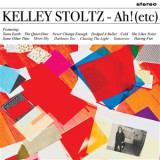
First pressing of 400 units comes as yellow vinyl! "I was guzzling wine at my favorite bar in San Francisco, the Rite Spot, and the entertainment that night was some local opera singers singing along with a big video screen showing a collage of various operatic moments with subtitles. One particular subtitle, 'Ah!-(etc)' made me laugh, I thought it was a perfect description of life - the joy of existence against the etcetera of it all, the struggle. With a heavy head of rose' it seemed like ecstatic poetry! I scribbled it on a napkin and thought it might make a good title for something" And so the mystery behind the title of Kelley Stoltz new record is solved. Less of a mystery is the quality contained therein_ after 12 self-titled releases and a several more under pseudonyms, Stoltz is the word for "one-man-band-home-recording-pop-songs of idiosyncratic character." A quick follow up to his more power pop and pub rock LP only "Hard Feelings" offering in the summer, "Ah-(etc)" finds Stoltz returning to his sweet spot, writing songs that never were, but should have been in the 60's and 80's. As with other LPs Stoltz makes virtually every noise on the album which was written and recorded in 2019 at his Electric Duck Studio in. San Francisco. A few friends popped in to play along_ Stoltz former bandmate, Echo & the Bunnymen's Will Sergeant adds electric guitar to "The Quiet Ones" a sort of Scott Walker lyrical take on strangers and neighbors. Karina Denike formerly of Dance Hall Crashers adds gorgeous vocals on the bossanova groover "Moon Shy", where Sergeant pops up again in a spoken word role on the outro. Allyson Baker of SF's Dirty Ghosts sings on "She Like Noise", a song Stoltz wrote for her in celebration of her love of seeing live bands. The album was mastered by Mikey Young in Australia.
- A1: Paradise (Stay Forever)
- A2: Go!Go!Style
- A3: Lady Blue
- A4: Midori Eyes
- A5: Breeze With U
- A6: The Lemegton Bop
- A7: Knife & Crystal
- A8: Ego 24-7
- A9: Last Dance Xx
- A10: Sunset Song
- A11: To The Heart
- A12 17: 00 Under Red Skies
- B1: House Of Bliss
- B2: Headlights On The Shore
- B3 8: Th Street Rose
- B4: Leaving
- B5: End Of The World
- B6: Welcome
- B7: The Plateau
- B8: The Sarcophagus
- B9: Temple Of Tears
- B10: Idle Lands
- B11: Transit (Empyrean)
- B12: Transit (Perdition)
In Zusammenarbeit mit dem britischen Entwickler-Studio Kaizen Game Works veröffentlicht das Kölner Soundtrack-Label Black Screen Records im Frühjahr 2021 Barry "Epoch" Toppings funkigen "City-Pop meets Vaporwave"-Soundtrack zu dem von der internationalen Gaming-Presse gefeierten Open World Adventure Game Paradise Killer auf Vinyl. Barrys Toppings Soundtrack erscheint auf limitiertem 180g Curacao & Pink Doppel-Vinyl und kommt in einem von 80er Animes & City Pop-Alben inspirierten Artwork der deutschen Designerin Mizucat. Zudem enthält das Vinyl ein gefaltetes A2 Poster und einen Download Code. Die Sounds des Paradieses. Die Musik eines kosmischen Traums. Tracks einer anderen Realität. Das Tempo eines Verbrechens, dass alle Verbrechen beendet. Der Beat von lange verlorenen außerirdischen Göttern. Die Playlist des "Investigation Freaks". Lass dich von der Musik ins Paradies führen. Fühle die glühend heiße Sonne auf deiner Haut. Rieche unerträglich heißen Beton. Genieße den süßen Geschmack von Verbrechen, begangen, auf einer tropischen Insel in einer alternativen Realität. Erinnerst du dich daran, wie wir am Strand getanzt haben? Neben den paradiesischen Straßen? Du hast mir dieses Mix-Tape auf dem Dach deines Apartments gemacht. Wir haben den Mond angestarrt. Du sagtest, du würdest den Mond töten. Ich glaubte dir nicht. Wie falsch ich doch lag.
Back in October 2009, Strut’s Inspiration Information series was in full swing. Following an acclaimed collaboration between Mulatu Astatke and The Heliocentrics, Finnish maverick Jimi Tenor hit the studio for a mouth-watering head to head with Afrobeat drumming legend, Tony Allen.
Tenor had already built a reputation as a fascinating enigma in modern day music. Consistently one of the most inspired and unpredictable live artists around, his work since his breakthrough album ‘Intervision’ (Warp, 1997) had involved open-minded projects ranging from live film soundtracks and orchestral pieces to a series of Afro-based albums with his band Kabu Kabu. Enjoying a burgeoning revival, Tony Allen had continued to attract new fans. Celebrated as the creator of the Afrobeat rhythm and a lynchpin of Fela Kuti’s Africa 70 band, his work at the time of this recording had included the first album as The Good, The Bad & The Queen with Damon Albarn and his debut recording for World Circuit Records, ‘Secret Agent’.
Recorded at Lovelite Studios in Berlin during November 2008 ith further sessions in Finland and Paris, the Tenor / Allen collaboration whipped up a raw, heavy analogue sound mixing the full range of Allen’s Afrobeat repertoire with Tenor’s off-kilter brew of dark humour, tongue-in-cheek lyrics and tight, firing musicianship. The sessions involved key members of Tenor’s Kabu Kabu band and Berlin-based guest MC Allonymous with tracks evolving naturally from jamming ideas together over five intense days of recording, fuelled by plenty of African food and whisky. Tenor’s trademark range of home-made instruments rubbed shoulders with vintage keyboards and traditional African percussion.
The resulting set became one of the best recordings that both artists produced during this period. Tracks range from Jimi’s S&M tableau, ‘Darker Side of Night’ to the apocalyptic commentary on our times, ‘Path To Wisdom’ and the hilarious lampooning of the UK immigration system, ‘Mama England’, composed on the Tenor tour bus. The album also featured fusions based around more traditional low-slung Afrobeat structures (‘Sinuhe’, ‘Got My Egusi’) and ended with the epic freestyle juggernaut, ‘Three Continents’, a life affirming, mesmeric groove built around another rough-as-nails Allenko rhythm base. 'Inspiration Information: Jimi Tenor / Tony Allen' is re-released on 22nd February 2021 and is dedicated to the memory of the great, incomparable Tony Allen.
First reissue of long out-of-print and sought after release from 2009
Unique fusion of Afrobeat drumming and psychedelic Jazz
Vinyl cut from original sessions
WRWTFWW Records is beaucoup happy to announce the official reissue of Pierre Barouh's hard-to-describe-but-easy-to-enjoy French flair meets Japanese avant-garde lost treasure of experimental-electronic-chanson-pop with a new-wave-minimal-bossa touch, Le Pollen. Originally recorded July 1982 at Nippon Columbia Studio in Tokyo and composed, arranged, and played by a who's who of Japan's most groundbreaking musicians of the 80s, the album comes as a LP with bonus 7inch, housed in a heavy sleeve displaying two immaculate photos of Barouh and holding a printed lyrics insert.
A free-spirited world traveler with an incredible ear for music, Paris-born singer and activist Pierre Barouh introduced the sounds of Brazil (and more) to Europe and pushed the envelope with his pio-neering label Saravah, home of adventurous innovators Brigitte Fontaine, Areski, Jacques Higelin, Naná Vasconcelos, and Roland Bocquet's Catharsis among many others. His bohemian border-free vision of modern chanson, blending musical tradition from various parts of the globe with forward-looking artistry, resonated particularly well in Japan, where the scene spearheaded by Yellow Magic Orchestra fell in love with everything Barouh.
And so one day in 1981, Pierre Barouh received an invitation from a Japanese label to come record an album in Tokyo. Not one to turn down an escapade around the world, the French visionary jumped on a plane and landed in a studio surrounded with a dream line-up of musicians: Yukihiro Takahashi (who had named his solo debut Saravah! after Barouh's imprint) and Ryuichi Sakamoto of YMO, Yasuaki Shimizu and his Mariah bandmates Masanori Sasaji and Hideo Yamaki, members of the Moonriders, Motohiko Hamase, Mitsuru Sawamura of Interior, Kazuhiko Katoh and the list goes on. Also participating in the making of the album were longtime collaborator Francis Laï and the mys-terious and beautiful David Sylvian.
The result is Le Pollen, a sincere and affectionate mix of nouveau chanson, techno-pop, post-punk, jazz, bossa, ambient, and minimalism. And probably something else entirely. Honestly impossible to classify in a particular genre, Pierre Barouh's fascinating cosmopolitan music melting pot is, above all, a reassuring ode to humanity, where friendship, exchange, and collaborative creativity breeze freely. Making music together. It's all love.
Pierre Barouh sadly passed away in December 2016, leaving behind a monumental legacy of music and art for us to cherish, and a life philosophy that's well worth considering:
La vie, qu'elle soit longue ou brève
Moi, tous mes rêves
Je les prends toujours au sérieux
Quand l'utopie brise les chaînes
C'est l'oxygène,
De ceux qui sont restés curieux
Life, be it long or brief
Me, all my dreams
I always take them seriously
When utopia breaks the chains
It's the oxygen,
Of those who've remained curious
From the song "L'Autre Rive" on Le Pollen.
The Pet Parade,” the title track to Fruit Bats’ newest album, might be a surprising opening track for longtime fans of Eric D. Johnson’s beloved indie folk-rock project. The six-and-a-half-minute tone poem smolders and drones over just two chords, inspired by the strange and silly community events that he saw growing up outside of Chicago, in La Grange, Illinois, in which people dressed up and showed off their pets. Decades later, The Pet Parade emerges in troubled times, living within what Johnson refers to as the beauty and absurdity of existence. While many of the songs on The Pet Parade were actually written before the pandemic, it’s impossible to disassociate the record from the times. As an example, producer Josh Kaufman (Bob Weir, The National, and Bonny Light Horseman, in which he plays with Johnson and Anaïs Mitchell) was brought in for his deep emotional touch and bandleading abilities. However, Johnson, Kaufman, and the other musicians on The Pet Parade drummers Joe Russo and Matt Barrick (The Walkmen, Fleet Foxes), singer-songwriter Johanna Samuels, pianist Thomas Bartlett (Nico Muhly, Sufjan Stevens), and fiddler Jim Becker (Califone, Iron & Wine) were forced to self-record their parts in bedrooms and home studios across America. Still, says Johnson, “The songs have enough intimacy that it doesn’t sound like it was made a million miles away.” Such tension and turmoil also impacted the lyrics of The Pet Parade. While “Cub Pilot” and “Here For Now, For You” began as more traditional love songs from a personal “I” to a specific “you” Johnson quickly realized that these songs needed to comfort broader audiences, changing the words to a more inclusive “we” and “us.” So too in “The Balcony,” a song ostensibly about a particular space in his grandmother’s apartment, but one that evolved into a metaphor on patience. At times upbeat and reassuring (“Eagles Below Us”) and at times quietly contemplative (“On the Avalon Stairs”), The Pet Parade marks a milestone for Johnson, who celebrates 20 years of Fruit Bats in 2021. In some ways still a cult band, in other ways a time-tested act, Fruit Bats has consistently earned enough small victories to carve out a career in a notoriously fickle scene. And Johnson himself who has played in The Shins, composed film scores, gone solo and returned back to the moniker that started it all, and most recently, earned two GRAMMY® nominations with Bonny Light Horseman doesn’t take this long route of life’s pet parade for granted. “I’m still really excited to make records,” he says. “Lucky and happy and maybe happier that things went slower for me. I’m savoring it a lot more.
Comes with printed innersleeve and download code. Limited 300. "Musician, composer and one of the most revered figures for today's younger generation of experimental and alternative Arabic music scenes, Kamilya Jubran (text, oud & vocals), collaborates with long standing musical partner, composer, accomplished trumpet player and seasoned electronic musician Werner Hasler (trumpet & electronics). In Wa (Arabic for and), their third album together as a duo, Kamilya Jubran and Werner Hasler continue to interrogate their listening and their expression, their research and their desires, to unravel a musical universe of possibilities; "a unison of timbres, cultures complementing, the complicity of verses, and modes and languages confronting each other" in the duo's own way of communicating respective origins and contemporaneity. Lyrical, within a sound full of contrast and ornamentation, they pursue an expansion of their repertoire with imaginative interpretation and improvisation." Originally released in CD and digital by Everest Records (Switzerland). Vinyl issued in collaboration with Akuphone. Vinyl mastering by Mark Gergis.
- A1: Amazing Grace, Prelude
- A2: Ol’ Man River
- A3: Shenandoah
- A4: Goin’ Home
- A5: Jewish Song
- B1: Zdes’ Khorosho, Op. 21, No. 7
- B2: Moscow Nights
- B3: Over The Rainbow
- B4: Rain Falling From The Roof
- B5: Song Without Words, Op. 109
- C1: Fantasia On Waltzing Matilda
- C2: Scarborough Fair
- C3: Solveig’s Song
- C4: Les Chemins De L’amour
- C5: Marietta’s Lied
- D1: Thula Baba
- D2: The Last Rose Of Summ Er
- D3: Londonderry Air (Danny Boy)
- D4: Gracias A La Vida
- D5: We’ll Meet Again
- D6: Amazing Grace, Postlude
Songs of Comfort & Hope is inspired by the series of recorded-at-home musical offerings that Yo-Yo Ma began sharing in the first days of the COVID-19 lockdown in the United States. Throughout the spring and summer, Ma’s #SongsofComfort grew from a self-shot video of Antonín Dvořák’s “Goin’ Home” into a worldwide effort that has reached more than 20 million people.
Ma and longtime collaborator Kathryn Stott mark the next chapter in the project with this brand new album, offering consolation and connection in the face of fear and isolation. The album includes 21 new recordings, which span modern arrangements of traditional folk tunes, canonical pop songs, jazz standards, and mainstays from the western classical repertoire. Among the new takes on old favorites are Pulitzer Prize® winner Caroline Shaw’s artful and eloquently arranged “Shenandoah”; Australian composer Harry Sdraulig’s “Fantasia on Waltzing Matilda”; pianist Stephen Hough’s lush arrangement of “Scarborough Fair”, and two-time Academy® Award-nominated icon Jorge Calandrelli’s re-imagining of a pair of songbook treasures: “We’ll Meet Again” by Ross Parker and Hughie Charles, and Violeta Parra’s “Gracias a la Vida.”
Yo-Yo Ma and Kathryn Stott share the warmth of decades of music making again with Songs of Comfort & Hope, offering audiences new paths into treasured musical memories and a few notes of hope for a better future.
- A1: Various Artists - I Remember All My Lovers
- A2: Aeox - Gruft
- A3: Rouage - Rush Hour
- A4: Aeox - Fragile
- B1: Aeox - Kesseltreiben
- B2: Aeox - Bekifft
- B3: Various Artists - Dreierlei Fickblick
- B4: Cnm - Deform (Rmx)
- C1: Aeox - Guitarmad
- C2: Aeox - Culture Houze
- C3: Rouage - Fierce
- C4: Aeox - Ficken
- D1: Rouage - Touch It (Stellwerk Rmx)
- D2: Aeox - Denksport
- D3: Rouage - Syrinx (In Öl)
First released by Cazzo Film in 2001, ebo hill’s Bonking Berlin Bastards has long achieved the status of an underground punk porn classic. Like the Cazzo productions of director Bruce LaBruce, hill’s vision was both ahead of its time and a playful distillation of 90s and early-2000s Berlin Zeitgeist: queer, industrial, hypersexual, exhibitionist and fueled by electronic music. The story is told in large part by the soundtrack, to be released for the first time on Ostgut Ton sublabel A-TON. The music follows a group of squatters, punks and drag queens as they fuck, party and stumble their way through an empty city at the turn of the millennium. Approaching these themes more through location than plot, the film’s narrative freedom is also a narrative of freedom; between chance encounters and sex in public, atop the maze of roofs in the city’s former East, bent over bridges and moaning in ecstasy at oncoming traffic, pants down in telephone booths, packed into sex clubs, in the shadows of abandoned factories and techno clubs lost in time. Composed by improvisational techno trio AeoX and noise / industrial producer Rouage aka CNM (respectively), the music spans a broad range of appropriately pounding industrial, weird techno, noise, ultra-stoned ambient, improvised dub and electro. It’s a sonic spectrum that connects Berlin’s queer hardcore techno and squatter party scenes from which AeoX and Rouage emerged, drawing a direct line between the likes of Berghain-forerunner OstGut (a primary meeting point for the film’s cast & crew) to the more industrial, breakcore and noise- oriented independent party collectives and locations who provided multiple settings for the film, including Grüne Hölle and Stellwerk.
*Artists:* CNM / Rouage (Kathinka): Born in 1975 and raised in East Berlin. Co-organization of subcultural events since 1998 in Berlin, Potsdam, Leipzig and Barcelona. Experimental music, collaborations, exhibitions and audiovisual shows since 2000.
AeoX: Active between 2001 and 2007. Originally a quartet, then a trio, the group eventually shrank to two permanent members: Alex.E and Hanno Hinkelbein. The latter founded Null Records, where AeoX released two album and numerous EPs. They also released on Mental.Ind.Records founded by former OstGut resident Cora S. Musically, the group experimented with combining improvisational hardware techno, breaks, traditional instruments (guitar, clarinet, piano) industrial and metal.
Ursprünglich 2001 von Cazzo Film veröffentlicht, hat Bonking Berlin Bastards von ebo hill längst den Status eines Underground-Punk-Pornoklassikers erreicht. Wie die Cazzo- Produktionen von Regisseur Bruce LaBruce, war auch hills Vision seiner Zeit voraus und ein spielerisches Destillat des 90er- und Anfang-2000er Berlin-Zeitgeists: queer, industriell, hypersexuell, exhibitionistisch, angetrieben von elektronischer Musik. Die Geschichte wird größtenteils über den Soundtrack erzählt, der auf Ostgut Tons Sublabel A-TON zum ersten Mal veröffentlicht wird. Die Musik folgt einer Gruppe von Hausbesetzern, Punks und Drags, die ficken, feiern und durch die leere Stadt um die Jahrtausendwende streifen. Bonking Berlin Bastards erzählt diese Themen mehr über die Drehorte als über die Handlung. Die erzählerische Freiheit des filmischen Narrativs ist gleichzeitig eine Erzählung von Freiheit: Von zufälligen Begegnungen bis hin zu Sex in der Öffentlichkeit, auf Dächern im früheren Osten Berlins, sich über die Brüstungen von Straßenbrücken beugen, trotz und wegen des Verkehrs stöhnen, mit heruntergelassenen Hosen in Telefonzellen, in überfüllten Sexclubs, im Schatten aufgegebener Fabriken, zeitverloren in Technoclubs. Der Soundtrack wurde sowohl vom Improvisationstechnotrio AeoX als auch von Noise-/Industrial-Producer Rouage aka CNM komponiert und spannt einen weiten Bogen von explizit pumpendem Industrial, schräg klingendem Techno, Noise, ultra-stoned Ambient, improvisiertem Dub und Electro. Das musikalische Spektrum verbindet Berlins queere Hardcore-, Techno- und Hausbesetzer-Party-Szenen, aus denen AeoX und Rouage selbst hervorgingen und zieht dabei eine direkte Linie zwischen dem Berghain- Vorgängerclub OstGut (ein wichtiger Treffpunkt für die Darsteller und Crew des Films) und den eher Industrial-, Breakcore- und Noise-orientierten Independent-Partykollektiven und -Locations wie Grüne Hölle und Stellwerk, welche mehrfach als Drehort und Kulisse des Films auftauchen.
CNM / Rouage (Kathinka): 1975 geboren nd aufgewachsen in Ost- Berlin. Co-Organisation subkultureller Events seit 1998 in Berlin, Potsdam, Leipzig und Barcelona. Experimentelle Musik, Kollaborationen, Ausstellungen und audiovisuelle Shows seit 2000.
AeoX: Aktiv zwischen 2001 und 2007. Ursprünglich ein Quartett, dann ein Trio, dann verkleinerte sich die Gruppe auf zwei permanente Mitglieder: Alex.E und Hanno Hinkelbein. Letzterer gründete Null Records, auf dem AeoX zwei Alben und zahlreiche EPs veröffentlichte. Ebenfalls Veröffentlichungen auf Mental.Ind.Records, welches von der ehemaligen OstGut resident Cora S. gegründet wurde. Musikalisch kombiniert die Gruppe improvisierten Hardware- Techno mit Breaks, traditionellen Instrumenten (Gitarre, Klarinette, Klavier), Industrial und Metal.
In early 2018, Nathan Jenkins returned from the coast of Arrábida to his new home studio in a cottage tucked behind the grand hotel setting of Wim Wenders’ Lisbon Story. Breaking for lunches under a Datura tree in the garden and a far cry from the Finsbury Park basement flat he rented the previous year, a set of recordings followed that galvanised into an EP - ‘We Had A Good Time’. Music informed by out-of-town trips in a 1987 Renault 9 Super, Pitchfork attributed “remarkable healing powers” to lead song ‘Hula’.
After leaving London for a spell in Portugal, Nathan lost his taste for the night life and drew a line under a long-running NTS radio show. Much of the time spent abroad was dedicated to a longstanding collaboration with Westerman, whose album they recorded in a remote part of the Algarve countryside in 2019. Nathan’s own discography opened in 2007 with ‘Pet Sounds: In The Key Of Dee’, before pivoting in a more electronic direction via ‘Get Familiar’ and ‘Young Heartache’. From the sampledelia of 2011’s ‘Too Right’, the new wave and rave of ‘Say Arr Ee’ to the Robert Wyatt-influenced ‘Love Me Oh Please Love Me’, he’s mapped a deliberately peculiar path. 2015’s ‘Rooster’ was Eno & Byrne’s ‘Bush Of Ghosts’ given a shangaan-electro lick and clip. While Nathan’s partnership with fellow out-there pop auteur Jesse Hackett, as Blludd Relations, staggered like a half-cut Prince.
Collaged, rhythmic alternatives. Syncopated avant-garde sambas. Off kilter Sci-Fi jazz. Think Asha Putli in the spot at the Star Wars cantina. Arty, angular. Rich, but uncluttered. Frenetic, electric, blurring the boundaries between what is sampled, what is played. Nathan’s is a wilfully weird Pop, showcased in 2016 on his album ‘Loop The Loop’. Wayward but woven with hooks that come out of nowhere. Lyrical, often beautiful, solos on violin, oboe and desiccated guitars. Songs that demonstrate a nose-thumbing playfulness, a refusal to sit still. Where there’s always the urge to interrupt a carnival beat with a burst of galloping horse hooves. Or juxtapose ambient chords with a kazoo.
A roll call of Nathan’s broader musical adventures encompasses work with Paul Epworth, Sampha, Westerman and Nilüfer Yanya. Commissioned remixes reach from Dita Von Teese to Model 500, Tricky, Todd Terje and Lee “Scratch” Perry. Solo efforts gracing labels Honest Jon’s, R&S, Young Turks, Whities and The Trilogy Tapes. ‘Blue Pedro’, on the latter, making it into Crack Mag’s Top 100 Tracks Of The Decade.
In 2012 Nathan started his own label, DEEK Recordings, assuming the role of inhouse producer to collaborators. The imprint’s tagline and aesthetic - Pop, not slop! - is illustrated by an ongoing playlist of the same name and further explored in a series of compilations where Nathan and friends cover and reinterpret unsung ‘unclassics’ from alt. country to obscure 80s European arthouse scores, bouncing between Captain Beefheart, The Pixies, Sade and Mazzy Starr. DEEK’s roster is equally eccentric, non-linear and pop-literate. Laura Groves and Nautic - the realization and crystallization of a shared love for the Cocteau Twins.
12” pressed on crystal clear vinyl.
No other pairing in the history of Darkwave ever matched the unfettered creativity, resolve, and DIY attitude from the collaboration between the two creative minds that compromise Lebanon Hanover.
The meeting of the Swiss musician Larissa Georgiou, aka Larissa Iceglass and British artist William Maybelline a decade ago in the latter’s hometown of Sunderland in the UK, was a monumental occasion, reverberating throughout the European music scene and even across the Atlantic.
Lebanon Hanover would emerge from the peak of the world-wide minimal wave revival, with their 2011 split 7-inch record with La Fete Triste issued as the catalog debut of Europe’s most ubiquitous Techno-Industrial EBM labels, Aufnahme + Wiedergabe
With Berlin as their new physical home, William and Larissa would soon, however, join the Fabrika Records family. From here, they would go on to release two full-length albums through the Athens based label, starting in early 2012 with their winter debut LP The World Is Getting Colder, and it’s All Hallows Eve follow up Why Not Just Be Solo.
It was Lebanon Hanover’s 2013 third studio outing Tomb for Two that would go on to cement the duo’s legacy, with the album’s single “Gallow Dance” becoming a post-punk anthem for the times, with artwork became the band’s defacto logo. Not only that, the song “Sadness is Rebellion”, also featured on the album, became the band’s official Mantra.
Two years would pass before the release of 2015’s critically acclaimed fourth record, “Besides the Abyss”. In the intervening years, William and Larissa, initially a couple, would find other partners, and relocate to Athens.
Meanwhile, Lebanon Hanover as a live act would expand rapidly in popularity, exceeding capacity during their performances at Wave Gotik Treffen in Leipzig, and performing sold-out shows across Europe and the UK.
With the playful Babes of the 80s maxi-single released in the interim, three years would pass before the next record from Lebanon Hanover, with 2018’s Let Them Be Alien, the band’s fifth studio album.
At the dawn of the global pandemic, where dystopian nightmares that were only ever seen before within the pages of books and flashes of silver screen celluloid, has become a daily reality, a new kind of darkness envelops the world. It was at this Lebanon Hanover returned, sharing a glimmer of hope with the single “The Last Thing,” the duo’s first song from their forthcoming sixth studio album Sci-Fi Sky.
Spanning an epic journey across ten tracks that wander through industrial landscapes, and ascend beyond the atmospheric aether, Sci Fi Sky is Lebanon Hanover’s most cohesive artistic statement to date. With their icy hearts on their sleeves, this is the culmination of a decade’s worth of musical creativity radiating from the minds of both Iceglass and Maybelline, and altogether an otherworldly beacon of hope in a time of sheer darkness.
In 2015, London fusionistas Lokkhi Terra put on a show at Womad and Songlines Encounters festival, where they collaborated withe folk legends from Bangladesh - The Shikor Bangladesh All Stars". The music was based on countless rooftop jams helb back in Dhaka, where Lokkhi Terra had been touring regularly from 2009.
The second in the series of collaborations, this EP takes the iistener back to the beginning, capturing the first musical meetings between both bands. The period when long term Lokkhi Terra collaborator and Dhol Maestro Nazrul Islam (based in Dhaka), introduced his musical inner circle to the visiting Lokkhi Terra musicians. Friendships were forged, and musical conversations were explored. One singer stood out in particular - Dewan Baby Akthar.
Featuring songs by the great Bangladeshi mystics Baul Lalon Shai and Baul Abdul Karim.
"from London's global melting pot Lokkhi Terra joined Bangladeshi musicinas of Shikor for an unlikely but successful fusion that matched Asian influences with Cuban Jazz" The Guardian
180g Vinyl