Following on from Myele Manzanza's acclaimed 2019 jazz album, 'A Love Requited', we have a 2020 addendum to that project; an EP of remixes by a set of diverse musicians from all corners of the globe.
Detroit legend Theo Parrish starts off the proceedings. Theo & Myele have previously worked together on various projects over the years, such as with live outfit, The Unit, whilst Myele's 'Surgery Session' of Theo's track 'Moonlight' was picked up by The Vinyl Factory last Summer as well. On his remix of 'Itaru's Phone Booth', Theo maintains the tempo & structure of the original track, whilst tempering the horns and adding some spaced-out keys & a little low end theory to the equation, making this a flip seasoned with Theo's unique flavour.
Mark de Clive-Lowe follows with the most uptempo track on the EP, a delightful bruk refix of 'Big Deal'. Fellow New Zealander, regular collaborator (notably on Manzanza's sophomore album 'OnePointOne') and hugely respected musician in his own right, MdCL delivers a hefty groove direct for the clubs; heavy drums & sci-fi synths lead the way atop of the original's powerhouse horns, switching up with some MAW-esque 4/4 tribal business to close out.
Cardiff's finest, Earl Jeffers & Don Leisure, aka First Word label-mates Darkhouse Family, kick off the flipside with their take on the appropriately titled 'Family Dynamics'. Fresh from their solo & combined projects (producing for Kamaal Williams, running house label Melange, and creating beat-tapes like Halal Cool J & Shaboo), the duo turn out some punchy boom-bap vibes which pulsate throughout the track, accompanied by some sweet vocal hooks, transposing the original into a plucky heads-down neo-soul tinged stomper.
Borrowed CS is another New Zealand artist that's been bubbling away in the underground NZ electronic scene for several years now, as a DJ and a musician. He ends this selection of remixes, taking the original jazz components of 'Pencarrow' and transforming it into a synth-boogie lead piece of brooding broken beat - a 'Clear Path Depiction' even.
Released on Worldwide Award-winning UK label, First Word Records, the original album was also co-produced by another antipodean label-mate, Ross McHenry, who released a new album recently.
The son of a Congolese master percussionist, Myele Manzanza's roots in jazz and African rhythm are well established. Adding his long-time influences of hip hop and dance music into the mix, this EP exemplifies his approach to fusion, and his persona as an ever-evolving artist, drummer & composer. Since his days as part of Electric Wire Hustle, he had his debut release on BBE, has released three solo albums, and done tours & collabs with folks like Jordan Rakei, Miguel Atwood-Ferguson, Recloose & Amp Fiddler. Since moving to London from New Zealand late last year, he has already shared stages with Hiatus Kaiyote, The Bad Plus & Alfa Mist, rocked The Jazz Cafe & Ronnie Scott's, and ably demonstrated his DJ side-hustle chops at stations like Soho Radio, Worldwide FM & NTS, as well as behind the decks in a few danceries across the capital, and behind his drum kit daily.
Already hard at work on brand new material, expect to catch Myele Manzanza live at various shows & festivals across the UK & Europe this coming Summer.
'A Love Requited - The Remixes' is available on 12" vinyl & all digital outlets from March 6th 2020.
quête:ka§par
The music of Clan Caima´n is primitive and hypnotic. It is located in the pre-rock era and from there, it proposes a different evolutionary path for music from the 1950' s to present day. Like a different musical development in a parallel timeline. Gamelan, Hawaiian music, surf, exotica, rainforest or aquatic; these elements make up the palette which constructs a mystic and profound music that seeks ancestral connection.
Formed in 2016 by Argentinian musician, composer and producer Emilio Haro, looking to create music generated by group dynamics, Clan Caima´n differs from his past two solo albums ( 'Panora´mico' in 2007 and 'Estrambo´tico' in 2012, both on Radiaciones Armo´nicas) in that these were studio works and not meant to be played live.
The quintet's enigmatic sound is built upon the kalimbafo´n, an instrument created by Haro using several kalimbas, Diego Voloschin's wild and hypnotic percussion (no cymbals, no snare), Gonzalo Cordoba's lap steel and baritone guitar, Facundo Gomez's psychedelic guitar tones and Claudio Iuliano's dry and percussive bass sound. This debut album contains eight anachronistic and oddly familiar compositions that range from introspection to trance, tracing their own sonic landscape.
A Colourful Storm presents the first ever compilation of work by Velocette, the nom de plume of Jason Williams and one of the most unique producers from the '90s' wider ambient-techno landscape of the United States. Gathered from recordings originally released on Jonah Sharp, aka Spacetime Continuum's Reflective label and Williams' own Parallel Recordings, the tracks are sublime, sought-after and primed for modern audiences. "Bound in a Nutshell" and "Microcosmik" are chill-out room dreams while "Memories For The Future" and "Stumm" are pure dancefloor and after-hours euphoria. Dreamy selection for dancers and and stargazers alike. "Listening to Velocette is like gazing into a brilliant night sky - a blanket of stars shimmering like a kaleidoscope just beyond reach." For fans of Klaus Schulz, Stasis, Likemind. Full-colour printed reverse card sleeve with liner
- 01: Lord Beginner - Sons And Daughters Of Africa
- 02: The Lion - Royal Wedding
- 03: The Mighty Terror - The Hydrogen Bomb
- 04: Dai Dai Simba - Modern Telephone
- 05: Willie Payne & The Starlite Tempos - Wa Sise
- 06: The Mighty Terror - The Emperor Of Africa
- 07: Louise Bennett - Bongo Man
- 08: Marie Bryant - My Handy Man
- 09: Nigerian Union Rhythm Group - Tortoise Mambo
- 10: Calypso Rhythm Kings - Boul Ve Se
- 11: The Mighty Terror - Life Is Like A Puzzle
- 12: The Mighty Terror - Chinese Children
- 13: Bill Rogers - Hungry Man From Clapham
- 14: Lili Verona - Underground Train
- 15: The Lion - Highway Code
- 16: Billy Sholanke - Kana Kana
- 17: Calypso Rhythm Kings - L’année Passée
- 18: Lord & Lady Beginner - One Morning
- 19: West African Rhythm Brothers - Ema Foju Ana Woku
- 20: Trinidad Steel Band - Caroline
part 8[26,01 €]
Still deeper forays into the musical landscape of the Windrush generation. A dazzling range of calypso, mento, joropo, steelband, palm-wine and r’n'b. Expert revivals of stringband music, from way back, alongside proto-Afro-funk. An uproarious selection of songs about the H-Bomb and modern phones, prostitution and Haile Selassie, mid-life crisis and the London Underground, racism and solidarity, the Highway Code and a 100% West Indian Royal Wedding.
For example some frantic British-Guianan joropo music-hall about Eatwell Brown from Clapham, who starts out biting off a piece of his mother-in-law’s face at a party, then devours everything in his path… a chunk of Brixton Prison, a Union Jack, a policeman’s uniform. Or Marie Bryant — collaborator of Lester Young and Duke Ellington — taking time off from skewering the South African PM Daniel Malan at her West End revue, to contribute some arch, swinging filth about uber-genitalia. Superior sound, courtesy of Abbey Road, D&M and Pallas; lovely gatefold sleeve; full-size booklet, with full notes, and fabulous previously-unseen photographs, including a set from the family archive of Russ Henderson (who led the first, impromptu Notting Hill Carnival march, in 1966).
First released on digital formats back in 2016, and here now given a richly deserved full vinyl release, 'Holy Science', the debut outing from Amirtha Kidambi and her New York based quartet The Elder Ones, is a work of dazzling singularity. Delicately yet unashamedly divulging its complex network of influences at every turn, 'Holy Science' simultaneously disperses of boundary and limitation, emerging as an album steeped in tradition yet located firmly in the futuristic present.
Amirtha Kidambi, the Elder Ones' leader, composer and vocalist, was a child of South Indian heritage, and she grew up immersed in the tradition of devotional singing, joining in with free-form, improvised Bhajans on regular Sundays. She began simultaneously accompanying her voice with the harmonium from the age of three.
These formative experiences continued to instruct and merge with her ongoing musical explorations as she went on to study Classical music, all the while ingesting the Punk, R&B and Rap that surrounded her. A particularly significant discovery was that of free and avant jazz, and in particular the music of Alice and John Coltrane, in whom Kidambi found clear echoes and parallels with those Bhajans and Ragas of her earliest musical awakenings.
All these influences collide on 'Holy Science', at times as explosive blasts of sky-opening thunder, at others as moments of soothing, meditative bliss. These holy bursts are enacted by Kidambi's assembled musicians and are given permission to explore the science of spiritual alchemy, plundering their individual and collective soul for the sake of musical expression, and all of the unpredictable and profound revelations such an approach might yield.
'Holy Science' is a work underpinned by traditions, be they the Bhajan spirituals, or the Jazz and Classical avant gardes, that are in their own manner, archetypal. But perhaps most importantly, all of these forms contain an inbuilt capacity for discovery and progression.
Amirtha Kidambi's musical pathway has been defined by a studied determination to occupy this specific space, the unbounded realm of improvisation and exploration, summoning the acquired instruments of experience, knowledge, culture and tradition to unlock secrets of the past, present and future. The most cherished music is often remarked upon as having a timeless quality – ancient, modern and futuristic, all at once. And so it is with 'Holy Science'.
Coloured Vinyl
Kürzlich noch im Vorprogramm von Kolleginnen wie Charli XCX und Marina unterwegs, legt die Kanadierin Allie X im Februar mit "Cape God" ihr neues Album vor. Zuvor gab es bereits einige Singleauskopplungen - zuletzt im November. Die Single „Regulars“, die auch am Radio Erfolge feiern konnte, basiert auf persönlichen Erfahrungen und umkreist die Frage, was es bedeutet, ein/e Außenseiter*in zu sein. Auch wenn Allie X mit „Regulars“ die nächste Phase ihrer Karriere einläutet, knüpft die Sängerin und Songwriterin damit ganz klar an zuletzt veröffentlichte Tracks wie „Fresh Laundry“ oder auch „Rings A Bell“ an, die mit ähnlich aufrichtig-abgründigen Texten daherkamen.
Shcuro is the alias of João Ervedosa a DJ, producer and graphic designer based in Lisbon. He also runs the record labels Sombra and Paraíso, makes music as Jose Acid and hosts a show on Rádio Quântica. His first contact with a DJ setup happened at age 15, and that’s when Shcuro decided to buy his own turntables and mixer; and started producing his own beats, too. He’s since released music on Basal, Circus Maximus, Obscuur Techno, Golden Mist Records and his most recent collaboration with Photonz for Future Déjà Vu.
‘Particle of Memory’ is a hypnotic 6-track EP that explores new territories in contemporary dance music. Sonically Shcuro paints his sounds blending moody techno with industrial noises alongside fast, apocalyptic electro and breakbeat. He is influenced by Portuguese rave culture that was born in the mid-90s at Lisbon clubs Alcântara-Mar and Kremlin and the country’s first electronic label Kaos Records. Shcuro continues to expand and morph this rich dance heritage to create something entirely different. The bouncy, lead track “Afterlife” features vocals and lyrics by London's ELLES followed by a Decadent Dub rework. All songs have been mastered by George Horn at Fantasy Studios. Housed in a die-cut jacket designed by Eloise Leigh reminiscent of ‘90s escape/sci-fi films with futuristic bright pink pop flourishes
London-based folk-psych-country band The Hanging Stars return with their eclectic third studio album, A New Kind Of Sky, due out on 21 February 2019. Carrying on their exploration of transatlantic psychedelic folk and cosmic country, the new album blends twelve-string, harmony-laden lullabies with soft rock anthems to create a guilded box of bucolic folk-rock. As well as the band’s signature wistful pastoral escapism, there are lyrical concerns about the recent past; the systematic division of people, values, facts and humanity in The West in general - and the UK in particular. The band weave the same thread they have always woven but this time with a more unified vision, creating a kaleidoscopic poncho for these times.
The Hanging Stars comprise songwriter, singer and guitarist Richard Olson, Sam Ferman on bass, Paulie Cobra on drums, Patrick Ralla on guitars, keys and vocals, and renowned pedal steel player Joe Harvey-Whyte. Returning guest Collin Hegna from Brian Jonestown Massacre plays an instrument called a Marxophone on “Choir of Criers”. They also welcome Sean Read of The Rockingbirds and Dexy's Midnight Runners, who adds horns to “Three Rolling Hills” and “I Was A Stone”.
The main bulk of the recording for the new album was done live in the studio at Echozoo in Eastbourne with Dave Lynch. For the first time, the band decided to dive straight in to the recording studio following their German tour in 2018. Having lived in each other’s pockets and playing their new songs every night, the band were as tight and primed as they could possibly be. There ensued a few, very long, days of recording, capturing the essence of the band in their element.
The songwriting process was even more collaborative for this album, with the usual co-writes between Richard Olson, Sam Ferman and Patrick Ralla enhanced by Joe Harvey-White’s arrangements and Paulie Cobra’s harmonies. The biggest difference is that Sam Ferman sings lead on the first single “‘(I’ve Seen) The Summer in Her Eyes”, a song about lost love and self doubt channeled through two and a half minutes of garage pastoralism.
The album’s title track “A New Kind of Sky” tells a story from the point of view of somebody who idealises a past that never existed. The band go glam-rock on the stand-out track “I Will Please You”, a tale of a cult leader/world leader and his irresistible (for some) charm from the point-of-view of his most recent victim and “Heavy Blue” is a country music tale of drunken debauchery seen through the eyes of an inexperienced young man. The triumphant trumpet-driven song “These Rolling Hills” is a minor-key tale of a journey into the hills of Marin County, California undertaken by Paulie and Richard to visit friends Asteroid No. 4, with a most interesting outcome.
The Hanging Stars released their debut album Over the Silvery Lake in 2016, which received plaudits from broadsheets such as The Times, who described it as; "An album with enough of a hazy, sun-dappled charm to make the capital's dreariest weather bearable”, as well as The Guardian, who said; “Mersey-laced harmonies and just a whiff of the Gun Club.” They picked up a good amount of support at 6 Music and “The House on the Hill” scored a much-coveted 10/10 by John Robb on Steve Lamacq’s Roundtable.
Their second album Songs For Somewhere Else in 2017 received critical acclaim from the likes of Uncut (Revelations article), Shindig (several features and 4* review) as well as The Quietus and The Line Of Best Fit, plus radio support from Gideon Coe and Bob Harris (they performed an Under the Apple Tree Session for Bob Harris in January 2019).
Whilst playing their own successful sold-out headline dates, the band were invited to share the stage with Teenage Fanclub, The Clientele, Wolf People, The Long Ryders and GospelbeacH, as well as playing festivals such as Liverpool’s International Festival of Psychedelia, Red Rooster, Ramblin' Roots, UK Americana Festival and The Long Road.
- A1: Girls Of Iskandariah
- A2: Night Entertainer (Azef El Layl) (Azef El Layl)
- A3: The Joy Of Lina (Farha) (Farha)
- B1: Dance Of Tenderness
- B2: Jamileh
- C1: A New Candle
- C2: Once A Year (Zourouni) (Zourouni)
- D1: A Flower Of My Imagination (Ya Zahraren) (Ya Zahraren)
- D2: A Night At The Station (Leylet Al Mahatta) (Leylet Al Mahatta)
- D3: Love Of Laura (Ya Laure Houbbouki) (Ya Laure Houbbouki)
The first release in Ernesto Chahoud’s ‘Middle Eastern Heavens’ reissue series for BBE Music, we are delighted to present Lebanese maestro Ihsan Al-Munzer’s 1979 album ‘Belly Dance Disco’.
In late 70's and early 80's Beirut, Lebanese organist, composer and arranger Ihsan Al-Munzer made a series of pioneering synth-driven fusion albums that reimagined Middle Eastern music. The records came at a pivotal time in Lebanon’s musical history of avant garde experimentation that was blossoming, just as the country’s 15-year civil war took hold.
Ihsan Al-Munzer’s first release as a solo artist, ‘Belly Dance Disco’ aimed to fuse ‘Western’ modern music and bellydance to make it more accessible to the local audience in the late 1970s. “I wanted to put a mixture of European beat with Arabic percussion, but I made the European rhythm and harmony very easy to listen to for the Arabic ear – soft and understandable” says Al- Munzer.
Today, the composer’s music has made the return journey back to the West; with tracks on the album featured by hip hop artists such as Mos Def, who sampled Al-Munzer’s composition ‘Joy of Lina’ on his 2009 song ‘The Embassy’.
The 10-track album was released in 1979 on the legendary Voix De L’Orient label, which was also home to pioneering Lebanese composers The Rahbani Brothers. One of the earliest artists to introduce the synthesizer to Middle Eastern music, Al-Munzer leads the band, playing the main melody lines on the Kawai Organ and Solina String Synthesizer. Three of his original compositions feature on the album, alongside creative re-imaginings of Turkish and Arabic folklore and modern classics, pushing the boundaries of bellydance music to chime with the international scene.
Al-Munzer’s five titles from the 1970's and 1980's are part of BBE’s ‘Middle Eastern Heavens’ reissue series, a collection of groundbreaking productions from Lebanon, curated by Lebanese DJ, compiler and music researcher Ernesto Chahoud.
Notes by Natalie Shooter, a music journalist and researcher based in Beirut, edited by Will Sumsuch.
'Control Voltage Project' is a long running project of Alper Maral & Mert Topel; Alper Maral is one of the most significant sound discoverers around Turkey through auditory and academical researches he has made about experimental electronic music.
Mert Topel is a versatile musician, one of the most important keyboardist for many artists in popular music in Turkey. He has released his first solo album “Serendipity” in 2017.
Control Voltage Project is named after the electric signals which are used for the interactions between various physical sound layers. Recordings of CVP -first album from the duo- was finished in 2005, and released in 2015 on “Müzik Hayvanı” as free download on web.
The album is making its roots through an endless sound pool that created by synthesizers, vocoders and tape recorders such as KORG MS 20, YAMAHA Motif 8, PROPHET 5 and TASCAM MS 16 which have characterized by different styles and times.
The duo’s 12 track album is a complete adventure from abstract
and fragile moments to groovy but spooky sounds.
Control Voltage Project is finally released on vinyl via Müstesna Records.
Multi-instrumentalist and composer David 'Dijf' Sanders combines a broad mix of styles with a boundless approach full of multicultural blends. The Ghent based artist has always been working on various projects, collaborations or productions at the same time - lately he worked with Warhaus, Sylvie Kreusch, Mattias De Craene's MDC III and Wim Vandekeybus (Die Bakchen - Lasst uns tanzen), to name a few - but that did not keep him from releasing successful solo records as well.
Dijf, who was a member of the (synth)pop bands Teddiedrum and The Violent Husbands, already raised excitement with the exotica-oriented 'Moonlit Planetarium' (2016), an album that created an experimental clash between percussive, ethnic sounds and rather Western beats, occasionally topped off with his mysterious vocals.
After the acclaimed eclectic gem Java (2017) for which he recorded in Indonesia, Dijf Sanders sets off on another musical adventure to another part of the world. This time it is a world infused by Nepalese, Tibetan, Chinese and Indian culture. Dijf traveled to Nepal, and used his field recording and impressions to create a new universe together with drummer Simon Segers, Saxophone player Mattias De Craene and sitar player Nicolas Mortelmans.
Expect a sound trance where monk chanting, eclectic beats but also mantra style techno will be fused. Namaste!
For their first release of 2020, Kalita unearth New York-based band Cross Island's highly sought-after 1978 disco single 'East of the Apple'. Originally privately released on Raja Records as a promotional single to attract tourism and businesses to Long Island, New York, the record has since become highly prized by both DJs and collectors alike, in particular for its B side 'Just A Little Different' mix.
Here, as a 12" single, we re-release it officially for the first time, twinned with Al Kent remixes of both 'East of the Apple' and the band's unreleased recording 'Wave', both sourced from the original multi-track master tapes. In addition, Kalita accompany the release with never-before-seen press photos and extensive interview-based liner notes.
At home, in the islands of Cabo Verde, there was grog, or grogu, a strong sugarcane moonshine not dissimilar to Colombian aguardiente, copiously consumed at Funaná parties. In the diaspora, in Europe, there was leite quente (hot milk). "I can still remember the taste of the first leite quente I drank in Lisbon," says Antonino Furtado Gomes, Pilon's drummer and current band leader.
Synthesize the Soul, Ostinato Records' second compilation, revealed chapter one of the Cabo Verde cultural story in Europe, zooming in on visionaries like Paulino Vieira who made Lisbon the headquarters spearheading the musical revolution taking place within Cape Verdean emigre communities across Europe in the 1980's. Musicians from across the diaspora would eagerly travel to the Portuguese capital to record.
Grupo Pilon represents the second chapter of the Krioulu diaspora story. In smaller pockets, second generation musicians were independently contributing to one of the most lush periods of cultural innovation by immigrants in Europe. In Luxembourg, in 1986, a group of teenagers formed the largely unknown (outside of Cape Verdean circles) but consistently brilliant band named after the blunt instrument used in the islands to pound corn for Cabo Verde's national dish, cachupa.
With only five members, Pilon combined searing estilo Krioulu drumming and the hybrid ColaZouk style with blissful synth work and rugged guitar licks, creating a stripped-down, addictive sound that masterfully straddled two worlds, a seductive electro-Funaná carnival born from the first few sips of hot milk.
The band drew from the inspiring political changes of the day: the release of Nelson Mandela in South Africa and the fall of the Berlin Wall. The right to democracy became a constant theme in Pilon's songs.
With access to better opportunities than their parents' generation, Pilon's roster were part time musicians. Music was not part of their academic upbringing nor a full-time gig. Their rhythm and style were wonderfully imperfect, made out of rawer skills and inexperience. Pilon did not follow the templates established by revered Cabo Verde bands. Keyboard player Emilio Borges played off beat and the band preferred arranging their songs to start from the beat normally heard in the middle of a composition rather than the beginning.
These two elements made Pilon's music simple, unique, and inimitable. From 1997-2015, a lack of concerts and professional musicians proved near fatal. Today, Antonino and what remain of the original quintet are slowly piecing back together the puzzle of their once mighty outfit from an unlikely pocket of Europe. In it's heyday in the 90's, Pilon serenaded audiences in Paris, Lyon, Marseille, Lisbon, Rotterdam and Frankfurt, securing their reputation as a respected and unifying cultural force.
This LP, drawing from the six most powerful songs from Pilon's three-album catalog, is the serving of still fresh leite quente to spice the summer and maybe even fuel the next generation of musicians in the Krioulu corners of Europe.
- A1: Adam E Eve (Feat Patrick Tulippe)
- A2: Ansanm Pou Demen (Feat Henri Louis)
- A3: Konsyans (Feat Patrick Tulippe)
- B1: Elwa (Feat William Casse)
- B2: Yenki Sa An Pa Enme (Feat Leonard Zozio)
- B3: Kan La Line Leve (Feat Francois Dinane)
- C1: La Gwadloupeyen (Feat Thierry Dernault)
- C2: Latilye Valo (Feat William Casse)
- C3: Lekiri A Misie O (Feat Francois Dinane)
- D1: O La Ou Te Ye (Feat Francois Dinane)
- D2: O Moman Lesclavaj (Feat Patrick Tulippe)
- D3: Yo Pe Ke Jen Chanje (Feat Patrick Tulippe)
Soul Jazz Records continues its journey into the world of Afro-Caribbean roots music with this album of newly recorded music of Gwo Ka music recorded and produced by Soul Jazz Records on the island of Guadeloupe, French West Indies.
Gwo Ka music is a fantastic fusion of African-derived musical form ( call and response), with vocal styles that draw upon the equally powerful French chanson singers to create a truly unique combination.
Tradition Ka, made up of some of the island’s finest singers and master drummers, is part of a powerful network of politicised Gwo Ka groups on the island – upholding the traditions and cultural importance of Gwo Ka as part of a larger process of defining the identity of Guadeloupe and its culture.
This album is newly studio recorded in Pointe-A-Pitre, Guadeloupe by Soul Jazz Records. Like the cult music of Haiti’s Vodou and Cuba’s Santeria or the roots music of Belize’s Garifuna (all of which Soul Jazz have also released), Gwo Ka is the musical and cultural product of the region’s African ancestry, forcibly brought to the Caribbean through slavery.
Gwo Ka exists only in Guadeloupe, a very different island from much of the Caribbean, in that it remains a ‘department’ of its original colonial master, France. Here, the currency is the Euro and the baker sells croissant and café au lait.
This constant ‘European-ising’ of the island means that Gwo Ka plays a fundamental and important role in the defining of Guadeloupean identity. As an African-derived music, its position as a counter-balance to French influence means that the definition of how and what Gwo Ka represents is also in a constant state of flux.
These new recordings show how Gwo Ka is both a modern Caribbean music form and one firmly rooted in ancestral history.
Over the last 20 years Soul Jazz Records have been documenting and presenting the often hidden histories and deep musical worlds of Cuba, Haiti, Jamaica, Belize, Trinidad, the Bahamas and more. This documentation encompasses reissuing lost recordings, such as the mighty Studio One catalogue of reggae, producing films/dvds (such as the 3-hour documentary Mirror To The Soul in conjunction with British Pathé, and Dub Echoes), books (check the forthcoming photography book on the Caribbean 90 Degrees of Shade, with text by Paul Gilroy, and Kanaval) as well as travelling to the region to produce new recordings.
- A1: Nobody Knows
- A2: When You Died (Feat Sean Martin)
- A3: Ohm And Raga
- A4: Little Girl (Feat Rahma Hafsi)
- A5: Astratto
- B1: Art Is A Cat (Feat Beatrice Velasco Moreno)
- B2: Alli Guai
- B3: Carpet Of Green (Feat Georgeanne Kalweit)
- B4: Summer Blues
- B5: Sweet Love (Feat Beatrice Velasco Moreno)
- C1: Nella Sua Loca Realtà (Feat Lola Kola)
- C2: Ghosts
- C3: Two Thousand Parts (Feat Sean Martin)
- C4: Mare Della Tranquillità
- C5: Teach Me To Dance (Feat Beatrice Velasco Moreno & Sean Martin)
- D1: Intreccio
- D2: No Frame (Feat Georgeanne Kalweit)
- D3: I Love You
- D4: She Says I'm Bad
"Art Is A Cat" is The Dining Rooms' eighth studio album - thirteenth if we also consider five remix and rework records - in over twenty years of career. It comes out five years after the fully instrumental "Do Hipsters Love Sun (Ra)?", and shows itself as a new milestone in the artistic path of the Milanese duo formed by Stefano Ghittoni and Cesare Malfatti.
In fact, "Art Is A Cat" hosts every facet of The Dining Rooms' music, mostly nourishing the intuitions delivered in past albums such as "Experiments in Ambient Soul" (2005) and "Ink" (2007). It preserves all the characteristics of their typical signature: songs balanced between folk and soul, dub expansions, instrumental hip hop and cinematic atmospheres. Not to renounce to any of these aspects and given the high quality of the recorded material, Stefano and Cesare decided not to sacrifice anything, and wrote and produced a 19-song full-length for a total duration of about sixty minutes.
"Art Is A Cat" also hosts a large group of guest singers, both historical voices of the band and absolute novelties, who also co-wrote the lyrics; the vocal parts are interspersed with the group's instrumental classics, from funk-fueled visionary downtempos to more experimental micro-songs. Sean Martin and Georgeanne Kalweit therefore return with two songs each (one of the two sung by Georgeanne has its lyrics written by Jake Reid, a London-based singer who already collaborated with The Dining Rooms in "Lonesome Traveler" in 2011).
Among the new entries we have, first of all, the Italian-Tunisian Rahma Hafsi on the sensual ballad "Little Girl" sung both in English and Arabic, while the very young Italian-Salvadoran Beatrice Velasco Moreno sings, together with Sean on backing vocals, the spoken-word "Teach Me To Dance", the spiritual "Sweet Love" and the title-track, an orchestral folk moment among the most inspired ones in the entire band's history; Lola Kola, queen of Tropicantesimo, also brings an absolute novelty in the world of The Dining Rooms, presenting for the first time an Italian-sung piece: "Nella Sua Loca Realtà", a post-melodic song dedicated to the fragility of love.
The vocal parts series ends with two episodes in which Stefano resumes his past as a singer (in the '80s with Peter Sellers & The Hollywood Party) with the Indian-flavoured "Ohm And Raga" and the existentialist ballad "She Says I'm Bad".
"Art Is A Cat" is therefore a complete and very fascinating album, destined to excite and leave its mark.
- A1: Concrete & Glass
- A2: Back To Your Heart (Feat Kate Nv)
- A3: We Forgot To Love (Feat Kadhja Bonet)
- A4: What Makes Me Think About You
- A5: Time On My Hands (Feat Kirin J Callinan)
- B1: The Foundation (Feat Cola Boyy)
- B2: Catch Yourself Falling (Feat Alexis Taylor)
- B3: The Border
- B4: Turn Right, Turn Left
- B5: Cite Radieuse
- C1: Concrete & Glass
- C2: Back To Your Heart (Feat Kate Nv)
- C3: We Forgot To Love (Feat Kadhja Bonet)
- C4: What Makes Me Think About You
- C5: Time On My Hands (Feat Kirin J Callinan)
- C6: The Foundation (Feat Cola Boyy)
- C7: Catch Yourself Falling (Feat Alexis Taylor)
- C8: The Border
- C9: Turn Right, Turn Left
- C10: Cite Radieuse
When Air’s Nicolas Godin released his debut solo album, Contrepoint (2015), he channelled the influence of Bach into a rich, resonant and hugely rewarding spread of musical explorations. One soundtrack (A Very Secret Service) later, Godin builds on equally fertile conceptual foundations for the follow-up. Released through Because Music on 24th January, Concrete and Glass is an exquisitely crafted set of variations on architectural reference points: mounted with minimalist precision and delivered with an abundance of pop warmth, it finds Godin in his element, working seductive wonders with poise and style to spare.
For Godin, the album circles back to his formative work as half of ground-breaking French electronic group Air. Revered modern architect Le Corbusier was an influence on the young architecture graduate’s music, notably on his 1997 debut “Modular Mix”. Twenty-plus years later, Le Corbusier featured on a list of modernist architects Godin was invited to compose tributes for, tributes intended to be heard as the soundtrack to site-specific installations around the world.
In its soft ambient pulse and melting minimalism, lead track “The Border” is a perfect entry-point to Godin’s hymns to buildings, arranged and co-produced with Pierre Rousseau. Its levitating synths, vocoder vocals and scudding bass hove into view with understated elegance, all the better to accommodate the discreet slow-build of delicate details within. As with Air, Godin makes gorgeously light work of every angle: this is music that seems entirely unperturbed by gravity, occupying an elevated atmosphere of its own.
Elsewhere, the title-track’s clean synth lines, crisply apportioned arrangements and tender timpani offer another inviting entry-point, sculpted with architectural clarity. While Godin’s vocoder vocals also hark back to Air’s early work, the album accommodates a diverse spread of guest vocalists elsewhere. Hot Chip’s Alexis Taylor guests on the falsetto-soul dream-pop of “Catch Yourself Falling”, one of Godin’s sweetest melodies yet. Oxnard singer/activist Cola Boyy brings soul to the righteously engaged “The Foundation”; the squelchy synths and buoyant grooves burn slow, allowing the stealthy arrangements and message room to resonate. Psychedelic soul singer Kadhja Bonet sings with measured serenity over tremulous synths on “We Forgot Love”, while Russian experi-pop artist Kate NV brings a gracefully aching romanticism to the blissful swoon-pop of “Back to Your Heart”.
Additionally, Australian conceptual provocateur Kirin J Callinan contributes a vocal of restrained drama to “Time on My Hands”, a midnight-drift soft-pop ballad with a silky allure. One of the quickest tracks to record for the album, it emerged in collaborations between Los Angeles (”During some lively sessions in Mac DeMarco’s studio,” notes Godin) and Paris. After he missed his flight home, Callinan stayed in France for a day as the guitar solos were recorded, complementing the song's air of sleek luxuriousness.
Between its title-track and the sultry, smoky jazz stylings of closer “Cité Radieuse”, Concrete and Glass is an album that truly travels, in tune with its global pitch. For Godin, it marks another milestone in a musical journey that began when Air’s 1998 debut album, Moon Safari, became the sublimely weightless soundtrack of its time. For Concrete and Glass, Godin builds on his storied past with tremendous finesse, charm and fluency, opening fresh windows of perspective at every lovingly executed turn.
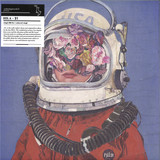
"21" is the well-crafted, sharp and original first album by the duo HILA, composed by American cellist Artyom Manukyan (who already worked with Kamasi Washington, Daedalus, Flying Lotus, Run DMC, Gretchen Parlato, Raphael Saadiq, Clive Lowe Mark...) and french producer Dawatile.
The combination of jazz, Los Angeles beat-scene and the vibrations of 80s and 90s Soviet Armenia make it a striking and unprecedented fusion. These kind of nostalgic and unconventional references forcefully shake the codes of mainstream culture to create a sincere, raw and intimate expression.
"HILA" was born from a spontaneous and intense creative impulse between Artyom Manukyan, a Los Angeles-based Armenian celloist and his partner in crime, David Kiledjian aka Dawatile, a French multi-instrumentist of Armenian descent. This project is proving to be a true master stroke given that it only took 21 days for the duo to make it a reality.
"HILA" was made in less a moon cycle but captivates and electrifies audiences upon its first outings. "H.I.L.A" colors the warmth of the Californian "High" with Armenian vibes. The artists chose this name for their creation since both have a close and valuable connection to these locales. This journey began in 2007, on the day Dawatile went to Yerevan, the capital of this small country in the Caucasus mountain to realize a first fusion project centered around local folkloric music genres.
There he was introduced to local musicians including the Armenian Navy Band, one of the country's foremost groups in which Artyom played the bass and cello. In this context, he also met many musicians such as Tigran Hamasyan and Norayr Kartashyan. This will be the beginning of connections between Lyon, Yerevan and Los Angeles. The following year, the two artists will be be seen performing next to Taylor Mc Ferrin at the Jazz à Vienne festival. More recently, they partnered up again when the cellist, who had freshly relocated in California, invited Dawatile to produce his album. As soon as the studio’s threshold was crossed, they decided to postpone this record and create a joint project: Hay (as the Armenians call themselves) / High In Los Angeles. HILA was born at the end of these 21 days of intense creation. The association of Artyom Manukyan and Dawatile is the combination of two visions, two versions of Armenia, two personalities, the reunion of the Eastern and Western blocs.
One grew up nurtured by the sounds of hip-hop and jazz in Europe and the other by art music and Russian-influenced 1980s Armenian folkloric music before moving to L. A., Ca. The cornerstone of it all, the glue that unites everything : Armenia and music. They generate a new identity synthesizing two perceptions, their complicity transcending these cultural discrepencies. To achieve this, they will scour through images of Artyom’s childhood, within the popular culture of Soviet Armenia. Together, they revisit this decidedly retro vibe, based on the work of Caucasian groups inspired by African American music. This background is rehashed and fused with ancestral Armenian sounds. The DNA of the album "21" is molded by these dear influences.
We can also hear the ancestral sounds of Armenia, a country at the edges of both Europe and Asia. The presence on two tracks of Armenian music Master Norayr Kartashyan, infuses the languor of past melodies and traditions. These purposeful anachronistic sounds offer a fantastic depth to this powerful opus. Listening to the album, one can appreciate the successful fusion of styles and influences. Those combinations, however, manage to preserve individual identities only to enhance the art through an adamant musical dialogue.
Being driven by the urge to transpose Armenian musical traditions into a unique universe, the daring artists, offer an innovative combination by blending, for the first time, these ancestral sounds with the world of Los Angeles beat-scene and jazz. An invention largely fueled by the magic strings of Artyom and maestro Miguel Atwood-Ferguson, a pillar of the genre in Los Angeles combined. These associations resonate with a triumphant equilibrium. HILA is musical uncharted territory in which Artyom's cello strings intertwine to ignite the harmonies of keyboards, the machines, the vocals and electronic layers Dawatile pieced together. HILA plays the soundtrack of an adventure set between Armenia around the end of the Soviet era and a mysterious near future.
Artyom Manukyan grew up in Armenia in the 90s. At the time, he studied Russian classical music while learning jazz with assistance by his father, a music journalist. Being an unconditional music lover, he went on to sharpen his skills at the prestigious Berkelee College of Music. Subsequently, he’s been lucky enough to travel the world touring with numerous acts and mainly with the Armenian Navy Band. The group has fostered alacritous success honored by a BBC Award as a crowning achievement. He moved on 10 years ago and made his way to L.A. with his cello on his back. In the City of Angels, he quickly became a popular figure of the jazz and hip-hop scenes thanks to his first album "Citizen". He’s accompanied prestigious musicians such as Kamasi Washington, Melody Gardot, Daedalus, Flying Lotus, Run DMC, Gretchen Parlato, Raphael Saadiq, Clive Lowe Mark, or Vulfpeck. He released his solo album on the cello, "Alone" in October 2019.
Dawatile is a bold producer and multi-instrumentist as well as a passionate and resolute musician molded by jazz. As a versatile artist, he handles and juggles the saxophone, the keys, the bass and composition. Simultaneously, Dawatile produces cross-over projects and soundtracks for the movie industry. He, as well, has had the opportunity to be a part of many tours, including with his electro hip-hop band, Fowatile and more recently with the "Future Kreyol" trio, Dowdelin. Being the ever workaholic, he has under his belt a string of prestigious collaborations with the likes of Talib Kweli, Foreign Beggars, Roy Ayers, Tigran Hamasyan, Mathieu Boogaerts, Voodoo Game and Piers Faccini. His taste for developing new musical recipes and his know-how in production make him a much sought-after album producer. In concert, the HILA duo offers a sober, precise and rhythmic performance. "21" is an aerial and lively album taking the audience on an at times joyous and sometimes melancholic dreamlike journey. The magic of "HILA" operates at the speed of light and positions it already as an avoidable group.
- A1: Get Funky 1933 (Feat The Color Grey, Pomrad)
- A2: Oh Baby 1939
- A3: Royale With G's 2013 With Gramatik
- A4: Roller Disco 1980 (Feat Hi Levelz)
- A5: Overview Effect 1972 With Møme (Feat M I.l.k.)
- A6: Kanagawa Waves 1831 With Fakear, Balkan Bump
- B1: Payeng's Ark 1979
- B2: Cloud Nine 2000 (Feat The Color Grey)
- B3: Time Machine 1985
- B4: Electric City 2015
- B5: Keep Moving Up 1978
- B6: Paris Jazz Club 1920 (Feat Anomalie)
For The Geek and VRV, everything is a matter of time. Since they first met six years ago, the two beatmakers have been broadcasting their music to the four corners of the world, and their collaboration is as strong as ever after the years. Vanguards of the French instrumental hip-hop scene, they’re coming out today with their first album, Time Machine, a synthesis of the sounds and the ideas they’ve been working on from the very beginning of their careers. A trip back through time, as its name suggests, demonstrating the range of sound possibilities that they created in previous projects and on their international tours.
The release of their hit “It’s Because” in 2013 launched them on the scene as French producers who managed to break into the United States, with sampling as their musical base. Closer to home, the Coachella, Osheaga, and Solidays music festivals were won over by the pair’s complementarity, which made the success of their BTOS beat tapes and their EPs, Electric City and Origami.
But since everything is a matter of time, it was sometimes necessary to just let things go, take a break and think things over before coming back even stronger. A year and a half ago, The Geek and VRV started to slow things down, in order to take a step back and concentrate on this new album. With one overriding idea: to explore different eras and time periods, and transpose them into our modernity. Each track is associated with a pivotal year in music. With “Paris Jazz Club 1920”, the first single on the album, we're plunged into the cozy atmosphere of the cabarets, featuring the virtuoso Montreal pianist Anomalie. A meeting made possible thanks to the famous beatmaker Gramatik, who was a fundamental inspiration for their music, and who is also present on the album, as well as the flagship producers Fakear and Møme.
On Time Machine, The Geek and VRV have turned on their time machine to bring us to the year of James Brown’s birth, and find the unstoppable groove of “Get Funky 1933”. Always with hip hop in sight. The explosion of disco inspired them to record “Roller Disco Party 1980”, and the film Back to the Future was behind “Time Machine 1985”. The mixing of different time periods means that the styles, genres and atmospheres are channeled to perfection. The Geek and VRV have been preparing for this trip for five years now. With Time Machine, the time has come for them to begin their exploration, and to take us along for the ride.
Morgasm,Yhrght,Niuored,Evenn,Sleek,Logaris,Hidden Paradise,Jon Yutani,Slow Mow,Nucleus,Moh
The Sound Of Rennes Volume 01
- A1: Morgasm - 3615 Enjoy
- A2: Yhrght - Brln
- A3: Niuored - Sentier Battu Part 1
- B1: Evenn - On And On
- B2: Sleek - Memento
- B3: Logaris - La France
- C1: Hidden Paradise - Jazz With Me
- C2: Jon Yutani - I Want Go Out
- C3: Slow Mow - Blues
- D1: Nucleus & Mohand Ka - Keep The Faith
- D2: Majipoor - Until It Collapses
- D3: Enjoy Crew - Loop Of Time
After lasts years beloved Operator release, SOLIDE returns with the second part, again by label head honchos D.Y.A and Kalyma.
With this current release, they take heed of a well known principle that has been brought upon us by the Hollywood film industry - any thrilling, perfectly executed and audience approved production needs to get a sequel - So, the curtain raises now for Operator II, a tune instantly reminiscent of its predecessor in beat architecture and kalimba arrangement, yet thought through with even more sophistication and sensitivity.
A Gardener's Perspective pursues that same kind of vibe, coming along with slight Electro-borrowings and cocooning synth-harmonies, climaxing in an masterly organ solo that has soul and devotion to sound written all over it.
Yet another tune that doesn't even have to conform with peaktime arithmetics to send whole floors into frenzy, no matter what time of the night it might be. Closing things off it's Casino Lunch Break, another strongly vibing and very tribal affair radiating afterhour qualities, ending another more than solid offering on Solide on a high note.