*Repress*
Compuma, a.k.a. Koichi Matsunaga, reaches back through time to 1970s Hawaii to perform a mind meld, his old-school Roland drum machines and present-era compumagic vulcanizing and reshaping Haku's original home-grown analog synth madness. Not merely a remix, this a synergistic reconstruction, a transformation at the molecular level in which Haku's source-code DNA is reborn in 2015.
Suche:ka
Versatile Parisian Jay Ka, offers a slow dripping slice of deepness to the SAFT following. With the help of Paula King on vocals, title track Only Grace is a reminiscent anthem with strong vocals supported by lush chords and smokey rhode hits. As a real single should, this package also offers 3 interpretations of the original. With remixes by Briton NY*AK and Atlanta situated Kai Alce, this SAFT output should grab your full attention easily.
Where NY*AK's rework maintains a more repetitive vibe with nicely timed vocal cuts, Kai Alce's 'Late Night' interpretation recalls classic vocal-house reworks from the glory days of extended 12inch mixes.
As usual for a complete single like this, an instrumental version of Kai Alce's rework is included.
This is the 5th release in the now popular vinyl series personally compiled by Detroit producer & DJ Terrence Parker. This project features two very talented women from different parts of the world who have the love for soul music in common. The 'A' side features the song 'Finally' with lyrics written, vocals arranged and performed by Reno Ka. Reno Ka is a soul singer originally from Vienna/Austria but now living in Hamburg/Germany. The 'B' side features the song 'Where Do You Want Me' with lyrics written, vocals arranged and performed by Kelly Gunn. Kelly is a soul singer from Detroit who currently tours as a background singer for the R&B artist Kem. Both tracks were produced & mixed by Terrence Parker to make another funky soulful classic TP release!
The third internatonal release by the legendary Malian singer and guitarist is many fan's favourite. 'The Source' established Ali Farka Touré on the internatonal stage and paved the way for his legendary collaboraton with Ry Cooder on the GRAMMY award winning album 'Talking Timbuktu'.
Available for the frst tme on vinyl, the album has been re-mixed from the original master tapes and includes a previously unreleased track from the same sessions.
The album is presented in a gatefold sleeve containing double 180g vinyl and large format 28 page booklet with lyrics.
'The Source' features Farka Touré's frst recordings with his home town band Group Asco, with vocalist Afel Bocoum and percussionists Hamma Sankare (calabash) and Oumar Touré (congas). Touré's trademark acoustc and electric guitar (as well his njarka violin) playing are highlighted on some of his best loved and most sophistcated compositons.
The father of the desert blues unleashes a set of driving small group performances, intmate love songs, mesmerising guitar solos and two unique duets with the great American bluesman Taj Mahal.
- A1: Coco / Fabert - Ban Di Fwan
- A2: Wach'da Star De La Rue - Confrontation (Instrumental)
- A3: Michel Alibo - Fou, Jaloux
- B1: Osmose - Melodi
- B2: Juliane - Blanc E Noir (Instrumental)
- B3: Champagn' Cocktail Lavaxn - L Anmou Aw
- C1: Jo Star - Demare Moin
- C2: Alex Rosa - Sistem
- C3: Patrick Nuissier - Pou Qui A
- D1: Vik In - Tension La Ka Monte
- D2: Joyeux De Cocotier - Pina Colada Coco Loco
- D3: Djeminay - Sun Plash
Repress.
The follow up of the acclaimed first volume of this compilation, a real discovery for many DJs and music lovers worldwide who didn't know that much about Zouk or DIY electronic music of the french west indies.
.
The selectors Julien Achard and Nicolas Skliris continue the excavation of French Antillas vinyl from the 80's and the 90's and for this second volume, they found some really exciting new references which should be soon « classics » on the dancefloors.
Back in stock!
Produced by Philadelphia's Legendary Sonny Hopson, Santiago is Indeed Neftali Santiago from Mandrill who took a break from the band in 1975 and did a little experimenting, this came out of a 6 hour sessions in which 3 tracks were recording, two being on this 45 and is Santiago's only lead vocal to date . The band lasted a year in that time supporting Gil Scott Heron and The Ohio Players live. A two sided disco stormer with all the right ingredients, great guitar hook, solid horn section and great vocal.Essential Disco
A surefire Afro-Funk classic, long treasured by collectors across the globe, the fantastic self-titled LP from Ghanaian singing/percussion sensation Sidiku Buari nevertheless remains a criminally hard-to find gem. We're honoured to present the first ever officially licensed vinyl reissue of this undoubted masterpiece. Limited to just 500 copies.
Originally released on RCA in 1975, this is, quite simply, a ridiculous record. This super-rare album boasts an all-star cast of top funk instrumentalists playing alongside Buari as he blends heavy African rhythms with American soul-funk grooves. The arrangements and the playing are incredibly tight and the album is stacked with killer tracks including "Advice From Father" (sampled brilliantly by Kenny Dope) and "Ku Ka Maria", with its intense, neck-snapping breaks and funky drumming from legend Bernard 'Pretty' Purdie. Purdie is in the pocket for the entirety of this stunning LP - the drumming is just straight out of hand; so varied yet so precise.
It's not hard to fathom why these tracks have always been huge on the b-boy/breaking scene. Other standouts include the wonderful disco-tinged afro monsters "Karam Bani" and "Iro Le Pa" plus the cool laidback groove of "Them Yebtheyet".
With access to the original analogue tape transfers, Simon Francis' stellar mastering elevates the sound throughout and, as ever, it has been pressed at a reassuringly weighty 180g.
WHEN YOU'VE FINISHED LOOKING AROUND THE WEBSITE, YOU CAN FIND US ON THESE SOCIAL CHANNELS
Eno Williams, frontwoman of Ibibio Sound Machine, uses both English and the Nigerian language from which her band's name is derived for the dazzling new album Doko Mien. Long lauded for jubilant, explosive live shows, Ibibio Sound Machine fully capture that energy on Doko Mien, the followup to their Merge debut Uyai.
In a glowing piece in the New York Times, those songs were praised for following 'in the tradition of much African music, [making] themselves the conscience of a community.' By pulsing the mystic shapes of Williams' lines through further inventive, glittering collages of genre, Ibibio Sound Machine crack apart the horizon separating cultures, between nature and technology, between joy and pain, between tradition and future. That propensity for duality and paradox seems common in people whose lives span continents.
Williams was born in the UK, but grew up in Nigeria, always steeped in her family heritage. She obsessed over West African electronic music, highlife, and the like, but was equally empowered by Western genres such as post-punk, disco, and funk. The London octet have enveloped themselves in that maximalist quilt proudly since their 2013 formation. Though it can often bring with it news of stress and uncertainty, the modern world further brings all these disparate traditions into connection.
'Everyone has everything now,' says multi-instrumentalist Max Grunhard. 'Everyone has immediate access to every genre, picking things up from everywhere—like magpies.' And while they haven't suddenly left their African roots behind, Doko Mien does find increased representation of English lyrics in the ratio. By sharing more directly with more universal lyrics, the record feels more anthemic, reaching for grander heights.
'We wanted to give people a reason to sing along, to find their soundtrack every day,' Williams says. 'We wanted everyone to feel as if they're part of the music as well.'
Late album highlight 'Guess We Found a Way' addresses the change with a coy smile. 'Guess we found a way to speak to you/ Guess we found a way to say what's true/ To say what's real,' Williams coos over glistening chains of reverberant synth and diamond dust percussion, before returning to Ibibio in the chorus. Perhaps the best example of the group's ability to convey meaning across language and tradition, to blend past and future into a singular present comes on 'She Work Very Hard'. The traditional Ibibio folk tale bobs over the waves of tuned percussion, chunky synth, and pinprick highlife-esque guitar, while Jose Joyette's drums and Derrick McIntyre's bass funk groove bring everyone to the dance floor. 'These stories won't be forgotten. Feel the music: it speaks to everybody,' Williams says. 'We can travel back in time together, while convening on a futuristic, present tense. We hope that we can give people that reason to wake up, that one song to sing and dance and be happy.'
Doko Mien: Tell me everything. On their new album, Ibibio Sound Machine provide the perfect companion, ready to digest as much as possible and then further unfurl beauty and hope. They remember and honor the past and charge forward toward the future, all while intensely expanding the present.
Bastet is the second album of LCC (Ana Quiroga and Uge Pañeda).
Bastet is a ritual study gliding the path from the rites of the ancient to the realm of the modern.
Bastet is the name of the ancient Egyptian goddess closely linked to music and female power who coerced humans to entertain her in order to keep her untamed animalistic side in check. Whilst absorbing this legend the second LCC release presents itself as a vast canvas of ritual, restraint and spacious sonorities. Stark and unnerving Bastet is not reliant on pure electronics as abstract theatre but rather utilises these tools to conjure a world circling the spheres and planes of symbolic human activity.
Recorded throughout 2016 among residencies at the legendary studios EMS of Stockholm, the Inter Arts Center of Malmö and their own studio in Gijón, Bastet is a rich experience: cryptic, visionary and utterly compelling. 8 tracks laying forth a deep listening journey into the netherworlds of human experience, movement, ritual and space.
The Chakachas are best remembered for their hit disco single 'Jungle Fever'. The album by the same name is a revelation of Latin funk, with horns playing against groovy rhythms and some fine vocal work. Exiting in every aspect it's a real tasty and nasty combination of sounds. The album is characterized by its versatile percussion, consisting of maracas, congas and drums, and funky guitar riffs and horns. There's a beautiful version of Earle Hagen's classic standard 'Harlem Nocturne', known for its groovy bassline and guitar breaks. Jungle Fever is a classic which should be included in every collection of funk and Latin music.
The Belgian based group of The Chakachas were a Latin soul studio musicians. They're also known as Les Chakachas or Los Chakachas. They started in the late 1950s, recording a playful mixture of Latin music, jazz, and European-style exotica.
- A1: Lokonon André & Les Volcans - Mi Kple Dogbekpo
- A2: Picoby Band D'abomey - Mi Ma Kpe Dji
- A3: Gabo Brown & Orchestre Poly-Rythmo - It's A Vanity
- A4: El Rego Et Ses Commandos - Se Na Min
- B1: Napo De Mi Amor Et Ses Black Devil´s - Leki Santchi
- B2: Orchestre Poly-Rythmo - Gbeti Madjro
- B3: Roger Damawuzan - Wait For Me
- B4: Ouinsou Corneille & Black Santiagos - Vinon So Minsou
- B5: Orchestre Super Jheevs Des Paillotes - Ye Nan Lon An
- C1: Tidjani Kone & Orchestre Poly-Rythmo - Djanfa Magni
- C2: Discafric Band - Houiou Djin Nan Zon Aklumon
- C3: Le Super Borgou De Parakou - Congolaise Benin Ye
- D1: Vincent Ahehehinnou - Ou C'est Lui Ou C'est Moi
- D2: Les Volcans De La Capital - Oya Ka Jojo
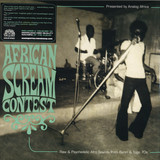
The Analog Africa label delves into the amazing history of music from 1970s Benin and Togo.
This compilation highlights forgotten raw and psychedelic Afro sounds, and the well-researched liner notes tell fascinating stories to accompany the mind-blowing music. The essence of Analog Africa is clear, searching in dusty warehouses for forgotten music to keep the sound alive!
- A1: Mahy - Antilles Méchant Bateau
- A2: Guy Conquete - Ban Moin Clé A Titine
- A3: Dolor - A Dardonnel
- A4: Joseph Lacides - Yo Ka Biguiné Joseph
- A5: Tino Saint-Val Mam\'Zelle Cancan
- A6: Dolor - Ki Vino
- A7: Dolor - Socié Cabrite
- B1: Gaby Siarras - Moana
- B2: Joseph Lacides - Citation Créole
- B3: Casimir Letang - Ménage Chalviré
- B4: Manuela Pioche - Pas Ban Moin Coup
- B5: Gerard Valton - Bel Mè A Présent
- B6: Beaujour - Ti Té Ya
- B7: Josianne Saint-Louis - Jeines Gaçons
- B8: Dolor - Vini Sauvé Moin
Fifteen track completion of deep biguines and Gwo Ka from the '60s French West Indies. The vinyl edition included a 4 page booklet + download code.
Biguine is a rhythmic style of music that originated in Guadeloupe and Martinique in the 19th century, which fuses 19th-century French ballroom
dance steps with African rhythms. Gwo Ka is found among all ethnic and religious groups of Guadeloupean society.
It combines responsorial singing in Guadeloupean Creole, rhythms played on the Ka drums and dancing. Gwo Ka is the musical and cultural product of the
region's African ancestry, forcibly brought to the Caribbean through slavery. Gwo Ka exists only in Guadeloupe, which is a very different island from much of
the Caribbean, in that it remains a 'department' of its original colonial master, France. Here the currency is the Euro and the baker sells croissants and café
au lait. This constant 'European-ising' of the island means that Gwo Ka plays a fundamental and important role in the defining of Guadeloupean identity.
'Antilles' Méchant Bateau', a low-tempo number with a bolero feel, indeed a pure case of the blues, and a terrific saxophone solo. What else would you
expect to set the tone for this selection, in which beguine regains its original colours, in the darkness of the Gwo Ka drums. This 45 by André Mahy, released
under the Aux Ondes sublabel, was recorded in the 1960s at Célini's, one of Guadeloupe's two main houses. Through its drum rolls and harrowing chant, it
recalled how, long before the mid-1960s, the Antilles' history was written in an ocean of teardrops - namely the Black Atlantic.
- A1: Daniel Forestal Et Sa Guitare - Ces P'tits Je T'aime
- A2: Casimir Létang - Travail Z'enfants! Chantez Après!
- A3: Cyril Diaz Et Son Orchestre - Feeling Happy
- A4: Georges Tinedor Et Manuela Pioche - Collié Et Zanno
- A5: Henri Debs Quintet - Douce Kombass
- A6: Joseph Lacides - Mr. Morin
- B1: Geno Exilie - Lan Misè
- B2: Dolor Et Les Diables Du Rythme - Salvana
- B3: Sydney Lérémon Et Ses Amis Du Calvaire Baie- Mahault - You You Matayango
- B4: Raymond Cicault Et Son Orchestre Volcan - À Mon Ami Lucien Jolibois
- B5: Orchestre Esperanza Et Jean Leroy - Ou Pas Bel
- B6: Henri Debs Sextet Et Paul Blamar - Moin Çé On Maléré
- C1: Le Ry-Co Jazz - Si I Bon Di I Bon
- C2: Remy Mondey - Meringue Mondey
- C3: Henri Guedon Et Les Contesta - Van Van
- C4: Les Shupa Shupa D'haiti - Batterie Shupa
- D1: Paul Blamar Et Vélo - Lovency
- D2: Eric Virgal - Stanislas
- D3: Les Aiglons - Les Aiglons Ka Satisfait
- D4: Tutus De La Guyane - Nanao Nanao
- D5: Guy Conquette - Assez Fait Cancan
Oddball space disco/fnk tracks, composed between 1970 and 1985. Big tip!
.
A master of the mixing board, from the late 60s until the 90s Bernard Estardy was the wizard of French musical recordings. As head of CBE studios, he shaped everything from Gérard Manset's concept albums to Claude François' hit singles, Françoise Hardy's delicate tear-jerkers and Michel Sardou's soul-stirrers. This giant' had his hand in the whole range of mainstream French music by making his studio a veritable playground for experimentation. His legendary album La Formule du Baron,' released in 1969, and the eight LPs of production music he made between 1974 and 1978 for Tele Music are vivid proof. In the CBE studio, which she runs today, his daughter Julie Estardy discussed his singular career.
Paralysis met in Berlin last year. Two young guys hungry for life, living together in a small room. Sharing pizza and gear. Both are gifted with great skills when it comes to production of Techno music. Cesar Mendoza is doing awesome with melody composing, Max Schroeder loves sounddesign. Both are hitting the individual spot of our DUAT sound idea and when we heard their first steps in making music, we knew they need to become family soon. So we shared our studio with them in the summer and helped them to develope their own style and our vision of innovative dance music, detached from repetitive Tech House and Deep House trends. We are proud to pre-sent the very first released record ever by Paralysis and the collab between our label owner Amin Fallaha.
- A1: Tachikawa
- A2: Seiko 1
- A3: Seiko 2
- A4: Sen-Nen 1
- A5: Ricoh 1
- A6: Seiko 3
- A7: Boutique Joy
- A8: Seiko 4
- A9: Ricoh 2
- A10: Laox
- A11: Shiseido
- A12: Seiko 5
- A13: Sharp
- A14: Sen-Nen 2
- B1: Honda
- B2: Suntory
- B3: Knorr
- B4: Bridgestone 1
- B5: Bridgestone 2
- B6: Bridgestone 3
- B7: Bridgestone 4
- B8: Bridgestone 5
- B9: Ka-Cho-Fu-Getsu
- B10: Seibu
Remastered vinyl with colour innersleeve + download code card. Originally issued by Crammed in 1987, this is one of the most sought-after releases in their legendary 'Made to Measure' series. Known for his numerous albums, soundtracks, and collaborations with the likes of Ryuichi Sakamoto, Van Dyke Parks, Pierre Barouh, Bjork and Elvin Jones, composer and saxophonist Yasuaki Shimizu wrote and recorded this brilliant and inventive collection of short pieces, initially conceived for Japanese TV commercials (and bearing sweet titles such as "Seiko", "Sharp", "Honda" etc). This album has achieved near-mythical status in the last few years, which have seen artists such as Oneohtrix Point Never sing its praise.
- A1: Gandigui (Bariba Soul)
- A2: Wegne'nda M'banza (Bariba Soul)
- A3: Me Ton Le Gbe (Pachanga Fon)
- A4: Abakpé (Afro Beat Bariba)
- B1: Guessi- Guéré-Guessi (Pop Bariba)
- B2: Sembe Sembe Boudou (Folklore Dendi)
- B3: A Na Gangaro Ka Nam (Afro Beat Bariba)
- B4: Bori Yo Se Mon Baani (Pachanga Dendi
- C1: Aske (Folkloredendi)
- C2: Ko Guere (Folklore Bariba)
- C3: Vdoun Hounwato Minon Dou Gbandja
- C4: Abere Klouklou (Cavacha Dendi)
- D1: Hanoubiangabou (Soul Dendi)
- D2: Dadon Gabou Yo Sa Be No.2 (Afro Beat Dendi)
- D3: Bininhounnin (Dendi Boucher)
- D4: Adiza Claire (Cavacha Bariba)
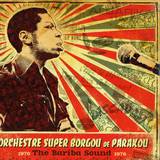
Lost sounds are the archives of a forgotten history. The raucously raw, Vodoun-inspired rhythms of Cotonou have confirmed Benin as a mecca of 70s Afro sounds and revived the story of its people, but the unopened vaults housing the country's catacombs of musical riches are endless. With this as our compass, Analog Africa charters its fifth expedition to Benin, traveling far north to delve deeper into the obscured repertoires and tales of the Bariba and Dendi people.
Exit Records expands on dBridge' sophomore album A Love I Can't Explain with two new interpretations by The Fear Ratio (James Ruskin & Mark Broom) and Kahn. In keeping with the label's ethos the artists were left alone to deliver remixes without any stylistic requests and as a result we have two tracks that are personal & uncompromising.
dBridge has been a firm supporter of both Kahn and TFR so it's very fitting that Exit Records releases TFR's debut remix and Kahn's rework, which repurposes what you thought you knew about him as an artist. The ALICE remixes are another leap forward for Exit Records.