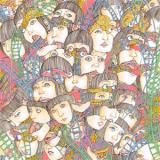
The twenty-fourth - and final - issue in FatCat’s long-running and much-loved Split 12” Series features acclaimed Canadian singer/composer Ian William Craig alongside the brilliant but little-known Estonian Kago - two artists each using their voice as a central element of their craft, mediated through technology to conjur startlingly singular sound-worlds.
Neither side here will sound quite like anything you’ve previously heard. Ian William Craig provides a 19-minute-long immersive tape piece, with Kago delivering a warped, acid-tinged slice of Eastern European freak-folk.
Hand-drilled + numbered sleeves with full printed inner sleeve.
Cerca:kago
- 1
An’archives presents Kagome Kagome, the first collaboration between France’s Delphine Dora and Japan’s Ayami Suzuki. Curious listeners might know Dora from the string of lovely, idiosyncratic albums she’s released over the past two decades, most recently for labels like Modern Love, Morc and Recital; she’s also worked with the likes of Michel Henritzi and Sophie Cooper. Suzuki’s performances, predominantly for voice, place her within a tradition of Japanese improvised music – see the music she’s made with artists such as Takashi Masubuchi, TOMO and Leo Okagawa – but her approach also takes in folk song, ambience and claustrophobic drone.
On Kagome Kagome, Dora and Suzuki play to their many strengths: a gentle, free-willed folksiness; long, aerated drone constructs; ghostly, time-warping explorations for voice. They met on Dora’s May 2024 tour of Japan, though they’d been in touch beforehand, with Dora proposing the collaboration to Suzuki, developed around “concepts of ‘otherworldliness’ and ‘impermanence’,” the latter says, “and explored the relationship between ‘the invisible’ and sound in Japanese culture – a common interest we share.”
They recorded across several days that month, with the sessions for Kagome Kagome taking place in Kanumi, in Tochigi prefecture, at a space named Center. “I was particularly looking forward to seeing Delphine encounter the vintage 104-year-old harmonium from Nippon Gakki Seizo Co. that had just been repaired at Center,” Suzuki recalls. “It was as if the harmonium had been waiting for Delphine to draw sound from it. I felt it was a beautiful relationship where they could guide each other.”
Indeed, there’s something channelled about the music that Dora and Suzuki made together in the session that constitutes Kagome Kagome. Dora’s harmonium might be the spine of the album, but Suzuki’s free- floating voice, and gaseous, muddied banks of electronics, wrap around the wheezing, ancient tonality of the harmonium beautifully – they, too, sound as though they were just waiting to be willed out of the daytime air. Their voices nestle together beautifully – “when we sang together in a tunnel,” Suzuki says, “there were times when we sang the exact same melody without planning. It happened so naturally that the boundaries between us became blurred.”
And that title? It’s drawn from a Japanese children’s song, and the song titles themselves constitute the song’s lyrics, in alternating Japanese (Romanized) and French language. Urban legend connects the song “Kagome Kagome” to the Nikko Toshogu Shrine, nearby Center, that Suzuki and Dora visited while they were in Kanumi. “The mysterious lyrics of ‘Kagome Kagome’ and its puzzle-like connection to Nikko Toshogu were a perfect fit for this mysterious album,” Suzuki reflects, “which I think has its own kind of puzzle-like elements.”
A deep album of prayer and magic, of divination and ritual, Kagome Kagome’s sense of serious play, its rich beauty, feels somehow dislocated from our time. If you’ve ever enjoyed the music of Nico, Kendra Smith, Charalambides, or other channelers of ghostly mystery, its eerie otherness will, somehow, feel oddly familiar.
- A1: Highway No Kage ~ Daiichi No Giwaku
- A2: Matteita Onna ~ Daiichi No Wana
- A3: Highway No Kage ~ Main Theme
- A4: Nazo No Onna ~ Wana!?
- A5: Matteita Onna ~ Main Theme
- A6: Highway No Kage ~ Wana E No Chosen
- B1: Sachiusu No Onna ~ Namiko No Tsuioku
- B2: Nazo No Onna ~ Main Theme
- B3: Highway No Kage ~ Teki Wo Motomete
- B4: Sachiusu No Onna ~ Main Theme
- B5: Matteita Onna ~ Variations
- B6: Highway No Kage ~ Kanashii Ketsumatsu
Composed, Arranged, and Conducted by: Norio Maeda
Has there ever been a soundtrack so thrilling and beautiful? This is the pinnacle of cine-jazz, crafted by the master Norio Maeda.
Released in 1971, Shadow Of The Highway is a suspense-action film produced and starring Jiro Tamiya, and directed by Jun Fukuda.
True to its tagline—“A sports car tearing vertically through Japan, from Kagoshima to Hokkaido”—the film features a Mitsubishi Galant GTO racing
across the country. Often compared to the American New Cinema classic Vanishing Point, it stands as a Japanese road movie gem.
The music was composed by the legendary Norio Maeda. His piano corners with elegance, the vibraphone dashes forward with flair, the bass charges
ahead with power, and the drums shift gears with precision. Motion and stillness, obsession and desire, joy and sorrow—thrilling performances and
beautiful melodies elevate the film to new heights.
As a soundtrack, it is exceptional. But even more, it represents an extraordinary level of quality for Japanese jazz in 1971. The performances are so
remarkable that it’s unfortunate the exact personnel remain unidentified. However, it has long been rumored that the musicians may have been associated
with Takeshi Inomata’s Sound Limited—or possibly The Third.
Text by Yusuke Ogawa (UNIVERSOUNDS / DEEP JAZZ REALITY)
- Tate-Jima (??, Vertical Stripes)
- Tate-Waku (???, Rising Steam)
- Hishi-Igeta (???, Parallel Diamonds Or Crossed Cords)
- Shippo (??, Seven Treasures Of The Buddha)1
- Toridasuki (??, Interlaced Circles Of Two Birds)
- Fundo (??, Counterweights)
- Koshi (??, Checks)
- Amime (??, Fishing Nets)
- Uroko (?, Fish Scales)
- Hishi-Moyo (???, Diamonds)O
- Kagome (??, Woven Bamboo)
- Nakamura Koshi (????, Plaid Design Of The Nakamura Family)P
- Yarai (??, Bamboo Fence)
- Yoko-Jima (??, Horizontal Stripes)
blueblue is the latest full-length from multi-instrumentalist and all-around vibe wizard, Sam Gendel. The record, out via Leaving Records, is a concise, tightly wound song suite whose 14 tracks each correspond to a pattern within sashiko, a traditional style of Japanese embroidery. This conceit remains playfully ambiguous — to what extent, if at all, is Kagome (woven bamboo) meant to evoke the pattern of the same name, for example? But there is an intuitive sense, throughout blueblue, that Gendel has, in this instance, narrowed his focus. To say that blueblue feels richly textural might be a little on-the-nose, thematically, but alas…it does. There is an intimacy, a humility, and a strength at play here that typifies the work of a master craftsman. Only an artist could make it sound so effortless.
A Los Angeleno by way of Central CA, Gendel is by now an institution. Across a dizzying slate of solo releases and collaborations, he has amassed a reputation for not only virtuosic musicianship (primarily as a saxophonist, though the songs that would become blueblue were all initially composed on guitar), but also for his mercurial and prolific output — a corpus of work, which, while obviously indebted to jazz and hip hop (and the farther flung, experimental corners of both) is, in a word, unpindownable.
The bulk of blueblue was recorded in isolation in a makeshift studio built in a cabin floating atop a tributary of Oregon’s Columbia River. Having sketched out a set of guitar melodies, Gendel recorded the album in five-or-so weeks, during which time he became well-acquainted with the river’s tidal rise and fall. This organic rhythm, which daily lifted the house to meet the horizon, later setting it down gently upon the riverbed, permeates t
- A1: Toryanse
- A2: Ghostwire: Tokyo
- A3: Encounter
- A4: The Pact
- A5: The Buried Life
- A6: Yaseotoko I
- A7: Trails Of Connection
- A8: Kagome Kagome
- A9: Living Things From Ancient Times
- A10: Misfortune
- A11: A Stop In The Void
- A12: Wire In
- A13: Sacrifice
- A14: Koomote
- A15: Daidarabotchi
- A16: Amefuri
- A17: Curse
- A18: Hebinari Shrine
- A19: Okina
- A20: Yaseotoko Ii
- A21: 17 Doors
- A22: Eve
- A23: Life Of The Higan Flowers
- A24: Abyss
- A25: Until We Meet Again
- A26: Shabondama
4LP Deluxe Box Set[91,56 €]
Frontman of Nottingham punk band Kagoule, Cai Burns, returns as Blood Wizard. Arriving with no fixed direction, Blood Wizard is a project that sees Burns explore himself as a brand new entity, an artist beyond boundaries and preconceptions.
First single ‘Breaking Even’, showcases Burns’ impeccable songwriting skills and acts as the perfect introduction to this exciting project. With jangled, stop-and-go instrumentation, it is sheer artistic satire with an added charm.
Burns says about ‘Breaking Even’: “Breaking Even is a song about doing a lot for someone, changing yourself to fit their ideas of you but not getting the same in return. It's a satirical commentary on the effect that can have on a friendship or relationship”
Western Spaghetti, out 5th March 2021 via Moshi Moshi Records. Filled with crisp hooks, it is an album that has a predominant folk undertone that also expertedly navigates through various textures and dark melodies. There was not an album in
mind when Burns first started recording with Tom Towle at Random Recording Studio - just fragments of songs that all came together when the world paused in the spring and Burns realised that what he had been working on over the last few months could become a full record. The structure of the album follows suit, chopping and changing between harder-edged sounds and acoustic meanderings.
There is a forward honesty and a witty wryness to Blood Wizard. “Hooray to the big news, got my mouth around the spoiled fruit” he sighs on Fruit, a song about keeping happy for your friends’ achievements while your life feels static. Meanwhile, Total Depravity’s stand-out, bittersweet lyric “I’m never going to get that jacket back” pinpoints a singular moment amongst an anxious blur and a time he cannot return to. The infectious and fuzzy Carcrash draws on the weird ways love can be displayed, whilst in stark contrast, the subdued Somehow I Knew tells of the people you’ve never got to know.
Vinyl Only. Produced by Ollie Marland of De-Lite and Jah Wobble's Invaders Of The Heart fame Label logo by manga legend Shintaro Kago. Archival reissue of rare 1984 jazz-funk fusion diamond in the rough by German-Australian-British madcap ensemble Bells of Kyoto, produced by Ollie Marland of De-Lite and Jah Wobble's Invaders Of The Heart fame. Fusions grooves with Orient-funk detours and looking out the window of a Swissair aircraft moments of cool mid 1980s contemplation.
Highly recommended to porthole dreamers, seasoned mind travelers, inventive dancefloor adventurers, and dogs who like to stick their head out the car window.
Drums - Alex Friedrich
Electric Bass - Peter Drefahl
Mastered By - Rico Sonderegger
Piano, Bells - Peter Waters
Producer - Bells Of Kyoto, Laurie Carls, Ollie Marland
Recorded By - Laurie Carls, Ollie Marland
Synthesizer, Guitar, Percussion - Ollie Marland
Deformer is known for breaking down musical barriers as well as crushing taboos and oh boy, are you in for a treat with this latest release. Musically Deformer reinvents his recognisable sound once again and it's no surprise that over the years many people consider Deformer a genre in itself. The record is fierce, it has dark humor, explicit content, original arrangements and the Deformer signature sound. What better to wrap this release with the bizarre artwork of famous Japanese manga artist Shintaro Kago. It's a match made in.. well, a horror hentai dungeon I suppose. I never knew that I would be comfortable in such a place, but all I can say is that I can't get enough of this record! Deformer has gained popularity in Japan in recent years and this is his tribute to his Japanese fans. Inspired by Japanese hentai Deformer introduced a new genre, sexually explicit Japanese Breakcore now known as: 'Bukkakecore'.
The vinyl release comes with a download code containing two bonus remixes by Japanese Hardcore heroes Myosuke and DJ Technorch.
[a] a1 Bukkakecore [Beat-Bukkake]
- A1: Theme
- A2: Tesla
- A3: Cold Dead
- A4: Fkn Dead
- A5: Never Catch Me (Feat Kendrick Lamar)
- B1: Dead Man's Tetris (Feat Captain Murphy & Snoop Dogg)
- B2: Turkey Dog Coma
- B3: Stirring
- B4: Coronus, The Terminator
- C1: Siren Song (Feat Angel Deradoorian)
- C2: Turtles
- C3: Ready Err Not
- C4: Eyes Above
- C5: Moment Of Hesitation
- D1: Descent Into Madness (Feat Thundercat)
- D2: The Boys Who Died In Their Sleep (Feat Captain Murphy)
- D3: Obligatory Cadence
- D4: Your Potential/The Beyond (Feat Niki Randa)
- D5: The Protest
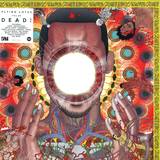
The incredible return of Flying Lotus on Warp. You're Dead! sees producer Steven Ellison taking us on a transcendental voyage into the afterlife. A wholly immersive, psychedelic journey, it's a virtuoso performance from one of the decade's most talented and inventive artists. The album features contributions from (in order of appearance) Herbie Hancock, Kendrick Lamar, Captain Murphy, Snoop Dogg, Angel Deradoorian, Thundercat and Niki Randa. Original artwork by Japanese comic book artist Shintaro Kago
- 1