Prestige Cuts are back for 2023 with a new release from Jodo Kast entitled 'Lost Seduction'.
The 'Darkside 2 Step Mix' takes you back to the mid 90's reminiscent of the rave heyday with soothing pads and lush vocals dropping into a heavyweight reese bassline, 2 step drums and old school breaks.
The 'Chunk 'n' Dub 4x4 Mix' offers a full power four to floor mix, chunky and weighty bringing feels of Tuff Jam and Grant Nelson.
Поиск:kast
Все
- Headful Of Rain
- Might See You There
- Baby Don't
- Forever Elsewhere
- Never In Style
- Pay No Mind
- If You Should Turn Away
- Little Strange
- Bright City Lights
- Where I Belong
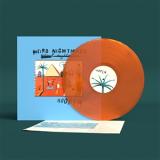
Jede Band, die was drauf hat, hat ein Mitglied, das mal in einem Plattenladen gearbeitet hat. Bei METZ, dem mutigen Noise-Rock-Trio, das zwischen 2012 und 2024 fünf Alben bei Sub Pop rausgebracht hat, war das Sänger und Gitarrist Alex Edkins. Während seines Studiums verkaufte Edkins in seinem Heimatort Indie-Rock- und Hardcore-Platten und wurde zu einem begeisterten Schüler des Rock ,n` Roll, von den psychedelischen 1960er Jahren bis zu den DIY-1990er Jahren und darüber hinaus. Hoopla, das eingängige, melodische zweite Album aus Edkins' Soloprojekt Weird Nightmare, mischt und kombiniert diese Einflüsse auf unterhaltsame und mitreißende Weise und zeigt seine ausgefeilte musikalische Intelligenz. ,Hoopla" sprüht vor Hooks und Ohrwürmern und ist genau die Kassette, die nie aus dem Autoradio genommen wird, sondern immer wieder gespielt wird und den Sommer begleitet. ,Hoopla" ist neu und nostalgisch zugleich und wird deine Ohren erfreuen. Das selbst produzierte und ausgesprochen lo-fi Debütalbum von Weird Nightmare wurde während der Pandemie zu Hause aufgenommen und 2022 von Sub Pop veröffentlicht. Weird Nightmare zeigte Edkins' Indie-Rock-Sensibilität mit einer Vorliebe für unverkennbare Hooks und mitreißende Refrains zum Mitsingen. Auf dem neuen Studioalbum Hoopla, das gemeinsam mit Jim Eno von Spoon produziert und in Seth Manchesters Machines with Magnets aufgenommen wurde, erweitert Edkins die Dimensionen von Weird Nightmare noch weiter. Neue musikalische Texturen wie Klavier, Glocken und Kastagnetten verschmelzen mit Edkins' geradlinigem Songwriting und verleihen diesen Stücken einen glänzenden Schimmer. Es ist, als würde ein beliebter Indie-Regisseur mit seinem ersten Studiofilm einen Schritt nach vorne machen. Wenn das Debütalbum Weird Nightmare ein Underground-Publikumsliebling war, ähnlich wie Richard Linklaters Slacker, dann ist Hoopla Edkins' Dazed and Confused. ,Hoopla" glänzt mit sonnigem Gitarrenpop und wurde mit genau der richtigen Menge an Fuzz und Crunch produziert. Die unmittelbare, schnörkellose Aufnahme versetzt dich direkt ins Studio mit Edkins und seiner Rhythmusgruppe: Loel Campbell am Schlagzeug und Bassist Roddy Kuester. Das ist Power-Pop der Extraklasse; diese scharfen Adrenalinstöße könnten sich nahtlos in einen Radio-Rock-Block zwischen The Replacements und Elvis Costello & the Attractions einfügen. Oder passen genauso gut zu Sharp Pins, Ratboys und Alvvays. Im Kern ist dieses Album ein optimistischer, leuchtender Lichtblick in unserer seltsamen Zeit. Mit Weird Nightmare möchte Edkins euch wissen lassen, dass er die Welt immer noch liebt, und er lädt die Hörer von Hoopla ein, dasselbe zu empfinden. Nutzt diese Chance, um einen Funken der Magie des Pop in unserer verbrauchten alten Welt zu ergreifen. Ihr habt es verdient.
For fans of post-punk and new wave, some songs aren’t just classics — they’re emotional landmarks. Joy Division’s “Love Will Tear Us Apart” and The Cure’s “A Forest” (both released in 1980) helped define an era, shaping decades of alternative music with their stark honesty, atmosphere, and unmistakable sound. Revisiting them is no small task.
Reimagining them successfully is even rarer. This special, limited 7” release — pressed to just 300 copies — does exactly that, thanks to legendary Dutch electronic producer Maarten van der Vleuten. A joint effort between Maarten’s own Signum Recordings and American chill-out imprint re:discovery records, he brings these two towering songs into new territory through the hands of an artist who understands both history and transformation. On one side, Maarten delivers a striking cover of “Love Will Tear Us Apart,” taking on Ian Curtis’ immortal lyrics himself. Rather than mimicking the original’s desolation, this version reframes the song into something unexpectedly inspirational and equally moving. It’s respectful, deeply personal, and emotional. Flip the record and “A Forest” is reborn as an ambient-electro journey, marking the vocal debut of Melbourne-based Linda Kastanja.
The result is dynamic and powerful, retaining the song’s eerie tension while expanding its atmosphere into something spacious and cinematic. Honoring their legacy while reshaping their form, it offers longtime fans and new listeners a rare opportunity to hear familiar emotions from a completely new perspective. Todocument this release, a music video has been made for “Love Will Tear Us Apart,” directed by Maarten and edited by Tobias Grönvall, aka Unit 21.
Category 1 Music Sampler - Vol. 4 represents a unique blend of contemporary house music’s most influential and respected personalities. “What I Want” showcases the remixing wizardry of Eric Kupper, who has worked with numerous superstars including Usher, Alicia Keys, Donna Summer & Miley Cyrus; along with the producing genius of Chicago’s great house trailblazer, Ron Carroll. “Call Me” showcases a multi continent contingent of musical talent from the UK, South Africa and the U.S. combining to deliver a soulful house gem that’s highlighted by Stacy Kidd’s distinctive Chicago influenced vibe. Joe Smooth, another Chicago house legend, lends his deep house sound to the appropriately titled, “Soul Deep”, featuring the classic vocals of Ed Ramsey coupled with Sweet Georgie’s impeccable production.
Concluding this house music journey is Ron Carroll’s “Underground”, a Garage banger that’s the creative concept of Marc Cotterell, 1 of the leaders of the U.S./UK Garage genre. “Underground” is the perfect way to end another Category 1 Music house excursion.
Adeen Records digs deep once again for a new offering that taps into some seriously swaggy and soulful house. Dav Risen is behind them and is a South African DJ and Producer from Soweto who wears his Christianity with pride, and that religiousness also defines these sounds which are a spiritual journey into deep house with plenty of life-affirming harmonies Dav delivers a powerful, purpose-driven title track that glows with warm pads and a rhythm section that feels both grounding and uplifting, making it perfect for sunrise sets or late-night introspection. 'Don't Worry About It' is just as deep and moving, 'So Long' has warm organ chords and 'You Can Make It (feat DJ KK)' closes with another loved-up vibe.
Als Meister des melancholischen Heavy Metal sind Avatarium seit 2013 eine einzigartige und beeindruckende musikalische Kraft. Ursprünglich als außerschulisches Projekt der Candlemass-Legende Leif Edling gegründet, haben sich die Stockholmer Doom-Ausreißer seither weit über ihre Wurzeln hinaus entwickelt und sind zu einer der kreativsten Hardrock-Bands des Planeten geworden. Unter der Leitung ihrer Lebenspartner, der Sängerin Jennie-Ann Smith und dem Gitarristen Marcus Jidell, haben Avatarium ihren einzigartigen Weg fortgesetzt und sind auf diesem Weg noch stärker geworden. Vom gefeierten Doom-Purismus ihres selbstbetitelten Debüts bis hin zum detailreichen Rock-Genuss von "Death, Where Is Your Sting?" aus dem Jahr 2022 war jedes Kapitel der Bandgeschichte ein Maßstab für Substanz und Seele in der Heavy-Musik.
Am 24. Januar 2025 veröffentlichen die Schweden nun ihr sechstes Studioalbum, "Between You, God, The Devil & The Dead". Wie bei jedem ihrer vorherigen fünf Alben offenbart das neue Werk bisher unbekannte Schattierungen und Texturen in ihrem klassischen, aber formbaren Sound. Voller gigantischer Riffs und erstaunlicher Melodien, ist "Between You, God, The Devil & The Dead" in den letzten 18 Monaten gereift. Das Album wird auf drei verschiedenen und limitierten Vinyls, als CD-Jewelcase und als limitierte Doppel-CD-Earbook-Edition, mit 36 Seiten exklusivem Inhalt erhältlich sein.
Limitierte orange/weiße Vinyl, in einer Kastentasche mit rauer Haptik und einem glänzendem Silberlack auf Vorder- und Rückseite! Limitiert auf 800 Einheiten.
% discount from 3x %
one red empty cover / sleeve for vinyl in innersleeves!
Perfect to protect your records from dust and dirt!
* Cover - with 3mm spine
* red unicoloured
* hole on both sides
% Rabatt ab 3x %
Eine rote Kastentasche für Platten in Papier-Innenhüllen!
Perfekt um deine Platten vor Staub und Schmutz zu schützen!
*Plattencover - mit 3 mm Rücken
*rot unifarben
*Doppelloch
The third album release on our Rezpektiva label is a 2 x 12” compilation by the nutty French sonic wizard, Professor Oz. Containing 8 tracks that were produced between 1986 and 1995 these 'Lost Experiments' from the Prof have matured well. As always, remastered from the original DAT tapes, these recordings that have been brought to light convey the musical sounds present in the 80s and 90s and which will remain relevant for years to come.
Met trots presenteren Rosa Ana, Nosa en Soulution het album “GOLDEN HOUR”. Het album telt een zevental tracks, waarvan er geen één onder de drieëneenhalve minuut komt. Waardoor je volwaardige tracks kunt verwachten. Het is een bijzonder muzikaal project met kwetsbare onderwerpen die de drie bezig gebben gehouden. Producer Soulution heeft letterlijk alles uit de kast getrokken om zijn gevestigde sound (als vaste producer van Fat Windjacks en zijn internationale projecten met onder andere Edo G, Talib Kweli, Bahamadia enzovoort) te ontwikkelen.
"We Are Power", Galaxian's first album in over a decade, cuts a new path. On this Foul-Up and Shipwrec joint release, Kastner presents a rumination on the confrontation and power clash between humankind, nature, the spiritual and mechanistic industrial growth societies. What is authentic power? What is granted power? What is innate natural power? How is power accessed, wielded, utilised, felt? On this album the blistering beats and razor-edged rhythms that characterise the Glaswegian's productions have been softened, the menace melted, the angst soothed (well almost.) Across eleven tracks, distinct audio vistas are surveyed. The human form takes centre stage from the opening monologue of "Out of Balance" with the entire record searching for balance between humankind, nature, orthodox culture & the machine. At times the machine wins. "We Are Power" is a corruption of voice, samples chopped, sliced and fed into controllers and sequencers to produce a dense decibel wall. That wall grows ever higher in the terrifying drone of "Anatomy of a Modern Lie." At other points, a perfect symmetry between artist and tool is found. The racing interchanges and pulses of "Universal Truths" give rise to dawning reprises and warmth. For those after an electro fix, Galaxian abides. The speed snares of "Messianic Delusions" or dripping drums of "Fields of Meaning" are soaked in the history of machine music, yet they are grander in their delivery and more nuanced in their composition. Fresh territories are explored, the playful solar dreams of "Without Form" or the cinematic grandeur of "In Reverse". This album is unmistakable Galaxian, it marks a high-point and brings with it a culmination of intense expression.
Repress
Soul Notes sophomore release ''Snapback Grooves'' by Cologne based house prodigy ''Adryiano'' is a hot one.
Straight up warehouse vibes and stunning vocal cuts emerging throughout this release. Next to 2 well energetic and jacking cuts by Adryiano ''Snapback Grooves'' contains a lush almost sensual remix by Labelowner ''Kastil'' on the A2 and a Typical Kirill Tipo Regroove on the B2.This vinyl is being sold with a free Postcard by Spanish photographer ''Ivan Urarte''.
Adryiano delivers a great vinyl debut it's an honor to have him on Soul Notes.
Berlin club and party-starters Sameheads return to black wax on April 10th with “ZEUG!”, a 4-track EP from various celebrated artists, who join forces in new and unheard ways for a stack of outernational and spaced-out dancefloor jams for creative dance floors worldwide and beyond.
Berlin-based CROSSLUCID, AKA Sylwana Zybura and Tomas C. Toth, have delivered another stunning example of their perception-bending otherworldly viewpoint with the artwork for the release. A purely analog production, fusing clever lighting tricks, hand-made props, and a healthy dose of shaving foam and dry ice… This “Cult of the Cosmic Swamp” chimes with the weird tribal rhythms contained on the record.
First up is Mameen 3 (a side-project from Brussels selector DJ Sofa) & Romanian pioneer Rodion G.A with ‘Planet Cluj’, a suitably off-world excursion through a fun-packed disco hall in some far-off colony where layered synths are stacked, elements seeping through one another to form a mesh of groove.
Anatolian Weapons’ cosmic fireside ritual, ‘Chant 3’, heats up the A2 with vibrant and punchy percussion loops woven together with a worldwide chorus of chanters. Building continuously, the tough workout is dosed up with a bassline saturated in attitude for a high-energy finish.
Picking up on the B side are KRENG (a morphic form composed of Don’t DJ and Dane Close), who slow the pace down with a latticed beatwork combining robust dance formulas and blasting syncopation. Letting the rhythm do the legwork for the first half of the track, the pair then pour out a sludged mess of grime-infused bass over the percussive chaos.
Silvia Kastel and Wilted Woman close proceedings as SHAKEY with a dubwise workout that straddles b-side house obscurity and stoned live dub improvisation: steel drums patter at the windows of Paradise Garage as Larry Levan fights off the vampires alongside Scientist.
The release is celebrated at Sameheads on April 10th with an extremely rare live show from Rodion G. A., an appearance from INVERSIONS label owner Milo Smee, and a b2b from Don’t Dj & Dane Close. Limited to 300 pieces, this record will find a home in the stacks of DJ’s willing to step outside genre and convention.
Kastil and I-Real have been releasing joint efforts since 2014. The occasional duo have perfected the boisterous techno they hold dear, and showcase their new approach on the gloomy 'Black Birds All Over' and the audacious sounding 'Skandha'.
'Black Birds All Over' is a lurid sounding effort that revolves around a monotonous roar and skillfully places drums and fx sounds that cut across the spectrum like daggers. Canadian duo Orphx delivers an enigmatic version of 'Black Birds All Over' that uses far-away pads to generate a more uncanny mood.
'Skandha' is a piece of nonconformist techno that uses broken drum patterns and eerie fx screams throughout. Order & Devotion owner Kwartz reworks 'Skandha' to a recognizable and powerful dark dancefloor version.
No Spiritual Surrender, AKA Spanish techno producers J.C. (Deeply Rooted/Tresor) and Kastil (Esperanza/Wilson Records) return for a four-track EP following their self-titled, debut album late last year.
A1 'Ez Du Axola' portrays rampant synth based percussion, dominating the mix while A2 'The Shakes' is a paranoid, DnB roller for the eyes down crew.
For more pleasant surprises, flip for the B1 'T.Y.S.R.' which is an abstract and disjointed collage of radio samples that massage the ears, before B2 'XXX' closes out with distorted kicks that have enough torque to shatter any system.
- 01: Maanitus &Amp; Tšiižik
- 02: Markka
- 03: Melkutus
- 04: Letška
- 05: Kuuen Parin Hoirola
- 06: Brišatka
- 07: Tšiižik
- 08: Kirkonkellot
- 09: Kirkonkellot Korkea
- 10: Hoirola, 3 Parin
- 11: Lippa
- 12: Kyngäkiža
- 13: Ristakondra
- 14: Vanha Polkka
- 15: Viistoista
- 16: Vanha Valssi
- 17: Kiberä
- 18: Maanitus Kuokan Kanteleella
- 19: Tuuti Lasta Nukkumahe
Tape[16,39 €]
Death Is Not The End present a further volume of Arja Kastinen's eerie amalgamations of 110 year old wax cylinders with her own meticulously transcribed takes, this time focussing in on Armas Otto Väisänen's field recordings of kantele player Iivana Mišukka (b. 1861 d.1919).
"Ivana Mišukka (1861–1919) was one of the Karelian kantele players recorded by the folk music researcher Armas Otto Väisänen on wax cylinders in 1916 and 1917. In the early 20th century, the remote areas of Border Karelia were undergoing the final phase of a transformation in musical culture, with the ancient runo song tradition giving way to newer forms of music. This transition is reflected in Mišukka's repertoire and choice of instrument. The ancient small kantele, hollowed out of a single piece of wood, was already rare at the turn of the century. Mišukka's kantele was a new type of instrument with 26 strings, constructed of several parts, but he played it using the traditional plucking technique. Like other Border Karelian kantele players, his repertoire consisted of music rooted in runosong culture, as well as newer dances and songs from the east and west. Most of the recorded material falls into the latter category.
Ivan Bogdanov Mišukka was born out of wedlock in Suursara village, Suistamo, on 1 May 1861. He began playing the kantele at the age of five or six, quickly mastering the instrument. In adulthood, he was considered one of the area's best master players. Mišukka was landless for most of his life and lived in different parts of the Suistamo parish. His first wife, Tekla Markintytär, died in 1897 at the age of 40, and his second wife, Jevdokia Filipintytär Jeminen, died in 1907 at the age of 50. Seven children were born from the first marriage, two of whom died young. The third wife, Maria Ignatintytär Gurnan (Kuurnanen), was a well-known master of lamentations. Together with Maria, Iivana Mišukka worked as a tenant farmer in the village of Suursara. Mišukka suffered from rheumatism, which prevented him from participating in physical work like Maria. This was apparently partly the reason why Iivana Mišukka went to earn extra money by playing the kantele on gig trips. He often had other traditional artists from Suistamo as his travelling companions, such as the runosingers Konstantin Kuokka and Iivana Onoila. Iivana Mišukka died in Leppäsyrjä village, Suistamo, on 18 May 1919 at the age of 58, and his kantele was donated to Teppana Jänis.
Mišukka only used 14 of the 26 strings on his kantele, playing the same tunes either a fourth higher or lower. He tuned his kantele to the major scale using fifths, except for a low seventh scale degree on the upper strings, but not below the fundamental. Since he did not use the seventh note of the scale on the upper strings at all, he could use the major scale both lower and a fourth higher with this tuning. According to Mišukka, the sound of higher, or 'finer', strings is 'more beautiful', while that of lower ones is 'greater'. Among runosingers, the size of the thirds varied, ranging from major to minor to neutral. A similar phenomenon can be observed in kantele tunings, where the third, sixth and seventh scale degrees vary in a comparable way.
During a meeting, Väisänen suggested that Mišukka play the smaller kantele belonging to Konstantin Kuokka. The idea was to bring it closer to the horn to improve the recording quality. However, the kantele was completely out of tune, and now Mišukka tuned it to the Lydian scale (track 18).
Using the old plucking technique, Mišukka placed his right middle finger on the fundamental tone, his right index finger on the second scale degree, his left middle finger on the third scale degree and his left index finger on the fourth scale degree, and his right thumb on the fifth. The thumb also played the notes above the fifth note of the scale. As Mišukka remarked to Väisänen: 'Peigaloll' tuloo enemb ruadoa' (the thumb has to do more work). However, he did not use the seventh note of the scale on the upper strings at all. Below the fundamental note, he played the seventh and sixth notes of the scale with his right middle finger of and the fifth note of the scale with his right ring finger. This fifth scale degree below the fundamental is almost always used as a drone. Sometimes, when the melody required it, Mišukka, like other players, also varied the fingering. He would also occasionally strike the same string with the side of his fingernail after plucking it.
The wax cylinder recordings of Karelian kantele players are kept in the archives of the Finnish Literature Society in Helsinki, Finland. Copies were made of them onto reel-to-reel tapes in both the 1960s and 1980s. The 1960s copies are mono and the 1980s copies are stereo. However, not all kantele recordings from these decades have survived.
The sound of the kantele is difficult to hear in wax cylinder recordings due to its low volume, and it occasionally becomes completely obscured by noise. During the copying process, the cylinder sometimes rotates unevenly, resulting in breaks or jumps in the music. Additionally, the rotation speed of the cylinder in the copies does not correspond to the performance speed of the original music, which alters the pitch. However, since Väisänen's precise notes are available in the archive, it is possible to deduce the melodies, their speed, and the tuning level of the kantele in the recordings. Of the copies of the original recordings from the 1960s and 1980s, I have selected the one that best met the requirements of this publication and adjusted the speed of the recording to align with Väisänen's notes. To enhance the listening experience, I have replayed the songs, which now partly overlap the old recordings on this release."
— Arja Kastinen
- 01: Maanitus &Amp; Tšiižik
- 02: Markka
- 03: Melkutus
- 04: Letška
- 05: Kuuen Parin Hoirola
- 06: Brišatka
- 07: Tšiižik
- 08: Kirkonkellot
- 09: Kirkonkellot Korkea
- 10: Hoirola, 3 Parin
- 11: Lippa
- 12: Kyngäkiža
- 13: Ristakondra
- 14: Vanha Polkka
- 15: Viistoista
- 16: Vanha Valssi
- 17: Kiberä
- 18: Maanitus Kuokan Kanteleella
- 19: Tuuti Lasta Nukkumahe
Vinyl[22,65 €]
Death Is Not The End present a further volume of Arja Kastinen's eerie amalgamations of 110 year old wax cylinders with her own meticulously transcribed takes, this time focussing in on Armas Otto Väisänen's field recordings of kantele player Iivana Mišukka (b. 1861 d.1919).
"Ivana Mišukka (1861–1919) was one of the Karelian kantele players recorded by the folk music researcher Armas Otto Väisänen on wax cylinders in 1916 and 1917. In the early 20th century, the remote areas of Border Karelia were undergoing the final phase of a transformation in musical culture, with the ancient runo song tradition giving way to newer forms of music. This transition is reflected in Mišukka's repertoire and choice of instrument. The ancient small kantele, hollowed out of a single piece of wood, was already rare at the turn of the century. Mišukka's kantele was a new type of instrument with 26 strings, constructed of several parts, but he played it using the traditional plucking technique. Like other Border Karelian kantele players, his repertoire consisted of music rooted in runosong culture, as well as newer dances and songs from the east and west. Most of the recorded material falls into the latter category.
Ivan Bogdanov Mišukka was born out of wedlock in Suursara village, Suistamo, on 1 May 1861. He began playing the kantele at the age of five or six, quickly mastering the instrument. In adulthood, he was considered one of the area's best master players. Mišukka was landless for most of his life and lived in different parts of the Suistamo parish. His first wife, Tekla Markintytär, died in 1897 at the age of 40, and his second wife, Jevdokia Filipintytär Jeminen, died in 1907 at the age of 50. Seven children were born from the first marriage, two of whom died young. The third wife, Maria Ignatintytär Gurnan (Kuurnanen), was a well-known master of lamentations. Together with Maria, Iivana Mišukka worked as a tenant farmer in the village of Suursara. Mišukka suffered from rheumatism, which prevented him from participating in physical work like Maria. This was apparently partly the reason why Iivana Mišukka went to earn extra money by playing the kantele on gig trips. He often had other traditional artists from Suistamo as his travelling companions, such as the runosingers Konstantin Kuokka and Iivana Onoila. Iivana Mišukka died in Leppäsyrjä village, Suistamo, on 18 May 1919 at the age of 58, and his kantele was donated to Teppana Jänis.
Mišukka only used 14 of the 26 strings on his kantele, playing the same tunes either a fourth higher or lower. He tuned his kantele to the major scale using fifths, except for a low seventh scale degree on the upper strings, but not below the fundamental. Since he did not use the seventh note of the scale on the upper strings at all, he could use the major scale both lower and a fourth higher with this tuning. According to Mišukka, the sound of higher, or 'finer', strings is 'more beautiful', while that of lower ones is 'greater'. Among runosingers, the size of the thirds varied, ranging from major to minor to neutral. A similar phenomenon can be observed in kantele tunings, where the third, sixth and seventh scale degrees vary in a comparable way.
During a meeting, Väisänen suggested that Mišukka play the smaller kantele belonging to Konstantin Kuokka. The idea was to bring it closer to the horn to improve the recording quality. However, the kantele was completely out of tune, and now Mišukka tuned it to the Lydian scale (track 18).
Using the old plucking technique, Mišukka placed his right middle finger on the fundamental tone, his right index finger on the second scale degree, his left middle finger on the third scale degree and his left index finger on the fourth scale degree, and his right thumb on the fifth. The thumb also played the notes above the fifth note of the scale. As Mišukka remarked to Väisänen: 'Peigaloll' tuloo enemb ruadoa' (the thumb has to do more work). However, he did not use the seventh note of the scale on the upper strings at all. Below the fundamental note, he played the seventh and sixth notes of the scale with his right middle finger of and the fifth note of the scale with his right ring finger. This fifth scale degree below the fundamental is almost always used as a drone. Sometimes, when the melody required it, Mišukka, like other players, also varied the fingering. He would also occasionally strike the same string with the side of his fingernail after plucking it.
The wax cylinder recordings of Karelian kantele players are kept in the archives of the Finnish Literature Society in Helsinki, Finland. Copies were made of them onto reel-to-reel tapes in both the 1960s and 1980s. The 1960s copies are mono and the 1980s copies are stereo. However, not all kantele recordings from these decades have survived.
The sound of the kantele is difficult to hear in wax cylinder recordings due to its low volume, and it occasionally becomes completely obscured by noise. During the copying process, the cylinder sometimes rotates unevenly, resulting in breaks or jumps in the music. Additionally, the rotation speed of the cylinder in the copies does not correspond to the performance speed of the original music, which alters the pitch. However, since Väisänen's precise notes are available in the archive, it is possible to deduce the melodies, their speed, and the tuning level of the kantele in the recordings. Of the copies of the original recordings from the 1960s and 1980s, I have selected the one that best met the requirements of this publication and adjusted the speed of the recording to align with Väisänen's notes. To enhance the listening experience, I have replayed the songs, which now partly overlap the old recordings on this release."
— Arja Kastinen
- Dark Land
- Possessed By Evil
- Bloody Revenge
- Insanity
- Blind Destruction
- Hades Invasion
- Magic Forest
- Iron Charm
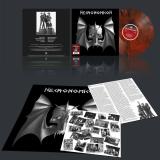
Kreator, Destruction und Sodom. Allesamt teutonische Thrash-Metal-Legenden. Doch wer kennt heutzutage noch eine Band wie Necronomicon? Dabei hätte alles ganz anders kommen können. Anstatt bei Noise, Steamhammer oder Roadrunner landeten Necronomicon bei Wave Records (einem obskuren Unterlabel von Gama Records). Ihre Debüt-LP war bereits 1984 im Kasten, erschien aufgrund von Labelproblemen aber erst ganze zwei Jahre später. Auch heute zählt »Necronomicon« (jetzt über High Roller Records als CD und Vinyl wiederveröffentlicht) noch immer zu den besten deutschen Thrash-Metal-Platten aller Zeiten. Mit Stücken wie “Possessed by Evil”, “Bloody Revenge” oder “Blind Destruction”, ist und bleibt das erste Album von 1986 ein wahrer Klassiker!
- Kino?!
- Idioten Der Saison
- Osnabrück
- Richtig Falsch
- Infach Nur Verstehen
- Hör Auf Deine Freunde
- Musik In Meinen Ohren
- Glaubensfragen
- Schöpfen Aus Dem Vollen
- Was Wir Hatten
- 120: Sekunden
- Was Ich Will
- The Kkk Took My Baby Away
- Man-Trap
- Signals Of Love
- The Double Axe
- Modern Terms Of Abuse
- Ecoming Unbecoming Me
- Paint It, Black
- Walking On My Grave
- Jim Bowie
- Sex And Flies
- He's Gonna Kill That Girl
- Fire In The Mountains
- I Can't Find Pleasure
- The Money Will Roll Right In
Wenn Sie das ungute Gefühl hatten, dass 2025 irgendwie das Jahr von Thee Headcoatees werden würde, dann klatschen Sie sich selbst herzlich ab - denn überraschenderweise ist es tatsächlich so! Wir können indirekt den Tod unseres lieben verstorbenen Great Ribbon, Mr. Don Craine, dafür verantwortlich machen, dass Thee Headcoats 2022 ein Comeback feierten. Ursprünglich hatten sie geplant nur eine Tribute-EP als Thee Headcoats Sect aufzunehmen - zusammen mit Dons Downliner Sect-Kollegen Keith Grant Evans - aber dann stellten sie fest, dass sie noch ein paar Stunden Zeit im Studio hatten, und dachten sich, dass sie genauso gut auch ein neues Headcoats-Album aufnehmen könnten. Und warum auch nicht? Das Ergebnis war, ohne viel Aufhebens, das Album "Irregularis (The Great Hiatus)", das 2023 bei Damaged Goods erschien. Ende 2024, noch bevor man ein Deerstalker-Band entwirren konnte, waren die Jungs schon wieder am Werk, und eine weitere neue Headcoats-LP war ,im Kasten", deren Veröffentlichung ursprünglich für Anfang dieses Jahres geplant war. ABER dann kam irgendwo jemand auf die Idee: ,Warum sollten nur die Jungs den ganzen Spaß haben? Wie wäre es, wenn wir auch den Sisters of Suave, Thee Headcoatees, eine Chance geben?" Mit allen ihnen zur Verfügung stehender männlichen List und Tücke schalteten Thee Headcoats und Damaged Goods ihre Charmeoffensive ein. Mit purer Entschlossenheit und Hartnäckigkeit wurden Ludella Black, Kyra LaRubia, Bongo Debbie und Holly Golightly nacheinander aus ihren Verstecken gezerrt, wo sie sich lautstark wehrten (was sie am besten können), um die 14 Killer-Songs aufzunehmen, die auf ihrem neuesten Album mit dem raffinierten Titel ,Man-Trap" zu finden sind. Das war keine Kleinigkeit! Anfang 2025 wurde also eine Aufnahmesession in den renommierten Ranscombe Studios in Rochester gebucht, Gin und Snacks wurden vorbereitet, und im Handumdrehen waren die Backing Tracks im Kasten - Thee Headcoats wieder zurück als die beste Backing-Band und Thee Headcoatees zurück am Gesang. Billy Childish übernahm die Produktion. Unbeeindruckt von einigen geografischen Hindernissen auf dem Weg dorthin war Ende Mai das Ergebnis ein glänzendes neues Headcoatees-Album! UND WAS FÜR EIN ALBUM! Es ist mindestens genauso gut wie alle ihre Alben aus den Neunzigern und vielleicht sogar noch besser... (,Ja-a-a-a!", flüstert der Geist von Don Craine.) Diese Mischung aus großartigen Coverversionen und einigen fantastischen neuen Songs ergeben eine verdammt gute LP. Betreten Sie "Man-Trap" auf eigene Gefahr - Sie wissen, dass Sie es wollen! Und falls Sie sich fragen, wie die Mädchen ihre Zeit seit der Veröffentlichung von ,Here Comes Cessation" im Jahr 1999, also vor nur 26 Jahren (!), verbracht haben, lesen Sie weiter... LUDELLA BLACK hat drei Soloalben sowie Veröffentlichungen mit The Masonics vorzuweisen und gerade erst mit The 5,6,7,8's aufgenommen. Nebenbei sang sie auch mit The Shall-I-Say Quois, zusammen mit ihrer Freundin Kyra. KYRA LaRUBIA war Anfang der 2000er Jahre kurzzeitig bei The A-Lines neben Bongo Debbie & Nurse Julie (von Stuck-Ups / Buffets / CTMF) und arbeitete an einer Neuauflage ihres Albums ,Here I Am, I Always Am". Die Musik trat dann in den Hintergrund, während Kyra sich auf ihre Promotion in Sport- und Bewegungswissenschaften konzentrierte. Seit 2005 ist sie Dozentin an der University of Kent. BONGO DEBBIE hat weiterhin in einigen Bands getrommelt. Sie ist Mitglied von Ye Nuns (The Monks Tribute Band), The A-Lines, Dutronc und hat kürzlich unter anderem für die Sting-Rays ausgeholfen. HOLLY GOLIGHTLY hat seit 1999 neun Soloalben veröffentlicht, sechs davon mit Lawyer Dave in The Brokeoffs, sang ein Duett mit Jack White auf dem Album ,Elephant" von The White Stripes und tourte um die Welt.