Private View is distinctly Blancmange while also expanding into new sonic terrain. There’s a deft marriage of futuristic electronic sounds, Neil Arthur’s unmistakable vocal hooks, and songs veer from buoyant and joyful to dark and brooding. Private View will be released on London Records almost exactly 40 years to the day since the label released Blancmange’s debut album Happy Families. This neat full circle of Blancmange re-signing to the same label that ignited things all those years ago is also reflected in the album itself, being the perfect crystallisation of four decades of creativity.
On Private View Neil returns with key collaborator Benge (Wrangler, John Foxx, John Grant), and David Rhodes (Kate Bush, Peter Gabriel, Scott Walker) also returns as the guitarist, having previously performed with the band as early as 1982’s Happy Families (as well as several other Blancmange albums).
Private View is a record that manages to capture an artist who is potently in the moment when it comes to creating new work, while also being able to draw on 40 years’ worth of knowledge, experience, and built-in intuition. “I'm really lucky to be able make the music completely on my own terms,” Arthur says. “Being able to just continue being creative...that's when I'm happiest.” As he said before: “within myself there are no limits.”
Blancmange is also reflected in the ongoing influence the music has on younger generations of artists and fans over the years. Contemporary electronic producers like Honey Dijon and Roman Flügel have paid tribute with remixes, Moby once called Blancmange “probably the most underrated electronic act of all time.”; while John Grant continues to profess his love for Arthur’s music, old and new, and has invited Blancmange to perform as part of Grace Jones’ Meltdown festival.
Suche:kat
Released in 1975, Teddy Lasry's Action Printing is a fascinating album where jazz-fusion, synthesizers and sonic experimentation intertwine to create immersive, cinematic music. A former member of Magma, Teddy Lasry's audacious syncopated rhythms and futuristic melodies evoke both film music and avant-garde electronics. Long under the radar, this visionary album has now been reissued on vinyl, offering a new chance to plunge into its captivating, hypnotic universe.
Limited to 200 copies worldwide exclusive at The Pusher Distribution!
- A1: So I Don’t Forget (Intro)
- A2: Nothing’s Gonna Fill You Up
- A3: No Joke
- A4: Catch Me
- B1: Pocketful Of Paranoia
- B2: Lay Low
- B3: Before It’s All Over
- B4: The Love That I Feel
- C1: Motel
- C2: Sell My Memories (Interlude)
- C3: Get Me Some Grief
- C4: I’m Alive
- C5: Caught (Catch Me Reprise)
- D1: Won’t Let This World Break My Heart
- D2: No One
- D3: Mallet Groove
DJ Support: Jamie Cullum (BBC Radio 2), Huey Morgan (BBC Radio 6), Gilles Peterson (BBC Radio 6), Deb Grant (New Music Fix, BBC Radio 6)
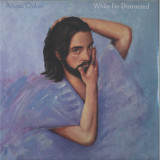
On debut album ‘While I'm Distracted’, London-based New Zealander Arjuna Oakes draws inspiration from contemporary soul and jazz, touches of global folk, electronica, modern classical, and post-rock, with dynamic arrangements and production. ‘While I'm Distracted’ is an album about fighting for your innocence and right to be a vulnerable and honest human. Arjuna’s songwriting explores themes of identity, depression, existentialism, social media, loss of innocence, and finding hope for the future through artistic expression.
'I'm obsessed with albums,' says Arjuna. 'I've made seven EPs, but needed time to tackle a full length record. I was using the EPs to learn the craft of how to make a great album, much like a director will make short films before they make a feature. I wanted to take the listener on a journey and spark their imagination. Hopefully the album expresses complex emotions, rather than having an intellectual concept. I'd rather ask questions than answer them'.
Across the album, Arjuna performs vocals, piano, keyboards, synths, production, and wrote the string arrangements. He’s joined by Harrison Scholes on bass, Jo Jenkins and Andre Smith on guitar, Sam Notman on drums, Louisa Williamson on saxophone, Nathan Haines on flute, Kate King on french horn, Leah Thomas on clarinet, Hilary Hayes and Emma Colligan on violin, Chris Van Der Zee on viola, Charley Davenport on cello, Zane Hawkins on percussion, James Macewan on trumpet, and additional production by Callum Mower.
Following his acclaimed collaboration with Sw., Dreamlogicc is back on Kimochi, this time having his work remixed by some tasteful producers from across the electric spectrum. K-rAd is first up with a sharp, punchy rework of 'Fleetingly Jazzis' which then also gets reworked by Brendon Moeller & Todd Gys with their Eho Kates project. It's a gritty, stomping house cut and on the flip, Merix (formerly Midnight Circuitry) delivers a deconstructed breaks interpretation, while Shielding crafts a hypnotic re-edit of 'I'll Hausen You'. Shine Grooves wraps up with a slinky dub house remix which is perfect for early evening warm ups or late night wig outs.
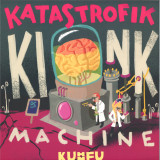
Der Waffle House Index bemisst in den USA seit 2011 die Wucht von Katastrophen: Grün = vollständiges Menü - Restaurant hat vollen Strom, Speisen unbegrenzt, Schaden schlimmstenfalls begrenzt. Gelb = eingeschränktes Menü - kein Strom, Verfügbarkeit von Speisen ist begrenzt. Rot = Restaurant zu - ernsthafte Schäden oder Überflutungen. Übertragen auf den freigeistigen Jazzrock der Band Kuhn Fu: Die Musik auf dem neuen Album "Katastrofik Kink Machine" springt mit Begeisterung und Verve zwischen Grün und Rot hin und her, und lässt die laue Mitte aus. Dem Wort Jazzrock haftet etwas Altbackenes an: Musik, in der seelenlose Virtuosität den Spirit und die Unmittelbarkeit ersetzt hat. Der Gitarrist und Komponist Christian Achim Kühn allerdings spielt mit seiner Band Kuhn Fu einen mit E-Gitarre infizierten Jazz, dem die Spielfreude und der Spaß am tiefschürfenden Unsinn (und eben dann doch auch: die Virtuosität) aus jeder Pore dampfen. Spaß an den Extremen nicht zuletzt, Grün und Rot, kein Gelb.
Spencer Parker returns to Rekids with ‘Better Days’. Tee Amara lends her voice to both English and Spanish versions, while Radio Slave steps up for a remix. Spencer Parker and Tee Amara arrive on Rekids with ‘Better Days’ in March, alongside a remix from label founder Radio Slave.
Originally the closing track ‘Faster Forward’ on 2018’s ‘DANCE MUSIC’ album on Parker’s Work Them Records, the track is reborn as full vocal cut ‘Better Days’ after the long search for a vocalist led the producer to fellow Berlin resident, Tee Amara. Known for work alongside Cromby, Ariel Me Llamo, and Ed Davenport, Amara’s heartfelt, soulful vocals in both English and Spanish versions bring new depth to Parker’s original track. As a longtime friend of Matt Edwards and a staple of the Rekids imprint since the mid-2000s, Parker returns to the label with ‘Better Days’, an occasion that calls for a remix from Radio Slave himself, who adds a jazzy swing vibe via additional melodic elements while he puts in a classic house groove. Spencer Parker, Tee Amara, and Radio Slave
‘Better Days’ is Rekids proper! Radio Slave’s Rekids was founded in 2006 and has since spawned successful offshoots with the Techno-focused Rekids Special Projects in 2017 and its newest sublabel, REK’D, in 2024. With Matt Edwards as the sole A&R, Rekids has been crucial in developing early artist careers and has become a haven for established acts operating in House and adjacent genres, having recently featured the likes of Hilit Kolet, William Kiss, Bushwacka, Mathias Kaden, Katerina, Sean Johnston, and many more.
Kim Rapatti, aka Mono Junk, is a key figure in Finnish techno, known for his deep, hardware-driven sound. A firm believer in analogue synthesis, he has been shaping raw and hypnotic club tracks since the early '90s, drawing inspiration from Detroit pioneers like Derrick May and Juan Atkins. His releases have appeared on his own imprint, DUM Records, as well as Skudge, Forbidden Planet, and most recently, Cold Blow—earning him a dedicated following among DJs and collectors.
Recorded in Turku in 2002 using the Korg Minikorg 700s, Loving Your Mind showcases Mono Junk's signature stripped-down grooves and live hardware improvisation—an essential pick for anyone seeking an authentic slice of early-2000s machine funk. Alongside the title track is Gamma, a previously unheard production that was commissioned as an exclusive for a highly regarded mix series, further cementing Mono Junk's status as a trusted name in underground techno. Built around a percussive groove, a deep electro-funk bassline, and a four-to-the-floor pulse, the track unfolds in an atmospheric haze, balancing dancefloor functionality with hypnotic depth.
The B-side features remixes from Katerina and Sansibar, two of Finland's most notable international breakthroughs in recent years, known for their modern yet timeless club productions that nod to classic techno and house.
Katerina, a versatile DJ and producer with releases on Rekids, Running Back, and Cómeme, transforms Loving Your Mind into a high-energy techno duet, layering her own vocals over the original vocal track, with her infectious synth lead as the icing on the cake.
Sansibar, one of the fastest-rising names in the underground with releases on Kalahari Oyster Cult, WARNING, and Émotsiya, delivers a darker, four-to-the-floor rework—bringing a sinister edge while maintaining the raw energy of classic machine funk.
"The acclaimed 2007 album reissued on 1LP clear vinyl. Taken from the original 2007 masters when Pete Doherty was at the pinnacle of his creative powers, ‘Shotter’s Nation’ followed in the footsteps 'Down In Albion’, the band’s debut album, and Doherty’s first album outside of his first band - the era-defining Libertines. Both were met with commercial and critical acclaim, breaking into the top 10 of the album charts.
‘Shotter’s Nation’ is unmistakably Doherty. Melodic, stark, catchy, raw, brilliantly unique - his music has always created an unflappable loyalty from his many fans, remaining timeless, yet still sending a nostalgic excitement through its listeners. The album also features four songs co-written by Doherty’s then-girlfriend Kate Moss who also regularly performed live with them.
The approach to the recording and release of the album was an escape from Doherty’s previous methods. Stephen Street (The Smiths, Blur, Morrissey, The Cranberries) took over producer duties from The Clash's Mick Jones, and it was and his first album released by a major label, Parlophone."
- A1: Genji Sawai - Hikobae
- A2: Today's Latin Project - Danza Lucumi
- A3: Shigeru Suzuki - On The Coast
- B1: Air Suspension Club Band - In The Hot City
- B2: Yasunori Soryo&Jim Rocks - So Long America
- B3: Jugando - Twisty
- C1: Kingkong Paradise - Samarkand
- C2: Katsutoshi Morizono With Bird's Eye View - Imagery
- C3: Om - Windmill
- D1: Parachute - Mystery Of Asian Port
- D2: Yuji Toriyama - Bay/Sky Provincetown 1977
- D3: Keiichi Oku - Heat Wave
- D4: Safari - Day Dream At The Bob's Beach
2025 Repress
Midnight In Tokyo 2, the second installment to the compilation series that rounds up hidden gems by Japanese artists that's perfect for listening at night in Tokyo, is here. This time the collection brings together some tasty electric jazz fusion from the '80s , compiled by Dubby, the man behind the online record store Ondas.
The compilation begins with "Hikobae," a dark and slow cosmic jazz by saxophonist Genji Sawai, followed by "Danza Lucumi," an odd Caribbean-style jam by Today's Latin Project, a band fronted by Tadaaki Misago of Tokyo Cuban Boys, with arrangements by Yasuaki Shimizu. "On The Coast" is a soulful and mellow vocal track arranged by Ryuichi Sakamoto, from guitarist Shigeru Suzuki's album White Heat, and fusion boogie cut "In The Hot City" is by Mr. Theodore, which was a one-off project by a mysterious artist.
The melancholic soul jazz number "So Long America" is the title track from the album Yasunori Soryo released in '82, following a stint in America with the band Brown Rice. "Twisty" is a tropical reggae tune from the album Samba Kathy, an underrated classic by Jugando which was released on Trash, a sublabel of one of Japan's finest jazz labels, Trio. "Samarkand" is an electric Latin jazz jam that sounds like something Miles Davis and Santana could have played on, performed by a Latin funk band from Fussa. "Imagery" is a primal African fusion track by Katsutoshi Morizono, a member of the prog rock band Yoninbayashi.
"Windmill" is the most acoustic sounding tune on this compilation, a breezy Brazilian affair with a Hermeto Pascoal feel. "Mystery Of Asian Port" is by the band Parachute, which consisted of Japa-nese fusion giants like Akira Inoue, Tatsuo Hayashi and Masaki Matsubara. The cosmic jazz record sounds like something Daniele Baldelli would play in his sets. "Bay Sky Provincetown 1977" is a classic Japanese fusion tune by guitarist Yuji Toriyama.
The set also features the mellow but danceable "Heatwave" by keyboardist Keiichi Oku, featuring a female vocalist (which some have identified as Rie Ida), and last but not least, closing out the 13 track compilation is "Day Dream At The Bob's Beach," a wonderful urban fusion with a beautiful vibraphone melody, from the Japanese fusion classic album that was a one-off project by studio musicians
Legendary House don Harry Romero joins Rekids for the first time with the ‘Nice To Meet You’ EP comprising two massive tracks with classic NY House DNA with the sort of modern twist Romero’s become synonymous with throughout his two-decade-plus career. The Bambossa Records founder now lands on Radio Slave’s flagship label following an impressive 2024, which featured releases on Faith, Nu-Groove, and Defected.
After his appearance on Rekids’ podcast series in August, House hero Harry Romero starts the label’s 2025 with the ‘Nice To Meet You’ EP. First up is the title track, a uniquely hypnotic cut with a bold kazoo melody and raw, club-ready low-end that shines on the breakdowns and high-impact drops. ‘Danny’s Groove’ is next, a track with real Romero energy, its rhythm carefully layered with an organic drum shuffle at the centre, an ear-catching whistle melody in the back, and plenty of synth hits in between - the ‘Nice To Meet You’ EP is a masterclass in building and releasing energy on the dancefloor.
Radio Slave’s Rekids imprint was founded in 2006 and has since spawned successful offshoots with the Techno-focused Rekids Special Projects in 2017 and its newest sublabel, REK’D, in 2024. With Matt Edwards as the sole A&R, Rekids has been crucial in developing early artist careers and has become a haven for established acts operating in House and adjacent genres, having recently featured the likes of Hilit Kolet, William Kiss, Bushwacka, Mathias Kaden, Katerina, Sean Johnston, and many more.
Diagonal celebrates 13 years inbusinessvia a 4 x 12" run featuring label stalwarts and influential collaborators. This is LP2, the second in the series. Like LP1 before it, this 12" comes with a coloured, elastic H band. All four LPs will be accompanied by these meaning customers can combine the records and complete their own 4 x 12" set!
This plate welcomes Regis back tothe label he inspired into existence, this time turning his attention toPowell's "Nomad". The result is techno bliss! Streetwalker (Beau Wanzer & Elon Katz) offer up a gloomy ballad, StabUDown Productions, a label mainstay, delivers the beats we love him for. There's a gripping and unsettling DJ tool from Patino and a beat-fest from Novoline. DIAG050 LP2 has it all.
- A1: Runaway
- A2: Eucalyptus
- A3: Tropic Morning News
- A4: New Order T-Shirt
- A5: Don't Swallow The Cap
- B1: Bloodbuzz Ohio
- B2: The System Only Dreams In Total Darkness
- B3: I Need My Girl
- B4: Lemonworld
- B5: The Geese Of Beverly Road
- B6: Lit Up
- C1: Alien
- C2: Humiliation
- C3: Murder Me Rachael
- C4: England
- C5: Graceless
- D1: Fake Empire
- D2: Smoke Detector
- D3: Mr November
- D4: Terrible Love
- D5: Vanderlyle Crybaby Geeks
Black Vinyl[32,98 €]
The National veröffentlichen mit "Rome" am 13. Dezember ein komplettes Live-Album mit 21 Tracks auf Doppel-Vinyl, als Doppel-CD und natürlich digital.
Das Konzert wurde am 3. Juni 2024 in Italien live (ohne Overdubs) aufgenommen wurde. Das Doppelalbum, welches von Peter Katis, einem langjährigen Begleiter der Band, abgemischt wurde, spannt einen Bogen über die mehr als 20 Jahre der Karriere von The National und zeigt, wie jeder Song auf der Bühne sein ganz eigenes und neues Leben entfaltet hat. Man muss diese Band live gesehen haben, die mittlerweile Stadien und große Arenen füllt. Warum das so ist, hört man auf "Rome". Aufgenommen in dem architektonisch beeindruckenden und nach dem berühmten italienischen Filmkomponisten benannten Veranstaltungsort "Parco Della Musica Ennio Morricone", zeigt die 21-Track-LP schillernde Versionen großer Songs wie "Bloodbuzz Ohio", "Don"t Swallow the Cap", "I Need My Girl", "The System Only Dreams in Total Darkness", "England" und "Fake Empire" - so wie Live-Interpretationen neuerer Tracks wie "Eucalyptus", "New Order T-Shirt", "Tropic Morning News" und "Smoke Detector". Die Band ändert ihre Setlist von Abend zu Abend, spielt Klassiker aus zwei Jahrzehnten und kombiniert diese mit Tracks aus den letzten Alben - kein Konzert ist wie das andere und beschert den Zuschauern jedes Mal im wahrsten Sinne ein einzigartiges Erlebnis. "Rome" ist geprägt von Raritäten wie dem Show-Opener "Runaway", "Lemonworld", "The Geese of Beverly Road", "Lit Up" und einer Tour-de-Force-Paarung von "Humiliation" vom von der Kritik gefeierten Album "Trouble Will Find Me" mit "Murder Me Rachael" von dem früheren Album "Sad Songs For Dirty Lovers". Als Zugabe gibt es in Rom die Wahlkampfhymne "Mr. November", "Terrible Love" von High Violet und das abschließende Fan-Singalong "Vanderlyle Crybaby Geeks". In ihrer Live-Kritik bezeichnete der Guardian The National als "eine die Ära definierende Band auf dem Höhepunkt ihrer Kräfte... als dieses atemberaubende zweieinhalbstündige Epos zu einer gemeinschaftlichen Katharsis wird". Auch der Rolling Stone UK schrieb: "Es ist klar, dass die Band...ihren Platz an der Spitze seit einem Jahrzehnt verdient hat.... Eine Show, die einfach euphorisch ist und die Band auf einem neuen Höhepunkt sieht." Das Doppel-Livealbum "Rome" ist das Zeugnis dafür.
DLR drops his first album since starting Sofa Sound Bristol - ‘Money Till I Got None’.
The album is a tongue in cheek reflection on modern life, society, politics and of course MONEY. The never ending thirst and need for it; the stress and freedom it can bring; its power, its illusion and all its contradictions.
Drawing on life experiences from a relatively privileged position, but also from travelling and meeting many types of people across the UK and worldwide, the album explores different perspectives about money from varying sections of society.
In the 7 years since his last album, DLR has been through highs and lows, played big shows, struggled, released classic tracks and spent, spent, spent, spent. 'Money Till I Got None' is his journey of frustration and realisation and his first fully solo album in terms of production, but with a stellar lineup of vocalists and musicians to bring invaluable perspectives and experiences to the project.
Established poets, story tellers and MCs such as Fox, Rider Shafique, Jakes and Gusto bring unique insight, upcomers Freddy B & Kathryn Brenna add crucial flavours and we welcome Hal (Snazzback) on keys plus additional musical direction, with further instrumentation from Abbey Neave & Joe Bradford.
- A1: Jezebel
- A2: Parce Que
- A3: Les Deux Gitares
- A4: Je M'voyais Déjà
- A5: Il Faut Savoir
- A6: Les Comédiens
- A7: La Mamma
- A8: Sa Jeunesse Entre Ses Mains
- A9: Et Pourtant
- B1: For Me Formidable
- B2: Sur Ma Vie
- B3: A Ma Fille
- B4: Que C'est Triste Venise
- B5: Une Enfant
- B6: Hier Encore
- B7: Au Printemps Tu Reviendras
- B8: La Bohème
- B9: Paris Au Mois D'août
- C1: Tout S'en Va
- C2: Emmenez-Moi
- C3: Le Cabotin
- C4: Non Je N'ai Rien Oublié
- C5: Mourir D'aimer
- C6: Les Plaisirs Démodés
- D1: Comme Ils Disent
- D2: A Ma Femme
- D3: Tous Les Visages De L'amour
- D4: Mes Emmerdes
- D5: J'ai Vu Paris
- D6: Toi Et Moi
- D7: Je T'aime Aime
- E1: Avec Un Brin De Nostalgie
- E2: Tomorrow Is My Turn
- E3: How Sad Venice Can Be
- E4: The Old Fashioned Way
- E5: The I Love You' Song
- E6: She
- E7: Yesterday When I Was Young
- E8: I'll Be There
- F1: La Légende De Stenka Razine (With Les Compagnons De La Chanson)
- F2: Je Voyage (With Katia Aznavour)
- F3: Il Faut Savoir (With Johnny Hallyday)
- F4: Young At Heart (With Frank Sinatra)
- F5: J'aime Paris Au Mois De Mai (With Zaz)
- F6: Ave Maria
Collected by Charles Aznavour is a wonderful collection of hits and classics by the French chansonnier, that touches your soul at every moment. It’s an overview of his work during the sixties, seventies and duets with Johnny Hallyday on “Il Faut Savoir” and with Frank Sinatra “Young At Heart”. Also his English versions of “How Sad Venice Can Be”, “The Old Fashioned Way”, “She” and four more English songs are included on this deluxe Trifold 3LP album.
In the early 1950s a man of short stature attempts to win over his audience. With a hoarse voice he delivers songs that do not catch on. People jeer at him. Tomatoes fly through the air. The Frenchman with Armenian roots slinks off the stage, but does not quit. Ironically, the song that makes him a household name is the song in which he recalls his agonising trial. The audience reacted indifferently when Charles Aznavour decided to try out his new song on stage. But when he went on to greet the audience for one final time they all stood and gave him a thundering standing ovation.
In the sixties, hits and classics succeed one another. Nobody is bothered any more by his husky voice, by his small stature or his rugged characterful face. The croony “For Me Formidable” (1963), the heart breaking “Et Pourtant” (1963) and the nostalgic “Hier Encore” (1964) confirm his standing as a fan favourite. “La Bohème” (1965) and “Emmenez-moi” (1967) turn Aznavour into a superstar. In “La Bohème”, there are impressionist painters strolling in the shadows of the Sacré-Coeur, the compelling “Comme Ils Dissent” (1972) is the first chanson after Vichy France to overtly endorse homo sexuality and in the present “France Of La Manif Pour Tous” (the movement that opposes gay marriage), does it again to sound particularly topical. “Camarade” (1977) was about the nomenklatura, the ruling elite in the Soviet Union and is a social and historical topic. “Avec Un Brin De Nostalgie” is an Aznavour grand cru, maybe even the best he has made over the last thirty years.
Charles Aznavour Collected is available as a limited pressing of 1000 individually numbered copies on gold vinyl. The package includes a 4-page booklet with liner notes and photos.
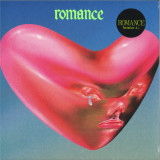
Fontaines D.C. kündigen heute ihr mit Spannung erwartetes viertes Album “ROMANCE“ an. “ROMANCE“, das am 23. August über XL Recordings veröffentlicht wird, ist das erste Album der Band mit dem Produzenten James Ford und ohne Zweifel ihr bisher ehrgeizigstes, einfallsreichstes und klanglich abenteuerlichstes Album. Es knüpft an den Erfolg des 2022 erschienenen Albums “Skinty Fia“ an, das in Großbritannien und Irland Platz #1 der Albumcharts erreichte und der Band eine Reihe von Auszeichnungen einbrachte, darunter "International Group of the Year" bei den BRIT Awards 2023. Die explosive Leadsingle "Starburster" läutet die jüngste kreative (R)Evolution von Fontaines D.C. ein. Inspiriert von einer Panikattacke, die Leadsänger Grian Chatten im Londoner Bahnhof St. Pancras erlitt, wird der Song immer wieder durch scharfes und wildes Einatmen unterbrochen. Der treibende Beat und der unerbittliche Text stellen die Selbstzerstörung als Fantasie dar, bevor es einen kurzen Moment ernüchternder Klarheit gibt, wenn das Schlagzeug aussetzt und Chatten vom spuckenden, fast rappenden Gesang beinah in einen Psalm übergeht, dessen Bariton voll und verträumt ist. Begleitet wird der Song von einem filmischen Musikvideo von Regisseur Aube Perrie (Megan Thee Stallion, Harry Styles, The Hives), das die kathartische Intensität des Songs auf brillante Weise einfängt.
Michael Mayer albums don’t come round too often, which is one of many reasons why his fourth collection, The Floor Is Lava, is a genuine event. It’s been eight years since his last one, the collaborative & released on !K7; its predecessors, Mantasy (2012) and Touch (2004), took their sweet time, too. It’s no real surprise, given the many hats Mayer wears – globetrotting DJ, revered remixer, inveterate collaborator, and boss of both Kompakt and Imara – that his solo productions are relatively sparing. But this also speaks to their quality: Mayer’s name on a record sleeve is a sign of quality, of music that’s both looking to the future and calling back to the past, that balances the imperatives of the dancefloor and the loungeroom, that’s as exploratory as it is functional.
On The Floor Is Lava, Mayer seems to be taking the temperature of both the music that surrounds him (past and present), and the ides of the industry he works within. There’s that iconic album title, for a start. “The album’s mindset,” he says, reflecting on those four words together. For Mayer, it’s partly a critique of the way the industry boxes in both producer and listener, focuses them on genre, on market, on the next new thing: “Being a free minded spirit that transcends genres has become an uphill battle.” A battle worth fighting, though, and with The Floor Is Lava, the result is an album that’s varied, quixotic, idiosyncratic, charming, and deeply, addictively listenable.
Throughout, Mayer finds thrills in exploration and juxtaposition, allowing unexpected things to blossom and giving them their life, their platform, throwing the listener exciting curveballs: “It’s a DJ album by a DJ that’s easily bored.” Either easily bored, or endlessly curious, The Floor Is Lava is rich with ideas. It opens with “The Problem”, which looks back to look forward, embracing the rickety way early house productions threw samples together with gleeful abandon. Mayer mentions Pal Joey, and the scene around Rockers Hi-Fi and their Different Drummer imprint, as reference points, and you can hear that freewheeling spirit throughout.
It’s followed by “Vagus”, a slinky, sensual minimal house number that Mayer describes as his “musical catnip”. The flow of these two opening cuts defines the dynamic of The Floor Is Lava, defining the dialectical drive at its core: thesis and antithesis leads to synthesis, but with a welcome prickliness that means you’re always excited, always engaged. It’s also productive in the way it derives energy from rubbing genres and sounds against each other, in unexpected ways, for maximum musical frisson. There’s psychedelic techno on “Feuerstuhl”, more minimal techno with “Ardor” (Mayer mentions ‘Immer 1’ era 90s minimal as inspiration), slippery, Shepard-tone breakbeat through “Sycophant”, a lovely, lush vocal turn on the poppy “The Solution”.
The album closes with the melancholy “Süßer Schlaf”, where Mayer sets a poem by Goethe to one of his most haunted, moving pieces of music yet, in abstract tribute to a lost friend. It’s one of the most affecting moments on The Floor Is Lava. There’s also an update on 2020’s wild Brainwave Technology EP, with the surrealist glitter-stomp of “Brainwave 2.0” (check out those handclaps!),where Mayer’s thinking about the socio-political precipice of the now: “I’m reading with great interest about this whole complex of how humanity is about to cross so many lines and the implications that the resulting financial and educational inequality will bring.”
That’s The Floor Is Lava: then and now, brainwaves and nerve structures, problems and solutions, genres on fire; the real, the unreal, and the surreal. An album for the easily bored and the endlessly curious. Mayer has the last word, telling us all you need to know about the album’s spirit: “Burning for the cause, being zealous, being addicted to the heat of the night, the exuberant powers of music.”
Michael Mayer veröffentlicht nicht oft Alben, was einer von vielen Gründen ist, warum ‘The Floor Is Lava’ ein echtes Ereignis ist. Es sind acht Jahre vergangen seit seinem letzten Werk, dem Kollaborationsalbum &, das auf !K7 erschien; seine Vorgänger, Mantasy (2012) und Touch (2004), ließen ebenfalls auf sich warten. Es überrascht nicht wirklich, da Mayer viele Rollen gleichzeitig erfüllt – weltreisender DJ, vielbeschäftigter Remixer, unermüdlicher Kollaborateur und Chef von sowohl Kompakt als auch Imara – weshalb seine Solo-Produktionen eher sparsam ausfallen. Doch das spricht auch für deren Qualität: Ein Album mit Mayers Namen auf dem Cover steht für Qualität, für Musik, die sowohl in die Zukunft blickt als auch auf die Vergangenheit verweist, die das Gleichgewicht zwischen den Anforderungen des Dancefloors und des Wohnzimmers hält, die genauso erforschend wie funktional ist.
Auf The Floor Is Lava scheint Mayer sowohl die Musik um ihn herum (vergangen und gegenwärtig) als auch die Strömungen der Branche, in der er arbeitet, zu reflektieren. Da wäre zunächst der ikonische Albumtitel. „Die Grundhaltung des Albums“, sagt er, drückt sich in diesen vier Worte aus. Für Mayer ist es teilweise eine Kritik daran, wie die Industrie sowohl Produzenten als auch Hörer in Schubladen steckt, sie auf Genres, auf den Markt und auf das nächste große Ding fokussiert: „Ein freier Geist zu sein, der Genres überschreitet, ist zu einem steinigen Weg geworden.“ Ein Kampf, der sich jedoch lohnt, und mit The Floor Is Lava ist das Ergebnis ein Album, das vielfältig, eigenwillig, charmant und tiefsinnig, aber auch süchtig machend ist.
Im gesamten Album findet Mayer Freude an der Erforschung und Gegenüberstellung von Stilen, lässt unerwartete Dinge erblühen und gibt ihnen Raum, überrascht den Hörer mit spannenden Wendungen: „Es ist ein DJ-Album von einem DJ, der sich schnell langweilt.“ Entweder langweilt er sich schnell oder er ist unendlich neugierig – The Floor Is Lava ist reich an Ideen. Es beginnt mit „The Problem“, das in die Vergangenheit blickt, um nach vorne zu schauen, und die wilde Art, wie frühe House-Produktionen Samples mit fröhlicher Unbekümmertheit zusammenwarfen, aufgreift. Mayer nennt Pal Joey und die Szene um Rockers Hi-Fi und ihr Label Different Drummer als Referenzpunkte, und dieser freie Geist zieht sich durch das gesamte Album.
Es folgt „Vagus“, eine sinnliche Minimal-House-Nummer, die Mayer als seine „musikalische Katzenminze“ beschreibt. Der Fluss dieser beiden Eröffnungstracks definiert die Dynamik von The Floor Is Lava und den dialektischen Antrieb im Kern: These und Antithese führen zu einer Synthese, jedoch mit einer willkommenen Schärfe, die dafür sorgt, dass man immer aufgeregt und engagiert bleibt. Zudem gewinnt das Album Energie, indem es Genres und Klänge auf unerwartete Weise aneinanderreibt, um maximalen musikalischen Nervenkitzel zu erzeugen. Es gibt psychedelischen Techno in „Feuerstuhl“, mehr Minimal Techno mit „Ardor“ (Mayer erwähnt ‘Immer’ Ära Minimal als Bezugspunkt), gleitenden Shepard-Ton-Breakbeat in „Sycophant“ und einen lieblichen, üppigen Vocal-Auftritt im poppigen „The Solution“.
Das Album schließt mit dem melancholischen „Süßer Schlaf“, in dem Mayer ein Gedicht von Goethe vertont und eine seiner bisher eindringlichsten und bewegendsten musikalischen Kompositionen schafft, als abstrakten Tribut an eine verschiedene Freundin. Es ist einer der ergreifendsten Momente auf The Floor Is Lava. Ebenfalls gibt es ein Update der wilden Brainwave Technology-EP von 2020, mit dem surrealistischen Glitzer-Stampfer „Brainwave 2.0“ (hör dir diese Handclaps an!), in dem Mayer über den sozio-politischen Abgrund der Gegenwart nachdenkt: „Ich lese mit großem Interesse über diesen ganzen Komplex, wie die Menschheit dabei ist, so viele Grenzen zu überschreiten und welche Auswirkungen die daraus resultierende finanzielle und bildungstechnische Ungleichheit haben wird.“
Das ist The Floor Is Lava: Damals und heute, Gehirnwellen und Nervengeflechte, Probleme und Lösungen, brennende Genres; das Reale, das Unreale und das Surreale. Ein Album für die schnell Gelangweilten und die unendlich Neugierigen. Mayer hat das letzte Wort und sagt uns alles, was wir über den Geist des Albums wissen müssen: „Brennen für die Sache, leidenschaftlich sein, süchtig nach der Hitze der Nacht, den überschwänglichen Kräften der Musik.“
Matching breezy, Bossa nova-tinged sophistication with softly spiralling psychedelia, Testbild! arrive in the Quindi lounge as though they've always been there. On their 12th album, Bed Stilt, the Swedish collective cast their attention back to the earlier days of their 25-year trip through sweetly mysterious pop-not-pop rendered in warm tones and shot through with surrealism. It's tricky to get a precise fix on the story and structure of Testbild! The project was spearheaded by Petter Herbertsson in his hometown of Malmö in the late 90s, although the story on their website credits the inspiration and source material to a chance meeting and unpublished manuscript from a retiring scientist. The collective's evolution since then is a tangled web of facts and fiction spun by a revolving cast of collaborators including Siri af Burén, Katja Ekman, Rikard Heberling, Douglas Holmquist, Mattias Nihlén and Petter Samuelsson. Along the way, their music has touched on chamber pop, post-punk and modern jazz with the elaborate harmonies and catchy songwriting charm of the Canterbury scene. The tracks which make up Bed Stilt were in fact track recorded in Malmö back in the mid- 00s, lying in wait for the right opportunity to be brought to light with some delicate overdubs and finishing flourishes in the here and now. The core musicians working on the record were Herbertsson and Douglas Holmquist on a similarly expansive list of vocals, guitars, bass, synths and keys, Siri af Burén on lead vocals and Mattias Nihlén on synths and additional mixing. Meanwhile Tomas Bodén - better known as Civilistjavel - lent some additional synth work as well as mastering the record. Musically, Testbild! stay true to their idiosyncratic approach on Bed Stilt with six immaculately rendered sojourns through lilting harmonies and brushed rhythms, feeling nostalgic but beguiling in equal measure. Theirs is a luxurious sound, not least on the opening strains of 'The First New Years Eve,' which purrs to life draped in silky Rhodes and chiming vibes. Behind this comfortable veneer the enigmatic lyrical themes unfurl through Herbertsson, Holmquist and af Burén's vocal harmonies like fractalized puzzles waiting to be solved. The finger-picking delicacy and languid harmonica of 'Streams' strike a pastoral mood neatly countered by the elegant slide into dislocated ambience for the track's final stretch. By contrast, 'And Her Eyes Are Red' surges with a big beat urgency which plays beautifully with the mellow jazziness of the chord sequences, boldly toying with song structure to dart down curious tangents without losing the immediate impulse of a great pop record. Somewhere in this tension between clarity and chaos we can understand the addictive charm of Testbild! - a band steeped in the considerable craft of making accomplished and unconventional music so very easy to sink into. If that doesn't make for a perfect addition to the Quindi catalogue, we don't know what does.