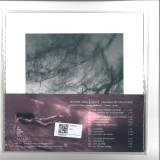
I Talk To Water, the fifth album for Kompakt by Danish producer Kölsch, is the artist’s most personal statement yet. While all the trademarks that make his music so popular and powerful are still present – lush, melodic techno; swooping, trance-like figures; sensuous, shivery texturology – I Talk To Water is also a deep and intimate rapprochement with family and history, a beautiful, finely detailed document of loss and memory, and a tracing of the long, unbroken thread of grief that runs through our lives once we’ve lost those we loved.
The emotional core of I Talk To Water, then, is a cache of recordings by Kölsch’s father, Patrick Reilly, who passed away in 2003 from brain cancer. With time rendered elastic by the pandemic and its associated lockdowns, its sudden, alienating shifts in everyday living, Kölsch found himself reflecting on his father’s passing and ongoing spiritual presence, thinking about how best to memorialise such a significant figure in his own life. Those recordings opened a gateway, of sorts, for Kölsch to move through – a way to bring past and present together and entwine them in a sensitive, poetic manner.
Kölsch’s father was a musician – “touring in the sixties and seventies, in the Middle East especially, he was doing the whole hippy trail, playing guitar, and wrote some songs over the years,” he recalls. “But all in all, he decided to focus on family rather than pursue a musical career.” Reilly kept playing and writing music over the years, though Kölsch hadn’t listened to the material for some time: “I’d never had the guts to listen to it, because I just felt too fragile listening to his voice. It’s such a tough thing to go through.”
During the pandemic, though, Kölsch listened through the fragmented body of work that his father had produced over the years. “I decided I’m gonna finally release my dad’s music twenty years after his passing,” he reflects. “This whole album is about the process of loss, and for me it’s been one of my main driving forces in my musical life, the whole emotional aspect of whatever I’ve done has been based in that feeling that he’s not there anymore.”
Recordings of Reilly appear on three songs across I Talk To Water. His guitars drift pensively across “Grape”, offering a lush thread of melody that Kölsch wraps with clicking, driftwood rhythms and droning, melancholy bass. “Tell Me” is a lovely three-minute art song, a sadly beautiful reflection, minimally adorned with gentle keys and a muted pulse. And on the closing “It Ends Where It Began”, Kölsch lets his father’s acoustic guitar take centre stage for a lament that’s unexpectedly folksy, a guitar soli dream, which Reilly originally recorded in 1996. “He actually recorded it for my first album that never came out,” Kölsch reveals, “and I had it sitting around forever. That is purely him.”
These three imagined collaborations between father and son are poised and delicate. But their relationship also marks the gorgeous music Kölsch has made across the rest of I Talk To Water, from the itchy yet lush “Pet Sound” (titled in tribute to one of Reilly’s favourite albums), the flickering synths and yearning vocal samples that slide through “Khenpo”, the ecstatic shuddering that marks “Only Get Better”, or “Implant”’s slow-motion pans and subtle reveals.
There’s also the title song, where Kölsch is joined by guest Perry Farrell (Jane’s Addiction, Porno For Pyros), singing a mantra for internal reflection: “I talk to water / Searching for myself / Looking for answers / Oceans of you.” Farrell’s appearance brings another timbre, another spirit to the album, aligning neatly with his recent interest in electronic music. “He was completely taken by this idea of talking to water,” Kölsch says, thinking about the ways we collectively lean towards the natural world as a comfort and a listener, a guide through mourning, a way to map out the terrain of the heart. This mapping is something that Kölsch has proven remarkably adept at through the years; dance music for both body and mind, but also both for the here-and-now, and for the hereafter.
“I Talk To Water”, das fünfte Album des dänischen Produzenten Kölsch für Kompakt, ist zweifellos das persönlichste Statement des Künstlers bislang. Während alle Markenzeichen, die seine Musik so beliebt und kraftvoll machen, immer noch präsent sind – üppige, melodische Techno-Tracks; schwebende, tranceartige Elemente; sinnliche, fiebrige Texturen – ist “I Talk To Water” auch eine tiefe und intime Annäherung an Familie und Geschichte. Es ist ein wunderschönes, fein ausgearbeitetes Dokument des Verlusts und der Erinnerung, und es verfolgt den langen, ungebrochenen Faden der Trauer, der durch unser Leben läuft, sobald wir diejenigen verloren haben, die wir liebten.
Der emotionale Kern von “I Talk To Water” besteht aus Aufnahmen von Kölschs Vater, Patrick Reilly, der 2003 an Hirnkrebs verstarb. Durch die Pandemie und ihre damit verbundenen Lockdowns, die plötzlichen, entfremdenden Veränderungen im Alltag, fand Kölsch sich in Gedanken an den Tod seines Vaters und seine fortwährende spirituelle Präsenz wieder. Er überlegte, wie er eine so bedeutende Figur in seinem eigenen Leben am besten verewigen könnte. Diese Aufnahmen öffneten ihm sozusagen ein Portal, um Vergangenheit und Gegenwart miteinander zu verbinden und sie auf sensible und poetische Weise zu verweben.
Kölschs Vater war Musiker – “er tourte in den sechziger und siebziger Jahren, vor allem im Nahen Osten, auf dem Hippie Trail, spielte Gitarre und schrieb im Laufe der Jahre einige Songs”, erinnert sich Kölsch. “Aber alles in allem entschied er sich, sich auf die Familie zu konzentrieren, anstatt eine musikalische Karriere zu verfolgen.” Reilly spielte und schrieb jedoch im Laufe der Jahre weiterhin Musik, obwohl Kölsch das Material lange Zeit nicht angehört hatte: “Ich hatte nie den Mut, es anzuhören, weil ich mich einfach zu zerbrechlich fühlte, seine Stimme anzuhören. Es ist so schwer, das durchzustehen.”
Während der Pandemie hörte sich Kölsch jedoch durch das fragmentierte Werk, das sein Vater im Laufe der Jahre produziert hatte. “Ich beschloss, die Musik meines Vaters zwanzig Jahre nach seinem Tod endlich zu veröffentlichen”, reflektiert er. “Dieses ganze Album handelt von dem Verlustprozess, welcher für mich generell eine der Hauptantriebskräfte in meinem musikalischen Leben ist. Der ganze emotionale Aspekt von dem, was ich getan habe, basierte auf dem Gefühl, dass er nicht mehr da ist.”
Auf “I Talk To Water” sind Aufnahmen von Reilly in drei Songs zu hören. Seine Gitarren ziehen nachdenklich durch “Grape”, bieten einen üppigen Melodiefaden, den Kölsch mit klickenden, treibenden Rhythmen und dröhnendem, melancholischem Bass umwickelt. “Tell Me” ist ein schönes dreiminütiges Kunstlied, eine traurig-schöne Reflexion, minimal geschmückt mit sanften Tasten und einem gedämpften Puls. Und auf dem Abschlusstrack “It Ends Where It Began” lässt Kölsch die akustische Gitarre seines Vaters im Mittelpunkt stehen, ein überraschend folkiger Klagegesang, den Reilly ursprünglich 1996 aufgenommen hatte. “Er hat es tatsächlich für mein erstes Album aufgenommen, das nie veröffentlicht wurde”, enthüllt Kölsch, “und ich hatte es ewig liegen.”
Diese drei erdachten Kollaborationen zwischen Vater und Sohn sind ausgewogen und zart. Aber ihre Beziehung prägt auch die wunderschöne Musik, die Kölsch im Rest von “I Talk To Water” geschaffen hat, angefangen bei dem nervösen, aber üppigen “Pet Sound” (benannt als Hommage an eines von Reillys Lieblingsalben), den flimmernden Synthesizern und sehnsüchtigen Vocal-Samples in “Khenpo”, den ekstatischen Erschütterungen in “Only Get Better” oder den langsamen Schwenks und subtilen Enthüllungen in “Implant”.
Es gibt auch den Titelsong, in dem Kölsch von Gast Perry Farrell (Jane’s Addiction, Porno For Pyros) begleitet wird, der ein Mantra für die innere Reflexion singt: “I talk to water / Searching for myself / Looking for answers / Oceans of you.” Farrells Auftritt bringt eine weitere Klangfarbe, einen weiteren Geist in das Album, der gut zu seinem jüngsten Interesse an elektronischer Musik passt. “Er war völlig fasziniert von der Idee, mit Wasser zu sprechen”, sagt Kölsch und denkt darüber nach, wie wir kollektiv zur Natur als Trost, Zuhörer, Führer durch die Trauer neigen, um die Gelände des Herzens zu kartieren. Diese Kartierung ist etwas, in dem Kölsch im Laufe der Jahre erstaunlich geschickt war; Tanzmusik für Körper und Geist, sowohl für das Hier und Jetzt, als auch für das Leben danach.
Cerca:ke
Aphrose reveals her sophomore album, 'Roses,' a captivating amalgamation of Neo-Soul and R&B, delving into the wellspring of ancestral strength and love.
Hailing from Toronto, Canada, Aphrose, also known as Joanna Mohammed, unveils her sophomore album, establishing her as one of Toronto's best-kept musical treasures. Known for her commanding vocal prowess within her hometown, this gifted songwriter and vocalist is rapidly garnering global acclaim and accolades from both fans and music critics alike. Signed to independent Soul label LRK Records, 'Roses' remains firmly rooted in Aphrose's signature style characterized by resounding R&B vocals. However, it also embraces a softer, more introspective aura that brilliantly showcases her remarkable versatility in navigating diverse genres, moods, and musical approaches with remarkable finesse.
This album offers a little something for everyone, catering to enthusiasts of Neo-soul, traditional Soul, Hip Hop, and R&B. Produced by her longtime friends/collaborators at SafeSpaceship Music (Scott McCannell, Chino De Villa, Ben Macdonald), the album serves as a compelling testament to the collective creativity of Aphrose and this exceptional production trio, delivering a kaleidoscope of soundscapes, textures, rhythms, and grooves. 'Roses' weaves together both lighthearted and profound elements as Aphrose explores her life journey, delving into her familial past and present, grappling with the challenges of new motherhood, and contemplating her relationships with herself, her partner, and her friends. Across the 35-minute LP, Aphrose draws inspiration from Neo-soul icons like Jill Scott and Erykah Badu, pays homage to Soul legends such as Aretha Franklin and MJ, and infuses contemporary R&B influences from artists like Frank Ocean, SiR, and SZA. The result is a sound that distinctly bears the 'Aphrose sound,' reflecting her deep admiration for her inspirations while imparting a refreshing twist to familiar genres.
The album commences with its title track, 'Roses,' which was released as a single on August 25th. This song sets the stage, invoking the strength of Aphrose's ancestors, particularly her late Grandmother Rose. Following suit is 'YaYa,' also released as a single on July 7th. This buoyant dance track whisks listeners back to the disco era of the late 70s and early 80s. The album's third track, 'Heavenly Father,' offers a brief interlude featuring a recording of Aphrose's Grandmother Rose engaged in prayer, setting the tone for the subsequent track, 'In The Time Of Sorrow.' This contemplative, chill piece captures Aphrose's musings on navigating a world often shrouded in fakery, while craving authenticity. 'Honey (Don't) Come Back' seamlessly transitions between two distinct musical personalities, commencing with a deep, almost Trap-like bass/drum beat before transforming into a spirited Funk/Soul jam—an anthem of empowerment encouraging the listener to leave a situationship that is no longer working. 'What You Don't See' strips the production down to its core, as Aphrose and guitarist/co-writer Heather Crawford craft an intimate ode to a friendship's sad ending.
The B-side opens with the evocative 'Weapons,' featuring a five-person choir including LRK label-mate Claire Davis, Nevon Sinclair (Daniel Caesar and LOONY), Kyla Charter (Aysanabee and Alessia Cara), Lydia Persaud, and Marla Walters. The track is adorned with a stirring string arrangement courtesy of Jessica Deutsch. 'Chop The Cake' acts as a breather, interlude-style, easing the intensity. 'Soft Nuclear' channels the spirit of the early 2000s R&B movement, bearing traces of influence from Lucy Pearl. 'Good Love,' released as the first single off this body of work on May 19th, transports listeners to the 70s with its soulful resonance, drawing inspiration from the likes of Michael Jackson and Teddy Pendergrass. 'Higher' stands as Aphrose's tribute to Prince, capturing the essence of his music within its hook and production. The album's culmination arrives with 'ZAG,' an acronym derived from Aphrose's daughter's name, commencing with the sound of her daughter's heartbeat in-utero from a sonogram taken when Aphrose was pregnant. This heartfelt composition serves as a dedication to her daughter and all parents navigating the rollercoaster of parenthood, emphasizing the imperative of nurturing love to shape the future.
'Roses' stands as Aphrose's homage to her history—her Grandma Rose and the ancestral trailblazers who paved her path to the present life she enjoys; her current experiences—her self-discovery, her relationships with her partner and friends; and her aspirations for the future—her daughter and the generations to come. This album crystallizes these temporal dimensions, prompting introspection, celebration, laughter, and tears. 'Roses' is a musical odyssey that scrutinizes the multifaceted beauty of existence, inviting listeners to partake in this thing called life.
The radio world has taken notice of Aphrose's talent, with national Radio Capital's Italy Massimo Oldani spinning her latest single "YaYa" for the entire month of July on his show "Vibe." And both singles getting to number 10 in the UK soul chart.Additionally, Aphrose has received national radio play on renowned stations such as BBC in the UK, RTVE in Spain, and Radio France FIP.
Aphrose has also made CBC's Top 100 finalist list for their Searchlight competition.
Huey Morgan played "YaYa" the second track off the album on his BBC radio six show
Switzerland's music trailblazer embarks on an exhilarating journey as LOT Records launches its inaugural release with the sensational album, "Slam 1987," presented by the visionary artist Quenum. This album represents a true testament to Quenum's unwavering commitment to his distinct minimalistic style.
With a keen focus on crafting a sonic experience that resonates with the most discerning of audiences, Quenum's years of expertise shine through in each of the album's four classic tracks. Expect a mental, atmospheric, and rhythmically dense exploration, artfully constructed with razor-sharp beats that captivate the senses, taking your auditory senses on an unforgettable voyage.
"Slam 1987" is a sonic masterpiece, pushing the boundaries of experimental and minimal music, featuring mesmerizing drone pads and precision-engineered beats that cut through the air like a knife. This musical gem is further enhanced by a groovy deep tech remix by the talented Argentinian artist, Lucio Agustin. His remix is a versatile gem that seamlessly fits into warm-up sessions and peak-time sets, delivering a bass-driven groove complemented by a tantalizing amen break, infusing a touch of spice that truly delights.
Moreover, "We can do it" and "Recyclade" redefine the frontier of experimental and micro-house, enveloping listeners in an otherworldly, mental, and atmospheric embrace. Their meticulous attention to detail within the rhythmic fabric is a testament to their years of experience, resulting in an auditory adventure that will enrapture music enthusiasts across the globe. "Slam 1987" is not just an album; it's a sonic odyssey that invites you to immerse yourself in the boundless creativity of Quenum. Prepare to embark on a unique and mesmerizing auditory journey that will leave an indelible mark on your musical soul.
Supported by Roger Gerressen, Andrey Pushkavev, E.Wan, Hermanez, youANDme, Philipp Priebe, Ohm, Jason Kendig, Barbara Preisinger
French Berlin-based producer and DJ Anthony Georges Patrice returns to his own Ausblick imprint this October with 5NRG accompanied by a remix from the much loved Playhouse artist LoSoul.
Throughout the past decade France's Anthony Georges Patrice has been steadily unveiling his productions on the likes of Berlin's Lossless, Ghetto Rhythms Records and of course his own Ausblick where he returns here, all the while honing his skills as a DJ through regular appearances on his adopted home turf of Berlin and further afield to Amsterdam, Paris and beyond.
Here, Anthony makes awelcome return to Ausblick with a new 12" release and leading the way is on the a-side is the original mix of ‘X5NRG’, a DJ tool like clubcut fuelled by trippy vocal loops, murky atmospherics, a throbbing bass groove and resonant synth sweeps all underpinned by a crisp4/4 rhythm.
On the flip-side Germany's groove maestro LoSoul flips the original with his own unique twist, laying down a near twelveminutes of subtly unfurlinghypnotisminhis signature fashion. Fragments of the originals atmospherics and vocals are dubbed out while LoSoul's raw, skippy rhythmic style and unfaltering drive keeps listeners locked in
throughout.
After a long hiatus Klaus Benedek comes back on his own mothership Fortunea Records with a brand-new production. ‚Tombstone’ heralds the autumn. You can feel the melancholy that brings the end of the warm and bright days with it. Although the subject matter is dark and eerie, the track wanders with its epic instrumentation through pensive optimism. The remarkable chopped hookline and the concise and soft bassline are casted in a flowing deep sounded carpet full of hope. An epic excursion that you definitely should give a try.
A considerable move into a different sound sphere goes Berlin-based artist and Tieffrequent-founder Siggatunez. He has had an outstanding array of vital productions this year and with his remix he lets you „feel the unknown“. In a very detailed way he made a serious dancefloor intended track, in the signature style of his current output, where beats and groove take the lead, but keeping the soul of the
original with the use of its pads, strings and bass.
Tombstone will come out on limited 200 copy vinyl and in its digital form onstreaming services and download stores on the 27th of october. There will be no repress!ö
Regardless of where you’re from, it’s where you at. These wise words are some that the Watch Patrol wants you to remember as we all trying to find and stay on our path..
These wise words start off the A side and prepare us for a funky and synth fueled, cow bell-ing journey.
Next we head into Trial & Error, a bouncing tech which has already been proven to bring some big energy on the dance floor.
The B side contains the breaks you’ve been waiting for. Two big tunes that have been deliciously dialed in to spread groove and funk on the dancefloors. Trance, breaks, arpeggios, chopped up vocals, and special effects that will get you to keep this one in the bag at all times.
Limited copies as always, be quick!
As we continue the five part journey to say goodbye to the Telomere Plastic series, we as always, are excited to share with you Telomere 020.2.
This second VA, features producers, Anderson, Aspetuck, Bænglund and Watch Patrol.
We begin off the record with ‘Funk Inspector’ from Bænglund. The track name here sums it up pretty well. Full on quirky funk in the airwaves. A delicious cut to keep everyone on there toes!
Next on the A2 we have Aspetuck with his ‘As the Fog Rolls In’, Starting off with a bubbly soundscape the track progresses into a hypnotic acidic journey keeping the mood deep and melancholic. Handle this one with care!
On the B1 we have Anderson who delivers another deep and beautifully crafted soundscape. This is a timeless tune that takes you on a sonic journey from start to finish. This will work wonders on the dance floor and during your introspective moments laying in bed with your headphones bumping.
Lastly, we close out the release with the one and only Watch Patrol who we have all dearly missed. We hope you enjoy this slowed down IDM breakbeat gem!
Very limited black copies as always with a few colored copies available via the Wex bandcamp, be quick!
It's all aboard for Stasis' second 12" on De:tuned. Steve Pickton is widely regarded as one of the pioneers of the early UK techno scene. Here he returns with a new 3 track EP of carefully selected and previously unreleased DAT tape tracks from the heyday of 90s electronic music. On offer a uniquely lush and sentimental style that resonates with the 313 Motor City sound. Sweet memories are the greatest kind of nostalgia!
Kevin Foakes (Openmind, DJ Food, Ninja Tune) created all the graphic work. Mastered by Matt Colton at Metropolis and pressed on 180 gr vinyl. A separate digital release will also be available at the usual digital shops. Stay tuned!
How do you define an artist who has never performed live, nor DJ’ed, nor ever had his photograph published and has never partaken in an interview? By the music of course. Jürgen Paape has proven this time and time again. How? Listen. Here. Right. Now. Co-owner of Kompakt. The house’s most elusive member remains the uncompromised, untainted shining star. He, who has launched the label with its very first release “Triumph“, Jürgen Paape has left a legacy of music that is a true core of the sound which Kompakt’s foundation is built on.
We celebrate Jürgen Paape with “Kompilation”. A well deserved opportunity to hear Jürgen Paape for fans and newcomers – revived and remastered and for the very first time on double vinyl – in a way that it plays through like a full length album. Some of the biggest moments of Kompakt over a three decade history are here; the chorus of “So Weit Wie Noch Nie” remains timeless – there to send shivers of pleasure down your spine as we feel at the end of exhaustive end of a night. “Take That” is an anthem for the still to be built rock stadiums of tomorrow. It’s a bonafide hit that put him in the charts in Australia and Italy. – “Come Into My Life” remains undeniably one of Kompakt’s catchiest pop tracks ever. “So Wird Die Zeit Gemacht” – builds on Paape’s signature sound with the spirit and vitality of classic house and a truly demented vocal hook. Then there’s the unique Schaffel quirkiness of “Ofterschwang” and so many other hits Jürgen Paape has delivered over the years. Well, it’s Paape!
Wie definiert man einen Künstler, der noch nie live aufgetreten ist, der noch nie als DJ aufgelegt hat, der noch nie ein Foto von sich veröffentlicht hat und der noch nie an einem Interview teilgenommen hat? Natürlich über die Musik. Jürgen Paape hat das immer wieder bewiesen. Und wie? Hört selbst. Hier. Genau. Jetzt. Er ist Miteigentümer von Kompakt. Das am schwersten fassbare Mitglied des Hauses bleibt sein kompromissloser, ungetrübter leuchtender Stern. Er, der das Label mit seiner allerersten Veröffentlichung “Triumph” aus der Taufe hob, hat ein musikalisches Vermächtnis hinterlassen, das der wahre Kern des Sounds ist, auf dem Kompakts Fundament aufgebaut ist.
Wir feiern Jürgen Paape mit “Kompilation”. Eine wohlverdiente Gelegenheit, Jürgen Paape für Fans und Neueinsteiger wieder zu entdecken – aufgefrischt, remastered und zum ersten Mal auf Doppel-Vinyl. Einige der größten Momente in der drei Jahrzehnte währenden Geschichte von Kompakt sind hier zu hören; der Refrain von “So Weit Wie Noch Nie” bleibt zeitlos – er lässt einem noch immer Schauer der Freude über den Rücken laufen, als würden wir nach durchtanzter Nacht morgens aus dem Club taumeln. “Take That” ist eine Hymne für die noch zu bauenden Rockstadien von morgen. Es ist ein echter Hit, der ihn sogar in Australien und Italien in die Charts brachte. “Come Into My Life” bleibt unbestreitbar einer der eingängigsten Popsongs von Kompakt überhaupt. “So Wird Die Zeit Gemacht” baut auf Paapes charakteristischem Sound auf, mit dem Geist und der Vitalität von klassischem House und einem wahrhaft verrückten Vocal-Hook. Und dann ist da noch die einzigartige Schaffel-Schrägheit von “Ofterschwang” und so viele andere Hits, die Jürgen Paape im Laufe der Jahre abgeliefert hat. Well, it’s Paape!
As we get ready to say goodbye to the Telomere Plastic series, we are excited to present Telomere 020.1, aka the first part out of 5.
Each release will have four different artists, making it a compilation of twenty different artists who will deliver unique, juicy and eclectic frequencies that will keep your telomeres bopping for the rest of time!
This first VA, features producers, ESB, Synaptic Voyager, Vinaya and Vonsuck.
A1, Fancy Organ from Vinaya, is a sexy deep and house cut that is guaranteed to bring smiles all around the dance floor. Arpeggios and groovy bass lines galore. Prepare your piano hands because you will find yourself playing that sweet air organ on this one!
A2, Self Destruct Sequence from Synaptic Voyager (aka Telomere 014’s Illuminators), is a very emotional cut. Originally released digitally on Frame Of Mind, we were overjoyed to be given the green light to put this beauty on wax. Deep pads, tommy drums, hints of IDM and techno, and soul striking arpeggios pave the way for a special sonic journey. Close your eyes and melt away with this one!
B1, Keio Acid from ESB. We are always delighted to share more ESB with you. Elan’s love for analog and tape give off a raw and authentic energy that is hard to come by. This deep, jazzy and loopy cut will keep you on your toes from start to finish. We can only dream of being on the dance floor as this one plays out!
B2, Unemati from Vonsuck, is a deep and dubby cut that beautifully blends the three genres dub techno, house and techno. Dark rooms and dark skies are recommend for this one here, even though we could see these frequencies accompanied by a pink and red sunrise bringing waves of energy and nostalgia to your soul. Its a real treat to have Vonsuck aka Galaktlan on the Telomere series!
Very limited black copies as always with a few colored copies available via the Wex bandcamp, be quick!
PIV serves up the fourth edition of their highly sought-after Amsterdam Dance Event Sampler - collecting tracks from fresh new talent, as well as artists that have been affiliated with the label since the very beginning. 15 tracks, in total, with eight of them appearing on this vinyl edition, that will be sold in Amsterdam during the PIV events and in all good record stores.
Showcasing the true sound of PIV, this is a must-have package of dancefloor weapons.
DJ support:
Chris Stussy, Enzo Siragusa, Sidney Charles, Fabe, Lauren Lo Sung, Hector Couto, Artmann, M-High, Prunk, Darius Syrossian, George Smeddles, Kellie Allen, Dennis Quin, DeMarzo, Archie Hamilton, and more.
Kay-Dee Records is coming at you with a 45 double-hitter, presenting Bert Hector’s ‘The Phoenix’ and ‘The Kraken’ with Kenny Dope on remix duties.
On the first record, we’re treated to ‘The Phoenix’: a sure-fire funk gem with a super warm sound. The beat is as cool as it gets, with a laid-back and funky attitude, sitting beneath a joyous intermingling of sitar, flute, brass and guitar - all performed at expert levels.
‘The Kraken’ has a killer groove, struttin’ along at 85 bpm with a real old-school sound on the beat. Joining the breaks is a huge brass section which pumps loud, while flute solos and funky Wah-wah guitar chops take things up a notch. This is a pure, unadulterated groove.
This is the second time out for the Wormholes on AllChival following on from their You Never See the Stars When it Rains anthology release. This one is a previously unreleased album recorded in a concise burst of seven nights in Dublin’s Sun Studios in the spring of 1996. It was originally envisaged as being The Wormholes’ second album, the follow up to their 1994 debut Chicks Dig Scars. Unfortunately the end result of the sessions - Parijuana - would not only be ignored by their label of the time (Roadrunner Records) - but would also just as quickly be dismissed by the band themselves.
Eamonn Crudden, the manager of the band, had manged to extract some money from Roadrunner to record demos of new tracks as soon as the release cycle for their debut was over. The budget was so tight that it covered studio time but was not even enough to buy the master tapes. With things going south with the label – a classic 90’s tale of the A&R man who championed their cause heading off elsewhere the minute they signed - the intention was to go in and aim to record an album rather than demos - with the intention of releasing it on another independent label to keep the momentum around the band going.
However by this stage the Wormholes were totally wrapped up in listening to Can, Faust and generally exploring music based on casual recording, improvisations and extemporization. For them the album was too ‘rock’ and – having been dropped by Roadrunner - they no longer felt under any obligation to release it. To them it was time for a fresh start. Their next recordings would not be ‘for’ anyone but themselves. Today bassist Anto Carroll admits that “at times we were our own worst enemies” and with the benefit of hindsight both he and guitarist Graham Blackmore wish they had gone ahead and released this album at the time. However, back then, they thought they could do better and they did go on to make inventive and unique sounding versions of some of these songs with Stan Erraught producing just a short time later. These recordings were eventually released by Dead Elvis in 1999 - along with a couple of ‘adjusted’ tracks from the Sun Studios sessions - on Parijuana: 4 Years in Captivity.
It’s highly unlikely that listeners today will share the band’s view that the abum was too ‘clean’. This version of Parijuana is dirty, raw, messy with plenty of experimentation and extemporisation. The songwriting is as strong as that on their Chicks Dig Scars debut. The music is played with a new confidence and swagger, very much the sound of a band rooted in a wave of US ‘lo-fi’ finding their own sound. It’s the missing link between their conventional Pavement/Sebadoh influenced debut to the more drawn out, free roaming and extemporised second album proper Scorpio The Album.
Bacao Rhythm & Steel Band come in heavy with a two-sider for the Halloween season that is sure to get the masquerade ball moving. Side A is their cover of "Stranger Things Theme" where they play the top line on steel pans with echoed out guitar chanks and sound effects that haunt the track. This is the second time they take on a popular TV theme song and both times they knocked it out of the park. They manage to keep the eerie vibe but their cover takes on a more hypnotizing tone than the original. On side B they take on a tried and true October 31st classic: John Carpenter's iconic "Halloween Theme" and they do it up in a disco four on the floor style that is guaranteed to get spins at Halloween parties from now til infinity. Get the ghouls and the ghosts off their seats_ LIMITED EDITION PUMPKIN ORANGE COLORED VINYL!
Analog Concept continues its exclusive SCENA ACID series with the highly stimulating Somapolice EP from Low Orbit Satellite.
Crafted for both the mind and body. All four tracks create an expansive journey of deep electro character defined by lush melodies, confident and cool drum rhythms, all married into intelligent atmospheric design, while keeping the Acid Electro essence in mind, as well as a deep lovely vocal appearance from Esmi
At the helm of a collective immersed in London’s underground house landscape, Bizarre Traxx co-founder Jhobei is keeping things moving in his own unique way, shaping and crafting a sound to call his own. Releasing on labels like Mindhelment, Picnic and Mood Waves while stepping out as 1/3 of trio Felon5, he marries warping and heady territories with loose, spacey spheres, creating immersive trips for all hours of the night. Here he delves deeper once more, landing on Up The Stuss for the first time with his playfully titled ‘Slink ‘N Slide’ EP.
The title cut launches straight into the action and showcases his sound perfectly, harnessing squiggly synths, driving low-end grooves and sweeping astral sonics to unveil a cosmic ride through rich textures. Expect the same depth and unpredictable twists and turns across the EP as he draws for influences spanning those early golden years of tech house through to minimal and hazy late-night electronic realms. As debuts go, this one is stacked with treats and musical goodness from top to bottom - no surprise they’ve been go-to cuts for those deeper moments from the label boss!
'After a first album as a duo released on Okraina Records: "Le Corps Défendant", Delphine Dora and Mocke invite us to join them again in listening to a new album. We slip into it as if in a dream, the music carries us away with its floating images.
Heard before on a handful of disturbingly beautiful solo albums and in collaborations such as Midget!, Arlt, Chevalrex, Mohamed Lamouri, Mocke (Dominique Dépret's nom de plume) is a subtle and inventive guitarist, who draws melancholic arpeggios, with a beautiful languor, that walk the line between tensions and tears. Delphine Dora has been heard with Roxane Métayer, Sophie Cooper, Andrew Chalk, Jackie McDowell, Helena Espvall, Valentina Magaletti ... meeting in a moment of improvisation, a solitary sincopated voice blooming between the black and white keys of her piano, tuning betwist these keys, or at other times in the gap of the right note. Here improvisation feeds on melody, or is it the other way round?
Recorded in an old church in the village of Mauzun in the Puy-de-Dôme, by Cyril Harrison, "L'invisible est multiforme" is an invitation to join them, to let these abstract songs erase our obsessive thoughts of the day, to open ourselves to the vibrant poetry of the air and the evening, to finally forget ourselves. Each note played by these four intertwined hands is like a slight break in the fabric of time, sliding one over the other, reminding us of mortality and its beauty. Ritornellas flow out of mechanical clocks, fragile, taking care not to hurt the silence. Both seek to dig and open up new paths to enrich their duet, to open up imaginary landscapes. Sometimes the guitar cuts through the fabric of an organ, fractures the song, just as the rain erases a landscape, redrawing it. But very quickly, both of them continue to follow this new path, improvising what will serve as a framework, a perspective, a language. There is a kind of praise for slowness in this "invisible", a desire to hold back the song, not to let it slip away, to let the listener's ear enter its course, to share the last note, its illumination. Each of these thirteen short sound pieces merge into a common colour, a vibration close to the different tonalities, which inter-penetrate, like a cubist painting. Words cannot take away the mystery of this record, words can only fail to describe the music, you must hear it.'
- Michel Henritzi