
- 1: Now Dance
- 2: Intro
- 3: Give Me My Money
- 4: Cowboy
- 5: Playin' Games
- 6: Neighbors
- 7: Traffic
- 8: Split
- 9: Keys To The City
- 10: Heart Attack
- 11: Dino Interlude
- 12: The Great Dino Escape


All songs written and produced by Levin Krasel, Leon Krasel, Luca Schüten, except song 5 & 6 written and produced by Levin Krasel, Leon Krasel, Luca Schüten, Ismail Tuefekci, Jens Moelle.
Lyrics by Levin Krasel (1, 2, 3, 8, 9, 10).
Lyrics by Levin Krasel & Leon Krasel (4, 5, 6, 7).
Mixed by Levin Krasel.
Recorded at Vitamin A Studio, Cologne.
Artwork by Leaf. Cover by Écoute Chérie. Photos by Écoute Chérie.
This record was written in Germany, England and France.
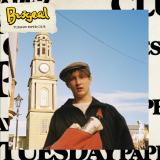
Die schottische Folk-Punk-Indie-Band Brògeal veröffentlicht am 17. Oktober das Debütalbum „Tuesday Paper Club“ über Play It Again Sam. „Tuesday Paper Club“ vermischt Romantik, Verlust, Nostalgie und Unfug und kreiert einen Genre-Mix der kurz vor dem Siedepunkt steht. Das Album ist vollgepackt mit Instrumenten wie Akkordeon, Banjo, Bouzouki, Mandoline und einer flotten Penny Whistle. Es verbindet alte Folk-Traditionen mit dem Indie-Gefühl der Gen Z und kreiert einen Sound, der angesichts der Dunkelheit des 21. Jahrhunderts lacht, singt und tanzt.
Das Album wurde im Black Bay Studio, in einer ehemaligen Fischverarbeitungsfabrik auf der Isle of Lewis aufgenommen, mit einem atemberaubenden Blick auf die Bucht. Aufgenommen haben die fünf Bandmitglieder das Album zusammen mit dem irischen Produzenten Richie Kennedy, der schon mit Künstler*innen wie The Libertines, The Last Dinner Party, Interpol, Dua Lipa und U2 gearbeitet hat.

Eine halbe Dekade nach der Veröffentlichung ihres Albums "Anak Ko" (2019) hat sich Melina Duterte, alias Jay Som, sich selbst und ihren Erinnerungen geöffnet und Songs geschrieben, die den Klang ihrer Jugend wieder aufleben lassen, und dabei ihre Erfahrung als Musikerin, Produzentin und Performerin einfließen lassen. Kein vorheriges Jay-Som-Album klingt so wie "Belong", ein packendes 11-Song-Set über Selbstdefinition und Zugehörigkeit, das zwischen kraftvollen Power-Pop-Hits und verschwommenen Balladen, zwischen elektronischen Kuriositäten und aufheiternden Hymnen schwebt.
Melina wuchs mit Alternative-Rock außerhalb von San Francisco auf und lernte als Teenager die Hits des Pop-Punk/Emo der frühen 2000er auswendig. Passenderweise ist es Jim Adkins (Jimmy Eat World), einer dieser Kindheitshelden, der bei "Float" die backing vocals übernimmt. Während Hayley Williams sanfte Harmonien auf dem schwungvollen "Past Lives" beisteuert und Lexi Vega (Mini Trees) zu "Cards On The Table" beiträgt, sind diese drei Jay Soms allererste Gastsänger*innen und repräsentieren Dutertes Bestreben, mit Menschen ihres Vertrauens Neues auszuprobieren.
Seit ihrem letzten Album hat Melina beschlossen, sich selbst und ihrem lebenslangen Interesse am Recording etwas zu gönnen. Mit dem Kauf einer alten Neve-Konsole nahm sie sich vor, mehr zu werden als nur ihre eigene Tontechnikerin zu Hause. Fünf Jahre später kann sie nun auf eine umfangreiche Liste an Produktions- und Mixing-Credits zurückblicken, darunter auf Lucy Dacus’ neuestem Album "Forever Is A Feeling", Gastauftritte an der Seite von Troye Sivan, No Rome und beabadoobee, einen Beitrag zum Soundtrack von A24s "I Saw The TV Glow" und einen Grammy für ihre Arbeit an "The Record" von boygenius, der Band, der sie später als Tourmitglied beitrat.

Mariel Buckleys ,Strange Trip Ahead" ist der mit Spannung erwartete Nachfolger ihres für den Polaris Music Prize nominierten Albums ,Everywhere I Used to Be". Auf diesem Album widmet sich Buckley noch stärker dem Alternative-Americana und Indie-Rock, mit klirrenden Akustikklängen, rauer Pedal Steel und ihrem charakteristischen melancholischen Ton. Die Lead-Single ,Vending Machines", produziert von Jarrad K (Ruston Kelly, Wild Rivers), leitet dieses neue Kapitel mit filmischen Details und schwungvollen Rhythmen ein und fängt die Orientierungslosigkeit des Lebens im Wandel mit beeindruckender Ehrlichkeit ein. Buckleys Ruf als scharfsinnige, verletzliche Geschichtenerzählerin wächst weiter, sie hat sich ein treues Publikum in der Americana-, Folk- und Alt-Country-Szene erarbeitet. Zu ihren Tourneen gehören Support-Slots für Orville Peck, The Bros. Landreth und k.d. lang sowie Auftritte bei SXSW, AmericanaFest und dem Philadelphia Folk Festival, die ihre Position in der modernen Roots-Landschaft festigen. Strange Trip Ahead ist Buckley in ihrer kühnsten Form - roh, echt und ohne Angst, Genregrenzen zu verwischen. Vom Pedal-Steel-Hook von ,Vending Machines" bis zum kraftvollen Album-Closer ,Anvil" bringen ihre geerdete Stimme und ihr exzentrischer Charme frische Energie in die zeitgenössische Americana. Es ist ein überzeugender Schritt nach vorne von einer Songwriterin, die sich still und leise zu einer der angesehensten Stimmen der kanadischen Roots-Musik entwickelt hat.

pink vinyl[28,53 €]
Here to dazzle you by the power of the disco ball, Lack of Afro is your friendly neighbourhood ‘Love Dealer’. Two years on from the funk & soul rebirth of ‘Square One’, powered by the ubiquitous ‘Loving Arms’ featuring Greg Blackman, Lack of Afro aka Adam Gibbons is now close to two decades deep in the game with soundtrack credits galore and online streams doing calculator-busting numbers. With extensive touring taking ‘Love Dealer’ up and down the country this Autumn, Gibbons’ ninth studio album is all for "the thrill of seeing people on a dancefloor, all collectively locked into a track that you've produced - there’s nothing like it!”.
‘Love Dealer’ is the authentic modern disco experience, packing a stacked sole’s worth of club beats full of stardusted sing-alongs, style-outs and French touch-style cool. Despite being “written during one of the longest winters in living memory”, ‘Love Dealer’, featuring some co-production from fellow South Coast dancefloor scholar Flevans (and influenced by producer du jour Barry Can’t Swim), exudes warmth and will make you sweat when its highs take effect.
Entering the scene with the radiance of ‘Make It Shine’ featuring Greg Blackman, washing over the airwaves of BBC 6 Music and Radio 2 and taking up a 10-week residency on the Jazz FM playlist, Gibbons and his crack line-up of discotheque players are your go-to team when you can’t wait for the weekend to begin, as subtle as they are straight down to business. ‘Love Dealer’ offers you nothing but the best in sparkling string symphonies, the hippest guitar licks, samples of those invited beyond the velvet rope and struts soaked in night fever.
Double A-side ‘Walls Start Rockin’ and ‘Heart & Soul’ guide the album’s glamour-and-groove, while ‘Love Saves The Day’ and ‘Plain to See’ dramatically take to the podium in a shimmer of pure peak 70s theatre. ‘Keeping Me Strong’ is the synergy of disco chic and the sound of a global advertising tie-in with Dyson, ahead of Gibbons taking a slightly Moroder/Cerrone-ish detour on ‘Idolising People Like Madlib’. “'Love Dealer' is aimed unequivocally at the dancefloor" says Adam. "As an artist, I wanted to push myself in a slightly new direction - more into the land of disco and a four to the floor sound. 'Love Dealer' is quintessentially an upbeat record, full of joy, optimism and hope for the future”. Seek your inner ‘Love Dealer’, kink your ‘fro and let your funk flag fly.
n B7. 14 Your Love (feat. Jonah Hitchens) BONUS TRACK
n B7. 14 Your Love (feat. Jonah Hitchens) BONUS TRACK
[n] B7. 14 Your Love (feat. Jonah Hitchens) [BONUS TRACK]
[BONUS TRACK]

Perc returns to Perc Trax for his first full EP since the release of his Resident Advisor recommended album 'The Cut Off' in March 2024. Across the three tracks of 'Soft Launch' Perc sets out his current sound, a groove led take on classic techno with the depth of production and unexpected twists that Perc's tracks are famous for.
Title track 'Soft Launch' is based around the interplay between the three main elements of the track, the driving kick & bass, cut up percussion loops and the ever building string chords, creating something unique that has been a key track in Perc's sets since it was completed.
'Tonight' sits somewhere between pulsing electro and gritty lo-fi techno, constantly pushing forward as a female vocal breaks through the wall of percussion demanding to hear something fresh.
Finally 'Gravity Drop' pushes the sound design further, mixing a crisp industrial kick drum groove with cut up atmospheric melodic and vocal elements creating a psychedelic dreamlike atmosphere to close the EP. Packaged in a full colour sleeve designed by Perc Trax design god Jonny Costello, Perc's Soft Launch is a statement of Perc Trax's future both sonically and visually.


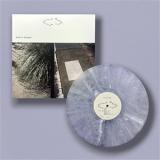
Black Vinyl[22,27 €]
Emily A. Sprague's Cloud Time traces an audio-spiritual journey through time and place, recorded across a long-awaited debut tour of Japan in the fall of 2024. Compiled from environmental improvisations captured in and for the moment, material at once welcoming, responsive, and inimitable, the album distills a voyage guided by psychic wayfaring, unbound presence, and activating performance for a reciprocal exchange with space, listener, and each fully engaged instant. The Japanese tour documented on Cloud Time held an almost mythic significance for Sprague, taking on properties of her own sonic white whale. After many near-departures and dropped plans to play in the country, "the empty spaces of cancelled trips and forgotten music turned into strange little misty spirits that I felt followed by," she says. "When I began preparing for the tour, I couldn't shake a sense that the invitation to Japan was more about opening myself up to this new place instead of bringing something into it tightly under my control. Improvisation has always been such a pillar in my music practice, and I really wanted to meet the country, spaces and people through that process." To amplify these intuitive whispers on-stage, Sprague reimagined her time-tested live rig, designed to be as free from error as possible, as a looser, more flexible set up that would allow her to interface with what was essentially a blank sonic canvas every night. Each performance became a collaboration between environment and instinct, Sprague processing the events, energies, and emotions informing the evening through her new sound ecosystem, and projecting an entirely present and unique version of herself to each open-eared and hearted crowd. "It was very much more than just an act of playing for me, but a total experience of time and place," she says. The seven long-form pieces that plot the course of Cloud Time, excerpted from over eight hours of recordings archived on the artist's on-stage recorder and generously shared on the album with no additional mixing and only minimal editing, invite listeners to become still in these deep-rooted moments of presence as the album moves from city to city, venue to venue. Cloud Time chronicles material recorded at each tour stop, Sprague selecting and sequencing the album around mood-based storytelling more so than linear chronology. "I tried to make the whole album flow in the way that any one of the complete live performances did," she explains, "while also keeping the spirit of the whole thing as a journey." The result is equal parts travelog, love letter, and impressionistic collage channeled from the potent ferment of a now encased in the glowing amber of memory. Intrinsically inspired by kankyo ongaku, an environmental music philosophy, known both in and widely outside of Japan that tunes into the similarly expansive ethos as Pauline Oliveros' deep listening practice and posits the listener as composer, Cloud Time is ambient music that seems to be listening right back, grounded in heartfelt synthesized frequencies that abundantly hold and heal. Pieces like "Nagoya," "Tokyo 1," and the ten minute "Matsumoto" in particular hum with the atomic resonance of gently tended landscapes, offering space for tuning way in and dropping far out from perspectives that stifle and bind. Cloud Time is an invitation to embrace each moment as both fleeting and eternal, floating by with nothing to grasp onto and absolutely everything to gain. The exercise in acceptance and letting go that Sprague practiced throughout the tour deeply impacted her understanding of self as both a guest and venerable performer. "The process of loving wherever I am, being present and focusing on a clear channel of communication for mind and emotion, rooted so deeply in respect for the space, those within it, and myself, ended up being profoundly healing," she says. "My vision and hope is that this album can be released as a gift back to anyone who either was or wasn't there. A cloud time of life passing by."

STANDFIRST Titanic, the project spearheaded by Mabe Fratti and Hector Tosta (aka I. la Católica), return with a sumptuous and life-affirming new album.
In her sensational 1929 biography Tiger Woman, dancer and socialite Betty May claimed her ‘coster’s eye’ meant she liked to wear as many colours as possible. “Colours to me are like children to a loving mother. Each is my favourite, yet I can never bring myself to deny the others by preferring one.” May’s bold and inclusive strategy is one that manages to transfer itself, almost a century later, to Hagen, the new record by Titanic.
Many will know Titanic as the Mexico City-based brainchild of cellist and singer Mabe Fratti and multiinstrumentalist Hector Tosta who is now operating under the pseudonym, I. la Católica, (taken, rather unusually, from the name of the street the pair live on). With Hagen, and their previous release, Vidrio, (2023), the pair are creating a distinctive signature sound in modern alternative pop music. Nobody else sounds quite like them. Both records have an open hearted nature and simple, winning melodies that play off against a taste for drama, spectacular orchestration and a feeling of otherworldly mystery. Hagen is the more ambitious, sometimes more mystical effort. From the opening handclaps of ‘Lágrima del Sol’, (a wonderfully uptempo playground chant translating as a tear from the sun but, surely, not referencing the brand of pineapple wine?), the record dances its way through various mid-to-late-eighties inspirations, lush and widescreen passages of melancholy and vertiginous contrasts.
Mystery is often found in the simple but slightly odd song titles. English translations of various track titles give, ‘you swallowed the gum’, ‘leak’, ‘a tear from the sun’, ‘raising the trophy’ ‘digging dimensions’, ‘the owner’, ‘the decapitated hen’ and ‘the trap is exposed’. All denote striking images, metaphysical hints and emotional cues or simple, even childlike actions. Though Fratti and Tosta don’t reveal its provenance, the album’s title could even be a crafty play on words: the listener would be forgiven in thinking the moments of brash contrast and eyebrow raising theatricalism in the music constitute a musical nod to German punk chanteuse, Nina Hagen.
On Hagen, singer and cellist Mabe Fratti once again displays her brilliant knack of speaking to us directly. There is never the suspicion of her playing to the gallery, and the directness of many of the lyrics don’t allow it. Parallel to this, Fratti has an almost magical ability to give Hector Tosta’s melodies, and her and Tosta’s lyrics ones imbued with an insight and meaning that feels otherworldly. Tosta admitted it was “pretty wild to hear Mabe take the interpretations to a different place” and the listener can pick up on the delight Fratti takes in (literally) adding a voice to the many narratives.
Two examples can be shown here: ‘Gotera’ (Leak) uses harsh slashes of cello and tough, gunfire-like guitars and drums and multiple vocal lines that could be acting as a Greek chorus. They play off brilliantly against Fratti’s soft, slightly baleful vocal take that delivers lyrics such as: ‘nobody knows where the leak is / but I know where it is / they fight in front of the door and / nobody can go in’. With ‘La Gallina Degollada’ the somewhat blithe melody melody line, sung with what could be sarcastic brio by Fratti, plays against an itchting rhythm and rasping guitar part. The punch comes when you see that the song is about a chicken that has been decapitated and read lyrics such as: ‘I already saw it, it moved, the decapitated chicken’ / ‘could it be that I'm broken’ and ‘Two people hurt each other by thinking that they no longer agree’/ ‘Hours pass and the chicken represents what scares me’.
There may be death and fights to deal with, but there is also a quality of chirpy self-reliance about Hagen that is a key part of its nature. Like Betty May and her colourful outfits, Hagen’s sound often revels in its own sense of richness. Throughout, the record delivers vaulting string sections or glutinous guitar squeals that could, like the powerful, driving ‘Escarbo Dimensiones’ (Digging Dimensions) have come directly from a glossy 1980s TV series. Fratti sees this “glam sound” developed by Tosta on the aforementioned track and ‘Te Tragaste el Chicle’ (You Swallowed The Gum), as moments that were truly “revealing” for the album as a whole during its making.
What else? The thud and thump of ‘La Trampa Sale’ (The Trap is Exposed), and its sudden change of tempo and mood betrays a monstrously ambitious piece of music, the players almost greedily creating the sounds. Other moments are heart wrenching: ‘Libra’ ends on a poppy chord switch that cleverly ramps up the emotion inherent in the music’s notation. You could almost imagine a teenager in a bedroom forty years ago, rewinding the track over and over on a small, cheap cassette player, unable to get enough of that sugarsweet switch. Elsewhere, Oneohtrix Point Never adds stardust and an unearthly sense of space on the changeable, slightly moody meditation, ‘Pájaro de Fuego’ (Firebird). The record ends with ‘Alzando el Trofeo’ (Lifting the Trophy), a track that could soundtrack a state wedding, what with its beautiful cascading piano parts, a sugary vocal and short triumphal guitar riffs that add a rich patina to the overall sound. Fratti: “When I doubled those vocals on ‘Alzando el Trofeo’ I felt there was an epiphany happening, right at that moment.”
Making a good record is a team game. Tosta and Fratti recall seeing Randall from Circular Ruin Studios in NYC “tweak the drums in ‘Libra’ to make that amazing effect of the gated reverb”, or the shaping of ‘Gotera’, “when (recording engineer) Nate Salon added some synths to the track.” Drummer Eli Keszler, “an amazing and versatile player” had the songs down pat in a couple of days” and, according to Tosta, Oneohtrix Point Never “just came to one of the sessions and we hung out, and after all the recordings he and Nate were together in some studio and out of nowhere they sent us some beautiful tracks for ‘Pájaro de Fuego’! Fratti concurs. “He decided that he wanted to record because he was listening to the record (Nate works closely with him) and he really liked it! It was a total honour, indeed!”
Bedazzled by the playing, the skyscraping ambition in the arrangements and the giddy moments of contrast thrown up by Hagen, we could allow ourselves a brief moment of flippancy and state that Titanic’s new record is Yacht Rock meets Aeschylus, full-on. It’s also worth speculating that, in this hyper-sensitive, intemperate age, Titanic’s music has the power, however fleetingly, to heal hurts. Hagen is a brilliant showcase for a fresh and enriching form of pop music: displaying a magpie eye for what glints and plundering what has gone before.
Like Vidrio, Hagen was partially and additionally recorded at Fratti and Tosta’s house, aka Tinho Studios in Mexico City, as well as Golden Girl Studios & Circular Ruin Studios in New York City. Mixing was done by Santiago Parra in Pedro y el Lobo Studios, Mexico City and mastered by Rafael Anton Irisarri at Black Knoll Studios, New York City. The recording engineer was Nate Salon.
Hagen featured Mabe Fratti on cello, vocals & backing vocals, I. la Católica on guitar, keyboards, prepared piano, bass & backing vocals, drums by Eli Keszler and synths in ‘Pájaro de Fuego’ from Daniel Lopatin and Nate Salon.
All compositions on Hagen are written by I. la Católica, except ‘Escarbo Dimensiones’ & ‘Pájaro de Fuego’, which were composed by I. la Católica and Mabe Fratti. The record was produced by I. la Católica and co-produced by Nate Salon & Mabe Fratti. And all lyrics are by I. la Católica except ‘Escarbo Dimensiones’, ‘Gotera’, ‘Gallina degollada’ & ‘Pájaro de Fuego’, which were written by I. la Católica & Mabe Fratti.

STANDFIRST Titanic, the project spearheaded by Mabe Fratti and Hector Tosta (aka I. la Católica), return with a sumptuous and life-affirming new album.
In her sensational 1929 biography Tiger Woman, dancer and socialite Betty May claimed her ‘coster’s eye’ meant she liked to wear as many colours as possible. “Colours to me are like children to a loving mother. Each is my favourite, yet I can never bring myself to deny the others by preferring one.” May’s bold and inclusive strategy is one that manages to transfer itself, almost a century later, to Hagen, the new record by Titanic.
Many will know Titanic as the Mexico City-based brainchild of cellist and singer Mabe Fratti and multiinstrumentalist Hector Tosta who is now operating under the pseudonym, I. la Católica, (taken, rather unusually, from the name of the street the pair live on). With Hagen, and their previous release, Vidrio, (2023), the pair are creating a distinctive signature sound in modern alternative pop music. Nobody else sounds quite like them. Both records have an open hearted nature and simple, winning melodies that play off against a taste for drama, spectacular orchestration and a feeling of otherworldly mystery. Hagen is the more ambitious, sometimes more mystical effort. From the opening handclaps of ‘Lágrima del Sol’, (a wonderfully uptempo playground chant translating as a tear from the sun but, surely, not referencing the brand of pineapple wine?), the record dances its way through various mid-to-late-eighties inspirations, lush and widescreen passages of melancholy and vertiginous contrasts.
Mystery is often found in the simple but slightly odd song titles. English translations of various track titles give, ‘you swallowed the gum’, ‘leak’, ‘a tear from the sun’, ‘raising the trophy’ ‘digging dimensions’, ‘the owner’, ‘the decapitated hen’ and ‘the trap is exposed’. All denote striking images, metaphysical hints and emotional cues or simple, even childlike actions. Though Fratti and Tosta don’t reveal its provenance, the album’s title could even be a crafty play on words: the listener would be forgiven in thinking the moments of brash contrast and eyebrow raising theatricalism in the music constitute a musical nod to German punk chanteuse, Nina Hagen.
On Hagen, singer and cellist Mabe Fratti once again displays her brilliant knack of speaking to us directly. There is never the suspicion of her playing to the gallery, and the directness of many of the lyrics don’t allow it. Parallel to this, Fratti has an almost magical ability to give Hector Tosta’s melodies, and her and Tosta’s lyrics ones imbued with an insight and meaning that feels otherworldly. Tosta admitted it was “pretty wild to hear Mabe take the interpretations to a different place” and the listener can pick up on the delight Fratti takes in (literally) adding a voice to the many narratives.
Two examples can be shown here: ‘Gotera’ (Leak) uses harsh slashes of cello and tough, gunfire-like guitars and drums and multiple vocal lines that could be acting as a Greek chorus. They play off brilliantly against Fratti’s soft, slightly baleful vocal take that delivers lyrics such as: ‘nobody knows where the leak is / but I know where it is / they fight in front of the door and / nobody can go in’. With ‘La Gallina Degollada’ the somewhat blithe melody melody line, sung with what could be sarcastic brio by Fratti, plays against an itchting rhythm and rasping guitar part. The punch comes when you see that the song is about a chicken that has been decapitated and read lyrics such as: ‘I already saw it, it moved, the decapitated chicken’ / ‘could it be that I'm broken’ and ‘Two people hurt each other by thinking that they no longer agree’/ ‘Hours pass and the chicken represents what scares me’.
There may be death and fights to deal with, but there is also a quality of chirpy self-reliance about Hagen that is a key part of its nature. Like Betty May and her colourful outfits, Hagen’s sound often revels in its own sense of richness. Throughout, the record delivers vaulting string sections or glutinous guitar squeals that could, like the powerful, driving ‘Escarbo Dimensiones’ (Digging Dimensions) have come directly from a glossy 1980s TV series. Fratti sees this “glam sound” developed by Tosta on the aforementioned track and ‘Te Tragaste el Chicle’ (You Swallowed The Gum), as moments that were truly “revealing” for the album as a whole during its making.
What else? The thud and thump of ‘La Trampa Sale’ (The Trap is Exposed), and its sudden change of tempo and mood betrays a monstrously ambitious piece of music, the players almost greedily creating the sounds. Other moments are heart wrenching: ‘Libra’ ends on a poppy chord switch that cleverly ramps up the emotion inherent in the music’s notation. You could almost imagine a teenager in a bedroom forty years ago, rewinding the track over and over on a small, cheap cassette player, unable to get enough of that sugarsweet switch. Elsewhere, Oneohtrix Point Never adds stardust and an unearthly sense of space on the changeable, slightly moody meditation, ‘Pájaro de Fuego’ (Firebird). The record ends with ‘Alzando el Trofeo’ (Lifting the Trophy), a track that could soundtrack a state wedding, what with its beautiful cascading piano parts, a sugary vocal and short triumphal guitar riffs that add a rich patina to the overall sound. Fratti: “When I doubled those vocals on ‘Alzando el Trofeo’ I felt there was an epiphany happening, right at that moment.”
Making a good record is a team game. Tosta and Fratti recall seeing Randall from Circular Ruin Studios in NYC “tweak the drums in ‘Libra’ to make that amazing effect of the gated reverb”, or the shaping of ‘Gotera’, “when (recording engineer) Nate Salon added some synths to the track.” Drummer Eli Keszler, “an amazing and versatile player” had the songs down pat in a couple of days” and, according to Tosta, Oneohtrix Point Never “just came to one of the sessions and we hung out, and after all the recordings he and Nate were together in some studio and out of nowhere they sent us some beautiful tracks for ‘Pájaro de Fuego’! Fratti concurs. “He decided that he wanted to record because he was listening to the record (Nate works closely with him) and he really liked it! It was a total honour, indeed!”
Bedazzled by the playing, the skyscraping ambition in the arrangements and the giddy moments of contrast thrown up by Hagen, we could allow ourselves a brief moment of flippancy and state that Titanic’s new record is Yacht Rock meets Aeschylus, full-on. It’s also worth speculating that, in this hyper-sensitive, intemperate age, Titanic’s music has the power, however fleetingly, to heal hurts. Hagen is a brilliant showcase for a fresh and enriching form of pop music: displaying a magpie eye for what glints and plundering what has gone before.
Like Vidrio, Hagen was partially and additionally recorded at Fratti and Tosta’s house, aka Tinho Studios in Mexico City, as well as Golden Girl Studios & Circular Ruin Studios in New York City. Mixing was done by Santiago Parra in Pedro y el Lobo Studios, Mexico City and mastered by Rafael Anton Irisarri at Black Knoll Studios, New York City. The recording engineer was Nate Salon.
Hagen featured Mabe Fratti on cello, vocals & backing vocals, I. la Católica on guitar, keyboards, prepared piano, bass & backing vocals, drums by Eli Keszler and synths in ‘Pájaro de Fuego’ from Daniel Lopatin and Nate Salon.
All compositions on Hagen are written by I. la Católica, except ‘Escarbo Dimensiones’ & ‘Pájaro de Fuego’, which were composed by I. la Católica and Mabe Fratti. The record was produced by I. la Católica and co-produced by Nate Salon & Mabe Fratti. And all lyrics are by I. la Católica except ‘Escarbo Dimensiones’, ‘Gotera’, ‘Gallina degollada’ & ‘Pájaro de Fuego’, which were written by I. la Católica & Mabe Fratti.

Stone classic Bullwackies (as excursioned by Rhythm & Sound for Burial Mix), sensationally featuring two unreleased dubs, newly extracted from the master reels. Both are equally unmissable but quite different, with contrasting effects: the second dub adds ninety seconds, including whip-dem spring reverb. Drawn from the Selective Showcase LP, the vocal mix is more open and dubwise than the Sing & Shout LP offering, with less keyboards.
Asked whether it should be mash or march, after some pondering Bullwackies replied: "That's a good question.'

Another sureshot heater from a magnificent underground label with a cult following, Adeen Records drops AR026, a landmark release uniting two titans of house music: New York's legendary Pal Joey (Joseph Longo) and Chicago's iconic voice Robert Owens. Side A's 'The Me Inside' is a masterclass in deep, soulful club music. Joey lays down a signature groove-hard-hitting drums and lush piano chords-while Owens bares his soul, asking listeners to witness the vulnerable core of his artistry. It's a heartfelt vocal performance rooted in classic Chicago house, paired perfectly with Joey's unmistakable production style. An instrumental follows, ideal for DJs keeping the vibe deep and emotive. Flip to Side B and you'll find Paolo Aniello aka New Digital Fidelity bringing the heat. Known for his work on Snuff Trax and collaborations with house luminaries, Paolo delivers a pulsing, bass-heavy dub remix that's built for peak-time floors. When legends align, magic happens-AR026 is a future classic.

Plastik People's limited series hits double figures with a personal collection of standout tunes from label boss Marc Cotterell, including a licensed remix originally released through Defected Records that made a big impact last year and is now finally available on vinyl. Alongside that is the much-loved trumpet track, which is perfect for sunny outdoor dances, and a massive remix by Mikey More & Andy Tee from Groove Culture. Rounding out the release are two more quality tracks that showcase the artist's range and sound - the shuffling garage undercurrent of 'Searching For Your Love' and deep garage-house bounce of 'Get To It'.

Rare groove fans, take note of yet another gem from the good folks at P-VINE as they reissue Les DeMerle's iconic cover of 'A Day In The Life,' famously sampled in O.C.'s hip-hop classic 'Time's Up.' It's a laidback and jazzed up sound with deep cut rhythms, big horns and conversational sax leads that hit different. Alongside the jazz-funk gem comes 'Aquarius' with DeMerle's sharp drum breaks (which in the past have been sampled by Jurassic 5, De La Soul and DJ Shadow) ride beneath funky keys work and joyous horns that persuade you to get up and move. Pressed in very limited quantities, it's a vital addition to any hip-hop or rare groove set.
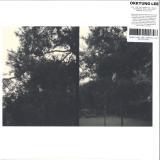
Unlike anything we have heard from her before, Okkyung Lee returns to Shelter Press with "Just Like Any Other Day: Background Music For Your Mundane Activities", a deeply intimate body of recordings at the juncture of ambient music, minimalism, and the baroque, that stands as radical intervention with what experimental music can be, and the place that organisations of sound occupy in our lives. For more than two decades, Okkyung Lee has stood at the forefront of the most radical trajectories of experimental music: a virtuosic cellist and improviser, renowned for her creative rigour and emotive depth. Particularly noteworthy for her range, dexterity, and adaptability, over the last five years Lee's output has revealed unexpected shifts and developments that move far afield from the realms of free improvisation for which she is most well known. 2020's "Yeo - Neun", a heart-wrenching, ambient chamber work - drawing inspiration from the Korean popular music of her youth - was issued by Shelter Press to great critical response, followed closely by "Teum (The Silvery Slit)" - one of a series engrossing electroacoustic works created at Groupe de Recherches Musicales in Paris - on Portraits GRM, and then "Na-Reul" in 2021, regarded by Lee as a closing statement of more than two decades living in New York, which set the precedent of her allowing her emotions to fully occupy the forefront of the music for the first time. Marking her return to Shelter press, "Just Like Any Other Day": Background Music For Your Mundane Activities", encounters Lee upturning the apple cart once again, weaving a profoundly intimate artistic statement on completely unexpected terms. Like its three aforementioned predecessors, "Just Like Any Other Day" belongs to broadening shift in Lee's approach to composing that roughly aligns with her return to her native South Korea, having lived in the United States since her late teens. Infused with a deep reengagement with her own culture and relationship to memory, it is equally a response to those critical challenges and questions provoked by significant life change. Worked on in isolation, and continuously returned to, over the course of four years, the album's nine pieces began with a simple recognition that experimental music is not always what we imagine it to be. It is a practice and a pursuit - a music for which, at its inception, the outcome is unknown - rather than an idiom defined by certain syntaxes, approaches, and qualities of structure and sound. From this departure point, Lee began to inquire after the utility of music itself: what is it for, what does it do, and what place does it (or can it) occupy in our lives? This solitary and durational journey, each composition gradually moving through different phases and evolutions over years, led Lee toward uncharted ground: a music that is not only playful, introspective, and seductive, but also intended to provoke a relationship to experimental music beyond its normative expectations. Rather active or deep listening, it pursues passive listening. Rather than a grand statement, it is discreet. Rather than virtuosity, it embraces the elegant and direct. Even more strikingly, for the first time, the music of "Just Like Any Other Day" encounters Lee leaving the cello entirely behind. Created at home on keyboard, computer, and an inexpensive cassette recorder, "Just Like Any Other Day" presents a remarkable form of ambient music - organisations of sound that become their own environment, to be occupied - intended, as the album's subheading infers, as Background Music For Your Mundane Activities. An expansion of the creative pathways opened by the Korean pop imbued compositions of Yeo - Neun, aspects of electronic process explored by "Teum (The Silvery Slit)", and the emotive foregrounding of "Na-Reul", each of the pieces presented across the two sides of "Just Like Any Other Day" implies something far greater than the limits of its own temporarily: a mood, provocations of memory and place, mirrors for the solitude within which it was made, and palpable emotion lingering just out of grasp. For Lee, each of the album's compositions could be continued or looped for an indeterminate duration: straddling a ground between the minimal and the baroque, enveloping the listener in endless cycles of appreciating, repetitive and rhythmical notes, flirting with the melodic and implying a disembodied imagism that borders on the profound. Remarkably beautiful and direct, Okkyung Lee's "Just Like Any Other Day: Background Music For Your Mundane Activities" - issued by Shelter Press on vinyl - represents a radical reconfiguration of experiential music, stripped to its bare essence in defiance of the widely presumed aesthetic signifiers. Unlike anything we've heard from her before, this immersive body of intimate recordings not only reveals new dimensions of Lee's striking range as an artist, but also of how we might regard and occupy music itself: an ambience to lived and felt like a second skin.
