quête:ken

Genres
Tout
Joe Henderson - Tetragon LP

Tetragon ist das zweite Album des Tenorsaxophon-Virtuosen Joe Henderson beim Label Milestone, auf
dem er seinen Sound im Post-Bop-Bereich weiterentwickelte, bevor er sich später in seiner Karriere weiter
in den Bereich des Spiritual Jazz vorwagte, begleitet von einem Weltklasse-Ensemble mit Ron Carter, Jack
DeJohnette, Kenny Barron, Louis Hayes und Don Friedman.
Diese Jazz Dispensary Top Shelf-Neuauflage von Tetragon wurde von Kevin Gray aus den originalen Analogbändern (AAA) geschnitten, bei Fidelity Record Pressing auf 180-Gramm-Vinyl gepresst und kommt in einer
Gatefold-Tip-On-Hülle.

pas en stock

Commandez maintenant et nous commanderons l'article pour vous chez notre fournisseur.

34,03

Derniere entrée: 11 jours
Macho / Millie Jackson - Mucho Macho / Don’t Send Nobody Elese (7")

Kenny Dope - the legendary DJ and producer - has been a central figure in the incredible Spring Revisited series, launched in 2025. A collaboration between Acid Jazz and Ace Records, the series has explored the legacy of Spring Records, with a run of sell-out vinyl releases, digital singles and a 2LP compilation, with new mixes from the biggest names in dance music and remix production. The series continues with this new 7” single: ‘Spring Revisited vs. Kenny Dope - The 45 Mixes’.

It pairs an edit of Kenny Dope’s mix of ‘Mucho Macho’ by Macho with the mix of Millie Jackson’s ‘Don’t Send Nobody Else’ he created with Swedish producer Magnus Frykberg. Macho was an alias for the mighty Fatback Band, who are central to the Spring legacy, led by the great Bill Curtis (and co-writer of Mucho Macho), while Millie Jackson is one of the great voices of modern soul. Soulful and dance-floor ready, this 7” arrives fittingly in time for spring.

pas en stock

Commandez maintenant et nous commanderons l'article pour vous chez notre fournisseur.

14,24

Derniere entrée: 13 jours
HRISHIKESH HIRWAY - IN THE LAST HOUR OF LIGHT
  • 1: Stray Dogs (With Iron & Wine)
  • 2: Dark Circles (With Fenne Lily)
  • 3: Rollercoaster
  • 4: Things Change, Even Now
  • 5: The Ocean (With Uwade)
  • 6: Big Sky (With Ken Pomeroy)
  • 7: Charlie, Short For Charlotte
  • 8: When I Look At You
  • 9: Your Voice (With Ken Pomeroy)
  • 10: Swimming Pool
  • 11: Home Movies

Hrishikesh Hirway, Musiker, Komponist und Podcast-Ersteller, bekannt für seinen preisgekrönten Podcast und die Netflix-Serie ,Song Exploder" sowie Kompositionen für Film und Fernsehen, darunter ,Companion", Save The Date, Our Nixon und Everything Sucks!, begann sein eigenes Musikprojekt unter dem Namen One AM Radio und änderte seinen Namen mit der Veröffentlichung von To Call My Own EP im Jahr 2022. Produziert vom Grammy-Gewinner Philip Weinrobe (Big Thief, Adrienne Lenker, Theo Katzman, Cass McCombs), In the Last Hour of Light ist eine Erinnerung daran, loszulassen - von Menschen, von Erinnerungen, vom Wunsch, die Zeit davon abzuhalten, zu schnell zu vergehen. Die Songs entstanden nach dem Tod von Hrishikeshs Mutter, als die Jahre sie immer weiter in die Vergangenheit drängten; in den Momenten, in denen er in seinem Krankenhauszimmer darauf wartete, dass sich sein Vater erholte; in dem Traum von einer Tochter, die er nie haben wird. Es gibt auch Liebeslieder - aber es ist die Art von Liebe, die die Patina eines langen gemeinsamen Lebens trägt, in dem man ebenso viel Zeit hinter sich hat wie vor sich. Die Band von Hrishikesh bestand aus Shahzad Ismaily (Feist, Arooj Aftab), Ken Pomeroy, Mike Haldeman (Moses Sumney, Dawn Richards) und Joshua Crumbly. Zur Besetzung von Hrishikeshs Band gehörten Shahzad Ismaily (Feist, Arooj Aftab), Ken Pomeroy, Mike Haldeman (Moses Sumney, Dawn Richards), Joshua Crumbly (Leon Bridges, Kamasi Washington), Oliver Hill (Kevin Morby, Broken Bells, Vagabon), Sean Mullins (Sam Evian) und Cole Kamen-Green (Beyoncé, Taylor Swift); mit Gastauftritten von Iron & Wine, Fenne Lily, Ken Pomeroy und Uwade Hart (St. Vincent), Zosha Warpeha (L'Rain) und Dustin O'Halloran.

pré-commande24.04.2026

il devrait être publié sur 24.04.2026

23,49
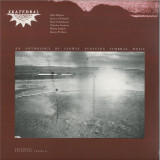
Various - XKatedral Anthology Series II 2x12"

XKatedral Anthology Series II (An Anthology Of Slowly Evolving Timbral Music), featuring exclusive music from Kali Malone, Jessica Ekomane, Mats Erlandsson, Theodor Kentros, Wilma Hultén, and Maria W Horn.

"XKatedral Anthology II is the second instalment in a series of archival releases dedicated to presenting music by composers affiliated with XKatedral working within the realm of slowly evolving harmonic and timbral music. This double-vinyl set contains an array of pieces dating from 2018 - 2020. This collection of pieces focuses on the use of synthetic sound and algorithmic composition languages as tools for precise work within the realm of spectral exploration. In addition to this, the electronic instrumentation in many of the pieces is augmented by acoustic instruments.

The first piece on side A is Kali Malone’s Music for Low Quartet. This piece is an adaptation of the composition “Rose Wreath Crown” originally released on The Sacrificial Code in 2019. In this iteration, the music is scored for two double basses played by Vilhelm Bromander and Zach Rowden, and sine tone electronics performed by Malone herself. The recording of this piece was made at EMS in 2019.

Closing side A is Jessica Ekomane’s ‘First Light’. This computer music piece focuses exclusively on digital sound, layering razor sharp synthetic textures into an otherworldly dynamic weave. The music heard here is a reworked version of a piece originally commissioned by Semibreve in 2020.

Side B contains the work ‘Hands Melt In The Sun’ by Mats Erlandsson. This composition is built from electronically processed tuned zithers and synthetically generated tones arranged in a series of chordal inversions over a sustained fundamental tone. This music, written as a love-letter to the localized drone tradition of Stockholm in the years 2008-2012, was composed and recorded in seven days while in residence at Ställbergs Gruva in Bergslagen, in the summer of 2018.

Opening the second half of the collection is Rough Draft v.7 by Theodor Kentros. Kentros’ compositional practice usually combines acoustic and electronic source material and in this piece he molds the sound of the Buchla 200 and a collection of recorded wind instruments into a molten mass of sound. In its original form, this music was presented as a multichannel immersive work and even in the current stereo configuration it retains some of that enveloping sense of depth.

The second piece on side B, Inertia, is by Wilma Hultén, who makes her debut on record here. An exclusively synthetic piece, Inertia utilizes internal digital feedback in a sealed synthetic system to manifest a harmonic field that swells and abates throughout the length of the piece, interspersed by small gestural elements.

Closing Anthology II is Maria W Horn's work ‘Dies Irae’ for female vocal quartet, pitched glass and synthesis. ‘Dies Irae’ uses a modified form of traditional tonal harmonic language to invoke an uncanny and restless middle ground between the classical western polyphonic vocal tradition and contemporary electronic music. The version heard here is a live recording from Eric Ericssonhallen in Stockholm on May 30th 2020. Performing the piece here are the vocalists Katarina Henryson, Lisa Holmgren, Vilma Ogenblad and Paula Wegmann, as well as Maria herself on glass and electronics."

pas en stock

Commandez maintenant et nous commanderons l'article pour vous chez notre fournisseur.

33,57

Last In: 2 years ago
KENDRA MORRIS - FLAT TIRE
  • A1: Original
  • B1: Dub Mix
également disponible

BLOOD ORANGE VINYL[10,71 €]


Kendra Morris' 2025er Brettspiel-Konzeptalbum ,Next" wurde schnell zum Fan-Favoriten, führte mehrere Jahresendlisten an und festigte seinen Platz als eine der kreativsten Albumkampagnen. Jetzt, sechs Monate nach der Veröffentlichung des Albums, freut sich Karma Chief, dir eine 45er-Single mit einem Fan-Favoriten vom Album und einem brandneuen Dub-Remix präsentieren zu können. ,Flat Tire", der Ankündigungs-Track des Albums, ist eine Hommage an den alten Reggae der 60er Jahre. Inspiriert von den Platten, die Kendras Eltern von ihren Reisen nach Jamaika mitbrachten, bietet der Song einen eingängigen, beschwingten Refrain, den du einfach nicht mehr aus dem Kopf bekommst. ,Flat Tire" wurde komplett mit Vintage-Equipment aufgenommen und über einen Tascam 388 abgemischt. Außerdem ist Ray Jacildo, der auch schon mit The Back Keys und Yola zusammengearbeitet hat, am Klavier und an der Orgel zu hören. Auf der B-Seite der 45er-Single ist ein Dub-Remix von ,Flat Tire" vom einzigartigen Paul Cherry zu finden. ,Sobald wir ,Flat Tire` aufgenommen hatten, waren Terry und ich uns sofort einig, dass es eine Art Dub-Remix geben sollte - der Song war wie dafür gemacht", sagt Kendra. Terry schlug Cherrys Namen vor und sie waren sich einig, dass er der Richtige für den Job war. Das Endergebnis spiegelt den klassischen Dub der späten 60er perfekt wider, indem es auf den Grundlagen des Songs aufbaut _ die Produktion weiter reduziert, den Hall verstärkt und an genau den richtigen Stellen Echos, Pausen und Delays hinzufügt.

pré-commande24.04.2026

il devrait être publié sur 24.04.2026

10,71
KENDRA MORRIS - FLAT TIRE

KENDRA MORRIS

FLAT TIRE

7"-VinylKCRLPC1134
Karma Chief Records
24.04.2026out soon
 
2
également disponible

Black Vinyl[10,71 €]


Kendra Morris' 2025er Brettspiel-Konzeptalbum ,Next" wurde schnell zum Fan-Favoriten, führte mehrere Jahresendlisten an und festigte seinen Platz als eine der kreativsten Albumkampagnen. Jetzt, sechs Monate nach der Veröffentlichung des Albums, freut sich Karma Chief, dir eine 45er-Single mit einem Fan-Favoriten vom Album und einem brandneuen Dub-Remix präsentieren zu können. ,Flat Tire", der Ankündigungs-Track des Albums, ist eine Hommage an den alten Reggae der 60er Jahre. Inspiriert von den Platten, die Kendras Eltern von ihren Reisen nach Jamaika mitbrachten, bietet der Song einen eingängigen, beschwingten Refrain, den du einfach nicht mehr aus dem Kopf bekommst. ,Flat Tire" wurde komplett mit Vintage-Equipment aufgenommen und über einen Tascam 388 abgemischt. Außerdem ist Ray Jacildo, der auch schon mit The Back Keys und Yola zusammengearbeitet hat, am Klavier und an der Orgel zu hören. Auf der B-Seite der 45er-Single ist ein Dub-Remix von ,Flat Tire" vom einzigartigen Paul Cherry zu finden. ,Sobald wir ,Flat Tire` aufgenommen hatten, waren Terry und ich uns sofort einig, dass es eine Art Dub-Remix geben sollte - der Song war wie dafür gemacht", sagt Kendra. Terry schlug Cherrys Namen vor und sie waren sich einig, dass er der Richtige für den Job war. Das Endergebnis spiegelt den klassischen Dub der späten 60er perfekt wider, indem es auf den Grundlagen des Songs aufbaut _ die Produktion weiter reduziert, den Hall verstärkt und an genau den richtigen Stellen Echos, Pausen und Delays hinzufügt.

pré-commande

Cet article n'a pas encore été publié. Vous pouvez pré-commander le produit maintenant.

10,71
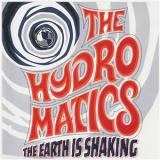
THE HYDROMATICS - THE EARTH IS SHAKING
  • 1: Standin At The Juke
  • 2: Baby Jane
  • 3: Mystically Yours
  • 4: Streets Of Amsterdam
  • 5: Funball
  • 6: Power And Glory
  • 7: The Most
  • 8: Speechless
  • 9: All Down The Line
  • 10: The Earth Is Shaking
  • 11: Detroit Leaning
  • 12: Monumental

First-ever vinyl edition of 2007 album "The Earth Is Shaking" by The Hydromatics featuring Kent Steedman (The Celibate Rifles) on guitar! Bang! Records brings you "The Earth Is Shaking", the THIRD album by The Hydromatics - a transatlantic high-energy rock 'n' roll unit powered by Detroit legend Scott Morgan (The Rationals / Sonic's Rendezvous Band) and Amsterdam cult-hero Tony "Slug" Leeuwenburgh (Loveslug). Originally released in 2007, this record captures the band leaner, rougher and fully locked-in: big riffs, street-level groove, zero filler, and that unmistakable Detroit soul-grit that Morgan owns like nobody else. And here's the headline for rock'n'roll die-hards: Kent Steedman (The Celibate Rifles) is on guitar - bringing bite, melody and attitude, plus extra sonic spice (yes: theremin) and production muscle. The result is The Hydromatics at maximum voltage, moving confidently into their own songs while still carrying the Motor City flame. Highlights include the swaggering "Streets Of Amsterdam", the barroom punch of "Standin' At The Juke", and the epic ride of "Detroit Leaning". Enjoy for the first time on vinyl!

pré-commande24.04.2026

il devrait être publié sur 24.04.2026

23,49
Steve Wilson - Enduring Sonance
  • 1: Quiet Girl
  • 2: A Volta
  • 3: The Eyes Of Love
  • 4: Helen's Song
  • 5: The Surest Things Can Change
  • 6: Pieces Of Dreams
  • 7: How Long?
  • 8: Francisco

On "Enduring Sonance," saxophonist and flutist Steve Wilson reflects on a lifetime of lyrical, deeply felt songs drawn from jazz, pop, and film—brought to life by an all-star ensemble featuring Renee Rosnes, Joe Locke, Jay Anderson, and Kendrick Scott. *** Certain songs have a way of lingering in the imagination—resonating long after we’ve last heard them, sometimes for a lifetime. On his breathtaking new album "Enduring Sonance," veteran saxophonist and flutist Steve Wilson celebrates the music that has left the deepest imprint on his musical life. “Some of the tunes on this record have stayed with me for, in some cases, over 50 years from the time that I first heard them,” Wilson says. “I wanted to put some music out there that people can connect with, no matter what kind of music they like.” Originally conceived as a ballads project, Enduring Sonance evolved into something broader and more personal. Rather than focusing on tempo or style, Wilson gravitated toward a sense of lyricism—music whose emotional clarity and melodic resonance endure across genres, decades, and listening habits.

To realize this vision, Wilson assembled a deeply intuitive ensemble featuring pianist and arranger Renee Rosnes, vibraphonist Joe Locke, bassist Jay Anderson, and drummer Kendrick Scott, with special guest Kevin Newton (French horn, Imani Winds) appearing on two tracks. Each musician brings a rare sensitivity to melody, texture, and space, allowing the material to unfold with warmth, restraint, and quiet authority. The repertoire draws from a wide musical landscape, including works by close collaborators and modern jazz masters Billy Childs and George Cables, alongside enduring songs by Michel Legrand, Quincy Jones, Milton Nascimento, Gino Vannelli, Bill Lee, and Eliane Elias. These are not standards in the traditional sense, but deeply personal selections—songs that have accompanied Wilson through different chapters of his life. The album opens with Childs’ “Quiet Girl,” its subtle rhythmic motion enhanced by Newton’s luminous French horn, and travels through cinematic ballads, soulful grooves, and reflective lyricism. The title Enduring Sonance speaks both to the lasting resonance of these songs and to Wilson’s enduring musical relationships—most notably with Rosnes, whom he has known for nearly four decades and whose sensitive arrangements help unify the album’s diverse repertoire. “These songs are the soundtrack of my life,” Wilson says. “I’d love it if listeners came away from this album with the same kind of enduring sound and feeling.”

pré-commande24.04.2026

il devrait être publié sur 24.04.2026

26,85
Kenny Dorham - The Complete ‘Round About Midnight At The Café Bohemia LP 3x12"

“‘Round About Midnight At The Cafe Bohemia” von Kenny Dorham ist ein Blue-Note-Klassiker. Jetzt
erscheint der Konzertmitschnitt erstmals als Deluxe-LP in voller Länge auf Vinyl – in audiophiler Qualität!
Als Gründungsmitglied der Jazz Messengers war der Trompeter im November 1955 dabei, als Schlagzeuger
Art Blakey mit der Band im Café Bohemia bahnbrechende Live-Aufnahmen für Blue Note machte. Nur
sechs Monate später kehrte Dorham mit seinem eigenen Sextett in den berühmten New Yorker Jazzclub
zurück, um dort sein erstes eigenes Live-Album für das Label einzuspielen. Von dem über zweistündigen
Auftritt veröffentlichte Blue Note 1956 nur ein Album mit sechs Stücken. Elf weitere Titel erschienen erst
1984 auf zwei separaten LPs in Japan, die kompletten Aufnahmen gab es bislang nur auf einer im Jahr
2002 erschienenen vergriffenen Doppel-CD.
Jetzt erfüllt sich für Blue-Note-Fans ein Herzenswunsch: die Aufnahmen kommen erstmals komplett auf
Vinyl heraus - im Rahmen der audiophilen Blue Note Tone Poet Serie auf drei 180g-LPs im Deluxe-Tipon-Trifold-Sleeve, abgerundet durch ein großformatiges Booklet mit bisher unveröffentlichten Fotos von
Francis Wolff sowie einem ausführlichen Essay und einer Track-by-Track-Analyse von Syd Schwartz.
Parallel erscheint das komplette Konzert auch als remastertes 2-CD-Set in Jewelbox mit Booklet.

pré-commande24.04.2026

il devrait être publié sur 24.04.2026

72,06
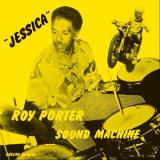
Roy Porter Sound Machine - Jessica

American jazz drummer Roy Porter hit a late career high with his first album Jessica. The classic record throngs with intricate rhythms and vigorous drumming that reveal a playful yet ambitious approach. The standout title track 'Jessica' - a long jazz-funk meditation written for his girlfriend - reimagined by the master, Kenny Dope, shimmers with melancholy and colour. Extended breaks and beefed-up drums give the mix extra punch, while the horns retain their jazzy flair and the vocal version on the flips makes it's 7" debut - these cuts have previously been album only and are well worth copping.

pas en stock

Commandez maintenant et nous commanderons l'article pour vous chez notre fournisseur.

18,91

Derniere entrée: 17 jours
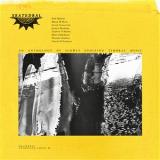
Various - XKATEDRAL ANTHOLOGY SERIES III 2x12"

Various

XKATEDRAL ANTHOLOGY SERIES III 2x12"

2x12inchXKLP33
XKatedral
24.04.2026out soon
 
6
également disponible

Series I[33,57 €]

Series II[33,57 €]


Die XKatedral Anthology Series III ist die dritte Ausgabe einer Reihe von Archivveröffentlichungen, die Musik von Komponisten zeigen, die sich mit langsam sich entwickelnder harmonischer und klanglicher Musik beschäftigen. Die hier vorgestellten Stücke konzentrieren sich auf die Verwendung von synthetischen und akustischen Klängen sowie auf algorithmische Komposition als Werkzeuge für präzises Arbeiten im Bereich der spektralen Erforschung. Dieses Doppel-Vinyl-Set erscheint anlässlich des zehnjährigen Jubiläums des Labels und enthält Werke aus den Jahren 2014 bis 2025. Es wird zusammen mit Neuauflagen der XKatedral Anthology Series I-II veröffentlicht. "My Falling Sinks" von Kali Malone ist eine sparsame, absteigende Melodie für justierte Orgel, Cello und Akustikgitarre mit Lucy Railton und Stephen OüfMalley. Das Stück ist eine kompositorische Skizze in septimaler reiner Stimmung, die 2021 während eines Aufenthalts in La Becque auf einer experimentellen Stimmorgel in La Temple de La Tour-de-Peilz entstanden ist. ,Empyrean Flare" von Maria W Horn wurde 2022 für ,The Dawn Chorus" der Choreografin Stina Nyberg komponiert. Dieses Stück nutzt die von Arvo Pärt entwickelte Tintinnabuli-Technik, um vier Supersaw-Oszillatoren in langsamen diatonischen Arpeggios zu animieren, die um eine Moll-Tonika-Dreiklang kreisen, und destabilisiert das harmonische Gerüst durch Glissandi und verstärkt die Summe seiner Teile durch analoge Bandsättigung. ,Tessellation" von David Granstrom wurde im Sommer 2017 mit generativen Synthesemethoden komponiert. Die musikalische Periodizität und harmonische Bewegung, die in dem Stück zu hören sind, entstehen durch feste synthetisierte Bandschleifen, die einen Raum zwischen gegensätzlichen Welten erkunden. "To Whoever Shall Inherit the Earth" ist das erste Solostück von Jessica Ekomane und entstand laut der Komponistin fast zufällig. Das Werk wurde vor einem Jahrzehnt spät in der Nacht aufgenommen und fängt einen flüchtigen, zerbrechlichen und unwiederholbaren Moment ein, der genau so festgehalten wurde, wie er sich ereignet hat. Smoking Mother von Stephen OüfMalley wurde für Gisele Vienneüfs Der Teich / LüfEtang von Robert Walser geschaffen. Es wurde 2018 während eines Aufenthalts im SMEM-Synthesearchiv in Freiburg komponiert und im August 2020 bei EMS produziert. Das Stück greift auf Werke von Zia Mohuiddin Dagar, Krzysztof Penderecki und Popol Vuh zurück und erkundet gleichzeitig die Wurzeln des Minimalismus. ,Att boja sjalarna" von Mats Erlandsson wurde 2018 komponiert und ist Teil von ,On Eternity", einer Sammlung von vier Texten und vier zehnminütigen Kassettenloops, die 2021 von Irrlicht Forlag als limitierte Box-Set-Edition veröffentlicht wurde. Dieses Werk enthält Darbietungen von Gaianeh Pilossian und Sara Fors, jeweils auf der Violine und mit Gesang. This will be my last piece for organ wurde 2025 von Theodor Kentros komponiert und nutzt Gruppen von Cluster-Oszillatoren durch resonante Rückkopplung, um die schwankenden Frequenzen zu synthetisieren, die beim Verstimmen einer Orgel im physischen Raum zu hören sind. "Fault Lines" wurde von Daniel M Karlsson mit generativen Methoden komponiert, wobei ein deterministischer und endlicher Output für diese Veröffentlichung festgelegt wurde. Dieses Stück enthält Gesangsdarbietungen von Sara Fors, Ansis B.ti. und Art.rs C.ukurs.

pré-commande

Cet article n'a pas encore été publié. Vous pouvez pré-commander le produit maintenant.

33,57
The Milk Carton Kids - Lost Cause Lover Fool
  • 1: Blue Water
  • 2: My Place Among The Stones
  • 3: A Friend Like You
  • 4: I'll Go Home From Here
  • 5: Lost Cause Lover Fool
  • 6: Blinded And Smiling
  • 7: Sad Song
  • 8: Ribbon
  • 9: Young Love
également disponible

Color Vinyl[26,68 €]


On their seventh studio album, Lost Cause Lover Fool (due April 24th on Far Cry/Thirty Tigers), The Milk Carton Kids deliver 9 songs that, more than ever, invite listeners to lean in close and hover in the small moments the album magnifies. Much has changed since The Milk Carton Kids — Los Angeles-based singer-songwriters Kenneth Pattengale and Joey Ryan — burst on the Folk scene in 2011. And The Milk Carton Kids have changed too. But at least one constant remains. Pattengale and Ryan continue to make music that entices us turn down the volume on a chaotic world and dwell as long as possible on what matters most. With rootsy arrangements, Lost Cause Lover Fool expands on the duo’s signature minimalist sound their fans love while also, somehow, making it even smaller. Lost Cause Lover Fool begins with the lonesome pluck and strum of the banjo on “Blue Water.”

Often employed either for lightning-speed or rhythm, here the banjo is handled carefully, with reticence, so that it feels more like light cast across a stretch of grass than a whole bluegrass instrument. Lyrically, this album-opener zooms in on a snapshot of a man walking along a riverside, remembering the child that used to lay on his chest who has now grown to share his worried mind. It’s a moment so small it might easily have been dismissed, except that it holds an emotion as universal as it is fleeting. Lost Cause Lover Fool magnifies many such small moments, turns them into mesmerizing worlds, and reminds us — pleads with us — to pay attention to them as they go by.

pré-commande24.04.2026

il devrait être publié sur 24.04.2026

22,65
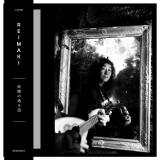
Reimaki - 妖精の通る道 / Yosei no toru michi

妖精の通る道 (The Path Where Fairies Pass) is the debut vinyl release by Reimaki, the duo of Rei Yokoyama (Triggers Flowers, Stakaidan, Lapiz Trio, 新井薬師自警団, and Fujio, Chiko Hige and Rei), and Maki Miura (Tsubamegami, Les Rallizes Dénudés, Shizuka, Fushitsusha, Ohkami No Jikan and Katsurei). The duo has been an understated presence in Tokyo, playing occasional under-the-radar shows and self- releasing a few CD-Rs, but they’ve recently started to break cover, with a recent cassette on UFO Creations, released in support of a late 2024 tour of China. It’s also a welcome reappearance on the scene for both musicians; Miura’s musical history, in particular, is being reevaluated thanks to a recent string of welcome Shizuka reissues.

But the music Reimaki make together is a different thing entirely, much as it shares some psychological and aesthetic interests with both Miura’s and Nokoyama’s other projects. Their sound is split between two main interests – an extension of glacial, deoxygenating psychedelic improvisations, and a deep interest in medieval European music. They’ve also been known to cover compositions by English prog/improv musician Fred Frith. These various elements of the Reimaki aesthetic are all present through 妖精の通る道, from the fragility of the opening “Novel Amor” through to the smeared, hazy textures of the three extended pieces that comprise the album’s flipside.

There’s a beautiful sympathy in these performances, and a generous simplicity, too; you can sense that this music is informed by decades of finding just the right way to say the right thing in the clearest manner possible. Yokoyama and Miura never overstate things; make the statement, play the song, let it hang in the air for a while, and then move on to the next essential expression. The music is unburdened by self- consciousness. Their take on medieval music cuts to the core of melody and melancholy; their psych- improv side is blurred and drifting without ever lapsing into rote generic gestures.

There’s some shared space with other artists who suspend the timeless within the kaleidoscopic possibilities of the psychedelic – Kendra Smith & The Guild of Temporal Adventurers; Emmanuelle Parrenin; Rosina de Peira – and a tangled folksiness that might put listeners in mind of Jan Dukes De Grey, Comus, Current 93, and Tower Recordings. Accompanied by beautiful photography from street photographer Takehiko Nakafuji, who was also personally chosen by Mizutani to document Les Rallizes Dénudés, 妖精の通る道 is a most unique and necessary trip.

pré-commande

Cet article n'a pas encore été publié. Vous pouvez pré-commander le produit maintenant.

33,82
Donald Beaman - Fog On Mirror Glass LP
  • 1: Glass Bottom Boat
  • 2: Paper Screen
  • 3: Awhile
  • 4: Fog On Mirror Glass
  • 5: Old Universe
  • 6: Makeshift Room
  • 7: Your Dreaming Eyes
  • 8: Valley Floor
  • 9: Usual Phantom
  • 10: Bamboo

Fog On Mirror Glass introduces a new aesthetic amongst Donald Beaman albums. After four albums of varied full-band arrangements, this album emerged as an idea to present solo performances in conversation with full-band work. The bulk of the songs were recorded in the same place they were written: Beaman’s living room. Long time bandmate and producer Kirt Lind set up a makeshift studio at Beaman’s house to record the guitar parts in the same room where they were written, using the same guitars on which they were first played.

Unfurling with a measured pace, the resulting album combines elegiac lyrics with elemental arrangements played with an almost jazz-like reverential expressiveness, calling to mind the works of Cass McCombs, Will Oldham, and Jake Xerxes Fussell. Album opener “Glass Bottom Boat” sets the tone for the album with just Beaman and his guitar – written during the final months of a decade-long stay in New York City, the song was finished upon his arrival back in California. Meanwhile the title track, long a staple in live sets, lands near the middle of the album to recalibrate the mood, featuring the ghostly guitar work of longtime collaborator Ken Lovgren. “Old Universe” lifts things up a bit, propelled by the brushwork of drummer Michael Nalin and the jaunty bass playing of Kirt Lind. Finally, the album ends much the way it began, with Beaman and his guitar on album closer “Bamboo”.

“The dictionary definition of less is more.” - ---- Mojo
“His ability to carve universal empathy from mundane domesticity is remarkable.” - ---- RNR Magazine
“...a collection of evocative scenes and vivid emotions sung to sparse musical arrangements in Beaman’s distinctive sonorous tones” - Americana UK
“...pure and simmering, like a tattoo dedicated to a long lost friend, slightly fading from years in the sun, a memory that will always bring a tear in those quiet reflective moments.” - Psychedelic Baby Magazine

pré-commande24.04.2026

il devrait être publié sur 24.04.2026

23,49
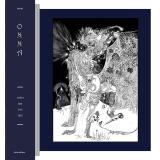
Onna - Onna Last Live 1983 LP 2x12"

Onna Last Live 1983 includes the final performance by the original line-up of Onna, the psych-rock project of revered Japanese manga artist, Keizo Miyanishi. Onna’s legend has largely rested, until now, on one self-released and self-titled seven-inch from 1983. Reissued by Holy Mountain in 2009, its rediscovery, along with several archival live and studio sets that leaked out across the 2000s, signalled to a wider audience the power of Miyanishi’s strikingly hypnotic songwriting. With Onna Last Live 1983, though, we hear the group’s perfect line-up performing at its peak.

While Miyanishi was the core member and conceptualist of Onna, the other members of the group would also go on to make significant contributions to the Japanese underground. Guitarist Michio Kurihara would eventually be known for his membership of YBO2, Ghost and White Heaven, and collaborations with the likes of Boris and Damon & Naomi. Drummer Ken Matsutani formed Marble Sheep & The Run-Down Sun’s Children and The Mickey Guitar Band, while also running the Captain Trip label. Joined by the late bass player Yasui Yutaka, to whom the album is dedicated, this quartet only performed live in 1983; the live set here was recorded at Silver Elephant.

It’s a different line-up to the Onna duo that’s documented on their single. After Miyanishi and fellow manga artist Mafuyu Hiroki recorded that material, Miyanishi decided he wanted to start playing gigs; Hiroki left, and Kurihara, Matsutani and Yutaka joined soon after. This line-up allowed Miyanishi to significantly expand Onna’s powers, leading to a sound that Kurihara once described to Ptolemaic Terrascope magazine as “repetitive and heavy, yet quite orthodox.”

The songs here are simple yet deeply effective in their repetitive power, generally revolving around two or three simply strummed chords for guitar. Bass and drums repeatedly lock into mantra-like grooves as Kurihara’s guitar scales the walls, with Miyanishi’s consumptive moans and sighs sent torquing through FX. The cumulative effect of the seven songs here is very heavy indeed; if the prologue “Always…” drifts beautifully through five minutes of placid, beseeching melancholy, the epilogue, “Never Seen A Light Like This”, spirals out into sixteen minutes of glazed-over psych-rock, completely monomaniacal and thrilling in its slow-motion tumult.

Throughout, you can hear Miyanishi and co. reaching for something ineffable, something beyond and between the notes. It’s a phenomenal performance; it’s also no surprise that the group disintegrated after this show, given its intensity. Matsutani and Yutaka left after the Silver Elephant show, with Miyanishi and Kurihara continuing through the first half of 1984 firstly as a duo, and then a trio with new drummer Yoshiki Ueonyama. Kurihara left soon after. But Onna Last Live 1983 is proof plenty of the powers of the original Onna quartet, sending their Rallizes/Velvets dream-mantras off into darkened, stormy skies.

pré-commande24.04.2026

il devrait être publié sur 24.04.2026

50,00
Byard Lancaster - Mother Africa

'A few months after recording Us, Lancaster recorded Mother Africa along with Clint Jackson III, a trumpeter, partner of Khan Jamal or Noah Howard on other recordings.
On march 8th, 1974, Lancaster and Jackson headed up a group composed of Jean-François Catoire (electric and double bass), Keno Speller (percussion) and Jonathan Dickinson (drums). Together, they create an immediate impression. From the first seconds of We The Blessed, they develop a free jazz which rapidly abandons any virulence under the effect of blues and soul based interventions.
When Gilson’s composition Mother Africa begins, listeners are transported into the studio, listening to the musicians setting up: chatting and joking… Then comes the melody: a dozen or so notes of a repeated theme which is accelerated and deformed according to their whims… The jazz played by the association Byard Lancaster / Clint Jackson III is rare: creative AND recreational. We the blessed, is apt listening to this again today!'

pas en stock

Commandez maintenant et nous commanderons l'article pour vous chez notre fournisseur.

25,84

Derniere entrée: 17 jours
Various - Point Winona Sound Library Vol 1 (LP 2x12")

LA underground hubs DISCOS XXX aka DX3 and Elbow Grease join forces to proudly present Point Winona Sound Library Vol 1 — featuring 20 distinct artists from the inspired local dance music scene, working under one unified studio roof in various collaborative
formation at the mighty Los Feliz hilltop palace Point Winona, overseeing the city they collectively represent. These timeless warehouse-wrecking tracks all stand on their own, but the compilation as a whole offers a solid geographic sonic statement with shared rhythmic DNA and bold rooted-futurist production blueprints, guided by the champion efforts of studio executive producers/curators Tavish DJ and Dave Aju.
The BPS stage-setting opener evokes crispy A.M. hours with lush Detroit-meets-Cali feels on “Within Reason” — then studio dream team 5 ATMs bring the dubwise floor vibes up a notch on “A Dub Called Mondo” and Chitown-to-LA legend Scott K lays down an FM bass-laced acid house heater with “Tighter & Tighter”. Nashville-born producer Gryph funks things up on the live space boogie bump of “Winona at Sunset” while SSRI, comprised of Underground Resistance’s DJ Dex/Nomadico, Aju, and Black Lodge’s fearless leader Kosmik, drop fierce robo-Italo bliss on “Omnicallora”. Things take a further psychedelic twist with the PW edit of Scotty Coats’ sublime midtempo tripper “Be Work Zone Alert”, then Omakase’s own Gold Code alongside longtime rave brother Aju drop the nasty J Saul-salute “Yolo Jungle”, and Warehouse Preservation Society aka Tavish DJ & TK fully detonate floors inna raucous Wicked Crew stylee with “Data Bliss”. Undisputed LA scene queen Stacy Christine arrives with her shining debut “Smart Move”, where she and Aju trade sly vox lines of party advice over a bouncing tech banger for the ages, before the “Obsesion Romantica (Free Winona Dub)” sees Sisters Of Sound aka Maddy Maia and Tottie's, OG track getting stripped back and fired up to acidic peak time form. Then Dave Aju and SF homies Moniker aka EO & Kenneth Scott unleash wild uptempo melodic bruk heaven on “Chuy Luis”, and Vastir sends us home with the stratospheric drum n bass closer "Turnpike"

En stock du12.05.2026

30,21

Derniere entrée: 19 jours
Young Dolph & Paper Route EMPIRE - PAPER ROUTE iLLUMINATi (LP 2x12")
  • A1: Talking To My Scale By Paper Route Empire & Young Dolph
  • A2: Blu Boyz By Young Dolph, Key Glock & Paper Route Empire (Feat. Snupe Bandz)
  • A3: Beat It By Paper Route Empire, Bigg Unccc & Young Dolph
  • A4: I Do This By Paper Route Empire, Key Glock & Gucci Mane
  • A5: Back To Back By Paper Route Empire & Bigg Unccc
  • A6: Remember By Paper Route Empire & Snupe Bandz
  • B1: Mister Glock 2 By Paper Route Empire & Key Glock
  • B2: Bandaid By Paper Route Empire, Key Glock & Snupe Bandz
  • B3: Non Stop By Paper Route Empire & Big Moochie Grape
  • B4: Dance By Young Dolph, Paper Route Empire & Key Glock (Feat. Snupe Bandz, Kenny Muney, Joddy Badass, Jay Fizzle & Big Moochie Grape)
  • B5: 333 By Paper Route Empire & Joddy Badass
  • B6: Standing Ovation By Paper Route Empire & Big Moochie Grape
  • C1: Big Ol Racks By Paper Route Empire, Paperroute Woo & Key Glock
  • C2: Dead Body By Paper Route Empire, Young Dolph & Bigg Unccc (Feat. Paperroute Woo)
  • C3: Broccoli & Cheese By Paper Route Empire & Key Glock
  • C4: Trust Nobody By Paper Route Empire, Young Dolph & Paperroute Woo (Feat. Snupe Bandz)
  • C5: Here We Go By Paper Route Empire, Young Dolph & Jay Fizzle (Feat. Snupe Bandz)
  • D1: Show Out By Paper Route Empire, Snupe Bandz & Young Dolph
  • D2: Freeze Tag By Paper Route Empire & Key Glock
  • D3: Nothing To Me By Young Dolph, Snupe Bandz & Paperroute Woo
  • D4: South Memphis Rugrats (Remix) By Paper Route Empire, Young Dolph & Snupe Bandz (Feat. Paperroute Woo)
  • D5: Illuminati Business By Paper Route Empire & Big Moochie Grape

PAPER ROUTE iLLUMINATi is the compilation album from Paper Route EMPIRE, the label founded by late Memphis legend, Young Dolph, and home to the equally iconic Key Glock and an impressive roster of additional artists including Snupe Bandz & Big Moochie Grape. Including the hit songs, "Talking To My Scale," "I Do This," & "Mister Glock 2," as well as deep cuts like "Broccoli & Cheese," this album is a must have for Southern rap fans and encapsulates a time when PRE was at the height of their game, shortly before Young Dolph's untimely passing. 2xLP pressed on Red Snake Eyes Galaxy vinyl, and housed in a gatefold jacket. Long Live Young Dolph.

pas en stock

Commandez maintenant et nous commanderons l'article pour vous chez notre fournisseur.

29,83

Derniere entrée: 20 jours
Soul Jazz Records - STUDIO ONE SOUND (2x12")
  • 1: Slim Smith – Hip Hug
  • 2: Ras Michael And The Sons Of Negus – Good People
  • 3: Lord Tanamo – Keep On Moving
  • 4: Wailing Soul – Trouble Maker
  • 5: Rita Marley – Come To Me
  • 6: Johnny Osbourne – All I Have Is Love
  • 7: The Martinis – I Second That Emotion
  • 8: Irving Brown – Run Come
  • 9: The Heptones – Give Give Love
  • 10: Rockie Ellis – Double Minded Man
  • 11: Jackie Opel – The Lord Is With Me
  • 12: Dub Specialist – Happy Feelings
  • 13: Prince Lincoln – Live Up To Your Name
  • 14: Ken Boothe – I Am A Fool
  • 15: Rheuben Alexander – Happy Valley
  • 16: Larry Marshall – There’s A Fire
  • 17: Roland Alphonso – Rolando Special
  • 18: Freddie Mcgregor – Homeward Bound

Studio One Sound is the classic Studio One collection from Soul Jazz Records. Described as ‘The University of Reggae’ by Chris Blackwell, Studio One, and founder Clement ‘Sir Coxsone’ Dodd are by far the most-important names in the history of reggae music. Originally released in 2012 this album has been out of print for many years, making it one of the most-collectible of Soul Jazz Records’ Studio One Series. This is the first ever colour vinyl edition of this classic album.

The album features some of the most in-demand and collectible Studio One tracks from over its fifty-year history and includes incredible legendary reggae artists such as The Heptones, Ken Boothe, The Skatalites, Johnny Osbourne and Wailing Souls. All these artists (and hundreds more) launched their careers at Studio One under the guidance of Clement 'Sir Coxsone' Dodd. The Studio One Sound collection features everything from classic ska and rocksteady to the deepest roots, heaviest dub and dancehall roots. Sleevenotes are by Rob Chapman, author of the celebrated books about Studio One Records, 'Never Grow Old' and 'Downbeat the Ruler'. The exact reproduction of the original artwork features the classic image of Dennis Brown on the cover. This album is newly fully remastered for vinyl by Jason Goz at Transition. Exclusive one-off pressing on heavyweight double transparent green vinyl.

pré-commande18.04.2026

il devrait être publié sur 18.04.2026

30,67
Various - Tchic Tchic: French Bossa Nova 1963-1974  Colored Edition LP 2x12"
  • A1: Les Masques - Il Faut Tenir (1969)
  • A2: Isabelle Aubret - Casa Forte (1971)
  • A3: Christianne Legrand - Hlm Et Ciné Roman (1972)
  • A4: Jean Constantin - Pas Tant D'chichi Ponpon (1972)
  • A5: Billy Nencioli & Baden Powell - Si Rien Ne Va (1969)
  • B1-: Marpessa Dawn - Le Petit Cuica (1963)
  • B2: Jean-Pierre Sabar - Vai Vai (1974)
  • B3: Sophia Loren - De Jour En Jour (1963)
  • B4: Isabelle - Jusqu’à La Tombée Du Jour (1969)
  • B5: Sylvia Fels - Corto Maltesse (1974)
  • C1: Frank Gérard - Comme Une Samba (1972)
  • C2: Ann Sorel - La Poupée Des Favellas (1971)
  • C3: Charles Level - Un Enfant Café Au Lait (1971)
  • C4: Andrea Parisy - Les Mains Qui Font Du Bien (1970)
  • C5: Audrey Arno - Quand Jean-Paul Rentrera (1969)
  • C6: Aldo Frank - T’as Vu Ce Printemps (1970)
  • D1: Christianne Legrand - Cent Mille Poissons Dans Ton Filet (1972)
  • D2: Clarinha - Lemenja (1970)
  • D3: Hit Parade Des Enfants - Aquarela (1976)
  • D4: Jean-Pierre Lang - Tendresse (1965)
  • D5: Magalie Noël - Une Énorme Samba (1970)
  • D6: Françoise Legrand - La Lune

Ever since the late 1950s bossa-nova revolution, Brazil’s influence on French music has been undeniable. Pierre Barouh, Georges Moustaki and a vast array of lesser known artists, all made the Musica Popular Brasileira (MPB) an axis of promotion at the service of a cool and metaphysical, modern and mixed Brazilian lifestyle. Some were seduced by the poetic languors of the bossa, some were looking for fun, and others just loved the American hybridization of jazz-bossa, jazz-samba.


What is bossa nova? One of its creators, Joao Gilberto said: "Its style, cadence, everything is samba. At the very start, we didn't call it bossa nova, we sang a little samba made up of a single note - Samba de uma nota so .... The discussion around the origins of bossa nova is therefore useless”. It is nevertheless useful to remember that these magnificent Brazilian songs, which the guitarist describes as samba, were shifted and balanced around improbable chords. "I like things that lean, the in-betweens that limp with grace," said Pierre Barrouh, quoting Jean Cocteau.


With emotion, arrangements for violin and supple guitar licks, bossa nova rapidly changed. A transformation that can be heard in the Tchic, tchic, French Bossa Nova 1963-1974 compilation, the result of a cultural reappropriation, which traveled through the United States and supplemented itself in France.

A musical revolution that has remained significant, bossa nova was born in Rio. From 1956 to 1961, Brazil lived through its golden years. In five years, the country had invented its modernist style. Elected president in 1956, Juscelino Kubitschek de Oliveira, an elegant man with a broad forehead, brandished a promising slogan: "Fifty years of progress in five years". He quickly got to work. Not worried about increasing debt, he launched the project for a new federal capital, Brasilia, designed by the communist architect Oscar Niemeyer. Volkswagen opened state-of-the-art factories and created the “fusquinha”, the Beetle. In Rio, the Vespa made its first appearance. The Arpoador Surf Club crew run into the “girl” from Ipanema, Helô Pinheiro - the tanned garota ("chick"), between a flower and mermaid, who at 17 walked by the Veloso bar, where the fiery author and composer, Tom Jobim and Vinicius de Moraes, were getting drunk on whiskey. From then on, bossa symbolized cool.

In 1958, Joao Gilberto recorded Chega de Saudade, which the directors of Philips denied, calling it "music for fagots". The marketing director, who believed in it, secretly pressed 3000 78-inch vinyls and distributed them at schools around Rio, creating a tidal wave.

American jazzmen then took over. In particular, trumpeter Dizzy Gillespie and guitarist Charlie Byrd. In November 1962, the Brazilian Ministry of Foreign Affairs funded a "Bossa-Nova" concert at Carnegie Hall in New York, inviting the genre’s pioneers. Unprepared, the show soon turned to disaster. But the troupe was invited to the White House by Jackie Kennedy. The first lady loved "the new beat" and in particular Maria Ninguem, a song by Carlos Lyra, later covered by Brigitte Bardot.

In Brazil, the 1964 military coup quickly ended this euphoria. The destructive atmosphere that ensued pushed many Brazilian musicians to leave, if not to exile. Thus, Tom Jobim, Sergio Mendes and Joao Gilberto arrived to the United States. In New York, Joao Gilberto met saxophonist Stan Getz. At the time, he was married to the Bahianese Astrud Weinert Gilberto, who had a German father. She had never sung before, but she knew how to speak English. Getz therefore asked her to replace her husband on The Girl From Ipanema. The Getz/Gilberto record with Tom Jobim on piano, was released in March 1964. Phil Ramone, the "pope of pop" was in charge of sound.

Bossa nova arrived in Paris through the classic “guitar-voice” channel (Pierre Barouh, Baden Powell, Moustaki…) But France loved jazz and Paris had already welcomed its American contributors. All these good people were to pass through Saint-Germain-des-Prés. The cabaret l'Escale became the Mecca of Latin American sound where one could find Pierre Barrouh and his friends, such as the Camara Trio, samba-jazz aces, whose only record was published by the Saravah label. With a band strangely called Les Masques (a band that included Nicole Croisille and Pierre Vassiliu, among others), the Camara Trio recorded an interesting Brazilian Sound, including the track Il faut tenir which is present on this tasty compilation of rarities.

Other enlightened musicians can also be found on the compilation, such as Jean-Pierre Sabar (songwriter for Hardy, Auffray, Leforestier ...) and the French pop rock organist Balthazar. In 1975, Sabar recorded Aurinkoinen Musiikkimatka on a Finnish label, which featured the crazy Vai, Vai, included on this record. We are now following the footsteps of Brazilian electronic musicians such as Sergio Mendes, Eumir Deodato or Marcos Valle who created funk and disco sounds on their keyboards and synthesizers. A style that influenced Véronique Sanson when she wrote Jusqu’à la Tombée de la nuit in 1969 for Isabelle de Funès, the niece of Louis and a great friend of Michel Berger - Sanson did end up singing this track on her 1992 Sans Regret record.


The pinnacle of exoticism and travel, Sylvia Fels’ Corto Maltese includes bongos, sea mist and ocean sounds. The title was taken from Jacky Chalard’s concept album written in 1974, Je suis vivant, mais j’ai peur (I am alive, but I am scared), based on Gilbert Deflez’s science fiction novel.


However, bossa nova extended the scope of popularity. "In the 1970s, I was a fan of Sergio Mendes, Getz / Gilberto. I fell in love with this music that I knew because I had been an orchestral singer, " explained Isabelle Aubret, who in 1971 delivered a composite record of covers by the very funky Jorge Ben, Orfeu Negro, Tom Jobim, Vinicius de Morais and Jean Ferrat. "I recorded this album for Meys Records in Paris, far from Brazil, with wonderful musicians, François Raubert, Roland Vincent, Alain Goraguer...". The latter wrote the arrangements for Casa Forte, a very percussive title borrowed from Edu Lobo, one of the initiators of the bossa who spent time in California. "Jazz and bossa came together and produced very rhythmic music. I love singing, it allows me to dream, to have fun, to feel a high on stage, and these songs brought me joy, made me swing, my singing felt like a dance.”


The world tours of French singers and their desire for the tropics, often brought them to Rio with its hills, forests, caipirinhas and tanned bodies. There are surprises though, like this Iemenja (Iemenja is the goddess of the sea in the Afro-Brazilian candomblé religion). Not unlike the composer and musician Jean-Pierre Lang, based in Sao Paulo, Claire Chevalier taught Brazil to Brazil. In 1970, the singer and painter published a 45-inch vinyl, Mon mari et mes amants (My husband and my lovers), under the improbable pseudonym of Clarinha (little Claire). She was then living in Rio, with her husband, Joël Leibovitz, who founded a band called Azimuth, and who owned a record label specialized in "sambas enredos" songs for samba school parades.


For its B side, she asked Pierre Perret to come up with lyrics for a song composed by Carlos Imperial: "Oh goddess of the sea, o goddess Iemenja, I bring a white rose to adorn your long hair ..." . "Perret came to see us, and we had fun, remembers Joël Leibovitz. We wrote Lemenja for fun, we recorded it at the Havaí studio, behind the Central do Brasil the central station. Erlon Chaves, the arranger who worked with Elis Regina, joined us" adding his share of Afro-Brazilian percussions and funky brass to the mix.

There is a common misunderstanding in Franco-Brazilian history: that bossa, admittedly hedonistic, is perceived as funny, even though the poets who wrote the texts are often philosophizing on the human condition. Its French interpreters pull it towards a carnival inspired universe, far removed from its fundamental essence. Thus, Jean Constantin covered the famous Samba da minha terra, an ode to the art of samba written by the classic Bahian composer Dorival Caymmi, renaming it with the enticing title of Pas tant de tchi tchi pompon: "On your pier there is no tchi tchi / when you arch your back, you know everything is alright ”(lyrics by Gérard Calvi). This expedited bossa aims for the absurd, but retains a certain elegance.

Indeed, Jean Constantin was not an idiot, the rather large man had a huge mustache and liked fantasy, (Les pantoufles à papa, Le pacha, inspired by cha-cha-cha-cha, salsa and jazz) but he was also the lyricist of Mon manège à moi interpreted by Edith Piaf, the composer of Mon Truc en plume by Zizi Jeanmaire and the soundtrack of François Truffaut’s 400 Blows. Le Poulpe, published in 1970, from which this bossa is extract, was arranged by Jean-Claude Vannier, an accomplice of Serge Gainsbourg’s Melody Nelson. In short: "There is enough of samba / By looking at the parasol / Because my poor cabeza / Is going to die in the sun".

Even the American actress Marpessa Down, who was at the heart of the bossa nova revolution with her role as Euridyce in Marcel Camus’ film Orfeu Negro, winner of the 1959 Cannes Palme d'or, fed the clichée with Je voudrais parler au petit cuica - "Tell me how you manage to always make people want to dance / It's true, I must admit that I cannot resist your magic" - in consequence, once can hear the cuica, a little drum inherited from the Bantu.


But bossa nova had many angles. Societal, of course, pushing actresses who were symbols of women's liberation like Brigitte Bardot, Jeanne Moreau, or Sophia Loren to engage in the exercise of accelerated bossa. In February of 1963, Sophia Loren made a record in French in Rome, Je ne t'aime plus, featuring the song De jour en jour, a bossa written by two Italians, Armando Trovajoli and Tino Fornai, which was released a little later by Barclay. Bossa accompanied the 1960s, a decade of moral liberation. Ann Sorel, who interpreted La Poupée des favellas, caused a sensation with L’amour à plusieurs, a provocative song written by Frédéric Bottom and Jean-Claude Vannier. As for the actress Andrea Parisy, she displayed her bourgeois cheekiness in Marcel Carné's Les Tricheurs before interpreting Les mains qui font du bien. And Magalie Noël, the friend of Boris Vian, who sung Johnny fais-moi mal, was hired to sing Une énorme Samba, composed by Alain Goraguer (arranger to Gainsbourg, Bobby Lapointe and Jean Ferrat) with lyrics by Frédéric Botton.

But in the end, of what wood is bossa nova made of? The answer is given by Christianne Legrand, daughter of Raymond the conductor, and sister to Michel the composer: "With me, with jà" - jà means "immediately" in Portuguese. In 1972, the singer, an expert in vocal jazz and a member of the Double Six, published Le Brésil de Christianne Legrand. Two songs included on the Tchic Tchic compilation that demonstrate how bossa, jazz, funk, rock, etc. work like a swiss army knife: the music is used to denounce broken systems, or miracles, HLM et ciné roman, Cent mille poissons dans ton filet, two songs from the O Cafona soundtrack, a successful telenovela broadcast, at the time in black and white, on TV Globo. The first was adapted in French by the fighter and friend of the Legrand tribe, Agnès Varda. The second is content with a play on words, jostling them into a summer fun.


Véronique Mortaigne

pré-commande17.04.2026

il devrait être publié sur 17.04.2026

27,31
Articles par page:
N/ABPM
Vinyl