LP 1 is Original Reissue, LP 2 is the Instrumentals. This album, originally released in 2019, was highly lauded with esteemed praise, topping many Album Of The Year lists inlcuding NPR, Pitchfork, Rolling Stone, Time Magazine. This vinyl has been out of print and in high demand, repress is restricted to limited quantities and will be out of print again in under a year. Now includes a 2nd LP featuring the never before available Hiding Places instrumentals from Kenny Segal. Fully produced by Kenny Segal, (Project Blowed, Kenstrumentals beat tape Series, Happy Little Trees). LP has unique gatefold artwork by Myra Musgrove and features custom “oakwood” coloured vinyls. Hiding Places is a collaborative album from Brooklyn-based rapper billy woods and Los Angeles beat scene veteran Kenny Segal. As a label, we at Backwoodz take a lot of pride in our physical products; in creating original artwork that will stand the test of time, and in issuing limited-pressings that stay limited. We had always resisted repressing a piece of vinyl and even when the demand for Hiding Places built to a fever pitch during 2019, we stuck to our guns. Still, by the end of the year, as the AOTY nominations kept rolling in, we knew that we needed to do something. But we also were determined not to sacrifice the uniqueness of that first pressing. So we decided to commission all-new artwork, and press up the instrumentals as well and put it all together as a GATEFOLD 2XLP. So, on top of the best album of 2019, you get Kenny’s incredible instrumentals, available on wax for the first time! On its face, it seemed an unlikely pairing; woods who moonlights as ½ of dissonant rap duo Armand Hammer is a chaotic force, the warped relic of an NY indie-rap wave that never happened. Meanwhile, Segal has been in L.A. for twenty years; from paying dues with Project Blowed to pushing the culture forward with Busdriver and Milo. All the while, his soulful, dreamlike production precariously tethered to earth by the right drums or rumbling bass. But look closer and it makes more sense. After all, Segal lent his production to a couple of songs on Paraffin, Armand Hammer’s critically-acclaimed opus, and the two artists have more than a few shared collaborators: Open Mike Eagle, ELUCID, and Hemlock Ernst amongst them. Hiding Places finds both artists deep in the labyrinth. Segal’s lush soundscapes have a new edge, woods’ writing is, paradoxically, at its most direct. Hiding Places is a child’s game: funny and cruel, as brutal as a fairy tale. The album features familiar names from both artists’ well of collaborators with ELUCID, Self-Jupiter, Blockhead and MOTHERMARY making contributions.
Cerca:kenny dee
- A1: Do U Fm
- A2: Novelist Sad Face
- A3: Green Box
- A4: Dusty
- A5: The Linda Song
- A6: Dm Bf
- B1: I Tried
- B2: Melodies Like Mark
- B3: Wildcat
- B4: How U Remind Me
- B5: Pocky
- B6: Bon Tempiii
- B7: Pt Basement
- B8: Alberqurque Ii
- B9: Mary's
Yellow Coloured Vinyl[29,37 €]
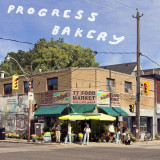
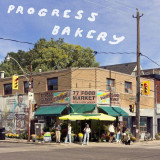
Kneading dough is tricky – you should know how it’s supposed to feel. If you try too hard you could make it worse. It’s a beautiful practice – creation with a gentle touch, to work at something so it can be left alone. “If it’s too drawn out it’s awful. It’s easy to give too much.” Dance in the mirror. Contemplate your veiny hands. Who do they remind you of?
You begin by mixing flour and water. “What happens when your people die? Why’d they move the rock to the other side of Ulster Park?” Eliza Niemi asks two seemingly unrelated questions in a rising melody with guitar accompaniment, like fingers playing spider up to the nape of your neck. Gentle pressure. Strands of gluten form to bind the mix. A new question lingers in the binding. When she admits “but I don’t know how to tell if I’m feeling it or not,” that question surfaces through the text. It is reiterated throughout the album. When I’m working with dough I think the same thing to myself.
On Progress Bakery, her second album as a solo artist, Eliza knows to leave some questions alone – to let juxtaposition and tension be the proof. It doesn’t have to be hard. The feelings and revelations they provoke rise in the heat. The smell is sweet. Crispy on the outside and soft all the way through. She playfully slip-slides through words and sounds and images, delighting in surprise, skimming ideas like stones cast across clear water, touching down briefly with uncommon grace.
The question provoked between those opening lines resurfaces in the strands between songs – “Do U FM” is fully formed and beautifully layered, while “Novelist Sad Face” is a short, acapella rendering of gentle curiosity. What is holding these ideas together? Some songs demand more, seem to carry a whole load – eventually the skipping stone will halt to sink and resume its idle duty – while others drift in and out of focus, the way thoughts and dreams become interwoven before the mind is sunk into true sleep.
Music and words don’t always have to interact. Where she decides to keep them apart gives a new contour to where and how she puts them together. The kind of thing you’re supposed to take for granted with songs and their singers comes alive in Eliza’s hands – the little miracle of mixing, kneading, stretching, and stopping.
So often on Progress Bakery, Eliza teases out truth and meaning by asking questions. “Do I wanna be crying?” “Do you want me good or do you want me bad?” “Do I need an eye test?” “I’m writing songs in my head while you’re going over stuff with me — is that cruel??” In “Pocky” Eliza ends with a question that feels to me like the actual biography, succinct and revealing:
I don’t wanna be made to see
I just wanna ask “what’s that?”
Grace that ought to be rare, but in its care and precision is offered humbly, with great generosity, and without announcing itself. Eliza’s simple, miraculous music is given further form and shape by a group of collaborators – invaluable guest musicians Jeremy Ray, Evan Cartwright, Steven McPhail, Kenny Boothby, Ed Squires, Carolina Chauffe, Dorothea Paas, Louie Short, and Avalon Tassonyi. Together with Louie Short, who recorded, mixed, and produced the album along with Jeremy Ray and Lukas Cheung, Eliza has cultivated a richness in sound and texture that prods and provokes the ticklish ear. Barely audible guitar tinkering, a brief lo-fi field recording of trumpets, the harmonic clicking of a looped synthesizer, a flourish of reeds, a child’s conversation, each uncanny sound perfectly placed, rippling out under a soft breeze.
Lay in bed alone at night and ask aloud to the stillness,
“What were you doing at the Albuquerque Airport?
What were you doing there??”
And hear your question answered by a dream of swelling, undulating cellos. Try to grasp at the melody and structure. It’s not an answer (if there could be one), but it moves deeper, closer to the weird layer of fleeting moments and disconnected images, barely perceptible at its core. Wait for the dream reel to click into place.
Eliza took me for a ride in Nicole (her beloved Dodge Grand Caravan) and told me she’d been thinking of the album as an embodiment of transition – and I think every transition, known or unknown, carries the weight of new meaning, skittering off the surface tension of life as you know it, creating ripples, sometimes bouncing off and sometimes breaking through. There is a trick you can use to tell if a dough is glutinous enough. You’re supposed to stretch it out as thin as you can without breaking it and hold it up to the light. If you can see through, even if it renders the world murky and uncertain, you should leave it alone. I love this trick. It’s one that Eliza seems to know intuitively: work gently and ask questions and don’t always expect answers, and when you can, take a glimpse at something new, and then leave.
Kneading dough is tricky – you should know how it’s supposed to feel. If you try too hard you could make it worse. It’s a beautiful practice – creation with a gentle touch, to work at something so it can be left alone. “If it’s too drawn out it’s awful. It’s easy to give too much.” Dance in the mirror. Contemplate your veiny hands. Who do they remind you of?
You begin by mixing flour and water. “What happens when your people die? Why’d they move the rock to the other side of Ulster Park?” Eliza Niemi asks two seemingly unrelated questions in a rising melody with guitar accompaniment, like fingers playing spider up to the nape of your neck. Gentle pressure. Strands of gluten form to bind the mix. A new question lingers in the binding. When she admits “but I don’t know how to tell if I’m feeling it or not,” that question surfaces through the text. It is reiterated throughout the album. When I’m working with dough I think the same thing to myself.
On Progress Bakery, her second album as a solo artist, Eliza knows to leave some questions alone – to let juxtaposition and tension be the proof. It doesn’t have to be hard. The feelings and revelations they provoke rise in the heat. The smell is sweet. Crispy on the outside and soft all the way through. She playfully slip-slides through words and sounds and images, delighting in surprise, skimming ideas like stones cast across clear water, touching down briefly with uncommon grace.
The question provoked between those opening lines resurfaces in the strands between songs – “Do U FM” is fully formed and beautifully layered, while “Novelist Sad Face” is a short, acapella rendering of gentle curiosity. What is holding these ideas together? Some songs demand more, seem to carry a whole load – eventually the skipping stone will halt to sink and resume its idle duty – while others drift in and out of focus, the way thoughts and dreams become interwoven before the mind is sunk into true sleep.
Music and words don’t always have to interact. Where she decides to keep them apart gives a new contour to where and how she puts them together. The kind of thing you’re supposed to take for granted with songs and their singers comes alive in Eliza’s hands – the little miracle of mixing, kneading, stretching, and stopping.
So often on Progress Bakery, Eliza teases out truth and meaning by asking questions. “Do I wanna be crying?” “Do you want me good or do you want me bad?” “Do I need an eye test?” “I’m writing songs in my head while you’re going over stuff with me — is that cruel??” In “Pocky” Eliza ends with a question that feels to me like the actual biography, succinct and revealing:
I don’t wanna be made to see
I just wanna ask “what’s that?”
Grace that ought to be rare, but in its care and precision is offered humbly, with great generosity, and without announcing itself. Eliza’s simple, miraculous music is given further form and shape by a group of collaborators – invaluable guest musicians Jeremy Ray, Evan Cartwright, Steven McPhail, Kenny Boothby, Ed Squires, Carolina Chauffe, Dorothea Paas, Louie Short, and Avalon Tassonyi. Together with Louie Short, who recorded, mixed, and produced the album along with Jeremy Ray and Lukas Cheung, Eliza has cultivated a richness in sound and texture that prods and provokes the ticklish ear. Barely audible guitar tinkering, a brief lo-fi field recording of trumpets, the harmonic clicking of a looped synthesizer, a flourish of reeds, a child’s conversation, each uncanny sound perfectly placed, rippling out under a soft breeze.
Lay in bed alone at night and ask aloud to the stillness,
“What were you doing at the Albuquerque Airport?
What were you doing there??”
And hear your question answered by a dream of swelling, undulating cellos. Try to grasp at the melody and structure. It’s not an answer (if there could be one), but it moves deeper, closer to the weird layer of fleeting moments and disconnected images, barely perceptible at its core. Wait for the dream reel to click into place.
Eliza took me for a ride in Nicole (her beloved Dodge Grand Caravan) and told me she’d been thinking of the album as an embodiment of transition – and I think every transition, known or unknown, carries the weight of new meaning, skittering off the surface tension of life as you know it, creating ripples, sometimes bouncing off and sometimes breaking through. There is a trick you can use to tell if a dough is glutinous enough. You’re supposed to stretch it out as thin as you can without breaking it and hold it up to the light. If you can see through, even if it renders the world murky and uncertain, you should leave it alone. I love this trick. It’s one that Eliza seems to know intuitively: work gently and ask questions and don’t always expect answers, and when you can, take a glimpse at something new, and then leave.
- Unspeakable Happiness
- A Region In My Mind
- Arise
- My Unbelief
- Purpose
- Wisdom
- I Believe
- El Roi
Roi is the new album from Sultan Stevenson, one of the most compelling voices emerging on the UK and European jazz scenes.Known for his ability to seamlessly merge narrative and accessibility, Stevenson’s music captures listeners both within and outsidethe jazz community. Drawing deep inspiration from legends like McCoy Tyner, Herbie Hancock, Kenny Kirkland, and Geri Allen,Stevenson’s compositions are an exploration of faith, identity, and the complexities of the human experience. His signature style,rooted in quartal harmony, vamps, pedal points, and modality, is elevated by his natural storytelling ability.Stevenson’s sound is unmistakably inclusive, with a humble approach that prioritises dramatic interplay within his trio over overlycomplex musical ideas. His music is captivating and approachable, reflecting his relationship with the Lord and his culturalheritage. Stevenson’s method of creating compositions, often starting with a central motif and building around contrasting melodicideas, highlights his deep understanding of contrast and narrative in music, resulting in compositions that resonate with a widerange of listeners.As a performer, Stevenson is quickly becoming a thrilling force in jazz, translating heritage and spirituality into an evolving andrelevant sound. With El Roi, he continues the journey he began with his debut album Faithful One, which saw each track serve aunique purpose within a larger conceptual narrative. Stevenson’s keen attention to musician selection, including his regularbandmates Jacob Gryn and Joel Waters, alongside collaborations with figures like Denys Baptiste, speaks to his commitment toboth personal and professional growth. His music is not only a reflection of his influences but also of his vision for what modernjazz can communicate to the world today.
- 1: Who Was That
- 2: 40 Acres (How Long)
- 3: Hey Baby (What Are We Gonna Do)
- 4: Uncle Esau
- 5: Make Love To You
- 6: Long Way From Home
- 7: G String
- 8: You So Fine
- 9: Young Ways
- 10: What She Said
Bobby Rush and Kenny Wayne Shepherd were born about 44 years and miles apart. Several decades later after the two forged their own path in music and the blues, it seemed like an idea that had been waiting to happen. For over 100 years, blues music has inspired, comforted and spoken to the truth. YOUNG FASHIONED WAYS has managed to accomplish all of that and more. Shepherd notes, “Once Bobby and I got together, it felt like going home," with Rush adding, "I've been waiting a long time for something like this to come knocking.” Kenny Wayne Shepherd is a multi-platinum recording artist with five Grammy nominations, several Blues Music awards, among many other awards and accolades. Bobby Rush is a 3x Grammy winner and Blues Hall of Famer with his most recent Grammy win for his last album All My Love For You.”
- A1: Do U Fm
- A2: Novelist Sad Face
- A3: Green Box
- A4: Dusty
- A5: The Linda Song
- A6: Dm Bf
- B1: I Tried
- B2: Melodies Like Mark
- B3: Wildcat
- B4: How U Remind Me
- B5: Pocky
- B6: Bon Tempiii
- B7: Pt Basement
- B8: Alberqurque Ii
- B9: Mary's
Kneading dough is tricky – you should know how it’s supposed to feel. If you try too hard you could make it worse. It’s a beautiful practice – creation with a gentle touch, to work at something so it can be left alone. “If it’s too drawn out it’s awful. It’s easy to give too much.” Dance in the mirror. Contemplate your veiny hands. Who do they remind you of?
You begin by mixing flour and water. “What happens when your people die? Why’d they move the rock to the other side of Ulster Park?” Eliza Niemi asks two seemingly unrelated questions in a rising melody with guitar accompaniment, like fingers playing spider up to the nape of your neck. Gentle pressure. Strands of gluten form to bind the mix. A new question lingers in the binding. When she admits “but I don’t know how to tell if I’m feeling it or not,” that question surfaces through the text. It is reiterated throughout the album. When I’m working with dough I think the same thing to myself.
On Progress Bakery, her second album as a solo artist, Eliza knows to leave some questions alone – to let juxtaposition and tension be the proof. It doesn’t have to be hard. The feelings and revelations they provoke rise in the heat. The smell is sweet. Crispy on the outside and soft all the way through. She playfully slip-slides through words and sounds and images, delighting in surprise, skimming ideas like stones cast across clear water, touching down briefly with uncommon grace.
The question provoked between those opening lines resurfaces in the strands between songs – “Do U FM” is fully formed and beautifully layered, while “Novelist Sad Face” is a short, acapella rendering of gentle curiosity. What is holding these ideas together? Some songs demand more, seem to carry a whole load – eventually the skipping stone will halt to sink and resume its idle duty – while others drift in and out of focus, the way thoughts and dreams become interwoven before the mind is sunk into true sleep.
Music and words don’t always have to interact. Where she decides to keep them apart gives a new contour to where and how she puts them together. The kind of thing you’re supposed to take for granted with songs and their singers comes alive in Eliza’s hands – the little miracle of mixing, kneading, stretching, and stopping.
So often on Progress Bakery, Eliza teases out truth and meaning by asking questions. “Do I wanna be crying?” “Do you want me good or do you want me bad?” “Do I need an eye test?” “I’m writing songs in my head while you’re going over stuff with me — is that cruel??” In “Pocky” Eliza ends with a question that feels to me like the actual biography, succinct and revealing:
I don’t wanna be made to see
I just wanna ask “what’s that?”
Grace that ought to be rare, but in its care and precision is offered humbly, with great generosity, and without announcing itself. Eliza’s simple, miraculous music is given further form and shape by a group of collaborators – invaluable guest musicians Jeremy Ray, Evan Cartwright, Steven McPhail, Kenny Boothby, Ed Squires, Carolina Chauffe, Dorothea Paas, Louie Short, and Avalon Tassonyi. Together with Louie Short, who recorded, mixed, and produced the album along with Jeremy Ray and Lukas Cheung, Eliza has cultivated a richness in sound and texture that prods and provokes the ticklish ear. Barely audible guitar tinkering, a brief lo-fi field recording of trumpets, the harmonic clicking of a looped synthesizer, a flourish of reeds, a child’s conversation, each uncanny sound perfectly placed, rippling out under a soft breeze.
Lay in bed alone at night and ask aloud to the stillness,
“What were you doing at the Albuquerque Airport?
What were you doing there??”
And hear your question answered by a dream of swelling, undulating cellos. Try to grasp at the melody and structure. It’s not an answer (if there could be one), but it moves deeper, closer to the weird layer of fleeting moments and disconnected images, barely perceptible at its core. Wait for the dream reel to click into place.
Eliza took me for a ride in Nicole (her beloved Dodge Grand Caravan) and told me she’d been thinking of the album as an embodiment of transition – and I think every transition, known or unknown, carries the weight of new meaning, skittering off the surface tension of life as you know it, creating ripples, sometimes bouncing off and sometimes breaking through. There is a trick you can use to tell if a dough is glutinous enough. You’re supposed to stretch it out as thin as you can without breaking it and hold it up to the light. If you can see through, even if it renders the world murky and uncertain, you should leave it alone. I love this trick. It’s one that Eliza seems to know intuitively: work gently and ask questions and don’t always expect answers, and when you can, take a glimpse at something new, and then leave.
- A1: Del Jones - The Last Letter
- A2: Herb Johnson - Where Are You
- A3: Timothy Mcnealy - Will You Be There
- A4: Little Beaver - Do Right Man
- A5: Soul Superiors - Trust In Me Baby
- A6: Outback - Strangers In Our Homeland
- A7: The Montecarlos - If You Leave
- A8: Words Of Wisdom - You Made Me Everything
- B1: Soul Charges - My Heart Beats For You
- B2: The Power Of Attorney - I'm Just Your Clown
- B3: James Reese - Throwing Stones (Kenny Dope Mix)
- B4: Richard Marks - I'm With You Love
- B5: Bonnie Floyd - You're My Everything
- B6: The Ledgends - A Fool For You
- B7: Apple & The Three Oranges - Moonlight
This anthology follows Now-Again's Loving On The Flipside, issued more than a decade ago. And that anthology itself got its start in a different time, a decade even earlier - the era in which Now-Again's Egon and his friends chased down funk 45s and the odd LP for their testosterone riddled, aggressive sound. Often times the funk song on one of their chosen is would be the throw-away b-side, the hasty afterthought the band cobbled together the night before hitting - or while in - the studio because they'd put all of their energies into writing the amazing ballad that would ensure their entry in soul's history books. Every once in a while, that funk song they coveted could have been - in an alternate universe - a ballad. The Third Guitar's "Baby Don't Cry," El Pooks* "I Could Do The Impossible" and Spider Harrison's "Beautiful Day" all fit into this category. That realization notwithstanding, more often than not they shined over the ballads to get to the tough stuff. Then they started flipping those funk records over to find some loving on the flip side. Some marvellous tunes were there to be found. This is the long awaited follow up. Contained within this anthology are some of the greatest soul ballads that go sweet with a beat - or, to follow our tagline, epitomize "sweet funk." Most of these songs have never been compiled. Some have never been issued in any form. Some, like the Ledgends entry here, were sampled to great success (in that case for Freddie Gibbs and Madlib's "Deeper"). Some haven't been sampled, but, like Herb Johnson's entry, are patiently awaiting their day. It should go without saying that we're proud to present this music in good conscience; with the full participation of everyone but the most obscure names contained within. And, for those who we've not yet been able to contact, this is our message: We've found your brethren, we've placed them beside you on an album that we hope you feel is befitting of your collective contributions to soul music and now we're just waiting for you. Though the music you recorded is from the years past, vour time is now.
King Street Sounds continues to deliver deep house classics with the third various artist sampler in the series. This release taps into the essence of original house music and features iconic names such as DJ Pierre, Blaze, Kenny Bobien, Palmer Brown, Dannell Dixon, and Big Moses.
The EP begins with Dannell Dixon's track 'Dance Dance (DJ Pierre’s Wild Pitch Mix).' This engaging piece features a steady groove, multiple percussive elements, and captivating vocal hooks that keep listeners immersed in the rhythm.
Next is Big Moses' 'Brighter Days (Extended Mix),' which showcases the unmistakably smooth and sultry vocals of Kenny Bobien. As is often the case with Kenny's lyrics, this song explores themes of love, hope, and the promise of 'brighter days,' delivering uplifting dance music.
On the B-side, DJ Pierre makes a second appearance with 'Dancin’ (Club Mix).' This track radiates sunshine and block-party vibes, effortlessly transporting listeners to a lively street party in New York City.
Finally, the record concludes with 'Shine (Shelter Vocal Extended Mix)' by Blaze. This track brings down the tempo just a notch, making it a perfect addition to sets when the dancefloor needs a moment to catch its breath and regain its energy.
Once again, King Street Sounds delivers a knockout release that is a must-have for collectors and DJs alike
The legendary Kenny Dope with collaboration with BBE Records gets down to work on this Afro Disco classic from Ghanian Disco queen Nana Love. Over 35 years since its initial vinyl release, ‘I’m In Love’ has stood the test of time and is packed to the brim with groove, soul and energy. On these special Kenny Dope mixes, part 1 and 2, we’re treated to a beefed up version which will absolutely slam on any sound system and dancefloor across the globe. The NYC icon has injected warmth, rhythm and weight to this classic: primed and ready for you to enjoy on 7 inch vinyl.
Celebrating over ten years in the game, Seth Troxler and The Martinez Brothers' carefully cultivated Tuskegee Music imprint returns with a deeply rooted collaboration between West Coast-based talents Late Delivery and BL SUEDE. Reinterpreting a club classic from Sheila E. and Prince, blending soul, deep tech house and freestyle influences at 130 bpm, ‘Glam Life’ lives up to the prosperous vibe of its title.
Originally from Washington D.C. and New Orleans respectively, Late Delivery have been refining their shared love of house culture since meeting in 2008. Collaborating with Inglewood, CA raised producer and vocalist BL SUEDE, this ode to a iconic time in Black music culture is imbued with the same sense of musicality, with BL’s fluid vocals in a heavenly posture amid joyous horns and irresistible percussion.”
Kenny Glasgow’s smooth, restrained take presents a champagne room mirror perspective on this particular ‘Glamorous Life’, with the former Art Department man and US rave scene lifer tapping directly into sensual, minimal pleasure. Afriqua meanwhile takes BL SUEDE's versatile vocals in a bright, diverse direction, conjuring fresh elements from an archive of breaks and bubbling basslines, landing between modern Amapiano and vintage EBM.
- A1: Jimmy Carter & Dallas County Green - Travellin
- A2: Mistress Mary - And I Didn't Want You
- A3: Plain Jane - You Can't Make It Alone
- A4: Dan Pavlides - Lily Of The Valley
- A5: Angel Oak - I Saw Her Cry
- B1: Kathy Heidiman - Sleep A Million Years
- B2: Deerfield - Me Lovin' You
- B3: Arrogance - To See Her Smile
- B4: Jeff Cowell - Not Down This Low
- B5: Kenny Knight - Baby's Back
- C1: The Black Canyon Gang - Lonesome City
- C2: Allan Wachs - Mountain Roads
- C3: Mike & Pam Martin - Lonely Entertainer
- C4: Bill Madison - Buffalo Skinners
- D1: White Cloud - All Cried Out
- D2: Ethel Ann Powell - Gentle One
- D3: Sandy Harless - I Knew Her Well
- D4: Fj Mcmahon - The Spirit Of The Golden Juice
- D5: Doug Firebaugh - Alabama Railroad Town
Over 19 tracks, Wayfaring Strangers: Cosmic American Music mines gold from dollar bin country-rock detritus to reconstruct events as seen from the genre's wild west - Americana's vast private press substructure. As progenitor and contemptuous poster boy for the music that came to be Cosmic American, Gram Parsons found himself mired in a recording career spent mostly in scouting the perimeters of chart success. "He hated country-rock," Parsons collaborator Emmylou Harris would later reflect. "He thought that bands like the Eagles were pretty much missing the point." Parsons had been orbiting the idea of Cosmic American Music for some time. In 1968 he'd parted ways with the Byrds and was looking to take air with a new project. "It's basically a Southern soul group playing country and gospel-oriented music with a steel guitar" he told Melody Maker, on the subject of The Flying Burrito Brothers. So it was that when A&M's Burrito Brothers debut The Gilded Palace of Sin made it to shelves in February of 1969, early adherents to the Cosmic American gospel were already echoing its message from areas flanking Gram Parsons' Southern California hills and canyons. There was F.J. McMahon in coastal Santa Barbara, Mistress Mary further inland in Hacienda Heights, and Plain Jane of Albuquerque, New Mexico, each responding by committing their own private readings to tape before day one of the 1970s. Parsons himself might've disdained them, had he even been aware of such minor ripples, shimmering at the edges of his desert oasis. But these were true believers all the same, given over fully to his roots music concept, each filling vinyl grooves with non-rock instrumentation like fiddle, banjo, and pedal steel guitar, the last undoubtedly Cosmic American Music's most distinguishing stringed signifier. Only too predictably, big labels did the grunt work of confining and defining the movement, as ABC, United Artists, RCA, and more played catch-up with Asylum's raptor rock juggernaut, via backwoods crossover also-rans with names like Gladstone, American Flyer, and Silverado. Twang reigned, the shitkickers kicked shit, and the vaguely western-sounding guitar records piled up. Country-rock became "the dominant American rock style of the 1970s," as Peter Doggett's comprehensive Are You Ready for the Country put it much later. Wayfaring Strangers: Cosmic American Music picks up and dusts off golden ingots from the dollar-bin detritus of that domination, to reconstruct events as seen from the genre's real Wild West-America's one-off private press label substructure.
“My introduction to “noise” came from a record shop in Lake Worth, Florida ran by a musician named Kenny 5. Kenny had left Detroit sometime in the mid nineties and had begun selling used records and CD’s from the downtown strip of this tiny southern Florida city in a humble shop sandwiched between a deli and a dog grooming business. Kenny previously was on labels like Amphetamine Reptile and timeSTEREO, and the records and videotapes that would be on repeat at his shop were a vast sonic expanse that spoke to the eclecticism of his experience as a touring musician participating and adjacent to American noise culture through the early to late 90’s. In 1998, I was eleven years old and I would order a pizza with him and watch VHS tapes of Japanese noise and deathmatch bootlegs, as well as any other sonic and subcultural rarities that far outstripped my age to comprehend (notably the RRR “Journey Into Pain” compilation and various Vanilla Tapes videos). This widecast net of information formed an introduction to a reality that did not fall deaf on me, but it took many years later for me to reorient the specific freedoms of what this dense and cathartic sound culture had imparted on my life and would continue onward to.
What does this have to do with this selection of choice recordings from the Secret Boyfriend catalog for the enmossed label? For the uninitiated, Secret Boyfriend is the long running moniker of Ryan Martin, North Carolina musician and label proprietor of the Hot Releases imprint. For over a decade from this writing I have watched Secret Boyfriend, and Hot Releases by extension as a curatorial and archival effort, embodying the multiplanal capacity that noise loosely functions from as an umbrella ideology and formalist avenue for sound creation. For anecdotal purposes, from (before) 2006 until roughly 2023 the East Coast of the United States showcased a vibrant network of eclectic regional festivals that saw wide swaths of artists addressing and negotiating the notion of what qualified “noise” from a conceptual and ideological perspective. Some festivals honed in on particularities in aesthetics and tropes, and others had a kind of “catch-all” implementation that allowed for a salvation of the sort of alienated and singular artistry that was amassing throughout these territories. While clear guidelines had been set from regional predecessors as to how noise with a capital “N” should maneuver, Secret Boyfriend is emblematic in the spirit of fluidity that was either implicitly coupled to the notion of the genre, or grew to evolve towards or devolve from.
Within Secret Boyfriend performances, I have seen and admired a mirroring from a ravenous appreciator of this culture at large back towards itself. Typical of a Secret Boyfriend set is an interchangeable narrative arc wherein blistering feedback laden scrap metal improvisations are forayed into naive ambient or “pop” songs, or skipping CDs, or mixer feedback play, or delayed Roland 707 drum workouts all at once and in a unique hegemony. Secret Boyfriend's stylistic mastery of each endeavor is at once an homage to a history of loving listening and enacting, while a brave step into the realm of actualizing the unique fluidity of his own practice. In performance and the action of network engagement, Secret Boyfriend operates a survey of that which he sought to hear and that which he cultivates around his work. His operations are mirrors, and the project (alongside his other peers) is a reflection on the ethos of his time.
Conversely his recording practice narrows in on these moments and allows for a different kind of intimacy or alienation for the non live listener. This record of selected “pop songs” (let's call them that) is particularly poignant at a time when the culture Martin mirrors is at a strange crossroads with itself. The aforementioned festival networks necessarily change and shift. The onlookers become the artists, the artists find new horizons, and the spaces for these cycles fade into locales of a distant memory. It seems, from my perspective, that audiences currently yearn for a more bottlenecked experience, searching for some ontologically vetted manifestation of an idea, of a sound and less for an experience that functions in opposition to our collective banalities. This makes sense in the face of general global catastrophism that plagues us. We need certainty of what something is somewhere, don’t we? Noise as an idea has expanded and contracted to so many iterations of itself it is hard to tell what it even is, and it is particularly difficult to identify in the absence of solid network activations a moment to reflect on its own complexities and nuances. In the face of so much change, I argue that the language of noise culture at large has on one hand become increasingly didactic and predictable, and laughably inclusive and non linear on the other. Probably has always been this way, but now we are in the midst of a moment of extreme access and indexicality, which somehow cauterizes expansion and naivety and chance.
This record highlights the Secret Boyfriend that obscures didacticism by highlighting output that opens up for more challenging catharsis and emotive signal processing. It provides an entry to the materialism of a cultural field full of ecstatic complexity and beautiful inconsistency. In these muted moments Secret Boyfriend has given us over his career we have an argument for evolving languages that further challenge our notions of what is supposed to happen and how it is supposed to be presented. In his more song oriented expansiveness, we can punctuate the ability to think in new modalities. Listening to these recordings reminds me of the polarity of sitting in the record store as a kid and understanding that His Name Is Alive is on 4AD and (gasp!) timeSTEREO. This trite early impression that nothing is really as different as our imaginations might want them to be, and that we can do whatever we want mostly within the creative realms we work through is an important filter to look through Secret Boyfriend as a project and a vessel. If we can achieve abandon and vulnerability through our artistic endeavors, then we have a sound model for, maybe, new potentialities. If that’s too much projection, or just complete liberal bullshit, I am fine with that. Secret Boyfriend's oeuvre at best offers us moments of reprieve to ponder these complexities, or at least a moment to zone out on a drive through North Carolina Highway 54.
You have one pocket of life that you must do whatever you want to inside of. Secret Boyfriend does it affectionately, in a variety of forms, and always with deep sentimentality. These recordings are a wonderful set of songs to begin further investigation from. Thank you Ryan for allowing as many avenues as possible to continue a broad cultural exchange and conversation that intersect and refract while being the kind of artist that is brave enough to not phone in the effort.”
- Nick Klein , May 2024
In the fall of 2022, celebrated UK chill-out institution Seahawks landed in Los Angeles for the first time in their 15-year history, with plans to record a sweeping new age downtempo "exploration of visionary California."
Instead, they immediately fell ill with flu (Fowler collapsed next to a taco truck; 911 was called), and were bedridden for the better part of a week. Upon recovering, they resituated at the synthesizer sanctuary of Brian Foote (Peak Oil, Kranky, Leech), channeling their post-sickness psychedelia into one of the band's lushest and most elevated creations to date: Time Enough For Love. Inspired by the "groove and mood" of Harry Nilsson demos, as well as its wider 70's wavelength - Rhodes, Wurlitzer, wood paneling - Seahawks transposed their classic post-rave ambient exotica onto a warm and woozy Golden State palette. Buoyed by the liquid touch of English maestro Kenny Dickenson on keys, the results rank high among the duo's smoothest and most multi-sensory voyages. "Sail Across The Moon" delivers on its title, a simmering, phaser-smeared cruise through the beauty of the night. "Messengers" echoes the cosmic lounge of Air's Moon Safari, shuffling, weightless, and ethereal, while "Falling Deep" reaches for the stars, pure cascading bliss, the ecstatic moment writ large.
The album skews steadily more astral as it progresses, drifting towards jazzy, galactic outer reaches. "Like A Grain Of Sand" opens with a spoken sample by the celebrated late American poet Rachel Sherwood ("The children watch, breathless / with the birds / They feel an emanation / from this shuddering place"), before taking flight on a Balearic trip through island house, PM Dawn gold dust, upright bass meditation, and kaleidoscopic light. A remix of the title track by Chicago trio Purelink closes the record in a suitably subdued and skittery state of mind. Time Enough For Love radiates color, complexity, and positivity, infused by the "life enhancing" nature of the band's time in Los Angeles - sunsets, sound systems, and sativa, framed by coastlines and cloudbanks, the city's mystic sprawl glittering beneath purple dusk.
- A1: Gonna Get You
- A2: Working Woman
- A3: Coffee High
- A4: Everything Holds Blame
- A5: Snake Charmer
- A6: Free Vibes (Instrumental)
- B1: Love Alarm
- B2: Out Of Fashion
- B3: Nothing For Nothing
- B4: Magic Time Machine
- B5: The Time Is Right For Love
- B6: Hold Fast
- C1: Working Woman (Kenny Dope Mix)
- C2: The Time Is Right For Love (Swing-O Aka 45 Remix)
- C3: Coffee High (Bellevilloise)
- C4: Snake Charmer (Instrumental)
- C5: Free Vibes Part 2 (Vocal Version)
- D1: Burn This Disco Out
- D2: Magic Time Machine (Maida Vale)
- D3: June (Printemps De Bourges)
- D4: Hold Fast (Jr Blender Remix)
- D5: The Time Is Right For Love (Flute Version)
- D6: Working Part 2 (Instrumental)
15 years onwards from the original release in October 2009, "This Is …" by Gizelle Smith & The Mighty Mocambos remains a classic in its genre. Upfront, raw and melodic, this super sister funk album has not aged at all. Now, in 2024, it is time for a proper re-release with unreleased bonus tracks, rare remixes and a limited edition double vinyl album. Welcome to the deluxe version of "This Is …" by Gizelle Smith & The Mighty Mocambos.
Read here what the original release sheet said about the album:
"Strong album – packs a serious punch" Craig Charles Funk and Soul Show, BBC 6 Music
"A breath of fresh air" Keb Darge
"Really amazing stuff, full of killers" Nick / Record Kicks
"Definitely recommended" Peter Wermelinger, Funky & Groovy Music Records Lexicon
"What a fantastic album – this is proper funk" Tobias Kirmayer, Tramp Records
Ever since their first collaboration on the "Mocambo Funk Forty Fives" compilation, things have gained momentum for Gizelle Smith, the "Golden Girl of Funk", and the much respected Hamburg-based label and live band The Mighty Mocambos. Their first single "Working Woman" became an overnight smash and a prime-time club favourite of funk & soul DJs from all over the world. Initially released on the Finnish private press label Old Capital, producer legend and Grammy nominee Kenny Dope (Masters at Work, Bucketheads) picked up and remixed the song for his own label Kay Dee Records. Gizelle Smith & Mocambo now step up with a full-length album of bonafide sister funk. In the days of digital recording and Pro Tools editing, they show true exception to modern techniques and create their highly regarded, unique and raw soul sound, by making use of simple dynamic microphones and reel-to-reel tape machines. In a genre which is often littered with overused clichés of the past, the charismatic Gizelle Smith adds a lot of her own flavour rather than slavishly copying icons of bygone decades. The result is a refreshing alternative to post-millenium plastic pop without being a mere retro rip-off. From the heavy and determined "Gonna Get You" to vulnerable, gospel-tinged laments such as "Coffee High", "This Is Gizelle Smith & The Mighty Mocambos" is just as deeply rooted in the music from the golden era of soul as it is a modern masterpiece in its own right. Blazing horns, soulful guitars, driving drums and basslines combined with Gizelle's gripping and powerful voice all weave together to create a long player that is varied and coherent at the same time.
It is summer dawn . . . and you are alone. Here is music for your strange mood. The piano starts the first track, slow tempo beat, a strict beat, a swinging beat. Lillemor—here minor harmonies give the tune a rural, romantic feeling of some place in Spain or France. The tempo changes to medium fast—the flute solos. Light phrasing contrasts beautifully to the earthy, swinging beat of the rhythm section and the repeating piano figures. The trombone adds a new color, a counterpoint of sound and phrasing, backed by the pulsating beat of this wonderful rhythm and the driving piano. Summer dawn . . . This music has more to offer, because it shows the personality of Sahib Shihab at its best. Sahib is a universal musician who reflects musical experiences in jazz since the end of the thirties. He lived through the important periods of modern jazz with his heart and mind wide open toward everything that was good music, regardless of being termed "Mainstream", "Bop", "Cool", "Westcoast", "Eastcoast", "Hard Bop'', et cetera. When you listen closely to his music, you will find traces of all these, but they are immersed in his deep musicianship and his true jazz personality. Sahib Shihab's background reads like the record of a master of advanced studies. Furthermore he played and collaborated with the coolest jazz musician of that period. Above all let's name Budd Johnson, Theolonius Monk, Tadd Dameron, Milt Jackson, Dizzy Gillespie, Illinois Jaquet, Elmer Snowden, Luther Henderson, Larry Noble, Fletcher Henderson, Roy Eldridge. In his early professional years, Sahib was heard mostly on alto sax; later, more often on baritone sax and flute. Today, his name is inseparably connected with these two instruments. The unity of his jazz performances is not alone bound up with the com¬positions and the arrangements of Sahib Shihab, though in their understated simplicity they have a melodic beauty that is seldom found in jazz of today. The rhythmical subtleties add to the overall qualities of being relaxed vehicles for free-blowing, but there is an immediacy that you hear and feel every moment when listening which defies analysis. The playing of the rhythm section helps greatly to promote the sense of flux and contrasting constant renewal that makes listening to this record so invigorating an experience. Well, this is no surprise, with Kenny Clarke as the nucleus of the rhythm group. Kenny 'Klook' Clarke is a major figure and contributor in jazz, one of the founders of modern jazz, and is ranked as one of the all-time great drummers. He influenced a whole generation of musicians with his playing, though living in Paris since the middle of the fifties somewhat dimmed his name to the general American public. Nevertheless, his name alone will assure a connoisseur to expect top class musical experiences. Talking of the rhythm section we have to name Jimmy Woode's bass, which together with Kenny's drumming, is the driving force for the group and the reliable harmonic anchor for the improvisors. By the way, Jimmy has been with the Duke quite a while, and this alone is an award for extraordinary craftsmanship and artistry. The good sounding rhythm with its full-bodied color is also a result of the added bongos of Joe Harris, who manages to stay out of the way of the players—a quality not often found with drummers—but his playing is felt through the set. There are two members of the group not yet mentioned. Two Europeans, pianist-composer-arranger Francy Boland from Belgium, and trombonist Ake Persson from Sweden. Francy Boland this time is a sideman, though normally he is a leader of recording sessions, both as composer-arranger and as musical director of the band. In the fifties he was in the States writing arrangements for different name-bands, such as Basie and Goodman. In Europe, he is famous for his swinging modern big band arrangements; and his inventiveness as a writer is reflected in his piano playing. He has the talent of using the right dynamic approach every moment, thus making his playing helpful to soloists and interesting for listeners as well. Ake Persson has been Scandinavia's out-standing trombone player for about ten years. There are only a few trombonists in Europe who might match his talents at times, but they lack the consistency of his playing. He is impressive, whether playing in a big band, or whether main soloist in his own small groups. American musicians love the sound of his slide trombone and his easily flowing romantic improvisations, so he often joins American name-bands as they travel in Europe. The music speaks alone . . . , we said it before. You have your soul to feel the beauty, to follow lines and structure, and to enjoy the spiritual excitement. Whether you enjoy the flowing, easy sounding theme of "Please Don't Leave Me", or the climaxing piano solo in the same piece—the bass solo in "Waltz For Seth" or the swinging baritone sax—listen to the first bars of this solo and pay attention to Kenny. Whether you listen to "Campi's Idea", (named after Gigi Campi, the well known Cologne jazz enthusiast who organized this recording) with the romantic flute solo of Sahib, the interesting tempo changes, the piano comping, the moving trombone solo; or to the up-tempo "Herr Fixit", with the cooking Kenny and humorous, driving flute solo, you know that these six musicians where in the right mood, in the right stimulating surroundings to feel what we all feel when it's: SUMMER DAWN.

Limited Edition of 1000 Opaque Light Blue 180 Gram Vinyl LP. Ghost on Ghost is Iron & Wine's fifth full length record and was originally released in 2013. The album found Sam Beam the bands principle member working once again with longtime associate Brian Deck (Modest Mouse, Califone). The record marks the last time the two would work together on a journey that began with the bands second record, Endless Numbered Days. It also marked a shift for the two from working in Chicago to setting up in New York City. The idea behind the move was to tap into the creative musical community New York had to offer. The line-up that helped bring Beam's vision for Ghost on Ghost to life included a who's who from the jazz community as well as the deep wells of outside art including Steve Bernstein (Sex Mob/Levon Helm Band), Rob Burger (Tin Hat Trio), Brian Blade, Curtis Fowlkes (The Jazz Passengers), Tony Garnier (Bob Dylan Band), Marika Hughes, Briggan Kraus, Maxim Moston, Tony Scherr (The Lounge Lizards), Doug Wieselman, Kenny Wolleson (Tom Watis/John Zorn) and Anja Wood. The level of talent on Ghost on Ghost far surpassed anything Beam ever imagined when he first began writing songs as Iron and Wine on his four-track. Upon completing the Ghost on Ghost Beam jokingly referred to the recording process as "a reward to myself" after years of chasing sounds by himself. Being able have the finest in musicians in New York City perform on the record, elevating these songs into places he never imagined Beam stated, "it was an honor -- really inspiring." Beam stated at the time that Ghost on Ghost takes it's inspiration from records like Nilsson Schmilsson, Ram, Mingus Moves and What's Going On. The record they all crafted is warm and inviting and was like anything up to that point in the Iron & Wine catalog.
- A1: The Original Way (Feat. Freddie Foxxx)
- A2: Duck Down
- A3: Drug Dealer • A4. Like A Throttle
- B1: Build And Destroy
- B2: Ruff Ruff (Feat. Freddie Foxxx)
- B3: 13 And Good
- B4: Poisonous Products
- C1: Questions And Answers
- C2: Say Gal
- C3: We In There
- C4: Sex And Violence
- D1: How Not To Get Jerked
- D2: Who Are The Pimps?
- D3: The Real Holy Place
- D4: 13 And Good (Remix)
In the early 1990s gangsta rap was becoming more popular. KRS-One took to the mic and continued to write socially conscious raps resulting in the hard-hitting 1992 album Sex And Violence which would be the fifth and final studio album under the Boogie Down Productions name. Produced by KRS-One, Pal Joey, Kenny Parker, D-Square, and Prince Paul, the album explores the darkest sides of the American urban landscape and psyche, with KRS as narrator, detailing all sides of the matrix. While singles like the alarming drum-driven "Duck Down" and the funky-as-hell "We In There" got most of the attention in ‘92, the deeper sequence reveals plenty of additional gems: the history lesson of the dark and dusty "Drug Dealer"; "Ruff Ruff", with scowling MC favorite Freddie Foxxx (aka Bumpy Knuckles); the grooving "Questions and Answers," and the frantic record industry track "How Not To Get Jerked." The album kicks off with an intro skit featuring KRS-One as a DJ in panic needing vinyl which at the time was a dying format while cassettes and CDs became the dominant format. Thirty-two years later vinyl DJs and Hip-Hop vinyl collectors no longer need to panic. Get On Down in partnership with Sony Music's CERTIFIED is proud to bring back to vinyl this underrated gem in the BDP catalog. Featuring one of the dopest album covers by American artist Robert Williams, Sex and Violence is pressed on colored vinyl and packaged in a gatefold jacket with full lyrics.
Finnish drummer/Producer Teppo "Teddy Rok" Mäkynen returns with his alias The Stance Brothers with "Sao Paolo / Timmy", a new 7"/digital single release on July 26th on We Jazz Records. Lauded by the likes of DJ Koco aka Shimokita, Kenny Dope and Gilles Peterson, Mäkynen's studio creation released the new album Duktus in November 2023, the project's first full length in more than 10 years. Back a new version of album cut "Sao Paolo" polus an unreleased new track, "Timmy", the project a treasure-trove for everyone into crunchy jazz funk à la Bob James & CTI, but this is no retro exercise. Teddy Rok moves forward in all directions, constantly bringing new elements into his sound, which is more layered and deep than ever before. At the same time, the crunch & the breaks are there when you need them.
The Stance 7" sides are often dominated by crunchy drums and crystal clear vibraphone melodies, and that's the overall vibe here, too. That being said, Mäkynen keeps things moving forward at all times, achieving moments of pure bliss with tracks that sound compact but expand far and wide both emotionally and musically.
The Stance Brothers are active live as a four-piece band, appearing live over the summer in Finland at Odysseus Festival and Flow Festival in Helsinki, plus G Livelab Tampere.
Mario Rusca is most probably the biggest living Italian jazzman. His major influences are Duke Ellingtons composing abilities and Hampton Hawes' brilliant sound. He immersed himself in the harmonic inventions of the incredible pianists of the 60s and 70s: from Bud Powell to Bobby Timmons, Wynton Kelly and Bill Evans. Mario Rusca has been the house pianist of Capolinea, the most important Italian jazz club of the 70s and 80s. He went on to perform in important national and international settings-representing Italy in the "Piano Solo'' category of the "International Festival of Varsavia" and participating with his quintet at the "International Festival of Montreal". He has collaborated with a multitude of prestigious names: Chet Baker, Tony Scott, Curtis Fuller, Gerry Mulligan, Lou Donaldson, Art Farmer, Bob Berg, Lee Konitz, Dusko Gojkovic, Al Gray, Kay Winding, as well as Stefano Bagnoli, Enrico Rava, Tullio De Piscopo, Kenny Clarke, Stan Getz, Jimmy Owens, Toots Thielemans, Gianni Basso, Pepper Adams, Steve Lacy, Steve Grossman, Franco Ambrosetti, Woody Shaw, and Eddie "Lockjaw" Davis. With Gerry Mulligan, in particular, he toured in 1976 and with Lee Konitz, he recorded Wheres The Blues? at the end of the 90s. In this regard, Suspension in 1975 with Tullio De Piscopo and Recreations in 1976 with the phenomenal Larry Nocella playing saxophone are still very beautiful and modern recordings. As Mario says, "In jazz, you choose the companions that you can dialogue the most with.there needs to be an interplay, there needs a...a way of feeling, which is why you choose musicians because they feel like you, or, if nothing else, they follow you". The chemistry between the three of them is perfectly aligned, synergistic. Tonys drums and Riccardos bass create a soft and essential rhythmic tapestry that never hinder the creative prowess of the band leader. Here Mario Rusca is interpreting the most dynamic jazz standards. Blues for Gwen by McCoy Tyner, Blues Walk by Lou Donaldson, Blue Minor by Sonny Clark, Turnaround by Ornette Coleman, Bass Blues by John Coltrane or even Super Jet by Tadd Dameron. You cant help but imagine yourself on top of a convertible, smiling and carefree, while they travel through the soloist progressions of Turnaround and Super Jet. We need to underline the four originals included in this recording: Blue Dream (for Allerim), Tempo Blues, Double Horn e Monochrome Blues, extremely suggestive compositions, rich of intuitions and which well exhibit Mario Rusca composition skills and his ability to play the blues. MONOCHROME BLUES is a winning trio album which will deeply please the most demanding jazz hears. The musicians Mario Rusca (piano) Riccardo Fioravanti (bass) Tony Arco (drums)
Elevating, uplifting and beautifully arranged. Jasmine Myra's sophomore album Rising builds on the success of her
breakthrough album Horizons to deliver a major statement from one of UK Jazz's rising stars. Produced by Matthew Halsall and mixed by Greg Freeman (Hania Rani, Matthew Halsall, Portico Quartet), Rising delivers a confident and vibrant follow up that joins the musical dots between Myra’s influences Kenny Wheeler, Bonobo and Shabaka Hutchings while delivering something unique, beautiful and profound.
Rising is also the sound of a composer and performer growing in stature and adding extra layers of confidence and poise to both her playing and composing. Aided and abetted by Matthew Halsall who once again lends his production skills, Rising is fuller, richer and deeper as Myra develops her uniquely uplifting sound.
Much like my first album, Rising is a reflection of a period of my life. It is a continuation from Horizons, which was all about my experience during lockdown, and entailed overcoming my struggles with mental health. Following on from that experience, I set out to continue building my self-confidence. This album has an uplifting and spiritual sound, drawing influence from artists such as Makaya McCraven, Bonobo and Shabaka Hutchings.
Rising features the same core of musicians as Myra’s debut album Horizons (Gondwana records GOND052): guitarist Ben Haskins, drummer George Hall pianist Jasper Green, harpist Alice Roberts (who both also perform with Matthew Halsall) and bassist Sam Quintana who collectively bring a deft understating of the subtle textures of Myra’s music and perform with a collective empathy and drive that really pushes the music on a radiant journey. And a string quartet add gently elevating textures to Still Waters, Knowingness, From Embers and How Tall The Mountains.