Few jazz funk classics have been as iconic as 'Life On Mars' by keyboard legend, songwriter, producer and architect of the 'Philly Sound' Dexter Wansel. First released in 1976 it became an immediate fixture on the dance floor and remains an evergreen to this day with a generation of disco, soul and jazz funkateers.
Now comes an extremely special exclusive release for Record Store Day. This is the first ever remix of the track, all parts taken from the original masters tapes and added to courtesy of remixer Paul Simpson (Paul Simpson Connection, Serious Intention, Adeva etc). Dexter Wansel himself contributes on an exclusive extended mix of 'Theme From The Planets' which includes an extra monologue section with the man himself telling the story of these tracks.
This 12' released on original Philadelphia International Records label artwork through Expansion.
out of Stock
Last delivered 20 months ago available to reorder, subject to availability
Belarusian post-punk / synth pop group Molchat Doma have always exuded the kind of brutalist aesthetic of the architecture that adorns their album art. It's cold, gray, imposing, industrial and yet there are human hearts beating within those foundations. In the wake of their breakthrough success in 2020, the trio endured a polarity of experiences, from the nadir of an uprooted life and forced relocation away from their native Minsk to the apex of headlining massive shows across the world. It was in this headspace that the band settled into their new home of Los Angeles to finish writing their fourth album Belaya Polosa, a testament to change in difficult times, a love letter to the digital pulse of the `90s, and a technicolor reinvention of the band's somber dancefloor anthems. From the opening synth swell and drum machine throb of "Ty Zhe Ne Znaesh' Kto Ya," to the goth / post-punk austerity of "Son", to the swirling electronic textures mixed with reverb-drenched guitar flourishes, expansive space, and yearning vocals of title track "Belaya Polosa" - that suggests Depeche Mode at their most reflective or The Cure at their most downtrodden - to the sultry and seductive "Chernye Cvety"_ a track reminiscent of Duran Duran's early `90s output in its fusion of dreamy guitars and authoritative mechanized beats _ and the interwoven layers of instrumentation, soaring chorus, and melodic sophistication of "Ya Tak Ustal", it's clear that Molchat Doma are operating on another level. Molchat Doma gained following with earlier albums that sound like third-generation bootlegs of banned recordings from the Eastern Bloc made after a few key entries in the Factory Records catalog were smuggled in from the West. Belaya Polosa propels them into a new direction while retaining their cold minimalist delivery they're known for. The basement grime and dirty tape-head sound of their previous work are now making space for digital luster and shimmering production values. And while Molchat Doma's broadened aural spectrum adds a synesthetic power to Belaya Polosa, the mood remains rooted in stark and unflinching self-reflection. Molchat Doma retain the duality of being both cold and feverish in their delivery while pushing their music into expanded territories through an armory of new textures. The trio continue to harness the sound of harrowing beauty thriving under harsh realities.
out of Stock
Last delivered 17 months ago available to reorder, subject to availability
Belarusian post-punk / synth pop group Molchat Doma have always exuded the kind of brutalist aesthetic of the architecture that adorns their album art. It's cold, gray, imposing, industrial and yet there are human hearts beating within those foundations. In the wake of their breakthrough success in 2020, the trio endured a polarity of experiences, from the nadir of an uprooted life and forced relocation away from their native Minsk to the apex of headlining massive shows across the world. It was in this headspace that the band settled into their new home of Los Angeles to finish writing their fourth album Belaya Polosa, a testament to change in difficult times, a love letter to the digital pulse of the `90s, and a technicolor reinvention of the band's somber dancefloor anthems. From the opening synth swell and drum machine throb of "Ty Zhe Ne Znaesh' Kto Ya," to the goth / post-punk austerity of "Son", to the swirling electronic textures mixed with reverb-drenched guitar flourishes, expansive space, and yearning vocals of title track "Belaya Polosa" - that suggests Depeche Mode at their most reflective or The Cure at their most downtrodden - to the sultry and seductive "Chernye Cvety"_ a track reminiscent of Duran Duran's early `90s output in its fusion of dreamy guitars and authoritative mechanized beats _ and the interwoven layers of instrumentation, soaring chorus, and melodic sophistication of "Ya Tak Ustal", it's clear that Molchat Doma are operating on another level. Molchat Doma gained following with earlier albums that sound like third-generation bootlegs of banned recordings from the Eastern Bloc made after a few key entries in the Factory Records catalog were smuggled in from the West. Belaya Polosa propels them into a new direction while retaining their cold minimalist delivery they're known for. The basement grime and dirty tape-head sound of their previous work are now making space for digital luster and shimmering production values. And while Molchat Doma's broadened aural spectrum adds a synesthetic power to Belaya Polosa, the mood remains rooted in stark and unflinching self-reflection. Molchat Doma retain the duality of being both cold and feverish in their delivery while pushing their music into expanded territories through an armory of new textures. The trio continue to harness the sound of harrowing beauty thriving under harsh realities.
out of Stock
Last delivered 19 months ago available to reorder, subject to availability
Belarusian post-punk / synth pop group Molchat Doma have always exuded the kind of brutalist aesthetic of the architecture that adorns their album art. It's cold, gray, imposing, industrial and yet there are human hearts beating within those foundations. In the wake of their breakthrough success in 2020, the trio endured a polarity of experiences, from the nadir of an uprooted life and forced relocation away from their native Minsk to the apex of headlining massive shows across the world. It was in this headspace that the band settled into their new home of Los Angeles to finish writing their fourth album Belaya Polosa, a testament to change in difficult times, a love letter to the digital pulse of the `90s, and a technicolor reinvention of the band's somber dancefloor anthems. From the opening synth swell and drum machine throb of "Ty Zhe Ne Znaesh' Kto Ya," to the goth / post-punk austerity of "Son", to the swirling electronic textures mixed with reverb-drenched guitar flourishes, expansive space, and yearning vocals of title track "Belaya Polosa" - that suggests Depeche Mode at their most reflective or The Cure at their most downtrodden - to the sultry and seductive "Chernye Cvety"_ a track reminiscent of Duran Duran's early `90s output in its fusion of dreamy guitars and authoritative mechanized beats _ and the interwoven layers of instrumentation, soaring chorus, and melodic sophistication of "Ya Tak Ustal", it's clear that Molchat Doma are operating on another level. Molchat Doma gained following with earlier albums that sound like third-generation bootlegs of banned recordings from the Eastern Bloc made after a few key entries in the Factory Records catalog were smuggled in from the West. Belaya Polosa propels them into a new direction while retaining their cold minimalist delivery they're known for. The basement grime and dirty tape-head sound of their previous work are now making space for digital luster and shimmering production values. And while Molchat Doma's broadened aural spectrum adds a synesthetic power to Belaya Polosa, the mood remains rooted in stark and unflinching self-reflection. Molchat Doma retain the duality of being both cold and feverish in their delivery while pushing their music into expanded territories through an armory of new textures. The trio continue to harness the sound of harrowing beauty thriving under harsh realities.
out of Stock
Last delivered 23 months ago available to reorder, subject to availability
Almost three decades on from their last release, Acid Jazz forefathers Galliano are back with news of their new LP ‘Halfway Somewhere’ which is being released on Gilles Peterson’s Brownswood Recordings on 30 August.
Born out of London’s underground clubs and warehouse parties of the mid to late eighties, with the debut single on the Acid Jazz label in 1988, Galliano came out of a culture that spanned music, dance, fashion, art, design, and the written word.
When they arrived as the first act on Gilles Peterson’s Talkin’ Loud label in 1990 with ‘Welcome to the Story’ (produced by Chris Bangs who invented the term Acid Jazz) dressed in Gabicci sweaters, beads and skullcaps they captured a scene built on re-invention. “We were all playing around with what we could get our hands on whether that was a seventies book on Jamaican style or old Last Poets and Watts Prophets records,” says Gallagher. “We’d been recycling things for a few years but suddenly everything had coalesced and you’ve got an amalgam that seemed quite solid.”
For their first album since 1997, Rob Gallagher and his partner, vocalist Valerie Etienne, are joined by Galliano stalwarts Ernie McKone on bass, Crispin Taylor on drums, and Ski Oakenfull on keys (with guests including saxophonist Jason Yarde and percussionist Crispin ‘Spry’ Robinson).
Where the old Galliano recycled records they heard at clubs, today they are responding to the kaleidoscopic global jazz scene - from Total Refreshment Centre in London to International Anthem in Chicago. More than forty years since they came together, Galliano are still only ‘Halfway Somewhere’, but listening to the album they are obviously having fun getting there. “I think the stars have to be aligned when you redo things,” says Gallagher. “Coming at it from this door is very different to the door we came into back then. But once it's existing it is something. But I’m still not sure what that something is.”
out of Stock
Last delivered 5 months ago available to reorder, subject to availability
Previously unissued from 1978 this is the follow up release to the very successful "Those Passing Words" single The Ellis Hall Group.
"Music, Sweet Music" sounds like a perfect little song with lovely summer vibes, a bit of vocal scatting and lovely organ licks from the multi talented Ellis Hall.
We love the feel of this one that sounds like The Crusaders/Blackbyrds, and Stevie Wonder rolled into 2:38 of soulful pleasure.
Flip it over and "Forward Motion" kicks off with some pretty generic 70's horn play, boom, rasping drums and melodies kick in with some fun interplay between Ellis , Patty Unitas and Pat Thomas on the background vox.
The full line up from these recordings are:
Ellis Hall Jr (Keyboards/Vocals)
Patty Unitas (Vocals)
Pat Thomas (Vocals)
David Fuller (Drums/Vocals)
Michael Thompson (Guitar)
Stanley Benders (Percussion)
out of Stock
Last delivered 20 months ago available to reorder, subject to availability
Almost three decades on from their last release, Acid Jazz forefathers Galliano are back with news of their new LP ‘Halfway Somewhere’ which is being released on Gilles Peterson’s Brownswood Recordings on 30 August.
Born out of London’s underground clubs and warehouse parties of the mid to late eighties, with the debut single on the Acid Jazz label in 1988, Galliano came out of a culture that spanned music, dance, fashion, art, design, and the written word.
When they arrived as the first act on Gilles Peterson’s Talkin’ Loud label in 1990 with ‘Welcome to the Story’ (produced by Chris Bangs who invented the term Acid Jazz) dressed in Gabicci sweaters, beads and skullcaps they captured a scene built on re-invention. “We were all playing around with what we could get our hands on whether that was a seventies book on Jamaican style or old Last Poets and Watts Prophets records,” says Gallagher. “We’d been recycling things for a few years but suddenly everything had coalesced and you’ve got an amalgam that seemed quite solid.”
For their first album since 1997, Rob Gallagher and his partner, vocalist Valerie Etienne, are joined by Galliano stalwarts Ernie McKone on bass, Crispin Taylor on drums, and Ski Oakenfull on keys (with guests including saxophonist Jason Yarde and percussionist Crispin ‘Spry’ Robinson).
Where the old Galliano recycled records they heard at clubs, today they are responding to the kaleidoscopic global jazz scene - from Total Refreshment Centre in London to International Anthem in Chicago. More than forty years since they came together, Galliano are still only ‘Halfway Somewhere’, but listening to the album they are obviously having fun getting there. “I think the stars have to be aligned when you redo things,” says Gallagher. “Coming at it from this door is very different to the door we came into back then. But once it's existing it is something. But I’m still not sure what that something is.”
out of Stock
Last delivered 22 months ago available to reorder, subject to availability
Having established himself as one of the most energetic and exciting Jazz musicians within the already thriving worldwide scene, New Zealand born, London based Drummer & Producer Myele Manzanza has made a major impact upon the global music landscape.
A founding member of Electric Wire Hustle, Myele has released five solo albums, and racked up tours and collaborations with Jordan Rakei, Theo Parrish, Miguel Atwood-Ferguson, Recloose and Amp Fiddler amongst others . Myele has developed a strong live presence in his new London base; his quartet has shared stages with the likes of Hiatus Kaiyote, The Bad Plus, Alfa Mist, and drawing packed houses to top venues such as The Jazz Café and Ronnie Scott’s. Last year, the first two instalments of his 'Crisis & Opportunity’ record series saw him garner praise from Mary Anne Hobbs, Cerys Matthews, Jamie Cullum, Huey Morgan, The Guardian, Complex, Jazz FM, Lefto, Worldwide FM, Jazzwise and more.
Following the release of his last offering, a chance conversation between Myele and a young Barista at a local coffee shop occurred - their topic (centred around the trials and tribulations of following your musical passions) sent Myele down a spiralling path of internal reflection, spawning a new lease of creative energy and examination of new ways to approach his craft. The third addition to the heralded series, ‘Crisis & Opportunity Vol.3 - Unfold’ sees Myele change his approach from drummer / improviser, altering his sonic output to a more electronic dance music output, opting for a more producer / beatmaker focussed role. Sharing production duties with Lewis Moody (Zeitgeist Freedom Energy Exchange) and taking a more producer / beatmaker focussed role. His initial instinct was to create music that could be played in a club, but also incorporate elements music of the Jazz and technical musicianship he’s renown for.
Articulating his thoughts on the record’s genesis, Myele explains: ‘‘As the process developed, I was also drawing a lot of inspiration from vocal driven soul, RnB and songwriter-driven music to a point where I had lit a new creative fire. Reconsidering the direction of the album, I was left with the creative question “What broader ranges of emotion might my music be able to access, and what kinds of art could be made possible if I were to open up my music to hold space for singers and for stories?”
First single ‘Silencing The Sun’ features the vocal talents of fast-rising fellow Kiwi artist Wallace, whose spectral tones glide gracefully over the pulsating rhythm section and twinkling keys. On second single ’Therapy’ UK Soul royalty Omar weaves his trademark magic over a solid 4/4 beat, soulful key stabs and lush synths, bottling lightning into dancefloor alchemy. Final single ‘Unfold’ sees Rachel Fraser deliver a delicate and introspective vocal performance over stripped back instrumentation as cold, angular electronics juxtapose the warmth of piano keys and sweeping strings. With a wealth of additional incredible talent (such as China Moses and Rosie Frater Taylor) enlisted to further compliment the record’s grainy synth textures, emotive chord changes, driving low end sonics and expressive percussion, the scene is set for a beautiful, shifting and engaging listening experience.
out of Stock
Last delivered 3 years ago available to reorder, subject to availability
Bomp Records of Burbank, California was likely the most significant American independent record label of the 1970s. In 1979 Voxx was founded as a subsidiary of Bomp as a specialty label for '60s-styled garage and psychedelic inspired music and was home to the debut album of the Pandoras. The Pandoras really got started back in 1982 when triple threat Paula Pierce (guitar, vocals AND songwriter) met singer and guitarist Debbie Mendoza at Chaffey College Rancho Cucamonga, one of those dozens of small communities that make up the greater Los Angeles area. According to stories told around the campfire, Paula had posted an advertisement on the bulletin board inside the college's cafeteria. The ad was both simple and direct: Wanted: female musician to jam with. As legend has it, the ad also stressed a keen interest in 60's garage punk music. Debbie answered Paula's ad, and soon the two girls were bringing guitars to school and holding impromptu jam sessions between classes. A little later that year, Paula brought in Gwynne Kahn on keyboards and second guitar, and Debbie convinced drummer Casey Gomez to join. People who were around at the time pinpoint December 1982 as the official beginning of the Pandoras as a band. The Pandoras didn't waste any time getting down to business. They started gigging regularly, and their repertoire of tasty garage nuggets expanded substantially, fueled both by Paula's talented songwriting and also no doubt by her relationship with Unclaimed frontman Shelley Ganz and his extensive knowledge of obscure 60's gems. The Pandoras unleashed their first recordings on the world in 1983 with the "I'm Here, I'm Gone" EP on Moxie records. It was a meaty slab of girls in the garage punk rock, and while maybe not as polished as subsequent efforts, it clearly showed off the talent of the band. Greg Shaw had been alerted to the band a few months earlier, and always one to know a good thing when he heard it, he quickly signed them. "It's About Time" saw the light of the day in 1984 on Voxx Records and became one of the first and best efforts of authentic 1960's-styled garage punk to emerge from the revival scene. It was pure garage gold! Today, 40 years after its original release date, we are thrilled to reissue this essential '80s garage punk gem as part of a series of releases celebrating Bomp! 50th anniversary. Our issue includes 3 bonus tracks and liner notes by Gravedigger V's John Hanrattie. "Paula Pierce refused to play it cute. On The Pandoras' debut album she out-snarled, out-screamed, out-fuzzed and out araged the male-dominated competition-like a well-aimed go-go boot to the jugular." - Mike Stax, Ugly Things Magazine "As good a '60s punk record as any contemporary combo is likely to make." - Trouser Press
Few bands have as enduring a legacy in the acoustic/newgrass/jam band
scene as Colorado-based Leftover Salmon
Carrying the torch passed down by the progressive bluegrass pioneers, The
Seldom Scene and Newgrass Revival, Leftover Salmon are true architects of the
contemporary jam grass scene, inspiring the careers of a generation of artists
ncluding Billy Strings, Greensky Bluegrass and Yonder Mountain String Band.
On 'Grass Roots', Leftover Salmon reflect on its bluegrass and festival
campground origins with a set of songs that draws from the repertoires that The
Salmon Heads and The Left Hand String Band played when they first jammed in a
Telluride Bluegrass Festival campground. Collaborating with jam scene icons
Billy Strings, Oliver Wood, and Darol Anger, and with the recent addition of Jay
Starling on resophonic guitar, lap steel and keys to the band's official line, Leftover
Salmon have all the instrumental firepower needed to deliver hard driving
versions of bluegrass standards and grassed- up versions of songs from Bob
Dylan, David Bromberg, and The Grateful Dead. Now available on Limited Edition
Banana Yellow Vinyl
Now available on Limited Edition Banana Yellow Vinyl
This album was a self imposed ambitious project for us. Something to kick in the creative flow. The last few years, having been a challenging time in general, felt like a good time for a pivot. The last two albums were so guitar and keyboard centric, I wanted a weird and fun set of parameters for us to work with. I demo’d everything at home on cassette 4 track (harkening back to simpler times) using drum loops, and just had at it 'til I had a pile of “songs”. Tom and I chose one sound each using synths and created a range of 3 octaves of that sample, then loaded them into Roland SPD-SX samplers and learned the transcribed songs using drum sticks. The idea was to change the way we wrote and to have 4 people along the front of the stage essentially playing percussion. So no guitar, no keys. As we were recording I kept thinking how the sounds, when paired up, sounded a bit like brass. So, we added a saxophone horn section to round out the horniness of the sound with a bit of reedy bell tones. Thanks to Cansfis Foote & Brad Caulkins on tenor and Baritone saxophones :) Sort of a Dexy’s Midnight Runners meets Von LMO meets The Flesh Eaters meets the Screamers kinda punk junk. Poppy and hooky, heavy at times.. Sort of vacuous and maybe a bit sci-fi in sound. Boneheaded in riff and heady in lyrics. Recorded at Stu-Stu-Studio by me on 8 track 1/4” tape . So pretty hot and raw. Lots to write about today. A lot of these lyrics were taken from things people said in passing about taking on life right now that stuck with me. Things that made me reflect. Things that made me laugh. Things that made me WTF. Some folks are kind, genuine & give you love and energy. Some are greedy manipulative ghouls who hang off your veins. You must be strong, composed and take care of yourself. Be self aware and check your mind for cracks. Learn to relax and be well. There are moments of beauty and redemption. Its not all bad news and there’s always hope. People continue to surprise me one way or another. Anyhow, Hope you enjoy and good luck out there. — John Dwyer
Hailing from Denmark, CTRLS takes the steering wheel for KEY042, delivering an EP that embodies techno and raw industrial energy, marking his third appearance on the label.
The A-side begins 'ectomagnetic', a highly rhythmical track building through layers into a dreamy chord progression thats traddles the line between eyes-closed fantasia and full-body pump. In the midst of it all, the bassline drags our attention as its earthy, round essence stands out from the metallic universe created around it. A2 'injection shuffle' is a heavy hitter, characterized by distorted, ringing textures and old-school methodology, boasting menacing drum programming thatsolidifies its status as a peak-time big room monster. Continuingon the B, 'subsumed' offers another mystical journey blending body music with spaced-out melodies, all stamped with CTRLS's unmistakable touch. A sort of sci-fi tension, eerily drawing listeners into its other worldly atmosphere. Closing with 'nanocaust', the EP dives into intense atmospheres led by a broken beat bone and cavernous soundscapes - once again - presenting a general sound which will make you feel a different kind of energy.
Strong package of densely populated sonic environments, all inline with the sound of KEY.
out of Stock
Last delivered 8 months ago available to reorder, subject to availability
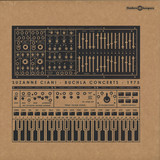
Finders Keepers invite you to witness the incredible first ever Buchla synthesiser concerts/demonstrations providing a distinctive feminine alternative to The Silver Apples Of The Moon if they had ever been presented in phonographic form. This is history in the remaking.
This spring Finders Keepers Records are proud to release an archival project that not only redefines musical history but boasts genuine claim to the overused buzzwords such as pioneering, maverick, experimental, groundbreaking and esoteric, while questioning social politics and the evolution of music technology as we've come to understand it. To describe this records as a game-changer is an understatement. This record represents a musical revolution, a scientific benchmark and a trophy in the cabinet of counter culture creativity. This record is a triumphant yardstick in the synthesiser space race and the untold story of the first woman on the proverbial moon. While pondering the early accolades of this record it's daunting to learn that this record was in fact not a record at all... It was a manifesto and a gateway to a new world, that somehow never quite opened. If the unfamiliar, modernistic, melodic, pulses, tones and harmonics found on this 1975 live presentation/grant application/educational demonstration had been placed in a phonographic context alongside the promoted work of Morton Subotnick, Walter Carlos or Tomita then the name Suzanne Ciani and her influence would have already radically changed the shape, sound and gender of our record collections. Hopefully there is still chance.
In short, Suzanne was a self-imposed twenty-year-old employee of the Buchla modular synthesiser company, San Francisco's neck and neck contender to New York's Moog. Buchla was run by a community of festival freaks and academic acid eaters whose roots in new age lifestyles and the reinvention of art and music replaced the business acumen enjoyed by its likeminded East Coasters. In the eyes of the consumer the creative refusal to adopt rudimentary facets like a piano keyboard controller rendered the Buchla synthesiser the more obscure stubborn sister of the synth marathon, steering these incredible units away from the mainstream into the homes and studios of free music aficionados, art house composers and die-hard revolutionaries. Championed and semi-showcased by composer Morton Subotnick on his albums The Bull and Silver Apples Of The Moon, Buchla's versatility began to open the minds of a new generation, but the high-end design features and no-compromise modus operandi was often confused with incompatibility and, in the pulsating shadow of Moog's marketing, the revolution would not be televised nor patronised. Suzanne Ciani, as one of the very few female composers on the frontline (and also providing the back line) did not lose faith.
These concerts' are the epitome of rare music technology historic documents, performed by a real musician whose skills and academic education in classical composition already outweighed her male synthesiser contemporaries of twice her age. At the very start of her fragile career these recordings are nothing short of sacrificial ode to her mentor and machine, sonic pickets of the revolution and love letters to an absolutely genuine vision of and 'alternative' musical future. In denouncing her own precocious polymathmatic past in a bid to persuade the world to sing from a new hymn sheet, Suzanne Ciani created a bi-product of never before heard music that would render the pigeon holes ambient' and futuristic' utterly inadequate. Providing nothing short of an entirely different feminine take on the experimental records' of Morton Subotnick and proving to a small, judgmental audience and jury the true versatility of one of the most radical and idiosyncratic musical instruments of the 20th century. These recordings have not been heard since then.
The importance of these genuinely lost pieces of electronic musics puzzle almost eclipses the glaring detail of Suzanne's gender as a distinct minority in an almost exclusively male dominated, faceless, coldly scientific landscape. Those familiar with Suzanne's work, a vast vault of previously unpublished non-records', will already know how the creative politics in her art of being' simultaneously reshaped the worlds of synth design, advertising and film composition before anyone had even dropped a stylus in her groove. Needless to say this record, finally commanding the archival format of choice, courtesy of the Ciani and Finders Keepers longstanding unison, was not the last first' with which this hugely important composer would gift society, and the future of a wide range of exciting evolving creative disciplines.
You have found a holy grail of electronic music and a female musical pioneer who was too proactive to take the trophies. With the light of Buchla and Ciani's initial flame Finders Keepers continues to take a torch through the vaults of this lesser-celebrated music legacy shining a beam on these non-records' that evaded the limelight for almost half a century. You can't write history when you are too busy making it. With fresh ink in the bottomless well, let's start at the beginning. Again. You, are invited!
out of Stock
Last delivered 6 years ago available to reorder, subject to availability
Imagine a Latin remake of Back to the Future. The mad scientist is Arsenio Rodriguez (the godfather of salsa) and the young student who travels through time with him is Eblis Alvarez (Meridian Brothers). This album can only be described as the perfect soundtrack for that movie that never was.
After the massive buzz generated by his first solo album, Mentallogenic, Alex Figueira got back in the studio to work in a more collective fashion this time, carefully assembling the second album of his largest project to date, Conjunto Papa Upa; a team of 6 musicians, spanning 3 generations of some of the best talent in the Latin and avant-garde scenes.
In an era where tropical music is dominated by purely electronic and rhythmically uniform sounds, the ten songs encompassed in “Fruta Madura” (“Ripe Fruit”) wander through the most diverse tempos, rhythms, and motifs effortlessly. A real breath of fresh air that gracefully incorporates soul, funk, jazz, psychedelia, and electronics into a solid tropical, irresistibly polyrhythmic foundation, without ever succumbing to the many genre clichés.
The distinctive production and catchy songwriting of Figueira shine in a very distinctive light on this second full-length. Living up to his reputation (Miles Cleret, founder of Soundway Records, called him “one of the scene's truly authentic and eccentric producers”), he takes the opportunity to show he’s not afraid to keep walking his own path.
Taking the band for a wild ride through the traditions of Africa, America, and the Caribbean; contrasting them with a ridiculously wide plethora of vintage, contemporary, and futuristic sounds, and pivoting on the exuberant musicality displayed by his musicians; the result leaves no doubt: this album is destined to be considered a future classic of the exciting tropical psychedelic music of the 21st century.
Addressing the most diverse themes in this new collection of songs, things take on a much more mature tone, as the title clearly suggests.
The opening track “El segundo es más sabroso” (“The second one is tastier”) sets the tone in the most assertive way imaginable, with the band boldly declaring, through multiple metaphorical references (laid upon a crazy mix of Dominican merengue, Detroit techno, classic and free jazz, dub, and electro), that the bar will be set higher with this second album.
The remaining compositions touch upon the most diverse subjects, with a fair dose of humor, sarcasm, and postmodern “magic realism”. “El Algoritmo” (The Algorithm) is a parranda-cumbia hybrid (for lack of a specific term) about the omnipresence of technology in our lives. The sophisticated Latin soul of the titling track “Fruta Madura” makes a case for the beauty of the maturity process. Some key philosophical teachings of Marcus Aurelius (the role of causality, the impositions of “the logos” and the importance of self-control) get a twisted cumbia treatment on “Reos del Deseo” (Prisoners of Desire). “No le pongas Coca-Cola” (“Don’t put Coca Cola in it”) shows us the most satirical side of the band, accusing those who mix Coca Cola with Rum of committing "sacrilege", on a powerful base of Dem Bow (the grandfather of Reggaeton), intertwined with touches of soul, salsa, and Cuban comparsa.
"Háblame Claro" (“Talk to me clearly”) is a story of heartbreak that evokes in its first part the spirit of the erotic salsa of the 80s (a subgenre deeply despised by purists), and after an unexpected samba interlude, leads to the hardest salsa of the 70s (a subgenre adored by purists), to end up in the surprising form of pure Afro-Cuban ceremonial music.
“Tu mamá tenía razón” ("Your Mom Was Right") is an attempt to exalt the spirit of the Latin American soap opera in the key of “acid bachata”, to recount a real-life case, witnessed by the band on countless occasions: the partying woman who arrives at the show accompanied by her bitter husband, who obviously does not like to dance. A very cheeky song to talk about the very serious and pertinent topic of female empowerment.
“La misma vaina” (“The same thing”) with its indescribable blend of bantú, candomblé, and Mozambique rhythms with abstract synthesizers, is an ode to adventure in favor of the aversion to taking risks and seeking predictability.
“Amigas picadas” (“Salty friends”) is another humorous song recounting another real-life case witnessed by the band on countless occasions: a love encounter sabotaged by the girlfriend's friends, who all happen to fancy the same guy. A jazzy take on the ancient Dominican rhythm of pambiche (grandfather of merengue), with generous psychedelic touches, resembling the classy late 60s releases of Guadeloupe's legendary producer / label owner Henri Debs.
“Vinimos a hablar” (“We came to talk”) takes sarcasm to the highest level, to ridicule the absurdity (also experienced by the band firsthand) seen in live music venues where people pay a ticket to go and have conversations that could be carried out much better on any bar, where no band is playing. The music alternates between a delicate melody with loose, sparse percussion and a full-on, pumping Angolan semba, with a techno kick drum included; bringing things to an apotheotic grooving finale, where the peculiar swing of Venezuelan calypso from the Callao region is thrown on top of all the precedent elements; closing the album in the most uplifting, “end of the carnival parade” feel.
The artwork is a delicate and impactful oil painting by Colombian artist Kevin Simón Mancera, who has collaborated many times with the label before (“Maracas, tambourines and other hellish things” tape and the Lola’s Dice LP).
What the experts are saying:
“Alex (Figueira) dove into this work with a brutal cohesion between lyrics and synths. Timbre poetry, sound poetry (you name it). And that, superimposed on his always impeccable percussive base, confirms the title of “avant-garde visionary of our beautiful Latin music”".
EBLIS ALVAREZ (MERIDIAN BROTHERS)
“Papa Upa's infectious quirkiness is a balm against boredom. A mature album, but without an expiration date”.
GLADYS PALMERA
“Here there is a lot of strength, drum, cadence and psychedelia, lost dance rhythms, united in an intercontinental Latin/African/and Caribbean journey, a unique winning combination that we could consider the new “Ritmo Figueira”.
DISCODELIC
All songs written by Alex Figueira.
Arranged and performed by Conjunto Papa Upa.
Recorded, produced, mixed and mastered by Alex Figueira at Heat Too Hot, Amsterdam.
This feels deliciously fated. Musical soulmates, Cromby is the only person Sally C will go record shopping with. The duo minted their friendship back in 2016, not long after both migrated to Berlin. A friendship forged through shared dancefloors, long hours at the pair’s beloved Bikini Waxx and impromptu B2B sessions, they have a common passion for good times and serious digging. If you want a sense of the genesis of Sally’s label baby Big Saldo’s Chunkers, just listen to the cult-favourite ‘Big Saldo & Cromby Dusty Hip Haus Mix’ that’s lived on her Soundcloud since 2019.
Cromby knows a Chunker that’s for sure. His contribution to the label is elite. Rinsed by the pair all year, it’s supports also include Job Jobse and Bambounou. In January it highlighted Nachtiville, where it was played all weekend long and became an unofficial hype anthem of the festival. A fiercely hunted track I.D ever since, lock this in as one of those catchy Crombyclassics we all love and can’t stop playing (and singing). ‘Pump It’ is an atmospheric roller, a perfect cut for maintaining the energy after the hands-up vibes of ‘House Flava’. ‘Free’ features Cromby’s own vocal debut – “I didn’t realise at the time of writing how fitting the lyrics would be for our times unfortunately,” he shares. Driven by punchy purring bass, it brings plenty of rugged energy with 303 flourishes, while dreamy keys balance things nicely. One for the after-hours.
The EP is rounded out with the wicked hoover-led ‘Best Not Miss’, that transports us back to a steaming Trade dancefloor circa 1997 and is thrilling in every sense.
out of Stock
Last delivered 19 months ago available to reorder, subject to availability
Filipovich is one of a kind. The Belarus-born, Paris-based artist works in a multitude of media - found footage films, painting, silkscreening and performance to name a few. It's her musical output that has caught the attention of late, though, with Filipovich dropping a run of releases in recent years which began with 2021's Magnificat on Time Released Sound. Filipovich takes as much of a novel approach to her music-making as she does with her other artistic endeavours - Magnificat was centred around treated samples of Sergei Rachmaninov's All-Night Vigil, and she's also combined classical composition with contemporary electronic techniques on her subsequent drops.
For Idealized, Filipovich's debut on Sheffield's Central Processing Unit, she maintains the gothic air which characterised her previous releases and applies it to a record of widescreen contemporary techno joints. These tracks represent something of a gear shift for CPU, a label which has long made its name by delivering top-quality electro and machine-funk jams, but such is the quality of Idealized that these superbly-executed techno productions are sure to win over label fans both old and new.
Idealized is very much schooled in the German tradition of minimal/dub techno. Tracks like 'Physical', 'Wave' and 'Dance Minor' all anchor themselves on single, steady drum pulses and delay-drenched single-chord loops. Filipovich generally lets the central idea of these tracks play out across several minutes while introducing increasingly disorientating elements into the rest of the mix - wiccan atmospherics, clashing chords, spiralling delays and so forth. It's an approach at once respectful of Filipovich's predecessors - Basic Channel, Deepchord, Ellen Allien and so on - but also full of idiosyncrasies and individuality.
Many of the club cuts here hardwire us into the moody, murky environs of the darkest Berlin Basements. 'Ultra Red' rides forward on a crisp drum machine snap, a menacing burble of bassline and an eerie single-note synth whistle in the upper end of the mix; 'Dance Minor' shows off a bit of KiNK in the brain-bending modular loop that waxes and wanes at its centre; the second-half run from 'Wave' to closer 'Small Cave' travels ever-further out into deep space - the kick drums remain insistent, yet the textural elements are delivered with an edge and flair that evidences Filipovich's ability to think outside the box.
Filipovich's unusual methods, and the influence of sound art and electroacoustic composition on her music, are drawn out further when Idealized steps away from the dancefloor. 'Hydra' comes off like a more gothic version of Pole - its central pulse draws from dub techno but never quite settles into a danceable groove, and this beat is combined with the kind of unnerving keyboard work that would make John Carpenter proud. Although closer 'Small Cave' eventually locks into another dark-room techno roller, the opening section of the track delivers a weightless soundscape of bright, tinny chords and a scene-setting field recording.
Idealized, the first drop on Central Processing Unit from Paris-based Belarusian Lina Filpovich, broadens the label's horizons with a selection of finely crafted minimal/dub techno joints.
RIYL: Andy Stott, Deepchord, Ellen Allien, Moritz von Oswald
out of Stock
Last delivered 16 months ago available to reorder, subject to availability
This album was a self imposed ambitious project for us. Something to kick in the creative flow. The last few years, having been a challenging time in general, felt like a good time for a pivot. The last two albums were so guitar and keyboard centric, I wanted a weird and fun set of parameters for us to work with. I demo’d everything at home on cassette 4 track (harkening back to simpler times) using drum loops, and just had at it 'til I had a pile of “songs”. Tom and I chose one sound each using synths and created a range of 3 octaves of that sample, then loaded them into Roland SPD-SX samplers and learned the transcribed songs using drum sticks. The idea was to change the way we wrote and to have 4 people along the front of the stage essentially playing percussion. So no guitar, no keys. As we were recording I kept thinking how the sounds, when paired up, sounded a bit like brass. So, we added a saxophone horn section to round out the horniness of the sound with a bit of reedy bell tones. Thanks to Cansfis Foote & Brad Caulkins on tenor and Baritone saxophones :) Sort of a Dexy’s Midnight Runners meets Von LMO meets The Flesh Eaters meets the Screamers kinda punk junk. Poppy and hooky, heavy at times.. Sort of vacuous and maybe a bit sci-fi in sound. Boneheaded in riff and heady in lyrics. Recorded at Stu-Stu-Studio by me on 8 track 1/4” tape . So pretty hot and raw. Lots to write about today. A lot of these lyrics were taken from things people said in passing about taking on life right now that stuck with me. Things that made me reflect. Things that made me laugh. Things that made me WTF. Some folks are kind, genuine & give you love and energy. Some are greedy manipulative ghouls who hang off your veins. You must be strong, composed and take care of yourself. Be self aware and check your mind for cracks. Learn to relax and be well. There are moments of beauty and redemption. Its not all bad news and there’s always hope. People continue to surprise me one way or another. Anyhow, Hope you enjoy and good luck out there. — John Dwyer
Brian Harden is a second generation Chicago House head, starting in 1995 under the wings of Glenn Underground, being part of the legendary Strictly Jaz Unit. His work on Detroit's Mike Grant and his Moods & Grooves label should also be noted.
One of his most famous works is his second EP on Cajmere's Relief Records, originally issued in 1996. The EP contains some of the most prolific drum machine action ever committed to vinyl and stands for the sound that brought Chicago House on top of the underground Music map in the mid 90s.
All four tunes have been carefully remastered from the original material for maximum club performance!
out of Stock
Last delivered 18 months ago available to reorder, subject to availability
HIGHLIGHTS Originally released in 1980, this was Stiv Bators' first solo album. Now reissued with 2 bonus tracks, not available on the original version, a slightly different picture on the cover (the actual unfiltered photo as used on the 1980 issue) and a booklet with extensive liner notes and photos. Bators was the man who destroyed Rocket from the Tombs, from which he hijacked half the members to found one of the most influential American punk bands to have existed, The Dead Boys. Stiv had turned in his broken teeth for a more power pop oriented solo career. This is not an album recorded by a has-been former punk idealist; instead it's a true step forward into another unknown arena packing all the glare and attitude that remained from the last. The music is more similar to 60's power pop than the vicious punk rock that Bators became known for originally, while a member of The Dead Boys. New generations continue to discover it. It still holds up very well and sounds as fresh and vibrant as ever. DESCRIPTION On August 11th of 1980, Stiv Bators, David Quinton Steinberg, George Cabaniss and Frank Secich flew to Vancouver, in British Columbia, Canada. They were there to do the West Coast leg of the "URGH! A Music War" tour. On the bill of the tour were Pere Ubu, Magazine, the Members, and they were billed as Stiv Bators and the Dead Boys or just the Dead Boys. After the tour they were supposed to embark on a 6-week tour of Australia, New Zealand, and the Far East. During the beginning of the Urgh Tour the Australian Tour was abruptly canceled. Greg Shaw who owned Bomp Records decided that since the band were already going to be in California that they should do Stiv's solo album which they had planned to do after returning from Down Under. So, Bators and the rest of the group set up camp at the infamous Tropicana Motel in West Hollywood and Greg booked them into Perspective Studios in Sun Valley, CA. Before going into Perspective, they went into Andy Chappel's Stone Fox rehearsal studio in North Hollywood, CA for a few days to rehearse the songs and arrange them for the album. "We had 'Evil Boy' (Zero-Secich), David Quinton's 'Make Up Your Mind' and my song 'A Million Miles Away'. We also rearranged mine and Stiv's 'The Last Year' changing the key from D to F# and making it much easier to sing in a power pop vein. In addition, we had 'Swinging A Go-Go' another great contribution by George Cabaniss. Stiv and I had written two more for the album 'Ready Anytime' and the album closer 'I Wanna Forget You (Just the Way You Are)'. We also had a moody dark instrumental (written by Cabaniss-Quinton-Secich) that we were playing around with for some time. Stiv was supposed to write lyrics for it, but he never got around to it, so we left it as an instrumental. It had a great vibe and reminded me of the John Cassavetes 1956 film "Crime in The Streets" and was thus christened that. The last song we picked for the LP was 'I Had Too Much To Dream (Last Night)' which was the one cover we did that suited Stiv's voice perfectly. After a few days of rehearsing at Stone Fox, we went into Perspective Studio in Sun Valley, California. Greg hired Thom Wilson (who would later become a famous punk rock producer of Offspring, Iggy Pop, Dead Kennedys, T.S.O.L., Bad Religion and many others). Stiv co-produced with Thom and Andy Chappel and Thom did the engineering." Frank Secich recalls. In September, after the "Disconnected" mixing sessions, Stiv went to Baltimore to film "Polyester" with Movie Director John Waters and actors Tab Hunter and Divine. Stiv then went to the UK to record with the Wanderers doing their LP "Only Lovers Left Alive". He wanted to have both bands going simultaneously but logistically and practically they all knew that could never work. The "Disconnected" Band would do one last tour to support the album release of "Disconnected". The LP was released by Bomp Records on Monday December 08th, 1980. Later that night, John Lennon was murdered in New York City. So many of the principal characters involved in the creation of "Disconnected" have passed on. Stiv Bators (June 3rd, 1990), Greg Shaw (October 2nd, 2004), Thom Wilson (February 8th, 2015), and George Cabaniss (July 17th, 2020). But "Disconnected" lives on and on and has left quite a legacy for itself. There have been over 100 cover versions internationally of the songs from "Disconnected" and it has been in print and reissued in various forms in many countries around the world. New generations continue to discover it. It still holds up very well and sounds as fresh and vibrant as ever.
** Now available on vinyl* Steve Reich remains one of the most important figures in
20th century music. Though he studied at the prestigious
arts institutions Julliard and Mills College, by the mid-
1960s Reich set about dismantling the very orthodoxy that
he had been trained in. Forming a new musical language
based on repetitive processes, Reich became established
as part of the so-called 'Big Four' of New York minimalists
(along with La Monte Young, Terry Riley and Philip
Glass). Reich's influence can easily be seen today in both
the classical world and contemporary pop music.
'Four Organs' is the ultimate minimalist composition.
Performed by Reich, Glass, Art Murphy and Steve Chambers,
four identical Farfisa organs strike a single chord and
gradually lengthen each note to produce polyrhythms between
the players. Anchored by Jon Gibson's stoicallysteady
pulse on maracas, the piece deconstructs its opening
burst to a sustained mass of sound - stretching the tones to
create (in Reich's words) 'slow-motion music.'
Inspired by Reich's early training on drums, 'Phase Patterns'
treats the keyboards like tuned percussion instruments:
a basic rhythm pattern is played in unison and almost imperceptibly increases tempo to move out-of-sync.
Each progressive cycle emphasizes unique figures that are
not generated by an individual alone, but rather emerge
from the communal expression of the group.
Originally released on Shandar in 1971, Four Organs /
Phase Patterns is one of most highly regarded avant-garde
recordings in the past 45 years. This CD release features
cover photography by artist Michael Snow and is recommended
for fans of Neu!, Glenn Branca and Tim Hecker.
Come Play With Me and Breed Media are excited to present Come Play With Breed, Vol. 2. Featuring D5, Graft, Hannah Rowe and Mica Sefia, the 10” compilation spotlights the Northern Hip Hop and Soul scenes respectively. On the A-side, D5’s upbeat UK Rap opener, “What’s That”, is followed by Graft’s reflective Jazz-influenced Hip Hop track “Vows To The Art.” Hannah Rowe opens the B-side with an addictive fusion ballad for old souls. Finally, Mica Sefia closes the release with a powerful narration on her experiences as a black woman.
Artist Bios:
D5
Hailing from Leeds, West Yorkshire, D5 draws influence from the likes of Drake, Skepta and Brent Faiyaz and his sound flits between moody R&B and upbeat Rap that oozes a calm confidence. Elements of genres such as Garage, UK Rap and US Hip-Hop intertwine neatly to create his signature style. A style that crystalised on his 2020 EP Channel 5. Consisting of 8 songs, all helmed by producer and close friend CSHARP, the project is D5 at his most personal and led to the video for lead single ‘Silence’ premiering on Link Up TV and garnering him his highest streams to date. However, before ‘Channel 5’ D5 had created the EP If Only We Could Go Outside during the height of the pandemic. The track ‘Movies’ received airplay from the esteemed BBC Radio 1 Presenter Melvoin Odoom. With backing from the likes of GRM Daily and DJ Target spinning 2022 single ‘What’s Up’ on BBC Introducing, D5’s star is surely set to rise as he continues to develop his artistry. In addition to this, he has opened up for the likes of Novelist and fellow hometown hero Graft, proving with every successive performance and release that he is worthy of being a headline act.
Graft
Graft, winner of MOBO Unsung and BBC Three's The Rap Game UK, has propelled himself to national recognition for his unwavering sense of self and musical talent. Hailing from the vibrant city of Leeds, Graft’s topical and poetic approach to songwriting takes inspiration from genres such as Hip Hop, Neo-Soul, Jazz and Alternative Rap. This fusion of inspiration has seen him grace the stage at the acclaimed Reading and Leeds Festival, and has collaborated with esteemed brands such as Adidas, Virgin Media, Boohoo and Leeds United. Now with this national acclaim, Graft prepares for the release of his highly anticipated EP, Golden Child.
Hannah Rowe
Hannah Rowe’s emotional range transcends generations; the young singer writes about experiences and shifts in life, offering all listeners a sense of reflection within her rich, authentic, jazz-infused sound. Hannah is backed by a group of highly accomplished musicians who happen to be her adored closest friends. After finding one another at university, Sam Hughes on guitar, Luke Harrison on bass, Owen Moriarty on keys and Charlie Tanner on drums intertwined their varied influences to paint their own alluring and soulful sound - one difficult to define, but has been said to resemble the likes of Raye, Lianne La Havas, Moonchild and Yebba.
Mica Sefia
Liverpool born, Leeds-based future-soul Queen Mica Sefia endorses the interpretive nature of music as an art to be studied and related to by the public. Mica’s own exploration of self-expression solidified her passion in the production of a timeless and authentic style of music. Preferring to keep her lyricisms and narrative open to interpretation, Mica relates to a balanced approach to songwriting, in which her music remains subjective, but retains its emotive sensitivity. Mica’s music leans into the genres of Alt Soul, Rock and Jazz intertwining them to create atmospheric sounds and textured layers.
Steve Reich remains one of the most important figures in 20th century music. As part of the so-called "Big Four" of New York minimalists (along with La Monte Young, Terry Riley and Philip Glass), Reich influenced both the classical world and contemporary pop music.
Back in print ! Steve Reich remains one of the most important figures in 20th century music. Though he studied at the prestigious arts institutions Julliard and Mills College, by the mid-1960s Reich set about dismantling the very orthodoxy that he had been trained in. Forming a new musical language based on repetitive processes, Reich became established as part of the so-called "Big Four" of New York minimalists (along with La Monte Young, Terry Riley and Philip Glass). Reich's influence can easily be seen today in both the classical world and contemporary pop music."Four Organs" is the ultimate minimalist composition. Performed by Reich, Glass, Art Murphy and Steve Chambers, four identical Farfisa organs strike a single chord and gradually lengthen each note to produce polyrhythms between the players. Anchored by Jon Gibson's stoically-steady pulse on maracas, the piece deconstructs its opening burst to a sustained mass of sound – stretching the tones to create (in Reich's words) "slow-motion music."
Inspired by Reich's early training on drums, "Phase Patterns" treats the keyboards like tuned percussion instruments: a basic rhythm pattern is played in unison and almost imperceptibly increases tempo to move out-of-sync. Each progressive cycle emphasizes unique figures that are not generated by an individual alone, but rather emerge from the communal expression of the group. Originally released on Shandar in 1971, Four Organs / Phase Patterns is one of the most highly regarded avant-garde recordings of the past 50 years. This first-time vinyl reissue features cover photography by artist Michael Snow and is recommended for fans of Neu!, Glenn Branca and Tim Hecker.
Past collaborators of Decosimo include indie/folk artists Jake Xerxes Fussell, Wye Oak, and Hiss Golden Messenger. Past collaborators of Schrey include experimental/sound artists Alvin Lucier, Gordon Mumma and Yasunao Tone. In April 2021, Joseph Decosimo, Luke Richardson, and Cleek Schrey three of the most compelling interpreters in the American traditional music scene gathered at a cabin in Tennessee to explore their collective repertoire of Old-time fiddle and banjo tunes, gleaned from visits with older players, field recordings, and vintage 78s. Working with fiddle, hardanger d’amore (a fiddle with sympathetic strings), banjos, and a 19th-century pump organ, the trio captured both the sonic details of their instruments and a generous musical interplay rooted in a dozen years of collaboration. Their debut album, Beehive Cathedral, presents resonant, thoughtful, and expansive explorations of Appalachian and American music. The results showcase deep Details study and enveloping, exhilarating performances. A rich vein of stories and relationships to people and places underpin Beehive Cathedral. Much of the album draws on Decosimo’s experiences learning the music of Tennessee’s Cumberland Plateau, where he grew up and worked as a folklorist. A key source of inspiration was fiddler Clyde Davenport (1921-2020), “Clyde was a social and musical trickster who knew hundreds of old tunes and had an uncanny ability to recall each piece in exquisite detail,” says Decosimo. “During my visits, he’d play breathtaking local pieces from his father Will, who was born in 1868. His father had learned some of them from a neighbor who was born in 1829.” "This record expresses some of what we hear in Southern traditional music: the ring of the strings, the buzz of the tunings, the hum of the organ,” explains Schrey. Spending time listening to old recordings and imagining how those sounds were made has made the trio keenly interested in the relationship between physical motion and sound in their source material. The result is a dense layering of sounds and interaction. Of this sonic interplay, Irish fiddle luminary Martin Hayes observes, “The sound of a beehive conveys the idea of a unified harmonious soundscape which is how this recording sounds. Beehive Cathedral is a sonic delight, a beautiful blend of Old-time soundscapes and more. This is a hypnotic recording that is grounded, subtle and refined
"The Red Room Crystal-Ruby Splatter Vinyl". Netherworld marks a considerable step onwards from the territory that Louise Patricia Crane explored on her debut long player Deep Blue, crafting audial landscapes that go further into both inner and outer space; hallucinatory and surrealistic yet also grittier and more direct. For all that this stemmed in part from early Genesis and The Beatles, Netherworld also sits in alignment with the luxurious but oddly intimate realm of modern classics, by the likes of Tears For Fears, Tori Amos and Joni Mitchell, with passionate intensity set in a bold, cinematic vista. In realising these romantic and expansive visions, Crane not only wrote or co-wrote the entire album, but arranged, co-produced and played a wide variety of instruments on it. Yet as a supporting cast, she has surrounded herself with a formidable selection of mercurial contributors. Once again, Jakko M. Jakszyk (King Crimson) brings his fiery and mellifluous solo guitar work, as well as contributing backing vocals, keyboards and co-production. Elsewhere, the flute soliloquies of Tiny Bard are the work of Jethro Tull's Ian Andersonwhile saxophone duties are handled by Mel Collins, whose work with King Crimson marks only one chapter in an incredibly storied life in music. Providing violin and viola across the stylistic expanse of the album, Shir-Ran Yinon (New Model Army / Eluveitie) returns as a collaborator. The rhythm section for the lion's share of the record consists of the dream team of Tony Levin (King Crimson / Peter Gabriel) and Gary Husband (John McLaughlin / Billy Cobham / Allan Holdsworth) with Nick Beggs stepping in on bass for Dance With The Devil and upright bass on Long Kiss Goodnight. Crucially however, even amidst this kind of company, Louise's voice and vision is never remotely overshadowed-with the talents on offer only serving to make the backdrop to her songs still more vivid, sharp and intense. In as much as Netherworld is a work that exists on a lineage of progressive music and the visionary artists who've expanded their boundaries of exploration to form sound-worlds as big as their imagination, it's also a work of magical realism in the tradition of Pan's Labyrinth, The Company Of Wolves or the work of Gabriel Garcia Marquez and Haruki Murakami-in which the supernatural and otherworldly, lead to a shortcut to the essence of being human. In this World, Louise Patricia Crane is our Storyteller.
Netherworld Double Gatefold Vinyl in 'Celestial Dust' transparent gold CD / DVD - 5.1 Surround mixed by Jakko M. Jakszyk: 'Storybook' Edition 'Ladies' Double A-Side 7" Single - Ladies Of The Road / Dirty (Black Vinyl) Netherworld A6 illustrated 'Little Stories' book All housed in a Black Textured Box with Gold Hot Foil Embossing Netherworld marks a considerable step onwards from the territory that Louise Patricia Crane explored on her debut long player Deep Blue, crafting audial landscapes that go further into both inner and outer space; hallucinatory and surrealistic yet also grittier and more direct. For all that this stemmed in part from early Genesis and The Beatles, Netherworld also sits in alignment with the luxurious but oddly intimate realm of modern classics, by the likes of Tears For Fears, Tori Amos and Joni Mitchell, with passionate intensity set in a bold, cinematic vista. In realising these romantic and expansive visions, Crane not only wrote or co-wrote the entire album, but arranged, co-produced and played a wide variety of instruments on it. Yet as a supporting cast, she has surrounded herself with a formidable selection of mercurial contributors. Once again, Jakko M. Jakszyk (King Crimson) brings his fiery and mellifluous solo guitar work, as well as contributing backing vocals, keyboards and co-production. Elsewhere, the flute soliloquies of Tiny Bard are the work of Jethro Tull's Ian Andersonwhile saxophone duties are handled by Mel Collins, whose work with King Crimson marks only one chapter in an incredibly storied life in music. Providing violin and viola across the stylistic expanse of the album, Shir-Ran Yinon (New Model Army / Eluveitie) returns as a collaborator. The rhythm section for the lion's share of the record consists of the dream team of Tony Levin (King Crimson / Peter Gabriel) and Gary Husband (John McLaughlin / Billy Cobham / Allan Holdsworth) with Nick Beggs stepping in on bass for Dance With The Devil and upright bass on Long Kiss Goodnight. Crucially however, even amidst this kind of company, Louise's voice and vision is never remotely overshadowed_with the talents on offer only serving to make the backdrop to her songs still more vivid, sharp and intense.
Black Truffle is thrilled to present the first vinyl reissue of David Rosenboom’s unique Future Travel, originally released on the short-lived Detroit label Street Records in 1981 and here presented in an expanded edition with an additional LP of wild, previously unheard live and studio material from the same period.
Future Travel emerged from the confluence of two important streams in Rosenboom’s work at this time. First, his exploration of ‘propositional music’, defined as ‘complete cognitive models of music’ that start from the radical question, ‘What is music?’ In this case, the music belongs to the universe of Rosenboom’s In the Beginning (1978-1981), in which proportional relationships determine the material available to the composer in all musical parameters (harmonic relationships, melodic shapes, rhythmic subdivisions, dynamics, and so on). Second, the work documents a key moment in Rosenboom’s long collaboration with synthesizer pioneer Don Buchla. Having played a role in developing concepts for some of the modules of the Buchla 300 Series Electric Music Box (an innovative analogue modular system controlled by micro-processors), Rosenboom went on to write the software for Buchla’s hybrid analogue-digital keyboard synthesiser, the Touché, the instrument heard most prominently here.
In a way that no purely analogue synthesizer could, the 300 Series and Touché allowed Rosenboom to work with the In the Beginning algorithms in real time, the synthesizers becoming ‘intelligent instruments’ that actively collaborate with the performer. Developing the open structures of the electronic pieces from In the Beginning, Future Travel explored the possibilities of simply ‘playing the system’, recording live at Francis Ford Coppola’s Zoetrope studio in San Francisco. Working from loose sketches, Rosenboom added acoustic instruments to the electronic sounds and, on some pieces, the processed voice of Jacqueline Humbert. Like Rosenboom’s collaboration with Humbert on the abstracted synth-chanson of Daytime Viewing, this music set out deliberately to challenge the ‘stratified and illusorily coagulated identities in the musical culture of the time,’ refusing distinctions between ‘serious’ and popular music. But where Daytime Viewing achieves this in part through genre references, Future Travel is bracingly sui generis, existing in a unique universe where radical formalisation à la Xenakis spontaneously gives rise to expressive jazz harmonies and old-timey folk melodies.
The crystalline quality of many of the Touché sounds gives Future Travel a sparkling, immediately enticing surface, its layers of shifting ostinato patterns pulsating outside conventional meter, rippling like waves on the surface of water. On opener ‘Station Oaxaca’, ping-ponging synth arpeggios and hand percussion accompany a sentimental violin melody, abruptly overtaken by layered keyboard runs, before the entry of tinkling marimba-like sounds reframe the scene as sci-fi Martin Denny exotica. ‘Time Arroyo’ begins as an austere study in staccato synth sounds in multiple overlapping tempi, reminiscent of Ligeti’s famous ‘clock’ rhythmic effects. Before long, it opens up into a melodic passage with the gentle heroism of classic Roedelius, which proves to be only a brief interlude before the layers of rhythmically distinct synthesiser patterns begin to build and accelerate into an increasingly dense cacophony. The wildest twists and turns are saved for the epic closer ‘Nova Wind’, where the arrangement focuses on Rosenboom’s virtuoso piano playing, perfectly embodying the project’s radical disregard of stylistic orthodoxies as he moves from hyperactive pointillistic flurries to a kind of space-age gospel.
At several points throughout the record, the distinctive voice of Jacqueline Humbert is heard reading passages from the text component of In the Beginning, a dialogue between The Double (an embodiment of humanity’s timeless desire to replicate itself in spiritual and technological copies) and two Spirit Characters. Fittingly, as all are conceived as embodiments of a future form of techno-human collective consciousness, distinctions between the three characters are not immediately evident in Humbert’s delivery, just as the music blurs the boundaries between intelligent computing and human spontaneity. Adorned with a striking retro-futurist cover (and here accompanied by extensive new liner notes and archival images), Future Travel is a time capsule of radical imaginings at the birth of our digital age, reminding us of utopian possibilities of which our own present seems so often to fall short.
out of Stock
Last delivered 2 years ago available to reorder, subject to availability
IMOGEN presents WIGS002 - a four track EP celebrating the women of Wigs, featuring Grace Dahl, NVST, Rebecca Alle Paine and IMOGEN.
WIGS002 kicks off with heavy breaks and kick drums bringing a rough hardcore vibe to IMOGEN’s latest single ‘SHOUTOUT 2 LDN’, premiered by radio legend Mary Anne Hobbs on her Radio 6 show.
IMOGEN samples a vocal from her favourite 90s MC Alex Pearce, adopting the same “zero f***s attitude” of the early 2000s techno scene. She combines this with squelching reese basses and slick programmed breaks to bring the same energy of early warehouse parties to the dancefloors of today.
Next up, Grace Dahl departs from her usual rolling techno style with electro banger ‘I Like Em Sexy’. A fast-paced distorted vocal slides its way through the drums into an epic breakdown before an unexpected 4/4 drop. IMOGEN and Dahl’s musical chemistry shone in their B2B on the Wigs NTS show, making this the perfect A-side combo of the EP.
Upcoming Italian DJ and producer Rebecca Alle Paine keeps up the EP’s high energy with the perfect DJ tool of rolling 909 drums. Hardgroove is having its resurgence right now and Rebecca is a leading light in the genre currently flooding the scene. Wigs isn’t the only label to pick up on Rebecca’s driving style - she recently released an album on hardgroove legend Ben Sims’ label as well as featuring on Freddy K’s KEY. It is clear Rebecca is one to watch for 2024.
NVST closes off the EP in a mind bending Aphex Twin-style crescendo. ‘A Face Has No Voice’ is an eight minute long saga boasting her skill as a multiverse producer. It follows a journey through dub, breaks and IDM. WIGS002 showcases the true diversity of the next generation of musicians, and that one piece of music can traverse many genres.
Wigs kicked off as a project aimed to offer a new approach to party series and workshops with an emphasis on community, bringing like minded ravers together to build a platform for the next generation of artists and party goers. As well as a residency at Tresor Berlin, Wigs has hosted sold out parties across Europe bringing names such as Daria Kolosova, Dr Rubinstein Salome and more. After the success of WIGS001, Wigs is proving itself to be a staple sound in dance music right now.
out of Stock
Last delivered 2 years ago available to reorder, subject to availability
Are you ready to hear the best live band of the early ‘70s? We at Real Gone Music have been privileged and proud to release Fanny’s four classic Reprise albums, each a tuneful testament as to why they were the first all- female band signed to a major label. But there has always been a piece missing from the Fanny fable; for while the band hooked up with big-time producers and engineers like Richard Perry, Todd Rundgren, and Geoff Emerick, their studio albums never really were able to capture the sheer excitement they could generate in concert. However, buried away in a vault thousands of miles away from their Los Angeles base there long lay a recording that could make the Fanny myth a reality, one that could provide the emphatic answer as to why these four ladies were the hottest ticket on the Sunset Strip during the early ‘70s. Now, over 50 years later, its time—and their time—has come. Live on Beat-Club ’71-’72 presents the two sets Fanny recorded for the German TV show, mastered by Mike Milchner of Sonic Vision from hi-res mono files taken from the original videotape. Aside from the incendiary and incredibly tight performances, what immediately becomes apparent is that all four of these women were powerhouses in her own right. June Millington’s stringbending Les Paul wizardry, her sister Jean’s driving, melodic bass lines and Janis Joplin-esque vocals, Nickey Barclay’s intricate yet somehow rocking keyboard work, and Alice de Buhr’s precise, piston-like drumming punctuated by ferocious fills—put together Fanny was an overwhelming display of talent, Yet somehow, as these shows reveal, live they were greater than the sum of their parts. That’s why getting these recordings released has long been a crusade for Alice, and why June tells the story in the accompanying liner notes (which feature contributions from June, Jean, and Alice) that the engineer who was assigned to do the transfers of all the Beat-Club material told her that their material was the best in the vault, better even than Hendrix. We are releasing this invaluable archival recording on juicy peach vinyl and on CD with a bonus track of the soundcheck to boot. Essential for a full understanding of ‘70s rock!
Once upon a time, DJ’s were like soaring eagles, they would spread their musical wings and fly high to wherever they wanted to go musically. It wasn’t uncommon to hear hip house and go go played alongside disco and funk, or techno being dropped on either side of something a lil’ mo’ soulful. Then the DJ’s wings were clipped and clubs became musical cages for the more adventurous DJ’s, clubs evolved into one-dimensional musical prisons and beats bubbles. Unconventionally, Marcus McGowan hails from South Carolina, and it would be fair to argue that South Carolina is a bit of a house music wasteland? Perhaps it’s this simple geographical blip that has nurtured McGowan into creating a sound that can’t be affiliated to any particular city, cities such as Detroit that is generally associated with techno, Washington is the undisputed town of go go, or Chicago, which is renowned for acid house, hip house, and jackin’ house, and of course, New Jersey is the spiritual home of soulful house. What McGowan has created is a fresh, new vibe that appears to be crossing many musical boundaries and the test pressing mailout appears to have united music lovers from numerous genres of house music AND techno alike, with its deep, techy, jazzy, soulful, sweet and melliferous flavoured vibe. Luke Una boasted that “it’s the record of the year so far”, MFSB’s Yogi Haughton called it a “classic in the making”, but all said and done, the test pressing feedback from the handful that were passed out to music lovers around the U.K. is unanimous, it’s jus’ a frikin’ solid double hitter that can’t be pigeon-holed. This is a record for majestic, soaring DJ’s and music lovers, not scabby, common or garden Columbidae garbage foragers. It’s a slice of intellectual music that will perch McGowan very high up in the producer pecking order!
out of Stock
Last delivered 2 years ago available to reorder, subject to availability
WARM4 is Ecler's newest rotary analogue mixer, inspired by New York's Paradise Garage, described by François
Kevorkian as the "temple of music" and whose influence has significantly shaped some of today's best clubs.
Designed and manufactured in our Barcelona facilities, WARM4 is a mixer that keeps in mind the classic Ecler mixers structure, with completely redesigned circuitry and mechanics. This goes from the new PCB board that further improves noise level and dynamic range, to the front-plate screw potentiometers, carefully handassembled by our production team.
Keeping alive its innovative spirit since the first A4 mixer in 1971, Ecler introduces a dj tool never included in a mixer before: an analogue subharmonic synthesizer. Inspired by the original device installed in the Paradise Garage booth, we have created our own circuit that allows the subharmonic generator to be tuned to different frequencies so that the dj can adapt it according to the recorded song and the features of the sound system.
In WARM4 you will also find the 4th order Isolator filter already included in WARM2, as well as 4 mixing channels, 3-band full EQ cut per channel and Alps metal shaft high quality potentiometers. Using your favourite external effects module has never been easier.
WARM4 offers you the opportunity to send the PRE/POST fader signal, as well as regulate and pre-listening to the amount of effects return.
WARM4 is specially designed for sound systems capable of reproducing this type of subsonic frequencies, clubs, festivals and events where subwoofers are of vital importance. Bring to your audience an unprecedented experience on the dancefloor and a different way of feeling the music.
Der WARM4 ist Eclers neuester analoger Rotationsmixer, inspiriert von der New Yorker Paradise Garage, die von François Kevorkian als "Tempel der Musik" bezeichnete und dessen Einfluss einige der besten Clubs von heute maßgeblich geprägt hat.
Der WARM4 wurde von ECLER Werk in Barcelona entwickelt und hergestellt und ist ein Mixer, der die klassische Struktur der Ecler-Mixer beibehält.
Ecler-Mixer erinnert, mit völlig neu gestalteten Schaltkreisen und Mechanik. Angefangen bei der neuen Platine, die den die den Rauschpegel und den Dynamikbereich weiter verbessert, bis hin zu den Schraubpotentiometern an der Frontplatte, die von unserem Produktionsteam sorgfältig von Hand montiert werden.
Produktionsteam.
Unter Beibehaltung des Innovationsgeistes, den Ecler seit dem ersten A4-Mischpult im Jahr 1971 an den Tag legt, stellt das Unternehmen ein DJ-Tool vor, das noch nie in einem Mischpult enthalten war.
Eingebaut ist: ein analoger subharmonischer Synthesizer. Inspiriert von dem Originalgerät, das in der Paradise Garage Kabine installiert war, hat ECLER eine eigene Schaltung entwickelt, welche es erlaubt, den Subharmonischen Generator auf verschiedene Frequenzen einzustellen, so dass der DJ ihn je nach dem aufgenommenen Song und den Eigenschaften des Soundsystems anpassen kann.
Im WARM4 finden Sie auch das Isolator-Filter 4. Ordnung, das bereits in WARM2 enthalten ist, sowie 4 Mischkanäle, 3-Band-Full-EQ-Cut pro Kanal und hochwertige Alps-Potentiometer mit Metallschafft. Die Verwendung Ihres bevorzugten externen Effektmodul war noch nie so einfach.
Der WARM4 bietet Ihnen die Möglichkeit, dass PRE/POST-Fadersignal zu senden, sowie sowie die Menge des Effekt-Returns zu regulieren und vor hören zu können.
Der WARM4 wurde speziell für Beschallungsanlagen entwickelt, welche in der Lage sind, diese Art von Unterschallfrequenzen wiederzugeben, für Clubs, Festivals und Veranstaltungen, bei denen Subwoofer von entscheidender Bedeutung sind. Bringen
Sie Ihrem Publikum ein noch nie dagewesenes Erlebnis
auf dem Dancefloor und eine andere Art, die Musik zu spüren.
PRODUCT OVERVIEW
WARM4 is a professional four channel analogue rotary DJ mixer, designed and manufactured by ECLER in Barcelona.
Featuring 4 phono/line channels, 2 MIC inputs, classic sharp filters and a 4th order Isolator. WARM4 includes an unique feature, an Analogue Subharmonic Synthesizer selectable per channel, specially designed to generate and reinforce ultra-low frequencies.
KEY FEATURES
• 4 Mixing channels.
• 4 PHONO inputs.
• 4 LINE inputs.
• 2 MICRO inputs.
• Master Output on XLR and RCA connectors.
• Booth Output on XLR and RCA connectors.
• Headphone Monitor Output on 6.3mm J ack and 3.5mm
mini-jack.
• 3 band isolator full cut EQ.
• 3 band isolator (300Hz and 4KHz, -∞ /+12dB, 4th order
24dB/oct ).
• Analogue Subharmonic Synthesizer for sub-bass
frequency reinforcement selectable per channel.
• Maximum Output without distortion: 21dBV (23dBu).
• FX Send control and Pre/Post fader selector per channel.
• FX Return control and PFL.
• Alps metal shaft high quality potentiometers.
• Mechanized from a solid block of aluminum knob, without
visible screw. Ecler Unique design.
• Wooden side panels included.
APPLICATIONS
• Night Clubs
• DJ s studios
• Itinerant DJ performances
WARM4
AUDIO PERFORMANCES
Inputs
Number of Inputs LINE 4 Stereo Unbalanced Inputs
PHONO 4 Stereo Unbalanced Inputs
MICRO 2 Mono Balanced Inputs
FX RETURN 1 Stereo Unbalanced Input
Connectors type LINE 1-2-3-4 RCA STEREO
PHONO 1-2-3-4 RCA STEREO
MICRO 3 XLR3-F
MICRO 4 Combo XLR3F-6.3mm TRS BAL
FX RETURN RCA STEREO
Inputs Sensitivity nom/Impedance LINE 0dBV/50kΩ
PHONO -40dBV/50kΩ
MICRO -50dBV/>1kΩ
FX RETURN 0dBV/>6kΩ
Performances
Frequency Response LINE 10Hz÷30kHz -1dB
MICRO 10Hz÷25kHz -1dB
PHONO RIAA ±0.5dB
FX RETURN 10Hz÷50kHz -1dB
THD+N LINE 75dB @ 1kHz
Signal Noise Ratio LINE >105dB
MICRO >90dB
PHONO >100dB
FX RETURN >110dB
Trim control INPUTS 1-2-3-4 ± 15dB
Tone control Inputs 1-2-3-4 BASS +10/-30dB
MID +10/-25dB
TREBLE +10/-30dB
Tone control Isolator BASS +12/-70dB
MID +12/-40dB
TREBLE +12/-70dB
Tone Filter cut frequency at -6dB
(slope 12dB/oct)
BASS
MID
200Hz
200Hz÷6.8kHz
TREBLE 6.8kHz
Isolator cut frequency at -6dB
(slope 24dB/oct)
BASS
MID
300Hz÷4kHz
TREBLE 4kHz
Analogue Subharmonic Synthesizer Input selective filter 50÷120Hz
Harmonics
synthesis
25÷60Hz
Max Output level +12dBV
Number of Outputs HOUSE 1 Stereo Balanced Outputs
1 Stereo Unbalanced Outputs
BOOTH 1 Stereo Balanced Outputs
1 Stereo Unbalanced Outputs
HEADPHONE 2 Stereo Unbalanced Outputs
FX SEND 1 Stereo Unbalanced
REC 1 Stereo Unbalanced
Connectors Type HOUSE XLR3-M STEREO
RCA STEREO
BOOTH XLR3-M STEREO
RCA STEREO
HEADPHONE J ack Stereo 6.3mm
J ack Stereo 3.5mm
FX SEND RCA STEREO
REC RCA STEREO
Outputs Level/Minimum Load HOUSE (BAL) 0dBV/600Ω 1V *(+12dB 4V)
HOUSE (UNBAL) 0dBV/2.2kΩ 1V *(+12dB 4V)
BOOTH (BAL) 0dBV/2.2kΩ 1V *(+12dB 4V)
BOOTH (UNBAL) 0dBV/2.2kΩ 1V *(+12dB 4V)
REC 0dBV/10kΩ
HEADPHONES 200mΩ/200Ω THD 1%
FX SEND 0dBV/2.2kΩ
Max Undistorted Output Level HOUSE (Electr.BAL) 21dBV (23dBu)
BOOTH (Electr.BAL) 21dBV (23dBu)
HOUSE (UNBAL) 21dBV (23dBu)
BOOTH (UNBAL) 21dBV (23dBu)
MISCELLANEOUS
Control Mode Rotary with Alps Blue Velvet Potentiometers and Alps RK09L
potentiometers
Phantom Voltage 18VDC/5mA Max (Default ON)
Input VU-Meter LED 12 segments (-38dBV ÷ +10dBV)
House-Mix-Booth VU-Meter LED 12 segments (-30dBV ÷ +20dBV)
Subharmonic Output VU-Meter LED 3 Segments (-20dBV / 0dBV / +4dBV)
ELECTRICAL
Power Supply Internal
AC Mains Voltage 90-264VAC 47-63Hz
AC Main Connector 15A IEC inlet connector
Rated power consumption 39 VA
PHYSICAL
Operating Temperature -5˚C ÷ 45˚C / 23˚F ÷ 113˚F
Operating Humidity 20 - 90% RH (no condensation)
Storage Temperature -10°C ÷ 50˚C / 14°F ÷ 122˚F
Storage Humidity 1kΩ
FX RETURN: 0 dBV / >6kΩ
LEISTUNG:
—
Frequenzgang:
LINE: 10Hz÷30kHz -1dB
MIKRO: 10Hz÷25kHz -1dB
PHONO: RIAA ±0.5dB
FX RETURN: 10Hz÷50kHz -1dB
THD+N:
LINE: 75dB bei 1kHz
Signal-Rausch-Verhältnis:
LINE: >105dB
MIKRO: >90dB
PHONO: >100dB
FX RETURN: >110dB
Trim-Steuerung / Klangregelung für Eingänge 1-2-3-4:
EINGÄNGE 1-2-3-4: ±15dB
BASS: +10/-30dB
MITTE: +10/-25dB
HÖHEN: +10/-30dB
Trim-Steuerung / Klangregelung für den Isolator:
BASS: +12/-70dB
MITTE: +12/-40dB
HÖHEN: +12/-70dB
Klangfilter Cut-Frequenz bei -6dB (Flankensteilheit 12dB/Okt):
BASS: 200Hz
MITTE: 200Hz÷6.8kHz
HÖHEN: 6.8kHz
Isolator Cut-Frequenz bei -6dB (Flankensteilheit 24dB/Okt):
BASS: 300Hz÷4kHz
MITTE:
HÖHEN: 4kHz
Analoger Subharmonics-Synthesizer:
Selektiver Filter für den Eingang: 50÷120Hz
Harmonics-Synthese: 25÷60Hz
Maximaler Ausgangspegel: +12dBV
AUSGÄNGE:
—
Anzahl der Ausgänge:
HOUSE: 1 Stereo symmetrische Ausgänge / 1 Stereo unsymmetrische Ausgänge
BOOTH: 1 Stereo symmetrische Ausgänge / 1 Stereo unsymmetrische Ausgänge
KOPFHÖRER: 2 Stereo unsymmetrische Ausgänge
FX SEND: 1 Stereo unsymmetrischer Ausgang
REC: 1 Stereo unsymmetrischer Ausgang
Anschlusstypen:
HOUSE: XLR3-M STEREO / RCS STEREO
BOOTH: XLR3-M STEREO / RCS STEREO
KOPFHÖRER: Klinke Stereo 6.3mm / Klinke Stereo 3.5mm
FX SEND: RCS STEREO
REC: RCS STEREO
Ausgangspegel / Minimale Last:
HOUSE (symmetrisch): 0dBV/600Ω 1V *(+12dB 4V)
HOUSE (unsymmetrisch): 0dBV/2.2kΩ 1V *(+12dB 4V)
BOOTH (symmetrisch): 0dBV/2.2kΩ 1V *(+12dB 4V)
BOOTH (unsymmetrisch): 0dBV/2.2kΩ 1V *(+12dB 4V)
REC: 0dBV/10kΩ
KOPFHÖRER: 200mΩ/200Ω THD 1%
FX SEND: 0dBV/2.2kΩ
Maximaler unverzerrter Ausgangspegel:
HOUSE (elektrisch symmetrisch): 21dBV (23dBu)
BOOTH (elektrisch symmetrisch): 21dBV (23dBu)
HOUSE (unsymmetrisch): 21dBV (23dBu)
BOOTH (unsymmetrisch): 21dBV (23dBu)
ELEKTRISCH
Stromversorgung: Intern
AC-Netzspannung: 90-264VAC 47-63Hz
AC-Netzstecker: 15A IEC-Einlassstecker
Nennleistungsaufnahme: 39 VA
SONSTIGES
Steuerungsmodus: Rotary mit Alps Blue Velvet Potentiometern und Alps RK09L
Potentiometern
Phantomspeisung: 18VDC/5mA max (Standardmäßig EIN)
Eingang-VU-Meter: LED 12 Segmente (-38dBV ÷ +10dBV)
House-Mix-Booth VU-Meter: LED 12 Segmente (-30dBV ÷ +20dBV)
Subharmonics Ausgangs-VU-Meter: LED 3 Segmente (-20dBV / 0dBV / +4dBV)
PHYSIKALISCH
Betriebstemperatur: -5˚C ÷ 45˚C
Betriebsfeuchtigkeit: 20 - 90% RH (keine Kondensation)
Lagertemperatur: -10°C ÷ 50˚C
Lagerfeuchtigkeit: <90% RH (keine Kondensation)
Installationsmöglichkeiten: Tisch- oder Rackmontage mit optionalen Zubehörteilen
Im Lieferumfang enthaltenes Zubehör: IEC-Kabel EU
Abmessungen (BxHxT): 34,0 x 8,1 x 37,2 cm
Gewicht: 5,32 kg
Versandabmessungen (BxHxT): 49,5 x 17,5 x 43,5 cm
Versandgewicht: 6,74 kg
‘Diré’, Idrissa Soumaoro new album, comes as a surprise to Malian and international audiences. Composer, singer, guitarist and master of the kamalen n’goni Idrissa Soumaoro presents here a beautiful collection of songs on his third album, Diré, named in honor of the town where he met his wife and where his first daughter, who is no longer with us, was born.
In 1971, after his studies at the INA in Bamako, Idrissa was transferred to Diré to teach music at the lPEG (Pedagogical Institute of General Education). He was 22 years old when he arrived in Diré. Idrissa has always been nostalgic for this beautiful place in the 333 Saints of Timbuktu region. As Idrissa sings in ‘Diré taga’ (Going to Diré), the track that opens the album, the city evokes deep emotions for the artist, as if it were a long-lost friend or lover. Celebrating the memory of the city of Diré leads the artist to retrace stories and lived situations that marked and animated him in years gone by: ‘I really miss the people, the colleagues, the friends and that period. Despite the time that has flown by, I would ardently wish to see Diré again’. Today, at the difficult time Mali is experiencing, remembering the city of Diré in the 1970s also means for the artist not giving up hope for peace: ‘The memory of Diré, a beautiful town in northern Mali, strengthens my hope for peace, union and real independence for the happiness of my people’; as he sings in ‘Sababou’, ‘Without hope, there is no life. Together we will succeed’.
The ten highly original compositions of the album are strongly based upon traditional music of Mali, but Idrissa’s life experiences, travels, education, collaborations and personal musical career have led him to compose and perform music with other influences. As Idrissa quotes: ‘My inspiration generally comes from the donso n'goni, a Bambara instrument played by and for hunters throughout Mali. This is a pentatonic instrument, similar to the blues exported to the USA by black African slaves. I've also spent so much time playing a variety of music that my music also reflects rumba, salsa (as well as Bamanan blues and a few derivatives: jazz, country, soul, rhythm and blues) etc. I have looked for and hope to have found my own form of expression from these influences’.
Throughout the album, his strong, clear voice sings in French, Bambara and English. It rides seamlessly upon a complex rhythmic sea of distinctly West African stringed instrumentation and percussion with accents of flute and balafon. There are keyboards in a few songs, but these, happily, do not dominate the music as we hear so often in today’s music. This album presents the music of a mature artist who has ‘been there, done that’ and returned to celebrate his country, his roots and his dreams in a flawlessly produced collection of songs of love, reassurance, fatherly advice and hope.
The album already has a long history: it was initiated in 2012 by Marc-Antoine ‘Marko’ Moreau, former producer and manager of Amadou and Mariam. Moreau had plans to produce the album and invited Idrissa Soumaoro to start recording in Manjul's studio in Bamako. When Moreau suddenly passed away, work on the album was still missing. The pandemic still added time for the production to continue. With the help of Climax Orchestra, arrangements and orchestrations were finalized in France. At the artist's behest, 'Diré' will finally be presented to the public by Mieruba, the independent label based in Ségou, the home of the blues in Mali. 'Let's stand together so that Mali can flourish': from conception to production and distribution, this is the message that 'Diré' carries.
out of Stock
Last delivered 2 years ago available to reorder, subject to availability
FIRST TIME ON VINYL
HALF SPEED MASTERED 180 GRAM VIRGIN VINYL PRESSINGS
INCLUDES COVER ART PRINT
INCLUDES EXCLUSIVE CHRIS ISAAC COVER VERSION
INCLUDES DOWNLOAD CODES FOR THE ORIGINAL MIX AND UNMIXED VERSION IN WAV AND MP3 FORMATS
Trentemøller is the Dane who did. He's been making electronic music of one kind of bent or another for over 15 years, first making his name as part of Trigbag, a live house act that toured extensively. But it's his solo material that has impacted on the dance community - and beyond. 'La Champagne' was a game-changer and his remixes of artists like Sharon Phillips secured his place as an artist with some serious chops. But that's not all he is. You can hear that yearning in his productions and it's evident here, a sort of Protestant northern European melancholy. He is aided on his journey towards the Baltic by some heavy hitters, of course: Velvet Underground, Mazzy Star, This Mortal Coil. But that's not the story, it's not where the plot comes from, it's not where we're going. It's just a little indicator to reassure you we know the way. No. For it's in the dark beauty of Low's tremulous 'Amazing Grace' or even the way that the Shangri-Las' '(Remember) Walkin' In The Sand', surrounded by the similarly inclined, takes on a funereal gait. As we navigate the flatlands of your mind, we're helped along by a generous sprinkling of Anders' fellow Danes, like Darkness Falls (the atmosphere of this mix aptly encapsulated right there), Ekko, Chimes & Bells and the Late Night Tales tradition, Trentemøller's cover of Chris Isaacs' 'Blue Hotel', sung by Marie Fisker and Steen Jørgensen.
Originally released in 2010 this mix has gone on to become a classic, it was never released on vinyl at the time, so due to public demand we have carefully mastered each track and carefully cut at half speed for optimum sonic reproduction.
BBE Music is thrilled to present J Jazz: Free and Modern Jazz From Japan 1954-1988, a
remarkable large-format book covering some of the deepest, rarest, and most innovative
jazz music released anywhere in the post-war era. Compiled by Tony Higgins and Mike
Peden, co-curators of BBE Music's acclaimed J Jazz Masterclass Series, the book also
features a foreword by Japanese jazz icon, Terumasa Hino.
This is the first time a book of this type has been published outside of Japan and the first
anywhere of this size and scale. It is a unique collection of over 500 albums of free and
modern jazz released in Japan during a period of radical transformation and constant
reinvention. An era that saw Japan return from the ravages of World War Two to become a
global economic power and emerge as both a technological leader and an international
cultural force.
Through a unique gallery of albums, J Jazz charts the development of jazz in Japan from the
first stirrings of the modern jazz scene in the mid to late 1950s and on through the hard bop
and modal jazz of the 1960s. It steers the reader into the radical directions of the 1970s when
free jazz, fusion, post-bop, and jazz-funk opened up a growing number of Japanese jazz
artists to a new global audience before consolidating in the mid to late 1980s with a musical
scene that laid the path for the contemporary jazz generation to follow.
Over 500 full-colour sleeves from many of the leading names in Japanese jazz sit alongside
rare and private pressings that tell a story of constant change and musical exploration. J
Jazz includes profiles of several leading record labels such as East Wind, Frasco, King
Records, and Nippon Columbia as well as critical independents such as Three Blind Mice,
ALM, and Aketa’s Disk.
J Jazz includes interviews with celebrated jazz photographer Tadayuki Naito, and pianist
Tohru Aizawa, bandleader on the totemic spiritual jazz album, Tachibana Vol 1, as well as
free-jazz record collector and jazz musician Mats Gustafsson.
The book also features a chapter on albums by non-Japanese artists that only received a
Japanese release, with collectible, rare, and obscure releases by figures such as Herbie
Hancock, Miles Davis, Mal Waldron, Steve Lacy, and Art Blakey. J Jazz includes Japanese
jazz charts from some of the world's leading jazz DJs including Gilles Peterson, Toshio
Matsuura, Paul Murphy, and Shuya and Yoshihiro Okino. Among the specialist content is a
feature on obi strips by record dealer and Japanese jazz expert, Yusuke Ogawa, plus a
special article on Japanese Blue Note albums.
Across its 300-plus pages, J Jazz includes a detailed introduction contextualising the music,
tracing the story of Japan's fascination with jazz back before the war. It also features
biographical information on many of the key artists involved in shaping the post-war
Japanese jazz scene including Sadao Watanabe, Toshiko Akiyoshi, Masabumi Kikuchi,
Masahiko Togashi, Terumasa Hino, Yosuke Yamashita, Fumio Itabashi, Masayuki
Takayanagi, Takeo Moriyama, Isao Suzuki, and many more
Yes' 90125 was a departure from their progressive style but it introduced the band to a new generation of fans, reaching No. 5 on the Billboard 200 and No. 16 on the U.K. albums chart. The 1983 album remains their best-selling album with more than 3 million copies sold in the U.S. "Cinema" earned the group a Grammy Award for Best Rock Instrumental Performance, while "Owner Of A Lonely Heart" was the band's first and only single to reach No. 1 on the Billboard Hot 100 chart.
Named for its Atco catalog number, 90125, the album — the band's 11th studio effort — it was born out of the band's self-reinvention. Begun as Cinema, a new band by Chris Squire and Alan White, the project grew to include the slick production of Trevor Horn, the new blood (and distinctly '80s guitar sound) of Trevor Rabin, and eventually the trademark vocals of returning founder Jon Anderson. His late entry insured that Rabin and Horn had a heavy influence on the sound. The album also marked the return of prodigal keyboardist Tony Kaye, whose crisp synth work on "Changes" marked the band's definitive break with its art rock roots.
"Owner Of A Lonely Heart" was a huge crossover hit, and its orchestral break has been relentlessly sampled by rappers ever since. The vocal harmonies of "Leave It" and the beautifully sprawling "Hearts" are additional high points,
90125 is a significant and well-regarded album in the Yes discography.
Analogue Productions is proud to offer the definitive reissue deluxe 180-gram 45 RPM 2LP of 90125. For Yes fans, this is a can't-miss addition to your album collection.
Limited to 500 LPs and 500 CDs. New album from the most danceable post-punk pop band in the UK. It's like something has exploded! CRUMBS have been incubating this, their second album, for a few years now. Who knows how they kept all the energy in check. It must have been like sitting on a volcano. The songs burst out with pure pop fire, sending splinters of guitar, sharp lyrics and snatches of the catchiest backing vocals. The rhythm section (Jamie and Gem): it's like Delta 5 meeting Le Tigre in a dark alley in Leeds, fusing blindly and completely, and then forcing its way into the back entrance of a venue, sending volts through the limbs of the unwitting punters, forcing them to dance. This is TIGHT. And as the lights come on and the indie kids throw themselves around, Ruth's vocals sweetly assault their ears with anger, joy, political intelligence - and all around, Stuart's guitar, sometimes twangly-melodic like the B52s, sometimes sweet and ringing like a memory of Scars, sometimes furious and feeding back, keeps you alert and thirsty for more. These songs do NOT outstay their welcome. Starts and ends are cut hard: no pre-echo, no wistful, drawn-out regretful fade-outs. CRUMBS have imbibed the key lessons taught by The Gang Of Four and The Au Pairs: never let the energy dissipate. But there is more than anger here. The band have smuggled a pop sweetness into the disciplined shapes of their angular songs. You're Just Jealous has sharp edges, but it's generous too. The album will be available as a vinyl LP, CD, download and on streaming services. CRUMBS - a brief history. They are based in Leeds, where they are active movers in the DIY scene that currently thrives in the North of England. They recorded a Marc Riley session in 2016, released their first album (on Everything Sucks) in 2017, toured extensively in 2018 and 2019, playing at the Brudenell Social Club with Swearin' and Jeffrey Lewis, and at plenty of fests such as LaDIYfest and Specialist Subject's birthday all dayer in Bristol, A Real Cool Fest in Bradford, Mousetival in Stockton and the Cambridge Indie pop Alldayer. They spent the pandemic creating these new, tightly-wound, irresistible pop songs. These are the people in CRUMBS and these are their influences: Stuart (GUITAR) - Bauhaus, Gang of Four, Shop Assistants // Gem (DRUMS) - Beat Happening, The Raincoats, Antelope // Jamie (BASS, BACKING VOCALS) - Delta 5, ESG, Chic // Ruth (VOCALS) - The Go-Go's, Mika Miko, Paint It Black Collectively - 80s pop music
Fucked Up are one of the most prolific hardcore punk bands of our generation. Since their 2001 inception, they’ve challenged listeners with thoughtful artful chaos and a seemingly limitless drive for musical experimentation. Because of this, they’ve also become a record collectors worst nightmare; releasing over 80 recordings and collaborations on countless labels that include Arts & Crafts, Matador, Jade Tree, and more. Fucked Up “Year of the Hare” is the latest installment of their Zodiac themed releases. Over a two year period, it was recorded and constructed at Electrical Audio, Key Club Studios, and Candle Studios. Title track “Year of the Hare” is a 21 minute epic that frantically mixes traditional instrumentation, piano/synths, flutes and sax, experimental editing/soundscapes, and guest vocals from great Isla Craig into one dizzying experience. While B-Side “California Cold” slowly builds and deconstructs over an 8 and a half minute stretch. Organically shifting from jangly melodic-punk anthem into a fuzzed out psychedelic jam session. Eclectically blending musical styles and voices in the most, well, Fucked Up way possible.
Some albums are game-changers in a genre. Take OutKast's Speakerboxxx / The Love Below or Primal Scream's Screamadelica, they observe, study, and then flip what an album can mean to a genre or moment in time.
From the very first listen of Rubel’s Latin Grammy-nominated third album As Palavras, Vol. 1 & 2, you can feel its transformative force for the MPB genre. Here we see one of Rio’s brightest stars, fusing the contemporary with the classic, soaking up the richness of Brazil’s musical heritage. The result is a marauding 20-track epic, incorporating traditional styles such as forró, MPB, pagode and samba with modern baile funk, rasteirinha and hip-hop.
The album exudes a sense of freedom and creativity, playfully and provocatively juggling the familiar with the forward-thinking. The tracks are divided across two records, navigating feelings of love, heartbreak and discovery, whilst balancing themes of violence, passion, irony and affection. Collaborating with some of the country’s most esteemed artists such as Gabriel do Borel, Liniker, Luedji Luna, Tim Bernardes and Ana Caetano, Rubel takes this fusion of styles, subjects and flavours to the global stage.
The grand, forró-blending, choral opener, ‘Forró Violento (Instrumental)’ sets the tone for the album, with references and links between tradition and modernity everywhere to be seen. From the Ana Frango Elétrico produced, funk flexing, samba-soul brilliance of ‘Não Vou Reclamar de Deus’, to the album’s title cut ‘As Palavras’, in collaboration with Tim Bernardes, that melds MPB influences with electronic elements and hip-hop touches.
Across both sides of the album, Rubel’s story-telling gift is given space to shine. ‘Torto Arado’ featuring Liniker and Luedji Luna, beautifully references the racial injustice, tragedy, hope and ambition found in one the most celebrated Brazilian novels of recent times by Itamar Vieira Júnior. Elsewhere, ‘Na Mão do Palhaço’ manifests a satirical march about a suicidal conservative middle-aged man, who is rescued by the miracle of the carnival.
At times the album is gentle and intimate with tracks like ‘Toda Beleza’ featuring Bala Desejo, or the ode to friendship ‘Lua de Garrafa’, composed with the legendary Milton Nascimento. At others, the grooves hit harder, with sounds from the favelas laced within. ‘Put@ria!’, explores the universe of baile funk, with BK’ and MC Carol trading off on the mic, as ‘Rubelía’ moves between reggaeton, funk, and hip hop. The latter is a tribute to a key influence of the album, Spanish star Rosalía and her parallel mix of current with classic.
Ultimately though the beauty of this album lies in its concept. In the midst of a country divided, ‘As Palavras Vol. 1 & 2’ sets out to bring together genres and generations, grounded in rhythms and words that have helped define Brazil through the ages.
Fünf Jahre nach Jessica Pratt's 2019 erschienenen Durchbruch-Album "Quiet Signs", taucht sie mit neuen Ambitionen und neuen Parametern für ihre Musik wieder auf. Für ihr neues, viertes Album "Here in the Pitch" arbeitete sie erneut in Gary's Electric Studio in Brooklyn und mit ihrem bewährten Team: Multi-Instrumentalist/Engineer Al Carlson und Keyboarder Matt McDermott.
Zusätzlich holte sie sich das Rhythmus-Duo Spencer Zahn und Mauro Refosco (David Byrne, Atoms for Peace) an die Seite, weitere Beiträge auf dem Album kommen von Ryley Walker, Peter Mudge (Mac Miller, Kendrick Lamar) und Alex Goldberg. Die Musik ist intim und emotional, wie es die Fans erwarten und die Texte sind ein impressionistischer Lobgesang auf die Unwägbarkeiten des Ehrgeizes. In den letzten 12 Jahren hat sich die verehrte Künstlerin aus Los Angeles zu einer der einzigartigsten Songwriterinnen ihrer Generation entwickelt. Vor allem durch die mystische, schwer fassbare Mischung aus ihrer zarten Akustikgitarre und ihrem atemberaubenden Gesang. Für "Here in the Pitch" schwebte Jessica Pratt eine größere Bandbreite an Einflüssen vor - große Panoramaklänge, die an den Ozean und Kalifornien denken lassen - und in diesen neun Songs werden Pauken, Glockenspiel, Baritonsaxophon und Flöte mit robusten Gesangsarrangements überlagert, die eine triumphale Stimmung erzeugen, selbst wenn die Texte auf Verwüstung hindeuten. Diese breitere Produktionspalette wird sofort beim eindringlichen Album-Opener und der ersten Single "Life Is" deutlich. Ein Schlagzeugwirbel erinnert an den großen, orchestralen Stil von 60er-Jahre-Pop-Hits wie "The Sun Ain't Gonna Shine Anymore" von den Walker Brothers.
out of Stock
Last delivered 9 months ago available to reorder, subject to availability
Some albums are game-changers in a genre. Take OutKast's Speakerboxxx / The Love Below or Primal Scream's Screamadelica, they observe, study, and then flip what an album can mean to a genre or moment in time.
From the very first listen of Rubel’s Latin Grammy-nominated third album As Palavras, Vol. 1 & 2, you can feel its transformative force for the MPB genre. Here we see one of Rio’s brightest stars, fusing the contemporary with the classic, soaking up the richness of Brazil’s musical heritage. The result is a marauding 20-track epic, incorporating traditional styles such as forró, MPB, pagode and samba with modern baile funk, rasteirinha and hip-hop.
The album exudes a sense of freedom and creativity, playfully and provocatively juggling the familiar with the forward-thinking. The tracks are divided across two records, navigating feelings of love, heartbreak and discovery, whilst balancing themes of violence, passion, irony and affection. Collaborating with some of the country’s most esteemed artists such as Gabriel do Borel, Liniker, Luedji Luna, Tim Bernardes and Ana Caetano, Rubel takes this fusion of styles, subjects and flavours to the global stage.
The grand, forró-blending, choral opener, ‘Forró Violento (Instrumental)’ sets the tone for the album, with references and links between tradition and modernity everywhere to be seen. From the Ana Frango Elétrico produced, funk flexing, samba-soul brilliance of ‘Não Vou Reclamar de Deus’, to the album’s title cut ‘As Palavras’, in collaboration with Tim Bernardes, that melds MPB influences with electronic elements and hip-hop touches.
Across both sides of the album, Rubel’s story-telling gift is given space to shine. ‘Torto Arado’ featuring Liniker and Luedji Luna, beautifully references the racial injustice, tragedy, hope and ambition found in one the most celebrated Brazilian novels of recent times by Itamar Vieira Júnior. Elsewhere, ‘Na Mão do Palhaço’ manifests a satirical march about a suicidal conservative middle-aged man, who is rescued by the miracle of the carnival.
At times the album is gentle and intimate with tracks like ‘Toda Beleza’ featuring Bala Desejo, or the ode to friendship ‘Lua de Garrafa’, composed with the legendary Milton Nascimento. At others, the grooves hit harder, with sounds from the favelas laced within. ‘Put@ria!’, explores the universe of baile funk, with BK’ and MC Carol trading off on the mic, as ‘Rubelía’ moves between reggaeton, funk, and hip hop. The latter is a tribute to a key influence of the album, Spanish star Rosalía and her parallel mix of current with classic.
Ultimately though the beauty of this album lies in its concept. In the midst of a country divided, ‘As Palavras Vol. 1 & 2’ sets out to bring together genres and generations, grounded in rhythms and words that have helped define Brazil through the ages.
out of Stock
Last delivered 2 years ago available to reorder, subject to availability
Fünf Jahre nach Jessica Pratt's 2019 erschienenen Durchbruch-Album "Quiet Signs", taucht sie mit neuen Ambitionen und neuen Parametern für ihre Musik wieder auf. Für ihr neues, viertes Album "Here in the Pitch" arbeitete sie erneut in Gary's Electric Studio in Brooklyn und mit ihrem bewährten Team: Multi-Instrumentalist/Engineer Al Carlson und Keyboarder Matt McDermott.
Zusätzlich holte sie sich das Rhythmus-Duo Spencer Zahn und Mauro Refosco (David Byrne, Atoms for Peace) an die Seite, weitere Beiträge auf dem Album kommen von Ryley Walker, Peter Mudge (Mac Miller, Kendrick Lamar) und Alex Goldberg. Die Musik ist intim und emotional, wie es die Fans erwarten und die Texte sind ein impressionistischer Lobgesang auf die Unwägbarkeiten des Ehrgeizes. In den letzten 12 Jahren hat sich die verehrte Künstlerin aus Los Angeles zu einer der einzigartigsten Songwriterinnen ihrer Generation entwickelt. Vor allem durch die mystische, schwer fassbare Mischung aus ihrer zarten Akustikgitarre und ihrem atemberaubenden Gesang. Für "Here in the Pitch" schwebte Jessica Pratt eine größere Bandbreite an Einflüssen vor - große Panoramaklänge, die an den Ozean und Kalifornien denken lassen - und in diesen neun Songs werden Pauken, Glockenspiel, Baritonsaxophon und Flöte mit robusten Gesangsarrangements überlagert, die eine triumphale Stimmung erzeugen, selbst wenn die Texte auf Verwüstung hindeuten. Diese breitere Produktionspalette wird sofort beim eindringlichen Album-Opener und der ersten Single "Life Is" deutlich. Ein Schlagzeugwirbel erinnert an den großen, orchestralen Stil von 60er-Jahre-Pop-Hits wie "The Sun Ain't Gonna Shine Anymore" von den Walker Brothers.