"Switch Records was started by myself alongside Bill Campbell in the early eighties", says Aaron Harry - a library music producer who began using Lansdowne Studios in Holland Park for his productions on the renowned Bruton Music label. The studios had been operating there since the late 1950s, becoming the breeding ground for some key & early UK jazz and pop records (owner Adrian Kerridge teamed up with Joe Meek to lay down the first recordings there in 1958). It was here that Harry and engineer Chris Dibble started to work together as a regular team. After spending some time at the studio observing them in acton, Kerridge and (Burton MD) Robin Phillps "recognised what a good team Chris and I had become. So, it was inevitable that I would also make pop music alongside Production Library Music."
The output of the relatively obscure Switch label is the result of this work, and Freestyle has licensed 3 of the most hard to come by 12"s as part of their series of rare & foundation UK funk & soul records. This one, Steppin' Out on the Groove was written by the late Tony Jackson, "a renowned session singer/musician that I had worked with on numerous occasions" says Harry, and also a key brit-funk figure who formed part of a string of UK groups throughout the 70s and early 80s (Sweet Dreams, Midnight, Ritz & Indigo) and later went on to be successful as lead singer in Rage. He died in 2001. Backed up with a killer instrumental that really lets the solid production shine, this one is an essential in any DJ or collector's bag.
Suche:key of soul
Damian Schwartz makes a welcome return to Pulp for his third full-length album, La Sal De Tu Especie. The 11 track record was written over the last three years as a way of coping with some tough experiences and features remixes
from K15 and Gifted & Blessed. It once again finds the Madrid producer serving up the sort of richly musical house that has always stood him apart.
Schwartz has been away for a while but emerged in the early 2000s with an artful take on house music. As a student of jazz, composition and bass, his intricate grooves have always been embellished with real melodic craftsmanship. In the past, they have come on this label, Esperanza and A Harmless Deed which he co-runs with Jose Cabrera. He has put out two albums before now and also works under the Epiphany alias as a producer and live act. He is a real master of his analog machinery and someone who never fails to bring fresh ideas. This superbly adventurous and widescreen new album proves that once again and shows off diverse influences such as 90s broken beat by acts like Hanna and 4 Hero, the early IDM of LFO and Aphex Twin and the Detroit house and electro styles of greats such as Juan Atkins, Teknotika, Marcellus Pittman and Kyle Hall.
It kicks off with Renacido which is a cinematic synth opener that places you into orbit. La Elipa is expansive and jazzy house with cosmic chord work over the tight, punchy kicks and Lopp then gets physical with broken beat drums and funky bass dancing around each other to uplifting effect. The superb Zwei Danke is another masterclass in off-grid beat programming and soulful machine sounds that captures the essence of early Detroit house.
It is remixed by K15, a vital London beatmaker with credits on labels like Eglo and Wild Oats. His version showcases rugged, lo-fi and dusty drums softened by heart-melting chords and angelic vocal coos.
Schwartz's 'Morro Da Urca' is a suspensory ambient interlude that makes way for the crisp electro-funk and starry-eyed pads of 'Rufo,' then 'Meco' cuts loose
with boogie bass and glistening drums and perc that voyage through a whole eco-system of bright, nebulous synths. 'Mika' is another out of this world house composition with majestic leads and pixelated pads that bring warmth and future soul. There is real electricity in the freeform keys and corrugated drums of Coney Island that will ensure any dance floor takes off.
Final remixer Gabriel Reyes-Whittaker aka GB (Gifted & Blessed) is a composer and sound artist whose music is a constant exploration of the bridge between the technological and the ancestral. He flips 'Loop' into an Afro-future jazz dance with infectious percussion and expressive chords that never rest.
La Sal De Tu Especie is a timeless fusion of jazz freedom and house grooves that takes you into a magical new dimension.
2+ is the 3rd album of DjeuhDjoah & Lieutenant Nicholson. A new sound stopover in their funky trip since their beginning with T’es qui ? album in 2015. This new building stone prolongs their critically acclaimed album Aimez ces airs released in 2019.
What’s new? 15 tracks , eclectic, soft, deep, and funky, where electro, soul even afro beat touches , or bossa nova live together harmoniously. DjeuhDjoah & Lieutenant Nicholson make praise of slowness (« Pas si vite »), address environmental issues (« Coeur béton »), social statements on (« Police », « Raie publiques », « clic »), childhood on (« Bola Mba ») , the post colonial relation between Africa and the other continents. Love is also really well presented ( « Thé à la menthe «, « Ping Pong ») and why not sailing to Essaouira in Morocco ?
During the summer of 2020 , when the french national radio asked them to perform a live cover , our french funky duo chose the famous « Né quelque part » by Maxime Leforestier released in 1987. Their Suave interpretation, haunting beat and spatial & languid atmosphere give a fantastic tribute to this beautiful melody and strong lyrics. They found a very intimate link with chorus in Zulu, harking back to the strong connection they made with South Africa during their last tour.
It became clear that they needed to put this track on their new album , as their now club remix classic « Bwe Dlo « performed with their friend David Walters.
After their tour in South Africa, they met « Cool Affair », the musician and electro house producer in Johannesburg who made a beautiful remix of « Aimé Césaire » which close perfectly this new opus. Recorded at « Le triangle des Bermudes » the home studio of Lieutenant Nicholson, produced and mixed by him with a electro analog sound dear to them. Horns, live drums, percussions and vocal choir were recorded at Bastille village at the label basement , even during the pandemic… On 2+, we can also hear the swirls of Antoine Berjeaut at the trumpet and bugle, magic keys from Florian Pellissier , two new flagships of the French jazz scene.
Once again, DjeuhDjoah & Lieutenant Nicholson push the boundaries of the traditional « French song « to make the world dance. They want to keep their international audience , from Australia, Japan, Usa, South Africa to name a few the dance floors of the world will ignite with this new album . The French touch will still shine !
Sababa 5 finally deliver their long-promised, and self-titled album of original instrumentals, built around the band"s distinct mix of Middle Eastern psych, funk and disco groove. Across these eight songs, the group blends the Afro disco, reggae, jazz, funk and a plethora of Middle Eastern traditions, whilst traveling time and space, drawing a musical, cultural and geographical line from Somalia to Iran, via Ethiopia, Sudan, Egypt and Turkey, from the late 70s & early 80s to today. Thus Sababa 5 create a unique psychedelic groove that builds on the approach that the likes of the Daptones have taken to working independently, writing, producing and recording original music, with their own modern take on 70s soul and funk.
Freedom is both an integral and multi-layered topic for improvised music, describing its mechanics, aesthetics, and values and often an underlying political dimension as well. In the case of free jazz specifically, the word carries additional weight given the music's deep connection to the black liberation movement of the 1960's and 70's.
The passionate and unclassifiable work of Calgary-based improviser Jairus Sharif embraces each of these definitions of freedom and others, albeit strictly on its own personal and idiosyncratic terms. Since early 2020, the 34 year-old autodidact has been generating a steady stream of homespun solo recordings that forge unprecedented connections between hip-hop abstraction, cosmic skronk, outsider jazz, and staunch post-punk DIY ethos.
Leading up to the pandemic, Sharif's immersion in spiritual and exploratory jazz had culminated in him deciding to purchase an alto saxophone. Unbeknownst to him this instrument would be a catalyst for him to discover his own ardently individualistic artistic voice.
Prior to that point, he had always been somewhat of a solitary musical traveler. In 2002, he acquired his first instrument—a pair of Technics 1200s — but struggled to find local collaborators that had equal investment in hip hop culture. Ultimately, Sharif picked up the guitar, turning to the resilient local punk community, that had also nurtured both of his mothers some time earlier.
As Black Lives Matter gained momentum in the wake of George Floyd's murder, Sharif was suddenly flooded with an acute awareness of his own identity. It compelled him to zealously plunge headlong into open-ended spontaneous solo creation. Water & Tools, his strange and stirring debut for Toronto's Telephone Explosion Records (home to full-lengths from the likes of Brodie West's Eucalyptus, Mas Aya, and Joseph Shabason), offers a glimpse into this ongoing hermetic journey.
As Sharif dedicated himself to uncovering his own deeper musical truths, he assembled a home studio in his basement, cobbling together a drum kit from bits his bandmate had left at his house pre-pandemic, chaining effects together and outfitting the entire space with microphones. Somewhere between the chaos of child's treehouse and the tidy import of a shrine, this space (pictured on the album's back cover) consecrated his own imagination. He laid it out to maximize access to any and every tool in his arsenal, providing him a freedom to explore that he had never permitted himself to consummate before.
Within this cozy private universe, his recent purchase—the saxophone—assumed new meaning. It furnished a tangible connection to the black radicalism that mobilized free jazz, but also something far more personal. From a technical standpoint, the instrument was completely unfamiliar to him, yet rather than this being a hindrance to Sharif, his inexperience opened fruitful path forward, unencumbered by preconceptions. Resolving to shirk formal training, convention, and build his own understanding of it from scratch, allowed him to access his most raw, fundamental creative impulses. The Saxophone's inseverable bond with breath compounded this effect, echoing revelatory discoveries he had been making about breathing through yoga, research, and psychotherapy. Of course, the parallels with BLM's harrowing rallying cry—“I can't breathe”—were not lost on him either.
Water & Tools is a dense, contradictory statement with a blustery surface that shelters a soulful heart. It's generous music, exuding profound vulnerability—grappling with the loss of one his mothers, Lisa—all the while brimming with electric wide-eyed wonder. Almost every one of the nine pieces seems to carry some semblance of a groove, while remaining completely untethered from pulse. For Sharif, this collection is an expression of newfound lucidity, however for the listener his sonic concoctions act as powerful psychotropics. At points, there's a timelessness that's conveyed through the music's processional, ritualistic tenor, and yet there's an endless amount of wild, futuristic detail waiting to unspool at any given moment. Similarly, while this recording emerges from Sharif's private pilgrimage and personal emancipation, he also leaves room for collaboration. Woven throughout Sharif's one-man-ensemble textures, one finds Maxmilian Turnbull (of Badge Epoque, U.S. Girls, and Cosmic Range infamy) providing sundry keyboards and treatments, as well as his mixing skills.
Whether conjuring effusive psychedelia or plumbing introspective depths, the music that Jairus Sharif produces is singular, visceral, and wondrously unpredictable. Water & Tools sketches a raw, firsthand account of his nascent explorations within his own unbridled imagination.
First time in - stockfind from great 2020 release! 300 copies pressed
After a fifteen year hiatus from music making, Pedro Tenreiro, Porto’s veteran and legendary DJ, former A&R, producer and re-edit pioneer behind projects such as Mr. Spock, Illmatic+Phaser and Dancin’ Days, joins Hugo Passos, a key player of the city’s early Hip Hop scene, to form Bonfim.
In the last couple of years they met once a week to have some fun exploring Pedro’s record collection through Hugo’s MPC.
The result is a six track EP of sample based music that draws its inspiration from soulful and, so called, classic golden age Hip Hop, 90s House and leftfield jazzy sounds that reflects the duo’s eclectic tastes.
Released on gold vinyl, ‘The Coincidentalist’ and ‘Dust Bowl’ are two discs of Howe Gelb filled with randomness and happenstance, a typical treasure trove spanning all genres from alt country to Cohen-esque grandeur. They traverse, unflinchingly, his chameleon-like repertoire. This deluxe re-issue includes ‘Dust Bowl’ on vinyl for the very first time, with the records housed in a gatefold sleeve featuring updated artwork and liner notes. ‘The Coincidentalist’, originally released in 2013, features a raft of friends and collaborators including Bonnie Prince Billy, Andrew Bird, M. Ward, Steve Shelley, and Jason Lytle of Grandaddy with John Parrish on mixing duties. Ever the focal point of Giant Sand and Gelb releases, the Arizona Desert serves as a key inspiration for the record, animating the barren landscape with stories of those that have navigated them. Praise for the release was not short, with AllMusic proclaiming that it’s “one of Gelb's most realized efforts; despite its relaxed, airy presentation, it's musically and lyrically provocative, as poetic, strange, and mysterious as the desert itself." The accompanying collection ‘Dust Bowl’ is a personal sketchbook of songs, a more stripped back set than it’s counterpart. Featuring everything from the country blues of ‘Porch Banjo’ and ‘John Deere’, to off-kilter piano ballads like ‘The Old Overrated’ and ‘Reality Or Not’ and the deconstructed desert pop on ‘Forever And A Day’ and the fragile ‘Man On A String’. ‘Dust Bowl’ is an insider’s view of Howe’s songwriting craft, a unique insight into the man himself. “‘Dust Bowl’ was primarily for fans that have followed me for a while. ‘The Coincidentalist’ is for the friends of the fans.” Howe told Under The Radar. While Nightlife magazine reported that; “Without warning, the Giant Sand frontman and polymorphous countryman dropped this compilation of house recordings via Bandcamp… At a time when so much harmless, soulless folk resonates, Howe Gelb is a mandatory point of reference for any fan of the genre.”
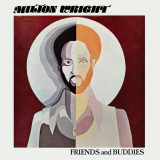
- 1: Friends And Buddies
- 2: Brothers & Sisters
- 3: Get No Lovin' Tonight
- 4: Po' Man
- 5: Keep It Up
- 6: My Ol' Lady
- 7: Black Man
- 8: The Silence That You Keep
One of the most unique albums to ever come out of the Miami soul scene of the 70s. Milton Wright has a really jazzy groove to his music - and he mixes his own acoustic guitar lines with warm keyboards and a bit of synth or moog. Milton's vocals have the chops to live up to the heady batch of soul artists. This record feels like nothing else you've ever heard, but which you can't live without once you've heard it!
Far over on the west coast of the USA we find a room full of drum
machines, samplers and keyboards. Hard at work is Israel ‘Iz’ Gravning aka Tone Scientist, who’s been using this Seattle studio to produce genre-defying future music for more than 25 years.
An avid student of jazz fusion, hip hop, house, techno and others, he
was galvanised to build his own studio after hearing jungle and drum & bass on a trip to London in 1995. His musical course thus intersected with the collectives then pushing new dancefloor sonics rooted in the rich tradition of Black music – like Nuyorican Soul over on the east coast, and the new broken beats of IG Culture, Dego and Bugz In The Attic in London. Then, in the early 2000s, Iz put out a handful of EPs under different aliases, including ‘Lion Dub’ on the Guidance sublabel Subtitled, but soon stepped back from the public stage. That’s not to say he stopped making or playing music, though. Far from it. Fast forward two decades and our very own Walrus, chilly but happy in the depths of a Toronto winter, happened across ‘Lion Dub’ in the legendary Play The Record store. Intrigued, he tracked Iz down and discovered he had been active all this time. A short email exchange later and this 2xLP of archive material was born.
These six tracks explain fully why Iz calls his studio the ‘Time Machine’: vintage equipment and instruments converse with up-to-date software; classic sounds and textures twist into fresh configurations; and Iz’s own creativity and musicality sings to us from a location beyond the trappings of time or genre.
All music written, produced and mixed by Israel Gravning aka Tone
Scientist in Seattle/Washington between 2005 - 2008 except for “Things
Club Glow powerhouse and all-round Bristol bass-bin baiting badman Borai returns to his Higher Level label with three new drops of elevated breakbeat science. As well as his work alongside Denham Audio, L Major and Mani Festo in Club Glow, Borai has been busy landing uptempo slammers on Hardcore Energy, Vivid, E-Beamz and Infiltrate in the past couple of years, and he returns to home turf in peak shape.
The A side lights up with the dizzying break-juggling ruffness of 'Lights On', a surefire call to squeeze the last juice from the party, while 'Bobbi' opens the B side treading an artful line between deep and depraved as immersive tones face off against taut, driving rhythms. 'Sargasso Sea' smooths the proceedings out good and proper in true B2 style with a pitched-down slice of soul-charged broken beat that smacks where it counts, Borai's established instinct for forward-facing melody shining through in the interplay between 90s keys, diva vocal samples and illustrious pads.
We return with the second Glenn Davis” 12”, a year on from his last Yore twelve-inch “Soul On My Side”, Dublin-based DJ and producer Glenn Davis returns with its sequel, the as-stellar Better Daze. The EP's melodic, soulful sound. The dynamic title cut locks in instantly with a pumping kick drum and builds layer by layer thereafter. Percussion, hi-hats, electric piano chords, and synthesizers add to the thrust of the production as it grows ever more urgent. As the track advances, Davis drapes a jazzy keyboard solo across the booming base as the swing swells to a near-ecstatic level. “Your Time” rounds out the A-side with a cut that suggests pure energy at its outset before quickly morphing into a sleek house strut. With percussion included and late-night synth atmospherics folded in, the breezy tune starts to sound like something you'd hear banging out on the Dancefloor thats surrounding you.
On the flip, Davis brings the skipping house groove of "Inner Monologue” to a fever while. Moody chords, hand drums, and a snappy groove set the scene. The female vocalist's soulful delivery and vibes-like earworm that make the tune the standout it is. Think of a dark Room and a red light bulb & House Music forever and a day.
The Amsterdam-based producer, keyboardist, and music-lover Soul Supreme, known for his covers of classic cuts by the likes of A Tribe Called Quest, Mos Def or MF DOOM steps away from the cover format for a moment, and channels his fresh take into remixes of two INI Movement releases.
Leaving out the brass, both remixes eloquently underline the low-end essence of the compositions and explore new realms in a special way. The upbeat remix of '52 North' by Gallowstreet and LYMA on the A-side brings a percussion-heavy instrumentation & layers of signature keys to an ode to the city of Amsterdam. Staying close to the original composition, the remix expands the richness and depth, bringing the tune even closer to the dancefloor crowd.
On the flipside of the 45, the luscious rework of Shamis & Rebiere's track 'Backpack' brings a laid-back, soulful production to a personal story of co-parenting. We're immersed in a wistful hip hop bounce with a reference to Common, stunning Rhodes solo and an extra guitar layer by Johnny Biner. The vulnerable theme of the original song is accentuated with an alternative ending, leaving us with a feeling of reassurance, love and encouragement. All of that on a limited 7'' with artwork by Dase Boogie, released on Soul Supreme Records in collaboration with INI Movement label.
Eight years after their first collaboration, ‘The Compass Joint’, slipped out as an ultra-limited white label, Charlie Soul Clap and Tom Trago have reunited to bring us a similarly warming, sun-splashed sequel, ‘The Compass Jawn’.
Like its predecessor – a now near-mythical 12-minute epic recorded late one night in Tom’s former squat-turned-studio close to legendary Amsterdam venue Trouw, and subsequently championed by DJ Harvey – ‘The Compass Jawn’ was inspired by the pair’s mutual love of both Caribbean keyboardist and FM synthesis enthusiast Wally Badarou, and the 1980s output of Chris Blackwell’s legendary Compass Point studio in Nassau, the Bahamas.
As sequels go, ‘The Compass Jawn’ is a bit of a belter. During the recording in 2019, Tom and Charlie sought to subtly evolve the original’s memorable lead line, reaching the for Yamaha DX7’s percussion patch – something utilized many times by Badarou during the 1980s.
The resultant ‘Studio Version’ is, if anything, even more emotive and uplifting than its predecessor. Underpinned by a shuffling rhythm pattern, the track ebbs and flows brilliantly, with jaunty synth stabs, undulating melodies and sparkling keyboard riffs ushering in held-note chords and a gorgeously rushing, ever-rising lead line. Throw in some starry pads and sunset-ready synth motifs, and you have another gorgeous, life-affirming treat.
‘The Compass Jawn’ comes backed with two top-notch alternative mixes. First up is an ambient ‘Dub’ mix from Trago that strips back the beats and instead focuses on the track’s many key melodic elements. Pushed forwards by drum machine handclaps, it’s a bubbly, sun-bright revision full to bursting with twinkling electronic motifs, jammed-out motifs, hands-aloft riffs and a bleeping take on the fluid and kaleidoscopic lead line.
Rounding off the package is the duo’s original demo mix – a raw, tough, and slightly more sub-heavy affair that’s notably more percussive and sweat-soaked whilst still sporting the key lead lines and FM synth sounds that make the studio version such a memorable and mood-enhancing affair.
Brand new Italian label “WeDoThings” is happy to introduce “The Beetools” with the debut album ‘SoulNova: The Magical Tones Revenge’.
“The Beetools” are a four elements crew who love music and mostly enjoy live playing instruments and synths.
Their roots start from Latin and Electronic Music as well as Funk & Jazz, inspired and influenced by Mambo & Samba rhythms too.
Starting from here, they have joined together and created an Italian soup/group as follows:
Original Recipe:
- take four poor guys with different music styles and put them in a mixing bowl
- add few spoons of keys, flutes and some drums
- put inside a pinch of synths
- mix and fry 180 grams of magical sound
- a sprinkle of groove and trumpets on top
Everything seems to work fine and now it’s cooked to perfection, ready to please your ears.
Strictly serve it hot on a “vinyl plate”
It’s a limited pleasure, this one is a keeper !!
- A1: Rock This Mother
- A2: Talk To Me Girl
- A3: You Can Find Me
- A4: Check This Out
- A5: Jesus Going To Clean House
- A6: Hope You Understood
- A7: Is It What You Want
- A8: Love Is Everlasting
- A9: This Is Hip-Hop Art
- A10: Opposite Of Love
- A11: Do You Know What I Mean
- B1: Saving All My Love For You
- B2: Look Out Here I Come
- B3: Girl You Always Talking
- B4: Have A Great Day
- B5: Take My Hand
- B6: I Need Your Love
- B7: Your Town
- B8: Talk Around Town
- B9: Booty Head/Take A Little Walk
- B10: I Love My Mama
- B11: I Never Found Anyone Like You
Vinyl LP[23,49 €]
As the sun sets on a quaint East Nashville house, a young man bares a piece of his soul. Facing the camera, sporting a silky suit jacket/shirt/slacks/fingerless gloves ensemble that announces "singer" before he's even opened his mouth, Lee Tracy Johnson settles onto his stage, the front yard. He sways to the dirge-like drum machine pulse of a synth-soaked slow jam, extends his arms as if gaining his balance, and croons in affecting, fragile earnest, "I need your love… oh baby…"
Dogs in the yard next door begin barking. A mysterious cardboard robot figure, beamed in from galaxies unknown and affixed to a tree, is less vocal. Lee doesn't acknowledge either's presence. He's busy feeling it, arms and hands gesticulating. His voice rises in falsetto over the now-quiet dogs, over the ambient noise from the street that seeps into the handheld camcorder's microphone, over the recording of his own voice played back from a boombox off-camera. After six minutes the single, continuous shot ends. In this intimate creative universe there are no re-takes. There are many more music videos to shoot, and as Lee later puts it, "The first time you do it is actually the best. Because you can never get that again. You expressing yourself from within."
"I Need Your Love" dates from a lost heyday. From some time in the '80s or early '90s, when Lee Tracy (as he was known in performance) and his music partner/producer/manager Isaac Manning committed hours upon hours of their sonic and visual ideas to tape. Embracing drum machines and synthesizers – electronics that made their personal futurism palpable – they recorded exclusively at home, live in a room into a simple cassette deck. Soul, funk, electro and new wave informed their songs, yet Lee and Isaac eschewed the confinement of conventional categories and genres, preferring to let experimentation guide them.
"Anytime somebody put out a new record they had the same instruments or the same sound," explains Isaac. "So I basically wanted to find something that's really gonna stand out away from all of the rest of 'em." Their ethos meant that every idea they came up with was at least worth trying: echoed out half-rapped exhortations over frantic techno-style beats, gospel synth soul, modal electro-funk, oddball pop reinterpretations, emo AOR balladry, nods to Prince and the Fat Boys, or arrangements that might collapse mid-song into a mess of arcade game-ish blips before rallying to reach the finish line. All of it conjoined by consistent tape hiss, and most vitally, Lee's chameleonic voice, which managed to wildly shape shift and still evoke something sincere – whether toggling between falsetto and tenor exalting Jesus's return, or punctuating a melismatic romantic adlib with a succinct, "We all know how it feels to be alone."
"People think we went to a studio," says Isaac derisively. "We never went to no studio. We didn't have the money to go to no studio! We did this stuff at home. I shot videos in my front yard with whatever we could to get things together." Sometimes Isaac would just put on an instrumental record, be it "Planet Rock" or "Don't Cry For Me Argentina" (from Evita), press "record," and let Lee improvise over it, yielding peculiar love songs, would-be patriotic anthems, or Elvis Presley or Marilyn Monroe tributes. Technical limitations and a lack of professional polish never dissuaded them. They believed they were onto something.
"That struggle," Isaac says, "made that sound sound good to me."
In the parlance of modern music criticism Lee and Isaac's dizzying DIY efforts would inevitably be described as "outsider." But "outsider" carries the burden of untold additional layers of meaning if you're Black and from the South, creating on a budget, and trying to get someone, anyone within the country music capital of the world to take your vision seriously. "What category should we put it in?" Isaac asks rhetorically. "I don't know. All I know is feeling. I ain't gonna name it nothing. It's music. If it grabs your soul and touch your heart that's what it basically is supposed to do."
=
Born in 1963, the baby boy of nine siblings, Lee Tracy spent his earliest years living amidst the shotgun houses on Nashville's south side. "We was poor, man!" he says, recalling the outhouse his family used for a bathroom and the blocks of ice they kept in the kitchen to chill perishables. "But I actually don't think I really realized I was in poverty until I got grown and started thinking about it." Lee's mom worked at the Holiday Inn; his dad did whatever he had to do, from selling fruit from a horse drawn cart to bootlegging. "We didn't have much," Lee continues, "but my mother and my father got us the things we needed, the clothes on our back." By the end of the decade with the city's urban renewal programs razing entire neighborhoods to accommodate construction of the Interstate, the family moved to Edgehill Projects. Lee remembers music and art as a constant source of inspiration for he and his brothers and sisters – especially after seeing the Jackson 5 perform on Ed Sullivan. "As a small child I just knew that was what I wanted to do."
His older brother Don began musically mentoring him, introducing Lee to a variety of instruments and sounds. "He would never play one particular type of music, like R&B," says Lee. "I was surrounded by jazz, hard rock and roll, easy listening, gospel, reggae, country music; I mean I was a sponge absorbing all of that." Lee taught himself to play drums by beating on cardboard boxes, gaining a rep around the way for his timekeeping, and his singing voice. Emulating his favorites, Earth Wind & Fire and Cameo, he formed groups with other kids with era-evocative band names like Concept and TNT Connection, and emerged as the leader of disciplined rehearsals. "I made them practice," says Lee. "We practiced and practiced and practiced. Because I wanted that perfection." By high school the most accomplished of these bands would take top prize in a prominent local talent show. It was a big moment for Lee, and he felt ready to take things to the next level. But his band-mates had other ideas.
"I don't know what happened," he says, still miffed at the memory. "It must have blew they mind after we won and people started showing notice, because it's like everybody quit! I was like, where the hell did everybody go?" Lee had always made a point of interrogating prospective musicians about their intentions before joining his groups: were they really serious or just looking for a way to pick up girls? Now he understood even more the importance of finding a collaborator just as committed to the music as he was.
=
Isaac Manning had spent much of his life immersed in music and the arts – singing in the church choir with his family on Nashville's north side, writing, painting, dancing, and working various gigs within the entertainment industry. After serving in the armed forces, in the early '70s he ran The Teenage Place, a music and performance venue that catered to the local youth. But he was forced out of town when word of one of his recreational routines created a stir beyond the safe haven of his bohemian circles.
"I was growing marijuana," Isaac explains. "It wasn't no business, I was smoking it myself… I would put marijuana in scrambled eggs, cornbread and stuff." His weed use originated as a form of self-medication to combat severe tooth pain. But when he began sharing it with some of the other young people he hung out with, some of who just so happened to be the kids of Nashville politicians, the cops came calling. "When I got busted," he remembers, "they were talking about how they were gonna get rid of me because they didn't want me saying nothing about they children because of the politics and stuff. So I got my family, took two raggedy cars, and left Nashville and went to Vegas."
Out in the desert, Isaac happened to meet Chubby Checker of "The Twist" fame while the singer was gigging at The Flamingo. Impressed by Isaac's zeal, Checker invited him to go on the road with him as his tour manager/roadie/valet. The experience gave Isaac a window into a part of the entertainment world he'd never encountered – a glimpse of what a true pop act's audience looked like. "Chubby Checker, none of his shows were played for Black folks," he remembers. "All his gigs were done at high-class white people areas." Returning home after a few years with Chubby, Isaac was properly motivated to make it in Music City. He began writing songs and scouting around Nashville for local talent anywhere he could find it with an expressed goal: "Find someone who can deliver your songs the way you want 'em delivered and make people feel what you want them to feel."
One day while walking through Edgehill Projects Isaac heard someone playing the drums in a way that made him stop and take notice. "The music was so tight, just the drums made me feel like, oh I'm-a find this person," he recalls. "So I circled through the projects until I found who it was.
"That's how I met him – Lee Tracy. When I found him and he started singing and stuff, I said, ohhh, this is somebody different."
=
Theirs was a true complementary partnership: young Lee possessed the raw talent, the older Isaac the belief. "He's really the only one besides my brother and my family that really seen the potential in me," says Lee. "He made me see that I could do it."
Isaac long being a night owl, his house also made for a fertile collaborative environment – a space where there always seemed to be a new piece of his visual art on display: paintings, illustrations, and dolls and figures (including an enigmatic cardboard robot). Lee and Issac would hang out together and talk, listen to music, conjure ideas, and smoke the herb Isaac had resumed growing in his yard. "It got to where I could trust him, he could trust me," Isaac says of their bond. They also worked together for hours on drawings, spreading larges rolls of paper on the walls and sketching faces with abstract patterns and imagery: alien-like beings, tri-horned horse heads, inverted Janus-like characters where one visage blurred into the other.
Soon it became apparent that they didn't need other collaborators; self-sufficiency was the natural way forward. At Isaac's behest Lee, already fed up with dealing with band musicians, began playing around with a poly-sonic Yamaha keyboard at the local music store. "It had everything on it – trumpet, bass, drums, organ," remembers Lee. "And that's when I started recording my own stuff."
The technology afforded Lee the flexibility and independence he craved, setting him on a path other bedroom musicians and producers around the world were simultaneously following through the '80s into the early '90s. Saving up money from day jobs, he eventually supplemented the Yamaha Isaac had gotten him with Roland and Casio drum machines and a Moog. Lee was living in an apartment in Hillside at that point caring for his dad, who'd been partially paralyzed since early in life. In the evenings up in his second floor room, the music put him in a zone where he could tune out everything and lose himself in his ideas.
"Oh I loved it," he recalls. "I would really experiment with the instruments and use a lot of different sound effects. I was looking for something nobody else had. I wanted something totally different. And once I found the sound I was looking for, I would just smoke me a good joint and just let it go, hit the record button." More potent a creative stimulant than even Isaac's weed was the holistic flow and spontaneity of recording. Between sessions at Isaac's place and Lee's apartment, their volume of output quickly ballooned.
"We was always recording," says Lee. "That's why we have so much music. Even when I went to Isaac's and we start creating, I get home, my mind is racing, I gotta start creating, creating, creating. I remember there were times when I took a 90-minute tape from front to back and just filled it up."
"We never practiced," says Isaac. "See, that was just so odd about the whole thing. I could relate to him, and tell him about the songs I had ideas for and everything and stuff. And then he would bring it back or whatever, and we'd get together and put it down." Once the taskmaster hell bent on rehearsing, Lee had flipped a full 180. Perfection was no longer an aspiration, but the enemy of inspiration.
"I seen where practicing and practicing got me," says Lee. "A lot of musicians you get to playing and they gotta stop, they have to analyze the music. But while you analyzing you losing a lot of the greatness of what you creating. Stop analyzing what you play, just play! And it'll all take shape."
=
"I hope you understood the beginning of the record because this was invented from a dream I had today… (You tell me, I'll tell you, we'll figure it out together)" – Lee Tracy and Isaac Manning, "Hope You Understand"
Lee lets loose a maniacal cackle when he acknowledges that the material that he and Isaac recorded was by anyone's estimation pretty out there. It's the same laugh that commences "Hope You Understand" – a chaotic transmission that encapsulates the duality at the heart of their music: a stated desire to reach people and a compulsion to go as leftfield as they saw fit.
"We just did it," says Lee. "We cut the music on and cut loose. I don't sit around and write. I do it by listening, get a feeling, play the music, and the lyrics and stuff just come out of me."
The approach proved adaptable to interpreting other artists' material. While recording a cover of Whitney Houston's pop ballad "Saving All My Love For You," Lee played Whitney's version in his headphones as he laid down his own vocals – partially following the lyrics, partially using them as a departure point. The end result is barely recognizable compared with the original, Lee and Isaac having switched up the time signature and reinvented the melody along the way towards morphing a slick mainstream radio standard into something that sounds solely their own.
"I really used that song to get me started," says Lee. "Then I said, well I need something else, something is missing. Something just came over me. That's when I came up with 'Is It What You Want.'"
The song would become the centerpiece of Lee and Isaac's repertoire. Pushed along by a percolating metronomic Rhythm King style beat somewhere between a military march and a samba, "Is It What You Want" finds Lee pleading the sincerity of his commitment to a potential love interest embellished by vocal tics and hiccups subtlely reminiscent of his childhood hero MJ. Absent chord changes, only synth riffs gliding in and out like apparitions, the song achieves a lingering lo-fi power that leaves you feeling like it's still playing, somewhere, even after the fade out.
"I don't know, it's like a real spiritual song," Lee reflects. "But it's not just spiritual. To me the more I listen to it it's like about everything that you do in your everyday life, period. Is it what you want? Do you want a car or you don't want a car? Do you want Jesus or do you want the Devil? It's basically asking you the question. Can't nobody answer the question but you yourself."
In 1989 Lee won a lawsuit stemming from injuries sustained from a fight he'd gotten into. He took part of the settlement money and with Isaac pressed up "Saving All My Love For You" b/w "Is It What You Want" as a 45 single. Isaac christened the label One Chance Records. "Because that's all we wanted," he says with a laugh, "one chance."
Isaac sent the record out to radio stations and major labels, hoping for it to make enough noise to get picked up nationally. But the response he and Lee were hoping for never materialized. According to Isaac the closest the single got to getting played on the radio is when a disk jock from a local station made a highly unusual announcement on air: "The dude said on the radio, 107.5 – 'We are not gonna play 'Is It What You Want.' We cracked up! Wow, that's deep.
"It was a whole racist thing that was going on," he reflects. "So we just looked over and kept on going. That was it. That was about the way it goes… If you were Black and you were living in Nashville and stuff, that's the way you got treated." Isaac already knew as much from all the times he'd brought he and Lee's tapes (even their cache of country music tunes) over to Music Row to try to drum up interest to no avail.
"Isaac, he really worked his ass off," says Lee. "He probably been to every record place down on Music Row." Nashville's famed recording and music business corridor wasn't but a few blocks from where Lee grew up. Close enough, he remembers, for him to ride his bike along its back alleys and stumble upon the occasional random treasure, like a discarded box of harmonicas. Getting in through the front door, however, still felt a world away.
"I just don't think at the time our music fell into a category for them," he concedes. "It was before its time."
=
Lee stopped making music some time in the latter part of the '90s, around the time his mom passed away and life became increasingly tough to manage. "When my mother died I had a nervous breakdown," he says, "So I shut down for a long time. I was in such a sadness frame of mind. That's why nobody seen me. I had just disappeared off the map." He fell out of touch with Isaac, and in an indication of just how bad things had gotten for him, lost track of all the recordings they'd made together. Music became a distant memory.
Fortunately, Isaac kept the faith. In a self-published collection of his poetry – paeans to some of his favorite entertainment and public figures entitled Friends and Dick Clark – he'd written that he believed "music has a life of its own." But his prescience and presence of mind were truly manifested in the fact that he kept an archive of he and Lee's work. As perfectly imperfect as "Is It What You Want" now sounds in a post-Personal Space world, Lee and Isaac's lone official release was in fact just a taste. The bulk of the Is It What You Want album is culled from the pair's essentially unheard home recordings – complete songs, half-realized experiments, Isaac's blue monologues and pronouncements et al – compiled, mixed and programmed in the loose and impulsive creative spirit of their regular get-togethers from decades ago. The rest of us, it seems, may have finally caught up to them.
On the prospect of at long last reaching a wider audience, Isaac says simply, "I been trying for a long time, it feels good." Ever the survivor, he adds, "The only way I know how to make it to the top is to keep climbing. If one leg break on the ladder, hey, you gotta fix it and keep on going… That's where I be at. I'll kill death to make it out there."
For Lee it all feels akin to a personal resurrection: "It's like I was in a tomb and the tomb was opened and I'm back… Man, it feels so great. I feel like I'm gonna jump out of my skin." Success at this stage of his life, he realizes, probably means something different than what it did back when he was singing and dancing in Isaac's front yard. "What I really mean by 'making it,'" he explains isn't just the music being heard but, "the story being told."
Occasionally Lee will pull up "Is It What You Want" on YouTube on his phone, put on his headphones, and listen. He remembers the first time he heard his recorded voice. How surreal it was, how he thought to himself, "Is that really me?" What would he say to that younger version of himself now?
"I would probably tell myself, hang in there, don't give up. Keep striving for the goal. And everything will work out."
Despite what's printed on the record label, sometimes you do get more than one chance.
- A1: Science (Intro)
- A2: Flashlight
- A3: Birth Night
- A4: Fire
- A5: Darkness Bout Ya (Flashlight Ii)
- A6: Shit Hot
- A7: All John Travolta
- A8: Nuff Imports
- A9: Chillin In The Morning
- A10: Pure Niceness (Flashlight Iii)
- A11: Shockout Business
- A12: Pure Wicked Tune
- A13: Work To Do
- A14: Sweetback (No Poll Tax)
- A15: Canning Town Posse
- A16: Hello Stranger (Flashlight Iv)
- A17: Special Birthday Request (Find A Partner)
- A18: Set Speed Operator
- A19: For All Those Who Never Hear It Proper (Outro Chop)
Pure Wicked Tune is a mixtape-style collection of extracts & cut-ups, taken from DIY cassette recordings featuring rare groove and "soul blues" soundsystems playing at early morning house parties and blues dances - mostly in South & East London - between the mid 1980s & early 90s.
Sounds like Funkadelic, Touch of Class, Latest Edition, JB Crew, Manhattan, 5th Avenue (and the many more featured on this tape) originally began to form in the mid-1980s. With lovers rock dwindling, and the reggae scene becoming dominated by harder digital-style dancehall, these sounds provided a tight but loyal crowd with a potent alternative - playing a mixture of killer rare soul, funk and boogie records in an inimitably reggae soundsystem style, complete with toasting, sirens and effects aplenty.
They were most well-known for playing at house parties and blues dances, typically in small flats or warehouses, with timing of such events generally running from the early morning hours until late the next afternoon. Though the popularity of the sounds faded following the dance music explosion of the early 1990s, there has been continued demand for revival sessions ever since. Whilst the influence of key British reggae & dancehall soundsystems on subsequent UK sounds like hardcore & jungle is relatively well documented, a similar line can just as easily be drawn from these sounds and the aforementioned styles' tendency toward sampling popular rare groove cuts, particularly well evidenced in the work of Tom & Jerry, 4hero, Reinforced & LTJ Bukem among others.
This represents the first outing in a series of collections exploring the sounds of UK soundsystem culture, via extracts from archival DIY cassette recordings of blues parties, dances & clashes made between the late 70s and early 90s. Often duplicated and shared widely, these ruff and ready "sound tapes" provided keen ears with music that wasn't otherwise readily available on the airwaves or in the record shops, and would go on to leave a deeply-rooted but too often overlooked influence on the UK's musical landscape.
Growing Bin say sayonara to summer with these bittersweet Balearic gems from Japan’s Nuback. Emotional pop and daydream dub to make you feel younger than yesterday. While the Discogs hipsters hastily hunt down the last, lost street soul OGs, Growing Bin choose instead to indulge in a little Nuback swing. Enlisting the talents of Tokyo’s Dai Nakamura, Hamburg’s home for sensitive sounds provide a much needed vinyl release for the misty-eyed ‘When The Party Is Over’ and ‘Heartbeat Summer’. Largely operating through his own Too Young Records, Nuback trades in textured soul, sympathetic synthesis and forlorn funk - a master at making you move while breaking your heart. Back in 2013, he waved ‘Goodbye To Summer, Again’, giving a digital release to these two tracks, which lurked a little low for the radar until Dai and Basso met somewhere beyond the algorithm, soon bringing this release to bloom. Opening with a fanfare of featherlight pads and full bodied bass, ‘When The Party Is Over’ is pure sonic seduction, holding both Balearic boogie and City Pop in a tender embrace. Delicate guitar and sparkling sequences tug the heartstrings with nostalgic beauty, and Dai’s smooth vocals are made to make you swoon. Emotional pop at its finest folks. On the B-side, ‘Heartbeat Summer’ drops the tempo and soaks up the sun, losing its cares in a haze of loved up dub. As soulful keys sink into spring reverb and steam kettle synths ride a rolling bassline, this downbeat delight lays back in the long grass, making shapes from the clouds and sipping a cool koshu. For summer lovers everywhere; A facemask ruins a first kiss, so start your romance right with Nuback.
Pittsburgh, PA-native Buscrates returns to Bastard Jazz with a synth-heavy 7" single, "Internal Dialogue." The two-tracker sees the artist take an easy-going approach to his signature funk-filled sound, with a slowed-down tempo and melodic key riffs. "Internal Dialogue" is a mellow boogie joint that combines plenty of Moog, rich ARP strings, and syncopated clavinet chord stabs; "Early Morning" is reminiscent of a late-90s neo-soul beat, with rich Rhodes chords, while a squelching bass line evokes 70s electro-funk. Both tracks are undeniably Buscrates and are sure to have your head bobbing.
Buscrates - aka Orlando Marshall - is a DJ, producer, and multi-instrumentalist based in Pittsburgh. He draws influences largely from 90s hip hop and early-mid 80s electronic funk, which is evident in the boomy, swinging drums and bubbly Minimoog bass lines heard throughout some of his productions. He works locally and sometimes internationally either behind a pair of turntables spinning 45s or working his trusty Roland SP-404SX sampler and various other little portable gadgets at one of his beat sets. Some of his production credits include Phonte & Eric Roberson, Wiz Khalifa, and the late great Mac Miller.
Surprise Chef’s music is based on evoking mood; their vivid arrangements utilize time and space to build soundscapes that invite the listener into their world. The quintet’s distinct sound pulls from 70s film scores, the funkier side of jazz, and the samples that form the foundation of hip hop. They push the boundaries of instrumental soul and funk with their own approach honed by countless hours in the studio, studying the masters, and perhaps most importantly, the “tyranny of distance” that dictates a unique perspective to their music. Hailing from just outside of Melbourne, Australia their first two albums, All News Is Good News and Daylight Savings amassed a die-hard fanbase and brought their sound from their home studio to every corner of the globe. The band is now signed to Big Crown Records, joining a lineage of contemporary and classic sounds that have influenced Surprise Chef’s music since their formation in 2017. Surprise Chef is Lachlan Stuckey on guitar, Jethro Curtin on keys, Carl Lindeberg on bass, Andrew Congues on drums, and Hudson Whitlock—the latest member who does it all from percussion to composing to producing. Their self proclaimed "moody shades of instrumental jazz-funk" have a bit of everything: punchy drums, infectious keys, rhythm guitar you might hear on a Studio One record, and flute lines that could be from a Blue Note session. But when you step back and take in the entirety of their sound and approach, you'll hear and see a group greater than the sum of its parts. In many ways Surprise Chef embodies the idiom "the benefits of limits." They were limited in that there weren't many people making or talking about instrumental jazz/soul/funk in Southeast Australia, let alone putting out records. This left them to develop their sound and approach in a kind of creative isolation where a small circle of friends and like-minded musicians fed off each other. "Being in Australia, being so far away, we only get glimpses and glances of this music’s origins," Stuckey says. "But hearing a label like Big Crown was one of the first times we realized you could make fresh, new soul music that wasn't super retro or just nostalgic." This approach is on full display throughout their new album Education & Recreation. Tracks like “Velodrome” pair chunky drums with an earworm synth line that has all the making of something you would find on an Ultimate Breaks & Beats compilation while numbers like “Iconoclasts” show their knack for tasteful use of space. From the crushing intro of “Suburban Breeze” to the floaty mellow bop of “Spring’s Theme” Surprise Chef has weaved together an album that takes you through peaks and valleys of emotion and provides a vivid soundtrack that will pull you deeper into your imagination. There is a beauty in the vast space for interpretation of instrumental music and they are adding a modern classic to the canon with this new album. Turn on the record and enjoy the ride, wherever it may take you.
Initially started as a a solo project until Deacon D. was joined by guitarist Åskväder in September 1999. After an hiatus HETROERTZEN resurfaced in Sweden in 2009 with the release of ‘Exaltation Of Wisdom’ issued on their own imprint Lamech Records. That album put forward the band’s early interest in the occult, Gnosticism and Illumination. 2016 saw the release of their critically acclaimed ' Uprising of the Fallen' previous album, HETROERTZEN are now releasing their brand new album entitled ' Phosphorus Vol 1' for a late Spring release on Listenable HETROERTZEN comment about ‘Phosphorus Vol 1' : " A new day has come to pass. A new ray pierces the veil of darkness and confusion. A new gem feeds the astonished sight and yet we walk through times of uncertainty before facing the switching Era… After five years of silence and lots of work, Hetroertzen finally give you the first Volume of ‘Phosphorus', which is the crown for our latest Opus or the new Sephira in our artistic/spiritual development. This is in fact a strong title, taken from the Vampiric-eucharistic ritual of the “Ecclesia Gnosticae” (Gnostic Church) which inspired the “Libation” passage in the Order of the Knight Templars; and even in the Catholic Mass later on. “Unless You Eat the Flesh of the Son of Man and Drink His Blood You Have No Life In You” The Royal Art or the Dragon’s Arts are present more or less in any occult teaching as Alchemy aims to conjoin separated ways into the quintessence of “Holy Marriage”. As one church focused on the feminine esoteric aspect of Communion and the other on the masculine; We use both sides unified as a more accurate representation of “unity” and “oneness”. (The One). 'Phosphorus Vol 1' consists of eight tracks plus one bonus track available on the CD version. They harvest the very soul of Wisdom and Salvation or Salvation through Wisdom as we see it. Each title encloses a key or “Clavicula” which reveals different passages to the Adept. Once more, the term “Eyes to see and Ears to hear” is fundamental when it comes to the listening experience to its fullest. As all of the previous works, this is a unique piece which complements our experimental / conceptual aura into its own mystic tree. Time will tell when the second volume faces the waves of turbulence. Certainly, it shall swallow the soul of the sleepers and haunt the dreams of those who knock at our door… Through plague and war, we survive the hand of destiny by the laws of cosmic thought and the bliss of this endless journey. Light of all Lights, blessed be ! "