James Ruskin & Mark Broom are back as The Fear Ratio with their third album ‘They Can’t Be Saved’.
180G 2x12"
The duo, who are long-term collaborators have created their own signature style with abstract synths, heavy basslines and experimental soundscapes that fit somewhere in between IDM, electronica and ambient.
Their acclaimed debut album ‘Lightbox’ was initially released in 2011 on Ruskin’s Blueprint Records, featuring remixes from Warp aficionados Plaid and Deadhand. Soon after they formed a long-lasting relationship with cult Manchester based label Skam, with the follow-up album in 2015 ‘Refuge of a Twisted Soul’.
2018 saw a four track ‘Live EP’ release made up of exclusive versions of their Autechre supporting slot at the Great Northern Warehouse in Manchester, Several years and various solo productions later, The Fear Ratio return with an album that solidifies their reputation as experimental producers.
From the ethereal opening bars of ‘Sender’ slowly twisting into a brooding dub breakbeat, to the staccato, bugged out atmospherics of ‘Grey Code’, ghostly electronics of ‘Small World’, tripped out, schizophrenic hip hop haunting bass of ‘Game Plan’ and sun-dappled keys of ‘The Final Vision’ Broom & Ruskin flex their techno muscles ever further beyond the floor.
Suche:key of soul
Like an ode to your Walkman and to those 90-minute tapes that you used to rewind with your pen, DA BREAK's first LP was all about Funk & Hip Hop 90's flavors. Like an ode to your Walkman and to those 90-minute tapes that you used to rewind with your pen, DA BREAK's first LP was all about Funk & Hip Hop 90's flavors. This was completely unexpected, a major learning experience, and above all a lot of fun and gave the Lyon-based gang a whole lot of ideas for the next stage in their musical journey, propelling them towards new musical horizons: infectious riddims with grooving keyboard & guitar licks as their bedrock and free association leading them into jazz, broken beat, soul or disco vibes … During the creation of Let It Shine, all doors were wide open and all musical genres potentially welcome. The production still has a « home made » feel to it, like the previous album, but with a modern, sonic twist when needed- a result of three years on the road together and new creative input from group members. Whether it be on a New York summertime roof-top, or settled in a Low-Rider with some G-Funk, or moving to some phat Jamaican style bass-lines or getting sensual on a tight breakbeat, lead singer Hawa knows how to shine her feminine and versatile brilliance on the project. She gives to the songs the final touch and the emotion needed to share with us her stories about human relationships - everyday tales sharing her real life-experience. This ever-expanding musical spectrum, Da Break play with it, explore it and also let it kick
completely free at times ! Song after song, they bring a magic glow to LET IT SHINE.
in the labels 15th year history there only been a few reissues in the widely ramified discogra-phy. lydia lynch in 2006, hans-joachim roedelius in 2013, fumio itabashi in 2018 and soon skymark with his jazz album “primeiras impressões”.
the italian producer, composer, record collector and modern sun records label co-runner, that listens to the name marc friedli when he hands his tax report to the government, is no stranger to fans of modern brazil, disco, fusion, house, latin, jazz, funk, soul and all other organically swinging music that grooves classical and deep.
since 2007 he released a string of albums and ep’s on his own label as well as on imprints like neroli, mukatsuku records or rush hour, showing his impressive electric piano keyboard skills and unique communication on and with an array of vintage synthesizers like arp, proph-et, moog, roland or korg.
on his privately pressed, strictly limited to 150 copies album “primeiras impressões” he de-livered in 2013 nine gently jazzing tunes that process his experiences in the heat of the city of rio de janeiro.
they are intensely spiritual. they avoid ornamentation. and they bow before jazz history with a gentle respect, while adding an elegantly searching, thrillingly uplifting freshness to the genre with deep discreet minimal funk and light as a feather piano-melodies, as if the key-board were a saxophone.
Amsterdam based Kid Sublime returns in 2020 with his new record: “The Umami EP” on his own Ballroom Radio Records .
Independent release pressed on 180 gram vinyl
A1 The Tool
The opener track of the EP “The Tool” has The MPC running steady with chopped up disco breaks and lush Detroit keys + Soulful vocal samples added on top to hype up the dancefloor.
A2 The London Bug
Inspired by his trip to London last year and a visit to the Bugz In The Attic studio, Kid steps up his game with a Broken Beat banger. A chopped up Jazz Funk breakbeat with a heavy Moog bassline lick and some keyboard action. This Bruk tune will definitely get the dancefloor moving.
B1 Left-Right-Dub
Soulful House action! Originaly released on his LP The Padded Room as “Heroes“ with vocals from Atlanta’s The Dangerfeel Newbies, Kid remixes this tune in a
stripped down Dub version. Smooth and Deep dancefloor vibes.
B2 The Force
A stripped down minimal Future Funk groove with a Seinfield-esque slap bassline and a spaced out sample. The MPC runs steady here for the deejays and the dancers!
Following on from Myele Manzanza's acclaimed 2019 jazz album, 'A Love Requited', we have a 2020 addendum to that project; an EP of remixes by a set of diverse musicians from all corners of the globe.
Detroit legend Theo Parrish starts off the proceedings. Theo & Myele have previously worked together on various projects over the years, such as with live outfit, The Unit, whilst Myele's 'Surgery Session' of Theo's track 'Moonlight' was picked up by The Vinyl Factory last Summer as well. On his remix of 'Itaru's Phone Booth', Theo maintains the tempo & structure of the original track, whilst tempering the horns and adding some spaced-out keys & a little low end theory to the equation, making this a flip seasoned with Theo's unique flavour.
Mark de Clive-Lowe follows with the most uptempo track on the EP, a delightful bruk refix of 'Big Deal'. Fellow New Zealander, regular collaborator (notably on Manzanza's sophomore album 'OnePointOne') and hugely respected musician in his own right, MdCL delivers a hefty groove direct for the clubs; heavy drums & sci-fi synths lead the way atop of the original's powerhouse horns, switching up with some MAW-esque 4/4 tribal business to close out.
Cardiff's finest, Earl Jeffers & Don Leisure, aka First Word label-mates Darkhouse Family, kick off the flipside with their take on the appropriately titled 'Family Dynamics'. Fresh from their solo & combined projects (producing for Kamaal Williams, running house label Melange, and creating beat-tapes like Halal Cool J & Shaboo), the duo turn out some punchy boom-bap vibes which pulsate throughout the track, accompanied by some sweet vocal hooks, transposing the original into a plucky heads-down neo-soul tinged stomper.
Borrowed CS is another New Zealand artist that's been bubbling away in the underground NZ electronic scene for several years now, as a DJ and a musician. He ends this selection of remixes, taking the original jazz components of 'Pencarrow' and transforming it into a synth-boogie lead piece of brooding broken beat - a 'Clear Path Depiction' even.
Released on Worldwide Award-winning UK label, First Word Records, the original album was also co-produced by another antipodean label-mate, Ross McHenry, who released a new album recently.
The son of a Congolese master percussionist, Myele Manzanza's roots in jazz and African rhythm are well established. Adding his long-time influences of hip hop and dance music into the mix, this EP exemplifies his approach to fusion, and his persona as an ever-evolving artist, drummer & composer. Since his days as part of Electric Wire Hustle, he had his debut release on BBE, has released three solo albums, and done tours & collabs with folks like Jordan Rakei, Miguel Atwood-Ferguson, Recloose & Amp Fiddler. Since moving to London from New Zealand late last year, he has already shared stages with Hiatus Kaiyote, The Bad Plus & Alfa Mist, rocked The Jazz Cafe & Ronnie Scott's, and ably demonstrated his DJ side-hustle chops at stations like Soho Radio, Worldwide FM & NTS, as well as behind the decks in a few danceries across the capital, and behind his drum kit daily.
Already hard at work on brand new material, expect to catch Myele Manzanza live at various shows & festivals across the UK & Europe this coming Summer.
'A Love Requited - The Remixes' is available on 12" vinyl & all digital outlets from March 6th 2020.
Max D's latest LP is the first full length album on 1432 R. It's a milestone from the Future Times boss, who's been holding it down in his creative corner of electronic music for over a decade. The album opens fast and fierce with I Think Our Souls Are Other People, a storm of live percussion and widescreen drone. And then from track to track, it strips itself down, mellows itself out, and rides on hypnotic loops. Many Any Dolo Brush is something of a cameo from Max’s Dolo Percussion moniker, giving way to the first of three field recording miniatures that glue the album together and provide a sort of romantic center. Fly Around The Room is a true half-time float, with a melody that sits in your ear while drums zip past. Shoutout Seefeel, a 130 mind cleanser, is full of the namesake shoe gaze and thick hovering techno drums. Lullabiological features the keyboards of 1432 R's own Dawit Eklund, wandering off the deep end like some dream that can't be shaken. Cuz It's The Way rounds out the work with a groove made for the dance floor. Max D and 1432 R: we are always on some hopeful shit.
As a long-time friend of the Connected label, Le Croque makes his debut with a superb single that comes with a remix from Themba. At the forefront of the ever-growing Greek afro-house scene and part of The Madorasindahouse team, Le Croque has also released on Open Bar Music and King Street, and DJed alongside such legends as Black Coffee, Adam Port and &Me. For this release he teams up with Berlin via Munich vocalist HRRSN who came to electronic music from soul and R&B and has released on such labels as Stil Vor Talent, Suol and Noir Music. This latest partnership leads to a beautiful deep slice of electronic hypnosis on 'Melancholia.' The track has a driving rhythm that is sparse and simple, with lush keyboard refrains and vocals soaring in the drop. It is the sort of majestic and melodic offering that will make for a fantastic high point in any set, while the dub keeps things even deeper for more intimate moments. Remixer Themba has swiftly risen to prominence over the last few years and is at the forefront of the South African house scene. Here he delivers a sharp and striding groove that is joined by stabbing bass, with fading, string-like notes and dubbed vocal refrains taking things to another level as HRRSN comes into the spotlight and delivers a message from the heart. This is a subtle but celebratory house package packed with plenty of emotion.
Syrian wedding singer turned global dance icon Omar Souleyman releases his 4th studio album Shlon via Mad Decent / Because Music.
On Shlon (Arabic for “how,” or literally “which color”), Omar Souleyman presents 6 new techno-meets-dabke songs of romance and love — singing poetry of a woman’s lips as sweet as Hillah’s dates on “Layle”; an intriguing woman he watches from afar whose kiss would be worth 10 million other kisses on “Shlon”; a lover ready to offer his beloved anything she wishes under the sun on “Shi Tridin” (“What Do You Wish For?”); a man in admiration of a woman with green eyes and blonde hair on “Abou Zlilif” (“Her Face is Like The Moon”); a song about love that will last forever on “Mawwal”, a traditional — all superimposed on complex techno arrangements by Hasan Alo, and based on the hi-speed Kurdish and Arabic dabke and baladi styles with the exception of “Mawwal” being presented in its traditionally slower pace. Shlon features double keyboard work from Hasan Alo, a fellow native of the Hasaka region in Northeastern Syria who has recently been active in the vibrant nightlife scene of Dubai. Azad Salih, a young Syrian man currently living in Mardin, Turkey, accompanies on saz, with the lyrics and love poetry written on the spot during the album’s recording session by longtime Omar collaborator Moussa Al Mardood - also currently based in Turkey.
Omar Souleyman, who has collaborated with Björk and Four Tet, began his career as a prolific wedding singer, releasing nearly 500 live albums before civil war broke out in his native Syria in 2011. He then moved to Turkey and in 2013 released his Four Tet-produced debut studio album Wenu Wenu via Ribbon/Domino, which NPR called, "...a jam so visceral, thrilling and intense as to make the mysterious matter of earthly borders seem hardly worth the time to contemplate." His 2015 sophomore album Bahdeni Nami (various producers including Four Tet, Gilles Peterson and Modeselektor) garnered widespread critical praise including The Guardian, who proclaimed "It's so fast that the only appropriate way to engage with it is to wriggle your limbs. Melodies are both abrasive and ebullient, chattering endlessly like raucous birdsong," and 2017’s To Syria, With Love via Mad Decent placing Omar firmly in the canon of global electronic music.
Souleyman has bolstered his growing status as a world and electronic music icon establishing an extensive international following after touring widely and performing at major festivals including Glastonbury, Bonnaroo, Pitchfork Paris and Roskilde. Since its founding in 2013, Souleyman has been an advocate for the charity "Our Heart Aches for Syria," which operates in collaboration with Doctors Without Borders. In that same year, he performed at the Nobel Peace Prize Concert in Norway.
Alicia Keys' original is a much loved beauty, and this remix by Jan Kincl, a Zagreb-based producer known for his jazz-informed house project with Regis Kattie, was made just hours before a Berlin DJ gig.
Two months later, Jan and Delfonic, a Berlin staple coming from a more organic and soulful side of the city, were in Montenegro on a shuttle from the airport to Southern Soul festival. Eddy Ramich, mutual friend who's been playing Jan's demo was on the same bus and played it to Delfonic. Before making it through one full listen, Delfonic said this should be released and suggested to make his own remix.
What they ended up with is a 12" with three versions, three attempts to flip the original's beatless soul and bend it into shapes of deep house and Miami bass.
After a year of preparation on new project, we are back to Boogie your Butt again, this time is on a Samm Culley Band reissue. We are happy to bring back to your ears this giant artist, who across decade of music, with great personality had giving us so many groovy songs. Samm Culley is an R&B, Soul & Funk keyboard player, a dope songwriter. His music career started within the band « Tiny Tim & The Hits » with « Tom Price & Bill Collier ». This trio soon left Tiny to form them own group « The Diplomatics » with « Irving Waters » as lead singer. They later on became the legendary « Skull Snaps » (One Lp on GSF Records)… Over The Time Samm co-produced and (or) played with many unforgettable famous artists such as The Fatback Band, George Kerr, Patrick Adams, Vaughan Mason, Reggie Griffin, De-De, Van Mc Coy, Lloyd Price & even later in Hip Hop music with Marley Marl or Freddie Foxxx. Back in 1982, the original issue of the A Side “Walk”, a great killer dance floor tune, the sunny guitar hook make you feel the summer heat Jazzfunk Boogie, came out on a Silver Cloud Records 12inch, this track bring you light shine to dance as a Walk, close your eyes & easily imagine crazy tricks of Jazz Funk dancers, go fly with his sensual voice & let's tripp on sunshine... The B Side is a remix by our well known Lord Funk & his partner Moar, their wishes was to respect the original song, putting on a slight drums & effect. We hope you gonna like that new Boogie Slice!
- A1: Gregorio Garcia Segura - Harlem Pop
- A2: Los Brandis Con Maria Nevada - Life's Song
- A3: Lin Barto - Sax Pop
- A4: Blas & His Friends - Supermarket
- A5: Jorge Enrique - Go Go
- A6: Roberto Serrano - Retorno
- A7: Rafael Martinez - Funny Comics
- A8: Orquesta A Latorre - Hotel Don Felipe
- A9: Orquesta Miramar - Pop Song
- A10: Conjunto Nueva Onda - A Su Aire
- A11: Ramon Gil - Mercurio
- A12: Mesie Bato - Violeta
- A13: Red-Key - Morning
- A14: Unidades - Caballo Salvaje
· This compilation features the rarest and unknown instrumental tracks of that Funky Groove early sound.
· Light music along with wind section and keyboard ready to hit the dance-floor, that we call Spanish-Grooves.
· Composers, musicians & arrangers like Gregorio García Segura, Rafael Martínez, Antonio Barco, Antonio Latorre, Jaime Botey, etc.
During the 70's, an important number of orchestras and dance bands popped up in our country but not many of them released their own songs or covers on vinyl, so we can’t say that our music library has bulky volumes, rather it’s just the opposite.
You have to dig deep in the catalogue of obscure record labels to find some quality pieces, which we will usually attribute to Tinglado 13, Conjunto Nueva Onda, The Matches, Conjunto Don Pelegrin, Rafael Martínez, Carlos de Ros, Salgado y su Grupo, Mesié Bató, Pedro González, Jorge Enrique.
Most orchestras played bossa nova, soul, some lounge and easy listening, and a usual mix of light music with wind section and keyboards, something like “spanish-soul” or “rhythm'n'blues-pasodoble”.
It was a time when the bands survived playing shows with a repertoire based, mostly, on Spanish popular songs and international hits.
Many artists recorded with nicknames, many others used licensed songs paying rights to the original authors and some orchestras changed their names when they pressed their records, in an attempt to appear modern or simply for pure commercial purposes, that's why it is difficult to trace accurately the musical path of many of these artists. This scene was especially intense in Aragon and Catalonia, where a bunch of labels emerged, often simply as platforms for bands to promote their own music.
This compilation aims to discover to a wider audience some of the most sought-after instrumental gems by discjokeys and disco music collectors, eager for soul, groove and hot sounds.
- A1: Red-Key - While New
- A2: Ray Martin - Supergama
- A3: J Tenafly - You
- A4: Nick Wilson - Sugestion
- A5: Blas & His Friends - Todo Tu
- A6: Conjunto Olivino - Cataluna Rag
- A7: El Conjunto De Rafael Martinez - Ritual Song
- B1: Conjunto Nueva Onda - Chacal Blues
- B2: Greg Segura Y Su Orquesta - Safari
- B3: Jorge Enrique - Siero Pop
- B4: Orquesta Miramar - Sagitario
- B5: Dany Roy & His Band - Intermision Pop
- B6: Sarr Incony - Afro Special
- B7: Mesie Bato - Amanecer
· This compilation features the rarest and unknown instrumental tracks of that Funky Groove early sound.
· Light music along with wind section and keyboard ready to hit the dance-floor, that we call Spanish-Grooves.
· Composers, musicians & arrangers like Gregorio García Segura, Rafael Martínez, Antonio Barco, Antonio Latorre, Jaime Botey, etc.
During the 70's, an important number of orchestras and dance bands popped up in our country but not many of them released their own songs or covers on vinyl, so we can’t say that our music library has bulky volumes, rather it’s just the opposite.
You have to dig deep in the catalogue of obscure record labels to find some quality pieces, which we will usually attribute to Tinglado 13, Conjunto Nueva Onda, The Matches, Conjunto Don Pelegrin, Rafael Martínez, Carlos de Ros, Salgado y su Grupo, Mesié Bató, Pedro González, Jorge Enrique. Most orchestras played bossa nova, soul, some lounge and easy listening, and a usual mix of light music with wind section and keyboards, something like “spanish-soul” or “rhythm'n'blues-pasodoble”.
It was a time when the bands survived playing shows with a repertoire based, mostly, on Spanish popular songs and international hits.
Many artists recorded with nicknames, many others used licensed songs paying rights to the original authors and some orchestras changed their names when they pressed their records, in an attempt to appear modern or simply for pure commercial purposes, that's why it is difficult to trace accurately the musical path of many of these artists. This scene was especially intense in Aragon and Catalonia, where a bunch of labels emerged, often simply as platforms for bands to promote their own music.
This compilation aims to discover to a wider audience some of the most sought-after instrumental gems by discjokeys and disco music collectors, eager for soul, groove and hot sounds.
(M)or Mint was originally a digital release on a small and now defunct label. Being released under a different title its existence has been basically scrubbed from the internet. Caserta felt it was time to bring it back remixed and mastered as a physical release.
The Baby Maker Dub puts this mid 90’s soulful vocal front and center. With a sparse drum arrangement complimenting the smooth piano stylings of Yuki ‘U-Key’ Kanesaka, you have a make out inducing end of the night jam.
For those not ready to go home yet, Caserta added more drums, a lot of 909 and a whole lot more low end. Turning this smoothed out subdued affair into a certified dance floor stomper.
At home, in the islands of Cabo Verde, there was grog, or grogu, a strong sugarcane moonshine not dissimilar to Colombian aguardiente, copiously consumed at Funaná parties. In the diaspora, in Europe, there was leite quente (hot milk). "I can still remember the taste of the first leite quente I drank in Lisbon," says Antonino Furtado Gomes, Pilon's drummer and current band leader.
Synthesize the Soul, Ostinato Records' second compilation, revealed chapter one of the Cabo Verde cultural story in Europe, zooming in on visionaries like Paulino Vieira who made Lisbon the headquarters spearheading the musical revolution taking place within Cape Verdean emigre communities across Europe in the 1980's. Musicians from across the diaspora would eagerly travel to the Portuguese capital to record.
Grupo Pilon represents the second chapter of the Krioulu diaspora story. In smaller pockets, second generation musicians were independently contributing to one of the most lush periods of cultural innovation by immigrants in Europe. In Luxembourg, in 1986, a group of teenagers formed the largely unknown (outside of Cape Verdean circles) but consistently brilliant band named after the blunt instrument used in the islands to pound corn for Cabo Verde's national dish, cachupa.
With only five members, Pilon combined searing estilo Krioulu drumming and the hybrid ColaZouk style with blissful synth work and rugged guitar licks, creating a stripped-down, addictive sound that masterfully straddled two worlds, a seductive electro-Funaná carnival born from the first few sips of hot milk.
The band drew from the inspiring political changes of the day: the release of Nelson Mandela in South Africa and the fall of the Berlin Wall. The right to democracy became a constant theme in Pilon's songs.
With access to better opportunities than their parents' generation, Pilon's roster were part time musicians. Music was not part of their academic upbringing nor a full-time gig. Their rhythm and style were wonderfully imperfect, made out of rawer skills and inexperience. Pilon did not follow the templates established by revered Cabo Verde bands. Keyboard player Emilio Borges played off beat and the band preferred arranging their songs to start from the beat normally heard in the middle of a composition rather than the beginning.
These two elements made Pilon's music simple, unique, and inimitable. From 1997-2015, a lack of concerts and professional musicians proved near fatal. Today, Antonino and what remain of the original quintet are slowly piecing back together the puzzle of their once mighty outfit from an unlikely pocket of Europe. In it's heyday in the 90's, Pilon serenaded audiences in Paris, Lyon, Marseille, Lisbon, Rotterdam and Frankfurt, securing their reputation as a respected and unifying cultural force.
This LP, drawing from the six most powerful songs from Pilon's three-album catalog, is the serving of still fresh leite quente to spice the summer and maybe even fuel the next generation of musicians in the Krioulu corners of Europe.
Wewantsounds is delighted to continue its Akiko Yano reissue program with the reissue of her superb double album recorded with YMO at a time when she was part of the group’s touring line up between 1979 and 1980. The album is pure Akiko Yano featuring her superb singing and piano playing, enhanced by touches of YMO’s synth-pop sound (check her cult version of YMO’s classic, “Tong-Poo”). It is the first time the album is released outside of Japan and the deluxe 2-LP set features the original artwork with gatefold sleeve and 4-page insert.
When "Gohan Ga Dekitayo" came out in 1980, Akiko Yano had been touring with Yellow Magic Orchestra for more than a year. She'd play keyboards alongside the three founding members, Haruomi Hosono, Ryuichi Sakamoto and Yukihiro Takahashi, plus guitarist Kenji Omura and Synth wizard programmer Hideki Matsutake (as part of the 1980 North American tour, she'd also feature in the group's cult TV appearance on Soul Train for a memorable rendition of "Tighten Up") and they are all present on "Gohan Ga Dekitayo."
The double LP, whose title could be translated by "Dinner is ready," was co-produced with Ryuichi Sakamoto and recorded at two legendary studios: Tokyo's Alfa Studio "A" and Los Angeles' Sound City. It was Akiko's first shift towards a fuller synth sound following four studio albums mixing Pop and Jazz Funk, including her landmark debut from 1976, "Japanese Girl". A shift that would continue with the release of "Tadaima" in 1981, also featuring the YMO musicians.
?The fourteen tracks featured on "Gohan Ga Dekitayo" find Akiko in top form mixing her singer-songwriter's sensitivity with the electro-pop sound of YMO. It's interesting to note though that it is very much an Akiko Yano album even if the group is present on the album (interestingly they do also play analog instruments on the album). Akiko is clearly the one in charge with a string of beautiful compositions and the rendition of one of the group's classics, "Tong Poo" which she reinvents as a slower, less metronomic-paced song adding her own lyrics.
?Other highlights on the album include "Dogs Awaiting..." an hypnotic composition featuring fascinating electro arrangements or "Coloured Water" sung in English by Akiko accompanying herself on Fender Rhodes with subtle percussion by Tatsuo Hayashi and electronics by Ryuichi Sakamoto.
There are many more great moments on this superb album which announces the further experiments of "Tadaima". "Gohan Ga Dekitayo" is an album that urgently needs to be (re)discovered by her growing international fanbase and Wewantsounds is happy to reissue it worldwide for its 40th anniversary.
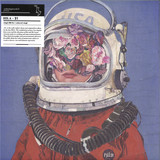
"21" is the well-crafted, sharp and original first album by the duo HILA, composed by American cellist Artyom Manukyan (who already worked with Kamasi Washington, Daedalus, Flying Lotus, Run DMC, Gretchen Parlato, Raphael Saadiq, Clive Lowe Mark...) and french producer Dawatile.
The combination of jazz, Los Angeles beat-scene and the vibrations of 80s and 90s Soviet Armenia make it a striking and unprecedented fusion. These kind of nostalgic and unconventional references forcefully shake the codes of mainstream culture to create a sincere, raw and intimate expression.
"HILA" was born from a spontaneous and intense creative impulse between Artyom Manukyan, a Los Angeles-based Armenian celloist and his partner in crime, David Kiledjian aka Dawatile, a French multi-instrumentist of Armenian descent. This project is proving to be a true master stroke given that it only took 21 days for the duo to make it a reality.
"HILA" was made in less a moon cycle but captivates and electrifies audiences upon its first outings. "H.I.L.A" colors the warmth of the Californian "High" with Armenian vibes. The artists chose this name for their creation since both have a close and valuable connection to these locales. This journey began in 2007, on the day Dawatile went to Yerevan, the capital of this small country in the Caucasus mountain to realize a first fusion project centered around local folkloric music genres.
There he was introduced to local musicians including the Armenian Navy Band, one of the country's foremost groups in which Artyom played the bass and cello. In this context, he also met many musicians such as Tigran Hamasyan and Norayr Kartashyan. This will be the beginning of connections between Lyon, Yerevan and Los Angeles. The following year, the two artists will be be seen performing next to Taylor Mc Ferrin at the Jazz à Vienne festival. More recently, they partnered up again when the cellist, who had freshly relocated in California, invited Dawatile to produce his album. As soon as the studio’s threshold was crossed, they decided to postpone this record and create a joint project: Hay (as the Armenians call themselves) / High In Los Angeles. HILA was born at the end of these 21 days of intense creation. The association of Artyom Manukyan and Dawatile is the combination of two visions, two versions of Armenia, two personalities, the reunion of the Eastern and Western blocs.
One grew up nurtured by the sounds of hip-hop and jazz in Europe and the other by art music and Russian-influenced 1980s Armenian folkloric music before moving to L. A., Ca. The cornerstone of it all, the glue that unites everything : Armenia and music. They generate a new identity synthesizing two perceptions, their complicity transcending these cultural discrepencies. To achieve this, they will scour through images of Artyom’s childhood, within the popular culture of Soviet Armenia. Together, they revisit this decidedly retro vibe, based on the work of Caucasian groups inspired by African American music. This background is rehashed and fused with ancestral Armenian sounds. The DNA of the album "21" is molded by these dear influences.
We can also hear the ancestral sounds of Armenia, a country at the edges of both Europe and Asia. The presence on two tracks of Armenian music Master Norayr Kartashyan, infuses the languor of past melodies and traditions. These purposeful anachronistic sounds offer a fantastic depth to this powerful opus. Listening to the album, one can appreciate the successful fusion of styles and influences. Those combinations, however, manage to preserve individual identities only to enhance the art through an adamant musical dialogue.
Being driven by the urge to transpose Armenian musical traditions into a unique universe, the daring artists, offer an innovative combination by blending, for the first time, these ancestral sounds with the world of Los Angeles beat-scene and jazz. An invention largely fueled by the magic strings of Artyom and maestro Miguel Atwood-Ferguson, a pillar of the genre in Los Angeles combined. These associations resonate with a triumphant equilibrium. HILA is musical uncharted territory in which Artyom's cello strings intertwine to ignite the harmonies of keyboards, the machines, the vocals and electronic layers Dawatile pieced together. HILA plays the soundtrack of an adventure set between Armenia around the end of the Soviet era and a mysterious near future.
Artyom Manukyan grew up in Armenia in the 90s. At the time, he studied Russian classical music while learning jazz with assistance by his father, a music journalist. Being an unconditional music lover, he went on to sharpen his skills at the prestigious Berkelee College of Music. Subsequently, he’s been lucky enough to travel the world touring with numerous acts and mainly with the Armenian Navy Band. The group has fostered alacritous success honored by a BBC Award as a crowning achievement. He moved on 10 years ago and made his way to L.A. with his cello on his back. In the City of Angels, he quickly became a popular figure of the jazz and hip-hop scenes thanks to his first album "Citizen". He’s accompanied prestigious musicians such as Kamasi Washington, Melody Gardot, Daedalus, Flying Lotus, Run DMC, Gretchen Parlato, Raphael Saadiq, Clive Lowe Mark, or Vulfpeck. He released his solo album on the cello, "Alone" in October 2019.
Dawatile is a bold producer and multi-instrumentist as well as a passionate and resolute musician molded by jazz. As a versatile artist, he handles and juggles the saxophone, the keys, the bass and composition. Simultaneously, Dawatile produces cross-over projects and soundtracks for the movie industry. He, as well, has had the opportunity to be a part of many tours, including with his electro hip-hop band, Fowatile and more recently with the "Future Kreyol" trio, Dowdelin. Being the ever workaholic, he has under his belt a string of prestigious collaborations with the likes of Talib Kweli, Foreign Beggars, Roy Ayers, Tigran Hamasyan, Mathieu Boogaerts, Voodoo Game and Piers Faccini. His taste for developing new musical recipes and his know-how in production make him a much sought-after album producer. In concert, the HILA duo offers a sober, precise and rhythmic performance. "21" is an aerial and lively album taking the audience on an at times joyous and sometimes melancholic dreamlike journey. The magic of "HILA" operates at the speed of light and positions it already as an avoidable group.
Hotly-tipped Glasgow duo Manakinz are next up on Jasper James’ budding imprint Mitchell Street Records with a vigorous three-track dispatch.
Behind the duo is Jasper’s father and house music legend, James ‘Harri’ Harrigan, and venerable selector Affi Koman. Both are steeped in Glasgow’s rich musical history, with Harri being one of the legendary faces behind Scottish institution Sub Club with its world-renowned flagship residency Subculture, and Affi Koman is known for his lauded Sunday Circus residency.
Established in late 2018, the duo’s productions have bagged support from a long list of respected artists, including Andrew Weatherall, The Black Madonna, Levon Vincent, Ashley Beadle and Bill Brewster.
“A week after I got these tracks, I dropped the A-side ‘Snakehips’ at a Boiler Room gig and the reaction was amazing. Approval doesn’t get much better than spinning it through a road test and I’m looking forward to kicking 2020 off with this killer EP. ” – Jasper James
The EP leads with ‘Snakehips’ a frisky peak-time brew loaded with propellant, tribalised drums and a soulful vocal cut set to stir. On the B side, ‘Yamaha Rumba’ runs with the headiness, amplifying the atmosphere with a maelstrom of synths and skittering keys, and it hits the spot with the release of a lustful, lascivious female vocal. ‘Partizan’ completes the package, giving listeners a robust, heavyweight club track.
Joe Lucas creates music under a few monikers most often as Causa and notably has appeared on Tusk Wax, Boogie Box and Birdie.
The Causa sound elegantly touches on deep house grooves and melodic techno but with contemporary style and is an obvious choice for the Verdant family. The Locks EP is released as Sixtyone leaning towards Detroit flavours with intricate percussion layered with warm soulful keys.
Previous releases have attracted high profile remixes from Kuniyuki, Luv Jam and Young Marco and that trend continues. On the flip of The Locks Stojche provides a burly, peak time reshape of Zelo upping the Detroit vibes. Hiver's reshape of the delicate Tregnanton original adds a firm kick, swinging bassline and heady 303 sparkle with dazzling effectiveness.
Pacific Express emerged from Cape Town, South Africa in the 1970s. The band were from the so called "Coloured" community and were ground breakers in both musical and political arenas. The founder members Paul Abrahams (Bass), Jack Momple (Drums) and Issy Ariefdien (Guitar) were joined by Chris Schilder (Piano), Vic Higgins (Pecussion), Barney Rachabane (Alto Sax), Stompie Manana (Trumpet) and Zayn Adams & Kitty Tshikana on vocals for their second album "On Time" in 1978.
On several occasions the group fell foul of Apartheid laws and discrimination by the state broadcaster, SABC. On one occasion they were asked to leave the stage of an international tour by Australian act John Paul Young, because the law forbade racially mixed performers on the same stage. The promoter, management and band members all resisted and once he incident made the Australian newspapers the authorities had little choice and turned a blind eye.
And so to the music. The most important thing. The LP opens up with the slick jazz-boogie funk of "We Got A Good Thing Going On", a perfect vehicle for the vocals of Zayn and the statement-of-intent, on-point musicianship of the band.
"I Hear Music" is the first of three smooth sweet string-laden ballads to feature on the LP. The majority of the songs on the LP were written by keyboard player Chris Schilder. As well as high-craft songwriting Chris also contributes layers of effortless musicality with his Rhodes and piano. "Good Old Days" (the only cover on the LP) is next and its smooth-rock grooves swing effortlessly to the fore. The A-Side of the vinyl closes with the instrumental jazz funk of "Saturday Night".
The flip side of the album opens with the bands biggest commercial success. A sweet soul ballad penned "Give a Little Love". Stepping outside their usual sound. This hit however was not without controversy as the video was removed from the TV airways after the South Africa Broadcasting Corp realised that the group were of mixed race, which was against rules for so called local artists in public performance at the time.
"Dream" follows on with the driving jazz rock and travelling keyboard solos. "Reaching Out For Love" is a power-pop boogie groover powered by guest vocalists Erica Lundy and Kitty.
"Say The Last Goodbye" is the last of the trio of ballads. A smooth style moment sounding all the bit like a 70's US TV drama closing theme. The LP features with a funky workout where the band show off their chops and slick level of musicianship.
Besides the success in southern Africa this album became a regional hit as a pirated music cassette in Nigeria. It was also released in France and Japan.
The band would go on to record one further LP in 1979 and a single in 1981. They carried on performing however well pass that. Throughout their years together the band acted as central hub for Jazz musicians within the Cape Town area. Players as Tony Cedras, Jonathan Butler and Alvin Dyers gaining experience alongside established names such as trumpeter Stompie Manana and alto saxman Barney Rachabane.
Here at World Seven we are ever so pleased to be re-releasing what we consider the bands finest album moment.
Still Loving You, by Twilight, was originally released in 1981. Housed in a low-fi generic album cover, this very polished, professionally produced record sounds like it was made by a super talented band. Strains of Earth Wind and Fire, George Duke and Roy Ayers, flow through a collection of tunes that effortlessly blend soul, disco, funk, Latin and Brazilian vibes.
But looks, as evident with the LP cover, can be deceptive. Twilight was not a band. In fact, with the exception of a guest horn section and one guest vocal, Twilight was, and still is, Lawrence Ross; one man with a clear vision of what his music should sound like, and how he would make it on his own. Working the nightshift at General Mills, Ross was a Head shift packer at a flour mill where, in the twilight hours, there was enough quiet time to create songs.
He estimates it took him about a year to write the album, but recording only took a week. Able to get by with only 3 hours sleep he recorded Still Loving You in a seven-day stretch between 10 am and 11 am every morning, just a few hours after finishing work. Ross showed-up to the studio with a master plan to make a record as he heard it in his head, by playing everything himself. “I laid out a tick track from begin to end on the first day,” he explains. “Then I went in and laid down the bass on the next day, and then drums, and then keyboards etc, with each process taking one hour of studio time each day.”