Es gibt Bands, die machen nach drei Akkorden und einer popeligen Orgelmelodie Feierabend. Es gibt aber auch Bands, die schleifen am Sound, schrauben am Text, polieren die Solos auf Hochglanz und überschreiten das Tempolimit nur an den dafür geeigneten Stellen. Bands, die den Popsong an allen Ecken und Enden abklopfen, bis sie perfekte Schmuckstücke mit dem Gütesiegel "Zeitlos!" herausbekommen haben. Eine amerikanische Band aus dem fernen Wien: Pretty Pleas (Daniel Smith - vocals/guitars, George Clavicle - bass, B.B. Kong - drums) zeigen, dass es neben exzellentem Handwerk und Spaß am Experiment auch die richtigen Einflüsse braucht, um einen authentischen, individuellen Sound zu schaffen, der gleichzeitig großer Pop und tougher Alternative Rock ist. Die Quadratur des Kreises? Vielleicht. Aber war gute Musik war nicht schon immer Alles und noch etwas mehr? Unterstützung beim Modellieren des idealen Sounds fanden Pretty Pleas im Multiinstrumentalisten Paolo Tornitore, der vor allem für die großartigen Arrangements verantwortlich zeichnet, sowie in der fabelhaften Keyboarderin Jasmin Nagl, die einigen Songs das perfekte Sahnehäubchen aus herrlich dahingroovendem Orgelsound aufsetzte. Daniel Smith: "The record is an intriguing blend of power pop, glam rock, new wave, and psychedelia influences." Diesen gelungenen und sehr tanzbaren Mix aus Atmosphäre, Beat und Klang bezeichnet die Band passenderweise als Moody Art Pop. Das Debutalbum "In Circles And Lines" ist das beste Beispiel für diese elegante Soundbeschreibung. Der Opener "Moving Forward" liefert den ZuhörerInnen die atemberaubende Frische, die wir von den frühen Roxy Music kennen. Mit "Broke" wird sofort auf dem gleichen Niveau nachgelegt. Und obwohl die markante Stimme von Daniel Smith eine andere Liga bespielt - das flamboyante Wesen eines Brian Ferry liegt da gar nicht weit entfernt. Aber auch die mitreißende Melancholie eines Stuart A. Staples (Tindersticks) ist Smith keineswegs unbekannt. "The band delves into universal themes such as loss, heartbreak, alienation, as well as the throes of new found love.", erklärt Daniel Smith die Themenwelt der Songs. Damit der Sound von "In Circles And Lines" kompakt und groovy bleibt wie ein Hit von The Sweet, setzt der glasklare Klang der Gitarre die Markierungen in Richtung Power Pop. Aber auch der Orgelsound, der den Garagenpunk der 60s und die britischen Ravebands der 1990er in Erinnerung ruft ("Ghosts"), feiert den Enthusiasmus für funkelnde Melodien - Moody Art Pop it definitely is. "In Circles and Lines" offers a deep dive into the ways we interact with each other in romance, life, and every facet of human relationships - a contemplative exploration of love's many forms and the inevitable heartbreak that often follows." (Daniel Smith)
quête:key to life
2024 repress
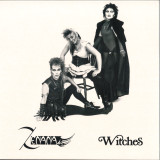
Rush Hour’s RSS series excels in unearthing buried treasure, offering a second chance for artists and releases that have long been overlooked. That’s certainly the case with ‘Witches’, the superb sole single by British 1980s wave trio Zenana.
Originally released on seven-inch by the tiny PRM label in 1986, ‘Witches’ was the product of a sister-brother songwriting team whose music was mostly recorded in the front room of a terraced house in Nanpean, a small industrial village in Cornwall, England’s most south-westerly county. While the single was infectious, impeccably produced and dancefloor-ready, it sold in limited quantities at the time.
Zenana’s story can be traced back to the early 1980s, when singer-songwriter Anita Tedder founded the all-female trio as a vehicle for her musical ambitions. To bring her songs to life, she joined voices with her brother Mike, an early adopter of electronic music who had built a studio – nicknamed MFR, short for ‘Mike’s Front Room’ – in his Cornish home.
Countless Zenana tracks were recorded at ‘MFR’ between 1984 and ’86, with the resultant demo cassette securing the band a management contract, a slew of live bookings, a video shoot and even a television appearance. Buoyed by this underground success, they headed to the remote Sawmills Studio in Cornwall – famously only accessible by boat – to re-record ‘Witches’, a song inspired by local folk tales of witches gathering near Mike’s home.
While this version of ‘Witches’ failed to make an impact at the time, it has become something of a cult classic following its’ rediscovery by crate digger Kiernan Abbott – and subsequent championing by other dusty-fingered DJs including Antal, Skyrager, Trevor Jackson and Luke Una – in early 2023. The buzz inspired Zenana to perform live again for the first time in decades, with the story of their surprise comeback being covered by British media outlets including the BBC and (more surprisingly) the Daily Mail.
Now presented in re-mastered form, ‘Witches’ is a genuinely slept-on gem. Propelled forwards by punchy drum machine beats, a killer synth bassline and fizzing keyboard sounds, the song benefits greatly from strong vocals and an extra-percussive middle eight layered with vocalisations, cosmic spoken word sections and swirling noises.
It comes backed by a brand-new extended ‘spell of love’ courtesy of Bristol duo Bedmo Disco, AKA music journalist Matt Anniss (author of Join The Future: Bleep Techno and the Birth of British Bass Music) and DJ/production partner Gareth Morgan. Anniss is a long-time friend of Mike and Anita Tedder who has fond memories of visiting Mike’s home studio with his family around the time that ‘Witches’ was recorded.
Working from Zenana’s original MFR eight-track recording (tapes of the single version were lost years ago), Anniss and Morgan have turned in the extended ‘dance mix’ the track never had first time around. More atmospheric, clandestine and dancefloor-focused, it offers authentic nods to New York proto-house, mid-80s Shep Pettibone dubs, and the pioneering synth-pop productions and dub mixes of Factory Records regular Martin Rushent.
Reissue
'Find Me Finding You', the new album from the new organization called the Laetitia Sadier Source Ensemble, manages to strike new chords while touching familiar keys in the song of life.
From its percolating opening beat, 'Find Me Finding You' locates new systems within the sound-universe of Laetitia Sadier. This in itself isn't a surprise - Laetitia has relentlessly followed her music through different dynamics and into a variety of dimensions over the course of four solo albums since 2010 (not to forget her three albums with Monade and the long era of Stereolab) - but the nature of the construction here stands distinctly apart from her recent albums. Laetitia was inspired by a mind's-eye envisaging of geometric forms and their possible permutations. As she sought to replicate the shapes in music, this guided the process of assembly for the album.
Part of the freshness of 'Find Me Finding You' comes from working and playing within the Source Ensemble and exploring new sound combinations via a set of youthful and evolving musical relationships. Laetitia recognized the energy of the tracks in their initial form and sought to preserve their vitality by not retaking too many performances - instead, the rawness in the tracks was retained and refined at the mixing stage, maintaining an edge throughout. When we hear synth lines diving, lifting and drifting, unusual guitar textures, the plucked sound of flat wound bass strings or the bottomless pulsing of bass pedals stepping out of the mix with an exquisite vibrancy, this is the sound of the Source Ensemble.
A key to Laetitia's music is her use of vocal arrangements. Throughout 'Finding Me Finding You' the shifting accompaniment creates space to bring this element gloriously forward. Arranged by Laetitia with Joe Watson and Jeff Parker making string charts that were subsequently transposed to vocal parts for several songs, richly arranged choirs of voices provide depth along with the thrilling presence of extra breath in the sound. Laetitia's community-politic is well-served by the groups of voices lending support to the machining of the song craft, providing additional uplift to her quintessentially forward-facing viewpoint - as well as massed voices from three different countries sharing space in harmony.
Working in collaboration is Laetita's tradition and a key to this album's view on being free together. The designation of Source Collective implies a new togetherness phase, alongside long time collaborators Emmanuel Mario and Xavi Munoz, keyboard and flutes parts played by David Thayer (Little Tornados) were essential contributions, as well as further keys, synths and electronics from Phil M FU and several intense guitar sequences from Mason le Long. Chris A Cummings (aka Marker Starling, Laetitia's favourite composer) graciously wrote 'Deep Background' for her. The duet with Hot Chip's Alexis Taylor on 'Love Captive' (not to mention Rob Mazurek's distinctive coronet playing) gives voice to an ideological cornerstone of 'Find Me Finding You'
Thandii (aka Jessica Berry, Graham Godfrey) first made waves with their debut album A Beat To Make It Better in 2023. The album gained somewhat cult critical acclaim long after its release, with listeners luxuriating in the unusual sound collaged from offcuts of Soul, Lo-fi Hiphop & Psych. Thandii’s world comes bolstered by collaborations with esteemed artists such as Michael Kiwanuka, Inflo, SAULT, Joy Crookes, Jordan Rakei, and Little Simz. The duo’s sophomore offering comes in the form of two companion albums Dream With You & Come As You. The two albums make up a single conceptual statement celebrating dissonance, contradiction, polarity and opposition.
The pair believe that binary thinking has a lot to answer for in today’s world and is often used to divide us as a people. ‘We wanted to explore what it felt like to hold disparate notions in both hands whilst making the music. Starting with the title tracks, we explored the idea of unashamedly being your authentic self in every moment - this is admirable for those that can live their life in an uncompromising way. In contrast to that idea, we explored those moments where we perhaps wished we were more than our reality - a dreamed up, imagined self’. It’s no surprise that duality is central to what Thandii is all about with the pair co-writing, co-recording & co-producing from their seaside studio HaloHalo in Margate, Kent.
The albums each have a distinct flavour of their own. Dream With You is built on cassette-tape-driven lofi beats, art-pop melodies and soulful piano breaks. Whilst Come As You explores more experimental song-form that wouldn’t seem out of place on Tender Buttons - Broadcast or Dots And Loops - Stereolab. Jessica’s voice is the transcendent, ethereal form that shapeshifts between the realms of the two statements; dancing playfully through falsetto harmonies, confessional spoken word, detuned alter egos and haunting choirs. Key collaborators on the albums include bass player Jonathan Harvey and pianist Steve Pringle, both members of Margate’s burgeoning Arts scene. Thandii escaped London nearly a decade ago, their sights set on creating a means for prolific expression, without the distractions that the city can bring. The albums find them in an exploratory stage, throwing paint at the canvas with joyful abandon, gifting themselves permission for uncensored expression. The LPs muse on relationships - romantic, platonic & familial - community, self-worth, self love, healing and boundaries, at times from differing perspectives. This contrast of opinion makes for rich listening throughout a vast emotional landscape
Belarusian post-punk / synth pop group Molchat Doma have always exuded the kind of brutalist aesthetic of the architecture that adorns their album art. It's cold, gray, imposing, industrial and yet there are human hearts beating within those foundations. In the wake of their breakthrough success in 2020, the trio endured a polarity of experiences, from the nadir of an uprooted life and forced relocation away from their native Minsk to the apex of headlining massive shows across the world. It was in this headspace that the band settled into their new home of Los Angeles to finish writing their fourth album Belaya Polosa, a testament to change in difficult times, a love letter to the digital pulse of the `90s, and a technicolor reinvention of the band's somber dancefloor anthems. From the opening synth swell and drum machine throb of "Ty Zhe Ne Znaesh' Kto Ya," to the goth / post-punk austerity of "Son", to the swirling electronic textures mixed with reverb-drenched guitar flourishes, expansive space, and yearning vocals of title track "Belaya Polosa" - that suggests Depeche Mode at their most reflective or The Cure at their most downtrodden - to the sultry and seductive "Chernye Cvety"_ a track reminiscent of Duran Duran's early `90s output in its fusion of dreamy guitars and authoritative mechanized beats _ and the interwoven layers of instrumentation, soaring chorus, and melodic sophistication of "Ya Tak Ustal", it's clear that Molchat Doma are operating on another level. Molchat Doma gained following with earlier albums that sound like third-generation bootlegs of banned recordings from the Eastern Bloc made after a few key entries in the Factory Records catalog were smuggled in from the West. Belaya Polosa propels them into a new direction while retaining their cold minimalist delivery they're known for. The basement grime and dirty tape-head sound of their previous work are now making space for digital luster and shimmering production values. And while Molchat Doma's broadened aural spectrum adds a synesthetic power to Belaya Polosa, the mood remains rooted in stark and unflinching self-reflection. Molchat Doma retain the duality of being both cold and feverish in their delivery while pushing their music into expanded territories through an armory of new textures. The trio continue to harness the sound of harrowing beauty thriving under harsh realities.
LIMITED REPRESS ON 180g DOUBLE VINYL WITH DOWNLOAD CARD. This is the debut album from multi talented musician and producer Quantic. Having just turned 21 years old at the time of completion, this album was a positive indication of things to follow. Like the Bonobo album Animal Magic , this entire album was recorded in the writers bedroom - showing that DIY culture is strong and healthy in the UK and that good creative music can successfully be made and released to an appreciative audience without unnecessary hype. 'The 5th Exotic combines a variety of influences from jazz to soul to funk to hip hop. All the tracks have a strong musical element and a variety of tempos but each individual song has a connection which makes the album work as a whole. Like any good album this is one that grows on you with each listen. Richard Dorfmeister (Kruder & Dorfmeister) described The 5th Exotic as one of the best beats albums I have heard . Overall, The 5th Exotic is a truly accomplished debut album with a sound and style that is truly original.
Stretching genre and medium boundaries, 'Being Waves' leads listeners to explore their own concepts of reality and perception. The new record marks an evolution from Kinkajous' acclaimed debut, Hidden Lines (2019, Running Circle). This release, engineered by long-term collaborator Brendan Williams, gives life to a wide aural landscape made up of rich and diverse musical influences. With its blend of acoustic and orchestral instrumentation, analogue synthesis and sampling processes, there is an elaborate yet organic feel to the music that makes Being Waves the five-piece band's most introspective work to date.
Led by drummer/producer Benoît Parmentier and saxophonist/clarinetist Adrien Cau, Kinkajous have earned a reputation for conjuring up a powerful and cinematic sound, being described by CLASH as "a key part of the British music landscape". Joined by Jack Doherty (synths), Maria Chiara Argirò (keys) and Andres Castellanos (bass), this album is exhilarating yet intimate, reflecting the band's outstanding musicianship and versatility.
2009 veröffentlichten Helvetets Port aus Göteborg ihr Debütalbum "Exodus To Hell" auf High Roller Records, ein Jahr später gefolgt von der EP "Man With The Chains". 2019 kam man mit dem Zweitling "From Life To Death" zurück, ehe die Welt durch die Pandemie zwischenzeitlich zum Erliegen kam.
Das brandneue Sudioalbum von Helvetets Port, "Warlords", geht nun als klare Steigerung gegenüber den ersten beiden Platten der Schweden durch. Die Musik von Helvetets Port ist absolut zeitlos - die Band hält sich zwar strikt an die Paradigmen des traditionellen Heavy Metal, ist aber stets um Eigenständigkeit bemüht.
2009 veröffentlichten Helvetets Port aus Göteborg ihr Debütalbum "Exodus To Hell" auf High Roller Records, ein Jahr später gefolgt von der EP "Man With The Chains". 2019 kam man mit dem Zweitling "From Life To Death" zurück, ehe die Welt durch die Pandemie zwischenzeitlich zum Erliegen kam.
Das brandneue Sudioalbum von Helvetets Port, "Warlords", geht nun als klare Steigerung gegenüber den ersten beiden Platten der Schweden durch. Die Musik von Helvetets Port ist absolut zeitlos - die Band hält sich zwar strikt an die Paradigmen des traditionellen Heavy Metal, ist aber stets um Eigenständigkeit bemüht.
The next album in our Cuban Classics series is a hard one to pigeonhole. It’s a real oddity, unique and not in keeping with the majority of Cuban albums we know, but it's all the better for this. Coming courtesy of Juan Almeida, the Fantasia LP is an eclectic and epic, instrumental ride through Latin jazz-funk, trippy electronics and orchestrated classical music. Sounding at points like a full-blown orchestrated score to a dusty animated film extravaganza, with phrases and passages repeating like the appearance of ghostly spectres throughout the recording. At others, it busts into exotic funk, psychedelic-trippiness and Afro-Cuban percussion.
As rich and varied as the record, so too was Juan Almeida's (Juan Almeida Bosque) life. A descendant of African slaves born in a poor neighbourhood in Havana in 1927, Almeida went from bricklayer to university law student, through which he would meet Fidel Castro. He played a key role in the Cuban revolution, becoming the only black commander and famously voicing “Aqui no se rinde nadie!” (“Nobody here surrenders!”) when outnumbered at the start of the offensive. Castro would later make him one of his vice presidents, but Almeida’s legacy does not stop there. He also became the composer of over 300 popular Cuban songs, many of them recounting his days as a guerrilla.
Produced, orchestrated and conducted by Rafael Somavilla, who worked on a vast array of Cuban recordings including Raúl Gómez's 'Instrumental' which we also reissued on Mr Bongo, the feel of Fantasia is big, luscious, grand and pop-classical. It has become a highly sought-after, cult Cuban rarity amongst collectors and like many great albums, every repeat listen brings with it new elements previously unnoticed. Such is its richness and depth. A truly mesmerising, off-the-beaten-track instrumental record.
At once a spiritually-charged journey and a shit-kicking party record, American Cream Band comes to Quindi covering all the bases.
American Cream Band was formed by Twin-Cities musician Nathan Nelson around 10 years ago, taking the form of improvised live shows and albums Frankensteined from these sessions into exultant, fully-formed records you can sink your teeth into. The trick with improvised music is to start with intentions, however abstract they might be, and Nelson leads his rolling cast of collaborators into the creative fray with subtle guidance which drives the impulsive musical moment forward.
The band's previous records have manifested on labels like Moon Glyph and Medium Sound, and now Presents arrives in a freewheeling flash of snappy new wave, skronky sax, call and response sass and some krautrock-minded sonic cosmology. The album came together in December 2021, when Nelson took ten musicians to legendary studio Pachyderm in Cannon Falls, Minnesota. Living together, eating together, and with Nelson quietly setting up his low-key magick intentions around Jupiter's planetary frequency and the studio's abundance of elephant statues and carpets, they laid down some drum-heavy sessions that became the building blocks of the record.
'Taste What We Taste' is the perfect example of an exuberant groove pounded on skins as a vessel for a joyous get-down, with the singers and players free to freak out on top. Nelson remains at the centre of the melee, throwing half-sardonic, half-heartfelt calls out for connection. 'Banana' celebrates nonsense and holds down the most serious of beats - a disco-not-disco deadeye dripping in late night sleaze and lysergic potential. On 'Royal Tears', the jagged guitar chops call back to Gang Of Four, while the hot n' heavy sax from Cole Pulice baits James Chance and all the other angular New York un-jazz misfits.
Amongst his other implied intentions for the recordings, Nelson wanted to channel opposites, not least the distinct male-female energies in his vocal sparring with the girls on assistance duties. It wouldn't be right to call them backing singers as they shoot back at his punchy mantras, bringing a certain fierce femininity that tips its hat to The B-52's Cindy Wilson and Kate Pierson, not to mention iconic post-punk bands like Au Pairs, Delta 5 and Bush Tetras.
There's space for the dreamier kosmische which has crept into the American Cream oeuvre in the past, as 'Sirens' opens the album up in a swirling pond of rag tag percussion and molten synths. 'Words Would Handcuff Us' cools the whole riotous assembly down in unmoored perfection, a strung-out Bossa nova seance dusted with celestial drips from analogue spaceships.
Equally treading the line between light and dark, conscious and unconscious, the sacred and profane, Presents is a life-affirming, creep-under-the-skin listening experience - a joyously transient chapter in the evolution of American Cream Band.
With extensive practical and academic understanding of the ‘remix’ process, Stian Balducci takes on the role of audio architect in this refined and redesigned remix album.
His meticulous approach has not replaced, but built upon Kjetil Jerve’s piano material and boasts a thorough dedication to mood and timbre through-out. The outcome combines new strokes of colour and delicately layered textures, offering fresh perspectives to an old canvas. The aural landscape takes shape in progressive, parabolic pulsations, coupled with sparse, rhythmic heart-throbs that embody the faint silhouettes of drum reverberations. This atmospheric landscape is complimented with subtle, pensive keys from Kjetil’s piano recordings that add emotional depth to the work and pay diligent tribute to the free structures of jazz.
The final project may be understood as a window, giving view to life’s sentient and evocative themes, without ever infringing on their delicacy. The sonic progressions tap into nature’s cycles through meditative repetition and offer the listener some brief respite from innate human habits of over-thinking.
As the contents of the album unfold, we are taken reassuringly by the hand to familiar, foreign lands, filled with curious sonorous tales and subtle insights that shed light on a world of deeper perception.
In keeping with the communal ethos of Dugnad Rec, ‘Tokyo Tapes: Piano Recycle’ reflects a thoughtful exchange between Stian and Kjetil. Stian professed that the project went ahead with just one rule: “to work only with the original source material, no external samples or sound sources”. This puritan approach spotlights a shared characteristic between them; namely, a unified desire to explore vibrations and a wholistic dedication to sound experimentation.
UNSURPASSED SPACIOUSNESS, IMAGING, AND TRANSPARENCY: MASTERED FROM THE ORIGINAL TAPES, MUSIC EMERGES WITH NEW DETAILS AND TONES
1/2" / 30 IPS analogue master - Plangent Processed - to DXD to analogue console to lathe
Love Over Gold is all about contrast, tension, and crafty composition. Dire Straits' fourth album finds the band continuing to evolve by welcoming increasingly bold arrangements and exploring moody variations. Parts edgy and sharp, and part seductive and relaxed, the five lengthy songs on Love Over Gold sprawl out like a long, winding road cutting through a pastoral landscape. The addition of a new rhythm guitarist, Hal Lindes, encourages deeper atmospheric interplay while the presence of engineer Neil Dorfsman – his first appearance in what would be a long string of collaborations with Mark Knopfler – ensures stunning sonic properties that now come to life like never before.
Mastered from the original master tapes and pressed at RTI, Mobile Fidelity's 180g 45RPM 2LP version of Love Over Gold teems with superb balances, front-to-back soundstages, and crystalline purity. The dead-quiet surfaces and extra-wide grooves bring forward previously obscured details, extra information, and mastering-studio-quality transients. The distinctive textures of a host of instruments – marimbas, acoustic and electric guitars, vibes, synthesizers – further enhance the ambitiousness of the 1982 album.
On this audiophile pressing, everything Knopfler does seemingly turn to gold. Gearheads will hear the unique characteristics afforded by his use of a Mesa Boogie Mark II guitar amplifier (soon again employed on Brothers in Arms) and carefully chosen selection of Schecter Stratocasters, 1937 National steel guitar, and Ovation six- and twelve-string models. Reference-level separation and lifelike imaging place Knopfler and company in your room, while tube-like warmth, spaciousness, and airiness causes the music to breathe anew. This LP will be in your rotation for months.
It doesn't take long to realize Love Over Gold is like no other Dire Straits album – and a staunch proclamation of independence from a band that continued to take longer creative strides with each successive project. Fearlessly extending over metaphoric hills, valleys, and plains for nearly 14-and-a-half minutes, the opening "Telegraph Road" is a guitar hero's dream and exhilarating showcase for Lindes' give-and-take capabilities. In tandem with keyboardist Alan Clark, Lindes provides the ideal foil for not only Knopfler but the long-time rhythm section of bassist John Illsley and drummer Pick Withers.
Taking its time to arrive at destinations, the quintet paints evocative musical and lyrical portraits steeped in patience, drama, and, often times, sadness. Desolate emotions colour the sweeping "Telegraph Road" and barren "Private Investigations," which finds Knopfler in the role of a tired private eye contemplating the emptiness and scars of his profession. Vocally, the Dire Straits leader remains in top form throughout, his whiskey-coated rasp conveying romantic ache, ongoing frustration, and what Rolling Stone beautifully deemed "wracking schizophrenia between the heart and the heartless, the loving and the pain."
Called Dire Straits' prog-rock statement, Love Over Gold is a classic that defies labelling and avoids ageing.
2024 REPRESS
Fourth corner. Physically, it's where four states in the U.S. come together at one singular point. Symbolically, it's where the four great rivers in China come together as one. Or, it could be the cycle of life during the four seasons of the year. For Trixie Whitley, it's a metaphor for trying to find balance and belonging from the songs that make up her scintillating debut album, Fourth Corner.
Whitley burst into public consciousness in 2011 as the lead singer of Black Dub, super-producer Daniel Lanois' (U2, Bob Dylan) project, blowing people away with a voice and presence beyond her now-25 years.
And it's that voice: an emotional, blues-drenched instrument that ranges from a lilting slap to a knock-you-backwards uppercut. On Fourth Corner, Whitley explores the range of human emotion in another set of four: utter love, total rage, unadulterated happiness, and crippling loneliness. "It's those elements of life I keep coming back to," she says. "Both as a person and musically as well."
Recorded in New York with producer/keyboardist Thomas Bartlett (aka Doveman, who's also worked with Glen Hansard, Antony and the Johnsons, Grizzly Bear and the National) engineer Pat Dillett (David Byrne, St. Vincent, Mary J. Blige), and string arrangements by Rob Moose (Antony, Bon Iver), aching songs like "Need Your Love" have Whitley working from a spare beginning that explodes into a blossom dripping with pleading vocals and delicate piano. On tracks like the sassy "Irene" and the sinister "Hotel No Name," Whitley lays down a snarling guitar line on top of scuzzy beats while her voice veers from defiant to remorseful.
It's a tantalizing mix of sounds that can come only from someone who says: "I'm from everywhere but have never felt like I belong." Whitley lived a nomadic life: born in Belgium, she split her time growing up there and in New York but also frequently visiting family in France, Texas, and Mexico. Her mother came from an artistic European gypsy family, filled with musicians, painters, writers, and sculptures, while her father, renowned singer-songwriter Chris Whitley, thrust her into the world of music as a toddler when she joined him onstage in Germany at age three.
After a few years of touring and recording experience with some of the most inspiring artists around, Trixie is ready to presenther anticipated first solo full length.
"I'm psyched and petrified," says Whitley in her archetypal wide-eyed wonderment mixed with a fierce determination. "As a songwriter, I want to go to places people don't expect and with that is complete freedom of expression." Perhaps that place is another version of a fourth corner: something spiritual perhaps, certainly emotional, but most definitely real.
Limited to 350 copies
Stop what you're doing and give us your full attention because Hell Yeah mainstay My Friend Dario's new album Senza Estate is going to define the sound of summer 2024. It's an eclectic eight-track collection that has something for everyone and is inspired by dreamy Italian soundtrack composers Piero Piccioni and Umiliani.
Curveball Italian talent Dario is a real dance floor don who collides acid, nu-disco, breakbeat and electro. His take on Balearic is unique and always sends dance floors wild, as proven with his last outing Food For Woofers Vol 2 earlier in the year. His new album is the sound of life by the Mediterranean, Balearic audio pleasure for daytime dreaming and nighttime dancing with vocal tracks written and performed by the UK's Space Echo Records associate Darene Obika.
Dario hails from Catania on the island of Sicily and his inspiration for Senza Estate, which translates as 'without summer,' was an imaginary holiday, weekends at the seaside, car journeys in the sun, relaxing sunsets and late-night dancing. 'For five years, I worked in a shop six days a week so despite living on a Mediterranean island I could never enjoy these things. Instead, I locked myself in the studio and jotted down the ideas, sensations, melodies and rhythms I had about another lost summer.'
'Keep On Cruising' is a downtempo opener with innocent synths that are filled with hope and promise for the warm months ahead. 'Zingarella' is a wide open sea view with wispy pads, seductive flutes and jazzy melodies that bristle with life and the tropical title cut gets more dancey on shuffling broken beats and radiant synth glows. There's a seductive laid-back cool to the tumbling keys of 'Marittimo' and 'What You Need' is a horizontal groove with loved-up vocals, 'Falò' pairs sensual acoustic guitar with work with pillowy drums and 'Il Pianeta Proibito' layers up sci-fi synths and stuttering bass into a bubbly sound that leads to cosmic take-off. 'Acid Panorama' is the melancholic closer which hints that the summer sun is setting one final time after weeks of carefree fun.
But the good news is, you can repeat the joys of My Friend Dario's masterful Senza Estate over and over again.
Bomp Records of Burbank, California was likely the most significant American independent record label of the 1970s. In 1979 Voxx was founded as a subsidiary of Bomp as a specialty label for '60s-styled garage and psychedelic inspired music and was home to the debut album of the Pandoras. The Pandoras really got started back in 1982 when triple threat Paula Pierce (guitar, vocals AND songwriter) met singer and guitarist Debbie Mendoza at Chaffey College Rancho Cucamonga, one of those dozens of small communities that make up the greater Los Angeles area. According to stories told around the campfire, Paula had posted an advertisement on the bulletin board inside the college's cafeteria. The ad was both simple and direct: Wanted: female musician to jam with. As legend has it, the ad also stressed a keen interest in 60's garage punk music. Debbie answered Paula's ad, and soon the two girls were bringing guitars to school and holding impromptu jam sessions between classes. A little later that year, Paula brought in Gwynne Kahn on keyboards and second guitar, and Debbie convinced drummer Casey Gomez to join. People who were around at the time pinpoint December 1982 as the official beginning of the Pandoras as a band. The Pandoras didn't waste any time getting down to business. They started gigging regularly, and their repertoire of tasty garage nuggets expanded substantially, fueled both by Paula's talented songwriting and also no doubt by her relationship with Unclaimed frontman Shelley Ganz and his extensive knowledge of obscure 60's gems. The Pandoras unleashed their first recordings on the world in 1983 with the "I'm Here, I'm Gone" EP on Moxie records. It was a meaty slab of girls in the garage punk rock, and while maybe not as polished as subsequent efforts, it clearly showed off the talent of the band. Greg Shaw had been alerted to the band a few months earlier, and always one to know a good thing when he heard it, he quickly signed them. "It's About Time" saw the light of the day in 1984 on Voxx Records and became one of the first and best efforts of authentic 1960's-styled garage punk to emerge from the revival scene. It was pure garage gold! Today, 40 years after its original release date, we are thrilled to reissue this essential '80s garage punk gem as part of a series of releases celebrating Bomp! 50th anniversary. Our issue includes 3 bonus tracks and liner notes by Gravedigger V's John Hanrattie. "Paula Pierce refused to play it cute. On The Pandoras' debut album she out-snarled, out-screamed, out-fuzzed and out araged the male-dominated competition-like a well-aimed go-go boot to the jugular." - Mike Stax, Ugly Things Magazine "As good a '60s punk record as any contemporary combo is likely to make." - Trouser Press
A founding member and keyboardist of acclaimed jazz
groupBADBADNOTGOOD,Tavares has gone from being an in-demand
producer with some of the biggest names in music to a songwriter and
artist in his own right, having touched corners of the globe and cemented
twoGRAMMY Awardsand five nominations
Between collaborations with Kendrick Lamar , Ghostface Killah , MF DOOM , Tyler
the Creator , Kali Uchis , Tavares has also played with Frank Ocean ,
soundtracked Virgil Alboh 's landmark S/ S 2019 runway show for Louis Vuitton,
and penned songs for Post Malone , Rosalia , Travis Scott , Kodak Black , Justin
Beiber,Camilla Cabello,Jack Harlow amongst others.
With a sound that fuses his nostalgia for the golden era of blogs with the
eclecticism of the late 2000s, the combination of the internet crossed with an
isolated suburban upbringing has laid the groundwork for Matty's genre-bending
artistry. Embracing a raw creative output with an aversion to following the norms
of the industry reverberates across his discography,Matty has found success in
previous releases including 'Clear' and 'I'll Gladly Place Myself Below', which push
the boundaries of sonic creativity and knowledge.
Now with his upcoming album POPS , Matty relinquishes his lowkey and
understated style for something larger than life, while maintaining a level of
honesty and openness that has defined his past work to make for a dynamic
release that constellates around music's greatest subject - love.
Wilson Simonal and Trio Mocotó provide a double dose of Brazilian classics for this Brazil 45’s 7 inch.
First up, an infectious, samba-MPB hit from one of Brazil’s most popular artists of the ‘60s and early ’70s, Wilson Simonal. Originally released on 7 inch by Odeon in 1967 and landing on Simonal’s Alegria, Alegria !!! album in the same year, ‘Nem Vem Que Nao Tem’s fame had a new lease of life in 2002 when it was used as part of the soundtrack to the critically acclaimed film, ‘City Of God’.
On the B side, one of Jorge Ben’s main backing bands and a group that was highly influential to his sound, Trio Mocotó. Alongside recording with Ben on the seminal Força Bruta, Negro É Lindo and Tábua de Esmeralda LPs, they were also key figures in the development of the samba rock sound – a fusion of samba, soul and rock influenced by music from the USA.
First appearing on Trio Mocotó’s self-titled 1977 Arlequim LP, ‘Nao Adianta’ is a dynamic orchestral-infused gem, laced with that sun-kissed, samba flavour.
Remastered with refreshed artwork.