Limited pressing of 300 LPs ! 180gm VINYL LPS w/ INSERT & DOWNLOAD FILE UNDER : GARAGE ROCK / PUB ROCK "I wanted to make a very NOW album, our past was fantastic at the time but it was exactly that.the past. We've learned a lot since then and with the combination of influences and personal tastes we've concocted a combination of Raw Power guitar grunt, a touch of The Cars' pop sensibilities and Bad Seeds brood." Dave Butterworth Veteran rockers The Double Agents return with their third album New Motion a powerful new recording evoking directness and immediacy and marking their first release of new material in nearly two decades. The Double Agents' initial incarnation circa 2000 saw the fiercely independent quintet rise from humble stages to becoming one of Melbourne's most revered pub rock bands. They twice toured Europe and eventually shared the stage with iconic luminaries Dead Moon, Mudhoney, The Dirtbombs, Celibate Rifles, The White Stripes and The Black Keys before an amicable hiatus in 2008. New Motion is a modern Australian rock record and marks a departure from their garage rock roots, as best exemplified in their self released 2023 anthology compilation Best Bits. So Far spanning their first three releases. The familiar twin vocals remain, Kim and Dave summoning that deep Dead Moon energy, as does Ryan Tandy's singular lead guitar playing and the rock solid backbeat of Myles Gallagher, but the band's scope seems to have widened on this record, with the inclusion of longtime cohort Mick Stylianou (Saint Jude) adding style and harmonic punch on bass guitar and backing vocals. ..The New Motion sessions were tracked to analog tape by Finn Keane at Head Gap and Julian McKenzie at Newmarket with vocal post production by Dave Larkin (Dallas Crane), mixing by Callum Barter (Courtney Barnett, Kurt Vile), mastering by Mikey Young. Dave Butterworth also produced the album.
Cerca:key to life
The Moon and the Melodies is a singular record within the Cocteau Twins" catalogue - unusually ethereal, even by their standards, and largely instrumental, guided by the free-form improvisations of Harold Budd, an ambient pioneer who had drifted into their orbit as if by divine intervention. Building on the atmospheric bliss of Victorialand, released earlier the same year, it signalled a possible future for the trio, yet it was a path they"d never take again. Now, almost forty years after it was fi rst released, it"s being reissued on vinyl for the first time - remastered, from the original tapes, by Robin Guthrie himself. Over the ensuing years, The Moon and the Melodies has attracted a passionate fan base. Its most atmospheric tracks routinely turn up in ambient DJ sets. "Sea, Swallow Me" is one of the Cocteau Twins" most streamed songs on Spotify, having found a new life on TikTok, where it serves as the soundtrack to innumerable expressions of hard-to-express melancholy. For such a low-key aff air, the album casts a long shadow - but Raymonde believes the record"s uniqueness stems directly from its humble, unpremeditated origins. "It captured a moment in time between friends that are enjoying making music together. Really, that"s the essence of it."
- A1: Everybody Party All Night
- A2: Skin I’m In
- A3: Morning Glory
- A4: Life & Death Pt. I
- A5: White Rose (Freedom Flower)
- A6: Life & Death Pt. Ii
- B1: Let’s Have Some Fun
- B2: Love At First Sight
- B3: Only Love Can Break A Heart
- B4: Live With Me, Love With Me
- B5: Finder’s Keepers
Black Vinyl[19,75 €]
The funkiest release on the HDH label and last album from Detroit soul group Chairmen of the Board saw a concerted movement away from harmony soul towards the psychedelic funk-rock sound of Funkadelica.
This record features backing from Parliament-Funkadelic musicians Eddie Hazel (guitar) Bernie Worrell (keyboards and organ), Billy “bass” Nelson (bass) and Tiki Fullwood (drums) who all give the music an enthusiastic funk injection. Reissued on 140g black vinyl with newly mastered audio from Phil Kinrade at AIR Studios, an obi strip and a printed inner featuring a liner note from “Soul Trilogy” author Stuart Cosgrove, enjoy this limited edition 50th anniversary release of Skin I’m In – brought to you with SOUL by Demon Music Group. Get on down with the get down…
This album was a self imposed ambitious project for us. Something to kick in the creative flow. The last few years, having been a challenging time in general, felt like a good time for a pivot. The last two albums were so guitar and keyboard centric, I wanted a weird and fun set of parameters for us to work with. I demo’d everything at home on cassette 4 track (harkening back to simpler times) using drum loops, and just had at it 'til I had a pile of “songs”. Tom and I chose one sound each using synths and created a range of 3 octaves of that sample, then loaded them into Roland SPD-SX samplers and learned the transcribed songs using drum sticks. The idea was to change the way we wrote and to have 4 people along the front of the stage essentially playing percussion. So no guitar, no keys. As we were recording I kept thinking how the sounds, when paired up, sounded a bit like brass. So, we added a saxophone horn section to round out the horniness of the sound with a bit of reedy bell tones. Thanks to Cansfis Foote & Brad Caulkins on tenor and Baritone saxophones :) Sort of a Dexy’s Midnight Runners meets Von LMO meets The Flesh Eaters meets the Screamers kinda punk junk. Poppy and hooky, heavy at times.. Sort of vacuous and maybe a bit sci-fi in sound. Boneheaded in riff and heady in lyrics. Recorded at Stu-Stu-Studio by me on 8 track 1/4” tape . So pretty hot and raw. Lots to write about today. A lot of these lyrics were taken from things people said in passing about taking on life right now that stuck with me. Things that made me reflect. Things that made me laugh. Things that made me WTF. Some folks are kind, genuine & give you love and energy. Some are greedy manipulative ghouls who hang off your veins. You must be strong, composed and take care of yourself. Be self aware and check your mind for cracks. Learn to relax and be well. There are moments of beauty and redemption. Its not all bad news and there’s always hope. People continue to surprise me one way or another. Anyhow, Hope you enjoy and good luck out there. — John Dwyer
Idle Race is the second studio album by British rock band Idle Race, released in 1969. This album follows their 1968 debut, The Birthday Party. Fronted by Jeff Lynne, who later became famous with Electric Light Orchestra (ELO), the album features a whimsical pop-rock style with psychedelic influences. Key tracks like ""Come With Me"" and ""Please No More Sad Songs"" showcase Lynne's melodic songwriting and playful lyrics. Despite critical acclaim, Lynn left shortly after the album release to join The Move. However, Idle Race is a cult classic, celebrated for its inventive arrangements and quirky charm. This album is a hidden gem in the late 1960s British rock scene, highlighting the band's unique blend of catchy tunes and imaginative storytelling. Idle Race is available as a limited edition of 750 individually numbered copies on crystal clear.
Meghan Parnell (vocals) and Dave Barnes (guitar) are the founding
members of Bywater Call, a powerhouse seven-piece Southern soul,
roots rock band from Toronto, Canada
The band is completed by Bruce McCarthy on drums, Mike Meusel on Bass,
newest member, John Kervin on Keys, Stephen Dyte on Trumpet and Julian Nalli
on Tenor Sax. Bywater Call has received multiple Independent Blues and
Maple Blues Award nominations including Entertainer, Electric Act and Best
Female Vocalist for the 2024 Awards Season. They have toured extensively in
Europe where shows have been praised by Dutch, German and UK media, with
references to Meghan as one of the best female voices in blues and roots today.
In August 2023, the band participated in Joe Bonamassa's thirdKeeping the Blues
Alive at Sea Mediterranean Cruise alongside headliners Blackberry Smoke and
Christone "Kingfish" Ingram, and were invited to perform at the All-Star Jam on
the mainstage with Bonamassa himself. Guitarist Dave Barnes was also asked to
join legendary blues artist Jimmy Vivino (Conan O'Brien's Basic Cable Band) on
stage. On October 24, 2023, Bywater performed a live stream performance for the
famed German TV show and festival Rockpalast. The band's music is an
exploration of life's highs and lows. From intimate ballads that lay bare the
complexities of human emotion to electrifying anthems that demand to be played
at full volume, their catalogue is a journey through the human experience,
incorporating influences from the likes of The Band, The Wood Brothers, Tedeschi
Trucks Band, Otis Redding, Little Feat, Sly and the Family Stone, among others.
Video Link:
Tokyo Riddim Band continue their journey striding across times and cultures, this time with their colourful keyboardist and frontwoman Mimi Kobayashi breathing new life into a song she originally penned in 1981. ‘Lazy Love’ first featured on Mimi’s highly sought after Coconuts High LP, which she recorded in LA recruiting top session players to play alongside her. It was also included in Time Capsule’s 2024 compilation of Japanese reggae - Tokyo Riddim 1976-1985.
This soulful pop tune turned deep dub cut retains the romantic charm of the original, whilst the tasteful performances of the Tokyo Riddim Band and Ras Tavaris combined with Prince Fatty’s studio magic give the song a newly found depth.
London based Tokyo Riddim Band is a unique fusion of cultures, bringing together the vibrant energy of three generations of Japanese female musicians with the eclectic sounds of London. Their dynamic performances blend reggae drums, funky bass lines, and the smooth City Pop guitar, all magically dubbed-out live on stage. This is not just music; it's a cultural phenomenon, offering a fresh and exciting take on the reggae scene.
2024 Repress
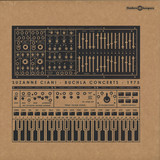
Finders Keepers invite you to witness the incredible first ever Buchla synthesiser concerts/demonstrations providing a distinctive feminine alternative to The Silver Apples Of The Moon if they had ever been presented in phonographic form. This is history in the remaking.
This spring Finders Keepers Records are proud to release an archival project that not only redefines musical history but boasts genuine claim to the overused buzzwords such as pioneering, maverick, experimental, groundbreaking and esoteric, while questioning social politics and the evolution of music technology as we've come to understand it. To describe this records as a game-changer is an understatement. This record represents a musical revolution, a scientific benchmark and a trophy in the cabinet of counter culture creativity. This record is a triumphant yardstick in the synthesiser space race and the untold story of the first woman on the proverbial moon. While pondering the early accolades of this record it's daunting to learn that this record was in fact not a record at all... It was a manifesto and a gateway to a new world, that somehow never quite opened. If the unfamiliar, modernistic, melodic, pulses, tones and harmonics found on this 1975 live presentation/grant application/educational demonstration had been placed in a phonographic context alongside the promoted work of Morton Subotnick, Walter Carlos or Tomita then the name Suzanne Ciani and her influence would have already radically changed the shape, sound and gender of our record collections. Hopefully there is still chance.
In short, Suzanne was a self-imposed twenty-year-old employee of the Buchla modular synthesiser company, San Francisco's neck and neck contender to New York's Moog. Buchla was run by a community of festival freaks and academic acid eaters whose roots in new age lifestyles and the reinvention of art and music replaced the business acumen enjoyed by its likeminded East Coasters. In the eyes of the consumer the creative refusal to adopt rudimentary facets like a piano keyboard controller rendered the Buchla synthesiser the more obscure stubborn sister of the synth marathon, steering these incredible units away from the mainstream into the homes and studios of free music aficionados, art house composers and die-hard revolutionaries. Championed and semi-showcased by composer Morton Subotnick on his albums The Bull and Silver Apples Of The Moon, Buchla's versatility began to open the minds of a new generation, but the high-end design features and no-compromise modus operandi was often confused with incompatibility and, in the pulsating shadow of Moog's marketing, the revolution would not be televised nor patronised. Suzanne Ciani, as one of the very few female composers on the frontline (and also providing the back line) did not lose faith.
These concerts' are the epitome of rare music technology historic documents, performed by a real musician whose skills and academic education in classical composition already outweighed her male synthesiser contemporaries of twice her age. At the very start of her fragile career these recordings are nothing short of sacrificial ode to her mentor and machine, sonic pickets of the revolution and love letters to an absolutely genuine vision of and 'alternative' musical future. In denouncing her own precocious polymathmatic past in a bid to persuade the world to sing from a new hymn sheet, Suzanne Ciani created a bi-product of never before heard music that would render the pigeon holes ambient' and futuristic' utterly inadequate. Providing nothing short of an entirely different feminine take on the experimental records' of Morton Subotnick and proving to a small, judgmental audience and jury the true versatility of one of the most radical and idiosyncratic musical instruments of the 20th century. These recordings have not been heard since then.
The importance of these genuinely lost pieces of electronic musics puzzle almost eclipses the glaring detail of Suzanne's gender as a distinct minority in an almost exclusively male dominated, faceless, coldly scientific landscape. Those familiar with Suzanne's work, a vast vault of previously unpublished non-records', will already know how the creative politics in her art of being' simultaneously reshaped the worlds of synth design, advertising and film composition before anyone had even dropped a stylus in her groove. Needless to say this record, finally commanding the archival format of choice, courtesy of the Ciani and Finders Keepers longstanding unison, was not the last first' with which this hugely important composer would gift society, and the future of a wide range of exciting evolving creative disciplines.
You have found a holy grail of electronic music and a female musical pioneer who was too proactive to take the trophies. With the light of Buchla and Ciani's initial flame Finders Keepers continues to take a torch through the vaults of this lesser-celebrated music legacy shining a beam on these non-records' that evaded the limelight for almost half a century. You can't write history when you are too busy making it. With fresh ink in the bottomless well, let's start at the beginning. Again. You, are invited!
Comes with insert and download coupon.
Imagine a Latin remake of Back to the Future. The mad scientist is Arsenio Rodriguez (the godfather of salsa) and the young student who travels through time with him is Eblis Alvarez (Meridian Brothers). This album can only be described as the perfect soundtrack for that movie that never was.
After the massive buzz generated by his first solo album, Mentallogenic, Alex Figueira got back in the studio to work in a more collective fashion this time, carefully assembling the second album of his largest project to date, Conjunto Papa Upa; a team of 6 musicians, spanning 3 generations of some of the best talent in the Latin and avant-garde scenes.
In an era where tropical music is dominated by purely electronic and rhythmically uniform sounds, the ten songs encompassed in “Fruta Madura” (“Ripe Fruit”) wander through the most diverse tempos, rhythms, and motifs effortlessly. A real breath of fresh air that gracefully incorporates soul, funk, jazz, psychedelia, and electronics into a solid tropical, irresistibly polyrhythmic foundation, without ever succumbing to the many genre clichés.
The distinctive production and catchy songwriting of Figueira shine in a very distinctive light on this second full-length. Living up to his reputation (Miles Cleret, founder of Soundway Records, called him “one of the scene's truly authentic and eccentric producers”), he takes the opportunity to show he’s not afraid to keep walking his own path.
Taking the band for a wild ride through the traditions of Africa, America, and the Caribbean; contrasting them with a ridiculously wide plethora of vintage, contemporary, and futuristic sounds, and pivoting on the exuberant musicality displayed by his musicians; the result leaves no doubt: this album is destined to be considered a future classic of the exciting tropical psychedelic music of the 21st century.
Addressing the most diverse themes in this new collection of songs, things take on a much more mature tone, as the title clearly suggests.
The opening track “El segundo es más sabroso” (“The second one is tastier”) sets the tone in the most assertive way imaginable, with the band boldly declaring, through multiple metaphorical references (laid upon a crazy mix of Dominican merengue, Detroit techno, classic and free jazz, dub, and electro), that the bar will be set higher with this second album.
The remaining compositions touch upon the most diverse subjects, with a fair dose of humor, sarcasm, and postmodern “magic realism”. “El Algoritmo” (The Algorithm) is a parranda-cumbia hybrid (for lack of a specific term) about the omnipresence of technology in our lives. The sophisticated Latin soul of the titling track “Fruta Madura” makes a case for the beauty of the maturity process. Some key philosophical teachings of Marcus Aurelius (the role of causality, the impositions of “the logos” and the importance of self-control) get a twisted cumbia treatment on “Reos del Deseo” (Prisoners of Desire). “No le pongas Coca-Cola” (“Don’t put Coca Cola in it”) shows us the most satirical side of the band, accusing those who mix Coca Cola with Rum of committing "sacrilege", on a powerful base of Dem Bow (the grandfather of Reggaeton), intertwined with touches of soul, salsa, and Cuban comparsa.
"Háblame Claro" (“Talk to me clearly”) is a story of heartbreak that evokes in its first part the spirit of the erotic salsa of the 80s (a subgenre deeply despised by purists), and after an unexpected samba interlude, leads to the hardest salsa of the 70s (a subgenre adored by purists), to end up in the surprising form of pure Afro-Cuban ceremonial music.
“Tu mamá tenía razón” ("Your Mom Was Right") is an attempt to exalt the spirit of the Latin American soap opera in the key of “acid bachata”, to recount a real-life case, witnessed by the band on countless occasions: the partying woman who arrives at the show accompanied by her bitter husband, who obviously does not like to dance. A very cheeky song to talk about the very serious and pertinent topic of female empowerment.
“La misma vaina” (“The same thing”) with its indescribable blend of bantú, candomblé, and Mozambique rhythms with abstract synthesizers, is an ode to adventure in favor of the aversion to taking risks and seeking predictability.
“Amigas picadas” (“Salty friends”) is another humorous song recounting another real-life case witnessed by the band on countless occasions: a love encounter sabotaged by the girlfriend's friends, who all happen to fancy the same guy. A jazzy take on the ancient Dominican rhythm of pambiche (grandfather of merengue), with generous psychedelic touches, resembling the classy late 60s releases of Guadeloupe's legendary producer / label owner Henri Debs.
“Vinimos a hablar” (“We came to talk”) takes sarcasm to the highest level, to ridicule the absurdity (also experienced by the band firsthand) seen in live music venues where people pay a ticket to go and have conversations that could be carried out much better on any bar, where no band is playing. The music alternates between a delicate melody with loose, sparse percussion and a full-on, pumping Angolan semba, with a techno kick drum included; bringing things to an apotheotic grooving finale, where the peculiar swing of Venezuelan calypso from the Callao region is thrown on top of all the precedent elements; closing the album in the most uplifting, “end of the carnival parade” feel.
The artwork is a delicate and impactful oil painting by Colombian artist Kevin Simón Mancera, who has collaborated many times with the label before (“Maracas, tambourines and other hellish things” tape and the Lola’s Dice LP).
What the experts are saying:
“Alex (Figueira) dove into this work with a brutal cohesion between lyrics and synths. Timbre poetry, sound poetry (you name it). And that, superimposed on his always impeccable percussive base, confirms the title of “avant-garde visionary of our beautiful Latin music”".
EBLIS ALVAREZ (MERIDIAN BROTHERS)
“Papa Upa's infectious quirkiness is a balm against boredom. A mature album, but without an expiration date”.
GLADYS PALMERA
“Here there is a lot of strength, drum, cadence and psychedelia, lost dance rhythms, united in an intercontinental Latin/African/and Caribbean journey, a unique winning combination that we could consider the new “Ritmo Figueira”.
DISCODELIC
Conjunto Papa Upa are:
Alex Figueira - Timbales, percussion, vocals.
Gerardo Rosales - Congas, percussion, vocals.
Ramón Mendeville - Bongos, percussion, vocals.
Randy Winterdal - Bass.
Andrew Moreno - Guitar.
Nico Chientarolli - Organ, piano, synths.
All songs written by Alex Figueira.
Arranged and performed by Conjunto Papa Upa.
Recorded, produced, mixed and mastered by Alex Figueira at Heat Too Hot, Amsterdam.
Repress.
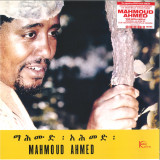
The re-release series of original Ethiopian classic vinyl continues -- the finest Ethio jazz by Mahmoud Ahmed and his band from 1975 plus two tracks from 1978.The liner notes: 'Melancholy blues, piercingly minimalist country airs, brassy, danceable urban jazz, heart-wrenching, off-key crooners: a rich and stirring patchwork of sounds, crossing Afro-beat, Latino-swing moves and Eastern arabesques (Ana�s Prosa�c).' Such were the first -- informed and enthusiastic -- opinions of the music press when the first strains of modern Ethiopian music sounded on our shores. This was in 1984-1985. Such a positive note, struck about such a country at such a time, created plenty of reverb. The country had been so thoroughly trashed by the media's feeding-frenzy, which spewed out a mix of horror and pious pity, bitter denunciation and humanitarian appeals, wallet-tickling clich�s and refusal of identity. In one brutal swoop, TV-reality transformed Ethiopia into a cursed nation, forsaken by God and by man. In contrast to these tragedies, but in the same hackneyed tones, Mahmoud Ahmed's life resembles an edifying fairy-tale where destiny, talent and achievement combine to triumph over poverty, fate and the evil eye. Biography, history and legend, with the help of God, infallibly weave the lesson of merit rewarded. But who can argue, in spite of the mockery that celebrities invariably draw, when faced with one of the greatest voices in all of Africa? Once upon a time, there was a street urchin in Addis Ababa, who started off as a shoe-shine boy and went on to become one of his country's biggest stars, opening the door to Ethiopian music to Western audiences. --Francis Falceto
Big Yawn - NGB
Research Records welcomes back Melbourne quartet Big Yawn for their fourth full-length offering, "NGBE."
Big Yawn's ability to blend complex rhythm sections with infectious basslines, deep synth work, and tongue-in-cheek sampling remains ever-present, and perhaps is the most advanced we've heard yet.
Sitting in a world of its own, the album—named after the group's beloved and lost warehouse space, National Gallery of Brunswick East (where most of the material was recorded)—features a wide array of soundscapes spanning mutated drum 'n' bass, low-key grime, rap, and dub-wise antics, all laced with a heavy dose of FX.
Equal parts deep and menacing, the nine tracks encapsulate Big Yawn's evolution in the studio and on stage, most notably through their collaboration '2Stroke' with Melbourne-based future rap prodigy Teether and brought to life visually with album artwork by Julian Hocking.
This album was a self imposed ambitious project for us. Something to kick in the creative flow. The last few years, having been a challenging time in general, felt like a good time for a pivot. The last two albums were so guitar and keyboard centric, I wanted a weird and fun set of parameters for us to work with. I demo’d everything at home on cassette 4 track (harkening back to simpler times) using drum loops, and just had at it 'til I had a pile of “songs”. Tom and I chose one sound each using synths and created a range of 3 octaves of that sample, then loaded them into Roland SPD-SX samplers and learned the transcribed songs using drum sticks. The idea was to change the way we wrote and to have 4 people along the front of the stage essentially playing percussion. So no guitar, no keys. As we were recording I kept thinking how the sounds, when paired up, sounded a bit like brass. So, we added a saxophone horn section to round out the horniness of the sound with a bit of reedy bell tones. Thanks to Cansfis Foote & Brad Caulkins on tenor and Baritone saxophones :) Sort of a Dexy’s Midnight Runners meets Von LMO meets The Flesh Eaters meets the Screamers kinda punk junk. Poppy and hooky, heavy at times.. Sort of vacuous and maybe a bit sci-fi in sound. Boneheaded in riff and heady in lyrics. Recorded at Stu-Stu-Studio by me on 8 track 1/4” tape . So pretty hot and raw. Lots to write about today. A lot of these lyrics were taken from things people said in passing about taking on life right now that stuck with me. Things that made me reflect. Things that made me laugh. Things that made me WTF. Some folks are kind, genuine & give you love and energy. Some are greedy manipulative ghouls who hang off your veins. You must be strong, composed and take care of yourself. Be self aware and check your mind for cracks. Learn to relax and be well. There are moments of beauty and redemption. Its not all bad news and there’s always hope. People continue to surprise me one way or another. Anyhow, Hope you enjoy and good luck out there. — John Dwyer
- A1: Psycho Killer
- A2: Heaven
- A3: Thank You For Sending Me An Angel
- A4: Found A Job
- A5: Slippery People
- A6: Cities
- B1: Burning Down The House
- B2: Life During Wartime
- B3: Making Flippy Floppy
- B4: Swamp
- C1: What A Day That Was
- C2: This Must Be The Place (Naive Melody) (Naive Melody)
- C3: Once In A Lifetime
- C4: Big Business/I Zimbra
- D1: Genius Of Love
- D2: Girlfriend Is Better
- D3: Take Me To The River
- D4: Crosseyed & Painless
LOS ANGELES—To celebrate the 40th anniversary of the celebrated Talking Heads and Jonathan Demme’s concert film Stop Making Sense, the set will be re-released as a 2LP and 2CD/Blu-ray set this summer.
Released last year, the sold-out Deluxe Edition of the soundtrack will return as a 2-LP black vinyl on Rhino and 2-LP crystal clear vinyl at retail. Both variants feature a 12-page booklet with liner notes from all four band members –Tina Weymouth, David Byrne, Chris Frantz, and Jerry Harrison—and band photos. The 2CD/Blu-ray version includes the entire 28-page booklet from last year’s Deluxe Edition and a Dolby Atmos mix of the complete concert, mixed by Jerry Harrison and E.T. Thorngren, who also mixed the original release. Both will be available on July 26. Pre-order now.
The band appeared together for a sold-out screening and Q&A last night at the Pantages Theater, the same theater at which Stop Making Sense was recorded. They were joined by Blondshell, who performed “Thank You For Sending Me an Angel.” Another special screening with the band will occur in Brooklyn at the King’s Theater on June 13, with the Q&A hosted by Questlove and The Linda Linda’s performing “Found a Job.” The two events cap off a banner year of celebrations for what many consider to be the best concert film of all time.
The inspiration for Stop Making Sense came when director Jonathan Demme saw Talking Heads perform during the band’s 1983 tour for Speaking in Tongues. Afterward, he approached them with the idea of making the show into a concert film. They agreed and worked together over the next few months to finalize the details. Ultimately, Demme filmed three shows at Hollywood’s Pantages Theater in December 1983 to create Stop Making Sense.
The concert film presents a retrospective of the band up to that point, with a performance that weaves together songs from all six of its studio albums. The show progresses methodically, opening with Byrne onstage performing “Psycho Killer” alone with a drum machine. After each song, he’s joined by a new band member until Weymouth, Frantz, and Harrison are all on stage with him. The group continues to grow throughout the concert as members of the stellar touring band are added: keyboardist Bernie Worrell, percussionist Steve Scales, guitarist Alex Weir, and backup singers Lynn Mabry and Ednah Holt.
The band performs 18 songs in Stop Making Sense, including its recent single at the time, “Burning Down The House.” That summer, the song was in heavy rotation on radio and MTV, helping the song become the band’s first top 10 hit in America. It was, however, a different song from Speaking in Tongues that was destined to deliver one of the film’s signature moments. Talking Heads would perform “Girlfriend Is Better” wearing the now iconic, oversized suit inspired by costumes worn in traditional Japanese theater. For good measure, a picture of David Byrne in the suit also graces the album cover.
Stop Making Sense focuses mainly on music by Talking Heads but does include a few songs recorded outside the band: “Genius Of Love” by Tom Tom Club, “What A Day That Was” and “Big Business” from Byrne’s 1981 album, The Catherine Wheel. Limited edition vinyl versions of both of these albums, along with Harrison’s The Red And The Black, were released for this year’s Record Store Day.
When it arrived in September 1984, Stop Making Sense was an artistic and commercial triumph. The film had people dancing in theatre aisles, and the soundtrack sold over two million copies. Just last year, the Library of Congress added Stop Making Sense to the National Film Registry in recognition of its cultural, historical, and aesthetic significance.
Weymouth praises Demme as a collaborator: “…Jonathan was a very enthusiastic, highly adaptive, and imaginative guy who was just as good a listener as he was a talker and collaborator. From the get-go you just got the impression he was as flexible as he was disciplined. Being team players, that boded well for a great relationship and a great film!”
Harrison says the film still holds up today: “To me, Stop Making Sense has remained relevant because the staging and lighting techniques could have been created in a much earlier time period. For example, Vari-Lights, lights with motors to re-aim them, had just come into vogue. Had we used them, there would have been a timestamp on the film, and it eventually would have felt dated...The absence of interviews, combined with the elegant and timeless lighting, created a film that can be watched over and over.”
Byrne says it’s interesting that this album was – for many people – an introduction to Talking Heads. “We had done a live album before this, but coupled with the film, and with the improved mixes and sound quality, this record reached a whole new audience. As often happens, the songs got an added energy when we performed them live and were inspired by having an audience. In many ways, these versions are more exciting than the studio recordings, so maybe that’s why a lot of folks discovered us via this record.”
Frantz recalls the sheer joy surrounding the entire Stop Making Sense experience. “I’m talking about real, conscious, transcendent joy… I’m talking about what the Southern gospel people call ‘getting happy,’ which means ‘to be filled with the Spirit.’ That is what happened to us onstage every night, and from my seat behind the drums, I recognized that this was happening to the audience too. Joy was visible in front of me and all around me every night.”
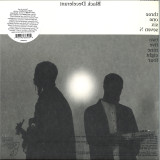
Black Decelerant is the second installment of Reflections, a series showcasing contemporary collaborations orchestrated by RVNG Intl., recently inaugurated by Steve Gunn and David Moore. Black Decelerant, the duo of Khari Lucas, aka Contour, and Omari Jazz, explores jazz traditions, improvising with synthesizers, guitars, and electronics as a practice laid forth by their musical ancestors. This experience allows for sonic meditations on themes such as Black being/nonbeing, mourning/life, expansion/limitation, and the individual/the collective. The two strive to create a sonic surface which can simultaneously allow Black listeners a place to be still, and to serve as a basis for a movement beyond "the moment." The album's ten compositions configure vast, resonant landscapes with signals, weathers and spirits, suspended in memory and distilled in time. The Black Decelerant machine recalibrates archival relics and acoustic impulses into collages of amalgamated timbres, where harmony exists not without discordance. Across the expansive space of the record, cadent storms of modulated sound ascend beside serene melodic spells. Piano keys and bass lines tumble in free fall throughout the release, accompanied on tracks "two" and "eight" by the spectral trumpet improvisations of Jawwaad Taylor. The duo arrived at their name upon reading Aria Dean's Notes on Blacceleration, an article which explores Accelerationism within the context of Black being or non-being as a foundational tenet of capitalism. Coupled with the record's intended effect, "Black Decelerant" references the music being an invitation to slow down, while hinting at the shared politics between themselves and the artists and thinkers who inspire them.
Archeo Recordings' rewarding relationship with Tony Esposito continues on AR027, as the label provide a remastered reissue of his transcendent fusion-pop masterpiece "Pagaia" alongside a trio of brand new reworks from Perugia's mighty Feel Fly. Whether you're looking for cosmic house, mellow acid, trancey techno or dubby downbeat, these remixes have you covered, and the original remains a true work of art. Available in all good record stores on 12th July as a 50 copy super limited edition on Solid Blue Vinyl (including gadget scarf) and limited black vinyl edition.
50 copy Solid Blue Vinyl Edition (including gadget scarf), and also limited black vinyl run "Pagaia" hails from the Neapolitan percussionist's 1982 LP Tamburo, his first release for the brilliant Bubble imprint. Though the album delights and excites from start to finish, dancing through jazz-funk, Mediterranean pop, slow disco and smooth fusion, it's "Pagaia" which is first among equals. Esposito's nuanced hand drums lay the foundation for Claudio Pizzale, Sara Borsarini and Simona Pirone's wordless vocals, a life affirming chorus which carries us onto the swell of bass, piano and horns which drive the track through four and a half minutes of emotional release. Emphatic and expressive, the track transports the listener into a state of body moving rapture, all driven by Tony's rhythmic fluency. The song found its way into Italian living rooms over the credits of TV show Domenica In, and found its way into club culture thanks to fanatical support from the likes of Daniele Baldelli, who even included it on his first official Cosmic compilation.
Following a string of essential releases for the likes of Internasjonal, International Feel and New Interplanetary Melodies, Daniele Tomassini, better known as Feel Fly, now joins the Archeo family with a trio of contemporary club translations of the killer "Pagaia". The Perugian's "Cosmical Remix" extends that familiar introduction into a deep and DJ-friendly blend of drum and voice, awash with airy reverb and augmented by additional percussion, building through the original piano and bass into the churn of a dance floor wormhole. Driven by an unstoppable sequencer throb, the interpretation skirts the dark side of space before landing in the light of the miracle, those heavenly vocals and lush keys leading the way. The "Instrumental Cosmical Remix", not entirely instrumental, but utterly cosmical nonetheless, sees Daniele serve a tense and tracky arrangement of his first rework, perfect for deep space exploration. Stripped of the joyful exuberance of the original, this variation is a complex blend of shadowy trance idents and the mature techno we'd expect from the likes of François K. Not content with soundtracking either side of the peaktime, Feel Fly serves up a third version, following the Compass Point through a musical map of club-dub to turn out an immersive interpolation of deep bass, spring reverb and stabbing keys that sits perfectly beside the Rhythm & Sound catalogue. Each interpretation is an emphatic demonstration of Tomassini's musical talent, production prowess, and stylistic range, and furthermore a fitting tribute to the lasting genius of Esposito's original.
- A1: Psycho Killer
- A2: Heaven
- A3: Thank You For Sending Me An Angel
- A4: Found A Job
- A5: Slippery People
- A6: Cities
- B1: Burning Down The House
- B2: Life During Wartime
- B3: Making Flippy Floppy
- B4: Swamp
- C1: What A Day That Was
- C2: This Must Be The Place (Naive Melody) (Naive Melody)
- C3: Once In A Lifetime
- C4: Big Business/I Zimbra
- D1: Genius Of Love
- D2: Girlfriend Is Better
- D3: Take Me To The River
- D4: Crosseyed & Painless
LOS ANGELES—To celebrate the 40th anniversary of the celebrated Talking Heads and Jonathan Demme’s concert film Stop Making Sense, the set will be re-released as a 2LP and 2CD/Blu-ray set this summer.
Released last year, the sold-out Deluxe Edition of the soundtrack will return as a 2-LP black vinyl on Rhino and 2-LP crystal clear vinyl at retail. Both variants feature a 12-page booklet with liner notes from all four band members –Tina Weymouth, David Byrne, Chris Frantz, and Jerry Harrison—and band photos. The 2CD/Blu-ray version includes the entire 28-page booklet from last year’s Deluxe Edition and a Dolby Atmos mix of the complete concert, mixed by Jerry Harrison and E.T. Thorngren, who also mixed the original release. Both will be available on July 26. Pre-order now.
The band appeared together for a sold-out screening and Q&A last night at the Pantages Theater, the same theater at which Stop Making Sense was recorded. They were joined by Blondshell, who performed “Thank You For Sending Me an Angel.” Another special screening with the band will occur in Brooklyn at the King’s Theater on June 13, with the Q&A hosted by Questlove and The Linda Linda’s performing “Found a Job.” The two events cap off a banner year of celebrations for what many consider to be the best concert film of all time.
The inspiration for Stop Making Sense came when director Jonathan Demme saw Talking Heads perform during the band’s 1983 tour for Speaking in Tongues. Afterward, he approached them with the idea of making the show into a concert film. They agreed and worked together over the next few months to finalize the details. Ultimately, Demme filmed three shows at Hollywood’s Pantages Theater in December 1983 to create Stop Making Sense.
The concert film presents a retrospective of the band up to that point, with a performance that weaves together songs from all six of its studio albums. The show progresses methodically, opening with Byrne onstage performing “Psycho Killer” alone with a drum machine. After each song, he’s joined by a new band member until Weymouth, Frantz, and Harrison are all on stage with him. The group continues to grow throughout the concert as members of the stellar touring band are added: keyboardist Bernie Worrell, percussionist Steve Scales, guitarist Alex Weir, and backup singers Lynn Mabry and Ednah Holt.
The band performs 18 songs in Stop Making Sense, including its recent single at the time, “Burning Down The House.” That summer, the song was in heavy rotation on radio and MTV, helping the song become the band’s first top 10 hit in America. It was, however, a different song from Speaking in Tongues that was destined to deliver one of the film’s signature moments. Talking Heads would perform “Girlfriend Is Better” wearing the now iconic, oversized suit inspired by costumes worn in traditional Japanese theater. For good measure, a picture of David Byrne in the suit also graces the album cover.
Stop Making Sense focuses mainly on music by Talking Heads but does include a few songs recorded outside the band: “Genius Of Love” by Tom Tom Club, “What A Day That Was” and “Big Business” from Byrne’s 1981 album, The Catherine Wheel. Limited edition vinyl versions of both of these albums, along with Harrison’s The Red And The Black, were released for this year’s Record Store Day.
When it arrived in September 1984, Stop Making Sense was an artistic and commercial triumph. The film had people dancing in theatre aisles, and the soundtrack sold over two million copies. Just last year, the Library of Congress added Stop Making Sense to the National Film Registry in recognition of its cultural, historical, and aesthetic significance.
Weymouth praises Demme as a collaborator: “…Jonathan was a very enthusiastic, highly adaptive, and imaginative guy who was just as good a listener as he was a talker and collaborator. From the get-go you just got the impression he was as flexible as he was disciplined. Being team players, that boded well for a great relationship and a great film!”
Harrison says the film still holds up today: “To me, Stop Making Sense has remained relevant because the staging and lighting techniques could have been created in a much earlier time period. For example, Vari-Lights, lights with motors to re-aim them, had just come into vogue. Had we used them, there would have been a timestamp on the film, and it eventually would have felt dated...The absence of interviews, combined with the elegant and timeless lighting, created a film that can be watched over and over.”
Byrne says it’s interesting that this album was – for many people – an introduction to Talking Heads. “We had done a live album before this, but coupled with the film, and with the improved mixes and sound quality, this record reached a whole new audience. As often happens, the songs got an added energy when we performed them live and were inspired by having an audience. In many ways, these versions are more exciting than the studio recordings, so maybe that’s why a lot of folks discovered us via this record.”
Frantz recalls the sheer joy surrounding the entire Stop Making Sense experience. “I’m talking about real, conscious, transcendent joy… I’m talking about what the Southern gospel people call ‘getting happy,’ which means ‘to be filled with the Spirit.’ That is what happened to us onstage every night, and from my seat behind the drums, I recognized that this was happening to the audience too. Joy was visible in front of me and all around me every night.”
Boxed set of five 7-inch vinyl records, 300 copies limited edition. Artwork poster included.
All tracks remastered from the original master tapes.
Alessandro Alessandroni is no longer remembered simply as 'the whistler' in Morricone's spaghetti western soundtracks – and rightly so, since he was the key figure behind much of Italian 'secret music' from the 60s and 70s, always there in the studio during recording sessions, whether as a multi-instrumentalist or as the leader of session vocal group I Cantori Moderni di Alessandroni. Today his pervasive presence and important role has been finally recognized by music professionals and enthusiasts alike, so much so that he is now considered the true father of Italian library music – a genre whose sound he shaped since 1968.
As a film composer, Alessandroni often worked for small productions that had very limited (and often regional-only) distribution, and whose budgets were worlds apart from those in the 'top league' where friends and colleagues like Morricone, Bacalov, Trovajoli or Piccioni thrived. Rarely released as a soundtrack, this music ended up, at best, forgotten inside dusty ¼-inch reels or, at worst, disappearing into thin air.
After a string of releases that have brought back to life forgotten or lost works by Alessandroni (Sangue di Sbirro, Afro Discoteca, Lost and Found, etc.), it was pretty natural for us at Four Flies to start delving into a little investigated area of his filmography: his scores for erotic films, the last genre to gain popularity in the flourishing Italian film industry of the 60s and 70s, and perhaps the most extreme too, the one that, by pushing things too far, eventually put an end to that industry and its genres.
So, we're now very proud to present Alessandroni Proibito, an exclusive boxed set of five 7-inch records. It contains a total of 14 previously unreleased tracks from the soundtracks of 4 soft-core erotic films that included hard-core sequences and, therefore, fell somewhere in-between normal commercial distribution and the underground scene of adult movie theatres.
Taking an artisanal approach to his musical craft, Alessandroni was not afraid of having to deal with spicy subject matter, wobbly productions, implausible plots, improvised actors, or cinematographers who were clearly no disciples of Storaro. And he was so good at making a virtue out of necessity, at turning budget constraints into creative advantages, that he created soundtracks that far surpass the films' quality, with music that at once captures and elevates the spirit of the erotic genre as if into a condensed symbol.
More specifically, the maestro recorded many of the pieces in a DIY fashion at home, using a 4-track Teac tape machine to arrange his compositions. The Teac allowed him to play different instruments on each track, which meant he could basically put an entire soundtrack together all by himself, or almost all by himself.
These recordings often feature drum machines – which provide that retro, early electronic music vibe – as well as funk guitars and exotic-sounding percussion in the rhythm tracks. In addition, there is an extensive, almost bewildering use of synthesizers to replace solo instruments that would have required a paid session player. On top this minimalist arrangement, Alessandroni layered what he could: some piano chords, a little flute and, most importantly, his signature 12-string guitar phrasing.
The result is just stunning: a unique mixture of electronic music and acoustic instruments, in a style that stops short of kitsch and ranges from cinematic ambient pieces like "Tensione erotica" to disco-funk tracks like "Snake Disco" and "One Sunday Morning", both of which feature vocals by Alessandroni himself.
Alessandroni Proibito comes with artwork by Eric Adrien Lee and a matching 30x70cm folded poster inspired to the insert-size posters which used to be hung outside movie theatres to attract cinema-goers.
The boxed set is being released in a limited edition of just 300 copies and will never be reissued. First come, first served.
Following a ten-year hiatus, multi-instrumentalists Rafael Anton Irisarri and Benoît Pioulard return with »How to Color a Thousand Mistakes«, their third LP together as Orcas. Building on the electronic minimalism of »Orcas« (2012) and the Twin Peaks-inspired haze of »Yearling« (2014), the duo have expanded their sound and vision into a full-spectrum ensemble.
In the time since their last major collaboration, Irisarri and Pioulard have done plenty on their own, while also traversing significant life changes: relocation from Seattle to New York, separation and divorce, illness, hospitalizations, and the loss of siblings, parents, and friends. Yet from these tribulations, they gleaned inspiration to reconstruct their lives, creating music with new collaborators and partners. Recorded in a variety of studios and cities including Brooklyn, Cambridge, Oxford, Seattle, and upstate New York, the resulting album, under the tutelage of UK producer James Brown (Arctic Monkeys, Kevin Shields, Nine Inch Nails), is a patiently-crafted beast, equally inspired by impressionism, British new wave, and dream pop.
With Irisarri’s guidance and Brown’s encouragement, Pioulard brings his velvety voice to its harmonized peak on songs like »Wrong Way to Fall« and the Durutti Column-indebted »Fare«. Where his most recent solo albums for Morr Music (»Sylva« and »Eidetic«) navigated foggy forests of ambient pop and stacked tape loops, here his characteristic blur shifts into focus with a unique degree of clarity and confidence. »How fare against balance do I / Navigate my errors?«, Pioulard sings in a heartbreaking tenor, echoing the album’s broader themes of introspection, grief, loss, trial and trauma.
Lead single, »Riptide«, is a summary of Pioulard’s life changes and personal upheavals in the past decade, »flitting eastward toward a yen deep in the past« and learning to glide through the tumult of ocean waves, as a metaphor for the punches one takes in pursuit of grace. Its towering, key-changing midsection arrives with the monumental drumming of Slowdive’s Simon Scott, a long-time friend and cohort who appears on most songs in the set. Scott’s quintessentially English, jazzier approach offers a balance of force and restraint as the backdrop for Irisarri’s majestic guitars, analog synth lines, and Martin Heyne’s Fender Rhodes counterpoints.
Second single, »Next Life«, began as a sketch by Scott, and reached its final form in the hands of Pioulard and Irisarri, at a point that each had endured major concurrent losses, finding a commonality in the need to gaze over the horizon while acknowledging the unavoidable bittersweetness of letting go – not only of people, but of routines, places, and expectations. It’s one of Orcas’ most nuanced pieces, with a mid-tempo, sunset glow that unfolds into a sparkling, slide-guitar finale as it disappears in the rear view.
On third-act highlight, »Bruise«, Scott is doubled on the drum kit by MONO’s Dahm Majuri Cipolla, whose Liebezeit-influenced metronomy anchors a nimble bass groove from Andrew Tasselmyer (of Hotel Neon), and some of the album's most syncopated, spaced-out interplay, courtesy of Puerto Rican guitar player Orlando Méndez (a childhood friend of Irisarri’s). Originally a droney, fingerpicked guitar demo, »Bruise« is the most storied composition here, having gone through almost a dozen versions and lyrical edits, with Brown distilling hours of improvised performances into the final arrangement.
Throughout »How to Color a Thousand Mistakes«, Irisarri uses his deep well of production experience to paint the stereo field with meticulously designed textures, exemplified on the slow burn of »Heaven’s Despite« and the heady rush of »Swells«. As a mixing and mastering engineer with Black Knoll, he has built a client list that reads as a who’s-who of modern, forward-thinking composition, including Temporary Residence, All Saints Records, and Ghostly International, among many others.
As with previous collaborations, Irisarri and Pioulard bring disparate styles and specialties to the table, but with an interpersonal dynamic that transcends friendship into brotherhood, their open-minded workflow and mutual respect are evident at every turn. »How to Color a Thousand Mistakes« brims with tight, complex art rock songwriting, masterful production, and sonic versatility, informed by a plethora of genres and tonal hues. The title might promise answers, but the gravitational center of the album is the dawning realization that, as you reckon with the infinite whims of the cosmos, there could be none.
Vol 1[14,24 €]
Come Play With Me and Breed Media are excited to present Come Play With Breed, Vol. 2. Featuring D5, Graft, Hannah Rowe and Mica Sefia, the 10” compilation spotlights the Northern Hip Hop and Soul scenes respectively. On the A-side, D5’s upbeat UK Rap opener, “What’s That”, is followed by Graft’s reflective Jazz-influenced Hip Hop track “Vows To The Art.” Hannah Rowe opens the B-side with an addictive fusion ballad for old souls. Finally, Mica Sefia closes the release with a powerful narration on her experiences as a black woman.
Artist Bios:
D5
Hailing from Leeds, West Yorkshire, D5 draws influence from the likes of Drake, Skepta and Brent Faiyaz and his sound flits between moody R&B and upbeat Rap that oozes a calm confidence. Elements of genres such as Garage, UK Rap and US Hip-Hop intertwine neatly to create his signature style. A style that crystalised on his 2020 EP Channel 5. Consisting of 8 songs, all helmed by producer and close friend CSHARP, the project is D5 at his most personal and led to the video for lead single ‘Silence’ premiering on Link Up TV and garnering him his highest streams to date. However, before ‘Channel 5’ D5 had created the EP If Only We Could Go Outside during the height of the pandemic. The track ‘Movies’ received airplay from the esteemed BBC Radio 1 Presenter Melvoin Odoom. With backing from the likes of GRM Daily and DJ Target spinning 2022 single ‘What’s Up’ on BBC Introducing, D5’s star is surely set to rise as he continues to develop his artistry. In addition to this, he has opened up for the likes of Novelist and fellow hometown hero Graft, proving with every successive performance and release that he is worthy of being a headline act.
Graft
Graft, winner of MOBO Unsung and BBC Three's The Rap Game UK, has propelled himself to national recognition for his unwavering sense of self and musical talent. Hailing from the vibrant city of Leeds, Graft’s topical and poetic approach to songwriting takes inspiration from genres such as Hip Hop, Neo-Soul, Jazz and Alternative Rap. This fusion of inspiration has seen him grace the stage at the acclaimed Reading and Leeds Festival, and has collaborated with esteemed brands such as Adidas, Virgin Media, Boohoo and Leeds United. Now with this national acclaim, Graft prepares for the release of his highly anticipated EP, Golden Child.
Hannah Rowe
Hannah Rowe’s emotional range transcends generations; the young singer writes about experiences and shifts in life, offering all listeners a sense of reflection within her rich, authentic, jazz-infused sound. Hannah is backed by a group of highly accomplished musicians who happen to be her adored closest friends. After finding one another at university, Sam Hughes on guitar, Luke Harrison on bass, Owen Moriarty on keys and Charlie Tanner on drums intertwined their varied influences to paint their own alluring and soulful sound - one difficult to define, but has been said to resemble the likes of Raye, Lianne La Havas, Moonchild and Yebba.
Mica Sefia
Liverpool born, Leeds-based future-soul Queen Mica Sefia endorses the interpretive nature of music as an art to be studied and related to by the public. Mica’s own exploration of self-expression solidified her passion in the production of a timeless and authentic style of music. Preferring to keep her lyricisms and narrative open to interpretation, Mica relates to a balanced approach to songwriting, in which her music remains subjective, but retains its emotive sensitivity. Mica’s music leans into the genres of Alt Soul, Rock and Jazz intertwining them to create atmospheric sounds and textured layers.
After remaining unavailable for years, here's the long-awaited vinyl reissue of the debut album (originally released in 1972) by one of the epoch-making groups in the history of Peruvian rock: We All Together. Their original compositions -all sung in English- betray their passion for McCartney, taking Beatle centrism to new heights in South America. While the Uruguayan Los Shakers could remind us of the first phase of the Fab 4, We All Together is like their '70s version. Amazing compositions, with nods to prog rock and the twilight imprint of singer-songwriters living the end of the hippy dream, that show both diversity and a defined identity. A must for any '70s rock collector. DESCRIPTION Between 1967 and 1974 Saúl and Manuel Cornejo led a series of epoch-making groups on the MAG label (New Juggler Sound, Laghonia and We All Together) in the history of Peruvian rock. All these bands were directly influenced by the British invasion and used new sounds from Hammond, phase shifters, synthesizers and tapes played backwards, which stimulated rivalry with other groups. Another hallmark of the brothers was the technical quality of their records, thanks to Saul's supervision of all MAG recordings between 1972 and 1974. At the end of 1971, when Laghonia was working on the last tracks of "Etcétera", they met Manuel Antonio Guerrero's (MAG) son, Carlos, who had just got back from the USA, and gladly joined in the choruses of the last songs Laghonia was recording. They met up again soon after to rehearse some of Paul McCartney's songs. As soon as he heard them play, Guerrero Senior urged them to form a group focused on cover versions of foreign hits not yet known in Peru. Initially, the Cornejo brothers weren't enthused by a project so different from Laghonia, but ended up accepting as it gave them the opportunity to spend time in the studio. Carlos' melodic voice was another incentive, although they made it clear that the new group, We All Together (WAT), would stick to the mixing desk: "The group isn't into presentations or shows, we're about recording music and purifying it to the max," stated Saúl at that time. Their first album included four covers of Paul McCartney and Badfinger, several compositions by Carlos Guerrero -appealing Beatles-style melodies- and two songs from Saúl and Manuel's archives. 'Children', by keyboardist Carlos Salom, opens the LP: a nostalgic description of childhood, with the distinctive piano sound (achieved through mixing) that permeates the record. Although WAT sang and composed in English, they had no intention of undermining or alienating national culture. Their aim was much more innocent: they simply wanted to make it in the English-speaking world. 'It's a Sin to Go Away' was composed during Laghonía's lifetime as a band and it features guitars played backwards and a psychedelic-progressive style closely attuned to the era. After being included on several compilations, praise for the song has flowed from Europe and the United States in recent years. The album was released in July 1972 and became one of the best-selling Peruvian rock LPs.