What Do We Do Now is the fifth solo studio LP recorded by J Mascis since 1996. This is obviously not a very aggressive release schedule, but when you figure in the live albums, guest spots, and records done with his various other bands (Dinosaur Jr., The Fog, Heavy Blanket, Witch, Sweet Apple, and so on), well, to paraphrase Lou Reed, "J's week beats your year." What Do We Do Now began to come together during the waning days of the Pandemic. Utilizing his own Bisquiteen Studio, J started working on writing a series of tunes on acoustic with a different dynamic than the stuff he creates for Dino. "When I'm writing for the band," he says, "I'm always trying to think of doing things Lou and Murph would fit into. For myself, I'm thinking more about what I can do with just an acoustic guitar, even for the leads. Of course, this time, I added full drums and electric leads, although the rhythm parts are still all acoustic. Usually, I try to do the solo stuff more simply so I can play it by myself, but I really wanted to add the drums. Once that started, everything else just fell into place. So it ended up sounding a lot more like a band record. I dunno why I did that exactly, but it's just what happened." Two guest musicians are playing this time out; Western Mass local Ken Mauri (of the B52s) plays piano on several tracks. Since J himself has some experience with keys, when asked why he needed a hired gun, he says, "Ken is great, and he plays all the keys. I tried playing some keyboards on the first Fog album, but I'm really only comfortable playing the white notes, so it's kind of limiting. laughs Nowadays, I could just turn the pitch on a mini Mellotron to play different sounds, but black keys just seem hard. For whatever reason, I just like banging on the white ones. Seems like it's harder to figure out how to stretch your fingers around the other ones." Mauri has no such qualms and plays all the keys very damn well. He sounds especially great on "I Can't Find You," where he is Jack Nitzsche to J's Neil Young, creating one of the album's loveliest tunes. The other guest musician, Matthew "Doc" Dunn, is also prominent on this track. Dunn's steel guitar manages to both widen and soften the musical edges of the music, giving it a full classicist profile. Dunn is an Ontario-based polymath who J met through Matt Valentine. After J played on Doc's great 2022 Sub Pop single, "Your Feel," he figured it was time for payback. Both Dunn and Mauri add beautifully to the songs here, helping to transform them from acoustic sketches into full-blown post-core power ballads. What Do We Do Now is the finest set of solo tunes J has yet penned, and the way they're presented is just about perfect. Asked if he would be touring to support the album, J says he'll be doing some weekend dates, but he probably won't be putting a band together. And I'm sure these songs will sound great solo and acoustic, but the arrangements on this album are truly great and put a cool, different spin on Mascis' instantly Recognizable approach to making music. So, what do we do now? Not sure. But apparently, what J does is to make one of his most killer records ever. Hats off to him. - Byron Coley
Поиск:key west
Все
Smallville Record sub-label Fuck Reality returns in March 2024 with Fossar’s ‘Make Me Feel’ EP.
The Fuck Reality imprint founds it origins in 2015 as a sub label of the widely lauded Smallville label with a heavy focus on classic House music. The label kicked off with the reissue of Westbam and Nena’s iconic ‘Oldschool Baby’ with remixes from Smallpeople and Gerd Janson before going on to release music from Smallville staple Moomin, Frantzvaag – who also release the first album on the label last year - and more. Here the label welcomes Fossar, co-founder of the Feuilleton imprint, onto the imprint with his new EP.
‘Good 2 Me’ opens with airy chords, robust toms, flickers of resonant synth stabs and soulful vocals running atop snappy drums before ‘Free’ embraces a classic 90’s New York aesthetic with heavily swung percussion a jazzy bass groove, emotive piano lines and warm vocal chants.
The B-side is then kicked off with ‘Make Me Feel’, diving deep with shimmering, expansive leads, looped vocal, swirling string melodies and a classic bumpy bass and snare combination. The ‘Aeriel (Windy City Version)’ then rounds things out, as the name would suggest nodding to the Chicagoan roots of House and employing all the classic tropes from slick flutes, intertwined keys, glistening piano melodies and shuffled 909 drums.
All tracks written, produced and mixed by Pchris Gruber
Mastering by Lopazz / Mixmastering, vinyl Cut by Helmut Erler / Lathesville
Artwork and Typography by Stefan Marx
Distributed by Wordandsound
- A1: Moon's Milk Or Under An Unquiet Skull (Part One)
- A2: Moon's Milk Or Under An Unquiet Skull (Part Two)
- B1: Bee Stings
- B2: Glowworms/Waveforms
- B3: Summer Substructures
- B4: A Warning From The Sun (For Fritz)
- C1: Regel
- C2: Rosa Decidua
- C3: Switches
- C4: The Auto-Asphyxiating Hierophant
- C5: Amethyst Deceivers
- D1: A White Rainbow
- D2: North
- D3: Magnetic North
- D4: Christmas Is Now Drawing Near * Featuring – Robert Lee, Rose Mcdowall
- E1: Copal
- E2: Bankside
- F1: The Coppice Meat
- F2: Ü Pel (Insense Offering)
Red in Clear Vinyl[57,35 €]
First compiled as a double CD in 2002, Moon's Milk (in Four Phases) is a suite of four EPs that Coil released seasonally via their in-house Eskaton imprint across 1998. The line-up for these sessions were John Balance, Peter "Sleazy" Christopherson, Drew McDowall, and William Breeze. Recorded primarily at their home studio in Chiswick, London on the eve of a permanent relocation to the small seaside town of Weston-Super-Mare, the collection has long loomed as a pivotal and pinnacle work in the group's discography, but has never been officially reissued, or repressed on vinyl. Time has only ripened its tapestry of regal strangeness. Arranged sequentially in tribute to the equinoxes and solstices, Moon's Milk captures Coil at a revelatory crossroads, leaning deeper into improvisation, spontaneity, and sound design. "Moon's Milk or Under an Unquiet Skull" initiates the proceedings on Spring Equinox, a two-part netherworld organ séance woven from vocal drones, cathedral keys, seasick strings, and opiated undertow. From there, Summer Solstice skews lighter but no less incantational, with Balance embracing his voice-as-instrument across lucid dream torch songs ("Bee Stings"), purgatorial spoken word ("Glowworms/Waveforms"), sultry chamber pieces ("Summer Substructures"), and falsetto ravings ("A Warning From The Sun (For Fritz)"). Autumn Equinox exudes more of a pensive and twilit mood, from the Rose McDowall-sung folk ballad "Rosa Decidua" ("I hear your voice sing near to me / I've put away the poisoned chalice (for now) / And lie down amongst the flowerbeds") to hall-of-lords hallucination "The Auto-Asphyxiating Hierophant" to the liminal string-plucked classic "Amethyst Deceivers," featuring excellent alien guitar by Breeze layered with Balance's oft-quoted couplet: "Pay your respects to the vultures / For they are your future." The album's final chapter, Winter Solstice, is its most swooning, remote, and ceremonial. Opener "A White Rainbow" stirs strings, layered choral vocals, and shivering rhythm into an imploding burial hymn. "North" oscillates bleakly, a ghost in the machine murmuring opaque prophecy ("This black dog has no owner / This black dog has no odour"), while "Magnetic North" is its inverse, a guided meditation of gently flickering software and surreal chakra poetics ("Red rose filling the skull / Yellow cube in the lower pelvis / Silver moon crescent below the navel"). The suite fades to grey with a traditional English carol ("Christmas Is Now Drawing Near"), rendered like an executioner's song by Rose McDowall's doomed, beautiful voice. The Dais box set includes the entirety of the rare Moon's Milk Bonus Disc CD-R / 2019 Threshold Archives Copal CD, which includes three collaborations with Thighpaulsandra. This material is as rich and intoxicating as the previous four phases, ranging from electro-acoustic singing bowl rituals ("Copal") to dissonant electronic recitations of visionary Angus MacLise poetry ("The Coppice Meat") to ominous classical melancholia ("Bankside"). Once again, Coil confirm the vastness of their confounding, infinite alchemy, explored and refined across decades of experimentation - both sonic and bodily. From postindustrial to post-everything, theirs is an art untethered, in the wilds of its own design.
Tony West was raised in the Bronx on New York Dolls, Ramones, Bad Brains, and NYHC. Hearing the call of the wild west, Tony made his way to Los Angeles at 19 years old. He initially collaborated with guitarist Todd Youth (Murphy’s Law/Danzig) in Malfunkshun, which was kept active by Andy Wood’s brother Kevin Wood. Tony took a break from L.A. to try out Memphis in 1998. While he was there, he attended the first Saliva gig with Paul Crosby on drums. This historic event marked the beginning of a lifelong friendship between Paul and Tony, ultimately leading to a management collaboration and Paul joining Blacklist Union. In addition, Tony recorded with Saliva and Jon E. Love (Love/Hate) in 2014. Tony decided to go in his own direction in 2006. With a shamanistic blend of Stone Temple Pilots, G N’ R, Malfunkshun, and New York Dolls… Blacklist Union was born. Blacklist Union have released four albums to date and are putting the finishing touches on their upcoming release ‘Letters from the Psych Ward.’ The first two singles and videos for “The Queen of Everything” and “Letters from the Psych Ward” are out now. The next single and video, “Dirty Halo” will be out next, with an album release in September
- A1: Maydie Myles - You Got Me Forever (Klp Jam)
- A2: K London Posse Featuring Maydie Myles - I Believe (Master Drum Mix Act 1)
- B1: K London Posse - Night Life (K.y.d. Get Down Mix)
- B2: K London Posse Featuring Gina Bright - Who’s Gonna Love Me (Hitting Chord Mix)
- C1: Maydie Myles - Keep On Luvin (Deep Luv Mix)
- C2: K London Posse Featuring Maydie Myles - I’ve Been Waiting (The Back Door Rub Dub)
- D1: K London Posse Featuring Dawn Tallman - You Must Change (Dirty Beat Mix)
- D2: K London Posse Featuring Sharita - Rise Above (Orchestra Mix)
2LP Repress!
Despite being one of the best kept secrets in house music, K4B Records is one of the most influential labels of the 90’s. Now the impressive discography is available digitally for the first time, with each record written and produced by Kingsley O. An Englishman of West-African heritage, Kingsley had moved to the states to pursue his musical aspirations of working with the finest soul vocalists, and his productions went on to inspire dancefloors both sides of the pond. Kingsley wrote some of the most loved songs of the 90’s underground, and by bringing emotive vocals to the dancefloor he defined the K4B sound. The sharp and rugged drums, rolling bass and melodic keys paired with the dynamite punchy vocals of amazing vocalists, such as Maydie Myles and Dawn Tallman, found success on the US Garage scene as well as being hugely influential as UKG began to explode, cementing K4B’s musical legacy in the house music hall of fame.
This special 2 x 12” vinyl package offers a consolidated dose of some of the standout records released by K4B from two of their most prominent artists, Maydie Myles and K London Posse. Whether this is a revisit to K4B’s catalogue or an introduction to new listeners, this first edition of a series of vinyl releases is the perfect way to dip your toes into the illustrious back-catalogue of this legendary label.
Following 2022' acclaimed 'Topical Dancer' album with Charlotte Adigéry, here comes 'Letter To Yu', the debut solo album by Bolis Pupul : produced by fellow Belgians Soulwax & released on DEEWEE/Because Music. Exploring many themes including loss, grief, ancestry, culture, belonging/not belonging and identity. It's no coincidence that Bolis Pupul's music sounds the way it does. Born in Belgium to a Chinese mother and Belgian father and raised in the super-cool creative city of Ghent, Bolis' music is a joyous cross-cultural assemblage. Mixing widescreen electronica with the warm-hearted and wonky naivete of Belgian New Beat, Bolis' singular sonics are at once playful, emotive, unrelenting and tender. The real key to unlocking Bolis' musical secret, however, is that conversation he has between his Eastern and Western roots. The creation of the album is built around Bolis' trip to Hong Kong earlier this year, made to reconnect with his late mother's roots.
- A1: Wenn Es Jetzt Losgeht (Unveröffentlichter Song)
- A2: Gib Mir Sonne
- A3: Der Moment (Neue Version)
- A4: Wir Sind Am Leben
- A5: Ich Geh In Flammen Auf
- B1: Liebe Ist Alles
- B2: Aus Liebe Wollt Ich Alles Wissen
- B3: Ich Komm An Dir Nicht Weiter
- B4: Auch Im Regen
- B5: Drüberstehn (Unveröffentlichter Song)
- C1: Willkommen
- C2: Lied Von Den Vergessenen
- C3: Wie Weit Ist Vorbei
- C4: Was Kann Ich Für Eure Welt (Überarbeiteter Neuer Mix)
- C5: Nichts Von Alledem (Tut Mir Leid)
- D1: Mein Leben Im Aschenbecher (Neue Version, Gesungen Von Anna)
- D2: Feier Das Leben (Ursprungsversion Von ›Gib Mir Sonne‹)
- D3: Muss Nicht Höher, Muss Nicht Weiter (Unveröffentlichter Song)
- D4: Ich Trag Heut Weiß (Denn Du Bist Tot) (Unveröffentlichter Song)
- D5: Sex Im Hotel (Neue Version)
- D6: Lass Sie Reden (Neue Version)
- E1: Herzensschöner (Überarbeiteter Neuer Mix)
- E2: Königin
- E3: Schlampenfieber
- E4: Nur Einmal Noch
- E5: Perlentaucher
- E6: Total Eclipse (Mit Marc Almond)
- F1: Sternraketen
- F2: Es Tut Immer Noch Weh
- F3: Die Schlampen Sind Müde
- F4: Lachen (Unveröffentlichte Liveversion)
- F5: Wie Lang Kann Ein Mensch Tanzen? (Überarbeiteter Neuer Mix)
Rosenstolz – ein Name wie eine Botschaft. So ausdrucksvoll und bis heute eine Legende. Kaum eine
Gruppierung im deutschsprachigen Raum der Popmusik, versinnbildlicht die enorme Entwicklung und beeindruckende Geschichte der Beteiligten so sehr wie die, zur Zeit der deutschen Wiedervereinigung gegründeten, 2-Kopf Band. Beflügelt durch die ungewohnte neue Freiheit, beginnt sich in den 1990er Jahren in
Berlin-Friedrichshain etwas zu entwickeln, was der deutschen Musiklandschaft bis heute seinen Stempel
aufdrücken soll. Die gebürtige Ost-Berlinerin AnNa R. und der aus West-Deutschland stammende Peter Plate schlossen sich zusammen und starteten auf in eine Reise, welche bis hierhin kaum spannender
hätte sein können. Den Soundtrack dazu lieferten sie praktischerweise stets gleich mit. Anfangs noch mit
selbstproduzierten Demos und dem Keyboard auf dem eigenen Herd, über Konzerte in Szenekneipen, bis
später endlich auf die ganz großen Bühnen und Award Shows. Rosenstolz blickt mittlerweile zurück auf
eine faszinierende Bilanz von ein Dutzend Studioalben, 4 Live-Scheiben und darunter 7 mal Platz Eins der
Charts, des weiteren diverse Top 10-Singles, Millionen verkaufter Platten, zahlreiche Awards, ausverkaufte
Konzerte und Tourneen, und vor allem hunderttausende Fans. Die 2. Auflage, der von Rosenstolz selbst
kuratierten und zusammengestellten Kollektion ”Lass es Liebe sein”. Diese wunderbare Zeitreise erscheint
nun physisch erstmals auf farbigem Vinyl, im passenden roten Design.
It’s a family affair. One formed almost thirty years ago, back in the mid-nineties, when the pair joined seminal French jazz combo Olympic Grammofon. For twenty-four years they have worked together as Bumcello, each complementing the other, echoing polar opposites. The Boom in Bumcello is none other than Cyril Atef, incisive drummer, relentlessly pushing beats towards new horizons. The Cello is Vincent Ségal, cellist without blinkers and extraordinary musical alchemist. Since 1999, these two die-hard music fans, coming together for mercurial results, have released one record after the other whilst conquering the hearts of their live audiences, old regulars as well as new recruits. We have all been seduced by the way their music leapfrogs categories - these two experts are much more interested in kindred spirits than pigeonholing, and this very spirit is celebrated on more than one track of this ninth record, whose concept is original to say the least.
Everything began with an idea by Cyril Atef - a soundtrack based upon drawings penned by Marin, Vincent’s son, architect and visual artist. The musicians involved then coached their reaction to these images on a score, and the pair were charged with collating and adjusting the results. These thirteen ink drawings, in a heroic fantasy vein, constituted a matrix which was then to serve as a guide, like a roadmap through a singular and multi-faceted labyrinth. The key to this sonic fresco is in Bumcello’s image – an eclectic aesthetic twinned with a great sense of contrast. Herein lies the trademark of this entity animated by the gift of musical ubiquity, gorged on scales and rhythms, capable of a slap as much as a gentle caress. From classical music to electronics, from improvised music to sophisti-pop, everything is allowed with no preconceived ideas. They can even reclaim the traditions of others, all the better to propel them towards new horizons - this is how the very history of music has always panned out.
If you listen between the lines and look at the details, more than one piece bears witness to the moments and individuals that have impacted the criss-crossing lives of Vincent and Cyril. The track Crash is the perfect excuse to create a Jamaican-style jam with New York inflections, and we can see, in capital letters, the name Hilaire Penda, playing alongside Bumcello at the Apollo Theater in the associated drawing. This bass player from Cameroon, who died on 5th November 2018, was more than just a friend for the two Frenchmen. He was one of the family. Similarly, they give a nod to another Cameroonian, and another departed friend - singer of rock band les Têtes brûlées, Zanzibar, through the vocals of fellow countryman Zanzi. The ghost of Rémi Kolpa Kopul, emblematic voice of Radio Nova, haunts the margins of Spark Av, in a vocal sample with a smattering of effects. As for I Remember Tim, it directly honours the memory of Timothy Jerome Parker, aka The Gift Of Gab, another friend who left us in 2021. Tim is depicted in a drawing with the docks of Oakland in the background, and it’s his alter ego within Blackalicious, Chief Xcel, who remotely added his signature to the track, notably by adding the words of Lateef The Truthspeaker to brass and woodwind sounds.
These are the only additions to Bumcello’s original nucleus, all the better to create a genuine musical concoction where Vincent Taurelle is in charge of production and mixing sessions recorded live and direct. He is also invited for a twinkle on the keys (piano, synths, Wurlitzer, organ), on a handful of tracks. Already at the commands of previous opus Monster Talk, always taking care over the slightest detail, the one that makes all the difference, this pianist is now also part of the family. “Everything he brings is perfect, whether added though slight touches or through very important choices”, say the two members of a combo which today, appears to us under the guise of a trio, adding an extra dimension to a far-reaching mix, in the image of the veiled or more explicit tributes making up the cornerstones of this release.
Booker, a drawing where we see the musicians enter a club, honours James Booker, great pianist from New Orleans who has always fascinated Vincent, in a genre that is off-beat and gender defying. Her Story was created by Cyril in support of the Iranian women’s movement. Aysyen Kampe evokes, even in the original drawing, a tradition that remains impactful for Bumcello – Haitian mysticism, and Ouï Khouïette Ouï conjures up the beats of the Allaoui, a war dance from Western Algeria, one they have taken part in in the past with the help of Cheikha Rabia. They deliver a metal version, original and surprising, especially as Marin Ségal’s drawing features the Nicholas Brothers, those iconic dancers of the 30s jazz scene!
Resolutely hard to pin down, Bumcello’s beats can initially take on the structure of disjointed house, though Sangre begins like a film soundtrack, “in a Mexican style” adds Vincent, who was at the origin of this track. A delicate alap on the cello can open up onto afrobeat rhythms, a well-pitched voice can enchant, like on the amazing The City Has Eyes which has everything of a hummable pop hit. Emblematic of this manner of encompassing all music without being exclusive, Le Grand Sommeil, a direct reference to the Howard Hawks movie inspired by Raymond Chandler, a precursor of David Lynch, begins nice and smooth but ends on a wild tempo, on a drum’n’bass tip, as in the good old days of Cithéa, when this Party story began in the other century.
“I’ve been wanting to make a record like this for a long time. The band, Franny and I produced it ourselves in my living room with no adults present. It’s all acoustic, not an electric lick on the album…banjos and mandos and string basses and stripped-down drums. I put a ton of work into the tunes and I’m pretty proud of this batch. Had a little help from my old co-writing pal Jaida Dreyer on a couple, also wrote a good one with my screenwriter buddy, Brian Koppelman. Lots of gambling songs and lots of minor keys. And my band guys absolutely killed it too, they’re all badasses. I’m dedicating the record to my old compadre, Ian Tyson, who passed away a few months back. I’ve named the album for him as well. ‘El Viejo’, or ‘the old one’ is what our mutual friend Tom Russell took to calling him in later years. The title track is a pretty special one for us. We had a blast making this thing, and we hope you enjoy it too.” - Corb Lund
2023 Repress
Frank Maston’s Tulips is a sample-ready film score to the best 70s movie never made. Originally a super-limited self-release on his Phonoscope label in late 2017, Tulips has already become incredibly sought-after. Be With were introduced to Maston by mutual friends Aquarium Drunkard and it didn’t take long before we decided this modern classic deserved a reissue.
Inspired by the deep-grooving soundtracks of Italian cinema - think Morricone, Umiliani and Alessandroni - Maston conceived the entire Tulips project as a continuation of these revered works. Frank designed the artwork and made two 16mm films to accompany the music: “It wasn’t just the LP… it was kind of a whole vibe I was trying to create. Not really trying to emulate the things that influenced me but more trying to make something that could sit alongside those records on a shelf. I’m still very proud of the project.”
There’s a distinct library music feel too, with wiry organ, spacey keyboards and loping 60s guitar hinting at KPM and DeWolfe. Like the best library music, Tulips creates a cinematic universe through sound alone, evoking moving images in the listener’s technicolour imagination. It turns out that was accidentally on purpose: “I was discovering a lot of library music for the first time… listening to a composer’s entire catalog or finding all this obscure stuff. I wasn’t entirely conscious of the influence until I started making this music and realized I was channeling the vibe. That’s when I began focusing more on weaving melodic themes throughout the record to make it function more like a soundtrack”.
Tulips was recorded between 2015 and 2017 in a small studio in a village called Zwaag in Holland, during downtime from Frank’s touring duties with Jacco Gardner’s band. “Tulips” comes from the title of the very first demo he made in Holland, it was the first thing that came to mind. Makes sense.
Recording in Europe with some very European influences in mind, Frank wanted to eschew any American influences. But we can still feel the studio wizardry of the likes of Brian Wilson and Harry Nilsson in there somewhere. A psychedelic bedroom-pop song-cycle, full of hypnotic hooks and dusty drums, Tulips manages to sound charmingly homemade yet wholly widescreen.
Dreamy opener “Swans” is an exquisite soul instrumental and recalls the soft-psych of Koushik, which Be With loves of course. Tropicalia influences abound in the cool and breezy “New Danger” and the KPM-references are loud and proud on the lush organ pop of “Old Habits”. Fast-paced “Chase Theme No. 1” manages to be both tense and laid back, decorated by acid-drenched spaghetti Western guitars. The glorious Gainsbourg-esque melancholia of “Infinite Bliss” is all gauzy flutes and happy-sad vocalizing and the title is almost perfect: it’s bliss, no question; *if only* it went on forever. Side A closes with “Evening”, a subtle bossa nova beat thing. Gorgeous.
Side B opens with the heat-shimmer guitars of “Rain Dance”, evoking an unreleased Byrds or Buffalo Springfield backing track. Yes, it’s that good. “Sure Thing” is music to accompany an elevator ride you never want to end, but in a good way! The ornate “Garçon Manqué” is as beautiful as the instrumentals on Pet Sounds (think “Let’s Go Away For A While”) and the wistful “Turning In” starts like a stroll in the park before Maston introduces a scorched-Earth guitar solo that would startle if it wasn’t so pitch-perfect. “Chase Theme No. 2” is a briefer, more keening counterpart to what we hear on side A. The head-nod bass-drums-keys funk of “Hues” rounds out this staggeringly assured set; still opening each phrase with a plaintive strum, but using vibrato and heavy reverb to accent the electric organ melody. Sublime.
All these top drawer musical references might sound like just more of the usual release notes hyperbole, but there’s a reason that this still-young LP already changes hands for big money. It really is that good. Of course that first pressing didn’t hang around for long and Frank’s regularly been asked about a re-press pretty much ever since.
Re-issuing Tulips on Be With made sense to Frank “because the record would fit in so well with the catalogue”. Having already delved into the archives of KPM and Themes, and beginning to do the same with Coloursound and Selected Sounds, the collaboration “just makes sense and seems inevitable”. We agree.
Frank wasn’t sure a record of instrumentals with obscure soundtrack references would be an easy sell when it was originally released, and was surprised when Tulips turned out to be exactly what some people wanted to hear. We reckon its timeless beauty ensures that it’ll *always* have an audience.
The record was originally cut to be played at 45rpm, a technical quirk that grants the home listener the opportunity to go deeper, for longer. Played at 33rpm, the more languid unfurling of the tracks proves just as wonderful a trip. As a psilocybin-soaked case study from Aquarium Drunkard back in January of 2019 describes, some of the songs sound as if they were intended to be heard that way. The slower speed allowing the listener to step inside and perhaps even “crack the code” of the music’s meaning.
Mastered for this vinyl reissue by Simon Francis and featuring alternative burnt orange artwork from Maston himself, this Be With pressing is limited to just 500 copies. Hypnagogic it may be, but please don’t sleep.
What Do We Do Now is the fifth solo studio LP recorded by J Mascis since 1996. This is obviously not a very aggressive release schedule, but when you figure in the live albums, guest spots, and records done with his various other bands (Dinosaur Jr., The Fog, Heavy Blanket, Witch, Sweet Apple, and so on), well, to paraphrase Lou Reed, "J's week beats your year." What Do We Do Now began to come together during the waning days of the Pandemic. Utilizing his own Bisquiteen Studio, J started working on writing a series of tunes on acoustic with a different dynamic than the stuff he creates for Dino. "When I'm writing for the band," he says, "I'm always trying to think of doing things Lou and Murph would fit into. For myself, I'm thinking more about what I can do with just an acoustic guitar, even for the leads. Of course, this time, I added full drums and electric leads, although the rhythm parts are still all acoustic. Usually, I try to do the solo stuff more simply so I can play it by myself, but I really wanted to add the drums. Once that started, everything else just fell into place. So it ended up sounding a lot more like a band record. I dunno why I did that exactly, but it's just what happened." Two guest musicians are playing this time out; Western Mass local Ken Mauri (of the B52s) plays piano on several tracks. Since J himself has some experience with keys, when asked why he needed a hired gun, he says, "Ken is great, and he plays all the keys. I tried playing some keyboards on the first Fog album, but I'm really only comfortable playing the white notes, so it's kind of limiting. laughs Nowadays, I could just turn the pitch on a mini Mellotron to play different sounds, but black keys just seem hard. For whatever reason, I just like banging on the white ones. Seems like it's harder to figure out how to stretch your fingers around the other ones." Mauri has no such qualms and plays all the keys very damn well. He sounds especially great on "I Can't Find You," where he is Jack Nitzsche to J's Neil Young, creating one of the album's loveliest tunes. The other guest musician, Matthew "Doc" Dunn, is also prominent on this track. Dunn's steel guitar manages to both widen and soften the musical edges of the music, giving it a full classicist profile. Dunn is an Ontario-based polymath who J met through Matt Valentine. After J played on Doc's great 2022 Sub Pop single, "Your Feel," he figured it was time for payback. Both Dunn and Mauri add beautifully to the songs here, helping to transform them from acoustic sketches into full-blown post-core power ballads. What Do We Do Now is the finest set of solo tunes J has yet penned, and the way they're presented is just about perfect. Asked if he would be touring to support the album, J says he'll be doing some weekend dates, but he probably won't be putting a band together. And I'm sure these songs will sound great solo and acoustic, but the arrangements on this album are truly great and put a cool, different spin on Mascis' instantly Recognizable approach to making music. So, what do we do now? Not sure. But apparently, what J does is to make one of his most killer records ever. Hats off to him. - Byron Coley

nehan is a Japanese free improvisation & avant-garde rock quintet formed in August 2022. Their performances are initiated by a 9hz brain wave emitted from a testee who has been brought into a deep meditative state via either hypnosis or acupuncture - a very relaxed but very alert state. nehan doesn"t begin until the testee has gotten into the state of "nothingness." It is only then that the improvisation can begin. The role of improvisation has been key to all the musical projects of Masaki Batoh. In 2010, as Batoh was winding down the activity of his long-standing "heavy chamber folk" group, Ghost, he became involved in the design of a machine to generate sonic data based on brain waves. An acupuncturist as well as a musician by trade, his interest was spurred by the rhythms of the body and the brain, and a desire to access the "pulses" of brain waves to initiate improvisations. Following the release of Brain Pulse Music, Batoh toured Japan, the US and Europe, making demonstrations of his process using a local volunteer and guest performers, when available. Today, nehan arrive at their performance space prepared with a Brain Pulse testee, bringing a wide array of instruments including gongs, timpani, tabla and other drums and percussion, Crumhorn, bagpipes, mellotron, oscillators and additional sound effects. Their performance is a transformative electro-acoustic display that passes through the prism of music styles, from east to west, from traditional folk and classical to rock, jazz, and avant electronic. While nehan"s performance presentation invokes a sense of ritual, they understand their process as being far removed from any type of spiritual endeavor - it has nothing to do with eastern thinking or any kind of religious ceremony - this is an action of improvisation, occurring in reality between the five musicians on stage, in response to the brain waves of an individual. For the personnel of nehan, Masaki Batoh asked players with whom he had good previous experiences in improvisation: Futoshi Okano (Ghost, Acid Mothers Temple, The Silence), Haruo Kondo (Espvall & Batoh) and Junzo Tateiwa (Ghost), along with female Brain Pulse testee Gozen on oscillators. The performance here, recorded live in August of 2022 at GOK SOUND in Tokyo, demonstrates their communal dedication to the improvisation. The players act as listeners and musicians simultaneously, inspired to make extended pieces of music out of the "nothingness" of brain waves. The possibilities of nehans"s chosen approach are almost infinite; an evening with nehan is only the beginning of their journey.
- A1: Let 'Em Know
- A2: Live And Let Live
- A3: That’s When Ya Lost
- B1: A Name I Call Myself
- B2: Disseshowedo
- B3: What A Way To Go Out
- B4: Never No More
- C1 93: Til Infinity
- C2: Limitations (Feat. Casual & Del Tha Funkee Homosapien)
- C3: Anything Can Happen
- D1: Make Your Mind Up
- D2: Batting Practice
- D3: Tell Me Who Profits
- D4: Outro
Consisting of MCs A+, Phesto, Opio and Tajai (with production by A+, Domino, Del the Funky Homosapien, Jay Biz and Casual), East Oakland’s Souls of Mischief burst onto the scene in the early 90s with an impact that few other West Coast artists had at the time. Culminating in the release of their classic debut, they created a bouillabaisse that was most parts West Coast swagger but - similar to The D.O.C. and Cypress Hill - with a sonic approach that could just as well have stepped off the streets of New York City. Recorded in less than two weeks at San Francisco's Hyde Street Studios, 93 ‘til Infinity doesn’t suffer from a single freshman jitter or misstep. It’s a fully-realized effort, packed from start to finish with ridiculous lyricism - all carried out in impressive four-part, tag-team style - and backed by a wide range of musical possibilities, from hard boom-bap to 70s CTI-jazz-sprinkled grooves. But without worthy music, the group’s high-level lyricism could have fallen by the wayside. Digging deep into crates that other producers had yet to mine, the production crew gave the quartet exactly what they needed, with unpredictable rolling basslines, dusty drums and jazz keyboard and horn stabs and swirls. Non-singles like Disseshowedo (produced by Domino and Jay Biz), Batting Practice (Casual), Limitations (Jay Biz, with Del and Casual contributing verses) and What A Way To Go Out (Domino) made sure that the fast-forward button remained untouched. Get On Down is proud to present a 30th Anniversary pressing of this west coast Hip-Hop classic on cloudy blue and cloudy yellow vinyl, packaged in a gatefold jacket with liner notes and a commemorative 30th Anniversary stamped numbered OBI.
Superjock Records is proud to present the 20th Anniversary Expanded Edition of Connie Price & The Keystones’ cinematic Psychedelic masterpiece “Wildflowers” for the first time on vinyl!
Originally released in 2004 on Now-Again Records, the Expanded Edition features B-sides, EP cuts, and rarities from the vault.
Masterminded by producer/composer/multi-instrumentalist Dan Ubick, the album also features members of Breakestra, Orgone, Poets of Rhythm, L.A. Carnival, Funk Inc., Dap Kings, and The Heliocentrics!
Featuring compositions by Elmer Bernstein and Randy Newman and produced by Lenny Waronker, this soundtrack reminds us why music is as key a character to any film as an actor. Bernstein’s lush orchestrations that lend the true Western sound to this beloved comedy farce, contrasted with the unforgettable silliness of Randy Newman’s compositions like “My Little Buttercup” and “The Singing Bush” combine to deliver absolute joy alongside unforgettable tunes.
Walter “JUNIE” Morrison was a former member of the OHIO PLAYERS and responsible for writing and arranging their early 1970s hit singles “Pain”, “Pleasure”, “Ecstasy” and most notably, the group’s first Billboard R&B Number One “Funky Worm”. In 1978 he joined George Clinton’s Funk Mob PARLIAMENT FUNKADELIC and, as their musical director, played a key role during the creation of the hit albums “One Nation Under A Groove”, “Motor Booty Affair”, “Gloryhallastoopid” and their R&B Number Ones, “One Nation Under A Groove” and "(Not Just) Knee Deep". In between acts he released three solo albums for Westbound Records that showcased his unique take on the funk. “The Funky Worm – Live at Dooley’s 1976” is a one of kind live recording from his mid-70s Westbound solo period that was only recently discovered.
Regrooved Records is proud to present the very first live album of funk icon JUNIE MORRISON.
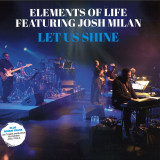
Elements of Life brings a full on boogie disco tune with some 80s synth goodness. The backgrounds are provided by an all star cast of singers including Cindy Mizelle, Audrey Wheeler, Anané, Dawn Tallman, and Ramona Dunlap. The song is penned by Nico Vega, just at 19 years old writing lyrics with the soul of a person who’s been through various experiences in life. It isa statement song coming from an adolescent stating where we are in the world today with war, and encouraging all to stop fighting, “no more war”,“Let Us Shine Bright As Day”, “Let Us Find A Peaceful Way”, “Let Me Hear You Say”, these words are crying out to the world.
Remixes by Josh Milan on the Josh Milan Honeycomb versions, feeding us an early 80s tune reminding us of the seminal label West End Records. The Louie Vega mixes stay true to the Elements Of Life sound mixed with some Detroit bass groove and synth overtones. A bonus track also added to the release featuring Axel Tosca on keyboards is entitled “Los Tonos Sagrados” which means The Sacred Tones.This instrumental has the early afrobeat rhythm with Axel Tosca ripping through with an organ solo and snare hits accenting the drums and music.Take a listen and enjoy the sounds of “Let Us Shine” and “Los Tonos Sagrados” and it’ll sure to have you with your arms up and eyes closed singing along with the choon in no time!! Available soon at all streaming and digital outlets, with vinyl coming too!!
- A1: Play For The Prisoners
- A2: Gaffer With Cedis
- A3: Major T-Bay Loves Girls
- B1: Shake A Leg High Life
- B2: One Touch
- B3: African Thriller
- B4: Lonely Nights Of Lome
- C1: All Night In Accra
- C2: Jah Bless Africa
- C3: No Show In Togo
- D1: Thrilla - Night Of The Assasin Remix
- D2: Midnight In Accra Remix
- D3: No Show In Togo Remix
- D4: Where Did The Major Go Remix
Referred to as "one of Reggae's quietest superstars" Jackie Mitto aka "The Keyboard King" had a remarkable path in Reggae music, a protege of Sly Stone, he started his career as part of Studio One's in house recording band and later went on to work with artists such as Bob Marley, UB40, Barry White, Peter Tosh and Oscar Peterson. This album was the result of a rare occasion of being on tour in Africa and establishing musical connections with musicians from Ghana, recorded in Accra and mixed in London. Predominantly instrumental, this album is essential to any dub conscientious record collection, as it culminates the career of a Reggae legend whilst under new influences in West Africa resulting in an unmistakably characteristic modern dub sound. Re-issued on vinyl with remixes previously only availably on CD format.
A blistering advancement of the knife-sharp hooks and urgently efficient post-punk structures that they’ve spent over a decade refining since their formation in 2011, the band’s fourth album – and second on Specialist Subject - emerges from a period of flux for the band’s chief songwriting partnership of Emma Wigham (drums/vocals) and Mark Jasper (guitar/vocals). First came a move north to Yorkshire from their native London. “We had decorated a tiny, rented house in Mytholmroyd” Jasper explains. “We setup a practice room in the top of a mill nearby and tried to write music, which we did amid stress about money, and a fear of having made the wrong decision. We had left our jobs, friends and a nice but absolutely tiny flat in London behind, and moved to a small village in West Yorkshire.” Although they found the location to be beautiful, the transition from city life to rural turned out to be an odd fit – too much so, it turned out. From this relatively short stay in West Yorkshire, however, came a more permanent change as the couple welcomed their first child Ivy into the family. Although, they’re hesitant to put too much of Streams and Waterways influence on the shoulders of their young daughter – she arrived a year and a half into the album’s conception – there’s no denying that its themes of loss, birth, and being part of this eternal, momentary life were brought into sharp focus following their new arrival. “Streams and Waterways is about the struggle of looking at the clock, realising it’s actually going pretty damn fast and knowing that really you have no control over anything” Jasper confirms. Perhaps that explains the way that opener The Valley doesn’t even introduce itself before careering into a full-throttled, three-minute scuzzy rager that would approach the descriptor anthemic had it not been kicked and scuffed along the way; it’s maybe why the wiry, ferocious Choice You Make feels like a charge into a storm despite the uncertainty of what you might find. It’s perhaps why even when Witching Waves allow themselves respite on the pared down Open A Hole, there’s a churning anxiety that lies below the acoustic guitar and harmonising vocals: in many ways musically and thematically Witching Waves are relinquishing the control that’s always been a fixture of their music – with all the thrilling and nervous fallout that comes from that. Although the pair have since returned south (having relocated to Exeter), Streams and Waterways also serves as a document of their foray northwards. The surviving artefact from Jasper’s never-to-be-finished studio that he’d began to build in Yorkshire – following the ending of his London-based Sound Savers studio – the record is also the first to feature current bassist Will Fitzpatrick, who joined initially live on their support tour with Australian punks Camp Cope. Fitzpatrick – a key component of Liverpool’s DIY scene for two decades – quickly became a key part of the writing process. Recording sessions were done during periods of lockdown that allowed congregation, Jasper recalling a still unborn Ivy kicking hard during an early mix playback of It’s A Shame’s layered noise rock assault. “The song was about my past, a much harder time. But my future was egging me on” he says. It’s a neat summation of Streams and Waterways and its representation of the discomfort of life amidst the compulsion to ride on its journey regardless. It’s a record that finds Witching Waves looking into the future more than ever before, but still bristles with the rush of being in the moment – because ultimately, despite what may have happened or may yet come, the band’s strongest trait remains being able to keep you feeling in the present.