Alt-rock icon Josephine Wiggs is best known as bassist in The Breeders, rising to superstardom in the '90s and continuing to draw crowds and critical acclaim in the wake of their 2018 album All Nerve.
But over the years, Wiggs has released several of her own albums, all of which delightfully defy genre. Her new solo record, We Fall, is both a departure and a distillation of an enduring personal aesthetic: moody and spare but also melodic, at once contemporary and nostalgic.
Some influences are clear: We Fall is reminiscent of the experimentalism of Brian Eno's Another Green World and recalls the delicate, languid minimalism of Harold Budd. The album's classical inflections, sharpened by a dialog with electronic elements, evoke Alva Noto and Ryuichi Sakamoto. This is an album of juxtapositions: minimalist at moments, richly layered in others; ambient while also sharply focused; melancholy yet resolute.
There's something both dreamy and scientific about We Fall. Wiggs, an enthusiastic amateur mycologist, has an impressive collection of mushrooms she's photographed in her travels. We Fall could be the soundtrack to what can't be captured in a single photo—the growth and decay of miraculous creatures that a less astute and sensitive eye might overlook entirely.
Composed, performed and recorded by Wiggs, with drums and electronics by her longtime friend and collaborator Jon Mattock (Spacemen 3, Spirit , We Fall is a lyrical, bucolic album with an undercurrent of disquiet. Think of a wintertime walk in the woods as dusk falls too soon. True to the classic album form, the 10 almost entirely instrumental tracks on We Fall form a compelling whole: a crystalline meditation on paths not taken and words unspoken, an elegy for moments lost and last embraces.
JOSEPHINE WIGGS BIO
Josephine Wiggs grew up in an unconventional family north of London. Returning home from a summer holiday with a donkey riding in the back of the family's 1927 Rolls Royce was not considered at all bizarre. Wiggs studied cello as a child, segued from college in London to undertake a master's degree in Philosophy, and then, in a move few would have predicted, joined a rock band.
After making three albums with The Perfect Disaster (1987-1990), Wiggs left to join Kim Deal (Pixies), Tanya Donelly (Throwing Muses), and Britt Walford (Slint) in forming indie supergroup The Breeders, whose debut album Pod came out in 1990. Following a shift in line-up—with Kelley Deal on guitar and new drummer Jim Macpherson—The Breeders released Last Splash in 1993; with its hit single 'Cannonball' and 'Divine Hammer,' they became alternative rock superstars.
During the same period, Wiggs released two lower-key albums with Jon Mattock (Spacemen 3, Spiritualized): Nude Nudes (1992) under the name Honey Tongue, and Bon Bon Lifestyle (1996) using the moniker The Josephine Wiggs Experience. She also recorded and produced Klassics with a K (1996), the beloved and only album by the Kostars (Luscious Jackson's Jill Cunniff and Vivian Trimble). During a brief run of shows, Wiggs joined the band on drums, showing her range of musical ability.
In the late '90s Wiggs collaborated with Vivian Trimble as Dusty Trails, whose eponymous 2000 album is an homage to neo-noir soundtracks, spaghetti westerns, and Gallic pop. Time Out described it as 'one of the most subtly suggestive, understatedly elegant...things likely to have caressed your cochlea in years.'
Allusions in Dusty Trails to film music foreshadowed the next stage of Wiggs's career, writing scores for feature and documentary films—from Happy Accidents by Brad Anderson in 1999 to Appropriate Behaviour by Desiree Akhavan in 2014. Her new album We Fall began as a suite of short pieces for the documentary film Built on Narrow Land. Wiggs has also composed and recorded music to accompany live performance and short films by the acclaimed Brazilian choreographers chameckilerner.
In 2013, following the 20th anniversary of Last Splash, the classic lineup of The Breeders reunited for a world tour. Five years later in 2018 they released All Nerve, with Wiggs co-writing two songs and singing lead on the standout track 'Metagoth.' We Fall, Josephine Wiggs' third album of her own design and ninth album in a career spanning three decades, will be released on vinyl and available for download and streaming on April 12, 2019 by Sound of Sinners.
Suche:key west
Presenting 'Fire Zone'. Album written, produced & mixed by Zane Reynolds and pressed on 180g vinyl, by Ekster. Coming out May 2019, including poster 57x57cm artwork by the artist. Mastered & cut by Helmut Erler at Dubplates & Mastering.
The music of Zane Reynolds AKA SFV Acid celebrates lysergic life in small town America. His are urban hallucinations. Conceived in 'business parks, strip malls', in 'blue collar luxury'. On a diet of 'diner burgers'. From the self-released, hand-painted cassettes of his high school years, he has moved to work commissioned by locals 100% Silk, Japan`s Big Love, and Dutch imprint, BAKK. His latest long-player, Fire Zone, will be issued by Belgian label, Ekster.
The album continues to reference Zane's Los Angeles home, and in this case the devastation that rages there every Summer. The concept however, reaching away from the horror and flames, to offer an escape.
There are moments, interludes, that hint at, and hide, something darker. Where drone twists from tape hiss. Bends. Out of shape. Where chords distort. Their degraded edges disintegrating. Charred perhaps But Ai welcomes you to 'San Fernando Valley', and a low-riding 808 booms. Less L.A. More Overtown, or Liberty City. Its racing booty bass calmed by wind chimes. The rapid Electro-Funk clip countered by modal synths. Its sunny disposition reflecting the SFV climate.
Playful rhymes, fragmented dialogue, and answer phone messages, rub up against Rave sirens. Roland`s silver box squeezes out a Sci-Fi Jazz. Through ping-ponging percussion. Through a drum and bass battery. Punched by keys that wanna be horns. Rewinds that create a bin-blowing vacuum. Shore-line samples washing the more head-nodding tempos. Euphoria rising while a perfect beat pops and locks. (text: Robert Harris)
- A1: Born Under Punches (The Heat Goes On)
- A2: Crosseyed And Painless / Lady
- A3: The Great Curve (Featuring Alicia Keys, Questlove, And Blood Orange)
- A4: Once In A Lifetime
- B1: Houses In Motion (Featuring Tony Allen)
- B2: Seen And Not Seen
- B3: Listening Wind (Featuring Ezra Koenig)
- B4: The Overload See Press Release Here
Global pop star and 3-time Grammy winner Angélique Kidjo has partnered with 2015 Grammy producer of the year Jeff Bhasker (Kanye West, The Rolling Stones, Beyonce) for a full circle re-imagining of Talking Heads' 1980 landmark album Remain in Light. The album features appearances by Alicia Keys, Questlove of The Roots, Ezra Koenig of Vampire Weekend, Blood Orange, Tony Allen, Angelique's longtime guitarist Dominic James, and Magatte Sow (percussionist for the 'Black Panther' film score). Visual artist Kerry James Marshall collaborated on the album artwork.
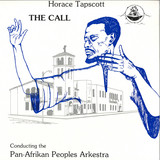
Available on vinyl for the first time in 40 years, Outernational Sounds is proud to present a masterpiece from the Los Angeles jazz underground - Horace Tapscott's burning, spiritualised 1978 set, The Call.
One of the unsung giants of jazz music, the composer, bandleader, arranger, pianist and community activist Horace Tapscott was the undisputed keystone in the grassroots Los Angeles jazz scene. Throughout the 1960s and 1970s, his radical community arts and music formations the UGMA (Underground Musicians Association, later changed to UGMAA - Union of God's Musicians and Artists Ascension), and his protean big band, the Pan Afrikan Peoples Arkestra, were at the epicentre of music, culture and politics in the Los Angeles area.
From their 1960s base at the Watt's Happening Coffee House on 103rd St, to their decade-plus- long 1970s residency at the Immanuel United Church of Christ on 85thE St and Holmes Ave, Tapscott's groups were the beating heart of underground music in LA. Hundreds of musicians passed through and played their part. Major figures in LA jazz such as Arthur Blythe, Azar Lawrence, Jimmy Woods, John Carter, Bobby Bradford, Sonny Criss, Ndugu Chancler and dozens of others all paid dues or just got down with Tapscott, not to mention the core Arkestra regulars who have since become celebrated names - Nate Morgan, Jesse Sharps, Adele Sebastian, Dadisi Komolafe, Gary Bias, to mention only a few.
Tapscott and the Arkestra were down on the ground - playing fundraisers in park and street, organising teach-ins and workshops for young and old, mixing it with radical theatre groups, firebrand poets, political radicals, Black separatists, community groups and churches. They lived communally, and built an ark for the Black arts in the heart of the city. But as a result of this grassroots community focus and Tapscott's antipathy to the music industry, the Arkestra didn't record for nearly two decades. That only changed when long-time jazz fan Tom Albach started Nimbus Records. The label was initiated specifically in order to document Tapscott and his circle, and the first three records showcased Horace and the Arkestra.
The Call was put together from two studio sessions in April 1978, one at Hollywood Sage and Sound, one at United Western - the latter session had the addition of a string section, who can be heard on the moody Cal Massey composition 'Nakatini Suite' and Jesse Sharps' swinging modal trip, 'Peyote Song No. III', with its swirling soprano solo. In keeping with the communal nature of the Arkestra, the other two compositions, 'The Call' and 'Quagmire Manor at Five A.M.' are also by Arkestra members. But at the centre of the music is the builder of the Ark, the visionary whose original call to action started a movement whose legacy continues to this day - Horace Tapscott.
Heed The Call!
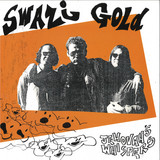
Swazi Gold have created a debut album that shimmers like the coast. There are six songs, two created by each member; through pure collaboration and participation. Swazi Gold are a true democracy.
Formed by the chief songwriters from Melbourne bands Crepes, Dreamin' Wild and Sagamore, this new band brings old friends together. Chris Jennings and Sam Cooper grew up in the Victorian coastal towns of Barwon Heads and Ocean Grove, while TimKarmouche was an inland man, hailing from Ballarat in the state's north-west
"We've been playing together for so long; in different mediums and in different bands. We've played our own key roles, but now we know what each other wants. Swazi Gold shows off our relationship from over the years, which is really cool," says guitarist and bassist Jennings.
Swazi Gold's other guitarist and bass player, Cooper, has a theory about the unifying power of their regional origins:
"It's this kind of small town thing where you strive to be different and creative. Because you're more isolated, you focus on your creativity and align yourself to similar people. I think growing up down the coast has meant I've continued to be drawn to people from other isolated places," he says.
It's this togetherness that's at the heart of Swazi Gold's debut album,Jehovah's Whispers.Recorded in a single weekend in 2017 at the Cooper's family home in Ocean Grove (affectionately termed the "Cooper Ranch")Jehovah's Whisperscaptures a musical intimacy and deep friendship between the three members.
"The bond with all the tracks on the album isn't necessarily lyrical, but it's 100% sonic. The simplicity of the instruments we use and the set-up we have is what's really rad," says Jennings.
"It's a fantasy of what we imagined Jehovah might be whispering in your ear," he adds, grinning.
Drawing from their collective love of African music, American funk, and quirky, melody-driven pop music, the album explores the space between conventional genres and styles of production.
"Using drum machines has made the song-writing process a lot quicker and opened up a whole new avenue stylistically.
Emotional Rescue is delighted to present the first of two EPs from British '80s band Furniture, starting with their much sought-after, six-song "mini-album" - as they were known then - which has recently been rediscovered by a new generation of DJs and collectors. "Transatlantic Cable" compares the cliches of a certain type of American romance - Bogart, Sinatra, Dean - to the reality of life in West London. "They're On Me" is probably one of very few pop songs to feature double bass and the word "newsagent", while "Robert Nightman's Story" is powered by a riff on marimba and abrasive rhythm guitar.
"I Miss You", a torch song so good you'd think Julie London might have cut it. A highlight for many is "Why Are We In Love". This track is a key reason for the revival of interest in the band, with pattering rhythm part and the sweet clarinet melody, creating an atmosphere that has attracted a following among discerning DJs. "A Letter To Myself" introduced the band's new, expanded line-up adding Sally Still (bass, vocals) and Maya Gilder (keyboards), which would endure until the band stopped in 1990.
On People of the Sun, Strickland blazes down that trail fully at the helm of his music—performing, writing, and producing with his outrageously able Twi-Life band on deck—even as he sonically and socially traces the African diaspora from present to past in an effort to unpack his identity. "I'm thinking about where we came from," says Strickland, "and how that clashes and goes hand in hand with what we've created here as Black Americans." The result is an album that's busy and beautiful, inventive and contemplative, an amalgam of influences from West Africa (griot culture, Afrobeat, percussion) and America (post-bop, funk-soul, beat music) performed in the key of revelation. Another facet that sets the album part is Strickland's lesser-known woodwind obsession with the bass clarinet, which adds its noirish hues to so many of these songs.
Official, remastered reissue of this disco tinged, afro funk treasure and the first time the 'Karam Bani' single has been cut to 12' - maximising every ounce of highlife soul from Sidiku Buari's productions.
That undeniable US funk flavour coupled with Buari's Ghanaian rhythms bring a zest to these grooves even the tangiest of forbidden fruits couldn't draw out. Those fuzzed keys and dusty highlife guitar licks sprinkle the West African flavour, whilst drumming demi-god Bernard Purdie provides the wizardry behind the infectious, yet precision like beats that make the track so unique. Purdie's killer breaks combined with Buari's jubilant vocals give a spirituality to this cut that'll liven up any dancefloor - alongside being a gold mine for samples.
Flip it over and you're hit with the joy filled jam, 'Ye Koaba'. Tribal drums lead the way for a chorus of jubilant chants supplemented by glistening synth sounds and funk fuelled guitar riffs. It's a feel-good slice of Ghanaian sunshine, capturing that community spirit and good-hearted nature Ghana's famous for.
Two afro funk sensations sure to put a smile on your face, even when the skies are grey and you're 5000 miles away from the glorious West African coastline.
'Sounds from the Great House! Outernational Sounds proudly presents a Nimbus West spirit jazz essential: the Creative Arts Ensemble's classic debut One Step Out. Mastered at 45rpm on double vinyl for enhanced sound, this release features all tracks at full length for the first time on wax.
One of the most sought after and highly regarded titles to have appeared on Tom Albach's celebrated Nimbus West imprint, the Creative Art Ensemble's One Step Out is a timeless work of spiritualised jazz. A true gem from the Los Angeles jazz underground, the album was pianist and composer Kaeef Ruzadun Ali's first recording as leader of the Creative Arts Ensemble, the only large ensemble group that emerged directly from Horace Tapscott's legendary Pan Afrikan Peoples Arkestra community jazz group.
A Los Angeles native, Kaeef was introduced to the Tapscott circle in the late 1970s. His first experience of the Arkestra's ethos was through PAPA tenorist Michael Session, who took him to the famous 'Great House' at 2412 South Western Ave., LA - a large mansion house which members of the Arkestra had taken over as a space for communal living. Life in the Great House was a continuous stream of music, dance and community events. 'When I walked in there,' recalled Kaeef, 'it was like this whole rush came over me, just from going in the front door...It was like a very, very warm feeling of love. I went and I came out with 'Flashback of Time', and that was my first arrangement.'
Kaeef quickly became a significant contributor of compositions to the Arkestra's songbook - his piece 'New Horizon' would be recorded by Horace Tapscott for the latter's Tapscott Sessions series. But 'Flashback of Time' would eventually appear on One Step Out, played by the new group he had put together from stalwart Arkestra members. Inspired by both Tapscott's example and by the Art Ensemble of Chicago, Kaeef had wanted to follow their lead by assembling a larger unit. 'I would like to form a group that would be an extension of the Pan Afrikan Peoples Arkestra,' he told Tapscott. The group was to be known as the Creative Arts Ensemble, and One Step Out, released in 1981 by Nimbus West, was their debut.
Featuring seasoned Arkestra regulars including reedsman Dadisi Komolafe, drummer Woody 'Sonship' Theus and altoist Gary Bias, with veterans Henry 'The Skipper' Franklin on bass and George Bohannon on trombone, One Step Out is a key document of the Los Angeles radical jazz underground. Featuring the sanctified vocals of Kaeef's sister, B. J. Crowley, the album is a tour de force of spiritually energised independent jazz music. Community uplift and sacred vision straight from the Great House, back on vinyl for the first time since 1981!
- A1: A. Hawkshaw* / B. Bennett* - Mon Amour
- A2: A. Hawkshaw* / B. Bennett* - Oddball
- A3: A. Hawkshaw* / B. Bennett* - Daytripper
- A4: Alan Hawkshaw - Mile High Swinger (Vers. A)
- A5: Alan Hawkshaw - Mile High Swinger (Vers. B)
- A6: A. Hawkshaw* / B. Bennett* - Auto-Pilot
- B1: A. Hawkshaw* / B. Bennett* - Pacesetter
- B2: A. Hawkshaw* / B. Bennett* - Home Run
- B3: A. Hawkshaw* / B. Bennett* - Driving Force
- B4: A. Hawkshaw* / B. Bennett* - Action Man
- B5: Alan Hawkshaw - Funky Chicken
- B6: Alan Hawkshaw - Jolly Roger
- B7: Alan Hawkshaw - Dumbo
- B8: Alan Hawkshaw - Plain Song
- B9: Alan Hawkshaw - Fanfair
LP,180, 2018 REISSUE - REMASTERED FROM ORIGINAL TAPES, CAREFULLY REPRODUCED ORIGINAL ART
Released in the same year as Synthesis over on KPM, 1974's Synthesizer and Percussion is its essential companion piece. 'This record features the many distinctive sounds of the ARP Synthesizer plus percussion in various moods and tempos' is the even more underwhelming than usual library record sales pitch for
Alan Hawkshaw and Brian Bennett's second collection of what is basically minimal G-funk, with overtones of primitive acid house. This is ridiculously good.
This is one of Hawkshaw and Bennett's wilder joints and aeons ahead of its time.
Bennett's tough drums provide the underpinnings for the prominent bass, keys and bubbling synths high up in the mix, alongside Hawkshaw's deranged clavinet-funk-rock. There are heavenly break loops galore.
Opener "Mon Amour" is ultra-smooth funk, all inter-weaving melodic lines whilst the seminal "Oddball" is an incredible hard electro strut with a knocking break.
"Mile High Swinger" is a tranquil Spaghetti Western whistling theme over double tempo rhythmic movement and the pulsating "Auto Pilot" has a percussive groove elevated by electric piano and synthesizer. Check "Driving Force', 'Home Run' and "Pacesetter" for electroid prog-funk dripped in acid squelch.
All fve fnal tracks are beatless synth workouts, because they can.
As with all ten re-issues, the audio for Synthesizer and Percussion comes from the original analogue tapes and has been remastered for vinyl by Be With regular Simon Francis. We've taken the same care with the sleeves, handing the reproduction duties over to Richard Robinson, the current custodian of KPM's brand identity.
After A Six Year Hiatus Producer Captn K Is Back Recording Under His Dj Alias Blind Tiger. The First In A Collection Of Lo-fi, Dreampop And Dance Recordings, The Dying Stockman Single Is The Inaugural Release On The New West Australian Label Corella Records.
Backed With Vintage Drum Machines And Keys, This Balmy Interpretation Of A Classic Australian Bush Ballad Sees Blind Tiger Retelling The Story Of The Dying Stockman Lamenting His Last Moments On Earth. The Track Will Appeal To Those With Beck, Robyn Hitchcock And Jj Cale In Their Record Collections.
Continuing The Theme, The Flipside Ride To The Beyond Is A Cinematic, Instrumental Interpretation Of The Stockman's Last Ride, Moody Keys And Bass Set The Backdrop With Reverb Drenched Synths Strings Soaring Through, Bringing To Mind Classic Synth-led Australian Film Soundtracks Of The '80s.
Re-mastering by: Ray Staff at Air Mastering, Lyndhurst Hall, London
Four-and-a-half decades after the event, saxophonist Charles Lloyd's Love-In, recorded live at San Francisco's Fillmore Auditorium in 1967, the counterculture's West Coast music hub, endures as much as an archaeological artifact as a musical document. From sleeve designer Stanislaw Zagorski's treatment of Rolling Stone photographer Jim Marshall's cover shot, through the album title and some of the track titles ("Tribal Dance," "Temple Bells"), and the inclusion of John Lennon and Paul McCartney's "Here There and Everywhere," Love-In's semiology reeks of the acid-drenched zeitgeist of the mid 1960s, a time when creative music flourished, and rock fans were prepared to embrace jazz, provided the musicians did not come on like their parents: juicers dressed in sharp suits exuding cynicism.
It is likely that more joints were rolled on Love-In's cover than that of any other jazz LP of the era, with the possible exception of saxophonists John Coltrane's A Love Supreme (Impulse!, 1965) and Pharoah Sanders's Tauhid (Impulse!, 1967). Chet Helms, a key mover and shaker in the West Coast counterculture, spoke for many when he hailed the Lloyd quartet as "the first psychedelic jazz group."
It is to Lloyd's credit that, at least in the early stages of his adoption by the counterculture, he resisted dumbing down his music. The adoption stemmed from Lloyd's espoused attitude to society, his media savvy, his sartorial style and his sheer nerve in playing jazz in the temples of rock culture. He took the quartet into the Fillmore West three years before trumpeter Miles Davis took his into the Fillmore East—as documented on Live at the Fillmore East, March 6 1970: It's About That Time (Columbia)—by which time his pianist, Keith Jarrett, and drummer, Jack DeJohnette, were members of Davis' band (although Jarrett didn't appear at the 1970 gig).
- A1: Mr Brown In Town
- A2: Mr Brown Dub
- A3: Trendsetter
- A4: Trendsettting Dub
- B1: Your Shadow Is Black
- B2: Your Shadow Is Dub
- B3: Dead Meat
- B4: Dead Meat Dub
- C1: Dub At Abbey Road
- C2: Abbey Road Version
- C3: Bumpy Road Of Life
- C4: Bumpy Dub
- C5: Captain Perry
- D1: Captain Dub
- D2: Killing Dancehall Softly
- D3: Killing Version
- D4: Solid State Communication
- D5: Solid State Dub
At 83 Years Of Age, Lee Scratch Perry Is Proud To Present To The World His Next Full Length Solo Album (with Dub Versions) , Continuing His Inimitable Roots Reggae Legacy.
Lee's Brief For The Album, Was To Blend The Vintage And The Obscure, During The Sessions Lee Referred To The Sound And 'black' And Wanted Space, Light And Darkness In The Songs And Their Respective Dub Versions.
The Result Sees Lee Having Mixed Up An Analogue Concoction Of Ultra-rare Effects, Sonic Wizardry And Deep Heavy Roots Rhythms.
Over 2017 and 2018, Lee Scratch Perry re united with Producer and Mixer Daniel Boyle, to start work on their second Solo album project for Lee.
Picking up where their last efforts ''Back on the Controls'' left off. Lee wanted to continue the raw analogue sound they had cultivated together over multiple past releases, and take it to the next level with new effects devices to create another sonic signature.
They entered the studio in 2017, to begin to put together ideas for the tracks, which were then taken to RAK studios in London with their ever changing Rolling Lion All Stars session band; to lay down the rhythm versions.
Using strictly vintage analogue equipment, they employed Neuman valve and RCA Ribbon microphones, and RAK's early model vintage API desk to record, the 'sound' for the album was sculpted in these sessions. Vintage, but punchy, which was then blended with Lee's choice of super rare and custom analogue effects. Ursa Major Space Station and Stargate delays and reverbs, old choruses, Plate and spring reverbs, and tape delays were used to create a tight vintage feel but retaining the rawness of the 'Low Fi' roots sound Lee was aiming for.
With the music coming together, the vocal sessions were held in Abbey Road studio 3, again using vintage RCA ribbon mics, over driving their EMI TG console and Fairchild compressors to create a pleasantly distorted Lo Fi vocal sound.
Lee and Daniel then returned to Daniels Rolling Lion Studio, to mix and Dub the album, live, on the mixing console.
'Rolling Lion All Stars' Musicians: Vocals: Lee 'Scratch' Perry Drums: Ed West Bass & Guitar: Hughie Izachaar Keys: Robbie Lynn Additional Keys: Calvin Bennion Percussion: Daniel Boyle Kete Drum: Mathias Liengme Hurdy Gurdy: Brian McCoy Horn Section: Rory Sadler, Robert Landen Melodica: Puraman Backing Vocals :
Hosono's solo career would take many twists and turns from this point forward, with forays into exotica, electronic, ambient, and techno, culminating in the massive success of techno pop group Yellow Magic Orchestra (YMO), who made their debut in 1978. Admired by artists ranging from Van Dyke Parks to Mac DeMarco, Hosono continues to forge ahead as he heads into his fifth decade as a musician. With the re-release of his key albums for the first time outside of Japan, his genius will be discovered by a whole new generation of fans around the world.
.
The unbelievably prolific Haruomi Hosono is one of the major architects of modern Japanese pop music. With his encyclopedic knowledge of music and boundless curiosity for new sounds, Hosono is the auteur of his own idiosyncratic musical world, putting his unmistakable stamp on hundreds of recordings as an artist, session player, songwriter and producer.
Born and raised in central Tokyo, his adolescent obsession with American pop culture informed his early forays into country music, which he would revisit later in his career. Hosono made his professional debut in 1969 as a member of Apryl Fool, whose heavy psychedelia was somewhat at odds with his influences, which leaned towards the rootsy sounds of Moby Grape and Buffalo Springfield. The latter was one of the main inspirations for his next group, Happy End, whose unique blend of West Coast sounds with Japanese lyrics proved to be highly influential over the course of three albums. After the band’s amicable break up in 1973, Hosono began his solo career with Hosono House, an intimate slice of Japanese Americana recorded inside a rented house with recording gear squeezed into its tiny bedroom.
Tired of reading the words 'classic', 'masterpiece', 'missing link', 'cult', in every press release Just trust us on this one: We have no choice but to use those words and urge you to(re)discover one of the ultimate Afro-Disco lost classics.
How could such a masterpiece stay in obscurity for so long Well, no one knows where N'Draman is. He's presumed dead, and so is Mr Patrick, the label owner, an ex-football player
who turned his focus into fashion after suffering a career ending injury. Selling jeans from an outlet in Monrovia (Liberia), he only ventured in the music business for a short period of time,
releasing a handful of incredible albums on his Cosmic Sounds imprint. The word on the street was that Nigerian legend William Onyeabor was somehow involved with the production of the album, or maybe playing synths on it. Both were inaccurate, although N'Draman Blintch's previous and first record Cikamele, was indeed recorded at Willfilms, Onyeabor's studio. And some of the musicians playing here were also key members in his pool
of session musicians. Cosmic Sounds is many things: Psychedelic, politically engaged, funky to death, full of synths,
with an artwork to die for, a perfect crossover of African and Western culture: Music for the body and soul, Cosmic disco before the genre even existed. Did DJ Danielle Baldelli hear it
Was it ever played by Larry Levan or Mancuso In a pre-internet era, it's unlikely but not impossible. We are extremely honored in carrying the reissue of this gem and have treated the task with
utmost respect: both artwork and audio were restored by specialists, and liner notes were written by Temitope Kogbe, Afro-Funk expert who runs the Odion Livingston label, founded
with legendary producer Odion Iruoje. 38 years after its original release, the world is finally ready to hear Cosmic Sounds in all its glory.
Originally from West Yorkshire, but now resident in Manchester, composer, bassist and producer Phil France is probably best known as a key collaborator alongside Jason Swinscoe in the Cinematic Orchestra, where he co-wrote, arranged and produced on classic albums including Everyday, Man With The Movie Camera, Ma Fleur and also the triple award winning soundtrack for The Crimson Wing nature documentary. In 2013 France released his debut solo album, The Swimmer (GOND016), an emotive, epic record influenced by the great second wave of film composers including John Carpenter and Vangelis, as well as minimalist composers such as Steve Reich and Philip Glass
Five years later, France presents the follow up, the enigmatically titled, Circle, which again represents a very personal journey for the artist. For France the album is an extension of work he began on The Swimmer. A process he has described as: " blocks of sound containing intricate minimal arpeggiated patterns and electronic textures that develop and shift in subtle, original and melodic ways. The trancelike quality, mood and electronic character of title track Circle led France to think of the circular patterns which eventually became a potent concept for the album. "Ideas and fashions repeat themselves in cycles. Events are said to travel 'full circle' and this is important to me because it represents my own recent personal and musical journey after 15 years touring as bassist and composer with The Cinematic Orchestra. I consider circles to be a strong symbol of unity, strength and inclusiveness and ultimately I've aspired to make something beautiful with those values at its heart".
The album opens with the title track, Circle, built on a minimal looped pattern with melodic embellishment and shifting additional harmonic textures. Bells was developed from the arpeggiator and offers a nod to the melodicism and atmosphere of French electronic music. The Jackal features an idea originally developed for The Crimson Wing score but which finally bears fruit here. Cathedrals features an improvised intro, Philip Glass inspired organ and vocal textures inspired by the work of Colin Stetson. Finally, the album ends with a reprise of Circle this time featuring layered pianos. But it isn't the conclusion of the journey, for France: "The Circle is infinite - During the process of making this record, I have been constantly reminded that nothing ever stays the same and that all is in constant flux. The challenge for me is always to respond positively, be aware of and seize the opportunity for progression constant change provides" And it is that sense of movement and flow, but also calm and beauty that permeates Circle and make it such a worthy successor to The Swimmer.
2023 Repress Spice 1 is an undisputed West Coast legend, who first hit the scene after the N.W.A. and – closer to home – Too $hort explosion of the late ‘80s. As history showed, he continued that bloodline with finesse and authority. His nasal flow is menacing and strong, and fans have been consistently captivated by his ‘hood tales since his self-titled debut in 1992. If you want thematic range with your MCs, Spice isn’t that dude – he is all about crime tales and the perils of ghetto life. And he attacks that storytelling sweet spot with each new cut. Spice 1 boasted four singles by the time it was all said and done, and breezed to Gold status on the strength of cuts like the catchy “East Bay Gangster”; the heartfelt tales and truths of “Welcome To The Ghetto”; and the thick, grooving “In My Neighborhood.” He even produced the alcohol-themed “187 Proof,” another of the album’s singles, and the hands-down cleverest vocal outing on the LP. Sonically, the backdrops on Spice 1 range from plunky, keyboard-bassline funk to deeper, fuzzy ‘70s samples – and he sounds strong on top of both. “Break Yourself” is fueled with an electro-funk drive; “1-800 Spice” brings reggae flavor; and “Peace To My Nine” gets chunkier, with a well-placed P-Funk “One Nation Under A Groove” sample. Presented here on official retail vinyl for the first time since its initial release 26 years ago, Spice 1’s debut holds the test of time and carries the California gangsta flag with pride. Some colors just don’t fade.
A native of the Caribbean coast of Colombia, Abelardo Carbono achieved legendary status in his country's storied ranks of musical icons by combining the homegrown sounds of cumbia with the chiming guitars of West African soukous, enormously popular with the local tropical sound systems, and drenching the whole thing in his off-kilter, surreal and slightly psychedelic sensibility.
With the exception of a well-received compilation of songs from his 1980s heyday, Carbono has been rarely heard from outside the sweaty dancehalls he still commands in his hometown of Barranquilla. Now, Names You Can Trust has welcomed the reclusive guitarist and singer back to the vinyl format with a simmering Afro-Carib beast of a cut, recorded with the assistance of Will "Quantic" Holland on rhythm guitar and Mario Galeano (Frente Cumbiero, Ondatropica) on keys and in conjunction with Lucas SIlva of Palenque Records & Polen Records. It's a true cross-generational and international collaboration that is uniquely possible via Colombia. The first release of this expansive & power packed studio session is a cover of vallenato pioneer Guillermo Buitrago's La Piña Madura. This updated take veers heavily towards Africa on a rock solid foundation of bass and drums, with Abelardo's trademark guitar and quirky vocals leading the way.
Tommy Mandel's Mello Magic' on Invisible City Editions is a compilation of personal synth-laden pop songs created between 1980-87 in NYC. BIG BIG TIP!
.
His professional work as a keyboardist and vocalist found him on stage and in the studio with many of the 80s greats from the Clash, Todd Rundgren, B-52s, Violent Femmes, The Ramones, Tina Turner, Mark Ronson, Dire Straits and Bryan Adams. While offstage and out of the major studio sessions, Tommy wrote in little books, made animation films and hooked up a massive amount of synthesizers, sequencers,microphones and recorded songs like diary entries. He self released almost 20 CDs, cassettes and one Self Titled 12' Ep. Each song selected here is stunningly simple, lush, desperate, playful, and harmonic, touching on disparate trangents like Brian Wilson, Egyptian Lover, Michael Shrieve,Holger Czukay, Ariel Pink, YMO, AOR FM West Coast Rock, Arthur Russell, Martin Denny, Peter Gordon, Drexciya, Prince and Private Issued New Age Boogie. Tommy recently jokingly coined his music corporate ambient' and and it all shouldn't work, but somehow he manages to effortlessly make each song a Tommy Mandel song - DIY, homespun,personal, stunning, and not too serious. This is perfect pop, charming, sincere, infectious and the work of a humble, good hearted, romantic savant. Tommy Mandel's Mello Magic' will be out on limited LP Vinyl release and available Spring 2018. Be sure to check his ambient new age LP from his cassette Music For Insomniacs'also out soon on ICE/Intelligent Instruments. Designed by Marko Vuleta-Djukanov. - Sesto F
Originally from the United Kingdom, funky soul-jazz veterans The New Mastersounds have been touring USA, Europe and Japan for over a decade and return here with their twelfth studio album, recorded in New Orleans and Denver and featuring a slew of musical guests.
"Renewable Energy" expands on the NMS template while still providing plenty of the band's trademark sounds. Guitarist Eddie Roberts, drummer Simon Allen, bassist Pete Shand and keyboardist Joe Tatton are joined on this 11-track effort by a number of guests: Sam Bell, one of the founding members of NMS precursor The Mastersounds who also guested on two previous NMS albums, plays percussion on most of the tracks. Mike Olmos and Joe Cohen of the West Coast Horns once again provide added horn action as they did on "Made For Pleasure" from 2015, while Adryon de León from LA band Orgone contributes vocals on "Gonna Be Just Me". Uptempo numbers "Tantalus" and "Yokacoka" see the band flexing their playing chops over a tightly-wound rhythm, while "Green Was Beautiful" and "Groovin On The Groomers" are toe-tapping slabs of soul jazz. The band's cover of James Gang's "Funk 49" takes the album in a fuzzed-out psych-rock direction with Eddie singing the lead, while the moody Hancock-esque inflections of "Stash" and the sweet mellow vibes of "Swimming With My Fishies" add the final brushstrokes of colour to the canvas.