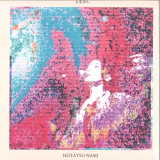
NEW LP PRESSING on Opaque Yellow Wax
Released in September 1978, a mere two months before YMO’s debut, Cochin Moon is a clear precursor to the groundbreaking synth and sequencer-dominated sounds that would come to define the iconic trio. Huge tip!
Credited to Hosono and Pop Art legend Tadanori Yokoo (who created the cover art), Cochin Moon is a fictional soundtrack to a journey into unknown worlds, inspired by Hosono and Yokoo’s trip to India.
The unbelievably prolific Haruomi Hosono is one of the major architects of modern Japanese pop music. With his encyclopedic knowledge of music and boundless curiosity for new sounds, Hosono is the auteur of his own idiosyncratic musical world, putting his unmistakable stamp on hundreds of recordings as an artist, session player, songwriter and producer. Born and raised in central Tokyo, his adolescent obsession with American pop culture informed his early forays into country music, which he would revisit later in his career. Hosono made his professional debut in 1969 as a member of Apryl Fool, whose heavy psychedelia was somewhat at odds with his influences, which leaned towards the rootsy sounds of Moby Grape and Buffalo Springfield. The latter was one of the main inspirations for his next group, Happy End, whose unique blend of West Coast sounds with Japanese lyrics proved to be highly influential over the course of three albums. After the band’s amicable break up in 1973, Hosono began his solo career with Hosono House, an intimate slice of Japanese Americana recorded inside a rented house with recording gear squeezed into its tiny bedroom. Hosono’s solo career would take many twists and turns from this point forward, with forays into exotica, electronic, ambient, and techno, culminating in the massive success of techno pop group Yellow Magic Orchestra (YMO).
Released in September 1978, a mere two months before YMO’s debut, Cochin Moon is a clear precursor to the groundbreaking synth and sequencer-dominated sounds that would come to define the iconic trio. Credited to Hosono and Pop Art legend Tadanori Yokoo (who created the cover art), Cochin Moon is a fictional soundtrack to a journey into unknown worlds, inspired by Hosono and Yokoo’s trip to India. Initially the album was to be a kind of ethnographic musical document, using found sounds and field recordings made by Hosono himself. Instead, after Yokoo introduced Hosono to the sounds of Kraftwerk and krautrock during the trip, Cochin Moon became something much stranger. Created almost entirely on synthesizers and sequencers with the help of future YMO collaborators Ryuichi Sakamoto and Hideki Matsutake, the music on the album is the perfect encapsulation of Hosono’s concept of “sightseeing music,” transporting the listener to an exotic place that may or may not exist. This highly sought-after album sees its first-ever official release outside of Japan.
Search:haruomi hosono
- A1: Chattanooga Choo Choo
- A2: Hurricane Dorothy
- A3: Kinukaido
- A4: Nettaiya
- A5: Peking Duck
- B1: Hyoryuki
- B2: Honey Moon
- B3: Sanji No Komori Uta
- B4: Sanji No Komori Uta (Instrumental)
- B5: Hyoryuki (Instrumental)
Black Vinyl[27,31 €]
Erstmals international auf Vinyl – zum 50. Jubiläum neu aufgelegt
Stones Throw Records präsentiert die erste internationale Wiederveröffentlichung von Haruomi Hosonos Kultalbum Tropical Dandy – fast genau 50 Jahre nach der japanischen Originalveröffentlichung von 1975.
Erhältlich als Standard Black Vinyl und limitierte Ocean Blue Edition, jeweils auf 180g-Vinyl mit OBI-Strip und einer neu übersetzten Version der originalen Liner Notes von 1975.
Tropical Dandy markierte Hosonos musikalischen Wendepunkt – ein wagemutiges, genreübergreifendes Werk zwischen Exotica, Jazz und Pop, das als stilprägende Grundlage für das spätere Japanese City Pop gilt.
Haruomi Hosono ist Gründungsmitglied der Folk-Rock-Band Happy End sowie der legendären elektronischen Formation Yellow Magic Orchestra (YMO) und gilt als einer der einflussreichsten Künstler Japans. Sein Werk überschreitet seit fünf Jahrzehnten spielerisch Genregrenzen und Kulturräume.
Diese Veröffentlichung ist die zweite Zusammenarbeit zwischen Stones Throw und Hosono, nach dem Compilation-Album Hosono House Revisited, das u. a. Beiträge von Mac DeMarco, Sam Gendel und John Carroll Kirby enthielt.
Erstmals international auf Vinyl – zum 50. Jubiläum neu aufgelegt
Stones Throw Records präsentiert die erste internationale Wiederveröffentlichung von Haruomi Hosonos Kultalbum Tropical Dandy – fast genau 50 Jahre nach der japanischen Originalveröffentlichung von 1975.
Erhältlich als Standard Black Vinyl und limitierte Ocean Blue Edition, jeweils auf 180g-Vinyl mit OBI-Strip und einer neu übersetzten Version der originalen Liner Notes von 1975.
Tropical Dandy markierte Hosonos musikalischen Wendepunkt – ein wagemutiges, genreübergreifendes Werk zwischen Exotica, Jazz und Pop, das als stilprägende Grundlage für das spätere Japanese City Pop gilt.
Haruomi Hosono ist Gründungsmitglied der Folk-Rock-Band Happy End sowie der legendären elektronischen Formation Yellow Magic Orchestra (YMO) und gilt als einer der einflussreichsten Künstler Japans. Sein Werk überschreitet seit fünf Jahrzehnten spielerisch Genregrenzen und Kulturräume.
Diese Veröffentlichung ist die zweite Zusammenarbeit zwischen Stones Throw und Hosono, nach dem Compilation-Album Hosono House Revisited, das u. a. Beiträge von Mac DeMarco, Sam Gendel und John Carroll Kirby enthielt.
Haruomi Hosono's first solo album after the breakup of YMO, released on the Non-Standard label that he established in 1984.It was a masterpiece that drew attention as a work that took a step away from the sound that had been practiced by YMO up to that point, and quickly embodied the latest methodology of expressing techno digitally by making full use of computers.
- A1: Pearl & The Oysters - Koi Wa Momoiro
- A2: Mei Ehara - Jusho Futei Mushoku Tei Shunyu
- A3: Rei Harakami - Owari No Kisetsu
- B1: John Carroll Kirby Ft. The Mizuhara Sisters - Fuku Wa Uchi Oni Wa Soto
- B2: Jerry Paper - Bara To Yaju
- B3: Se So Neon - Party
- C1: Yuma Abe - Fuyu Goe
- C2: Mac Demarco - Boku Wa Chotto
- C3: Kukuku - Choo Choo Gatagoto
- C4: Akiko Yano - Rock-A-Bye My Baby
- D1: Sam Gendel - Koi Wa Momoiro
- D2: Cornelius - Bara To Yaju
- D3: Towa Tei - Ai Ai Gasa
Zum 50sten Jubiläum (genau genommen 51sten) des 1973 erschienenen Solo-Debüts von Haruomi Hosono - dem Kultalbum 'Hosono House' - haben sich auf dieser Compilation verschiedenste Künstler versammelt, um mit ihren eigenen Neuinterpretationen einem Werk Tribut zu zollen, dessen Wirkung und Einfluss weit über Japan hinausreicht und auch heute noch spürbar ist. So nannte u.a. Harry Styles es als eine der Hauptinspirationsquellen für sein Grammy-gekröntes Album 'Harry's House'.
Bekanntheit erreichte Haruomi Hosono auch mit dem Elektropop-Trio Yellow Magic Orchestra, dem auch Yukihiro Takahashi und Ryuichi Sakamoto angehörten.
Die Compilation wurde von Josh Bonati gemastert, das Vinyl für ein besseres Hörerlebnis mit 45rpm geschnitten.
Auch für das Artwork ließ man sich durch das Original inspirieren von Tomoo Gokita.
- 2LP: ( inkl. OBI & Einleger mit Archivfoto sowie bedruckter Innenhülle)
WRWTFWW Records is flying high as it announces the reissue of the 1997 ambient masterpiece Quiet Logic by electronic music visionaries Mixmaster Morris (The Irresistible Force), Jonah Sharp (Spacetime Continuum), and Haruomi Hosono (Yellow Magic Orchestra). For the first time ever, this iconic album is available on vinyl as a double LP with a heavy 350gsm sleeve, as well as on digipack CD and digitally.
Quiet Logic invites listeners to embark on a captivating sonic odyssey, blending intricate rhythms and celestial environments that push the boundaries of electronic music. Co-crafted at Haruomi Hosono's Tokyo studio in 1997, this album represents a time of rapid transformation in the genre, with these three artists at the forefront of redefining soundscapes.
With its unique blend of influences from Hosono's immense contribution to electronic, pop, and experimental music to Morris' worldwide chill out DJ performances and Sharp's pioneering label, Reflective, Quiet Logic remains a timeless piece of ethereal electronica. It was originally only released in Japan in CD format on the Harry Hosono-curated Daisyworld Discs label.
Remastered for 2024, this reissue is a must-have for fans of Haruomi Hosono / YMO, The Irresistible Force, Spacetime Continuum, Dreamfish, Tetsu Inoue, FFWD, H.I.A., Fax +49-69/450464, and mind-expanding musics.
Immerse yourself now.
Quiet Logic is pressed on biovinyl, a sustainable alternative to traditional vinyl. Biovinyl replaces petroleum in S-PVC by recycling used cooking oil or industrial waste gases, resulting in 100% CO2 savings in bio-based S-PVC production. Furthermore, it is 100% recyclable and reusable, embracing the circular economy ideology.
Hosono's solo career would take many twists and turns from this point forward, with forays into exotica, electronic, ambient, and techno, culminating in the massive success of techno pop group Yellow Magic Orchestra (YMO), who made their debut in 1978. Admired by artists ranging from Van Dyke Parks to Mac DeMarco, Hosono continues to forge ahead as he heads into his fifth decade as a musician. With the re-release of his key albums for the first time outside of Japan, his genius will be discovered by a whole new generation of fans around the world.
.
The unbelievably prolific Haruomi Hosono is one of the major architects of modern Japanese pop music. With his encyclopedic knowledge of music and boundless curiosity for new sounds, Hosono is the auteur of his own idiosyncratic musical world, putting his unmistakable stamp on hundreds of recordings as an artist, session player, songwriter and producer.
Born and raised in central Tokyo, his adolescent obsession with American pop culture informed his early forays into country music, which he would revisit later in his career. Hosono made his professional debut in 1969 as a member of Apryl Fool, whose heavy psychedelia was somewhat at odds with his influences, which leaned towards the rootsy sounds of Moby Grape and Buffalo Springfield. The latter was one of the main inspirations for his next group, Happy End, whose unique blend of West Coast sounds with Japanese lyrics proved to be highly influential over the course of three albums. After the band’s amicable break up in 1973, Hosono began his solo career with Hosono House, an intimate slice of Japanese Americana recorded inside a rented house with recording gear squeezed into its tiny bedroom.
- A1: Tomoko Soryo - I Say Who
- A2: Taeko Ohnuki - Kusuri Wo Takusan
- A3: Minako Yoshida - Midnight Driver
- A4: Nanako Sato - Subterranean Futari Bocci
- B1: Haruomi Hosono - Sports Men
- B2: Izumi Kobayashi - Coffee Rumba
- B3: Foe - In My Jungle
- B4: Akira Inoue, Hiroshi Sato, Masataka Matsutoya - Sun Bathing
- C1: Hiroshi Satoh - Say Goodbye
- C2: Yukihiro Takahashi - Drip Dry Eyes
- C3: Masayoshi Takanaka - Bamboo Vender
- C4: Shigeru Suzuki - Lady Pink Panther
- D1: Haruomi Hosono, Takahiko Ishikawa, Masataka Matsutoya - Mykonos No Hanayome
- D2: Yasuko Agawa - La Night
- D3: Hitomi Tohyama - Exotic Yokogao
- D4: Tazumi Toyoshima - Machibouke
Pacific Breeze is a collection of choice cuts that range from silky smooth grooves to innovative techno pop bangers and everything in between.
Long-revered by crate diggers and adventurous music heads, this music has never been released outside of Japan until now. Including key artists like Taeko Ohnuki and Minako Yoshida, as well as cult favorites Hitomi Tohyama and Hiroshi Sato, the long-awaited release also features newly commissioned cover painting by Tokyo-based artist Hiroshi Nagai, whose iconic images of resort living have graced the covers of many classic City Pop albums of the 1980s.
Many of the key City Pop players evolved from the Japanese New Music scene of the early '70s, as heard on Light In The Attic's acclaimed Even a Tree Can Shed Tears: Japanese Folk & Rock 1969-1973, the first release of the ongoing Japan Archival Series. In fact, you could say City Pop set sail with a champagne smash from Happy End, the freakishly talented subversives who included amongst their ranks Haruomi Hosono and Shigeru Suzuki, both featured on this compilation. As Michael K. Bourdaghs noted in his book, Sayonara Amerika, Sayonara Nippon, this music was, 'Deconstructing the line between imitation and authenticity.' Some of the best City Pop teeters in this zone—easy listening with mutant exotica, tilted techno-pop, and steamy boogie bubbling beneath the gloss.
2xLP housed in a deluxe wide spine jacket with over sized fold-out booklet, full color printed inner sleeves, and custom die-cut obi card
- A1: Bye Bye Session Band - Lily
- A2: Sentimental Hotel - Rie Nakahara
- A3: Bara To Yajyu - Haruomi Hosono
- A4: Why Don't You Move In With Me - Yasuko Agawa
- B1: Jiken Ga Okitara Beru Ga Neru - Pink Lady
- B2: Summer Champion - Yuko Asano
- B3: Dancin' - Junko Ohashi
- B4: Rainbow Paradise - Masayoshi Takanaka
- C1: Uragiri - Mari Natsuki
- C2: Maboroshi No Hito - Miyako Chaki
- C3: Tornado - Minako Yoshida
- C4: Banana - Kay Ishiguro
- D1: Funky Miyo-Chan - Masaaki Hirao
- D2: Yashow Macashow - Ebonee Webb
- D3: Lovin' Mighty Fire - Naoya Matsuoka & Minako Yoshida
Lovin' Mighty Fire' is Howard Williams' third Japanese music compilation for the Ace Records house of labels - this time, for BGP International. Assembled in between his job as a record distributor and his monthly Japan Blues show for NTS radio, the first two have taken a look at the late 50s for a blast of Japanese rockabilly ( Nippon Rock'n'Roll' CDWIKD 313), then the 60s and 70s for a romp in Japanese surf music ( Nippon Guitars CDWIKD 297). Following his retrospective of jazz singer Maki Asakawa for Honest Jon's, this new outing searches for the soul music of Japan, from the early 70s to the early 80s.
Japan has long been known as the final destination for many a collectible soul record. Yet, who suspected that some fine soul grooves were recorded for the domestic market, from ballads, to funk and disco Strangely enough, some of the busiest writers and producers in this field came from a late 60s rock band, Happy End, but on listening to their collaborations, their rhythmic, soulful feel is immediately apparent.
The bluesy funk of Lily, the soul-diva brilliance of Minako Yoshida - represented here in both slow-grind mode and epic disco, the maverick genius of Haruomi Hosono, the lively songstress Yasuko Agawa, and the sultry steaminess of Mari Natsuki, and more. This album finally plants a Japanese flag firmly on the global map of soul.
From Wisdom Teeth’s recent compilation nagoyaka na kaze / 和やかな風 (quiet wind)—which cast a spotlight on the Japanese city of Nagoya—emerges “2++”, a new label launched by abentis, who curated the compilation alongside Facta and K-LONE as a central figure in the scene. Conceived as a series introducing facets of Nagoya’s underground electronic music to the world on vinyl, its inaugural release is abentis’ debut album, Dim Grow.
Across the album, intricately designed electronic mallet sounds—created using Ableton Live’s physical-modeling synthesizer—take center stage. Fresh and percussive like marimba or kalimba, yet simultaneously carrying an otherworldly, unreal quality, these tones form the core of the record’s sonic identity. In moments of near-silence, a crystalline resonance poised between glass and metal shimmers with subtle shifts in temperature, giving the album its distinctive texture.
While resonating with the sonic sensibilities of fellow Wisdom Teeth affiliates such as K-LONE, Tristan Arp, and Salamanda, abentis’ uniquely strange palette can be traced back to one of his strongest influences: Haruomi Hosono. In particular, Hosono’s mid-’70s tropical-infused solo albums — Tropical Dandy (1975), Bon Voyage Co. (1976), and Paraiso (1978) — serve as a key reference point. Symbolically reflected in Hosono’s marimba and vocal performance at a 1976 live show in Yokohama Chinatown, the marimba functioned as a central instrument for constructing imagined exotic landscapes inspired by Martin Denny and Hawaiian music.
For abentis—who worked at a local jazz bar before becoming active as a hip-hop beatmaker—the language of “tension chords,” a harmonic vocabulary rooted in jazz and R&B that hovers ambiguously between brightness and darkness, forms a consistent grammar throughout Dim Grow.
Behind the album’s core theme of “mallets + tension chords” lies a broad musical lineage: the harmonic sensibility of Claude Debussy, who anticipated the tensions of jazz; the proto-minimalist spirit of Erik Satie; the marimba-centered structures of Steve Reich; their continuation in Japan through Mkwaju Ensemble (with Midori Takada and production by Joe Hisaishi); and the subsequent branches into post-rock, electronica, and ambient music.
Growing up in Nagoya—an industrial city where creative independence is deeply valued—and being rooted in punk and hip-hop counterculture scenes naturally fostered abentis’ affinity with these predecessors. His practice between genres, combined with an encounter with the highly cross-pollinated musical perspective cultivated around Wisdom Teeth, provided the framework through which his own musical language crystallized. Dim Grow stands as the natural culmination of that journey.
- A1: Ich Weiss Nicht Mehr
- A2: Watashino Shonen
- A3: Paradis Perdu
- A4: Sakuramochi
- B1: Le Soleil Se Leve
- B2: La Jungle En Folie
- B3: Au Clair De La Lune
- B4: Singin In The Rain
- B5: Bird Island
- C1: Alien Go Home
- C2: Tu Te Fous De Moi
- C3: Time Out
- C4: Drole Doiseau
- D1: Time To Party
- D2: Tabac
- D3: Tale Of A Lizard
- D4: Moonman
Evelyne/Masao bring TESTPATTERN to Dark Entries for the label’s first foray into vintage Japanese electronics. Masao Hiruma and Fumio Ichimura’s project Testpattern is known for their release Apres-Midi, a cult slab of synthpop perfection released by Yukihiro Takahashi and Haruomi Hosono’s legendary Yen Records in 1982. While Hiruma and Ichimura parted ways following Apres-Midi, Hiruma’s musical endeavors would continue after meeting French/American model and vocalist Evelyne Bennu in 1984 at a café bar where she would sit and write poetry. Their collaborative efforts as Evelyne/Masao were fruitful, and the duo first performed together in June 1984 on a television program called TOKYO ROCK TV. The album TESTPATTERN comprises seventeen songs recorded in Hiruma’s home studio, which have never been released previously. The Evelyne/Masao duo continues building on the soundworld of Apres-Midi: lush, sophisticated electronics with intricate yet minimalist production. Tracks like “Sakuramochi” and “Bird Island” bear influence from Hosono most clearly, their soaring melodies revealing a subtly ironic redeployment of East Asian musical tropes. But TESTPATTERN is more than homage to Yellow Magic Orchestra. “Tabac” and “Le Soleil Se Leve” display oddball sensibilities closer to Sky Records icons Asmus Tietchens or Cluster. Elsewhere, the project shows affinity for the punkier ethos of continental DIY electronics, like on the quirky “Alien Go Home” and a positively skewed cover of “Singin’ in the Rain.” Bennu’s vocals provide a common thread through these explorations, as she alternates deftly between New Wave deadpan and unhinged chanson singer—check her waxing maximally Francophone on “Au Clair de Lune,” based on an 18th century French song. TESTPATTERN will be available on both double LP as well as CD, and includes a fold-out poster with liner notes with lyrics. This album is dedicated to Masao Hiruma, who passed away in 2011.
Comes with DL card & 2P insert / wrapped in shrink + a sticker
At long last, Takao is back with his long-awaited second album, seven years in the making. His 2018 "Stealth" was (and still is) a much-loved set, mixing elements of ambient and environmental music; with this new release Takao breaks free of the gravitational pull of these earlier influences and strides confidently forward. "The End of the Brim" jettisons some of the more abstract elements of his previous work, embracing a “universal listenability” and a more concrete intensity, with a focus on supple rhythms and strengthened senses of melodic development and harmonic sophistication. This musical growth can be linked with Takao’s admiration of composers Ken Muramatsu and Toshifumi Hinata, who are generally associated with commercial “production music” and easy listening. Another contributing factor is his private study with veteran keyboardist Ichiko Hashimoto of Colored Music. The ten tracks here include three vocal tracks, with three different singers (Yumea Horiike, Cristel Bere, Atsuo Fujimoto of Colored Music) and seven keyboard-led pieces. The vocal pieces are integral parts of the album’s flow, rather than typical “songs” driven by the name and personality of the singer. All of these factors, plus the veteran presence of engineer Hiroshi Haraguchi, known for his work with Haruomi Hosono, who mixed half of the album's tracks, along with the use of excellent old-school synths, aligned with Takao’s forward-looking vision, have combined to give us an album with a unique sense of timelessness. A spotlight illuminating future paths for pop music, available on CD/Vinyl LP/Digital, with English/Japanese lyrics, and liner notes by Yuji Shibasaki.
Words courtesy of FOND/SOUND –
What makes チトチック/クラクラ (CHITOTIHC/KULA-kura) so fascinating is that, in some weird way, it’s a meeting of minds and musical language of disparate artists at the forefront of a new kind of groove. There might be no “L” in the Japanese language but that doesn’t stop it from trying to find a working substitute. Similarly, Chito enlisted members from his Asiabeat and East Pulse, others from Mu-Project, K2, and Adi, and brought in Haruomi Hosono to play mercurial bass. In the great expanse of experimental Japanese-made pop music all of them might have gone in “out-there” in separate directions but on this record it was Chito who pointed their focus all on the same track.
“Bayou (バイヨー)” presents this floating idea of dance music with beats and rhythms that hover among the ethereal. Other like “Scribble Dance (らくがき)” use Harry’s acid bass lines to dig cavernous grooves that only come up for air via adrenaline-fueled jumps by Haruo Kubota’s quite Adrian Belew-esque guitar lines. Perhaps, Discipline-era King Crimson is an apt comparison to what Chito and his crew pull off here.
Where Discipline signaled a way to reconcile the most out-there polymeter music of prog with the more satisfying parts of post-punk and the new electronic wave, so to do I think チトチック/クラクラ (CHITOTIHC/KULA-kura) has that bit of heart/spirit in mind. This is the out-there of Japanese experimental music satisfying the best parts of the, then, new electronic wave. It takes a certain degree of proficiency and sheer chutzpah to go from “11” to the wonderfully impressionistic, ambient minimalism of a track like “Sanghyang (サンヤン)”.
It’s the joy of not knowing what each new track will hold and just letting yourself follow the hard-working hands of such learned musicians that brings the most out of Chito’s vision. It’s this very liquid music that keeps you on your toes on tracks like “Astral Lamp (無影灯)”. Tracks like “Jagg-chagg (ジャグチャグ)” and “Filament (フィラメント)” present a fourth world music bifurcated in exponential parts by the glitch of newer, modern, electronic modalities, intersected by expressions by differing voices. Every track you switch to presents a new way to get lost in the many phases and places Chito wants you to travel to.
In the end, as always, it’s not the destination but the journey through it that plants this album in your memory. – Diego Olivas
a long-awaited reissue of an ultra-rare 7-inch single, originally released as a promo-only item from handsome boy, the 1990 masterpiece by inoue yosui—widely regarded as one of the greatest singer-songwriters in japanese music history.
“pi po pa,” arranged by haruomi hosono and used in a tv commercial at the time, was featured on heisei no oto, a compilation released by music from memory. the album’s standout track, “shonen jidai,” remains one of japan’s most iconic and beloved songs.
also included on this 7-inch is “yume migokochi,” a pinnacle of japanese balearic sound, arranged by yuji kawashima—keyboardist of ep-4, a kyoto-based band essential to the history of japanese new wave.
and exclusive to this release is “kurenai suberi,” an overlooked gem that might best be described as inoue’s take on cold-funk.
remastered from the original master tapes by kuniyuki takahashi, and housed in the ori-ginal artwork.
Following their mesmerizing debut Tradition, CHO CO PA CO CHO CO QUIN QUIN return with Correspondances—a 7-inch release that drifts effortlessly between organic textures and delicate electronic landscapes. Expanding on their signature blend of dreamy synth work and nylon-stringed warmth, the trio refines their approach with a more mature, immersive sound that feels both nostalgic and forward-thinking.
The A-side, “Adan no Umibe” (Adan’s Seashore), opens with a soft, relaxed vocal delivery reminiscent of Haruomi Hosono’s solo work, floating over a gentle groove of nylon guitars and spacious synths. It captures the essence of a quiet shore, where melodies ebb and flow like waves against the sand, infused with the scent of Okinawa.
The title track, “Correspondances,” embraces an airy, ambient minimalism. Whispered vocals glide over sparse beats, floating basslines, and interwoven birdsong—blurring the lines between nature and sound.
Closing the record, “Koe o Kikasete” (Hear Me Your Voice) introduces a subtle rhythmic pulse, with its soft vocal refrain weaving through a beautiful chord progression, layered with nylon guitar and delicate electronic textures. The birdsong theme resurfaces here, echoing the lyrics and enhancing the immersive, weightless atmosphere.
While rooted in the warmth of vintage Japanese pop experimentalism, Correspondances carries CHO CO PA CO CHO CO QUIN QUIN’s sound into new, refined territory.
This is a record of quiet yet deeply expressive beauty—an invitation to pause, listen, and drift.
Liner Notes by Martyn Pepperell
A collection of ten hypnotic guitar renditions that dive deeply into the traditional compositional musicality that underpins Harakami’s hallucinatory beatscapes before reconsidering them under a fresh, innovative and engaging new light. River: The Timbre of Guitar #2 Rei Harakami signals a new level of awareness and understanding of both Rei Harakami’s significance and Ayane Shino’s undeniable talent.
VITAL SALES POINTS:
In 1996 Tokyo-based label Sublime Records received a cassette demo from Rei Harakami, a 26-year-old Japanese experimental filmmaker, and musician. Within one year Harakami’s debut LP ‘Unrest’ was released. As the 21st century dawned, Harakami was becoming a critically acclaimed figure, and there was a feeling in Japan that Harakami would be an inevitable successor to such luminaries as Haruomi Hosono and Ryuichi Sakamoto. Sadly Harakami passed away at age 40 in 2011, leaving behind a musical legacy that seemed to deserve more recognition. A fitting tribute now comes from the incredibly gifted classical guitarist Ayane Shino. Continuing her album series ‘The Timbre of Guitar’ (the inaugural release of which was ‘Sakura’ - a cover album of Susumu Yokota's seminal album, released through the Swiss label, Mental Groove Records in 2021), she now presents ‘River ???? : The Timbre of Guitar #2 Rei Harakami’. Ayane has reworked some of Harakami’s standout tracks into an album of tranquil yet complex compositions helping to build a new level of awareness and understanding of Rei Harakami’s significance. A collection of ten hypnotic guitar renditions that dive deeply into the traditional compositional musicality that underpins Harakami’s hallucinatory beatscapes before reconsidering them under a fresh, innovative and engaging new light.
In the years that followed Harakami’s untimely passing, Sublime Records continued to sign and support new artists emerging from Japan’s rich and fertile electronic music scene. This eventually led to a meeting with gifted classical guitarist Ayane Shino in 2020. Although a new name within electronica, Shino’s classical resume is impeccable. She has performed with a range of prestigious orchestras in concert halls and at music festivals across Japan, Europe, and South America while playing classical guitar for numerous animations, movies and television commercials and holding various educational roles. These days, she also hosts the Tokyo Harmonics radio show, which is syndicated through Hyogo prefecture’s Ashiya Radio and TJS Radio in Los Angeles.
During her time completing a masters at Tokyo’s University of the Arts, Shino became fascinated by Brian Eno, Aphex Twin, Oneohtrix Point Never, Steve Reich, and, closer to home, Harakami and Susumu Yokota. ”I found myself in an environment where I was surrounded by fellow students who produced computer music, live electronics, and installations,” she explains. Following her meeting with Sublime, Hideoki Amano, the producer and owner of Musicmine, the parent company of the label, asked Shino if she would be open to transcribing and recording an album of covers of the late, great composer, producer and DJ Susumu Yokota’s music in incorporate into then-upcoming events commemorating the 5th anniversary of his death and reissues of his past works. “Yokota made music with the Roland TB-303 bass synthesizer and samplers, not in a way like a conventional instrumentalist, so I was aware it might be more of a challenge for her,” Amano explains. Fittingly, Shino was up for his suggestion, leading to ‘Sakura: The Timbre Of Guitars #1 Susumu Yokota’. Song by song, Sakura highlighted Shino’s free-flowing playing and prowess at translating electronic music into classical guitar shapes.
After considering Harakami’s background as an instrumentalist, Amano felt revisiting his catalogue should be the next step for Shino. Well-versed in how often classical versions of electronic music tend to fall flat, he asked her to examine Harakami’s songs closely, select the musical phrases suitable for guitar and create arrangements that would sound interesting to music listeners with a deep engagement with ambient, techno and electronica. In Harakami’s discography, Shino discovered “a sense of simplicity, warmth, moisture and a floating sensation.” “I was gripped by his songs, which had an array of sounds that gave me a sense of mystery but also coexisted with a sense of familiarity,” she explained. Moving beyond his official releases, Shino began digging through YouTube to find live recordings, radio appearances and obscure outtakes. Within her mind’s eye, imagining playing his songs on guitar was effortless. On her approach to the album, Ayane explains: “For this album, I succeeded in spinning some exquisite, silk thread like delicate tones, interwoven with human warmth, gentleness and simplicity. And I was also able to rework Rei Harakami's distinctive sound with a floating feel to it and transform it into a very classical guitar sound. I hope many people will be able to receive this group of sounds that I created in this album that I played with all my heart.” A record of limitless innate beauty, ‘River ???? : The Timbre of Guitar #2 Rei Harakami’ is a delicate and thoughtful body of work. A true masterclass in deconstruction and subsequent rebuilding, and an eternal lesson in how the art that we leave behind can outlive us all.
“Originally released on the lauded Green Energy label from experimental maverick Henry Kawahara, Forest Jams is thrilled to present the official re-issue of Nami Hotatsu’s sophomore album – revised and re-christened “Ultra Hyper Cosmic Voice” by the artist herself. Equal parts beguiling and inviting, Nami’s mixture of vocals and driving propulsive beats still sound as fresh and as captivating as when they were originally released in 1994.
Now, thirty years later, we invite you to discover Nami’s “perfect world of being” in its totality – awakening yourself to the unknown world inside through what lauded producer Haruomi Hosono hailed as a “shamanistic” vision!” – Hsu Jui-Ting
It all started with waiting music for the city of Ghent information telephone line.
City composer Fulco Ottervanger (Cruise Lento) envisioned a music in which waiting time would serve as an invitation to stillness and presence. Long-term friend and producer Lieven Van Pée (Vectrex) turned out to be the ideal companion.
However, the music was never used, yet it had not missed its magical effect. The two gentlemen were now determined to make a full ambient album in which silence would play a leading role, both intuitive as well as elaborated down to the smallest unit of time... An additional approach was to make music to lull their newborn sons to sleep. With melodies simple, sounds sweet and silences deep.
Inspiration came from Haruomi Hosono's 1984 obscure classic Watering a flower, Eric Satie's Vexations and how could it be otherwise, John Cage's 3'44. What these progressive yet universal compositions have in common is a refinement of repetition and both a soothing and stimulating character.
As a listener you can't help but dive into the silence and experience an certain sweetness. The ideal record to rest to, to wake up to and enter a wider field.
- Side A. Gypsy Song
- Side B. Never Land
After traveling through Mexico, Miami, the Bahamas, and New Orleans, Nishioka recorded his fourth album South American Journey in Los Angeles,
released in 1979. From this album, two of his most celebrated tracks—“GYPSY SONG”, a fan favorite with numerous cover versions, and “NEVER LAND”,
featuring the distinctive sound of steel pans and a Japanese reggae vibe are now being pressed on 7-inch vinyl for the first time in a limited edition!
The recording features members of the So What Review band, including Junshi Yamagishi (guitar) and Osamu Ishida (guitar), along with renowned steel pan
player Robert Greenidge, known for collaborations with Van Dyke Parks and Taj Mahal.
(FLATT THE LAIDBACK)
Kyozo Nishioka Profile
(Born May 7, 1948 – Died April 3, 1999)
Singer songwriter from the Shima Peninsula in Mie Prefecture, affectionately nicknamed “Zo-san”.
After enrolling at Kinki University and moving to Osaka, Nishioka became a regular at the folk cafe Dylan in Namba, opened in August 1969 by Masaji Otsuka
and Yoko Ishimura. Dylan was a gathering spot for folk music enthusiasts from all over Japan.
Nishioka formed the folk group The Dylan with Masaji Otsuka and You Nagai, performing at folk camps and the Nakatsugawa Folk Jamboree. In 1971, Nishioka
left the group, and Otsuka and Nagai continued as The Dylan II. Nishioka wrote and composed the song “Puka Puka” under the pen name Zokyozo, which became
one of his signature works. The song was first released in July 1971 as the B-side of The Dylan II’s single “Otoko rashii tte Wakarukai” on URC Records.
Nishioka began his solo career, releasing his debut album “Dylan nite” in July 1972, produced by Kinji Yoshino on Bellwood Records, which included his own
version of “Puka Puka”. In September 1973, he appeared at the farewell concert of Happy End titled CITY – LAST TIME AROUND at Bunkyo Public Hall in Tokyo.
His 1974 album “Machiyuki Murayuki” was produced by Haruomi Hosono, and his 1975 album “Rokka My Baby” featured support from Shigeru Suzuki’s band
HUCKLE BACK. Nishioka recorded three albums under Hosono’s production, deepening their friendship.
Together with his wife and lyricist KURO, Nishioka wrote songs for artists such as Eikichi Yazawa. The couple traveled the world, recording overseas albums such
as “Nanbei Ryoko” (1977), “Yoh-Sollo” (1979), and “New York to Jamaica” (1981), incorporating reggae, calypso, and other global sounds. In the 1980s, he released
works under the duo name KYOZO & BUN with Yoshifumi Okajima, and in the 1990s returned to solo projects with albums like “START” (1993) and “Farewell
Song” (1997).
After KURO’s passing in 1997, Nishioka continued his musical activities until his own death in 1999 at the age of 50. His music transcended the boundaries of folk,
blending jazz and tropical elements to create a unique world view, leaving an indelible mark on Japanese music history.
Straight out of the local mud of the city of Antwerp comes dancing this next Souvenirs from Imaginary Cities slab of free-flowing bits of electronic wonder : Schönen Abend by Simon B. Just in time to ease you out of this endless winter and right into springtime. Like the previous hit by Purple Uncle, this flower takes some time to bloom and fill up your head and body with it's ear wormy fragrance.
It's hazy and cinematic, makes you think of Italian electronic pioneers and their library magic, Patrick Cowley's School Daze and Haruomi Hosono in some kind of gothic manner. It's quite stripped and lush at the same time, rhythms like minimal mechanics make you fly above the river and land just outside reality. It's a nice place where soft jazz tingles right around the dark corner, and that particular mix of exotica and melancholia — the trademark of this port city's best electronic auteurs is definitely in the air. The river still shines, but she’s deeply poisoned. The old town has lost every bit of fresh air but keeps on digging for old gold. This bitter pill is served with delicacy and lightness, the wound is dressed up seductively — feet in the mud, head in the air. Stuff is sensuous, with quiet places reminding of the good side of those times when the big wheel stopped turning ever so madly. A strange quietness whistles through the leaves. Some things take time to unfold. In or out of C.
Four years in the making, this is the solo debut LP of Simon B, a longtime contributor to Antwerp's improvised music scene (Groovecats Deluxe, Wij Blij Trio ). Primarily a double bass player, he also has a deep-felt passion for offbeat electronica and the rainbowy side of American minimalism, which takes front here. The smoky voice on the last track belongs to Nina-Joy Thielemans, Nina-Joy is part of Particals, a trio working with live electronics and field recordings, releasing an lp on Ultra Eczema later this year. Furthermore, you can hear the tenor and soprano saxophone of Adia Van Heerentals on 4 tracks, deepening out Simon's naturally flowing compositions and playing around with his melodies. You may know her from Bodem and her strong presence in the Belgian jazz scene lately.
Simon's electroacoustic experiments — using a clarinet and some outboard effects — were important tools in finding the very specific colour of this record. There's this airy character, like wind blowing through old layers of bricks and over the river, anchored with a deep sense of bass, gathering ages of dust and memories in these eight elegantly wobbling tracks, forming a perfect whole that’s really coming together in one deep listening from A to Z.
The centrepiece is perhaps Come to Me, instrumental and reprise with vocals, but no fillers on this one. Every part of the mystery is needed to come to its end and back again. It's a record that works in the morning, to open up a day and in the quiet corners of the night, with it's sleazy quirkiness, smiling towards you from the right corner of the eye. A perfect compagnon for your long-form wandering habits, light reflections on a wet surface obsessions, coffee slurping in the morning and the forgotten art of beachcombing. Quite essential these days, witnessing a world going apeshit.
YMO’s first overseas performances took place as special guests at The Tubes’ concerts held over three days—August 2, 3, and 4, 1979—at the outdoor Greek Theatre in Los Angeles, USA. “YMO LIVE AT THE GREEK THEATRE 08/04/1979” features the complete 7-song set from the final night, August 4.
Supervised by Haruomi Hosono, the recording was mixed and mastered from the original multi-track tapes by world-renowned engineer Goh Hotoda. The vinyl cutting was handled by Shinya Matsushita of “Piccolo Audio Works”, ensuring top-quality audio.
Wewantsounds is delighted to announce the release of Akiko Yano"s cult 1979 album 7 O"Clock in Tokyo, recorded live in September 1978 at a pivotal moment in Japanese music history, just as Yellow Magic Orchestra was about to take the world by storm (Yano would tour the world with the group in 1979). Featuring a very funky Yano performance accompanied by Haruomi Hosono, Ryuichi Sakamoto and Yukihiro Takahashi, plus Tatsuro Yamashita and Minako Yoshida, the album is presented outside Japan for the first time, with remastered audio, original artwork, and a four-page insert including new liner notes by Paul Bowler.
- Yamate Hotel
- Bad Junkie Blues
"TIME" was the second album released in 1977 by keyboardist Sato Hiroshi, whose albums "AWAKENING" and "ORIENT"continue to receive acclaim around the world. The 7-inch title "Yamate Hotel c/w Bad Junkie Blues", released as a pre releasepromo single and now it has finally been reissued officially with new artwork!! SIDE A "Yamate Hotel" is a mellow sophisticated soul/reggae superb track that starts with beautiful synth work, with lyrics by Matsumoto Takashi and percussion by Saito Nobu. It is a fantastic double-sider along with SIDE B "Bad Junkie Blues", which features a New Orleans funk-flavored arrangement that has been praised by Hosono Haruomi and others
- 1: Chichibu - 秩父
- 2: Watatsumi - ワタツミ
- 3: Cuba - キューバ
- 4: 15 Eunomia
- 5: Gandhara - ガンダーラ
- 6: Sora Tobu Tokyo - 空飛ぶ東京
- 7: Ātman - アートマン
- 8: Tradition
- 9: Moon Dance
- 10: Kayohnenka - 花様年華
- 11: Quarantine Mood
- 12: Ryukyu Boogie Woogie - 琉球ブギウギ
Japanese acid pop outfit Cho Co Pa Co Cho Co Quin Quin channel the globe-trotting spirit of Haruomi Hosono’s 1970s tropical boogie on their debut album, Tradition.
Named after one of the basic rhythms of Cuban folk music and drawing on influences from across the globe, Cho Co Pa Co Cho Co Quin Quin are quite simply a world unto itself.
Comprised of three childhood friends, Daido, Yuta and So, who reconnected during the coronavirus pandemic, Cho Co Pa initially emerged as a playful way for the three 23-year-olds to pass the time. Tapping into their youthful connection, they created a sound that exudes confidence and curiosity, a homage to the masterful world of YMO’s and Happy End’s Haruomi Hosono, rooted in the trio’s own idiosyncratic experience of the present.
Recorded at home and promoted on hugely popular DIY TikTok videos, their debut album Tradition is a technicolour exercise in armchair travelling – a kind of lockdown exotica for the housebound whose nostalgic flights of fancy are laced with a sense of whimsical melancholy for the lost freedoms of youth.
Referencing everything from Afro-Cuban percussion to lo-fi beats, Buddhist spirituality to trap, each member of the band brings different musical inspirations to the table. Latin American and Middle Eastern styles sit adjacent to a fascination for the electronic music of Aphex Twin, Dorian Concept, Underworld and Daft Punk. At times, the music verges on acid pop bliss, at others, it grooves with the instrumental funk sensibility of BADBADNOTGOOD.
“In the first place, when I create a song, my goal is to transport the listener to a mysterious place,” vocalist Daido explained in a recent magazine interview. Using lyrics as another sonic texture in the composition of ideas, Cho Co Pa paint beguiling sonic postcards of far-flung moods across 12 highly original tracks.
Marrying the organic and the electronic on rhythmically sophisticated compositions like ‘Chichibu’ and ‘Watatsumi’, it is on the album’s standout track ‘Gandhara’ that the experimental sound of Cho Co Pa comes to the fore. Referencing the ancient city of Gandhara through which Buddhism made its way from India to China, the track is a vocoder-trap-inspired, Udu drum-driven pop jam that lilts with unmistakable Balearic flair. If that’s difficult to imagine, then know simply that ‘Gandhara’ sounds like nothing else on this side of Saturn. Even Daido seemed surprised by the outcome: “I feel like we were able to create something that exceeded our abilities. That was huge!”
Hugely popular in Japan, with festival appearances lined up alongside BADBADNOTGOOD at Asagiri Jam in October, it's safe to say the success of Tradition has taken Cho Co Pa by surprise. You won’t have heard anything like it."
A long-lost Japanese acid folk gem, Niningashi’s 1974 private press debut Heavy Way shimmers with originality, deft song writing and a dream-like groove.
Although he was training as a pharmacist, Kazuhisa Okubo was much more interested in prescribing musical medicine.
A coming-of-age album, Heavy Way captured a turning point in Okubo’s life, and Japanese society more widely as a nostalgia for the pastoral calm of the traditional life, met the cosmopolitan thrill of coffee, sex and cigarettes in the big city.
Intoxicated by Tokyo, driven by a passion for music and surrounded by a thriving acid folk scene, the young student filtered his experiences through a psychedelic cocktail of soulful influences from the US and Japan.
Niningashi was his first band, and Heavy Way was their only album. It was honest and raw, deep and strangely funky, in an off-beat kind of way. Across nine tracks, Okubo and the 6-piece band put their own spin on the new folk sound of Japan, combining witty lyrics with electric guitar-driven solos and crisp, understated grooves.
Melancholy and profound, opening track ‘Ameagari’ feels like a synthesis of Harvest-era Neil Young and Haruomi Hosono’s Happy End. Then there’s the whimsical washboard country sound of ‘Semai Boku No Heyade’; the moody, low-lit charm of ‘Restaurant’; and ‘Hitoribotchi’, a sensitive portrayal of childhood, steeped in memories of rainfall that will resonate with fans of Woo and Mac Demarco.
While Okubo would go on to taste success with psychedelic folk bands Neko and Kaze, the latter of which scored three #1 albums, little is known about his mysterious debut with Niningashi.
Self-released by Okubo in 1974, and featuring album artwork by his brother, it has slowly generated a cult following online, intrigued by its soft and enchanting sound. So few records were ultimately pressed that those remaining have fetched up to £1,500 online.
Featured on Time Capsule’s era-spanning collection Nippon Acid Folk, Niningashi’s Heavy Way is a deep-cut grail of a vibrant time in Japan’s musical history, where even the pharmacists were making jams.
- A1: Das Neue Japanische Elektronische Volkslied, Percussion – Tatsuro Yamashita, Synthesizer – Hideki Matsutake; Synthesizer, Piano, Marimba – Ryuichi Sakamoto
- A2: Plastic Bamboo; Percussion – Shigeya Hamaguchi*; Synthesizer – Hideki Matsutake; Synthesizer, Piano, Marimba – Ryuichi Sakamoto
- B1: Thousand Knives; Guitar – Kazumi Watanabe; Percussion – Haruomi Hosono; Synthesizer – Hideki Matsutake ;Synthesizer, Drums – Shigeya Hamaguchi*; Synthesizer; Piano, Marimba – Ryuichi Sakamoto
- B2: Tokyo Joe; Bass – Rei Ohara*; Drums, Vocals – Yukihiro Takahashi; Guitar, Vocals – Kazumi Watanabe; Keyboards, Synthesizer – Ryuichi Sakamoto; Percussion – Shigeya Hamaguchi*, Pecker
- B3: E-Day Project; Bass – Rei Ohara*; Drums – Yukihiro Takahashi; Electric Piano, Synthesizer – Ryuichi Sakamoto; Guitar – Kazumi Watanabe; Percussion – Pecker; Piano – Akiko Yano
- C1: Kylyn; Bass – Rei Ohara*; Drums – Yukihiro Takahashi; Electric Piano – Akiko Yano; Guitar – Kazumi Watanabe; Percussion – Pecker; Piano, Synthesizer – Ryuichi Sakamoto
- C2: 在広東少年; Alto Saxophone, Soprano Saxophone, Chorus – Toshiyuki Honda; Bass, Chorus – Rei Ohara*; Drums – Shuichi Murakami; Guitar – Kazumi Watanabe; Keyboards, Vocals – Akiko Yano; Percussion, Vocals – Pecker; Piano, Synthesizer, Chorus – Ryuichi Sakamoto; Tenor Saxophone, Chorus – Yasuaki Shimizu; Trombone, Chorus – Shigeharu Mukai
- C3: I'll Be There; Bass – Rei Ohara*; Drums – Yukihiro Takahashi; Electric Piano, Vocals – Akiko Yano; Guitar – Kazumi Watanabe; Percussion – Pecker; Piano, Synthesizer – Ryuichi Sakamoto
- D1: ぼくのかけら; Arranged By – Yoshiharu Kawaguchi; Performer – Danceries, Ryuichi Sakamoto
- D2: Grasshoppers; Piano – Yuji Takahashi; Piano, Synthesizer, Marimba – Ryuichi Sakamoto; Synthesizer – Hideki Matsutake
- D3: Mother Terra; Bass – Rei Ohara*; Drums – Yukihiro Takahashi; Electric Piano, Synthesizer – Ryuichi Sakamoto; Guitar – Kazumi Watanabe; Percussion – Pecker
- D4: The End Of Asia; Guitar – Kazumi Watanabe; Piano, Synthesizer, Marimba – Ryuichi Sakamoto; Synthesizer – Hideki Matsutake
Kindred spirits Passepartout Duo and Inoyama Land embody the essence of play - charting a new chapter and reinvigorating the environmental music and electronic landscape.
Passepartout Duo is formed of Nicoletta Favari (IT) and Christopher Salvito (IT/US), who since 2015 have been on a continuous journey travelling the world's corners, engaged in a creative process they term "slow music". Having been guests of many notable artist residencies and with live performances in cultural spaces and institutions, their evocative music escapes categorisation. With no fixed abode their musical pilgrimage brought them to Japan first in 2019, which prompted a deep connection to Kanky? Ongaku 'environmental music', a genre in which Inoyama Land is often associated with, soundtracking the duo's first immersive experience. In 2023 the duo revisited Japan and set out to reconnect in particular with the music of Inoyama Land, performed by Makoto Inoue and Yasushi Yamashita. The highly revered album 'Danzindan-Pojidon' (1983) produced by Haruomi Hosono amongst other well publicized and acclaimed reissues (Light in The Attic Records' Grammy-nominated compilation 'Kanky? Ongaku'), produced a global resurgence and admiration of the environmental music movement. Nicoletta took the lead to seek out Inoyama Land and in making contact successfully their intrigue and eagerness to meet was warmly reciprocated, and the group scheduled to meet in the form of a spontaneous improvisation session. "We're deeply concerned with what it means to be a duo, and what it means for people to connect through music."
Radio Yugawara is a unique one-off transmission from a specific place and point in time, unlikely to ever occur again. The respective duo's approach can really be described as "tuning in", a tuning into each other, to themselves, and to the surrounding nature of Yugawara. Like waves that travel off-world, sounds travel through the universe and can be lost forever if we don't seek them out. In finding a harmonic affinity within their instruments and a spiritual kinship in their interwoven performance, Radio Yugawara at its core is an interpretation of feeling, of close human interaction and the true essence of discovery.
"The album is both a transmission from a location, but also a tuning into the surroundings and to each other. Music in this kind of ephemeral moment is much less about active creation and more about discovering something which is already there in the air."
** Japanese Pressing **
The once thought impossible-to-reissue album a Japanese duo (Fumio Ichimura, Masao Hiruma) "Testpattern"s only album Apres-Midi (originally released on October 21, 1982) produced by Hosono Haruomi is finally set to be reissued on vinyl.
The original master was discovered in ALFA MUSIC’s warehouse, processed with top-tier digital technology, and cut for vinyl by Katsutoshi Kitamura (Warner Music Mastering).
The 55th Anniversary Project of ALFA MUSIC brings you a groundbreaking release.
- A1: Yousui Inoue - Umi He Kinasai 5 29
- A2: Keiko Nosaka / George Murasaki - Oritatamu Umi 5 17
- A3: Higurashi - Natsuno Kowareru Koro 3 56
- B1: Blue - Mangrove 6 45
- B2: Rehabilual - Yaponesia Sakura 5 07
- B3: Sachiko Kanenobu - Asano Hitoshizuku 4 36
- C1: E S.island - Yumefurin 3 47
- C2: Akiko Kanazawa - Esashi Oiwake(Maeuta) (Virtual Reality Mix) 5 53
- C3: Voice From Asia - Sweet Ong Choh 4 43
- D1: Nami Hotatsu - Asa Hikari Ame Yume 1 53
- D2: Nav Katza - Heaven Electric 5 26
- D3: Naomi Akimoto - Tennessee Waltz 3 01
compiled by tsunaki kadowaki
artwork by yoshirotten
mastering by kuniyuki takahashi
Tsunaki Kadowaki, a staff member at Kyoto’s record store Meditations, the supervisor of "New Age Music Disc Guide", and the founder of Sad Disco, curates the fourth installment of "Midnight in Tokyo" themed around Ambient Kayō.
The Midnight in Tokyo series by Studio Mule focuses on Japanese music, serving as a soundtrack for Tokyo nights—whether for home listening, club play, or as a driving BGM, transcending location and space. After a six-year hiatus, the fourth volume takes "Ambient Kayō" as its new perspective, compiling genre-defying tracks released between 1977 and 1999 to explore the intersection of Japanese ambient and pop music.
For this long-awaited fourth installment, selections were made regardless of record label status (major or independent), era, format (vinyl or CD), original release price, or prior reissues. Instead, the focus was on music that deeply moves the listener, is open-minded and evocative, brims with inspiration and spiritual insight, and embodies the "utagokoro" (singing heart) of Japanese artists.
Opening the compilation is "Umi e Kinasai" by Yōsui Inoue, a legendary Japanese singer-songwriter whose works have recently gained renewed interest as hidden gems of Walearic and ambient pop
Composed and arranged by Katsu Hoshi—who is also known for his arrangements on Inoue’s masterpiece Ice World—the track features renowned players such as Masayoshi Takanaka, Hiroki Inui, and Shigeru Inoue. The song embodies a yearning for Balearic horizons, tinged with youthful vibrancy and sentimentality.
Next, "Oritatamu Umi", compiled from Keiko Nosaka, a 20-string koto player, and George Murasaki, a pioneer of Okinawan rock, is an instrumental track from their album "Niraikanai Requiem 1945". As the title suggests, it carries themes of requiem and remembrance, conveying poetic lyricism even without words. Blending Ryukyuan/Okinawan harmonies and indigenous elements, it unfolds as an intimate and nostalgic piece of progressive rock.
Also featured is "Natsu no Kowareru Koro" by Higurashi, a folk-rock band led by Seiichi Takeda, formerly a guitarist of The Remainders of The Clover, the predecessor of RC Succession. Like the opening track "Umi e Kinasai", this song was also produced by Katsu Hoshi. It stands as a folk/new music piece that takes a step into an "otherworldly" realm, recommended for fans of Twin Cosmos and Masumi Hara.
From the enigmatic Blue, the only work left by the mysterious composer S.R. Kinoshita, comes "Mangrove", a hidden treasure of Japan's ambient/new age scene from the CD era. With an oriental and enigmatic atmosphere, the track evokes a mystical world of deep, uncharted jungles, unfolding as an otherworldly New Age Kayō.
"Yaponesia Sakura", selected from Rehabilual’s sole album New Child, is a masterpiece of Japanese new age music. Produced by Swami Dhyan Akamo, a disciple of Indian meditation teacher Osho and a renowned balafon player, the track features Michio Ogawa (Chakra) and Atsuo Fujimoto (Colored Music). Their collective artistry creates an exquisite spiritual ambient pop sound.
"Asa no Hitoshizuku", the opening folk song from Sachiko Kanenobu’s album Sachiko, is also included. Known for her legendary folk album Misora, produced by Haruomi Hosono, Kanenobu’s fourth album after resuming her career was inspired by her experiences living in San Francisco and revolves around the theme of "love." This track carries the same intimate poetic world as Misora, imbued with a pure, crystalline innocence.
From the synth-pop band E.S. Island, known for the Haruomi Hosono-produced *Teku Teku Mami", comes "Yume Fūrin ", selected from their long-lost new age classic Nanpū from Hachijo. Created while the band’s core duo was living in Hachijō Island, the album aimed to sonically capture "the high and happy vibrations of everyday island life." This track offers a dynamic, tribal-infused New Age Kayō experience.
Dubbed "the world's first Min’yō House Mix" "Esashi Oiwake (Maeuta) " comes from Kanazawa Akiko HOUSE MIX Ⅰ, a collaboration between Japanese house music pioneer Soichi Terada and Akiko Kanazawa, a renowned min’yō singer. Through the prism of club music, Hokkaido's Esashi Oiwake, one of Japan’s most iconic folk songs, is transformed into a futuristic ambient pop piece with intricate sound design.
The compilation also includes "Sweet Ong Choh", a track from Voice From Asia, a group active between 1989 and 1992 featuring vocal artist Shizuru Ohtaka. Taken from their imaginative minimal work Voice From Asia, released under Aoyama Spiral’s music label Newsic, the song presents a tranquil, tribal-minimal soundscape enriched by ethnic instruments.
Hailed by Haruomi Hosono as having “a shaman residing in her voice,” singer-songwriter Nami Hōdatsu also appears in the selection. Known for her collaborations with Henry Kawahara, her debut album featured "Asa-Hikari-Ame-Yume", a track that now stands as a precursor to modern vocaloid/synthesized vocal music—a hidden gem of post-choir aesthetics that deserves rediscovery.
Likewise, "Tennessee Waltz", from Naomi Akimoto’s album One Night Stand, supported by members of Mariah, serves as another early prototype of vocaloid/synthesized vocal music. The track weaves fragmented vocal samples, pastoral yet sweetly minimal synth sounds, and mechanical beats into a strikingly unconventional piece in the history of Japanese music.
Closing the compilation is "Heaven Electric", a track from Nav Katze’s album Gentle & Elegance, which featured remixes by Autechre, Seefeel, and Sun Electric. Merging elements of IDM, ambient techno, and chillout, the song embodies an optimism reminiscent of space music while seamlessly blending a mystical Japanese aesthetic—an ambient pop masterpiece.
---
The album presents 12 exquisite pop tracks infused with an ambient feeling, resonating deeply with the evolving landscape of the mid-2020s—a time of post-hyperpop and Y2K revival.
Tsunaki Kadowaki (Compiler)
Born in 1993 in Yonago, Tottori, Tsunaki Kadowaki is a staff member and buyer at Kyoto’s Meditations record store. He is the editor of New Age Music Disc Guide (DU BOOKS) and a contributor to Music Magazine, Record Collectors' Magazine, ele-king, and more. Kadowaki has written liner notes for multiple Japanese releases (Brian Eno, Masahiro Sugaya etc.) and runs the Sad Disco music label under Disk Union. He also curates Spotify’s official New Age Music playlist and performed as a DJ at YCAM’s Audio Base Camp #3 in 2024.
- A1: Bells
- A2: Night Drive
- B1: Gaming Man
- B2: Fuyuukan
- C1: Gotta Have House
- C2: Machibouke
- D1: Way Of Jungle
- D2: Quiet Town Of Tokyo
- E1: Right Here Right Now
- E2: Sora - Sky Magic
- F1: Water Melodies
- F2: Nippon No Natsu
- G1: Rain
- G2: Orange Moon
- H1: I Know You Like It
- H2: Tokyo 018
- I1: Time Traveling
- I2: This Moment
- J1: Timeless
- J2: Take Yours
- K1: Night Drive (Reprise)
- K2: Simoon
- L1: Lens 1992
- L2: Bass Man
WRWTFWW Records is in a state of total bliss as it announces the release of the Pitstop Box compiling all 24 tracks from Japanese house music pioneer Shinichiro Yokota’s two acclaimed albums Do It Again and Again (2016) and I Know You Like It (2019). The collection, available on vinyl for the first time ever, is presented as six 45rpm-cut 12inches housed (!) in a superb slipcase box set created by Lopetz, designer, illustrator, typographer, and co-founder of Swiss graphic design studio Büro Destruct. Included as bonuses are two sticker sheets.
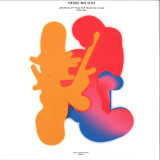
Previously only available on CD in Japan via cult electronic label Far East Recording, Shinichiro Yokota’s album discography finally gets a long overdue vinyl release in the form of a limited-edition box set housing (!) six 12inches and a total of 24 songs showcasing the house legend’s celebrated sound. With a production style drawing from a rich blend of funk, hip hop, electronic, and Japanese influences, Yokota’s music is loved for its simplicity, its hypnotic quality, and, most importantly, its SOUL – homegrown 90s soulful melodic club music…pure love!
The Pitstop Box, full of dancefloor treasures and sprinkled with downtempo gems, not only defines Yokota’s personal journey but also resonates as an essential contribution to the house genre and Japanese music in general. It includes his house hits (“Right Here Right Now”, “Night Drive” and the list goes on), a cover of “Simoon” by Haruomi Hosono’s Logic System, and a collaboration with his longtime partner and electronic music hero Soichi Terada.
Shinichiro Yokota began his musical history in Tokyo, inspired by electronic music giants such as Yellow Magic Orchestra and Kraftwerk. He co-founded Far East Recording with the great Soichi Terada (who also worked with WRWTFWW for the Omodaka compilation) in 1990. After releasing the now highly sought after Far East Recording album with Terada in 1992 (from which his viral hit “Do It Again” is from), he took a hiatus from music and, most notably, brought his passion for sports cars to the next level by launching Night Pager, a company he started with his wife, specializing in tuning sports cars and modifying limiters for competition racers. It’s this side of Yokota’s life which has inspired the design of the Pitstop Box. He triumphantly came back to music with the album Do It Again and Again in 2016, consisting of unreleased 90s recordings as well as new material, and followed it up with I Know You Like It in 2019. His work has influenced generations of producers, and has expanded Japanese house music's reach on the global stage. Experience it on vinyl now.
Full unadulterated pleasure forever - from night drives to dancefloors.
WRWTFWW Records presents its third collaboration with Japanese electronic/ambient/synth-pop crew Interior, this time with the release of band member Daisuke Hinata’s forgotten solo treasure from 1989: Tarzanland. The feel-good/smooth ride LP is available as a limited-edition turquoise and light pink vinyl housed in a heavyweight 350gsm sleeve with obi strip.
Available on vinyl for the first time ever, Tarzanland is late 80s California sun-soaked kankyo ongaku, minimalistic proto-chillwave, the synth melody of a pleasant Sunday breeze as the ocean waves breathe in and breathe out. Steve Winwood and Steely Dan come to mind as the ambient sound design of an imaginary John Hughes movie unfolds as all pieces of the puzzle come together for a blissful journey of simple pleasures.
Daisuke Hinata is a Grammy-nominated artist, composer, producer, and member of Interior. This is WRWTFWW’s third release centered around the work of the band, following the reissue of their Haruomi Hosono-produced self-titled debut (1982) and the first release ever of Sculpture of Time (Apocalypse), their rarely heard before commissioned piece for German environmental artist NILS-UDO. All still available on We Release!
*Music You've Never Heard Anywhere Else Before*
Kindred spirits Passepartout Duo and Inoyama Land embody the essence of play - charting a new chapter and reinvigorating the environmental music and electronic landscape.
Passepartout Duo is formed of Nicoletta Favari (IT) and Christopher Salvito (IT/US), who since 2015 have been on a continuous journey travelling the world's corners, engaged in a creative process they term "slow music". Having been guests of many notable artist residencies and with live performances in cultural spaces and institutions, their evocative music escapes categorisation. With no fixed abode their musical pilgrimage brought them to Japan first in 2019, which prompted a deep connection to Kanky? Ongaku 'environmental music', a genre in which Inoyama Land is often associated with, soundtracking the duo's first immersive experience. In 2023 the duo revisited Japan and set out to reconnect in particular with the music of Inoyama Land, performed by Makoto Inoue and Yasushi Yamashita. The highly revered album 'Danzindan-Pojidon' (1983) produced by Haruomi Hosono amongst other well publicized and acclaimed reissues (Light in The Attic Records' Grammy-nominated compilation 'Kanky? Ongaku'), produced a global resurgence and admiration of the environmental music movement. Nicoletta took the lead to seek out Inoyama Land and in making contact successfully their intrigue and eagerness to meet was warmly reciprocated, and the group scheduled to meet in the form of a spontaneous improvisation session. "We're deeply concerned with what it means to be a duo, and what it means for people to connect through music."
Radio Yugawara is a unique one-off transmission from a specific place and point in time, unlikely to ever occur again. The respective duo's approach can really be described as "tuning in", a tuning into each other, to themselves, and to the surrounding nature of Yugawara. Like waves that travel off-world, sounds travel through the universe and can be lost forever if we don't seek them out. In finding a harmonic affinity within their instruments and a spiritual kinship in their interwoven performance, Radio Yugawara at its core is an interpretation of feeling, of close human interaction and the true essence of discovery.
"The album is both a transmission from a location, but also a tuning into the surroundings and to each other. Music in this kind of ephemeral moment is much less about active creation and more about discovering something which is already there in the air."
- A1: Toki No Hazimari
- A2: Yakusoku
- A3: One'slove
- A4: Gogo No Kyuusoku
- A5: Ai Ha Maboroshi
- B1: Wander Lust
- B2: Mati
- B3: Itudemo Sobani
- B4: When I Met The Grey Sky
- B5: Breakin’ Blue
Taeko Onuki's 1st album "Grey Skies" will be released on white collar vinyl! (Originally released on September 25, 1976)
After Sugababes disbanded, he signed a solo artist contract with Crown Records.
Recorded between June ~ August 1976, Tatsuro Yamashita, Ryuichi Sakamoto, Makoto Yano, and Tin Pan Alley (Haruomi Hosono,
Shigeru Suzuki, Tatsuo Hayashi) participated in this masterpiece of city pop.
- A1: Jun Sato - Lorang
- A2: Fumihiro Murakami - Miko
- A3: Tadahiko Yokogawa - Stop Me
- A4: Love Peace Trance - Yeelen
- B1: Ichiko Hashimoto - Lete
- B2: Yosui Inoue - Pi Po Pa
- B3: Eiki Nonaka - Phlanged Vortex Clip
- C1: X Cara - Night In Aracaju
- C2: Poison Girl Friend - Nobody
- C3: Dream Dolphin - Take No Michi
- D1: Keisuke Sakurai - Harai Cd Version
- D2: Hiroki Ishiguro - Unity
- D3: Dido Shizuru Ohtaka Michiaki Kato - Mermaid
- D4: Keisuke Kikuchi - Retro Electric
2024 repress
Music From Memory is excited to announce a special compilation that they’ve been working on for some time now; MFM053 – VA – Heisei No Oto – Japanese Left-field Pop From The CD Age (1989-1996). Compiled by long-time friends of the label, Eiji Taniguchi and Norio Sato, Heisei No Oto delves into a world of music released almost exclusively on CD and brings together a fascinating selection of discoveries from a little known and overlooked part of Japan’s musical history.
The last ten or so years have seen a global wave of interest in Japanese music encompassing ambient, jazz, new wave and pop records from the 1980s, some of which is increasingly considered the most innovative and visionary music of that time. Although some music from this period, in the form of ‘City Pop’ or ‘rare groove’ records, had been coveted by collectors and DJs for a number of years, most Japanese music from the time was little known outside and often even within Japan.
Sometime around the mid 2000s, two Osaka record store owners, Eiji Taniguchi of Revelation Time and Norio Sato of Rare Groove, along with a handful of deep Japanese diggers such as Chee Shimizu of Organic Music records in Tokyo, began to explore beyond the typical ‘grooves’ or ‘breaks’. Much like their counterparts in Europe and the US, they began delving into home-grown ambient, jazz, new wave and pop records, discovering visionary music, often driven by synthesizers or drum computers, that broke beyond the typical confines of their genres.
Spending tireless hours in local record stores and embarking on digging trips across the country, Eiji Taniguchi and Norio Sato, much like Chee Shimizu, have been at the forefront of unearthing and introducing many of the very Japanese records now loved and sought after around the world. Yet as YouTube algorithms and vinyl reissues would transport such music into the global consciousness and demand and therefore scarcity intensified for such records, so Eiji and Norio have recently begun to turn their attention to CDs.
The title of the compilation Heisei No Oto refers to the sound of the Heisei era, which began in 1989 and corresponds to the reign of Emperor Akihito until his abdication in 2019. Marking the culmination of one of the most rapid economic growths in Japanese history, 1989 also coincided with the music industry’s final shift away from vinyl in favour of CDs. And, although compact discs were first introduced seven years earlier it wasn’t until late into the ‘80s that, beyond dance music labels, CDs became the exclusive format for major and independent labels in Japan and throughout the world.
This however didn’t signal the end of the innovation in Japan. Many of those same musicians who have become known for their work in the ‘80s would continue to produce outstanding music well into the mid ‘90s, as greater innovation and advances in musical equipment allowed Japanese musicians and producers to refine and explore new sounds. While musicians such as the seminal Haruomi Hosono, whose productions feature on a number of tracks, would continue to push the boundaries of these new technologies, these technological advances also meant less established musicians were able to make use of increasingly affordable but state-of-the-art equipment.
Including music by Haruomi Hosono as well as Yasuaki Shimizu, Toshifumi Hinata and Ichiko Hashimoto who have become known and loved around the world in recent years, Hesei No Oto also features Japanese pop star Yosui Inoue, producers Jun Sato and Keisuke Kikuchi in aaddition to less established artists from the contemporary, jazz, new wave, pop and dance music scenes. Bringing together a selection of tracks that seem to define these specific genres and in fact move fluidly between a number of them, the music on the compilation is again underscored by experimentations with synthesizers and drum computers though with something of a gentle Pop sensibility. Reimagined here then under the encompassing term ‘Left-field Pop’, this is an exciting chapter in Japanese musical history that has only just begun to be fully explored.
VA - Heisei No Oto - Japanese Left-field Pop From The CD Age (1989-1996) is a 2xLP/2xCD that includes liner notes by Chee Shimizu and artwork by Hagihara Takuya and is released on February 28th.
Born in Beirut, Lebanon, Rami Gabriel has been a motive force in rock n' roll, jazz, Arabic, and experimental music communities across North America for over twenty years. In that time, he has released numerous projects across genres and under many names. On his debut LP for Sooper Records, Rami trips all the breakers. In his own name and voice for the first time, That's what I been sayin' is not so much a debut as a conflagration in Rami Gabriel's worldly underground. Drawing on Punk, Krautrock, Dub, No Wave, and lo- fi, the territory occupied by That's what I been sayin' is astringent, minimal, and buzzing with the sound of machines dancing in the wind. "I'm used to putting out records based on genre," says Rami of his multiple endeavors. "I was listening to one of the `70s Brian Eno records where he took his experimental work and his songs and put it all together, and I was thinking, `Why don't I try to put all the different ways I've been working for the last couple years onto one record?'" That's what I been sayin' ignites this vision with an album that ranges from the motorik-driven krautrock of "Like a monk" to the unexpected trance-like pairing of "Buzuq synth." That's what I been sayin' is a furnace of Rami's insuppressible impulses, where he undertakes to ask and answer: what is left of punk but making do with what is at hand? At times direct and scorching, at others meditative and wandering, That's what I been sayin' compresses Rami's understanding as a composer, musician, and singer into a restless, 11-track love letter to the underground. For Fans of The Fall, Haruomi Hosono, Brian Eno, and Scientist.
- Yellow Magic Orchestra - Seoul Music
- Sandii - Zoot Kook
- You An’ Me Orgasmus Orchestra - Sakisaka To Momonai No Gokigen Ikaga One Two Three
- Yukihiro Takahashi - Drip Dry Eyes
- Jun Togawa - Suki-Suki-Daisuki
- Miharu Koshi - Parallelisme
- Haruomi Hosono & Yukihiro Takahashi - Bikkuri Party No Theme
- Apogee & Perigee - Sakasa Kenjin Eagas
- Haruomi Hosono - Yumemiru Yakusoku
- Hajime Tachibana - Rock
- Ryuichi Sakamoto - Riot In Lagos
- Jun Togawa - Radarman
- Haruomi Hosono - Platonic
- Super Eccentric Theater - Beat The Rap
- Yellow Magic Orchestra -Rap Phenomena
- Ryuichi Sakamoto - Lexington Queen
- Sheena - Chanel No #5 No On The Rock
- Testpattern - Beach Girl
- Yukihiro Takahashi - Flashback
- Tamao Koike - Automne Dans Un Miroir
- Interior - Ascending
Recording technology was completely revolutionized in the 80s by the multitrack recorder, with the popularity of 24-channel SSL consoles sweeping the world. Japanese pop music created during this wave of digital improvement is now recognized worldwide as ""City Pop."" Techno Pop was another offshoot born of the same revolution. Precise, computer-controlled beats produced by groups like Yellow Magic Orchestra (YMO) introduced a different type of sound to the masses. By now, these works have been brought into the international limelight and continue to be a major influence on today's music.
At the center of Tokyo’s Techno Pop scene was ALFA/YEN Records. The label left behind an impressive body of work, but much of it wasn't made widely available... until now! This new, definitive compilation focuses on the music archives of the YEN Records catalog, available for the first time exclusively at Light in the Attic. This is a true celebration of Japan's Techno Pop scene of the 80s, reissued with the intent that future generations, internationally, will be able to discover, enjoy, and appreciate ALFA/YEN and its significant contributions to the sonic landscape of the 80s and beyond.