quête:key west

Genres
Tout
Evan Parker & Bill Nace - Branches

Evan Parker & Bill Nace

Branches

12inchROKU043
OTOroku
21.11.2025

For his last solo record ‘Through a Room’, Bill Nace shifted his usual saturated guitar sound and added tapes, hurdy gurdy, doughnut pipe, bird calls and the mysterious Japanese taishōgoto. Setting up for the final night of his three day residency at OTO with only the taishōgoto soundchecked, Nace hoped that Parker would arrive with his small soprano as its opposite. “I’ve been interested in state change, you know, playing until there’s a shift in time.” Known for his development of multiphonics to produce a constantly shifting pattern, Evan Parker has evolved an instantly recognizable sound - his work the soprano most distinct. Happily, it was the soprano Evan brought with him and as soon as the two start to play they entwine - taking off in a double helix of keys and reed primed for endless reconfiguration. Space warps under the velocity of playing, the pitch rising unrelentingly. It felt like unending lift off in the room, sheer energy until the last note makes remember your feet have been on the floor the whole time. Total time bending shredding.


"They had never played together before. They had never even met each other before this springtime 2024 concert at London’s Café Oto.

Evan Parker, circular breathing maestro of the saxophone, a legend in the universe that is Free Improvisation since the late 1960s and Bill Nace, one of the most intriguing experimental “noise” guitarists of the 1990s/2000s underground scene.

For those of us who have been enamored by the live and documented work of both these gents, this Café Oto duo was a must-hear event. It could have gone anywhere musically and that would have been totally fine. Particularly with Evan having a history of being thrown into a variety of challenging collaborations throughout his career, employing the learned elegance of trust in his own sensitivity to listening, responding, leading, following, sparring, intertwining, dialoguing, creating in the instant and, essentially, dignifying the non-hierarchical grace of chance.

The aesthetics of socialist consideration in Evan Parker’s playing, in his community of expanded and personal technique, for a younger player such as Bill Nace, strikes an exemplary model. This notion of respect would be entirely the reason Nace, when offered a residency at the most critical “new music” room in England, would request to play in duo with Parker.

Bill Nace came to prominence mostly during the apex of experimental music activity in and around Western Massachusetts in the early days of the aughts, with a focus on visual art and free improvisation guitar action. He could be found in the daytime hours, his head hanging down over a notepad, penning fine-tuned illustrations and abstract line drawings, while in the evenings he’d be attending any number of basement noise gigs, many of which he’d be participating in. His guitar style came across as being informed as much as by the physicality of his writing utensils in friction to the page as it was to his hearing and redefining of radical recordings ranging anywhere from the Black Unity Group to Black Flag.

Utilizing various metal files and other small cylindrical objects Bill would allow his guitar and amplifier to be in tandem with the improvisatory movements of his body as the instrument balanced, intentionally and, at times, precariously, upon his lap. The performances came across thrilling and daring and they would be mostly in the context of venues nothing more than a low-ceilinged damp and dank New England basement, a clutch of people hanging onto rusty pipes or sitting up on dilapidated washer/dryer machines, the shards of Bill’s “file guitar” sounds ringing out like the most alive music on Earth.

By the time Bill reached Café Oto in early 2024 he had relocated to Philadelphia all the while releasing a succession of collaborative LPs on his Open Mouth label to present his developing progression of solo and collaborative work. He also would find himself considerably engaged with playing the electric taishōgoto, a keyboard-activated string instrument from Japan which can exist as a one, two, four, five, or six string oblong sound object. Bill’s approach to the taishōgoto would not be too unlike his approach to the traditional electric guitar, though no outboard implements such as files, sticks, and rocks are utilized. The similarity would lie wholly with Bill’s full immersion of high velocity action-playing where, with the taishōgoto, an electric drone beauty occurs. The flurry of sonics and resultant harmonics emanating from the amplifier (which Bill opts to dial into with borderline loud-as fuck volume settings) furthers the meta-mantra properties of the instrument in an astounding display of drone dynamism.

This sound world of Bill’s two-stringed taishōgoto on this Café Oto night worked beautifully with Evan Parker’s improvisatory saxophone conceptions. The duology achieved instant lift off at ground zero only to find it’s eventual finale as if it were organically ordained. Time seemingly morphed from its ancient human construct of control, rendered inconsequential to the torrential transcendence of the room wildly activated by the magic resonance of the multi-directional pan-spatial sonance of the music as if it were some beatific blessing. It was one of those nights where art as a liberating force of spirit gifted the listeners with an offering of exaltation and joy. It was entirely mystical and mind blowing. A night of Total Music."

Thurston Moore, London, 2025

pré-commande21.11.2025

il devrait être publié sur 21.11.2025

26,85
SISTER IRENE O'CONNOR - FIRE OF GOD'S LOV
  • Fire (Luke 12:49)
  • Nature Is A Song
  • Springtime (In Australia)
  • Mass-Emmanuel
  • Messe Du Saint Esprit
  • Light (John 8:12)
  • O Brother (Matt. 7:1-5)
  • Mary Was Here
  • Teenager's Chorus
  • O Great Mystery (John 6)
  • Christ Our King (Col. 1:13)
  • Keshukoran
également disponible

FIRE VINYL[24,79 €]


Fire of God's Love ist das legendäre Album der australischen Nonne Schwester Irene O'Connor aus dem Jahr 1973 - eine aufrichtige, gefühlvolle und unbewusst psychedelische Songfolge, die der Selbstreflexion und dem Erwachen des inneren Geistes gewidmet ist. Das Album ist eine Sammlung von originellen spirituellen Folksongs, die von O'Connor geschrieben und mit Gitarre, E-Orgel, Drumcomputer und ihrer engelsgleichen Stimme interpretiert wurden. Es wurde von ihrer Mitschwester und Toningenieurin Sister Marimil Lobregat auf erstaunlich futuristische Weise aufgenommen und abgemischt. Freedom To Spend bietet die erste autorisierte Neuauflage dieses heiligen Grals seit 1976; das Album wurde mit Sorgfalt und Bedacht aus den besten verfügbaren Quellen restauriert und remastered. Als junge römisch-katholische Nonne im Orden der Franziskanerinnen von Maria begann Schwester Irene 1953 ihre musikalischen Aktivitäten, als sie von Sydney in ein Kloster in Singapur zog und begann, Kinder mit Lernschwierigkeiten zu unterrichten. Nachdem sie sich eine Akustikgitarre zugelegt und drei einfache Akkorde gelernt hatte, blühten Irenes Lieder dank der Begeisterung der Kinder auf. Durch einen glücklichen Zufall arbeitete ein Elternteil eines Schülers bei einem kommerziellen Radiosender in Singapur, und Irene wurde eingeladen, im Studio des Senders aufzutreten und aufzunehmen. Sie ging hin, trug ihre Ordenstracht und hatte ihre Gitarre dabei, und nahm dort 1965 ihren ersten eigenen Song auf. Unter dem Pseudonym Myiriam Frances, um innerhalb ihres Ordens anonym zu bleiben (,Nonnen machten so etwas nicht", bemerkte O'Connor), veröffentlichte Phillips Ende der 1960er Jahre eine Reihe von Platten von Schwester Irene. Im Kloster in Singapur lernte Schwester Irene Schwester Marimil Lobregat kennen, eine Mitbrüderin aus dem Franziskanerorden, die Anfang der 1960er Jahre von den Philippinen auf die Insel gezogen war. Mehr als ein Jahrzehnt später trafen sie sich, wie durch göttliche Fügung, in einem anderen Kloster in Point Piper in Sydney wieder. Marimil, ebenfalls Musikerin und Klangenthusiastin, arbeitete als Audio- und Videotechnikerin beim Catholic Radio and Television Centre in Homebush im Westen Sydneys. Schwester Irene, die treu an ihren musikalischen Fähigkeiten feilte, und Schwester Marimil schmiedeten den Plan, sich an mehreren Sonntagnachmittagen im Zentrum zu treffen und die Lieder zu komponieren, die später auf ,Fire of God's Love" erscheinen sollten. Die Lieder von ,Fire of God's Love" werden von Schwester Irene mit ihrer engelsgleichen Sopranstimme gesungen (mit Texten in Englisch, Latein und Malaiisch) und von Schwester Marimil produziert und auf einem Teac 3340S 4-Spur-Tonbandgerät aufgenommen. Marimil trug maßgeblich dazu bei, die unheimliche Jenseitigkeit zu zaubern, die das Album durchzieht. Die kristallklare Stimme von Schwester Irene wird exquisit von einem schimmernden Mosaik aus Hall und analogen Synthesizer-Klängen umhüllt, während sie wie eine Glocke in der Dunkelheit erklingt und so lange nachhallt, bis die Wahrheit oder das Göttliche erscheint. Themen wie Barmherzigkeit, Gnade, Licht und Geheimnis werden von sanften Akustikgitarrenklängen und ewigen Pianotönen untermalt, die sich langsam auf vibrierenden Fäden drehen. Bei den Songs mit Keyboards spielte Schwester Irene alle Parts live in Echtzeit, einschließlich der Basspedale. Die Drum Machine wurde von derselben Orgel erzeugt, die sie spielte, und gleichzeitig ausgeführt. All dies trägt zu einer Atmosphäre erhöhter Präsenz bei, einem organischen Blitz, der tief aus dem Unterbewusstsein kommt. Entstanden aus Ideen, die in einem ruhigen Kloster und abgeschieden von weltlichen Einflüssen entstanden sind, wird der liturgische Rahmen des Albums durch die innige Hingabe zweier Schwestern gefiltert - ihre eigene Interpretation von Popmusik, befreit von Anmaßung und oberflächlichem Glamour. Der Titel des Albums stammt, wie viele seiner Songs, aus einem Bibelvers, in diesem Fall Lukas 12:49. Aber Schwester Irene und Schwester Marimil haben ihn in einen Raum gebracht, in dem alle spirituell Suchenden die Übertragung oder: ungewöhnliche Hermeneutik schätzen können. Die Texte sprechen universelle Bedürfnisse, Wünsche und Sehnsüchte an: ewige Liebe und Zuneigung, ein Ende der Einsamkeit, eine neue Form der Erleichterung, Befreiung von der Angst vor dem Tod. Anstelle von Hymnenformeln bedient sich Schwester Irene, vielleicht unbeabsichtigt, der damals modischen Folk- und Psychedelic-Musik, um eine Predigt zu halten, die sich wie Liebesbriefe an eine göttliche Präsenz liest und über jede formale Religion hinaus zur Seele spricht. ,Fire of God's Love" ist ein inspirierendes Archiv früher elektronischer Experimente zwischen zwei befreundeten Frauen und Mystikerinnen, eine Dokumentation ihrer göttlichen Energie, die auf disziplinierte Weise kanalisiert wurde. Bei seiner Erstveröffentlichung war es weder ein durchschlagender Erfolg noch ein Misserfolg, sondern wurde vor allem mit Neugierde aufgenommen. Die beiden haben nie wieder gemeinsam Musik gemacht, und in den 50 Jahren seitdem zieht ihre einmalige Zusammenarbeit weiterhin Zuhörer an, die sie in Plattenläden entdecken (sei es die Originalpressung von Phillips oder die klanglich überlegene Neuauflage von 1976 bei Alba House Communications) oder eher über YouTube, als zufällig entdeckter und heiß diskutierter Kultklassiker. Heute lebt Schwester Irene in Sydney, Australien, und freut sich, dass ein neues Publikum in ihrer Musik mit Schwester Marimil einen Sinn findet. Ihre Geschichte ist ein Beweis dafür, dass man nicht viel braucht, um ein visionäres, zeitloses Album zu schaffen: ein Tonbandgerät, Freundschaft und ,The Fire of God's Love", um den Weg in die Zukunft zu ebnen. Das kann ein spiritueller Freund sein oder ein irdischer Begleiter direkt neben einem. Sister Irene O'Connors ,Fire of God's Love" wird am 14. November über Freedom To Spend auf Vinyl, CD und als digitale Ausgabe veröffentlicht.

pré-commande14.11.2025

il devrait être publié sur 14.11.2025

23,49
SISTER IRENE O'CONNOR - FIRE OF GOD'S LOV

SISTER IRENE O'CONNOR

FIRE OF GOD'S LOV

12inchFTSLPC134
Freedom to Spend
14.11.2025

Fire of God's Love ist das legendäre Album der australischen Nonne Schwester Irene O'Connor aus dem Jahr 1973 - eine aufrichtige, gefühlvolle und unbewusst psychedelische Songfolge, die der Selbstreflexion und dem Erwachen des inneren Geistes gewidmet ist. Das Album ist eine Sammlung von originellen spirituellen Folksongs, die von O'Connor geschrieben und mit Gitarre, E-Orgel, Drumcomputer und ihrer engelsgleichen Stimme interpretiert wurden. Es wurde von ihrer Mitschwester und Toningenieurin Sister Marimil Lobregat auf erstaunlich futuristische Weise aufgenommen und abgemischt. Freedom To Spend bietet die erste autorisierte Neuauflage dieses heiligen Grals seit 1976; das Album wurde mit Sorgfalt und Bedacht aus den besten verfügbaren Quellen restauriert und remastered. Als junge römisch-katholische Nonne im Orden der Franziskanerinnen von Maria begann Schwester Irene 1953 ihre musikalischen Aktivitäten, als sie von Sydney in ein Kloster in Singapur zog und begann, Kinder mit Lernschwierigkeiten zu unterrichten. Nachdem sie sich eine Akustikgitarre zugelegt und drei einfache Akkorde gelernt hatte, blühten Irenes Lieder dank der Begeisterung der Kinder auf. Durch einen glücklichen Zufall arbeitete ein Elternteil eines Schülers bei einem kommerziellen Radiosender in Singapur, und Irene wurde eingeladen, im Studio des Senders aufzutreten und aufzunehmen. Sie ging hin, trug ihre Ordenstracht und hatte ihre Gitarre dabei, und nahm dort 1965 ihren ersten eigenen Song auf. Unter dem Pseudonym Myiriam Frances, um innerhalb ihres Ordens anonym zu bleiben (,Nonnen machten so etwas nicht", bemerkte O'Connor), veröffentlichte Phillips Ende der 1960er Jahre eine Reihe von Platten von Schwester Irene. Im Kloster in Singapur lernte Schwester Irene Schwester Marimil Lobregat kennen, eine Mitbrüderin aus dem Franziskanerorden, die Anfang der 1960er Jahre von den Philippinen auf die Insel gezogen war. Mehr als ein Jahrzehnt später trafen sie sich, wie durch göttliche Fügung, in einem anderen Kloster in Point Piper in Sydney wieder. Marimil, ebenfalls Musikerin und Klangenthusiastin, arbeitete als Audio- und Videotechnikerin beim Catholic Radio and Television Centre in Homebush im Westen Sydneys. Schwester Irene, die treu an ihren musikalischen Fähigkeiten feilte, und Schwester Marimil schmiedeten den Plan, sich an mehreren Sonntagnachmittagen im Zentrum zu treffen und die Lieder zu komponieren, die später auf ,Fire of God's Love" erscheinen sollten. Die Lieder von ,Fire of God's Love" werden von Schwester Irene mit ihrer engelsgleichen Sopranstimme gesungen (mit Texten in Englisch, Latein und Malaiisch) und von Schwester Marimil produziert und auf einem Teac 3340S 4-Spur-Tonbandgerät aufgenommen. Marimil trug maßgeblich dazu bei, die unheimliche Jenseitigkeit zu zaubern, die das Album durchzieht. Die kristallklare Stimme von Schwester Irene wird exquisit von einem schimmernden Mosaik aus Hall und analogen Synthesizer-Klängen umhüllt, während sie wie eine Glocke in der Dunkelheit erklingt und so lange nachhallt, bis die Wahrheit oder das Göttliche erscheint. Themen wie Barmherzigkeit, Gnade, Licht und Geheimnis werden von sanften Akustikgitarrenklängen und ewigen Pianotönen untermalt, die sich langsam auf vibrierenden Fäden drehen. Bei den Songs mit Keyboards spielte Schwester Irene alle Parts live in Echtzeit, einschließlich der Basspedale. Die Drum Machine wurde von derselben Orgel erzeugt, die sie spielte, und gleichzeitig ausgeführt. All dies trägt zu einer Atmosphäre erhöhter Präsenz bei, einem organischen Blitz, der tief aus dem Unterbewusstsein kommt. Entstanden aus Ideen, die in einem ruhigen Kloster und abgeschieden von weltlichen Einflüssen entstanden sind, wird der liturgische Rahmen des Albums durch die innige Hingabe zweier Schwestern gefiltert - ihre eigene Interpretation von Popmusik, befreit von Anmaßung und oberflächlichem Glamour. Der Titel des Albums stammt, wie viele seiner Songs, aus einem Bibelvers, in diesem Fall Lukas 12:49. Aber Schwester Irene und Schwester Marimil haben ihn in einen Raum gebracht, in dem alle spirituell Suchenden die Übertragung oder: ungewöhnliche Hermeneutik schätzen können. Die Texte sprechen universelle Bedürfnisse, Wünsche und Sehnsüchte an: ewige Liebe und Zuneigung, ein Ende der Einsamkeit, eine neue Form der Erleichterung, Befreiung von der Angst vor dem Tod. Anstelle von Hymnenformeln bedient sich Schwester Irene, vielleicht unbeabsichtigt, der damals modischen Folk- und Psychedelic-Musik, um eine Predigt zu halten, die sich wie Liebesbriefe an eine göttliche Präsenz liest und über jede formale Religion hinaus zur Seele spricht. ,Fire of God's Love" ist ein inspirierendes Archiv früher elektronischer Experimente zwischen zwei befreundeten Frauen und Mystikerinnen, eine Dokumentation ihrer göttlichen Energie, die auf disziplinierte Weise kanalisiert wurde. Bei seiner Erstveröffentlichung war es weder ein durchschlagender Erfolg noch ein Misserfolg, sondern wurde vor allem mit Neugierde aufgenommen. Die beiden haben nie wieder gemeinsam Musik gemacht, und in den 50 Jahren seitdem zieht ihre einmalige Zusammenarbeit weiterhin Zuhörer an, die sie in Plattenläden entdecken (sei es die Originalpressung von Phillips oder die klanglich überlegene Neuauflage von 1976 bei Alba House Communications) oder eher über YouTube, als zufällig entdeckter und heiß diskutierter Kultklassiker. Heute lebt Schwester Irene in Sydney, Australien, und freut sich, dass ein neues Publikum in ihrer Musik mit Schwester Marimil einen Sinn findet. Ihre Geschichte ist ein Beweis dafür, dass man nicht viel braucht, um ein visionäres, zeitloses Album zu schaffen: ein Tonbandgerät, Freundschaft und ,The Fire of God's Love", um den Weg in die Zukunft zu ebnen. Das kann ein spiritueller Freund sein oder ein irdischer Begleiter direkt neben einem. Sister Irene O'Connors ,Fire of God's Love" wird am 14. November über Freedom To Spend auf Vinyl, CD und als digitale Ausgabe veröffentlicht.
pré-commande14.11.2025

il devrait être publié sur 14.11.2025

24,79
DEVIN DANIELS - GRANDIOSE

DEVIN DANIELS

GRANDIOSE

12inchVLGLP11
The Village
07.11.2025
  • Particle
  • Mind 1
  • Blink
  • Figment
  • Dios
  • Nightmare Kitten
  • Contrivance
  • Mind 2
  • Gravity
  • Expect Pain

The Village Records is proud to announce Devin Daniels" sophomore release "Grandiose", a modern jazz-epic composed entirely of original tunes composed by Devin, and performed by young west coast all-stars: Logan Kane on bass, Myles Martin on drums, and Javier Santiago on keys.

pré-commande07.11.2025

il devrait être publié sur 07.11.2025

24,79
Pet Shop Boys - Discography (Remaster) 2x12"

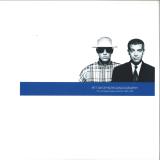
On May 30, 2025, Pet Shop Boys will reissue their 18-track greatest hits singles collection ‘Discography : The Singles Collection’ on limited blue vinyl, featuring updated 2023 remasters. ‘Discography’ was first released in 1991. The album charted No 3 in the UK album chart and includes ‘West End Girls’, ‘Always on My Mind’, ‘It’s a Sin’, ‘Domino Dancing’ and ‘Suburbia’.


Pet Shop Boys are an English synth-pop duo formed in London in 1981. Consisting of vocalist Neil Tennant and keyboardist Chris Lowe, they have sold more than 100 million records worldwide and were listed as the most successful duo in UK music history in the 1999 edition of The Guinness Book of Records. Pet Shop Boys have won three Brit Awards and have been nominated for 6 GRAMMY Awards. At the 2009 Brit Awards in London, they received an award for Outstanding Contribution to Music. In 2016, Billboard named Pet Shop Boys the number one dance duo or group since the chart's inception in 1976. In 2017, the duo received NME's Godlike Genius Award, and in 2024, they were awarded the Pop Pioneers award at the MTV Europe Music Awards.

pas en stock

Commandez maintenant et nous commanderons l'article pour vous chez notre fournisseur.

42,23

Last In: 6 months ago
The Appleseed Cast - Two Conversations
  • Hello Dearest Love
  • Hanging Marionette
  • Ice Heavy Branches
  • Losing Touching Searching
  • Fight Song
  • Sinking
  • Ththe Page
  • Innocent Vigilant Ordinary
  • How Life Can Turn
  • A Dream For Us
également disponible

Dearest Heart Vinyl[28,53 €]


Das Break-up-Konzeptalbum, nach dem niemand gefragt hat, The Appleseed Cast erschien 2003 auf Tiger Style inmitten einer zweiten Welle der Emo-Gegenbewegung. Jahrzehnte später gilt Two Conversations weithin als das Meisterwerk des Quintetts aus Lawrence, Kansas, ein atmosphärisches, seelenvolles Werk, das sich von den Klischees des Mittleren Westens distanziert. Verlieren Sie sich in den verträumten Klängen von Keyboards und Synthesizern und den Klängen von Stahlsaiten, aber seien Sie vor der Ausgangssperre wieder zu Hause.

pré-commande10.10.2025

il devrait être publié sur 10.10.2025

24,79
The Appleseed Cast - Two Conversations

The Appleseed Cast

Two Conversations

12inchNUMLPC2993
Numero Group
10.10.2025

Das Break-up-Konzeptalbum, nach dem niemand gefragt hat, The Appleseed Cast erschien 2003 auf Tiger Style inmitten einer zweiten Welle der Emo-Gegenbewegung. Jahrzehnte später gilt Two Conversations weithin als das Meisterwerk des Quintetts aus Lawrence, Kansas, ein atmosphärisches, seelenvolles Werk, das sich von den Klischees des Mittleren Westens distanziert. Verlieren Sie sich in den verträumten Klängen von Keyboards und Synthesizern und den Klängen von Stahlsaiten, aber seien Sie vor der Ausgangssperre wieder zu Hause.

pré-commande10.10.2025

il devrait être publié sur 10.10.2025

28,53
Jackie Mittoo - Reggae Magic LP 2x12"

Jackie Mittoo’s ‘Reggae Magic’ is a new collection from the great Jackie Mittoo. The album features a mixture of classic tunes and rarities from the period 1967-74, when Mittoo was at the height of his musical powers. Mittoo’s solo career began after the end of The Skatalites in 1965. He began pushing new musical boundaries, creating a uniquely identifiable organ-led funky reggae sound that owed as much to Booker T and The MGs, Jimmy Smith, Stax and Motown as to the post-ska and emergent rocksteady island rhythms of Kingston, Jamaica. His solo work at the legendary Studio One spanned seven albums and hundreds of singles.

Aside from producer and founder Clement ‘Sir Coxsone’ Dodd, it’s hard to think of anyone more central to the sound and success of Studio One than Mittoo; keyboard player extraordinaire, songwriter, arranger, musician, truly the Keyboard King at Studio One. Jackie Mittoo had been the youngest founding member of The Skatalites (at age 16), probably the most important group in Jamaican music. After they split, he became leader of the three pivotal groups at Studio One – The Soul Brothers, The Soul Vendors and Sound Dimension. He also became musical director for Studio One, helping create countless hits for singers Ken Boothe, Bob Andy, The Wailers, John Holt, Delroy Wilson and more – unforgettable tunes like Alton Ellis’ ‘I’m Still in Love with You’, Marcia Griffiths’ ‘Feel Like Jumping’, The Heptones’ ‘Baby Why’ and others. Between 1965 and 1968, many of the tunes created at Studio One can be attributed to Mittoo – timeless instrumental tracks, recorded either under his own name or those of The Soul Brothers, Soul Vendors and Sound Dimension, that have become the basis for literally 1000s and 1000s of Jamaican songs over many decades, giving the music an unsurpassed longevity.

The endurance of his music was as a direct result of significant developments in Jamaican music in the 1970s, namely the creation of three important new styles: Dub, Deejay and Dancehall. In the early 1970s Mittoo’s instrumental tracks were used as the musical source for a series of classic Studio One dub albums. At the same time Deejays at Studio One, including Dillinger, Prince Jazzbo and Dennis Alcapone, began toasting over these same popular rhythms to create their own new songs. In the mid-70s, a new generation of Studio One singers and deejays, including Sugar Minott, Freddie McGregor, Johnny Osbourne, Michigan & Smiley and others, began once again creating new melodies over these original instrumentals, signalling the birth of a new Jamaican style that became known as ‘dancehall’.

As dancehall swept across the island, rival producers copied these now classic rhythms. These original Jackie Mittoo-driven tunes spread like a virus throughout Jamaican music; be they the instrumental cuts to tunes such as Alton Ellis’ ‘Mad Mad’ , ‘I’m Just A Guy’, Larry Marshall’s ‘Mean Girl’, Slim Smith’s ‘Rougher Yet’, and instrumentals such as Mittoo’s classic ‘Hot Milk’ or ‘One Step Beyond’, The Sound Dimension’s ‘Real Rock’, ‘Heavy Rock’, ‘Full Up’, ‘Drum Song’, ‘Rockfort Rock’ … and the list goes on. These tracks became a constant soundtrack to the island, emitting from the ever-present sound of speaker boxes strung up around dancehalls. This recycling travelled even farther afield; The Sound Dimension’s instrumental ‘Real Rock’, updated by Willie Williams on his classic ‘Armageddon Time’ was in turn covered by The Clash. Lily Allen sampled Mittoo’s debut solo single ‘Free Soul’ for number one hit ‘Smile’; Dawn Penn’s ‘You Don’t Love Me (No, No, No)’, accompanied by The Soul Vendors, was revived by Penn and producers Steely & Cleevie in 1994, since covered by Rihanna, Ghostface Killah, Stephen Marley, Damian Marley and Beyonce. And so it goes; an endless time-leaping, continent-hopping diasporic musical map of the world with all roads essentially leading back to one man – Jackie Mittoo.

pas en stock

Commandez maintenant et nous commanderons l'article pour vous chez notre fournisseur.

28,78

Last In: 6 months ago
The Bongolian - Indian Summer of Love LP
  • A1: Burning Man Of Calcutta
  • A2: Master Blaster Tendulkar
  • A3: Nehru Jacket Required
  • A4: Indian Summer Of Love
  • A5: Kathakali Eye Dancer
  • B1: Acid Test Angel
  • B2: Baadshar Of Bollywood
  • B3: Mucha Mushroom Man
  • B4: Beyond The Perfumed Garden
  • B5: Human Be In
  • B6: Farewell To Varanasi
également disponible

Black Vinyl[23,32 €]


Indian Summer of Love finds The Bongolian immersed in a new set of sounds and influences for a new Belle Epoch. It’s a musical landscape informed by the Sixties psychedelia of India via a Haight Ashbury happening.

It’s a kaleidoscopic vision that takes us from a 20th century Fin de Siècle and lands us in the here and now of the 21st Century. It’s for dancers, for seekers and is all underscored by The Bongolian’s trademark heavy rhythms and breaks. It’s another fine instalment of essential cuts for the dancefloor and for high fidelity listening, quality is guaranteed.

From the East to the West, welcome to the Indian Summer of Love. Nasser Bouzida performs drums, percussion, guitars and keys whilst the album features several new flavours to the Bongolian sound with the prominent instrumentation of sitars and bansuri, along with flute, trumpet, saxophone and trombone performances from several stellular international guest musicians.

pré-commande03.10.2025

il devrait être publié sur 03.10.2025

27,69
JOHNNY INDIGO - AMERICAN DAYDREAMS

JOHNNY INDIGO

AMERICAN DAYDREAMS

12inchJII01LP2000002
JOHNNY INDIGO
12.09.2025
  • Buffalo Sky
  • Ridin Hi
  • Mexicali
  • Like A Stray
  • The Ballad Of Billy Major
  • Pink Flamingos
  • Frontier Romance
  • Montana
  • Massive Jesus
  • Ragdolls

"Entweder du machst, was alle machen, besser als alle anderen oder du machst, ganz was anderes..." Was Sergio Leone für den Western war, ist Johnny Indigo für die Rock Musik. Anders, rauher, echt und kompromisslos. Johnny Indigo ist das Soloprojekt von dem Wahlwiener Mathias Kollos, der bereits für viele Künstler hinter den Kulissen und auf verschiedensten Bühnen tätig ist und war. Jetzt hat er den Schritt nach vorne getan und tritt mit seiner Band "The El Dorado Wildfire" mit eigens für Live arrangierten Versionen von seinem Debut Album "American Daydreams" gemeinsam auf. Wie klingt das verschmitzte Grinsen von Terence Hill? Was hört man, wenn Clint Eastwood seine unvergleichliche Miene verzieht? Den eigenständigen Mix aus Alternative Rock, Southern Rock, Country und Blues von Johnny Indigo. Das Album vermischt Roots und Country Elemente mit modernem Rock und Blues. Ästhetisch geprägt von dem Image der Spaghetti Western, ohne in unnötige Cliches zu verfallen. Vergangene Acts wie Led Zeppelin, Jimi Hendrix oder die Rolling Stones werden ebenso nicht vernachlässigt wie moderne Formationen wie Queens Of The Stone Age, The Black Keys oder Rival Sons.

pré-commande12.09.2025

il devrait être publié sur 12.09.2025

24,79
Star Feminine Band - Jusqu'au Bout Du Monde

Star Feminine Band

Jusqu'au Bout Du Monde

12inchBBLP185
Born Bad Records
12.09.2025

Star Feminine Band, hardest working women in Beninese show business, are releasing their third album on Born Bad, who went all out for their first. Some get malaria at the sight of that sticky world label : rest assured, the world is all they deserve after nine years of hard work. These eight young women, from a village that even Beninese can't quite place, started out in hard mode.

They had to convince themselves that it was worth a shot, but also their family, their village and an entire continent.

André Balaguemon, composer, manager and lyricist, does a lot, while remaining in the background. He put the group together, included his three daughters, houses everyone with his wife Edwige who also manages dances and costumes. He gave them a musical training, and created the framework for them to continue school while rehearsing hard. From local heroes to UNICEF ambassadors, the group has made it. The very existence of this new album is a testament to the perseverance of Grâce, Anne, Urrice, Bénie, Angélique, Sandrine, Julienne and Ashley. The personnel of this family affair has changed a bit : two new women have joined the group, which conquered bigger stages (Glastonbury in the summer, the X-mas BBC special).


This new album brings simple joys : watching them grow from Benin's first girl band to a band in its own right. And never forgetting why they took to the stage in the first place. Star Feminine Band makes straightforward music, taking no detours to express what's missing in the country. When Grâce advocates for kids getting a chance to get to school it's because there's nothing else more important to say that day. Teachers, don’t leave the kids alone, after all.


As they said on their first album, « music is our job », let them be that : musicians having a lot of fun on this album. It wanders through the vast territory of the countless West African styles. They even make a quick foray into reggae to talk about marriage (with a little rap thrown in), and interweave their voices in multiple languages (Waama, Ditamari, Bariba, Fon, Yoruba). And boy do they have hits. To each is own, but “L'enfant c'est un don de Dieu » (Child is god’s gift) is a mighty steamroller, methodically smoothing out the ground for dancing together to its final chorus, singing « debout-les-en-fants / get up, kids ! » along.


Smoother than the first two albums, supported by fine arrangements, ambitious keyboard parts and more complex vocal harmonies without losing any of their spontaneity, this third opus quietly adds to Benin's musical heritage. As they make clear in « Jusqu'au bout du monde », clever little number that we can already hear swelling up on stage: « oui, c’est Star Feminine Band qui a gagné - o / Star Feminine Band won».

pré-commande12.09.2025

il devrait être publié sur 12.09.2025

21,43
MATT WATTS - HOW DIFFERENT IT WAS WHEN YOU WERE THERE LP
  • A1: Time Turns As An Engine
  • A2: Joanne
  • A3: Your Love Is Not Your Own
  • A4: How Many Years
  • A5: Just One Man To Be Turned Loose
  • A6: If We’ll Ever Be Here Again
  • B1: Things Have Surely Changed
  • B2: Days Have Come And Gone
  • B3: Endless Twisted Root
  • B4: Many An Friend Too Kind
  • B5: Known Thieves

Matt Watts (1987–2024) was born in Philadelphia, in the USA. He recorded his first songs along the banks of the Missouri River in Montana when he was 15, touring the north-western states extensively as a young troubadour. He arrived in Belgium at the tender age of 19 and grew into a full-fledged singer-songwriter that combines a profound respect for the folk tradition with contemporary influences.

His solo album, Songs from a Window, was released in 2014 by Starman Records and received glowing praise in the press.

Matt Watts played dozens upon dozens of shows in the Benelux, often together with Stef Kamil Carlens and Nicolas Rombouts. While his predecessor Songs from a Window was a true solo album, How Different It Was When You Were There includes personal stories by Watts that have been subtly seasoned with wonderful musicians such as Nathalie Delcroix, Bjorn Eriksson, Geert Hellings (Stanton, Guido Belcanto), Maarten Moesen (Guido Belcanto), and bassist and this album’s producer, Nicolas Rombouts (formerly with Dez Mona, Stef Kamil Carlens, The Colorist, Guido Belcanto, and many others).

One of the highlights of this album, which truly showcases Matt Watts’ awakening, is “Many a Friend Too Kind”: a fabulous duet with Stef Kamil Carlens. Watts also performed in Zita Swoon Group’s production, The Ballad of Erol Klof. Sadly, Matt Watts passed away in June 2024.

MORE QUOTES

“Watts, who washed up in Belgium, sings his personal, poetic lyrics in a high, whispering voice that immediately brings Nick Drake to mind.” 4/5 **** (De Standaard)

‘This is an album full of sincere sentiment and stimulating, evocative stories in fine songs that have been beautifully coloured by Watts and his band, and on which he brings the narrative aspect to the fore more than ever.’ (daMusic)

‘Sensitive songwriter, exceptional storyteller... Introverted, dark, more country, less Nick Drake.’ (OOR)

‘This is real, raw, authentic. Well done, Matt, very well done.’ (Keys And Chords)

‘And no matter how young Matt Watts may be, the singer/musician writes timeless songs reminiscent of those by David Blue and John Martyn...’ (Rootstime)

‘Matt knows how to strike that chord in the same way as Cohen, which immediately moves you. From the beginning to the end of this record.’ (Gigview)

‘A singer-songwriter who believes in simplicity (not a note too many), but grabs you by the scruff of the neck from the start and confronts you with the painful beauty of romance.’ (Luminous Dash)

‘Let's be honest here: Belgium has simply become too small for an album like “How Different It Was When You Were There”. Song material of this calibre deserves a much, much wider audience!’ 4.5***** (ctrl.alt.country)

pré-commande12.09.2025

il devrait être publié sur 12.09.2025

23,95
Various - Dolores: Salsa & Guaracha From 70's French West Indies

In Guadeloupe, many people think that jazz and ka music are like a ring and a finger. To some extent, the same could be said about so called Latin music and the music played in the French West Indies.

Both aesthetics were born in the Caribbean and bear so many connections that they can easily be considered cousins. In constant dialogue, there are lots of examples of their fruitful alliance and have been for a while. The English country dance that used to be practiced in European lounges came to be called kadrille in Martinique and contradanza in Cuba. They both featured additional percussion instruments inherited from the transatlantic deportation. Drawing from shared feelings about the same traumatized identity – later to be creolized – it would be hard not to assume that they were meant to inspire each other. The golden age of the orchestras that graced the Pigalle nights during the interwar period further proves the point. As soon as the 1930s, Havana-born Don Barreto naturally mixed danzón and biguine music in a combo based at Melody's Bar. In the following decade, Félix Valvert, a conductor who was born and raised in Basse-Terre in Guadelupe, also worked wonders in Montparnasse with La Coupole, which was an orchestra made up of eclectic musicians. Afro- Caribbean performers of various origins were often hired on rhythm and brass sections in jazz bands, which used to enliven the typical French balls of the capital. In the 1930s and onwards, Rico’s Creole Band was one of them.


Martinican violinist-clarinettist Ernest Léardée, who would become the king of biguine music as well as the main figure of French Uncle Ben's TV commercials (a dark stigma of post-colonial stereotypes), had musicians from the whole Caribbean sphere play at his Bal Blomet – and they all enchanted "ces Zazous-là" (according the words of Léardée's biguine-calypso piece). In les Antilles (French for French West Indies), music history started to speed up in the 1950s, when trade expanded and radio stations grew bigger. The Guadelupean and Martiniquais youth tuned in their old galena radio sets to South American and Caribbean music. As for the women traders, les pacotilleuses, they bought and sold goods across different islands (the "passing of items through various hands" was thought to be most pleasurable) and brought back countless sounds in their luggage. Such was the case of Madame Balthazar, who once returned from Puerto Rico with the first 45rpm and 33rpm to ever enter Martinique.

Out of this adventure was created the famous Martinican label La Maison des Merengues, a music business she opened and undertook with her husband and which proved to be a major landmark. At the end of the 1950s, in Puerto Rico, Marius Cultier competed in the Piano International Contest playing a version of Monk's Round 'Midnight. He won the first prize and this distinction foreshadowed everything that was to come. Cultier, the heretic Monk of jazz, was quickly praised for writing superb melodies, always tinged with a twist that conferred a unique sound to his music. It didn't take long for the gifted self-taught musician to get to play with Los Cubanos, making a name for himself thanks to his impressive maestria on merengues.

The rest is history. Besides, in the late 1950s, Frantz Charles-Denis, born into the upper middle class in Saint-Pierre and better known by his first name Francisco, went back home after working at La Cabane Cubaine – a club located rue Fontaine where he had caught the Latin fever. Francisco's music was therefore heavily marked by his Cuban cousins' influence, which gave the combos he led a specific style and also led to renewal. Things were swinging hard in La Savane, located in the main square in Fort-de-France. He set up the Shango club close by and tested out the biguine lélé there, a new music formula spiced up with Latin rhythms. Soon afterwards, fate had him fly to Puerto Rico and Venezuela.

As for percussionist Henri Guédon (percussions were only a part of his many talents), he was born in Fort-de-France in May 22nd 1944, the day marking the celebration of the abolition of slavery. As an old man, he could remember that in " his father's Teppaz, a lot of hectic 6/8 music was constantly playing...". In the opening lines of his Lettre à Dizzy, a small illustrated collection of writings published by Del Arco, he highlighted the huge impact that cubop had on him as a teenage boy, around 1960. He eventually turned out to be the lider maximo in La Contesta, a big band steeped in Latin jazz. He was also the one who originated the word zouk to describe music which brought the sound of the New York barrio to Paris. It was the culmination of a journey that started in Sainte-Marie: "a mythical place for bélé, the equivalent of Cuban guaguancó". In the early 1960s, the tertiary economy developed to the detriment of agriculture. Yet rural life was where roots music emerged in Martinique and in Guadeloupe.

Record companies played a major part in the process of Latin versions sweeping across the islands – before reaching everywhere else. Producer Célini, boss of the great Aux Ondes label, and Marcel Mavounzy, both the head of Émeraude records - a firm which was founded in 1953 - as well as the brother of famous saxophonist Robert Mavounzy, were big names to bear in mind. Although there were many of them - all of whom are featured on this record - Henri Debs was definitely the major figure in the recording adventure. He proved to be so influential that he even got compared to Berry Gordy. In the mid 1950s, when he acquired his first Teppaz, he worked on his first compositions: a bolero and a chachacha. Then, he became the one man who made people discover Caribbean music, from calypso to merengue. He was among the first ones to rush out to San Juan, Puerto Rico, to buy records and distribute them through a store run by one of his brothers in Fort-de-France. He had members of the Fania All Star come and perform there, which he was madly proud about. He was also the first one to pay attention to Haitian music, such as compas direct and various other rhythms which would soon flood the market. As a result, many of the combos hitting his legendary studio would end up boosted by widespread "Afro-Latin" rhythms. However, he never denied his identity: gwo ka drums were given a major role, although they were instruments which had long been banned from the "official" music spheres. The present selection bears witness to such a creative swarming. Here are fourteen tracks of untimely yet unprecedented cross-fertilization: all types of music rooted in the Creole archipelago have found their way, whatsoever, to the tracklisting. Whether originating from the city or being more rural, they all go back to what Edouard Glissant, in an interview about the place of West Indian music in the Afro-American scope, called "the trace of singing, the one which got erased by slavery." "It is so in jazz, but also in reggae, calypso, biguine, salsa... This trace also manifests through the drums, whether Guadelupean, Dominican, Jamaican or Cuban... None of them being quite the same. They all point to the idea of a trace, seeking it out and connecting to each other through it. This is the hallmark of the African diaspora: its ability to create something new, in relation to itself, out of a trace. It may be the memory of a rhythm, the crafting of a drum, a means of expression which doesn't resort to an old language but to the modalities of it." The opening track features one of the emblematic orchestras of this aesthetic identity, criscrossing many music types from the archipelago. The 1974 Ray Barretto guajira – Ray Barretto was a major New York drummer influenced by Charlie Parker and Chano Pozzo – is magnificently performed by Malavoi, a legendary Fayolais group (i.e from Fort-de-France). Additionally, the compilation ends on a piece by Los Martiniqueños de Francisco. It symbolically closes the circle as it is a genuine potomitan of Martinique culture which also functions as a tireless campaigner for Afro-Caribbean music. Practicing the danmyé rounds (a kind of capoeiria) to the rhythm of the bèlè drum, it delivers a terrific Caterete, a kind of champeta of Afro- Colombian obedience which was originally composed by Colombian Fabián Ramón Veloz Fernández for the group Wgenda Kenya. The icing on the cake is Brazilian Marku Ribas, who found refuge in Martinique in the early 1970s, bringing his singing to the last trance-inducing track. These two "versions" convey the whole tone of a selection composed of rarities and classics of the tropicalized genre, swarming with tonic accents and convoluted rhythms. It is the sort of cocktail that the West Indians never failed to spice up with their own ingredients. For instance, the Los Caraïbes cover of Dónde, a famous Cuban theme composed by producer Ernesto Duarte Brito, has a typical violin and features renowned Martinique singer Joby Valente and his piquant voice.


The track used to be – or so we think – their only existing 45rpm. The meaningful Amor en chachachá by L'Ensemble Tropicana, a band which included Haitian musicians among whom was composer and leader Michel Desgrotte, also recalls how Latin music was pervasive in the tropics in the mid-1960s. They were the ones keeping people dancing at Le Cocoteraie in Guadelupe and La Bananeraie in Martinique. Around the same time, another "foreign" band, Congolese Freddy Mars N'Kounkou's Ryco Jazz, achieved some success on both islands by covering Latin jazz classics – such as their adaptation of Wachi Wara, a "soul sauce" by Dizzy Gillespie and Chano Pozo whose interweaving of strings and percussions can have anyone hit the dancefloor. How can you resist Dap Pinian indeed, a powerful guaguancó by Eugene Balthazar, performed by the Tropicana Orchestra and published by the Martinique-founded La Maison des Merengues? It also acts as a symbol of the maelstrom at work. Going by the name Paco et L'orchestre Cachunga, Roger Jaffory used to play guaguancó too: his Fania-inspired Oye mi consejo is one example of his style. Baila!!!!! Dancing was also one of the Kings' focus points. Oriza is a Puerto Rican bomba and a "classic" originally composed by Nuevayorquino trumpeter Ernie Agosto, which reserves major space for brasses, giving it a special sheen.

Emerging from the New York barrios crucible was also La Perfecta, a Martinique group originating from Trinidad, whose name directly references the totemic Eddie Palmieri figure as well as his own band, also called La Perfecta. Here they borrow Toumbadora from Colombian producer and composer Efraín Lancheros and interpret it by emphasizing percussions, which set fire to the track even more than the wind instruments. The same goes for Martinique's Super Jaguars, who use Tatalibaba – a composition by Cuban guitarist Florencio "Picolo" Santana which was made famous by Celia Cruz & La Sonora Matencera – as a pretext for sending their cadences into a frenzy. In a more typically salsa vein, the Super Combo, a famous Guadelupean orchestra from Pointe-Noire that was formed around the Desplan family and had Roger Plonquitte and Elie Bianay on board, adapt Serana, a theme by Roberto Angleró Pepín, a Puerto Rican composer, singer and musician also known for his song Soy Boricua. Here again, their vision comes close to surpassing the original. In the 1970s, L'Ensemble Abricot provided a handful of tracks of different syles, hence reaching the pinnacle of the art of achieving variety and giving pleasure. They played boleros, biguines, compas direct, guaguancó and even a good old boogaloo - the type they wanted to keep close to their hearts for ever, "pour toujours", as they sang along together in one of their songs. Léon Bertide's Martinican ensemble excelled at the boogaloo which had been composed by Puerto Rican saxophonist Hector Santos for the legendary El Gran Combo.


Three years later, in 1972, Henri Guédon, with the help of Paul Rosine on the vibraphone, tackled the Bilongo made famous by Eddie Palmieri. Such a classic!!!!! And so were the Aiglons, the band from Guadelupe: choosing to execute Pensando en tí, a composition by Dominican Aniceto Batista, on a cooler tempo than the original, they noticeably used a wonderfully (un)tuned keyboard in place of the accordion. On the high-value collectible single – the first one released by Les Aiglons under the Duli Disc label – there is a sticker classifying the track under the generic name "Afro". Now that is what we call a symbol. Jacques Denis

pas en stock

Commandez maintenant et nous commanderons l'article pour vous chez notre fournisseur.

21,43

Derniere entrée: 29 jours
Marcel Wave - Something Looming LP

Limited 180g black vinyl (500 copies worldwide)
“Marcel Wave combine sharp-eyed Northern lyricism with DIY guitar-janglers rooted in a retro C86 aesthetic. Epic finale ‘Linoleum Floor’...is a gloriously bleak rumination on the horrors of enforced late-night hedonism worthy of prime Pulp” UNCUT
Marcel Wave write eulogies for tragic actresses, ancient riverbeds and concrete obscenity. Their inaugural sonic instalment ‘Something Looming’ is part trades club symphony, part itchy serenade, and part wistful lament. As their heady concoction of ‘Meades meets Pat-E-Smith meets Kirklees Borough Council’ gets prepped to be formally baptised on a dank stage near you, Upset the Rhythm and Feel It Records have dutifully stepped in to deliver its songbook to the masses on both sides of the pond.
Formed when Lindsay Corstorphine and Christopher Murphy of Sauna Youth and brethren Oliver and Patrick Fisher of Cold Pumas were summoned by northern ink-slinger Maike Hale-Jones, Marcel Wave’s debut offering is a walk through a smoke-filled pub with yellowing wallpaper and all eyes on you. It’s a chronicle of the death of the docklands, the decline of industry, of the high street, of civic pride, of civilisations, of hopes and dreams. As Hale-Jones delivers the bad news in her low, West Yorkshire brogue, Corstorphine adds the bells and whistles via the frantic pulsations of a wheezing Hohner organ in tandem with Fisher O’s rasping guitar. MW are completed by the throbbing basslines of Murphy and Fisher P’s fervent rhythms.
The title itself sets the tone for the listener. There’s a sense of foreboding in Hale-Jones’ lyrics which sit at the quintet’s core—elegiac, sardonic and piquant in equal measure. A mixture of narrative epilogues and inward paeans, her words weave tales across a broad thematic church. Crooked tales of urban renewal and the voices left behind are probed in ‘Barrow Boys’ and ‘Stop/Continue’ and are at the fore in ‘Where There’s Muck There’s Brass’ with its refrain lamenting ‘Concrete and slate shine in the rain, cities destroyed, nothing to gain’. In these lyrics, tower blocks loom over terraced houses with the same shadows that the Hollywood sign casts over Peg Entwistle before she takes her tragic leap. ‘Peg’ and ‘Elsie’ are both meditations on two different actresses with different fates crushed by the cut-throat trappings of showbusiness: ‘The mad hopes break, fragile as glass. She traded it all, for the cutting room floor.’ A snaking, existential dread also runs through the album, stated more obliquely in the otherwise poppier interludes of the title track ‘Something Looming’ and album opener ‘Bent Out of Shape’, and present too on the comparatively ramshackle ‘Discount Centre’, where Hale-Jones reports ‘On a mini bus on the outskirts of Enfield, I’m losing all of my spark’. On the album closing weeper ‘Linoleum Floor’, it is laid barer still—a keyboard-led reflection on the deflating nights out of our early-twenties.
Marcel Wave invites the listener to dance to society’s decline, and then to later weep into its lukewarm pint.

pas en stock

Commandez maintenant et nous commanderons l'article pour vous chez notre fournisseur.

14,08

Last In: 7 months ago
Jose James / Ben Westbeech - Brownswood Remix Editions 007

OVERVIEW: Brownswood Remix Editions 007 sees Brownswood Recordings return to two classic moments from its back catalogue, offering a new vinyl edition of standout reworks by Moodymann and Yoruba Soul. Both remixes have become favourites among collectors and DJs alike, and this release brings them together on wax for the first time in over a decade.

The A-side features Moodymann’s remix of José James’ “Desire”, a seductive and slow-burning reinterpretation first released in 2008. With his signature raw soul and deep house textures, the Detroit visionary stretches out the track into a hypnotic, late-night groove—balancing José’s smooth vocal delivery with dusty drums and smoky atmosphere.

On the flip, Osunlade—under his Yoruba Soul alias—reimagines Ben Westbeech’s “So Good Today”, transforming it into a gently percussive, spiritually infused house cut. Drawing from Afro-Caribbean rhythms and warm keys, the remix remains one of the most enduring and beloved versions of Westbeech’s breakout track.
Though both remixes have long been available digitally or on separate releases, Brownswood Remix Editions 007 brings them together in a unified edition that highlights Brownswood’s long standing commitment to collaboration, reinterpretation, and timeless sound.

pas en stock

Commandez maintenant et nous commanderons l'article pour vous chez notre fournisseur.

18,45

Last In: 3 months ago
Various - BKS 07

Various

BKS 07

12inchBKS-07
Brooklyn Sway
25.07.2025

Brooklyn Sway's 7th drop might best be described as the black market edition, but as always we leave the gumshoe work to those heads out there savvy enough to figure it out themselves. Thugfucker alum Acid Tourist and BKS stalwart DeWinter remix celebrated West Coast sideman ROC's cover of a tune that needs no intro, transforming a torch song into an acid belter while keeping its quality intact. Charles Levine, best known as Charlie from Soul Clap, steers close to his usual antics with 'Ocean Waves & Ashtrays', his ashtrays obviously full of blunt ends as he runs the voodoo down on a sultry funk number laced with fat lead keys and ideal for beach party afterhours or smoky late-night sessions. Returning for a second BKS appearance, Ohm Hourani's 'SupaDupaFly' fetches the funk again with rap vocal samples sliding just inside the industry 10% rule set amidst seesawing synths for a woozy, extended effort sure to influence sobriety decisions. On 'Hearts & Diamonds,' label honcho Jay Prouty and mainstay David Paglia join forces jailbreaking two legendary NYC freestyle anthems into a combination that rocks more like high period New Order, so when you catch Fumero's psychedelic painting winking at you off the plate after a few spins, you'll understand exactly why the sway resides in Bucktown.

pas en stock

Commandez maintenant et nous commanderons l'article pour vous chez notre fournisseur.

11,56

Derniere entrée: 36 jours
EDITRIX - THE BIG E

Editrix

THE BIG E

12inchJNRLPC1501
Joyful Noise Recordings
25.07.2025
  • The Big E
  • The Queen
  • What's Wrong
  • The Jackhammer
  • Another World
  • No
  • Something Sweet
  • Real Fire
  • Flesh Debt
  • Slight Return

Editrix is a Massachusetts-rooted trio known for their wild, gnarly take on experimental rock. Blending jagged guitar riffs, unpredictable rhythms, and bursts of cartoonish eccentricity, the band creates a sound that's both chaotic and compelling. Composed of singer and guitarist Wendy Eisenberg, drummer Josh Daniel, and bassist Steve Cameron, Editrix thrives on musical risk-taking, often veering into noise-rock territory with a playful edge. On their latest release, The Big E, Editrix unleashes their fangs, resulting in a demonic wall of scuzz. But for as intense as Editrix sounds, the act is convivial and easygoing _ ingrained in deep friendships and speedy, yet jovial recording sessions. Editrix's most pummeling moments seem to be founded on a heartfelt connection, adding emotional resonance to their most feral noise. In the three years since their second LP Editrix II, Eisenberg, Daniel, and Cameron have thrived in individual states of motion _ in and away from music. New York City-based Eisenberg is an accomplished solo artist in the avant-garde realm, receiving recent acclaim for their album Viewfinder (released by American Dreams in 2024). They are also a prolific collaborator, performing in a handful of projects alongside the likes of romantic partner more eaze, Bill Orcutt, David Grubbs, and others. Cameron relocated from Massachusetts to New York City around the same time Editrix II came out, taking a slight step away from music to return to school. Daniel is the only member of Editrix left living in Massachusetts, and performs with the eclectic bands Landowner, Hot Dirt, and The Leafies. Due to Editrix being scattered, the band's new album, The Big E, found them toying with a fresh process. Editrix was quick to write off the idea of collaborating remotely, as the act relishes the warmth of happy accidents that only happen in person. The Big E sparked with Eisenberg, Daniel, and Cameron compiling a list of albums they each admire to establish a self-professed "vibe" up front. King Crimson, My Disco, and Horse Lords were a few key touchstones that shine through, their grounded grooviness balancing erraticism. Eisenberg also found themself infatuated with `70s outlaw country and Van Dyke Parks production. The Big E is titled after a comedic bit between band members, sharing its name with a prominent regional fair in Western Massachusetts, although the title-track aptly features massive E chords. When held up alongside Editrix II _ which found the act toying with Finnish death metal and harsh noise _ The Big E feels settled in its skin. Editrix recorded The Big E with legendary tech death producer Colin Marston (Krallice, Behold_, Dysrhythmia) at his soon-to-be-shuttered studio in Queens. Though these tracks sound toiled over and technical, they are very spontaneous. The majority of The Big E was captured live, with a handful of overdubs added after the fact and came to life over the course of four focused, but rewarding days. Eisenberg uses zen words like "meditative" and "evocative" to describe Editrix's methods, but the end result is crunchy, intricate, and impressively baffling. Easygoing as the band's operation may be, The Big E is a strong jump forward for Editrix inching them towards the center of the avant-rock constellation.

pré-commande25.07.2025

il devrait être publié sur 25.07.2025

22,27
Pluto - Pluto LP

Pluto

Pluto LP

12inchMOVLP1939C
Music On Vinyl
25.07.2025
  • A1: Crossfire
  • A2: And My Old Rocking Horse
  • A3: Down And Out
  • A4: She’s Innocent
  • A5: Road To Glory
  • B1: Stealing My Thunder
  • B2: Beauty Queen
  • B3: Mister Westwood
  • B4: Rag A Bone Joe
  • B5: Bare Lady

Pluto, although not necessarily one of those bands who spring immediately to mind as having been a seminal influence on the weaving of rock music’s tapestry, remain an excellent, if little-known and much underrated band.

The band’s only album Pluto (originally released on the Dawn label back in November 1971) has, during the latter half of the ‘90s, become a much sought-after item in the ever-expanding underground/progressive sector of the record collectors’ market. Conceived
initially by guitarist Paul Gardner and taking their name from the Disney cartoon character, they were formed in North London in 1970. The key members were Gardner and Alan Warner, two highly experienced campaigners from widely disparate musical backgrounds.

The album is a nice mix of hard rock, progressive rock and blues rock elements. The song writing is pretty solid and there are no fillers included. This lone Pluto LP is easy to recommend for those who like the early 70’s hard rock bands.

Pluto is available as a limited numbered edition of 750 copies on translucent magenta coloured vinyl

pré-commande25.07.2025

il devrait être publié sur 25.07.2025

33,19
VARIOUS - The Many Faces Of Deep Purple 2x12"

A Deep Dive Into Rock Royalty - The Many Faces of Deep Purple (2 LPS)
Step into the legendary world of Deep Purple with this exclusive double vinyl release, The Many Faces of Deep Purple. More than just a tribute, this compilation is a curated journey through the band's extensive musical legacy, featuring collaborations, rare recordings, and side projects from key members like Glenn Hughes, Joe Lynn Turner, Nicky Simper, Ian Gillan, Don Airey, and Jon Lord. Pressed by MPO for optimal sound quality, this deluxe edition includes 20 tracks across four sides, each selected to reveal a new facet of one of rock’s most influential bands.
Unreleased Gems, All-Star Collaborations & Classic Covers
This collection uncovers the band’s wider universe, from early recordings by Episode Six and Warhorse to powerhouse tracks by Trapeze, Funky Junction, and Quatermass II. Glenn Hughes lends his unmistakable voice to standout perfor- mances, including Piece of My Heart and Freak Out Tonight, while Joe Lynn Turner teams up with guitar icon Leslie West for a searing version of The Seeker. Listeners will also discover rare studio tributes and pre-fame moments, such as the spirited Deep Purple covers by Thin Lizzy members under the Funky Junction moniker.
A Must-Have for Collectors & Classic Rock Fans
Packaged in a striking gatefold sleeve and featuring liner notes that contextualize each track, The Many Faces of Deep Purple is a collector’s dream and a sonic treasure trove. Whether you’re a longtime fan or a new listener exploring rock’s golden age, this double LP release delivers an immersive and essential experience that celebrates the talent, evolution, and influence of the Deep Purple legacy. Available now in limited quantities, don’t miss your chance to own a unique piece of rock history.

pré-commande18.07.2025

il devrait être publié sur 18.07.2025

32,73
Tommy Guerrero - From The Soil To The Soul

2025 Repress
Yes! Tommy Guerrero’s much-loved 4th LP – the smooth West Coast classic From The Soil To The Soul - gets its first ever vinyl release. As the follow up to his revered Soul Food Taqueria, this album was originally released by Quannum Records 2006 but only on CD. Working with Tommy directly, the LP has been fully remastered, cut on to heavyweight wax, and comes with artwork freshly reworked by the man himself.
From The Soil To The Soul represents a continuation of Tommy’s blissful guitar-soul whilst demonstrating increasingly complex chops and a slightly darker side to his distinctive sound. His spare, effortless funk is blended here with elements of Americana, heavy psych, lo-fi fuzz and intoxicating Latin rhythms. Combined with his typically breezy, laid-back San Franciscan style, it’s a vibe from start to finish.
Recorded primarily in his home studio, Tommy wrote, arranged and played nearly all the instruments, including bass, guitar, keyboards, percussion and kalimba. Renowned street artist Barry McGee, aka Twist, designed the cover art which Tommy has now recast in a deep, deep red for the vinyl version.
As ever with Tommy, the highlights are many and memorable. From twinkling, sun-drenched opener “Hello Again” to the penultimate, punk-rocking track “Let Me In Let Me Out” (featuring the melodic yet fearsome rapping of Lyrics Born), the variety across the LP is relentless, but satisfying, and without once losing focus.
We’re treated to the gorgeous hip-hop blues of “The Under Dog”, Meters-style Hammond B-3 jams like “War No More” and “No Guns More Glory” and Balearic bangers like Bing Ji Ling’s star-turn on the sleazy “Don’t Fake It.”
Curumin’s soulful guest vocal elevates the already-great Brazilian lounge feels of “Salve” to hitherto unscaled heights and the heavy, driving basslines - funky and warm on “Badder Than Bullets”, sombre and intense in “Tomorrow’s Goodbye” and “Molotov Telegram” – never fail to move both body and soul.
But our favourite track is the beautiful breezy pop of “Just Ain’t Me”. A bittersweet, skipping ballad which boasts an incredibly rare instance of Tommy singing. “What you want from me, I can never give” he repeats throughout, lending the already-melancholic atmosphere greater poignancy. It would’ve been number 1 across the planet in a parallel universe.

pas en stock

Commandez maintenant et nous commanderons l'article pour vous chez notre fournisseur.

25,17

Last In: 9 months ago
LOS LOBOS - NATIVE SONS

LOS LOBOS

NATIVE SONS

2x12inchLPNW5526LE
New West Records
23.06.2025
  • A1: Love Special Delivery, Drums – Aaron Ballesteros, Keyboards – Phil Parlapiano, Trombone – Dannie Ramirez*, Written-By – Espinoza*, Garcia*
  • A2: Misery, Backing Vocals – Barrence Whitfield, Drums – Jason Lozano (2), Percussion – Camilo Quinones, Written-By – Don Juan Mancha
  • A3: Bluebird / For What It's Worth, Drums – David Hidalgo Jr., Percussion – Camilo Quinones, Written-By – Stephen Stills
  • A4: Los Chucos Suaves, Drums – David Hidalgo Jr., Percussion – Camilo Quinones, Written-By – Lalo Guerrero
  • B1: Jamaica Say You Will, Drums – David Hidalgo Jr., Keyboards – Phil Parlapiano, Written-By – Jackson Browne
  • B2: Never No More, Drums – Jason Lozano (2), Keyboards – Phil Parlapiano, Written-By – Don Malone*, Percy Mayfield
  • B3: Native Son, Drums – David Hidalgo Jr., Keyboards – Phil Parlapiano, Written-By – David Hidalgo, Louie Pérez*
  • B4: Farmer John, Drums – David Hidalgo Jr., Written-By – Dewey Terry, Don Harris*
  • B5: Dichoso, Percussion – Camilo Quinones, Trombone – Dannie Ramirez*, Written-By – Giménez*
  • C1: Sail On, Sailor, Backing Vocals – Enrique "Bugs" Gonzalez*, Drums – David Hidalgo Jr., Keyboards – Phil Parlapiano, Percussion – Camilo Quinones, Written-By – B. Wilson*, J. Rieley*, R. Kennedy*, T. Almer*, V. Parks*
  • C2: The World Is A Ghetto, Backing Vocals – Barrence Whitfield, Little Willie G., Drums – Jason Lozano (2), Percussion – Camilo Quinones, Vocals – Little Willie G., Written-By – M. Dickerson*, C. Miller*, H. Brown*, H. Scott*, L. Oskar*, L. Jordan*, S. Allen*
  • C3: Flat Top Joint, Drums – Jason Lozano (2), Written-By – Dave Alvin
  • C4: Where Lovers Go, Drums – David Hidalgo Jr., Written-By – Mario Paniagua
pré-commande23.06.2025

il devrait être publié sur 23.06.2025

26,43
Gnarls Barkley - The Odd Couple LP
  • A1: Charity Case
  • A2: Who’s Gonna Save My Soul
  • A3: Going On
  • A4: Run (I’m A Natural Disaster)
  • A5: Would Be Killer
  • A6: Open Book
  • A7: Whatever
  • B1: Surprise
  • B2: No Time Soon
  • B3: She Knows
  • B4: Blind Mary
  • B5: Neighbors
  • B6: A Little Better

With its cinematic origins The Odd Couple is the natural title for the second album by a pair who seem to spend as much time in wardrobe as the studio and whose recordings are often compared to film scores. Their greatest hit, 2006's "Crazy" was even built around a chunk of a spaghetti western soundtrack. Yet after the success of 2006's excellent St Elsewhere, the collaboration of singer Thomas "Cee-Lo Green" Callaway and producer Brian "Danger Mouse" Burton has become a permanent institution.

Two years on, The Odd Couple stands up proudly alongside its predecessor. The basic recipe hasn't been drastically altered--Danger Mouse's skittering beats and snap-crackle-pop production still provide the perfect platform for Cee-Lo's mighty, soulful wail. If anything, the pair have refined and sharpened their approach to a razor's edge. The key is the way the musical flavors intersect: the Arthur Lee-meets-N.E.R.D. stroll of "Surprise," the jubilant jumble of gospel/soul/synthpop on "Going On," the Otis Redding-shares-a-treadmill-with-Outkast feel of the single "Run (I'm a Natural Disaster)." The cumulative effect is one of a group whose trick-bag has a never-ending supply of happy surprises.

pré-commande20.06.2025

il devrait être publié sur 20.06.2025

27,69
Watchtower - Energetic Disassembly - O-MIX (LP)
  • Violent Change
  • Asylum
  • Tyrants In Distress
  • Social Fears
  • Energetic Disassembly
  • Argonne Forest
  • Cimmerian Shadows
  • Meltdown
également disponible

Black Vinyl RE-MIX (LP)[30,88 €]

Re-Mix Golden Vinyl[30,88 €]

O-Mix Black Vinyl[30,88 €]


Als Watchtower im Jahre 1985 ihr Debütalbum "Energetic Disassembly" veröffentlichen, stellen sie die Metal-Welt auf den Kopf. Das Material setzt völlig neue Maßstäbe. Innovativer (und extremer) geht zu dieser Zeit niemand zu Werke. Unbeholfene Stilbeschreibungen wie "Jazz Metal" oder "Techno Thrash" werden kreiert. Ursprünglich werden Watchtower im Mai 1982 in Austin, Texas, aus der Taufe gehoben. In jenem Monat schließt sich Sänger Jason McMaster Bassist Doug Keyser, Schlagzeuger Rick Colaluca sowie Gitarrist Billy White an. In ihrem frühen Stadium zeigen sich Watchtower stark von der NWOBHM inspiriert und spielen Songs von Iron Maiden, Angel Witch und Raven nach - dazu natürlich etliche Nummern der kanadischen Prog-Götter Rush. In der Folge entwickelt die Band sukzessive ihren individuellen Stil und nimmt Demos mit eigenen Stücken auf. Aber die Plattenfirmen wollen nicht anbeißen. Aus diesem Grunde entschließt man sich dazu, auf dem eigenen Label Zombo Records das wegweisende Album "Energetic Disassembly" zu veröffentlichen (gepresst werden 3.500 LPs und 1.000 Kassetten).
"Ich kann mich noch lebhaft daran erinnern, wie ich Demokassetten an Fanzines verschickt habe und nahezu täglich Briefe mit Tapetradern ausgetauscht wurden," erinnert sich Sänger Jason Mc Master heute. "Ich erhielt u.a. Briefe von Gene Hoglan, Mike Portnoy, Jason Newsted und sogar Alan Tecchio Die Reaktionen waren fantastisch, aber wir klangen einfach so andersartig. Die Labels wussten nicht, wie sie uns seinerzeit hätten vermarkten sollen. Waren wir zu extrem? Ich denke schon." Pünktlich zum 40. Jubiläum von "Energetic Disassembly" erscheint über High Roller Records nicht nur eine De-Luxe-Edition des originalen Albums, sondern auch eine neue Abmischung. Die Re-Mixes wurden im Jahre 2009 von Jared Tuten, einem engen Freund von JasonMcMaster, in den Top Hat Studios angefertigt. Als Sahnehäubchen gesellen sich dazu vier Bonus-Stücke: eine Art Drum-Soundcheck namens "Rick On Parade", das kurze Gitarren-Instrumental "BW115" sowie frühe Fassungen von zwei Songs, die später auf dem zweiten Watchtower-Album landen sollten, hier aber noch mit Jason McMaster am Gesang - "Instruments Of Random Murder" und "The Eldritch". Jason McMaster verließ Watchtower im Jahre 1988 in Richtung Dangerous Toys. Sein Nachfolger war Alan Tecchio (von Hades). Zusammen mit ihm wurde 1989 in West-Berlin das zweite Album "Control And Resistance" für Noise Records aufgenommen.

pré-commande30.05.2025

il devrait être publié sur 30.05.2025

30,88
Watchtower - Energetic Disassembly - RE-MIX (LP)
  • Asylum (2024 Remix)
  • Meltdown (2024 Remix)
  • Tyrants (2024 Remix)
  • Argonne Forest (2024 Remix)
  • Energetic Disassembly (2024 Remix)
  • BW115: (2024 Remix)
  • Violent Change (2024 Remix)
  • Rick On Parade (2024 Remix)
  • Social Fears (2024 Remix)
  • Cimmerian Shadows (2024 Remix)
  • Instruments Of ... (2024 Remix, Bonus Song)
  • The Eldritch (2024 Remaster, Bonus Song)
également disponible

-O-MIX Silver Sinyl[30,88 €]

Re-Mix Golden Vinyl[30,88 €]

O-Mix Black Vinyl[30,88 €]


Als Watchtower im Jahre 1985 ihr Debütalbum "Energetic Disassembly" veröffentlichen, stellen sie die Metal-Welt auf den Kopf. Das Material setzt völlig neue Maßstäbe. Innovativer (und extremer) geht zu dieser Zeit niemand zu Werke. Unbeholfene Stilbeschreibungen wie "Jazz Metal" oder "Techno Thrash" werden kreiert. Ursprünglich werden Watchtower im Mai 1982 in Austin, Texas, aus der Taufe gehoben. In jenem Monat schließt sich Sänger Jason McMaster Bassist Doug Keyser, Schlagzeuger Rick Colaluca sowie Gitarrist Billy White an. In ihrem frühen Stadium zeigen sich Watchtower stark von der NWOBHM inspiriert und spielen Songs von Iron Maiden, Angel Witch und Raven nach - dazu natürlich etliche Nummern der kanadischen Prog-Götter Rush. In der Folge entwickelt die Band sukzessive ihren individuellen Stil und nimmt Demos mit eigenen Stücken auf. Aber die Plattenfirmen wollen nicht anbeißen. Aus diesem Grunde entschließt man sich dazu, auf dem eigenen Label Zombo Records das wegweisende Album "Energetic Disassembly" zu veröffentlichen (gepresst werden 3.500 LPs und 1.000 Kassetten).
"Ich kann mich noch lebhaft daran erinnern, wie ich Demokassetten an Fanzines verschickt habe und nahezu täglich Briefe mit Tapetradern ausgetauscht wurden," erinnert sich Sänger Jason Mc Master heute. "Ich erhielt u.a. Briefe von Gene Hoglan, Mike Portnoy, Jason Newsted und sogar Alan Tecchio Die Reaktionen waren fantastisch, aber wir klangen einfach so andersartig. Die Labels wussten nicht, wie sie uns seinerzeit hätten vermarkten sollen. Waren wir zu extrem? Ich denke schon." Pünktlich zum 40. Jubiläum von "Energetic Disassembly" erscheint über High Roller Records nicht nur eine De-Luxe-Edition des originalen Albums, sondern auch eine neue Abmischung. Die Re-Mixes wurden im Jahre 2009 von Jared Tuten, einem engen Freund von JasonMcMaster, in den Top Hat Studios angefertigt. Als Sahnehäubchen gesellen sich dazu vier Bonus-Stücke: eine Art Drum-Soundcheck namens "Rick On Parade", das kurze Gitarren-Instrumental "BW115" sowie frühe Fassungen von zwei Songs, die später auf dem zweiten Watchtower-Album landen sollten, hier aber noch mit Jason McMaster am Gesang - "Instruments Of Random Murder" und "The Eldritch". Jason McMaster verließ Watchtower im Jahre 1988 in Richtung Dangerous Toys. Sein Nachfolger war Alan Tecchio (von Hades). Zusammen mit ihm wurde 1989 in West-Berlin das zweite Album "Control And Resistance" für Noise Records aufgenommen.

pré-commande30.05.2025

il devrait être publié sur 30.05.2025

30,88
Watchtower - Energetic Disassembly - O-MIX (LP)
  • Violent Change
  • Asylum
  • Tyrants In Distress
  • Social Fears
  • Energetic Disassembly
  • Argonne Forest
  • Cimmerian Shadows
  • Meltdown
également disponible

-O-MIX Silver Sinyl[30,88 €]

Black Vinyl RE-MIX (LP)[30,88 €]

Re-Mix Golden Vinyl[30,88 €]


Als Watchtower im Jahre 1985 ihr Debütalbum "Energetic Disassembly" veröffentlichen, stellen sie die Metal-Welt auf den Kopf. Das Material setzt völlig neue Maßstäbe. Innovativer (und extremer) geht zu dieser Zeit niemand zu Werke. Unbeholfene Stilbeschreibungen wie "Jazz Metal" oder "Techno Thrash" werden kreiert. Ursprünglich werden Watchtower im Mai 1982 in Austin, Texas, aus der Taufe gehoben. In jenem Monat schließt sich Sänger Jason McMaster Bassist Doug Keyser, Schlagzeuger Rick Colaluca sowie Gitarrist Billy White an. In ihrem frühen Stadium zeigen sich Watchtower stark von der NWOBHM inspiriert und spielen Songs von Iron Maiden, Angel Witch und Raven nach - dazu natürlich etliche Nummern der kanadischen Prog-Götter Rush. In der Folge entwickelt die Band sukzessive ihren individuellen Stil und nimmt Demos mit eigenen Stücken auf. Aber die Plattenfirmen wollen nicht anbeißen. Aus diesem Grunde entschließt man sich dazu, auf dem eigenen Label Zombo Records das wegweisende Album "Energetic Disassembly" zu veröffentlichen (gepresst werden 3.500 LPs und 1.000 Kassetten).
"Ich kann mich noch lebhaft daran erinnern, wie ich Demokassetten an Fanzines verschickt habe und nahezu täglich Briefe mit Tapetradern ausgetauscht wurden," erinnert sich Sänger Jason Mc Master heute. "Ich erhielt u.a. Briefe von Gene Hoglan, Mike Portnoy, Jason Newsted und sogar Alan Tecchio Die Reaktionen waren fantastisch, aber wir klangen einfach so andersartig. Die Labels wussten nicht, wie sie uns seinerzeit hätten vermarkten sollen. Waren wir zu extrem? Ich denke schon." Pünktlich zum 40. Jubiläum von "Energetic Disassembly" erscheint über High Roller Records nicht nur eine De-Luxe-Edition des originalen Albums, sondern auch eine neue Abmischung. Die Re-Mixes wurden im Jahre 2009 von Jared Tuten, einem engen Freund von JasonMcMaster, in den Top Hat Studios angefertigt. Als Sahnehäubchen gesellen sich dazu vier Bonus-Stücke: eine Art Drum-Soundcheck namens "Rick On Parade", das kurze Gitarren-Instrumental "BW115" sowie frühe Fassungen von zwei Songs, die später auf dem zweiten Watchtower-Album landen sollten, hier aber noch mit Jason McMaster am Gesang - "Instruments Of Random Murder" und "The Eldritch". Jason McMaster verließ Watchtower im Jahre 1988 in Richtung Dangerous Toys. Sein Nachfolger war Alan Tecchio (von Hades). Zusammen mit ihm wurde 1989 in West-Berlin das zweite Album "Control And Resistance" für Noise Records aufgenommen.

pré-commande30.05.2025

il devrait être publié sur 30.05.2025

30,88
MOJO MEN - Dance With Me: The Autumn Singles - Produced By Sly Stone LP

Celebrating the 60th anniversary of these iconic Mojo Men recordings, this fantastic collection now comes pressed on heavyweight colour vinyl with all new artwork and liners. Produced by none other than Sly Stone (from Sly & The Family Stone) during the group"s Autumn label era, these West Coast recordings include the breakout hit "Dance With Me" (1965) alongisde other rare cuts and rock and pop gems. Sly Stone, then a rising producer and arranger, helped shape the sound of many Bay area artists during the early-mid 60s. The partnership between Sly Stone and The Mojo Men was a key chapter in both of their stories.

pré-commande30.05.2025

il devrait être publié sur 30.05.2025

31,05
Sage Martens - Chamber Music for Lawn Mowers (TAPE)

Stereogum: »Here’s a cool new musical project that feels both out-there and extremely mundane. In 2022, the great Colorado experimentalist M. Sage teamed up with Lieven Martens (Dolphins into the Future) under the name Sage Martens. Their album, »Riding Fences«, was an ambient classical exercise designed to explore the idea of ›Western‹ music. They’re back this year with another conceptual offering (...)«

»Chamber Music for Lawn Mowers« is the second album by Sage Martens. This time, Matthew Sage (RVNG, Fuubutsushi) and Lieven Martens (Edições CN, Dolphins into the Future) sing the lawn.

Did you know a clean-cut lawn is a desire we inherited from the British?

Yes, the British dumped this pleasure into our collective consciousness. Those humorless Victorians who enjoyed having their black pudding on the lawn. They came to this uninspired impression while mis-looking at Italian paintings. Yes indeed, while gazing at these paintings they mistook green lanes for green lawns. Thus it became hip. Every stuffed truffle commanded his gardener to cut the grass.

As a result, this Victorian lust for sterile gardens with pretty green lawns nudged our world into water spillage and pesticide clouds. This new priority produced exhaust clouds and prudish monocultural landscapes. Just by looking at Italian paintings.

As with most of Western history, the practice was exported to America and then turbocharged. By shearing clear the prolific brush of pastures, prairies, forests and glens, biodiversity becomes an aesthetic casualty with long-suffering ecological ripples. An inherited practice narrows the bandwidth of experience.

And so, the childhood habit of humming along in key to the drone of a gas-powered mower while trimming a suburban lawn extrapolates into something expanded — an unanswered question about the harmonics of landscape practices.

M. Sage: Bb clarinet, alto saxophone, sine wave, lawn mowing, processing L. Martens: computer, analog synthesis, digital processing With W. Van Gils: lawn mowing

pré-commande27.05.2025

il devrait être publié sur 27.05.2025

15,08
Miles Davis - Black Beauty: Miles Davis At Fillmore West LP 2x12"

Dateline: April 10, 1970. Setting: The storied Fillmore West in San Francisco, CA. Context: Miles Davis, three days removed from his first session for Jack Johnson and, with newly recruited soprano saxophonist Steve Grossman in tow, opening shows for countercultural heroes the Grateful Dead on the latter’s home turf. Result: The initial rumblings of a thrilling era in which Davis and his cohorts would again upend jazz and popular conceptions of the genre with music steeped in groove, improvisation, and hang-on-for-your-life adventurousness. All captured on Black Beauty: Miles Davis at Fillmore West.

Mastered at MoFi’s California studio, pressed at Fidelity Record Pressing in California, and housed in a Stoughton gatefold jacket, Mobile Fidelity's numbered-edition 180g 33RPM 2LP set helps bring what went down that spring evening in Bill Graham’s venue to your listening room with exceptional clarity, balance, and presence. Originally only released in Japan in 1973 and unavailable in the United States until the late ‘90s on compact disc, this marks the first time Black Beauty has been issued on domestic vinyl. The wait is worth it.

Benefitting from quiet surfaces and excellent definition, these LPs present the band’s livewire energy and torrential storm of notes with captivating dynamics, pacing, and fullness. At its core, this audiophile reissue takes you into the walls of sound erected by a band learning on-the-fly the sheer power, will, and breadth of the electric jazz Davis was orchestrating and realizing, on the spot, would reach rock audiences that until that point had only a faint awareness of his mad-scientist experimentation. The sense of release and reach conveyed by these carefully restored records make it clear the veteran bandleader was in the process of a permanent shift that he’d chase for the next five years.

Given Davis was only a few months away from releasing the pioneering double album Bitches Brew, it shouldn’t come as a surprise that much of the fare here adheres to similar explorative approaches. Turbulent rhythms, provocative trumpet passages, and rich, saturated tonal colors that seemingly splash against a blank canvas take precedence over any traditional attempts at organization and melody. Davis and Co. intentionally play everything on a line with the bandleader signaling changes with his horn via coded phrases. The group speaks a common language — with each member having gone to achieve iconic status for their career contributions and technical prowess.

In the company of Grossman, Chick Corea (piano), Dave Holland (bass), Jack DeJohnette (drums), and Airto Moreira (percussion), Davis constructs themes around “Directions,” “Miles Runs the Voodoo Down,” “It’s About That Time,” the title track to Bitches Brew, and more from his then most-recent studio works and the in-progress Jack Johnson. His farewell to the popular standards that for nearly two decades remained a part of his repertoire arrive via a brief dalliance with “I Fall in Love Too Easily,” a shortened albeit aggressive “Masqualero,” and the “Theme” finale of “Spanish Key.” Initially, Black Beauty lacked specific track listings due to Davis’ increasing frustration with listeners over-analyzing his music.

In retrospect, it’s difficult to blame anyone for wanting to view what’s on display here with the aural equivalent of a magnifying glass. Leaning in rock directions, yet maintaining an ear for spaciousness and solos, Black Beauty survives as a snapshot of a thrilling moment amid a transitory period in which evolution came fast and furious. Just two months later, Davis would add another instrumentalist to the lineup in the form of organist Keith Jarrett, and the perpetually restless visionary would blast off to a more atmospheric and arguably more chaotic universe.

Consider, then, this live document a bridge to that galaxy and a breathtaking example of the possibilities of jazz itself.

pré-commande30.04.2025

il devrait être publié sur 30.04.2025

88,19
JESS SAH BI - JESUS - CHRIST NE DECOIT PAS (TAPE)
  • A1: Ile De Gorée
  • A2: Il Veut Marcher Avec Toi
  • A3: Y Vou Balé Va
  • B1: Séhé Voulé
  • B2: Fortifie-Toi
  • B3: Il Veut Marcher Avec Toi (Remix)
  • B4: Loué
également disponible

Vinyl[22,27 €]


Jess Sah Bi is well-known as half of the legendary duo Jess Sah Bi & Peter One who brought homegrown Country-Americana to the West African masses with their smash debut Our Garden Needs Its Flowers in the mid-1980s. Touring stadiums and reaching listeners worldwide, their music has racked up millions of spins on YouTube and remains imprinted in the hearts of Ivorians of a certain age. ATFA reissued their album in 2018, garnering critical acclaim from publications including Pitchfork and Rolling Stone and reaching a new generation of listeners outside Ivory Coast (Cote d'Ivoire). Sometime in the early 90s, Die Sahbi - or Jesse, as he known to friends-became gravely ill with an unknown ailment and almost died. He visited various doctors and all kinds of religious healers and nothing helped. One day he went down to an Evangelical Christian revival in his neighborhood. They prayed over him and he was delivered. He says, "Their prayers helped chase out whatever demons and unhealthy spirits were inside me. After that my illness went away. When I went to the United States a few months later on an exchange program I wanted to make music to thank God because I was saved." He recorded an album of music praising God in order to honor a promise he made to himself at the depths of his desperation in the hospital. The album Jesus-Christ Ne Deçoit Pas Jesus Christ Does Not Let Us Down came out in 1991 and sold around 3000 cassettes in Ivory Coast. The master tape was lost along the way so the recording has never been on digital platforms until now. Jesse didn't have much time to record while visiting South Carolina, hence the relatively short album, 6 songs including two reprises for filler. A local pastor connected him with a studio and some American musicians (Robert Fortner and Gary Davis) to help. They added acoustic guitar, percussion and keyboard accompaniment to Jesse's soaring French and Gouro vocals, harmonica and finger-picked acoustic. The resulting recording is deeply soothing and contemplative music that perfectly compliments the songs already embraced by millions. But he had to find the rest of the studio expenses-$600 total-which he secured drawing cartoons for UNICEF. Jesse is Ivory Coast's first political cartoonist, a vocation for which he was widely celebrated at the time. It also made him a few enemies which lead to him leaving the country permanently a few years later. Jesus-Christ Ne Deçoit Pas is Jess Sah Bi's first and only gospel album. Fortunately, fans responded with enthusiasm: widespread radio airplay and concerts followed, along with a growing solo profile in the country. The first big gospel artists in Ivory Coast were the duo Mathieu et Constance, who emerged in 1989. There was a bigger gospel music movement in English-speaking counties like Ghana and Nigeria (Christians make up roughly 40% of the population in Ivory Coast, slightly less than Muslims). Jesse didn't have any intention of working in Christian music but he realized, "You don't make music to make money-you want to send a message." In the years since Jesus-Christ's release, gospel music in Ivory Coast has grown to become a key part of music culture in the country. Spiritual music appears in community actives across the public and private spectrum from religious gatherings and parties to television broadcasts and music festivals. And, as it has evolved and indigenized locally, gospel music has picked up elements of traditional Ivorian music, reggae and soul. The album ultimately precipitated the demise of the duo, who were soon separated geographically as Peter One relocated to Nashville. He went on to become a nurse and release a successful solo album on Verve following the ATFA collaboration. Nowadays Jesse lives in the Bay Area and continues to record and perform music wherever and whenever he has the chance. He is publishing a new book of humorous cartoons in 2025 and his most recent album Never Give Up came out in 2020

pas en stock

Commandez maintenant et nous commanderons l'article pour vous chez notre fournisseur.

14,08

Last In: 12 months ago
Drain Gang - Trash Island LP

Drain Gang

Trash Island LP

12inchYRLP0092
YEAR0001
31.03.2025

“Trash Island” is the second collaborative mixtape from Drain Gang. It features the biggest hit in the Drain Gang catalogue “Western Union”, which has accumulated millions of streams on DSPs. Featuring Yung Lean alongside key DG members Bladee, Ecco2k and Thaiboy Digital, this title is hotly anticipated by the fanbase. This will be the first time the mixtape is available on vinyl.

pré-commande31.03.2025

il devrait être publié sur 31.03.2025

27,94
SHOOTING STAR - HANG ON FOR YOUR LIFE
  • Flesh And Blood
  • Hang On For Your Life
  • Are You On My Side
  • Teaser
  • Hollywood
  • Breakout
  • You're So Good
  • She's Got Money
  • You've Got Love
  • Sweet Elatia
également disponible

WHITE/GOLD SUNBURST VINYL[29,83 €]


Gold vinyl. Building on the momentum of their debut, Shooting Star returned in 1981 with Hang On for Your Life, a dynamic follow-up that further cemented their place in the AOR rock scene. The album delivered a mix of anthemic rock and melodic hooks, with standout tracks like "Hang On for Your Life," "Hollywood," "Breakout," and "Are You on My Side" all receiving steady radio airplay. One of the album's most unique moments came with "Flesh and Blood," an up-tempo rock song featuring a soaring violin solo_a rarity in the genre that highlighted the band's signature sound. While the record found success on rock stations, it also marked the end of an era, as founding keyboardist Bill Guffey departed the band following its release. With Van McLain, Gary West, Charles Waltz, Ron Verlin, and Steve Thomas still at the helm, Hang On for Your Life captured Shooting Star at their peak_an ambitious, hard-driving rock band with a sound that was both melodic and powerful.

pré-commande14.03.2025

il devrait être publié sur 14.03.2025

26,01
SHOOTING STAR - HANG ON FOR YOUR LIFE

White/Gold Sunburst Vinyl. Building on the momentum of their debut, Shooting Star returned in 1981 with Hang On for Your Life, a dynamic follow-up that further cemented their place in the AOR rock scene. The album delivered a mix of anthemic rock and melodic hooks, with standout tracks like "Hang On for Your Life," "Hollywood," "Breakout," and "Are You on My Side" all receiving steady radio airplay. One of the album's most unique moments came with "Flesh and Blood," an up-tempo rock song featuring a soaring violin solo_a rarity in the genre that highlighted the band's signature sound. While the record found success on rock stations, it also marked the end of an era, as founding keyboardist Bill Guffey departed the band following its release. With Van McLain, Gary West, Charles Waltz, Ron Verlin, and Steve Thomas still at the helm, Hang On for Your Life captured Shooting Star at their peak_an ambitious, hard-driving rock band with a sound that was both melodic and powerful.

pré-commande14.03.2025

il devrait être publié sur 14.03.2025

29,83
SHOOTING STAR - III WISHES

Red vinyl. Released in 1982, III Wishes marked a new chapter for Shooting Star, as it was their first album without founding keyboardist Bill Guffey. Despite the lineup change, the band continued to refine their signature blend of melodic rock and soaring instrumentation, further establishing themselves in the AOR scene. With Van McLain, Gary West, Charles Waltz, Ron Verlin, and Steve Thomas still leading the charge, III Wishes showcased powerful hooks, tight musicianship, and the band's signature violin-infused rock sound. While it didn't achieve mainstream superstardom, the album reaffirmed Shooting Star's underrated brilliance and commitment to delivering heartfelt, high-energy rock.

pré-commande14.03.2025

il devrait être publié sur 14.03.2025

26,01
SHOOTING STAR - III WISHES

Red/Black splatter vinyl. Released in 1982, III Wishes marked a new chapter for Shooting Star, as it was their first album without founding keyboardist Bill Guffey. Despite the lineup change, the band continued to refine their signature blend of melodic rock and soaring instrumentation, further establishing themselves in the AOR scene. With Van McLain, Gary West, Charles Waltz, Ron Verlin, and Steve Thomas still leading the charge, III Wishes showcased powerful hooks, tight musicianship, and the band's signature violin-infused rock sound. While it didn't achieve mainstream superstardom, the album reaffirmed Shooting Star's underrated brilliance and commitment to delivering heartfelt, high-energy rock.

pré-commande14.03.2025

il devrait être publié sur 14.03.2025

35,08
Konami Kukeiha Club - Teenage Mutant Ninja Turtles: the Manhattan Project

Jam on from Key West to the floating island of Manhattan!

This is the fourth release in a series of shellacious Turtles tunes that Limited Run Games has released. This music kicks shell!

Enjoy The Ride Records Exclusive variant is Pizza Pie Color in Color with Splatter, Limited to 500

pré-commande28.02.2025

il devrait être publié sur 28.02.2025

49,79
Soul Supreme & Jay Mumford - 9th Wonder / Crown Ones
  • 01: 9Th Wonder
  • 02: Crown Ones

Amsterdam-based keyboardist, producer, arranger and DJ Soul Supreme reached out to NYC drummer Jay Mumford in 2021 to lay the down groove on his re-imagining of Q-Tip and J-Dilla's "Let's Ride". That paved the way for future collaborations: a cover of A Tribe Called Quest's "Award Tour (We Gettin' Down)" and two tunes on Soul Supreme's Poetic Justice LP. But when the pair began doing brief covers of their favorite funk, jazz and hip-hop tunes on Instagram just for fun, followers of both musicians - and often, the covered artists themselves - began to take note. Two of those 20+ covers were particularly well-received, and the duo decided to answer the peoples' call for a 7" release with the songs pushed to their full potential. Similar to "Award Tour" and "Let's Ride", a hip-hop classic and a fan favorite are pushed to their full potential here. This installment goes coast to coast and explores Digable Planets' "9th Wonder" (the "East" side) and People Under the Stairs' (PUTS) "Crown Ones" (the "West" side).

The iconic synth intro of "9th Wonder" makes way for Jay's thunderous ode to a slowed down Clyde Stubblefield groove. Sure to be a favorite with DJs, Jay eventually detours into a syncopated New Orleans funk break, before getting back to the groove for Soul Supreme's funky wah wah clavinet work. Throughout, the arrangement expands beyond both that of the original and all of its DNA. The addition of cascading horns (featuring a trumpet solo by Lourens van der Zwaag) and a second, more aggressive break from Jay bring it back full circle, completing a modern update of a classic that manages to pay homage to '70s jazz-funk, breakbeats and '90s hip-hop - all while staying both modern and raw.

Diehard PUTS fans will recognize Soul Supreme's catchy Rhodes line as soon as the needle drops, but Jay's heavy funk groove quickly separates it from the original and takes it from hip-hop cover to heavy funk tune. Soul Supreme's Rhodes solo pushes it far beyond the confines of instrumental funk as the groove intensifies, while his chops as an arranger are on full display: his horn parts - featuring van der Zwaag, trombonist Olav Schloorlemmer and Job Chajes' Contra-Alto Clarinet that channels The Headhunters - counter his synth melodies in a discussion that completes the record as a heavy slice of uncut jazz-funk.

pré-commande21.02.2025

il devrait être publié sur 21.02.2025

16,18
Mulatu Astatke - New York - Addis - London LP

REPRESSED !!

Vibraphone and keyboard player, master arranger and bandleader, Mulatu Astatke is one of the all-time greats of Ethiopian music and the creator of his own original music form, Ethio jazz. Through the acclaimed Ethiopiques album series and through featuring on the soundtrack to the Jim Jarmusch film Broken Flowers, his music has belatedly reached a global audience and a new, younger generation of fans. In November of last year, he recorded an inspired new album with London psych jazz band The Heliocentrics for Strut's 'Inspiration Information' studio collaboration series. Now, Strut are proud to present, for the first time anywhere, the definitive Mulatu career retrospective covering his landmark 60's and 70's recordings.
Mulatu is a true pioneer of African music. He was the first Ethiopian musician of his generation to travel extensively and to record abroad - he studied in the UK in Wales and at Trinity College Of Music in London, cutting his teeth on the buoyant London jazz scene of the early 60's. He became the first African student to attend Harvard and he lived and recorded in New York, developing a unique sound that fused Western jazz with traditional Ethiopian melodies.
Tracing the progression of his Ethio jazz experiments with full access to all of the labels for whom he recorded, Mulatu Astatke: New York-AddisLondon is the essential Mulatu. Covering his first recordings in the UK during 1965, his groundbreaking fusions for the small Worthy label in New York and his key '70s recordings back in Addis on Amha, Phillips and Axum, the album features comprehensive sleeve notes by Miles Cleret, boss of the excellent Soundway Records imprint, and rare, previously unseen photos from Mulatu's personal archive.

pas en stock

Commandez maintenant et nous commanderons l'article pour vous chez notre fournisseur.

34,66

Last In: 16 years ago
Various - ECHOES OF ITALY - ARTISTS IN WONDERLAND – EARLY 90S HOUSE VIBES VOL.1 LP 2x12"

Volume 1 of this expertly curated project of 90s Italian House - put together by Don Carlos.

If Paradise was half as nice… by Fabio De Luca.

Googling “paradise house”, the first results to pop up are an endless list of European b&b’s with whitewashed lime façades, all of them promising “…an unmatched travel experience a few steps from the sea”. Next, a little further down, are the institutional websites of a few select semi-luxury retirement homes (no photos shown, but lots of stock images of smiling nurses with reassuring looks). To find the “paradise house” we’re after, we have to scroll even further down. Much further down.

It feels like yesterday, and at the same time it seems like a million years ago. The Eighties had just ended, and it was still unclear what to expect from the Nineties. Mobile phones that were not the size of a briefcase and did not cost as much as a car? A frightening economic crisis? The guitar-rock revival?! Certainly, the best place to observe that moment of transition was the dancefloor. Truly epochal transformations were happening there. From America, within a short distance one from the other, two revolutionary new musical styles had arrived: the first one sounded a bit like an “on a budget” version of the best Seventies disco-music – Philly sound made with a set of piano-bar keyboards! – the other was even more sparse, futuristic and extraterrestrial. It was a music with a quite distinct “physical” component, which at the same time, to be fully grasped, seemed to call for the knotty theories of certain French post-modern philosophers: Gilles Deleuze, Félix Guattari, Paul Virilio... Both those genres – we would learn shortly after – were born in the black communities of Chicago and Detroit, although listening to those vinyl 12” (often wrapped in generic white covers, and with little indication in the label) you could not easily guess whether behind them there was a black boy from somewhere in the Usa, or a girl from Berlin, or a pale kid from a Cornish coastal town.

Quickly, similar sounds began to show up from all corners of Europe. A thousand variations of the same intuition: leaner, less lean, happier, slightly less intoxicated, more broken, slower, faster, much faster... Boom! From the dancefloors – the London ones at least, whose chronicles we eagerly read every month in the pages of The Face and i-D – came tales of a new generation of clubbers who had completely stopped “dressing up” to go dancing; of hot tempered hooligans bursting into tears and hugging everyone under the strobe lights as the notes of Strings of Life rose up through the fumes of dry ice (certain “smiling” pills were also involved, sure). At this point, however, we must move on to Switzerland.

In Switzerland, in the quiet and diligent town of Lugano, between the 1980s and 1990s there was a club called “Morandi”. Its hot night was on Wednesdays, when the audience also came from Milan, Como, Varese and Zurich. Legend goes that, one night, none less than Prince and Sheila E were spotted hiding among the sofas, on a day-off of the Italian dates of the Nude Tour… The Wednesday resident and superstar was an Italian dj with an exotic name: Don Carlos. The soundtrack he devised was a mixture of Chicago, Detroit, the most progressive R&B and certain forgotten classics of old disco music: practically, what the Paradise Garage in New York might have sounded like had it not closed in 1987. In between, Don Carlos also managed to squeeze in some tracks he had worked on in his studio on Lago Maggiore. One in particular: a track that was rather slow compared to the BPM in fashion at the time, but which was a perfect bridge between house and R&B. The title was Alone: Don Carlos would explain years later that it had to be intended both in the English meaning of “by itself” and like the Italian word meaning “halo”. That wasn’t the only double entendre about the song, anyway. Its own very deep nature was, indeed, double. On the one hand, Alone was built around an angelic keyboard pattern and a romantic piano riff that took you straight to heaven; on the other, it showcased enough electronic squelches (plus a sax part that sounded like it had been dissolved by acid rain) to pigeonhole the tune into the “junk modernity” section, aka the hallmark of all the most innovative sounds of the time: music that sounded like it was hand-crafted from the scraps of glittering overground pop.

No one knows who was the first to call it “paradise house”, nor when it happened. Alternative definitions on the same topic one happened to hear included “ambient house”, “dream house”, “Mediterranean progressive”… but of course none were as good (and alluring) as “paradise house”. What is certain is that such inclination for sounds that were in equal measure angelic and neurotic, romantic and unaffective, quickly became the trademark of the second generation of Italian house. Music that seemed shyly equidistant from all the rhythmic and electronic revolutions that had happened up to that moment (“Music perfectly adept at going nowhere slowly” as noted by English journalist Craig McLean in a legendary field report for Blah Blah Blah magazine). Music that to a inattentive ear might have sounded as anonymous as a snapshot of a random group of passers-by at 10AM in the centre of any major city, but perfectly described the (slow) awakening in the real world after the universal love binge of the so-called Second Summer of Love.

For a brief but unforgettable season, in Italy “paradise house” was the official soundtrack of interminable weekends spent inside the car, darting from one club to another, cutting the peninsula from North to centre, from East to West coast in pursuit of the latest after-hours disco, trading kilometres per hour with beats per minute: practically, a new New Year’s Eve every Friday and Saturday night. This too was no small transformation, as well as a shock for an adult Italy that was encountering for the first time – thanks to its sons and daughters – the wild side of industrial modernity. The clubbers of the so-called “fuoriorario” scene were the balls gone mad in the pinball machine most feared by newspapers, magazines and TV pundits. What they did each and every weekend, apart from going crazy to the sound of the current white labels, was linking distant geographical points and non-places (thank you Marc Augé!) – old dance halls, farmhouses and business centres – transformed for one night into house music heaven. As Marco D’Eramo wrote in his 1995 essay on Chicago, Il maiale e il grattacielo: “Four-wheeled capitalism distorts our age-old image of the city, it allows the suburbs to be connected to each other, whereas before they were connected only by the centre (…) It makes possible a metropolitan area without a metropolis, without a city centre, without downtown. The periphery is no longer a periphery of any centre, but is self-centred”.

“Paradise house” perfectly understood all of this and turned it into a sort of cyber-blues that didn’t even need words, and unexpectedly brought back a drop of melancholic (post?)-humanity within a world that by then – as we would wholly realise in the decades to come – was fully inhuman and heartless. A world where we were all alone, and surrounded by a sinister yellowish halo, like a neon at the end of its life cycle. But, for one night at least, happy.

pas en stock

Commandez maintenant et nous commanderons l'article pour vous chez notre fournisseur.

28,99

Last In: 6 months ago
Smoke DZA & Benny The Butcher - Statue Of Limitations LP
  • By Any Means
  • Bullets (Feat. Conway The Machine)
  • Smoked & Butchered (Feat. Styles P)
  • 7: 30 (Feat. Westside Gunn)
  • Drug Rap
  • Toast
  • By Any Means (Instrumental)
  • Bullets (Instrumental)
  • Smoked & Butchered (Instrumental)
  • 7: 30 (Instrumental)
  • Drug Rap (Instrumental)

More than a decade into his career, Harlem emcee Smoke DZA has become one of hip-hop’s most recognizable voices. Vividly narrating his own remarkable lifestyle with slick wordplay, DZA has amassed an unprecedented catalog for an independent artist, with more than 40 projects to his name featuring the likes of Kendrick Lamar, A$AP Rocky, Wiz Khalifa, Action Bronson, Ty Dolla $ign, ScHoolboy Q, Cam’ron, Wale, and more. A key member of burgeoning Buffalo collective Griselda Records, Benny The Butcher is a formidable lyricist known for powerful flows and complex punchlines steeped in his real criminal past. In recent years, Benny has continued his ascent, signing with iconic label Def Jam and releasing a series of acclaimed studio albums featuring collaborations with Lil Wayne, J. Cole, Snoop Dogg, Rick Ross, Big Sean, and more. In 2019, Smoke DZA and Benny The Butcher linked for the joint project Statue Of Limitations, entirely produced by the legendary Pete Rock. The union of three supremely talented artists drew immediate attention online, leading to coverage from outlets like Complex, Okayplayer, The Fader, HipHopDX, RapRadar, Stereogum, Hypebeast, and more. Finding genuine chemistry over Pete’s raw instrumentation, DZA and Benny deliver a cohesive exploration of Empire State street life on this memorable collection, which features appearances by Westside Gunn, Conway The Machine, and Styles P. To celebrate the 5th anniversary of its release, Statue Of Limitations is now available on vinyl for the first time in years, complete with the previously unavailable Pete Rock instrumentals.

pré-commande31.01.2025

il devrait être publié sur 31.01.2025

28,36
EXTRAÑO WEYS - VARIACIONS EN FU-REMOLL DE LA 5ª SIMFONIA INÈDITA DE ROGER LINN
  • A1: El Baül De La Iaia 04:40
  • A2: Bonsai Sequoia 03:47
  • A3: Spaghetti Western 03:40
  • B1: Rodalies Gospel 03:44
  • B2: L’ombra De Carafa 04:09
  • B3: Origami 04:31
  • B4: Extraño Weys, Akua Naru - Say It Extraño 03:09
  • B5: El Gordo Del Puru - Jade 04:13

Say It Loud Records has the honor of presenting the reissue of the Catalan monkfish masterpiece Variacions en fu-remoll de la 5ª simfonia inèdita de Roger Linn. Extraño Weys it has been the most elusive group on the scene. But the hit on the table that they made 6 years ago in an exclusive 10” and that has become a collector’s item is back in the form of a reissue!

An elegant 12” vinyl with two bonus tracks never before released on plastic, the delicious “Jade” by the crazy Gordo del Puru and “Say it Extraño” with the North American MC Akua Naru. A title that is a tribute to the creator of the first MPCs, the key piece on which the productions of the album are built by Viktor Pizza. It is precisely these productions that show the solidity of the project. With an exquisite work of the sampler and an infinite number of references on vinyl, VP has built a storyline that modulates atmospheres and moods over 6 tracks where the two main mc’s, Sir JKLZ1 and Patxi Vazili, draw their obsessions.

pré-commande30.01.2025

il devrait être publié sur 30.01.2025

17,61
Articles par page:
N/ABPM
Vinyl