Aestum’s self-titled debut album is an in-depth journey into supreme and tranceformative soundscapes. Oscillating around the apex of spacious power ambient and drone, the compositions recorded during 2020 combine monolithic electronica with decaying fantasies and slow-motion euphoria.
The imagination for the album was inspired by the idea of panortosia (universal reform) as described in old scholar books devoted to inter-communication and sacrosanct harmonies in order to find a way into divine temple and shining lux (eternal light). From sonic perspective Aestum created a juxtaposition between warped atmospheres and distant remnants for a state of trance, a multiverse vision of feeling that was evoked by timeless parties and almost religious peak-time club anthems during end of 90’s and 00’s when Aestum as a duo of young friends were entering dancefloors across Europe. With this attitude every composition - often accompanied with dreamy messages and heavenly choirs of Dutch vocalist Bobbie 0rkid - marks its own emotional landscape and reaches new enigmatic spheres.
Influenced by this concept a New York based multidisciplinary artist Emma Pryde created visuals for the album - not just the cover where the story of panartosia is being told across the front and back cover, but also transformative videos for tracks Panortosia and Himmel. Using pure elements like heaven or meadows on the base, she added layers of imagery from sci-fi effects to more ancient and religious images, warping and blending into each other, leading into a fantasy that represents the past and future, and gives a meaningful hope.
quête:kilo
Your dancing shoes aren´t smoking enough yet! Well then you can
now apply some extra yards with the Traumtanzen Bonus Miles
Edition to get rewarded by Raumakustik and einsauszwei (Ellie The Cat
/ Thirty5 Records). These two guys gained big attention in the past
weeks with their great & deep free downloadable edits of some
famous pop songs. And now they had their hands on Traumtanzen.
Second Bonus is a deep & melancholic piano track called "Kathleen".
Deine Tanzschuhe rauchen noch nicht genug! Dann bewirb Dich jetzt
für ein paar extra Kilometer mit der Traumtanzen Bonus Miles Edition
und du wirst von Raumakustik und einsauszwei (Ellie The Cat / Thirty5
Records) belohnt. Die zwei Jungs haben mit ihren freien Downloads
von fantastischen deepen Edits bekannter Popsongs für einiges
positives Aufsehen gesorgt und sich nun kurzerhand mal an
Traumtanzen vergriffen. Die zweite Belohnung heisst "Kathleen" - ein
sehr melancholischer Pianotrack.
Limited Silver Vinyl Repress!
Mexican brothers Soul Of Hex are back on Delusions Of Grandeur and deliver an absolute gem of an EP entitled Constellation. With recent releases on Underground Resistance (as Mano De Fuego) and an upcoming release on Kilometro 4.5 which features Mad Mike Banks and Kuniyuki it’s safe to say Soul Of Hex are keeping good company and have earned the respect they deserve through their talent, consistency and hard work.
Leading the charge we have Face Down which is an absolute barnstormer of a track which features a killer electric bass line and low slung dubby disco drums and twisted FX. Simple, powerful and funky AF!
Constellation is up next, picking up the BPM’s for a full on soulful piano house jam which features Javonntte and Mariana Phelts on vocals. Far from being a retro throwback, Soul Of Hex have successfully created a fresh and original slice of feel good, disco-influenced house music while doffing their caps to to the OG maestro Marshall Jefferson.
Next up is Dimension Spell which brings some full on funk vibes to the table courtesy of More Lotion’s heavy guitar work. Euphoric synth pads bring the deep ness while the stripped back beats and punchy Moog bassline ensure maximum dance floor pressure.
Closing out this brilliant EP we have Into The Night, a beast of a tune which fizzes with an understated energy thanks to it’s rolling, minimal groove. In your face syncopated Rhodes stabs skip around the disco drums while a repeating vocal sample brings that top line ear candy.
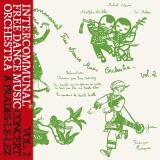
Concert at Prades-le-Lez marks the origins of the Intercommunal Free Dance Music Orchestra. In 1974, François Tusques and his companions (Michel Marre, Jo Maka, Adolf Winkler and Guem), in the spirit of Don Cherry or Chris McGregor, playfully dismantle all borders and all styles of creative music.
On this second volume, the Intercommunal builds unprecedented soundscapes around a song of revolt, a dance tune, or a burst of dissonance. The journey is unforgettable, no question about it. On repeat listening, it even becomes… lunar!
“The music that we make is primarily meant to be listened to live,” warned a leaflet from the Intercommunal Free Dance Music Orchestra. This is precisely why the (restored!) reissue of the two volumes of Concert at Prades-le-Lez, recorded on January 25 and 26, 1974 by François Tusques and his comrades, is such an important event.
In 1971, after recording a series of albums that would leave a lasting mark on French jazz (Free Jazz, of course, with Michel Portal, François Jeanneau, Bernard Vitet, Beb Guérin and Charles Saudrais, but also Le Nouveau Jazz with Barney Wilen, or the solo Piano Dazibao), François Tusques founded the Intercommunal—a grouping whose very name called for the fraternization of the various communities making up the country: Our music will help, we hope, to resolve the contradictions that exist between workers be longing to different communities, by breaking down various forms of national chauvinism, and more particularly the chauvinism of certain French people toward the cultures of Third World countries… Long live the friendship between the peoples of the whole world!
Among the great records made by the Intercommunal Free Dance Music Orchestra, the two volumes of Concert at Prades-le-Lez come first, before L’Inter Communal, Vol. 4, Le Musichien, and Après la marée noire (four titles already reissued by Souffle Continu). François Tusques and his companions (Michel Marre and Jo Maka on saxophones, Adolf Winkler on trombone, and Guem on percussion) performed on January 25 and 26, 1974 at the Moulin de Prades-le-Lez, a few kilometers from Montpellier. It was thus in the southern region of Occitanie that the first echoes of this musical vision of a borderless brotherhood were recorded.
“We’re not among the Colonels,” the Intercommunal reassures us right away, performing a stride piano tune carried by African winds that the audience cannot resist for long. The energy is already striking and it never lets up throughout these two recordings, from start to finish: jazz, blues, traditional music, minimalism, even funk… The musicians of the Intercommunal have heard a lot of great music and now delight in reinventing it by mixing it all together.
“We want the song form to take its place as a weapon in the struggle against capitalist exploitation and all those who oppress us morally and materially,” declared an Intercommunal leaflet, quoting Jean-Baptiste Clément, author of the lyrics to “Le Temps des cerises.” The struggle was therefore serious—but it did not prevent François Tusques and his group from waging it in a festive spirit: each piece on Concert at Prades-le- Lez sends out a call for love and fraternity. Fifty years later, the message remains as relevant as ever—and once again, it is François Tusques who makes it heard.
- On N'est Pas Chez Les Colonels
- Intercommunal Blues
- Mazir
- Kan-Ha-Diskan - We Shall Over Come
- African Rythm-N-Logy
2[23,95 €]
Concert at Prades-le-Lez marks the origins of the Intercommunal Free Dance Music Orchestra. In 1974, François Tusques and his companions (Michel Marre, Jo Maka, Adolf Winkler and Guem), in the spirit of Don Cherry or Chris McGregor, playfully dismantle all borders and all styles of creative music.
On this first volume, the Intercommunal takes its audience from New Orleans to Brittany and on to North Africa. The journey was bold, without a doubt—and its memory remains unforgettable.
“The music that we make is primarily meant to be listened to live,” warned a leaflet from the Intercommunal Free Dance Music Orchestra. This is precisely why the (restored!) reissue of the two volumes of Concert at Prades-le-Lez, recorded on January 25 and 26, 1974 by François Tusques and his comrades, is such an important event.
In 1971, after recording a series of albums that would leave a lasting mark on French jazz (Free Jazz, of course, with Michel Portal, François Jeanneau, Bernard Vitet, Beb Guérin and Charles Saudrais, but also Le Nouveau Jazz with Barney Wilen, or the solo Piano Dazibao), François Tusques founded the Intercommunal—a grouping whose very name called for the fraternization of the various communities making up the country: Our music will help, we hope, to resolve the contradictions that exist between workers be longing to different communities, by breaking down various forms of national chauvinism, and more particularly the chauvinism of certain French people toward the cultures of Third World countries… Long live the friendship between the peoples of the whole world!
Among the great records made by the Intercommunal Free Dance Music Orchestra, the two volumes of Concert at Prades-le-Lez come first, before L’Inter Communal, Vol. 4, Le Musichien, and Après la marée noire (four titles already reissued by Souffle Continu). François Tusques and his companions (Michel Marre and Jo Maka on saxophones, Adolf Winkler on trombone, and Guem on percussion) performed on January 25 and 26, 1974 at the Moulin de Prades-le-Lez, a few kilometers from Montpellier. It was thus in the southern region of Occitanie that the first echoes of this musical vision of a borderless brotherhood were recorded.
“We’re not among the Colonels,” the Intercommunal reassures us right away, performing a stride piano tune carried by African winds that the audience cannot resist for long. The energy is already striking and it never lets up throughout these two recordings, from start to finish: jazz, blues, traditional music, minimalism, even funk… The musicians of the Intercommunal have heard a lot of great music and now delight in reinventing it by mixing it all together.
“We want the song form to take its place as a weapon in the struggle against capitalist exploitation and all those who oppress us morally and materially,” declared an Intercommunal leaflet, quoting Jean-Baptiste Clément, author of the lyrics to “Le Temps des cerises.” The struggle was therefore serious—but it did not prevent François Tusques and his group from waging it in a festive spirit: each piece on Concert at Prades-le- Lez sends out a call for love and fraternity. Fifty years later, the message remains as relevant as ever—and once again, it is François Tusques who makes it heard.
- The End (Feat. Watch Me Rise)
- Therapy
- Strength In You
- Accept Myself (Feat. Catapults)
- Just Like Me
- Leave A Light On
- Back In Life
- Forever
- Before I Drown
- Where Do We Go
- The Beginning
Swallow’s Rose machen Punk Rock für die, die nachts wach liegen. Für alle, die nicht wissen, wo sie gerade hingehören aber unermüdlich auf der Suche sind. Auf der Suche nach Klarheit, Selbstakzeptanz, nach etwas Vertrautem oder vielleicht nach einem Neuanfang… Das neue Album „The Beginning“ beschäftigt sich genau mit dieser Suche und all den Gedanken, Zweifeln und Entscheidungen, die damit verbunden sind.
Inhaltlich knüpft es mit oft persönlichen Texten über mentale Gesundheit an „Downfall“ an, geht musikalisch aber einen Schritt weiter: härter, direkter, druckvoller. Bekannt von gemeinsamen Touren mit 100 Kilo Herz, Massendefekt sowie Festivals wie SBÄM oder Rock The Hill.
Marmoriertes Vinyl (Pink / transparent Magenta), ltd. auf 250 Exemplare.
- Never Come Never Morning
- Cannibal World
- A Short History Of Decay
- The Rain Don't Care
- Purple Strings
- Toothless Coal
- Ballet Of The Traitor
- Nerve Scales
- Essential Tremors
Nothing waren schon immer Regelbrecher. Shoegaze-Rebellen, die das typischerweise leichtgewichtige Genre nach ihrem eigenen, knallharten amerikanischen Image neu erfunden haben. Outlaw-Poeten, die existenzielle Ängste auf kilometerbreiten Leinwänden aus Fuzz und Hall ausbreiten. Angefangen als Solo-Projekt in einem Schlafzimmer in Philadelphia im Jahr 2010, hat die Musik von Nothing immer die ganze Bandbreite des Menschseins eingefangen, sowohl die schreiende Wut als auch die flüsternde Traurigkeit. ,A Short History of Decay", das fünfte Soloalbum von Nothing und das erste für Run For Cover Records, erweitert diesen Horizont noch weiter und bietet die bisher hochauflösendste Darstellung von Nothing. Die Band hat noch nie so kolossal geklungen, sich noch nie so intim angefühlt, war noch nie so ehrlich. Mit dem stärksten Arsenal in der sich ständig verändernden Besetzung von Nothing - Gitarrist Doyle Martin (Cloakroom), Bassist Bobb Bruno (Best Coast), Schlagzeuger Zachary Jones (MSC, Manslaughter 777) und dem dritten Gitarristen Cam Smith (Ladder To God, ebenfalls von Cloakroom) - wusste Singer-Songwriter Domenic ,Nicky" Palermo wusste, dass er die nötige Manpower hatte, um das bisher ambitionierteste Album der Band aufzunehmen. Mitgeschrieben und produziert wurde es zusammen mit Whirr-Gitarrist Nicholas Bassett, zusätzliche Produktions- und Mixing-Arbeiten übernahm Sonny Diperri (DIIV, Julie). a short history of decay ist das musikalisch ausgereifteste Statement im Katalog von Nothing. Songs wie ,Cannibal World" und ,Toothless Coal" sind katastrophale Ausbrüche mechanisierten Industrial-Gaze, die wie My Bloody Valentine klingen - nur extremer. Am anderen Ende des Spektrums steht das kunstvoll-düstere ,Purple Strings" mit einem wunderschönen Streicharrangement, an dem die Harfenistin und zweifache Nothing-Mitwirkende Mary Lattimore beteiligt ist. Diese barocke Zartheit durchdringt auch andere Höhepunkte von ,A Short History of Decay", insbesondere ,The Rain Don't Care", eine beschwingte Ballade, die die abgenutzte Eleganz von Mojave 3 kanalisiert, sowie ,Nerve Scales", ein prasselnder Bop, der in seiner Verbindung von jenseitiger Atmosphäre und tödlicher Präzision an Radiohead erinnert. Palermo bezeichnet das neue Album als ,letztes Kapitel". Nicht das Ende von Nothing, sondern der Abschluss einer Geschichte, die mit dem Debütalbum von Nothing aus dem Jahr 2014, Guilty of Everything, begann - einem weiteren Album über Zeit, Reue und die Konfrontation mit unangenehmen Wahrheiten - und nun mit A Short History of Decay ihren Abschluss findet. Es ist ebenso sehr eine Momentaufnahme von Palermos Vergangenheit wie ein Sprung in die Zukunft von Nothing.
We Jazz Records kicks off their new series of archival 7" releases with Esa Pethman "In Belgium 1967" released 23 September 2022. The two-tracker is licensed from the Belgian VRT radio archives and both of the pieces are previously unreleased. Finnish jazz legend Pethman, heard here on alto flute and tenor sax, joins forces with European jazz greats such as Heinz Bigler, Uffe Karskov and Jean Fanis. This is a small but valuable piece of unheard European jazz history from the early heyday of modern jazz. The physical release is a quality "inside-out"-styled EP with 3mm spine and small center hole on the 45rpm vinyl.
An excerpt from the liner notes by Mikko Mattlar:
"Esa Pethman (b. 1938) was one of the key figures of modern Finnish jazz in the 1960s. His album The Modern Sound Of Finland was the first Finnish modern jazz album and his composition "The Flame" a true modern Fenno-jazz evergreen.
Pethman was born in Kuusankoski, 135 kilometres from Helsinki in the Kymenlaakso area. The jazz scene was active even though it was an area of rural landscapes and paper mills. Pethman discovered jazz when he heard a Charlie Parker record being played at a local music shop in the late 1940s. Following Parker, bebop became his favourite style of jazz.
Young Pethman played flute and saxophone in local bands who accompanied schlager singers. They played tangos and waltzes for dancers, but usually started a typical dance event with an hour of jazz. In 1959 Pethman moved to Helsinki to study music at the Sibelius Academy. Back then it was a strictly classical music academy, but Pethman later described the studies as crucial for his development and career. He quickly made his way to studio sessions and into the best orchestras in Helsinki.
As a student of composition, Pethman also began writing his own music. "The Flame" was a melody he just got on his mind one night, and he decided to write it down. The catchy composition was released as a 7" single in 1964, a year before Pethman's debut album. Both records stand as benchmarks for modern Finnish jazz. The album consisted entirely of Pethman's compositions, not versions of jazz standards like a lot of the Finnish jazz released until then.
In the mid 1960s, Finnish jazz was also taking its first international steps. Pethman's quintet took part in the first Montreux Jazz Festival in Switzerland in June 1967. At the Montreux jazz band competition, the quintet came in fourth of the twelve contestants. Despite not winning the competition, the band got an honourable mention, and Pethman was now recognized outside Finland.
In December 1967 Pethman travelled to Brussels. His visit was organised by the national Finnish broadcasting company Yleisradio and their jazz program producer Matti Konttinen. Konttinen was supposed to go to Brussels with Pethman, but the musician ended up traveling alone.
In the Decca recording studios Pethman played two songs. He recorded a version of his most famous composition "The Flame", where he played the alto flute and was accompanied by Belgian musicians. On Swiss saxophonist Heinz Bigler's composition "Like Steel", Pethman played the tenor saxophone. The band was now more international, consisting of Bigler, the Italian Francesco Santucci, the Dane Uffe Karskov, a Belgian rhythm section and Pethman. After 55 years, Pethman still remembers Bigler's remarkable skills as a saxophonist.
The two-day visit included the recording session, a dinner and a concert. Pethman and the other non-Belgian musicians came to Brussels mainly to play at a jazz concert organised by the European Broadcasting Union EBU. They played at the studio first, and the concert was held the following day. Pethman and all the other soloists played as members of an international big band. The studio and live session were produced by the Belgian Radio and Television jazz section leader Elias Gistelinck."
- Meta Y Guaguancó
- Si Los Rumberos Me Llaman
- Cuando Suenan Los Tambores
- Galletana (Aka Calletana And Cayetana)
- Dulce Con Dulce
- El Sabio
- Caramelo A Kilo
- Mulence
- Yiri-Y Ri-Bom
- Sancocho E'güesito
- Invitación Guaguancó
- Tumba Tumbador
- Macho Cimarrón
- Rompe Saragüey
Classic Latin Tunes Became Sals Hits! Pablo Yglesias -aka DJ Bongohead- compiles Grosso Recordings an amazing serie with classics tunes from Caribbean music that became great successes of "Salsa". Some tracks have been remastered and restored, others are presented on vinyl again after many many years. "This is the four volume in our series on the Roots of Salsa...The main criterion was to pick tracks that sounded adequate for today's DJs to play at a gig or were sufficiently interesting (or enough of a surprise to fans of the later version) to merit inclusion. The other measuring stick was that they needed to come from the old-school, before the more modern era (from 1962 on) and all of its recording innovations and marketing strategies...for now, listen to these dozen gems and then go back to their more familiar cousins from recent times and compare and contrast, and we're sure you'll be enlightened and entertained." Liner notes by Pablo "Bongohead" Yglesias. Format and selection designed for DJs, collectors and general public.
- 1: The Weed (.5)
- 2: Carnaval De Barranquilla (7.0)
- 3: Archie Et John Feat Archie Shepp (4.26)
- 4: The Movie Critic (3.2)
- 5: La Naissance De La Comédie (2.4)
- 6: Wonderful World Leaders (.03)
- 7: Pacifiques Biches (5.25)
- 8: Only Fan Feat Iggy Pop ( 2.10)
- 9: Où C’est ? Qui Sait ?Feat Djeuhdjoah ( 5.55)
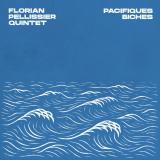
Wild by nature, the Does of the Florian Pellissier Quintet could never be contained in a creative pen that would have forced them never to cross potential geographical limits. Travelers, spending their energy without restraint to let the hard bop of their jazz wander and export itself wherever the groove guided them, they went as far as Africa or South America, from the Cape of Good Hope to Rio. Rio, precisely where, for their last appearance, exposure to a brief electric current had carried them into outer space. A revelation.
Furious strides, exhausting gambols, the Does had done so much that they could not escape the obvious call of calm and serenity. Freed from distances, and after a stop in Colombia to mingle with the crowd at the Barranquilla carnival, it was California and its Pacific coast they reached, to rest before the peaceful immensity of the ocean.
One hundred sixty-five million square kilometers, an infinite expanse to contemplate in order to fling wide open the gates to an even vaster space. A spiritual domain conducive to the search for new sounds. That of the open sea, where measuring miles is neither relevant nor meaningful, and where the only compass becomes the musical tracks the Does follow.
Beneath their coppery hooves, to the crystalline sound of the Fender Rhodes and the sweep of electric layers, the path to take revealed itself in this meditative and abstract realm they had never before explored. Invited to join the purely organic textures, the synthetic notes distilled a few aromas of sweetness into an album of ten tracks, where the FPQ abandoned written scores on some pieces in order to be guided only by the inspiration born of a newfound freedom.
Blue when they began their journey five albums ago, their coat has now taken on the colors that illuminate the Pacific coast. That moment when, as you gaze at the horizon swallowing the sun, only glowing shades filter through—reddish, orange, violet.
Departing without haste or frenzy from one of the shores bordering the ocean, the voices of Archie Shepp, Iggy Pop, and DjeuhDjoah still resonating in their antlers, the Does may now be on the opposite shore. Carried all the way to the Japanese coast by Hokusai’s wave…
Wild by nature, the Does of the Florian Pellissier Quintet could never be contained in a creative pen that would have forced them never to cross potential geographical limits. Travelers, spending their energy without restraint to let the hard bop of their jazz wander and export itself wherever the groove guided them, they went as far as Africa or South America, from the Cape of Good Hope to Rio. Rio, precisely where, for their last appearance, exposure to a brief electric current had carried them into outer space. A revelation.
Furious strides, exhausting gambols, the Does had done so much that they could not escape the obvious call of calm and serenity. Freed from distances, and after a stop in Colombia to mingle with the crowd at the Barranquilla carnival, it was California and its Pacific coast they reached, to rest before the peaceful immensity of the ocean.
One hundred sixty-five million square kilometers, an infinite expanse to contemplate in order to fling wide open the gates to an even vaster space. A spiritual domain conducive to the search for new sounds. That of the open sea, where measuring miles is neither relevant nor meaningful, and where the only compass becomes the musical tracks the Does follow.
Beneath their coppery hooves, to the crystalline sound of the Fender Rhodes and the sweep of electric layers, the path to take revealed itself in this meditative and abstract realm they had never before explored. Invited to join the purely organic textures, the synthetic notes distilled a few aromas of sweetness into an album of ten tracks, where the FPQ abandoned written scores on some pieces in order to be guided only by the inspiration born of a newfound freedom.
Blue when they began their journey five albums ago, their coat has now taken on the colors that illuminate the Pacific coast. That moment when, as you gaze at the horizon swallowing the sun, only glowing shades filter through—reddish, orange, violet.
Departing without haste or frenzy from one of the shores bordering the ocean, the voices of Archie Shepp, Iggy Pop, and DjeuhDjoah still resonating in their antlers, the Does may now be on the opposite shore. Carried all the way to the Japanese coast by Hokusai’s wave…
- Ku Kisantu Kikuenda Ku
- Lolango
- Agardja-Dja
- Na Bolingo Conseil Ezali Te
- Congo Mibale
- Minoko
- Edo Aboya Ngai
- Lolo Soufire
- Kamalandua
- Mobali Na Ngai Azali Etudiant Na Mpoto
- Tembe Na Tembe
- Lola
- Mosaka Ya Kilo
- Nzela Claude
- Mokili Macaramba
- Sukola Motema Olinga
- Moi, C'est L'originalité
Sixteen wonders from the first three years of Franco’s own imprint Les Editions Populaires, founded in 1968. Mostly OK Jazz, performing ravishing rumbas and bolero ballads in Lingala, traditional songs in Kikongo, Kimongo, and even Yoruba, collaborations with Ngoma artists Camille Feruzi and Manuel d’Oliveira, and their own tough take on US funk.
Glorious music. Bim.
**Includes double sided insert with liner notes and photos*
Al Mati was the pseudonym of eccentric Portuguese-born, Dutch-based artist Alberto Mesquita. The name translates to ‘Alberto Friend’, with ‘Al’ short for Alberto and ‘Mati’ meaning ‘friend’ in Surinamese.
Alberto’s story comes across like a mythical character from a European Kerouac novel, but instead of writing it down, he poured those adventures and characters into his record. The music and the comic-style artwork, drawn by his friend Bruno Scoriels, work as one, with Alberto himself becoming both the story and the character within it.
Raised under Salazar’s regime in Lisbon, where all men were conscripted to Africa, he refused, a pacifist. This put him at odds with his father, born in Angola and a prominent lawyer tied to the dictatorship. Unable to accept his son’s stance, the rift forced Alberto to flee Portugal as a deserter, leaving everything behind.
He sought a new life in Paris, where he met Bruno Scoriels. The pair busked to get by, and young and broke, set off on adventures across Europe. On one trip to Barcelona, they crossed the Pyrenees on foot through a five-kilometre train tunnel, not knowing if they would make it out alive. The train later featured on the cover of Some Shit, a nod to that hazardous journey and the strange turns of his life.
From there he moved to Belgium, where he met Jolanda, his future wife who also features on the album. They lived in The Netherlands, then back in Belgium where they married, before returning to Portugal under false pretences. The regime promised deserters immunity, but it proved untrue, and Alberto was forced to flee again — this time with a young family, using Bruno’s passport to escape to The Netherlands.
They settled in the Gliphoeve flats in Amsterdam’s Bijlmermeer, a vibrant immigrant community. This melting pot of cultures inspired Alberto musically. He started a studio in their flat where musicians from Suriname, Angola, the Antilles, Brazil, Mozambique and Portugal came and went, jamming, rehearsing, recording and forming bands including Albatros, Comoção and Mati Africa, performing internationally and at iconic Amsterdam venues like De Melkweg and Paradiso.
Being an immigrant was tough. Alberto was stateless for years, drifting across countries. Some songs voiced his frustration with the Portuguese regime, others were playful or simply love notes to his wife and kids. He passed away in the Netherlands in 2021, leaving Some Shit open to interpretation. But when you picture Europe in the 1970s — the politics, the upheaval, and his need to connect people across cultures — you can hear an artist shaped by contrast, who poured his experiences, feelings and love into music.
What began as a nostalgic nod to Camden Market’s bootleg culture has become the next chapter of in the Running Back Mastermix series. At once deeply personal and openly communal, it shows how a lifetime of production can be condensed into 90 minutes without losing its edge — proof that the mixtape, even in 2025, still has stories left to tell.
What followed was a patient excavation. Old DATs were pulled out of storage, forgotten files surfaced from hard drives, and new material was written to sit alongside them.
Together, these fragments revealed a body of work stretching back more than 25 years — tracks that moved across the spectrum of house and techno but shared a common thread of character and atmosphere.
In May of this year, the archive finally found its form. Recorded live on three decks using Serato, the resulting mix brings together 24 tracks: unreleased material from the past and brand new productions, all stitched together into a continuous narrative. It’s equal parts retrospective and statement of intent — less a museum piece than a living document.
- Didn't Cross The Ocean
- All That I Have
- Italian Wine
- Jackie And Will
- Miss My Lion
- Eleven Hours
- Roll On Arte
- Naked And Famous
- 31: Seasons In The Minor League
- Your Beat Kicks Back Like Death
Wahrscheinlich das erste Album, das komplett in einem Bundesliga-Fußballstadion geschrieben und aufgenommen wurde, nämlich im Millerntor-Stadion des FC St. Pauli in Hamburg. Keine Sorge, es klingt überhaupt nicht nach Stadionrock. Ganz im Gegenteil sogar ... Lo-Fi, ohne spröde zu sein, und minimalistisch, ohne karg zu wirken. Seit 1995 haben sich Swearing At Motorists mit ihrer rohen Energie, ihren herzlichen Songtexten und ihrer unerbittlichen DIY-Ethik eine Kult-Anhängerschaft aufgebaut. Als ,The World's Local Band" bezeichnet, sind sie unzählige Kilometer gereist, um weltweit Konzerte zu geben, und haben die Bühne mit legendären Acts wie Guided By Voices, Songs:Ohia, The Breeders, Spoon, Unwound, Brainiac, The Lemonheads, My Morning Jacket und vielen anderen geteilt. Nach einer zehnjährigen Pause ist die Band zurück. Von Kritikern gefeiert, aber definitiv unter dem Radar geblieben, sind Swearing At Motorists nach wie vor ein beliebter Fixpunkt der Indie-Rock-Underground-Szene.
What began as a nostalgic nod to Camden Market’s bootleg culture has become the next chapter of in the Running Back Mastermix series. At once deeply personal and openly communal, it shows how a lifetime of production can be condensed into 90 minutes without losing its edge — proof that the mixtape, even in 2025, still has stories left to tell.
What followed was a patient excavation. Old DATs were pulled out of storage, forgotten files surfaced from hard drives, and new material was written to sit alongside them.
Together, these fragments revealed a body of work stretching back more than 25 years — tracks that moved across the spectrum of house and techno but shared a common thread of character and atmosphere.
In May of this year, the archive finally found its form. Recorded live on three decks using Serato, the resulting mix brings together 24 tracks: unreleased material from the past and brand new productions, all stitched together into a continuous narrative. It’s equal parts retrospective and statement of intent — less a museum piece than a living document.
Here the vinyl edition features a curated selection of 11 tracks from the mix.