Samurai Music returns to the evocative sound world of Ancestral Voices for an album that splits the difference between cinematic sound design and deadly restraint at 170 BPM. Nemeton continues Liam Blackburn's exploration of ancient Celtic mysticism through snaking rhythms and snarling sound design, conjuring a high-definition sonic image of sacred groves and the druids practicing amongst them.
Blackburn's Ancestral Voices project tracks back to 2015, when he debuted on Samurai Horo with the Night Of Visions album. In stark contrast to his celebrated 140 work as Indigo, this project leaned on the inspiration of pagan spirituality to charge his vivid, advanced production style with a rich and mysterious atmosphere. While he's channelled this approach into a variety of tempos and styles, on his 2016 EP Old Earth Voodoo on Samurai Music he applied the concept to a drum & bass framework, which he returns to on Nemeton with rigorous focus.
Far from a straightforward collection of breakbeat tracks, Blackburn uses negative space and pointillist production to carve out an immersive, tense sound world around the 170 grid. He takes a widescreen approach to percussion, running from pin-prick synthesised one-shots to tumbling, organic drums you'd more readily associate with a Hans Zimmer score. Scene-building is the foremost mission across Nemeton, casting otherworldly forces in sweeps of low-end friction and dramatic melodic blooms amidst tangible real-world field recordings of flora and fauna.
Casting the mind back some 2000 years is an exercise in imagination as much as research, and Blackburn ably summons dark fantasy as he delves ever deeper into Welsh mythology with a studious zeal and avid fascination. It's that drive that makes Nemeton burst forth and take shape so powerfully, bristling with kinetic energy and a barely-concealed, strangely seductive menace that leaves a lasting impression long after the last snatch of bass has bared its teeth.
Suche:kin
Purple Vinyl
House music, nightlife entertainment and DJ/Producer virtuoso Louie Vega has proven over and over again that he's a master chemist in the studio. His latest release is an uptempo and speaker-knocking remix of Funkadelic's 'Ain't That Funkin' Kind of Hard on You' (produced by George Clinton and & G Koop) from the album 'First Ya Gotta Shake the Gate'.
The original version is nothing short of a classic, but it's as if the song had never been invited to a Louie Vega post-midnight global extravaganza. Was the song not aware that spellbound dancing and high BPMs were the standard for House Music Normally, such a blaring disregard for nightlife decorum would relegate a song to the pits of sonic hell, but we're talking about George Clinton here!The original opens up with a G-funk groove that screams Westside and lowriders. The listener is then blessed with Clinton as he adds his sage, soulful and pimpadelic vocals, complemented by Funkadelic singers asking him about the pains of the funk. The semblance of a beat that could drive the dancefloor into the morning hours is there, but in no way has it blossomed into its full glory. Enter Louie Vega.
His remix immediately greets listeners with a decadent spread of instrumentation and chutzpah. The original song's DNA populates the first thirty seconds of the remix but then an explosion takes place and the song assumes a new identity. The transcendent experience is akin to taking the elevator to a rooftop party and once the doors open- boom! The remix begs you to dance, the G-funk groove is now in your face instead of being laidback and percussion takes a front seat to take you away. The song is alive, there's no other way to describe it.
Be sure to buy your vinyl at an outlet near you! the Louie Vega remix of Funkadelic's 'Ain't That Funkin' Kind of Hard on You' on Vega Records!
Whether Re-defining Experimental Fusion Sounds With The Hugley Acclaimed Yussef Kamaal, Or His Catalogue Of 12's For Imprints Such As Mcde, Eglo, And Rhythm Section As Henry Wu, South London's Kamaal Williams Has Been A Key Figure In His Thriving International Scene For The Past Few Years. The Return Is A Natural Evolution From The Yussef Kamaal Project, Mining The Influence Of Visionary Jazz But Blended With All Kinds Of Texture, Sounds And Signals From The Over-saturated London Streets.
At Times The Keyboard Work Evokes The Classic 70s Fusion Work Of Lonnie Liston Smith Or Roy Ayers, But Underpinned By Rhythms More Reminiscent Of Blunted Hip-hop And Arrangements Subliminally Laced With The Cut-ups Of Pirate Radio. Progressive, Funky, Cosmic, Exploratory And Effortlessly Musical, This Is The Sound Of A Musician Honing Their Craft Into Thrilling New Shapes.
In The Us The Like Of Kamasi Washington And Thundercat Have Made Great Strides In Opening A Whole New Dialogue Between Jazz And Hip-hop, Drawing In A Young, Highly Engaged New Audience In The Process. Kamaal Williams Mine A Similar Seam On The Other Side Of The Atlantic Alongside Other Exciting London Talents Such As Ezra Collective, Ruby Rushton And Shabaka Hutchings.
The Return Is Exactly That: A Return And Refinement To The Sound Yussef Kamaal Were Progenitors Of, And First Set The Scene For One Of The Most Exciting Musical Movements London Has Had In Years.
Notable Tracks For Old And New Listeners Are 'slow', 'situations', 'medina', 'london Shuffle' Which Features Mansur Brown (of Mansur's Message) And For Those Die Hard Yussef Kamaal Fans - They Should Hear The Interpolated Roots Of 'strings Of Light' In The Title Track 'the Return'. And That Signature Wu Funk Can Be Heard On Broken Theme, And High Roller.
The Return Will Be The Debut Album Released On Wu's New Label Black Focus Records.
The Ibex Band, with Giovanni Rico and Selam Woldemariam at the creative helm, provided the musical backbone for legends like Aster Aweke, Girma Beyene, Tilahun Gessesse, Mulatu Astatke, and Mahmoud Ahmed, including the iconic album Ere Mela Mela, shaping modern Ethiopian music as we know it today. This 1976 album (Ge’ez Year 1968) played a pivotal role in that legacy and has now resurfaced to set the record straight.
There’s a tendency to talk about the seventies as a golden age of Ethiopian music. There are good reasons for that, and just as good reasons against it. However, the notion of a golden past privileges the role of Western explorers and suggests that the pinnacle of Ethiopia’s musical culture is something only a foreigner can appreciate and unearth. It downplays the complexities of Ethiopia’s culture and history, creating an artificial divide between then and now. And it underestimates the constantly evolving sound that has followed.
The legendary musical outfit The Ibex Band, later metamorphosed into The Roha Band, has played a central role in defining the sound of many of the greatest stars on the music scene of Ethiopia from the mid-seventies onwards–but their golden output has never really waned. The story of the origins of the band that provided the musical backbone for greats such as Aster Aweke, Girma Beyene, Tilahun Gessesse, backing the solo career of group member Mahmoud Ahmed as well as backing Mulatu Astatke and many others has yet to be properly told.
Two misconceptions plague the image of Ethiopian music, one is that the music is pure because it is, by some notion, unexploited, the other is that it is all traditional. To begin with, a combination of political changes between the late sixties and the mid-nineties created an environment where only the most dedicated and skilled musicians struggled on and pursued a musical career against fierce odds. The whole Ibex Band, with Giovanni Rico and Selam “Selamino” Seyoum Woldermarian at the creative helm, are arguably the origo of the vibrant scene in the mid-seventies, and the said pair are foremost responsible for not only navigating the band through troubled times, but also modernizing the 6/8 chickchicka rhythm to a contemporary form. Giovanni laid the rhythmic foundation with heavy looped basslines that reinvented traditional melodies as dance music, and with Selamino’s innovative guitar work they influenced scores of musicians from Abegaz Kibrework Shiota to Henock Temesgen. Even Giovanni’s Fender bass and Selamino’s Gibson guitar inspired younger musicians in their choice of instruments. Not only in choice of instruments but also in sound–even as the digital revolution hit Ethiopian music, a lot of popular music still took its cue from the masters from Ibex and Roha.
Ibex emerged out of the ashes of the sixties group the Soul Echos band, adding Giovanni and Selamino to their ranks and taking their cues from a slew of influences, such as Motown and The Beatles, fused with traditional music. A tighter-knit unit than most bands at the time – Ibex has remained six to seven members throughout their whole career, compared to many bands that were as large as fifteen or sixteen men strong when Ibex set out. Their playing has been viciously focused, economical yet heavy. Just a year before the recording sessions of the album in your hands, Giovanni and Selamino made a contribution to the popular musical lexicon of Ethiopia that was simply defining the popular sound: their arrangement and recording of bandmate Mahmoud Ahmed’s solo effort and real commercial breakthrough tune and eponymous album, Ere Mela Mela, from 1975.
Selamino has never limited himself to being an adroit lead guitarist, but has always been a scholar of history, and as such he has probably contributed as much to modern Ethiopian music with his guitar playing and compositions as with a deepened understanding of modern or contemporary – Zemenawi – Ethiopian music. Selamino’s contributions serve as a metaphor for those of the whole band, at one and the same time creating and defining a new, danceable and updated sound anchored in Giovanni’s bass, whilst also elevating the broader scene through their support for others on the scene and on top of that, increasing the understanding of the music.
There is an understandable desire to romanticize the musical heyday Ibex and Roha were at the forefront of, because so much of the output is sorrowfully hard to come by. Ibex creativity was nothing short of ridiculously fierce compared to many of their Western contemporaries. Based on their sheer recorded output alone they could have usurped the title “hardest working in show business” from James Brown, recording more than 250 albums or 2500 songs in the seventies and eighties. Some only surface as cassettes today, others were never given full LP release, and some are simply impossible to find today. In the light of that, it’s nothing short of a miracle that the recording Stereo Instrumental Music from 1976 (Ge’ez Year 1968) has resurfaced. Unearthed in perfect condition on a chrome cassette, this is musical history comes alive–to set the future straight. Stereo Instrumental Music was recorded in collaboration with Karl-Gustav Lundgren, a Swedish national working for the Radio Voice of the Gospel. It took two sessions at the Ras Hotel ballroom in Addis Ababa. The Ibex Band was the first band in Ethiopia to employ a four-track recorder for their recording (the first available in the country, lent by Karl-Gustav). Later the same week, Giovanni and Selamino realized that, lengthwise, the recorded material fell short of what they wished for, so they recorded four more tracks in one more session on a single-track recorder. The Ras Hotel and Ghion Hotel, where the Ibex Band held musical residencies were to Ethiopia in general and Addis Ababa in particular what Motown was to the USA and Detroit a few years earlier – a hotbed of musical creativity and showmanship.
The most astonishing thing about Ethiopian music of the last half century is how tradition and modernity are intertwined. Because of this feature, it’s kind of hard to tell when there ever was or when we are in a “golden age”. So much of music from the past has been criminally neglected, but because of the hardships in the past, it would be an oversimplification to say that said past was a golden age. Probably, the golden age is what we are approaching, because for the first time both the past and future are accessible, and the monumental contributions from before can lay a firm foundation for a thriving music scene today. The Ibex Band stands firmly in the past, present and the future. That, if anything, is golden.
The detailed history of Stereo Instrumental Music is in many ways unique. To begin with, it couldn’t have been recorded earlier (there were no four-track recorders available) and it really couldn’t have been recorded afterwards either, at least not in the years directly following, because of the toll the musical scene took from the unfavorable political climate that followed when the nascent Derg regime and rival groups tried to assert themselves, the musical equipment lent from The Voice of Gospel Radio simply disappeared from Ethiopia when the radio station folded in 1977. Karl-Gustav Lundgren,
the Swedish foreign national who assisted during the recording, worked with the Ethiopian Evangelical Church Mekane Yesus at the time, recalls how they only had about fifteen minutes to get the microphones in place for the recording as to not alert neither the management at Ras Hotel nor the authorities and most importantly, to complete the recording before the curfew came into effect at midnight. In leaping to the opportunity to use previously unavailable equipment to push their sound forward and improvising to meet the logistical challenges, the Ibex Band displayed the very avant-gardism and adaptability that explains their longevity as a band through the years. The recording of Stereo Instrumental Music is from a given time in history, but it sounds as beyond time.
Much of the energy that burst out of the scene that Stereo Instrumental Music came out of dissipated or got sidetracked during the societal changes Ethiopia went through in the 1970s and 80s. Whilst leaders might have professed to be revolutionary, the work ethic of the Ibex Band can truly be described as that. They never called it quits, but adapted, toured extensively abroad in Africa, Europe, and the Middle East, and found ways to work even in the face of the curfew that curtailed a lot of musical life. They even played major arenas in the nineteen eighties, despite said curfew and restrictions. The whole extent of their legacy has never been told, but their music speaks louder than words, so therefore… tune in to the Ibex Band’s Stereo Instrumental Music.
Newly mastered from restored audio fidelity tapes. Comes in digi sleeve with alternate sleeve artwork and includes a rare 8-page booklet. Includes the original version of 'Pop Corn', later a worldwide hit in 1972 . Adds rare single B-side as bonus track. This CD edition also adds exclusive mono mixes to the expanded tracklist.
One of the earliest & most influential Electronic albums OF ALL TIME "Audio Fidelity Records... believes Gershon Kingsley is a true genius and a worthy creative compliment to the electronic wizardry of Robert A. Moog, the creator of the Moog Synthesizer." 1969 The Beatles were influenced by him (and sampled his music on their 1968 Beatles Christmas EP). Since 1972, his music accompanies each day's Main Street Electrical Parade in Disney theme parks. Yet Gershom Kingsley (born: Götz Gustav Ksinski) remains a mystery to many, despite being one of electronic music's finest pioneers and earliest exponents of Robert Moog's synthesizer and the possibilities its use bought to music. Newly mastered from restored Audio Fidelity tapes - this reissue sounds incredible! The rare non-album B-side The First Step (The Sea Of Tranquility) has been added to the LP while the CD adds additional mono mixes and comes in the album's alternate cover. Both LP and CD include the rare 8-page booklet that came with initial copies of the Audio Fidelity LP. To repay The Beatles compliment of including one of his songs, Gershom Kingsley covered two Fab Four classics in his own unique electronic style and included them on Music To Moog By: 'Nowhere Man' and 'Paperback Writer'. "First-wave Moog enthusiast and electronic music pioneer...." Electronic Sound - The Electronic Music Magazine, January 2020.
- 1: Little Red Thread
- 2: Human Being
- 3: The River
- 4: The Mountain
- 5: The Healer (Redux)
- 6: Dark Side Of Me
- 7: Poison In Your Cup
- 8: Backlash & Vinegar
- 9: In This Body
- 10: The Night That Bowie Died
- 11: Tiny Love
Since scoring a worldwide smash with her debut album Eye To The Telescope in 2004, which went on to sell over 5 million copies, KT Tunstall has remained at the forefront of UK singer-songwriter talent. After a period of healing, soul-searching, and a change of scenery, 2016 hailed the arrival of the first of a trilogy of albums, the critically acclaimed UK Top 10 album - KIN. The trilogy evokes, separately and in sequence, spirit, body and mind. With KIN being her Phoenix-from-the-ashes 'spirit' album, 2018 marks the second offering of that trilogy - WAX, her sixth studio album, her 'body' album.
- A1: King Of Rome
- A2: Vomit Of Clarity
- A3: Short Hair With A Wig
- B1: Victory Of The Pyramids
- B2: Venus Blood
Black Vinyl[24,33 €]
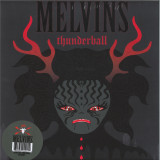
Melvins 1983, die rohe und ungefilterte Inkarnation der legendären Band um Buzz Osborne und Original-Melvins-Schlagzeuger Mike Dillard, kehren mit 'Thunderball' zurück - ihrem ersten Album seit vier Jahren, das am 18. April bei Ipecac Recordings erscheint.
"'Thunderball' ist das dritte Melvins 1983 Album, das wir zusammen gemacht haben, und ich wollte, dass es bombastisch wird - und ich glaube, das haben wir erreicht“, sagt Osborne. „Außerdem wollte ich schon lange etwas mit den Elektronik-Künstlern Void Manes und Ni Maîtres machen. Beide sind außergewöhnliche Talente. Ihr unkonventioneller Einsatz von Elektronik hat 'Thunderball' über meine Erwartungen hinaus getrieben.“
Aufgenommen wurde das Album von Toshi Kasai in den Sound of Sirens Studios.
Die 1983 in Montesano, Washington, gegründeten Melvins gehören zu den einflussreichsten Bands der modernen Musik. Gegründet von Buzz Osborne (Gesang/Gitarre) und dem ein Jahr später hinzugekommenen Schlagzeuger Dale Crover, leisteten die Melvins Pionierarbeit bei der Verschmelzung von Punkrock und Heavy Music. Im Laufe ihrer vier Jahrzehnte währenden Karriere veröffentlichten sie mehr als 30 Originalalben, unzählige Live-Mitschnitte sowie zahlreiche Singles und Raritäten.
- Ltd. Col. LP: (Smoke Is A Color Vinyl)
Melvins 1983, die rohe und ungefilterte Inkarnation der legendären Band um Buzz Osborne und Original-Melvins-Schlagzeuger Mike Dillard, kehren mit 'Thunderball' zurück - ihrem ersten Album seit vier Jahren, das am 18. April bei Ipecac Recordings erscheint.
"'Thunderball' ist das dritte Melvins 1983 Album, das wir zusammen gemacht haben, und ich wollte, dass es bombastisch wird - und ich glaube, das haben wir erreicht“, sagt Osborne. „Außerdem wollte ich schon lange etwas mit den Elektronik-Künstlern Void Manes und Ni Maîtres machen. Beide sind außergewöhnliche Talente. Ihr unkonventioneller Einsatz von Elektronik hat 'Thunderball' über meine Erwartungen hinaus getrieben.“
Aufgenommen wurde das Album von Toshi Kasai in den Sound of Sirens Studios.
Die 1983 in Montesano, Washington, gegründeten Melvins gehören zu den einflussreichsten Bands der modernen Musik. Gegründet von Buzz Osborne (Gesang/Gitarre) und dem ein Jahr später hinzugekommenen Schlagzeuger Dale Crover, leisteten die Melvins Pionierarbeit bei der Verschmelzung von Punkrock und Heavy Music. Im Laufe ihrer vier Jahrzehnte währenden Karriere veröffentlichten sie mehr als 30 Originalalben, unzählige Live-Mitschnitte sowie zahlreiche Singles und Raritäten.
- Ltd. Col. LP: (Smoke Is A Color Vinyl)
- Creases Of Desire
- Incense Puma At The Foot Of The Staircase
- The Pauper
- Snake Eyes
- Velvete
- Mosquito Boat
- Setanakam Acid
- Elephant
- Cold Sweat
- You Didn’t Hear It From Me
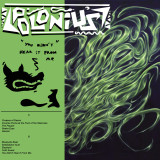
Full page feature in Wire Magazine (March 2025, Issue 493) 'the freak audio series continues with the lysergic You Didn't Hear It From Me which combines dubbed out sampledelia and metallic beats with ghostly saxophone soaked in an acid bath'
Polonius AKA Egyptian-French artist Seif Gaber, whose works spans a decade of “science fiction archeomiragical time travel" explorations and is an important piece of the healthy electronic/far out mosaic in Milan.
With a considerable number of releases under his name, both self released and through such likeminded labels as Ikuisuus, Goaty Tapes or Sun Araw's Sun Ark, Polonius grand vision encompasses a myriad of languages culled from kosmische travelings, exotica's dreamlands, soundtrack psychedelia, spiritual jazz escape routes and transmuted beat science to convey them into a sonic fiction where all these trails intertwine in a cosmological soundscape filled with wonder and speculation.
Building on last year's more beat-centric excursions of his self-titled vinyl debut on Stoned to Death, Polonius' first entry into the Discrepant extended family via Souk finds him dwelling deeper into rhythmic mystic extrapolations through a series of hallucinatory tracks. Conveying jungle's kinetic energy, dubwise meditations on bass weight, collapsing beats, globetrotting percussion accents and synth-driven night drives, 'You Didn't Hear It From Me' finds Polonius with a strong sense of purpose and direction, reconvening bits and pieces from the netherworld into a more urban scenario, not quite any we can stand or dance on. Just dream of.
- A1: Hanadi 02 18
- A2: Dreams Of An Insomniac
- A3: Al Dollarji
- A4: Les Vents Dominants
- A5: Al Bahriye
- A6: Miramar
- A7: The Invisible Cut
- A8: Helia Featuring Sven Wunder
- B1: East Of What
- B2: La Calypso 02 41
- B3: Hawalat
- B4: Sfiha
- B5: La Virgule Suspendue
- B6: Preamble To The Conclusion
- B7: Chou Ostak
- B8: What Happened Next
- B9: Jana
If Hawalat sounds like a world tour that’s because it essentially is. “As much as Marzipan is a picture of Lebanon from the inside, Hawalat kind of picks up from where Marzipan finished but more looking to the outside, the diaspora, to the notion of exile.” Megarbane says he is interested in the connections between the global and the domestic, the mundane and the cosmic, and wanted to create space for non-linear progression.
Hawalat is based on the idea of hawala, informal money transfers that you can make to certain countries impacted by a lack of currency or unstable political and economic contexts. His use of the term on this album is not a financial one, Megarbane explains, but a nod to notions of creative exchange between “places, persons, generations.” It is the first time Megarbane called on other musicians in this way to inform his sound, including a collaboration with Sven Wunder on the song Helia featuring strings by the Stockholm Studio Orchestra.
The album opens with first single Hanadi, a punchy Somali-inspired track with warm non-lexical vocals and saxophone. It immediately pivots to the Dreams of an Insomniac, which balances soft, effortless vocals and keys with urgent violin intrusions. Al Dollarji feels like Megarbane’s bread and butter, that is Mediterranean sounds with intricate strings, while Al Bahriye takes this staple and introduces hip hop inflections. The result is a rich 17 track album that effortlessly blends genres and styles.
Including 8 page, 12" sized booklet with unseen photos and liner notes by Armani Syed.
Following the compulsively layered collage of their Kill Rock Stars debut, Giddy Skelter, the duo felt inclined to evoke simpler times by foregrounding the performances instead of the production. They dropped Ableton & turned to attentive study of Carole Kaye & Hal Blaine. They enlisted Tim’s old bandmate from Joan of Arc, Theo Katsaounis, as a multi-instrumentalist, & hit the road to workshop the songs live, playing dozens of shows across the US & UK over a period of four months. & That set that they played each night became the foundation of their new album, Open ing Night.
Limited edition of 500 copies.
Hard Top assembles the previously unreleased 1975 recordings of legendary South African saxophonist Kippie Moketsi (also spelled Moeketsi). The 2LP vinyl edition is presented in a gatefold sleeve featuring artwork by Mafa Ngwenya and comes from As-Shams Archive on the heels of the Tete Mbambisa's previously unreleased African Day album in 2024.
By 1975, at the age of 50, saxophonist Kippie Moketsi had already earned his stripes as a South African jazz figurehead. His tenure with the Jazz Epistles and the cast of the "South African Jazz Opera" King Kong in the late-1950s had not only marked his own rise to fame but also seen him help catalyse the ambitions of a younger generation of iconic artists who would go on to become the defining figures of modern South African jazz. While he didn't enjoy the same international attention as his protégés Miriam Makeba, Hugh Masekela and Abdullah Ibrahim, his humble and challenging career on the local jazz scene until his death in 1983 saw him forge an enduring legacy.
Owing to the efforts of record producer Rashid Vally, Kippie Moketsi's journey through the 1970s is beautifully documented, most notably on the albums Dollar Brand + 3 (1973), Tshona! (1975) and Blue Stompin' (1977), in which he shares the spotlight with Abdullah Ibrahim, Pat Matshikiza and Hal Singer respectively. As a featured performer on Soul of the City's Diagonal Street (1975) and Dennis Maple's Our Boys are Doing It (1977), Moketsi is seen embracing the popular orientations of South African jazz in 1970s but, having come up in the 1940s and 1950s, he never forgot his roots as a dedicated admirer and scholar of traditional American jazz.
While Moketsi did write some memorable compositions, it was in the role of interpreter that he shone most brightly. With its title derived from a good-natured nickname that nodded to Moketsi's elder status by way of his receding hairline, Hard Top is a covers album that looks back in time to the era of rhythm and blues while also indulging 1970s pop and funk with a decidedly South African vibe. Officially joining Kippie Moketsi's catalogue 50 years after it was recorded, Hard Top provides an opportunity to celebrate the multiple dimensions of a South African jazz legend and reflect on the unwavering support of his fan, producer and friend Rashid Vally, who passed away in December 2024.
- 1: Rain Crow
- 2: Brown’s Dream
- 3: Hook And Line
- 4: Pumpkin Pie
- 5: Duck’s Eyeball
- 6: Ryestraw
- 7: Little Brown Jug
- 8: Going To Raleigh
- 9: Country Waltz
- 10: Molly Put The Kettle On
- 11: Fly Around My Pretty Little Miss
- 12: John Henry
- 13: Love Somebody
- 14: Ebenezer
- 15: Old Joe Clark
- 16: Old Molly Hare
- 17: Marching Jaybird
- 18: Walkin’ In The Parlor
Rhiannon Giddens reunites with her former Carolina Chocolate Drops bandmate Justin Robinson on What Did the Blackbird Say to the Crow, an album of North Carolina fiddle and banjo music. Produced by Giddens and Joseph "joebass" DeJarnette, the album features Giddens on banjo and Robinson on fiddle, with the duo playing eighteen of their favourite North Carolina tunes: a mix of instrumentals and tunes with words.
Many were learned from their late mentor, the legendary North Carolina Piedmont musician Joe Thompson; one is from another musical hero, the late Etta Baker, from whom they also learned by listening to recordings of her playing. Giddens and Robinson recorded the album outdoors and on location at Thompson’s and Baker’s North Carolina homes, as well as the former plantation Mill Prong House. They were accompanied by the sounds of nature, including two different broods of cicadas, which had not emerged simultaneously since 1803, creating a true once-in-a-lifetime soundscape. The duo, along with four other string musicians including the multi-instrumentalist Dirk Powell, will embark on the Rhiannon Giddens & The Old-Time Revue North America tour in April.
“With the assaults on reality going on in the world today, we wanted to offer another kind of record, like walking back onto a gravel or dirt road while a stampede goes the other way,” Giddens says. “With the cicada choir, this record could’ve only happened at a certain time in the last 120 years. We doubled down on place, time, realness, and old-fashioned front porch music. It’s a reminder that another way exists, with music made for your community’s enjoyment and for dancing–not solely for commercial purposes.
“What is the role of music in our society?” she wonders. “How do we de-couple it from unfettered capitalism, where music is a product and musicians are incidental? How do we use the tools and system that we have been bequeathed in a way that reminds us of other ways of being?” Robinson adds, "Recording this album felt like being back in the saddle. Just this time Joe is not here, and his fiddle is under my chin. The album is about home, the cicadas, the storms, the music, and the people who make it feel like home."
Thompson was one of the last musicians of his era and his community to carry on the southern Black string band tradition. He played a crucial role in the lives of Giddens and Robinson, who, along with their Carolina Chocolate Drops bandmate Dom Flemons, spent their formative years learning from Thompson in traditional apprentice/mentor relationships. His influence has guided all of their artistic journeys as well as their mission to keep the legacy of the Black string band tradition alive.
In further tribute to Giddens’ North Carolina roots, What Did the Blackbird Say to the Crow will arrive just a week before Biscuits & Banjos, the inaugural edition of her first festival, which highlights the deep roots and enduring legacy of Black music, art, and culture while fostering community and storytelling. The sold-out festival will feature a much-anticipated Carolina Chocolate Drops reunion, their first performance together in more than a decade.
- A1: Keep On Moving 2:57
- A2: Don't Rock My Boat 4:25
- A3: Put It On 3:22
- A4: Fussing & Fighting 2:18
- A5: Duppy Conqueror V/4 3:10
- A6: Memphis 2:00
- B1: Riding High 2:38
- B2: Kaya 2:28
- B3: African Herbman 2:16
- B4: Stand Alone 2:00
- B5: Sun Is Shining 2:05
- B6: Brain Washing 2:31
Pressed on smoky blue vinyl. 1971 classic album with new analogue mastering. Released on the Upsetter label, celebrating the groundbreaking collaboration between Bob Marley and The Wailers and Lee 'Scratch' Perry
The classic album now returns with new analogue mastering and stunning smoky blue vinyl pressing Released in Jamaica in 1971, Soul Revolution Part II is the follow-up to Bob Marley and the Wailers' 1970 debut album Soul Rebels. Going from strength to strength on the material they recorded for Lee Perry, this 12-tracker constitutes another crop of exceptional early-roots reggae anthems. Some of the songs are among the more widely lauded efforts in the repertoire of Bob Marley, Peter Tosh and Bunny Wailer. 'Don't Rock My Boat', 'Duppy Conqueror', 'Sun Is Shining' are about the most acclaimed of them and sound better than ever on this newly remastered edition using vintage analogue gear. Recorded at the famed Randy's Studio (also known as Studio 17) located at 17 North Parade in Kingston, Jamaica, this is the second full-length collaboration (and last!) between Bob Marley and the Wailers and producer Lee 'Scratch' Perry!
- A1: Ile De Gorée
- A2: Il Veut Marcher Avec Toi
- A3: Y Vou Balé Va
- B1: Séhé Voulé
- B2: Fortifie-Toi
- B3: Il Veut Marcher Avec Toi (Remix)
- B4: Loué
Vinyl[22,27 €]
Jess Sah Bi is well-known as half of the legendary duo Jess Sah Bi & Peter One who brought homegrown Country-Americana to the West African masses with their smash debut Our Garden Needs Its Flowers in the mid-1980s. Touring stadiums and reaching listeners worldwide, their music has racked up millions of spins on YouTube and remains imprinted in the hearts of Ivorians of a certain age. ATFA reissued their album in 2018, garnering critical acclaim from publications including Pitchfork and Rolling Stone and reaching a new generation of listeners outside Ivory Coast (Cote d'Ivoire). Sometime in the early 90s, Die Sahbi - or Jesse, as he known to friends-became gravely ill with an unknown ailment and almost died. He visited various doctors and all kinds of religious healers and nothing helped. One day he went down to an Evangelical Christian revival in his neighborhood. They prayed over him and he was delivered. He says, "Their prayers helped chase out whatever demons and unhealthy spirits were inside me. After that my illness went away. When I went to the United States a few months later on an exchange program I wanted to make music to thank God because I was saved." He recorded an album of music praising God in order to honor a promise he made to himself at the depths of his desperation in the hospital. The album Jesus-Christ Ne Deçoit Pas Jesus Christ Does Not Let Us Down came out in 1991 and sold around 3000 cassettes in Ivory Coast. The master tape was lost along the way so the recording has never been on digital platforms until now. Jesse didn't have much time to record while visiting South Carolina, hence the relatively short album, 6 songs including two reprises for filler. A local pastor connected him with a studio and some American musicians (Robert Fortner and Gary Davis) to help. They added acoustic guitar, percussion and keyboard accompaniment to Jesse's soaring French and Gouro vocals, harmonica and finger-picked acoustic. The resulting recording is deeply soothing and contemplative music that perfectly compliments the songs already embraced by millions. But he had to find the rest of the studio expenses-$600 total-which he secured drawing cartoons for UNICEF. Jesse is Ivory Coast's first political cartoonist, a vocation for which he was widely celebrated at the time. It also made him a few enemies which lead to him leaving the country permanently a few years later. Jesus-Christ Ne Deçoit Pas is Jess Sah Bi's first and only gospel album. Fortunately, fans responded with enthusiasm: widespread radio airplay and concerts followed, along with a growing solo profile in the country. The first big gospel artists in Ivory Coast were the duo Mathieu et Constance, who emerged in 1989. There was a bigger gospel music movement in English-speaking counties like Ghana and Nigeria (Christians make up roughly 40% of the population in Ivory Coast, slightly less than Muslims). Jesse didn't have any intention of working in Christian music but he realized, "You don't make music to make money-you want to send a message." In the years since Jesus-Christ's release, gospel music in Ivory Coast has grown to become a key part of music culture in the country. Spiritual music appears in community actives across the public and private spectrum from religious gatherings and parties to television broadcasts and music festivals. And, as it has evolved and indigenized locally, gospel music has picked up elements of traditional Ivorian music, reggae and soul. The album ultimately precipitated the demise of the duo, who were soon separated geographically as Peter One relocated to Nashville. He went on to become a nurse and release a successful solo album on Verve following the ATFA collaboration. Nowadays Jesse lives in the Bay Area and continues to record and perform music wherever and whenever he has the chance. He is publishing a new book of humorous cartoons in 2025 and his most recent album Never Give Up came out in 2020
- A1: Since I Left You
- A2: Stay Another Season
- A3: Radio
- A4: Two Hearts In 3/4 Time
- B1: Avalanche Rock
- B2: Flight Tonight
- B3: Close To You
- B4: Diners Only
- B5: A Different Feeling
- C1: Electricity
- C2: Tonight May Have To Last Me All My Life
- C3: Pablo's Cruise
- C4: Frontier Psychiatrist
- D1: Etoh
- D2: Summer Crane
- D3: Little Journey
- D4: Live At Dominoes
- D5: Extra Kings
Long awaited re-press of this out of print classic.
- A1: Come Together
- A2: Something
- A3: Maxwell's Silver Hammer
- A4: Oh! Darling
- A5: Octopus's Garden
- A6: I Want You (She's So Heavy)
- B1: Here Comes The Sun
- B2: Because
- B3: You Never Give Me Your Money
- B4: Sun King
- B5: Mean Mr Mustard
- B6: Polythene Pam
- B7: She Came In Through The Bathroom Window
- B8: Golden Slumbers
- B9: Carry That Weight
- B10: The End
- B2: The Bahama Soul Club - Never Roam No More (Smoove Remix)
- B3: Vice Beats - That Love (Smoove Remix)
- B4: Tgh Collective - Higher Level (Smoove Remix)
- C2: Nautilus - Georgy Porgy (Smoove Stripped Back Remix)
- C3: The High & Mighty - Funk-O-Mart (Smoove Remix)
- D4: Kraak & Smaak - Never Too Late (Smoove Remix)
- A1: Betty Black & The Family Fortune - Sweet Dreams (Are Made Of This)
- A3: Max Sedgley - I Want Your Soul (Smoove Remix)
- A2: Whirlwind D - Labels (Smoove Mix)
- A4: King Bee - Bee To The Flower (Smoove Remix)
- B1: Emma Noble - Table Dancer (Smoove 12Inch Remix)
- C1: Carmy Love - I Just Came To Dance (Smoove Heavy Goods Remix)
- C4: United Disco Organisation – Feel It For Yourself (Smoove Rework)
- D1: The Jazz Defenders & Doc Brown - Rolling On A High (Smoove's Jazz Remix)
- D2: Izo Fitzroy – Blind Faith (Smoove Remix)
- D3: Smoove & Turrell - It's You (Smoove's Extended Dub Mix)
Smoove ist einer der produktivsten und beständigsten, britischen Produzenten, ob als Komponist/Produzent seiner Geordie-Soul-Band Smoove & Turrell, als Produzent hinter der hochgeschätzten Multitrack-Vinyl-Re-Edits-Serie oder als Remixer für zahlreiche Hip-Hop/Soul/Funk-Acts. Abgesehen von Smoove & Turrell war sein erster Soloauftritt bei Jalapeno Records eine Zusammenstellung einiger seiner besten Remixe, die in einem DJ-freundlichen Paket mit dem Titel "First Class" 2012 zusammengefasst waren. 2019 folgte die zweite Sammlung namens "Recorded Delivery" und nun geht es mit dem Remix-DJ-Paket #3 "Heavy Goods" weiter. Auf diesem finden wir wirklich umwerfende Cuts von Betty Black & The Family Fortune, Emma Noble, Kraak & Smaak, Izo FitzRoy, The High & Mighty und Bahama Soul Club, alle in der charakteristischen Smoove-Produktionsmagie.
a Betty Black & The Family Fortune - Sweet Dreams (Are Made Of This) Smoove Extended Remix
c Max Sedgley - I Want Your Soul (Smoove Remix) feat. Tasita D'Mour
[f] The Bahama Soul Club - Never Roam No More (Smoove Remix) [feat. John Lee Hooker]
[g] Vice Beats - That Love (Smoove Remix) [feat. Greg Blackman & Audessey]
[h] TGH Collective - Higher Level (Smoove Remix) [feat. Lee Scratch Perry]
[j] Nautilus - Georgy Porgy (Smoove Stripped Back Remix) [feat. John Turrell]
[k] The High & Mighty - Funk-O-Mart (Smoove Remix) [feat. Chubb Rock]
[p] Kraak & Smaak - Never Too Late (Smoove Remix) [feat. Janne Schra]
[a] Betty Black & The Family Fortune - Sweet Dreams (Are Made Of This) [Smoove Extended Remix]
[c] Max Sedgley - I Want Your Soul (Smoove Remix) [feat. Tasita D'Mour]
[f] The Bahama Soul Club - Never Roam No More (Smoove Remix) [feat. John Lee Hooker]
[g] Vice Beats - That Love (Smoove Remix) [feat. Greg Blackman & Audessey]
[h] TGH Collective - Higher Level (Smoove Remix) [feat. Lee Scratch Perry]
[j] Nautilus - Georgy Porgy (Smoove Stripped Back Remix) [feat. John Turrell]
[k] The High & Mighty - Funk-O-Mart (Smoove Remix) [feat. Chubb Rock]
[p] Kraak & Smaak - Never Too Late (Smoove Remix) [feat. Janne Schra]
[a] Betty Black & The Family Fortune - Sweet Dreams (Are Made Of This) [Smoove Extended Remix]
[c] Max Sedgley - I Want Your Soul (Smoove Remix) [feat. Tasita D'Mour]
[f] The Bahama Soul Club - Never Roam No More (Smoove Remix) [feat. John Lee Hooker]
[g] Vice Beats - That Love (Smoove Remix) [feat. Greg Blackman & Audessey]
[h] TGH Collective - Higher Level (Smoove Remix) [feat. Lee Scratch Perry]
[j] Nautilus - Georgy Porgy (Smoove Stripped Back Remix) [feat. John Turrell]
[k] The High & Mighty - Funk-O-Mart (Smoove Remix) [feat. Chubb Rock]
[p] Kraak & Smaak - Never Too Late (Smoove Remix) [feat. Janne Schra]