New York’s Sarah Kinsley is fascinated by creating imaginary worlds and alternate realities. We all need an escape. To that end, Sarah’s first album is called Escaper, and to which world you choose to escape is ultimately your own decision. This is vibrant, bold, beautiful music that confronts death and loss, the decimation of old friendships, romantic love’s shortcomings compared to the love shared with close friends, and fraught relationships that flourished and then fizzled. It sounds hugely confident, a real body of work. “A huge way of how I get through life and pain and horrible experiences is through the creation of these spaces where you can become someone else as a distraction—as a means to solving grief,” Sarah says. She works through it all as if the centerpiece of an epic poem, with high drama melodies and huge sweeping choruses.
Search:kin
ercury Rev take you on a swan dive into the mystic: a rapture of ballad-dreams and emotional memoir at the crossroads of The Dharma Bums, Pet Sounds and Side Three of Electric Ladyland. A profound, transcendant trip from the psychedelic explorers who brought you Deserter's Songs.
David Fricke In upstate New York, deep in the seam between the Catskills mountains and the Hudson Valley, a richly swelling, spellbound sound emerges, eddying and flowing like the local Esopus Creek, or in the slipstream of the grander Hudson river, carrying the flotsam and jetsam of our hopes, dreams, fears. A sound composed of organic and electronic; guitars, keys, brass, strings, woodwind, drums - and a voice of incantations, tapping streams of consciousness that similarly eddy and flow.
Spiritually, literally, psycho-geographically: where else does Mercury Rev’s ninth album Born Horses spring from? This cascade of gleaming, glistening psych-jazz-folk-baroque-ambient quest that searches its soul but can never truly know the answer? A sound and vision linked to their exalted past whilst quite unlike anything they have created before?
The answer is somewhere between the homes of founder members Jonathan Donahue (the hamlet of Mt Tremper) and Grasshopper (the town of Kingston), in their veins and brains of their now-legendary tapping of musical cosmology, and the vital presence of new permanent member Marion Genser (keys), plus long-term ally Jesse Chandler (keys) and guests Jeff Lipstein (drums), Martin Keith (double bass) and Jim Burgess (trumpet). A place that feeds off the levitating mood of their last album, 2019’s expansive tribute Bobbie Gentry's The Delta Sweete Revisited, and the instrumental psych explorations under the names of Harmony Rockets and Mercury Rev’s Clear Light Ensemble, and the spiritual guidance of avant-garde artist Tony Conrad and Beat poet Robert Creeley, to whom Born Horses is
dedicated.
Belarusian post-punk / synth pop group Molchat Doma have always exuded the kind of brutalist aesthetic of the architecture that adorns their album art. It's cold, gray, imposing, industrial and yet there are human hearts beating within those foundations. In the wake of their breakthrough success in 2020, the trio endured a polarity of experiences, from the nadir of an uprooted life and forced relocation away from their native Minsk to the apex of headlining massive shows across the world. It was in this headspace that the band settled into their new home of Los Angeles to finish writing their fourth album Belaya Polosa, a testament to change in difficult times, a love letter to the digital pulse of the `90s, and a technicolor reinvention of the band's somber dancefloor anthems. From the opening synth swell and drum machine throb of "Ty Zhe Ne Znaesh' Kto Ya," to the goth / post-punk austerity of "Son", to the swirling electronic textures mixed with reverb-drenched guitar flourishes, expansive space, and yearning vocals of title track "Belaya Polosa" - that suggests Depeche Mode at their most reflective or The Cure at their most downtrodden - to the sultry and seductive "Chernye Cvety"_ a track reminiscent of Duran Duran's early `90s output in its fusion of dreamy guitars and authoritative mechanized beats _ and the interwoven layers of instrumentation, soaring chorus, and melodic sophistication of "Ya Tak Ustal", it's clear that Molchat Doma are operating on another level. Molchat Doma gained following with earlier albums that sound like third-generation bootlegs of banned recordings from the Eastern Bloc made after a few key entries in the Factory Records catalog were smuggled in from the West. Belaya Polosa propels them into a new direction while retaining their cold minimalist delivery they're known for. The basement grime and dirty tape-head sound of their previous work are now making space for digital luster and shimmering production values. And while Molchat Doma's broadened aural spectrum adds a synesthetic power to Belaya Polosa, the mood remains rooted in stark and unflinching self-reflection. Molchat Doma retain the duality of being both cold and feverish in their delivery while pushing their music into expanded territories through an armory of new textures. The trio continue to harness the sound of harrowing beauty thriving under harsh realities.
- A1: Zenmai (2024 Remaster)
- A2: Kinoko (2024 Remaster)
- A3: Meijijingu (2024 Remaster)
- B1: Saboten (2024 Remaster)
- B2: Oh My God (2024 Remaster)
- B3: Tambarin (2024 Remaster)
- C1: Oponchi (2024 Remaster)
- C2: Ao-Oni (2024 Remaster)
- C3: Akafuji (2024 Remaster)
- D1: Alphaville (2024 Remaster)
- D2: Tanuki (2024 Remaster)
- E1: Floating G (2024 Remaster)**
- E2: H (2024 Remaster)**
- E3: B (2024 Remaster)**
- F1: F (2024 Remaster)**
- F2: 2 H (2024 Remaster)**
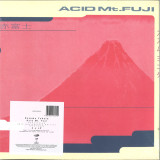
Triple gatefold heavyweight 180g vinyl, Remastered original LP , Incl. 5 unreleased tracks released for the 1st time on vinyl`see tracklist below for details!
"A mesmerizing Japanese ambient techno masterpiece that that completely rewires how you perceive music" Electronic Beats
"A mountainous Masterpiece. A powerful testament to rave culture's establishment and the birth of a new scene in Japan emerging in the mid '90s. One of Yokota's most celebrated work that merges Japanese new age and minimal techno"
Alex From Tokyo (Japan Vibrations, world famous, Paris)
**= 5 unreleased tracks released for the 1st time on vinyl.
New liner notes by Martyn Pepperell
Seit mehr als zwei Jahrzehnten begeistert die irische Post-Rock-Größe GOD IS AN ASTRONAUT Hörer und Fans aus aller Welt mit einem einzigartigen
Sound-Universum, sowohl live als auch auf ihren Studiowerken. Zwischen stets vollen Tourplänen, kehrt das Trio aus Wicklow nun am 06. September
2024 mit einem frisch-gebackenen Longplayer über Napalm Records zurück!
„Embers“, das elfte Studioalbum der Band und ihre bislang wohl umfangreichste und grandioseste Produktion, beweist vom ersten bis zum letzten
Ton, warum GOD IS AN ASTRONAUT schlichtweg Meister ihres Fachs sind.
Die von den Brüdern Torsten und Niels Kinsella gegründete Band schafft hier ein weiteres außergewöhnliches Klanguniversum, und lädt die Zuhörer
ein, die Songs auf ihre ganz eigene Art und Weise zu erkunden und zu interpretieren. Die erste offizielle Single „Falling Leaves“ ist eine Reise durch die
Kürze unserer Existenz, von der Gründung bis zum Untergang. Der progressive, Uptempo-Album Titeltrack mit seinen eindringlichen,
Synth-geladenen, oftmals fast schon bedrohlich wirkenden Shredding-Passagen balanciert dennoch stets im Einklang zwischen Licht und Dunkelheit.
Songs wie der einfach epische „Odyssey“ laden auf eine aufregende Reise ein, in der sich alle Songwriting-Qualitäten der Band vereinen.
Japanese vibraphonist and marimba player Masayoshi Fujita returns with Migratory, his masterful new solo album, where his sonic explorations into the unknown continue.
In 2019, after 13 years of living in Berlin, Fujita returned to his native Japan with his wife and their three children, fulfilling his life-long dream of living and composing music in the midst of nature. The family found their new home in the mountain hills along the coast of Kami-cho, Hyōgo, three hours west of Kyoto.
Once settled in, Fujita spent his time turning an old kindergarten into his own music studio, Kebi Bird Studio, which became the birthplace of Migratory. On his new album, the composer and producer masterfully reimagines and mesmerises with his trademark sounds of vibraphone, and resumes his experimentation with the marimba and synthesisers that he first incorporated on his 2021 album, Bird Ambience, which followed the release of his acclaimed vibraphone triptych: Stories (2012), Apologues (2015) and Book of Life (2018).
On Fujita’s ever-evolving list of collaborators, Migratory introduces vocals from Moor Mother on ‘Our Mother’s Lights’ and Hatis Noit on ‘Higurashi’, as well as shō and saxophone to its soundscapes. Whilst at a music residency in Stockholm in 2021, Fujita met Swedish shō player Mattias Hållsten. Although it was a brief encounter, the two musicians stayed in touch. During a visit to Japan, Hållsten stopped by the studio and played on three of the tracks, including the alluring album closer ‘Yodaka’, exceeding Fujita’s own expectations.
Japanese vibraphonist and marimba player Masayoshi Fujita returns with Migratory, his masterful new solo album, where his sonic explorations into the unknown continue.
In 2019, after 13 years of living in Berlin, Fujita returned to his native Japan with his wife and their three children, fulfilling his life-long dream of living and composing music in the midst of nature. The family found their new home in the mountain hills along the coast of Kami-cho, Hyōgo, three hours west of Kyoto.
Once settled in, Fujita spent his time turning an old kindergarten into his own music studio, Kebi Bird Studio, which became the birthplace of Migratory. On his new album, the composer and producer masterfully reimagines and mesmerises with his trademark sounds of vibraphone, and resumes his experimentation with the marimba and synthesisers that he first incorporated on his 2021 album, Bird Ambience, which followed the release of his acclaimed vibraphone triptych: Stories (2012), Apologues (2015) and Book of Life (2018).
On Fujita’s ever-evolving list of collaborators, Migratory introduces vocals from Moor Mother on ‘Our Mother’s Lights’ and Hatis Noit on ‘Higurashi’, as well as shō and saxophone to its soundscapes. Whilst at a music residency in Stockholm in 2021, Fujita met Swedish shō player Mattias Hållsten. Although it was a brief encounter, the two musicians stayed in touch. During a visit to Japan, Hållsten stopped by the studio and played on three of the tracks, including the alluring album closer ‘Yodaka’, exceeding Fujita’s own expectations.
Lukas de Clerck brings us the ancient greek instrument, the aulos, of which his new interpretation of long form expression is coaxed forth on this tremendous recording. Lukas de Clerck explores a niche of archaeological research in music; the aulos is a historical Greek instrument that Lukas analyzed and reinterpreted by a luthier in modern times_navigating this impression as an artwork or living sculptural object, as there is an absence of historical partitions or written information about how to recreate technique on the instrument. Lukas de Clerck has interpreted information from the rare archaeological resources and visual art of the classical Greek period to recreate both playing technique and possible sound timbres with the instrument. With his contemporary approach to drone, post-minimalist music, and contemporary folk, we find a deeply satisfying and compelling, even playful set of songs, timbral exercises and compositions. An important document of new music meets contemporary archaemusicological research via Stephen O'Malley of SUNN O)))'s label Ideologic Organ. _ The telescopic aulos is speculative: might it have existed? It takes on features from the historical aulos, a double-reed instrument of which we know how it looked but little about what music was played on it or how it would have really sounded. It's an instrument without the limitations of canon or manual, providing creative freedom and awakening curiosity. The new instrument featured on this album is ancient and futuristic at once. The aulos has no tone holes; instead, each of the two tubes consists of three parts that can slide into each other. In this sense, the metal pipes bear a certain resemblance to the principle of a trombone. However, since both hands are already in use to hold both tubes, the sliding has to be done by way of gravity and the help of a «phorbeia», a leather mask which helps keep the reeds in place. The aulos's material is metal (instead of wood), which gives it a certain electronic allure and intensity, as well as a variety of sonic possibilities and textures. It produces overtones efficiently and allows them to play with their microtonality. The aulos Lukas plays on this recording was developed at Brasserie Atlas, a temporary occupation of a former brewery in the heart of Brussels where Lukas lives. It is quite a poetic coincidence that the birthplace of the instrument is named after the Greek titan condemned to carry the sky, while this instrument needs to be turned skywards to lower its pitch with the help of gravity. At Brasserie Atlas, Lukas has found collaborators who have shared in the process of building this new instrument: the collective Noir Métal has constructed the tubes, in this way becoming instrument builders; the phorbeia has been manufactured by Jot Fau; a former water reservoir in the vast cellar of the building carried the instruments' resonance for its first sounds. The place has left an imprint on this new instrument. With all of the telescopic aulos' layers, its sonic, musical and extra-musical components are still unfolding their potential as a medium for discovery and research, next to being an instrument of great musical potential. The music on The Telescopic Aulos of Atlas reflects this spirit. In several miniature pieces, it presents an encyclopaedia of musical possibilities that the instrument offers while keeping an intense and corporeal sonic specificity. The short pieces are studies that reflect on the sonic possibilities of this instrument that are yet to be explored. It meanders, searches and interacts with itself and the space. It needs to answer common expectations of old instruments being harmonious or pleasing. It transports a kind of experimental archaeology that, by formulating hypotheses in the present, allows us to reflect on what might have been in the past and simultaneously questions concepts of beauty, harmony or virtuosity. However, in the end, this instrument might have never existed before. -Julia Eckhardt

Mutant, in proud partnership with Back Lot Music, are proud to present the premiere physical release of Dominic Lewis’ score to THE FALL GUY.
The Fall Guy is our favourite kind of movie - it's a love story not only between the film’s two leads but also a love letter to the cinema. Its also a love letter to the people who risk their lives to tell us stories. That it's scored like a stadium rock anthem also helps.
Dominic Lewis has produced a soundtrack that makes you want to stand up and cheer in the theater and blast at full volume at home.
It is pressed on 2x 140-gram Black vinyl and features liner notes by the film’s director, David Leitch, and composer, Dominic Lewis.
Nach dem Erfolg von Keb Darges 2023er Ace Rockabilly-Compilation (CHD 1637) kehrt die Legende mit einer weiteren Sammlung von Musik zurück, die ihm am Herzen liegt. - Auf 'Keb Darge Presents The Best Of Ace Sixties Garage Punk' öffnet der schottische DJ-Maestro und Producer seine Archive und enthüllt eine Auswahl von US-Garage-Stompern aus den 60er Jahren. Künstler wie The Hooterville Trolley, The Litter, The Music Machine, The Venturie "5", The Lyrics oder The Nightcrawlers werfen ein Licht auf britische Invasionsbands wie die Who, Kinks und Rolling Stones, heimische Garagenblumen und das dunkle Ende der psychedelischen Straße. Gespickt mit fuzziger Gitarre, Enthusiasmus, treibendem Beat und einer Einstellung, die Proto-Punk war, bleibt diese Musik frisch und wird bereits von einer neuen Generation angenommen. Mit Liner Notes von Keb Darge und Coverartwork von Robin Banks.
Vor drei Jahren gelang Sara Bareilles mit dem Lied "Love Song" einer der Hits des Jahres. Monatelang hielt sich das Stück in den Single- und Airplay-Charts. Die Bilanz: Top 5 der US- und UK-Charts, Platz 13 in Deutschland, Doppelplatin in den USA. Das dazugehörige Album "Little Voice" wurde mit Gold ausgezeichnet. Es folgten zahlreiche Tourneen quer durch die Welt, u.a. mit Mika, Paolo Nutini und Maroon5.
Im Oktober 2010 hat Sara Bareilles ihr zweites Album "Kaleidoscope Heart" in den USA veröffentlicht und ist damit direkt auf Platz 1 der Billboard Charts eingestiegen. Mittlerweile hat sich das Album in den USA knapp 250.000 Mal verkauft und die erste Single-Auskopplung "King of Anything" hat bereits Gold-Status und wurde für einen Grammy nominiert.
Am 11. Februar 2011 erscheint das großartige Album "Kaleidoscope Heart" mit 2 Bonus-Tracks nun endlich auch in Deutschland, rechtzeitig zu ihrer Deutschlandtour zusammen mit Maroon 5.
Der von Neal Avron (Fall Out Boy u.a.) produzierte Longplayer vereint kraftvolle, soulige Popsongs mit intelligenten Texten und Arrangements und überzeugt nicht zuletzt durch Sara Bareilles' abwechslungsreiche Stimme auf ganzer Linie.
Die limitierte Deluxe Edition von Archives Vol. III enthält Aufnahmen und Filme, die
die unangekündigte Bandbreite von Young’s Bemühungen aus der Zeit von 1976-1987 zeigen. Es ist eine der umfangreichsten Anthologien in seiner aufgezeichneten Geschichte. Insgesamt sind es 22 Discs, davon 17 CDs in 11 Softpaks und 5 Blu-Rays in 3 Softpaks. Es sind 11 Filme auf Blu-Ray, davon 4 bisher unveröffentlichte. Die insgesamt 198 Musiktitel enthalten 121 bisher unveröffentlichte Live-, Studio-, Mix- oder Schnittversionen und 15 bisher unveröffentlichte Songs, die hier zum ersten Mal überhaupt. 62 Tracks waren bereits auf verschiedenen Aufnahmen erhältlich. Die Blu-Rays enthalten 128 Tracks, über 14 Stunden Film. Die Box enthält außerdem ein 176-seitiges Buch und ein Poster. Mit über 28 Stunden können Sie von New York nach Denver fahren, die ganze Zeit hören und bei Ihrer Ankunft immer noch Stunden übrig haben.
Die definitive Vinyl-Neuauflage von Nancys drittem Album mit den Hits "Summer Wine" und "Friday's Child" und tollen Versionen von "On Broadway", "Wishin, and Hopin'" und "This Little Bird". Frisch remastered von den analogen Originalbändern durch den GRAMMYr-nominierten Toningenieur John Baldwin, enthält das LITA-Reissue vier Bonustracks: die kompletten 1969er Mickie Most-Sessions inklusive dem bisher unveröffentlichten "Colors Are Changing" Wunderschön verpackte und erweiterte Gatefold-LP mit 20-seitigem Booklet mit Q&A von Nancy und dem GRAMMYr-nominierten Co-Produzenten Hunter Lea PLUS nie zuvor gezeigte Fotos aus Nancy Sinatras persönlichem Archiv. "Strawberries, cherries, and an angel's kiss in spring_" waren die unsterblichen Worte, die die fünfundzwanzigjährige Nancy Sinatra an einem eiskalten Frühlingstag in London sang, während der Aufnahmen zu ihrer dritten LP innerhalb von nur vier Monaten! Das Album wurde 1966 in nur drei Tagen in den Pye Studios aufgenommen, in denen Mitte der 1960er Jahre auch The Kinks, Petula Clark und David Bowie sich die Klinke in die Hand gaben. Durch die Wahl von Songs wie "On Broadway", "Wishin, and Hopin'" und "This Little Bird" hat das Album einen eindeutig britischen Touch. Die LP enthält zudem das zeitlose Duett "Summer Wine" von Nancy und Lee Hazlewood.
- A1: Introduction
- A2: In France They Kiss On Main Street
- A3: Edith And The Kingpin
- A4: Coyote
- A5: Goodbye Pork Pie Hat
- B1: The Dry Cleaner From Des Moines
- B2: Amelia
- B3: Pat’s Solo
- B4: Hejira
- C1: Black Crow
- C2: Don’s Solo
- C3: Dreamland
- C4: Free Man In Paris
- C5: Band Introduction
- C6: Furry Sings The Blues
- D1: Why Do Fools Fall In Love
- D2: Shadows And Light
- D3: God Must Be A Boogie Man
- D4: Woodstock
Shadows and Light is the second live album by Canadian musician Joni Mitchell. It was released in September 1980 through Asylum Records, her last release for the label. It was recorded in September 1979 at the Santa Barbara Bowl in Santa Barbara, California.3
For the album, Mitchell was backed by a band of acclaimed jazz and fusion musicians consisting of guitarist Pat Metheny, bassist Jaco Pastorius, drummer Don Alias, keyboardist Lyle Mays, and saxophonist Michael Brecker. Additionally, vocal group the Persuasions appear on the title track and a cover of Frankie Lymon & the Teenagers' "Why Do Fools Fall in Love".
[a] a1. INTRODUCTION [1:51]
[b] a2. IN FRANCE THEY KISS ON MAIN STREET [4:14]
[c] a3. EDITH AND THE KINGPIN [4:10]
[d] a4. COYOTE [4:58]
[e] a5. GOODBYE PORK PIE HAT [6:02]
[f] b1. THE DRY CLEANER FROM DES MOINES [4:37]
[g] b2. AMELIA [6:40]
[h] b3. PAT’S SOLO [3:09]
[i] b4. HEJIRA [7:42]
[j] c1. BLACK CROW [3:52]
[k] c2. DON’S SOLO [4:04]
[l] c3. DREAMLAND [4:40]
[m] c4. FREE MAN IN PARIS [3:23]
[n] c5. BAND INTRODUCTION [0:52]
[o] c6. FURRY SINGS THE BLUES [5:14]
[p] d1. WHY DO FOOLS FALL IN LOVE [2:53]
[q] d2. SHADOWS AND LIGHT [5:23]
[r] d3. GOD MUST BE A BOOGIE MAN [5:02]
[s] d4. WOODSTOCK [5:08]
Tauchen Sie ein in die Welt des Rockabilly und Rock ‚n‘ Roll mit
der ultimativen Sammlung der größten Hits von Carl Perkins.
Diese Vinyl bietet nicht nur eine Auswahl der größten Hits
von Carl Perkins, sondern auch eine Klangqualität, die die
Authentizität und den Charme der Originalaufnahmen bewahrt.
Carl Perkins, oft als „King of Rockabilly“ bezeichnet, war
einer der einflussreichsten Musiker seiner Zeit. Mit seiner
einzigartigen Mischung aus Country, Rhythm and Blues und
Rock ‚n‘ Roll prägte er das Genre maßgeblich. Seine Musik
inspirierte zahlreiche Künstler, darunter die Beatles, Elvis
Presley und Johnny Cash