THE PINEAPPLE THIEF'S FIFTH ALBUM 'LITTLE MAN' REMASTERED &
REISSUED WITH 3 BONUS TRACKS.A vein of melancholy runs throughout
The Pineapple Thief's fifth studio album 'Little Man'
nspired by the theme of loss, 'Little Man' was the first Pineapple Thief album to
ruly establish the band on the musical map, earning them the support of the
Kscope label & endorsements from prog figurehead Steven Wilson (Porcupine
Tree) to boot. Now remastered by revered mastering engineer Steve Kitch, this
vinyl edition of 'Little Man' delivers an immersive & definitive, listening experience.
An astounding emotional, atmospheric and satisfying piece of art." 5/5 Sputnik
Music
The Pineapple Thief were formed in 1999 by founder & chief songwriter Bruce
Soord & have since released a total of 16 studio albums, 6 EP's & several live &
compilation albums. The lineup now includes Gavin Harrison of Porcupine Tree/
King Crimson following his permanent joining for 2018's 'Dissolution'. In February
2024, The Pineapple Thief released the critically acclaimed 'It Leads To This'
which reached #2 in the UK Independent Albums Chart.
This edition of 'Little Man' is presented as a CD digipack with 4- page printed
booklet & includes 'Dead In The Water', 'God Bless The Child' & live favourite
Snowdrops', plus 3 acoustic bonus tracks.
quête:kin
As a true Brazilian music aficionado, Skinshape was naturally captivated by Pedro Mizutani's charm. So, when Pedro visited Europe in the summer of 2023, Skinshape invited him to its London studio. Together, magic effortlessly unfolded.
Pedro sets the rhythm, while Skinshape sets the grain. With Skinshape weaving in basslines and other arrangements around Mizutani's mesmerizing guitar playing, the collaboration was a breeze. The two musicians understood each other in the blink of an eye.
Together, they crafted a true homage to bossa nova. Without overshadowing Mizutani's style, Skinshape brought out his full musicality. It was a seamless symbiosis. The duo created a one-of-a-kind work. In the spirit of the Afrobeats movement, one could even describe it as "bossa-pop," maintaining the essence of the genre while incorporating British aesthetic elements under Skinshape's discerning ear. A sprinkling of shimmering bells here, kicks dipped in reverb there, and jazzy basslines for that extra touch of groove. As for Pedro Mizutani, he excelled in delicacy as always and did not lose altitude, soaring to even greater heights.
- A1: Jóhann Jóhannsson The Theory Of Everything: Cambridge 1963
- A2: Olivia Belli Sapias
- A3: Nils Frahm Hammers
- A4: Ludovico Einaudi Dna
- A5: Mário Laginha Coisas Da Terra
- A6: Bryce Dessner Aheym
- B1: Franz Schubert Piano Quintet In A Major, D 667, Op. 114
- B2: Hania Rani Glass
- B3: Max Richter She Remembers (From The Leftovers)
- B4: Steve Reich Duet
- B5: Bryce Dessner Song For Octave
Das Erlebnis, Mutter zu werden, prägte LIFE, die neue farb- und kontrastreiche Aufnahme der norwegischen
Geigerin. Samuelsen ist bekannt für ihre fantasievolle Programmgestaltung. Hier reflektiert sie musikalisch
in virtuosen Interpretationen über die unterschiedlichen Gefühle, die mit Elternschaft einhergehen können. Das Album präsentiert Musik von Olivia Belli, Bryce Dessner, Ludovico Einaudi, Nils Frahm, Jóhann
Jóhannsson, Mário Laginha, Hania Rani, Max Richter sowie Steve Reich, und auch Schubert findet sich
im Mix. Samuelsen wird auf dem Album von Musikerkollegen begleitet, darunter die Streicher von Scoring
Berlin unter der Leitung von Jonathan Stockhammer.
Die Idee zu LIFE kam Samuelsen nach der Geburt ihres ersten Kindes. Als sie mit ihrem zweiten Kind
schwanger wurde, nahm der Gedanke Gestalt an. Die Magie ihres leidenschaftlichen Spiels verbindet die
elf Titel, die junge Eltern ebenso ansprechen wie Menschen, die sich an die eigene Kindheit erinnern. »Ich
mache Musik, weil ich Geschichten erzählen will«, sagt Samuelsen. »Zwar sind es persönliche Geschichten,
aber ich möchte, dass sich so viele Menschen wie möglich darin wiederfinden.«
- A1: To Circle The World
- A2: I See Something Shining
- A3: Takeoff
- A4: Aloft
- A5: San Juan
- A6: Brazil
- A7: Crossing The Equator
- A8: The Badlands
- A9: Waves Of Sand
- A10: The Letter
- A11: India And On Down To Australia
- B1: This Modern World
- B2: Flying At Night
- B3: The Word For Woman
- B4: Road To Mandalay
- B5: Broken Chronometers
- B6: Nothing But Silt
- B7: The Wrong Way
- B8: Fly Into The Sun
- B9: Howland Island
- B10: Radio
- B11: Lucky Dime
Nonesuch Records releases Laurie Anderson’s Amelia, the 2024 Grammy Lifetime Achievement Award recipient's first new album since 2018’s Grammy-winning Landfall. The record comprises 22 tracks about renowned female aviator Amelia Earhart’s tragic last flight. Anderson, who Pitchfork says, ‘sees the future, but she starts by paying attention’, wrote the music and lyrics for this subjective narrative piece. On the album, she is joined by the Czech orchestra Filharmonie Brno, conducted by Dennis Russell Davies, and Anohni, Gabriel Cabezas, Rob Moose, Ryan Kelly, Martha Mooke, Marc Ribot, Tony Scherr, Nadia Sirota, and Kenny Wolleson.
Earhart was a passionate pioneer of early aviation, achieving fame as the first woman to cross the Atlantic, in 1932. Five years later, she embarked on a flight around the world. Before she could complete the voyage, her plane disappeared without a trace; it has never been found. “The words used in Amelia are inspired by her pilot diaries, the telegrams she wrote to her husband, and my idea of what a woman flying around the world might think about,” Anderson says. First premiered at Carnegie Hall in 2000, the updated piece was recently performed across Europe.
Laurie Anderson is one of America’s most renowned – and daring – creative pioneers. Her work, which encompasses music, visual art, poetry, film, and photography, has challenged and delighted audiences around the world for more than 40 years. In a recent 60 Minutes profile, Anderson Cooper said she ‘is a pioneer of the avant-garde, but ... that doesn’t begin to describe what she creates. Her work isn’t sold in galleries. It’s experienced by audiences who come to see her perform: singing, telling stories, and playing strange violins of her own invention... she blends the beautiful and the bizarre, challenging audiences with homilies and humor. She blurs boundaries across music, theater, dance, and film.’ The Washington Post has said she ‘doesn’t just tell stories; she draws out every word with a kind of physical pleasure, tasting its flavor as she probes the everyday mysteries of life,’ and the Guardian has called Anderson ‘one of the great popular artists and storytellers of our time.’
Anderson released her first album with Nonesuch Records in 2001, the critically lauded Life on a String. Her subsequent releases on the label include Live in New York (2002), Homeland (2010), the soundtrack to Anderson’s acclaimed film Heart of a Dog (2015), and her Grammy-winning collaboration with Kronos Quartet, Landfall (2018). Additionally, Anderson’s virtual-reality film La Camera Insabbiata, with Hsin-Chien Huang, won the 2017 Venice Film Festival Award for Best VR Experience, and, in 2018, Skira Rizzoli published her book All the Things I Lost in the Flood: Essays on Pictures, Language and Code, the most comprehensive collection of her artwork to date.
Recent exhibitions and installations of Anderson’s work include Habeas Corpus at New York’s Park Avenue Armory; her largest exhibition to date, The Weather, at Washington, DC’s Smithsonian’s Hirshhorn Museum of Modern Art; and Looking into a Mirror Sideways at Stockholm’s Moderna Museet, which was her largest European exhibition to date. Anderson recently toured with Sex Mob, performing her piece Let X=X. Earlier this year, she was awarded the 2024 Stephen Hawking Medal for Science Communication, along with Christopher Nolan and David Attenborough, and the International Astronomical Union named a minor planet in her honour: Asteroid 270588, Laurieanderson.
Nonesuch released a re-mastered edition of Anderson’s landmark 1982 album Big Science in 2007 for its 25th anniversary, followed by a vinyl LP re-issue in 2021; its beloved single, ‘O Superman’, became a surprise viral hit on TikTok earlier this year.
- A1: Thats How It All Is (Feat Kevin Mark Trail)
- A2: Dumplings For Dinner (Feat Omar)
- A3: Long Road
- B1: No Crime To Try
- B2: Work It Out (Feat Ange Williams)
- C1: Clearer Skies (Feat Kevin Mark Trail)
- C2: Sherwood Ave (Kitchen Party)
- C3: Everything I Have To Give
- D1: That Love (Feat Louis Baker)
- D2: Some Kind Of Blockage
Color Vinyl[35,71 €]
The records is released in two options. Both hvae 180g vinyl records. The first version has two black vinyls and the second limited edition (numbered 100 pieces) has one turquoise vinyl and the other red.
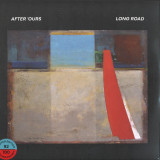
Over the last three decades, Auckland, New Zealand, has given birth to several generations of musicians, DJs, and producers who operated within the interzone between jazz, blues, soul, funk, Latin music, hip-hop, house, boogie, and broken beat. Across two slow-cooked albums that sit at the intersection of machine funk and vivid live instrumentation, Odyssey (2016) and their forthcoming sophomore release Long Road (2024), After 'Ours - the group project of pianist and composer Michal Martyniuk and drummer, guitarist and producer Nick Williams - have comfortably located themselves within this antipodean tradition.
Born and raised in Auckland, Nick Williams grew up surrounded by music from a young age. At home, his mother, Mary Anne, a record collector and DJ with deep, diverse vinyl crates, kept his ear sharp. By the time he was eight years old, he was regularly joining his musician father on stages across Australia in his blues rock band Slippery Sam. In his early twenties, Nick began leading the eleven-piece Auckland Latin-dub-funk fusion big band Tangent, who performed regularly until the late 2000s.
Michal Martyniuk, on the other hand, grew up on the opposite side of the world in Szczecin, Poland. After playing classical music for twelve years and attending jazz school, he relocated to New Zealand with his family in his teens. While studying at Auckland University Jazz school, Michal came into the orbit of the legendary New Zealand saxophonist, composer, producer, and band leader Nathan Haines, who brought him into the same world as future collaborators like Tama Waipara, Batacada Sound Machine, Sola Rosa and Nick.
Inspired by the rich stories of jazz, neo-soul, electronica, and dance music from both sides of the Atlantic Ocean and the open-eared Auckland scene they emerged from, After 'Ours formed in 2011. Born out of a friendship cultivated through playing together at bars and nightclubs around town and home studio sessions. "Nick had family and work, so I had to wait all day," Michal says. "We'd come to the studio at 10 PM and go till 3 AM. That's how we came up with the name.
Session by session, After 'Ours revealed itself to be a creatively fertile meeting of minds. "We both have our angles, but it works well in the end," Nick reflects. "It takes the music to a place we can't get to by ourselves."
Between 2011 and 2016, they wrote and recorded Odyssey with a cast of musical collaborators that included KP, Sharlene Hector & Kevin Mark Trail (UK), Matt Nanai, Nathan Haines, Jakub Skowronski, Nick's partner Ange Williams (nee Saunders) and British producer Mike Patto from the lauded UK future jazz group Reel People. Influenced by the smooth yacht rock of Steely Dan and Donald Fagan, the warm midtempo bounce of A Tribe Called Quest and J Dilla, and the complex jazz/RnB bop of Robert Glasper, Odyssey was a labour of love that emphasised community, warm-hearted hospitality, and care.
Seven years on, they're finally ready to return with Long Road, an album that contains some of their best work yet. As well as reconnecting with past collaborators Kevin Mark Trail and Ange Williams, Long Road sees After 'Ours calling on assistance from Louis Baker, Jakarta-based saxophone player Kuba Skowroński, bassist Dan Antunovich, Los Angeles-based drummer Chris Bailey and the journeyman British soul artist Omar Lyefook.
Across ten songs that plot a stargazed course through their antipodean spin on UK broken beat, jazz, modern soul, and blues rock, Nick and Michal build on everything they learned while writing and recording Odyssey. In the process, they take their joyful musical visions to sublime new heights.
Neil Feather has spent decades creating a musical world of his own through dozens of one-of-a-kind instruments he invented and built himself. His work as an instrument inventor, improviser, musical iconoclast, and stalwart of the idiosyncratic Baltimore experimental scene culminated in the late 2010s when filmmaker Skizz Cyzyk shot hours of footage of Feather taking stock of his workshop and his collaborations with musicians from Baltimore and beyond as he prepared to relocate permanently to New Zealand. That period produced Sound Mechanic, Skizz’s 2022 feature-length documentary about Feather’s work and music. It also produced an album-length collection of recordings of Feather’s music from the film that captures the spectrum of his unique sonic vision. Uninterested in the traditional rules and roles of music from his early years, Feather began constructing noisemakers out of what was around him—pieces of metal, spare parts from bikes and other gadgets, discarded traditional instruments, various electronics, ball bearings, and so on. By the time he moved to Baltimore in 1985, his work had become more codified into a practice of instruments and families of instruments, such as the Nondo, the Vibrawheel, and the Former Guitars. At the same time, he became a mainstay of the burgeoning experimental / improvised music scene that erupted from the Red Room and the internationally renowned High Zero Festival.
lassisches Roots-Reggae-Album von 1982, produziert von Prince Jammy bei Channel On und King Tubby's. Enthält die Hitsingles „Isim“, „Skism“ und „Ain't No Me Without You“ sowie den authentischen Titeltrack. Youthman Skanking ist eine hervorragende Ergänzung zu dem, was später als der Roots-basierte "Waterhouse Sound“ unter der Führung von Black Uhuru bekannt werden sollte. Wayne Smith & Jammy sollten später mit ihrem genreübergreifenden Hit "Under Me Sleng Teng“ die gesamte Musikwelt beeinflussen, aber mit Youthman Skanking fing alles an.
Diese Deluxe-Neuauflage von Youthman Skanking wurde von digitalen 24-Bit-Audioquellen remastered, die von King Jammy zur Verfügung gestellt wurden.
Packiging: LP Vollfarbige Hülle mit bedrucktem Innenteil inkl. Liner Notes und Fotos
Previously Unreleased Recording. Limited to 1200 copies on transparent cherry vinyl. Tip-on jacket, Download code. Insert featuring LP sized original art by Grungie O'Muck. Includes the original recording of Richard Tucker's "Are You Leaving For The Country", later covered by Karen Dalton, and the only song co-written by Karen & Richard, "Sleeping In The Garden". "Richard, Cam & Bert seem to have grasped The Great Harmony. That is, ensemble singing that is at once sweet, precise, funky and a bit sardonic..." -Mike Jahn / New York Times (1970) "For a few years in the late sixties and early seventies Richard Cam & Bert ruled MacDougal St. walking a fine line between the increasingly commercialized demands created by groups like Crosby Stills and Nash and the fierce integrity of earlier folk performers, the generation to which Richard belonged. They managed this with great aplomb, producing original tunes of great integrity and obvious folkloric origins, as well as those which expressed the anarchic omnipresent psychedelia of the moment. They also never abandoned the idea of including some traditional material in their performances. But for the usual random application of luck they could have been very big." - Grungie O'Muck / Artist, Bluesman, Cover artist for their first album and contributor to this one. Richard Tucker, Campbell Bruce, and Bert Lee coalesced as a trio in the spring of 1968, and by the end of that year had become regular performers at fabled Greenwich Village nightspots - The Gaslight, The Bag I'm In, Cafe Feenjon, among others. But mostly they were street singers, busking regularly in Central Park. Their only LP, Limited Edition, was released in 1970, and sold mainly at gigs and on the street. Somewhere in The Stars compiles earlier, previously unreleased recordings, when all three members were signed with Peer-Southern Music publishers as writers and began using their studio to make demos and experiment musically. Beautifully recorded by house engineer Charlie Mack (supervised by Jimmy Ienner), the demos capture a back room casualness and rustic, homespun quality. For me, listening to their songs and harmonies is like entering a world you always hoped existed but had never experienced. Some of the songs were re-recorded the following year for Limited Edition, but many are heard here for the first time. Among them is the original demo for Richard Tucker's song, "Are You Leaving For The Country", which Karen Dalton covered on her seminal 1971 release, In My Own Time. Richard and Karen were husband and wife for much of the 1960s, performing as a duo (initially as a trio with Tim Hardin), and navigating their time on the Village scene while alternating living in a small mining town outside Boulder, Co. before splitting up in 1967. Also making its debut, is the only song Richard and Karen ever wrote together, the haunting "Sleeping In The Garden". Also contains two epic songs by Cam "One Of These First Nights", and "Stockholm") not on their LP, but staples of their live performances, and noted in a gig review by The New York Times, and in a column by future A&R hero, Karin Berg, who was an early champion. Another rarity is the only cover of "Sweet Mama" by Fred Neil we've ever heard. Campell Bruce came to New York in 1967 as lead singer with a band from Washington, DC, The Natty Bumpo. They'd recently signed a record deal with Phillips, but were falling apart. Cam landed in the Village with an acoustic guitar and first started playing and singing in the basket houses, and shortly thereafter at The Gaslight, as the "Cam Bruce Trio" (which included Collin Walcott). After opening for Mose Allison, Cam's hero, the trio went their separate ways, and Cam returned to regular solo gigs at The Flamenco, and the basket houses on Bleecker. Richard and Cam met up on that scene and quickly found a musical kinship as well as becoming best pals. Bert Lee arrived in New York as a runaway the following winter, and began playing and sleeping wherever he could. His sometime accompanist, Ron Price, introduced Bert to Richard and Cam just as Bert's own songs were garnering attention from publishers. According to Bert, "I arrived on the New York scene during a time of great change, and it was the notion of change that influenced me. All around me I saw there were two sorts of songwriters, on the one hand dedicated to the traditions that had inspired them, folk, jazz, the American songbook. On the other hand were songwriters influenced by the wave of experimentation that The Beatles were the perfect example of. Mixing genres, writing lyrics that weren't just about ordinary love and loss. Richard Tucker was a country blues player, with a relaxed and melodic approach to the craft. Cam wrote something more akin to soul songs, with a hint of jazz in the changes. I was writing tunes that sometimes drew on classical structures with a tendency toward what I suppose would be known as prog-rock. But I was rather adamant about not being pinned down stylistically, and so I would write, for example, a song based on some complex classical chord structure, and then go right ahead and write a simple folk song, like Evelyn. Our band was popular locally, and it was this variety that made it distinct." Delmore is excited to present this unearthed treasure, fifteen years in the making. In the words of Richard Tucker, "Tap on your knee, roll on the floor; if you aint free, what's it all for?" "The trio's singing, playing, and writing have all withstood the test of time. Believe me, because I was there. In 1969 R,C&B, myself, Charles John Quarto, David Bromberg, Ron Price, and Keith Sykes were just a few of that year's crop of song-slingers. We were young turks back then, out on the prowl in New York's Greenwich Village for record deals, gigs, and beautiful young women to sleep with and maybe even write a song about. I've lost the names and numbers of those lovelies and I'm not sure what happened to Ron Price, but Richard, Cam, and Bert are back! - Loudon Wainwright lll
The latest full-length from Kishi Bashi, Kantos is a work of exquisite duality: a party album about the possible end of humanity as we know it, at turns deeply unsettling and sublimely joyful. In a sonic departure from the symphonic folk of his critically lauded 2019 LP Omoiyari - a career-defining body of work born from his intensive meditation on the mass incarceration of Japanese-Americans during World War II - the Seattle-born singer/songwriter/producer's fifth studio album encompasses everything from Brazilian jazz and '70s funk to orchestral rock and city pop (a Japanese genre that peaked in the mid-'80s). Informed by an equally kaleidoscopic mix of inspirations - the cult-classic sci-fi novel series Hyperion Cantos, the writings of 18th century enlightenment philosopher Immanuel Kant, a revelatory trip to ancient ruins on the island of Crete - Kantos ultimately serves as an unbridled exaltation of the human spirit and all its wild complexities. During the earliest stages of creating songs for the album, Ishibashi's main intent was to return to his highly eclectic musical roots, in part by tapping into his jazz background and by delving into the dance-rock-leaning sensibilities he previously embraced as co-founder of Brooklyn-bred indie band Jupiter One. But not too long into the songwriting process, he stumbled upon an AI-equipped website capable of composing catchy song hooks based on a prompt - a turn of events that quickly catalyzed the existential inquiry at the heart of Kantos. Although his ruminations on AI, transhumanism, and humanity's troubled fate indelibly guided the making of Kantos, Ishibashi nonetheless views the album as "less of a warning about this kind of hubris but more a celebration of the very characteristics that make us human: desire, passion, empathy, and love." "If there's anything I want people to come away with when they hear this record, it's a feeling of excitement about the possibilities of human-created art," he says. "Even as we're learning more about all the amazing things AI can do, I think humans will always be one step ahead in terms of our creativity and innovation. There's still no limit to what we have to offer."
Gilligan Moss - das aus Brooklyn stammende Duo, bestehend aus den Kindesfreunden Ben und Evan - ist mit seinem neuen Album “Speak Across Time” zurück auf ODESZA’s Foreign Family Collective!
Auf „Speaking Across Time“ kapselt jeder der zwölf Tracks des Albums persönliche Momente durch eine Linse der Zeitlosigkeit ein. 90er-Jahre-Rave, Old Country, 70er-Jahre-Soul, Honky-Tonk-Piano-House und sogar ein Sample des Dichters und langjährigen Mentors, David Mason, kollidieren unter Gilligan Moss' gekonnter Einbindung von Samples und moderner Tanzmusikproduktion.
Die Band arbeitete mit der bildenden Künstlerin, Orly Anan, in Mexiko-Stadt zusammen, um farbenfrohe Kostüme und Masken für das Single- und Album-Artwork zu kreieren. Das Kunstwerk ist eine Erkundung von Dualität, Spaltung, Zwillingsschaft und Zusammengehörigkeit. Orly war von entscheidender Bedeutung für diese Aufgabe.
Das Duo trat bereits auf namhaften Festivals wie Coachella, Pitchfork Paris und Electric Forest auf und spielte im Vorprogramm von u.a. Glass Animals, Toro Y Moi, Tourist, Chromeo, ODESZA, Elderbrook und vielen mehr.
In über 35 Jahre haben Vibravoid 22 Studio Alben, zahllose Live Alben, Singles und EPs veröffentlicht, die Spitzenpositionen erreichten. "Live At Finkenbach 2015" schaffte es auf Platz 2 der offiziellen Vinyl Verkaufscharts. Bereits im Jahre 1988 gründete Psych Aktivist Dr. Koch die Light Show Society Düsseldorf. Bereits in den frühen 1990er Jahren entwickelte sich Vibravoid als einflussreichste neue Gruppe aus Düsseldorf. Zum Beispiel wurde Vibravoid in der Frühphase des Stoner Metals und der damit einsetzenden falschen Benutzung des Begriffs "Psychedelic" zu vielen Stoner- Festivals geladen. Zum Erstaunen des Publikums präsentierten Vibravoid Songs von Syd Barrett´s Pink Floyd, Silver Apples, CAN oder den Beatles, die den Stoner-Jüngern zu dieser Zeit nicht bekannt waren und als Songs von Vibravoid interpretiert wurden. Vibravoid hat es immer abgelehnt als "Stoner Band" vereinnahmt zu werden. Als Kinder der Flower Power Generation haben Vibravoid von der ersten Welle des Psychedelic und Kraut Rock gelernt, denn was heute als "Psych- und Krautrock" vermarktet wird,gab es damals noch nicht und musste von Bands wie Vibravoid erfunden werden. Im Jahr 2008 nahmen Vibravoid mit dem legendären Flower Power Erfinder Sky Saxon (The Seeds) nicht nur sein letztes Album auf, sondern zugleich auch das Testament einer ganzen Generation.Die Karriere von Vibravoid ist einzigartig, denn trotz ihres Erfoges ist Vibravoid immer noch Underground.
In 2004, California-based indie band Golden Shoulders followed up their highly acclaimed debut with their second album, Friendship Is Deep. Now, on the twentieth anniversary of its release, the album most requested by their fans for a vinyl release is finally set for one on Unspun Heroes. Described as “one of the great semi-lost albums of the 21st Century”, the album showcases singer, songwriter, and band mainstay, Adam Kline’s knack for lyrical hooks and penchant for catchy melodies. But, like friendship, this is deeper than its pop sensibilities might suggest.
From the moment the opening track I Will Light You On Fire opens with its simple piano refrain and vocal harmonies you know you’re listening to something worthy of further exploration. From this building of tension between its temporary aural chaos and the beauty that ultimately emerges, you’ll be hooked. Yet, scratch beneath the surface and you’ll find this is an album that carries with it a political, pro-peace, and pro-humanity message, albeit somewhat more satirical than you might expect of a band hailing from America’s West Coast. This is particularly notable on tracks such as Golden Soldiers and the Committee, where Kline’s turn of phrase and wit shines through, cleverly weaving words so they create detailed poetic mosaics.
Golden Shoulders is a loose and ever-changing lineup of international talent, with Kline as the kingpin and sole songwriter. Given the pedigree of those whose talents grace the album – among them, Todd Roper and Greg Brown (Cake), Josh Klinghoffer (PJ Harvey, RHCP, Pearl Jam), Neal Morgan (Joanna Newsom, Fleet Foxes), and Dan Elkan (Broken Bells) – it’s no surprise the compositions and attention to detail present in each and every one of the 14 songs is top notch. It’s this pleasing mix of accomplished individuals, and their mishmash of influences, which lend a pinball effect to the set of stylistically diverse songs on Friendship Is Deep. Collectively though, the music you’ll hear has a focus, one that channels late 90’s Brendan Benson, the poppier side of 80’s Violent Femmes, and even the mid-60’s flair of the Beatles’ Rubber Soul.
Søren Skov Orbit's debut album, "Adrift," is at once subtle and profound. The saxophonist and his collaborators have created something quite special and consistently deep. This record may not easily be classifiable, but the most interesting music creeps between the lines
Danish tenor and soprano saxophonist Søren Skov (Debre Damo Dining Orchestra) and keyboardist Peder Vind co-founded the trippy quintet Søren Skov Orbit in 2016 to explore “more jazzy ideas,” as the saxophonist puts it. Joined by a rhythm section steeped in contemporary improvisation and psychedelia, bassist Casper Nyvang Rask, drummer Rune Lohse and percussionist Ayi Solomon of the legendary 80's Ghanaian roots/highlife band Classique Vibes, the Orbit belts out a richly focused helping of broadly African-inspired modern jazz with a hazy sheen.
On the opening “Notifications of Nothingness,” Skov digs in his heels, a steely but languid unspooling of burnished tenor lines atop condensed, quavering piano and the thick footfalls of bass and percussion. As a tenor player, Skov has done his homework and has a kinship with Albert Ayler, Archie Shepp, J.R. Monterose, and the Dutchman Hans Dulfer, but he clearly has got his own robust phraseology and expressiveness. He also cites multi-reedists John Gilmore, Yusef Lateef, and Bilal Abdurahman as, “some of the players I’ve been listening to the most for the last 10-15 years.”
A healthy dose of reverb is present throughout the album, echoing Alton Abraham’s studio wizardry with the Sun Ra Arkestra or the trance-inducing and compressed fidelity of certain Ethio-jazz and Mystic Revelations of Rastafari sessions. Skov notes that, “everything is recorded live at the same time in the same room. I wanted to do it that way in order to catch the dynamics and authenticity of the music.” There is, in fact, a complex teeter- totter between crisp and hazy execution, achieved by a delicately balanced mix that keeps the group’s sound simultaneously advancing and receding. Vind’s phrasing is terse and introspective, a vibrating echo that nudges and reflects on Skov’s brusque tenor in a dance of sonic displacement.
“Orbiting” pits a chunky backbeat and the teetering, taut hand-rhythms of Solomon against an infectious, almost microtonal piano riff, while Skov’s arpeggios are clean and florid as he patiently rises up from under a carpet of funky loops. Following the freer “Reflections of Rif,” “Naration” lilts with a wink at “Footprints” and tugs between up-tempo polyrhythmic drive, clanging keyboard accents, and the innately steadfast keenness of the bandleader. The coupling of Solomon and Lohse is a big part of the group’s detailed energy; as the leader puts it, “Ayi knows everything about regional differences in drum patterns. He is always listening and super responsive, and his and Rune’s dynamics are amazing.” The music both presents a “vibe” and keeps the door open for engaging well under the surface as repeated listens will be extremely rewarding.
Little Hag zeigt das breit gefächerte Songwriting von Avery Mandeville, deren bissige und nachvollziehbare Songs eine Welt beschreiben, die so kompliziert ist wie die, in der wir leben. Mit Hilfe von 8 Produzenten aufgenommen, in Wohnungen von Freunden bis zu den Headroom Studios in Philadelphia, liefert sie Punkrock-Knaller, tiefe Disco-Tauchgänge, Fackellieder, Folk-Balladen und vieles mehr. Die Bandmitglieder sind seit ihrer Teenagerzeit befreundet und haben sich gemeinsam zu einer wilden Rockband entwickelt.
- A1: She Looked Like Me! (3 16)
- A2: Killing Time (3 52)
- A3: True Blue Interlude (1 46)
- A4: Image (3 34)
- B1: Death & Romance (5 19)
- B2: Fear, Sex (2 28)
- B3: Vampire In The Corner (3 21)
- B4: Watching Tv (4 11)
- C1: Tunnel Vision (5 07)
- C2: Love Is Everywhere (3 12)
- C3: Feeling Diskinserted? (0 56)
- C4: That's My Floor (3 31)
- D1: Cry For Me (5 12)
- D2: Angel On A Satellite (4 01)
- D3: The Ballad Of Matt & Mica (4 19)
"Magdalena Bay, the Los Angeles-based duo of Mica Tenenbaum and Matthew Lewin, create magical pop music that floats in the ether of our collective social cosmos. While they call California home, their essence lies in the clouds, emitting unique yet familiar frequencies of synthesized nostalgia, kitschy catchiness, and warped neo-hooks. Suited for the times, Magdalena Bay blends the known and felt with innovative sonic landscapes.
Tenenbaum and Lewin met as teenagers in a Miami high school music program. Tenenbaum, who moved from Buenos Aires to Florida at age one, and Lewin, a guitar shredder influenced by his dad’s prog and concept rock records, quickly recognized their kindred spirits. They formed a prog band called Tabula Rasa and began a romance. Both were skilled musicians; Tenenbaum a pianist and singer, and Lewin self-taught in production and music theory. Despite attending different colleges, they maintained their band, traveling hours to rehearse before realizing two things: their relationship was undeniable, and prog rock wasn’t resonating with young audiences.
Shifting their focus to pop, they explored its craft, leading to the creation of Magdalena Bay. They learned the complexities of pop writing and production, striving to create something interesting within the genre. Describing their music broadly as ""pop,"" they released several EPs and singles before debuting their album, ""Mercurial World,"" in 2021. Praised for its melodic hooks and meticulous production, it was often labeled as ""synth-pop.""
Their success is reflected in streaming numbers, social media followers, and festival appearances. Magdalena Bay's stylized online aesthetic complements their music, creating a cohesive artistic vision. Tenenbaum says, “We love extending the world of our music past sound into videos or graphics.” Lewin adds, “We’re trying to create an atmosphere or an emotional quality with it.” This integrated approach, termed ""world-building,"" is central to their artistry."
10 years after its release, Lydia Loveless sits down at the piano for an intimate reimagining of her landmark album, Somewhere Else. Title track featuring guest vocals by Jason Isbell. “Over the last 10 years I’ve been told by countless people, emotional and earnest, that their favorite record of mine is Something Else. I love that, and I nod in amused reverence to it here. The me of 2012-2013 was drowning in pain and insecurity and my own press, pissed off that nobody could see me for who I really was, what I had really been through, and how hard it was to be me. I was walled in by fears and worries that I would never be good enough. I was struggling with my voice after a debilitating virus and a six week tour. I had rented a little room in the Grandview neighborhood of Columbus and was plugging away on my splintered acoustic guitar with a tape recorder.
I was frustrated as could be, not coming up with anything that I felt was 'me' or even remotely song like. One day, when I finally thought I had a nugget of something, I read the lyrics aloud to my then husband and he looked at me confused and said, 'what are you even trying to say in this, though? Who is the narrator?' I don’t remember what I said to that but I’m sure it wasn’t kind. When I went back into the studio with my friend Caeleigh Featherstone recording me this go round, she looked at me at one point and said, 'Were you singing these songs in front of old dudes? Like, your husband?' Yes, I was, I told her. We both shook our heads and laughed at the hubris on 22-year-old Lydia Loveless.” - Lydia Loveless
Gregory T.S. Walker’s Minstrels & Minimoogs was self-published by a young, nomadic composer and virtuoso in 1988 to accompany an immersive multimedia performance at the University of Colorado Boulder’s Fiske Planetarium. Created with this outer, and other, world setting in mind, the four tracks find Walker stretching toward an ancient-to-future vision where Egyptian myths and Hieronymus Bosch-ian tableaus are rendered in a screaming three dimensional circuitry of electronic drums, synth guitars, and, of course, Minimoog. Given the musical terrains and outmoded topics traversed, and that this entirely DIY effort was originally released as a micro one-sided 12” edition, Minstrels & Minimoogs is as perplexing and euphoric a document lost-to-time as it is now found.
Born in 1961 into an intensely musical family spanning four generations, Gregory’s mother Helen Walker-Hill was a noted musicologist specializing in the rediscovery and work of historical Black female composers, while his father, George Walker, was the first African American composer to win the Pulitzer Prize for music. Both parents studied with the famed (and famously strict) Nadia Boulanger in Paris in the 1950s, and held to lofty aesthetic standards in their home life. Walker began studying the violin as a child, but when a burgeoning interest in the electric guitar and rock music as a teen manifested, it was largely verboten in the household. The rule was that the music played in the home was to be acoustic and classical. Although the elder Walkers eventually relented and allowed Gregory’s guitar to be plugged in for a brief interval on the weekends, the remaining days he settled for strumming it sans amplification.
Gregory, conditioned and eager for a life in music but looking to get out from under the influence and yoke of his famous composer father, ultimately chose to study computer music at the University of California at San Diego, where he earned a Master of Arts. This was followed by another MA in electronic music composition at that hotbed of West Coast experimental music, Mills College. Intermedia and multimedia in the arts was the rage in the 1980s, and Mills was one of the centers for it; audacious spectacle meeting visionary performance, such as one of the realizations for Anthony Braxton’s music for multiple orchestras a young Gregory performed in with his violin.
After a series of solo synthesizer concerts around California, Gregory followed a girlfriend on a mid-country move to Boulder, Colorado. After picking up yet another composition degree at University of Colorado Boulder, his life as a composer really started, writing a piece for extended technique for guitar, a passacaglia for vocoder and orchestra, as well as Minstrels & Minimoogs.
Envisioned as a multimedia performance such as the kind he’d experienced at Mills (which was all but unknown in Boulder at the time), Gregory roped in a number of college going or aged friends of varying skill levels and musical sympathies to accompany him with distorted sax or oblique spoken interludes. Confronted with a lack of finances, but driven to get his ideas captured in a complete musical package, the album was recorded in his brother’s apartment. If not every player assembled was on Gregory’s virtuosic level, so be it; it was more about capturing the spirit of his intentions and embracing the serendipity of mistakes.
An inspired attempt at world building, Minstrels & Minimoogs draws on the deep well of musical knowledge Gregory gathered from his parents and teachers, but all the while subverting that historical basis by incorporating mutant strains of prog and pop music. The work accumulated is not unlike the playful 1980s work of Gregorio Paniagua, where medieval estampies and rondeaus are wrenched into an anachronistic present where Hildegard Von Bingen and Kate Bush are contemporaries. Ars nova, new art, a 20th century minimalist jester and troubadour.
A one sided LP was the cheapest option Gregory found to have Minstrels & Minimoogs memorialized on vinyl, so somewhere between 50 to 100 copies were pressed. There was no distribution, outside of copies that were handed out to friends or sold at the performances at the planetarium. Gregory T.S. Walker’s cosmic-futuristic forays into oblique pop and baroque subversion could forever reside perfectly in both the domed simulacrum of our universe for which it was composed, in the formats it is being reintoduced now, and our own biblical firmament. For in the words of Gregory, straight from the original liner notes: “God Is A Minimoog”
Gregory T.S. Walker’s Minstrels & Minimoogs arrives again August 23, 2024 on vinyl and digitally as part of uncommon¢ (“uncommon sense”), an open-ended, serialized endeavor from Freedom to Spend that provides new meaning for rarefied recordings from music's outermost fringe.
"Leopard II" heißt die 2. LP der Kolossalen Jugend aus Hamburg. Wurde schon ihr Debüt "Heile, heile boches" lobend aufgenommen, zählt "Leopard II" wohl zu den ernstzunehmendsten und wichtigsten deutschen Produktionen überhaupt. Im Original 1990 auf LADO erschienen. Die LP-Reissue enthält Linernotes von Dietmar Dath.
Opaque Pink[28,53 €]
Der aus Pittsburgh stammende Montell Fish ist ein Multiinstrumentalist, Produzent, Sänger und Komponist, der sich auf die Entwicklung von Projekten konzentriert, die Welten schaffen. Montells unvoreingenommene Herangehensweise an das Songwriting erlaubt es den Zuhörern, sich in seiner Welt willkommen
zu fühlen, in der er der Autor, Regisseur und Star ist. Charlotte ist das mit Spannung erwartete Nachfolgealbum des JAIME-Albums von 2022 und der zweite Teil seiner Jaime, Charlotte, Marshall-Album-Trilogie.
Mit jeder Veröffentlichung hat er einen mehrschichtigen Turm aus Referenzen und Metaphern aufgebaut,
der mit den Ängsten eines begabten jungen Menschen schwankt, der die Widersprüche der Welt in Einklang
bringen will: in der Liebe, in der Religion, in der Kunst und im Glauben. Es ist die Art von Musik, die
intensive Gefühle und Fangemeinde hervorruft. Auf seinem neuesten Album Charlotte, dem Nachfolger
seines Durchbruchsalbums Jamie aus dem Jahr 2022, denkt Fish gerne über die großen Fragen des Lebens
nach: Wie prägt die Kindheit einen Menschen? Was bedeutet es, eine Gabe zu haben, zu der die Welt
Zugang haben will? Fish, der in einem streng religiösen Haushalt aufgewachsen ist und nun selbst in der
Welt unterwegs ist, um seine Kunst zu machen, hat eine grenzenlose Neugier auf die Art zu leben und zu
schaffen. Charlotte ist sein bisher vollendetstes Projekt, der Klang eines Generationstalents, das in seine
Kraft tritt.
- A1: Fathoms Below
- A2: Main Titles
- A3: Fanfare
- A4: Daughters Of Triton
- A5: Part Of Your World
- A6: Under The Sea
- A7: Part Of Your World (Reprise)
- A8: Poor Unfortunate Souls
- A9: Les Poissons
- A10: Kiss The Girl
- B1: Fireworks
- B2: Jig
- B3: The Storm
- B4: Destruction Of The Grotto
- B5: Flotsam And Jetsam
- B6: Tour Of The Kingdom
- B7: Bedtime
- B8: Wedding Announcement
- B9: Eric To The Rescue
- B10: Happy Ending
Begib dich auf ein musikalisches Abenteuer mit der Musik aus Disneys Die kleine Meerjungfrau. Feiern Sie
das 35-jährige Jubiläum mit klassischen Songs und der Filmmusik!