Search:king of town

Styles
All
Various - Christmas Gospel

Various

Christmas Gospel

12inch3386356
Wagram
02.12.2022
 
15
also available

Divas[15,34 €]

Crooners Black Vinyl[15,34 €]

Crooners RED VINYL[15,34 €]


re-release Typische Weihnachtslieder wie "Stille Nacht" haben die Meisten wahrscheinlich schon so oft gehört, dass sie zu beiden Ohren raushängen. Deswegen muss man in der Adventszeit trotzdem nicht auf die bewährten Weihnachtsklassiker verzichten. Denn mit "Noël Gospel" bringt das französische Label Wagram eine Kompilation heraus, die 15 ergreifende Gospelversionen bekannter, und auch einiger weniger bekannter Weihnachtstitel versammelt, zum Beispiel "Oh Happy Day", "Silent Night" oder "White Christmas". So ist für besinnliche Stimmung und ein aufregend neues Hörerlebnis gesorgt. Mit auf der LP vertreten sind die Superstars des Gospels wie Aretha Franklin, Mahalia Jackson, The Edwin Hawkins Singers, Elvis Presley, The Staple Singers, Johnny Cash und The Golden Gate Quartet. Hinzu kommen mit Louis Armstrong, Nat "King" Cole und Little Richard stimmgewaltige Sänger, die man auch unterm Tannenbaum immer wieder gerne hören mag.

pre-order now02.12.2022

expected to be published on 02.12.2022

15,34
Finnegan's Hell - One Finger Salute LP

Finnegan's Hell has spawned a new subgenre within Celtic punk and folk rock by adding influences from hard rock, hillbilly country and Swedish folk. What the press has labeled "The New Wave Of Swedish Celtic Punk", takes no prisoners. With the focus on great melodies and sing-alongs, "One Finger Salute" is an album which will stand the test of time.

PRESS QUOTES ABOUT THE BAND:

"This is so good that I'd say it is superior to the latest offerings by the flagship bands of the sub-genre (looking at you Flogging Molly and Dropkick Murphys)" - The Mighty Decibel

"These Swedes have a solid grasp of the Celtic punk idiom and are able to use stomping folk melodies and traditional instrumentation to reveal, and revel in, the gnarlier side of life." - Vive Le Rock

"They may not be as well-known as the Dropkick Murphys, Flogging Molly, Blood Or Whiskey, or The Mahones, but they are gaining quite a reputation on the European scene. Listening to the band's last album, "Work Is The Curse Of The Drinking Class", it's easy to see why."
- IPA Music

"They're hard to describe, but just imagine a blend of Metallica and The Kilfenora Ceilí Band and you'd be about right." - The Irish Times

pre-order now25.11.2022

expected to be published on 25.11.2022

22,06
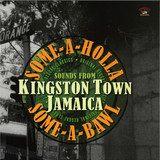
Various - SOME-A-HOLLA SOME-A-BAWL - SOUNDS FROM KINGSTON TOWN JAMAICA

Orange Street, Kingston, Jamaica the epicentre of the Reggae world.
Where all the record shops, studios, pressing plants were based.
The new cut 45’s would be taken to the shops after a testing on various Sound Systems around the people and passed to the record shop proprietors to sell.
Bunny Lee as a former record plugger and now a leading producer knew what the people wanted and a great ear for a hit tune.
This collection carries some of the stand out tracks from this period, when music was finding a new beat as Rocksteady rolled into the late 60’s early 70’s Reggae Sound.
The Ravers ‘Mati and Fulli’ telling the story that the ‘Rent too High’ to The Twinkle Brothers ‘Miss Laba Laba’ …you see and blind you must hear and deaf…clean up your own backyard before talking about others.
All stories of daily life and love songs told over a cracking rhythm played by finest musicians on the island.
So yes ‘Some A Holla Some A Bawl’ as Max Romeo would say but it can’t be denied that all the tunes on this selection are of a fine pedigree….
So sit back and Enjoy the Ride…………..

out of Stock

Order now and we will order the item for you at our supplier.

13,40

Last In: 3 years ago
Various - Jumping With Mr Lee - Reggae Classics From The Vault Of Bunny “Striker” Lee'
  • A1: Long Time Me No See You Girl
  • A2: Love & Devotion
  • A3: Jumping With Mr Lee
  • A4: Hold Your Jack
  • A5: Bangerang
  • A6: Little Boy Blue
  • A7: Story Of Love
  • B1: A Change Is Gonna Come
  • B2: Jumping With Val
  • B3: Girls Like Dirt
  • B4: Tribute To King Sterling
  • B5: Somebody's Baby
  • B6: Sounds & Soul
  • B7: My Conversation
  • B8: Sir Lee's Whip

The period of 1967 – 1968 when Rocksteady was in full flow, would also be a turning point for Bunny ‘Striker’ Lee, when he became a producer in his own right. Many of the great tunes during this eventful year came out of his stable and initially saw the light of day on his own imprint label ‘Lee’s’. This album has been assembled from some of those fine tunes and tells the story of reggae in what was a stellar time for both reggae and Mr Bunny Lee.

Edward ‘Bunny’ Lee later to become known as ‘Striker’ (b.23rd August 1941) got his introduction to the music business around 1962 when his future brother in law singer Derrick Morgan introduced Bunny to producer Duke Reid, who gave him a job as record plugger for his Treasure Isle label. 1966 saw Bunny Lee move on to working for producer Ken Lack who ran his own label Caltone. Bunny’s first credit as a producer was released on the label when he produced ‘Lloyd Jackson and the Groovers’ with a tune called ‘Listen To The Music’.

As we stated earlier by 1967 Bunny Lee was leading the way and his vast stable of singers, were producing hit after hit for him. Many of those artists are featured on this compilation. The Sensations ‘Long Time Me No See You Girl’, the Uniques that featured the great Slim Smith are here on some of their greatest cuts ‘Love and Devotion’ and ‘The Beatitude’, ‘Girls Like Dirt’. ‘My Conversation’ a song that would be a big hit for the Uniques would also go on to be of the most covered songs and redone over rhythms, in the history of reggae music. The great singer Pat Kelly features on ‘Somebody’s Baby’ and ‘Little Boy Blue’ all massive hits, when originally released. Bunny’s love of Jazz and the brass sections would also shine through with some of Jamaica’s finest musicians featured here with the excellent tenor sax work of Val Bennett which gave us our album title track ‘Jumping With Mr Lee’ and ‘Jumping With Val’. The Alto sax work of Lester Sterling are featured on the timeless cut ‘Bangerang’ and ‘Tribute To Scratch’. The big sound of Trombonist ‘Vin Gordon’ features on ‘Sounds and Soul’. Not forgetting the previously mentioned King of Ska Derrick Morgan on ‘Hold Your Jack’. A song that in a few years’ time would provide the backbone for Mr Max Romeo’s cross over and controversial hit ‘Wet Dream’. So yes, a fine collection of tracks from the great producer Bunny ‘Striker’ Lee. Sit back and enjoy the reggae music of 1967-1968 with of the best sounds in town.Sit back and enjoy…..

out of Stock

Order now and we will order the item for you at our supplier.

13,40

Last In: 3 years ago
Donna Regina - Weihnachten Woanders / Christmas With You

Berlin electronic duo Donna Regina recorded two songs for the 10th edition of the Snowflakes Christmas Singles Club. In ‘Weihnachten Woanders’ (‘Christmas Somewhere Else’), singer Regina Janssen reflects on how it feels to spend Christmas away from home. Somewhere else, in a strange town where nobody knows your name and no one is waiting for you. You miss the familiar sounds of Christmas, like the child that sings ‘Stille Nacht’ and you dream of being home again. It’s a feeling many people can relate to. Especially this year, a year in which so many people were forced to flee from their homes. Günter Janssen, the other half of Donna Regina and Regina’s husband, lays down a minimalistic tapestry of synths and drum rolls. A loop of street sounds, a sample taken from sound artist Paula Schopf’s 2021 album ‘Especios En Soledad’, forces its way into the song, and in the end overpowers voice and other instruments. ‘Weihnachten Woanders’ very much captures the year 2022 and the worrying times we are living in, in both lyrics and music.

‘Christmas With You’, the B-side of the single, was originally written and recorded by Polish indie band Old Time Radio for their 2009 Christmas album 'Sketches For Another Christmas Songbook'. Donna Regina again goes for a minimalistic electronic sound, but also adds a certain melancholy to the song. Partly due to the synths that in places resemble the sound of an organ, an instrument that appeared on so many Christmas recordings from the 1950s and early 1960s. The love-hate relationship many people have with Christmas is perfectly laid down in the lyrics: “We watch the cartoons / We sing out of tune / Kiss by the fireplace / Listen to those horrible songs / Do we know / It’s Christmas time at all?”.

Regina and Donna Janssen debuted as Donna Regina in 1990 with the single 'Avec Le Temps' and released their debut album 'Lazing Away' in 1992 on Our Choice, a German sublabel of Rough Trade. In 1999, after four albums on Strange Ways Records, they signed to their current label Karaoke Kalk. Since then, they have released eight albums for the label. In 2015, Karaoke Kalk also released 'Dis Cover', a compilation of Donna Regina songs recorded by other artists like Dean & Britta, Bernard Burgalat, Mouse On Mars and many others. Donna Regina’s songs have been featured on compilations of labels like Rough Trade, Sonar Kollektiv, Klant Elektronik, Milan and Rolling Stone. Donna Regina was not Günther’s first band. In the early 1980s he was part of a Neue Deutsche Welle act with a very Christmas-related name: Heilige 3 Köninge ('Holy 3 Kings'). Their sole album, 1982's 'Zum Teufel Met Dem Kamel' has become very collectable. Günther was also featured as songwriter and musician on German singer Romie Singh's 1986 CBS album 'Masters' and later ventured into writing music for television and film. Regina Janssen also recorded as a vocalist with French musician Bertrand Burgalat, and sang several songs on his 2005 album ‘Portrait-Robot”.

pre-order now18.11.2022

expected to be published on 18.11.2022

10,88
Adam Ten & Mita Gami - High On

A meeting of the minds between two Israeli DJs and producers. Adam Ten & Mita Gami release a combined two-tracker in September on Crosstown Rebels, dipping into dark and hypnotising waters while maintaining a club-cut aesthetic.

The pair pen a slow-burning chugger on the title track, merging tones of tech house, progressive house and techno. A high-pitched vocal weave’s throughout, in tandem with a distorted synthline and oddball sound FX—one for a wavey dancefloor. On the flip, Night Shift glistens with emotion as tribal-tinged percussion collides with long, drawn-out piano notes. A cosmic creation that blurs the line between melancholia and warmth.

Adam Ten is a Tel Aviv-born producer and resident DJ of institutional club The Block, located in his home city. Ten is a key artist on the Israeli scene, recognised for his all-night sets that blend a myriad of moods in electronic music. He’s played worldwide, spanning stints in Miami, Cape Town and Mykonos, amongst several other regions, and he’s channelled his compelling sound on labels like Diynamic, Multinotes, Disco Halal and Selador. As a co-founder of the event series TERRA, Ten curates some of the finest nature-orientated parties in Israel. Mita Gami hails from Tel Aviv. A multi-instrumentalist from a young age, he goes beyond the trope of entertainer. Instead, Gami invites his audience into immersive and almost trippy journeys during his performances via a hybrid set-up and enticing energy on-stage. Releases on REALM Records and Diynamic display his metaphysical approach. Beyond producing, Gami co-runs the label Blue Shadow Records and the Sunrise Kingdom area in Midburn Festival, based in the Negev Desert in Israel.

out of Stock

Order now and we will order the item for you at our supplier.

12,56

Last In: 13 months ago
Alex Chilton - Feudalist Tarts

Alex Chilton

Feudalist Tarts

12inchBRN255LP
Barnone
30.10.2022

Alex Chilton’s Feudalist Tarts (1985) found the Big Star/The Box Tops front man re-making himself as a southern fried hipster offering up original tunes like “Stuff” and sly soulful covers “B-A-B’Y” and “Thank You John” while adding a horn section to his road tested rhythm section. Side Two features a number of rare Chilton tracks including “Rubber Room” and “Wild Kingdom.” Chilton had hit rock bottom in his home town of Memphis after 15 years of substance abuse and hard partying. He chose New Orleans as the city where he would re-make himself. One of the benefits was exposure to all the music he would hear down there. He immediately immersed himself in the city’s laid back, stretched out grooves. The covers he chose for this record were songs he heard being played by older musicians around New Orleans. Expanded version includes a side of rare tracks. Out of print on vinyl since 1986. Includes seven original Chilton compositions. Original album release coincided with his most prolific touring schedule since his days in The Box Tops.

pre-order now30.10.2022

expected to be published on 30.10.2022

24,58
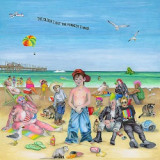
WHITMER THOMAS - THE OLDER I GET, THE FUNNIER I WAS

The Older I Get, the Funnier I Was, which follows Thomas’ brilliant 2020 HBO special The Golden One and his Can't Believe You're Happy Here EP released earlier this year, surveys a range of emotion and offers a broad sonic palette, moving between pop punk, electro, and the obvious influence of the singer-songwriters he grew up listening to in early childhood. It conjures the ennui of Bright Eyes alongside the barefaced storytelling of John Prine, the overstuffed lists of Fred Thomas with the lackadaisical humor of Colleen Green, among many others.

Thomas attributes the dexterity of the record to Duterte, who recorded and engineered most of it in addition to serving up plenty of encouragement when Thomas got down on the process. “As a comic, I used to test out new songs during sets to see if the funny bits were hitting, but since I wrote this in isolation I ended up writing lyrics and worrying less about making jokes,” Thomas says. That said, the album’s plenty funny. Stand-out and lead single “Rigamarole” opens with a Thomas-voiced infomercial that recalls his oft-cited lookalike Jim Carrey as the Grinch, before launching into a buoyant pop song about being depressed.

Whitmer Thomas will admit that when he traveled home to small town Gulf Shores, Alabama to record his HBO stand-up special, The Golden One, he expected to be greeted as a returning hero, a conquering king, or at minimum, a guy with a moderately successful career as an entertainer in Los Angeles. “I expected a big welcome home, open arms, but when I went back I realized: nobody fucking knows me. Nobody remembers me,” Thomas says. “In the years I’d been performing that show, I’d been romanticizing my childhood in this mythologized place, but the visit made me see that I’m not really from there anymore.”

The sense of alienation compounded when Thomas recognized how few people in town remembered his mom, to whom The Golden One is dedicated and largely about. Thomas grew up watching her perform with her twin sister at the legendary Flora-Bama Lounge, where he set the special, and still counts her as one of his musical influences. His new album, The Older I Get, the Funnier I Was, isn’t overtly about his mom, her presence is deeply felt throughout. While in Gulf Shores, Thomas discovered dozens of her old recordings, all of which had been wrecked by Katrina, but upon returning to LA, Thomas paid “a fancy place in Hollywood” to fix the tapes and hired Melina Duterte (Jay Som, Bachelor, Routine) to mix them. The two struck up a collaborative friendship, and Thomas had the sound of his mom’s voice back. “I was listening to songs she recorded when she was about my age, just these heartfelt, sweet Americana songs,” he says. “I decided then that I wanted to lose the Ian Curtis voice I always sing with; I wanted to do what came naturally, because my mom always sounded like herself, even when she was singing some cheesy reggae song about, like, Jamaica.”

Thus he went into The Older I Get, the Funnier I Was knowing it was time to retire his darkwave persona, and leaning into his natural, chirpier voice, which he says sounds “like a 12-year-old’s.” It makes sense: much of the album chronicles what Thomas calls “being a kid and feeling like you have no control and overcompensating by being annoying.” “So much of the album is about witnessing drug and alcohol addiction as a kid and seeing what it does to people, but also realizing that there's nothing you can do about it,” Thomas says. It’s familiar territory (see: “Partied to Death”) but the methodology is different this time around; true to its title, The Older I Get, the Funnier I Was isn’t always looking for laughs. Thomas might’ve left his hometown behind, but his kid self is still tagging along, a Peter Pan shadow he can’t untether himself from. The first line he sings on The Older I Get, the Funnier I Was is: “There should be a room at every party where you can just sit and watch a movie.” Find a 12-year-old who wouldn’t say the same.

pre-order now21.10.2022

expected to be published on 21.10.2022

27,10
Lee Tracy & Isaac Manning - Is it What You Want

As the sun sets on a quaint East Nashville house, a young man bares a piece of his soul. Facing the camera, sporting a silky suit jacket/shirt/slacks/fingerless gloves ensemble that announces "singer" before he's even opened his mouth, Lee Tracy Johnson settles onto his stage, the front yard. He sways to the dirge-like drum machine pulse of a synth-soaked slow jam, extends his arms as if gaining his balance, and croons in affecting, fragile earnest, "I need your love… oh baby…"

Dogs in the yard next door begin barking. A mysterious cardboard robot figure, beamed in from galaxies unknown and affixed to a tree, is less vocal. Lee doesn't acknowledge either's presence. He's busy feeling it, arms and hands gesticulating. His voice rises in falsetto over the now-quiet dogs, over the ambient noise from the street that seeps into the handheld camcorder's microphone, over the recording of his own voice played back from a boombox off-camera. After six minutes the single, continuous shot ends. In this intimate creative universe there are no re-takes. There are many more music videos to shoot, and as Lee later puts it, "The first time you do it is actually the best. Because you can never get that again. You expressing yourself from within."

"I Need Your Love" dates from a lost heyday. From some time in the '80s or early '90s, when Lee Tracy (as he was known in performance) and his music partner/producer/manager Isaac Manning committed hours upon hours of their sonic and visual ideas to tape. Embracing drum machines and synthesizers – electronics that made their personal futurism palpable – they recorded exclusively at home, live in a room into a simple cassette deck. Soul, funk, electro and new wave informed their songs, yet Lee and Isaac eschewed the confinement of conventional categories and genres, preferring to let experimentation guide them.

"Anytime somebody put out a new record they had the same instruments or the same sound," explains Isaac. "So I basically wanted to find something that's really gonna stand out away from all of the rest of 'em." Their ethos meant that every idea they came up with was at least worth trying: echoed out half-rapped exhortations over frantic techno-style beats, gospel synth soul, modal electro-funk, oddball pop reinterpretations, emo AOR balladry, nods to Prince and the Fat Boys, or arrangements that might collapse mid-song into a mess of arcade game-ish blips before rallying to reach the finish line. All of it conjoined by consistent tape hiss, and most vitally, Lee's chameleonic voice, which managed to wildly shape shift and still evoke something sincere – whether toggling between falsetto and tenor exalting Jesus's return, or punctuating a melismatic romantic adlib with a succinct, "We all know how it feels to be alone."

"People think we went to a studio," says Isaac derisively. "We never went to no studio. We didn't have the money to go to no studio! We did this stuff at home. I shot videos in my front yard with whatever we could to get things together." Sometimes Isaac would just put on an instrumental record, be it "Planet Rock" or "Don't Cry For Me Argentina" (from Evita), press "record," and let Lee improvise over it, yielding peculiar love songs, would-be patriotic anthems, or Elvis Presley or Marilyn Monroe tributes. Technical limitations and a lack of professional polish never dissuaded them. They believed they were onto something.

"That struggle," Isaac says, "made that sound sound good to me."

In the parlance of modern music criticism Lee and Isaac's dizzying DIY efforts would inevitably be described as "outsider." But "outsider" carries the burden of untold additional layers of meaning if you're Black and from the South, creating on a budget, and trying to get someone, anyone within the country music capital of the world to take your vision seriously. "What category should we put it in?" Isaac asks rhetorically. "I don't know. All I know is feeling. I ain't gonna name it nothing. It's music. If it grabs your soul and touch your heart that's what it basically is supposed to do."

=

Born in 1963, the baby boy of nine siblings, Lee Tracy spent his earliest years living amidst the shotgun houses on Nashville's south side. "We was poor, man!" he says, recalling the outhouse his family used for a bathroom and the blocks of ice they kept in the kitchen to chill perishables. "But I actually don't think I really realized I was in poverty until I got grown and started thinking about it." Lee's mom worked at the Holiday Inn; his dad did whatever he had to do, from selling fruit from a horse drawn cart to bootlegging. "We didn't have much," Lee continues, "but my mother and my father got us the things we needed, the clothes on our back." By the end of the decade with the city's urban renewal programs razing entire neighborhoods to accommodate construction of the Interstate, the family moved to Edgehill Projects. Lee remembers music and art as a constant source of inspiration for he and his brothers and sisters – especially after seeing the Jackson 5 perform on Ed Sullivan. "As a small child I just knew that was what I wanted to do."

His older brother Don began musically mentoring him, introducing Lee to a variety of instruments and sounds. "He would never play one particular type of music, like R&B," says Lee. "I was surrounded by jazz, hard rock and roll, easy listening, gospel, reggae, country music; I mean I was a sponge absorbing all of that." Lee taught himself to play drums by beating on cardboard boxes, gaining a rep around the way for his timekeeping, and his singing voice. Emulating his favorites, Earth Wind & Fire and Cameo, he formed groups with other kids with era-evocative band names like Concept and TNT Connection, and emerged as the leader of disciplined rehearsals. "I made them practice," says Lee. "We practiced and practiced and practiced. Because I wanted that perfection." By high school the most accomplished of these bands would take top prize in a prominent local talent show. It was a big moment for Lee, and he felt ready to take things to the next level. But his band-mates had other ideas.

"I don't know what happened," he says, still miffed at the memory. "It must have blew they mind after we won and people started showing notice, because it's like everybody quit! I was like, where the hell did everybody go?" Lee had always made a point of interrogating prospective musicians about their intentions before joining his groups: were they really serious or just looking for a way to pick up girls? Now he understood even more the importance of finding a collaborator just as committed to the music as he was.

=

Isaac Manning had spent much of his life immersed in music and the arts – singing in the church choir with his family on Nashville's north side, writing, painting, dancing, and working various gigs within the entertainment industry. After serving in the armed forces, in the early '70s he ran The Teenage Place, a music and performance venue that catered to the local youth. But he was forced out of town when word of one of his recreational routines created a stir beyond the safe haven of his bohemian circles.

"I was growing marijuana," Isaac explains. "It wasn't no business, I was smoking it myself… I would put marijuana in scrambled eggs, cornbread and stuff." His weed use originated as a form of self-medication to combat severe tooth pain. But when he began sharing it with some of the other young people he hung out with, some of who just so happened to be the kids of Nashville politicians, the cops came calling. "When I got busted," he remembers, "they were talking about how they were gonna get rid of me because they didn't want me saying nothing about they children because of the politics and stuff. So I got my family, took two raggedy cars, and left Nashville and went to Vegas."

Out in the desert, Isaac happened to meet Chubby Checker of "The Twist" fame while the singer was gigging at The Flamingo. Impressed by Isaac's zeal, Checker invited him to go on the road with him as his tour manager/roadie/valet. The experience gave Isaac a window into a part of the entertainment world he'd never encountered – a glimpse of what a true pop act's audience looked like. "Chubby Checker, none of his shows were played for Black folks," he remembers. "All his gigs were done at high-class white people areas." Returning home after a few years with Chubby, Isaac was properly motivated to make it in Music City. He began writing songs and scouting around Nashville for local talent anywhere he could find it with an expressed goal: "Find someone who can deliver your songs the way you want 'em delivered and make people feel what you want them to feel."

One day while walking through Edgehill Projects Isaac heard someone playing the drums in a way that made him stop and take notice. "The music was so tight, just the drums made me feel like, oh I'm-a find this person," he recalls. "So I circled through the projects until I found who it was.

"That's how I met him – Lee Tracy. When I found him and he started singing and stuff, I said, ohhh, this is somebody different."

=

Theirs was a true complementary partnership: young Lee possessed the raw talent, the older Isaac the belief. "He's really the only one besides my brother and my family that really seen the potential in me," says Lee. "He made me see that I could do it."

Isaac long being a night owl, his house also made for a fertile collaborative environment – a space where there always seemed to be a new piece of his visual art on display: paintings, illustrations, and dolls and figures (including an enigmatic cardboard robot). Lee and Issac would hang out together and talk, listen to music, conjure ideas, and smoke the herb Isaac had resumed growing in his yard. "It got to where I could trust him, he could trust me," Isaac says of their bond. They also worked together for hours on drawings, spreading larges rolls of paper on the walls and sketching faces with abstract patterns and imagery: alien-like beings, tri-horned horse heads, inverted Janus-like characters where one visage blurred into the other.

Soon it became apparent that they didn't need other collaborators; self-sufficiency was the natural way forward. At Isaac's behest Lee, already fed up with dealing with band musicians, began playing around with a poly-sonic Yamaha keyboard at the local music store. "It had everything on it – trumpet, bass, drums, organ," remembers Lee. "And that's when I started recording my own stuff."

The technology afforded Lee the flexibility and independence he craved, setting him on a path other bedroom musicians and producers around the world were simultaneously following through the '80s into the early '90s. Saving up money from day jobs, he eventually supplemented the Yamaha Isaac had gotten him with Roland and Casio drum machines and a Moog. Lee was living in an apartment in Hillside at that point caring for his dad, who'd been partially paralyzed since early in life. In the evenings up in his second floor room, the music put him in a zone where he could tune out everything and lose himself in his ideas.

"Oh I loved it," he recalls. "I would really experiment with the instruments and use a lot of different sound effects. I was looking for something nobody else had. I wanted something totally different. And once I found the sound I was looking for, I would just smoke me a good joint and just let it go, hit the record button." More potent a creative stimulant than even Isaac's weed was the holistic flow and spontaneity of recording. Between sessions at Isaac's place and Lee's apartment, their volume of output quickly ballooned.

"We was always recording," says Lee. "That's why we have so much music. Even when I went to Isaac's and we start creating, I get home, my mind is racing, I gotta start creating, creating, creating. I remember there were times when I took a 90-minute tape from front to back and just filled it up."

"We never practiced," says Isaac. "See, that was just so odd about the whole thing. I could relate to him, and tell him about the songs I had ideas for and everything and stuff. And then he would bring it back or whatever, and we'd get together and put it down." Once the taskmaster hell bent on rehearsing, Lee had flipped a full 180. Perfection was no longer an aspiration, but the enemy of inspiration.

"I seen where practicing and practicing got me," says Lee. "A lot of musicians you get to playing and they gotta stop, they have to analyze the music. But while you analyzing you losing a lot of the greatness of what you creating. Stop analyzing what you play, just play! And it'll all take shape."

=

"I hope you understood the beginning of the record because this was invented from a dream I had today… (You tell me, I'll tell you, we'll figure it out together)" – Lee Tracy and Isaac Manning, "Hope You Understand"

Lee lets loose a maniacal cackle when he acknowledges that the material that he and Isaac recorded was by anyone's estimation pretty out there. It's the same laugh that commences "Hope You Understand" – a chaotic transmission that encapsulates the duality at the heart of their music: a stated desire to reach people and a compulsion to go as leftfield as they saw fit.

"We just did it," says Lee. "We cut the music on and cut loose. I don't sit around and write. I do it by listening, get a feeling, play the music, and the lyrics and stuff just come out of me."

The approach proved adaptable to interpreting other artists' material. While recording a cover of Whitney Houston's pop ballad "Saving All My Love For You," Lee played Whitney's version in his headphones as he laid down his own vocals – partially following the lyrics, partially using them as a departure point. The end result is barely recognizable compared with the original, Lee and Isaac having switched up the time signature and reinvented the melody along the way towards morphing a slick mainstream radio standard into something that sounds solely their own.

"I really used that song to get me started," says Lee. "Then I said, well I need something else, something is missing. Something just came over me. That's when I came up with 'Is It What You Want.'"

The song would become the centerpiece of Lee and Isaac's repertoire. Pushed along by a percolating metronomic Rhythm King style beat somewhere between a military march and a samba, "Is It What You Want" finds Lee pleading the sincerity of his commitment to a potential love interest embellished by vocal tics and hiccups subtlely reminiscent of his childhood hero MJ. Absent chord changes, only synth riffs gliding in and out like apparitions, the song achieves a lingering lo-fi power that leaves you feeling like it's still playing, somewhere, even after the fade out.

"I don't know, it's like a real spiritual song," Lee reflects. "But it's not just spiritual. To me the more I listen to it it's like about everything that you do in your everyday life, period. Is it what you want? Do you want a car or you don't want a car? Do you want Jesus or do you want the Devil? It's basically asking you the question. Can't nobody answer the question but you yourself."

In 1989 Lee won a lawsuit stemming from injuries sustained from a fight he'd gotten into. He took part of the settlement money and with Isaac pressed up "Saving All My Love For You" b/w "Is It What You Want" as a 45 single. Isaac christened the label One Chance Records. "Because that's all we wanted," he says with a laugh, "one chance."

Isaac sent the record out to radio stations and major labels, hoping for it to make enough noise to get picked up nationally. But the response he and Lee were hoping for never materialized. According to Isaac the closest the single got to getting played on the radio is when a disk jock from a local station made a highly unusual announcement on air: "The dude said on the radio, 107.5 – 'We are not gonna play 'Is It What You Want.' We cracked up! Wow, that's deep.

"It was a whole racist thing that was going on," he reflects. "So we just looked over and kept on going. That was it. That was about the way it goes… If you were Black and you were living in Nashville and stuff, that's the way you got treated." Isaac already knew as much from all the times he'd brought he and Lee's tapes (even their cache of country music tunes) over to Music Row to try to drum up interest to no avail.

"Isaac, he really worked his ass off," says Lee. "He probably been to every record place down on Music Row." Nashville's famed recording and music business corridor wasn't but a few blocks from where Lee grew up. Close enough, he remembers, for him to ride his bike along its back alleys and stumble upon the occasional random treasure, like a discarded box of harmonicas. Getting in through the front door, however, still felt a world away.

"I just don't think at the time our music fell into a category for them," he concedes. "It was before its time."

=

Lee stopped making music some time in the latter part of the '90s, around the time his mom passed away and life became increasingly tough to manage. "When my mother died I had a nervous breakdown," he says, "So I shut down for a long time. I was in such a sadness frame of mind. That's why nobody seen me. I had just disappeared off the map." He fell out of touch with Isaac, and in an indication of just how bad things had gotten for him, lost track of all the recordings they'd made together. Music became a distant memory.

Fortunately, Isaac kept the faith. In a self-published collection of his poetry – paeans to some of his favorite entertainment and public figures entitled Friends and Dick Clark – he'd written that he believed "music has a life of its own." But his prescience and presence of mind were truly manifested in the fact that he kept an archive of he and Lee's work. As perfectly imperfect as "Is It What You Want" now sounds in a post-Personal Space world, Lee and Isaac's lone official release was in fact just a taste. The bulk of the Is It What You Want album is culled from the pair's essentially unheard home recordings – complete songs, half-realized experiments, Isaac's blue monologues and pronouncements et al – compiled, mixed and programmed in the loose and impulsive creative spirit of their regular get-togethers from decades ago. The rest of us, it seems, may have finally caught up to them.

On the prospect of at long last reaching a wider audience, Isaac says simply, "I been trying for a long time, it feels good." Ever the survivor, he adds, "The only way I know how to make it to the top is to keep climbing. If one leg break on the ladder, hey, you gotta fix it and keep on going… That's where I be at. I'll kill death to make it out there."

For Lee it all feels akin to a personal resurrection: "It's like I was in a tomb and the tomb was opened and I'm back… Man, it feels so great. I feel like I'm gonna jump out of my skin." Success at this stage of his life, he realizes, probably means something different than what it did back when he was singing and dancing in Isaac's front yard. "What I really mean by 'making it,'" he explains isn't just the music being heard but, "the story being told."

Occasionally Lee will pull up "Is It What You Want" on YouTube on his phone, put on his headphones, and listen. He remembers the first time he heard his recorded voice. How surreal it was, how he thought to himself, "Is that really me?" What would he say to that younger version of himself now?

"I would probably tell myself, hang in there, don't give up. Keep striving for the goal. And everything will work out."

Despite what's printed on the record label, sometimes you do get more than one chance.

out of Stock

Order now and we will order the item for you at our supplier.

11,72

Last In: 3 years ago
Scone Cash Players - Blast Furnace!

For Fans Of: Delvon Lamarr Organ Trio, The Sure Fire Soul Ensemble, New Mastersounds, Soulive, Jimmy Smith, Khruangbin. First reissue since it's original pressing in 2018! The iconic debut LP from the Scone Cash Players. Hammond Organ Stylings By Organ Master Adam Scone. The Hammond Organ is lead singer on this soulful and orchestral journey about industrial decay and the death of the steel town. Deep from the rusted steel mills of Youngstown Ohio, we bring you the much-anticipated reissue of the melting debut from the Scone Cash Players. It's the same organist that brought you the screaming organ on all those Daptone favorites from The Sugarman Three. Scone was behind that organ bench on the modern classics as follows. "Sugar's Boogaloo”, “Soul Donkey”, “Pure Cane Sugar", and "What the World Needs Now." Adam Scone entered the studio on Dunham Street in Brooklyn. He was wearing a blue Adidas jump suit. The studio had just opened. At the helm were his old compadres from The Dap-Kings. Namely Thomas Brenneck, Eric Kalb, Homer Steinweiss and lan Hendrickson-Smith. They make up the "Bliss Machine" behind Scones's groove. It was a truly rare moment to catch these masters of music and taste in between tours of Sharon Jones and Charles Bradley. Tommy put the mics around. Scone powered up the organ. The analog tape machine turned and turned until they couldn't turn any more. These songs were recorded. We worked all day and all night. Tears were shed. Espresso was made. There was beer on tap. 3 days of life were taken to make this album. We will never get them back. They were distilled to 40 minutes of pure emotion. It's a tale of woe. It's a tale of leaving art for responsibility. It's a farewell to an era. It's a journey that the Hammond B3 organ wasn't accustomed to. You can't compare this album to any other organ record. Don't expect to hear what you want. Free your mind. Be open. Your world is going to feel the heat of the BLAST FURNACE! It never quite feels how you want it to. Don't get burned... Tracks: 1. 1% Crown 2. Bliss Machine 3. The Slitter 4. Heavy Gauge 5. Necking 6. Blast Furnace 7. Jet Cool 8 Call & Receive No Call Back 9. Grinding Wheel 10. Structural Failure

out of Stock

Order now and we will order the item for you at our supplier.

27,10

Last In: 3 years ago
Lee Tracy & Isaac Manning - Is it What You Want LP

As the sun sets on a quaint East Nashville house, a young man bares a piece of his soul. Facing the camera, sporting a silky suit jacket/shirt/slacks/fingerless gloves ensemble that announces "singer" before he's even opened his mouth, Lee Tracy Johnson settles onto his stage, the front yard. He sways to the dirge-like drum machine pulse of a synth-soaked slow jam, extends his arms as if gaining his balance, and croons in affecting, fragile earnest, "I need your love… oh baby…"

Dogs in the yard next door begin barking. A mysterious cardboard robot figure, beamed in from galaxies unknown and affixed to a tree, is less vocal. Lee doesn't acknowledge either's presence. He's busy feeling it, arms and hands gesticulating. His voice rises in falsetto over the now-quiet dogs, over the ambient noise from the street that seeps into the handheld camcorder's microphone, over the recording of his own voice played back from a boombox off-camera. After six minutes the single, continuous shot ends. In this intimate creative universe there are no re-takes. There are many more music videos to shoot, and as Lee later puts it, "The first time you do it is actually the best. Because you can never get that again. You expressing yourself from within."

"I Need Your Love" dates from a lost heyday. From some time in the '80s or early '90s, when Lee Tracy (as he was known in performance) and his music partner/producer/manager Isaac Manning committed hours upon hours of their sonic and visual ideas to tape. Embracing drum machines and synthesizers – electronics that made their personal futurism palpable – they recorded exclusively at home, live in a room into a simple cassette deck. Soul, funk, electro and new wave informed their songs, yet Lee and Isaac eschewed the confinement of conventional categories and genres, preferring to let experimentation guide them.

"Anytime somebody put out a new record they had the same instruments or the same sound," explains Isaac. "So I basically wanted to find something that's really gonna stand out away from all of the rest of 'em." Their ethos meant that every idea they came up with was at least worth trying: echoed out half-rapped exhortations over frantic techno-style beats, gospel synth soul, modal electro-funk, oddball pop reinterpretations, emo AOR balladry, nods to Prince and the Fat Boys, or arrangements that might collapse mid-song into a mess of arcade game-ish blips before rallying to reach the finish line. All of it conjoined by consistent tape hiss, and most vitally, Lee's chameleonic voice, which managed to wildly shape shift and still evoke something sincere – whether toggling between falsetto and tenor exalting Jesus's return, or punctuating a melismatic romantic adlib with a succinct, "We all know how it feels to be alone."

"People think we went to a studio," says Isaac derisively. "We never went to no studio. We didn't have the money to go to no studio! We did this stuff at home. I shot videos in my front yard with whatever we could to get things together." Sometimes Isaac would just put on an instrumental record, be it "Planet Rock" or "Don't Cry For Me Argentina" (from Evita), press "record," and let Lee improvise over it, yielding peculiar love songs, would-be patriotic anthems, or Elvis Presley or Marilyn Monroe tributes. Technical limitations and a lack of professional polish never dissuaded them. They believed they were onto something.

"That struggle," Isaac says, "made that sound sound good to me."

In the parlance of modern music criticism Lee and Isaac's dizzying DIY efforts would inevitably be described as "outsider." But "outsider" carries the burden of untold additional layers of meaning if you're Black and from the South, creating on a budget, and trying to get someone, anyone within the country music capital of the world to take your vision seriously. "What category should we put it in?" Isaac asks rhetorically. "I don't know. All I know is feeling. I ain't gonna name it nothing. It's music. If it grabs your soul and touch your heart that's what it basically is supposed to do."

=

Born in 1963, the baby boy of nine siblings, Lee Tracy spent his earliest years living amidst the shotgun houses on Nashville's south side. "We was poor, man!" he says, recalling the outhouse his family used for a bathroom and the blocks of ice they kept in the kitchen to chill perishables. "But I actually don't think I really realized I was in poverty until I got grown and started thinking about it." Lee's mom worked at the Holiday Inn; his dad did whatever he had to do, from selling fruit from a horse drawn cart to bootlegging. "We didn't have much," Lee continues, "but my mother and my father got us the things we needed, the clothes on our back." By the end of the decade with the city's urban renewal programs razing entire neighborhoods to accommodate construction of the Interstate, the family moved to Edgehill Projects. Lee remembers music and art as a constant source of inspiration for he and his brothers and sisters – especially after seeing the Jackson 5 perform on Ed Sullivan. "As a small child I just knew that was what I wanted to do."

His older brother Don began musically mentoring him, introducing Lee to a variety of instruments and sounds. "He would never play one particular type of music, like R&B," says Lee. "I was surrounded by jazz, hard rock and roll, easy listening, gospel, reggae, country music; I mean I was a sponge absorbing all of that." Lee taught himself to play drums by beating on cardboard boxes, gaining a rep around the way for his timekeeping, and his singing voice. Emulating his favorites, Earth Wind & Fire and Cameo, he formed groups with other kids with era-evocative band names like Concept and TNT Connection, and emerged as the leader of disciplined rehearsals. "I made them practice," says Lee. "We practiced and practiced and practiced. Because I wanted that perfection." By high school the most accomplished of these bands would take top prize in a prominent local talent show. It was a big moment for Lee, and he felt ready to take things to the next level. But his band-mates had other ideas.

"I don't know what happened," he says, still miffed at the memory. "It must have blew they mind after we won and people started showing notice, because it's like everybody quit! I was like, where the hell did everybody go?" Lee had always made a point of interrogating prospective musicians about their intentions before joining his groups: were they really serious or just looking for a way to pick up girls? Now he understood even more the importance of finding a collaborator just as committed to the music as he was.

=

Isaac Manning had spent much of his life immersed in music and the arts – singing in the church choir with his family on Nashville's north side, writing, painting, dancing, and working various gigs within the entertainment industry. After serving in the armed forces, in the early '70s he ran The Teenage Place, a music and performance venue that catered to the local youth. But he was forced out of town when word of one of his recreational routines created a stir beyond the safe haven of his bohemian circles.

"I was growing marijuana," Isaac explains. "It wasn't no business, I was smoking it myself… I would put marijuana in scrambled eggs, cornbread and stuff." His weed use originated as a form of self-medication to combat severe tooth pain. But when he began sharing it with some of the other young people he hung out with, some of who just so happened to be the kids of Nashville politicians, the cops came calling. "When I got busted," he remembers, "they were talking about how they were gonna get rid of me because they didn't want me saying nothing about they children because of the politics and stuff. So I got my family, took two raggedy cars, and left Nashville and went to Vegas."

Out in the desert, Isaac happened to meet Chubby Checker of "The Twist" fame while the singer was gigging at The Flamingo. Impressed by Isaac's zeal, Checker invited him to go on the road with him as his tour manager/roadie/valet. The experience gave Isaac a window into a part of the entertainment world he'd never encountered – a glimpse of what a true pop act's audience looked like. "Chubby Checker, none of his shows were played for Black folks," he remembers. "All his gigs were done at high-class white people areas." Returning home after a few years with Chubby, Isaac was properly motivated to make it in Music City. He began writing songs and scouting around Nashville for local talent anywhere he could find it with an expressed goal: "Find someone who can deliver your songs the way you want 'em delivered and make people feel what you want them to feel."

One day while walking through Edgehill Projects Isaac heard someone playing the drums in a way that made him stop and take notice. "The music was so tight, just the drums made me feel like, oh I'm-a find this person," he recalls. "So I circled through the projects until I found who it was.

"That's how I met him – Lee Tracy. When I found him and he started singing and stuff, I said, ohhh, this is somebody different."

=

Theirs was a true complementary partnership: young Lee possessed the raw talent, the older Isaac the belief. "He's really the only one besides my brother and my family that really seen the potential in me," says Lee. "He made me see that I could do it."

Isaac long being a night owl, his house also made for a fertile collaborative environment – a space where there always seemed to be a new piece of his visual art on display: paintings, illustrations, and dolls and figures (including an enigmatic cardboard robot). Lee and Issac would hang out together and talk, listen to music, conjure ideas, and smoke the herb Isaac had resumed growing in his yard. "It got to where I could trust him, he could trust me," Isaac says of their bond. They also worked together for hours on drawings, spreading larges rolls of paper on the walls and sketching faces with abstract patterns and imagery: alien-like beings, tri-horned horse heads, inverted Janus-like characters where one visage blurred into the other.

Soon it became apparent that they didn't need other collaborators; self-sufficiency was the natural way forward. At Isaac's behest Lee, already fed up with dealing with band musicians, began playing around with a poly-sonic Yamaha keyboard at the local music store. "It had everything on it – trumpet, bass, drums, organ," remembers Lee. "And that's when I started recording my own stuff."

The technology afforded Lee the flexibility and independence he craved, setting him on a path other bedroom musicians and producers around the world were simultaneously following through the '80s into the early '90s. Saving up money from day jobs, he eventually supplemented the Yamaha Isaac had gotten him with Roland and Casio drum machines and a Moog. Lee was living in an apartment in Hillside at that point caring for his dad, who'd been partially paralyzed since early in life. In the evenings up in his second floor room, the music put him in a zone where he could tune out everything and lose himself in his ideas.

"Oh I loved it," he recalls. "I would really experiment with the instruments and use a lot of different sound effects. I was looking for something nobody else had. I wanted something totally different. And once I found the sound I was looking for, I would just smoke me a good joint and just let it go, hit the record button." More potent a creative stimulant than even Isaac's weed was the holistic flow and spontaneity of recording. Between sessions at Isaac's place and Lee's apartment, their volume of output quickly ballooned.

"We was always recording," says Lee. "That's why we have so much music. Even when I went to Isaac's and we start creating, I get home, my mind is racing, I gotta start creating, creating, creating. I remember there were times when I took a 90-minute tape from front to back and just filled it up."

"We never practiced," says Isaac. "See, that was just so odd about the whole thing. I could relate to him, and tell him about the songs I had ideas for and everything and stuff. And then he would bring it back or whatever, and we'd get together and put it down." Once the taskmaster hell bent on rehearsing, Lee had flipped a full 180. Perfection was no longer an aspiration, but the enemy of inspiration.

"I seen where practicing and practicing got me," says Lee. "A lot of musicians you get to playing and they gotta stop, they have to analyze the music. But while you analyzing you losing a lot of the greatness of what you creating. Stop analyzing what you play, just play! And it'll all take shape."

=

"I hope you understood the beginning of the record because this was invented from a dream I had today… (You tell me, I'll tell you, we'll figure it out together)" – Lee Tracy and Isaac Manning, "Hope You Understand"

Lee lets loose a maniacal cackle when he acknowledges that the material that he and Isaac recorded was by anyone's estimation pretty out there. It's the same laugh that commences "Hope You Understand" – a chaotic transmission that encapsulates the duality at the heart of their music: a stated desire to reach people and a compulsion to go as leftfield as they saw fit.

"We just did it," says Lee. "We cut the music on and cut loose. I don't sit around and write. I do it by listening, get a feeling, play the music, and the lyrics and stuff just come out of me."

The approach proved adaptable to interpreting other artists' material. While recording a cover of Whitney Houston's pop ballad "Saving All My Love For You," Lee played Whitney's version in his headphones as he laid down his own vocals – partially following the lyrics, partially using them as a departure point. The end result is barely recognizable compared with the original, Lee and Isaac having switched up the time signature and reinvented the melody along the way towards morphing a slick mainstream radio standard into something that sounds solely their own.

"I really used that song to get me started," says Lee. "Then I said, well I need something else, something is missing. Something just came over me. That's when I came up with 'Is It What You Want.'"

The song would become the centerpiece of Lee and Isaac's repertoire. Pushed along by a percolating metronomic Rhythm King style beat somewhere between a military march and a samba, "Is It What You Want" finds Lee pleading the sincerity of his commitment to a potential love interest embellished by vocal tics and hiccups subtlely reminiscent of his childhood hero MJ. Absent chord changes, only synth riffs gliding in and out like apparitions, the song achieves a lingering lo-fi power that leaves you feeling like it's still playing, somewhere, even after the fade out.

"I don't know, it's like a real spiritual song," Lee reflects. "But it's not just spiritual. To me the more I listen to it it's like about everything that you do in your everyday life, period. Is it what you want? Do you want a car or you don't want a car? Do you want Jesus or do you want the Devil? It's basically asking you the question. Can't nobody answer the question but you yourself."

In 1989 Lee won a lawsuit stemming from injuries sustained from a fight he'd gotten into. He took part of the settlement money and with Isaac pressed up "Saving All My Love For You" b/w "Is It What You Want" as a 45 single. Isaac christened the label One Chance Records. "Because that's all we wanted," he says with a laugh, "one chance."

Isaac sent the record out to radio stations and major labels, hoping for it to make enough noise to get picked up nationally. But the response he and Lee were hoping for never materialized. According to Isaac the closest the single got to getting played on the radio is when a disk jock from a local station made a highly unusual announcement on air: "The dude said on the radio, 107.5 – 'We are not gonna play 'Is It What You Want.' We cracked up! Wow, that's deep.

"It was a whole racist thing that was going on," he reflects. "So we just looked over and kept on going. That was it. That was about the way it goes… If you were Black and you were living in Nashville and stuff, that's the way you got treated." Isaac already knew as much from all the times he'd brought he and Lee's tapes (even their cache of country music tunes) over to Music Row to try to drum up interest to no avail.

"Isaac, he really worked his ass off," says Lee. "He probably been to every record place down on Music Row." Nashville's famed recording and music business corridor wasn't but a few blocks from where Lee grew up. Close enough, he remembers, for him to ride his bike along its back alleys and stumble upon the occasional random treasure, like a discarded box of harmonicas. Getting in through the front door, however, still felt a world away.

"I just don't think at the time our music fell into a category for them," he concedes. "It was before its time."

=

Lee stopped making music some time in the latter part of the '90s, around the time his mom passed away and life became increasingly tough to manage. "When my mother died I had a nervous breakdown," he says, "So I shut down for a long time. I was in such a sadness frame of mind. That's why nobody seen me. I had just disappeared off the map." He fell out of touch with Isaac, and in an indication of just how bad things had gotten for him, lost track of all the recordings they'd made together. Music became a distant memory.

Fortunately, Isaac kept the faith. In a self-published collection of his poetry – paeans to some of his favorite entertainment and public figures entitled Friends and Dick Clark – he'd written that he believed "music has a life of its own." But his prescience and presence of mind were truly manifested in the fact that he kept an archive of he and Lee's work. As perfectly imperfect as "Is It What You Want" now sounds in a post-Personal Space world, Lee and Isaac's lone official release was in fact just a taste. The bulk of the Is It What You Want album is culled from the pair's essentially unheard home recordings – complete songs, half-realized experiments, Isaac's blue monologues and pronouncements et al – compiled, mixed and programmed in the loose and impulsive creative spirit of their regular get-togethers from decades ago. The rest of us, it seems, may have finally caught up to them.

On the prospect of at long last reaching a wider audience, Isaac says simply, "I been trying for a long time, it feels good." Ever the survivor, he adds, "The only way I know how to make it to the top is to keep climbing. If one leg break on the ladder, hey, you gotta fix it and keep on going… That's where I be at. I'll kill death to make it out there."

For Lee it all feels akin to a personal resurrection: "It's like I was in a tomb and the tomb was opened and I'm back… Man, it feels so great. I feel like I'm gonna jump out of my skin." Success at this stage of his life, he realizes, probably means something different than what it did back when he was singing and dancing in Isaac's front yard. "What I really mean by 'making it,'" he explains isn't just the music being heard but, "the story being told."

Occasionally Lee will pull up "Is It What You Want" on YouTube on his phone, put on his headphones, and listen. He remembers the first time he heard his recorded voice. How surreal it was, how he thought to himself, "Is that really me?" What would he say to that younger version of himself now?

"I would probably tell myself, hang in there, don't give up. Keep striving for the goal. And everything will work out."

Despite what's printed on the record label, sometimes you do get more than one chance.

out of Stock

Order now and we will order the item for you at our supplier.

23,49

Last In: 3 years ago
Dark Meditation - Polluted Temples

DARK MEDITATION may hail from Seattle, but their sound is steeped in
traditions associated with other corners of the globe'England's workingclass cities, frosty Scandinavian towns, Southern California meccas of
the '80s
Or as the band puts it, DARK MEDITATION sounds like the bastard amalgamation
of Venom and Judas Priest fighting it out on the Sunset Strip while Danzig and
King Diamond cheer them on. While such reference points may suggest a nexus
of evil kitsch and arena-level theatrics, the band's debut album Polluted Temples
comes from a place of down- and- out urgency and punk ethics, adopting the
gloomy anthems and riff worship of heavy metal titans for their sonic exorcisms
rather than their rock n' roll panache. It's an album that basks in big hooks,
righteous guitar work, and an arena-level stomp without compromising any grit,
grime, or guts.
Tracks: Prelude / Babalon.Money.Magick / Haunt of Fear / Strange Caress (of the
night) / Masters Coil / Desolation Days / The Howling Wild / Drink of the Blade /
Nocturnal Forever / Polluted Temples

pre-order now23.09.2022

expected to be published on 23.09.2022

30,46
Witch - Introduction LP

Witch

Introduction LP

12inchNA5200LP
NOW AGAIN
23.09.2022

“Electrified by a diet of James Brown, the Stones and Deep Purple, WITCH were the stadium-filling kings of 70' Zamrock." ****MOJO. Archival reissue of the private-press, first issue of the album that launched Zamrock movement in 1972. Completely different recordings of the songs from the better-known Zambia Music Parlour album. Originally pressed in a run of just a few hundred copies and sold by the band at their live shows, this is the first ever reissue of this garage-rock masterpiece.

pre-order now23.09.2022

expected to be published on 23.09.2022

29,37
Lewis Parker - Frequency Of Perception LP 2x12"

Lewis Parker continues to dig deeper and get stronger in ways, on his most recent addition to his impressive and wide body of work. 20 plus releases into his career, Parker goes in from the opening bars of his new LP ‘Frequency of Perception’. The veteran producer and rapper comes in hot, clearly rooted in his ideas and views, wasting no time dropping knowledge and his opinions on social issues, current rappers, and the rap industry itself.

out of Stock

Order now and we will order the item for you at our supplier.

34,41

Last In: 3 years ago
Marillion - Holidays in Eden LP (4x12")
  • A1: Splintering Heart
  • A2: Cover My Eyes
  • A3: The Party
  • A4: No One Can
  • B1: Holidays In Eden
  • B2: Dry Land
  • B3: Waiting To Happen
  • B4: This Town
  • B5: The Rake's Progress
  • B6: 100 Nights
  • C1: Splintering Heart
  • C2: Dry Land
  • C3: The King Of Sunset Town
  • D1: Garden Party
  • D2: The Party
  • D3: Easter
  • E1: The Space?
  • E2: Holloway Girl
  • E3: A Collection
  • E4: Waiting To Happen
  • F1: Cover My Eyes
  • F2: Lords Of The Backstage
  • F3: Blind Curve
  • F4: The Uninvited Guest
  • G2: Rake's Progress
  • G3 10: 0 Nights
  • G4: Slàinte Mhath
  • G5: Holidays In Eden
  • H1: Hooks In You
  • H2: Berlin
  • H3: Kayleigh
  • H4: Incommunicado
  • F5: No One Can
  • G1: This Town

Am 16.09. erscheint eine neue, erweiterte Deluxe Edition von "Holidays In Eden", dem ursprünglich 1991 veröffentlichten Album von Marillion. Die neue Edition erscheint als 3CD/Blu-Ray-Buch und als 4LP-Set. Die Blu-Ray der Deluxe Edition enthält den brandneuen
2022 Stereo-Remix in 96/24 Stereo LPCM, DTS-HD Master Audio 5.1 und 96/24 5.1 LPCM sowie B-Seiten und Bonustracks wie die "The Moles Club"-Demos, aufgenommen nach dem langen Songwriting-Prozess der Band für das Album. Außerdem gibt es jede Menge
Video-Content, darunter eine ganz neue Doku, in der di Band über die Entstehungsgeschichte des Albums spricht, Promo-Videos in neuer HD-Qualität - und ein Live-Konzert, das damals im Rahmen der Reihe
"Rockpalast In Concert" im deutschen Fernsehen ausgestrahlt wurde. Außerdem gibt es jede Menge Video-Content, darunter eine ganz neue Doku, in der die Band über die Entstehungsgeschichte des Albums spricht, Promo-Videos in neuer HD-Qualität - und ein Live-Konzert, das damals im Rahmen der Reihe "Rockpalast In Concert" im deutschen Fernsehen ausgestrahlt wurde


l c2 Dry Land [4:40]

pre-order now16.09.2022

expected to be published on 16.09.2022

68,07
Scone Cash Players - Blast Furnace!

For Fans Of: Delvon Lamarr Organ Trio, The Sure Fire Soul Ensemble, New Mastersounds, Soulive, Jimmy Smith, Khruangbin. First reissue since it's original pressing in 2018! The iconic debut LP from the Scone Cash Players. Hammond Organ Stylings By Organ Master Adam Scone. The Hammond Organ is lead singer on this soulful and orchestral journey about industrial decay and the death of the steel town. Deep from the rusted steel mills of Youngstown Ohio, we bring you the much-anticipated reissue of the melting debut from the Scone Cash Players. It's the same organist that brought you the screaming organ on all those Daptone favorites from The Sugarman Three. Scone was behind that organ bench on the modern classics as follows. "Sugar's Boogaloo”, “Soul Donkey”, “Pure Cane Sugar", and "What the World Needs Now." Adam Scone entered the studio on Dunham Street in Brooklyn. He was wearing a blue Adidas jump suit. The studio had just opened. At the helm were his old compadres from The Dap-Kings. Namely Thomas Brenneck, Eric Kalb, Homer Steinweiss and lan Hendrickson-Smith. They make up the "Bliss Machine" behind Scones's groove. It was a truly rare moment to catch these masters of music and taste in between tours of Sharon Jones and Charles Bradley. Tommy put the mics around. Scone powered up the organ. The analog tape machine turned and turned until they couldn't turn any more. These songs were recorded. We worked all day and all night. Tears were shed. Espresso was made. There was beer on tap. 3 days of life were taken to make this album. We will never get them back. They were distilled to 40 minutes of pure emotion. It's a tale of woe. It's a tale of leaving art for responsibility. It's a farewell to an era. It's a journey that the Hammond B3 organ wasn't accustomed to. You can't compare this album to any other organ record. Don't expect to hear what you want. Free your mind. Be open. Your world is going to feel the heat of the BLAST FURNACE! It never quite feels how you want it to. Don't get burned... Tracks: 1. 1% Crown 2. Bliss Machine 3. The Slitter 4. Heavy Gauge 5. Necking 6. Blast Furnace 7. Jet Cool 8 Call & Receive No Call Back 9. Grinding Wheel 10. Structural Failure

pre-order now02.09.2022

expected to be published on 02.09.2022

28,53
SCONE CASH PLAYERS - BLAST FURNACE!

The Hammond Organ is lead singer on this soulful and orchestral journey about industrial decay and the death of the steel town. Deep from the rusted steel mills of Youngstown Ohio, we bring you the much-anticipated reissue of the melting debut from the Scone Cash Players. It's the same organist that brought you the screaming organ on all those Daptone favorites from The Sugarman Three. Scone was behind that organ bench on the modern classics as follows. "Sugar's Boogaloo", "Soul Donkey", "Pure Cane Sugar", and "What the World Needs Now." Adam Scone entered the studio on Dunham Street in Brooklyn. He was wearing a blue Adidas jump suit. The studio had just opened. At the helm were his old compadres from The Dap-Kings. Namely Thomas Brenneck, Eric Kalb, Homer Steinweiss and lan Hendrickson-Smith. They make up the "Bliss Machine" behind Scones's groove. It was a truly rare moment to catch these masters of music and taste in between tours of Sharon Jones and Charles Bradley. Tommy put the mics around. Scone powered up the organ. The analog tape machine turned and turned until they couldn't turn any more. These songs were recorded. We worked all day and all night. Tears were shed. Espresso was made. There was beer on tap. 3 days of life were taken to make this album. We will never get them back. They were distilled to 40 minutes of pure emotion. It's a tale of woe. It's a tale of leaving art for responsibility. It's a farewell to an era. It's a journey that the Hammond B3 organ wasn't accustomed to. You can't compare this album to any other organ record. Don't expect to hear what you want. Free your mind. Be open. Your world is going to feel the heat of the BLAST FURNACE! It never quite feels how you want it to. Don't get burned... FOR FANS OF: Delvon Lamarr Organ Trio, The Sure Fire Soul Ensemble, New Mastersounds, Soulive, Jimmy Smith, Khruangbin

pre-order now31.08.2022

expected to be published on 31.08.2022

23,91
Strapping Young Lad - Heavy as a Really Heavy thing

Strapping Young Lad was a Canadian extreme metal band formed by Devin Townsend in Vancouver in 1994. The band started as a one-man studio project; Devin Townsend played most of the instruments on the 1995 debut album, Heavy as a Really Heavy Thing. By 1997, he had recruited permanent members; this line-up, which consisted of Townsend on vocals and guitar, Jed Simon on guitar, Byron Stroud on bass, and Gene Hoglan on drums, lasted until the band's dissolution. Strapping Young Lad's music was characterized by the use of polyrhythmic guitar riffing and drumming, blast beats and wall of sound production. band leader Devin Townsend was also noted for his eccentric appearance and on-stage behaviour, which greatly contributed to the band's intense live performances. The band gained critical success and a growing underground fan base from their 1997 album City. After a hiatus between 1999 and 2002, the band released three more albums, reaching their commercial peak with the 2006 effort, The New Black. Townsend disbanded Strapping Young Lad in May 2007, announcing his decision to retreat from public view while continuing to record solo albums. Listenable has been delighted to reissue All Strapping Young Lad Legendary studio albums on De Luxe Limited Edition Vinyls. A brand new vinyl master has been made for each album. This is the last one of the series and what an incredible debut album , Sheer Madness ! Grab it now !.Strapping Young Lad was a Canadian extreme metal band formed by Devin Townsend in Vancouver in 1994. The band started as a one-man studio project; Devin Townsend played most of the instruments on the 1995 debut album, Heavy as a Really Heavy Thing. By 1997, he had recruited permanent members; this line-up, which consisted of Townsend on vocals and guitar, Jed Simon on guitar, Byron Stroud on bass, and Gene Hoglan on drums, lasted until the band's dissolution. Strapping Young Lad's music was characterized by the use of polyrhythmic guitar riffing and drumming, blast beats and wall of sound production. band leader Devin Townsend was also noted for his eccentric appearance and on-stage behaviour, which greatly contributed to the band's intense live performances.

pre-order now19.08.2022

expected to be published on 19.08.2022

28,15
Early James - Strange Time To Be Alive

"Alabama's native son, Early James, will release his sophomore album, Strange Time To Be Alive, on 19th August, 2022. The lyrical wordsmith conjures the ghosts of great southern gothic writers from Eudora Welty to William Faulkner, while channeling the haunted spirits of Tom Waits and Townes Van Zandt. The album evokes a timeless amalgam of forsaken blues, wistful folk, and Tin Pan Alley crooning, anchored by the singer’s unmistakable voice that sways from gravel-filled shouts to pained, forlorn whispers – and songs that tread in the waters of darkly themed broken hearts, with the wry humor of the sad clown.
On the road again since August 2021, Early James will continue touring consistently through 2022. Confirmed upcoming tour dates are with The Black Keys and The Ghost of Paul Revere. Previously, Early James has played Newport Folk and toured with The Lone Bellow, The Marcus King Band, Zachary Williams, and Shovels & Rope. "

pre-order now19.08.2022

expected to be published on 19.08.2022

32,73
Items per Page:
N/ABPM
Vinyl