Buscar:king thing

Estilos
Todo
Young Gun Silver Fox - AM Waves LP

Young Gun Silver Fox are the captains of AM Waves, setting sail towards an isle where melodies soak the shoreline and grooves sway like palm trees. Their route traces a natural progression fromWest End Coast, an album that cast Andy Platts (Young Gun) and Shawn Lee (Silver Fox) as musical virtuosos of SoCal-infused pop. AM Waves does more than duplicate the perfection of West End Coast. It improves it.

Recorded at The Shop in London and Roffey Hall in the English countryside, AM Waves burnishes the blend between the duo's modern aesthetic and their sumptuously crafted homage to '70s-styled pop, rock, and soul. "This music hits a certain spot for me personally that nothing else quite does," says Shawn, who produced the album amidst his projects for Saint Etienne, Shawn Lee's Ping Pong Orchestra, and several other acts. "It's real high-caliber music. It's easy and breezy to listen to but it's really hard to make. Every aspect is A game."

The A game behind AM Waves fuels 43 minutes of Young Gun Silver Fox in peak form. "AM Waves is much more instinctive," says Andy, whose penchant for writing irresistible hooks and melodies also shapes his role as lead singer and lyricist/composer for the band Mamas Gun. "It's more vivid. You can see the clarity to the colors of AM Waves whereas West End Coast is slightly more impressionist, as it were."

Originally issued as a single in September 2017, "Midnight in Richmond" is the anchor of AM Waves. "I hit one chord, which I'd never played before, and the song sort of wrote itself," notes Shawn. "It was intuitive. In many ways, the primary function of what I'm doing is trying to find that chord that opens a door and takes you someplace else. Those chords have magic." Andy embellishes the song's appeal by nimbly juxtaposing wistful emotions with a sun-kissed melody, his voice evoking richly drawn memories. The qualities that make "Midnight in Richmond" an instant classic abound throughout the album.

"Lenny" and "Take It or Leave It" spotlight Andy's versatility as a songwriter. The former was inspired by a dream he had where Lenny Kravitz owned a bar. "It was surreal," he says. "He was polishing the glasses and just serving me hit after hit." Like swimming through moonshine, Andy languorously savors every syllable in the song. "Take It or Leave It" is pure pop bliss. "That was one of those songs that fell out in half an hour," he says. "I had everything and it was done." Shawn adds, "It's such a perfect song in itself. When I listen to it, it's like you've created a record that already existed."

Young Gun Silver Fox introduce a five-piece horn section on "Underdog" that literally trumpets the song's protagonist. Shawn affectionately dubbed them the "Seaweed Horns" in honor of the Seawind Horns, an LA-based unit that recorded with powerhouses like Michael Jackson,Rufus & Chaka Khan,and Earth, Wind & Fire during the late-'70s. Andy explains, "The horns grab another hue of the west coast sound, which is the starting point, but it's also maybe the point where we're injecting a little bit more of ourselves and some outside colors into the familiar west coast palette."

A bounty of treasures course through AM Waves' ebb and flow. "Mojo Rising," which the duo penned with Rob Johnson, is a veritable retreat to paradise. "Sky-bound, heaven sent / Way above the clouds watching shootingstars descend," Andy sings, mirroring the music's celestial undertones. Sensuality contours the notes on "Just a Man," a song that basks in the allure of a woman who leaves "footprints on the water" while "Love Guarantee" is festooned with the Seaweed Horns. "I wanted to bring more of that R&B slickness into the mix," Shawn notes about the latter track. "We hadn't done a tune with that sort of groove." Similar to his work on "Underdog," Nichol Thomson's intricate horn arrangement on "LoveGuarantee"exemplifies another distinction between AM Waves and its predecessor.

"Caroline" occupies a special place on AM Waves, beyond spawning the album title. It tells the story of Radio Caroline, a pirate radio station that broadcast from an offshore vessel during the '60s and '70s. "They played the music that kids wanted to hear, whether it was the old stuff or cutting edge stuff," says Andy. "'Caroline' is about Radio Caroline's eventual capture." Complementing Andy Platts' deft wordplay, which draws parallels between radio airwaves and the station's literal home on the ocean, Shawn Lee layers nearly a dozen different parts on "Caroline," showcasing the vastness of his musicality. "I loved that track as soon as I heard it," Andy continues. "It's a beautiful fusion of me and Shawn."

The Seaweed Horns joinYoung Gun Silver Foxas they detour to the dance floor on "Kingston Boogie." Shawn explains the track's genesis, "I was thinking, what have we not done yet We definitely should get an AOR disco thing happening. I quite like disco. The beat is so metronomic that it allows you to be really sophisticated on top. 'Kingston Boogie' just laid itself out. I call it 'midnight disco.'" With a nod to "Lenny," Andy Platts sets "Kingston Boogie" back at Lenny's Bar, this time revealing a detail or two about its mysterious proprietor as he pours sweet wine and moonshine.

In a sense, AM Waves ends with the beginning. Even before there was Young Gun Silver Fox, there was "Lolita," the first song Andy Platts and Shawn Lee wrote together and a crowd-pleasing staple of the duo's live sets. The tale of a femme fatale who harbors a secret was recorded for West End Coast but instead furnished the B-side to "Long Way Back" as well as a bonus track on the North American edition of the album. Despite the song's checkered trajectory, its infectious chorus sparked the brighter, more buoyant orientation of AM Waves.

Like the moon pulling the tide, Young Gun Silver Fox are a magnet for good songs. "We're both so obsessed and constantly interested in music-making," says Andy. "We're both thinking about it all the time. When you know you have an accomplice with you that's the same as you, it's very liberating. Suddenly, worlds of color start to appear." Indeed, AM Waves is elemental in its power to induce pleasure. Dive right in.

Christian John Wikane

(New York City / February 2018)

No en stock

Haga su pedido ahora y le encargaremos el artículo en nuestro proveedor.

20,13

Ültimo hace: 6 Meses
Void King - The Hidden Hymnal
  • The Birth Of All Things
  • A Union Of Expired Souls
  • Prologue
  • Attrition
  • Convalescence
  • Expiration
  • Epilogue

Void King from Indianapolis return with a newchapter in their heavy journey. ‘The HiddenHymnal’ is their most powerful and emotionalrelease to date, offering a deep and immersiveexperience meant to be heard from beginning toend.
Blending stoner rock, doom metal and alternativerock influences, the band deliver massive riffs,haunting melodies and a strong sense ofatmosphere.
After more than a decade in the undergroundscene, Void King continue to evolve their soundwith confidence and depth.
Each track on this album is part of a larger story,with moods that shift from crushing intensity toreflective calm.
This is a record made for those who enjoy musicthat feels heavy in both sound and emotion.
A must for anyone into slow, atmosphericheaviness and concept albums with real emotionalweight.
For fans of YOB, Crowbar, Alice In Chains, Gozu,Boris, Electric Wizard, Goatsnake, High On Fire,Lord Dying, Sleep, The Obsessed, Pallbearer,Monolord.
Now available on gold coloured vinyl.

Reservar03.10.2025

debe ser publicado en 03.10.2025

28,78
Clement Moore - Everytime I Do My Thing
  • A. Clement Moore - Everytime I Do My Thing
  • B. Clement Moore - Everytime Dub

Clement "Minkie" Moore's introduction to the music business came via his friend the great deejay U Roy. Back in the mid 1970s, Minkie and U Roy were both living in the Tower Hill area of Kingston, and U Roy was resident deejay on King Tubby's sound system. Minkie followed his friend and the sound, and occasionally U Roy let him hold the mic and deejay on Tubby's set. U Roy encouraged Minkie to take music more seriously, and with that encouragement, his first record "Wickedness" was made. Minkie got a cut of a rhythm from his friend the late Sydney Wilson, and voiced and mixed the rugged deejay tune "Wickedness" at King Tubby's studio. Sydney had earlier voiced this rhythm as a tune called "Why Do I Cry", but alongside "Wickedness", voiced it again with a new vocal called "Time Has Gone". In fact that tune and "Wickedness" share the same dub version. Clement continued to move in the music scene, next recording for Harry J's Jaywax label in 1979 with a tune called "Jah Is Real", as a duo named UNI-TONE along with his friend Denzil. Then in 1980, Clement revisited the great rhythm of "Wickedness", deciding to this time sing rather than deejay on the rhythm. He returned to Harry J studio, adding some choice new instrumental overdubs on the rhythm for this new cut, "Every Time I Do My Thing." In the decades since, astute roots collectors have honed in on this excellent rhythm and its several cuts, not least of all this pair of them by Mr. Clement "Minkie" Moore. It should be noted that in the manner of the day, other associates of Tubby's studio, Prophets Yabby You and Alric Forbes, also utilized this rhythm. Minkie's musical journey continued thru the 1980s, when he linked with American group Lambsbread, writing and performing on their second album which was recorded at Channel 1 in early 1987. In the 1990's Clement returned to self-production on his Allah label, in addition to cutting a 45 for Chinna Smith's High Times label. Nowadays Clement is still going strong, occasionally dropping new music like "Greedy", recorded at Bravo's Small World studio in downtown Kingston.

Reservar30.09.2025

debe ser publicado en 30.09.2025

11,14
Clement Moore aka Jah Minkie - Wickedness
  • A. Jah Minkie - Wickedness
  • B. Jah Minkie - Wickedness Dub

Clement "Minkie" Moore's introduction to the music business came via his friend the great deejay U Roy. Back in the mid 1970s, Minkie and U Roy were both living in the Tower Hill area of Kingston, and U Roy was resident deejay on King Tubby's sound system. Minkie followed his friend and the sound, and occasionally U Roy let him hold the mic and deejay on Tubby's set. U Roy encouraged Minkie to take music more seriously, and with that encouragement, his first record "Wickedness" was made. Minkie got a cut of a rhythm from his friend the late Sydney Wilson, and voiced and mixed the rugged deejay tune "Wickedness" at King Tubby's studio. Sydney had earlier voiced this rhythm as a tune called "Why Do I Cry", but alongside "Wickedness", voiced it again with a new vocal called "Time Has Gone". In fact that tune and "Wickedness" share the same dub version. Clement continued to move in the music scene, next recording for Harry J's Jaywax label in 1979 with a tune called "Jah Is Real", as a duo named UNI-TONE along with his friend Denzil. Then in 1980, Clement revisited the great rhythm of "Wickedness", deciding to this time sing rather than deejay on the rhythm. He returned to Harry J studio, adding some choice new instrumental overdubs on the rhythm for this new cut, "Every Time I Do My Thing." In the decades since, astute roots collectors have honed in on this excellent rhythm and its several cuts, not least of all this pair of them by Mr. Clement "Minkie" Moore. It should be noted that in the manner of the day, other associates of Tubby's studio, Prophets Yabby You and Alric Forbes, also utilized this rhythm. Minkie's musical journey continued thru the 1980s, when he linked with American group Lambsbread, writing and performing on their second album which was recorded at Channel 1 in early 1987. In the 1990's Clement returned to self-production on his Allah label, in addition to cutting a 45 for Chinna Smith's High Times label. Nowadays Clement is still going strong, occasionally dropping new music like "Greedy", recorded at Bravo's Small World studio in downtown Kingston.

Reservar30.09.2025

debe ser publicado en 30.09.2025

11,14
Lola Young - I'm Only F**king Myself LP

Pressed on 140g nude pink vinyl, this edition comes with a 12x12 insert and includes the hit single ‘One Thing’. It’s sweet, subtle, and a little sarcastic, perfect for those days when you need to scream into the void and still look cute doing it. Call it “basic,” call it iconic, either way, it’s yours to define. This is for anyone who’s ever rolled their eyes and then turned the volume up. Who even decides what’s basic, anyway? Exactly.

No en stock

Haga su pedido ahora y le encargaremos el artículo en nuestro proveedor.

25,17

Ültimo hace: 6 Meses
Lord Finesse - Return Of The Funky Man (2x12")
  • A1: Lord Finesse Intro
  • A2: Return Of The Funky Man
  • A3: I Like My Girls With A Boom
  • A4: Yes You May (Feat. Ag Aka Andre The Giant And Percee P)
  • B1: Hey Look At Shorty
  • B2: Praise The Lord
  • B3: Save That Shit
  • B4: Show Em How We Do Things
  • C1: Isn't He Something
  • C2: Fat For The 90'S
  • C3: Stop Sweating The Next Man
  • C4: Funky On The Fast Tip
  • D1: That's How Smooth I Am
  • D2: Party Over Here
  • D3: Fuck Em
  • D4: Kicking Flavor With My Man (Feat. Percee P)

Return Of The Funky Man is the second album by New York legend Lord Finesse. Originally released in 1992, this album was highly anticipated after his debut on the scene just a few years prior. Having already established himself as a punch-line king capable of humorous storytelling, Return of the Funky Man cemented Finesse as a top-notch producer. Tracks such as “Fat for the 90s” and “I Like My Girls With A Boom” showed the Funky Man truly living up to his name, both on the mic and behind the boards. After the gruff-voiced “Lord Finesse Intro”, the album goes on a nonstop journey of witty wordplay over genre-defining boom bap beats. Along for this ride, Finesse brings D.I.T.C. brethren Showbiz and Diamond D on the production side (plus Aladdin & SLJ) while AG and (at the time) newcomer Percee P share mic duties. Topically, Finesse doesn’t stray too far from reminding us why he’s earned the title The Funky Man. Whether it's bragging and boasting, or breaking down females, he has a way of doing it with a tongue-in-cheek type way that is sure to have you letting out a laugh or two every couple of lines. He possesses that rare quality of being a solo MC that is capable of entertaining throughout the entire hour plus listening experience. Standout tracks such as “Yes You May”, “Stop Sweating the Next Man”, and “Party Over Here” all show why this album was instantly praised by fans and critics alike.

Reservar26.09.2025

debe ser publicado en 26.09.2025

40,13
Lola Young - I’m Only F**ing Myself

Am 19. September 2025 veröffentlicht die britische Sängerin Lola Young ihr drittes Studioalbum „I‘m
Only F**king Myself“, welches unter anderem auch ihre Hits „One Thing“, ”Not Like That Anymore”
und ”d£aler” enthält. Nachdem sie mit dem hochgelobten Vorgänger-Album „This Wasn‘t Meant For You
Anyway“ (2024) alle Erwartungen übertraf und mit der Hitsingle „Messy“ die Charts dominierte, legt sie
mit diesem Projekt einen drauf. Mit einem musikalischen Mix aus Pop, Soul und Indie-Rock, scharfsinnigen
Lyrics, einer ordentlichen Portion Charisma und ihrem typischen South-London-Sound beweist Lola Young,
warum sie als einer der spannendsten Stimmen ihrer Generation gilt. „I’m Only F**king Myself wurde
von Lola Young zusammen mit Manuka und SOLOMONOPHONIC (Doja Cat, SZA) geschrieben und
produziert und ist ab dem 19.09.25 erhältlich.

Reservar19.09.2025

debe ser publicado en 19.09.2025

21,22
Various - Dolores: Salsa & Guaracha From 70's French West Indies

In Guadeloupe, many people think that jazz and ka music are like a ring and a finger. To some extent, the same could be said about so called Latin music and the music played in the French West Indies.

Both aesthetics were born in the Caribbean and bear so many connections that they can easily be considered cousins. In constant dialogue, there are lots of examples of their fruitful alliance and have been for a while. The English country dance that used to be practiced in European lounges came to be called kadrille in Martinique and contradanza in Cuba. They both featured additional percussion instruments inherited from the transatlantic deportation. Drawing from shared feelings about the same traumatized identity – later to be creolized – it would be hard not to assume that they were meant to inspire each other. The golden age of the orchestras that graced the Pigalle nights during the interwar period further proves the point. As soon as the 1930s, Havana-born Don Barreto naturally mixed danzón and biguine music in a combo based at Melody's Bar. In the following decade, Félix Valvert, a conductor who was born and raised in Basse-Terre in Guadelupe, also worked wonders in Montparnasse with La Coupole, which was an orchestra made up of eclectic musicians. Afro- Caribbean performers of various origins were often hired on rhythm and brass sections in jazz bands, which used to enliven the typical French balls of the capital. In the 1930s and onwards, Rico’s Creole Band was one of them.


Martinican violinist-clarinettist Ernest Léardée, who would become the king of biguine music as well as the main figure of French Uncle Ben's TV commercials (a dark stigma of post-colonial stereotypes), had musicians from the whole Caribbean sphere play at his Bal Blomet – and they all enchanted "ces Zazous-là" (according the words of Léardée's biguine-calypso piece). In les Antilles (French for French West Indies), music history started to speed up in the 1950s, when trade expanded and radio stations grew bigger. The Guadelupean and Martiniquais youth tuned in their old galena radio sets to South American and Caribbean music. As for the women traders, les pacotilleuses, they bought and sold goods across different islands (the "passing of items through various hands" was thought to be most pleasurable) and brought back countless sounds in their luggage. Such was the case of Madame Balthazar, who once returned from Puerto Rico with the first 45rpm and 33rpm to ever enter Martinique.

Out of this adventure was created the famous Martinican label La Maison des Merengues, a music business she opened and undertook with her husband and which proved to be a major landmark. At the end of the 1950s, in Puerto Rico, Marius Cultier competed in the Piano International Contest playing a version of Monk's Round 'Midnight. He won the first prize and this distinction foreshadowed everything that was to come. Cultier, the heretic Monk of jazz, was quickly praised for writing superb melodies, always tinged with a twist that conferred a unique sound to his music. It didn't take long for the gifted self-taught musician to get to play with Los Cubanos, making a name for himself thanks to his impressive maestria on merengues.

The rest is history. Besides, in the late 1950s, Frantz Charles-Denis, born into the upper middle class in Saint-Pierre and better known by his first name Francisco, went back home after working at La Cabane Cubaine – a club located rue Fontaine where he had caught the Latin fever. Francisco's music was therefore heavily marked by his Cuban cousins' influence, which gave the combos he led a specific style and also led to renewal. Things were swinging hard in La Savane, located in the main square in Fort-de-France. He set up the Shango club close by and tested out the biguine lélé there, a new music formula spiced up with Latin rhythms. Soon afterwards, fate had him fly to Puerto Rico and Venezuela.

As for percussionist Henri Guédon (percussions were only a part of his many talents), he was born in Fort-de-France in May 22nd 1944, the day marking the celebration of the abolition of slavery. As an old man, he could remember that in " his father's Teppaz, a lot of hectic 6/8 music was constantly playing...". In the opening lines of his Lettre à Dizzy, a small illustrated collection of writings published by Del Arco, he highlighted the huge impact that cubop had on him as a teenage boy, around 1960. He eventually turned out to be the lider maximo in La Contesta, a big band steeped in Latin jazz. He was also the one who originated the word zouk to describe music which brought the sound of the New York barrio to Paris. It was the culmination of a journey that started in Sainte-Marie: "a mythical place for bélé, the equivalent of Cuban guaguancó". In the early 1960s, the tertiary economy developed to the detriment of agriculture. Yet rural life was where roots music emerged in Martinique and in Guadeloupe.

Record companies played a major part in the process of Latin versions sweeping across the islands – before reaching everywhere else. Producer Célini, boss of the great Aux Ondes label, and Marcel Mavounzy, both the head of Émeraude records - a firm which was founded in 1953 - as well as the brother of famous saxophonist Robert Mavounzy, were big names to bear in mind. Although there were many of them - all of whom are featured on this record - Henri Debs was definitely the major figure in the recording adventure. He proved to be so influential that he even got compared to Berry Gordy. In the mid 1950s, when he acquired his first Teppaz, he worked on his first compositions: a bolero and a chachacha. Then, he became the one man who made people discover Caribbean music, from calypso to merengue. He was among the first ones to rush out to San Juan, Puerto Rico, to buy records and distribute them through a store run by one of his brothers in Fort-de-France. He had members of the Fania All Star come and perform there, which he was madly proud about. He was also the first one to pay attention to Haitian music, such as compas direct and various other rhythms which would soon flood the market. As a result, many of the combos hitting his legendary studio would end up boosted by widespread "Afro-Latin" rhythms. However, he never denied his identity: gwo ka drums were given a major role, although they were instruments which had long been banned from the "official" music spheres. The present selection bears witness to such a creative swarming. Here are fourteen tracks of untimely yet unprecedented cross-fertilization: all types of music rooted in the Creole archipelago have found their way, whatsoever, to the tracklisting. Whether originating from the city or being more rural, they all go back to what Edouard Glissant, in an interview about the place of West Indian music in the Afro-American scope, called "the trace of singing, the one which got erased by slavery." "It is so in jazz, but also in reggae, calypso, biguine, salsa... This trace also manifests through the drums, whether Guadelupean, Dominican, Jamaican or Cuban... None of them being quite the same. They all point to the idea of a trace, seeking it out and connecting to each other through it. This is the hallmark of the African diaspora: its ability to create something new, in relation to itself, out of a trace. It may be the memory of a rhythm, the crafting of a drum, a means of expression which doesn't resort to an old language but to the modalities of it." The opening track features one of the emblematic orchestras of this aesthetic identity, criscrossing many music types from the archipelago. The 1974 Ray Barretto guajira – Ray Barretto was a major New York drummer influenced by Charlie Parker and Chano Pozzo – is magnificently performed by Malavoi, a legendary Fayolais group (i.e from Fort-de-France). Additionally, the compilation ends on a piece by Los Martiniqueños de Francisco. It symbolically closes the circle as it is a genuine potomitan of Martinique culture which also functions as a tireless campaigner for Afro-Caribbean music. Practicing the danmyé rounds (a kind of capoeiria) to the rhythm of the bèlè drum, it delivers a terrific Caterete, a kind of champeta of Afro- Colombian obedience which was originally composed by Colombian Fabián Ramón Veloz Fernández for the group Wgenda Kenya. The icing on the cake is Brazilian Marku Ribas, who found refuge in Martinique in the early 1970s, bringing his singing to the last trance-inducing track. These two "versions" convey the whole tone of a selection composed of rarities and classics of the tropicalized genre, swarming with tonic accents and convoluted rhythms. It is the sort of cocktail that the West Indians never failed to spice up with their own ingredients. For instance, the Los Caraïbes cover of Dónde, a famous Cuban theme composed by producer Ernesto Duarte Brito, has a typical violin and features renowned Martinique singer Joby Valente and his piquant voice.


The track used to be – or so we think – their only existing 45rpm. The meaningful Amor en chachachá by L'Ensemble Tropicana, a band which included Haitian musicians among whom was composer and leader Michel Desgrotte, also recalls how Latin music was pervasive in the tropics in the mid-1960s. They were the ones keeping people dancing at Le Cocoteraie in Guadelupe and La Bananeraie in Martinique. Around the same time, another "foreign" band, Congolese Freddy Mars N'Kounkou's Ryco Jazz, achieved some success on both islands by covering Latin jazz classics – such as their adaptation of Wachi Wara, a "soul sauce" by Dizzy Gillespie and Chano Pozo whose interweaving of strings and percussions can have anyone hit the dancefloor. How can you resist Dap Pinian indeed, a powerful guaguancó by Eugene Balthazar, performed by the Tropicana Orchestra and published by the Martinique-founded La Maison des Merengues? It also acts as a symbol of the maelstrom at work. Going by the name Paco et L'orchestre Cachunga, Roger Jaffory used to play guaguancó too: his Fania-inspired Oye mi consejo is one example of his style. Baila!!!!! Dancing was also one of the Kings' focus points. Oriza is a Puerto Rican bomba and a "classic" originally composed by Nuevayorquino trumpeter Ernie Agosto, which reserves major space for brasses, giving it a special sheen.

Emerging from the New York barrios crucible was also La Perfecta, a Martinique group originating from Trinidad, whose name directly references the totemic Eddie Palmieri figure as well as his own band, also called La Perfecta. Here they borrow Toumbadora from Colombian producer and composer Efraín Lancheros and interpret it by emphasizing percussions, which set fire to the track even more than the wind instruments. The same goes for Martinique's Super Jaguars, who use Tatalibaba – a composition by Cuban guitarist Florencio "Picolo" Santana which was made famous by Celia Cruz & La Sonora Matencera – as a pretext for sending their cadences into a frenzy. In a more typically salsa vein, the Super Combo, a famous Guadelupean orchestra from Pointe-Noire that was formed around the Desplan family and had Roger Plonquitte and Elie Bianay on board, adapt Serana, a theme by Roberto Angleró Pepín, a Puerto Rican composer, singer and musician also known for his song Soy Boricua. Here again, their vision comes close to surpassing the original. In the 1970s, L'Ensemble Abricot provided a handful of tracks of different syles, hence reaching the pinnacle of the art of achieving variety and giving pleasure. They played boleros, biguines, compas direct, guaguancó and even a good old boogaloo - the type they wanted to keep close to their hearts for ever, "pour toujours", as they sang along together in one of their songs. Léon Bertide's Martinican ensemble excelled at the boogaloo which had been composed by Puerto Rican saxophonist Hector Santos for the legendary El Gran Combo.


Three years later, in 1972, Henri Guédon, with the help of Paul Rosine on the vibraphone, tackled the Bilongo made famous by Eddie Palmieri. Such a classic!!!!! And so were the Aiglons, the band from Guadelupe: choosing to execute Pensando en tí, a composition by Dominican Aniceto Batista, on a cooler tempo than the original, they noticeably used a wonderfully (un)tuned keyboard in place of the accordion. On the high-value collectible single – the first one released by Les Aiglons under the Duli Disc label – there is a sticker classifying the track under the generic name "Afro". Now that is what we call a symbol. Jacques Denis

No en stock

Haga su pedido ahora y le encargaremos el artículo en nuestro proveedor.

21,43

Ültimo hace: 29 Días
!!! (CHK CHK CHK) - LOUDEN UP NOW LP 2x12"
  • When The Going Gets Tough, The Tough Get Karazzee
  • Pardon My Freedom
  • Dear Can
  • King's Weed
  • Hello? Is This Thing On?
  • Shit Scheisse Merde Pt 1
  • Shit Scheisse Merde Pt 2
  • Me And Giuliani Down By The School Yard (A True Story)
  • Theme From Space Island
  • Shit Scheisse Merde Pt 1 (Instrumental)
Reservar05.09.2025

debe ser publicado en 05.09.2025

23,49
Gil Scott-Heron - Free Will LP 2x12"
  • A1: Free Will
  • A2: The Middle Of Your Day
  • A3: The Get Out Of The Ghetto Blues
  • A4: Speed Kills
  • A5: Did You Hear What They Said?
  • B1: The King Alfred Plan
  • B2: No Knock
  • B3: Wiggy
  • B4: Ain´t No New Thing
  • B5: Billy Green Is Dead
  • B6: Sex Education Ghetto Style
  • B7: And Then He Wrote Mediations
No en stock

Haga su pedido ahora y le encargaremos el artículo en nuestro proveedor.

44,41

Ültimo hace: 7 Meses
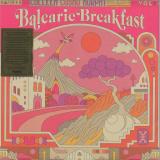
Various - Colleen ‘Cosmo’ Murphy presents ‘Balearic Breakfast’ Volume 4 LP 2x12"

Colleen ‘Cosmo’ Murphy presents ‘Balearic Breakfast’ Volume 4
Heavenly Recordings, limited edition 9 track double 12” vinyl

Released 29th August 2025
“There are curators, and then there's Colleen 'Cosmo' Murphy.” Resident Advisor

The sun has finally come out. It’s the first time something like this has happened for months and months; the first glow of an approaching summer, whatever date the calendar is currently saying it is. The whole thing acts as a curative meditation, miraculously wiping away all the greyness of the past few months. Right now, optimism abounds, outlooks change and your daily soundtrack has shifted from spiky and uptight into a kind of cosmic space where songs ebb and flow and drift on like rivers run on forever towards the glimmering sea. Bliss, right?

If you’re reading this, we’re assuming that you’re the kind of person who views summer as a state of mind rather than a good looking day on the BBC Weather app. With that in mind, we reckon you already know all about Heavenly Recordings’ series of untouchable, utterly essential Balearic Breakfast compilations, each one lovingly compiled by visionary DJ, producer and broadcaster Colleen ‘Cosmo’ Murphy - the genius club legend whose radio show of the same name (broadcast 10am to high noon every Tuesday via Mixcloud) began as an escape route from the pandemic before rapidly building a global community of dedicated Balearican listeners.

Each Balearic Breakfast album has provided a spiritual getaway from the greyness of the everyday through a handpicked selection of glorious, psychedelically coloured, expansive music. It doesn’t matter where on the planet the music hails from, or when it was made, it just matters that it fits like a jigsaw piece into the musical whole. Be it off world jazz music or vocoder led robo-disco music; whether decades old or pressed to vinyl for the first time, everything on these flawless Balearic Breakfast collections just needs to flow together and bring the listener into the sunshine, whatever time of year they’re listening.

Due for release this August, the fourth Balearic Breakfast compilation sees Cosmo take this head trip further than ever before. From the opening track’s swoop and glide that nods to Vangelis’ Blade Runner soundtrack before gliding into it’s own expansive voyage to the stars (Kandeen Love Song) to Cosmo’s own glorious Parisienne stroll through Saint Etienne’s recent Alone Together to Ilya Santana’s Spanish space disco anthem Cosmovision - a track that rolls through like a turbo powered Supernature - and the phenomenal 2015 disco version of Gloria Ann Taylor’s early ’70s classic Love Is A Hurtin’ Thing, this Balearic Breakfast offers the perfect soundtrack to the summer, whether it’s actually happening outside or just taking place in your head. After all, they don’t call breakfast the most important meal of the day for nothing.

No en stock

Haga su pedido ahora y le encargaremos el artículo en nuestro proveedor.

32,14

Ültimo hace: 7 Meses
FUNKADELIC - FUNKADELIC

Funkadelic

FUNKADELIC

12inchORGMLP2326
ORG Music
29.08.2025
  • Mommy, What's A Funkadelic?
  • I Bet You
  • Music For My Mother
  • I Got A Thing, You Got A Thing, Everybody's Got A Thing
  • Qualify & Satisfy
  • What Is Soul
También disponible

Cassette[14,08 €]

45 RPM EDITION, 2x12"[55,88 €]

TRANSPARENT PURPLE VINYL[31,05 €]


Das 1970 veröffentlichte, selbstbetitelte Debüt von Funkadelic war eine radikale Kollision von psychedelischem Rock, Gospel, Blues und Soul - ein chaotisches, genreübergreifendes Statement, das die Möglichkeiten der schwarzen Musik neu definierte. Wo Motown auf Hochglanz und Crossover-Appeal abzielte, stürzten sich Funkadelic kopfüber in Verzerrungen, Improvisationen und spirituelle Zweideutigkeiten, mit einem Sound, der so düster und unberechenbar war wie die Ära selbst. Unterstützt von einer wilden jungen Band, lehnte das Album Konventionen zugunsten von rohem Groove und existentiellem Lärm ab. Als Teil der Westbound Records Reissue Serie von Org Music stellt diese Ausgabe die volle Wirkung des Albums wieder her. Die Deluxe-Doppel-LP, die von Dave Gardner direkt vom analogen Band mit 45RPM neu gemastert wurde, bietet das bisher beeindruckendste Hörerlebnis dieses Klassikers. Gardner und die Restaurationsspezialistin Catherine Vericolli archivierten und restaurierten die Original-Masterbänder in den 54 Sound Studios in Ferndale, Michigan, mit Unterstützung des hauseigenen Ingenieurs Nick King. Neben CD, Kassette und digitalen Formaten ist auch eine einfache LP-Ausgabe erhältlich, die von hochauflösenden Bandüberspielungen geschnitten wurde. Funkadelic waren zu ihrer Zeit eine klangliche Revolution mit bleibendem Einfluss, ihr selbstbetiteltes Album ist ein bahnbrechendes Zeugnis für Musik ohne Regeln und Freiheit ohne Grenzen.

Reservar29.08.2025

debe ser publicado en 29.08.2025

29,83
FUNKADELIC - FUNKADELIC (TAPE)

FUNKADELIC

FUNKADELIC (TAPE)

CassetteORGMCAS2326
ORG Music
29.08.2025

Das 1970 veröffentlichte, selbstbetitelte Debüt von Funkadelic war eine radikale Kollision von psychedelischem Rock, Gospel, Blues und Soul - ein chaotisches, genreübergreifendes Statement, das die Möglichkeiten der schwarzen Musik neu definierte. Wo Motown auf Hochglanz und Crossover-Appeal abzielte, stürzten sich Funkadelic kopfüber in Verzerrungen, Improvisationen und spirituelle Zweideutigkeiten, mit einem Sound, der so düster und unberechenbar war wie die Ära selbst. Unterstützt von einer wilden jungen Band, lehnte das Album Konventionen zugunsten von rohem Groove und existentiellem Lärm ab. Als Teil der Westbound Records Reissue Serie von Org Music stellt diese Ausgabe die volle Wirkung des Albums wieder her. Die Deluxe-Doppel-LP, die von Dave Gardner direkt vom analogen Band mit 45RPM neu gemastert wurde, bietet das bisher beeindruckendste Hörerlebnis dieses Klassikers. Gardner und die Restaurationsspezialistin Catherine Vericolli archivierten und restaurierten die Original-Masterbänder in den 54 Sound Studios in Ferndale, Michigan, mit Unterstützung des hauseigenen Ingenieurs Nick King. Neben CD, Kassette und digitalen Formaten ist auch eine einfache LP-Ausgabe erhältlich, die von hochauflösenden Bandüberspielungen geschnitten wurde. Funkadelic waren zu ihrer Zeit eine klangliche Revolution mit bleibendem Einfluss, ihr selbstbetiteltes Album ist ein bahnbrechendes Zeugnis für Musik ohne Regeln und Freiheit ohne Grenzen.

Reservar29.08.2025

debe ser publicado en 29.08.2025

14,08
FUNKADELIC - FUNKADELIC LP

FUNKADELIC

FUNKADELIC LP

12inchORGMLPC2326
ORG Music
29.08.2025

Das 1970 veröffentlichte, selbstbetitelte Debüt von Funkadelic war eine radikale Kollision von psychedelischem Rock, Gospel, Blues und Soul - ein chaotisches, genreübergreifendes Statement, das die Möglichkeiten der schwarzen Musik neu definierte. Wo Motown auf Hochglanz und Crossover-Appeal abzielte, stürzten sich Funkadelic kopfüber in Verzerrungen, Improvisationen und spirituelle Zweideutigkeiten, mit einem Sound, der so düster und unberechenbar war wie die Ära selbst. Unterstützt von einer wilden jungen Band, lehnte das Album Konventionen zugunsten von rohem Groove und existentiellem Lärm ab. Als Teil der Westbound Records Reissue Serie von Org Music stellt diese Ausgabe die volle Wirkung des Albums wieder her. Die Deluxe-Doppel-LP, die von Dave Gardner direkt vom analogen Band mit 45RPM neu gemastert wurde, bietet das bisher beeindruckendste Hörerlebnis dieses Klassikers. Gardner und die Restaurationsspezialistin Catherine Vericolli archivierten und restaurierten die Original-Masterbänder in den 54 Sound Studios in Ferndale, Michigan, mit Unterstützung des hauseigenen Ingenieurs Nick King. Neben CD, Kassette und digitalen Formaten ist auch eine einfache LP-Ausgabe erhältlich, die von hochauflösenden Bandüberspielungen geschnitten wurde. Funkadelic waren zu ihrer Zeit eine klangliche Revolution mit bleibendem Einfluss, ihr selbstbetiteltes Album ist ein bahnbrechendes Zeugnis für Musik ohne Regeln und Freiheit ohne Grenzen.

Reservar29.08.2025

debe ser publicado en 29.08.2025

31,05
Booker T. & The MG’s - And Now
  • 1: My Sweet Potato
  • 2: Jericho
  • 3: No Matter What Shape
  • 4: One Mint Julep
  • 5: In The Midnight Hour
  • 6: Summertime
  • 7: Working In The Coal Mine
  • 8: Don’t Mess Up A Good Thing
  • 9: Think
  • 10: Taboo
  • 11: Soul Jam
  • 12: Sentimental Journey

Initially serving as the house band for Stax Records, organist Booker T. Jones, guitarist Steve Cropper, bassist Lewie Steinberg (later replaced by bass monster Donald ‘Duck’ Dunn), and drummer Al Jackson Jr. were instrumental in creating the “Memphis Sound.’ They recorded the basic tracks for well over a hundred records, including backing some of the greatest artists of all time: Otis Redding, Sam & Dave, Rufus Thomas, and Albert King, all the while breaking barriers as one of the South’s first integrated acts. 1966’s And Now!’ is the first to feature long-term bassist Duck Dunn, who helps create a nightclub feel that alternates between some of their most aggressive recordings and most sultry. No stranger to being in the U.S. and U.K. music charts (in both the Hot 100 & R&B categories), the jazzy first single off the record, “My Sweet Potato,” landed them yet another top 40 placement.

Reservar04.08.2025

debe ser publicado en 04.08.2025

38,61
Poison Idea - Pick Your King
  • 1: Think Twice
  • 2: It’s An Action
  • 3: This Thing Called Progress
  • 4: In My Headache
  • 5: Underage
  • 6: Self Abuse
  • 7: Cult Band
  • 8: Last One
  • 9: Pure Hate
  • 10: Castration
  • 11: Reggae (I Hate)
  • 12: Give It Up
  • 13: Think Fast

Formed in Portland, OR in 1980, Poison Idea debut record features 13 songs in 13 minutes. Poison Idea were one of the first hardcore bands to inspire artists across multiple genre lines. Poison Idea’s 1983 Debut Release!!! Iconic Original Artwork! New Liner Notes by Jerry A. Features Sticker, Lyric Sheet, Credit Sheet, and Liner Notes.

Reservar04.08.2025

debe ser publicado en 04.08.2025

28,99
The Hidden Hand - Mother * Teacher * Destroyer LP 2x12"
  • 01: The Crossing
  • 02: Half Mast
  • 03: Desensitized
  • 04: Draco Vibration
  • 05: Black Ribbon
  • 06: Magdalene
  • 07: Currents
  • 08: Travesty As Usual
  • 09: Marginalized
  • 10: Coffin Lily
  • 11: Sons Of Kings
  • 12: The Deprogramming Of Tom Delay
También disponible

Yellow[33,57 €]


Another bonafide classic from the all time heavy lifer Scott ‘Wino’ Weinrich. Things just get heavier and heavier in Wino's career and his short-lived classic band The Hidden Hand is no exception. Formed in 2002 and already disbanded in 2007, the trio featured Wino, Bruce Falkinburg on bass/songwriting/vocals and drummer Dave Hennessy.
If The Obsessed, St. Vitus, Shrinebuilder, Probot and Spirit Caravan aren’t enough to bring his CV to legendary status, stop reading now. Originally released in 2004 on Southern Lord.

Reservar04.08.2025

debe ser publicado en 04.08.2025

30,21
The Hidden Hand - Mother * Teacher * Destroyer LP 2x12"

Another bonafide classic from the all time heavy lifer Scott ‘Wino’ Weinrich. Things just get heavier and heavier in Wino's career and his short-lived classic band The Hidden Hand is no exception. Formed in 2002 and already disbanded in 2007, the trio featured Wino, Bruce Falkinburg on bass/songwriting/vocals and drummer Dave Hennessy.
If The Obsessed, St. Vitus, Shrinebuilder, Probot and Spirit Caravan aren’t enough to bring his CV to legendary status, stop reading now. Originally released in 2004 on Southern Lord.

Reservar04.08.2025

debe ser publicado en 04.08.2025

33,57
VARIOUS - ALL THE YOUNG DROIDS: JUNKSHOP SYNTH POP 1978-1985 (LP 2x12")
 
24
También disponible

Black Vinyl[27,69 €]

MB Crystal Vinyl[32,73 €]

LTD Trans Pink Vinyl[27,69 €]


Compiled by Philip King
“And then came the rise of synth pop : blokes with dodgy haircuts hunched over keyboard-operated
machines stuffed with wires and do-it-yourself tone oscillators making sounds like a brood of geese
passing gas in a wind tunnel. Whoopee! This is the way the ‘70s ended : not with a blood-curdling bang
bang but with a cheap, synthesized, emasculating whimper.”
NICK KENT, NME.

All The Young Droids: Junkshop Synth Pop 1978-1985 is a new compilation that charts the
underbelly of the epoch-defining sound of the synthesiser in 80s popular music. Compiled by Philip
King (previously seen compiling All The Young Droogs, Glitterbest and Boobs - The Junkshop
Glam Discotheque), the music here connects the dots between DIY synth enthusiasts grappling with
new, cheap synthesisers at the tail-end of punk and wannabe, jobbing songwriters enthral to the new
music pioneered by Gary Numan, Depeche Mode and Daniel Miller’s Mute Records. Featuring rare
tracks of auto-didactic progressive pop music, proto-techno punk, shoot-for-the-stars-land-in-the-gutter
chart flops and heralded, underground synth classics, School Daze paints a picture of beautiful failure.
Complete with extensive sleeve notes written by King and never before seen imagery, all 24 tracks
were remastered by RPM in-house engineer Simon Murphy, many from vinyl copies due to lost master
tapes. The story told on All The Young Droids is one of the dawning opportunity presented by both the
emergence to the market of cheaper analog synthesisers and the distribution networks plus indie labels
that exploded with the advent of punk music in 1976. While the music that sprouted out all over the
globe in the wake of these factors was decried as fake, plastic, a refutation of punk’s guitar-led
revolution, it’s telling that much of the music on All The Young Droids.. was created in bedrooms,
ramshackle studios and home-made set ups with often borrowed equipment. In the era of record labels
jumping to capitalise on the success of The Sex Pistols, The Clash (both on major labels, of course)
these artists struggled to stand out from a new gold-rush with next to no budget or PR team. With radio
and labels desperate for the new Yazoo, what resulted was a testament to necessity being the mother
of invention.

At the time, the synthesiser was the music of the future, a shiny new machine that could paint like an
orchestra with a single finger and a 4-track. In the hands of Manchester avant-pranksters Gerry & The
Holograms it’s a pulsing, sardonic weapon.. the only instrument on the Messthetics classic lampooning
of New Wave fashion. In Hamburg, a 16 year old Andreas Dorau used it to write and record (with his
female classmates on vocals) a global smash in Fred Vom Jupiter (later licensed to Mute Records).
The hard-to-find English version (Fred From Jupiter, natch) is included here. Many artists with alreadystoried careers caught the bug and recorded synthesiser-fuelled peons to space, computers, the future
and, of course, love-interests. Harry Kakoulli, late of Squeeze, recorded a solo album in 1979 that
included the incredible power-synth-pop smash-that-never-smashed I’m On A Rocket. Similarly, Ian
North of Neo and American Power Pop stalwarts Milk ’n’ Cookies bought a Korg MS20 and used a
tape machine to record We’re Not Lonely, an absolute lost-classic of minimal synth pop. We’re Not
Lonely also features on the Junkshop Synth Pop sampler 7” twinned with John Howard unreleased
track You Will See, released April 12th 2025.

There are plenty of compilation debuts in evidence. Sole Sister were a mysterious trio who were
featured on the Scaling Triangles compilation of female-fronted, queer-adjacent post-punk /
underground music that also featured The Petticoats. Selwin Image were from San Francisco and
featured members of the recently defunct power pop/punk group The Pushups. Their stupidly catchy
The Unknown fizzes with New Wave energy - think XTC to Sparks but remains unreleased until now.
Dream Unit’s A Drop In The Ocean is an early synth wave cut, positively teaming with Joy Division
instrumentation, previously only released on a long-forgotten and super rare, self-released EP.
Incandescent Luminaire’s Famous Names belies an archetypal struggle of a small-town trying to
make it in a cruel industry but is a thrilling New Romantic-Synth Wave cross over with a OMD
gloominess that’s a joy to hear. Feminist Minimal Wave track I Am A Time Bomb by performance artist
Peta Lilly and Michael Chance is a revelation destined for new found cult status. It was released on 7”
and lost until now.

The flipside to the subterranean, never-made-it synth pop mentioned above are the ambitious, even
fruity attempts at success that have a perennial elegance to their confidence. New Jersey-ite Billy
London (real name Ed Barth) tried to cash in on the synth boom with Woman, released by a major
label, a lurching new wave track built on the Louie Louie rhythm and a wonderfully camp Lou Reedstyle sleazy vocal before exploding in the synthesised chorus. The song bombed but with a chorus like
this, you have to wonder why? Ex-Glitter Band member John Springate’s My Life is truly epic, with
doomed chord progressions and massive sounding drums turning into at least 3 different songs in the
course of the track. Before you wonder what’s going on the song resolves with a glorious return to the
main refrain.

The dry-ice-dressed dance floor is well catered for too. Design’s Premonition and Vision’s Lucifer’s
Friend are stone-cold minimal synth bangers, well loved but given a new lease of life here. The
Warlord’s The Ultimate Warlord was released in 1978, a homespun proto Hi NRG banger that was
later re-recorded by The Immortals in Canada who had a club hit with it. One-man- band Disco
Volante’s No Motion was re-issued by Synth wave label Medical in 2012 but makes its first vinyl
compilation appearance here. Close your eyes and you can imagine what Lawrence of Felt would have
sounded like with some cheap Korgs a little earlier in his career. Gibraltar-based trio The Microbes
imagined a computer programming people to dance - how prescient - and ended up with a propulsive,
robo-funk track with splendid rubbery bass playing over a tectonic drum machine. Previously picked up
by Belgian label Stroom TV, Dee Jay Bert & Eagle’s heavily Euro-accented I Am Your Master
demands the listener to “come to paradise!” In a frankly terrifying manner.
All The Young Droids is the first compilation to peel away from the narrative that dour, Minimal Synth
and Cold Wave were the only musical children of the first rush of synth pop. Philip King and School
Daze Records describe a much more complicated world: along with the austere, Brutalist children of
Daniel Miller (who produced Alan Burnham’s Bowie-Low-influenced Science Fiction here) was a
plethora of desperate cash-ins, accidental mainstream hits, ambitious pop dramas and major label
punts that went nowhere. Crucially, the compilation blurs the line between junk and treasure. What if the
two things are interchangeable. What if it’s all science fiction?

No en stock

Haga su pedido ahora y le encargaremos el artículo en nuestro proveedor.

32,82

Ültimo hace: 8 Meses
VARIOUS - ALL THE YOUNG DROIDS: JUNKSHOP SYNTH POP 1978-1985 (LP 2x12")
 
24
También disponible

Black Vinyl[27,69 €]

LTD Trans Pink Vinyl[32,82 €]

LTD Trans Pink Vinyl[27,69 €]


Compiled by Philip King
“And then came the rise of synth pop : blokes with dodgy haircuts hunched over keyboard-operated
machines stuffed with wires and do-it-yourself tone oscillators making sounds like a brood of geese
passing gas in a wind tunnel. Whoopee! This is the way the ‘70s ended : not with a blood-curdling bang
bang but with a cheap, synthesized, emasculating whimper.”
NICK KENT, NME.

All The Young Droids: Junkshop Synth Pop 1978-1985 is a new compilation that charts the
underbelly of the epoch-defining sound of the synthesiser in 80s popular music. Compiled by Philip
King (previously seen compiling All The Young Droogs, Glitterbest and Boobs - The Junkshop
Glam Discotheque), the music here connects the dots between DIY synth enthusiasts grappling with
new, cheap synthesisers at the tail-end of punk and wannabe, jobbing songwriters enthral to the new
music pioneered by Gary Numan, Depeche Mode and Daniel Miller’s Mute Records. Featuring rare
tracks of auto-didactic progressive pop music, proto-techno punk, shoot-for-the-stars-land-in-the-gutter
chart flops and heralded, underground synth classics, School Daze paints a picture of beautiful failure.
Complete with extensive sleeve notes written by King and never before seen imagery, all 24 tracks
were remastered by RPM in-house engineer Simon Murphy, many from vinyl copies due to lost master
tapes. The story told on All The Young Droids is one of the dawning opportunity presented by both the
emergence to the market of cheaper analog synthesisers and the distribution networks plus indie labels
that exploded with the advent of punk music in 1976. While the music that sprouted out all over the
globe in the wake of these factors was decried as fake, plastic, a refutation of punk’s guitar-led
revolution, it’s telling that much of the music on All The Young Droids.. was created in bedrooms,
ramshackle studios and home-made set ups with often borrowed equipment. In the era of record labels
jumping to capitalise on the success of The Sex Pistols, The Clash (both on major labels, of course)
these artists struggled to stand out from a new gold-rush with next to no budget or PR team. With radio
and labels desperate for the new Yazoo, what resulted was a testament to necessity being the mother
of invention.

At the time, the synthesiser was the music of the future, a shiny new machine that could paint like an
orchestra with a single finger and a 4-track. In the hands of Manchester avant-pranksters Gerry & The
Holograms it’s a pulsing, sardonic weapon.. the only instrument on the Messthetics classic lampooning
of New Wave fashion. In Hamburg, a 16 year old Andreas Dorau used it to write and record (with his
female classmates on vocals) a global smash in Fred Vom Jupiter (later licensed to Mute Records).
The hard-to-find English version (Fred From Jupiter, natch) is included here. Many artists with alreadystoried careers caught the bug and recorded synthesiser-fuelled peons to space, computers, the future
and, of course, love-interests. Harry Kakoulli, late of Squeeze, recorded a solo album in 1979 that
included the incredible power-synth-pop smash-that-never-smashed I’m On A Rocket. Similarly, Ian
North of Neo and American Power Pop stalwarts Milk ’n’ Cookies bought a Korg MS20 and used a
tape machine to record We’re Not Lonely, an absolute lost-classic of minimal synth pop. We’re Not
Lonely also features on the Junkshop Synth Pop sampler 7” twinned with John Howard unreleased
track You Will See, released April 12th 2025.

There are plenty of compilation debuts in evidence. Sole Sister were a mysterious trio who were
featured on the Scaling Triangles compilation of female-fronted, queer-adjacent post-punk /
underground music that also featured The Petticoats. Selwin Image were from San Francisco and
featured members of the recently defunct power pop/punk group The Pushups. Their stupidly catchy
The Unknown fizzes with New Wave energy - think XTC to Sparks but remains unreleased until now.
Dream Unit’s A Drop In The Ocean is an early synth wave cut, positively teaming with Joy Division
instrumentation, previously only released on a long-forgotten and super rare, self-released EP.
Incandescent Luminaire’s Famous Names belies an archetypal struggle of a small-town trying to
make it in a cruel industry but is a thrilling New Romantic-Synth Wave cross over with a OMD
gloominess that’s a joy to hear. Feminist Minimal Wave track I Am A Time Bomb by performance artist
Peta Lilly and Michael Chance is a revelation destined for new found cult status. It was released on 7”
and lost until now.

The flipside to the subterranean, never-made-it synth pop mentioned above are the ambitious, even
fruity attempts at success that have a perennial elegance to their confidence. New Jersey-ite Billy
London (real name Ed Barth) tried to cash in on the synth boom with Woman, released by a major
label, a lurching new wave track built on the Louie Louie rhythm and a wonderfully camp Lou Reedstyle sleazy vocal before exploding in the synthesised chorus. The song bombed but with a chorus like
this, you have to wonder why? Ex-Glitter Band member John Springate’s My Life is truly epic, with
doomed chord progressions and massive sounding drums turning into at least 3 different songs in the
course of the track. Before you wonder what’s going on the song resolves with a glorious return to the
main refrain.

The dry-ice-dressed dance floor is well catered for too. Design’s Premonition and Vision’s Lucifer’s
Friend are stone-cold minimal synth bangers, well loved but given a new lease of life here. The
Warlord’s The Ultimate Warlord was released in 1978, a homespun proto Hi NRG banger that was
later re-recorded by The Immortals in Canada who had a club hit with it. One-man- band Disco
Volante’s No Motion was re-issued by Synth wave label Medical in 2012 but makes its first vinyl
compilation appearance here. Close your eyes and you can imagine what Lawrence of Felt would have
sounded like with some cheap Korgs a little earlier in his career. Gibraltar-based trio The Microbes
imagined a computer programming people to dance - how prescient - and ended up with a propulsive,
robo-funk track with splendid rubbery bass playing over a tectonic drum machine. Previously picked up
by Belgian label Stroom TV, Dee Jay Bert & Eagle’s heavily Euro-accented I Am Your Master
demands the listener to “come to paradise!” In a frankly terrifying manner.
All The Young Droids is the first compilation to peel away from the narrative that dour, Minimal Synth
and Cold Wave were the only musical children of the first rush of synth pop. Philip King and School
Daze Records describe a much more complicated world: along with the austere, Brutalist children of
Daniel Miller (who produced Alan Burnham’s Bowie-Low-influenced Science Fiction here) was a
plethora of desperate cash-ins, accidental mainstream hits, ambitious pop dramas and major label
punts that went nowhere. Crucially, the compilation blurs the line between junk and treasure. What if the
two things are interchangeable. What if it’s all science fiction?

No en stock

Haga su pedido ahora y le encargaremos el artículo en nuestro proveedor.

32,73

Ültimo hace: 8 Meses
Artículos por página
N/ABPM
Vinyl