Blue Vinyl
Throughout his productive career, Carl Oesterhelt has proven to be an artist who finds it easy to move between musical genres and concepts. Much of his work has been within classical and chamber music, but he has also scored museum exhibitions and he is sometimes part of The Notwist crew as an angular figure on the Munich scene.
In Umor Rex we have been lucky enough to publish an array of Oesterhelt's universes. In Eleven Pieces for Synthesizer (Umor Rex 2019) we heard his kosmische side, where the connections with Harmonia or Klaus Schulze were amalgamated with ecclesiastical organ pieces and intense semi-automatic rhythms. A deeply melodic, fresh album. Pure syntax of the modern synthesizer. Further, in The Aporias of Futurism (Umor Rex 2021), in collaboration with Andreas Gerth (Driftmachine, Tied & Tickled Trio), Oesterhelt showed what is perhaps his darkest side —a work full of nuances within concrete music and midnight atmospheres. As deep and cerebral an album as it is surprising and catatonic.
Yet it seems that Carl Oesterhelt has another ace up his sleeve. Now he surprises us with The Dualistic Principle, a fantastic album full of weird but charming electronic melodies, rhythms that push the body to movement, sometimes syncopated and abstract, others permanent and fluid. In this work, Oesterhelt invited Johan Simons to give voice to the lyrics. The Dualistic Principle is a sort of rendition of a philosophical review or a nostalgic memory of the glamorous years. There is also underlying humor in the Post / Space-pop / Munich-disc assortment. The Dualistic Principle is the score to an imaginary film of contemporary hedonism.
All music & lyrics by Carl Oesterhelt. Voice by Johan Simons. Additional strings played by the Ensemble für synkretische Musik. Recorded in Munich & Bochum, Germany. Mastered by John Tejada in Sherman Oaks, USA. Artwork by Daniel Castrejón in Mexico City.
quête:klaus schulz
Emeralds _ musicians John Elliott, Steve Hauschildt, and Mark McGuire _ emerged from the rust-pocked, post-millennial Midwest drone/noise scene seemingly unable or uninterested in keeping up with themselves. Their proliferation of material was intimidating; mountains of improvised, home-recorded music were released on limited-edition tapes, CD-Rs, and split LPs. There is and was a sense that the Ohio trio was after something beyond physical mediums. By 2008, their sprawling live sets were a known can't-miss at any underground experimental event. Tiny Mix Tapes reviewed that year's appearance at No Fun Fest: "No one's sawtooths, sines, and other various waveforms were so beautifully sculpted and beamed out into the Plejades as Emeralds'." These basement dwellers were shaping meditative, psychedelic, arpeggiated electronic music in the veins of German kosmische forebears like Ash Ra Tempel, Klaus Schulze, and Tangerine Dream. Made primarily with synthesizers and guitar, Emeralds' music possessed the same astral psyche with a home-crafted punk edge, a distant descendant of that pioneering era, and a bridge to someplace new, someplace scorched. Released on Aaron Dilloway's (Wolf Eyes, etc.) Hanson imprint, Solar Bridge was the first Emeralds album to receive any kind of proper distribution and represents the first attempt to archivally preserve their fluid craft. The first of an inimitable five-LP run before the band dissolved in 2013, Solar Bridge is a moment of glistening primacy that boots up a catalog and legacy that the heads still grapple with. Emeralds begin to make sense of it in the fall of 2022 with a remas- tered Solar Bridge LP release on Ghostly International. Emeralds materialized as a fully formed entity radiating cosmic potential. Their discography evolved and incorporated different qualities and vocabularies, but hearing where it started will always feel different. The density, the patience, and the sheer refinement presented on Solar Bridge legibly demonstrates how and why Emeralds has become a legendary part of the contemporary electronic music canon.
After the 2021 Re-Release of “Schwingungen” (MG.ART612) and together with “Seven Up” (MG.ART613) we proudly announce “JOIN INN” as Part3 of the authorised 50th Anniversary “A.R.T.” Re-Edition Series.
“JOIN INN” is the fourth album by Ash Ra Tempel. It was recorded at Studio Dierks and originally released on LP by Ohr Musik-Produktion, catalogue number OMM 556032. Each side of the LP comprises one long track.
In 1972 ASH RA TEMPEL teamed up again with Klaus Schulze during the recording of Walter Wegmüller's Tarot album, and after one of the recording sessions, ASH RA TEMPEL members: Enke, Göttsching and Rosi, together with Klaus decided to "play it again" in a late night session. This recording led to the birth of the “JOIN INN” album, as well as two legendary last concerts in February 1973 in Paris and Cologne.
Manuel Göttsching recalls Hartmut Enke on bass and Klaus Schulze on drums being a dream-team rhythm section for him to play his guitar, especially here to hear on “Freak'n' Roll”, that was ingenious and not to replace ever since.
It was the last recording ever where Klaus Schulze (who sadly passed away this Year) played the Drums and also Hartmut (the Hawk) Enke soon after quit the Bass and music forever.
Join Inn marks the end of the collaboration with Klaus Schulze.
However, together with Ash Ra Tempel, their eponymous first album, which will be released in 2023 as the final edition of our Series, it is considered a highlight of the Krautrock movement.
As for the music itself we again refer to Julian Cope´s review from his book “Krautrocksampler” (published by Head Heritage, 1st ed. 1995):
""Freak’n’roll” fades in like it never started - just was always there from the beginning of time, a dry wah-guitar freerock riff-out unlike any of the other Ash Ra Tempel LPs, and not much like any other music. Yes, there are bluesy riff but none of them have a blues context. Manuel Gottsching’s guitar is so confident that he sometimes drops down to a simple major chord groove, whilst the Hawk pushes that round woody bass into strange overlapping rumbling melody. And ... it’s the return of Klaus Schulze on drums which propels “Freak’n’roll” to its height. No-one but Klaus has the ability to
transcend rock’n’roll in such an on-the-beat non-groove-y way and still send sparks of light into the cosmos as he does it.
-> continued on page 2“Freak’n’roll” is so egoless that it even works at a quiet volume as meditational music. Themes rise from the high tempo pulse beat, then are carried along the muscles of the song into the main area where the riff actually becomes real and expressionist for just long enough before slipping back into the musical fabric of the song.
As usual with Ash Ra Tempel, the other side is an enormous drift piece called “Jenseits (The Next World)”, a beautiful Klaus Schultze meditation of haunting synthesizer chords over which Rosi Muller tells the story of the Cosmic Couriers’ meeting with Timothy Leary. Gradually, the pulsing guitar becomes increasingly intense and turbulent, but Rosi never sounds less than freaked out. Essentially, “Jenseits” is a precursor to Klaus Schulze’s later spacey minor-key grooves.
Unfortunately, this was the last Ash Ra Tempel album in its particular ‘series.
(…) After “JOIN INN”, Manuel Gottsching took over the Ash Ra Tempel mantle alone.”
Das Album "Tonwelle" ist das Resultat der Zusammenarbeit von Klaus Schulze mit einigen namhaften Musikern. Deshalb erschien das Album 1981 als Vinyl unter dem Künstlernamen Richard Wahnfried. Mit dabei z. B. Manuel Göttsching (Ash Ra Tempel) und Michael Shrieve (Santana). Diese ursprünglich Vinyl Veröffentlichung sollte mit 45 RPM abgespielt werden, Klaus hat das Album aber auch schon so abgemischt, dass es auch auf 33 RPM abgespielt werden kann. Die jetzt veröffentlichte Version auf Vinyl enthält die Original-45 RPM Version.
"Megatone" ist das dritte Studioalbum des Side-Projekts von Klaus Schulze, Richard Wahnfried, das 1984 veröffentlicht wurde. Auf diesem Album arbeitet Schulze mit Michael Garvens, Axel-Glenn Müller, Ulli Schober, Michael Shrieve und Harald Katzsch zusammen. Im Gegensatz zu den Projekten, die unter dem "Klaus Schulze" Namen laufen, wird bei Richard Wahnfried eifrig kollaboriert und improvisiert. Handgespielte Instrumente, wie elektrische und akustische Gitarre, Saxofon, E-Piano oder auch simple Perkussion bekommen hier großen Raum zur Entfaltung. In "Angry Young Boys" wird sogar auf sehr rockige Weise gesungen. "Megatone" ist ein durchaus hörenswertes und abwechslungsreiches Album. Keine Spur von Verlorenheit in wabernden Synthesizerwänden, sondern sehr erdig und lebendig.
Ángel Rada is one of the most interesting music experimantalists of Venezuela. He started his career in the late 1960s as a member of The Gas Light, one of the big names on Venezuela's live circuit in the era, sharing the stages with other artists such as Apocalipsis, Un Dos Tres y Fuera, Vytas Brenner, Daniel Grau, Pablo Schneider, Miguel Ángel Fuster... Rada is one of the three basic artists who set an electronic music scene in Venezuela, along with Miguel Ángel Noya and Vinicio Adames.
Rada had attended the Escuela Superior de Música José Ángel Lamas and then continued his studies in Germany, where he was impressed by krautrock music, especially by its more electronic side. He met Kraftwerk when they were recording at Kling Klang Studio, and also knew Klaus Schulze–who would become an example for him to to follow. This contact with the Kraut scene would be the biggest influence on his works from the 1970s, which would end synthesizing in Rada's first record: 1983's Upadesa, originally released on his own independent label Uranium Records. Since then he has released more than 20 albums up to date, making him one of the most prolific experimental musicians not only in his country but also in the whole world.
Rada's aproach to electronic music is based in what he calls ethnosonic music. He is interested in the mixture of various styles which he filters through the use of technology, so in his electronic compositions one can hear echoes of ethnic sounds from all over the globe as well as some jazz influenced improvisation, ambient and synthesized sounds.
The Wah Wah edition is the first ever vinyl reissue of this landmark LP and has been remastered for vinyl by Roger Prades @ Prades Mastering. Includes an insert with liner notes by Salvatore Maldera.
It is a strictly limited edition of 500 copies only.
The final installment of the electronic fusion projects that Walter Bachauer concocted for Klaus Schulze’s Innovative Communication label, Visions of Audio delves further into minimalist musique concrete, extending themes developed on Memorymetropolis in drawing on non-European vocal chants, here applied in dissociative layers. The diverse, complex arrangements include the symphonic synths of ‘Promised Land’ and the war-mode Sensurround of ‘1922 In Baku,’ as well as the obtuse loops of ‘The Final Ritual,’ the work inspiring future hitmaker Pilooski. Mondshine fans, Berlin School freaks and abstract electronica lovers should bag it.
Vier Jahre nach dem Ende seiner Progrock-Band Mess brachte der estnische Musiker Sven Grünberg 1981 das bemerkenswerte Album "Hingus" heraus. Das 23-minütige Titelstück beschwört, mitunter beeinflusst von fernöstlicher Tonalität, mit einer Kirchenorgel, extrem seltenen Synthesizern und außergewöhnlichen Percussion-Effekten faszinierende futuristische Klangwelten. Die beiden anderen, ebenfalls großartigen Tracks erinnern stilistisch eher an die Berliner Schule um Klaus Schulze und Tangerine Dream. Grünberg ist in Estland ein bekannter Bühnen- und Filmmusiker - und ein alter Hase, was elektronische Musik betrifft. 1974, noch während seines Musikstudiums, gründete er zusammen mit Härmo Härm die Progrock-Band Mess. Grünberg war damals der erste Musiker im Baltikum, der einen Synthesizer einsetzte. Mit dem Album "Hingus" (zu Deutsch: "Atem"), das er zwischen 1978 und 1980 einspielte, widmete er sich dem Ambient, versetzt mit einer Prise Space- und Progrock sowie intensiven asiatischen Einflüssen. Basis der Aufnahmen waren die Orgeln der Kirche in Rapla und des Doms von Tallinn. Die sakrale Anmutung wird durch Synthesizer und Percussions gebrochen oder auch ins Rauschhafte gesteigert. Röhrenglocken (die von Mike Oldfield bekannten Tubular Bells), Paarbecken (Piatti), eine Ratsche (Raganella), ein Tamburin, ein ostasiatischer Metallgong namens Tamtam, Glockenspiel und Kastagnetten kommen zum Einsatz. Zudem spielt Grünberg diverse ungewöhnliche elektronische Instrumente, die Härmo Härm und andere teilweise als Einzelstücke selber bauten. Dennoch zählt dieses außerirdisch schöne und zum Teil hochpsychedelische Album hierzulande zu den noch zu entdeckenden Klassikern dieses Genres.
Audiophile 180glp pressing includes eight 12"x12" art print reproductions of analog film stills by renowned experimental filmmaker Daïchi Saïto. The first purely solo record by Jason Sharp - where every sound is created by his saxophone, breath, heartbeat & modular synthesis rig. Sharp's customized electroacoustic biofeedback system utilizes a heart monitor to turn his pulse into signal & tempo responsively synthesized in real time during peformance & recording. Produced by Radwan Ghazi Moumneh (MATANA ROBERTS, SUUNS, BIG | BRAVE, ERIC CHENAUX, JERUSALEM IN MY HEART). For Fans of Fennesz, Christina Vantzou, Tim Hecker, Klaus Schulze, Ben Frost, Gas, Windy & Carl, Colin Stetson. Montréal saxophonist and electroacoustic composer Jason Sharp presents his third album on Constellation. The Turning Centre Of A Still World is Sharp's first purely solo record and his most lucid, poignant, integral work to date. Following two acclaimed albums composed around particular collaborators and guest players, Sharp conceived his third as an interplay strictly bounded by his own body, his acoustic instrument, and his evolving bespoke electronic system. The Turning Centre... is a singular sonic exploration of human machine calibration, interaction, expression and biofeedback. Using saxophones, foot-controlled bass pedals, and his own pulse - patched through a heart monitor routed to variegated signal paths that trigger modular synthesizers and samplers - Sharp paints with organic waves of glistening synthesis, pink noise and digitalia. Melodic strokes and harmonic shapes ripple and crest across ever-shifting seas, through an inclement cycle from dawn to dusk. The album's six main movements navigate a world where placid surfaces are always roiled and disquieted by a deeper inexorable gyre: the gravitational pull and tidal perpetuity of our bodies made of water, buffeted by terrestrial atmospheric pressures, wrung out by emotions, coursing with blood, sustained by breath, inescapably yearning for and returning to ground again and again. Sharp's heartbeat literally courses through these compositions - while only occasionally surfacing as a clearly audible pulse or rhythm, it physically feeds into a spectrum of generative synthetic processes that help constitute and conduct the music.
- A1: Double Slit
- A2: Glass
- A3: Chamber Of Frequencies
- A4: Divided Light
- A5: Elements Of Matter
- A6: Magic Transistor
- A7: Scheinwelt
- A8: Posthuman
- A9: Synthesis
- B1: X Zeit
- B2: Incandescent Sun
- B3: Healing Rods
- B4: Steckdose
- B5: Amnesia Transmitter
- B6: Quantize Humanize
- B7: Glaserner Mensch
- C1: Machine Vision
- D1: Hidden Machine
This is incredibly Trees Speak's third album on Soul Jazz Records to be released in the space of one year - and it's amazing! Trees Speak's new album 'PostHuman' once again blends 1970s German electronic and 'motorik' Krautrock instrumentals (think Harmonia, Can, Cluster, Popul Vuh, Neu!), haunting and powerful 1960s & 1970s soundtracks (think Italian prog-rock Goblin and John Carpenter horror movies, Morricone and existential John Barry spy movies), together with a New York no wave electronic synth and guitar analogue DIY-ness (think Suicide, anything on Soul Jazz's New York Noise series or Eno's New York No Wave)! Drawing further upon German krautrock high-concept albums from the likes of Tangerine Dream and Klaus Schulze from the 1970s, Trees Speak create their own powerful new landscapes of sound that manage to be at once contemporary as well as both timeless and with a sense of science-fiction futurism. Trees Speak' segue together all these elements into 'PostHuman,' which follows on from their criticallyacclaimed debut LP 'Ohms', and 'Shadow Forms' released on Soul Jazz Records less than six months ago. This powerful new album is a high-concept collage of retro-futurist science-fiction music, fantastically illustrated by the artist Eric Lee, a dramatic vision of life after humanity. Trees Speak are Daniel Martin Diaz and Damian Diaz from Tucson, Arizona and their music often draws on the cosmic night-time magic of Arizona's natural desert landscapes. 'Trees Speak' relates to the idea of future technologies storing information and data in trees and plants - using them as hard drives - and the idea that Trees communicate collectively. The album includes an exclusive bonus 45 single 'Machine Vision' and 'Seventh Mirror' that will only be available with the first order of the vinyl edition of this amazing and ground-breaking new album. With 'PostHuman,' Trees Speak once again manages to take the listener deep into their unique musical world of unknown visions of the past and the future.
180g, black Vinyl. 1974. the Cosmic Jokers were basically Klaus Schulze, Manuel Göttsching, various Ash Ra Tempel and Wallenstein members doing late night jamming. Galactic Supermarket is one of them, and is more rock-oriented than many others. It's no surprise the music bears more than a passing resemblance to Ash Ra Tempel, because of Manuel Göttsching and his guitar playing. Also Jürgen Dollase gives some nice keyboard work, particularly the piano, Farfisa electric piano, synths, and even a little Mellotron. Klaus Schulze were more responsible for the more droning organ and synth end of things, it's pretty obvious when he plays it. The legendary producer Dieter Dierks plays Bass on these nearly never ending improvisation. The recording was transferred from the original analog tapes at the Dierks Studios in Germany. And carefully remastered for an incredible result. Released on the label "Kosmische Kuriere" (Cosmic Couriers)
- 1: Summer Rain - 202 Remaster
- 2: Romeos - 01 Remaster
- 3: She Fades Away - 2021 Remaster
- 4: The Mysteries Of Love - 2021 Remaster
- 5: Ariana - 2021 Remaster
- 6: Heaven Or Hell - 2021 Remaster
- 7: For A Million - 2021 Remaster
- 8: Middle Of The Riddle - 2021 Remaster
- 9: Patricia’s Park - 2021 Remaster
- 10: Anyway - 2021 Remaster
Alphaville’s third studio album “The Breathtaking Blue” (1989) introduced new musical elements and a musical concept, added electronic pioneer Klaus Schulze to the production team and embraced emerging technology (including one of the first CD-Graphic releases ever). In addition to the well-produced songs such as the single “Romeos,” the album included the visually stunning and innovative film “Songlines” where nine directors did short movies inspired by one of the album tracks. Later renamed as “Balance,” the short film for the song “Middle of the Riddle” won an Academy Award for “Best Animated Short Film” the following year.
Personally supervised by ALPHAVILLE founding members Marian Gold and Bernhard Lloyd, “The Breathtaking Blue” has been remastered for the first time. “The Breathtaking Blue (Deluxe Edition)” will be released as Deluxe 1LP/DVD-format featuring the remastered original album on vinyl (180g) including a 24-page booklet with many and rare photos in a gatefold sleeve, plus the DVD film “The Breathtaking Blue – Songlines.”
All music improvised by Michael Wollny, Emile Parisien, Tim Lefebvre
and Christian Lillinger (except ‘Nostalgia for the Light’, written and
arranged by Michael Wollny).
The music we hear doesn’t fit into any category. We’re in uncharted
territory, so a good way to capture its essence might be to break it
down into its four component parts. First there’s Michael Wollny, here
for the very first time playing only on electronic keyboard instruments.
He creates a characterful world of retro-futuristic sounds that is very
much his own. We find the occasional nod to early Jean-Michel Jarre,
references to science fiction and horror movies and also vivid
memories of the sounds of avant-garde Krautrock: Can and Irmin
Schmidt and Klaus Schulze.
As for Tim Lefebvre, here is a musician who has plied his very great
craft with stars such as David Bowie, the Tedeschi Trucks Band, John
Mayer, Knower, Steely Dan, Elvis Costello and Wayne Krantz. Here
he is like a rock in a tempestuous sea. He propels the music forward
with a combination of bass and effects. He builds structures and
tames unruly elements. The way he lays down a groove is
overwhelming.
As a counterbalance we find the explosive yet highly sensitive playing
of drummer Christian Lillin-ger. He stacks layer upon layer of rhythms
and textures.
And the melodic lines of Emile Parisien on soprano saxophone
always have an astonishing springy inventiveness. Such is Parisien’s
latent energy, it seems as if at any moment he could suddenly
become airborne.
The players’ eager curiosity as to what the next turn, the next
impulse, the next push will be is palpable to the listener. One can
sense the tension between the urge to construct forms, lines,
grooves, harmonies, textures, versus the illicit joy of tearing such
fragile structures apart before they have even been heard. There are
beats and patterns from the 90s, 80s and 70s, all coalescing into
cinematic bacchanalia of sound. These four master improvisers and
composers all have the urge to rewrite the rules of their musical world
- and to do so in real time.
LP pressed on 180g vinyl with digital download code.
- A1: Die Drachentrommler (Dragon Drummers)
- A2: Lange Melodie Für Den Countdown (Long Melody Towards Countdown)
- A3: Fischer Des Meeres Der Stille (Fishermen Of The Silent Sea)
- B1: Landung Bei Vollmond (Landing At Full Moon)
- B2: Raga Des Aufgehenden Planeten (Raga Of The Rising Planet)
- B3: Amazonenharfe (Harp Of The Amazons)
In the early 1970s, the journalist and composer Walter Bachauer played with experimental fusion group Between, and after founding the Meta Music Festival, began working for RIAS
Berlin. 1981’s Luna Africana was the first electronic album he issued as Clara Mondshine; produced by early Tangerine Dreamer, Klaus Schulze, it’s delightfully lo-fi analogue with a very Berlin feel, the ‘motorik’ style most evident on tracks like ‘Landung Bei Vollmond
(Landing On The Moon),’ while ‘Raga Des Aufgehenden Planeten (Raga Of The Rising Planet)’ and ‘Amazonenharfe (Harp Of The Amazons)’ add world music elements to the skeletal electronics. Fans of Kraftwerk, Cluster and the Eno/Harmonia collaborations need to
get stuck into this obscure gem, a killer piece of Krautrock’s emerging electronic puzzle.
The saga of composer Tim Story's 1982 debut is a case study in the shifting sands of the early progressive music industry. Recorded on a Tascam 4-track reel-to-reel in his basement bedroom in Whitehouse, Ohio using a ragtag array of equipment – salvaged vibraphone, pawn shop Les Paul, his mother's spinet piano, a PAiA synth kit assembled by his girlfriend's father, and a Yamaha CS-30 – Story optimistically dubbed six cassettes and sent them around the world. Following a polite rejection from Klaus Schulze, the French avant-garde label Atem (This Heat, Univers Zero, Art Zoyd) reached out with an offer to release Threads via their new instrumental electronic subdivision, Labyrinthes. After several letters confirming terms of the arrangement as well as multiple rounds of test pressings, correspondence suddenly ceased. Some months later the label folded, never having begun. Synchronistically, however, Schulze's copy ended up in the glovebox of an engineer associate, who happened to play it for a couple visiting journalists with contacts at a newish Norwegian imprint, Uniton Records (Popul Vuh, Harold Budd).
Impressed, they connected Story to the label head, but by then he'd already recorded a follow-up, the more neoclassical-leaning In Another Country, which became his inaugural release. Finally, 40 years later, Dais Records is rectifying history's error by properly issuing Threads on vinyl for the first time. It's a beautiful, beguiling work, exploratory but emotive, documenting, as Story puts it, “the path not taken... like the first chapter of a book that was set aside to begin another.” Despite only being in his early twenties at the time of its creation, Threads feels finessed and considered, weaving through a diverse spectrum of moods and minimalist melodies. From sunburst synthesizer devotionals (“Tethered By A Thread”) to shadowy cosmic drift (“Without Waves,” “Iso”) to fragile piano vignettes (“Burst,” “Scene And Artifact”), Story's compositional instincts skew subtle and sophisticated, carving gemstones of fluctuating radiance. He cites his discovery of tape loops as a central tool in the process, allowing him to generate recurring patterns of echoes and texture, decaying in volume and fidelity as desired: “A whole new and inspiring world opened up.” As both time capsule and discographical fountainhead, Threads vividly captures the threshold sensation of early 1980's electronic music: post-kosmische, prenew age, before ambient became codified, just as synthesizers began slipstreaming into the underground. It's an album of beginnings and forking paths, inner space voyaging towards limitless horizons, born of “youthful dedication to something one loves, in a world that feels uncertain.”
· First ever vinyl edition, originally set to be released in 1982 but due to original label's untimely demise, it was never issued until now.
· Collaborative releases with Hans-Joachim Roedelius and Dwight Ashley, with releases on notable labels Uniton, Windham Hill, and Hearts of Space.
· For fans of Harold Budd, Brian Eno, Roedelius, Nils Frahm, Klaus Schulze, Popol Vuh, Vangelis, Jean-Michel Jarre · The song "A Thousand Whispers" has been in regular rotation at Sirius XM.
· Tim Story is a Grammy nominated artist in 1988 for his "Legend of Sleepy Hollow" recording with Glenn Close.
- A1: Transhuman
- A2: Hamburg - Dusseldorf
- A3: Zukunftmusik (Radiophonique) (Radiophonique)
- A4: Specimen
- B1: Clone
- B2: To The Limit
- B3: Zufallswelt
- B4: Plant In Fever
- C1: Shifted Reality
- C2: Kreiselkompass
- C3: Data Landscape
- C4: Transhumanist
- D1: Sexersizer
- D2: Maschinenraum
- D3: Let Yourself Go
- D4: Let Yourself Go (Beatsole Remix)
There are few genres in which German artists play such a central pioneering role as they do in electronic music, be it techno, electropop, trance or rave. At the frontline for many years were Kraftwerk and U96, two absolute trailblazers of this musical direction. While Kraftwerk wrote international music history mainly in the 1970s with cult albums such as Autobahn (1974), Radio-Aktivität (1975), Trans Europa Express (1977) and Die Mensch-Maschine (1978), U96 had a profound influence on the global pop music, rave and techno scene of the 1990s with hits such as ‘Das Boot’, ‘Love Sees No Colour’, ‘Night In Motion’ and ‘Heaven’. Transhuman, scheduled for release on UNLTD Recordings on 30th October 2020, will feature a spectacular collaboration between U96 (Ingo Hauss
& Hayo Lewerentz) and Wolfgang Flür, Kraftwerk’s drummer in the years between 1972 and 1987 and therefore involved in the most seminal albums by the group from Düsseldorf.
This remarkable cooperation was first announced and implemented by two joint numbers on U96’s 2018 offering Reboot. Transhuman sees U96 and Wolfgang Flür develop their creative exchange across a full album, creating fascinating sonic worlds. The title song ‘Transhuman’ and an updated version of ‘Zukunftsmusik (Radiophonique)’ will be released as lead singles, including, as we’ve come to expect from U96, experimental video clips. That New York record label Radikal Records immediately secured the rights to the album for the US and Canada points to major interest in this project, not only on these shores but also across the Atlantic.
“Transhuman is a stylistic mélange of our different histories,” describe Wolfgang Flür and U96 masterminds Hauss and Lewerentz an offering that is spectacular in many respects, featuring, along with typical U96 tracks such as ‘Clone’ and ‘Specimen’, numbers such as ‘Transhuman’, ‘Planet In Fever’ and ‘Sexersizer’ that are inspired by Flür’s past. Notably, the content has been reduced to the sheer basics, in other words: sparingly used associative statements with deep, but at times also playful and mysterious messages that the listener feels rather than consciously registers. The lyrics are about the transformation of people through technology and our massive interference in life on our planet. Hauss: “Pieces like ‘Zukunftsmusik’ and ‘Transhuman’ don’t tell a story in the classic sense, they articulate emotions and associations in very few words, bringing to mind recordings such as Radio-Aktivität, Autobahn and Die Mensch-Maschine. In addition Transhuman, features a number of melodies created on the basis of computer algorithms, in other words fractal music which takes us even further back in history, to Klaus Schulze, Stockhausen, the electronics laboratories of the fifties and sixties and the musique concrete compositional technique.”
Minimal Wave is honored to present a reissue of Jyl's self-titled full-length album from 1984, originally released on Klaus Schulze's Inteam label. Born and raised in California, Jyl travelled to Europe in her twenties to dance and met several talented and like-minded collaborators along the way. She ended up in Germany, and worked with Ingo Werner, Angela Werner, and Klaus Schulze, on what would become one of the most important and forward thinking electronic albums of the time. Shortly after its release, the song "Computer Love" became a mini-hit along with the album's opening track "Mechanic Ballerina". The lyrics of "Silicon Valley" and "Computer Generation" are reflective of the times and have become even more relevant now, 36 years later. The production and song arrangement on the album is immaculate. The synthesizers, drum programming and vocal contributions complement Jyl's voice perfectly. The album contains an incredible depth beyond a regular dance album likely due to the spirit of the people behind it - the list of contributors add to its significance and near-mythological mystery.
Wieder lieferbar Harald Grosskopf ist seit den 60er-Jahren einer der umtriebigsten deutschen Musiker. Der Schlagzeuger aus Hildesheim spielte seitdem bei so unterschiedlichen Acts wie den Scorpions, Wallenstein, Klaus Schulze, Ashra, Joachim Witt, Lili Berlin und 17 Hippies. Grosskopf war 20, als ihm ein LSD-Trip "die Realität weghaute" und er seine eigene musikalische Sprache entdeckte - und die Elektronik. 1980 erschien auf Sky Records Grosskopfs erstes Soloalbum. "Synthesist" bietet acht instrumentale Kompositionen, die Grosskopf überwiegend allein einspielte. Die von Synthesizern und Schlagzeug getragenen Melodien erinnern an die Arbeiten seiner Berliner Elektronikfreunde wie etwa Klaus Schulze und Tangerine Dream und auch an die "kosmischen" Sessions der frühen 70er-Jahre - haben aber doch eine individuelle Klangfarbe. Auch deshalb gilt "Synthesist" weltweit unter den Liebhabern elektronischer Musik längst als Klassiker, der an eine aufregende musikalische Ära erinnert und auch in diesem Jahrtausend noch aufregend ist.
A Colourful Storm presents the first ever compilation of work by Velocette, the nom de plume of Jason Williams and one of the most unique producers from the '90s' wider ambient-techno landscape of the United States. Gathered from recordings originally released on Jonah Sharp, aka Spacetime Continuum's Reflective label and Williams' own Parallel Recordings, the tracks are sublime, sought-after and primed for modern audiences. "Bound in a Nutshell" and "Microcosmik" are chill-out room dreams while "Memories For The Future" and "Stumm" are pure dancefloor and after-hours euphoria. Dreamy selection for dancers and and stargazers alike. "Listening to Velocette is like gazing into a brilliant night sky - a blanket of stars shimmering like a kaleidoscope just beyond reach." For fans of Klaus Schulz, Stasis, Likemind. Full-colour printed reverse card sleeve with liner
Mais Alors !!?... c’est à l’envers is the first release of new French Label ICI BIENTÔT (Here Soon ...), launched by Paris Fleamarket’s Record Shop, Geminicricket. On the Menu... Suspended Time,
Unsung Heroes, Hidden Records and Next Door Marvels.
In 1983, NEF released their first and only album, Mais Alors !!?... c’est à l’envers. At that point, the band already had a long history, interwoven with that of various musical trends and alternative
movements from the late sixties to the early eighties. That’s certainly what makes this record so special and able to conciliate such different worlds as Electronic Prog, Film Score, New Wave …
The band’s destiny was most certainly tied to their native region, the South of France, an idyllic environment that attracted a number of musicians during the 1970s, allowing the group to attend many
concerts or share the bill with several groups that have gone on to become well known: Can, Ash Ra Tempel, Magma, Catherine Ribeiro, Zao, Chêne Noir, Art Zoyd …
Founded in 1975 by Richard Lorenzi, NEF started as a kind of Free Rock band with multiple influences, going from Prog to Musique Concrete, in which any method of making sound, any way of
bringing out sounds was good … 2 musicians and a photographer, full member of the band who was projecting slides over the music and influenced their dreamlike universe. In 1978, Vincent Tronc came on board with his keyboards and synths. While the group had been influenced by electroacoustic techniques until then, Vincent broadened NEF’s horizons, bringing in a host of new influences: Ash Ra Tempel, Kraftwerk, Klaus Schulze … the beginnings of electronic music. When the album is recorded in 1983, new directions were taken and changed NEF’s usual sound.
First, the idea of playing the accordion, clearly not a common thing and a new Drum Machine, the Roland CJ-5000. Pressed the day a figure of French Chanson died, NEF’s pressing is botched up, a
good part of the records were unusable since the records came out totally warped. Then, at the end of the eighties the small stock of remaining records is lost in the sadly famous flood of Nîmes. 2000
records had been pressed, but very few survived! All the more reason to reissue Mais Alors !!?... c’est à l’envers, an unsung record, free and multifaceted, a quirky and daring musical ovni, transcending eras and genres, between synthetic
Krautrock and Film Score, reminiscent of NEU! (with a red nose), François de Roubaix and Pascal Comelade.
We swallow asphalt, we travel open heart, we run closed eyes. An hypnotic rhythm, some textured notes from Arp Odyssey, and a guitar that capsizes. Ashinoa. Ashinoa. Ashinoa.A last cigarette. We hang on the wheel. And we surrender on the highway of lights and vertigo, again »Ashinoa is a krautrock dementia that fans of the genre will recognize. An artistic atavism in the footsteps of the post-Stockhausen generation, a kind of round table of geniuses Klaus Dinger (Kraftwerk, Neu!), Edgar Froese (Tangerine Dream), Schulze (Ash Ra Tempel)... but also a kosmische musik of modern times, with a touch of electronic influences in the most experimental way.Part of the collective Misère Records from Lyon, which also includes the bands Abschaum (who released its first album in late 2017 on Macadam Mambo) and Pratos, Ashinoa started at the end of 2015 and occupes a special place in the Lyon alternative scene. So it's a real pleasure to welcome on board a band with such qualities from Macadam Mambo's hometown. Don't miss the trip !
- 180 GRAM AUDIOPHILE VINYL
- PVC PROTECTIVE SLEEVE
- MIKE OLDFIELD'S TUBULAR BELLS IS INSPIRED
BY THIS ALBUM
- FEATURED IN GRAND THEFT AUTO IV ON THE
RADIO STATION 'THE JOURNEY.'
- 50TH ANNIVERSARY LIMITED EDITION OF 500 INDIVIDUALLY NUMBERED COPIES ON TRANSPARENT VINYL
Keyboard virtuoso Terry Riley started experimenting with different instruments in the '50s. One of his electronic music landmarks is his third album A Rainbow in Curved Air. Through the use of overdubbing, he recorded all the instruments to feature on the title track. The composition consists of three movements, each representing another part of his musical influences. As the song progresses, its structure goes through frequent changes. It's an colorful, psychedelic, atmospheric and revolutionary song. The second track consists of a loop of saxophones and is the dreamy and calm opposite of the title track. Fans of electronic music, such as Tangerine Dream and Klaus Schulze, would love this record. Taking inspiration from Hindustani classical music and jazz techniques, Riley's masterpiece influenced many musicians, from the likes of Brian Eno to Emeralds.
A Rainbow in Curved Air 50th anniversary limited edition is available as 500 individually numbered copies on transparent vinyl.
Although Itta (Vocals, Harmonium) and Marqido (Analog Synthesizers) have been regular fixtures in Seoul's experimental music community for years, the vinyl release of Spiritual reflects the growing international recognition of their singular sound, described by The Wire as 'meditative synthesized vistas.' Spiritual certainly embodies the meditative element of their music, layering hypnotic modular synth with Indian harmonium drone and Itta's transcendental vocals. This is more than functional music for the metaphysically curious, however. Perhaps more than any of their previous releases, Spiritual offers an open accessibility, owing at least partly to the channeling of krautrock-influenced rhythms. Tracks like 'Luft' and 'Morgen Tempel' wouldn't sound out of place in any DJ set with kraut or psychedelic leanings, while 'Barabonda' and 'Dodeuri' dig deep into a more meditative place, serving as perfect expressions of the album's title and intent. Fans of Neu!, Kraftwerk, Laraaji or Klaus Schulze might find themselves in a comfortable yet unexplored place.
Spiritual was originally released in 2017 as a limited-edition cassette of 250 copies, produced in collaboration with Seendosi, an arts enterprise in Seoul Euljiro district, the city's heart of printing, packaging and electronics manufacturing. The cassette sold out within a year of its production, prompting Extra Noir, who had previously released Tengger's 'Breathe In, Breathe Out' on their Extra Noir Vol. 1 compilation, to propose reissuing Spiritual on vinyl. Working with Seendosi once again, the result is a beautifully produced piece of work. Closely attentive to the band's vision, the gatefold sleeve features rich landscape motifs that evoke Tengger's commitment to earthly travel and the less accessible places beyond. Pressed onto clear vinyl, the design of Spiritual has been carefully constructed to reflect the entirely unique music within: heavy ephemerality, dense transcendence and grounded wanderlust.
Smalltown Supersound Präsentiert Unveröffentlichte Aufnahmen Des Heute 58-jährigen, Norwegischen Ambient-meisters Erik Wollo Aus Der Zeit Zwischen 1986-1992. Inspiriert Von Jon Hassell, Brian Eno, Harold Budd Und Klaus Schulze, Fing Wollo Damals An, Mit Moderner Midi-technik Spacig-kosmische Klangkulissen Zu Erzeugen, Die Später Einen Massgeblichen Einfluss Auf Den Cosmic-sound Norwegischer Produzenten Wie Lindstrom, Björn Torske Und Prins Thomas Haben Sollten. Die Aufnahmen Auf "sources" Wurden Von Helge Sten (deathprod) Auf Basis Der Originaltapes In Seinem Audio Virus Lab Gemastered.
- A1: Wind Surf Ballad 2:20
- A2: La Danse Des Méduses 2:40
- A3: Une Ballade Pour Une Goélette 1:30
- A4: Les Deux Poissons 3:00
- A5: Ballet Amoureux Des Dauphins 2:20
- A6: Les Pingouins S'amusent 2:40
- B1: Destination Inconnue 3:25
- B2: Iceberg En Voyage 3:30
- B3: L'univers De La Mer 3:20
- B4: Alerte En Mer 2:50
- B5: Les Émigrants De La Mer 3:35
- B6: À La Découverte D'une Amphore 2:30
Beautiful 1 Lp Edition 140g Vinyl, Heavy 350gsm Sleeve, Sticker
- Official Reissue Of Hard-to-find Favorite L'univers De La Mer By Dominique Guiot, Considered By Some The Greatest Library Album Ever Recorded. Available On Vinyl For The First Time Since 1978 And For The First Time Ever On Vinyl And Digital.
- For Fans Of Synthesizers, Library Music, Prog-rock, Experimental, Ambient, Folk, Medieval, Movie Soundtracks, Sci-fi, Schicke Führs Fröhling (sff), Tangerine Dream, Mike Oldfield, King Crimson, Didier Bonin, Claude Perraudin, Jacques Wyrs, Oceanic Vibes And Giant Squids.
Wrwtfww Records Is Honored To Announce The Official Reissue Of Super Rare And Fabled Prog-rock/library/synth Album L'univers De La Mer By French Composer Dominique Guiot. The Full Length Release Is Sourced From Original Masters, Available On Vinyl Lp For The First Time Since 1978 And Housed In A 350g Sleeve With A Spellbinding Artwork By Surrealist Sci-fi Artist Jacques Wyrs. It It Also Available On Cd And Digital Formats For The First Time Ever.
Written, Composed And Played By Dominique Guiot With His Mellotron, Minimoog, Clavinet, Organ, And Guitar, L'univers De La Mer Draws Its Inspiration From Deep Sea Exploration, Oceanic Creatures, And Underwater Kingdoms. The 12-track Album Navigates Organically Through Diverse Mutations Of The Prog-rock And Synth Kind, From Scenic Meditation Pieces ("wind Surf Ballad"), To Medieval Electronica ("une Ballade Pour Une Goélette"), Spacey Smooth Jazz ("les Deux Poissons"), Funked Out Fantasy Folk ("l'univers De La Mer"), Or Even Incredible Sega Mega-cd Vibes ("la Danse Des Méduses") - Altogether Painting A Fascinating World Of Eerie Magic And Subaquatic Sensuality. It's Escapism At Its Best With Subtle Overtones Of Schicke Führs Fröhling, Mike Oldfield, And Claude Perraudin.
The Sound Of The Album Is Brilliantly Captured By Its Surreal Cover Art, The Work Of Legendary Artist Jacques Wyrs, Whose Memorable Record Sleeves Include Klaus Schulze's Picture Music, Eloy's Floating, Ange's Le Cimetière Des Arlequins, And The 1974 Reissue Of Larry Coryell's Spaces.
Günter Schickert, four decades of multi-instrumental cosmic explorations, under Berlin's sky, above genres, and compromises.
It was memorable the time when I firstly listened to his debut LP of 1974, the monumental Samtvogel. It overwhelmed me with layers of echoing guitars roaring into space, causing a powerful release of dopamine spreading through my skin, in the way an Interstellar Overdrive', or a Richard D James Album would do. It was a proof of the divine to discover Günter Schickert, it is a profound honour today to present on Marmo his seventh album to date, Labyrinth, the first to be released on vinyl format since 1983`s Kinder In Der Wildnis.
Schickert's Samtvogel, self-published first, then licensed to Brain, equaled the imaginative leap and sonic power of the early Pink Floyd, Manuel Gottsching's Inventions For Electric Guitar or A.R. & Machines's Die Grüne Reise. What followed, from his second LP Überfällig on Sky Records to his collaborations with Klaus Schulze, Jochen Arbeit and Schneider TM, even if little acclaimed, spans a large spectrum of music styles, always through a distinctive and personal aesthetic, that is deeply linked to the one he firstly crafted back in '74, when Schickert pioneered the use of echo effects applied to guitar playing.
And now Labyrinth, a record that stands for versatility, where genres do not matter, soundscapes or life situations take over, song-writing emotions pop out, handing out a spectrum of surprises to the listener. You may find yourself flying low along steep cliffs and with a blink of eye you are thrown into a Middle Eastern scenery.
The album is divided into two parts, two different production bulks and periods of Günther Schickert's life. Side A features a selection of tracks recorded in 1996, appearing on the 2012 album HaHeHiHo, released via Pittsburgh based VCO Recordings, on a limited press of 100 units, tape format only. I felt that the visionary and emotional richness of these pieces deserved the vinyl format and a chance to reach to a wider audience.
The Raga-inspired Morning' opens Labyrinth with exotic charm and bitter-sweet nostalgia. Sieben' kicks off with the same guitar scales of the previous theme, before the motorised progressions of a Korg MS-20 synth surprisingly storm in, carrying along an intersecting multitude of filters and sharp guitar effects, flowing into an epic, paradisiac ending. Ninja Schwert' remains on astral dimensions, it is a struggle of cosmic forces, where the steady ride of a pounding beat gets embraced by different guitar layers and analogue electronic filtering. The side closes up with HaHeHiHo', a slow ballad featuring Mr. Schickert on vocals, guitar, bass guitar and drum machine - an example of simple, stripped down yet gifted songwriting that is capable to reach the heart of the listener.
Side B contains material produced between 2007 and today. The intricate, bewildering Tsunami' shows the multi-instrumental and recording abilities of Günter Schickert: a field-recorded storm with mesmerising powers, a peculiar progressive approach to guitar playing. Mysterious sinister spirits and sounds are emerging and the feeling of being lost in a pleasant trance arises. In contrast, Oase' muffles the intensity and jumps into a completely different soundscape, where in liaison with the sounds of a rolling drum tom and a desert-like trumpet, the microphone carefully captures the found sound tones of everyday-life objects and actions. Like HaHeHiHo on side A, Checking' represents the vocal gem of the B side, in a raw and direct way of songwriting like if Syd Barrett was his invisible helper. Palaver' (which means unnecessarily talk' in German) assembles different vocal recordings of Schickert into a bizarre free-style conversation through a mysterious language, where he attempts to emulate illiterate children conversating. The final track, Morning (Slide)', reprises the opening theme, this time solely performed through the caressing dilated sounds of Günter's slide guitar.
Herbert Bodzin's Revival II' is the next exciting vinyl highlight on this young label. It features completely unreleased electronic music which was recorded between 1979 and 1982. Check!
.
On the album you can hear the sounds of legendary machines like the ARP 2600, the Korg PS-3300, the Roland System-700 Modular synthesizer, the PPG Waveterm and the PPG Wave 2.2 as well as classic synths like the Roland Jupiter-8, the Polymoog and the Prophet-5 - the same equipment used by big names of the German and international avantgarde electronics scene at that time. For example, the ambient Red Ocean' was recorded entirely with the polyphonic Korg PS 3300, one of the most desired and biggest synths of all time. The project features Bernd Hollendiek, as well as Bodzin's two sons, Stephan and Oliver Bodzin on additional synthesizers and partly on drums. The songs are a mixture of mostly ambient, deep, psychedelic, yet experimental and futuristic sounds as well as two more vibrant synth rock recordings with drumming.
We hope that this album will find its way to the hearts and collections of electronic music lovers - somewhere in between the classic albums of Tangerine Dream, Klaus Schulze, Cluster or Eberhard Schoener. As a side note, the album may also show early musical influences of Stephan Bodzin, who became world famous in the 1990s as one of the leading techno producers. Without any doubt, Revival II' should be an exciting lost masterpiece of German electronic music and a must have for synth music lovers - revived and finally alive!
* Released for the first time on vinyl
* The ultimate collection of rare early materials by this electronic music pioneer
* Comes as a deluxe double LP set with insert and extensive liner notes . Limited black vinyl pressing (700 copies) with obi strip.
Klaus Schulze is a German electronic music pioneer, composer and musician that needs very little introduction. In the late sixties & early seventies he was a member of several iconic bands such as 'Tangerine Dream', 'The Cosmic Jokers' & 'Ash Ra Tempel' before launching a solo career consisting of more than 60 albums released across five decades. Collaborations were numerous and highlights include working with Steve Winwood, Brian Eno & Alphaville... just to name a few.
Klaus Schulze's proto moog-synthesizer work is regarded as a milestone in electronic music & during the decades he released landmark albums in genres catalogued as 'Ambient', 'Electronic', 'New Age', 'Berlin School', 'Experimental', 'Kosmische Musik' & 'Krautrock'. Mr. Schulze had a more organic sound than most electronic artists of the time, often he would throw in decidedly non-electronic sounds such as acoustic guitar and a male operatic voice. Schulze is also known for developing a Minimoog technique that sounds uncannily like an electric guitar, which is quite impressive in concert.
On occasions he would also compose film scores such as Body Love (1977), Barracuda (1978), Next of Kin (1982), & Angst (1983). His best known song 'Freeze' has been used in films like Manhunter (1986) and more recently in Sofia Coppola's 'The Bling Ring' from 2013.
In 2009, producer Klaus D. Mueller and Schulze began releasing La Vie Electronique ( The Electronic Life'), a series of sets that collected rare sought-after early works & unreleased tracks put in chronological sequence. These sets contain some of the best music Klaus ever created and are early 70's masterworks that will appeal to both fans and collectors.
Now available for the first time on vinyl, One Way Static Records presents the first volume in our new archival series 'La Vie Electronique'. This volume (1.0) focuses on the years 1968-1971 and is spread over two glorious LP's containing +78 minutes of Klaus Shulze rarities. This deluxe vinyl set also comes with an insert containing extensive liner notes.
Running Back welcomes Andreas Grosser for the start of it's non-dancefloor series 'Running Back Incantations'. Think Tornado Wallace's 'Lonely Planet' or Suzanne Kraft's 'Missum' who both would have been good and early contenders for a series like that, and you are half way there. Andres Grosser though, was 'there' and that way before. Probably best-known for his 1987 collaboration 'Babel' with Klaus Schulze, Grosser is a bit of a dark horse in the universe whose big bang was krautrock and that went on to be called cosmic, space music or simply new age.
A native East-Berliner, Grosser crossed the Wall in 1981 and next to studying piano, his day job was to advise, sell, maintain and invent electronic music instruments. Naturally, Grosser had a good connection to and support from local Berlin musicians and groups, while working at night in his own studio and in those of others. Fast forward 37 years and Andreas is now one the worlds leading microphone technicians specialising in German and Austrian vintage types.
'Venite Visum' is an anthology of recordings made between 1976 and1980. Released in 1981 on UK's York House Recordings as a cassette tape only, it features some of the most out there, hypnotic and still state-of-the art space music ever to be known to man. For the first time transferred onto vinyl, compact disc and available as a digital download, it was perhaps best described by one reviewer at the time as; "powerfully relentless, repetitive themes which are constantly embellished and subjected to variations in tone colour and instrumentations. The music surges, coming in waves that approach and recede, but with each surge the waves seem to be higher up the shore.'
Now carefully transferred from an archived tape, remastered and compiled on a double album for the first time, it features the previously unreleased and not less mesmerizing 'The Quantum Leap'. Come and visit the hidden and almost forgotten
Under the alias of Zanov we find the works of French electronic pioneer Pierre Salkazanov, who had started playing guitar in the 1960s in a Shadows styled band, Les Ambassadors. Instrumental rock was not enough for Salkazanov, he was always looking for evolution, so when a meeting with French synth player Serge Ramses (of "Secret" fame) got him into the world of synthesizers he just dived deep into the bourgeoning world of electronic music. He got himself an EMS VCS3 and started producing works into a 4-track Teac tape machine. French music was at its best, it was the time of Jean Michel Jarre, Didier Bocquet, Richard Pinhas and Heldon, Alain Meunier... Even Gong's Tim Blake was living in France at that time. By the time of his second LP, Moebius 256 301, issued also on Polydor in 1977, Zanov had already gathered a small collection of gear, including an ARP 2600 and an ARP sequencer, his old VCS3, an RMI Harmonic and a PS 3300. Again under the influence of both first and second generation of Berlin school musicians the LP will appeal to fans of Klaus Schulze or Tangerine Dream, but they will also find a big deal of Zanov's own personal sound on it, since as the musician himself reckons he had little contact with other peers of his generation, so besides a general love for the electronic gear used and the sounds you could make out of them the creative ideas behind his works were all his own. On his second album a richer sound is found, not only due to the use of the new gear, since some of its tracks where recorded using only his old EMS, but also due to his won experience after having taken his works to the life stages in the Golf Drouot boite, the Lase Olympia venue (on the basement of the famous Olympia), the Paris Planetarium or those for planned one month tour (of which in the end only four dates were accomplished).
Zanov's three albums met with unanimous critical acclaim for the sound quality as well as for the originality of this very personal universe.
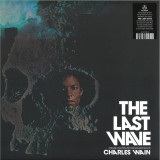
The premiere soundtrack release to Peter Weir's 1977 Australian New Wave classic.
Lost electronic score from the enigmatic composer Charles Wain.
12-track LP sourced from the original stereo master tapes.t.
180g vinyl and deluxe packaging including archival film stills and original press material
The Last Wave (also known as Black Rain in the US) was the final chapter in a trilogy of films scripted and directed by the leading auteur of the Australian New Wave, Peter Weir.
Beginning in 1974 with the absurdist black comedy-horror The Cars That Ate Paris, and followed a year later by the lush gothic mystery Picnic At Hanging Rock, The Last Wave was a landmark in existential horror. Sitting alongside other Australian eco-terror films (e.g. Long Weekend) the film featured a haunting electronic soundtrack that is as mysterious and beguiling as the spiritual themes of the film itself.
With no LP issued after the films premiere in 1977, and together with the mystery surrounding the true identity of its enigmatic composer 'Charles Wain', the score is a largely unheard recording of pioneering experimental film electronics, easily compared to the music that contemporaries Klaus Schulze and Tangerine Dream were composing for Australian films during the same period or the electronic soundtracks of John Carpenter.
Tense atonal electronics, synthesizer drones and manipulated Didjeridu all perfectly capture the film's ominous atmosphere, punctuating the slow hypnotic pace of this brooding supernatural thriller. The Last Wave soundtrack is released in conjunction with the lost film music to Nicolas Roeg's 1971 New Wave masterpiece Walkabout composed by John Barry.
Top tip for Boards Of Canada fans! Gorgeous isolation wrapped in electric memories. 8-track electronica for homesick time travelers. 'Nothing Left To Abandon' is a slow rendering of brooding introspections and imaginary spaces. Memories, visions, eroded philosophies, tragedies in a few words. A childhood of livid skies, barren escarpments, homeless wastes. An absorbing contemplation of unlikely beauty and dusty melancholy that intersects with the creative territories of Vangelis, Boards Of Canada, Klaus Schulze, and Ulrich Schnauss, and the musings of Joe Frank and Robert Ashley. Clocolan is South African-born composer Emlyn Ellis Addison. A long formal training in music, his work centers on original writings and the found sounds of abandoned ideologies--generations of radicals and skeptics searching for meaning. From his childhood in South Africa--a landscape of neglected hinterlands, eroded topology, unconquered vastness--emerged clocolan's homesick, lo-fidelity electronica, expansive themes lost in the background noise of human affairs.
Released in 1982, "Weltweit" was the sole output of the band. It has appropriately become quite rare and difficult to find with the resulting high prices to obtain an original copy. Inspired by the greats such as Kraftwerk, YMO and Klaus Schulze, the three members crafted an exquisite collection of electronic pop songs played on a very impressive collection of analog synthesizers (Arp Odyssey, Korg MS series, MiniMoog, PolyMoog, Moog Modular System 55, PPG 360, some Rolands, and Doepfer sequencer), self-builds and drum machines (Roland TR-808) that were considered cutting edge at the time. The band would have recorded a second album but split up before that was possible. Members of the band continued to be involved in the music industry at least peripherally but didn't participate in further collaborations or bands. Also interestingly, MONOPOL was basically a studio-only project and actually never played live (despite some TV appearances).
Definitely a must-have for fans of NDW such as Bal Paré, Grauzone, Piefke & Pafke, Rheingold, Stahlnetz, Ti-Tho and the like.


