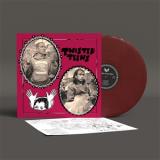
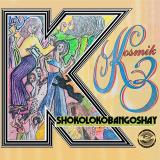
Ángel Rada is one of the most interesting music experimantalists of Venezuela. He started his career in the late 1960s as a member of The Gas Light, one of the big names on Venezuela's live circuit in the era, sharing the stages with other artists such as Apocalipsis, Un Dos Tres y Fuera, Vytas Brenner, Daniel Grau, Pablo Schneider, Miguel Ángel Fuster... Rada is one of the three basic artists who set an electronic music scene in Venezuela, along with Miguel Ángel Noya and Vinicio Adames.
Rada had attended the Escuela Superior de Música José Ángel Lamas and then continued his studies in Germany, where he was impressed by krautrock music, especially by its more electronic side. He met Kraftwerk when they were recording at Kling Klang Studio, and also knew Klaus Schulze–who would become an example for him to to follow. This contact with the Kraut scene would be the biggest influence on his works from the 1970s, which would end synthesizing in Rada's first record: 1983's Upadesa, originally released on his own independent label Uranium Records. Since then he has released more than 20 albums up to date, making him one of the most prolific experimental musicians not only in his country but also in the whole world.
Rada's aproach to electronic music is based in what he calls ethnosonic music. He is interested in the mixture of various styles which he filters through the use of technology, so in his electronic compositions one can hear echoes of ethnic sounds from all over the globe as well as some jazz influenced improvisation, ambient and synthesized sounds.
The Wah Wah edition is the first ever vinyl reissue of this landmark LP and has been remastered for vinyl by Roger Prades @ Prades Mastering. Includes an insert with liner notes by Salvatore Maldera.
It is a strictly limited edition of 500 copies only.
Cerca:angel rada
- 1
180G BLACK VINYL
Since Outlaws in 2020, Ludivine Issambourg's flute has not cooled down. How could it have, when with that album of Hubert Laws covers, it had reached incandescence? Still panting, burning despite the lid of its case left wide open, it awaited the opportunity to continue the adventures that Master Laws himself had praised.
A continuation? Above The Laws isn't quite that.
Although his name still appears, Hubert L. is no longer the sole guide in exploring the vast galaxies of jazz-funk. Through covers but especially as an enhancer of her own compositions, Ludivine has invoked the spirit and intangible presence of Jeremy Steig, Ronald Sneijder, and Bobby Humphrey—the legends of the flute.
Guided by an unescapable groove, with a musical dial set to the late 70s and early 80s, Ludivine has enlisted the help of a brass section this time, a true propulsion engine for funk that can also shift to a soulful breath if the moment calls for it. Supporting the keyboards, there's a Moog laying down its rich layers or twisting tones.
The flutes are used like levers to stabilize the flight or, conversely, to make it soar even faster through the measures. The alto version, which Ludivine had previously used sparingly, adds the necessary velvety note when it’s time to embark on smoother destinations. Speeding up the tempo to make passengers rise from their seats as if danger were imminent; calming the atmosphere to put them in a reassuring cocoon where they can let their thoughts and spirits wander, the improvisations find their place in the compositions observed from the porthole. Detached from gravity, yet still very much in tune with the vibe of cities marked as hot spots on the current jazz scene radar, it's the scent of these streets that permeates some tracks of Above The Laws.
Directed from the control tower by Eric Legnini, Chassol, Alex Finkin, and Michaël Lecoq, Above The Laws benefits from a few stops along the way where precious connections are established. Nils Landgren and his trombone in the colors of the Swedish flag, Laurent De Wilde for a chase between flute and Fender Rhodes, Céline Bonacina’s saxophone for an Afrobeat detour.
But it's at the edge of a journey where organic intensity has continued to assert itself without losing power that Ludivine connected with Brian Jackson for a cover of "Angel Dust," a track from the era when he and his partner Gil Scott-Heron were creating soul masterpieces. One of them featured a flutist by the name of Hubert Laws.
The starting point of Ludivine's latest jazz-funk explorations also becomes the endpoint. Elevated by the ten tracks of Above The Laws, Ludivine Issambourg closes a loop where she has placed her flute and its flourishes in an undeniably leading role. Opening the doors to ambitious orchestrations, unexplored horizons, she weaves into her compositions the experiences, places, and encounters that have shaped her.
- A1: The Rickie Clark Company - Time To Throw Down (6 32)
- A2: The Troids - Boogie Troids (5 49)
- A3: The Packman - I'm The Packman (6 37)
- B1: Pretty Tony - Fix It In The Mix (5 57)
- B2: Jazaq - All Systems Go (5 26)
- B3: Rich Cason - Killer Groove (4 07)
- C1: The Jonzun Crew - We Are The Jonzun Crew (6 24)
- C2: Ozone Layer - Planetary Deterioration (Electro Mix) (4 53)
- C3: Bill Williams And Bileo - Robot People (3 31)
- C4: Extra T's - E T. Boogie (5.28)
- D1: Planet Detroit - Invasion From The Planet Detroit (4 21)
- D2: Professor X - Professor X (Saga) (4 24)
- D3: Mo-Jo - Jump, Stomp And Twist (Instrumental) (6 07)
Soul Jazz Records’ new collection, ‘Electro Throwdown - Sci-Fi Inter-Planetary Electro Attack on Planet Earth 1982-89’, is a journey into the outer reaches of electro, a galactic roller-coaster ride of turbo-charged sci-fi grooveology.
The album is comprised of mainly private-press and independent label electro jams of the highest calibre (with some as rare as space ships landing on Mars) all created in the 1980s, at a time when a vocoder, a Roland TR-808 drum machine and a groove was all that was needed to get the party started.
With a few notable exceptions (Michael Jonzun’s Jonzun Crew and The Packman) the album features mainly under-the-radar killer tracks from a host of one-off artists and back-room electronic pioneers – including Pretty Tony, Planet Detroit (James McCauley, aka Maggotron) and Rich Cason – who together helped shape the sound of electro across the USA from Miami to New York, Los Angeles and beyond during the 1980s.
This album is released on super-loud double vinyl, packaged in a gatefold sleeve complete with full sleeve notes (from Derek Walmsley of The Wire), plus download code and digital.
In 2021, Los Angeles trio Gabriels arrived in a whirlwind with the loose-limbed vintage soul jam of ‘Love & Hate In A Different Time’, a song that could have dropped in almost any era. A stone-cold classic, it introduced a band so much more than just the sum of their supremely talented parts.
For the first time, ‘Love & Hate In A Different Time’ is now getting a special 7 Inch release with a previously unreleased live version of ‘Spanish Harlem’ recorded at BBC Maida Vale studios for a Gilles Peterson 6 Music session.
Just a handful of live shows deep, the spotlight swings and lands squarely on vocalist Jacob Lusk. A man who demands attention with a presence and voice of a gospel choir. That rich vocal swoops and soars through the pitches effortlessly matched by an on-stage persona that’s intensely likeable.
A bonafide star by anybody’s reckoning. Two acclaimed EPs deep and yet barely out of second gear, Gabriels have moved beyond mere promise to become one of 2022’s most essential new acts.
Press / PR:
“One of the most spectacular voices you will hear this year... Set to be 2022’s word-of-mouth hit” - The Guardian
“A sound that’s unlike anything else out there” – The Times
SOLD OUT every headline live show in 2021 and 2022 so far in seconds. Gabriels will also support Celeste on her sold out UK tour in the spring of 2022.
Love And Hate In A Different Time was playlisted at 6Music Arielle Free’s TOTW on Radio 1, other supporters included Annie Mac, Nick Grimshaw and Adele Roberts
Syncs with Reebok and Gucci campaigns
Breaking Act - Sunday Times Culture feature
Included in The Guardian’s 2022 Tips
NME Radar feature & NME 100: Essential Emerging Artists For 2022
KCRW’s 2021 Breakthrough Artist
Ones To Watch – The 25 Artists to Watch
Calvin Love is a Canadian singer-songwriter, composer, and producer from Edmonton, Alberta, now based between Edmonton and Los Angeles. With a sound that blends noir-tinged folk‑pop, crooning rock ’n’ roll, and cinematic storytelling, Love has become a distinctive voice in the international indie landscape. His music has drawn comparisons to Roy Orbison, Leonard Cohen, and Bryan Ferry, with Aquarium Drunkard describing his work as “a crestfallen soundtrack of near‑escape… like Chris Isaak trapped in a David Lynch film.”
Since his debut New Radar (2012), Love has released a run of acclaimed records including Super Future (Arts & Crafts, 2015), Highway Dancer (2018), Night Songs (2020), and Lavender (2021). Along the way, he has collaborated with renowned producers and artists such as Gus Seyffert (Beck, Roger Waters, Black Keys) and the late Richard Swift (The Shins, Damien Jurado), while earning coverage from outlets including SPIN, The Fader, Interview Magazine, and Stereogum.
A seasoned live performer, Love has toured extensively across North America, Europe, and Asia, appearing at festivals such as SXSW, Pop Montréal, Strawberry Festival (China), Endless Daze (South Africa), and Sled Island. He has shared stages with Morrissey, Mac DeMarco, Courtney Barnett, Jonathan Wilson, The Divine Fits, and Jim James, performing in iconic venues like Carnegie Hall, The Troubadour, and Hollywood Forever Cemetery.
In early February 2026, Love releases his seventh studio album, Throw My Shadow To The Sun — a bold, visceral statement that captures him at a new creative peak. Self‑produced and recorded by Reverend Baron at The Ladder Factory in East Los Angeles, the album channels raw, unfiltered energy into a late‑night rock ’n’ roll atmosphere built on moody grooves, gritty textures, and Love’s unmistakable croon.
The sessions brought together a formidable live band: Josh Da Costa (Drugdealer) on drums, Brent Randall (Vanity Mirror) on bass, Davey Chegwidden (De La Soul, Ghostface Killah, Raekwon, Too Short) on percussion, Jeremy Brian Gill (Curtis Harding) on tenor saxophone and flutes, Daniel E. Garcia (Reverend Baron) on lead guitars, and multi‑instrumentalist Laena Myers (White Fence, Orville Peck, El Mariachi Bronx) on violin.
From the hypnotic sway of “Underneath It All,” to the reverb‑drenched sax of “Forever Feels,” to the heavy sludge‑rock crush of “Setting Sun,” Throw My Shadow To The Sun draws from the lyrical storytelling of Dire Straits, the laid‑back blues of JJ Cale, and the timeless melodic drama of Roy Orbison. The result is a cohesive, lived‑in record that transforms fleeting moments and late‑night impressions into something enduring and cinematic.
- 1: Rust
- 2: Moving On
- 3: Say Something Mean
- 4: This Is The Place
- 5: Things
- 6: Medicine
- 7: California Rain
- 8: Passing Through
- 9: Leaving Song
- 10: Days Like This
Co-produced with Blaine Harrison of Mystery Jets, the album is a bold and moving leap forward, shaped by the wide-open spaces of Grace's adopted California and the intimate venues of his hometown of London. Moving to California at 21, Grace played his first shows in small coffee houses and clubs in Los Angeles and San Francisco. There he was introduced to the music of artists like Bon Iver and Ray Lamontagne who helped shape his early writing and the songs that would later appear on his 2022 debut album 'Alive In America' . Since returning home to London, his music has been championed by the likes of Clash, Under The Radar, Wonderland, Songwriting Magazine, Americana UK, Absolute Radio, BBC Introducing and Mahogany.
Before he turned 20, Lô Borges released one of the most captivating albums to come out of Brazil's rich musical landscape - a record that somehow flew under the radar at the time but has since become a cult favorite for listeners around the world. Recorded in the same whirlwind year as the legendary "Clube da Esquina" - the groundbreaking collaboration with Milton Nascimento and Beto Guedes - this self-titled solo debut finds Lô Borges in full creative flight. Pressured by Odeon Records to deliver a solo project, Borges responded with a burst of youthful brilliance, sometimes writing a song in the morning and laying it down in the studio that very night. The result? An album that's spontaneous, heartfelt, and sonically stunning. From the shimmering guitars of 'Você Fica Melhor Assim' to the dreamy melodies of 'Cançao Postal' and the jazz-infused groove of 'Calibre,' the album blends Brazilian popular music with rock, soul, and subtle psychedelic touches. It's got the intimate spirit of a bedroom recording, but with the musical sophistication of legends - with collaborators like Toninho Horta, Tenorio Jr., Nelson Angelo, and of course, Beto Guedes helping bring Borges' vision to life. Fans of Caetano Veloso, Gilberto Gil, or early Nascimento will feel right at home here - but Lô Borges brings his own voice, at once tender and electrifying, to every track. The guitars are fuzzy, the harmonies rich, and the songwriting nothing short of magical. Though it didn't make a splash in 1972, "Lô Borges" has only grown in stature over the years. It's the kind of album you discover once, then return to again and again - a timeless treasure from a young artist who helped redefine Brazilian music from the ground up. If you're into warm, soulful songwriting with a touch of experimental edge, this record is waiting for you. Give it a listen - and see why "Lô Borges" is considered one of Brazil's most underrated masterpieces. Reissue on 180g vinyl.
- Christine
- Like Fire
- Missionary Girl
- One Horse Town
- Dubrovnik Girls
- Freezing Rain
- Speedway Girls
- Twist Me Around
- I Had A Dream
- I'd Walk The Plank For You Baby
- Run Baby Run
- Angel Love
"Dubrovnik Blues" on Vinyl: The Australian Super-Band That Changed Everything! Attention all lovers of raw, unfiltered rock'n'roll! Bang! Records proudly presents the vinyl reissue of "Dubrovnik Blues", the celebrated debut LP from The Dubrovniks - the Australian super-group born straight from the beating heart of the country's punk underground. Formed in Sydney in 1986 (originally as The Adorable Ones), The Dubrovniks brought together true icons of the Aussie scene: James Baker, legendary drummer for Beasts of Bourbon, founding member of Hoodoo Gurus, and a driving force in The Scientists; Roddy Radalj, co-founder of Hoodoo Gurus and veteran of The Scientists; and Boris Sujdovic, who also played with both The Scientists and Beasts of Bourbon. Far from being "just another debut," Dubrovnik Blues was an instant statement of intent - a wild blend of garage rock grit, glam swagger, punk attitude and classic rock'n'roll hooks. Think The Troggs and T. Rex colliding with the spirit of the New York Dolls. Originally released in August 1989 on Timberyard Records, the album went on to earn a nomination for Best Independent Release at the ARIA Awards in 1990. Now, Bang! Records brings this cult gem back to life on vinyl - a must-have for collectors, vintage-sound purists, and anyone ready to relive (or discover) the raw, electric energy of late-80s Australian rock at its finest.
Repress!
In the mid-1970s, a force of nature swept across the continental United States, cutting across all strata of race and class, rooting in our minds, our homes, our culture. It wasn’t The Exorcist, Goodbye Yellow Brick Road, or even bell-bottoms, but instead a book called The Secret Life of Plants. The work of occultist/former OSS agent Peter Tompkins and former CIA agent/dowsing enthusiast Christopher Bird, the books shot up the bestseller charts and spread like kudzu across the landscape, becoming a phenomenon. Seemingly overnight, the indoor plant business was in full bloom and photosynthetic eukaryotes of every genus were hanging off walls, lording over bookshelves, and basking on sunny window ledges. The science behind Secret Life was specious: plants can hear our prayers, they’re lie detectors, they’re telepathic, able to predict natural disasters and receive signals from distant galaxies. But that didn’t stop millions from buying and nurturing their new plants.
Perhaps the craziest claim of the book was that plants also dug music. And whether you purchased a snake plant, asparagus fern, peace lily, or what have you from Mother Earth on Melrose Avenue in Los Angeles (or bought a Simmons mattress from Sears), you also took home Plantasia, an album recorded especially for them. Subtitled “warm earth music for plants…and the people that love them,” it was full of bucolic, charming, stoner-friendly, decidedly unscientific tunes enacted on the new-fangled device called the Moog. Plants date back from the dawn of time, but apparently they loved the Moog, never mind that the synthesizer had been on the market for just a few years. Most of all, the plants loved the ditties made by composer Mort Garson.
Few characters in early electronic music can be both fearless pioneers and cheesy trend-chasers, but Garson embraced both extremes, and has been unheralded as a result. When one writer rhetorically asked: “How was Garson’s music so ubiquitous while the man remained so under the radar?” the answer was simple. Well before Brian Eno did it, Garson was making discreet music, both the man and his music as inconspicuous as a Chlorophytumcomosum. Julliard-educated and active as a session player in the post-war era, Garson wrote lounge hits, scored plush arrangements for Doris Day, and garlanded weeping countrypolitan strings around Glen Campbell’s “By the Time I Get to Phoenix.” He could render the Beatles and Simon & Garfunkel alike into easy listening and also dreamed up his own ditties. “An idear” as Garson himself would drawl it out. “I live with it, I walk it, I sing it.”
But as his daughter Day Darmet recalls: “When my dad found the synthesizer, he realized he didn’t want to do pop music anymore.” Garson encountered Robert Moog and his new device at the Audio Engineering Society’s West Coast convention in 1967 and immediately began tinkering with the device. With the Moog, those idears could be transformed. “He constantly had a song he was humming,” Darmet says. “At the table he was constantly tapping.” Which is to say that Mort pulled his melodies out of thin air, just like any household plant would.
The Plantae kingdom grew to its height by 1976, from DC Comics’ mossy superhero Swamp Thing to Stevie Wonder’s own herbal meditation, Journey Through the Secret Life of Plants. Nefarious manifestations of human-plant interaction also abounded, be it the grotesque pods in Invasion of the Body Snatchers or the pothead paranoia of the US Government spraying Mexican marijuana fields with the herbicide paraquat (which led to the rise in homegrown pot by the 1980s). And then there’s the warm, leafy embrace of Plantasia itself.
“My mom had a lot of plants,” Darmet says. “She didn’t believe in organized religion, she believed the earth was the best thing in the whole world. Whatever created us was incredible.” And she also knew when her husband had a good song, shouting from another room when she heard him humming a good idear. Novel as it might seem, Plantasia is simply full of good tunes.
Garson may have given the album away to new plant and bed owners, but a decade later a new generation could hear his music in another surreptitious way. Millions of kids bought The Legend of Zelda for their Nintendo Entertainment System back in 1986 and one distinct 8-bit tune bears more than a passing resemblance to album highlight “Concerto for Philodendron and Pothos.” Garson was never properly credited for it, but he nevertheless subliminally slipped into a new generations’ head, helping kids and plants alike grow.
Hearing Plantasia in the 21st century, it seems less an ode to our photosynthesizing friends by Garson and more an homage to his wife, the one with the green thumb that made everything flower around him. “My dad would be totally pleased to know that people are really interested in this music that had no popularity at the time,” Darmet says of Plantasia’snew renaissance. “He would be fascinated by the fact that people are finally understanding and appreciating this part of his musical career that he got no admiration for back then.” Garson seems to be everywhere again, even if he’s not really noticed, just like a houseplant.
- Tired Of It
- Reality Is Calling
- Graveyard Island
- Look Up
- Murder Town
- Don't Look Back
- Johnny Aggro
- Bowling Green Lane
- Dover Street
- Jsa
- Monsters
- On The Radar
LTD. US EDIT.[21,22 €]
Grade 2 is a UK punk band from the Isle of Wight, formed in 2013. The young three-piece is made up of Sid Ryan - Bass & Lead Vocals, Jack Chatfield - Guitar & Vocals and Jacob Hull - Drums. Their music can be described as a classic punk sound, hard and fast whilst also including melodic guitar and vocal parts. Influence taken from classics such as The Clash, The Jam and The Stranglers. While touring, the band met Lars Frederiksen (Rancid) who took an interest in Grade 2 and ultimately played some of their music videos to his bandmate Tim Armstrong. Armstrong liked what he saw and not only agreed to produce the band"s forthcoming record but signed them to his label, Hellcat Records. Last December, Grade 2 flew to Los Angeles, and over the course of two weeks, tracked the dozen songs that comprise Graveyard Island. "He"s one of the most efficient people we"ve ever worked with. He knows exactly what he wants. In the studio, he wanted to capture how we sound onstage, so we were tracking songs live with a scratch vocal," vocalist/bassist Sid Ryan said on working with Armstrong.
- Apartment Life
- The Machinist
- The Men Are Fighting
- Lakeland
- Seven And Seven
- Over & Over, Pt. 1
- Bells And Bells
Fit for Consequences: Original Recordings, 1984–1987 is the first ever archival release from Repetition Repetition, the “two-man electric minimalist band” consisting of Ruben Garcia and Steve Caton hailing from Los Angeles in the mid 1980’s. Repetition Repetition’s unique blend of cosmic art-rock minimalism / maximalism was self-released across a series of cassettes produced in micro editions, and while garnering the attention and participation of luminaries such as Harold Budd, remained under the radar during the band’s existence. Fit for Consequences: Original Recordings, 1984–1987 collects select material from across the duo’s catalog.
It was over a plate of Mexican breakfast food when Ruben Garcia and Steve Caton first told Harold Budd of Repetition Repetition and the worlds they intended to explore by respective way of synthesizers and guitars --- a rendezvous instigated by the former’s fan mail to the legendary composer. If the upstarts entered this restaurant from a one-way street of admiration, they would leave with not only Budd’s interest but, sometime later, a blessing in the wake of many hours shared by the three in Garcia’s Los Angeles home recording studio: “This is going to be difficult, but God help them, I think they’re great,” noted Budd in a USC lecture in 1985. Now several degrees removed from prior rock music aspirations, the real game was afoot.
Between 1984 and 1988, Repetition Repetition operated within something akin to the underground of the experimental underground, although even that designation perhaps overstates the case. The duo’s sparse output consisted of three cassettes self-released on Garcia’s Third Stone Music label: Repetition Repetition (1985), Lakeland (1987), and The Machinist (1987). Their songs would also be included during this period on Trance Port Tapes’ vital scene-scanning compilations assembled by A Produce. Live performances occurred with similar infrequency, but Garcia and Caton counted converts in quality over quantity, numbering among them the aforementioned Budd, a Chambers Brother, and, judging by a memorably drop-jawed reaction following a rare Repetition Repetition gig, Jackson Browne.
Likewise, critical support materialized in the form of KCRW deejays Brent Wilcox and Dean Suzuki, whose steady airplay positioned Repetition Repetition’s music amidst fearless company like Jon Hassell, Hiroshi Yoshimura, and Richard Horowitz. Yet, to hear fellow Trance Port featured players like Tom Recchion and Bruce Licher of Savage Republic tell it, Garcia and Caton moved as ghosts --- a notion more vexingly endorsed by the silence of record companies that failed to come knocking --- and therein lies an overarching truth to the work itself.
Journey to the heart of Repetition Repetition and one discovers a collective ear impossibly attuned to the hypnotic possibilities of stylistic convergence, the resulting music possessed of seamless multimodalities which beckon to a glimmering plane of the disembodied. Where Caton sought his artistic fixes at an intersection of popular genres, Garcia zoned in on the sonically spare, drawing from the same wellspring as the Enos and Rileys of his personal avant-garde pantheon, and in their coming together the two tapped into a deeper cosmic source. Synthetic walls of keyboard sound in forever states of reprise met waves of shimmering --- and at times even punishing --- guitar in reply, their soundscapes hovering convincingly between, as suggested in fittingly dualistic fashion in a press kit assembled by Garcia, such disparate sensations as bird flight in one song and oil drilling in the next.
But don’t call it a push-pull dynamic, as this was a creative partnership founded upon fluidity and organicism by way of, naturally, repetition. In contrast to, say, the Bressonian ideal of repetitive motion as a great stripping away, the concept in the hands of Garcia and Caton equated to ascendancy via continuous unfolding, a maximal route to minimalism. To be sure, their recording philosophy morphed over the course of the act’s short history, and what started as a process defined by consistent in-person interplay developed into a more isolated method formulated by Garcia, who eventually took to his own one-man bedroom-studio sessions in order to fully chart any and all potential ostinato-loaded paths which he could travel down, the Tascam-captured resonances subsequently provided to Caton as blueprints from which to take flight himself, adding layer upon layer of steel to the proceedings.
If the practice and execution changed, however, the evidence certainly didn’t rest in the results: The seamlessness remained, and, despite the brevity of their time together, so has Repetition Repetition. With this finely calibrated collection of songs in Fit for Consequences: Original Recordings, 1984–1987, Freedom To Spend sees to it that the private worlds of Garcia and Caton can now be visited by all rather than just the count-‘em-on-both-hands lucky few whose musical endeavors or collector vocations carried them into this once-distant dimension.
Repetition Repetition’s Fit for Consequences: Original Recordings, 1984–1987 will be released on Freedom To Spend in vinyl and digital editions on May 30, 2025. The collection includes extensive liner notes from Bill Perrine, and wil be offered alongside Over & Over, a supplemental collection of music available exclusively as a mail order cassette from Freedom To Spend and RVNG Intl.
"Irrepressible, off-the-wall and utterly unique - the late 70s/early 80s Latin jazz-funk and leftfield electronic boogie of Japanese composer and pianist Izumi ‘Mimi’ Kobayashi collected for the first time.
A star in Japan, she moved to Europe to record global hits with Depeche Mode and Swing Out Sister, toured the world with the Reggae Philharmonic Orchestra and made beats with Attica Blues’ Tony Nwachukwu. Now based in London, Mimi currently fronts Tokyo Riddim Band - the intergenerational live Japanese Reggae outfit born from Time Capsule’s acclaimed 2023 compilation of the same name - playing live shows and releasing a trio of recordings.
Choice Cuts 1978-1983 collects eight recordings from four of Mimi’s first five albums – Sea Flight (1978) recorded with her group Flying Mimi Band, and Coconuts High (1981), Nuts Nuts Nuts (1982) and Tropicana (1983) under her own name.
The compilation opens with a syncopated electro-funk cover of Sergio Mendes’ ‘Mas Que Nada’ (Tropicana) and the crisp and stripped back techno-pop of ‘Coffee Rumba’ (Nuts Nuts Nuts) with a keyboard bass line that would have made Stevie Wonder weep.
Alongside the off-beat synth jam ‘Quiet Explosion’ (Nuts Nuts Nuts) and piano samba of ‘Espresso’ (Tropicana), there’s two low slung soul-jazz numbers, ‘Naze’ and ‘Angel Sky’, from Sea Flight (1978) that recall the collaborations between Herbie Hancock and Kimiko Kasai. But it is around the two tracks from Mimi’s 1981 album Coconuts High that this compilation revolves (and from whose cover shoot it borrows).
Released on legendary guitarist Takanaka’s Kitty Records label, Coconuts High was recorded in LA with a jazz fusion backing band, including Alex Acuña, Abraham Laborial, Harvey Mason and the Tower of Power horns. A riot of playful Latin-tinged jazz, funk and fusion with the off-beat spirit of Kid Creole & and the Coconuts, the album became a cult hit. Here it’s the sultry, Minnie Riperton-esque ‘Crazy Love’, with its addictive groove and bittersweet melodies that makes the cut, alongside the steel drum-infused carnivalesque bounce of ‘Palm St’.
Choice Cuts 1978-1983 will introduce the idiosyncratic energy and playful verve of this under-the-radar pioneer to a wider audience for the first time. Welcome to the world of Izumi ‘Mimi’ Kobayashi."
- Chaparral
- Time Crisis Too
- Cowprint
- Father's Prayer
- Bog Song
- Away Here
- String Performer
In the winter of 2022, Holy Wave had a week off after a short tour that ended with a show in Los Angeles. The band found particular glee in playing those shows at that time, as they weren't sure they'd ever be doing that again just a few months prior_this batch of songs results from hanging out with some very good friends at Studio 22. "The band have fashioned themselves into mainstays in the world of gauzy psychedelia, infusing dream pop soundscapes with colorful instrumentation, lush melodies, and weighty pathos." - Under the Radar Magazine"_narcotic neo-psych with synthed-out bedroom-pop undertones." - Shindig Magazine"_lush-yet-tempered instrumentation that's undeniably pleasant, if not downright attractive." - Flood Magazine"The sound of Austin's Holy Wave has been getting progressively dreamier with each successive release, their music lush and immaculately arranged." - Post-Trash"Wonderful aural tones, meandering genteelly." - Narc Magazine
- A1: Hornet Disaster
- A2: Meanie
- A3: Angel
- A4: Take Care Of Yourself (Paper - Like Nests)
- A5: Hug
- A6: Radar Ballet
- A7: Green Tea Seaweed Sea
- A8: Blood Online
- A9: Blanket
- A10: Pulka
- B1: Heartbeats
- B2: Chopland Sedans
- B3: Cooperative Calligraphy
- B4: Ripped Apart By Hands
- B5: Nostalgia Drive Avatar
- B6: Aldehydes
- B7: Tiara
- B8: Agatha's Goldfish (Sparkling Water)
- B9: Heaven Smile
2LP[36,09 €]
"“It clicked for me one day, that the album was going to be about hornets,” explains Sputnik, the mononymous songwriter behind the noise-pop project Weatherday.
“It just made sense to me.” Hornet Disaster, Weatherday’s follow-up to their 2019 debut Come in, and spiritual successor to 2022’s collab release Weatherglow, is their most expansive work to date. In Weatherday’s initial bout of inspired writing and recording, they produced over 70 songs for the record, but not before they had a complete, overarching narrative that was coherently tied back to Sputnik’s previous work.
It’s a bustling record with disparate songs each vying for space like wasps in a swarm. It can inspire caution and chaos, but there’s wonder, purpose, and a certain familiarity there, too. Weatherday has extended the knotted, thrashing maximalism of Come in by doubling down with the uncompromised, no-stone-unturned nature of Hornet Disaster. Where Come in was the product of an artist searching for their voice, Hornet Disaster represents the joyful abandon that comes from having found it."
- A1: Hornet Disaster
- A2: Meanie
- A3: Angel
- A4: Take Care Of Yourself (Paper - Like Nests)
- A5: Hug
- A6: Radar Ballet
- B1: Green Tea Seaweed Sea
- B2: Blood Online
- B3: Blanket
- B4: Pulka
- B5: Heartbeats
- C1: Chopland Sedans
- C2: Cooperative Calligraphy
- C3: Ripped Apart By Hands
- C4: Nostalgia Drive Avatar
- D1: Aldehydes
- D2: Tiara
- D3: Agatha's Goldfish (Sparkling Water)
- D4: Heaven Smile
Cassette[15,92 €]
"“It clicked for me one day, that the album was going to be about hornets,” explains Sputnik, the mononymous songwriter behind the noise-pop project Weatherday.
“It just made sense to me.” Hornet Disaster, Weatherday’s follow-up to their 2019 debut Come in, and spiritual successor to 2022’s collab release Weatherglow, is their most expansive work to date. In Weatherday’s initial bout of inspired writing and recording, they produced over 70 songs for the record, but not before they had a complete, overarching narrative that was coherently tied back to Sputnik’s previous work.
It’s a bustling record with disparate songs each vying for space like wasps in a swarm. It can inspire caution and chaos, but there’s wonder, purpose, and a certain familiarity there, too. Weatherday has extended the knotted, thrashing maximalism of Come in by doubling down with the uncompromised, no-stone-unturned nature of Hornet Disaster. Where Come in was the product of an artist searching for their voice, Hornet Disaster represents the joyful abandon that comes from having found it."
This band, and this album, function as critical missing links that takes one from The Fall to Yard Act, from Television and The Minutemen to Parquet Courts and Sleaford Mods, from punk as a sound to punk purely as an ethos. While any Van Pelt album is a stand alone album, the unique approach they take begs one to enter their world and dig deep in.
RELATED TO: The Lapse, Native Nod, St Vincent, Blonde Redhead, Enon, Jets to Brazil, Vague Angels, Ted Leo and the Pharmacists, American Football, Texas is the Reason.
‘The lines between post-hardcore, indie rock, and emo blurred on the two mid-’90s full-lengths from the Van Pelt.’ Pitchfork
‘New York City’s The Van Pelt are an influential, but too often overlooked indie rock band -- cult favorites for many an emo-inclined crate digger.’ Consequence of Sound
‘...should be mentioned a lot more than they are when you talk about the history of emo.’
Washed Up Emo
Back in the day there was this thing called an A&R guy. They would hang out at small venues looking to throw money at the next big thing. In the early 90s, everyone was looking for the next Nirvana of course. NYC's The Van Pelt had just released an album of anthems called "Stealing From Our Favorite Thieves" that seemed to be just that. The only thing is, they didn't want to sign. Legend has it $2 million was turned down over pierogies and coffee one Monday morning because The Van Pelt didn't want to risk crashing and burning. Instead, they were gunning for a long and stable stride even if that meant they would largely remain out of the public's eye forever.
Lack of willingness to play the game didn't mean people weren't waiting with baited breath for their follow up album though. In 1997 The Van Pelt released "Sultans of Sentiment", an album nearly devoid of the anthems and licks people were expecting. In fact, it's a complete bummer of an album that subjects the listener to the point on life's curve where the hubris of youth gives way to a cresting crashing defeat no kid with heart could ever have seen coming. Seeing as humanity are sick fuckers who revel in the misery of both themselves and others, the popularity of Sultans grew and grew and continues to win new loyal fans even today. It's for this classic album The Van Pelt has never fallen off the radar.
That being said, their swan song "The Speeding Train" was recorded while they were working on their third album. In any other age, in any other way, this song would have been a hit. The Van Pelt broke up mid-recording, released Speeding Train as a single, and the rest of the songs from that session didn't see the light of day until they were released in 2014 as the "Imaginary Third" lp.
Why are we here talking about them today in 2023? Because in preparation for the release of "Imaginary Third" The Van Pelt started playing some reunion shows. Soundchecks revealed to them that this band has a voice that was prematurely muted by their inability to see clearly in the thick of it. Returning to explore just what that is 25 years later has led to this first collection of 9 songs, "Artisans & Merchants". This is not a reunion album. This is vindication for that decision made over pierogies and coffee decades ago. The Van Pelt is a band in it for the long haul, free from whatever trappings the mayflies of trends and markets may bring.
For lovers of The Van Pelt, listening to "Artisans & Merchants" is like hearing the voice of a dear friend you haven't seen in years, a friend you used to share countless beers with over banter that went nowhere other than delivering a solid night. Your friend is older, they've changed. In some ways you're worried for them, looks like they might be teetering on the brink of something. In other ways it's the same old them, a nugget of a soul too unique to ever be altered. It's for those unfamiliar with The Van Pelt though for whom we should be truly jealous. This is a stand alone album, incredible vital song writing in and of itself regardless of the long history this band has. The climax of the single "Image of Health" perhaps describes the beautiful desperation best: "And you never felt more alive / Than when the priest came to read you your rites!"
Die in Montréal lebende schwedische Sängerin und Komponistin hat in den letzten 20 Jahren sechzehn unabhängig produzierte Alben vorzuweisen und ist zahllose Kollaborationen eingegangen. Sie ist eine poetische und kühne Kraft in der Musik, die sich dem Genre entzieht. Ihre Stimme wurde als "eine führende Präsenz" (Exclaim) beschrieben, die "den Unterschied zwischen dem Göttlichen und dem Dämonischen aufspaltet, gekonnt aus den Angeln hebt" (Under The Radar) und "neben den größten Indie-Künstlerinnen steht, die vor nichts Angst haben" (Le Devoir). Aufgewachsen auf einer Insel an der schwedischen Westküste, begann ihre musikalische Laufbahn, als sie 2004 nach Stockholm zog und Mitglied des renommierten Kollektiv-Labels und Veranstaltungsortes Fylkingen wurde (die älteste Organisation in Europa für experimentelle Musik und Kunst, gegründet 1933). Seit ihrem Umzug nach Montréal im Jahr 2012 erstreckt sich ihre Karriere über zwei Jahrzehnte und ist geprägt von einem unerschrockenen Streben nach Originalität, einem unerschöpflichen Wunsch, Genres zu überschreiten, und einem Engagement für künstlerische Zusammenarbeit. Angell verschmilzt musikalische Bereiche von Klassik, Folk, Rock und Pop bis hin zu Jazz, Elektronik, freier Improvisation und Avantgarde. Bekannt ist sie vor allem für ihr unkonventionelles künstlerisches Schaffen mit der gefeierten und für den Polaris nominierten Avant-Rock-Band Thus Owls, die sie seit 2007 gemeinsam mit ihrem Mann Simon Angell leitet. Zu ihren früheren Ensembles gehören das schwedische Vokal-Bass-Duo Josef & Erika und die elektronische Noise-Gruppe The Moth. Zur Unterstützung dieser und anderer Projekte unternahm sie ausgedehnte Welttourneen, bei denen Daníel Bjarnason (Ben Frost, Sigur Rós), Liam O'Neill (SUUNS), Karl Lemieux (Godspeed You! Black Emperor), Lisen Rylander Löve (Midaircondo) und Anders Jormin (ECM) zu ihren zahlreichen Partnern zählten. Ihre unverwechselbare und virtuose Stimme hat Aufnahmen und Live-Auftritte mit einem breiten Spektrum von Künstlern geziert, darunter Loney Dear, Patrick Watson, Leonard Cohen, Kim Myhr, Arve Henriksen, Land Of Kush, Wildbirds and Peacedrums, La Force und The Besnard Lakes, um nur einige zu nennen. Kürzlich gründete Angell zusammen mit Róisín Adams und Peggy Lee das Neue-Musik-Trio Beatings Are In The Body und vollendete ein Solo-Debütalbum mit uneingeschränkter stimmlicher Erkundung und expressionistischen avant-elektronischen Kompositionen, das Anfang 2024 auf Constellation erscheinen soll.
- A1: Jeito Bom De Sofrer
- A2: Papo Furado (Jive Talking)
- A3: Xibaba (She-Ba-Ba)
- A4: Andei
- A5: Back Streets Of Havana
- B1: Flora's Song
- B2: San Francisco River
- B3: Vera Cruz
- C1: Celebration Suite
- C2: Casa Forte
- C3: From The Lonely Afternoon
- C4: Black Narcissus
- D1: When Angels Cry
- D2: O Sonho (Moon Dreams)
- D3: Summer Night
- E1: A Secret From The Sea
- E2: O Cantador / I Just Want To Be Here
- E3: Light As A Feather
- E4: O Canto Da Sereia
- F1: Open Your Eyes You Can Fly
- F2: Hot Sand
- F3: Parana
- F4: Jump
- G1: Fingers (El Rada)
- H1: Samba De Flora
- H2: Amajour
- H3: The Road Is Hard (But We're Going To Make It)
- I1: Above The Rainbow
- I2: Love Lock
- I3: What Can I Say
- I4: Musikana
- J1: The Happy People
- J2: Peasant Dance
- J3: Dom-Um (A Good Friend)
- J4: Outernational Meltdown - Hungry On Arrival
- G2: Toque De Cuíca
- G3: Romance Of Death
Airto Moreira and Flora Purim, the legendary King and Queen of Brazilian Jazz, have captivated audiences for over six decades with their vibrant albums and exhilarating live performances. With a dedicated global fan base including the UK's jazz funk and jazz dance scene to Japan's concert halls, the power couple continues to make waves in the industry – Flora's 'If You Will' (2022) album was even nominated for a Grammy! The duo met and came together musically in Sambalanço and the Sambrasa Trio. The mixture of Airto's rural Brazilian background and percussion talents and Flora's classical training and involvement in the underground Bossa Nova movement, created a unique blend of sounds that resonates across generations. They have not only collaborated with music legends like Miles Davis and Chick Corea but have also produced ground-breaking music alongside the likes of Hermeto Pascoal. Despite facing numerous challenges, including Flora's arrest and incarceration in 1974, the duo's close connection with friends-musicians like Thelonius Monk and Cannonball Adderley, their persistence and absolute passion for music have propelled them to the pinnacle of success. They worked with renowned musicians like Wayne Shorter, Jaco Pastorius, Herbie Hancock, Joe Henderson, McCoy Tyner, George Duke and producers such as Orin Keepnews and Creed Taylor. Having been a part of numerous prestigious ensembles, including Dizzy Gillespie's United Nations ensemble, Airto and Flora's journey is a testament to their innovation and devotion to their craft. This collection offers a glimpse of that incredible journey, showcasing their extraordinary talent and unique sound and it’s also the first comp scanning their 60 year careers Compiled by Straight No Chaser editor/publisher Paul Bradshaw & Totally Wired Radio presenter Roberta Cutolo. Àṣẹ.
- We Need Each Other
- Chat-Group
- Useless Idiots (Fuck Off And Die!)
- Let The Anti-Facist Ball Rock'n'roll On The Ground
- You'll Never Stop Us (Ft. Moscow Death Brigade)
- She Hates The City
- A Clockwork-Arsehole
- Dangerous World
- Power-Psycho
- The People Who Don't Care
- One Man's Terrorist Is Another Man's Freedom Fighter
- Open The Door
Black Vinyl[18,70 €]
Limitierte creme(weiß)farbene Vinyl-LP! Seit 30 Jahren fliegen die STAGE BOTTLES nun unter dem Radar der Mainstream-Medien, sind aber in ihrer Szene längst eine feste Größe und international erfolgreich. Sie haben sieben Alben veröffentlicht, spielen weltweit live, haben mit unzähligen Bands zusammen gepunktrockt und dabei immer Haltung bewiesen. Jetzt kommt nach zehn Jahren mit "We Need Each Other" wieder ein neues Album. STAGE BOTTLES gründete sich 1993 aus einem engen Freundeskreis der antifaschistischen Skinhead-Szene. Musikalisch prägt das Saxophon den klassisch melodiös-aggressiven Punkrock, der sich stark klassischen englischen Vorbildern orientiert. Textlich liegt der Fokus klar im Aufruf zum aktiven Antifaschismus und zu einer gesellschaftskritischen und antikapitalistischen Haltung. Eine ausgeprägte Affinität zum Fußball und zu subkulturellen Themen erfolgt auf oft auch für den Punkrock nicht konventionelle und sehr offene Art und Weise. Die größten Hits der Stage Bottles sind "Sometimes Anti-Social, But Always Anti-fascist" und "Dead but not forgiven" sowie ,Russia", "All you need is hate", "Too young to die", "Come together", ,One world one crew" und der Song "Solidarity" (angelehnt an die Version der Band Angelic Upstarts"). Am 1.Dezember 2023 wird das neue Studioalbum erscheinen, zeitgleich feiert die Band ihr 30jähriges Bestehen. Seid bereit für weitere Punkrock-Hymnen wie Useless Idiots, Power-Psycho, You'll Never Stop Us (zusammen mit MOSCOW DEATH BRIGADE), She Hates The City sowie dem Titeltrack und erster Single! "We Need Each Other" soll durchaus keine Floskel sein, sondern die grundlegende Parole für das Album. "Ein Lied über Freundschaft, das Älterwerden, das Altwerden mit Menschen, die seit Jahrzehnten mit einem zusammen sind. Daneben soll es aber auch einen Hinweis auf globale Probleme geben. Wenn wir nicht versuchen, die Dinge gemeinsam zu lösen, werden wir nicht genug Kraft haben, um erfolgreich zu sein" so Olaf Rüger, Sänger, Frontmann und Kopf der Band. Aktueller kann ein Titel wohl heutzutage kaum sein, die STAGE BOTTLES sind zurück und sagen, was Sache ist. Aufklappbare Digisleeve-CD mit 16seitigem Booklet, Vinyl-LP mit bedruckter Innenhülle plus 4seitigem-12"-Booklet.
- We Need Each Other
- Chat-Group
- Useless Idiots (Fuck Off And Die!)
- Let The Anti-Facist Ball Rock'n'roll On The Ground
- You'll Never Stop Us (Ft. Moscow Death Brigade)
- She Hates The City
- A Clockwork-Arsehole
- Dangerous World
- Power-Psycho
- The People Who Don't Care
- One Man's Terrorist Is Another Man's Freedom Fighter
- Open The Door
Cream White Vinyl[20,59 €]
Seit 30 Jahren fliegen die STAGE BOTTLES nun unter dem Radar der Mainstream-Medien, sind aber in ihrer Szene längst eine feste Größe und international erfolgreich. Sie haben sieben Alben veröffentlicht, spielen weltweit live, haben mit unzähligen Bands zusammen gepunktrockt und dabei immer Haltung bewiesen. Jetzt kommt nach zehn Jahren mit "We Need Each Other" wieder ein neues Album. STAGE BOTTLES gründete sich 1993 aus einem engen Freundeskreis der antifaschistischen Skinhead-Szene. Musikalisch prägt das Saxophon den klassisch melodiös-aggressiven Punkrock, der sich stark klassischen englischen Vorbildern orientiert. Textlich liegt der Fokus klar im Aufruf zum aktiven Antifaschismus und zu einer gesellschaftskritischen und antikapitalistischen Haltung. Eine ausgeprägte Affinität zum Fußball und zu subkulturellen Themen erfolgt auf oft auch für den Punkrock nicht konventionelle und sehr offene Art und Weise. Die größten Hits der Stage Bottles sind "Sometimes Anti-Social, But Always Anti-fascist" und "Dead but not forgiven" sowie ,Russia", "All you need is hate", "Too young to die", "Come together", ,One world one crew" und der Song "Solidarity" (angelehnt an die Version der Band Angelic Upstarts"). Am 1.Dezember 2023 wird das neue Studioalbum erscheinen, zeitgleich feiert die Band ihr 30jähriges Bestehen. Seid bereit für weitere Punkrock-Hymnen wie Useless Idiots, Power-Psycho, You'll Never Stop Us (zusammen mit MOSCOW DEATH BRIGADE), She Hates The City sowie dem Titeltrack und erster Single! "We Need Each Other" soll durchaus keine Floskel sein, sondern die grundlegende Parole für das Album. "Ein Lied über Freundschaft, das Älterwerden, das Altwerden mit Menschen, die seit Jahrzehnten mit einem zusammen sind. Daneben soll es aber auch einen Hinweis auf globale Probleme geben. Wenn wir nicht versuchen, die Dinge gemeinsam zu lösen, werden wir nicht genug Kraft haben, um erfolgreich zu sein" so Olaf Rüger, Sänger, Frontmann und Kopf der Band. Aktueller kann ein Titel wohl heutzutage kaum sein, die STAGE BOTTLES sind zurück und sagen, was Sache ist. Aufklappbare Digisleeve-CD mit 16seitigem Booklet, klassisch schwarze Vinyl-LP mit bedruckter Innenhülle plus 4seitigem-12"-Booklet.
Original[11,72 €]
In 2021, Los Angeles trio Gabriels arrived in a whirlwind with the loose-limbed vintage soul jam of ‘Love & Hate In A Different Time’, a song that could have dropped in almost any era. A stone-cold classic, it introduced a band so much more than just the sum of their supremely talented parts.
For the first time, ‘Love & Hate In A Different Time’ is now getting a special 7 Inch release with a previously unreleased live version of ‘Spanish Harlem’ recorded at BBC Maida Vale studios for a Gilles Peterson 6 Music session.
Just a handful of live shows deep, the spotlight swings and lands squarely on vocalist Jacob Lusk. A man who demands attention with a presence and voice of a gospel choir. That rich vocal swoops and soars through the pitches effortlessly matched by an on-stage persona that’s intensely likeable.
A bonafide star by anybody’s reckoning. Two acclaimed EPs deep and yet barely out of second gear, Gabriels have moved beyond mere promise to become one of 2022’s most essential new acts.
Press / PR:
“One of the most spectacular voices you will hear this year... Set to be 2022’s word-of-mouth hit” - The Guardian
“A sound that’s unlike anything else out there” – The Times
SOLD OUT every headline live show in 2021 and 2022 so far in seconds. Gabriels will also support Celeste on her sold out UK tour in the spring of 2022.
Love And Hate In A Different Time was playlisted at 6Music Arielle Free’s TOTW on Radio 1, other supporters included Annie Mac, Nick Grimshaw and Adele Roberts
Syncs with Reebok and Gucci campaigns
Breaking Act - Sunday Times Culture feature
Included in The Guardian’s 2022 Tips
NME Radar feature & NME 100: Essential Emerging Artists For 2022
KCRW’s 2021 Breakthrough Artist
Ones To Watch – The 25 Artists to Watch
Repress!
In the mid-1970s, a force of nature swept across the continental United States, cutting across all strata of race and class, rooting in our minds, our homes, our culture. It wasn’t The Exorcist, Goodbye Yellow Brick Road, or even bell-bottoms, but instead a book called The Secret Life of Plants. The work of occultist/former OSS agent Peter Tompkins and former CIA agent/dowsing enthusiast Christopher Bird, the books shot up the bestseller charts and spread like kudzu across the landscape, becoming a phenomenon. Seemingly overnight, the indoor plant business was in full bloom and photosynthetic eukaryotes of every genus were hanging off walls, lording over bookshelves, and basking on sunny window ledges. The science behind Secret Life was specious: plants can hear our prayers, they’re lie detectors, they’re telepathic, able to predict natural disasters and receive signals from distant galaxies. But that didn’t stop millions from buying and nurturing their new plants.
Perhaps the craziest claim of the book was that plants also dug music. And whether you purchased a snake plant, asparagus fern, peace lily, or what have you from Mother Earth on Melrose Avenue in Los Angeles (or bought a Simmons mattress from Sears), you also took home Plantasia, an album recorded especially for them. Subtitled “warm earth music for plants…and the people that love them,” it was full of bucolic, charming, stoner-friendly, decidedly unscientific tunes enacted on the new-fangled device called the Moog. Plants date back from the dawn of time, but apparently they loved the Moog, never mind that the synthesizer had been on the market for just a few years. Most of all, the plants loved the ditties made by composer Mort Garson.
Few characters in early electronic music can be both fearless pioneers and cheesy trend-chasers, but Garson embraced both extremes, and has been unheralded as a result. When one writer rhetorically asked: “How was Garson’s music so ubiquitous while the man remained so under the radar?” the answer was simple. Well before Brian Eno did it, Garson was making discreet music, both the man and his music as inconspicuous as a Chlorophytumcomosum. Julliard-educated and active as a session player in the post-war era, Garson wrote lounge hits, scored plush arrangements for Doris Day, and garlanded weeping countrypolitan strings around Glen Campbell’s “By the Time I Get to Phoenix.” He could render the Beatles and Simon & Garfunkel alike into easy listening and also dreamed up his own ditties. “An idear” as Garson himself would drawl it out. “I live with it, I walk it, I sing it.”
But as his daughter Day Darmet recalls: “When my dad found the synthesizer, he realized he didn’t want to do pop music anymore.” Garson encountered Robert Moog and his new device at the Audio Engineering Society’s West Coast convention in 1967 and immediately began tinkering with the device. With the Moog, those idears could be transformed. “He constantly had a song he was humming,” Darmet says. “At the table he was constantly tapping.” Which is to say that Mort pulled his melodies out of thin air, just like any household plant would.
The Plantae kingdom grew to its height by 1976, from DC Comics’ mossy superhero Swamp Thing to Stevie Wonder’s own herbal meditation, Journey Through the Secret Life of Plants. Nefarious manifestations of human-plant interaction also abounded, be it the grotesque pods in Invasion of the Body Snatchers or the pothead paranoia of the US Government spraying Mexican marijuana fields with the herbicide paraquat (which led to the rise in homegrown pot by the 1980s). And then there’s the warm, leafy embrace of Plantasia itself.
“My mom had a lot of plants,” Darmet says. “She didn’t believe in organized religion, she believed the earth was the best thing in the whole world. Whatever created us was incredible.” And she also knew when her husband had a good song, shouting from another room when she heard him humming a good idear. Novel as it might seem, Plantasia is simply full of good tunes.
Garson may have given the album away to new plant and bed owners, but a decade later a new generation could hear his music in another surreptitious way. Millions of kids bought The Legend of Zelda for their Nintendo Entertainment System back in 1986 and one distinct 8-bit tune bears more than a passing resemblance to album highlight “Concerto for Philodendron and Pothos.” Garson was never properly credited for it, but he nevertheless subliminally slipped into a new generations’ head, helping kids and plants alike grow.
Hearing Plantasia in the 21st century, it seems less an ode to our photosynthesizing friends by Garson and more an homage to his wife, the one with the green thumb that made everything flower around him. “My dad would be totally pleased to know that people are really interested in this music that had no popularity at the time,” Darmet says of Plantasia’snew renaissance. “He would be fascinated by the fact that people are finally understanding and appreciating this part of his musical career that he got no admiration for back then.” Garson seems to be everywhere again, even if he’s not really noticed, just like a houseplant.
Throw on your platform boots and stomp along to the latest 7' double Aside vinyl single and digital release of "Rock N Roller" and "Rock N Roll
Angel" out on Curation Records in May 2023! It's pure bubble glam crunch
rock madness!
Hammered Satin is a glam rock band from Los Angeles California
established in late 2010
Stylistically pulling from what is now known as unkshop Glam from the 1970's. In
other words, they aspire to sound not like David Bowie himself but more like the
hitless wonder wanna- be Bowie's, Bolans, Quatro's, Sweets, Muds ect ad
nauseam. There are also punk or 'Proto Punk" and Bubblegum elements to
Hammered Satin's music that seemingly goes under the radar. The current 2023
lineup includes the three founding members. Noah Wallace lead vocals (formerly
of Teachers's Pet, S'cool Girls), Dan Sandvick Bass, Conor Berhle guitar, and
glampa Don Bolles drums, vocals (formerly of The Germs, Celebrity Skin, 45
Grave among many others). To date Hammered Satin have released two albums,
four two song 7" singles, and four digital-only singles. Their music has made it
onto a few TV shows such as Showtimes 'Dice", and Netflix's cartoon Mr.
Peabody and Sherman. The band has even managed to garner press in Rolling
Stone magazine more than once which is unheard of for an underground band.
Other noteworthy moments were direct support slots for The Ark in Sweden and
The Black Crowes in Las Vegas.
Total Annihilation Beach is the latest collection from Caveman LSD, one of the handful of monikers of Special Guest DJ / uon / sometimes just shy. Their releases under this name have always had the character of sonic transmissions – crushed sine-waves hurtling out of a wormhole, remote pirate radio bandwidths, whale-song picked up on radar, and so on. Here, the signal seems to come from a place whose remoteness is not defined by distance, but adjacency: these are alternate reality bops.
What does it sound like? Kind of solarpunk, but dirty; not at all an artifact from a hopeless culture. Percussion at the forefront; warm timbres and tones – never have I heard this producer play with tabla and tambourine loops as they do in “Lost Hours,” the opening track of the EP. The buildup holds tension and dynamics tight, with a vocoder-smoothed moan – sampled from the caveman’s own voice, on the low – alternating between two notes; when the beat decompresses for the first time two and a half minutes in, one hears the amorphous and cavernous pads we know so well from shy. “Bottle Service Angels” picks up with another acoustic drum loop, and a clap entering 18 seconds in swings the rest of the track into your hips – there’s even an alternate percussion interlude
sandwiched in the middle. The drums are turned over by a distorted and delayed wave, almost like a cop siren, which finds an answer in the track’s final seconds: we hear them blaring, but distantly (the demo version of this track, from spring 2020, was called “ACAB Beat”).
The B side begins with a textured, heaving slab of ambience: “The Sun Will Sink Into the Ocean.” It is perhaps the sun one sees setting over “Total Annihilation Beach” – a phrase that came to shy while tripping on LSD in San Francisco, which felt to them like a post-apocalyptic haven for the rich. Seems on point. There is a machinic repetition to the track, but also sweeping curtains of sound that move like mist. But what comes at nightfall? Not cops, not raiders nor bottle service angels – nothing, actually. Just a void into which one lobs praise. “H6 Remix” adapts a Mesopotamian hymn to the divine wife of a moon deity, dated to 1400 BCE; the strings of the sampled oud playing it out are rich and trail beautifully with reverb. Caveman LSD’s gesture of remixing such a song reads sincere – the reality we inhabit is likely just as brutal as the one to which these transmissions belong; however, in both, honor exists. Love follows.
"Kontakt Audio and Infinite Fog Productions proudly present the 25-th anniversary reissue of the one of most unique albums on avantgarde/neoclassic music – Ihor Tsymbrovsky – Come, Angel.
Recorded in 1995 in Ukraine and released in 1996 just as a small run on cassette on Polish label Koka Records, the album without any promotion little by little became legendary and madly wanted by many fans all around the world. And from the first seconds, you can hear why it is so. Pretty hard to explain what songs play Ihor, moreover that would be senseless. “Come, Angel” is one of those albums which are so unique that takes you in a vacuum of verbal forms in an attempt to describe the record. In a few words, this is definitely very intimate and deeply emotional music with an absolutely incredible voice. The first associations could forward you to Antony Hegarty from Antony And The Johnsons, Marc Almond, Arthur Russell, Baby Dee, Bjork. Experienced listener familiar with these great artist knows that all of them are inimitable and Ihor Tsymbrovsky is totally inimitable as well.
In 2016 well-known German label Offen Music published 3 tracks from the album “Come, Angel” which brought a lot of attention to Ihor’s music. This time we’re excited to announce the first full album reissue on CD, Double vinyl, and tapes. Beside the full version of the album, you’ll find an exclusive bonus song from the cult compilation “Music The World Does Not See” – Nefryt Records 2000.
~
“For me, music is a certain way of cultural survival. Here I do not set myself theoretical problems or experiments.
The connotations of life are important: rhythms, melodies, their connection with language, poetry, real life, virtual or imaginary space. It is very important to me how the recitation of work sounds, how consonant and vowel sounds dissolve in singing, how they combine musically. I understand sound space as a field of my interpretations, preferences, priorities, and I do not use direct imitation. If I hear a melody or a musical phrase, and it is fixed in my memory, later I extract it in my own interpretation, as already formed by this field. In art, the goal is in the work itself, not outside it. For me, the expression “To be is to create a new reality” is another winged reality.” – Ihor Tsymbrovsky
~~
“Tsymbrovsky – an architect, musician, a poet, an artist; one of the most underestimated musicians in Ukraine’s artistic world. Many critics pulled their hair out trying to get to the bottom of Tsymbrovsky’s music. It has been inspired by jazz, minimal, modern, ethnic, and meditation music. Tsymbrovsky is not a virtuoso, however, he creates whole worlds with his astonishing falsetto. Although Cymbrovsky’s music is simple it is made of many elements. Filled with magic and unusual sensitivity and warmth it can be therapeutic for the listener. This is that kind of music, which can be listened to many times – in a different way each time.” – Koka Records.
~~~
“Igor Tsymbrovsky’s only album “Come Angel” (1995) still remains perhaps the most bizarre phenomenon in Ukrainian music since independence. The story of its author is a vivid example of cultural amnesia. In the pre-Internet era, Tsymbrovsky was a prominent figure in the Ukrainian underground, performed on the “Red Route”, went on tour in Germany. However, he left a minimum of evidence of his activity and became a silent legend for a few. We talked to Igor to find out where he came from and where he was going.
The album “Come Angel” is eight compositions performed with a falsetto to the accompaniment of a piano. (Tsymbrovsky’s falsetto is a legacy of the Lviv Dudaryk choir, where he sang as a child.) It would seem that it could be easier. But, despite such ascetic tools, Tsymbrovsky managed to create a phenomenon unique to Ukrainian culture. Some people compare him to Benjamin Clementine and Anthony Hegarty, but no comparison will be exhaustive. The lyrics of the songs attract special attention: two of them were written by Tsymbrovsky himself, the others demonstrate his remarkable literary knowledge. Here and Guillaume Apollinaire, and Mikhaijl Semenko, and even less obvious poets, such as Mykola Vorobyov or Jozsef Attila.
The young performer’s first performance took place in 1987 in the club of the Forestry Institute. It is quite symbolic that this room used to be a Jesuit church because such a chamber environment suits his songs about angels much better than the noise of big festivals. However, there were also many festivals in Tsymbrovsky’s career: in 1989, Chorna Rada and Chervona Ruta, in 1991, Kharkiv’s Nova Scena and Ukrainian Nights in Gdansk, Alternativa in Lviv. Ihor calls his first performances musical performances and notes that they sounded completely different. Unfortunately, we will never know exactly how.” – Amnesia
~~~~
“The magicians at Dusseldorf’s Offen Music pluck a madly beguiling pearl of late-night songcraft by Ukraine’s Ihor Tsymbrovsky to follow their vital releases by Toresch and Rex Ilusivii. Come Angel was first recorded in Lviv, Ukraine, in 1995, and issued on cassette by Poland’s Koka Records in 1996. There appears to be no prior mention of the release or artist on the internet and quite how it came into of Offen Music possession is not disclosed, and that only ratchets the record’s enigma to astonishing degrees once you’ve heard the music. In a quivering, high register, androgynous trill, Ihor Tsymbrovsky beckons heavenly beings in the remarkable A-side Come, Angel against a swirling backdrop of phasing, subtly delayed organ. It was recorded in one take (this is the 2nd version), and, if we’re not mistaken, you can hear the keys being pressed rhythmically in the background, which seems to be the song’s only tangible connection to this mortal world as Ihor vaults octaves high and close-in-the-mix with the sort of alien, dreamlike vocal that requires pinching oneself to make sure you’re awake. Spellbinding is definitely the word. On the other side he (we’re assured it is a ‘he’ in the promo text) sets two poems by Mykola Vorobyov and Mykhal Semenko, respectively, to emphatic piano keys, this time more shy of FX save for some delay, placing that willowing, avian vocal at a dreamy arms reach in Roses for the Poet, and with a sort of liturgical dark jazz feel, sorta like Lewis repenting his sins as a castrato monk, in the spare atmosphere in By the Sea. This is gold-seal business, we tell ya. Clock the clips and clear some swooning room.” – Boomkat
credits:
Music By – Ihor Tsymbrovsky
Lyrics By: Ihor Tsymbrovsky (tracks: C2, D1)
Atilla Joszef (tracks: B1)
Mychajl Semenko (tracks: B2, C1,C3, D2)
Mykoła Worobjow (tracks: A1,A2)
Engineer – Edward Hryhorjew
Remastering – Ihor Tsymbrovsky"
"Matasuna Records" returns to Mexico for a third time to dig for rare treasures. They got their hands on a special gem - two obscure Latin/Jazzfunk tunes by a band called "Colorado" from "Mexico City". The songs were released in 1976 on the Mexican label Peerless and the super rare original 7inch is virtually unavailable. Fortunately, the release is finally available for the first time as an official reissue in a remastered edition. An unjustly under-the-radar Latin jazzfunk highlight!
The song "Colorado", named after the band, opens the "A-side" of the single. The hypnotic fender rhodes puts the listener in the right mood right from the start, before the drums and percussion set the rhythm. The horns also add depth and melodiousness before the song takes a turn and reveals its funky side with guitars, synths and bass. A nice guitar solo also reveals the affinity for rock music without losing sight of the vibe of the song or tipping it a different direction. Definitely a fabulous song that comes up with a lot of ideas and inspirations, offering an unexpected richness in the under 3-minute running time.
The "B-side" also continues musically energetic in the same way with "Para Ti". Here, too, you can feel and hear the playfulness and experimentation of these extraordinary musicians. Atmospherically dense passages alternate with quieter phases and solo parts, before the tension rises again and literally explodes. As in the song "Colorado", rhodes, brass, guitars & bass offer a great and varied interplay. The secret highlight, however, might be the drum and percussion parts in the middle of the track, which will surely enchant not only the B-Boys and B-Girls.
Artist info:
The internet, a source of almost endless knowledge, offers no information about the band Colorado. All the more fortunate that one of the band's founding members, "Emilio Espinosa Becerra", provides detailed info for the reissue.
In 1968 the three brothers "Luis", "Francisco" and "Emilio Espinosa Becerra" from Mexico City started to rehearse together to play wellknown rock & pop songs at friends or family parties. At first, they played on Japanese guitars and a Teisco bass borrowed from a school friend. They saved up money to then buy guitar & bass amps and a microphone, which they always had to rent until then. However, the budget was only enough for Mexican replicas of the legendary Fender Bassman and the Fender Super Reverb. Original equipment was simply unaffordable.
Shortly thereafter, more members joined the band. Three musicians from the school band "Tepeyac": "Marco Nieto Bermudez" (trumpet), "Raymundo Mier Garza" (tenor saxophone) and "Alfonso Romero" (trombone). Another classmate named "Carlos Mauricio Fernández Ordóñez", who studied piano, also joined the group. His father had a chemical factory in the United States and helped bring equipment (amplifiers and a Farfisa Fast 5 organ) - hidden in the back of a truck - to Mexico. In the time that followed, more instruments were acquired, including bass and guitars (from Gibson, Rickenbacher and Fender) and microphones (from Shure) for vocals and horns.
With a larger band and new equipment, they played many parties in their district of "Lindavista" in "Mexico City" and neighboring areas from 1970 to 1973, as well as gigs at various festivals and school events. The group's band name at the time was "Sound Core Brass". However, more and more often people with turntables and speakers showed up at parties, which were also able to heat up. The so-called "Sonideros", a sound system culture that was emerging in the 1960s, charged less than a multi-piece live band, so the band's performances declined.
During those years, three other "Espinosa Becerra" family members joined the band: "Jorge Rafael" (trombone), "Sergio Alejandro" (tenor saxophone) and "Felipe de Jesus" (drums and percussion).
A brother of the musicians, "Carlos Espinosa Becerra", studied electrical engineering at the University. Together with another fellow student, he designed and built a 10-channel console with a variety of functions and features that far surpassed the devices available at the time. They also went to the US again to buy JBL speakers & tweeters to build their own sound system. On another trip to Los Angeles, they bought Phase Linear amplifiers, which offered enormous power by the standards of the time and had an extremely low distortion factor. With this equipment they could turn up the volume really loud and noise-free.
This was also the time when they stopped playing music from English bands & youth groups and changed their repertoire completely. They played mambos, chachachas, pasodobles and tangos on special occasions in big ballrooms and halls. Also, every now and then they hired a string quartet of well-known Mexican violinists to provide the musical entertainment at dinner events.
During those years, classmate "Pablo Rached Diaz" joined the band, playing tenor saxophone. Pablo was very active and organized many parties. He was also the one who helped the band to record on the Mexican label "Peerless". So in 1975 they were asked by Peerles Records to record their own songs. They had recorded a total of 12 songs - six of these songs were released on three vinyl singles (45rpm). Most of the songs were composed by "Gustavo Ruiz de Chavez Sr.". The band was asked to adopt a more commercial name, and so they had chosen the band name "Colorado". In the course of the releases, the band made some promotional tours and appeared in shows on "Televisa", the most important television station in Mexico in those years.
Later, several members of "Colorado" graduated and began to pursue regular professions. They didn't stop playing at events, but priority was given to more formal duties and the band was no longer as active as it had been in its heyday.
About 8 years ago, the band got back together to play again. The next generation of musicians also joined the band: two sons, a nephew and a brother-in-law of the original band members. Currently, they are back playing at friends' parties and family gatherings in Mexico City.
Single LP w/ printed inner sleeve + DL. Sophomore solo album from Emma Ruth Rundle, (Marriages (Lead Vocals/Guitar) and Red Sparowes (Guitar)). “…a sophomore effort of Cat Power-like tenderness and PJ Harvey-level intensity” The Fader / "...a sort of old-souled wisdom, conjuring the vastness of a sea." – Pitchfork // Emma Ruth Rundle’s 2nd solo album, Marked for Death, mines feelings of loss, defeat, heartache and self-destructiveness to emerge with the most honest and compelling accomplishment of an already prolific career. She shapes vast, evocative landscapes of sound, combining them with lyrics of devastating candor. Self-determination and resiliency, disguised in this case as coming to terms with overwhelming defeat, are key aspects of her personality. Transforming pain into works of great beauty makes her the compelling artist she is. A more adventurous production than her solo debut Some Heavy Ocean (2014, Sargent House), the eight compositions on Marked for Death, helmed by engineer/co-producer Sonny DiPerri, emphasize dynamics and vocal melodies, variable tuning, and a dense layering and texturing of guitars. Nevertheless, fear and self-doubt linger in the shadows of Rundle’s mind, providing an incessant counterpoint to her ambitious talent and sultry, albeit de-emphasized, allure. Exemplified by the candid, unglamorous cover portrait, Marked For Death takes a persuasive argument for its creator’s utter helplessness in the shadow of defeat. And through a potent dose of dark, hypnotic rock every bit as satisfying as her work with Marriages and Red Sparowes, Marked for Death’s most resonant element is Emma Ruth Rundle herself, settling in to her role as singer/songwriter. Her rich voice, alternately jostled and cradled by the sounds conjured from her guitar, feels more present, perhaps even more deliberate, than ever before. // UK publicity Silver PR - Early press support/features already confirmed with Pitchfork, The Fader, The Independent, Interview, VISIONS, Music Radar, New Noise, BBC and MUCH more tbc.
RIYL: Japanese Breakfast, Clairo, Perfume Genius, Sufjan Stevens. Follow up to 2019’s breakout debut ‘Happy To Be Here’, which ranked #21 on Billboard Heatseekers Chart upon release. Early singles “Frankie” and “Dig” praised by Stereogum, The Line Of Best Fit, Billboard, Consequence, and Under The Radar. Radio support from SiriusXMU, KCRW, KEXP, BBC 1, BBC 6 & Triple J. Headline dates in NYC, London, Paris and Los Angeles. Tour dates supporting Sunflower Bean down to Texas, where Barrie will be showcasing as an official artist at SXSW 2022. Release week instore performances at record shops across the UK. On Barbara, the sophomore album from Brooklyn-based songwriter and producer Barrie, she battles the loss of a parent, the start of a new relationship, and the impulse to separate herself from her music. This result is a beautifully peculiar, and quietly ambitious collection of synth-pop, art-pop, indie rock and folk songs that reflect a new willing- ness to let listeners into her world. Two events redefined Barrie Lindsay’s life and shaped the direction of Barbara. In the summer of 2019, she met her now-wife, the musician Gabby Smith. Simultaneously, Lindsay’s father learned that his lung cancer had worsened. In January of 2020, she moved home to Ipswich to spend time with family and begin work on her album. Three months became nine, thanks to the pandemic. Lindsay wrote Barbara while quarantining with Smith in Maine, while her father was dying, and while she was falling in love. Lindsay finds catharsis from the ambivalent desperation of losing a parent on the album’s centerpiece, “Dig.” You can hear her newfound boldness as she wails the song’s central refrain, giving herself over to emotion: “I can’t get enough of you / Where did you come from?” Despite the grief, personal and collective on Lindsay’s mind while making Barbara, she often pauses to embrace joy. “Jenny,” is a simple, acoustic guitar ode to meeting Smith. Similarly, her fantasy of a roman- tic but bloodied afternoon, “Quarry,” sounds eerie and aque- ous, before erupting into a euphoric geyser of synth and drums. “Barbara isn’t an album specifically about grief or love. It’s just an album where I let myself actually feel my emotions,” Lind- say says. “That was something I’d never done before in music.” UK Dates – 24th March Portsmouth, UK @ Pie & Vinyl, 25th Brighton, UK @ Resident, 26th London, UK @ Banquet, 28th Nottingham, UK @ Rough Trade Nottingham, 29th Bristol, UK @ Rough Trade Bristol, 30th Leeds, UK @ Jumbo Records, 31st London, UK @ Rough Trade East. Track listing: A side 01. Jersey 02. Frankie 03. Jenny 04. Concrete 05. Dig 06. Bully B side 07. Harp 2 Interlude 08. Harp 2 09. Quarry 10. Basketball 11. Bloodline
The greatest diva of the Netherlands, Fay Claassen, joins forces with gifted
Belgian singer-composer-lyricist and longtime Parisian David Linx on ‘And
Still We Sing’, a magnificent collaboration with the WDR Big Band,
conducted by Magnus Lindgren.
The title of this reunion of Claassen and Linx (they sang together on 2005’s
‘One Heart, Three Voices’) is a paraphrase of one of Maya Angelou’s most famous poems: “...And Still I Rise.” Claassen brings her crystal clear delivery and
adventurous scatting chops to the program, blending beautifully and organically with Linx, a singular talent who has gained notoriety throughout Europe
while still flying under the radar on the United States jazz scene.
Produced by WDR tenor saxophonist (and Claassen’s husband) Paul Heller, ‘And
Still We Sing’ features stellar big band arrangements by Heller, Lindgren, Bob
Mintzer and Michael Abene.
Former member of Rodolfo Alchourrón and Gato Barbieri's bands, Cevasco's first solo effort is a combination of fusion jazz with a pinch of unexpected Brazilian flavours and electronic sounds that now, more than 30 years after the original release of the album, still evoke a refreshing feel of modernity in the same vein as many other experimental Argentine and Uruguayan artists from the same era. Includes guest appearances from artists such as Litto Nebbia or Ruben Rada. Reissued on vinyl for the first time, including insert with liner notes and previously unseen photos. Details: Few musicians can boast of having played with "the greatest" without some eyebrows to be raised. The bass of Adalberto Cevasco has been heard in multiple concerts and recording sessions of artists as diverse as the Spanish divas Rocío Jurado and Isabel Pantoja, tango genius Astor Piazzolla or the cream of the Argentine jazz scene -from Pocho Lapouble, Gustavo Kerestezachi, Rubén López Furst or Andrés Boiarsky to the great Gato Barbieri- With the latter, as part of a dream band that included artists like Nana Vasconcelos as well as other Argentines such as Lapouble or Domingo Cura, he recorded two fundamental pieces in the Impulse! label catalogue in sessions held in Argentina and Los Angeles and also toured across various countries. The daily sold-out shows at the Regina Theater in Buenos Aires and their overwhelming performance at Montreux Festival are still well remembered. It is therefore out of question that Adalberto Cevasco belongs to that top-level league of musicians whose talent has also contributed to enhance those who accompany them. The history of this album begins with an encounter. Adalberto Cevasco joins Rodolfo Alchurrón's jazz-funk project Sanata y Clarificación as bassist and meets Litto Nebbia, who is invited to sing along. Some years on, when Nebbia's Melopea record company was developing, he would receive a cassette with a collection of demos recorded by Cevasco over the years. Some of the songs dated back to 1981 while others were made well into the decade and included such outstanding collaborations as that of the Uruguayan Rubén Rada, whom Adalberto Cevasco had met playing in a group of fusion candombe called Candonga. In addition to producing the complete album, Nebbia would also collaborate in a special way in one of the most outstanding tracks (Reencuentros Nº2) by adding to Cevasco's fusion jazz some unexpected Brazilian flavours and electronic sounds that now, more than 30 years after the original release of the album, they still evoke a refreshing feel of modernity. As the Argentine press of the moment highlighted, it'd seem as if the influences received and developed by the bassist during his career as a freelance musician - from post-Piazzolla tango to proyección folclórica (a movement of revision and modernization of the Argentinian musical roots) - had been added to their superb rhythmic work in this album. "Pájaros Eléctricos" was never presented live and has remained as the only published work by Cevasco as a soloist since the date of its release.
Becoming Real ist ein britischer Elektronikproduzent aus Kopenhagen. Seine neue EP ist beeinflusst von Grime, Cyberpunk und Ambient Dream Music, kombiniert mit einem detaillierten und fesselnden Sounddesign, das fragmentierte Geisterbilder leere Städte der Zukunft heraufbeschwört. Für Fans con Arca, Burial, Four Tet, Varg, HKE und Murlo. Seit seiner ersten Veröffentlichung 2010 hat er mehrerer EPs und Alben auf Transgressive Records herausgebracht, was ihm Aufmerksamkeit von u.a. The Guardian - ‘New Band Of The Week’ und NME - ‘Radar’ einbrachte. Zudem hatter er Auftritte beim Great Escape, Leeds Festival und in der Royal Albert Hall und tourte in Europa/ UK mit SBTRKT, Salem, Grimes und Mount Kimbie.
- 1