This is another big moment for us, and if you have read the story on how the Psychology EP came to be, you will know that we spent a long time trying to track Dimension with the Fozbee & Cooz brothers.
This is my era of music, these are the tunes that I was raving to once I first got my driving license in 90/91. Its a style of music that has influenced pretty much my whole musical career. I find it fascinating that this music was basically by hip hop heads who only a year or two before would of discovered rave. A truly unique musical style and culture that could of only come out of the UK.
Check the soundfiles below and take yourself back to an illegal rave in a secret woodland in Wiltshire in 1991 where ravers, b-boys, hippies and new age travellers all partied together.
Поиск:know how
Все
Peach Discs continues into 2026 with a deeply jacking record from the king of the live house jam Demuja. If you've seen him on the 'gram you'll know just how incredibly prolific he is – the tracks that make up this EP were whittled down, tweaked and finessed from close to 100 demos, and we're thrilled with what we've put together, together. In his own words, the EP is "a little love letter to the dancefloor that lives within the idea of a long, sweaty night out. All the tracks were made at very different stages – some produced a while ago, others more recently – and I hope that’s part of what makes the EP interesting as well."
The "title.txt" EP embodies a pure distillation of Demuja's sound– rooted in classic house techniques with a dubbed-out sensibility and, the record's five tracks all stem from live-jams bashed out with focused intention in his Austrian studio on a plethora of drum machines, synths and effects units.
Things kick off with probably the wiggliest of the lot, as "Stop Asking Me" worms a long-range bassline around snappy, stripped-back drums before leaning towards techno (can you hear a snare on the 2 and the 4 cos i can't) on "Oldhead," as its dusty samples drag it back towards house, with a sprinkling of dubstep flavour tucked away in the breakdown. The A-side wraps up in a dubbed-out mode with "Say No More's" deep, modulating textures wrapping themselves around skippy, insistent percussion.
Those dub sounds carry over onto the B-side's "Tool 6," as classically filtered chords peek through the mix (though that bassline is definitely talking tech-house), and Pulse brings it home with strutting drums, disembodied vox and arcing synthlines.
We've also thrown in two bonus tracks you won't find on the 12" but will be available to those that pick up a copy of the record through the Peach Discs Bandcamp. Tasked with picking one fave each, Gramrcy went for "Almost Cherry," a barreling ride across an insistent Reese bassline reminiscent of Samuel L Sessions' best bombs, while Shanti chose the wiggling, diva-wailing "Art of Failing."
Time To Get On Board A New Black Universal Express.
With each new recording Anthony Joseph presents an imaginative, personal vision of contemporary black culture, and The Ark is yet another compelling album by the award-winning Trinidadian poet and musician. This second part of a sequence of two albums launched with last year’s Rowing Up River To Get Our Names Back, finds Joseph giving full vent to his desire to explore many thought-provoking themes. However, there is a specific thread running through the glorious offering of sounds.
”I was especially interested in the idea of using Afrofuturism as a means of using the future in order to correct the wrongs of the past,” explains Joseph. “And so a lot of lyrics reimage or imagine an alternate black history. At the same time there are elements of autobiography.” The aforesaid cultural phenomenon, a view of the black experience through the prism of science fiction and ancient Egypt and Africa, as mapped out by visionaries from music and literature such as Sun Ra, Parliament-Funkadelic and Octavia E. Butler, has previously inspired Joseph. His 2006 novel The African Origins Of UFOs was a multi-hued work, and the new music shows how Joseph
has, much like all significant artists, gone on to broaden his conceptual palette, creating beguiling new stories and images set to startling rhythms and tones. Tracks such as ‘James’, with its taut, crisp bass and dubbed-up brass, and ‘Transposition Of Space (Glissant)’, a potent evocation of the influential Martiniquan theorist set in a haze of jazz guitar and ambient synthesizers, are marvels of text-sound painting.
As for ‘Baron Samedi’, shaped by a languid, almost wounded guitar line and slow rise of horns that frame Joseph’s journey to the ‘mountain of fire, almost touching the sky’ it is an epic blend of commanding vocal delivery and dramatic sonic tapestry.
Joseph led the Spasm band in the early 2000s and recorded well-received albums such as Bird Head Son and Time, in which songs were largely based on spirituals or chants enhanced by improvisation. But his musical curiosity has naturally led to collaborations, and the new work is produced by Dave Okumu, the prodigiously talented guitarist-vocalist-composer known as the leader of Mercury Music Prize-nominated The Invisible, and who was also a member of the seminal band Jade Fox.
Having first performed together at a show curated by influential saxophonist-flautist Shabaka Hutchings at the storied Total Refreshment Centre In London during lockdown, Joseph and Okumu struck up a rapport that further developed when the former guested on he latter’s album. With the connection made Joseph knew Okumu was the ideal producer for this latest project, which has a freewheeling, almost black psychedelic thing. After sifting through demos and loops the guitarist made on pro-tools the poet started to live with the music. Many months later words began to take shape. Joseph then went into the studio with Okumu’s band and set about creating a magnum opus. Boasting a stellar cast such as vocalist Eska Mtungwazi, trumpeter Byron Wallen and keyboardist Nick Ramm, The Ark is a highly intricate musical mosaic framed by simmering funk grooves, wily jazz improvisation and haunting dub effects. Through the use of many genres the music has simply become its own genre.
The Ark can be perceived as a vessel or means of transport to new worlds, along the lines of Sun Ra’s Ark or Funkadelic’s Mothership, and the material it contains is a unique blend of who Anthony Joseph is and how he sees the world and society in these stimulating, challenging times. “It balances the personal with the universal in a much more vulnerable, accessible way than on previous albums,” Joseph explains.
“It has become less about a personal experience and more about a collective, communal experience in which the artist is conduit, messenger, urban griot.”
- 1: Break It Up
- 2: Suicide Bomber
- 3: Conquer The World
- 4: Up Against The Wall
- 5: Johnny Thunders Lived In Leeds
- 6: Where Did It Go?
- 7: Apathy
- 8: Waiting (For You To Call Me)
- 9: Government
- 10: Big Mistake
- 11: Just For You
- 12: The Kids Can't Be Trusted With Rock 'N' Roll
- 13: Hope You're Having Fun
- 14: Falling For You
- 15: Amalia
- 16: Second Best
- 1: Mail Order Bride
- 2: Stick 'Em Up
- 3: Black Lightning
- 4: Diagnosis
- 5: Lying Low
- 6: Shallow
- 7: Lock Up
- 8: Conspiracy Theory
- 9: Hooked On You
- 10: Hit It
- 11: My Baby's Become A Right Wing Extremist
- 12: I'm Celebrating
- 13: Do You Wanna Know?
- 14: Don't Tell Me Everything's Alright
- 15: I Don't Wanna Dance
- 16: My Mind's On Strike
- 17: New Love
"Singled Out" kommt als auf 1000 Stück limitierte Doppel-LP auf farbigem Vinyl (LP1 blau / LP2 kirschrot) im Klappcover oder als glänzende CD! Dreiunddreißig Tracks! Alle 7"-Singles der Band bis jetzt! Das sind alle ihre A- und B-Seiten! Mit dabei sind zwei bald erscheinende Singles, von denen eine als kostenlose 7" der nächsten Ausgabe des SAFETY PIN MAGAZINE beiliegt. Die andere gibt's als streng limitierte Lathe-Cut-7". Um Komplettisten zu begeistern oder zu ärgern, wird gleichzeitig eine dritte (Standard-)7"-Single veröffentlicht, deren A- und B-Seite hier nicht enthalten sind. Cyanide Pills veröffentlichten 2009 ihre erste 7"-Single ,Break It Up", gefolgt von weiteren 14 fantastischen 45er-Singles, zuletzt eine Split-Single mit den Schweizer Nasty Rumours Anfang letzten Jahres. Die meisten dieser Veröffentlichungen enthielten exklusive B-Seiten, die auf keinem Album zu finden sind und die Damaged Goods für ,Singled Out" zusammengestellt haben. Schön, sie alle an einem Ort zu haben, oder? Alle Tracks wurden im Billiard Room in Leeds mit dem Produzenten Carl ,Razorblade" Rosamond aufgenommen. ,Einflüsse? Hmm, nun, wir hören nicht nur Punkrock, das taten auch die frühen Bands nicht, weil es noch keinen gab", sagte Leadsänger Phil 2023 im Gespräch mit dem Magazin ,Vive le Rock". ,Wir mögen natürlich die üblichen Verdächtigen, unsere Favoriten sind die belgische Band The Kids, X-Ray Spex und Buzzcocks. Wir mögen Satan's Rats, The Tours, Knots, The Fingers, Panic, Kleenex, Crime, The Terrorways, Victims, Wipers, The Briefs, The Spits, The Plugz, Bad Nerves, Nasty Rumours, solche Sachen, jede Menge Sachen, Syd Barrett, The Kinks, MC5, Stooges, Bowie, Ruben and the Jets, Kim Fowley, John Lee Hooker, Howlin' Wolf. Die Liste geht weiter und weiter und weiter."
- 1: Wild Geese Arrive
- 2: Awaken The Insects
- 3: Mantis Vs Horse
- 4: Grain Rain
- 5: Tiger Sex
- 6: Feed The Fireflies
- 7: Offerings To The Beast
- 8: Limit Of Heat
- 9: Thunder Begins To Soften
'The Endless Dance' is the first collaborative album from Northern Irish producer and composer Hannah Peel and Chinese percussionist Beibei Wang. The record is grounded in the strength of ancient concepts, but comes alive with the joy and freedom of play as together, Peel and Wang travel through the 24 solar terms of the Chinese calendar with a cornucopia of sound in tow – synths and prepared piano alongside traditional and unconventional percussion.
The album is collaged together from recordings made over five days at legendary rural studio Real World, a setting which aligned with the duo’s inspiration from the natural world creating a permanent record of their shared musical landscape, informed by the flora and fauna that emerge and retreat through the seasons.
Both genre-defying, storied artists in their own right, Peel and Wang met while working on Manchester Collective’s 2023 album NEON and 'The Endless Dance' certainly represents a step-change from the duo’s shared classical backgrounds – but their knowledge and training is also the foundation of its freewheeling audacity, giving them the confidence to trust their instincts.
The album is produced by Mike Lindsay LUMP, Tunng, Guy Garvey, Jon Hopkins who, with free rein, brings added energy and creativity to the album, whilst Peel & Wang are also joined by Hyelim Kim on Daegeum, a Korean flute with “colourful overtones on every note”.
Track to track, 'The Endless Dance' is unpredictable and unexpected, which is in part due to the genuine curiosity and outside perspectives that each player brought to the sessions. “I am so familiar with Chinese heritage, but I don't see how it can present in electronics, for instance,” says Wang. “Hannah comes in with that direction, to imagine what the sounds could be together.” The characterful richness of the album stems from the commonalities they found in the sessions. “We both come from cultures where story is really important,” explains Peel. “The attention to detail comes from telling a story, and one note can set that off in a different direction.”
'The Endless Dance' is a major work from two accomplished, singular artists - but it’s also the sound of mutual curiosity and shared fun, or as Wang puts it: “Two women talking in totally different language that had a wonderful chat.”
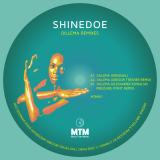
The title Dillema refers to a state of tension, choice, and duality mirroring the track’s layered structure and driving push-and-pull energy. Shinedoe intentionally chose the alternative spelling “Dillema” simply because she liked how it looked better visually. The unconventional spelling became part of the track’s identity and attitude, reinforcing its independent and uncompromising character.
Dillema (Original – 2004)
Timeless Detroit-inspired techno, built on tension, groove, and raw momentum.
Dillema (Gregor Tresher Remix)
A driving techhouse interpretation, blending hypnotic rhythms with a sleek, modern edge.
Dillema (Alexander Kowalski – Pressure Point Remix)
A powerful, high impact techno version built for peak-time intensity.
With these new versions, Dillema once again proves its timeless relevance, reintroduced for a new generation while remaining deeply rooted in its original spirit.
Shinedoe is a driving force in the global techno scene for nearly three decades, known for her hypnotic grooves and uncompromising vision. Through MTM, she continues to push the boundaries of electronic music, releasing tracks that ignite dancefloors and evolve the genre.
DJ support: Soul Clap, Walla P (Voyage Funktastique), Moniquea
The first lady of MoFunk Records is also considered by many to be one of the queens of modern funk music. Her latest, “Womp In My Spirit,” fuses a wide range of styles within its ten tracks and shows the true versatility of funk music. On one end, the deep g-funk bounce of songs like “Womp In My Spirit” & “However You Are” show you Moniquea's west coast roots clearly, while uptempo boogie bangers like “Get It Together” sit in the lane that MoFunk is best known for. Tracks like “Red Light” go in a more dancey direction, welcoming the sleekness of house music to mingle with g-funk whistles and rubbery synth bass, a track that recently caught the ear of Soul Clap and was remixed by them on their recent “Soul Clap vs. MoFunk” EP. The majority of production on the album was handled by MoFunk head honcho XL Middleton.
With »News from Planet Zombie«, The Notwist return to view after years of exploration and experiment with an album rich in both melancholy and positivity, sketched across a suite of thrilling, fiercely committed pop songs. It’s an album reflecting a chaotic world, but responding with warmth and generosity, to achieve creative and spiritual consolidation. Recorded in their home base of Munich, it reconnects with the security of the local to explore the troubles of the global: a guiding impulse writ large across this album’s eleven songs. It’s also the first studio album since 1995’s »12« that the entire band recorded together in the studio in its expanded live formation.
A new album by The Notwist is always a curious endeavour; their musical language is as consistent and resilient as the contexts for creativity are unpredictable and ever shifting. For »News from Planet Zombie«, the core trio of Markus and Micha Acher and Cico Beck embraced the plural possibilities of writing together, bringing songs to the collective and then arranging, rehearsing and recording that material live, in the studio.
The result is an album that’s energised, fully in ›the now‹, with spectacular moments where you can hear the magic bubbling up in the dynamic between the Achers, Beck, and fellow members Theresa Loibl, Max Punktezahl, Karl Ivar Refseth, and Andi Haberl. If »Teeth« begins »News from Planet Zombie« quietly and reflectively, by »X-Ray« everyone’s supercharged, blasting out future anthems with the collective energy cranked up high. The chiming keys of »Propeller« skim the instrumental’s surface like stones across burbling water; »The Turning« clangs its way into one of the album’s most heartwarming melodies.
»News from Planet Zombie« was recorded over one week at Import Export, a non-profit space for arts and music. You can tell, too; there are some pleasingly rough edges here, as though The Notwist’s striving for hazy perfection means they’re also confident enough to let the songs breathe and mutate between our ears. That openness to chance also takes in guest turns from friends both local and international, reflective of a cosmopolitan Munich: Enid Valu joins in on vocals, while Haruka Yoshizawa guests on taishōgoto and harmonium, Tianping Christoph Xiao on clarinet, and Mathias Götz on trombone.
The Notwist aren’t best known for cover versions, but »News from Planet Zombie« features two: a gorgeous version of Neil Young’s »Red Sun« (from 2000’s »Silver & Gold«), which the group originally developed for a theatre play directed by Jette Steckel, and a take on Athens, Georgia folk-pop gang Lovers’ »How the Story Ends«. They slot into the album’s narrative perfectly, nestling in like old friends, revealing The Notwist as poetic interpreters. Played well, the cover version is both acknowledgement of fellow travellers and act of generosity, and The Notwist nail both aspects here.
And that narrative, the way the album plays out? »News from Planet Zombie« acknowledges the distress of our current geopolitical impasse, while reminding us there are collective ways forward. Fed through the figure of the zombie, Markus Acher explores our anxieties: »In the title and some lyrics I reference B- and horror-movies, which is a reference to the crazy world at the moment, which seems to be like a really bad and unrealistic B-movie.« But there’s a reminder here not to lose the thread entirely, that these things, too, will pass.
»The river here in Munich I often go to has been there forever and will be there long after us,« Acher reflects, pinpointing an important source of succour for him, »always the same but always changing. Very calming, but also always reminding me that like this river time only flows into one direction and you can’t go back. Every moment is very precious.«
Artwork by Marie Vermont
The Notwist:
Markus Acher: vocals, guitar
Micha Acher: bass, sousaphone, euphonium, trumpet
Cico Beck: electronics, keyboards, guitar, recorder, percussion
Theresa Loibl: bassclarinet, clarinet, piano, harmonium, organ
Max Punktezahl: guitar
Karl Ivar Refseth: marimbaphone, vibraphone, glockenspiel, congas, percussion
Andi Haberl: drums, dulcimer
+
Enid Valu: vocals on 1, 2, 3, 4, 5, 7, 9, 10, 11
Haruka Yoshizawa: taishōgoto on 6, harmonium on 9, 10, 11
Tianping Christoph Xiao: clarinet on 4, 10, 11
Mathias Götz: trombone on 4, 10, 11
- A1: Return Of The Knödler Show 2 52
- A2: The Frogs Of Miwa - Cho (1) 4 52
- A3: Waiting (I) 5 38
- A4: An Old Friend Passes By 3 46
- A5: Coco Bolo Strip (1) 5 25
- B1: Peace And Pipe Utopia 3 14
- B2: Unidentified Dancing Object 1 44
- B3: The Call (I) 2 41
- B4: Wenn Das Rohr Dommelt 4 03
- B5: Mariahilf (Live Version) 3 36
- B6: Watching The Shades (I) 2 59
- B7: Playing The Table Music (Ii) 2 43
- C1: Could Be Nice Too 5 29
- C2: Ox Of Inner Depth 4 51
- C3: Ymir Shows Up 3 58
- C4: Could Be Nice 5 24
- C5: Playing The Table Music (I) 4 23
- D1: Coco Bolo Strip (Ii) 4 52
- D2: Locusts Looking Like Men 5 55
- D3: Waiting (Ii) ︎ 3 36
- D4: No Stove 2 29
- D5: An Old Friend Passes By Again 3 00
- D6: Heimkehr Der Holzböcke 3 16
Black Truffle is thrilled to announce Dalbergia Retusa, an extensive double LP selection of the solo guitar music of Hans Reichel, compiled by Oren Ambarchi. Last heard on Black Truffle as one quarter of the joyously anarchic Bergisch-Brandenburgisches Quartett, Hans Reichel (1949-2011) is one of the great figures of experimental guitar music. Though perhaps lesser known than peers like Derek Bailey, Fred Frith and Keith Rowe, Reichel’s rethinking of the instrument was in some ways the most radical of all. Early on, he dispensed with existing guitars to build a series of his own that explored the use of additional strings and fretboards, moveable pickups, extra bridges, special capos, and other innovations documented in the extensive booklet accompanying this release.
Reichel was a long-term resident of Wuppertal, the small Western Germany city that became an unlikely centre of European free jazz in the late 1960s, also home to Peter Brötzmann and Peter Kowald. His solo debut Wichlinghauser Blues was an early entry into the FMP discography and began a relationship with the label that stretched into the 1990s; all the solo performances heard here were first released on FMP. As Reichel says in the charming archival interview with Markus Müller included here, he was ‘always a cuckoo’s egg at FMP’, a label that began as an outlet for roaring European free jazz. What strikes the listener right from the opening selection on Dalbergia Retusa—‘Return of the Knödler show’, from 1987’s The Dawn of Dachsman—is the extraordinary beauty of Reichel’s music, at once alien in the shimmering sonorities and unconventional pitch relationships made possible by his invented instruments, and deeply lyrical, even romantic in its harmonic content. Growing up in West Germany in the 1960s, Reichel’s formative influences were mainly British and American rock bands, a background that shines through in many of the pieces included here: ‘An old friend passes by’ is haunted by the ghost of Hendrix’s rhythm guitar, and the wild closer ‘Heimkehr der Holzböcke’, taken from a rare 1975 7” and the only piece to use overdubbing, layers errant hammer-on and slide tones over a Canned Heat boogie chug.
Reichel was an important source for the development of Oren Ambarchi’s own extended approach to the electric guitar. Appropriately enough, his selection opens with the very first piece by Reichel he ever heard, on a flexidisc included with a 1989 issue of Guitar Player magazine. Though Reichel collaborated with others extensively in many settings and also performed on violin and his other major contribution to instrument invention, the daxophone, his music for solo guitar remains at the core of his oeuvre. Focusing exclusively on solo pieces recorded between 1973 and 1988, the 23 pieces on Dalbergia Retusa showcase the range and consistency of Reichel’s work, allowing the listener to see how his performances developed hand-in-hand with his instrumental inventions. On a piece from his very first LP, played on an 11-string instrument (partly strung with piano strings and using a schnapps glass a slide), we hear his intensive exploration of fret-hammering to create zither-like, chiming tone, which Reichel would hone further in later years with a double fretboard guitar specifically designed to be hammered rather than fretted and picked. On a piece from 1979’s Death of the Rare Bird Ymir, Reichel uses two steel-string acoustic guitars at once, with beautiful results: ‘some even say too beautiful’, he jokes in the interview included here. Many of the pieces from the 1980s make use of varieties of the ‘pick behind the bridge guitar’, instruments of uncanny harmonic richness primarily designed to be played on the ‘wrong’ side of the bridge. At times the unexpected behaviour of attacks, resonance, and decay can almost seem electronic, conjuring up the technology-assisted work of Henry Kaiser or even Fennesz, but realised solely through Reichel’s unorthodox techniques on his invented instruments. Extensively illustrated with photos and Reichel’s own plans and drawings of his instruments, Dalbergia Retusa is an essential introduction to the unique world of Hans Reichel. Rarely has music been at once so strange and so beautiful.
Detroit original, Terrence Dixon, returns to Tresor Records to kick off 2026 with ‘When Stars Remember’. Despite his thirty-year career, Terrence has always managed to keep a lower profile than his peers; he has given few interviews, preferring instead to speak through his music, with cryptic song titles hinting at the thoughts swirling around their creation.
However, ‘When Stars Remember’ finds him stepping forward. “I wanted to get closer to the dancefloor. I consciously made this one feel louder…made with Tresor specifically in mind.” And the EP does just that: whilst many of the hall marks of a Terrence Dixon production are present, the drums are more forward; the synth arpeggios so bold that ‘monumental’ seems a better descriptor than ‘minimal’.
“I put three or four sounds together on the same track, layering to make something bigger”, he says of opening track ‘Mono Collapse’, though the statement could apply to any of the music appearing on the release as all four pieces fold in sonics to create something hypnotic; more than the individual parts: “If you stick with the same layered tones, and repeat it over, after a while your brain changes it on its own; you hear a lot of things: things that you didn’t notice at first, things that maybe aren’t even there.”
The absence of things is another main theme of the EP, especially what Dixon sees as ‘The Forgotten’, a group of fundamental principles like common sense, trust, loyalty, honesty and respect that are missing from modern life. “This world is different…the love is gone. But I love everybody, man. I think, secretly, everybody love everybody, but they just don’t know it.”
Lincus is a new name for us, which is always exciting because it means you get to assess the sounds on their own merit with no extraneous baggage. Whoever is behind these betas on Slabs knows how to cook up heavy kicks. 'Feel The Rhythm' has a swagger and syncopation to it that is perfect for this label, with bold bass and hints of Kerri Chandler's kick to the kicks, all run through with some woozy late-night synth work. 'Pazazz' is another blend of low-end kicks and sleazy synths with some filtered vocals adding a touch of human warmth to what is a vibey cut.
Felipe Gordon is back on Shall Not Fade with his new album Tezeta and f*ck is it special.
Felipe Gordon is SNF label mainstay... (we released his triple repressed debut album "A Landscape Onomatopeya" in 2022 as well as 7 x 12" EPs on SNF over the years plus an extra 12" on Lost Palms)... so given his consistent and exceptional output on our record label you'd probably forgive some complacency with this write up, you might even afford us license to assume we're preaching to the choir and allow us to rest easy knowing that at this stage Felipe Gordon's records sell themselves.... Well none of those things are happening here because when an artist makes a record this complete, this good, you have to try to find the words. You use words like "timeless", "complete and "special". Words that can carry the weight. Because when you've listened to an album dozens of times, and not once, in any part, on any listen in any way has it fatigued you, you need to say. When a record felt so wonderfully familiar from the first listen and just kept on giving you the same feels ever since, you need to say. When a record makes you think about you how you feel about certain Air & St Germain albums (even when you know what it means to put that in a press release), you need to say. So here we are, saying these things.. Tezeta is a special record, one that exists in the rarefied air. A proper album. A record that every time you press play you will immediately remember why you own it and why you love it. A record that your subconscious will know so well that if shuffle is on you will know in an instant. An album that when it's in your collection and the first track starts you get a twinge of annoyance because you didn't listen again sooner and when the final track stops you stop too.
Given paint and a canvas we can most of us paint a picture, but only those that are gifted can paint something that makes us feel. Tezeta makes you feel. Feel familiarity when it's playing, yearning when its not, and absence when it ends. This alone would be enough to make the argument as to why this album is special and justify the gushing opening paragraph of this press release. But we're not done yet.
We don't really have a word in english for what Felipe Gordon has created with this album and how it makes you feel. "Tezeta" that word.
Tezeta is a one of four musical modes within the traditional Ethiopian modal music system known as Qiñit. Mulatu Astatke, the father of Ethio-jazz, frequently uses this mode, often translating it as "nostalgia" or "longing". Gordon says Mulatu's own tezeta recordings convey to him "feelings of melancholy and longing from a point of affection". This is exactly the feeling Gordon has captured. It is what he has woven through every recording on this album. Tezeta is the prime ingredient. It's the base note in recipe, it's sprinkled over the signature jazz-sampled house tracks. It powers the vast array of synthesizers Gordon deploys. It underpins the explorations into trip-hop. It's present in Gordon's varied vocal deliveries and it tunes his guitar. It's in the running order. It's the flow. Tezeta is tezeta in electronic music form, with 4/4, breakbeats, samples and synths.
Gordon says a big part of what differentiates this album from from his previous albums is that is was recorded in a period where he allowed himself to create music without the constraints of time or self-pressure which coincided with a moment of heavy personal growth which allowed him to reflect deeply on his work.
There is a word in Portuguese "Saudade" that Gordon says has a similar meaning to Tezeta - Saudade is defined as a deep, sometimes bittersweet, longing or nostalgia for someone or something that is absent or lost. But here at SNF we think that in Tezeta nothing has been lost. Quite the opposite. Through Felipe Gordon's artistic explorations we have all gained something very special indeed.
Sometimes the title of an album tells you everything you need to know. Laurence Pike’s Possible Utopias for Jazz Quintet is like that: The music within represents a search for freedom, potentiality—liberatory strategies that transcend the ego and the solitary, atomized figure.
But in this case, the album title is also a red herring, because there is no jazz quintet here—just Pike, his drums, and his machines, not so much an ersatz ensemble as a purely notional one, a thought experiment equipped with drumsticks, circuitry, and the desire to go beyond hardwired limits.
And the results, strictly speaking, aren’t really jazz, though they incorporate the vocabulary of jazz, along with that of ambient, electronica, and post-rock. They are some other thing, cognizant of genre but never beholden to it. Again, we’re talking about a search for freedom here.
The Sydney-based musician has a long history of coloring outside the lines, not just in his solo recordings—including four albums for the Leaf label between 2018 and 2024—but also in the trio Pivot (later PVT); Szun Waves (alongside saxophonist Jack Wyllie and Border Community’s Luke Abbott); Triosk, which recorded an album with Jan Jelinek in 2003; and even post-punk titans Liars, whom he joined in late 2018.
Of his first album for Balmat, Pike says, “My loose concept was: What does music sound like when the expectations of late capitalism are removed from it? How might a jazz musician from an idealised culture of the future, or even another world, utilise musical language when the conventions of style and marketing are no longer a factor in music making?”
That inquiry, he says, connects to his “guiding principle: that the purpose of music is to access something bigger than the individual, and reveal a sense of possibility and freedom in the world to the listener. To create an understanding that the future can be something other than what we imagined or expect, even unconsciously.”
Heady ideas, but plug into his stream-of-metaconsciousness flow and you may start to intuit what motivates him. There is a deeply lyrical expression in these pieces—in the ruminative piano of opener “Guardians of Memory,” for example—but also a sense of exploded perspective, of ideas approached from more angles than any one mind could dream up. Of a collectivized consciousness, of mycelial networks branching across tone and rhythm and timbre, of ideas articulated in distributed fashion, nodal points dancing across drum heads.
Pike’s imaginary quintet is hardly without precedent; it’s a continuation of concepts floated across Jan Jelinek’s Loop-Finding-Jazz-Records, Burnt Friedman’s many guises, and much of the recombinant improv of the International Anthem roster, not to mention the far corners of ECM’s catalog in the late 1970s and 1980s, which Pike says have been integral to his development since he was a teenager. Possible Utopias for Jazz Quintet is a point in a continuum, a voice in a conversation, a question with no obvious answer: How can the search for otherness in music manifest something true about ourselves?
Take Me, I’m Yours is the first collaboration album between Alan Abrahams and Jan Jelinek. Released through the latter’s faitiche, it builds upon multi-layered vocal sketches by the former. The Paris-based artist, primarily known for his work as Portable and Bodycode, supplied Jelinek with multi-layered song sketches that the German artist subjected to a rigorous process of manipulation, excavating the ambiguities of the original material and transforming its rhythms into subtle pulses. Take Me, I’m Yours is neither a typical Abrahams record nor a classic Jelinek album—it is something third, mediating between the physicality of the voice and the abstraction of electronic sound design.
The two had crossed paths before really getting to know each other after Abrahams invited Jelinek to play at one of his Süd Electronic parties. The idea of a collaboration emerged slowly. “It started as an experiment, and over the past few years grew from a few tracks into this album,” says Abrahams. He describes recording the basic material as a “tantalizing” process, not knowing how Jelinek would transform his material, some of which was based on wordless chanting, while other tracks were working with lyrical content. However, their mutual trust allowed Jelinek to remove the harmonies, radically reduce the rhythms, and concentrate on Abrahams’ voice.
Jelinek heard something “fragile” in this voice, “moments of doubt and dark premonitions.” He points to Forever as an example. “Alan’s original song reminded me of classic vocal house, but his voice seemed to almost break,” he says. “This contradiction made the piece even bigger, because we hear a singer in the moment of an awakening.” He further accentuated such tensions through arrhythmic synth modulations and time-stretching algorithms, while also adding concrete sounds from a variety of sources. With its dedication to both transforming and amplifying the emotional qualities hidden within Abrahams’ pieces, Take Me, I’m Yours functions as a dialogue between those two singular artists.
- 1: Lost In The Sun
- 2: Out With A Theory
- 3: One Last Blow
- 4: We Outlast Them All
- 5: A Grand Ceremonial Jester
- 6: Dagon?S Plunger
- 7: Advance Without Dropping
- 8: No Shoe Fits (Floating Babies)
- 9: Arthur Square
- 10: Landscaping
- 11: (How Would You Like A) Chariot Ride
- 12: When You?Re My Clown (Nothing Happens)
Guided By Voices’ last album Thick Rich And Delicious (October 2025) was lauded by NPR’s All Things Considered and picked #1 on Magnet Magazine’s Best Albums Of 2025. The single “We Outlast Them All” from this latest, Crawlspace Of The Pantheon, is an anthemic victory lap on album #44 from the indie rock stalwarts. Robert Pollard told Rolling Stone: “ ‘We Outlast Them All’ could be our ‘We Are The Champions’ but it’s not necessarily about us.
It’s about anyone who perseveres over a long period of time.” On Crawlspace Of The Pantheon: “I worked much more diligently on this set of lyrics. I chiseled away at lines and sections and phrasings...I wanted them to have an overall emotionally conceptual feel. At times it feels somewhat autobiographical.” Guided By Voices will not be on tour in 2026. Pollard recently told Magnet: “Why would we stop playing live and make these kinds of records? I don’t know. We do what we wanna do.” “Pollard is the greatest rock lyricist of all time.” —Dennis Cooper
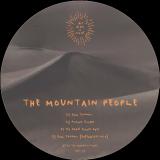
Desert planet house from inner spaces - the mountain people‘s premiere full EP outside their own imprint. Featuring sand shattering subbasses alongside vintage stabs, wobbling chords and otherworldly chanting. Something you will not dig up easily from your discogs collection and which will further enchant the children of the light.
Play or face the Gom Jabbar.
2025 Repress
(remastered classic incl DL card) Environ is proud to present the Metro Area 15th Anniversary Edition, Metro Area's eponymous debut album, meticulously remastered using the original source tapes and generously spread across three slabs of vinyl. The12-track triple LP and digital package combines all the songs from both the original US and licensed European releases, and features new commemorative artwork unique to this edition. In the late nineties, the budding producers Morgan Geist and Darshan Jesrani bonded over their shared love of slower tempos and '70s and '80s NYC club culture. Obsessed with record digging and the sounds they heard on late-night "club classics" radio shows—and turned off by current releases they saw as artlessly "updating" sublime disco by sampling, filtering and subjugating them with huge kick drums —the duo set out to discover how their favorite old 12" records were made. They naturally gravitated towards extended dubs of songs—full of strange mistakes and echoing backing tracks—instead of the better-known vocal versions. Lacking the big budgets and gear that made so many of their favorite classic records come together, they were forced to take a guerrilla approach. They reprogrammed their techno-oriented arsenal of secondhand synths and samplers, using novel digital recording technology to capture live instrumentation and prioritizing mood over hooks, and the resulting music was just wrong enough to sound unlike anything else being released at the time.After just four underground 12" releases, the duo—now well-known as Metro Area—released their first and only album, Metro Area, in the fall of 2002. Fifteen years later, it's time to celebrate the culmination of their shared history and inspiration once again. Environ is proud to present the Metro Area 15th Anniversary Edition, Metro Area's eponymous debut album, meticulously remastered using the original source tapes and generously spread across three slabs of vinyl. The 12-track triple LP and digital package combines all the songs from both the original US and licensed European releases, and features new commemorative artwork unique to this edition.
Riotvan opens 2026 pulsating with drama in the form of a sad Valentine and a special collaboration: Hard Ton, joined by New York City icon Amy Douglas. “How am I going to fill the hours now?” It’s an emotion we’ve all known; and one we all dread, the raw burning haunting ache, when left alone with ourselves after loss. Hard Ton and Amy take us on a soul scorching journey through hollowed out earlymorning emotions, set to a raw, early-2000s house energy—somewhere between Berlin and New York, without drifting into nostalgia. Adding a layer of raw intimacy is a stripped-back piano interpretation shaped by Hard Ton together with maestro Matteo Baroni, whose freestyle takes became the emotional backbone of this version. From there, the release branches out: Massimiliano Pagliara stretches the original into a deep, slow-burning piece of late-night elegance, while Sylvio B flips the energy entirely, firing it back onto the floor with bold grooves and big-room confidence.
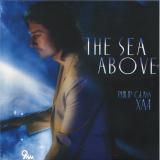
Dutch composer and pianist Xavier Boot, also known as XA4, joins Philip Glass for the second release on the New York-based record label Orange Mountain Music, owned by Philip Glass.
“Xavier is really a wonderful pianist, and I am thrilled by how he now tackles my compositions, with that elegant electronica touch.” – Philip Glass
The Sea Above features not only Glass compositions but also several original pieces by Xavier: “I recorded this album inspired by all the musical influences I’ve experienced in my life, including classical, electronic (club) music, ambient, minimal, and even Indonesian music. The title track of the album is inspired by Philip Glass’s composition Mad Rush. He told me that he wrote this piece for an event with the Dalai Lama, where it was unclear when the Dalai Lama would arrive. That’s why Mad Rush was composed to last either five minutes or an hour. I tried to convey this idea of timelessness in my music, embodying this endless portal of time and space, which was also scientifically described by Albert Einstein. Another track on the album, Train I, is a reworking from Philip Glass’s opera Einstein on the Beach. You can experience the music on this album as a kind of journey, a trip where you are energetically drawn in at the beginning and later enter more of a fantasy world where dreams and unconscious elements of your mind can emerge.”
Credits:
Tracks 1 & 3 are original compositions by Philip Glass remixed by XA4
Tracks 2 & 9 remixed by XA4 and Jaro.
Tracks 4, 5, 6, 8,10 are original compositions by XA4
Track 7 is composed by XA4 and Tenzin Choegyal.
Vocals track 1: Julia Rosenhart.
Remix, production and playing: XA4.
Piano arrangement track 3: Michael Riesman and XA4.
Remix, production track 2 & 9: XA4 and Jaro.
Production assistance track 3: Jaro.
Mixing: Studio Karakterbak.
Mastering: Laura de Rover.
Cover foto: Angelina Nikolayeva.
Graphic design: Yesser Khalefa
- 1: Lake Walk
- 2: Lazy Daisy
- 3: Ups & Downs
- 4: Silently
- 5: There Was A Nice Sunset
- 6: Somewhere Good
- 7: Slow Island
- 8: Movin’ On
If – in some parallel universe (or perhaps a not-so-distant-future version of the one we’re already sentenced to living in) – the evil overloads of artificial intelligence were actually successful in their attempts to create convincingly enjoyable “original music,” more specifically tasked with wholly encapsulating my own personal tastes by data-chugging some cocktail of – oh, I don’t know – the posters on my wall, the records in my “most listened to” pile, the mixtapes I made for others, intensive physical scans of my auditory cortex, amygdala, hippocampus, heart strings, whatever else they have splayed out on their autopsy table with the intention of generating one all-encompassing “perfect band” based on the fruitful sum of their findings – that band, for me, would be (or would at least sound exactly like) the Tara Clerkin Trio. It is, quite simply, without exception, the music I wish to hear.
Formed in Bristol UK (where none of them are from yet all of whom are deeply engrained) in 2020, the Tara Clerkin Trio – as it somewhat democratically exists today, despite the singular authority implied by its name – consists of the titular Tara Clerkin, her partner Sunny Joe Paradisos, and Sunny’s brother, Patrick Benjamin. I’ll confess, I don’t know what their respective roles are within the operation and there’s only a very small part of me that cares to learn, as one of my favorite qualities in an objective listening experience is the mystery of who is playing what, which sounds are “authentic” versus synthesized, which chunks are performed “live” in a room together versus meticulously Frankenstein’ed from measure to measure, or how exactly the overall sound is so (seemingly) effortlessly achieved. Though, I suspect, if and when I do witness a live performance by this band at any point, my enjoyment of the music will not be lost in my better understanding of it.
With two extraordinary mini-albums – In Spring (2021) and On The Turning Ground (2023) – making a splash on London’s formidable World of Echo label in wake of their self-titled 2020 debut, this upcoming Somewhere Good LP is, in many ways, the band’s most realised work. In running their usual gauntlet of idiosyncratic (*an overused adjective for which here there is regrettably no sufficient alternative) approaches, Clerkin & co. colour in and outside of compositional lines over the course of 40+ celebratory minutes - never wallowing, despite inherently somber subject matters of self-defeat, disease, displacement, restlessness, gentrification - allowing their arrangements and improvisations ample space and time to situate, stretch out, breathe, cross-pollinate, and ultimately take deeper hold on the listener’s imagination – all while somehow sounding more like themselves than ever before.
Of course, there are traceable influences herein, if one felt that such comparisons were necessary to properly examine and enjoy this music (they aren’t)… Being the big dumb American from the small boring town that I am, cornfed on ‘90s alternative radio with the enchantingly exotic sounds of Maxinquaye and Mezzanine emanating from my chunky tube television, I can’t help but to make a blatantly obvious reference to a “Bristol sound”, ie the whole trip-hop trip, the pastoral crooning over the suggestive urban grime of cracked electro/piano treatments, the digitally-yet-primitively reconstructed James Bond soundtrack string-beats, etc.. But the Tara Clerkin Trio is so infinitely much more than that. There are elements of avant-pop, modern classical, kraut-folk, audio verité, dare I say indie rock (and not of the beer guzzling, masturbatory fuzz-flex variety but perhaps more like a Trish Keenan-fronted Faust, Adrian Sherwood at the mixing desk of If You’re Feeling Sinister, or – in expanding on our alternate reality – a world in which High Llamas cut a full-length for Warp Records with Andrew Weatherall on coffee duty).
The hazy, unmappable skyline-mirage of droning harmonium, upright bass, peculiarly accentuated wind instruments, acoustic guitar, hushed yet literally mighty keys combine to hypnotizing effect. The band may make underlying nods to jazz, sure, but it’s not appropriation, it’s that they have the actual chops to build it out. Beneath the janky samples and oddball percussive embellishment lies actually great drumming. Beyond the manipulated vocal witchery and woefully reflective plain-spoke moments are Tara’s subtly inspired melodies, sung with what might honestly be the glue to the whole crazy equation. A calming consistency throughout the otherwise unpredictably dynamic, boldly intuitive, uniquely British exploration of this (their own) universe in song. – Ryan Davis (Chicago, February 2026)