Most of Gen X-ers who grew up in the mid-1980s Indonesia must have seen Soedjarwoto Soemarsono, known with his nom de guerre “Gombloh” performing on a state-run television station, playing some of his biggest hits from that era, pop gems like “Kugadaikan Cintaku (I Pawn Off My Love)”, “Setengah Gila (Half-Crazy).”
But of course, it is not fair to judge Gombloh only from these hits. Dig deeper and you will find buried treasure in his early stuff from Indra Records, and there are many of them.
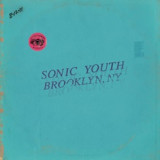
His album with the band Lemon Tree’s Anno ‘69 (yes, that’s the name of the band) is all remarkable, but what he did for Chandra Records was no less spectacular. How can you go wrong with songs like “Kebyar-Kebyar”, the unofficial national anthem for Indonesia, dan “Berita Cuaca” one of the better epic songs in a catalogue full of epochal songs? These were all long out of print and in our journey to source the original master for these albums we met Bob Djumara of Nirwana Records, the Surabaya, East Java-based label which broke Gombloh into the mainstream in the mid-1980s. Almost all albums Gombloh recorded for his early labels, Indra Records and Chandra Records were critically acclaimed, but commercially they bombed, big time. Nirwana Records came up with an ingenious plan. What if they recorded Gombloh performing live and release it as is. After all, the first song in Gombloh debut record Nadia & Atmospheer is him strumming on his guitar backed by the cheering of a crowd, who could be heard going wild when he hurled that epithet “bastard” at the end of the song
The end result is a brilliant recording which despite being recorded live the sound quality so pristine leading many to doubt the claim of being live. Regardless, Nirwana shipped a decent number of units and Gombloh could buy his first car, a Katana Jeep, with money from the royalty.
One of the best things about Live Gila is its perfect sequencing, beginning with Gombloh’s social commentary on the rich’s debauched lifestyle of preying on young boys and girls, one of the most popular subjects allowed by the censoring machine of the New Order authoritarian government. The second song “Untuk Persada” is a soaring ode to the nation. For this song, Gombloh could be heard drawing his inspiration from The Police, which was undoubtedly popular in the early 1980s, even in a faraway port city like Surabaya.
Listening to this record as a whole (we omitted the last song from the original master tape “Bagimu Negeri” which sounds too jingoistic), we could not help but point to some of similarities it has with Bob Dylan’s Blood on the Tracks. Not a single composition in this record sound indigenous (the Malay-influenced rock of Panbers or Koes Plus come to mind); they all sound modern and effortlessly catchy, and had it not been for the language, this album could be mistaken for a musical output from someone growing up in Laurel Canyon or Southern France.
There are only limited copies of vinyl records in the second-hand market today available for Gombloh music, if at all. For his ardent fans, they have to scavenge for old cassettes to continue to be able to enjoy his music and have to pay top dollar for that. In Indonesia, where he was a superstar in the early 1980s, Gombloh was largely forgotten. With this project, we can only hope that the time is ripe for Gombloh to reemerge and now, more than ever, his music could speak to a bigger audience.
Buscar:know how
"Swedens best kept rock n roll secret is back to claim their throne!"
With over a half a million sold albums The Refreshments has proven to be one of Sweden's most solid rock ´n´ roll acts.
It rocks and it rolls in a way like if Chuck Berry was born in Wales and formed a band with Dave Edmunds.
You can call it pub rock, rhythm and blues, country, and all the above but I prefer to call it rock n roll as it was meant to be delivered.
"Swedens best kept rock n roll secret is back to claim their throne!"
With over a half a million sold albums The Refreshments has proven to be one of Sweden's most solid rock ´n´ roll acts.
It rocks and it rolls in a way like if Chuck Berry was born in Wales and formed a band with Dave Edmunds.
You can call it pub rock, rhythm and blues, country, and all the above but I prefer to call it rock n roll as it was meant to be delivered.
- A1: Fabienne 15 35
- A2: Großer Terpentinsee 03 31
- B1: The House Of Marvick 01 47
- B2: Pillow Junction 04 37
- B3: Luke's Boutique 06 23
- B4: Die Verwundung 03 54
- C1: Scheusalstage 05 13
- C2: Time To Get Ritchie 02 03
- C3: Navajo Blanket 06 52
- D1: Schlehe 10 35
- D2: Wie Sieht Es Aus? 03 27
- D3: Frausus Iii (Marduk) 04 20
- D4: Sieh Mal An (Edit) 01 44
- D5: I Wish I Had You 02 48
- D6: Counter-Culture Also Very Good 01 46
- D7: Daddy 'N'junior 02 44
- D8: Warning 03 34
God knows enough has been written about Workshop. Surely you haven't read it, but this group has been around since 1985, and what they did was this: musically quite limited, they made the music they wanted to hear, but in an ingenious way. Some played the instruments skillfully and others not so much. Something came out of it! One says: that's just the way I like it. The other one boasts: yes, I understood everything how you play here, sometimes you hit it, or sometimes you play so that the parents cry with joy. In fact, seven records were recorded, which, with the exception of the second LP, are still more than worth listening to today. Are they in danger of being forgotten?
Yes and no. What is worth listening to here has often been banned. One must bring it out again. Make attentive. Against the forgetting. These impetuous songs - just let them get close to you again and listen to them in a new context and forget all the smart-ass talk that was said about them. That means to put the self with all its reality entanglements in the pillory. This is of course not only pleasant. Bravo!
Tin Fingers takes on a darker, melancholic direction on their second full album. Felix Machtelinckx' weeping vocals, preaching, searching, and trying to understand God, form the leitmotif. With rich melodies, haunting piano sounds, improvisations, first takes and no overdubs, Tin Fingers is searching for pureness and keeping things human and simple. The band is playing together intuitively, without a computer, without ego, just for the sake of music
The creation of the album was very fluent and spontaneous. Singer Felix wrote the backbones of the songs and the lyrics on acoustic guitar and piano. He wanted to have songs ready in order to be able to record and write arrangements fast. With an eye for details but without overthinking, keeping the ideas fresh. 'I wanted to stay in love with the music.' he explains. 'It needed to go fast, very fast, in just two weeks the entire album was recorded and ready to be mixed.'
In the studio, the band especially focused on picking the right mood rather than playing the right notes.
They were fed up with working on a computer for many hours, overthinking production choices, and adding instruments on top of each other as if they were Lego blocks. This time they decided to work in a more traditional way, going for first takes, jams, and essentially working with analog gear. No computers, no screens, no distractions. Only four humans in a studio trying to make a sound together by keeping things spontaneous and raw. They said goodbye to perfection and worked towards an unfinished product, a snapshot.
Tin Fingers also didn't want to sound like any other artist on this record. They decided not to listen to music during the sessions, and to never express ideas by referencing other bands. Just before the studio session, however, bass player Simen Wouters broke the rules and shared Bonnie 'Prince' Billy's, I See Darkness. Its dark and searching sound ended up inspiring the band unmistakably.
Once the recording was finished, the band decided to keep the volatile rhythm going and asked reputable NYC-based mixer and producer D. James Goodwin to finish the job. Goodwin, known for his analog folk productions with a real American punchy sound but a tender touch, proved the right man for the job. He opened up the songs and kept things poetic, minimal but impressive.
- A1: String Quartet No. 5 I
- A2: String Quartet No. 5 Ii
- A3: String Quartet No. 5 Iii
- A4: String Quartet No. 5 Iv
- A5: String Quartet No. 5 V
- B1: String Quartet No. 4 (Buczak) I
- B2: String Quartet No. 4 (Buczak) Ii
- B3: String Quartet No. 4 (Buczak) Iii
- C1: String Quartet No. 2 (Company) I
- C2: String Quartet No. 2 (Company) Ii
- C3: String Quartet No. 2 (Company) Iii
- C4: String Quartet No. 2 (Company) Iv
- D1: String Quartet No. 3 (Mishima) 1957 – Award Montage
- D2: String Quartet No. 3 (Mishima) November 25 – Ichigaya
- D3: String Quartet No. 3 (Mishima) 1934 – Grandmother And Kimitake
- D4: String Quartet No. 3 (Mishima) 1962 – Body Building
- D5: String Quartet No. 3 (Mishima) Blood Oath
- D6: String Quartet No. 3 (Mishima) Mishima/Closing
When Kronos plays a piece, they become fellow composers, true collaborators. Without them, we wouldn’t have the kind of string quartet playing that we find around us today. There are two kinds of string quartet playing: the ‘Before Kronos’ and the ‘After Kronos’.” – Philip Glass
‘Kronos Quartet has broken the boundaries of what string quartets can do.’ – New York Times
Nonesuch releases Kronos Quartet’s acclaimed album Kronos Quartet Performs Philip Glass on vinyl for the first time to coincide with Kronos Quartet: Five Decades, a year-long celebration marking the quartet’s 50th anniversary. Originally released in 1995, the album features David Harrington (violin), John Sherba, (violin), Hank Dutt (viola) and Joan Jeanrenaud (cello) performing Quartet No. 2 (Company) (1983), No. 3 (Mishima) (1985), No. 4 (Buczak) (1990), and No. 5 (1991), the first piece Glass wrote especially for Kronos. Recorded at Skywalker Sound in California, the album was produced by Judith Sherman, Kurt Munkacsi and Philip Glass. The cover art features Francesco Clemente’s painting The Four Corners (1985). At the time of the album’s release, the New York Times said, ‘It contains some of Glass's best music since Koyaanisqatsi. His ear for sumptuous string sonorities is undeniable,’ while the Washington Post called it ‘An ideal combination of composer and performers.’ It was a top 10 hit on Billboard’s Top Classical Albums, and spent 12 weeks on Billboard’s Classical chart.
In his original liner note, critic Mark Swed wrote, ‘Glass’ string quartets may contain his most intimate music. They are works through which a very public composer, perhaps the most important opera reformer of our age and a longstanding collaborator in large-scale music theater, holds up a mirror to himself and his way of composing. “In an odd way,” Glass explains, “string quartets have always functioned like that for composers. I don’t really know why, but it’s almost impossible to get away from it. It’s the way composers of the past have thought and that’s no less true for me. It’s almost as if we say we’re going to write a string quartet, we take a deep breath, and we wade in to try to write the most serious, significant piece that we can.” Glass says that as he sat down to write String Quartet No. 5, he had discovered that perhaps not taking a serious tone might be the most serious way to deal with it. “I was thinking that I had really gone beyond the need to write a serious string quartet and that I could write a quartet that is about musicality, which in a certain way is the most serious subject.”’
Glass’ first numbered quartet was written in 1966; however, he did not return to the string quartet medium until 1983, when he provided incidental music for a dramatization of Samuel Beckett’s prose poem, Company. During those 17 years, Glass had formed an ensemble and developed his style in a series of increasingly elaborate pieces for it. String Quartet No. 3 is also adapted to dramatic music, this time from his score to the 1985 Paul Schrader film, Mishima. It was with the music of Mishima that Kronos became associated with Glass, recording the string quartet sections of the soundtrack and subsequently working extensively with the composer on all five of his numbered quartets. Kronos also gave the first concert performances of Company and Mishima. String Quartet No. 4 was composed in remembrance of the artist Brian Buczak, who died of AIDS in 1988.
As Kronos’ anniversary season continues with further concerts around the world, Nonesuch will reissue Black Angels on vinyl on February 16. First released in 1990, the award-winning album includes George Crumb’s title piece, which inspired David Harrington to found the quartet. Called ‘an unusually elevated and searing Vietnam War protest’ by the New York Times, it sets a dark, powerful tone for this collection, which addresses the political/physical/spiritual consequences of war. Also featured are works by Charles Ives, István Márta, Thomas Tallis, and Dmitri Shostakovich. ‘Stylishly packaged, intelligently programmed, superbly recorded and brilliantly performed,’ proclaimed Gramophone. ‘In short, very much the sort of disc we’ve come to expect from the talented and imaginative Kronos Quartet.’ The Evening Standard included it among its ‘100 Definitive Classical Albums of the 20th Century’.
Born in Baltimore, Maryland, in 1937, Philip Glass is a graduate of the University of Chicago and the Juilliard School. By 1974, he had created a large collection of music for The Philip Glass Ensemble. The period culminated in the landmark opera, Einstein on the Beach. Since Einstein, Glass’s repertoire has grown to include music for opera, dance, theatre, orchestra, and film. His scores have received Academy Award nominations (including Kundun and The Hours, as well as Notes on a Scandal) and a Golden Globe (The Truman Show). Recent works include his memoir, Words Without Music, his first Piano Sonata, opera Circus Days and Nights, and Symphony No. 14. Glass received the Praemium Imperiale in 2012, the US National Medal of the Arts from President Barack Obama in 2016, and 41st Kennedy Center Honors in 2018.
Nonesuch’s relationship with Glass began in 1985, with the release of the score for Paul Schrader’s Mishima featuring Kronos Quartet. Over the years other Glass works on Nonesuch have included Einstein on the Beach (1993), Kronos Quartet Performs Philip Glass (1995), Music in Twelve Parts (1996), Glass Box (2008), as well as the soundtracks for Powaqqatsi (1988), Kundun (1997), Koyaanisqatsi (1998), and The Hours (2002), amongst others.
For 50 years, San Francisco’s Kronos Quartet – David Harrington (violin), John Sherba (violin), Hank Dutt (viola), and Paul Wiancko (cello) – has challenged and reimagined what a string quartet can be. Founded at a time when the form was largely centred on long-established, Western European traditions, Kronos has been at the forefront of revolutionizing the string quartet into a living art form that responds to the people and issues of our time. In the process, Kronos has become one of the most celebrated and influential groups of our era, performing thousands of concerts worldwide, releasing more than 70 recordings of extraordinary breadth and creativity, and collaborating with many of the world’s most accomplished composers and performers. Through its nonprofit organization, Kronos Performing Arts Association, Kronos has commissioned more than 1,000 works and arrangements for string quartet – including the Kronos Fifty for the Future library of free, educational repertoire. Kronos has received more than 40 awards, including three Grammy Awards and the Polar Music, Avery Fisher, and Edison Klassiek Oeuvre Prizes.
Kronos is prolific and wide-ranging on recordings. The ensemble’s expansive discography on Nonesuch includes three Grammy-winning albums: Terry Riley’s Sun Rings (2019), Landfall with Laurie Anderson (2018), and Alban Berg’s Lyric Suite featuring soprano Dawn Upshaw (2003); the 40th-anniversary boxed set Kronos Explorer Series; Nuevo (2002), a Grammy- and Latin Grammy–nominated celebration of Mexican culture; Pieces of Africa (1992), a showcase of African-born composers that simultaneously topped Billboard’s Classical and World Music charts; and Folk Songs (2017), Nonesuch’s 50th album with Kronos, which featured Sam Amidon, Olivia Chaney, Rhiannon Giddens, and Natalie Merchant singing traditional folk songs.
“A piece of music never truly comes to An end. Revisiting a theme illustrates this idea that life goes on.” These are the words of Wayne Shorter, uttered in 2018 upon the release of Emanon, his final opus. On this record, the octogenarian uses dusky hues to shade in the passions of his youth - drawing and science-fiction, as well as the causes he has defended all his life - the fight against ecological upheaval and structural racism. This sentiment did not fail to resonate with Julien Lourau, who has reached a stage in life where he has begun to look back over certain pages written by the man he has always considered one of the masters of his trade. Five years later, this Parisian native has also chosen to revisit his glory days, offering reworked versions of specific tracks composed by his titular elder throughout the 80s. “When I play this music, I find myself back in my teenage bedroom. These are my standards, and they remind me of autumn in Rambouillet.” At that time, after practising his scales, Julien would also play Dungeons & dragons, and immerse himself in SF as well as heroic fantasy - epic influences which are not without a certain connection to the dreamworlds Shorter conjured up, as another fan of landscapes beyond the grasp of reality.
This album features four themes taken from Atlantis, which came out in 1985, and two from Joy Ryder, released three years later. To these, he has added a composition penned at around the same time for Sportin’ Life, the penultimate LP by Weather Report. This is rounded off by a tune taken
from Native Dancer, the record which, ten years earlier, in 1975, brought together this saxophonist who learnt his trade alongside Art Blakey, before joining Miles’ second quintet, and Brazilian Milton Nascimento.
“Between Native Dancer and Atlantis, Shorter did not release anything under his own name, but he took the time and care to really perfect his writing. Upon his return, he injected a very Brazilian form of subtlety into his compositions, especially rhythmically. And from a harmonic point of view, these themes are extremely sophisticated, and reveal truly singular colours. In fact, he decided to display the score as if it constituted the liner notes of Atlantis.”
Julien Lourau is a fan of every Wayne Shorter era, from his Blue Note days, where Mr Gone defined the bases of a truly unique repertoire, all the way to his final quartet - a reference like no other. He decided to focus on this “highly electric” period, which is not necessarily Shorter’s best known, nor his most widely appreciated - despite being a unanimous reference, Shorter has nonetheless never had a direct descendent. In Lourau’s line of sight there lies a desire to focus on typically South American tonic accents which characterise this repertoire, twinned with the ambition to switch up their actual sound “by attempting to open up onto a production highly influenced by eighties fusion". However, he admits that modifying the structures of these most unique of worlds constituted a fresh challenge. “There’s this labyrinthine harmonic system where you’ve no idea how it holds together, but where it’s actually impossible to touch the slightest element without the whole edifice wavering. It is in fact a very difficult thing to achieve!”
In order to successfully transcribe all this creativity free of obstacles, Julien Lourau once again called upon the help of Mathieu Debordes. From January 2023 onwards, Mathieu endeavoured to break down all the musical elements, on paper, before creating any actual music. The record was therefore constructed on the faith of these scores, without necessarily transiting through a creative residency - just two live gigs, to make sure the setup worked. Besides Mathieu Debordes and his synthesisers, Julien Lourau has assembled an ad hoc team by his side. On the bass, according to the track, we can hear erstwhile companion Sylvain Daniel or a new acolyte on the fretless bass, Joan Eche Puig.
Stéphane Edouard, on percussion, even dives headfirst into an unlikely proto-rap of sorts, on Pearl On The Half Shell (where, on the original version, Bobby McFerrin adjusted his interventions in a rather madcap style). Aesthete and drummer Jim Hart as well as pianist Leo Jassef also figure on this release - both were present on previous project devoted to label
CTI. “At sixteen, I wanted to sound like Michael Brecker rather than Ben Webster - that was equated with modernity in those days”, adds Julien with a smile, as for him, all this rings out a little like a logical next step, a joyful immersion into the fountain of youth. And if, for this record, he plays the soprano more than ever, the saxophone Shorter set in his sights on, he never tries to replicate an unattainable ideal note by note. What would be the point?
“Wayne Shorter is not just a saxophonist’s saxophonist. In fact, I don’t know a single person who has risen to challenge of his solos. I have not done it myself either, but on the other hand, I have retained a lot of his phraseology. His way of approaching the instrument reveals a more evanescent language, a work on colour and shape. Keeping this in mind has allowed me to gravitate towards certain elements, that in hindsight, I find echoes of in my work, even in Groove Gang.” Shorter etches out these phrases, creating a groove within which Lourau had traced subtle punctuation, managing, from a highly written base, to create fresh apertures, promises of a great escape. Emblematic of this standpoint, his regal version of Ponte de Areia, originally a wonderful dialogue between Milton Nascimento and Wayne Shorter. Here, the Frenchman takes liberties with the original melodies, without ever growing distant from the original spirit, extending one section with delicacy, offering a rubato development and then a groove “like a little suite”. Julien Lourau also renews with an accomplice from last century, Magic Malik, who lends his high-pitched vocals to the track. Though they had not recorded together for more than twenty years, the two of them got on as if they had only ceased collaborating yesterday, everything flowed naturally. The track was wrapped up in just one take, much like other themes, such as opener Who Goes There where the flautist deploys smooth, enchanted and smoky wisps.
Fundamentally, reflecting of the sleeve which features a child playing with a ball, image that could symbolise the sun just as much as the moon, Julien Lourau manages to translate the ambiguous candour which characterizes Shorter’s work - solar and crepuscular at the same time, that of a visionary and poet definitively situated outside of all chronology, but with whom Julien shares surprising and ‘timely’ coincidences. Shorter was born August 25, 1933, the same day as Julien’s father, “if we take time zones into account”, and who died on Lourau’s birthday, March 2, 2023. Should we take this as a random fact? Or could we not see here the sign of a destiny connecting the agnostic Frenchman to the man who, as a fervent Buddhist, believed in the transmission of his spiritual flow ?
Recital presents the first full-length vinyl LP by sound artist Asha Sheshadri. Whiplash combines elements of sound poetry, diary-like narrations, and delicate incidental music. Sheshadri has crafted a unique and marvelous album.
Asha Sheshadri is a visual artist and musician, who “meditates on meaning, context, and impermanence” (Joshua Kim). Moves freely between video, writing, sound, and photography. Her forms flow together to create unpredictable observations of the overlooked, while documenting personal and political networks within our collective, imperfect memory.
“This record is an alternate approach to the autobiographical ‘confessional’ – I wanted to stitch together some pivotal sketches in self-understanding and forgiveness. While their designs may seem affectively disparate, they are in fact quite interrelated. My intention (as with past recordings) is to task the listener with tracing the contours of the narrative (or lack thereof). Each track contains sound from video work, excerpts from writers I admire, ethnographic methods, recovered and recycled voice/text memos, photographs from personal and public archives, and research-driven fictions. These sources expand and collapse into each other, only to reveal the eponymous "whiplash". To me, the feeling of "whiplash" is the collision of: a refracted ambivalence towards what was once real, the endless cycle of reckoning with wherever "home" has taken place, the fraught process of anchoring one’s self in the wake of slow-release trauma, and how (if even possible) to translate all of this into artwork.” –Asha Sheshadri, 2023
“Place is security, space is freedom: we are attached to the one and long for the other. There is no place like home.” –Yi Fu Tuan, Space and Place: The Perspective of Experience.
All tracks arranged & recorded by Asha Sheshadri; in bedrooms, living rooms, libraries, bars, airplanes, backyards and parks across North America.
Mastered by Sean McCann.
- El Pirata
- Martha Ya Está
- Cambiemos Ya
- Tempestad
- Tema Para Lilus
- Tranquila Reflexión
- Río Tonto
- Tiempo En El Sol
"For every copy of one of the great and collectible rock albums one finds on Peru's stalwart MAG label, one has a dashed dream about finding Tarkus, one of South America's whispered hard rock holy grails. I've never found one, and I've been looking for the better part of two decades. It's a fiery set of Black Sabbath style jamming and worthy of its praise." - Eothen Alapatt aka Egon (Now Again) The Peruvian-Argentinian band Tarkus was only together for six months and recorded only one album, but the record's unprecedented sound and the limited number of copies released made it legendary for fans of hard rock in Latin America. Recorded under the influenced by the Argentinian groups Almendra, Pappo, Manal and Led Zeppelin and Black Sabbath from the United Kingdom. Details: The only album released by Peruvian band Tarkus (featuring members of Telegraph Avenue), from 1972, is a heavy psych/hard rock masterpiece with echoes of Led Zeppelin, Black Sabbath and Deep Purple. Only a handful of promotional copies were made available at the time of its release, making it for years a true lost classic and one of the rarest records of Latin American rock. Tarkus was born after the 1971 split of Telegraph Avenue, one of the most popular Peruvian bands at the time. TA member Walo Carrillo was joined by Argentinian musicians Guillermo Van Lacke, whom he had met previously in Lima, and 16-year-old Darío Gianella. They got together and started making music very influenced by bands such as Black Sabbath, Led Zeppelin, Cream, Deep Purple_ They immediately developed a heavy, hard rock sound uncommon in Peru, and asked former Telegraph Avenue member Alex Nathanson to join them. They recorded their first album between April and May of 1972 for the MAG record label, which was expecting something closer to Telegraph Avenue and didn't know how to market such a heavy sound. Soon after, guitarist and main composer Darío Gianella decided to leave the band to follow his religious faith, just before they presented their debut LP live. As a result, the band disintegrated without making their official debut and only a few copies of the album were actually distributed. Time has given this LP the significance it rightly deserves as one of the foundations of Latin American hard rock, and Munster is proud to present this new vinyl reissue.
The debut release from Skooler and Flare, a trio of hardcore producers that we were made aware of by the legend that is EQ.
These guys know how to enhance that raw, 90’s underground sound with expertise and its one of the demos that we ended up playing pretty much non-stop when it arrived.
Four tracks of rave-coated madness.
Raise Em Up!!!
Next in line in the Snaretrade series is an EP by one of our favourite people: Gols.
He operates the Hoot label, has released with Ghent label/party Ojoo and has been crafting tracks low key for a long time.
We start out with dessert: In Au bain marie we’re given some elegant yet hard to follow instructions on how to make the perfect chocolate mousse. DJ and Knetterbar operator Yentl kindly lent her voice, not knowing the recording would be used as a final take. In Hundreds and Thousands, Gols weaves thick layers of percussion and synths, forming a dense and deep structure that pulls us in. In the midst of moving his music studio, this track was the last one to be recorded before pulling the plugs and boxing the gear up. On the flipside, Regrooved is a shuffling, sneaky and amusing bit of house that never really admits if it’s just arriving at the party, or just about to leave. After-hour fare for those who like something sweet after dinner.
repress!
Back by popular demand, the same unique spirits that brought forth the sound of Detroit streets and turned it into the futuristic soundscape known as "Techno-Bass", The Original members have collaborated to re-issue their catalog 25+ years later. Starting with their 1st double pack LP, "Bass Magnetic" (considered to be a mesh of influences between Miami bass and Detroit techno), AUX88 established themselves in an effort to stay true to their roots in the streets and the clubs creating their own genre into a global dance culture. After the release and production of their own documentary ("AUX88-Portrait of an Electronic Band"), the group celebrates its now classic recordings. Harkening back to its first days on cassette tape to revive a future generation of vinyl aficionados.
Straight Outta Caledonia is the first commercially available “Greatest Hits” of the outsider songwriter Jackie Leven, an artist
who has largely remained in obscurity in his native Scotland despite being one of the greatest wordsmiths – and singers – it ever
produced. A well-travelled musician who began making psychedelic, progressive music in the late 60s before emerging as an
epic storyteller full of pathos, humour and humanity in the 90s, Leven lived and wrote like many of the fragile, gregarious
characters of his songs; large, full of life and empathy. Leven passed away in 2011 after recording 30+ albums under different
guises or with his briefly successful New Wave band Doll by Doll. Straight Outta Caledonia is a compilation collated by Night
School Records on its Archival label School Daze that seeks to introduce Leven’s music to new generations.
In an age of isolation, alienation and loss of visceral experience, Jackie Leven’s music can be massive and welcoming. It feels
connected to some universal humanity and vibrates with vitality. His songs are often full of tragedy and comedy simultaneously,
cutting straight to the heart, often plugging directly into the nervous system of the listener. His lyrics are rich, dense with imagery
that can veer from apocalyptic to the comically banal in a sentence, with a songwriting panache that can be heavy handed to
almost bursting point before skewering the song with a clownish, warm punchline. His productions ranged from Bob Dylan’s
Rolling Thunder Revue style rock band orchestrations with strings and organ as on the epic Ancient Misty Morning or they could
be pared down to the purest form of folk song as on Poortoun: Leven on stage alone with an acoustic guitar, albeit played with a
mastery of the instrument that he often only hinted at. Musically his sound can bend traditional structures or stay completely
confined within them yet still forever push towards an ecstatic release, as on the cinematic Snow In Central Park.
The most exciting, jaw-droppingly effective tool at Leven’s disposal was his voice. A multi-octave instrument that, though
damaged during a savage assault in Fife, he used with flair; he had both a brazen disregard for the rules and a deep humility, all
of which is evidenced with every phrasing. A baritone that could flit up through the register – always touched by his gentle
Kirkcaldy accent – it’s the prime delivery method for his songs. Leven’s voice enabled him to inhabit the characters in his songs to
an uncanny degree, a skill that in turn enables the listener to empathise with them and, subsequently, the singer. It’s most evident
in stand out song The Sexual Loneliness Of Jesus Christ, a breathtaking re-telling of the life of its protagonist, not as a pure,
sinless messiah but as a sexually frustrated, solitary man condemned to an existential loneliness no one else will ever feel. In
many ways the track is the archetypal Jackie Leven song. Produced by Pere Ubu’s David Thomas, what strikes the ear first –
after the samples of unemployed workers in Glasgow following the closing of the Clyde shipyards – is the audacious, rhythmic
tremolo effect Leven employs through the verses before the production opens up to allow Leven’s vocal to lift into a soar, a
freeing glide powered both by the force of the singer’s chutzpah and the inherent, doomed destiny of the protagonist. With any
other singer such subject matter could come across as gauche or worse, pretentiously sonorous, but Jackie Leven’s genius was
such that he could be this cinematic and brazen while touching something elemental and true in the beholder. It’s a skill evident in
every song on Straight Outta Caledonia, the trademark of a songwriter who revelled and excelled in intensity with a lightness of
touch.
In his lifetime, Jackie Leven toured, wrote and recorded at a ferocious rate. He recorded under aliases to avoid record contract
restrictions, played house shows in Europe after or instead of official concerts, events which were often spoken word story telling
masterclasses as well as performances of his often bewilderingly dense songbook. His music has traditionally been catalogued
as “folk” music and has been largely banished to a small, dedicated group of international fans and apostles both private and well
known, like author Ian Rankin or Glenn Matlock. Since his passing in 2011 however, there has been a growing recognition
amongst a newer generation, with artists like James Yorkston or Molly Nilsson publicly stating the influence of the unsung
troubadour on their own craft. Jackie Leven’s fairytales for hard men are often forensic deconstructions of masculinity, sad and
ecstatic, light and shadow, always endlessly rich, a resource as bountiful as Leven himself’s human spirit undoubtedly was.
'Tema di Susie' is one of the main themes from the soundtrack composed by Alessandro Alessandroni for the 1976 Italian noir Sangue di sbirro, known in English as Blood and Bullets, as well as Knell, Bloody Avenger (the Susie in the original title refers to the female love interest of the film's hero, who is on a mission to seek revenge for the gangland murder of his policeman father).
At once sweet and sentimental, haunting and melancholic, 'Tema di Susie' stands out from the other tracks in the film, which are more action oriented. Like the rest of the score, however, it exemplifies the way in which, during the '70s, Italian film composers created their own version of the sound of American blaxploitation cinema, with its groovy blend of funk, jazz, and soul. It is no coincidence that the film's director, B-movie specialist Alfonso Brescia, specifically requested music in the style of Shaft, the iconic film that defined that sound in 1971.
Though seemingly simple, 'Tema di Susie' is a perfect example of Alessandroni's style – in particular his unique ability to effortlessly blend groove and melody, funk and feeling, into one musical piece. So, we invited different artists with different backgrounds, influences and approaches to bring their individual take on this elegant and now timeless tune.
Neapolitan duo Fratelli Malibu have taken Alessandroni's melodic theme and woven it into a mesmerizing tapestry of rhythmic beats, world percussion and ethereal atmospheres. Drawing inspiration from funk/Afrobeat, synth-pop and Italo-disco, they've conjured a psychedelic-tinged, afro-cosmic groove that's bound to transport you to another dimension.
As the music unfolds, you'll feel like you've stepped into a vibrant, fantasy world. The breaks, outro, and intro are woven with a psychedelic thread that leaves you yearning to return once the final note fades away. And that's not all – they've injected an irresistible pop sensibility into the track with the use of drum machines and synths. The result? A rework that not only amplifies the dreaminess of the original but also seamlessly marries the past with the future.
We love the track so much that we decided to double the fun with a vocal retouch version, courtesy of the Italian funk/soul collective Banda Maje. Their vocalists, Chiara Della Monica and Cristina Cafiero, elegantly infuse cinematic and Balearic vibes into the mix, paying a wonderful homage to Fratelli Malibu's exquisite arrangement.
- A1: New Song
- A2: What Is Love? (Single Version)
- A3: Pearl In The Shell
- A4: Like To Get To Know You Well
- A5: Things Can Only Get Better
- A6: Look Mama
- B1: Celebrate It Together (Lifelike Radio Edit)
- B2: Angels & Lovers (Single Mix)
- B3: Revolution Of The Heart (Album Version)
- B4: The One To Love You (Howard Jones & Bt Lifelike Uk Radio Remix)
- B5: The Human Touch
- B6: I Don't Hate You
- C1: No One Is To Blame (Single Mix)
- C2: Hide & Seek (Single Version)
- C3: Tears To Tell
- C4: All I Want
- C5: A Little Bit Of Snow
- D1: Life In One Day
- D2: Everlasting Love
- D3: Prisoner
- D4: Lift Me Up
- D5: Igy (What A Beautiful World) (What A Beautiful World)
Anlässlich seines 40-jährigen Künstlerjubiläums wollte Howard eine wirklich einzigartige Werkschau zusammenstellen. "Celebrate It Together" ist die erste Anthologie, die sich mit seinem gesamten Katalog auseinandersetzt, von der Originalversion von "New Song" bis hin zu einem 2023-er Elephant Talk-Remix, der den Song in einen modernen Electronica-Kontext stellt.
Diese "Very Best Of 1983- 2023 - Celebrate It Together" enthält Songs aus seinem klassischen Katalog der Warner Music-Ära, sowie von seinem unabhängigen Dtox-Label.
“I’m still learning how to experience joy, how to be free, how to be comfortable in my own
skin,” says Jaime Wyatt. “A lot of us grow up feeling like we have to hide who we are just
to be accepted, but that comes from a place of fear and judgment. I wrote these songs as
a way of letting go of all that, as permission to feel good.” Feel Good, Wyatt’s extraordinary
new album, is more than just a permission slip, though: it’s an invitation. Recorded with
Black Pumas’ Adrian Quesada, the record is bold and ecstatic, built on tight, intoxicating
grooves that belie the songs’ substantial emotional stakes. Wyatt’s writing is raw and
intuitive here, tapping into the deep recesses of her subconscious as she reckons with
grief and growth, and her delivery is visceral to match, cutting straight to the bone with
equal parts sensitivity and swagger. Taken as a whole, the collection stands as a radical
act of creative liberation from an artist already known for pushing limits, a genre-defying
work of healing and self-love that tips its cap to everything from Al Green and Otis
Redding to Waylon Jennings and Bobbie Gentry in its relentless pursuit of peace and
pleasure.
New York-based label Kindergarten Records is thrilled to unveil Ayesha’s debut album, ‘Rhythm is Memory’ – 10 boundary-pushing tracks, a shape-shifting percussive journey with electric moments.
While intended for maximum dancefloor impact, Ayesha’s first LP is also conceptually thought-provoking and playful, exploring how bodies store and channel creative knowledge.
A self-taught producer, Ayesha relies on her instincts to make music: sensing what her body wants to feel and hear. To her, essential to building a groove is channeling what is already inside us –
memories – whether they are based on lived experience or coded in the body: culturally, ancestrally, or intergenerationally. The result is this Indian-American producer’s distinct rhythmic voice, with its
many configurations boldly expressed across her debut album.
Kindergarten first released Ayesha’s material in 2020 with her ‘Natural Phenomena’ EP, a four-track journey which she described as “an undulating love letter to nature and the dancefloor, a space
where her biophilia collides with her yearning for the dancefloor.” Subsequently, she continued to build upon her luminous, scintillating sound with a contribution to ‘Fluo II’ titled “Aspara Dub”, followed
by “Varanasi” and “Downpour” on ‘Ether’, a split release with Sha Ru in 2021. With each release, Ayesha's sound evolved, adding shades, layers, and perpetual rhythmic nuance to a mind palace of
dancefloor possibilities.
That is why her and Kindergarten are a perfect match -- driven by their mutual fascination with exploratory sonics and a shared commitment to the community that inspires them. Kindergarten
Records has shaped itself into a trailblazing label, uniting a diverse and innovative collective of local and international producers, while embodying a strong familial atmosphere.This debut LP represents
a significant step-up for both the artist and the imprint, as they strive harmoniously towards a shared goal: delivering a sonic experience full of colorful, otherworldly bass-fueled expansion.
‘Rhythm is Memory’ captures Ayesha’s signature love for driving techno and organic percussion, while at moments veering into newer electro territory while keeping it psychedelic, spacious, dubby, and
always playful. This feels intuitively right for a producer at a crossroads in her career. All tracks intricately weave together pulsing drum grooves, slinky synths, nuanced melodies, and delightfully
unexpected twists. No single genre can do justice to describing this project as Ayesha delicately nods to many, reveling in the spaces between.
Undoubtedly, across A and B sides, 'Rhythm is Memory' imparts the joy of sonic experimentation to listeners and dancers. Ayesha invites us into her creative process and its steady evolution – rooted in
many days and nights of exploration, reflection, and repetition. "The ritual practice of cultivating and tending a garden is what comes to mind if I were to visualize this record. Beautiful things can emerge
from care and consistent attention," says Ayesha. While she refers to her specific experience making 'Rhythm is Memory,' this powerful album culminates a decade of working in nightlife for Ayesha – a
project slated to leave an indelible mark on the underground. To mark this impressive milestone in their catalog, Kindergarten Records is proud to return to pressing vinyl after a hiatus since 2020,
recognizing the significance of putting out a physical release to behold such a moment in both the label's and the artist's trajectory.
To celebrate the 45th anniversary of iconic Dutch jazz label Timeless Records, Music On Vinyl is releasing a series that features albums that are part of the Timeless Records legacy and will be released mainly throughout 2021/2022.
Archie Shepp’s Black Ballads first came out in 1992 and celebrates its 30th anniversary in 2022. This 2LP features eleven great jazz ballads including classics such as “Embraceable You” and “Georgia On My Mind” by the tenor saxophonist. Shepp is supported by pianist Horace Parlan, bassist Wayne Dockery and drummer Steve McRaven.
To celebrate the legacy of Wim Wigt’s Timeless Records 45th Anniversary, Music On Vinyl is releasing the 45th anniversary Jazz Series. Each release includes the Timeless Records insert showing the first 8th albums on limited coloured vinyl.
Black Ballads is available on vinyl for the very first time as a limited edition of
500 individually numbered copies on translucent magenta coloured vinyl. The package comes with an insert with upcoming titles from The Timeless Records
45th Anniversary Jazz Series.
The last twelve months have been a whirlwind for Henry Counsell and Louis Curran, the men who make up Joy (Anonymous). Having established themselves during the Covid-19 era by playing impromptu meet-ups on London’s South Bank, they have graduated to bigger venues, travelled to far-flung locales and recorded their second album, Cult Classics, while maintaining the spontaneous energy and irrepressible joy that made their name. Their music revels in the euphoria of being alive and all the feelings, good or bad, that come with it. It invites us into a community, draws us close and promises the night of our lives.
Recorded over the course of a year, the blueprint for Cult Classics was laid down over a two-week span at Imogen Heap’s Round House in east London. Joy (Anonymous) invited friends old and new to visit - they’d record live instruments in jam sessions upstairs and then retreat to a second room to flip and loop and generally mess with the sounds, moulding them into sizzling dance tracks. “Loads of people were coming up to me like ‘I thought this was going to be a dance record?’” Louis says, remembering the quietly beautiful music they’d be recording. “I’d be like, don’t worry about that, just keep playing.” He’d send it back to people later and they’d be floored - “That was my bit and you’ve made it... jungle!”
It was an organic and creatively fulfilling approach, one that didn’t allow any of the music to get stale or stagnate. As they built the tracks from the sounds they’d collected, Joy (Anonymous) would weave the new songs into their famously improvised live sets, testing them, refining them, taking note of the audiences’ reactions. In a year punctuated by a lot of travel, they’d also incorporate the voices of people they met along the way - “Beazley’s Poem”, which opens the record, features the words of a man who was working security at a Fred Again show at New York’s Terminal Five. “He was basically doing the opposite of his job and being a hype man, climbing on the fence and ramping up the crowd - we ended up hanging out with him - like, who’s this legend?” Louis explains. “He just speaks really amazingly about his life, all these amazing thoughts and opinions - he started jumping on the mic when we were playing, preaching these amazing messages to the crowd, like that we all need to be nicer to each other. The first time we played the record in its entirety, he introduced us and that’s the recording we’ve used.”
Joy (Anonymous) remain dedicated to the spirit of spontaneity. They shut a street down with a surprise waterside party in New York. On a trip to Copenhagen they played an impromptu set in a cafe, which turned into a house party and a night-long good time. In Lithuania, they ended up playing in a decommissioned prison. It’s harder, perhaps, to keep that spirit alive now that they are operating more within the confines of the music industry but they will keep lugging their kit to wherever the party calls for as long as they can. “I think if we lose that, we’ve kind of lost what makes us us,” Henry says.
Bursting with multi-genre reference points and disparate influences, Cult Classics is very much a dance album. The samples we made ourselves or we took from music that is quite different to dance music, but we definitely wanted to shout out a lot of the dance influences that we love,” Henry says. They listened to a lot of Daft Punk and Basement Jaxx as well as The Prodigy (“more rage stuff”), taking songwriting tips from their dance forebears, but also recording bits that felt more like jazz and motown (see: A Place I Belong and the lovely album closer, You’re In Or You’re Out). Emir Taha’s gentle classical guitar runs like a thread throughout Cult Classics, washing into the undertones of the record, tying it all together.
The album follows the beat of a night out, from frenetic, sweaty movement to the gentler winding down as the dawn breaks. At times it is euphoric, celebratory and pure, whirling fun, at others it seeks the joy in the darker emotions that life throws our way. 404 is designed to encapsulate everything about the Joy (Anonymous) journey so far. Skittering beats and ghostly vocals give way to vibrating house chords: sirens blare as we approach a dubstep drop. It’s dramatic and wild, ratcheting up, seeming to settle then hitting you with an intense and frantic breakdown before the ghostly vocal returns to lull us back into the world. It has the feel of a hungry cat playing with a mouse, toying with it before letting it get away.
What sounds like someone playing the spoons on playful, housey How We End Up Here is actually Louis’ restless habit of clicking his rings on everything, one of a myriad of calling cards and easter eggs that day one fans will recognise. They rework Miley Cyrus and Swae Lee’s Party Up The Street into a French-electro-inspired future classic, adding a note of melancholy to a tune that you can imagine hearing blaring from every car on a summer drive. The lyrics on Cult Classic are generally reassuring, inspirational, originally drawn from Henry in stream-of-consciousness freestyles. You’re fine the way you are, they seem to say - the repeated “No need to try” of A Place I Belong, the assurance that “It’s in me all the time” on In Me All The Time. Even the summery but regretful Did You Wrong hints at the growth that is possible from less than ideal behaviour. For Joy (Anonymous), joy isn’t about just being “happy” all the time - it’s about relishing every element of your being.
The name ‘Joy (Anonymous)’ is taken from the work Henry did with Alcoholics Anonymous groups: it is a way to build a community around sharing joy. Their impromptu live sets are known as ‘meetings’; they encourage fans to share moments of joy to their website. They care deeply about the scene they’ve come up in and are determined not to leave it behind. Every show is another chance to reach out and connect with people who love to come together and revel in music as loud as it can go.
Support slots for Fred Again and The Streets, wild B2Bs with Fred and Skrillex, and a set at Four Tet’s Finsbury Park all-dayer this summer have given the duo the opportunity to live out childhood dreams and introduced their infectious live shows to new audiences at huge venues.
With an album as assured and joyful as Cult Classics on the horizon (and a killer collab with The Blessed Madonna coming up), they’re only going to reach higher heights. But the essence of Joy (Anonymous) remains on the South Bank. Between shows at Ally Pally in September, they dragged their camping chairs and gear back down to the banks of the Thames: and it just felt right.
Swiss vocal acrobat Andreas Schaerer and Finnish
guitarist Kalle Kalima have some things in common. As
artists, each is essentially in a category completely of his
own. Both are musicians who can always conjure
something special from their chosen instruments. Both are
known on the international jazz scene for the completely
distinctive and original ways their music constantly crosses
genres.
Both have played together for several years in the quartet,
A Novel Of Anomaly. And now they have recorded a first
album together in which the focus is on the two of them.
However, for this ‘evolution’ (as the album title has it), they
have also involved - and drawn inspiration from - a
musician whom they both admire, Tim Lefebvre. The
American bassist has worked with many pop and jazz
stars, notably Sting, Elvis Costello, David Bowie, Mark
Guiliana, Wayne Krantz... Lefebvre’s involvement in the
Michael Wollny Trio’s breakthrough was, incidentally,
anything but tangential. In other words, his playing is at
home in practically every context.
Listeners familiar with Schaerer’s and Kalima’s previous
work may find ‘Evolution’ somewhat surprising. “An album
is such a different platform from playing live on stage,”
explains Schaerer. “Over the course of our many
recordings, we have become increasingly aware quite how
differently one has to play.” That awareness has also
resulted in a particularly careful focus on the postproduction phase of ‘Evolution’.
With ‘Evolution’, Schaerer, Kalima and Lefebvre have redrawn the roadmap for the production of a jazz album.
New avenues are constantly opening up in these complex
but also catchy songs which are just made for repeated
listening... and, of course, listening to the album is also a
reminder that it will all sound completely different again
when heard live.
On new EP twotwentytwo, indie riser THALA continues to embrace vulnerability, summoning long-buried emotions to colour her ardent love for lyricism amid psych-tinged `90s indie soundscapes. Filled with potent songwriting and coming-of-age anthems straight from the heart, these everyday love stories surrender to life's insecurities. Evoking the soundscapes of Slowdive and Deerhunter, whilst recalling the widescreen pop of boygenius and Snail Mail. Recorded in London and Berlin earlier this year, twotwentytwo follows the release of `In Theory Depression', THALA's first EP on Fire Records. Spanning six tracks, it builds on its predecessor's fearless lyricism, excavating deep-set feelings of loss, pain, desire and conflict against luminous production and addictive melodies. Following rammed appearances at SXSW and The Great Escape, and having picked up the attention BBC Radio 1's Jack Saunders, THALA shows no signs of slowing down_ Blissful guitars and evocative crescendos permeate THALA's unique vision of dreampop, reveling in soaring choruses and intimate storylines. On its surface, twotwentytwo boasts a kind of glorious emotive draw - you'd be forgiven for mistaking any one of these tracks as a backdrop to any teen-angst drama. However, while THALA wants her songs to feel nostalgic, it's the complexity of her songwriting that sees her modern compositions really resonate and she is keen to stress her lyrics can be interpreted in numerous ways. And therein lies the heart of this release - a cathartic, wildly empowering, self-explorative from a future indie heartbreaker at her gutsy best. Ltd Clear Vinyl, A5 insert, dlc
Breezy headwinds, orange-tinged skies, hazy, serene bliss – just some of the profound feelings to be had on the latest release from Oath, a masterclass in melody and mood from one of the finest ever to do…..
Italian producer and DJ Jacy remains one of the stand-out musical characters from a dazzling ensemble of atmosphere builders who were so prevalent during the late 80s and early 90s. His craftsmanship is simply legendary, his music quite simply some of the finest to exude from this period of time, and of which is still making waves in the collective sands now. His dedication to the creation of emotive sweeps, gorgeous rippling tones and easy going, freeing atmospheres has remained a cornerstone of his sound, from the early days through to his excellent work on his imprint Home of House, along with sublime releases on Kalahari Oyster Cult and Hot Haus Recs. Jacy’s sound was broadcast to the world once again via Safe Trip’s ‘Welcome To Paradise’ compilations, where his inclusions were something that lingered long in the memory – an essential component of what is known as the ‘Dream House’ sound. It’s difficult to convey into words exactly how a Jacy record can take the listener, but perhaps it’s different for everyone – one thing can be agreed on though, it’s an experience like no other.
‘Night Fantasy’ is Jacy’s first EP in 4 years, and much like his other records, this one blesses us with warmth, delight and joy, in the softest and most subtle of manners. The title track, which opens up the record, greets the listener with a familiar drum pattern, one which then gives way to the rock-hard bass line, and then the pads arrive. Heavenly angelic in form, their presence is complimented by the arrival of the breathy vocal sample, which evolves to provide a wondrous narrative with the cascading synth line that comes soon after. As a combination its intoxicating, with the breakdown giving us time to get to know this mixture very well, indeed, before powering home with excellence. ‘Just Change’ comes on next, and this one opens up with that classic and explicitly dreamy chord sequence we all know and cherish, with Jacy allowing us to soak up this goodness before shifting the perspective to the rhythm. The interplay that occurs here between keys and drums is something different, before everything transitions into a sequence to close your eyes too. ‘Dat Tape’ shifts perspective to more of a swing in terms of the groove, with sweeping background pads doing much to tug at the heartstrings. The vocal sample is so very effective at crafting an audial narrative, inviting the listener to swim deeper into the goodness, with the subtle transitions doing much to keep things ticking over. Finally, we have ‘Come On’, and this one keeps a spacious feel between the keys and the drums, and it works ever so well. The bass line occupies the bottom ends superbly, with interchanges in chords and some ever-so-familiar vocal samples thrown into the mix – and its simply wonderful.
To convey deep set feelings is to have faith in musical dexterity, to understand the grooves in the record, to follow instinct and trust in the process and precedent. Jacy has always found the sweet spot in his music by following this approach, it seems, and this new record of his is an accumulation of a lifetime of dedication and passion to music and all of its many flavors. Soaring, effective melodic undulations and rapturous, fluctuating rhythms, coupled with atmospheres to drift into – what more could you wish for? Lets get lost within it once again….
1989 (Taylor’s Version) Vinyl , 21 Songs, Including 5 previously unreleased songs from The Vault, Collectible album jacket with unique front and back cover art, 2 Crystal Skies Blue vinyl discs, Collectible album sleeves including lyrics and never-before-seen photos
Vladislav Delay presents the fourth EP in his "Hide Behind The Silence" series with five 10" releases coming throughout 2023. Intuitive and raw music, momentary and reflective, released on Ripatti's own label "Rajaton".
Stillness is a myth. Consider concepts such as ”still water”, or ”still air” for that matter. Go to a restaurant, ask them for a glass of still water, hold it against the light and see where we’re at. Even though the water itself has been captured and imprisoned in the glass, it never stops breathing. It’s filled with tiny particles, dancing. Everything can be explained on a molecular level, but since we’re not scientists – and even if you happen to be – it’s the natural world of perception that moves me.
Still air is very similar. A hot summer’s day with zero wind feels completely still. It’s the closest I have felt to complete stillness. Or for a more urban adaptation, imagine the same vibe inside a normal apartment. In those moments, revelations and mind- blowing experiences can be had with experiments in stillness.
Try this: Just sit down for a minute on a sunny day, making sure there’s enough natural light. Do absolutely nothing. Try not to breathe for a bit. (If you need a mental anchor, you can play Cage’s 4’33” in your head but nothing else.) Watch the tiny dots of dust dancing :..’ ̈.:; ́ ́*°.,’:,. ̈ ̈ ̈ ̈:,.’
The movement is crazy, but the feeling of stillness comes from witnessing how subtle it is. In (perceived) complete stillness, every act of microscopic mobility seems to speak volumes. Yet, it feels both reassuring and oddly threatening that the stillness is never complete. What if we would need absolute stillness? Or is it just enough that we can perceive something as such? Extremes attract, so for both water and air, extraordinary movement is equally fascinating. That is also a luxury item of sorts. For us to enjoy a very ”loud” body of water or air, we need to be safe, in enough control of the situation. So when you are, it’s worthwhile to pay attention and take it all in.
A rapid flowing free with extreme strength and just barely in control. Look at that water go! No still water on this one, only ”sparkling”. A windy day when birds seem surprised how hard it is to fly, but in the end they make it. Trees bend but don’t break. The wind shows you its movement but doesn’t hurt you. It feels friendly, like a big clumsy dog that doesn’t quite understand its size.
It’s beautiful to be a guest of the elements, but not at the mercy of them. A new kind of dialogue forms.
Q&A with Sasu Ripatti:
1) Tell us something about the EP series ”Hide Behind the Silence”, what’s the idea and what can we expect?
Exploration of inaction. Of many kinds. In arts and in personal life, or at bigger and more serious levels. Questioning myself as a human being as well as an artist. Acknowledging the growing activism all around, and the very clear need for it, and how it reflects my own inaction.
Musically speaking, after Rakka, Isoviha and Speed Demon, I finally found some relief, but more importantly lost the need to go musically ever more outward and intensive. I felt quite strongly certain periods/moods from the past and they made me revisit some musical ideas or states of mind I was exploring early on.
It’s about live moments being captured, not much premeditation or editing. More intuitive and raw, even though the end result (to me) feels and sounds quite introspective and calm. It’s not very ambitious. Momentary and reflective.
2) Your music doesn’t sound very silent. Does it come from somewhere behind the silence?
Oh, this time to me it sounds quite quiet and playing with space if not silence. I don’t know what’s actually behind silence, but I think silence is the source of everything. We just don’t understand it yet.
3) What kind of thoughts or experiences gave inspiration to this series?
Writing this in Nov ’22, it’s not a stretch to say the world has been really unwell. Sometimes, like Mika Vainio put it, the world eats you up. I feel a bit like that. And I try to hide in my studio and stay away from it all, but it’s getting harder by the day. I’ve been questioning myself and thinking if what us artists are doing is worth anything, and whether it’s just a selfish thing I’ve been doing for the past 25 years, running away from everything. I haven’t come to a conclusion yet.
4) Is it easy for you to be in silence, or around silence?
Absolutely. I not only hide behind silence but I also love silence. It’s only since I started going back to nature as a grown-up person that I sensed and was enveloped by silence, true silence. I have begun to appreciate it a lot. I think all the people should spend more time in silence.
All tracks composed and produced by Sasu Ripatti.
Artwork by Marc Hohmann, photography by Shinnosuke Yoshimori.
Mastering by Stephan Mathieu for Schwebung Mastering.
Vinyl cut by SST Brueggemann.
Publishing by WARP Music Ltd.
Repress!
In the mid-1970s, a force of nature swept across the continental United States, cutting across all strata of race and class, rooting in our minds, our homes, our culture. It wasn’t The Exorcist, Goodbye Yellow Brick Road, or even bell-bottoms, but instead a book called The Secret Life of Plants. The work of occultist/former OSS agent Peter Tompkins and former CIA agent/dowsing enthusiast Christopher Bird, the books shot up the bestseller charts and spread like kudzu across the landscape, becoming a phenomenon. Seemingly overnight, the indoor plant business was in full bloom and photosynthetic eukaryotes of every genus were hanging off walls, lording over bookshelves, and basking on sunny window ledges. The science behind Secret Life was specious: plants can hear our prayers, they’re lie detectors, they’re telepathic, able to predict natural disasters and receive signals from distant galaxies. But that didn’t stop millions from buying and nurturing their new plants.
Perhaps the craziest claim of the book was that plants also dug music. And whether you purchased a snake plant, asparagus fern, peace lily, or what have you from Mother Earth on Melrose Avenue in Los Angeles (or bought a Simmons mattress from Sears), you also took home Plantasia, an album recorded especially for them. Subtitled “warm earth music for plants…and the people that love them,” it was full of bucolic, charming, stoner-friendly, decidedly unscientific tunes enacted on the new-fangled device called the Moog. Plants date back from the dawn of time, but apparently they loved the Moog, never mind that the synthesizer had been on the market for just a few years. Most of all, the plants loved the ditties made by composer Mort Garson.
Few characters in early electronic music can be both fearless pioneers and cheesy trend-chasers, but Garson embraced both extremes, and has been unheralded as a result. When one writer rhetorically asked: “How was Garson’s music so ubiquitous while the man remained so under the radar?” the answer was simple. Well before Brian Eno did it, Garson was making discreet music, both the man and his music as inconspicuous as a Chlorophytumcomosum. Julliard-educated and active as a session player in the post-war era, Garson wrote lounge hits, scored plush arrangements for Doris Day, and garlanded weeping countrypolitan strings around Glen Campbell’s “By the Time I Get to Phoenix.” He could render the Beatles and Simon & Garfunkel alike into easy listening and also dreamed up his own ditties. “An idear” as Garson himself would drawl it out. “I live with it, I walk it, I sing it.”
But as his daughter Day Darmet recalls: “When my dad found the synthesizer, he realized he didn’t want to do pop music anymore.” Garson encountered Robert Moog and his new device at the Audio Engineering Society’s West Coast convention in 1967 and immediately began tinkering with the device. With the Moog, those idears could be transformed. “He constantly had a song he was humming,” Darmet says. “At the table he was constantly tapping.” Which is to say that Mort pulled his melodies out of thin air, just like any household plant would.
The Plantae kingdom grew to its height by 1976, from DC Comics’ mossy superhero Swamp Thing to Stevie Wonder’s own herbal meditation, Journey Through the Secret Life of Plants. Nefarious manifestations of human-plant interaction also abounded, be it the grotesque pods in Invasion of the Body Snatchers or the pothead paranoia of the US Government spraying Mexican marijuana fields with the herbicide paraquat (which led to the rise in homegrown pot by the 1980s). And then there’s the warm, leafy embrace of Plantasia itself.
“My mom had a lot of plants,” Darmet says. “She didn’t believe in organized religion, she believed the earth was the best thing in the whole world. Whatever created us was incredible.” And she also knew when her husband had a good song, shouting from another room when she heard him humming a good idear. Novel as it might seem, Plantasia is simply full of good tunes.
Garson may have given the album away to new plant and bed owners, but a decade later a new generation could hear his music in another surreptitious way. Millions of kids bought The Legend of Zelda for their Nintendo Entertainment System back in 1986 and one distinct 8-bit tune bears more than a passing resemblance to album highlight “Concerto for Philodendron and Pothos.” Garson was never properly credited for it, but he nevertheless subliminally slipped into a new generations’ head, helping kids and plants alike grow.
Hearing Plantasia in the 21st century, it seems less an ode to our photosynthesizing friends by Garson and more an homage to his wife, the one with the green thumb that made everything flower around him. “My dad would be totally pleased to know that people are really interested in this music that had no popularity at the time,” Darmet says of Plantasia’snew renaissance. “He would be fascinated by the fact that people are finally understanding and appreciating this part of his musical career that he got no admiration for back then.” Garson seems to be everywhere again, even if he’s not really noticed, just like a houseplant.
Nondi_ is the alias of Tatiana Triplin, a US producer based in Johnstown, Pennsylvania, who also runs the net label HRR, releasing the music of friends and herself under various aliases. Her brother is the up and coming MC, Eem Triplin. The music Nondi_ makes is informed by footwork, breakcore and Detroit techno. However, as she's only experienced them via the internet, she has has filled the gaps with her imagination and consequently the music is rendered from a dreamlike solitude that feels adjacent to other internet genres such as vaporwave. Her tracks are gauzy and abstract, smeared with gentle melody, rusty tones and occasional shafts of sunlight, sometimes set to a distant pulse, sometimes collapsing as if the music itself is falling apart. Of the album she says: "Flood City Trax is music that captures the mood of living in a town like Johnstown, and more broadly the isolation of poverty. That's the environment these tracks came out of, after all. Johnstown is a very poor isolated small factory town in Western Pennsylvania which has a dark history of deadly floods, the most well known being the 1889 flood which was like something out of a horror story and the 1977 flood which the Triplin family survived. Johnstown has never moved past its floods, hence the nickname "Flood City". There's very little to do and every year the town shrinks more, and more buildings are knocked down or condemned. Everything is old but simultaneously the past seems like it has just disappeared." LP A: 1/FCD (Floaty Cloud Dream) 2/Orchid Juke 3/Sun Juke 4/Nondi Shadow 5/Euphonic Daydream 6/01-25-2022 B:1/Healing Rain 2/Dusty 3/Nostalgic Vision 4/Long Ago 5/Sentimental Juke 6/Harmoyear
- Rare and Unreleased New Orleans Funk 1968
Tuff City’s Funky Delicacies imprint has issued the 7th volume in its New Orleans Funk series. This edition has a side of vocal tracks and a side of instrumental ones. These tracks have been hard to find and many were CD only bonus tracks on earlier editions of the series now out of print.
Noted guitarist Little Buck Sinegal opens the record with “Little Boy Blue.” This was first issued in 1969 on the Seven B label. Little Buck (as he was credited on the original record) passed in 2019 after a lengthy career dating back to the late 50’s as a session man for Slim Harpo & Lazy Lester. He also was a touring member of various Zydeco legends like Clifton Chenier, Rockin’ Dopsie and Buckwheat Zydeco. Drummer Chuck Conway leads the next track with the Amars, “Get On Up.” Cover feature Deacon John Moore still lives today. “You Don’t Know (How To Turn Me On)” was a 1970 B-side on the Bell label. Brotherhood issued “Suckey Suckey Feeling” as a 2-sided single in 1974. At some point the track was renamed “Sooky Feeling” and we have Part 2 here. Singer and Pianist Tommy Ridgley’s track “Fly In My Pie” was originally issued on our sister imprint Soul-Tay-Shus on The Best of International City compilation as well as a 7” on that imprint in 1968. Lonnie Jones recorded several singles for Jenmark in the early ‘70’s including the B-side “You Got To Do Better” originally released in 1972. Sam Henry of Sam and the Soul Machine closes out the side with “Loving You.” This track was originally a CD-only bonus track on our Po’k Bones and Rice compilation of that group we issued on Funky Delicacies in 2002.
Kicking off the instrumental second side is a recently located master by Anthony Butler and the Invaders covering the Otis Redding classic “Hard To Handle.” A bit of organ Funk here. Larry Jones jams out the “Funky Jaws.” The exact year is unknown, but the J.B.’s label that issued the original record put their releases out primarily from 1974-1976. Tyrone Chestnut’s B-side of 1969’s “The Bump” is called “Bumping.” Hook and Sling piano legend Eddie Bo has two appearances. The first is the second part of the “Getting To The Middle” single that came out on Bo-Sound in 1970. Louisiana Purchase have “Accept What You Expect” before they moved from New Orleans to Detroit. The Scram Band that backed vocalist Mary Jane Hooper on her “Don’t Change Nothin’” single are here in an instrumental version of that song. The album closes with a 5-minute combined version of Eddie Bo’s “If It’s Good To You (It’s Good For You)” single, issued in 1969 on Scram.
Overall, this album contains 14 previously hard-to-find tracks that would take hundreds if not thousands of dollars to track down the original singles on the used market. These tracks have been recently remastered, including tracks that were issued as CD bonus tracks on earlier volumes.
- A1: Mack The Knife
- A2: Ain't Misbehavin
- A3: Cheek To Cheek
- A4: C'est Si Bon
- A5: When The Saints Go Marching In
- A6: Blueberry Hill
- A7: You Rascal You
- B1: Dream A Little Dream Of Me (With Ella Fitzgerald)
- B2: I Can't Give You Anything But Love
- B3: When It's Sleepy Time Down South
- B4: A Kiss To Build A Dream On
- B5: Georgia On My Mind
- B6: La Vie En Rose
- B7: When You're Smiling (The Whole World Smiles With You)
In the year 1900 a musical genius was born in New Orleans. This man
who has been aptly described as 'The man who revolutionised Jazz' is of course the King of the trumpet Louis Armstrong. Perhaps another Jazz great Duke Ellington sums it all up best when he said “Louis Armstrong is, of course, the man who, when heard playing trumpet, inspired thousands to play like him. Hundreds of thousands more were simply inspired to play the same instrument he played and who knows how many millions just loved to listen to him? Louis Armstrong is what I call an American standard, an American Original.”
- A1: Buy Africa Von Baloji & L’orchestre De La Katuba Feat Kuku
- A2: Lady Von Tune-Yards, ?Uestlove, Angelique Kidjo + Akua Naru
- A3: Yellow Fever Von Spoek Mathambo + Zaki Ibrahim
- A4: No Buredi (No Bread) Von Nneka, Sinkane, Amayo + Superhuman Happiness
- B1: Who No Know Go No Von Childish Gambino + Just A Band
- B2: Trouble Sleep Yanga Wake Am Von My Morning Jacket, Merrill Garbus + Brittany Howard
- C1: Sorrow, Tears & Blood Von Kronos Quartet, Kyp Malone, Tunde Adembimpe + Stuart Bogie
- C2: Itt (International Thief Thief) Von Superhuman Happiness W/ Sahr Ngaujah, Abena Koomson + Rubblebucket
- C3: Afrodisco Beat Von Tony Allen, M1 + Baloji
- D1: Gentleman Von Just A Band, Bajah + Chance The Rapper
- D2: Highlife Time Von Gender Infinity
- D3: Zombie Von Spoek Mathambo, Cerebral Cortex + Frown
- D4: Go Slow Von King
Fela Kuti lives on! Die Neuauflage eines Klassikers. Das ursprünglich 2013 erschienene Tribute-Album zum 10-jährigen Jubiläum jetzt erhältlich auf bananengelbem und rotem Vinyl. Der gesamte Erlös aus den Verkäufen kommt Red Hot zugute, einer gemeinnützigen Organisation, die sich dem Kampf gegen AIDS verschrieben hat.
Das Album enthält klassische Fela-Hymnen wie 'Lady', aufgenommen von tUnE-yArDs, ?uestlove, Angelique Kidjo und Akua Naru. 'Who No Know Go No' von Childish Gambino und Just A Band; 'Trouble Sleep Yanga Wake Am', aufgenommen von My Morning Jacket, Merrill Garbus (von tUnE-yArDs) und Brittany Howard (von Alabama Shakes); 'Zombie', aufgenommen von Spoek Mathambo, Cerebral Cortex und Frown; und 'Sorrow, Tears & Blood', neu arrangiert vom Kronos Quartet zusammen mit Kyp Malone und Tunde Adembimpe von TV On The Radio.
Seit seinem Tod 1997 an Komplikationen im Zusammenhang mit Aids hat sich Fela von einem westafrikanischen household name und einem Musiker für Musiker in Europa und Amerika zu einer weltweiten Musikikone entwickelt.
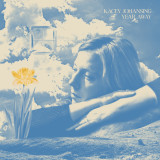
In March of 2020, after learning that a dear friend’s life was coming to an end, Johansing sat down and in one sitting wrote the song “Daffodils”. An elegiac tribute to someone facing death with grace and curiosity, the lyrics confront Johansing’s own mortality by observing the brief lifespan of a Hlower. Only a week later when the world came to an abrupt standstill, she soon found herself processing this recent loss while trying to make sense of a new global reality. Across the ensuing months, Johansing found herself increasingly untethered by a world of isolation and political upheaval.
Having been a frequent touring member of bands like Hand Habits and Fruit Bats, and often being called into the studio to lend her harmonies and multi-instrumental talents to records, Johansing’s phone no longer rang. Living in Los Angeles she feared her musical community was vanishing, as friends and collaborators continually announced they were leaving the city. It was in returning to her piano nightly that she found the greatest solace, feverishly writing the songs that would be collected on her next album. Resulting from this new sense of time and focus was a deepening of her songwriting. As Johansing recalls, “I felt like a metamorphosis happened during that time. There was a lot of personal growth and healing.”
Throughout Year Away Johansing traverses uncharted emotional landscapes brought upon by the changes occurring all around her. The forced self-reflection of the moment is aptly captured by “Old Friend”, featuring an aching melody and swooning production that recalls the best of Harry Nilsson. The epic piano and saxophone-driven “Smile with My Eyes” addresses the loss of community as friends became distant and political divides between family grew. On “Smile” Johansing pushes her vocals further than ever, expanding her range and using her peerless voice as the singular instrument it is. Facing the loss of a family home due to environmental destruction, “Shifting Sands” is marked by soaring Hlutes, Hield recordings and glassy synthesizers that nod to Japanese New Age.
“Daffodils”, the stunning album centerpiece, is built from a pastiche of looping samples, swirling Mellotron and dazzling vibraphone. “Keep your heart open wide, you never know your time / Keep your heart wild, true Hlower child”, Johansing sings as she says goodbye to an elder, while the band reaches a grief-stricken crescendo of woodwinds and chiming bells. On the title track, Johansing takes listeners on an eerily meditative journey of collective experiences. “I wanted to keep the progression simple and repetitive so that musically we could add new elements little by little, while the emotional tone of the lyrics becomes increasingly more strained and expressive”. The song grows to a fever pitch as Johansing sings higher than she thought possible; the tension of the repeating chords Hinally resolving into a hopeful coda as multiple soloists weave around each other.
Amidst heavier themes, Johansing still leaves room for her love of irresistible pop melodies and lush production. The driving “Last Drop” and mid-tempo “Valley Green” are two of her catchiest songs to date. On the former Johansing sings the anthemic chorus, “As if it were the last drop, and nothing ever lasts forever / As if it were the last stop, too far out to come back ever”, longing for a love that she’ll never take for granted, while also admitting that she doesn’t always know how good she has it. “Valley Green” features shimmering layers of 12- string guitars, stacked horns and an impeccable solo by co-producer and multi- instrumentalist Tim Ramsey (Vetiver, Fruit Bats), hinting at a love for bands like NRBQ.
Having been eager to capture the initial spark of songwriting, Johansing booked time at Highland Park’s 64 Sound Studio the week that it reopened. Over the course of three days, she and her band gathered basic tracks for 10 songs, before returning home to Hinish the record with Ramsey. Setting forth to make an album that paid homage to the music that kept them company during the months spent alone together, the duo pulled inspiration from a wide net including Burt Bacharach, John Carroll Kirby & Haruomi Hosono. Ramsey’s newfound love of early digital synthesizers dovetailed effortlessly with Johansing’s fondness for classic 70’s horn and string arrangements, creating a sound that is distinctly modern yet warm and familiar.
Once again Johansing called upon some of the Hinest players of Northeast Los Angeles’ vibrant music community to lend a hand with the record. The 70s R&B-folk of “Watch It Like a Show” features an electric guitar solo from Hand Habits’ Meg Duffy, while album closer “Endless Sound” boasts backing vocals from electronic musician Kaitlyn Aurelia Smith and swooping Indian-inspired violins from Amir Yaghmai (HAIM, The Voidz). The record shines brightly thanks to an ace mix from veteran producer Rob Schnapf (Beck, Elliott Smith, Cat Power), woodwinds from Logan Hone (John Carroll Kirby, Eddie Chacon), and a featured rhythm section of drummer Josh Adams (Jenny Lewis, Bedouine) and bassist Todd Dahlhoff (Feist, Devendra Banhart). Recorded across multiple studios including LA’s famed Sunset Sound, the album remains steadfastly buoyed by the adept engineering of Tyler Karmen (MGMT, Alvvays).
Though born of turbulent times, Year Away is ultimately interested in moving forward. The album ends with “Endless Sound,” where Johansing laments seismic global changes, (“The water is hotter, the mighty thaw / The current’s reversing, the last are lost”) but vows to keep going (“No storm can take me down / Endless light, endless sound”). It’s Year Away’s resilience that shines through despite the darkness. It’s a sound all her own and Johansing’s most cohesive set of songs yet.
On 'A Little Longer', Leavy's first major solo artistic statement, she deftly explores nostalgia and melancholy over ten tracks that wash over the listener like a gentle ocean tide. Indeed, the record's sound harkens to an era when the SoCal sound dominated the FM dial. Now a resident of Lafayette, LA, this collection of songs was written while Leavy was living in Boston and New York. However, it's clear that growing up on California's central coast was foundational to Leavy's songwriting. Lush mid-1970s production courtesy of Robin MacMillian shows up in the horns on "Cigarettes and Coffee" or the pedal steel on "I Have Been Trying."
Expansive vocal harmonies permeate "Please Don't Ask Me To Be Friends" or "I Won't Be Dreaming Anymore" which reference everything from Motown to The Beach Boys. Experienced as a whole, 'A Little Longer' is startlingly cohesive and masterful in tone and writing. Take note because this young artist has arrived as a songwriting force.
Videos for the two singles to follow
Mr. K’s series of edits on Most Excellent Unlimited is nothing if not eclectic, and utilitarian — as befits a veteran DJ of Danny Krivit’s stature. For our latest, Krivit pulls two disparate gems out of his bag of tricks and fits them neatly on a single 7-inch piece of vinyl.
In 1972 Ralph Bakshi’s landmark underground animated film Fritz the Cat was released, featuring a soundtrack performed by an all-star cast of San Francisco area musicians associated with the Berkeley-based Fantasy label. Perhaps Fantasy’s biggest artist was the vibes player Cal Tjader, who debuted in 1955 and was still going strong when songs were gathered for the movie’s soundtrack nearly twenty years later. Rather than simply using one of his older, already-recorded tunes, Tjader laid down a completely new version of his earlier hit record “Mamblues.” This time however, he swapped his standard latin percussion accompaniment for a can’t-miss rhythm section of Bernard Purdie, Chuck Rainey, and Arthur Adams. The result was a searing funk workout that took the latin jazz classic to new heights. Mr. K subtly warms this one up by adding a hint of reverb and bringing the tempo down a notch, pushing things from frenetic to funky, and firmly into friendly mixing territory for the DJs.
For our flip side, we turn to an unsung jewel amongst Philadelphia’s many contributions to disco music. Executive Suite released a series of singles in ’74 and ’75 that were recorded at the famed Sigma Sound Studios and had ties to a number of better known disco luminaries, among them the holy trinity of Baker-Harris-Young and, on “You Believed In Me,” the mighty Patrick Adams. Along with his longtime associate Stan Lucas, Adams garnished the vocal quartet’s composition with a driving arrangement and epic, soaring strings. The combined effect produced a vibrant, uplifting club cut that echoes the positive spirit of Curtis Mayfield’s “Move On Up” while being altogether its own thing. For our latest release Mr. K focuses solely on Adams’s instrumental section, returning repeatedly to that addictive string riff and creating a propulsive rhythm track that just doesn’t quit. And we don’t want it to!
As always, these connoisseur’s choice cuts have been remastered and pressed to Most Excellent Unlimited’s standards, and are primed and ready on 7-inch for DJs and home listeners alike.
2023 Repress!
A stunning follow-up to his late 2018 release. Mostly recorded live at the Apollo Hotel Amsterdam in 1991. This is a compilation of the ''Apollo Hotel CD box'', that Ronald made himself, for family and friends.. BIG tip!
Some words from the label:
From 1986 until 1992, Ronald had a residency in the lounge of Amsterdam’s Apollo Hotel. He would play there 5 days a week, for 5 hours a day. In 1991, throughout several sessions, he recorded himself on a cassette recorder. The recordings were ranging from re-interpreted cover versions to multiple own compositions.
The Apollo was particularly known for its sophisticated and elegant crowd. Guests would come to meet in the lounge to talk business, or end the day with a drink at the bar - dancing was never an option.
Listening to the album, one must wonder how some of this music would go hand in hand with a place like that. It seems Ronald gets lost in music and returns in unequally balanced patterns. Lounge sounds meet drum computer rhythms, punchy baselines, distorted space noises, reoccurring clarinet interludes and improvised piano solos.
Back then, just as now, Ronald never liked to be the center of attention. He simply tried to interact with the surrounding as a provider of the mood - as he explains himself.
Instruments
Live: Grand Piano, Yamaha QX1 Sequencer, 2x Yamaha TX7 Tone Generator, Drumtraks Sequential Circuits, Clarinet, Voice
Added at home: Yamaha DX7 Sounds, Roland R-8
Space Train: Kurzweil Piano, Yamaha DX7, Roland R-8, Soprano Sax, Voice
Recorded live at the Apollo Hotel Amsterdam in 1991, except 'Space train', which was recorded in Ronald’s living room.
All instruments played and arranged by Ronald Langestraat.
All tracks written an composed by Ronald Langestraat, except 'Lowdown' which was written by David Paich & Boz Scaggs, 'Give and take' which was written by Michael Shrieve, Tom Coster & Carlos Santana and 'Orpheus' which was written by David Sylvian.
- A1: I'm Getting Out While I Can
- A2: All Of My Friends Are Going To Hell
- A3: There Is Power In The Blood
- A4: Idumea
- A5: I Will Be With You Always
- A6: Precious Lord Take My Hand
- B1: May This Comfort And Protect You
- B2: The Poor Wayfaring Stranger
- B3: Nothing But The Blood Of Jesus
- B4: I Know His Blood Can Make Me Whole
- B5: How Can I Keep From Singing
Red Vinyl[27,69 €]
SAVED! is an apocalyptic revelation on the complex, sometimes ugly, always nonlinear process of healing. Herein, Reverend Kristin Michael Hayter documents an earnest attempt to achieve salvation through the tenets of charismatic Christianity, focusing on the Pentecostal-Holiness Movement, which dictate that one's closeness to God is demonstrated through transcendental personal experience. Sonically and thematically, the record is both a logical conclusion to and a significant departure from Hayter's previous work as Lingua Ignota. Mirroring her personal evolution away from pain, she sheds the moniker that made her successful for its unflinching expression of lived trauma and instead builds herself anew, claiming her full given name, determined to see value within. Musically, while she continues to use historical avant-garde technique and formal constraints superimposed over accessible frameworks, she also strips down her instrumentation and degrades audio to provide a sense of musicological antiquity. Similar to Lingua Ignota, the record is steeped in pathos, but now the wrath of God gives way to His deliverance: "His boundless love shall make you whole."
German jazz singer with Belgian roots Sophie Tassignon has built up a solid reputation in Germany. She has a whole series of well-received records to her credit, which not only showcase her musical versatility but also demonstrate what an incredible vocalist and composer she is. Sophie is a musical chameleon, constantly seeking to challenge and renew herself.
When the refugee crisis erupted and millions of Syrian refugees flocked to continental Europe in search of a better life and safety, it resulted in a lot of fear and opposition from the European population. The perception on refugees is often very negative and creates divisions on the political field.
When a shelter was started up two blocks from Sophie's home in Berlin, she decided to help and take care of some refugees. To get a better understanding on the culture and stories of those people and to bridge with our culture, she decided to study Arabic. Meanwhile, we are more than five years on, and not only is she proficient in Arabic, but she has also gained a better understanding of the culture and customs of the Arab community. Friendships for life were formed.
She decided to incorporate Arabic into her own musical language - jazz - fusing two worlds. From this was born the project and the eponymous record "Khyal. The word refers to the imagination and is literally translated as "remembering and/or longing for something from the (distant) past." With this project, Sophie especially wants to encourage tolerance and acceptance towards people regardless of their cultural background or religion and show how intercultural interaction can lead to very beautiful and artistic results.artwork &
- A1: The League Unlimited Orchestra - The Things That Dreams Are Made Of 5 09
- A2: Roxy Music Love Is The Drug 4 06
- A3: Kitty Grant Glad To Know You 5 08
- A4: Depeche Mode Enjoy The Silence 4 30
- B1: Max Berlin - Elle & Moi (Joakim Remix) 8 29
- B2: The African Dream - Makin’ A Living 5 46
- B2: Midlake - Roscoe (Beyond The Wizard’s Sleeve Remix) 6 54
- C1: Liquid People - Son Of Dragon 7 57
- C2: Ace - How Long 3 24
- C3: Chris Rea - Josephine (French Edit) 7 07
- C4: Will Young - Friday’s Child (Andy Cato Edit) 4 08
- D1: Marvin Gaye & Tammi Terrell You’re All I Need To Get By 2 50
- D2: Groove Armada - Are ‘Friends’ Electric? 4 29(Exclusive Cover Version)
- D3: Peter, Bjorn And John - The Chills 3 50
- D4: The Cure - Close To Me 3 40
- D5: Finley Quaye - Even After All Dub (Clean Version) 7 16
- D6: Will Self - The Happy Detective (Part 1) 1 52
Dutch indie band from the south of Holland. Produced by Grammy-nominated British producer and mixer Christopher Elms (Björk, Ben Howard and A Blaze of Feather) as well as mastered by Tim Debney who worked with Thom Yorke, Mumford & Sons, Bastille and Keane, among others, and provided the mastering for the Bond tune by Billie Eilish.
- A1: Andraé Crouch & The Disciples - Satisfied
- A2: Shirley Caesar - Jesus Children Of America
- A3: The Meditation Singers - Trouble's Brewin
- B1: The Clark Sisters - You Brought The Sunshine
- B2: Dorothy Norwood - Let Your Feet Down Easy
- B3: Shirley Caesar - Jesus Is Coming
- B4: Swan Silvertones - If You Believe Your God Is Dead
- C1: The Alvin Darling Ensemble - Is There Anybody Here?
- C2: Roscoe Robinson - There's A Creator
- C3: Destiny - Nothing Can Stop Me Now
- C4: The Meditation Singers - Good Old Gospel Music
- C5: Keith Barrow - Everything Is Gonna Be Alright
- D1: Roscoe Robinson - Elijah
- D2: Dyson's Faces - Till I've Got This Feelin' Of Love
- D3: The Violinaires - The Upper Way
- D4: Leomia Boyd And The Gospel Music Makers - Higher In Jesus' Love
- D6: Keith Barrow - The Right Road Now
red vinyl[31,89 €]
Soul Jazz Records’ Holy Church of the Ecstatic Soul: Gospel, Funk and Soul at the Crossroads 1971-83 draws upon the extensive links between black American gospel music and soul music, showing how the sensibilities of gospel artists such as Shirley Caeser, Dorothy Norwood, Andrae Crouch and others crossed over into secular soul music during this period.
The album was first available as a (sold out) ltd.edn. coloured vinyl for RSD23 and is now available as a black double vinyl + download edition and also for the first time on CD.
Many of the most successful soul artists - from Aretha Franklin to Al Green, The Staple Singers to Sam Cooke - all drew upon their upbringing in the church for their musical inspiration. This album discusses how important the links between the black church and soul music were in creating soul music and spotlights some of the many important (and also little-known) gospel artists who walked this line between sacred music and soul, funk and disco in the 1970s and early 1980s.
Holy Church of the Ecstatic Soul shows how sacred gospel music was at home with Stevie Wonder, Blaxploitation-style funk and produced music celebrated both in New York’s underground discos (The Paradise Garage, Studio 54, etc) and later sampled by the likes of Jay-Z, Snoop Dogg and Mary J Bilge.
Johnnie Taylor was an accomplished soul artist despite having little instrumental skill and he rarely wrote any of his own material. He was known variously as the ‘Blues Wailer’ and the ‘Philosopher Of Soul’ and recorded over 30 albums and 120 singles throughout a career that cemented his status as one of the leading male soul vocalists during the late sixties and throughout the seventies.
He started his recording career mid-50s with the doo-wop group The Five Echoes and gospel groups The Highway Q.C.’s and then in 1957, The Soul Stirrers, replacing Sam Cooke who had left the group for a solo career. Taylor followed that path a few years later signing for Cooke’s SAR label. and had a minor hit in 1962 with “Rome Wasn’t Built In A Day”.
in 1964 he moved to Stax Records where he started as a blues artist enjoying many fruitful years, most notably with “Who’s Making Love” selling more than a million copies. Following the unfortunate demise of Stax in 1976 he moved to Columbia Records where he went platinum with the hit “Disco Lady” (ironically not a disco track at all) and the album from which it came ‘Eargasm’ (1976) was a commercial peak he would never scale again. However, he continued with many collectable releases before moving to Beverly Glen Music in the early eighties and then Malaco Records in 1984, where his style became the more soul-blues based sound that was synonymous with the label. He remained with them until he died of a heart attack in Dallas aged 66 in 2000.
“Let’s Get Back On” Track comes from the CD ‘Gotta Get The Groove Back’ (1999) produced (and co-written with Charlie Brooks) by Frederick Knight, who also used the same backing track some 7 years later with his production of the David Sea track “Stay In My Arms” which was a modern soul favourite and will help to register the significance of this earlier production. It is now available as a vinyl release for the first time. It was taken from his final album although Malaco released ‘There’s No Good In Goodbye’ posthumously in 2003.
Robert Calvin Brooks, known professionally as Bobby “Blue” Bland spent his early career in Memphis, developing a sound that mixed gospel with blues and R&B and was known as the ‘Lion Of The Blues ‘and the ‘Sinatra Of The Blues’. His father abandoned the family not long after his birth and he acquired his name from his stepfather, Leroy Bland. His formative musical years were centered around the Beale Street scene and he was scouted by Ike Turner for Modern Records.
His progress was interrupted by a two year stint in the US Army and when he returned to Memphis he signed for Duke Records, run by Don Robey. Bland was illiterate and Robey helped him sign his contract which only gave him half a cent per record sold instead of the industry standard of 2 cents. He had his first hit in 1957 and continued a successful run of R&B chart entries without breaking through into the mainstream markets and was ranked number 13 of the all time chart-topping artists in Joel Whitburn’s “Top R&B/Hip-Hop Singles: 1942-1995”.
Duke Records sold out to ABC and with them he managed to return to the R&B charts but he still couldn’t succeed in the pop charts. In 1985 Bland signed for Malaco who were specialists in the Southern black music sound and he recorded many albums and toured for them, frequently with B.B. King, and was inducted into the ‘Rock And Roll Hall Of Fame’ in 1992.
Whilst “Heart Open Up Again” was a vinyl release in 1985 it was not chosen to be the single release from the Tommy Couch & Wolf Stephenson produced album Members Only (1985). This beautiful ballad, penned by George Jackson/Robert Miller/Michael Wooten, was never before released as a single and is a fabulous pairing with the topside – two of the best from two of the all-time greats.
Green Vinyl[16,39 €]
We are thrilled to kick off our label endeavors with one of the rarest and simultaneously best-recorded independently released German new wave singles in history: "Jede Nacht derselbe Traum" ("The Same Dream Every Night") by Total.
Back in late 1983, Total found themselves in a pivotal rendezvous with CBS Records in a Frankfurt hotel lobby. The entire band was present, along with the esteemed NDW manager Jim Rakete, who had played a role in launching Nena to national and international stardom. Also in attendance were the A&R representatives from CBS. It was on this day that Total was presented with the opportunity to ink an album deal with CBS. However, since they had only recorded the titular song thus far, negotiations hit a snag. CBS insisted on a full album rather than a standalone single.
Ultimately, the band decided to independently issue a limited 7" run of "Jede Nacht derselbe Traum" under Günther Mannschreck's Schreckschuss label in January 1984. These vinyl copies became the band's currency for pursuing record deals and promotional prospects. However, despite the potential to achieve commercial success and garner radio airplay, the song and the "Total" project gradually waned from the music landscape. Regrettably, only a few vinyl copies have managed to endure over time. This NDW "holy grail" may have prompted a fair share of dreams for serious vinyl collectors, as to this day, not a single physical copy has been put up for sale on platforms like eBay or Discogs. Interestingly, Maisenbacher has even fielded an offer of over 400 Euros for an original copy, although he regretfully couldn't fulfill the request due to possessing just a single copy himself.
The song itself is a fusion of diverse musical styles. Crafted using the Oberheim OB8 system, complete with the DMX drum machine and a bassline woven from a Jupiter 8 keyboard, it carried a groove reminiscent of New York's electro hip-hop sound in "The Message," setting it apart from typical German new wave productions. Additionally, a Korg Polysix was integrated, and guitar effects were layered to finalize the infectious synth-pop instrumental. Newcomer to the band, Andrea Ströbel, laid down a flawless vocal layer that steered the song towards a straightforward NDW direction, giving it a resonance that surely resonated with mainstream and radio audiences. To complete a B-side for the original vinyl single, the legendary state-of-the-art L480 Lexicon reverb was used. In the more experimental "Maxi Mix," now known as the "Dub Mix," Mannschreck expertly manipulated the machine. The outcome stands as a historical example of incredible studio craftsmanship and the cutting-edge techniques of the 80s.
For the new 12" release, Mannschreck unearthed an alternative mix of the song on the original tapes, featuring a distinct introduction, break, and exciting edits. In addition, DJ Friction, who contributed to the transfer and mastering for the release, treated us to a superb edit that cleverly melds all versions of the song while incorporating a few extra bassline groove elements.
The captivating reissue cover spotlights vocalist Andrea Ströbel, who gazes with determination. A hand reaches out to grab her shirt, attempting to pull her down. Symbolizing the song's theme, it embodies the unsettling dream conveyed by the lyrics-yet she steadfastly resists.
In summary, we are elated to present a significant gem for vinyl enthusiasts: a splendid mid-tempo tune that dances on the boundary of synth-pop, new wave and electro. The new 12" single underwent meticulous mastering, and the outcome is nothing short of astounding, surpassing the sonic quality of the original pressing.
Black Vinyl[14,24 €]
We are thrilled to kick off our label endeavors with one of the rarest and simultaneously best-recorded independently released German new wave singles in history: "Jede Nacht derselbe Traum" ("The Same Dream Every Night") by Total.
Back in late 1983, Total found themselves in a pivotal rendezvous with CBS Records in a Frankfurt hotel lobby. The entire band was present, along with the esteemed NDW manager Jim Rakete, who had played a role in launching Nena to national and international stardom. Also in attendance were the A&R representatives from CBS. It was on this day that Total was presented with the opportunity to ink an album deal with CBS. However, since they had only recorded the titular song thus far, negotiations hit a snag. CBS insisted on a full album rather than a standalone single.
Ultimately, the band decided to independently issue a limited 7" run of "Jede Nacht derselbe Traum" under Günther Mannschreck's Schreckschuss label in January 1984. These vinyl copies became the band's currency for pursuing record deals and promotional prospects. However, despite the potential to achieve commercial success and garner radio airplay, the song and the "Total" project gradually waned from the music landscape. Regrettably, only a few vinyl copies have managed to endure over time. This NDW "holy grail" may have prompted a fair share of dreams for serious vinyl collectors, as to this day, not a single physical copy has been put up for sale on platforms like eBay or Discogs. Interestingly, Maisenbacher has even fielded an offer of over 400 Euros for an original copy, although he regretfully couldn't fulfill the request due to possessing just a single copy himself.
The song itself is a fusion of diverse musical styles. Crafted using the Oberheim OB8 system, complete with the DMX drum machine and a bassline woven from a Jupiter 8 keyboard, it carried a groove reminiscent of New York's electro hip-hop sound in "The Message," setting it apart from typical German new wave productions. Additionally, a Korg Polysix was integrated, and guitar effects were layered to finalize the infectious synth-pop instrumental. Newcomer to the band, Andrea Ströbel, laid down a flawless vocal layer that steered the song towards a straightforward NDW direction, giving it a resonance that surely resonated with mainstream and radio audiences. To complete a B-side for the original vinyl single, the legendary state-of-the-art L480 Lexicon reverb was used. In the more experimental "Maxi Mix," now known as the "Dub Mix," Mannschreck expertly manipulated the machine. The outcome stands as a historical example of incredible studio craftsmanship and the cutting-edge techniques of the 80s.
For the new 12" release, Mannschreck unearthed an alternative mix of the song on the original tapes, featuring a distinct introduction, break, and exciting edits. In addition, DJ Friction, who contributed to the transfer and mastering for the release, treated us to a superb edit that cleverly melds all versions of the song while incorporating a few extra bassline groove elements.
The captivating reissue cover spotlights vocalist Andrea Ströbel, who gazes with determination. A hand reaches out to grab her shirt, attempting to pull her down. Symbolizing the song's theme, it embodies the unsettling dream conveyed by the lyrics-yet she steadfastly resists.
In summary, we are elated to present a significant gem for vinyl enthusiasts: a splendid mid-tempo tune that dances on the boundary of synth-pop, new wave and electro. The new 12" single underwent meticulous mastering, and the outcome is nothing short of astounding, surpassing the sonic quality of the original pressing.
Even as a little boy, Johnny Cash has a feeling he was going to be famous one day. It wasn’t the kind of premonition he could go about telling people. They’d have thought dreams of fame and riches pretty far removed from the Cash’s barely-productive 40-acre cotton farm in Arkansas. Especially since Johnny had no idea how he was going to make his mark.
Johnny left the farm to go into the Air Force — and in his travels he acquired first, a wife — and secondly, a guitar. Assigned to Germany and forced to leave his wife behind, Johnny found a faithful companion in his guitar. The boys in his barracks seem to like his “pickin’ and singin'” and gradually the plan for a career began to take shape. He would be a singer — a country singer.
When he got back from service, Johnny was not so modest about his plans for the future. He let his Memphis friends know he was going to be a singer — a good singer, a famous singer — a singer who would revolutionize country music. No matter how long it took — he was determined!
As it happened, Lady Luck inclined her face toward Johnny almost immediately. His releases on the Sun label were instantly acclaimed, and in 1956, one year after Johnny Cash launched his recording career, he was named the most promising country and western artist of the year in four separate polls.
After the success of “I Walk the Line” as a simultaneous C & W and popular hit, it was indicated the course Johnny’s career should take. Though always identifying himself as a singer for the country fans — a favorite entertainer on the Grand Ole Opry — Johnny Cash with “Ballad of a Teen-Age Queen” came to be a top selling artist in the pop recording field.
Almost reluctantly, Johnny evolved a pop-county style in arrangement and instrumentation, evident in such hits as “Guess Things Happen That Way” and “The Ways of a Woman in Love” to supply the demand for Cash records by fans of both types of music. It is ironic that Johnny Cash caused more of a revolution in pop music than in country music, as was his aim, by being one of the first C & W artists exposed on national “general entertainment” TV shows; and the first C & W artist to capture the LP market with one great release (Sun 1220).
Johnny Cash — in his voice, looks and demeanor — carries a certain aura of “specialness.” He is a very dramatic figure — tall, muscular, with blue-black hair. He looks the part of a folk singer — a 20th century wandering minstrel. And his fatalistic style, both in composing and singing, has a quality of monotone, but of “emotional monotone” that defies analysis, but which is genuinely powerful.
Johnny Cash is one of those persons endowed with an exceptional talent which has to express itself. And being expressed, his talent has been uniquely recognized and applauded by many loyal fans, who will enjoy this reminiscent album of the songs which to date are landmarks in the career of the one and only Johnny Cash.
Cybotron has re-emerged in our contemporary cybercultural age when artifactual futures begin a transition into a new era of "Meta".
By combining their knowledge of philosophy, science fiction, and mechanical engineering, at a time when electronic instrument companies were only just beginning to distribute their products to the masses, two prosumer audio technicians named Juan Atkins and Rik Davis were able to re-engineer Cybotron – a combination of the words “Cyborg” and “Cyclotron” (an atomic particle accelerator) – to be used as a home studio performance music that would change the course of independently produced and distributed electronic music.
Dissolving the boundary between singer, songwriter, and producer, Juan Atkins named Cybotron’s future forward funkadelic sound “techno” in reference to Alvin Toffler’s concept of unlikely “techno rebels” against technocracy. Techno is music that sounds like technology, and its purpose was to help society survive our collision with a universally felt “future shock” by inserting an audio virus into the cultural matrix.
Techno’s blueprint spread across the Detroit-Berlin Axis between Metroplex and Tresor. As human society began its transition from a post-industrial to an information-based market economy, Cybotron enabled a thorough system override of the human senses towards a tangible man-machine hybridity and showed the world how to channel their emotions and imaginations into new sound technologies and create new ‘sonic’ spatialities where listeners can transport themselves out of the physical world into the future. The cover of their debut album Enter (1983) transmitted a fragmented view of a body in motion being digitized mid-stride, dissolving physical and virtual reality into sonic fiction.
Today, the man-machine hybridity of Cybotron is still the truest form of techno, coevolving in conversation with the technological music they created and inspired. The latest data disk marks a new chapter that reflects a techgnostic musical expression of the knowledge acquired during their decades-long hiatus. Unlike the dance music industrial replications of the Model 500 formula, acknowledging the content marketing expectations that segments music into specific, sellable genres, this techno music is self-aware. Cybotron processes dance music tropes spawned from its very own blueprint with a meta-tactical precision out of sync with our current rave new world.
Cybotron’s return demonstrates a studied engagement with what techno was and should be with a peerless update of Juan Atkins’ initial inventive idea of do-it-yourself electrically reengineered music xeroxed onto both sides of the 12” – uploaded directly into the alleys of your mind.
- The Rhythmanalyst
Having been deck slaying as near their London headquarters as Germany and as far as Canada, goth techno prodigy Lesser Of is steadily approaching double digit release count. With an established residence at queer x trans focused, revolutionary event series Subverted, their efforts have been welcomed to a formidable list of industrial electronic labels and remixed by a tidy sum of high profile scene icons.
Here at Depth.Request our sonars are attuned to emanant potential, and so we conscript Lesser Of to hammer out our fourth acetate offering to date. To this, harsh noise and drone music inspirations are declared, alongside an artistic secret of the trade: lights-off sessions in live room of a recording studio vibrating with the pulse of a bass guitar ran through a freeze pedal were what begot the tracks, and they are well intent on assaulting your headphones with noise. Reeko on the remix - yes, this record fucks.
Prolonged, ominous intro? Nah. Have a face full of Crude Manifestation Of Power instead, as an insatiable, 10-minute long opener braces your ears for a week of ringing with a sonic equivalent of metallic thrashing one could expect from being a sinful, rave-lusting scoundrel. On title-diverting continuation Within My Fragility the words "strength in fragility" are truly alliterated as the pace, abrasiveness and intensity of pummelling are all ramped up fiercely, with linear open hats thrown against them from time to time for good measure. Having reached 140 BPM and concrete mean, Masked proceeds in a well anticipated ra(n)ge: infernal atmosphere, sandy hats and layered tectonic tremors achieved with increasingly undefined low end consisting of a rumble line and rolling kick morphing into abrasive haze. Winding the tempo back a notch, a halftimearranged contemplation Our Descent grows in direct, hyperborean vector: glassy drones and sharp syncopulsation first - atonal reverberations, distorted arpeggios and punchy stabs endwise. Reeko's analog reinvention of Masked convolves the drum structure by borrowing from breakbeat narratives and authorizes the dystopian ambiance to rise and fall on more gradual, panning, confined terms; adding, however, more disorder to the mix with spectrum slicing, high-range chaos.
As you would have learned to expect from Depth.Request, Within My Fragility EP is not an easy listening five-tracker. If by the end of it you find yourself feeling as if you just stepped out of a pounding warehouse at 3AM and you don't know what day it is, you wouldn't have been experiencing this mindspace alone.
A resurgent Dog Meat Records is thrilled and proud to release a new album by a resurgent rock'n'roller and an old friend, PAT TODD and his band THE RANKOUTSIDERS. The seventh album by LA's finest rock'n'roll band comes some 36 years after the label's first dalliances with Pat, back when he fronted the legendary Lazy Cowgirls. The new album shows that Pat has lost none of his spark, that his voice and songwriting have only gotten stronger, and that he's got another killer band behind him, one that mixes classic '70s punk rock roots with country, blues and rock'n'roll in a manner that sits somewhere between Exile on Main Street and LAMF. The new album is highlighted as usual by Pat Todd's fantastic songs. A prolific writer with an eye on life in the margins - whether they be in small towns or the big sprawling city he has called home for 40 years - Todd routinely hits the mark where youth and the advancement of age find common ground in alienation and wilfulness. Pat knows that rock’n’roll is not necessarily a young person's game, and nor is it a glamourous one; the name he gave this band accurately points to where he and they are coming from. New originals like 'All We Have To Show', the horn-riffing rocker 'Living In A World of Hurt' and the raucous country-folk punker 'Goodbye to the World' are up there with anything he has ever written, and the Rankoutsiders play them even better than ever. Indeed, a couple of choice covers - a version of 'Hi Ho Silver Lining', sung by guitarist Nick Alexander and cut before Jeff Beck's unfortunate passing, and a version of David Johansen's old heartbreaker 'Donna' cut before word of Martin Scorsese’s Johansen documentary got out - shows by comparison to the original versions just how well these guys can crank it out. *** For over 20 years - from the early 80s to the early 00’s- Pat Todd fronted the undisputed Los Angeles roots-punk kings: THE LAZY COWGIRLS. Having landed in LA from the mid-west-meets-the south outpost of Vincennes, Indiana early in the decade, the Cowgirls sparked a new LA punk scene; their live album Radio Cowgirl was the first release on scene prime mover SFTRI -and ultimately inspired a resurgence of classic 1976 Ramones/Saints/ Heartbreakers-style punk that stretched across the US into Europe, Japan and elsewhere, inspiring bands like the New Bomb Turks, Oblivions, Teengenerate, Onyas and countless others. THE LAZY COWGIRLS were but a memory in 2006 when PAT TODD and the RANKOUTSIDERS’ 28 song double-disc debut, The Outskirts of Your Heart was released. Where most bands would have exhausted their creative gas to fumes with such an ambitious first release, this was only the beginning for the RANKOUTSIDERS. Prior to the new album Sons of the City Ditch, the RANKOUTSIDERS have released six full-length albums (yes, some are double discs) and over a dozen singles and EPs and have more releases queued up. Each and every one of them is a testament to Pat’s personal vision of raw, high energy rock’n’roll infused with elements of country and rhythm & blues, and documentary proof that the RANKOUTSIDERS are one of the hottest rock'n'roll bands on the planet. Indeed, it must be said the RANKOUTSIDERS truly are a band: energetically flanking Pat stage left is long-time guitarist and vocalist Kevin Keller; to the right is guitarist and founding member, Nick Alexander- the cool, calm and collected eye of the storm; bassist Steven Vigh holds the lower frequencies in check with steadfast authority, pushing the chorus to the next harmonic level, while drummer Walt Phelan drives the engine hard while keeping the band on the rails.
- 1: Mimosa
- 2: After My First Murder
- 3: Someone Is Here
- 4: What Have I Done
- 5: Funeral Wedding
- 6: Disgraced Girl
- 7: How The Black Art Was Revealed
- 8: Disco Death
- Disc: 2
- 1: Inauguration Of The Pleasure Dome
- 2: The Thelemite
- 3: My Portrait In Sadness And Glory
- 4: The Stone Orchids
- 5: In The Morning
- 6: Bethrothal And The Rites Of Rape
- 7: She Travels The Fastest Who Travels Alone
- 8: Jubileum In Hell
- 9: The Terrible Secret
This is the first official reissue of The Candles Burning Blue’s highly appraised cult album Pearls Given To The Swine. For two decades the original CD pressing has been sought after but nearly impossible to find. Known for their violent and chaotic gigs, The Candles Burning Blue were an unconventional Gothic Rock band. Instead of romantic beauty they dealt with the harsher aspects of the darkness oozing from their own troubled lives. Even though they only released two CD-r, a split 7” and one full album, their impact on the Finnish Goth underground was a lasting one. Pearls Given To The Swine was recorded in 2000 and released in 2001 on CD, with only 500 official copies pressed. Some years later new copies appeared from shady sources, but basically the album disappeared from the face of the Earth. In 2001 the band started to work on the second album Pleasure Dome and also had some material recorded for the projected third album Abhorrence, but ceased to exist before any of this material was released. Until now. This reissue has a full length bonus disc consisting of these songs. The Candles Burning Blue had its roots firmly in Gothic Rock as performed by bands like Bauhaus, Christian Death, Virgin Prunes and The Cure, but they mixed in elements of experimentalism and art rock. Pearls Given To The Swine is a lost and found classic of Finnish Gothic Rock, and a fine example of Finnish dark culture around the turn of the millennium. Members went on to play in bands like Reverend Bizarre, The Puritan, Werwolf Lodge and Opium Warlords, but never reunited.
It features a collection of Finbar's own compositions and four well known traditional songs; Kitty, The Rocks Of Bawn, Slieve Gallen Braes and The Parting Glass. Finbar brings his own unique style to these classic Irish songs, using his romantic eloquent voice to evoke ages past. Music's Door is Finbar's ode to music, but there is a poignancy to it as well, in September 2022, he recorded this duet with his friend, 'Jump The Gun' singer Roy Taylor to raise awareness for MND which Roy was suffering from. Sadly he died in June 2023.
September Said Goodbye is an emotional cry for a lost loved one in the 9/11 tragedy. The mood takes an upbeat turn with Wild Horses, a joyful and carefree instrumental, and Blue Jewel In The Sky, a song Finbar released in 2020 with his daughter Aine Furey, alerting us to the impending horrors of climate change. Finbar draws inspiration from the world around him. His passion for music and the plight of the underdog has always underscored his work. He has honed a talent for finding the soul of a person, a place or a time through his music. 'Moments In Time' reflects the artist looking back at the vagaries of life, completing the album with the timeless The Parting Glass.
However, he is also looking forward, emboldened by his music he embraces and celebrates life, and most of all, love.
Includes an alternate take of 'Looking Good tonight ' appearing for the first time ever on vinyl.
"Blues for a Reason stands out from much of the work of the period." - The Penguin Guide to Jazz
"It's strange to think that two of the greatest stars of "cool jazz," Chet Baker and Warne Mash, would never record together, given that they were nearly the same age, and that they both rose to fame in Los Angeles around the same period.
However, that would have been the case if Gerry Teekens, founder of the Criss Cross label, had never had the bright idea of bringing them together in 1984.
Surprisingly, they would end up cutting their only collaborative album, Blues for a Reason, in Monster, The Netherlands!" - **** AllMusic
Lucky number 17? You better believe it. We here at Brown Acid have been scouring the highways and byways of America for even more hidden stashes of psych/garage/proto-punk madness from the so-called Aquarian Age. There’s no flower power here, though—just acid casualties, rock stompers and major freakouts. As always, the songs have been officially licensed, and all the artists get paid. Kicking off this trip, Grapple’s “Ethereal Genesis” is a heavy psych gem from 1969 written by J. Bruce Svoboda, a.k.a. Jay Bruce, formerly of The Hangmen and The Five Canadians (who were actually the same San Antonio band). The latter’s 1966 garage favorite “Writing on the Wall” has been endlessly covered, but Grapple were never heard from again. With a guitar riff that blatantly rips off Sabbath’s “Black Sabbath,” Image’s mostly instrumental lysergic obscurity “Witchcraft ’71” (originally unveiled that very year) also boasts a horror-movie organ intro, a voodoo drum break and some championship chanting. Private press heads might recall late Image drummer John Beke from his ’80s reemergence with country rockers Crossfyre. Stone Hedge were a seven-piece rock band out of Michigan with a penchant for Creedence and anthropomorphism. “Smokey Bear” is their 1972 tribute to the official mascot of the U.S. Forest Services—not to mention the A side of their sole single—and it recalls the kind of organ-drenched swamp jam that soundtracked many a Burt Reynolds flick back in the day. If you think being a Southern rock band from Milwaukee doesn’t make much sense, that’s probably why Crossfire changed their sound along with their name—to Bad Boy—after signing with United Artists. Bad Boy’s severely underappreciated second album, Back To Back, is a 1978 hard rock jewel, but you can hear their boogie-woogie roots on this rare 1975 single. With a band name like Primevil and song title like “Too Dead To Live,” you probably expect some gnarly proto-metal riffage. Instead, you a get a harmonica-drenched, soul-infused rock rave-up from 1972. Primevil would release their sole LP two years later: Entitled Smokin’ Bats at Campton’s, it’s a reference to their trusty singer, harp player (and bat smoker?), Dave Campton. Brown Acid regulars already know Pegasus from their appearance with “The Sorcerer” on our Seventh Trip. “Ready to Rave” is the flipside to that 1972 single, in which they explain how they like their whiskey cold and their women hot. It’s another killer glimpse of what might have been if these one-and-done Baltimore hard rockers had been able to keep it together. One of two obscure singles released by Texas musician Bobby Mabe in 1969 (the other appears under the name The Outcasts), “I’m Lonely” delivers a heavy dose of vocal soul to the otherwise psych-garage presentation. Fans of fellow Houstonians the Moving Sidewalks—whom Bobby and his Outcasts may well have gigged with—will especially dig this one. Cedar Rapids, Iowa, may not be known as a cultural mecca, but they did give us Truth & Janey. This deadly hard rock trio delivered their holy grail full-length, No Rest for the Wicked, back in 1976. “Around and Around” is a Chuck Berry cover that originally appeared on a 1973 single the band released under the earlier name Truth. Originally released in 1973, “High School Letter” is the debut single from San Diego rock squad Glory. This infectious bonehead cruncher features future Beat Farmer Jerry Raney and the original rhythm section of Iron Butterfly in bassist Greg Willis and drummer Jack Pinney. Glory is what they got up to after their former bandmates left for L.A.’s garden of Eden. “Jack the Ripper” is a mercilessly bootlegged Cleveland classic from 1978 with a serrated punk edge and vocals that recall Mick Blood of Aussie savages the Lime Spiders. Or maybe it’s the other way around—the Lime Spiders formed the year after Strychnine carved off this lethal paean to the infamous Whitechapel slasher of olde.
SG is none other than Andrew Pekler returning to faitiche with an album of sentimental guitar escapism. For Lovers Only / Rain Suite features ten tracks made using only an electric guitar and a handful of effects pedals (plus some additional recordings of rain) and finds Pekler once again attempting to reconicile his tendencies towards kitsch, experimentation and minimalism.
What does Pekler's pseudonym SG stand for? Sentimental Guitar? Sound Gallery? Shy Guy? Sad Gnosis? Saudade Glamour? Soft Goth? We don't know, but we asked notorious Chicago romantic Sam Prekop for his take on the album – his reply:
--
It’s a wonder where the rivers go and far, how fast or slow.
Just seconds to remember, who can forget, when you are lost.
I think to recount every step, in both hands, eyes open, the clouds unfold, one two three. Every other step, just as well.
Where the moss is soft, you know strong. How many hours, days? I could have been careful, did I forget?
Never mind. Waking up, in these arms, where the rivers go, slow. One two three, one two three.
- A1: Mr. Hood At Piocalles Jewelry / Crackpot
- A2: Who Me? (With An Answer From Dr. Bert)
- A3: Boogie Man!
- A4: Mr. Hood Meets Onyx
- A5: Subroc’s Mission
- B1: Humrush
- B2: Figure Of Speech
- B3: Bananapeel Blues
- B4: Nitty Gritty (Feat. Brand Nubian)
- C1: Trial N’ Error
- C2: Hard Wit No Hoe
- C3: Mr. Hood Gets A Haircut
- C4: 808 Man
- C5: Boy Who Cried Wolf
- D1: Peachfuzz
- D2: Preacher Porkchop
- D3: Soulflexin’
- D4: Gasface Refill
Repress of classic first LP by MF DOOM's first group KMD! KMD (Kausing Much Damage, or a positive Kause in a Much Damaged society) was a Hip Hop group in the early 90s perhaps best known for launching the career of acclaimed MC/Producer MF DOOM (known during his KMD tenure as Zev Love X). After guesting on 3rd Bass’ “The Gas Face,” the trio (Zev, brother Subroc, and Onyx) released the acclaimed and overlooked “Mr. Hood” full-length. Their political outlook was similar to the group Brand Nubian, who guested on Hood; however, the style was more comical and included a great deal of clips from old children’s recordings, mostly notably a sample of the Seaseme Street character Bert on the single “Who Me?” This is the official Elektra Records/Traffic Entertainment Group re-release with original artwork and track listing in it’s entirety. Cutting edge, ahead of it’s time production and skits from KMD and Stimulated Dummies (John Gamble and Mr. Dante Ross). Features the singles “Peachfuzz”, “Who Me?” and “Nitty Gritty” (feat. Brand Nubian). This is one Rap album that is not to be missed.
It is with great fanfare that we proudly announce the return of the esteemed improvisational chainsaw blues trio Young James Long. Young James Long formed in Dallas in 2003 with a weekly residency at a local (and appropriately named) dive bar called Muddy Waters. PW Long (guitar, vocals) and Kirkland James (guitar) had known each other socially since the 90s when Long was fronting Quarterstick Records’ Mule, and James was playing with Tenderloin. Long would go onto make a series of incredible solo records under his own name and that of PW Long’s Reelfoot and James would play with Alejandro Escovedo (among many others) before their paths finally crossed again. They recruited Taylor Young (Hi-Fi Drowning, Young Heart Attack, The Polyphonic Spree) on drums and a raw, blues-punk-rock-and-roll band emerged fully formed, songs flying out of them with enthusiasm and ease. They recorded the You Ain’t Know The Man EP with their friend (and eventual Grammy winner) Stuart Sikes not long after. The EP came out via Southern Records in 2007, and thanks to the tasteful ears of the people this side of the pond, a European tour followed. If you saw that tour, you’ll agree that it felt like the band were really hitting their stride. However, here we are in 2023, so what happened? Answer: geography - the age-old enemy of creativity. One member left Texas and the others (being the extremely able and skilled musicians that they are) were perpetually wooed away to play in other bands. Everyone’s got bills to pay, right? And with that, things just kind of fizzled out. Long even insists he quit playing music around 2010. One of the most recognisable voices in underground music: out of the game. Incredible. Inconceivable.
Then, last year we at Wrong Speed got an email asking if we’d be interested in some new music Young James Long had been working on. We thought it might be a joke. They sent some mixes through, and it became very quickly apparent that it was anything but. Turns out the trio had started chatting about music again in 2020 (before the world had other plans) and had finally made their first full-length album Orogeny in the summer of 2021. Orogeny sounds live and thrillingly immediate, as though all obstacles between their delivery and your ears have been removed and discarded as irrelevant. There is no filler, no treading of water at any point. Amps buzz, songs teeter on the edge of collapse, you feel like you’re sitting in the middle of the band as they play and it’s a pretty sweet place to be. The album contains a whopping 17 songs, most under 2 minutes long. They don’t want to waste your time, or most importantly (after sixteen years away), theirs. If you’re familiar with Long’s previous bands, you’ll know he has a rare gift for pairing extreme volume with extreme tenderness and it’s thrilling to find that gift present and correct after over a decade away. And that voice – holy shit, that voice. He can go from a Beefheart howl to the sweetest country baritone in the space of a single line. In James and Young he’s found the perfect foils, a power trio of instinctive and soulful musicians able to conjure shining gems of magic out of the grit and the dirt. Young James Long is risen from the ashes – it’s a miracle!
- 1: Chariots Of Pumpkins (Halloween Iii)
- 1: 269Th St. Bridge (Escape From New York)
- 1: 3The Alley (War) (Big Trouble In Little China)
- 1: 4Wake Up (They Live)
- 1: 5Julie's Dead (Assault On Precinct 3)
- 1: 6The Shape Enters Laurie's Room (Halloween Ii)
- 1: 7Season Of The Witch (Halloween Iii)
- 1: 8Love At A Distance (Prince Of Darkness)
- 1: 9The Shape Stalks Again (Halloween Ii)
- 1: 0Burn It (The Thing)
- 1: Fuchs (The Thing)
- 1: 2To Mac's Shack (The Thing)
- 1: 3Walk To The Lighthouse (The Fog)
- 1: 4Laurie's Theme (Halloween)
Blue Vinyl[24,79 €]
By now everyone should know, John Carpenter is not only a celebrated filmmaker but also a musical maestro whose soundtracks have become syn - onymous with the genres of horror, suspense, and science fiction. His innate talent for composition and his deep understanding of how music can elevate storytelling have left an indelible mark on the world of cinema, and a haunt - ing presence in people's record collections. Anthology II continues the celebration of his compositional genius via an ex - cellently sequenced collection of some of his most iconic pieces of music from his extensive filmography, all newly recorded with his musical collaborators Daniel Davies and Cody Carpenter . The compilation opens with "Chariots of Pumpkins" from Halloween III that perfectly captures the eerie essence of the cult classic film with its pulsating synths and haunting melodies. The listener is engulfed by a sense of unease and anticipation, before being thrust into "69th St. Bridge" from Escape From New York , a dynamic track that encapsulates the futuristic and gritty nature of the film via the use of throbbing bass lines, driving rhythms, and electronic textures. The record has also an isolating tone as it skulks through ambient leaning tracks such as "Fuchs" and "To Mac's Shack" from The Thing, and "Walk to the Lighthouse" from The Fog, all of which display a slower tempo, foreboding undertones and an ethereal atmosphere that feels like a distant whisper. All of which has been cautiously laid in preparation to the grand finale. The iconic and instantly recognizable "Laurie's Theme" from the original Halloween . Its simple yet menacing piano melody which has become synonymous with the horror genre, concludes the album by striking fear into the hearts of listeners. These tracks represent just a fraction of John Carpenter 's impressive musical repertoire. With each haunting note and pulsating beat, his soundtracks continue to resonate with audiences, forever etching his name in the annals of film music history.
- Chariots Of Pumpkins (Halloween Iii)
- 69: Th St. Bridge (Escape From New York)
- The Alley (War) (Big Trouble In Little China)
- Wake Up (They Live)
- Julie's Dead (Assault On Precinct 13)
- The Shape Enters Laurie's Room (Halloween Ii)
- Season Of The Witch (Halloween Iii)
- Love At A Distance (Prince Of Darkness)
- The Shape Stalks Again (Halloween Ii)
- Burn It (The Thing)
- Fuchs (The Thing)
- To Mac's Shack (The Thing)
- Walk To The Lighthouse (The Fog)
- Laurie's Theme (Halloween)
Black Vinyl[23,49 €]
By now everyone should know, John Carpenter is not only a celebrated filmmaker but also a musical maestro whose soundtracks have become syn - onymous with the genres of horror, suspense, and science fiction. His innate talent for composition and his deep understanding of how music can elevate storytelling have left an indelible mark on the world of cinema, and a haunt - ing presence in people's record collections. Anthology II continues the celebration of his compositional genius via an ex - cellently sequenced collection of some of his most iconic pieces of music from his extensive filmography, all newly recorded with his musical collaborators Daniel Davies and Cody Carpenter . The compilation opens with "Chariots of Pumpkins" from Halloween III that perfectly captures the eerie essence of the cult classic film with its pulsating synths and haunting melodies. The listener is engulfed by a sense of unease and anticipation, before being thrust into "69th St. Bridge" from Escape From New York , a dynamic track that encapsulates the futuristic and gritty nature of the film via the use of throbbing bass lines, driving rhythms, and electronic textures. The record has also an isolating tone as it skulks through ambient leaning tracks such as "Fuchs" and "To Mac's Shack" from The Thing, and "Walk to the Lighthouse" from The Fog, all of which display a slower tempo, foreboding undertones and an ethereal atmosphere that feels like a distant whisper. All of which has been cautiously laid in preparation to the grand finale. The iconic and instantly recognizable "Laurie's Theme" from the original Halloween . Its simple yet menacing piano melody which has become synonymous with the horror genre, concludes the album by striking fear into the hearts of listeners. These tracks represent just a fraction of John Carpenter 's impressive musical repertoire. With each haunting note and pulsating beat, his soundtracks continue to resonate with audiences, forever etching his name in the annals of film music history.
Habibi Funk is digging deep to present the songs of Ibrahim Hesnawi, otherwise known as “The Father of Libyan Reggae.” Kingston meets Tripoli in this incendiary collection of Arabized roots, dub, dancehall and more. Featured on Habibi Funk’s last compilation (HABIBI015) with his track “Tendme,” Hesnawi crafts restless funk with evident buttressing from a reggae foundation. Highlighted across the LP is how Hesnawi essentially pioneered such an effortless synthesis between traditional Libyan music and Jamaican reggae stylings, plus the endlessly disparate funk, jazz, and disco accents which firmly situate Hesnawi in a league of his own. LP out everywhere October 6th.
"I imagine myself playing these songs in a small club that is slowly burning," says A. Savage of his second solo record, Several Songs about Fire. After more than a decade in New York, the co-frontman of Parquet Courts has left the city, marking his exit with a masterpiece of maturity and a worthy corollary to his first solo venture, 2017"s Thawing Dawn. "Fire is something you have to escape from. This album is a burning building, and these songs are things I"d leave behind to save myself." Produced by John Parish on a 1" 16-track in just ten days in Bristol and studded by the support of Cate Le Bon and Jack Cooper (Modern Nature, Ultimate Painting) as well as saxophonist Euan Hinshelwood (Cate Le Bon), drummer Dylan Hadley (Kamikaze Palm Tree, White Fence), and violinist Magdalena McLean (Caroline), Savage"s outsize gifts as a lyricist and observer - a quality Parish calls "an emotional openness guarded by a laconic wit" - shine. Worrying questions of wealth and poverty, self and other, Savage displays the poet"s gift of knowing when to narrate and when to vanish, leaving the listener to their own emotional privacy rather than instructing them how to feel. The end result is tantamount to psychic odyssey, with "Elvis in the Army" placing us in a subterranean venue where the livid, ratifying cymbal raises the room"s blood pressure and "Mountain Time", evoking an austere waltz playing in a desolate house, returning those listening to life. Influenced by Sybille Baier and Townes Van Zandt, Savage joins a canon of songwriters constantly dilating aperture and perspective. In rendering the signage of laundromats and threats of debt collectors as glistering and totemic as the scope of mountains, rivers, seas, and skies, Savage finds hopes and curses in equal measure.
Acclaimed NY-based singer songwriter Jordan Lee aka Mutual
Benefit announces ‘Growing At The Edges’, on Transgressive
Records, his first record since 2019.
‘Growing at the Edges’ is sonically expansive, artfully blending
genres from country to classical with the help of multifaceted
co-producer Gabriel Birnbaum (Wilder Maker) and critically
acclaimed string arranger Concetta Abbate. The band,
alongside Lee and Birnbaum, was made up of Wilder Maker
members Sean Mullins (Andy Shauf) and Nick Jost (Baroness)
and features help from Jonnie Baker of Florist and Eva
Goodman of Nighttime among others.
“I approached ‘Growing at the Edges’ as an act of worldbuilding. It was a place we visited often over the past 5 years
collaging and sonically redecorating until it reflected the joy and
the pain of being human in a universe that will always be
changing. I wanted to make music that could simultaneously
mourn versions of the past but still find hope in the seedlings
which could, perhaps, bloom into better futures” - Jordan Lee
The album cover is a purposefully ‘unfinished’ weaving by fibre
artist Natalie Phillips.
“I had this theme for ‘Growing at the Edges’ where I was
thinking about the first little life forms that pop up after
something natural like winter or less natural like a disaster and
kind of channeling their spirit for the art and music. That got me
imagining one of Natalie’s beautiful weavings but in-process
with stray yarn and loom still visible. Incomplete yet still
beautiful. I couldn’t be happier with how it turned out.”
Mutual Benefit’s live shows are known for their rotating cast of
wide-ranging musicians leading to inspired interpretations of the
extensive catalogue on notable stages like MoMA’s sculpture
garden or UK’s Green Man Festival as well as the occasional
surprise park or basement show at home in Brooklyn.
Throughout the years Mutual Benefit has been in Album Of The
Year lists among Pitchfork and Stereogum, as well as Folk
Musician Of The Year by New York’s Village Voice.
"I imagine myself playing these songs in a small club that is slowly burning," says A. Savage of his second solo record, Several Songs about Fire. After more than a decade in New York, the co-frontman of Parquet Courts has left the city, marking his exit with a masterpiece of maturity and a worthy corollary to his first solo venture, 2017"s Thawing Dawn. "Fire is something you have to escape from. This album is a burning building, and these songs are things I"d leave behind to save myself." Produced by John Parish on a 1" 16-track in just ten days in Bristol and studded by the support of Cate Le Bon and Jack Cooper (Modern Nature, Ultimate Painting) as well as saxophonist Euan Hinshelwood (Cate Le Bon), drummer Dylan Hadley (Kamikaze Palm Tree, White Fence), and violinist Magdalena McLean (Caroline), Savage"s outsize gifts as a lyricist and observer - a quality Parish calls "an emotional openness guarded by a laconic wit" - shine. Worrying questions of wealth and poverty, self and other, Savage displays the poet"s gift of knowing when to narrate and when to vanish, leaving the listener to their own emotional privacy rather than instructing them how to feel. The end result is tantamount to psychic odyssey, with "Elvis in the Army" placing us in a subterranean venue where the livid, ratifying cymbal raises the room"s blood pressure and "Mountain Time", evoking an austere waltz playing in a desolate house, returning those listening to life. Influenced by Sybille Baier and Townes Van Zandt, Savage joins a canon of songwriters constantly dilating aperture and perspective. In rendering the signage of laundromats and threats of debt collectors as glistering and totemic as the scope of mountains, rivers, seas, and skies, Savage finds hopes and curses in equal measure.
- A1: Dual To The Death (Outro)
- A2: Tinkerhatfield
- A3: Me Love Me A Lot
- B1: Tanoy
- B2: Slowchain
- C1: Hense The Name
- C2: Remains
- D1: Tubular Heaven
- D2: Acidjamprophet12
- E1: Made Up Reality
- E2: Drag A Friend
- E3: Ibogastomp145
- F1: Life Is A Glitch And Than You Die
- F2: Kaal Ii9
- F3: Gums
- G1: Intentionally Beat
- G2: Daydreamdenhaag (070)
- H1: Bubbles (Korrel - P155)
- H2: Dlpfc
- I1: The Memory Palace
- I2: Sensed
- J1: Onehundredand64 (Ft Spekki Webu)
In a realm where the threads of fate intertwined with the tapestry of existence, there existed a timeless construct we call “MENG”. This transcendental domain pushed a sanctuary where an unholy wisdom was safeguarded. Within its twenty-two walls, the experiences of countless sages and seekers resided, forming a reservoir of enlightenment, of vision and of identity.
Among the enigmatic texts that adorned the shelves of The Memory Palace, one stood out—the "Tubular Heaven," a chapter that held the essence of the universe's patterns and transformations. The book we speak of is the Book of Change - I Ching. Legend has it that the Memory Palace embodied the vibrations of those who sought its wisdom, guiding them to the Slow-Chain’s pages where hexagrams unveiled the secrets of existence.
Amidst this cosmic dance of knowledge, there lived a young wanderer whose name we do not say out loud. Driven by a deep yearning for understanding, this Warrior ventured into the city of Tanoy. With every step, he felt the resonance of centuries long gone, as if the walls whispered to him the essence of reality itself - “you may fall as long as you stand up again. Repeat this 1000 times and you will understand me. Only then can we control the sound.” As he reached for the illuminated Book of Change, a light was cast onto a newly fabricated realm of questions.
One hexagram, in particular, was essential. The cryptic symbolism was perplexing. Upon meditation, we slowly begin to realize that life is indeed a tapestry of imperfections, yet from these glitches we arise with profound growth and transformation.
As our curiosity spikes, we delve into the pages that follow, discovering an unexpected connection between I Ching and the world of Jeans, no denim. In ancient times, the craft of weaving denim mirrored the wisdom of these hexagrams. Just as threads interwove to create a durable fabric, I Ching reveals how life's experiences intertwine to form a meaningful existence. Denim, like life, is sturdy yet adaptable - a true testament to the harmonious balance between falling and standing.
As this journey comes to a gentle end, we must stress that hexagrams prove that other divination systems exist. It has become clear that the patterns hitherto observed are not confined to one culture, tradition, mind or body. Instead, they echo throughout history, manifesting in various divination systems across our globe. Hexagrams are a universal language, transcending boundaries and demonstrating the interconnectedness of humanity's pursuit of higher understanding.
We can now truly emerge from the Memory Palace, carrying the wisdom of everything above us. It’s time to Drag A Friend into this Made Up Reality. Or is it? We now understand that life's glitches are the catalysts for growth and that just as threads wove together to create denim, experiences wove together to create a meaningful existence.
As we walk beneath the open sky, we whisper into the wind, "Hexagrams are the echoes of universal truths, proving that the search for wisdom knows no bounds."
The chimes tingle in the deep subset of your imagination. As the pages of the Book of Change unfurl one last time, the shimmering tapestry of our shallow minds unravels.
We have revealed the kaleidoscopic corridors where perceptions dance in hallucinogenic symphony to the hymns of our rich minds.
The inaugural release on KMRU's own fledgling OFNOT imprint, 'Dissolution Grip' is an ambitious project that emerged from his studies at Berlin's prestigious UDK. The Kenyan composer and sound artist is best known for his field recording work, and as he traveled across Europe and the wider world for regular live performances, he made a point to snapshot each city. But the more he studied and the more he examined his practice, the more KMRU began to wonder what the purpose of these recordings were, and what bearing they might actually have on his self-expression. Simultaneously, he'd begun to dive more wholeheartedly into the world of synthesis. In a way, synthesis is the most basic form of sound, and KMRU started to wonder not just how he could harness these sounds but how he might be able to more dynamically combine them with field recordings.
Guided by Jasmine Guffond at Berlin's Universität der Künste (better known as UDK), KMRU looked at waveforms - the visual representation of sound itself - and embarked on a process where he would write scores from the shapes, gradually turning the scores into raw synth sounds. Considering the spaces he was inspired by and shuttled through, KMRU decided that instead of using environmental recordings as an aesthetic marker, he would use these captured moments to guide the waveforms. So each sound is birthed from a field recording, but none of those recordings are audible in their original form. For example, on the digital bonus track 'Along A Wall', KMRU recorded in an old shack on his family's compound in Nairobi, where wind was shaking the building to its foundations. Listening to the finished piece, we can hear subtle electronic tones that rub and vibrate against each other, slowly saturating and mimicking the erratic motion of the wind. The original recording has been removed, but the feeling remains.
The album's opening side 'Till Hurricane Bisect' is a 15-minute epic that evolves at its own glacial pace, carefully transforming blustering wind sounds into gasping drones, glassy oscillations and choked distortion. Cosmic and meditative, it's a testament to KMRU's skill as a sound engineer and patience as a composer, combining the gentle world building of his acclaimed Editions Mego album 'Peel' with the rumbling energy of 'Limen', last year's collaboration with Aho Ssan. On the title track, KMRU takes the opportunity to flex his orchestral muscle, conducting a cast of warbling synth tones into a durational symphony. Starting as quietly as a whisper, 'Dissolution Grip' expands at its own pace until it's a dense wall of harmony, powerful but never completely overwhelming. It's music embedded with a rich sense of place that informs us of KMRU's past and present, and signals where his musical philosophy might take us in the future.
Chet Baker stands alone among modern Jazzmen in having achieved major success both as a player and as a singer. On three numbers featured here; Do It The Hard Way, Dancing On The Ceiling and It Could Happen To You, Chet introduces his own version of Scat-singing following in the tradition of Louis Armstrong. The numbers selected for this LP are standards of the sort that lend themselves particularly well to what might as well be called the "swinging romantic" approach. Most of them manage to fall into that rare and attractive category of songs that everybody knows and loves but have not, as yet, been done to death by over-frequent performance.
If the name of this collection of traxxx offends you, move on — there’s no hope for you here. If, on the other hand, Toribio’s salacious fun-pun cracked your cool exterior, here’s an introduction to a set of bangers that helps exemplify New York’s increasingly exuberant dancefloor, and what producer/DJ Cesar Toribio brings to it. His is a ribald, rhythmic take on dance music, neither for the weak of musical character (purists need not apply) nor for the weak of ass (-shaking). In fact, the proof is right there, in Toribio’s label’s and monthly party’s name: Bring Dat Ass. This command is not optional, but *the* key ingredient for a good time.
The five songs Toribio has created for “Tongue In Cheeks,” BDA’s first release, comprise a horny melting pot of tribal house and Linn-drum plug-ins, minimalist synth textures and basslines, hi-hats reminiscent of electro and freestyle classics, some of which are infused with New York’s Latin club history and futures. The lead-off track, “No Pare,” is based on the producer’s 808-driven reinvention of the call-and-response hook from Proyecto Uno’s 1993 merengue-house smash “El Tiburón,” marking the first time the group has ever cleared a sample of this Nuyodominican classic. We predict that “No Pare” will be a Fall 2023 monster.
Guest vocal appearances by The Illustrious Blacks and Maluca, cornerstones of different dance-floor scenes in a city currently hitting peak-energy levels, show the breadth of Toribio’s regard for community: There is a lot of crossover to how the punky Dominicana MC from Washington Heights chooses to slang-tastically “Werk It Out,” and how the Neo-Afro-Futuristic-Psychedelic-Surrealistic-Hippys Monstah Black and Manchildblack infuse a dollop of booty into “Work Dat Shit.” And the two different metallic beats point at seemingly separate parts of Toribio’s musical heritage uniting. There’s no formula, but if there was, it would be: Make it sexy. Make it (consensually) grindy. Make it funny to the point of ridiculous but so funky that the laughter becomes more fuel to the joyous momentum propelling the movement. Then make it home — or try to.
Cesar Toribio’s home is, originally Tampa — and the DR, where he’d spend summers with family. He was a drum-corps prodigy who went to Berklee to become a jazz drummer and be like Gil Evans. He idolized Miles’ orchestral arranger’s work as much as Dilla’s beats, but then discovered house music, so it was a wrap. The 2021 band album Toribio made under the name Conclave — which included his sister Sharin and musicians from such great projects as Standing On the Corner, No Regular Play and Irreversible Entanglements — unearthed the work of a singer-songwriter-arranger-producer of immeasurably nuanced, soulful jazz-house music. But when Toribio started DJing more and more, he decided to listen to the devil on his shoulder who told him to Bring Dat Ass. As Cesar damn-well knows, it’s the devil who has the better jokes and holds the better parties, so his ears perked up. “Tongue in Cheeks” is the music Toribio says he made to play at these parties, because he can’t find it anywhere else. It’s hard to disagree.
After an extended disco nap your friends at rong music have awoken from our slumber and just in time to celebrate our 20th year of doing this rong thing. How will we celebrate? The only ways we know how. Put out a bunch of new music, unearth some weirdo classics, and DANCE & PARTY.
For our first new single to be released in celebration of our 20th anniversary, we bring you some bangers for the club, rave, your ride, warehouse, the playa, or home disco. The title track, Love’s the Meditation is a classy piece of melodic acid funk (?@$!wtf) whatever that means, with an epic extended mix by our fearless leader DJ Spun... We could hear some of our favorite new techno DJ’s playing Spun’s mix of SSM and Do You Feel the Love and 303 & me have a classic acid HOUSE vibe that is our type of thin. Enjoy!
McKowski is pleased to confirm details of his debut solo album: ‘Notes From The Boneyard’, a new release that arrives courtesy of the Deltasonic label.
In anticipation of the record, the Irish songwriter and multi-instrumentalist has unveiled the single “Return of Pygmy Pony”.
“Return of Pygmy Pony” is one of 10 cinematic tracks, alongside previous single “Lake”, that comprise upcoming album ‘Notes From The Boneyard’. Envisioning a fictional world known as ‘The Boneyard’, McKowski’s debut will promise a purely instrumental album of atmospheric folk and otherworldly soundscapes to capture your imagination and seep into your soul.
Utilising a unique blend of acoustic guitars, strings, analog synths, and electronic toys, Mckowski creates a haunting and evocative journey across its transient 35 minutes. Gifted with the talents of some old allies, ‘Notes From The Boneyard’ sees guest musicianship from the likes of Steve Wickham (viola), Howe Gelb (guitar), Laura Mcafadden (cello), Dave Murphy (pedal steel), with St Francis Hotel also adding further elements of atmosphere and production.
With one foot rooted in a dark woodland and the other foot stepping into unknown territory, the end result is a must-listen for fans of soundtracks, the surreal, or simply those searching for the unexpected. Like the wooden beauty of Angelo Badalementi’s ‘Straight Story’ mixed with the dark synth undertones such as Carpenter-esque Moog; it’s the ideal companion for those pensive days and long nocturnal hours.
The American rock/metal band Alter Bridge released their third album AB III in 2009. It was a new venture in which they combined progressive metal and hard rock. The album received acclaim from many music critics. Rob Laing from MusicRadar called it “one of the guitar albums of the year” and Rick Florino from Artistdirect gave the record a perfect 5 out of 5 score and said “it’s a sprawling masterpiece that illuminates just how brilliant this band truly is". "Isolation", the band’s most successful single to date, is one of the many highlights the band recorded for this album. It doesn’t matter if you like to call it a metal or a hard rock album, because it’s the music that speaks for itself.
Alter Bridge was formed by Creed bandmembers Mark Tremonti, Scott Phillips and Brian Marshall. They recruited vocalist Myles Kennedy, and have since released five albums, all of which charted in both the UK as well as the US charts.
A bittersweet nostalgia lies at the heart of 'Imaginary People', the new
album from indie roots duo Viv & Riley
Over ten tracks, the pair applies an indie folk sheen to newly composed pop
gems, a reworking of an ancient ballad, and even an original fiddle tune, deftly
weaving together the old and new. In contrast to the sunny, lush production from
Alex Bingham of Hiss Golden Messenger, the lyrics lean melancholic. "Kygers Hill"
and "Sauvie Island" are both wistful odes to locales where these two young
master musicians spent formative years developing a penchant for songwriting.
"Is It All Over'' lampoons the futility of the billionaire space race through a darkly
comedic vision of a future music industry, while the title track expounds on the
"imaginary" versions of our idealized selves. Viv & Riley fittingly end the album
with a droning take on the traditional Ozark tale "The Blackest Crow." Both
musicians trace their original artistic inspiration to the deep roots music they
learned in their youths on opposite sides of the country. The duo's continuing
musical expansion is in part the fruition of their investment in the music scene of
their new home of Durham, NC which is known for its cross-genre collaboration
and creatively articulated roots music. However, the tracklist is still peppered with
pedal steel and the rootsy fiddle and banjo trappings the pair employed to
acclaim on their previous two releases. As much as 'Imaginary People' looks back
to nostalgic yesteryears, it importantly marks the beginning of a new direction for
these songwriting virtuosos
So begins the legendary Don Letts' liner notes for this young band's new album,
'Ladders', their first on Easy Star Records. The band hails from Washington, DC,
and features lead singer Kelly Di Filippo, who has been heard on tracks by Jon
Quan and others. Letts continues: "I don't know how this Washington, DC-based
dub reggae outfit was brought up, but for the most part, like me, they seem to
have been raised with sixties pop hitting them in one ear and seventies reggae
hitting them in the other." That just about nails it for this unique act that sounds
pretty unlike any of their contemporaries in the US and world reggae scene.
- A1: One Step Ahead- Sugar Minnot
- A2: If You Ask Me To- Leon Dinero
- A3: Whatcha Doing (To Me)- Charles Bradley
- A4: I Can Be Cool- Bob & Gene
- A5: Lover Like Me- Binky Griptite
- B1: I'd Rather Go Blind- The Frightnrs
- B2: I Can't Stand These Lonely Nights- Bob & Gene
- B3: It's Not What You Know (It's Who You Know)- Bob & Gene
- B4: How Long Do I Have To Wait For You- Sharon Jones
Daptone bzw Soul/R&B/Reggae Fans dürfen sich freuen! Victor Axelrod, legendärer Produzent, Arrangeur, Aufnahme- und Mischtechniker, sowohl als auch Keyboarder hat bereits über mehr als zwei Jahrzehnte diverse Veröffentlichungen des New Yorker Labels veredelt.
Mit 'If You Ask Me To...' erscheint nun die erste LP unter seinem Namen für das Label - eine exzellente Sammlung an Singles, die zwischen 2007 und 2023 veröffentlicht wurden, sowie unveröffentlichten Tracks von Sugar Minott und Binky Griptite. Der Ursprung des Albums liegt in einer Anfrage von Daptone nach einem Sharon Jones-Remix (2007), aus dem die Reggae-Version von 'How Long Do I Have To Wait For You?' hervorging. Dies öffnete die Tür zu weiteren Erkundungen von Reggae/Soul-Synergien innerhalb des Katalogs und bestätigte die musikalische und kulturelle Verbindung zwischen Daptones 'Kern-Soul-Sound' und Axelrods Leidenschaft für jamaikanische Musik. Dank Axelrods außergewöhnlichem Geschmack und den bemerkenswerten Beiträgen des Gitarristen Tom Brenneck, Originalbändern aus Bob & Genes MoDo-Diskografie, Mitgliedern von The Frightnrs u.a. aus der New Yorker Reggae-Community wird das Vermächtnis bahnbrechender jamaikanischer Künstler wie Alton Ellis, Tony Gregory und Ken Parker weiterleben und eine ganz neue Generation von Reggae- und Soul-Fans inspirieren.
- 1: We Said
- 2: Different Rings
- 3: Unbeknownst
- 4: Predestined Confessions
- 5: How Prophetic
- 6: A Caged Dance
- 7: I Have Long Been Fascinated
- 8: Enthralled Not By Her Curious Blend
- 9: No Way Chastened
- 10: But I Never Heard A Sound So Long
- 11: The Promise
- 12: Shake My Bones
- 13: A(Way) Is Not An Option
- 14: For They Do Not Know
- 15: Others Each
- 16: Ain't I...your Mystery Is Our History
Celebrated composer, performer, saxophonist, soloist, band leader, educator, activist, and mixed-media artist Matana Roberts returns with a new installment of their acclaimed Coin Coin series. For over a decade, Coin Coin has been the central artistic project for Roberts, a remarkable exploration of American ancestry and the nature of memory through "sound quilting": modern composition that draws on a wide range of musical sources and traditions, along with research-driven historical and genealogical narratives that yield prose and poetry both spoken and sung, field recordings, and graphic scores. The Quietus declares "when the 12-album cycle is complete, it will be regarded as a singular masterpiece of 21st century sonic and narrative art" and Pitchfork calls it "one of the most provocative ongoing bodies of work by any American musician." Coin Coin Chapter Five: In the garden... is the first new recorded audio chapter since 2019 and centers upon reproductive rights, summoning the story of a family ancestor who died in early adulthood, from a cause kept obfuscated and hushed, shrouded in disinformation and shame. Roberts reimagines diaristic and oral narratives, delivered in strident streams of spoken word that punctuate the hour-long work, with recurring musical themes frequently accompanied by the declarative refrain "my name is your name / our name is their name / we are named / we remember / they forget." As Roberts writes in the accompanying liner notes essay: I find it absolutely disgusting that the same trauma my grand ancestor, whose story we are telling in this chapter, is closely mirroring the experiences of some poor soul today as I write this... Our aforementioned grand, who perished at a young age, leaving her growing children motherless, did not have to die. The negative consequences of her death have reverberated down through generations in my family line, in the same way that a similar resounding might happen for someone else's ancestral line generations from today. While often jazz-adjacent, and with Matana's inimitable saxophone and indomitable voice at the core, Roberts situates Coin Coin outside the Jazz genre and within heterodox pathways of post-modern composition, electroacoustic music, sound collage, experimental voice, and sound art. In the garden... undeniably continues to express and expand upon the project's magnificent iconoclasm, nonetheless being the most jazz-inflected chapter since Coin Coin Chapter Two: Mississippi Moonchile(2013). Recorded in Brooklyn with a stellar acoustic ensemble that includes Stuart Bogie, Gitanjali Jain, Darius Jones, Matt Lavelle, Mike Pride, Ryan Sawyer, Corey Smythe, and Mazz Swift, abetted by some sparkling pieces featuring modular synthesis courtesy of album producer Kyp Malone (Bent Arcana, TV On The Radio), In the garden... traverses a vivid stylistic array of thematic overtures, excursions and set pieces, ranging from spacious textural invocations to gorgeously tempered horn-led compositions to driving free jazz and exhilarating through composed bursts of cacophony. With storytelling spoken-word lead vocals by Roberts channeled recurringly throughout, alongside various other deployments of layered and group voices, the album is alternately a meditation and fever dream of narrative potency. This is some of the most intense and intensive music Roberts has composed and captured to date, richly conceived and deeply felt, restless yet focused, unflinchingly substantive and unique. Coin Coin Chapter Five: In the garden... channels epigenetic trauma and tragedy with teeming complexity and fierce beauty _ a eulogy, testimony, and celebration, melding music and language in a stunning polychromatic flow of vernaculars and poetics. A powerful work of subjective commemoration and historical-cultural communion that speaks indelibly to the present moment.
2x10” in 350 gsm widespine jacket w/interior colour flood + 300 gsm printed inners + 20”x 10” fold-out insert + DL card
BLUE COLOURED Vinyl EDITION[23,49 €]
On Yard, Wisconsin-bred, Chicago-based four-piece Slow Pulp nestles comfortably into pockets of nuance, impressions, contradictions-sonics and lyrics finessed together to bottle the specific tension of a feeling you"ve never quite been able to find the right words for. In that regard, listening to Slow Pulp can feel like being in a room with someone who"s known you so long that they can read your every micro-expression and pinpoint exactly how you"re feeling before you can. Perhaps this spawns from the band"s own shared history and chemistry; in various ways, the four of them grew up-are still growing up-together. The dreamy songs of the Midwest (United States) indie rock outfit draw on moody shoegaze, hooky grunge, and intimate lo-fi fare. The band made their full-length debut with Moveys in 2020. After the downcast 2021 7" Deleted Scenes, they put the focus on hooky grunge pop for singles like 2021"s "In Too Deep" and 2023"s "Cramps". After their label debut single the band toured throughout Europe and the UK earlier this year as main support for Death Cab For Cutie. The new album "Yard" is their second full-length album and first for ANTI-.
The album "Interstitial" is a document of a musical experiment, created in collaboration of the musicians Oh No Noh, Jenny Berger Myhre and F.S.Blumm.
The title refers to the process of the album's creation, to the letting go and filling of interstices, the temporally and spatially staggered collaborative composing, the accompanying addition and omission with the foresight to leave room for the ideas of others - without knowing how they would ultimately sound.
The three musicians layered individual elements from field recordings and improvisations into new units. The music developed in this way is a trance-like snapshot and spans wide arcs of ambient, sound art and soundscapes. Oh No Noh, Jenny Berger Myhre and F.S.Blumm each composed a piece, which served as the basis for the overlays of the other two musicians. Each of the three resulting pieces was processed, directed and shaped in its timbre and structure in different ways. The titles of the tracks describe the order of the overdubs (JBM Jenny Berger Myhre, FS Frank Schültge, MR Markus Rom).
White Vinyl[33,57 €]
Artistry was Sirone's first album as a leader, recorded in 1978, just after the split of the Revolutionary Ensemble. Artistry has an Atypical combination of instruments, bass, cello , flute and percussion and delivers aplenty. Listen and you will know. Sirone ( Norris Jones) had an enormously prolific career as a bassist, both as a member of the Revolutionary Ensemble and playing with many of the best musicians of the 20th century - from Pharoah Sanders, Albert Ayler, John Coltrane, Gato Barbieri, Noah Howard, William Parker, Cecil Taylor, Sun Ra, Sonny Sharrock,Marion Brown ... and the list goes on.
played on
NTS radio
bbc radio 3 LATE JUCTION
LAST FM
radio peng
Black Vinyl[30,21 €]
Artistry was Sirone's first album as a leader, recorded in 1978, just after the split of the Revolutionary Ensemble. Artistry has an Atypical combination of instruments, bass, cello , flute and percussion and delivers aplenty. Listen and you will know. Sirone ( Norris Jones) had an enormously prolific career as a bassist, both as a member of the Revolutionary Ensemble and playing with many of the best musicians of the 20th century - from Pharoah Sanders, Albert Ayler, John Coltrane, Gato Barbieri, Noah Howard, William Parker, Cecil Taylor, Sun Ra, Sonny Sharrock,Marion Brown ... and the list goes on.
played on
NTS radio
bbc radio 3 LATE JUCTION
LAST FM
radio peng
Dreams are made and displaced on Mark Fell & Rian Treanor’s oneiric electro-acoustic inception 'Last Exit', borne from long days in the family garden, and assembled into a mesmerising masterpiece of minimalist modal rhythm and atmospheric exploration, into rapt smallsound detailing in breathtaking form. It’s a bit like listening to Virginia Astley’s ‘From Gardens Where We Feel Secure’, with washes of Autechre seeping into the mix from outside.
‘Last Exit…’ originally appeared in a different form as a cassette release for our Documenting Sound series in 2021, and was edited this year by Mark and Rian for this new expanded and altered edition, mastered by Rashad Becker. It renders a painterly,psychedelic, and diaristic depiction of sublime atmospheric tension, occasionally ruptured by their typical, asymmetric rhythm impulses in a form that rudely transcends their respective aesthetics. Across four parts, they kern, juxtapose and diffract synthesised percussion and field recordings into polymetric arrangements riddled with timbral nuance of a highly unpredictable nature.
While patently inflected with nods to Indonesian gamelan, Ugandan folk, Indian Carnatic classical, Morton Feldman-esque minimalism, free jazz improvisation and a sort of rhythmic cubism that speaks to their mutual, voracious listening habits and tastes, the results are arguably without direct compare. Attentive listeners will recognise, however, that ‘Last Exit’ effortlessly transcends their respective styles, achieving a new high watermark of imaginary future-hyperfolk expressed in a sort of personalised but highly relatable meta-musical language.
Seriously, they’re working beyond known conventions here; opening to a sublime frisson of Feldman-esque keys, birdsong and distant car engines, and closing to a combo of just-intoned drone and wafts of distant ballroom music. The 80 minutes in between feel like returning to a dream, with flashes of FM strings dabbed to sloshing rhythms and domestic detritus, tilting into a nervously tentative tension ruptured with abstract dance dynamism and angular free jazz ballistics.
The rejigged recordings also reflect the fidelity of memory recall, expressing an altered perspective on their time spent in the multigenerational family’s Rotherham garden during spring/summer 2020, replete with their mum/grandmother on piano and overheard singing and in convo, but now fraught with a more melancholic, distempered quality that makes for a genuinely unforgettable listening experience. A long-form isolationist fantasy, consider it crucial listening if yr into Robert Ashley's 'Automatic Writing', Graham Lambkin, Autechre or Nuno Canavarro.
“La Settima Donna” (1978), also known as “The Last House On The Beach”, is a disturbing thriller directed by Franco Prosperi and set in a secluded cottage overlooking the Tyrrhenian sea, starring Florinda Bolkan, in the role of Sister Cristina, governess of five female students on a short vacation, rehearsing their Shakesperean end-of-year play. The unfortunate inhabitants of the house became soon hostages of three vicious criminals looking for a hiding place after a bank robbery, but the psychological and sexual violence ends when the nun abandons her vows. And the victims decide to get justice. Roberto Pregadio's brilliant music is not surprisingly, functional and almost disconnected from the bloody images: there is no overwhelming sense of disturbance for the listener.
The soundtrack of “La Settima Donna” was published only once, in cd format, attached to the rare dvd of the film, gaining new life on vinyl thanks to Musica Per Immagini. Some of the eleven tracks of the score are characterised by an easy listening mood and united by a psychedelic feel, in harmony with the progressive atmospheres found in albums such as “A Saucerful Of Secrets” (1968) and “Meddle” (1971) by Pink Floyd. However, the English band is not the only reference for the jazz pianist, who quotes a piece by Bryan Ferry, entrusting it to the voice of Ray Lovelock, one of the three kidnappers. After that, the Sicilian composer remodels an international hit by Donna Summer, background of the sequence in which the nun is forced to strip naked in front of her tormentors.
The only album to soundtrack both late-'70s Minneapolis lounges and a Travis Scott x Dior fashion show. Recorded in a host of living rooms with only a Fender Rhodes piano, a Donca Matic Mini Pops drum machine, and Senrick's wide-eyed, 20-year-old voice, the 1977 LP disappeared into the wild and joined the Wendigo in Minnesota lore. A provocative mix of marina soul, easy listening, and loner folk, Dreamin' is a sanguine sliver of the American private mind garden. Harsh winters coupled with a relative lack of interest amongst siblings allowed Chuck Senrick years of unfettered access to the family piano in their Farmington, Minnesota, home. Learning both by ear and by instruction, Senrick began gigging professionally at age 15, joining John Zimmer and the CR4 for a weekly rundown of Allman Brothers, Blind Faith, and Cream covers at the Sea Girt Inn in Lake Orchard. Tapping into James Taylor's pop-chart achievements in songwriting and enunciation, Senrick composed the bulk of the songs featured on Dreamin' before graduating from Farmington High School. At 20, Senrick migrated 30 miles north to the Twin Cities to pursue music full-time. Using borrowed equipment and borrowed living rooms, a string of informal recording sessions generated the quarter-inch tape for Dreamin'. "I didn't know how to do it," Senrick says about producing an album. "I just knew it could be done." Constructed with vocals, Fender Rhodes, and an assortment of rhythm presets on his Donca Matic Mini Pops drum machine, a mere 200 copies of the private-press masterpiece were stamped and sleeved and sold hand-to-hand at performances. Chuck's wife Lesli illustrated the album cover_a pen-to-paper portrait of her husband against the backdrop of the Minneapolis Skyline, she and their newborn son situated on a nearby knoll. Any plans for a re-press were quashed when producer Bruce W. Hansen lost the reels during a messy divorce. "I was a kid with big ideas and not much hope to do anything but play," Senrick said of the Dreamin' era. "It still amazes me that people are interested in it."
UK house icon Mr. G makes his FUSE debut alongside longtime friend and collaborator Duncan Forbes, with the two partnering for their excellent ‘Time To Dip’ EP.
An artist truly regarded as one of UK house music’s greats, Colin McBean, aka Mr. G, stands today as an individual at the pinnacle of the genre as his trademark sound and legendary live sets continue to tantalise crowds across the globe. A special guest at FUSE’s final show at London’s iconic Printworks in March, the event that went on to influence the EP’s curation, the UK mainstay heads to Enzo Siragusa’s globally renowned imprint for the very first time this September as he delivers his ‘Time To Dip’ EP alongside longstanding friend and regular collaborator, Duncan Forbes. Friends for many years, having known one another since Forbes’ Animated project, their collaborations on Phoenix G and 49North and recent LP have seen the duo uncover a selection of high- quality cuts from across the house spectrum - and here they showcase their innate chemistry across four tracks loaded with quality.
“Gotta say, this EP really is born outta standing on the stage before my set at FUSE at Printworks and listening to what was being played. When I got back I said to D that I wanted do something based around what I had heard, never really thinking Enzo or FUSE would get it, but how wrong we were. It’s another fab meeting of minds with D, which makes this joint EP so different yet special... I feel it covers many different bases and tempos, a real gem. Looking forward to see what folk make of it.” - Mr. G.
Title track ‘Time To Dip’ is classy house music that packs a punch typical of that trademark sound we’ve come to know and love. It’s heavy and tough yet stripped back and unquestionably dancefloor focused, all softened by hooky female vocals and hazy textures. Duncan’s ‘Sherbert Dip’ mix highlights the vocal and brings it to the fore as shuffling drums and sweeping melodies build around the elements. The flip welcomes ‘All Night’, a delightfully vibrant track pairing rich rhodes, swirling leads and sharp hats with an abundance of subtle jazzy textures, before Forbes’ ‘In The Zone’ remix delivers an immersive, heady and dubby late-night voyage for a mesmerising final ride.
- 1: One Step Ahead Sugar Minott
- 2: If You Ask Me To Leon Dinero
- 3: Whatcha Doing (To Me) Charles Bradley
- 4: Icanbecool • Bob & Gene
- 5: Lover Like Me Binky Griptite
- 6: I’d Rather Go Blind The Frightnrs
- 7: I Can’t Stand These Lonely Nights Bob & Gene
- 8: It’s Not What You Know (It’s Who You Know) Bob & Gene
- 9: How Long Do I Have To Wait For You Sharon Jones
- 10: Conscience Is Heavy The Inversions
If youʼre a fan of Daptone Records, chances are youʼve read or heard the name Victor Axelrod, and even if you havenʼt, youʼve heard music from his hand. As a producer, arranger, recording and mixing engineer, and keyboardist, his creativity has extended across more than two decades of the labelʼs releases, even dating to its prehistory with Desco Records.
If You Ask Me To..., the first LP under his name for the label, is a collection of singles released between 2007-2023 as well as unreleased tracks from Sugar Minott and Binky Griptite. The genesis of which came via an 11th hour request from Daptone for a Sharon Jones remix (2007) that resulted in the reggae version of “How Long Do I Have To Wait For You?” found here.
This opened the door to additional explorations of reggae/soul synergies within the catalog, affirming the musical and cultural link between Daptoneʼs core soul sound and Axelrodʼs passion for Jamaican music. While previous projects like Ticklah Vs. Axelrod and Roots Combination (produced under the alias Ticklah) were inspired by the Jamaica of the 1970s and 80s, this set specifically channels an earlier period in the 1960s when Jamaica was both strikingly original in its continuum of genres but also closely and empathetically attuned to Black American music.
Through Axelrodʼs exceptional taste and the notable contributions of guitarist To
Amy Dabbs might be one of the hardest working artists in the game right now. Making it in the current electronic music landscape is not an easy thing, which might be why this talented artist is so heavily invested in her musical output. With releases on Aus Music, Shall not Fade and her own Dabbs traxx, a monthly residency on Rinse FM and a tour schedule that seems to get busier by the minute, we’re happy to see her hard work is paying off. Add to that some support by artists such as Special Request, The Blessed Madonna, Jaguar and Cinthie and you know this Berlin-based artist is right where she belongs: in the spotlight.
With a love for all things high energy – including, but not limited to house music and breaks – Amy knows how to set fire to a dancefloor (or record for that matter). Her music has been described by Resident Advisor as “Elegant and soulful drum & bass, that’ll still catch the ears of house heads.” So here you go, house heads: Amy Dabbs on Heist. The ‘Only breaks can love your heart’ EP is packed with feelgood energy and comes with a Dam Swindle remix that has the duo laying down some pleasantly unexpected breakbeats on an altogether rush-inducing record.
Right from the start, you know you’ve got an anthem on your hands with ‘Everything alright’. The gorgeous vocals by Aika Mal give you that right amount of emotive, ravey energy and come wrapped in a package of solid breaks and mesmerizing chords. With a hint of acid and a couple of meticulously crafted breakdowns you’ll be singing along with this track before you know it.
The Dam Swindle remix drops the tempo a little bit, but with its 140 bpm, warm broken beat and UK bass, the duo delivers a curveball of a track with a lot of crossover appeal. They went for a more stripped back approach that combines introverted percussion with bouncy keys that complement the vocals perfectly for an altogether irresistible remix.
‘Crush’ is a signature Amy Dabbs tracks, with driving 909 percussion, female vocal chops, ethereal pads and classic strings. It’s a warmhearted affair laced with Amy’s feelgood DNA. On the flip you’ll find ‘Eleven eleven twenty two’; a classic deep house track with subtle hints of UKG in its sampling and bass. The pads and leads are moody and the skippy percussion gives this track the kind of energy you’d welcome when pulling an all-nighter.
Rounding off the EP, we’ve got the ep title track ‘Only breaks can love your heart’; another showcase of Amy’s knack to make house aficionados dance to drum and bass. There’s a certain contrast in pace – raging drums versus dreamy chords that makes you feel at ease listening to a fast-paced track like this. The vocals are equally hazy with a subtle 90’s and 00’s RnB feel. Bassface guaranteed on this one!
Multi-instrumentalist Sally Anne Morgan, known for her work as part of The Black Twig Pickers, and half of House and Land (with Sarah Louise), cultivates seeds sown by folk musics and psychedelia. Carrying tills the rich soil of Appalachian traditions and her rural North Carolina surroundings into warm, reflective songs about the weight people carry with them, as well as Morgan"s own pregnancy and the birth of her first child. Bridging the more freeform, expansive leanings of 2021"s Cups and the lucid beauty of her acclaimed 2020 debut Thread, Carrying finds Morgan imbuing her masterfully crafted songs with more subtle and intricate arrangements. The album"s exploratory nature is anchored by a full band comprised of some of the most thoughtful players in the psychedelic folk and "cosmic country" spheres, including a guest appearance by Ripley Johnson (Rose City Band, Wooden Shjips, Moon Duo), and the foundational rhythm section of fellow The Black Twig Pickers collaborators: drummer Nathan Bowles (Steve Gunn Band, Pelt), guitarist Andrew Zinn, and bassist/engineer Joe Dejarnette. Morgan finds unity in the burdens and joys, tensions, and releases of modern living as a common thread that people bear in their day-to-day lives. "So much of what we accumulate and carry around with us burdens us, but we also can"t or don"t know how to let go," says Morgan. The profoundness and mundanity of that weight ran parallel for Morgan as she literally carried her child to term: the utter commonality of enduring what billions of parents before her had, and the awesome power of the human body and spirit, the complicated and unpredictable wash of emotions that come with nurturing and nourishing another life.
Lost in time yet always in season, here’s a blast of that old perennial, the punk rock, representative of the swiftly changing times around Bailey’s Crossroads, just outside Washington DC, in the early 80s. Skam recorded this stuff in 1982-1983, then broke up, leaving these songs to be released… maybe never? Or more preferably, now, to race into the bloodstream of jaded, faded today with all the vigour and rigour of Skam’s eternal youth.
Though they didn’t release any records during their three years of existence, it’d be wrong to call Skam ‘never-was’ - in addition to these recordings, there’s a trail of flyers for shows with Scream, No Trend, United Mutations and Media Disease, as well as the memories of the student alumni from Bishop O’Connell High, class of ‘83 or so.
The conglomeration of scenes around the greater DC area at that time produced a variety of bands, but the prevailing recollection of the era is of the incendiary hardcore punk and subsequent straight edge values of the Dischord bands. The band that became Skam was a world apart; they were posited for the first time by 8th graders Vince Forcier and Jack Anderson at a Jackson Browne concert, and their initial rehearsals in their parents’ basement were highlighted by covers of Beatles, Stones, Who and Led Zeppelin songs. Bad covers.
It wasn’t until they’d been playing a bit that they discovered The Ramones, and it was then that the die was cast and pedal pressed to the metal for another frantic couple of years.
The Skam recordings from 1982 have an undeniably Clash-like countenance that sets them definitively apart from the ‘First Four’ of Dischord - in some ways, prefiguring the pop-punk sound of Green Day at the dawn of the 1990s instead - but subsequent recordings found them quickly evolving - or devolving - into a personal mastery of savage riffs and tempos, as well as post-punk conceptions.
But even as they were verging into this new territory, their three years together had frayed their alliance and they soon broke up. Jack joined No Trend, Vince played in Racer X and then Second Wind. And life went on. However, the rediscovered Skam tapes make for an incredible addendum to the more well-known music of that incredible time and place
The story of the invention of the term, 'deepfunk' is probably only known among fans and practitioners of this niche-genre. In short, it all started in the 1990s when DJs like Keb Darge, Mark 'Snowboy' Cotgrove and others began spinning obscure and feral Funk 45 RPM singles from local American bands, ostensibly generating another sub-category branch off of the mighty Northern Soul tree. The dance-club phenomenon inevitably spilled over to contemporary groups on the funk scene which immediately tried to record their music the way their idols did. The 'rare groove' and 'acid jazz' movements had run their course and there was a concerted effort to reinstate primitive idiomatic styles and techniques into the music, most notably by 90s funk collective The Poets of Rhythm. As more years passed by the number of bands steadily increased (although in tiny numbers, compared to the mainstream market). Almost every country had a representative with the majority of them coming from the United Kingdom. The deepfunk sound was still a niche, however a very few bands made it onto the mainstream charts, most notably Sharon Jones & the Dap Kings.
At the height of the retro-soul movement a questionable development took place. As more bands arrived on the scene, the production became more and more polished and pop-ish. Some of that squeaky-clean tidiness began to creep into the recordings, encouraged in part by the signature sounds of the digital recording technology available at that time. Some bands even tried to jump onto the possibility of promoting their music as 'deepfunk' although they were actually playing slick, funky pop music. This way some people who thought they were listening to raw, energetic funk actually felt quite ambushed when hit with real deepfunk. In fact, a certain percentage of funk music produced within the past 20 years does not deserve to be described as 'deepfunk' at all. Fortunately there were (and are) some pleasant exceptions which did not just imitate but actually rendered amazing funk music just like some of the finest funk combos of the 1960s and 70s.
One of those creative minds is without a doubt Joel Ricci aka Lucky Brown. Originally from Seattle, Washington, USA, he has enriched the deepfunk community since the mid-2000s with his stellar abilities. He is not only an amazing musician playing multiple instruments, but also a brilliant composer, arranger, and producer too. But for us here at Tramp he is much more, a close friend and remarkable human being. Whenever we were struggling, whether with the label or in private life, Joel and his musical work helped us to overcome everything and to keep going our path.
So here we are in 2023. The songs you are listening to right now are the complete Space Dream collection, split into two parts, representing the two living-room recording sessions from which his 2011 Tramp Records debut was compiled. Each fully remastered album contains unreleased material and comes with brand new, beautifully reimagined artwork by Ricci himself, housed in an authentic 1960s tip-on cover. A first class product from a first class musician for the discerning funk enthusiast.
The story of the invention of the term, 'deepfunk' is probably only known among fans and practitioners of this niche-genre. In short, it all started in the 1990s when DJs like Keb Darge, Mark 'Snowboy' Cotgrove and others began spinning obscure and feral Funk 45 RPM singles from local American bands, ostensibly generating another sub-category branch off of the mighty Northern Soul tree. The dance-club phenomenon inevitably spilled over to contemporary groups on the funk scene which immediately tried to record their music the way their idols did. The 'rare groove' and 'acid jazz' movements had run their course and there was a concerted effort to reinstate primitive idiomatic styles and techniques into the music, most notably by 90s funk collective The Poets of Rhythm. As more years passed by the number of bands steadily increased (although in tiny numbers, compared to the mainstream market). Almost every country had a representative with the majority of them coming from the United Kingdom. The deepfunk sound was still a niche, however a very few bands made it onto the mainstream charts, most notably Sharon Jones & the Dap Kings.
At the height of the retro-soul movement a questionable development took place. As more bands arrived on the scene, the production became more and more polished and pop-ish. Some of that squeaky-clean tidiness began to creep into the recordings, encouraged in part by the signature sounds of the digital recording technology available at that time. Some bands even tried to jump onto the possibility of promoting their music as 'deepfunk' although they were actually playing slick, funky pop music. This way some people who thought they were listening to raw, energetic funk actually felt quite ambushed when hit with real deepfunk. In fact, a certain percentage of funk music produced within the past 20 years does not deserve to be described as 'deepfunk' at all. Fortunately there were (and are) some pleasant exceptions which did not just imitate but actually rendered amazing funk music just like some of the finest funk combos of the 1960s and 70s.
One of those creative minds is without a doubt Joel Ricci aka Lucky Brown. Originally from Seattle, Washington, USA, he has enriched the deepfunk community since the mid-2000s with his stellar abilities. He is not only an amazing musician playing multiple instruments, but also a brilliant composer, arranger, and producer too. But for us here at Tramp he is much more, a close friend and remarkable human being. Whenever we were struggling, whether with the label or in private life, Joel and his musical work helped us to overcome everything and to keep going our path.
So here we are in 2023. The songs you are listening to right now are the complete Space Dream collection, split into two parts, representing the two living-room recording sessions from which his 2011 Tramp Records debut was compiled. Each fully remastered album contains unreleased material and comes with brand new, beautifully reimagined artwork by Ricci himself, housed in an authentic 1960s tip-on cover. A first class product from a first class musician for the discerning funk enthusiast.
- A1: Can I Talk My Shit?
- A2: Carpenter
- A3: You Know How
- A4: Lexicon
- A5: Passing Me By
- A6: Autobahn
- B1: Nothing To Lose
- B2: It’s A Crisis
- B3: Do Your Worst
- B4: Interlude
- B5: Made Out With Your Best Friend
- B6: Anti-Fuck
Nonesuch releases Sorry I Haven’t Called, the new album by Vagabon, the moniker of Lætitia Tamko. Co-produced by Tamko and Rostam (Vampire Weekend, Haim, Clairo), it finds Tamko reinventing herself once again and features the most playful and adventurous music of her career, as evidenced by its lead track and opening song ‘Can I Talk My Shit?’. Vagabon has also announced an autumn tour that includes a headline run in the US, as well as European dates with Weyes Blood.
“I didn’t feel like being introspective,” says Tamko of her new album. “I just wanted to have fun.” Following her intimate 2017 debut Infinite Worlds, the New York artist favoured expansive and evocative electronic textures in her breakthrough 2019 self-titled follow-up. But her latest album feels like a wholly new era for Tamko, one that’s transformational and uncompromising. Across 12 vibrant tracks she wrote and produced primarily in Germany, she channels dance music and effervescent pop through her own confident sensibilities. These conversational songs are alive and unselfconscious, a document of an artist fully embracing her vision and reclaiming her joy.
The first words she sings on the album are, “Can I talk my shit? / I got way too high for this.” It’s a statement of purpose for the rest of the album that this is an unapologetic artist. “This whole record is how I talk to my friends and how to talk to my lovers,” says Tamko. “I think honesty and conversational songwriting can become poetry. There’s beauty in plainly speaking without metaphors and without flowery imagery.”
The story of Sorry I Haven’t Called started in grief after Tamko’s best friend died in 2021. This devastating and unexpected loss unmoored Tamko but also gave her a newfound clarity. “The things that I thought I cared about, I no longer cared about,” she says. “I had a realization that I need to make sure to feel everything that comes my way.” She decided to sell her things and move to a small lakeside village a few hours north of Hamburg in northern Germany to process everything. “There's no linear path to grief, and everyone handles it differently, but uprooting my life just felt like exactly what I had to do,” says Tamko. “I needed a place to think and go through my discomfort privately but to also explore the newness and urgency I was feeling in my life.” In the village, her phone didn’t work and there were no close grocery stores or restaurants, so she spent her time alone working on music.
Despite the palpable absence in her life, her new songs were her most disarming and ebullient yet. The first one she wrote was ‘Carpenter’, a mesmerizing track anchored by a tangible bass groove, where she sings, “I wasn’t ready to move on out / but I'm more ready now.” It’s a fully-realised track and feels like the culmination of her catalogue so far. “A lot of the music that I was making there had nothing to do with my grief at all,” says Tamko. “Once I gave myself permission to make a record that's full of life and energy, I realized that’s the point of this album. In the midst of going through all of these tough things, it became a record because of the vitality that these songs had.” For Tamko, there’s power in pursuing happiness.
While writing in Germany, Tamko nurtured her love for dance music and let it seep into her new songs. “The only things that were giving me access to a feeling were dance music and going to a rave in an extremely dark club where if I wanted to cry, I could do it and be around other people,” she says.
After a few months in Germany that included marathon writing sessions and a whirlwind romance, Tamko decided to stay with friends in Los Angeles and finish her record. She enlisted co-producer Rostam to help her unify her vision.
Sorry I Haven’t Called is a warm and resilient album about embracing the ecstatic moments wherever you can by knowing how you love and how you mourn. It’s an album born of both communal dancefloor revelations and the clarifying peace from solitude, an emotional rebirth as well as an artistic one. “This record feels like what I've been working towards,” says Tamko. “When I think of this album, I think of playfulness. It's completely euphoric. It's because things were dark that this record is so full of life and energy. It’s a reaction to what I was experiencing at the time, not a document of it.”
Memory is malleable. The day you met the person you love, what color shirt was she wearing? At precisely what angle did the sunlight strike his face? How exactly did they glow? These little details are precious, but the strange thing is, the more you cherish them, the more they change. Each recollection is another potential touch point where stories can shift—each replay degrades the truth. Reality's rough edges smooth, with time. Objectivity is a myth: cameras and recording devices all contort image and sound. There's no way to know exactly how things were. And yet we still tell the stories, to try to capture how things felt, even though the truth is always slipping through our fingers.
Lemon Quartet's second albumArts Festseems to unconsciously circle this thematic territory. Full of loose, yet lush repetition, it seems to function like memory—each dizzy melody recalling and rewriting what came before, subtly shaping each piece as time passes. Not that they seem especially concerned with the passage of time anyway. They space out, they work in the realm of feelings, scribbling melodious abstractions that feel familiar. Rich with compassion, harmony, and gestures toward ecstatic—if not objective—truth, it's full of the sort of pieces that demand you return to them, but sound a bit different each time, new details overtaking familiar comforts. Are you hearing them for the first time? Or just for the first time in a long time? Either way, drift away, and try to remember…
- A1: Pigs
- A2: How I Could Just Kill A Man
- A3: Hand On The Pump
- A4: Hole In The Head
- A5: Ultraviolet Dreams
- A6: Light Another
- A7: The Phuncky Feel One
- A8: Break It Up
- B1: Real Estate
- B2: Stoned Is The Way Of The Walk
- B3: Psycobetabuckdown
- B4: Something For The Blunted
- B5: Latin Lingo
- B6: The Funny Cypress Hill Shit
- B7: Tres Equis
- B8: Born To Get Busy
Cypress Hill’s self-titled debut album was hard as nails, with very few pop concessions. There was humor, but it was laced by cackling, homicidal sneering. Not well known outside of the hardcore hip-hop scene at first, faces of the three group members weren’t usually shown clearly in press photos; they preferred the shadows. As their first singles began hitting the airwaves and record racks, the press and music fans started to take notice.
From the opening notes of the group’s first single, “The Phuncky Feel One,” to deeper album cuts like “Stoned Is The Way Of The Walk” and “Tres Equis,” it was clear that Cypress Hill was something different. And very, very dope. The world Cypress Hill espoused was gang-ridden and far from cheery, but they managed to laugh through the pain. Lead rapper B-Real took each fuzzed-out, rock-hard DJ Muggs beat as a challenge, jumping around it like a spark off a joint as it makes its way to the concrete. MC Sen Dog always had B-Real’s back, to bring intensity and a no-bullshit gruffness that made the group both menacing and unpredictable.
When they introduced percussionist Eric Bobo to the mix in the early 90s, it brought new dimension to the band, making their live performances one of the most unique and accomplished shows in hip-hop. Journalist and author Chris Faraone highlights the group’s relationship in the reissue’s liner notes (which is included only in limited edition Skull) saying, “By the late ‘80s the undisputed Cypress unit finally formed. B and Sen realized that their diametric styles - the latter’s deep wrangle, the former’s inimitable high notes - complemented one another righteously. By then Muggs had bangers in the bag, as well as industry experience from a jaunt with the New York duo 7A3. B and Sen waited while Muggs messed with 7A3, and in that time began to build the blueprint for their raucous and weeded no-holds-barred style. Besides getting schooled on industry pitfalls, Muggs had also grown into hip-hop’s most formidable young producer, while straddling the bi-coastal gap.”
Cypress Hill’s debut went gold by the end of 1991 and has since pushed past double platinum status, making it the first album for a Latino-American hip hop group to do so. The album received raves from the likes of Rolling Stone and the Los Angeles Times, saw a #1 Hot Rap Single with the release of “The Phuncky One” and helped the band win Artist Of The Year at the 1992 Source Awards. After 25 years, it should come as no surprise that Cypress Hill is a cornerstone of the group’s live set to this day.
'Nothing left but silence' is Erik K Skodvin’s third solo album for Sonic Pieces and his most quiet to date. Subtitled as "Musical improvisations and quiet collages from the subconscious”, Skodvin reduces his instruments to guitar, reverb and amp - and creates a skeleton of eight hypnotic ragas that meanders in an eternal loop between ephemeral and singular.
Only on the horizon it’s possible to sense that Skodvin has also touched the neoclassical terrain in earlier productions - on Nothing left but silence, however, he acts as a twilight player who is not afraid of the coldness of endless space and who knows how to subjugate the shadowiness of the visible world. Carried by the noise of the amp and the occasional click of the effects pedals, a monolithic, reduced blues emerges, whose mediumistic quality nevertheless reveals that Skodvin's music always comes from the body - and as such is always searching for space. A space that - in this case - blends the vastness of the Norwegian steppe with the brittleness of American wasteland (as if Deathprod and Loren Connors were one and the same person), creating a persistent state between deceleration and absence of presence - that leads Skodvin ever closer to the inner essence of sound.
Initially recorded at Saal 3, Funkhaus, Berlin by Nils Frahm in 2015, the album has itself been subjected to silence as a forgotten relic, re-found and now released in a time where it might connect more with the contemporary state of mind. Welcome to the entrance to the periphery.
It’s been nearly eight years since the last Mondo Drag album came out. In that time, the Bay Area psych-prog band toured the US and Europe, performed at major festivals and—once again—reformed their rhythm section. But in the context of the band’s nearly two-decade existence, this period may have been the most fraught. Vocalist and keyboardist John Gamiño lost friends and family members. Meanwhile, humanity suffered the throes of a global pandemic. “It was a dark chapter,” he recalls. “I was going through a lot of stuff personally—there’s been a lot of death, loss of family members, and grief. Plus, the band was inactive. It felt like time was slipping away from me. I felt like I was wasting my opportunities. I felt like I wasn’t participating in my story as much as I could have.” This feeling of time slipping away is the prevailing theme on Mondo Drag’s new album, Through the Hourglass. “For me, Through the Hourglass really encompasses the quarantine/pandemic years,” Gamiño says. “But in a way that includes a couple of years before that for us, because the band was stagnant during that time. Living with that was really impactful on our daily lives. So, the album is reflective. It’s looking at time—past, present, future.” Luckily, Mondo Drag emerged from this dour period reborn. Freshly energized by bassist Conor Riley (formerly of San Diego psych squad Astra, currently of Birth), who joined in 2018, and drummer Jimmy Perez, who joined in 2022, Gamiño and guitarists Jake Sheley and Nolan Girard have triumphed over the seemingly inexorable pull of time’s passage. “Astra was the one contemporary band that we felt was on the same tip as us,” Gamiño says. “We saw the similarities and felt the same vibe. Conor moved to San Francisco in 2018 and heard we were looking for a bassist, so we got in touch. For us, it was like, ‘The synth player from Astra wants to play bass for us?’ We couldn’t think of anybody more perfect.” Perez, meanwhile, brings deep psych-prog knowledge and impeccable skill. “He’s an amazing drummer, and he allowed us to do what we’ve been trying to do,” Gamiño says. “Before he came along, it was like, ‘Where are the drummers who like psych and prog and can play dynamically?’ We ended up trying out metal drummers, but they couldn’t swing. Jimmy was the final piece of the puzzle.” The result is a dazzling and often plaintive rumination on the hours, days, and years—not to mention experiences—that comprise a lifetime. Two-part opener “Burning Daylight” smolders with melancholy, offering a whirl of multi-colored and hallucinatory imagery. “It’s about the California wildfires and a feeling of helplessness,” Gamiño explains. “There’s a juxtaposition between the dark lyricism and upbeat music which is meant to imply a sort of delusional state—and choosing our own delusion to overcome the crushing despair of reality.” Eleven-minute centerpiece “Passages” is a sprawling prog-rock adventure, festooned with lofty guitar melodies, sweeping organ flourishes and a delicately finger-picked outro. But the heaviest song, thematically speaking, might be the mournful and hypnotic “Death in Spring,” which borrows its title from the like-named Catalan novel. “In the novel, people are placed inside opened trees and their mouths filled with cement before they die to prevent their souls from escaping,” Gamiño explains. “The song is about three people I knew who lost their lives to gun violence, addiction, and mental health. It’s my way of cementing their souls in song form.” Mondo Drag fans might be surprised by this blend of hard reality with literary surrealism, but it’s a perfect example of how the last several years have impacted Mondo Drag—and Gamiño in particular. “On all of our previous albums, the lyrical content is more psychedelic and out there,” he acknowledges. “This is the most personal stuff I’ve ever done, so I’m definitely feeling vulnerable on this one.” The title Through the Hourglass comes from the opening of the long-running soap opera Days of Our Lives. It’s less inspired by a predilection for daytime TV than Gamiño’s connection with his late mother, who passed during the time since the last album. “I used to watch Days of Our Lives with her everyday growing up,” he explains. “The song is kind of a reinterpretation of the theme song, although it’s different enough that probably no one will catch it. Now that I’m getting older, I like to put these little Easter eggs in the songs for myself and for archival purposes—for memories.” Through the Hourglass was tracked at El Studio in San Francisco, with an additional ten days of recording at the band’s rehearsal space, which doubles as a hybrid analog-digital recording studio. The album was engineered and mixed by Phil Becker, drummer of space-punk mainstays Pins Of Light. “We’re still here,” Gamiño says. “We’ve been in the studio working on our craft and honing our skills. Now we’re re-emerging for the next stage of our life cycle.”
- A1: I Left My Heart In San Francisco
- A2: Boulevard Of Broken Dreams (Gigolo & Gigolette) (Gigolo & Gigolette)
- A3: Because Of You
- A4: Cold, Cold Heart
- A5: Rags To Riches
- A6: Stranger In Paradise
- A7: Blue Velvet (Feat Chuck Wayne)
- A8: My Baby Just Cares For Me
- A9: Bewitched (Bothered & Bewildered) (Bothered & Bewildered)
- B1: Have A Good Time
- B2: Somewhere Along The Way
- B3: There‘ll Be No Teardrops Tonight
- B4: Let‘s Face The Music & Dance
- B5: Once Upon A Time
- B6: I Can‘t Give You Anything But Love
- B7: Love For Sale
- B8: Come Next Spring
- B9: Firefly
Tony Bennett, who sadly passed away recently, is one of the most popular artists and entertainers of the USA.
During his magnificent career, he sold more than 50 million records and won 19 Grammys.
Thanks to his collaborations with artists such as Lady Gaga, Tony Bennett is also very well known among the younger generations.
The compilation „Have A Good Time With Tony Bennett“ displays the many facets of the singer and makes clear how many hits he had.
„I Left My Heart In San Francisco“ , „Rags To Riches“ , „Blue Velvet“ , „Cold Cold Heart“ to name a few.
The fans of Tony Bennett can look forward to a vinyl featuring 18 tracks and almost 50 min. running time.
All vinyl is in a Gatefold jacket w/ two 12pg booklets, printed insert + download card. SH289LPCB // SH289LPIE are both for Indie stores only. CD Packaging: Digipak w/ 12pg lyric poster insert. The Armed return with their new album Perfect Saviors, the first new music since 2021 breakout release ULTRAPOP. Providing a full accounting of album contributors for the first time, Perfect Saviors was produced by the band’s Tony Wolski along with Ben Chisholm and Troy Van Leeuwen, with contributions from Julien Baker, Sarah Tudzin, Mark Guiliana, Justin Meldal-Johnsen, Eric Avery, Stephen Perkins, Josh Klinghoffer, and many more. The album was mixed by Alan Moulder. Vocalist Tony Wolski offered this statement on the album: “Too much information has made us dumb and confused. Too many ways to connect have inadvertently led to isolation. And too much expectation has forced everyone to become a celebrity. Predictable primal dangers have given way to newer social ones. And the result is a world that is confounding and terrifying but ultimately still beautiful. We hope this record is exactly all of that, too. Perfect Saviors is our completely unironic, sincere effort to create the biggest, greatest rock album of the 21st century.” Perfect Saviors is the conclusion of a trilogy of albums examining and dissecting what constitutes “pop culture” in a world of limitless information and access. Using “pop music” loosely as a format in which to express these ideas, each album used composition and presentation as a way to challenge these questions further. Perfect Saviors is the ultimate product of this evolution. Using one of the world’s most well-known mixing engineers to create a beautiful album fully immersed in the language and world of pop through the inherently unique, extreme, and perverse lens, The Armed communicate their art. Perfect Saviors follows 2021’s critically acclaimed album ULTRAPOP which landed on numerous Best of 2021 lists including Pitchfork, New York Times, Stereogum, Revolver, and many more. Album announce along with first single/video "Sport of Form" and which features Julien Baker on vocals and Iggy Pop playing God set for June 27th . Indie Exclusive Sea Blue vinyl in gatefold jacket w/ two 12 page booklets + printed insert Limited to 1500. FADER cover confirmed to run with announce and additional Cover story features confirmed with The Guardian, Revolver and Kerrang! will run. Supporting Queens of the Stone Age on their North America Headline arena tour in August, UK/EU headline tour scheduled for early 2024. An interactive ARG campaign with numerous stages of engagement is underway and will continue through release. A website, media mailings and various social media interactions are leading fans to find easter eggs including songs, album info, videos and much more. Videos for all three focus tracks are completed and will be released along with each song. UK PR handled by Adrian Read at Inside/Ou.
Ariel Posen's music occupies the space between genres. It's a rootsy sound that nods to his influences — heartland rock & roll, electrified Americana, blue-eyed soul, R&B, Beatles-inspired pop — while still moving forward, pushing Posen into territory that's uniquely his own. Posen seeks answers with new album, Reasons Why. The internationally known Canadian rocker wrote this new reflective album coming out of half a year of lockdown and was extremely inspired creatively, 30 songs turned into a batch of 10 tracks for the new album and were recorded in Winnipeg, Manitoba and Montreal, Quebec. Reasons Why shows once again that "best" is a high standard for Posen. The new songs represent another step forward in every aspect – lyricism, musicality, playing, sonics. The songs are nuanced but impactful, deeply resonant but universally accessible. Posen blends craftsman's care with the daring do of a seasoned live player, resulting in an immersive adventure that reveals fresh merits on every listen. On Reasons Why Posen determinedly defies any easy genre identification and refuses to be sealed in any sonic cubbyhole.
From the mountains of Utah to the trenches of Vimy Ridge, Elliott Brood's songs have travelled the gore and glory of history in equal measure for nearly a decade. With the stomp and thrash of their early albums, Elliott Brood carved their niche drawing from history and memory. As heavy and harrowing the past can be, for Elliott Brood, it is also a generous companion, giving the gift of appreciation for times of peace and grace. With Keeper, Elliott Brood's seventh album, the trio deals with the past in more personal terms. The title, which speaks to loyalty and longevity, sets the tone for an album that explores the strength of conviction, and how that strength is tested, again and again, over time. Thoughts of worthiness and dedication, and their emotional flip sides, inform a collection that sees the band exploring those battlefields much closer to home.
Working with Bat For Lashes producer David Kosten (aka Faultline), the recording of Man Alive was completed mainly in a chapel in North Wales. The album sounded unique. Nothing dates like the future, yet Man Alive sounds dateless, placeless, and as a result, stands up perfectly many years later.
Man Alive was only the beginning of the group's adventures in – to use their words – 'Mismatched styles of music mashed together.' The result is often exhilarating; there are Brazilian drums and a prog guitar breakdown in Schoolin', classical influences, as well. Its subject matter is often way outside the realms of conventional songwriting; MY KZ, UR BF explored the different Americas: the cosy self-centred domesticity of programmes such as Friends versus a foreign policy
based on killing; Qwerty Finger examines imperialism. Anglo Saxon guilt is also present.
The album's artwork was striking – a photograph of a fox by Swiss photographer, Laurent Geslin, reflecting the track Tin (The Manhole) which deals with the theme of depression, through, as the band said in 2010, "the story of an urban fox that ingests all our pollution and grows massively in a sort of dream sequence. We chose photos of an urban fox for this reason, but we partly attacked the code of the digital image to create a glitch distortion . . . a reference to digital manipulation and chaos as well as our modern lives online".
Released in August 2010, Man Alive made the UK Top 20 and was well reviewed.
For example, BBC Music commented that the group "know more than most how to craft a song, how to make an album. They know how to give it depth, light and dark, and they - crucially - know when to stop." Man Alive was shortlisted for the 20th Mercury Music Prize in 2011.
The original LP edition of the album is super- scarce, released before the 'vinyl revival' kicked in, hence the original pressing now selling in the high three figures.
This re-issue is presented with scrupulous attention to the detail of the original UK first pressing, complete with gatefold sleeve, poster and 8 page booklet. It is pressed on 140gm vinyl.
- A1: Super Electric
- A2: Put Ya Hands Up
- A3: Where’s The Party At (Featuring Mighty 44)
- A4: Back To Back (Featuring Z-Mc)
- A5: Rockin’ With The Best
- A6: Freak It On
- B1: Throw 1 Back At Cha
- B2: Live Your Life (Featuring Max’c)
- B3: Kingstep
- B4: Something Going On (Featuring Jessica Folcker)
- B5: We R Atomic
- B6: Steady Rockin’
Burnin' Sneakers is the second studio album by hip hop group Bomfunk MC's, released in 2002. It is the follow-up album of their successful debut In Stereo.
The album spawns the singles "Super Electric", "Live Your Life" (featuring Max'C) and "Something Goin' On" with Jessica Folcker, who's best known for her international hits "Tell Me What You Like" and "How Will I Know (Who You Are)".
The single "Live Your Life" reached the number 1 position in Finland and the top 10 in both Norway and Sweden.
Burnin' Sneakers is available as a limited edition of 1000 individually numbered copies on flaming coloured vinyl and includes an insert.
RIYL: PJ Harvey, Sonic Youth, Dead Can Dance, Black Sabbath, Depeche Mode. In Blood is the group’s 14th album and the follow-up to 2020’s critically acclaimed Dances/Curses (Album Of The Year – The Quietus, Top 10 International Albums – Irish Times). It was typical of a band so well-known for stellar live performances to release their most successful album at a time when they were unable to back it up on the road. As was the case for many, lockdown changed the band’s lives in unexpected ways. Some felt a form of cabin fever at not being able to continue to make music (diverting their energies elsewhere - founding Wrong Speed Records for starters) whereas others relished the peace and quiet, perhaps questioning whether they wanted to return to the life they had before. Gigs (so long the lifeblood of the band) were booked, postponed, and cancelled. Things began to unravel and perhaps for the first time since the band formed in 2003 it was hard to see how it could continue. A plan was hatched to attempt to re-energise and reassemble the band: they would begin work on a new album. They would approach this as though a Somerset version of The Desert Sessions – members old and new and guests would contribute as and when time and restrictions allowed. Lyrically, British folk and ghost mythology provided the starting position for the song themes ranging from mutated stories of grief and loss written in the 14th Century (Perle), spiritual reawakening by ancient apparitions (Avalon) to the growth of nature after devastation (Can’t Feel Around Us, Over Cedar Limb), a metaphor also for spirit and body renewal and rebirth after trauma. The results sound free of any genre shackles and it suits Hey Colossus. They have taken the expansive anything-goes approach that made Dances/Curses so successful and fine-tuned and shaped it into an 8-song single album that never treads water or fills time. The prominent vocals steer the listener through the music, defining it as opposed to punctuating it (or being buried by it). The album is a calling card for the band in their 20th anniversary year. As odd and challenging as long-term fans would expect or hope for, but somehow more accessible and to the point than ever before. It is the closest the group have ever come to a pop record, radiating positivity through the murk like a small ray of light in some very dark and very weird times. Music can never entirely negate these feelings but, like the natural world referenced in the lyrics and sleeve, it invisibly bonds people together, lifting us up if we choose to let it.
First Word Records is very proud to welcome Ruby Wood to the label, with her debut solo EP 'Sincerely'.
Ruby is a vocalist & songwriter hailing from Huddersfield, West Yorkshire. Her soulful yet distinctive voice has enabled her to front numerous projects; perhaps best known as lead vocalist of the critically acclaimed Submotion Orchestra, since 2009.
She also toured as lead vocalist for Bonobo's live band, for Nubiyan Twist, and with hugely successful 1940's-esque vocal trio, The Sugar Sisters. There have also been features for dance outfits such as GLXY & Franky Wah, additionally to writing & recording for the likes of Krept & Konan, Alfa Mist, Roska, Hemai, Barney Artist and XOA, to name just a few.
In 2021, Ruby was awarded a DYCP Arts Council grant to fund her own creative project, which was taken as an opportunity to go back to the drawing board creatively, spending time working out how her own music would sound and what messages she wanted to convey.
After initial sketches on her Native Instruments Maschine, she began to work with fellow Submotion Orchestra member, Chris 'Fatty' Hargreaves; a long time friend and collaborator, and a revered musician in his own right, with his low-end theory science triumphantly stamped across his other projects, such as Pengshui and Outlook Orchestra. Ruby and Chris began bouncing ideas back and forth, and gradually this solo project started to take shape and form the bulk of this debut EP.
In Ruby's words "After years of working in big projects with lots of people, I often struggled to feel like my voice was being heard. Branching out on my own is an opportunity for me to make music that I would actually listen to myself! This process has been healing for me, and I'm so proud of myself for continuing to learn and develop my craft, whilst learning how to produce songs from scratch.
Becoming a mother also changed me for the better, and provided me with a wealth of experiences and challenges that have gone on to fuel my lyrics. I've grown a lot, and this EP gives a snippet of my life thus far".
'Sincerely' is comprised of five tracks, firmly based in the realms of hip hop soul and neo soul sonically, with an unashamedly '90s R&B vibe throughout. Throughout the EP, Ruby's story tells tales of motherhood, relationships, commitment, independence and inspirations. Further collaborations on the set come from vocalist Isaac Malibu (on 'Mr. Unavailable'), wind player Arran Kent (on 'My Favourite Song'), and assistance on a couple of beats from acclaimed hip hop producer, Pitch 92 and San Diego's Martel Howard, along with more Submotion alumni, Danny Templeman, Dom Howard and Bobby Beddoe and the debut performance from Ruby's daughter, Amber!
A truly triumphant body of work, this is just the start of a new chapter for Ruby Wood.
Its not always about super rares, we got to cover those LP tracks as well. How this never made it onto a 45 ill never know. Michael Henderson's brilliant 'Let Love Enter' has always been an underground classic and is about to get a fire lit under it once again, simply the finest Brazilian influenced soul Jazz fusion.
Michael's bass playing, Vocals and production are all over modern American black music, having played for Miles Davis. Norman Connors, Marvin Gaye, Stevie Wonder to name just a few, his influence is huge right through the industry as well being a million selling artist himself. You can still here his bass sampled in many a Hip-Hop track to this day.
Made when mono was still king, Bob Dylan's self-titled 1962 debut is as understated of an entrance as any significant musician as ever made. Already well-versed in American roots music, Dylan simultaneously pays homage to tradition and extends it by putting his own stamp on classic material that metaphorically functions as the soil of our contemporary songs and styles. Free of ego, and performed with masterful conviction, Bob Dylan ranks with the debut efforts of similar artistic giants Elvis Presley and the Rolling Stones.
Mastered from the original master tapes, pressed at RTI, and limited to 3,000 copies, Mobile Fidelity's restored 180g mono 45RPM 2LP version brings the contents of this seminal release as closest as they've ever come to master tape-quality in the original mono configuration. Transparent to the source, the simple sounds of Dylan's voice, acoustic guitar, and harmonica take on lifelike perspective and directness – the "husk and bark" to which Robert Shelton referred in his now-legendary New York Times review of a Dylan appearance at Gerde's Folk City. MoFi has made possible an inexpensive time-traveling trip back to the Greenwich Village coffeehouses and folk clubs in which Dylan cut his teeth, albeit in much better fidelity and without any annoying background chatter. Wider grooves mean more information reaches your ears.
As the preferred mix at the time of the recording, the mono version presents Dylan as he and his producers originally intended. Since the separation of the stereo versions isn't as sharp, the mono edition places Dylan's vocals in the heart of the musical action and as one with the accompaniment. It paints listeners an incredibly accurate portrait of the attention-getting, concrete mass of sound that features no artificial panning and straight-ahead immersion into the music. This is how almost everyone first heard this timeless album – making the mono mix all the more historically valuable and truthful.
Much has been made of the commercial indifference that greeted the album upon its low-key release. Yet focusing on sales figures and the reaction of a public not yet hip to Dylan's name or music is to miss the forest for the trees. Distinguished from the era's other folk efforts by way of the determination, brazenness, and lived-through-this worldliness Dylan approaches the material and sings the songs, Dylan lays the groundwork for the path he'd soon trailblaze and everyone else would follow.
By nodding to Woody Guthrie at the same time he completely re-imagines a sobering tune such as Blind Lemon Jefferson's "See That My Grave Is Kept Clean," Dylan straddles the past and future. He also displays, with challenging authority and savant-like expertise, the ability to handle weighty topics such as death, sorrow, and lamentation with the vaudeville flair, bluesy mannerisms, and poignant command of an artist three times his age.
As Dylan scholar and pop-culture critic Greil Marcus observed in 2010, "Everybody knew Joan Baez and the Kingston Trio; if you knew Bob Dylan, you knew something other people didn't, something that soon enough everybody had to know. Within a year, an album could put an adjective in front of the singer's name as if it were already common coin." It all starts here.
Track List
- The Scum Always Rises To The Top
- Morbid Bails
- Les Mufflers Du Mal
- Ride Into The Rot (Everything Lewder Than Everything Else)
- Triple D (Dead, Drunk, Depraved)
- Lucifer?S Bend
- Brain Bucket
- Open Road X Open Casket
- Motortician
- Interquaalude
- Sissy Bar Strut (Nymphony 69)
- Cycling For Satan Part Ii
Cursed to ride forever on this mortal plane after partaking in a satanic drug ritual, the Death Wheelers pledge allegiance to the god of hell and fire. However, in order to prove themselves to their newly anointed leader and for the spell to take effect, the club Will need to engage in a series of lewd acts of sex and violence across the country.Immortality comes at a price and you’re about to pay for it… The beating heart of The Death Wheelers is a rumbling engine. Since their self-titled debut in 2015 and in 2020’s cinematic-storytelling breakout, Divine Filth, the Canadian outfit have tapped into wind-through-hair freedom and careened down open roads of groove, not a cop in sight. Their third record, Chaos and the Art of Motorcycle Madness, more than lives up to its name on all fronts. With songs like “Morbid Bails” and “Lucifer’s Bend,” the in-the-know references abound, and The Death Wheelers draw from classic underground metal, scummer heavy rock and cast themselves into a cauldron of cultish biker devil worship, reveling in any and all post-apocalyptic dystopias with genuine glee at having just seen the world eat itself. You might hear some surf guitar. Crazy things can happen. A sample in “Triple D (Dead, Drunk and Depraved)” underscores the message: “We want to be free to ride our machines without being hassled by the man. And we want to get loaded.” That line, from Roger Corman’s 1966 film The Wild Angels, serves as a mission statement, and as “Lucifer’s Bend” starts by laughing about how you can’t get away from Satan, they might as well carve it into their forearms to be ready when the blast of distortion hits, as much Entombed as Motörhead, galloping and sinister, coated in road dust and blood. The band tells the story like this: “Cursed to ride forever on this mortal plane after partaking in a satanic drug ritual, the Death Wheelers pledge allegiance to the god of hell and fire. However, in order to prove themselves to their newly anointed leader and for the spell to take effect, the club will need to engage in a series of lewd acts of sex and violence across the country. Immortality comes at a price and you’re about to pay for it…” While forging songs adherent more to ideology than style, The Death Wheelers cast their biker cult in their own image, and on Chaos and the Art of Motorcycle Madness, they challenge death head-on as only those with no fear of it could hope to do.
Remastered for its 10th Anniversary, the newly cut vinyl edition of Ripely Pine features the bonus track “Up In The Rafters,” long a live favorite that really should have been on the album in the first place. More than anything, Aly Spaltro has 20,000 second-hand DVDs to thank for her first album. Despite being recorded at a proper studio in her recently adopted home of Brooklyn, Ripely Pine showcases songs conceived during her tenure at Bart’s & Greg’s DVD Explosion in Brunswick, Maine. Little did customers know, the same store they’d drop off their Transformers movies was providing the ideal four-year cocoon for the development of a major musical talent. Spaltro worked the 3:00 PM to 11:00 PM shift. Each night, after locking up, she’d walk past Drama and Horror, pull out her music gear from behind a wall of movies, and write and record songs until morning broke. She did this every day, drawing strength from the monotony of her routine and testing out multiple techniques, approaches and instrumentation. Anger, confusion, love, happiness and sadness reigned, and the songs ran rampant, with little form or structure. Isolated for those many hours, Spaltro let melodies morph together, break apart and pair up. This is how she taught herself to write music and sing. Taking the name Lady Lamb the Beekeeper, Spaltro became one of the most beloved musicians in Portland. Her live shows were unhinged, as melodies followed an internal logic only apparent to Spaltro herself. She sang and played guitar, and the songs offered a vivid yet brief snapshot of her expansive world. At 23, with years of writing and performing music already under her belt, she ventured to the next milestone—recording an album. This would be the first time she did so in a professional studio and the first time she shared the process with anyone else. Luckily, she met Nadim Issa at Let ’Em Music in Brooklyn. He was taken enough by her abilities to dedicate nine full months toward the recording of Ripely Pine, and she with his producing abilities to ease comfortably into making him a part of her recording process. She wrote everything—all the songs, all the arrangements. And the two of them assembled an album that finally fit what existed in Spaltro’s mind. Keeping the songs’ stark rawness, the record is a pure representation of her sound. Ripely Pine shouts the introduction of a new talent from every groove. These recordings come as close as possible to conveying the intense majesty of her live shows, and, much like those performances, a narrative breathes through the record’s progression. The album opens with urgency and anger, settles into reconciliation and reciprocation, and ultimately reaches toward resolution, realizing infatuation leads to a loss of self; instead, embracing one’s own strengths is the most powerful thing of all.
- A1: Anna Gréta - Home (From The Album: Nightjar In The Northern Sky)
- A2: Cécile Verny Quartet - As Soon As They Have All Aligned (From The Album: Fear & Faith)
- A3: Dominique Fils-Aimé - Birds (From The Album: Fear & Faith)
- A4: Jamie Woon - Sharpness (From The Album: Making Time)
- B1: Friends'n Fellow - Time (From The Album: Lady)
- B2: Imaginary Future - Hey Jude (From The Album: Yesterday)
- B3: Josefine Cronholm - Blackbird (From The Album: Ember)
- C1: Martin Lechner - The Masquerade Is Over (From The Album: Somethin' Old & Somethin' New - Somethin' Else)
- C2: Thorsten Goods - Work Song (From The Album: Thank You Baby!)
- C3: Wolfgang Bernreuther - Can't Get Rid Of (From The Album: Still A Fool)
- D1: Vanessa Fernandez - Here But I'm Gone (From The Album: Use Me)
- D2: Julia Werup - The Thrill Is Gone (From The Album: The Thrill Of Loving You)
- D3: Mike Andersen - Over You (From The Album: Echoes)
There are different ways to celebrate an anniversary. We can look back and reflect on where we've been and how far we've come. Or we can look forward towards future possibilities. Alternatively, we can simply pause for a moment and be present - right here, right now. Rather like we are aware and mindful of what is happening at this very moment when we're enjoying superb music, excellently recorded and played.
That's how Clearaudio is celebrating its 45th anniversary. To mark the occasion, Clearaudio are delighted to present an album of music that embodies their passion for perfection, for nuanced and detailed sound, and for an intimate marriage of creativity and technical finesse. In other words, an album that reflects the key principles by Clearaudio.
"Take the best, make it better - only then it is just good enough." This well-known quote is as valid today as it was 45 years ago, and has inspired a host of colleagues and collaborators along the way. Ever since the release of Delta and Sigma speakers in 1978 and the development of the first moving coil cartridges, not a day has passed when Clearaudio didn't strive to set new standards for higher fidelity. This mindset continues to underpin their work to this day.
No matter where you've come from or where you are going, if your heart beats to the drum of truly authentic sound, then you'll find Clearaudio spirit, will and drive in every single one of their products - from the most towering turntable to the smallest cable.
While some creators may be content with merely looking closely, Clearaudio has always looked and listened closely. Very closely - and at both ends of the spectrum, from top-quality record engineering to excellent playback. So the early stages of every Clearaudio musical recording begin with questions like: "Does it sound exactly like in a concert hall?" and "Does the music feel as was intended when it was written and composed?"
In addition to their own recordings, a number of their favourite legendary productions from Deutsche Grammophon have also found their way onto this album. So why not take a pause, "take five," and enjoy these moments of exceptional music, lovingly produced? And join Clearaudio in celebrating 45 years of loving music!
Rare Jazz-Funk album from 1978 by Headhunters founder.
Featuring an all-star line-up including Herbie Hancock.
Originally released in 1978 on Tobisha EMI Japan.
First vinyl reissue outside of Japan released in collab w/Totown Records. Comes with double side insert.
Paul Jackson (born in Oakland, California in 1947) needs little introduction. Paul began playing bass at the age of nine and was considered by many of his teachers to be a musical prodigy. Jackson was known as a “Musician’s Musician” and shaped a sound that launched a new direction in contemporary music: the so-called ‘Pulse Playing’, a trademark sound of close-meshed funk grooves combined with sensational rhythms. With this innovative approach, he influenced entire generations of jazz and funk musicians to come. Paul’s compositions were sampled by big acts from the likes of Prince, TLC, Mobb Deep and NWA…just to name a few.
Paul Jackson was a founding member of the Headhunters under Herbie Hancock (THE group responsible for their ground-breaking fusion and jazz-funk compositions that took the world by storm in the 70’s). The solid union between Hancock and Jackson has been especially evident in the many international tours they have made together…not to mention that he participated on most of the Headhunters albums and Herbie’s solo albums.
Paul has also worked as a producer and as a studio/live musician alongside acts such as Santana, Sonny Rollins and The Pointer Sisters. He was a frequent guest performer at renowned international festivals such as the Montreux and Newport events. Jackson’s composing has not gone without recognition and was nominated for Grammy Awards in 1974, 1975 and 1976. Like other highly talented, creatively motivated engineers of music, Paul has expanded his career to other mediums such as playing on blockbuster movie soundtracks such as “Death wish” and “Dirty Harry”.
Paul Jackson also wrote five solo albums worth listening to – including the monster of an album that is known as “Black Octopus” which is considered to be a kind of lost Headhunters album.
His debut album “Black Octopus” saw the light of day in 1978 and is a total piece of art filled with abstract sticky funky grooves, floating electric piano playing, strong thumping bass lines, raw heavy drums and amazing vocal acrobatics (Jackson himself takes vocals in 3 out of 5 songs, and his soulful singing voice strikes an emotional chord that does not go unnoticed).
On “Black Octopus” you’ll also find some of the best all-star musicians from the likes of Alphonse Mouzon (Roy Ayers, Betty Davis, Azar Lawrence)…and last but not least fellow Headhunters Bennie Maupin and Herbie Hancock himself.
With “Black Octopus” Paul Jackson wrote the book on how a jazz-funk-fusion album should sound like. The fact that the album was only distributed in Japan at the time (Jackson resided in Tokyo since the late 70’s, where he passed away in 2021) continues to increase its reputation as an album that is VERY hard to find. This is a must-have gem…not only for fans of jazz, funk and rare grooves, but also for DJs and collectors around the globe.
- Rainy Day Women #12 & 35
- Pledging My Time
- Visions Of Johanna
- One Of Must Know (Sooner Or Later)
- I Want You
- Stuck Inside Of Mobile With The Memphis Blues Again
- Leopard-Skin Pill-Box Hat
- Just Like A Woman
- Most Likely You Go Your Way (And I'll Go Mine)
- Temporary Like Achilles
- Absolutely Sweet Marie
- 4: Th Time Around
- Obviously 5 Believers
- Sad Eyed Lady Of The Lowlands
Blonde on Blonde: A double album that transcends time, defies space, suspends reality, and looks through the human soul and tells the listener characteristics about themselves they didn't know. Professor Sean Wilentz, historian-in-residence for Bob Dylan's Web site, comes as close to summing up its brilliance in his superb Bob Dylan In America as any who've tried: "The songs are rich meditations on desire, frailty, promises, boredom, hurt, envy, connections, missed connections, paranoia, and transcendent beauty – in short, the lures and snare of love, stock themes of rock and pop music, but written with a powerful literary imagination and played out in a pop netherworld." No lie.
As part of its Bob Dylan catalogue restoration series, we are thoroughly humbled to have the privilege of mastering the iconic LP from the master tapes and pressing it on 45RPM LPs at RTI. We feel that the end result is the very finest, most transparent edition of Blonde on Blonde ever produced. Forever renowned for what the Bard deemed "that thin, that wild mercury sound," the album's famed aural character lives and breathes on this superb version, with wider and deeper grooves affording playback of previously buried information and lifelike presentation of the studio sessions.
Prized for a unique sound that cultural critic Greil Marcus tagged "the most glamorous record imaginable; listening you can see the chequered jester's suit Dylan had worn on stage for the nine previous, furious months," Blonde on Blonde is to music, production, prose, and performance as what hydrogen is to water. The secret to its inimitable aural character partially stems from Dylan's request in Nashville to producer Bob Johnston to remove the baffles from the studio room, allowing the musicians to interact as well as the music to assume a more organic quality that drifts from one microphone to another.
The story of Blonde on Blonde is almost as compelling as the music within. Dylan, frustrated with how initial attempts fared in New York, relocating to Tennessee and pairing with Nashville's top session players as well as members of what would become the Band, feverishly chasing perfectionism while also arriving at an on-the-fly feel that remains a reference point for recorded music. The Bard sweated over lyrics, demanded his band get the exact sounds he heard in his head, and limited most takes to a handful at most. A majority of songs were recorded long after midnight, the post-A.M. vibe reflected in the nocturnal aura, woozy optimism, inversion of intervals, and spiritual soulfulness of the playing.
The final U.S. show, a triumphant and blistering bookend to the storied career of one of the most influential bands in rock music, featuring a unique and expansive eighty-five minute set list that spans Sonic Youth’s nearly three decade catalog. Mixed from multitrack by longtime live engineer Aaron Mullan and mastered and cut by Carl Saff. On August 12, 2011 Sonic Youth played their final US show on an outdoor stage overlooking the East River at the Williamsburg Waterfront in Brooklyn. Fitting that their storied career would bookend with a panoramic view of New York City where it all began 30 years before, having left in their wake one of one of the most powerfully influential careers in rock music. Following incredible sets from Kurt Vile and Wild Flag, the band took the stage. As the sun went down over the city, Sonic Youth ripped through a 17 song set that spanned from deep cuts off their first studio album and highlighting many other albums all the way through to their last, like a band with everything to prove. Or as Brooklyn Vegan’s Andrew Sacher said at the time: “While most bands who are thirty years into their career are either fading away or living off of the nostalgia of their older material, Sonic Youth continue to sound and perform as fresh as ever.” Steve Shelley explains the uniquely career spanning set list of Live in Brooklyn 2011 and how it came to be, as well as the importance of outdoor NYC summer shows in Sonic Youth’s legacy: “This show was a culmination of a run of really special outdoor summertime shows in New York City for us, starting in ’92 with Summerstage in Central Park when we played with Sun Ra. For the Williamsburg Waterfront show I wrote out the set list to present to the band and it was a lot of material we hadn’t played in a while, a lot of deep cuts, so I wasn’t sure if everybody would feel like doing it. After worrying about which songs the band might say yes or no to, I threw those concerns out the window and I just made a list of songs that I thought would be a great set. We practiced the week of the show at our space in Hoboken and put the set together. First we’d try and make sure we had a guitar in the song’s tuning, then we’d try to remember the arrangement and try and put it together, sometimes re-learning bar by bar. In the end I think the whole song list made it through. Even as early as ’86 and ’87 we stopped playing ‘Death Valley 69’ and ‘Brave Men Run’ with any regularity. We’d just get excited about new material coming into the set and songs would get ‘retired’ and wouldn’t get played again for years. So on this particular night in Brooklyn a lot of those retired songs and deep cuts got dusted off and played for this show. It turned out to be a pretty special event with a really special song list.” The band would go on to fulfill a contracted festival run in South America a few months later but, by then, the group’s center was severed beyond repair and the festival appearances didn’t hold the same kind of weight. “The stage was facing the East River from the Williamsburg, Brooklyn waterfront, and I recall the sun going down in the west during our set. It was a pretty magical, if kinda weird day. Fitting, somehow, that our ‘last show’ should be in New York City, our home and where it all began…” Lee Ranaldo The Williamsburg Waterfront show would fondly become referred to as ‘The Last Show’ by fans and band alike, equally for its triumphant high energy performance, its unique and expansive set list and locale. Newly remixed and remastered, Live in Brooklyn 2011 is presented for the first time on 2xLP, 2Xcd, August 18, 2023.
Svitlana Okhrimenko (artist name: Svitlana Nianio) is a Ukrainian artist, musician, and signer. She is one of the most prominent representatives of the independent music scene of Kyiv in the late 1980s — early 90s. She has repeatedly recorded and performed in collaboration with other musicians and bands, such as Oleksandr Yurchenko, Sugar White Death (Cukor Bila Smert’), Ivanov Down, GeeNerve & Taran, and Blemish. Svitlana still performs and publishes new recordings today.
“Transilvania Smile” is one of the first solo works recorded in 1994. During this time, Svitlana repeatedly visited Germany, where she had the experience of playing in parks and on the streets, gathering contacts of the local art scene. Her cooperation with the international choreographic group Pentamonia, based in Cologne and consisting of several girls who performed in theaters, took part in various performances, and were engaged in music. They met in the 1990s during joint performances with "Sugar-White Death." After that, they corresponded, and the idea of doing something together arose. Svitlana attended several of their performances, which inspired her to write music for a new project, and the band members helped to realize their creative ideas. Later, they started rehearsing together.
The name “Transilvania Smile” was invented by the project participants, and it symbolized the mold on the mirror and the reflection of a smiling vampire. However, shortly before the premiere, they changed it to “Firefox”, as the participants actively used flashlights and the play of light and shadows in the scenography.
The premiere occurred in the local Urania theater, previously a gallery. Isabel Bartensein directed the choreography, and Svitlana played, sang, and improvised. She said it was an excellent experience for her and the band. Besides Cologne, they also performed in Aachen.
Later, Michael Springer offered Svitlana to record this material in his "Phantom" studio. They had already worked together and recorded music for their project (Svitlana Okhrimenko / Phanton). Michael was also interested in the Ukrainian independent scene and participated in the creation of several compilations that featured bands from Kyiv and Kharkiv. Svetlana played the piano and harmonium in the studio and also sang. After the recording, the material was never released in its entirety. Two compositions appeared on the cassette compilation “Shovaisia” (Hide) in 1995, some episodes were re-recorded for the “Kytytsi” album in 1999, but for a long time, the full version of this recording remained practically unknown to listeners and was kept in Svitlana's and Michael’s archives.
This album is one of the most personal and insightful works of Svitlana Nianio from the 90s, which you can now get to know in its original form and sound.
Odd Nosdam really doesn’t need an introduction, unless you’ve been living under a rock for the last 20 years then undoubtedly you’ll know what’s up, and what an absolute humbling pleasure it is to now introduce Nosdam to the Where To Now? catalogue with two new cuts that flow from ethereal, meditative contemplation through to downtown abstracted machine damage..
The record opens with ‘End is Important’, A looping, spiritual lament which forces observation, or resolution around the concept of ‘Endings.’ Passages from Tsunetomo Yamamoto’s ‘Hagakure’ seep in and out of the mix throughout, where spiraling and glistening arpeggios dance across a glorious choral mantra, intended to elevate minds towards some kind of plume of awakening. This is a heady and deep cut which finds Odd Nosdam in full introspection mode.
‘Here to Know’ recalls the work of Patrick Cowley in his best downtown ultra slow swinging funk suit, or the more obvious nods to John Carpenter’s Assault on Precinct 13 OST. However, this is far from a straight up ode to creeping machine funk - Nosdam’s injection of energetic, pulsing synth stabs move the piece into a more surreal territory, creating a masterful and experimental injection of life and colour into an otherwise smoked out landscape.
“Where I found myself when Where To Now? reached out - asking if I'd consider a vinyl release with the label - was over in Barcelona spending time with loved ones at my family's apartment in the district of Sant Gervasi.
After my initial contact with WTN?, I ventured north to Cadaqués to visit Salvador Dalí's house in Port Lligat, where Gala & Dalí spent some 50 summers. While inspired asf touring the glorious property, I captured recordings from a looping video screening in an open air theater. These recordings became the foundation of Here To Know.
Sometimes there’s a break in the road. End Is Important was realized after re-watching the Jim Jarmusch film, Ghost Dog. Stealthy and evanescent, a familiar voice carries this slow-diver with a message to the world warped cruiser in all of us.” - Odd Nosdam
- Hold The Building Up
- The Prison Within
- Hold ‘Em Up
- Comin’ Down On Me
- Low Hangin’ Disco Ball
- So Alone
- I Always Get What I Want
- Playin’ Pool With The Planets
- Destroy
- Cookin’ With Heat
Downstate[34,41 €]
Straight outta Rockaway Beach, Queens, New York City, USA, THE WORLD, Prison is a state of mind, an experience, a loose collective, a band, a jam band and a bunch of psychedelic dudes who aren"t your average bunch of jambanders. All that, all at once, ALL THE TIME. You get what you"re dealing with here? No...you don"t. The only way to REALLY get it is to go to Prison -- and if you"re not from greater NYC and haven"t showed at any of the shows, here"s your best bet: their breakout album, Upstate. And whatta breakout! So high, you can"t get under it; so wide, you can"t get over it! How wide? Every song has two titles, that"s how wide. And almost everybody sings, like, all the time. That wide. Sure, you can break down the numbers -- five guys, five songs and four sides of vinyl in one gatefold sleeve -- but that won"t get you Upstate, either. Prison is the sound of everybody in the room figuring out where to go, individually and collectively. As they go through it, the meaning changes, the destination changes, the words mean something different. It"s meaning and no meaning, rising and falling, sinking and flying on the back of something massive cacophonized by three guitars, four vocals, a bass and drums. A lot of information bouncing around and enough time to really get you out of yourself! Take a look at the titles: each one a dichotomous inquest that the assembled Prison-ers march upon with fervor, glee, vengeance -- a whole spectrum of feels and perspectives woven into the jam for you to see. The Prison population changes with the seasons, and during the season this album was recorded, Sarim Al-Rawi, Mike Fellows, Sam Jayne, Matt Lilly and Paul Major were in Prison. Sarim you might know from Liquor Store, Mike"s made a bunch of scenes and records as Mighty Flashlight, Sam, who passed away in 2020 (R.I.P., brother) was in Love as Laughter -- and Paul Major you know from Endless Boogie, who Matt had roadied for -- and despite being "just a skateboarder who loves music" with no previous experience on the drums, he and Sarim inaugurated the Prison experience, like, seven years ago. Since then, it just fell together and it keeps doing so. A free thing called Prison.
Featuring contributions from Brittany Howard, Daniel Tashian (Kacey Musgraves, Demi Lovato), Julien Baker + more. Since moving to Nashville to start their music career in 2012, Becca Mancari has been lauded for their dextrous songwriting and prodigious guitar playing. Their sophomore album The Greatest Part, released in 2020, was an indie rock opus that garnered acclaim from The New York Times, NPR, and more. After its release, however, Mancari was despairing. An illness in their family, coupled with a realization that their alcohol dependency had become untenable, led Mancari to begin the hard work of taking ownership of their existence by mending broken relationships and investing in their mental health. "I didn't realize it then, but looking back, I was a passenger in my own life," Mancari says. The transformative period of self-reckoning was the catalyst that ultimately steered Mancari to write and produce their triumphant new album, Left Hand. After a disheartening studio session with an outside producer, Becca became convinced that they were capable of rendering their vision independently. Close friend and musical ally Juan Solorzano, who has played on all of Mancari's albums since the debut of Good Woman in 2017, joined them in the studio to co-produce the majority of the record. In addition, Daniel Tashian (Kacey Musgraves, Demi Lovato) co-wrote and co-produced the song "Don't Close Your Eyes," encouraging Mancari to track every instrument on the initial demos. As much as self-producing this album was an act of resilience and growth in one's own craft, Mancari brought trusted friends like Brittany Howard, who they play with in Bermuda Triangle, Julien Baker and Zac Farro into the process. Insecurities that had dogged Mancari since childhood couldn't weather the force of energy in that studio, where they executed decisions with newfound certainty. The title track, "Left Hand," is named for the Mancari family crest. After a lifetime spent feeling like they didn't belong, Mancari unlocked a perfect metaphor in the crest: "In many cultures children born with a dominant left hand were taught not to use that hand, and were told that using the right hand was `normal' and `correct.' Similarly, queer children are often times told that it's not `normal' for them to love who they love and that they need to `change.'" On Left Hand, Mancari offers the listener a collection of songs that should be played in moments when we are in need of reassurance and encouragement. No song exemplifies this better than the ebullient track "Over and Over," which is a reminder to friends that happiness doesn't need to be fleeting. "I wanted to write a queer pop song that has meat on its bones," they say. Inspired by one of many reckless and joyful hangs with dear friends in Nashville, the enlivening pop song makes a promise to them, and to the greater community Mancari embraces on this album. "There is something to the feeling/ Head hanging out of the window/ Being ok that we don't know," sung on the chorus over a beat replete with congas and shakers. What follows is a promise to anyone who ever feels like the greatest moments of their life are disappearing in the rearview: "We can have it like we used to, over and over and over and over again." For Fans of boygenius, Phoebe Bridgers, Julien Baker, Julia Jacklin, Caroline Rose, Miya Folick, Molly Burch, Widowspeak.
Following two albums and an EP fronting Portland's most beloved "psychedelic doom boogie" bar band TK & The Holy Know-Nothings, Taylor Kingman returns with 'Hollow Sound', his first solo album since 2017’s 'Wannabe'. The album finds Kingman soaking his darker, more ruminative solo material in a starkly expansive, minimalist sound bath. 'Hollow Sound' was recorded in his childhood home, a hundred-year-old Oregon schoolhouse. It was engineered to tape by Ryan Oxford (Y La Bamba) as Kingman, guitarist Jon Neufeld (Martha Scanlan), bassist Jeff Leonard (Fruition), and pedal steel player Jason Montgomery (Barna Howard) performed the songs live in a half-circle.
- 1: Offerings (The Swarm) Iv
- 2: Concordat (The Pact) I
- 3: Chalice (Vessel Consanguineous) Viii
- 4: Homunculus (Spirit Made Flesh) Ix
- 5: Invocation (Chthonic Merge) X
- 6: Megaron (Sunken Chamber) Vi
- 7: Convulse (Words Of Power) Iii
- 8: Altar (Unify In Carnage) V
- 9: Exile (Defy The False) Ii
- 10: Circle (Eye Of Ascension) Vii
Death Metal icons INCANTATION prepare the masses for their new album, Unholy Deification, via Relapse Records. Edified over three-plus decades of experience, Unholy Deification is the group's 13th full-length album. Validated by peers seasoned and new, INCANTATION are more vital than ever - the lineup, featuring founding guitarist/vocalist John McEntee, drummer Kyle Severn, bassist Chuck Sherwood, and guitarist Luke Shively, displays death metal know-how and the power of determination. "I'm not interested in playing it safe," McEntee asserts. "I think other people feel that there are limits to what we do. However, I don't see it that way. If it feels right, then it's Incantation. The songs we write are an honest expression of ourselves. 'Sect of Vile Divinities' was a stressful recording for me and the band. We felt fed up and were just happy to be done with it. When people hear the new album, I hope they think, 'Why are these guys so pissed off?!' Rage gives focus, which is why this album turned out the way it did." Lyrically, Unholy Deification originates with Sherwood. An avid reader and occult logician, the INCANTATION bassist wanted to capture a fully-realized concept of evolution through enlightenment. Expect thought-provoking, historically-derived intellection. That the mortal-to-deity narrative interacts with the merciless musical conflagration of hard-hitting tracks such as "Concordat (The Pact) I," "Homunculus (Spirit Made Flesh) IX," and "Invocation (Chthonic Merge) X". Make no mistake - the ferocious new album, featuring guests Jeff Beccera (Possessed), Henry Veggian (ex-Revenant), and Dan Vadim Von (Morbid Angel), is pure Death Metal. INCANTATION's sepulchral pandemonium is visually enhanced by award-winning artist and longstanding collaborator Eliran Kantor (Immolation, Bloodbath). The end result is an interpretation of Italian Renaissance masters, but thrust into INCANTATION's cauldron of chromatic malice.
My bioluminescent heart is glowing. My post-apocalyptic fae world is here for you to journey into. My wings have been ripped out, but I’ve built them anew using WEEDKILLER machine parts. I am the one sent here to eliminate you, WEEDKILLER.
Debut album WEEDKILLER is a collection of irresistible songs that perfect the bold, genre-blending sound that has defined Ashnikko’s work to date. However, as Ashnikko fans will know, she is known for transporting listeners into her universe and WEEDKILLER is no exception. The WEEDKILLER universe that Ashnikko has created is a dystopian fantasy that tells the story of a fae civilization occupied and destroyed by machines that feed on organic matter where the faerie protagonist seeks revenge by becoming part machine - a poetic commentary on environmental disaster and the rapid evolution of technology. Full of equal parts naked vulnerability and joyful rebellion, WEEDKILLER gives a thundering voice to the oppressed.
"Matasuna Records" journey goes to "South Africa" for the first time to reissue two superb Afro-/Jazzfunk songs by the band "Freeway". Released in 1975 on the South African label "Flame", the album "Abahambi – Balomhlaba" was rediscovered and re-released by the good folks of "Black Pearl Records" from Berlin in 2013. The LP immediately landed on Matasuna Records' album best list and was at the top of the reissue wish list. Now that goal has come true to officially release two songs on 45, making them available as 7inch vinyl singles for the first time. Transferred from the original master tapes and remastered to sound as good as never before. An essential release!
The title track of the album "Abahambi" composed by "Sipho Gumede" and also the album opener is also the A-side of the Matasuna release. The song immediately builds up an incredible groove with the first bar and offers an atmospherically dense, 5-minute funk firework. The musicians master their instruments to perfection: be it in the collective playing as well as in the polished solo passages, where they can fully demonstrate their skills. One of the tunes that could run endlessly without ever getting boring.
On the flip side, the song "Umlazi" composed by "Enoch Mthalane" is another testament to the sophistication of their arrangements & musicality. Although this song is much slower in tempo, it is in no way inferior to the A-side in intensity. Especially the piano generates a hypnotic groove, which is skillfully continued by the guitar. Another musical treat!
The fact that the composers of the songs and musicians of the band are (or were) well-known greats of South African jazz music, but the album respectively the band name "Freeway" does not appear in any bio/discography is more than curious. Apparently it is considered proven that the band was founded by bass player "Sipho Gumede".
Born in "Durban" (South Africa), "Sipho Gumede" learned to play the guitar autodidactically until he received his first introduction to jazz from jazz guitarist "Cyril Magubane" at the age of 16. He switched to bass and then got his first professional music job as a member of the "Jazz Revellers" band. In 1970 he went to "Johannesburg" where he met, worked with and toured with some great musicians of that time. He formed several bands with some of them such as "Roots", "Spirits Rejoice" or "Sakhile". Gumede also recorded collaborative pieces with other jazz legends before recording his first solo album in 1985. In the following years he was involved in tours of North America, Europe, as well as many African countries. In 2000, Sipho moved back to "KwaZulu-Natal", where he taught music and performed for township youth. His artistic productivity did not stop there, however, and he produced a number of other albums. In total, he produced, recorded and contributed to more than 20 albums. He died in July 2004 after a short illness.
London label Mysticisms knows how to dig out some truly lush house grooves whether that's in the form of unreleased house meets IDM, classic reissues or debuts from new school artists. N-GYNN falls into that latter camp having started to make waves on the likes of Hamam House Pleasure Club and his Superlux Records label. He explores a dreamy and cuddly house world here with rolling analogue drums, wispy new-age percussion and whimsical cosmic melodies that all make for otherworldly grooves. 'Journeys' has the feeling of an ancient ritual in the sky, 'Alistera' is a kaleidoscope of colour and 'Kebaya' has a more earthy Afro feel. 'Funk Break Beat' closes with a jumbled groove peppered with dial tones, string loops and bulbous acid.
Joel Paterson has been a mainstay of the Chicago roots music scene for
over twenty years, playing with many bands and showcasing his unique
blend jazz, blues, rockabilly, country and western swing
'Wheelhouse Rag' is a 14- track collection of original rags and country blues on
solo, finger picking acoustic guitar.
The all- acoustic, 1920's- tinged 'Wheelhouse Rag' may at first seem like a
departure in genre for the guitarist - he is predominantly known for his
instrumental multitracked recordings reminiscent of Les Paul and Chet Atkins -
Joel learned to play guitar by ear from the records of acoustic legends such as
Blind Blake, Robert Johnson, Reverend Gary Davis, and Big Bill Broonzy. He later
expanded his repertoire to include techniques of the thumb-picking giants Merle
Travis and Chet Atkins. These influences can be heard throughout the album,
mixed in with many more twists and turns from the mind of the artist, to bring
you, 'Wheelhouse Rag:' the original fingerstyle guitar instrumentals of Joel
Paterson.
Original fingerstyle guitar rag and country blues instrumentals by in-demand
Chicago roots guitarist Joel Paterson, who has played with Cactus Blossoms, JD
McPherson, Kelley Hogan, and more, bringing his unique blend of jazz, blues,
rockabilly, and country & western style to the mix.
RIYL: Les Paul, Chet Atkins, Reverend Gary Davis, Cactus Blossoms, Pokey
LaFarge, Merle Travis
"Guitarist Paterson's free-ranging music defies easy categorization. He addresses
classic country, blues and Tin Pan Alley tunes as timeless works that reward
repeated listening." - Howard Reich, Chicago Tribune"Of all the "vintage" artists
injecting new life into bygone styles with originality and a sense of humor, Joel
Paterson just might top the list." - Dan Forte, Vintage Guitar Magazine
Limited edition 180g vinyl audiophile pressing + 2 bonus tracks, highdefinition premium vinyl for super fidelity
This edition contains Buddy Holly's magnificent but lesser known third album,
That'll Be the Day, which was originally released by the Decca label in 1958 and
has been long unavailable on vinyl. The LP contains 11 songs, recorded in 1956
(including the original and slower version of the title track), before Holly signed
with the Brunswick imprint.
In addition to the original masterpiece, this WaxTime collector's item includes 2
bonus tracks recorded by Holly with The Crickets in early 1958: "Take Your Time"
and "Think It Over." Perhaps the most extraordinary aspect of Buddy Holly's work
is that although he died fifty-seven years ago, his records still sound so fresh.
"A magic, magic record. We couldn't figure out how they could ever make a record
like it."- Paul McCartney (regarding the single "That'll Be the Day")
Close your eyes and merge into Benedikt Frey’s 'Fastlane'. Imagine sitting in the driver’s seat of a an automobile, one with exceptional horsepower and torque, as you stare out the windshield at the red light, warping in fata-morgana a mile down the road. It’s a straight-away, a black top with two lanes, and against your better judgment you decide to floor the gas. No hesitation in your muscle, your ankle or the ball of your foot, which you now realize is some kind of universal pivot, the first point of contact fusing your body with the will of machine. In this moment you’re in awe that you, a human, an animal, grew from pond scum into something so advanced as to engineer this thing, a mechanical beast capable of overwhelming power and exhilaration. But you also feel a seductive dread, an outside force diverting you from caution toward a dangling carrot of curiosity, asking yourself, ‘How far can I take this thing?’ The dread, now a constant, is numbed, equalized by an adverse intoxicating gratification. You feel both sensations in real time, however, rather than take responsibility for yourself, friends, family and innocent bystanders, you cement your foot to the floor and lean your head back. Noise around you fades to mute. Smell the benzene-scented air, feel the wind on your face, the menacing vibration of the vessel you control beneath you and every grain of asphalt under its tires. This mile has now lasted an eternity and you’ve left your body for some objective view, as if watching climax of a film. Past the point of no return, you embrace abandon and lean into fate. The film becomes slow motion, a crawling pace so mesmerizing you convince yourself of an option to eject yourself from this madness, but as you finally let go of your last morsel of fear, you run the red light head-on into the nucleus of a fantastic glistening sculpture of torn metal, glass, oil, broken dreams and heartache. 'Fastlane' may be just drum machines and synthesizers if you’re timid, but listen harder and know the catastrophic reality of existence, a wreckage so gruesome we dare not rubberneck, but afterall it is our nature to stare.
- Swisha And Dosha
- Int'l Players Anthem (I Choose U)
- Chrome Plated Woman
- Life Is 2009
- The Game Belongs To Me
- Like That (Remix)
- Gravy
- Underground Kingz
- Grind Hard
- Take Tha Hood Back
- Quit Hatin' The South
- Heaven
- Trill N***** Don't Die
- How Long Can It Last
- Still Ridin' Dirty
- Stop-N-Go
- Cocaine
- Two Type Of B******
- Real Women
- Candy
- Tell Me How You Feel
- Shattered Dreams
- Like That
- Next Up
- Int'l Players Anthem (I Choose You) (Chopped & Screwed)
- Int'l Players Anthem (I Choose You)
- Hit The Block
- Living This Life
- Outro
In August of 2007, the Port Arthur duo of Bun B and Pimp C known as UGK released their epic fifth studio album, Underground Kingz. Sadly, this was the last release recorded by Pimp C before his untimely death in December of the same year. Production was overseen
by legendary Rap-A-Lot producer N.O. Joe and Pimp C himself with contributions from Three 6 Mafia, Jazze Pha, Lil Jon, Scarface, Swizz Beatz, and Marly Marl among others. The second single "Int'l Players Anthem (I Choose You) was nominated for a Grammy and won video of the year at BET's 2008 Music Awards.
- A1: Vortex Count - Growthh
- A2: Translate - Nyquist
- A3: Pulso - Unexpected
- A4: Aural Research - <>
- B1: Droneghost - Cartographer
- B2: David Bowman - Ligo
- B3: Animatek - Black Cat
- C1: Hd Substance - Kormoran
- C2: Groof - Al Caer Sube
- D1: Dorian Gray - Arcadia
- D2: Andrey Detochkin - Brain Impulses
- E1: Pedro Pina - Peakoil
- E2: Victor Santana - The Feeling Of Never Giving Up
- F1: Hironori Takahashi - Velk
- F2: Subtraum - Binare Code Ii
- G1: Plural - Stowaway
- G2: Hanton - Astral Travel
- H1: Eleck & Alex Schultz - Engine Control
- H2: Lakej - Someone Lead The Way
Neurotwin is a Trilogy:
Part I
In the fight against Alzheimer's, epilepsy, schizophrenia and other diseases characterized by an imbalance in neuronal activity, there are chemical weapons, such as those that try to prevent the protein fragments known as beta-amyloid plaques from developing in the cerebral cortex , and physical, such as electrical stimulation that allow to restore the functionality of brain cells. This last resort, which has already been shown to be effective in modifying the activity of the cerebral cortex, is today a weapon of general intervention. Converting it to precision requires the development of individualized and predictive brain models that allow identifying where and how much to stimulate each patient. To achieve this, an international European team is working on the creation of virtual replicas of the most unknown organ in the body: the Neurotwin project.
According to recent research, the decrease in power in the neuronal oscillations of the gamma band of the cerebral cortex (a pattern whose frequency ranges between 20 and 50 Hertz) favors the development of protein fragments related to Alzheimer's.
Transcranial application of weak electrical currents has proven to be an effective and painless way to modulate brain activity without side effects.
The objective is to create complete computational models of the brain with real data of living beings (human patients) and that allow to anticipate and specify the effects of non-invasive stimulation techniques on neurological mechanisms.
"Never turn your back on a friend."
- Alfred Hitchcock
Part II
The Neurotwin project is the successor to an initiative that encompasses many projects called Virtual Physiological Human, which was based on the idea of creating a complete model of a human being on a computer, to perform non-invasive tests at the computational level. Now the concept has been derived to "Digital Twin", which seeks not only to have an equal computational model for everyone, but to create "twin" digital models of each patient in order to be able to make personalized medicine from the genome of each individual. Specifically, in our project, we have focused on digital twin brains, which would be representations of patient brains created from data extracted with current neuroimaging and brain activity monitoring techniques.
"Mirrors are used to see the face, Art to see the soul."
- George Bernard Shaw
Part III
A digital twin is a computer system programmed in such a way that, receiving the same inputs as the physical object or process it is a twin of, it provides the same outputs.
Characteristics of digital twin technology
1 Connectivity
2 Homogenization
3 Reprogrammable and intelligent
4 Digital traces
"There is no light without shadows and no fullness of mind without imperfections. Life requires for its realization, not perfection, but fullness. Without imperfection, there is no progress or growth."
- Carl Gustav Young
- A1: Welcome To The Party
- A2: Wild Bitches
- A3: Relax With Me
- A4: Right Now
- A5: Make A Mil
- B1: Break From Toronto
- B2: Tbh
- B3: Wus Good / Curious
- B4: Over Here Featuring – Drake
- B5: Ballin
- C1: East Liberty
- C2: Sls
- C3: Sex On The Beach
- C4: Her Way
- C5: Belong To The City
- C6: Grown Woman
- C7: Fwu
- D1: Recognize Featuring – Drake
- D2: Options
- D3: Thirsty
- D4: Bout It
- D5: Muse
- E1: High Hopes
- E2: Don’t Run
- E3: Nobody
- F1: Not Nice
- F2: Only U
- F3: Don’t Know How
- F4: Problems & Selfless
- F5: Temptations
- G1: Spiteful
- G2: Joy
- G3: You’ve Been Missed
- G4: Transparency
- H1: Brown Skin
- H2 19: 42
- H3: Come And See Me Featuring – Drake
- H4: Nothing Easy To Please
- I1: Nothing Less
- I2: Turn Up
- I3: The News
- I4: Split Decision
- J1: Loyal Featuring – Drake
- J2: Touch Me
- J3: Trauma
- J4: Showing You
- K1: Eye On It
- K2: Believe It Featuring – Rihanna
- K3: Never Again
- K4: Pgt
- L1: Another Day
- L2: Savage Anthem
- L3: Loyal Remix
This special vinyl box set contains all four PARTYNEXTDOOR studio albums - including the first album, Partynextdoor, never before issued on vinyl until the release of this completist collection. PARTYNEXTDOOR producer, songwriter and singer from Ontario released his self-titled, critically acclaimed mixtape in July of 2013 led by the singles “Over Here” and “Break From Toronto.” Contributions to “Own It” and “Come Through” on Drake’s Nothing Was the Same album and a deal with OVO Sound followed. He’s since written songs and/or produced cuts for Rihanna, Drake, Nipsey Hussle, Jay Electronica, Post Malone and many more
- A1: I Wanna Dance With Somebody (Who Loves Me) (Who Loves Me)
- A2: Just The Lonely Talking Again
- A3: Love Will Save The Day
- A4: Didn't We Almost Have It All
- A5: So Emotional
- B1: Where You Are
- B2: Love Is A Contact Sport
- B3: You're Still My Man
- B4: For The Love Of You
- B5: Where Do Broken Hearts Go
- B6: I Know Him So Well
Whitney did more than turn Whitney Houston into a pioneering sensation known around the world by her first name. Originally released in June 1987, the singer's blockbuster sophomore record became the first album by a female artist to debut at No. 1 on the Billboard 200 chart — a position it claimed for a total of 11 weeks en route to selling more than 10 million copies in the U.S. The Diamond platinum effort also contains four No. 1 Hot 100 hits that, when combined with the three chart toppers from her 1985 debut, gave her seven consecutive No. 1 singles — an accomplishment that no other artist has accomplished. Commercially and creatively, Whitney stands on hallowed ground — especially now that the record plays with a sound that puts into perspective just how extraordinary, engaging, and vital Houston's music remains.
Mastered from the original master tapes and pressed on MoFi SuperVinyl at RTI, Mobile Fidelity's 180g 33RPM SuperVinyl LP of Whitney invites listeners to experience the Rock & Roll Hall of Fame inductee's pivotal album in audiophile quality for the very first time. Free of the dynamic limitations and tonal flatness prevalent on prior vinyl and CD pressings, it lets the music breathe and reveals the copious detail, nuance, and texture within the immaculately produced songs. MoFi's SuperVinyl profile offers further advantages in the forms of a nearly inaudible noise floor, dead-quiet surfaces, and superb groove definition.
In addition to featuring extreme clarity and immediacy, this numbered-edition reissue does wonders for the attribute that inspired more than 20 million people around the globe to add Whitney to their record collections: that inimitable voice. Houston's trademark mezzo-soprano — an acrobatic instrument equally capable of taking off on fantastic flights and unwinding for hushed meditations — benefits from the fantastic airiness and transparency afforded by this meticulously restored edition. Whitney has never sounded or looked better. The crossover landmark deserves nothing less.
Issued just two years after Houston's breakthrough debut, Whitney immediately signalled the genre-defying singer's intent to continue to push ahead and expand her palette. Shot by photographer Richard Avedon, the album cover depicts an iconic image of Houston — captured with a gleaming smile, bright eyes, teased-out afro, toned arms, and a right hand that appears to wave a friendly hello — whose active, athletic profile stands in contrast to the extremely formal sit-down shot of her that graces her '85 record. The change is telling: Whitney overflows with unfettered joy, rhythmic vibes, and deep-seated emotions that forever endeared her to the hearts and minds of countless listeners — and which set the standard for the wave after wave of divas that followed in her footsteps.
It's no coincidence that the first track on Whitney is the declarative "I Wanna Dance with Somebody (Who Loves Me)." Like Michael Jackson's "Billie Jean" and Madonna's "Material Girl," the feel-good smash is one of the quintessential '80s gems — a lithe, melodic, celebratory release of pent-up energy and loneliness that glides across club floors, shouts to the rooftops, and shrugs off any concerns about vulnerability or embarrassment. Houston's swooping voice moves in sync with the sleek beats and dipping-and-diving synths. She practically takes her fellow musicians by their hand and leads them in a blissful dance that nobody would dare sidestep. Focusing on Houston's singing — a task made challenging only because of the impossible-to-ignore hooks and grooves — showcases the virtuosic facets of not only her register but her control, discipline, smoothness, and warmth.
That she replicates those feats for the entirety of the nearly 53-minute-long album makes Whitney that much more special. Houston reaches back and channels her childhood gospel training on the R&B-flared "So Emotional"; effortlessly slips into Quiet Storm mode on the duet with her mother, gospel great Cissy Houston, on "I Know Him So Well"; flirts with smooth jazz and collaborates with tenor saxophonist Kenny G on the lush "Just the Lonely Talking Again"; conjures dreamscapes and shadow-boxes with supple funk on a romantic cover of the Isley Brothers' "For the Love of You"; and, for the majestic power ballad "Didn't We Almost Have It All," displays the sky-scraping reach of her vocals amid a grand arrangement made even bigger by Houston's sweeping performance and triumphant finish.
Houston's once-in-a-generation talents weren't lost on the adoring public, radio deejays, or industry experts. In addition to harbouring four No. 1 hits and receiving nominations for four Grammy Awards, Whitney generated another Top 10 success in the guise of the Afro-Cuban-leaning "Love Will Save the Day." The album also netted Houston four American Music Awards; two Billboard Music Awards; back-to-back People's Choice Awards; a Soul Train Award; and various other accolades. It all makes the crux of the Washington Post's July '87 review of the album appear prophetic: "Her voice sounds stronger still and the songs are varied but so consistent she could garner 10 Top 10s out of a field of 11."
That claim still holds true. A brilliant fusion of pop, R&B, smooth jazz, and soul, Whitney is a showstopper – and one of the key reasons Houston is the most-awarded female artist of all time.
How sad, if timely: this stunning reissue of the 1994 live album arrived in the very week that trumpeter Masekela passed away. One of the most successful ambassadors ever for African music, his fusing of the continent's rhythms and instruments with contemporary jazz and rock proved irresistible. Nearly every one of you has heard him, thanks to guess spots with The Byrds and Paul Simon. His breakthough hit from 1968 — the infectious "Grazing In The Grass" — is here, along with another 11 tracks recorded at Blues Alley, the U.S. club that gave us Eva Cassidy. Notably, despite its early-1990s origins, this is all-analogue." — Sound Quality = 90% - Ken Kessler, HiFi News, May 2018
"...Hope is one of those intensely visceral, large as life, and immediately present recordings that will make pretty much any system sound at least very good, and will cause better ones to raise goose bumps." - Wayne Garcia, The Absolute Sound, August 2008
"...The high quality original mix plus Analogue Productions' superb mastering has resulted in a terrific, very transparent sonic with great impact." - John Henry, Audiophile Audition
What more can be captured from the masterpiece that the late trumpet great Hugh Masekela left devoted fans, the effervescent Hope. Now cut at 45 RPM and spread over four 200-gram premium LPs, you're about to discover the answer to that question. The eight sides of vinyl reduce distortion and high frequency loss as the wider-spaced grooves let your stereo cartridge track more accurately. And this set is plated and pressed at Quality Record Pressings, Acoustic Sounds' own industry-lauded LP manufacturer. Virtually silent surfaces coupled with sharp delineation of musical detail are QRP pressing hallmarks.
Two Stoughton Printing old-style tip-on gatefold jackets house the four LPs, which are contained in a custom-designed slipcase reproducing the original artwork.
A longtime audiophile demonstration disc. Hope will show off your system's dynamic range as well as any record ever released. Hugh Masekela, the outstanding South African trumpeter, assembled a seven-piece group and recorded this great set live at Washington, D.C.'s Blues Alley. The songs stretch over a period of nearly five decades and serve as an informal guided tour of Masekela's life. The songs are honest and bare, and as for the sound — WOW!
Unlike a prior 45 RPM version that included seven songs, this 45 RPM reissue contains the full program as originally recorded with all 12 tracks included! Plus, as an added bonus, we've included a special insert — featuring an exclusive interview with Grammy/Emmy Award-winning engineer David Hewitt, who recorded Hope originally.
"Hugh's record is right up near the top for a lot of reasons," Hewitt says.
Hewitt and his team were afforded the time they needed, and they pulled out all the stops to pull off what's now recognized as an all-time great recording. They used better-quality microphones, they were mic-ing the room for ambient sound, and Masekela was performing for a sophisticated and appreciative audience.
"We used stuff from our stash of mics as opposed to what you'd find typically at a jazz club. We actually had control via the record label and producers, so we could take our time. We had the ability to mic the room for abient sound. ... you've got people that actually know and appreciate the music and respond accordingly. What you've got there is all the right stuff at the right time and the right people, and then something magical happens."
Listen to that magic unfold — put on this Analogue Productions 45 RPM 4LP reissue of Hope, and be transported.
- A1: Earl King - Come On (Let The Good Times Roll)
- A2: Chuck Berry - Johnny B.goode
- A3: Carl Perkins - Blue Suede Shoes
- A4: Muddy Waters - Hoochie Coochie Man
- A5: Duane Eddy - Ramrod
- A6: Albert King - I Get Evil
- A7: Slim Harpo - You'll Be Sorry One Day
- A8: Guitar Slim - The Things That I Used To Do
- B1: Elvis Presley - Hound Dog
- B2: Little Richard - She Knows How To Rock
- B3: B.b King - Fishin' After Me
- B4: King Curtis - Peter Gunn
- B5: Elmore James - My Bleeding Heart
- B6: Magic Sam - Love Me With A Feeling
- B7: Johnny Otis - Willie & The Hand Jive
- B8: Mickey "Guitar" Baker - Whistle Stop
- C1: Bob Dylan - Highway 51 Blues
- C2: Howlin' Wolf - Shake For Me
- C3: John Lee Hooker - I'm A Boogie Man
- C4: Jimmy Reed - Baby, What You Want Me To Do
- C5: Link Wray - Poppin' Popeye
- C6: Otis Rush - All Your Love
- C7: Lightin' Hopkins - Catfish Blues
- C8: Lloyd Price - Gonna Let You Come Back Home
- D1: Bo Diddley - I'm A Man
- D2: Ike & Tina Turner - It's Gonna Work Out Fine
- D3: Buddy Guy - I Got My Eyes On You
- D4: Freddie King - San-Ho-Zay
- D5: Richard Berry - Louie Louie
- D6: Curtis Knight - Voodoo Woman
- D7: The Isley Brothers - Spanish Twist
- D8: Bing Crosby - The Star Spangled Banner
The "Origins" collection focusses on one the greatest guitarist of all time. More than 50 years after his death, find the titles that influenced the sound of Jimi Hendrix on a double vinyl! With original tracks by : Muddy Waters - Bo Diddley - Chuck Berry - Little Richard - Buddy Guy - Bob Dylan - Elvis Presley - John Lee Hooker - B.B King
A fascinating blend of jazz and contemporary classical influences, How Time Passes is the debut album from the envelope pushing trumpeter and composer Don Ellis Known for his extensive musical experimentation, particularly in the area of time
signatures, Ellis began his long career in the New York City's post bop and avantgarde jazz scenes of late 1950s. Most notably he appeared on Charles Mingus'
Mingus Dynasty, and albums by George Russell and Maynard Feguson. But he
also worked with, among others, the Glenn Miller Orchestra, Lionel Hampton, and
Woody Herman. On subsequent albums, Ellis would take an even wilder direction.
Here, on his first recoding date as a band leader, the experimentation begins. Ellis
stretches the boundaries of bop-based jazz playing with time, tempo and meter. It
is the start of his exploration of Third Stream - a fusion of jazz and contemporary
classical music. The album title itself - How Time Passes - was taken from an
article written by the controversial German composer Karlheinz Stockhausen on
the "function of time." The exceptional section features Ron Carter on bass, the
underrated Jaki Byard on piano and saxophone, and Charlie Persip on drums. The
LP includes extraordinary liner notes by Candid A&R man and producer Nat
Hentoff, and noted musician, historian and writer Gunther Schuller - the originator
of the term "Third Stream" - giving a context and insight that adds to the
experience of hearing these extraordinary performances.
No. is the tenth Soft Riot album by Glasgow-based Canadian synth auteur Jack Duckworth (also known as JJD). With origins from the mid-nineties in the vibrant art-punk/hardcore dominating the West Coast American/ Canadian underground at the time, he has clocked in over twenty five years of musical output in various bands and projects.
No. is the logical follow-up to When Push Comes To Shove, released in November 2019 on the Glasgow UK-based label Possession Records, which saw some critical acclaim in the increasingly diverse synthwave scene — a crystallization of the artist’s signature “SynthLord” sound.
With No. things have been shaken up and pushed into new directions. Many different factors came into play, including the conditions of the pandemic lockdowns and an urge for listening to music favourites from beyond his own scene informed developments on this new record. One key feature of these tracks is that under these conditions they were developed as individual pieces — a contrasting approach from previous albums where tracks were written with an album in mind. An evaluation of all of these individual tracks in the summer of 2022 unveiled a common pattern going through these new compositions.
One can still hear any number of echoes of the spirits of original synth artists in his sound, such as Images in Vogue, The Box, Section 25, Thomas Dolby, Skinny Puppy, Chrome, Cabaret Voltaire, Fad Gadget, Japan and Bill Nelson. However, some of Jack’s halcyon punk influences surface as well, taking inspiration from legendary punk/hardcore labels such as Dischord and Gravity, as listening habits over pandemic steered back towards more guitar-based styles. The introduction of expanded production techniques, experiments with vocal styles and tones, and stylistic shifts mark a progression of Soft Riot’s sound. The result is a snarkier, urgent and more playful, with a focus on pure synthpop, new wave, art-punk, proto-EBM as well as grittier synth-punk and post-punk tones.
The variation, energy and tone of this collection of tracks illustrates Soft Riot’s ability to transcend the hallmarks of today’s music environment, which increasingly is fragmenting into smaller and smaller micro-genres. Dry wit and dark humour take the lyrics and the tone of this album on a fun ride through music scenes, dark alleys and inside jokes.
- A1: Victory
- A2: I'll Be Waiting
- A3: Him
- A4: Heaven
- A5: How Do You Know
- A6: All For You
- A7: Stepdad
- B1: Mama
- B2: Hurt When You Hurt Me
- B3: Blame It On You
- B4: Endless Nights
- B5: Part Of Me
- B6: Everyone Who Falls In Love (Has Someone Else They're Thinking Of) (Has Someone Else They're Thinking Of)
- B7: Thank God You Stayed
Bekannt für seine ultrapersönlichen Texte und umwerfendes Songwriting auf der Schnittstelle zwischen tiefschürfenden Balladen und stadiongroßem Pop, ist Cian Ducrot aus Irland in den letzten zwei Jahren zu einem der wichtigsten UK-Newcomer avanciert, indem er erst TikTok, Insta & Co. und dann auch noch die offiziellen Charts auf den Kopf gestellt hat. Ein überraschend nahbares Songwriting-Genie, das nicht nur musikalisch kein Blatt vor den Mund nimmt – und in seinen Socials auch mal mit Chorverstärkung die Londoner U-Bahn per Flashmob zum Implodieren bringt: Jetzt steht der für seine „erfrischende Ehrlichkeit“ (Clash) gefeierte Singer-Songwriter mit dem ersten offiziellen Albumstatement in den Startlöchern: „Victory“ erscheint auf Vinyl und CD am 04. August. Darauf vertreten sind auch die jüngsten Singlehits „I’ll Be Waiting“, „All For You“, ”Part Of Me” und die aktuelle Single „Heaven“.
Alabama native Drayton Farley has as honest a voice as you're likely to hear in this burgeoning scene of country, folk, roots, and Americana music we're all wrapped up in. With songs and lyrics pulled from real life experience, there's a grounded feeling to his stories, a confessional quality that rings true to those who know. His voice fills the room like cigarette smoke, curling into every corner of you, with a fine grit rasp that smooths out every rough edge. It lingers hours, days, after you've left the bar - turns of phrase that tumble around your mind, bittersweet and familiar. He sings as deeply about the love he holds as the love he's lost and there's something so broken-in and comfortable about that Southern inflection that every song feels like coming home. Sharing stages with musicians on the rise such as Zach Bryan, Arlo McKinley and Mike and the Moonpies, Drayton has quickly gained a loyal fan base. Twenty on High, Drayton's first release with Thirty Tigers, was produced by Sadler Vaden (Morgan Wade) and recorded with Chad Gamble, Jimbo Hart, Sadler Vaden, Peter Levin, Kristin Weber and Katie Crutchfield at Nashville's Sound Emporium Studios. “Lyrics that are immediately reminiscent of the humor and subtlety of John Prine, the directness and honesty of Bob Dylan, and the everyman gravity of Pete Seeger, Farley firmly establishes himself as one of the great American voices in folk and Americana music.” - Americana Highways
Formed in Rochester, NY in 1976, New Math opened for the likes of the
Ramones, Pretenders, The Cramps, The Psychedelic Furs, The Damned,
and The Gun Club at now-extinct local clubs - Offering up an endless
supply of ascending guitar lines and catchy hooks of amphetaminefueled power pop
With ease, the band produced charming, should've- been hits like the adrenaline
rush of "The Restless Kind," the two- tone English Beat- inspired "Older Women,"
and of course the hyper-melodic anthem "Die Trying." The latter was produced by
Howard Thompson, who was known for working with John Cale and the
Psychedelic Furs. It was first released on Reliable Records in 1979 and then rereleased on CBS in England with the same B- side "Angela," a take on '60s girl
groups that juxtaposed its innocent pop leaning with a tragic story. "Die Trying"
did receive some airplay on John Peel's radio show and landed somewhere near
the bottom of the British Charts.
With a 7" on CBS in the UK (which now goes for a strong price on Discogs) and a
debut EP on US indie label 415 Records, the band rode the new wave. This
collection of out- of- print early singles and unreleased demos showcases why
they made fans both in the US and UK.
Formed in Rochester, NY in 1976, New Math opened for the likes of the
Ramones, Pretenders, The Cramps, The Psychedelic Furs, The Damned,
and The Gun Club at now-extinct local clubs - Offering up an endless
supply of ascending guitar lines and catchy hooks of amphetaminefueled power pop
With ease, the band produced charming, should've- been hits like the adrenaline
rush of "The Restless Kind," the two- tone English Beat- inspired "Older Women,"
and of course the hyper-melodic anthem "Die Trying." The latter was produced by
Howard Thompson, who was known for working with John Cale and the
Psychedelic Furs. It was first released on Reliable Records in 1979 and then rereleased on CBS in England with the same B- side "Angela," a take on '60s girl
groups that juxtaposed its innocent pop leaning with a tragic story. "Die Trying"
did receive some airplay on John Peel's radio show and landed somewhere near
the bottom of the British Charts.
With a 7" on CBS in the UK (which now goes for a strong price on Discogs) and a
debut EP on US indie label 415 Records, the band rode the new wave. This
collection of out- of- print early singles and unreleased demos showcases why
they made fans both in the US and UK.
After taking time out from working together to focus on separate musical projects, maverick composer Alan Roberts (Jim Noir) and crowd-rousing vocalist Leonore Wheatley (International Teachers of Pop / The Soundcarriers) have re-joined forces to introduce Co-Pilot. Each the other’s wing person, they’re plotting an escape through Manchester’s claustrophobic grey skies with the pencil case colour of a hand-sewn multi-coloured primary school patchwork quilt. “We are both the creators in charge of navigating Co-Pilot’s overall sound which changes from track to track,” Leonore hints at what to expect. “There are about 6 different genres on one album, it's a pick n mix record!”
Happy in the haze of many boozy hours the album was recorded over just a few months whilst holed up and hanging out in Al’s city centre Dookstereo studio. The former Mill allowed the pair to relax, laugh and create without constraint. Armed with their original demos and vocal recordings from Al’s flat, they’d nip by the offie to pick up some Dutch courage before setting to work: building arrangements from a drum beat and basic chord pattern, the pair were so in tune they rarely spoke, allowing only the music to lead the way. “We’d communicate through nods of agreement or grimaces of dismay,” Leonore recalls. “Using the instruments with Al in production mode, we let the sound dictate the process whilst being drunk enough to follow it.”
The sound of life coming full circle after honing their separate crafts, Leonore had previously played keys and vocals in Jim Noir’s live band before moving on to front International Teachers of Pop for two critically lauded albums of joyous dancefloor filling bangers - their self-titled debut (2019) and Pop Gossip (2020). During that time Al would further expand Jim Noir’s universe with AM Jazz, which was celebrated as the no.1 album in Piccadilly Records’ ‘End of Year Review’ (2020), followed by the Deep View Blue E.P. (2021) cementing his status as one of Manchester’s finest songwriters.
As Leonore added her vocal magic to Al’s early demos of what would eventually become Co-Pilot’s ‘Spring Beach’ and a crooked original version of closing track ‘Corner House’, the vibe was prophetic “like the ending of Grease as Danny and Sandy take flight through the clouds”, letting their imaginations fly. The songs were the catalyst to spark a new phase of the pair working together, picking up where they left off. “From messing about with sounds during rehearsals in the very beginning it was always clear we liked the combination of sounds we made,” Leonore recalls.
Powered by a ‘try anything’ approach, Co-Pilot blends the musical DNA of what you’ve come to expect from each of the pair’s previous flight paths. “Whatever is switched on or nearby gets used. There's no 'correct' for us. If it sounds good, record it,” Al tells. United through typically turbulent wonky pop and lurking samples, whether culled from 70s TV themes or recreations of past and found sounds (see Al’s 60s tropicalia guitar on ‘Brick’, or the innocent ‘Swim to Sweden’ which opens with an ice cream van jingle Al recorded from his bedroom window) their process offers up a bucket load of Easter eggs. The album even features snippets from dearly departed pal Batfinks whilst ‘Motosaka’ is perhaps the most expensive 2-minutes on the album, featuring a Columbia Records Japan-cleared sample of Ryuichi Sakamoto’s ‘Thousand Knives’. Its synth squelches and Tom Tom Club funk also received the blessing of Haroumi Hosono, Godfather of Japanese Electronica, who agreed to being sampled in an original version of the song. “We just kept listening back and hitting gold,” Al recalls. “I was thinking ‘yeah, not sure what this is but I like it! We were buzzing with what we had made.”
But the sound wouldn’t come without self-imposed instrumental challenges. Thanks to an old mellotron sample on ‘Move To It,’ the moog riff and nautical accordion breaks on ‘Swim To Sweden’ and the 6/8 and 7/8 jaunt of ‘Brick’, time signatures were lovingly skewed to create Co-Pilot’s unique mood. “It was a bastard getting the drums right,” Leonore reveals, “but I like the wonkiness”. Levelling up through the lyrics, the words of smoky and evocative ‘She Walks In Beauty’ are based on a Lord Byron poem, with the sentiment of remembering Leonore’s late grandparents. “I wanted to see how much I could get away with just singing on one note, and how I could harmonically change everything else around it vocally,” she says. Elsewhere ‘Can You See’ was written from the perspective of a concerned sister to a brother which tells of keeping someone safe. “The lyrics are quite metaphorical about day-to-day happenings, people loved and lost. Others are rhythmic nonsense! It’s up to the listener to figure out what’s true.”
It’s clear from Al’s productive production techniques and Leonore’s knack for vocals and lyricism, Co-Pilot’s course is engineered by two aeronautically adept sonic storytellers. “We share a pretty similar sense of humour,” Al tells, “It is funny listening to this quite serious album but knowing we were giggling as we recorded it all. It’s been great to have another brain to bounce off.” Their destination might be unknown, but the clouds are about to part for a sound that is light years ahead. “You'll like at least one song,” Leonore suggests, “and hopefully them all.”
From Karma Recordings comes their eleventh EP. Showing once again that Karma Recordings is not a one trick pony, for their eleventh release they have brought on board the remixing talent of Billy ‘Daniel’ Bunter and Sanxion. With over 30 years in the game Billy Bunter certainly knows how to make a crowd jump up and go crazy. We keep the format of having the original as the second track on side A. Flip it over and we have the mysterious Karma Krew with Cracking Up, but who’s produced it ? All you know is that it’s producers from our very talented pool !! Lat but definitely not least we have brought back the awesome Dubious who has come up with another masterpiece. Do not miss out on this one…
The debut album, "Won’t Die This Way," from Cleveland-bred singer/songwriter/guitarist Erin Viancourt brings her lived-in storytelling to a gritty but gorgeously detailed batch of songs, encompassing everything from Americana to Western swing to classic outlaw country. Rooted in the warm and radiant vocal presence she’s shown onstage in touring arenas with Cody Jinks (who recently made Viancourt the first signing to his Late August Records), Won’t Die This Way ultimately reveals her rare capacity to soothe the soul and leave the listener newly empowered to live each day to the absolute fullest.
- A1: On Tape
- A2: Time To Time
- A3: Heroes & Villains
- A4: Just Another Minute
- A5: Teenage High
- A6: 123 Red Light
- A7: When The Night Falls
- B1: Dying For It
- B2: I Know Someone Who Knows Someone Who Knows Alan Mcgee Quite Well
- B3: Sex Head
- B4: Foxy Boy
- B5: Dare True Kiss Promise
- B6: Do It Again (A Little Bit Slower) (A Little Bit Slower)
- B7: Indiepop Aint Noise Pollution
‘Mellifluous’... is a word you won’t hear much when conversation turns to early Pooh Sticks records. But ‘noise pollution’, sure: that comes up. I’ve even used it myself. So look away now if you must: ‘Straight Up: Noise Pollution C88-90’ is a selection of some of the most loved/despised/ignored tracks released by The Pooh Sticks on however many records it was before it all went wilfully ‘American’ sometime around dotted-lining for BMG mega-corp in 1991.
The record has highlights and lowlights. You and me, we’d probably agree on most of them. We chose a reasonable cross-section, I think (although there could’ve been more tambourine), including:
- “On Tape” - zeitgeist-nailin’ strum and strangle.
- “I Know Someone Who Knows Someone Who Knows Alan McGee Quite Well” - long title
- “Teenage High” - breathy sweetness sneaked onto the depraved Sympathy For The Record Industry label.
- “Dying For It” - the Vaselines cover which beat Nirvana by a full two years (though theirs sold better).
... and more! It’s like Christmas (no, blocking up the chimney won’t help: we’ve cut spare keys). And all of this in a nice gatefold sleeve, and on Steve McQueen’s- eyes blue vinyl. And there’s even a repro poster for the March ’89 Pastels/Pooh Sticks/Vaselines gig up London way (“I swear I was there”, people say).
On behalf of the group, I hope you enjoy it. No, really. It was all a long time ago but I remember we had fun. Maybe you were even there having fun with us.
In an era defined by futility, isolation, and precarity, it can be difficult to envision a utopia. But on Skeleten’s thrilling, immersive debut album, Under Utopia, the Sydney musician dares to imagine new ways of being that are not characterized by doom or despair. Across eleven tracks of free-flowing, transcendent, and often euphoric electronic music, Skeleten praises the power of comradery and community; while dreaming of a future that is joyously boundless.
Skeleten, real name Russell Fitzgibbon, has always been fascinated by the ideas of utopias. He’s thought a lot about how the concept has shifted and morphed throughout history, and how the goal post for a utopia is always moving further and further away. “We're more familiar with the idea of a dystopia in the modern world - that's more close to our consciousness. I think on this album I wanted to explore the importance of imaging and embodying a new world.”
Written before and during the pandemic, the album was born out of a desire to connect with others and to shake the mantle of introspection that had been placed on his previous works. From the opening notes of the otherworldly album opener “Generator”, it's clear that this record prioritises immediate pleasures without forgoing intimacy. The lyrics are also more explicit, reaching outward with inviting choruses and mantra-like melodies. “I think the album came out of the experience of feeling this great desire to reconnect and dreaming of the power of community,” says the musician.
This is especially present in lead single ‘Sharing The Fire’, a song that crackles with optimism. A sprawling dance track with pulsating synths and Fitzgibbon’s gentle, warm vocals, the song is about futures that are full of brightness and bliss. As the artist repeats in the song’s chorus: “for all that you know, summer could be around the corner.” The song is about an “almost frustrated desire to connect with more people and feel that sense of community through shared goals.” The accompanying video clip, shot on 35mm, is similarly invested in ideas of companionship and gathering. Shot in a clinical, drab office space, friends and revelers fill the space with warmth and energy.
Elsewhere, this invocation of paradise is infused in the stripped-back, singular title track “Under Utopia”. The song was significant to Fitzgibbon, as it allowed him to gather all his thoughts and ideas about his new music under one message. “It’s something I wrote when I had this collection of songs and wanted to give it a single voice, which was about seeing the world entirely new, full of hope and beauty, and all of us underneath pushing it upwards.”
An antidote for gloom presented in Under Utopia is the transformative power of love. There’s “Heart Full Of Tenderness”, a woozy, languorous love song, awash with cloudy vocals and glistening synths; the truncated beats and hypnotic pleading of “Territory Day” and “Right Here It’s Only Love” which explores the icier and ambient side of R’n’B.
Another hallmark that characterizes Under Utopia is Fitzgibbon’s airy and spacious mix, which gives his songs room to sprawl out and simmer; as well as allowing his calming baritone to come to the fore. This is notable in the contemplative, synth-laden “Colour Room”, the funk-tinged “Walking On Your Name,” the previously released “No Drones in the Afterlife,” and the beloved early single “Mirrored,” which speaks of finding yourself through a connection to those around you.
Fitzgibbon has been enmeshed in the Sydney music scene for years. Skeleten emerged out of a need to experiment and make music without worrying about the outcome. “It was just me making music that felt right, and very much focusing on this kind of meditative aspect of exploring without any goal,” says Fitzgibbon. But as the project has evolved, the artist has gained clarity on what he hopes his music will achieve: bringing people together, and creating an atmosphere of elation. Or as Fitzgibbon puts it on Under Utopia’s hallucinatory album closer “We’re gonna get everything we need in the world.”
Waking at Dawn was released in 2016 as a follow-up to Roy's debut EP, Exis. The projectfeatures the hit single, "Gwan Big Up Urself", inspired by his Caribbean roots & brought to lifeby Jamaican producer KRS. Another critically acclaimed single off the project, "How I Feel",shines light on Roy's ability to bend genres and vocal styles effortlessly.
The release brings to life the diverse talents of Roy Woods and his ability to write and singsongs that range in sound. Now his fans can finally listen to it on limited edition red vinyl
Let's get one thing straight -- Oso Oso knows how to craft pop-punk records full of indie spunk, head-bobbing moments and singalong melodies. The band continues their simple formula for making music as they brilliantly walk the tightrope of pop and punk and it's a balancing act they pull off all too well.
Wildfire was a household name in Tropical Island music circles due to their excellent albums and performances throughout Trinidad, Tobago, the Caribbean & US Virgin Islands and French Guadeloupe. In 1962 they started off as ‘The Sparks’ (a well-respected Calypso outfit who released a bunch of successful singles) but with the release of their hit single ‘Come On Down’ from 1975, they exploded into Wildfire.
Wildfire had a very fruitful career and released four top full-length albums and a vast amount of singles before calling it quits. Led by bandleader Oliver Chapman (bass & guitar player, vocalist, arranger, producer and co-writer for the majority of the bands’ songs) and comprised out of high talented musicians, Wildfire was out there with the big boys in the niche they carved out for themselves.
On the album we are presenting you today (Time Is The Answer from 1980) you’ll find the perfect mix of funk, soul and disco, basically the popular sounds of the day, and all tracks are originals. The album is FUNKY and the production quality can rival with any of their peers and records produced/recorded in the US. The performance of Wildfire on this album is beyond excellent. This release was also the first time the group took control over production and getting their album out in the world. Also included is the hit single ‘Say A Little Prayer For The Children’ which is just one of those songs that will be stuck in your head forever.
Besides virtuoso Oliver Chapman: the talent that was featured on ‘Time Is The Answer’ is exceptional. Anstey Hamilton carries around a rich noticeable tenor voice. Arthur Byron who also did vocals on the album, has a beautiful rasping tone that can knock you out anytime he gets into his act. Fitzroy Isaac on keyboards and Donald Leid on drums are the guys that were responsible for keeping the groove tight. Clifford Wilson like Oliver had been with band since the start. He is calm in his approach, he played the bass guitar and sung background vocals, he also chipped in with Oliver whenever they wrote songs together. Finally we have Cyllan Charles, who was known as the Wildfire voice. Cyllan had been doing most of the lead vocals since he joined the group in 1972, he was the most experienced of all the members, and can really take you to higher heights anytime he gets into doing his thing both on stage and on wax.
“Time is the Answer" by Wildfire is a scarce and increasingly sought-after LP. Filled with hit-bound songs it comes as no surprise that the album has now become a much-wanted item due to its addictive and original-sounding nature. This is a must-have for any self-respecting record digger!
Mike Cooper wrote his final songwriter record, a suite of gloaming glam-rock anthems performed with a spiritual jazz trio, while living on the Costa Tropical of Granada, Spain, an era when he was considering retiring from music altogether. A chance encounter and a last-ditch record deal convinced him to make one last album, which he recorded in 1974 at Pathway Studios in London, with “The Greatest Rock and Roll Band in the World,” featuring the inventive South African jazz rhythm section of Louis Moholo and Harry Miller with UK saxophonist Mike Osborne. This first-ever reissue includes a bonus CD of Milan Live Acoustic 2018, a previously unreleased solo set that represents Cooper’s return, after forty-four years pursuing free improvisation and electronics, to a new, deconstructed approach to singing, steel guitar, and songcraft. The deluxe LP+CD edition also features a six-panel insert with additional artwork and an essay by the artist about both records. The deluxe 2xCD gatefold edition features an eight-panel version of the same insert. In the wake of his magisterial triptych of early 1970s avant-folk-rock records Trout Steel (1970), Places I Know (1971), and The Machine Gun Co. (1972) the British songwriter, guitarist, and fledgling improviser Mike Cooper retreated to the Costa Tropical of Granada, Spain. With no prospects for touring or recording again, his fiery band the Machine Gun Co. had disintegrated. Cooper sets the scene in his liner notes of the first-ever reissue of his unjustly forgotten next album Life and Death in Paradise (1974): No one came running with offers of fame and riches, and we fell apart, and I left the country and headed for the beach, disillusioned and a bit disorientated musically. I went to Almuñécar in Andalusia, a place I had been going since 1969, because a painter friend from Reading, Rowland Fade who made the collage in the gatefold of my earlier album Trout Steel had moved there in 1968. It was in this synthetic coastal “paradise,” unmoored and adrift, considering retiring from music altogether, that he began tentatively writing new songs. A chance encounter with producer Tony Hall, who offered Cooper a last-ditch record deal on Hall’s nascent Fresh Air label, convinced him to make one last album with the stipulation that he could assemble what he called “The Greatest Rock and Roll Band in the World.” I told Tony that I would do it if I could hire some of my South African jazz musician friends that I had used on my Pye/Dawn albums and some friends from Reading that I still knew and admired. I called up Harry Miller, Louis Moholo, and Mike Osborne, who were in fact a trio at the time … and several local Reading heroes, including the singer-songwriter Terry Clarke. The result, recorded live with minimal overdubbing at Pathway Studios in London, was Life and Death in Paradise, an utterly singular suite of gloaming glam-rock anthems performed with a spiritual jazz trio comprising the inventive South African jazz rhythm section of Moholo and Miller with UK saxophonist Osborne. Unlike anything else in Cooper’s extensive catalog. Fresh Air fizzled, and Life and Death became Cooper’s final record as a songwriter, having pushed the form as far as he could. Drifting north from Spain back to the UK, he fell into the scene of the London Musicians Collective (LMC) including Paul Burwell, David Toop, and saxophonist Lol Coxhill, Cooper’s bandmate in the Recedents and fully embraced free improvisation. He was still, however, interested in singing and lyrics, so, influenced by Tom Phillips, William Burroughs, and Brion Gysin, he began experimenting with text collage and cut-up techniques, arriving at his own hybrid compositional strategy for improvisatory songs. The previously unreleased solo set Milan Live Acoustic 2018 represents Cooper’s return, after more than four decades pursuing free improvisation and electronics, to a new, deconstructed approach to singing, lap steel guitar, and songcraft. Presented here together with Life and Death in Paradise, the two records provide fascinating bookends to Mike Cooper’s long, mercurial, and pioneering practice as a songmaker.
smokey vinyl
French label and promoter Much More recordings is proud to present the first vinyl our collection.
This vinyl features 6 tracks ranging from breaks to techno and passing by acid and electronica, designed for soundsystem and anchored in their proper original and analogic techno sound.
We believe that redefining the essence of the genre is now critical. After years of promoting parties in Paris and Europe, Much More has gathered artists considered to be the essence of techno. Artists who know how to turn knobs without screens.
They continue to make the mob sweat on the dance-floor, with a simple at first yet efficient recipe that holds a myriad of subtleties.
On our table lies a lemon slowly withering away, a fruit that once was as much suave than sour. Our artists are as ripe as this yellow sphere lying in the open. They possess the experience and knowledge needed to forcefully broadcast this emergency rebirth that techno desperately needs. Our creations are neither nostalgic nor futuristic, they aim to be atemporal. They are naked to artifices, raw to over-tuning, built and cut upon the very ageless tools that defined and will name what is Techno.
Far from us the desire of claiming to be the only definition of the genre, nor forgetting about its primal cravings. Whereas Amarou, Skudge and Sawlin showcast the narrative scope of our passion, Wrong Assessment, Arnaud le Texier and Falling Echoes will remind us what is raving under the strobe's fire.
It's music from urban centers and countrysides, for big room and inner space.
It's music without tag or time, where every loop stops and unfolds on its own.
We are back to the essence, and yet, much more.
Heels & Souls Recordings step back to 1988 for their sixth reissue, relicensing and remastering Flair's anthemic soul number 'Chasin' The Rain.' For the uninitiated, strap yourself in for six blissful minutes of heavy bass licks, soaring vocals, and infectious synth lines.
Consisting of Janet Rose (aka UK Soul queen JB Rose), Joe Matz, Peter Bielig, and Peter Shindler, Flair was a predominantly German affair, with Rose being the only UK band member and Bieling living in London during the late '80s. This is a curious detail considering 'Chasin' The Rain' is often lauded today as a UK Soul classic - partially due to its release on the prolific UK label Champion. However, it's squeaky-clean production values, and the fact it was mixed and mastered at the famous Jankowski studio in Stuttgart by three Germans, reveals a somewhat different story.
The track has that UK street soul heavy low-end, but with a synth-pop flavour sprinkled in the mix - swinging synth lines and gated snares aplenty. Yet from chatting to Peter Bielig, who's been instrumental in getting this record reissued, the sounds sweeping across the Atlantic from the likes of Jam and Lewis, who blended R&B, funk, soul and pop, were clearly a big influence too.
Those were heady days for four young twenty-something musicians, with Peter recalling cherished memories these tracks bring back, telling of his and JB's PA sessions at London's Gulliver's nightclub. However, while 'Chasin' The Rain' had all the hallmarks of a chart-breaking hit, Champion prioritised other projects and the record never broke. Sadly the group disbanded after only two releases, and this musical gem was consigned to the crates of those in the know. Soon after, Peter Bielig went to Jamaica to work at Tough Gong Studios, working on albums for Rita Marley Music. He now lives in Brazil, producing local artists in his studio in Salvador.
Unfortunately, the master tapes were nowhere to be found, so we had the maestro, Sean P, rip and restore a mint copy of the record, with award-winning mastering engineer Cicely Balston working her studio magic for that added punch.
Borrowed Tongue is the debut solo album by Korean singer-songwriter Minhwi Lee. It’s a mysterious, strangely compelling thing, an album of rare poetry, and remarkably self-assured. Originally released in November 2016, the album made waves, winning best folk album of 2016 at the 14th Korean Music Awards. Its eight songs, written and predominantly arranged by Lee, don’t reveal their secrets easily, or at first blush; rather, they take their time slowly to unfurl in her listeners’ worlds. There are hints of other music here, from time to time: the intimacy of Stina Nordenstam, perhaps; the gauzy haze of Hope Sandoval, on the blissed-out pop of “Broken Mirror”; there are touches of acid-folk, and ECM jazz, and a slyly filmic approach to songwriting and arrangement that makes every song fit perfectly into the album’s arc.
Lee arrived at her solo music through a complex, circuitous route. After studying musicology in Seoul, she learned her trade, film scoring, in New York and Paris. She also studied classical music, blowing off steam in a wild punk duo, Mukimukimanmansu, who released one album, 2012, on Korean indie label Beatball. Subsequently, Lee has been refining her music, focusing both on her solo songs, and on writing for television series and films; she’s written scores for films by such directors as Sangmoon Lee, Jeongwon Kam, and Wanmin Lee. She also plays in the jazz outfit Cubed, and recently joined doom metal group Gawthrop on bass.
Since its release in 2016, Borrowed Tongue has slowly bewitched listeners with its idiosyncratic arrangements and evocative songwriting. It’s an album that hints at plenty, but refuses to make grand statements, something Lee seems intent to pursue: in correspondence, she’s very clear that she wants these songs to enact a kind of transmutation, to be adopted into the listeners’ lives and exist within their own imaginings. She does, however, offer a few hints to what propels these mercurial songs, explaining, “this album is about a person who again opens their mouth, which was once shut. The album deals with what it means to speak: things that are known but not said, things that should be said but are not, things that cannot be said but nonetheless are.”
This may well explain the curious mood of Borrowed Tongue, the multiple ‘voices’ that inhabit the album; Lee’s singing voice is pliable and mutable, approaching each song as its own diorama and ensuring the song is sung with just the right tone. The arrangements Lee conjures for her songs are all in service to narrative and melody; they appear to her alongside the composition, which is surely why everything here fits together so beautifully. From there, Lee approaches her songs carefully, in deference to their ‘need to be sung’ a certain way. There isn’t a moment wasted: everything on Borrowed Tongue is as it needs to be, whether a melancholy folk song taking to the air, or a psychedelic reverie dreamed into being. It’s a beautiful, poised and confident debut.
- A1: Kimi Wo Nosete (Castle In The Sky)
- A2: Umi No Mieru Machi (Kiki's Delivery Service)
- A3: Yasashisa Ni Tsutsumaretanara (Kiki's Delivery Service)
- A4: Kaze No Torimichi (My Neighbor Totoro)
- A5: Tonari No Totoro (My Neighbor Totoro)
- A6: Jinsei No Merrygoround (Howl's Moving Castle)
- B1: County Road (Whisper Of The Heart)
- B2: The Princess Mononoke (The Princess Mononoke)
- B3: Nausicaa Of The Valley Of The Wind (Nausicaa Of The Valley Of The Wind)
- B4: Nausicaa Requiem (Nausicaa Of The Valley Of The Wind)
- B5: Tokiniwa Mukashino Hanashi Wo (Porco Rosso)
- B6: Gake No Ue No Ponyo (Ponyo)
You’d be forgiven for not knowing about these Studio Ghibli-commissioned jazz reworkings of much-loved classic soundtracks with the three-piece All That Jazz being one of Japan’s best kept secrets until now. Originally put together by the power-house animation studio for a series of jazzed-up covers, the group took off with their simple yet moving set-up of piano, bass and drums, and afterwards went on to do another record of anime classics. Sprinkled with complementary instruments, the project is tied together by the soothing vocals of Yukiko Kuwahara. On this first record you can find the hard-hitting main themes from My Neighbour Totoro, Princess Mononoke, Kiki’s Delivery Service and Nausicaa of the Valley of the Wind among other carefully curated tracks.
"Bills past due, what you gon do?"
2lanes is part of the latest resurgence in Detroit's techno underground whose infamy is built via amorphous live appearances / DJ sets, collaborations with contemporaries like AceMo and John F.M., and a steady, hilarious and blunt presence on Twitter. PGS is proud to present 2lane’s 2nd piece of wax, the AA side "Baby's Born To Fish'' / "Impish Desires'' following the "Giving & Receiving" EP on NYC's Ceramic Records, February 2020.
2 Lanes first appeared in Detroit ~six years ago and quickly made a name for himself in the local scene, promoting shows with international artists and friends from NYC, all while making an effort to respect the city's unique musical identity and history. He carries the tradition of Detroit's electronic pioneers who pursued new ideas in production and gear, bringing perfection to the craft, and developing unique twists in his process.
Participating in the contemporary electronic music world required splitting your time between 2 places at once: Online, always-on, in constant engagement with friends + foe alike; In Real Life, physically traveling city to city, DJing and collaborating, all while maintaining a sense of self. And now, all that's different.
"Lately, I've been, going, going through some changes"
Releasing a club-ready 12" in the midst of a global pandemic? That's the 2 Lanes. We heard an earlier version of "Baby's Born 2 Fish" what feels like 10 years ago, rinsing "Impish Desires" when there were still gigs. Do you remember the Apollo Masters plant fire in early February? How long were pressing plants closed, again? How long have we been living in this new reality? 2lanes hopes that the messages of this music; fear, isolation, friendship, love and how we exist at this intersection comes through for the listener.
"Baby's Born To Fish" / "Impish Desires" is a heavy hitting AA side, rejuvenating, explosive, off your face. They're ready for the eventual return 2 the dance floor, and sooner for your streaming DJ set. We don't know when we can see you IRL, but we know it'll be in mixes for decades to come.
"You’re gonna cast your reel out and you don’t know if you’re gonna get a fish that day, but you’re still gonna cast it out." - 2 Lanes
- Musical Train – Roy Shirley
- Conversation - Uniques
- Till I Die- Delroy Wilson
- Daddy’s Home – Pat Kelly
- Run Come Dance – Glen Adams
- Forst Gate Rock- Lester Sterling
- Rock, Rock And Cry – Raving Ravers
- Trying To Find Me A Home - Uniques
- Warming Up The Scene- Roy Shirley
- I’ll Get You – Dawn Penn
- It’s Been So Long – Winston Samuels
- Long Life – Bill Gentiles
- She’s So Fine – Glen Adams
- Forever – Cynthia Richards
- How Could I – Ken Parker *
- Super Special – Lester Sterling
Fever hit Jamaica around 1966 when the jerky Ska rhythms slowed down to a more leisurely, sexy pace. Some say due to the extreme heat that hit the island that year, making frenzied dance routines of the earlier sounds seem like hard work in the all night Sound System Sessions. Others would say Reggae’s beat is always evolving and changing into something slightly different and moving with the times.
Whatever the reasons were, this two year period that ran until 1968, would see some of the power escape from then big three producers, Clemet ‘Coxone’ Dodd, Prince Buster and Duke Reid, who ruled the airwaves. They had to finally make room for the new wave of up and coming producers who had something to say.
Such names as Joel Gibson (Joe Gibbs), Sonia Pottiger, Derrick Harriot and the most prolific of them all, Mr Bunny Lee, would unleash some fine music in this fascinating, if short lived period in Reggae;s history. We have compiled some of the biggest hits from the Rocksteady era alongside some lesser known cuts we believe deserve to be re-evaluated.
Rocksteady was an inspirational time and some may say a little overlooked, but we hope you agree with us when we say that it brought us some outstanding music. So sit back and enjoy some Rocksteady straight from the dancefloors of Jamaica.
Hope you enjoy the set…..
In 1983 there came a sound from the depths of the Brazilian rainforest that was primal, ground-breaking, and completely ahead of its time. The roaring of amplifiers and the beating of drums was the sound of Max and Iggor Cavalera creating their debut cult-classics 'MORBID VISIONS' and 'BESTIAL DEVASTATION', and now it seems that after many years, the Cavalera brothers will be returning to their raw upstarts with a full re-recording of these beloved yet obscure albums.
When 'MORBID VISIONS' and 'BESTIAL DEVASTATION" were first spawned it was done in ramshackle conditions in Belo Horizonte, where the duo grew up. Max and Iggor were 14 and 13 years old during the original recording, and they had all the tenacity and energy of a pack of wild dogs. Only, their sound was not quite refined at that time, their adolescence bled through on those early records. It is well known that Max's guitars were completely out of tune on those sessions, and Iggor's drums often swung around tempos crazily. There's an air of youth and passion that could only be achieved by two teenagers that wanted to shock the world. Four decades later and it is plain to see that they certainly did gather the world's attention.
Despite the production being rough around the edges and the band still carving out their direction, there was a noticeable level of craftsmanship to the song structures and a clear indication that given their desire to thrash like maniacs, these kids from Brazil were going to tear the place up night after night. These albums still hold a dark, mystic and at times eerie quality to them that many have come to love over the years. For some, the music does not have to be delivered with perfect technical precision, the spastic live delivery is something to be cherished, and even with their guitars out of tune, they played like the gates of hell were opening. The crossroads of a shamanistic spiritual summoning at a back-alley metal show in downtown Belo Horizonte.
It is a task of heavy magnitude to try and cross the gap between the accomplished artists that they are today to the scrappy boys that they were when they first wrote these songs, but the duo have executed the performances flawlessly. The perfect bridge between the unbridled energy of the original sessions and the high-quality sound of a 21st century production. It is truly astounding to hear Max once again growl like a monster during "Troops Of Doom" and riff at insane speeds through "War" and "Crucifixion". Iggor's barbaric drumming on "Anti-Christ" is like the galloping hooves of a death-rider. Accompanied by bassist Igor Amadeus Cavalera (HEALING MAGIC, GO AHEAD AND DIE) and lead guitarist Daniel Gonzales (POSSESSED, GRUESOME) the quartet is a force to be reckoned with.
How this re-recording attained such a familiar tenacity is almost a mystery, like some spell that brought these albums back from the grave. Within the first few beats you can hear that the Cavalera’s have lost no momentum, attacking the songs at maximum speed and ferocity. In fact, it seems that the brothers have only empowered their connection through music over the decades. You can feel the spark that those two create, a dynamic sound rich with subtleties and ear-grabbing hooks. As Iggor counts in each song with his drumsticks, and Max's guitar feedbacks loudly as he approaches the microphone, there is palpable apprehension. It is apparent that when these two icons get together to play, they are going to electrify the room with their presence.
Few have had the incredible careers that Max and Iggor have achieved through their music. Even fewer had faith in the young boys that wrote 'MORBID VISIONS' and "BESTIAL DEVASTATION' all those years ago. Yet here they still stand ripping through their earliest works with decades of experience under their belts. For them, it is a breath of fresh air to finally give these songs the desired production that they deserve. They both feel that the fans also deserve a fresh look at these albums, a chance to appreciate them in a completely new light.
From start to finish 'MORBID VISIONS" and "BESTIAL DEVASTATION" are a torrential whirlwind of riffs, beats, and screams. A blast from the past that is sure to take every last listener back to the raucous live shows of the eighties.
Mysterious clouds form above an old cathedral, the summoning of dark magic is upon us, and the troops of doom march forth to announce the arrival of 'CAVALERA'!
- A1: Dragon Racing
- A2: Together We Map The World
- A3: Hiccup The Chief / Drago's Coming
- A4: Toothless Lost
- A5: Should I Know You?
- B1: Valka's Dragon Sanctuary
- B2: Losing Mom / Meet The Good Alpha
- B3: Meet Drago
- B4: Stoick Finds Beauty
- B5: Flying With Mother
- C1: For The Dancing And The Dreaming
- C2: Battle Of The Bewilderbeast
- C3: Hiccup Confronts Drago
- C4: Stoick Saves Hiccup
- C5: Stoick's Ship
- D1: Alpha Comes To Berk
- D2: Toothless Found
- D3: Two New Alphas
- D4: Where No One Goes By Jónsi And John Powell
- D5: Into A Fantasy By Alexander Rybak
How To Train Your Dragon 2 is the sequel to the massively successful 2010 animated feature film How To Train Your Dragon, and the second film in the trilogy by DreamWorks Animation. The story takes place five years after Hiccup and Toothless united the dragons and Vikings of Berk. While investigating a burnt forest, the pair discover a secret cave that houses hundreds of wild dragons and a mysterious Dragon Rider. The two find themselves at the center of a battle to protect the peace.
Composer John Powell, who earned his first Academy Award-nomination for his music in the original How To Train Your Dragon movie, returned to score the sequel. It was conducted by Gavin Greenaway and recorded at Abbey Road Studios in London with a 120-piece orchestra, a 100-voice choir, and a wide array of ethnic instruments, including Celtic harp, uilleann pipes, tin whistle, bodhrán, and bagpipes.
Sigur Rós-lead vocalist, Jónsi, who wrote and performed the song "Sticks and Stones" for the original movie, provided two new original songs for the sequel in collaboration with Powell. The track "Where No One Goes" that is featured on this release, is not only written, but also performed by Jónsi and Powell. Belarusian-Norwegian artist and Eurovision Song Contest winner Alexander Rybak, who voices Hiccup in Norwegian, also wrote and performs on the song "Into a Fantasy".
How To Train Your Dragon 2 is available as a limited edition of 750 individually numbered copies on flaming coloured vinyl and includes an insert.
Crackazat & Heist present: “Senses”. A stunning mini album that sees the artist deliver a heartwarming perspective on contemporary electronic music
On “Senses”, we see the pure talent of Crackazat come to life like never before. We’ve all danced to “Alfa” or his most recent hit on Heist “Demucha” and have heard his venture into the more poppy side of things with his 2022 album ‘Evergreen’ on Freerange. “Senses” however, is on another level. Crackazat takes you on a sonic journey exploring his musical personality with live keys, vocals, bass and production all coming from his studio in Uppsala, Sweden. The
jazzy horns that are featured throughout are recorded by Adeev and Ezra Potash, better known as the Potash twins. The duo took a sidestep from their recordings with John Legend, Robert Glasper and even Diplo to dive into this project with Crackazat and help him deliver arguably his best work to date.
The 6-track album starts off with the low-slung groove of ‘I need to know’. The whole atmosphere is warm, dreamy and seems to be written to lift your spirits, no matter where you are in life. Plucked strings, arpeggios and long horn notes give this song its energy, which is subtly supported by lo-fi drums and sparse bass licks.
“Do you think about me”, keeps the energy tight with a lovely drum groove and a sparse bass section. From the first note of the track, you get the feeling like the energy could change any moment. Halfway through this is exactly what happens, when uplifting keys and a buzzing lead take control of the track. The string arrangement is subtle enough to never overshadow the other instrumentation, but simply adds a beautiful layer to a track that’s already filled with
emotion. It’s all smiles when the energy of this track is set loose!
If “Do you think about me” is Crackazat in pop mode, “Freddie’s Groove” is Crackazat in full-on jazz mode. The nod to Freddie Hubbard is clear, and Crackazat cleverly takes ideas from both the jazz legend and his legendary French sampler, Pepe Bradock for this track. The horns are deep and moody, the groove is jazz-house at its best and Crackazat’s soft vocals have the perfect amount of fragility to fit the groove. The changeover into a stabby synth section
halfway through the track is a subtle reminder from the skilled producer that – even with all these musical elements – he can direct you to the front of the dancefloor with the twist of a note.
“Phantom” sees Crackazat move into a shuffling Latin-dance vibe. Here, the song reaches its full potential through the horn section, so it’s only fitting that this is the feature track for the Potash Twins. The Latin rhythms are lush, the key progression is on point and the energy on this track just keeps on going with layers and layers of horns, powerful vocal chops, and subtle but effective percussion changeovers.
“Endless life” is a track that feels like it’s building up momentum with every repetition. Whether it’s the broken beat groove, the offbeat keys or the sparse horn hits, chord hits or leads, there’s a certain energy in this track that takes a hold of you and simply doesn’t let go.
The outro “When we last met” is built around vibey drunk keys and a downtempo hip-hop groove. There’s a hint of old school D’angelo in this track and you can clearly hear the artist feels at ease with the path he’s taking the listener on. It’s a perfect ending to a record that showcases the beautiful world that Crackazat has crafted through his compositions and one thing is for sure: This is an album we will all keep coming back to for a long time to come.
Yours Sincerely,
Maarten & Lars
JEROME BRAILEY funk drummer and former member of George Clinton’s PARLIAMENT FUNKADELIC is most famous for co-writing PARLIAMENT’s 1976 gold hit single “Give Up The Funk (Tear The Roof Of The Sucker)". But thanks to poor management, in 1978 he and several other members mutinied and left the group.
That same year Jerome gathered his own crew, dubbed them MUTINY, and issued two classic funk albums on Columbia Records: “Mutiny On The Mamaship” (1979) and “Funk Plus The One” (1980). A third album entitled “Black Hat Daddy & The Silver Comb Gang” was scheduled for release on Jerome’s own label J.Romeo in 1981 but, due to unforeseen circumstances never saw an official release, although a handful of tracks were included on MUTINY’s 1983 album “A Night Out With The Boys”.
So now, Jerome Brailey & Regrooved Records proudly presents the original mixes and line-up for the true 3rd and unreleased MUTINY album “Black Hat Daddy & The Silver Comb Gang”.
Bonus 7' - Black Hat Daddy & The Silver Comb Gang by Child Support Instrumental
JEROME BRAILEY funk drummer and former member of George Clinton’s PARLIAMENT FUNKADELIC is most famous for co-writing PARLIAMENT’s 1976 gold hit single “Give Up The Funk (Tear The Roof Of The Sucker)". But thanks to poor management, in 1978 he and several other members mutinied and left the group.
That same year Jerome gathered his own crew, dubbed them MUTINY, and issued two classic funk albums on Columbia Records: “Mutiny On The Mamaship” (1979) and “Funk Plus The One” (1980). A third album entitled “Black Hat Daddy & The Silver Comb Gang” was scheduled for release on Jerome’s own label J.Romeo in 1981 but, due to unforeseen circumstances never saw an official release, although a handful of tracks were included on MUTINY’s 1983 album “A Night Out With The Boys”.
So now, Jerome Brailey & Regrooved Records proudly presents the original mixes and line-up for the true 3rd and unreleased MUTINY album “Black Hat Daddy & The Silver Comb Gang”.
Bonus 7' - Black Hat Daddy & The Silver Comb Gang by Child Support Instrumental
JEROME BRAILEY funk drummer and former member of George Clinton’s PARLIAMENT FUNKADELIC is most famous for co-writing PARLIAMENT’s 1976 gold hit single “Give Up The Funk (Tear The Roof Of The Sucker)". But thanks to poor management, in 1978 he and several other members mutinied and left the group.
That same year Jerome gathered his own crew, dubbed them MUTINY, and issued two classic funk albums on Columbia Records: “Mutiny On The Mamaship” (1979) and “Funk Plus The One” (1980). A third album entitled “Black Hat Daddy & The Silver Comb Gang” was scheduled for release on Jerome’s own label J.Romeo in 1981 but, due to unforeseen circumstances never saw an official release, although a handful of tracks were included on MUTINY’s 1983 album “A Night Out With The Boys”.
So now, Jerome Brailey & Regrooved Records proudly presents the original mixes and line-up for the true 3rd and unreleased MUTINY album “Black Hat Daddy & The Silver Comb Gang”.
In 1990, a friend was thinking about acquiring a synthesiser...
Synthesisers... mysterious keyboard instruments with lots of knobs that made strange sounds. Something we’ve always known about but never really had an opportunity to experience up close. Most of the music we grew up listening to and loved featured synths.
So we trawled through the Trading Post and found an old Roland JX-8P going cheap. I had a car, my friend had the cash - now we had a synth! We wanted to make electronic music, but something was missing...
Shortly after, a drum machine was acquired. Like the synth, we had no clue about them but very soon a Roland TR-707 was acquired. Pooling our remaining funds, we purchased a 4-track tape recorder and began to learn how to use these instruments to compose music.
Fast forward to 1991, SWLABR was born. I'd fallen down the techno rabbit hole and amassed several more electronic devices... synths, samplers, sequencers and began composing tunes with a techno flavour in my bedroom studio - some of which feature on this EP in all their original glory, tape hiss included!
Habibi Funk is excited to share “Marzipan” - our first full length contemporary release courtesy of Beirut’s multi-instrumental phenom Charif Megarbane, also known as the man behind prolific Cosmic Analog Ensemble. The LP is a journey into Charif’s styling, one he terms “Lebrary”: a vision of Lebanon + Mediterranean expressed through the kaleidoscopic sonics of library music. Drawing from artists that encapsulates the HF sound, such as Ziad Rahbani, Ahmed Malek and Issam Hajali, Charif translates these influences into an LP that is equally at home in ’23. We always wondered why Charif’s music stayed under the radar for so long, that all changes with “Marzipan”.
Charif Megarbane, the staggeringly prolific producer, instrumentalist, and all-around musical mastermind returns with full LP “Marzipan.” Following his previous release of EP “Tayara Warak” in 2022, “Marzipan” is a sonic journey that seeks to capture the full scope of Megarbane’s habitus. As a composer and producer, Megarbane touts hugely versatile, sometimes volatile musicianship — his 100+ catalogue of projects (including legendary groups like the Cosmic Analog Ensemble, Free Association Syndicate, Monumental Detail, etc.) features a huge domain of sonic direction. This collection was previously developed in Megarbane’s own Hisstology label which hosts a wealth of collaborative efforts. Now, Habibi Funk represents Megarbane under his own name. Megarbane finds a sonic through-line in his surrounding soundscapes as he draws on the chaotic energy of the crowded Beirut metropolis (“Souk El Ahad”), the warm atmosphere of the Lebanese countryside (“Chez Mounir”), or the lushness of a Mediterranean beach resort (“Portemilio”). Reflecting the aural composition of his direct surroundings into kaleidoscopic instrumentation provides a unique insight into how one musical phenomenon transposes sight into sound. Habibi Funk is thrilled to share “Marzipan” and finally throttle this under-theradar phenomenon into the solo spotlight. Despite the magnitude of his catalog, Megarbane’s LP sounds as fresh—as resolutely inspired—as a debut record. “Marzipan” continues down the winding path he trod on EP “Tayyara Warak” (released Decmber, 2022) which features solid footing in the hectic city sounds Megarbane hears as home. Despite his obvious musical acumen, Megarbane’s greatest talent seems to be his open ears. In many ways, “Marzipan” is a cartographic feat — it travels and traces a journey across many dimensions (both sonic and physical). Megarbane’s instrumental catalogue is vast: toy glockenspiel, harpsichord, pedal steel, a classic Wurlitzer, et al are used liberally on the record. The resultant sound is as sprawling as the musician’s instrumental dexterity. “Marzipan’s” closing track “Bala 3anouan” can be translated loosely to “without address” — a fitting final word. Despite the entire record being a sincere testament to Megarbane’s environmental approach to music-making, the record is not bound to any particular coordinates, or any particular sound for that matter. The vastness of his influences — beloved artists like Ahmed Malek and Issam Hajali (both Habibi Funk veterans); West African funk deep cuts; European cinematic scores; et al — result in a record of somewhat unparalleled expansiveness. Floating melodies and frantic rhythmic interludes both find natural homes across “Marzipan.” The record is tinged with psychedelic elements—fuzz-drenched guitar, sliding microtonal interludes, hypnotic rhythmic breakdowns. Reflecting on his creative process, Megarbane cites a stream of consciousness approach: “It’s a very spontaneous, playful, and diary-like approach and workflow…I trust my instinct because instinct is based on experience.” Lead single “Souk El Ahad” opens the roll-out with a raucous energy, out June 12. Megarbane abstracts busy city sounds into a psychedelic framework, casting technicolor hues on everyday experience. Following is second single “Pas de Dialogue” out June 23. The track jerks the listener towards a more meditative state with lulling harpsichord and expanding, cinematic sound. “Marzipan” will be available physically and digitally everywhere on July 14, 2023. Be sure to listen for focus track “Chez Mounir” that captures the warmth of community in a joyful, laidback groove.
Uncover greater insight into the world of Charif Megarbane in the booklet accompanying the LP
The debut album of Istanbul born, Berlin & Copenhagen based artist Nene H (real name Beste Aydin) titled ‘Ali’. In this record Aydin has used her background as a classically trained pianist and her deep, foundational knowledge of musical theory to synergise contrasting electronic compositions and the mental process of mourning the death of a loved one.
Born as a tribute after the passing of her late father, Aydin has found catharsis through a personal odyssey, the reflection of which can be seen through these 8 tracks. Raised in a traditional Turkish family and now living in Germany with its westernized lifestyle, informs the intersections of identity and duality that Aydin exists and creates from within. This consolidation of identity has pushed her to seek solitude and confidence in the power of being able to represent the process of her existence in the scene as a Middle Eastern woman with Muslim upbringing.
New York, NY (May 09, 2023) - Techno powerhouse, Charlotte de Witte releases her highly anticipated EP, Overdrive as the anchor to her larger Overdrive Campaign within the KNTXT Label. Following de Witte’s breakthrough to the top of the electronic music scene in 2019 with her signature sonic approach that refuses to be boxed in, Overdrive is a reflection of this ethos. The EP aims to showcase street style that is both rough and energizing, while delivering high-energy tracks meant to pull listeners into the fast-paced thrill that unlocks one's turbocharged version of themselves. Listen HERE.
“While making Overdrive, I didn’t fully realize how applicable the lyrics are to my philosophy of life,” said de Witte. “The fast-paced tempo, which goes full force without looking back, is all about the feeling of being on the edge and living life to the fullest.”
Best known for her “dark and stripped-back” brand of techno and underground music, DJ, record producer, and label head de Witte pushes the boundaries of the electronic genre with music that has a distinct and unforgettable sound that is uniquely her own. De Witte’s innovative ability allows her to seamlessly blend genres and styles that have won her a dedicated fan base and critical acclaim.
“Overdrive is a love story between hip hop and techno, it’s inspired by both genres, but coated in a techno jacket,” said de Witte. “It’s meant to be played loud while driving at night and watching the city lights pass by, and where better to experience that than in New York City?”
Overdrive marks de Witte’s first release since her single “High Street,” and first EP on her KNTXT label since her last EP, “Apollo” which was released in October 2022 as well as her collaboration with fellow techno artist Enrico Sangiuliano on the “Reflection” EP in March 2023. De Witte had previously worked with Sangiuliano on their remix of “The Age Of Love”, which amassed over 40 million streams on Spotify and achieved certified gold status in Belgium. De Witte’s other recent releases include her “Universal Consciousness” EP in 2022 and her “Formula” EP in 2021, which featured the chart-topping lead track “Doppler”.