Longtime enthusiasts of ambient music have much to celebrate as Rafael Anton Irisarri's cherished out-of-print cassette, "Midnight Colours," returns in a meticulously remastered edition and makes its inaugural debut on vinyl. The significance of this album's announcement is accentuated by its historical resonance, coinciding with the same day in 1952 when the world bore witness to the first-ever test of the hydrogen bomb.
"Midnight Colours" is far more than a mere album; it's an exploration of the enigmatic relationship between humanity and time. Conceived as a sonic interpretation of the Doomsday Clock, which symbolizes the world's existential vulnerabilities, Irisarri's work beckons listeners to contemplate the gravity of our existence and the delicate balance that envelops it.
"I wanted to capture the essence of humanity's relationship with time, both the anxiety and the serene beauty that coexists within the shadows of the night," explains Irisarri. "The vinyl format adds a tactile dimension to the experience, inviting listeners to physically engage with the music."
Known for his contributions to the ambient and electronic music genres, Irisarri often explores themes of introspection, nostalgia, and the interplay between sound and emotion.
Recorded in 2017, when the Clock was at 2½ minutes-to-midnight (and at the time, the second-closest to midnight since the Clock's inception in 1947), "Midnight Colours" permeates with the melancholy of memories resurfacing as one approaches the end of life: the regrets, the closure, the uncertainties, the anxieties.
Originally released as a limited tape on the beloved Atlanta-based label Geographic North, "Midnight Colours" swiftly garnered praise and acclaim within the ambient music sphere. Now, with this newly remastered edition on his own Black Knoll imprint, fans, both longstanding and newfound, can rediscover the album's captivating beauty in unprecedented clarity and depth.
"I've wanted to release 'Midnight Colours' on vinyl since it first came out, and I'm thrilled to finally be able to. The remastering process, brilliantly done by Stephan Mathieu, has breathed new life into the work, and I'm eager for listeners to experience it in this format."
The reissue of "Midnight Colours" features band-new artwork and design by the renowned Mexican visual artist Daniel Castrejón. A frequent collaborator and friend of Irisarri, Castrejón's imagery impeccably complements the album's mood and themes, extending a compelling invitation for listeners to explore its aural world visually.
This landmark release serves as a testament not only to Irisarri's enduring impact on the ambient music genre but also as a long-awaited gift to those who have patiently anticipated the album's vinyl debut.
Поиск:know v a
Все
With her third Gondwana album, "Constellation", Manchester"s Caoilfhionn Rose has come of age as an artist, digging deep to find experimental new ways of expressing her wonder at nature"s beauty, her love of music in all its diversity, and her belief in the restorative powers that both afford in the troubled post-COVID world. The ten tracks on "Constellation" feel rooted in a knowledge of folk, jazz and all the twentieth century"s classic tunesmiths, and yet they seem to create a magical, otherworldly space of her own imagining, blending Caoilfhionn"s core piano with synths, and pitting a live rhythm section and saxophone embellishments against ambient samples and future-facing production techniques.
180GM BLACK VINYL : 500 PRESSED WORLDWIDE.
Furthermore, Billy Mahonie now have their own label, Whistling Sam Projects, an almost sold-out London launch show at The Lexington on May 4th, and they are confirmed to play Portals Festival Saturday May 25th in East London. After nearly quarter of a century, Billy Mahonie are very much back.
Formed in the first wave of British post-rock alongside the likes of Mogwai in the late 90s, John Peel favourites Billy Mahonie are set to return with the first new music from their original line-up in some twenty-four years. Whilst their debut album ‘The Big Dig’, released in 1999 on Too Pure Records, is considered a classic of the post rock genre, Billy Mahonie always crafted their intricate music with memorable hooks and melodies and performed it with energy and gusto. Theirs was not an aimless, meandering sound, instead the songs and attitude were rooted in punk rock, and still are. Billy Mahonie put the rock into post-rock.
Set for release this coming May 24th via Whistling Sam Projects, ‘Field Of Heads’ sees the band returning with their classic original line-up of Gavin Baker (guitar), Howard Monk (drums), Hywell Dinsdale (bass and guitar) and Kevin Penney (bass and guitar). Whilst this line-up has been semi active for a few years, no new material came to fruition. After their last gig in 2017, however, the band decided it was time to get back into the studio, but with two members living abroad new challenges were faced, but ideas were shared, old ones were resurrected and finally in October of 2019, Billy Mahonie were back in the studio.
Recorded over two long weekends on either side of the Covid 19 lockdowns, the band tracked at The Church studios, owned by their former collaborator and front of house engineer Paul Epworth, with senior engineer Luke Pickering at the controls, allowing ‘Field Of Heads’ to quickly take shape.
New single ‘Kaiju’ gives the music world the first taste of ‘Field Of Heads’ and right from the off, it’s classic Billy Mahonie. Immediately bursting into life with the energy and melody that is so unique to their sound, Howard’s driving drums thrust the music ahead as the guitars and synths weave their way around them. Intricate and shifting, but never at the expense of a tune that sticks in your head.
“This one came from a chord progression myself and Gav first tried out jamming in 2010,” explains drummer Howard. “Needless to say, when Hywell and Kev got their hands on it, it became something no-one ever envisaged. Kev's great title is, of course, the Japanese name for the subgenre of monster-based science fiction. A frenetic riff opens the song and for a counter guitar part only two options remain, play in the minimal gaps or find an overarching theme. We chose both. Kaiju films influence the additional Synths, echoes of those early Japanese movie themes. Some people we have played this to in advance have suggested this track is one we should lead with, as it is kind of where we left off. We agree. It rocks pretty hard. And is a bit funky too. What’s not to like?!”
Furthermore, Billy Mahonie now have their own label, Whistling Sam Projects, set up for global distribution through SRD, an almost sold-out London launch show at The Lexington on May 4th, and they are confirmed to play Portals Festival Saturday May 25th in East London. After nearly quarter of a century, Billy Mahonie are very much back.
2024 repress
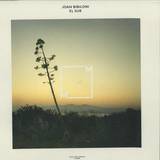
Staying on the Mediterranean coast for their third release, Music From Memory this time shift their attention to the work of Mallorcan musician Joan Bibiloni. TIP!
Primarily a guitarist, Bibiloni was creating music at an early age, releasing his first single at the tender age of 15. In his twenties he formed Spanish progrock outfits Zebra and Euterpe where he would meet Pepe Milan, the two of them becoming the bluesy folk duo 'Milan & Bibiloni'. Bibiloni himself would later go on to play with a number of luminary musicians such as Larry Coryell, Daevid Allen and John Cage to name but a few.
In 1982 Bibiloni set up his own label Blau in order to highlight the muchoverlooked work of musicians not only on his home island of Mallorca but across the Balearic Islands. In doing so he created a platform not only for
local talent but also for his own music to breathe a new life, much influenced by the landscape and life that surrounds the islands.
Whilst Bibiloni's first solo releases on his Blau imprint have stronger echoes of contemporary Jazz fusion of the time, it is on the album known as 'Una Vida Llarga I Tranquila' where Bibiloni really began to experiment with new sounds
and technologies; fusing tape loops, drum computers and synthesizers.
Taking these more electronic infused works as a departure point for the compilation and drawing on material from across his following five albums, 'El Sur' sets out to highlight Joan Bibiloni's unique ambient fusion and sun-drenched Mediterranean beach boogie.
Warehouse Find!
Vienna-based producer Sam Irl popped up on our radar a couple of years ago following stellar releases on Jazz & Milk, but honestly we should have been paying far closer attention as this guy has been making the best crunchy, MPC-driven jazz-infused House music dating right back to 2006. EP's for S3A's Sampling As An Art and collaborative projects with Patrick Pulsinger and Dusty have won him fans including Gilles Peterson (leading to a release on Brownswood), Mr Scruff and Session Victim amongst many others. His live sets have also seen him perform at the hallowed grounds of Panorama Bar and Sonar Festival.
For his debut EP here on Freerange Sam has delivered four tracks which perfectly showcase his production skills and knowledge of what makes a dance floor tick, kicking off with title track Rain Technique. Quirky keys and a playful groove help build a warm and charming vibe, light and bouncy yet deep and driving enough to get your dance on to.
Trust follows with loping, lopsided percussion forming the basis of the groove, sparse Rhodes pads punctuating the beat and adding just the right musical element to the mix without cluttering the beats or compromising the sense of space.
Flipping over we have All That's Left which sees Sam utilising his trusted TR606 for some lovely snappy snares and sizzling hihats. Chiming arpeggios join the repeating chord riff creating another simple yet uplifting and playful mood which can't fail to get under your skin. Closing the EP we have a wonky, shuffling house track which once again shows Sam proving less is more, sampling his key elements into the MPC and jamming out the arrangement in a live and improvised way which brings a fresh, somewhat naive appeal to the production.
dark green repress!
Agents Of Time are back on Afterlife with the Midnight Drive In Santiago EP, following their debut Forest Of Lies in 2018. Known for their distinct, synth-driven take on electronic music, the duo showcase their production prowess with four tracks that demonstrate their ability to tap into your emotional centre with varying styles.
"Return Of The Super Ape" was the final revelation from Lee Perry’s Black Ark Studio, a psychedelicized dub journey into uncharted sonic territories. The longplayer is now state-of-the-art remastered by Pete Norman (Finyl Tweek) and restored with original press artwork complete with inner disco sleeve!
The album from 1978 is the final chapter in the trilogy of albums in the period from 1976 - 1978 following "Scratch The Super Ape" (aka "Super Ape") and "Roast Fish & Cornbread". Produced, mixed and arranged by Lee Perry at the Black Ark Studio featuring on all tracks the skills of The Upsetters and additional vocals by The Full Experience on "Dyon-Anasaw" and "Tell Me Something Good". The frontsleeve artwork image was created by Lloyd Robinson (also known as the singer of the Studio One classic "Cuss Cuss").
Reggae expert Jeremy Collingwood says: "The Return Of The Super Ape that surfaced later in the year 1978 saw Perry way off the mainstream with a set that owed much to jazz with its loose structure and horn breaks. The title track took an early production from Perry, U-Roy's " OK Corral", and reshaped it into another futuristic outing - just like the original that had been a decade earlier. At the time few knew what to make of it and over the years its lack of proper re issue had meant it's remained a hidden Perry gem. It also marked the end of a hugely creative period at the Black Ark."
Tracklisting / side-split
Side One
A1 Dyon-Anasaw
A2 Return Of The Super Ape
A3 Tell Me Something Good
A4 Bird In Hand
A5 Crab Yars
Side Two
B1 Jah Jah Ah Natty Dread
B2 Psyche & Trim
B3 The Lion
B4 Huzza A Hana
B5 High Rankin Sammy
• Follow-up to the highly acclaimed dub album Super Ape, the album like its predecessor, was produced by Lee ‘Scratch’ Perry. This was the last album recorded by The Upsetters before Perry closed down his Black Ark Studio.
• The remastered album showcases the production skills of undisputed dub master with insanely layered textures and technical wizardry. With musical backing The Upsetters – Boris Gardiner, Mikey Richards, Sly Dunbar, Benbow Creary, Earl ‘Chinna’ Smith, Winston Wright, and Keith Sterling.
• Remastered by Pete Norman at Finyl Tweek
• Coloured Inner Bag
'Standard Tuning' ist der letzte Song, der in den Knave Studios in Leeds im Rahmen der Aufnahmen zu bdrmm's gefeiertem zweiten Album 'I Don't Know' aufgenommen wurde.
Die 10" kommt mit einem Remix des Albumtracks 'Alps' von Nathan Fake, einer geätzten B-Seite und exklusivem Artwork von Bandmitglied Jordan Smith und ist weltweit auf nur 700 Exemplare limitiert.
Transcendental outernational funk and psychedelic jazz from mystery L.A.- based collective Sun Atlas
Little is known about Sun Atlas. The group members are hidden behind masks and costumes to keep their identities secret and to put the focus entirely on the music and oneness. A sense of community and universal spirit as an alternative to idolization and individualism is heavily reflected in their eclectic musical style.
The sound of Sun Atlas is mystical and cosmopolitan, combining afrobeat, cinematic soul, spiritual & ethio jazz with space sounds, hiphop-breaks and a garage funk vibe.
Their cryptic first 45 single "The Mystic Parade" b/w "Grand Theft" sold out immediately after release and has often been mistaken for either "lost" hiphop samples, 70s habibi funk or another project in disguise from the inner circles of the Mocambo, Big Crown or Daptonefamilies (which it is not).
Return To The Spirit picks up where Sun Atlas' first single leftoff, with everyone wondering where the journey might lead. With the door to a colourful universe opened, the full-length format gives time & space for further exploration.
The ltd.first vinyl edition comes in black vinyl in a deluxe handmade tip-on sleeve.
Tillla is 19 year old prodigal piano player Mateo Davis, a graduate of Purcell (Tirzah, Mica Levi, Jacob Collier) & a polymath musician, producer & mixer.
Third Person is Tillla's debut EP, a 13 track sprawling opus the then-18-yr-old made alone in his bedroom on a modular synth and dodgy copy of Ableton. The musicianship, depth and technical creativity in this record really is something that should be noted.
Done and dusted! That could have been the motto of the WPBH series back when it started as an offshoot for sample-based house experiments by the core We Play House Recordings crew.
However, according to Discogs WPBH is NOT a real label, so who are we to invent mottos for imaginary labels?
But as we digress the music hits us hard and straight up. Uit De Hoogte brings us rawness...and then some. A touch of Dance Mania, a hint of smoothness, a dose of drum machine magic and a whole lot of attitude. Five tracks to stir up your dancefloor, your body and your soul. On a label that does not exist... How underground can one get?!
Coming up on WPH & related further in the year will be new material by Red D on his Red Basics outlet, more WPH U.S. Series and possibly also some stuff they don’t yet know about themselves.
Incubus released their critically acclaimed studio album "Morning View" on October 23, 2001 and was celebrated by fans and the music industry alike. The album went double platinum and spent 60 weeks at number 2 on the Billboard 200.
Now the band is releasing the re-recording of the highly acclaimed double album entitled "Morning View XXIII".
"About 23 years ago, we rented a house by the sea to start an art experiment. The unfamiliar and expansive surroundings helped us find the FLOW state we had been longing for, and the songs that became known as 'Morning View' have since become an integral and important part of our lives," says Brandon Boyd.
"That album helped make our little art experiment called 'Incubus' a way of life, and here we are, some 23 years later, ushering in a new phase of its existence. 'Morning View XXIII' is a re-recording of the 2001 album and is the result of our desire to honor that legacy, but also to reinterpret it as musicians who have played these songs night after night with much love over the last 23 years. See you on the road soon!"
With 'Stone Flute', the free-improvising duo's third studio album proper, Galecstasy returns to the universe of synthesizers to deliver an aural odyssey, conjuring the ancient tones of a forgotten world.
The album was entirely conceived and recorded in, and around, the majestic landscapes of Joshua Tree National Park in the magnificent high desert of southern California. From atop the mountain, the two sonic surveyors were witness to a 360 degree view of the stars at night. From above, the giant rocks looked like immense wise faces looking up at the sky, or even huge bodies resting on the Earth and looking up at space. It was during this time that Galecstasy started a ritual that ended up being called the “Moon Cruise”. This would involve waiting for the full moon to rise and then driving into the national park after dark. They would turn off the headlights of the car and drive slowly through the alien landscape lit up by the moon. Boulder fields took on the shape of temples; faces carved into the rocks everywhere they looked; giant heads with smiles or haunting expressions; and the knowledge that people had been living, dancing, and making music here for thousands of years. It was during these enchanting escapades that 'Stone Flute' was conceived.
In the mountain-top recording studio, the band were utilizing every potential space to tap into the best vibrations the land had to offer. Where the mic was placed: Perhaps a giant boulder once stood, or an ancient tree. One could feel the different energies of every room. The fireplace in the living room was built of giant lava rocks for the music to swirl around. Sounds would spill and climb around the house.
"The living room was just a beautiful tangle of synthesizers and plants. It was an inspiring place to make great records. We channeled the music of the boulders buoyed by the energy shooting up from the fault lines. The good feelings emanated from the studio, it had become our own temple and the birthplace of 'Stone Flute'."
With 'Stone Flute', the free-improvising duo's third studio album proper, Galecstasy returns to the universe of synthesizers to deliver an aural odyssey, conjuring the ancient tones of a forgotten world.
The album was entirely conceived and recorded in, and around, the majestic landscapes of Joshua Tree National Park in the magnificent high desert of southern California. From atop the mountain, the two sonic surveyors were witness to a 360 degree view of the stars at night. From above, the giant rocks looked like immense wise faces looking up at the sky, or even huge bodies resting on the Earth and looking up at space. It was during this time that Galecstasy started a ritual that ended up being called the “Moon Cruise”. This would involve waiting for the full moon to rise and then driving into the national park after dark. They would turn off the headlights of the car and drive slowly through the alien landscape lit up by the moon. Boulder fields took on the shape of temples; faces carved into the rocks everywhere they looked; giant heads with smiles or haunting expressions; and the knowledge that people had been living, dancing, and making music here for thousands of years. It was during these enchanting escapades that 'Stone Flute' was conceived.
In the mountain-top recording studio, the band were utilizing every potential space to tap into the best vibrations the land had to offer. Where the mic was placed: Perhaps a giant boulder once stood, or an ancient tree. One could feel the different energies of every room. The fireplace in the living room was built of giant lava rocks for the music to swirl around. Sounds would spill and climb around the house.
"The living room was just a beautiful tangle of synthesizers and plants. It was an inspiring place to make great records. We channeled the music of the boulders buoyed by the energy shooting up from the fault lines. The good feelings emanated from the studio, it had become our own temple and the birthplace of 'Stone Flute'."
Im Jahr ihres dreißigsten Band-Geburtstags, schauen die DONOTS zurück auf die vergangenen drei Dekaden und können es mit Kopfschütteln überhaupt nicht fassen, dass das Durchbruchs Album "POCKETROCK" am 8. Januar schon 23 Jahre alt wurde... Vergriffen ist die im Jahr 2001 erschienene Platte mit essentiellen frühen DONOTS-Hits wie "Whatever Happened To The 80s", "Room With A View", "Superhero" oder "Today" nach so einer langen Zeit natürlich schon längst. Die STANDARD VERSION gibt es nun als Wiederauflage auf 180g Vinyl in roter Farbe, mit bedruckten Maxi-Innentaschen in einer Kastentasche und im originalen Artwork.
Love Love host a collaborative release by two of the freshest contemporary Avon producers, Best Pest and Kursa. Kursa (also one half of S.Murk) has built a notable following in the UK as well as in the USA, playing out often at big stateside events with his own style of tight, maximalist bass music - think Tipper, Eprom, Noisia etc… Ben Pest is no stranger to Love Love with 2 previous solo releases under his belt, best known for his crunchy techno & electro and ripping hardware live-sets. Here they come together for a 5 track genre-hopping EP, each flexing their respective production sensibilities, splicing elements of dubstep, grime, hardcore & garage together, along with a healthy dose of multi-dimensional sound design, to make some of the noisiest modern dance music going.
Early support from: Clouds, Giant Swan, Rob Hall, A Made Up Sound, Om Unit, Nikki Nair, Luke Sanger, Deft, Warlock, Second Storey...
"Es ist kein Gospel, kein Soul, kein Blues, kein Rock'n'Roll. Es ist alles davon - und das aus gutem Grund.", sagt der Künstler selbst über sein neues Album 'Cut To Black', sein erstes Studioalbum seit 'Know Where To Run' von 2016 und sein insgesamt zehntes. Wenn man so will die musikalische Fortsetzung seiner im September 2021 erschienenen Memoiren "Up Above The City, Down Beneath The Stars".
Nach neun Studioalben, darunter das 96er Werk 'Oedipus Schmoedipus', (mit Gastperformances von Jarvis Cocker, Nick Cave und Billy McKenzie (The Associates)), das Mercury Prize nominierte 'Soul Murder' (1999), und sein jüngstes Album, 'Know Where To Run', das durch eine US-Tour mit Nick Cave & The Bad Seeds - nach 23 Jahren - inspiriert wurde, bewegt sich das neue Album des Magazine, The Birthday Party und ehemaligen The Bad Seeds Bassisten, das Elemente aus Soul, R&B, Hip-Hop und Funk mit künstlicher Intelligenz kombiniert, Stilistisch von hedonistischen Limousinenfahrten durch die Disco der frühen Achtziger ('Manhattan Satin') bis zur futuristischen Klanglandschaft eines Stücks wie 'Was it a Dream?'. Im Zentrum stehen drei Tracks, die mit dem alten Aberglauben an den Blues als Musik des Teufels und der Kirche als Zentrum von Beichte und Erlösung aufräumen: 'These Would Be Blues', 'Please Don't Call On Me' und 'Amen White Jesus'. Wie immer erfreut sich Adamson an raffinierten Wortspielen und assoziativen Klang- und Bildwelten.
"Imagine: It’s sometime in the back half of the 19th century, America. You’re sitting in the parlor of your mansion, or in the only room of your shack; things are dusty and smell like sweat and hair, no matter how wealthy you may be. You don’t own a phonograph, and you don’t know who Tony Hawk is, but you have an inkling of how good the word 'shred' is going to feel when it enters the local slang. Suddenly, a tall, elegant figure with beautifully maintained fingernails emerges from some corner of the room, carrying a guitar. He says in a soft voice, 'I have a transmission for you, from the coming few centuries. Would you like to hear it? I figured you wouldn’t have a dongle, so I brought my guitar.' You may be apprehensive, but you shouldn’t be. Shane happens to be an internationally renowned virtuoso of the guitar. Specifically, he’s the kind of virtuoso who is as deep on style as he is on technique. His technical prowess is almost maddeningly complete; aiming paradoxically for the yards-long target called “breadth” he’s somehow hit all of it, 500 arrows piercing every pore of the landscape. He has that much technique not for the sake of guitar worship but to best bring the music forth clearly and in his own hand, like a pearl formed in a specific sea. I know this because I’ve sat next to him in multiple countries and American states and seen him deliver transmissions of that extreme honesty, with that extreme capability. Like Derek Bailey’s 'Ballads,' this record brings you into the room and the breath of a true musician whose mastery does not overshadow his appreciation of the music that inspired it. The title, 'Repertoire,' underscores the beautiful songs he chose to perform, all standards of 20th century musical excellence. The in-time persistence of his blues-walked 'Lonely Woman.' The grand registral descent he performs on 'Pithecanthropus Erectus,' like a rare document of the trip down from Everest. Dig how 'Better Get Hit in Your Soul,' emphasizes the folk blues water coursing through Mingus’s Ellingtonia, how Aphex Twin’s 'Avril 14' and the Minutemen’s 'Cohesion' sound so much older than Cage’s 'Totem Ancestors.' 'Repertoire' puts forth the idea that time is arrangement: time and arrangement are each only as successful as they are faithful to their origins and expansive in their style. Again, lest you fear the alien smoothness some associate with the concept 'virtuoso,' remember here we’re dealing with a time- traveler. His virtuosity is home grown, born of human work rather than some abstract or divine touch; the aim is not to go beyond the realm of human technical possibility but to expand it in the direction of human, meaning, timely. This guy can play anything, and for you, for this record, which sounds intimate and as present as a transmission from a time-traveler, he chooses to."—Wendy Eisenberg
With love from Northern Europe...
Erotic Mondo's hidden treasure!
Long-awaited analog reissue of two Monica Lassen album titles
A woman erotic work produced in Japan with the setting of "A work created for the enjoyment of men and women by a Swedish female musician named Monika Lassen, who is also active as a sexual psychologist.''
Mondo's hidden treasure.
This is a rare and unusual record, with sounds that overlap with the dazzling sounds of jazz, rock, lounge, psych, etc.
The sequel was released one year after the previous work ‘Woman’ was well received. It's an erotic Japanese groove that knows no bounds, with more moaning voices than the previous work, heavy fuzz guitar, piercing organ, and sexy scat!
A total concept album consisting of the same song at the beginning and end of both sides.