"CAM Sugar is thrilled to present Jeymes Samuel’s Spaghetti Western Collection, a selection of rare cuts from Italian Western film soundtracks (1963–1972), curated by the acclaimed father of the contemporary Spaghetti Western genre, BAFTA-winner director (The Harder They Fall, The Book of Clarence) and singer-songwriter Jeymes Samuel (The Bullits, Executive Music Consultant for The Great Gatsby alongside Jay-Z and Baz Luhrmann, as well as collaborator of Gorillaz and Talib Kweli, Jay Electronica). The English artist has also supervised the art direction of the products – painting the cover artwork by hand – compiled the music selection and produced two new original tracks. 2-LP DELUXE VERSION 2LP, a 20-track deep dive into the CAM Sugar catalogue casting a light on the trademark Italian sound that shaped Spaghetti Western, the legendary film genre birthed 60 years ago from the brainchild of Sergio Leone A Western Saloon Inspired Box Set with additional artwork for the box set. Exclusive 7” featuring an original song written and composed by Jeymes Samuel and an instrumental version of the song. Exclusive 10” featuring an original song written and composed by Jeymes Samuel with a CAM Sugar Sample and an unreleased poem by Regina King. Exclusive Official and unreleased story board from The Harder They Fall by Dwayne Turner Exclusive Interviews by Jeymes Samuel with The Harder They Fall protagonists Regina King and David Oleyowo, included in a booklet that will also feature content from the CAM Sugar Archives: Original Scores and Movie Posters One Dollar mini poster customized with Jeymes Samuel’s portrait in pure Spaghetti Western style THE STANDARD 2LP and CD versions:Featuring the 20 tracks selected by Jeymes Samuel and the exclusive booklet, including interviews By Jeymes Samuel to The Harder They Fall protagonists Regina King and David Oleyowo as well as content from the CAM Sugar Archives: Original Scores and Movie Posters.
"
Search:kw
University, the Crewe-based four-piece formed of Zak Bowker (vocals/ guitar), Ewan Barton (bass), drummerJoel Smith and Eddie (mascot), release their debut album, McCartney, It'll Be OK.
Recorded with producer Kwes Darko (Sampa The Great, Denzel Curry) at Damon Albarn's Studio 13 in London, McCartney, It'll Be OK furthers the extremely exciting beginnings of University's 2023 debut EP, Title Track, with the hooks now brighter and more melodic, the breakdowns heavier and the lyrics more refned. The band recorded McCartney, It'll Be Alrighttotally live, and it retains the delightfully unhinged energy that's defned their work so far, with everything thrillingly close to falling apart at any minute.
- A1: Big Mike's; Drums, Bass, Clarinet, Organ, Mixed By, Written-By – Dijon (7); Guitar, Piano, Vocals
- A2: Scratching; Mixed By, Written-By – Dijon (7); Producer
- A3: Many Times;Drums, Baritone Guitar, Written-By – Michael Gordon (30); Guitar
- A4: Annie; Acoustic Guitar, Written-By – Dijon (7); Bass – Michael Gordon (30); Mixed By, Written-By – Jack Karaszewski; Saxophone
- A5: Noah's Highlight Reel; Clarinet, Guitar, Mixed By, Written-By – Dijon (7); Vocals
- A6: The Dress; Bass – Gabe Noel, Sam Wilkes (2); Drums, Synth, Written-By – Dijon (7); Guitar – Noah Le Gros; Keyboards – John Keek; Mixed By – Andrew Sarlo; Vocals
- B1: God In Wilson; Drums – Henry Kwapis; Guitar, Synth, Mixed By, Written-By – Dijon (7); Mixed By – Jack Karaszewski
- B2: Did You See It; Instruments
- B3: Talk Down; Bongos – Henry Kwapis; Drum Programming, Mixed By, Written-By – Jack Karaszewski; Drums, Synth
- B4: Rodeo Clown; Clarinet – John Keek; Mixed By – Jack Karaszewski; Written-By, Guitar – Dijon (7); Written-By, Guitar
- B5: End Of Record; Baritone Guitar, Bass, Synth – Michael Gordon (30); Mixed By – Jack Karaszewski; Mixed By
- B6: Credits!; Written-By, Mixed By – Dijon (7)
[a] A1 Big Mike's; Drums, Bass, Clarinet, Organ, Mixed By, Written-By – Dijon (7); Guitar, Piano, Vocals [Additional], Organ, Mixed By, Written-By – Michael Gordon (30); Mixed By – Jack Karaszewski; Slide Guitar – Noah Le Gros
[b] A2 Scratching; Mixed By, Written-By – Dijon (7); Producer [Additional] – Michael Gordon (30); Producer [Additional], Mixed By – Jack Karaszewski
[c] A3 Many Times;Drums, Baritone Guitar, Written-By – Michael Gordon (30); Guitar [Additional], Written-By – Dijon (7); Programmed By [Additional Programming], Mixed By, Written-By – Andrew Sarlo
[d] A4 Annie; Acoustic Guitar, Written-By – Dijon (7); Bass – Michael Gordon (30); Mixed By, Written-By – Jack Karaszewski; Saxophone [Casio Sax Replica] – John Keek; Vocals [Additional] – God's Children (11)
[e] A5 Noah's Highlight Reel; Clarinet, Guitar, Mixed By, Written-By – Dijon (7); Vocals [Additional], Bass, Synth, Written-By – Michael Gordon (30); Vocals [Additional], Written; By – Noah Le Gros
[f] A6 The Dress; Bass – Gabe Noel, Sam Wilkes (2); Drums, Synth, Written-By – Dijon (7); Guitar – Noah Le Gros; Keyboards – John Keek; Mixed By – Andrew Sarlo; Vocals [Additional] – Michael Gordon (30); Written-By – John Keuch
[h] B2 Did You See It; Instruments [All], Written-By – Dijon (7); Mixed By – Jack Karaszewski
[i] B3 Talk Down; Bongos – Henry Kwapis; Drum Programming, Mixed By, Written-By – Jack Karaszewski; Drums, Synth [Strega], Mixed By, Written-By – Dijon (7); Guitar, Baritone Guitar – Michael Gordon (30); Keyboards – John Keek; Written-By – John Keuch
[j] B4 Rodeo Clown; Clarinet – John Keek; Mixed By – Jack Karaszewski; Written-By, Guitar – Dijon (7); Written-By, Guitar [Additional], Bass – Michael Gordon (30); Written-By, Slide Guitar – Noah Le Gros
[k] B5 End of Record; Baritone Guitar, Bass, Synth – Michael Gordon (30); Mixed By – Jack Karaszewski; Mixed By [Stem Mix] – Andrew Sarlo; Written-By, Guitar, Mixed By – Dijon (7)
Swollen Members rose in the underground Hip Hop scene with a series of classic albums that made them one of the genre's brightest stars. Founded by Madchild, Prevail, and DJ Rob the Viking, Swollen Members have stayed independent under their own label Battle Axe Records. The have returned in 2009 stronger than ever with Armed to the Teeth, which features appearances from Talib Kweli and Tech N9NE.
- Get Shot
- Below The Clouds
- December 26Th (Skit)
- Brooklyn Heights
- Certified (Feat. Coast Contra)
- Cartunes (Skit)
- Hero (Feat. Inspectah Deck)
- Life Music (Feat. Stricklin & Speech Of Arrested Development)
- Below The Clouds (Feat. Blu)
- St. Roberts (Skit)
- Heat Of The Moment (Feat. Pav Bundy)
- Jordan Theory
- Money Problems (Feat. Chè Noir)
- Scarborough (Skit)
- P.p.e
- Outside In (Feat. C-Red & E Smitty)
- Connections
- Plant Based
- December 25Th (Skit)
- All I Want (Feat. Wordsworth)
- Below The Clouds
- Al Dente (Pt.1)
As we saw with their debut release "Breukelen Story", Masta Ace & Marco Polo once again drop a deluxe edition of their sophomore LP "Richmond Hill". This new version includes 4 bonus tracks not previously available on the album—three remixes (one featuring Talib Kweli) and one brand new song from Ace & Marco.
"Richmond Hill", the highly anticipated follow up to Masta Ace and Marco Polo's "Breukelen Story", is inspired by Marco's childhood in the titular neighborhood, a small town in Ontario, just outside of Toronto. Between interstitials about Marco's passion for hip-hop and cartoons, his struggle with addiction, and the support of his parents, Marco Polo and Masta Ace tackle the issues of the day head-on with clarity, the rapper using his decades-worth of rapping experience to slice through the producer's warm soul samples and crisp percussion. A cinematic journey that explores how the past echoes through the present, the album welcomes guest appearances from notable names from all eras of rap history, including Inspectah Deck, Coast Contra, Blu, Che Noir, Speech of Arrested Development, Masta Ace's longtime collaborators Stricklin and Wordsworth, and many more.
s Below The Clouds [Remix] (feat. Talib Kweli)
[u] Get Shot [Marco Polo Remix]
[v] Below The Clouds [Roselle Remix] (feat. Blu)
[s] Below The Clouds [Remix] (feat. Talib Kweli)
[u] Get Shot [Marco Polo Remix]
[v] Below The Clouds [Roselle Remix] (feat. Blu)
- Anafera Chiboda
- Princess Wanga
- Ma Gitala
- Chemwa
- Mwadala
- La Bwino
- Zili Komweko
- Po Lankhula
For their third album on Bongo Joe, Madalitso Band takes a new direction.
After two records capturing the raw intensity of their live performances, the Malawian duo ventures for the first time into the possibilities of the studio — without ever compromising their signature style or energy.
Armed with their handmade babatone, a guitar, and their interwoven voices, Yobu and Yosefe craft a sound at the crossroads of banjo music, kwela, gospel, and African folk. An acoustic trance that’s both minimal and vibrant, deeply rooted in tradition yet undeniably fresh and contemporary. On Ma Gitala, they add new textures: layered vocals, playful percussion, melodic surprises, and guests from their close and family circles.
Always guided by instinct, the band reveals a more intimate and narrative side of their universe — full of memories, spontaneity, and close-knit complicity. An album that captures the joy and creativity of two artists who turned the street into a stage, and the stage into a playground.
- Anafera Chiboda
- Princess Wanga
- Ma Gitala
- Chemwa
- Mwadala
- La Bwino
- Zili Komweko
- Po Lankhula
For their third album on Bongo Joe, Madalitso Band takes a new direction. After two records capturing the raw intensity of their live performances, the Malawian duo ventures for the first time into the possibilities of the studio - without ever compromising their signature style or energy. Armed with their handmade babatone, a guitar, and their interwoven voices, Yobu and Yosefe craft a sound at the crossroads of banjo music, kwela, gospel, and African folk. An acoustic trance that"s both minimal and vibrant, deeply rooted in tradition yet undeniably fresh and contemporary. On Ma Gitala, they add new textures: layered vocals, playful percussion, melodic surprises, and guests from their close and family circles. Always guided by instinct, the band reveals a more intimate and narrative side of their universe - full of memories, spontaneity, and close-knit complicity. An album that captures the joy and creativity of two artists who turned the street into a stage, and the stage into a playground.
- A1: Explicit
- B1: Instrumental
Serving as a lead single for Montréal-based artist NARCY’s new double LP “To Be An (Arab)”, COMMUNITY is a centerpiece of a banger.
Led by the legendary Dave Chappelle, NARCY, Niko Is, Talib Kweli, Donnell Rawlings, Mo Amer and Issa Ali reminisce on the 2020 pandemics' Summer Camp Cornfield Shows led by Dave. "COMMUNITY" is a high-level (no pun intended) posse cut reminiscent of ATCQ's "Scenario" - banging and uplifting energy and smothered in bars. Produced by 2oolman, Federico 'c sik' Lopez and NARCY. Limited Edition Run.
- Amkhapaa
- J3: Z
- T-Hu Ri Toh
- Mic Mo
- Paer Tahm
- Dtorumi
- Lom Tum Lai Kwee
- Ti-Di-Ti Naoo
CLEAR SMOKE VINYL[32,35 €]
SoiSong ist das helle, atemberaubende und kurzlebige Projekt, das 2007 von Ivan Pavlov (CoH) und Peter ,Sleazy" Christopherson (von Coil) gegründet wurde. Das Duo kombinierte Pavlovs kompromisslos visuelle digitale Ästhetik mit Sleazys dekadenter, düsterer und skurriler Herangehensweise an die Kreation. Die beiden benannten das Projekt nach dem thailändischen Wort für `zwei' (Song) sowie nach den schäbigen Rotlichtvierteln ("düstere Soi / Gasse") von Bangkok. Gemeinsam entwickelten sie eine einzigartige, elegante, aber eher kryptische Musiksprache. Das Debütalbum "xAj3z" von SoiSong ist eine digitale Referenz an den Jazz: scheinbar akustische, überschäumende, Grenzen sprengende, digitale Unterhaltung, in der Lichtstrahlen und tropische Hitze mit Nullen und Einsen unterlegt sind. Das Album ist ein definierendes Statement und ein Wegweiser für die Möglichkeiten in der (damals) entstehenden Musiklandschaft der späten 2000er. Ohne den Wunsch, kommerziell zu sein, war SoiSong nicht an die Konventionen einer einfach zu definierenden Verschlagwortung verpflichtet, und in ihrem eigenen, ,neuen, noch nicht kategorisierbaren Genre", wobei "xAj3z" ein Meisterwerk ist. "xAj3z" mischt frei Musikstile und kombiniert verschiedene Ansätze des Musizierens: Künstliche Vokalisten werden von echten Drums begleitet, Jazz-Noir-Arrangements treffen auf die zarte Melodik der Südsee, und Computer werden warm und organisch zum Klingen gebracht. Das Album zeigt keine offensichtliche Genre-Definition und zielt darauf ab, mit dem Hörer auf höchster emotionaler Intensität zu kommunizieren, oft lyrisch, manchmal dunkel, manchmal amüsant und sogar erhebend.
Black Vinyl[29,83 €]
SoiSong ist das helle, atemberaubende und kurzlebige Projekt, das 2007 von Ivan Pavlov (CoH) und Peter ,Sleazy" Christopherson (von Coil) gegründet wurde. Das Duo kombinierte Pavlovs kompromisslos visuelle digitale Ästhetik mit Sleazys dekadenter, düsterer und skurriler Herangehensweise an die Kreation. Die beiden benannten das Projekt nach dem thailändischen Wort für `zwei' (Song) sowie nach den schäbigen Rotlichtvierteln ("düstere Soi / Gasse") von Bangkok. Gemeinsam entwickelten sie eine einzigartige, elegante, aber eher kryptische Musiksprache. Das Debütalbum "xAj3z" von SoiSong ist eine digitale Referenz an den Jazz: scheinbar akustische, überschäumende, Grenzen sprengende, digitale Unterhaltung, in der Lichtstrahlen und tropische Hitze mit Nullen und Einsen unterlegt sind. Das Album ist ein definierendes Statement und ein Wegweiser für die Möglichkeiten in der (damals) entstehenden Musiklandschaft der späten 2000er. Ohne den Wunsch, kommerziell zu sein, war SoiSong nicht an die Konventionen einer einfach zu definierenden Verschlagwortung verpflichtet, und in ihrem eigenen, ,neuen, noch nicht kategorisierbaren Genre", wobei "xAj3z" ein Meisterwerk ist. "xAj3z" mischt frei Musikstile und kombiniert verschiedene Ansätze des Musizierens: Künstliche Vokalisten werden von echten Drums begleitet, Jazz-Noir-Arrangements treffen auf die zarte Melodik der Südsee, und Computer werden warm und organisch zum Klingen gebracht. Das Album zeigt keine offensichtliche Genre-Definition und zielt darauf ab, mit dem Hörer auf höchster emotionaler Intensität zu kommunizieren, oft lyrisch, manchmal dunkel, manchmal amüsant und sogar erhebend.
Vinyl[22,27 €]
In the vibrant streets of Tembisa, South Africa, amidst the sprawling urbanity connecting Johannesburg and Pretoria, the story of Moskito began. Formed in 2001 by Mahlubi "Shadow" Radebe and the late Zwelakhe "Malemon" Mtshali, the group first emerged as a powerhouse of pantsula dancers. However, their undeniable passion for music soon led them down a new path_ one that would cement their place in kwaito history. Spending countless hours on the street corners of their township, where they were born and raised, Shadow and Malemon danced and sang with an infectious energy that attracted crowds. It wasn't long before the duo decided to channel their talents into a kwaito group, and after adding friends Patrick Lwane and Menzi Dlodlo, Moskito was born. (Pantsula dancing emerged in the 1950s among Black South Africans in townships and continually evolved until it became intertwined with kwaito music culture. The stylized, rapid foot movements and characteristic low-dancing became associated with kwaito as it took over South African urban culture into the early 2000s.) With limited resources, the group displayed immense creativity, recording demos using two cassette decks and instrumental tracks from other artists. They would rap and sing over an instrumental playing on one deck while the second deck records their performance. Their determination paid off when they submitted their demo to Tammy Music Publishers, who were captivated by Moskito's style. "Kwaito was the thing `in' at the time. If you did music you did kwaito. We wanted to fit in and actually it was easy," says Radebe. "We didn't have engineers in the group, so the first time in a real studio was with Percy and Thami to record Idolar." That same year, the group released their debut album, Idolar, under Tammy Music. The album was an undeniable success reaching gold status selling over 25,000 units and earning them a devoted fan base across South Africa and neighboring countries like Botswana, Swaziland, Namibia and Zimbabwe. Moskito collaborated with industry legends such as Chilly Mthiya Tshabalala, who was known for his work with Thiza and Spoke "H." They drew inspiration from Thami Mdluli a.k.a Professor Rhythm, who had dominated the disco scene back in the 80s and 90s. Mdluli helped with musical arrangements and executive produced the album and signed on producer-engineer Percy Mudau, while Shadow and Malemon took pride in composing most of their songs. Like many of the rising kwaito artists of the time, they didn't have music production or engineering backgrounds so they required support from engineers together their ideas down on tape. They were inspired from South African kwaito icons like Trompies, Mdu, Mandoza, and Arthur Mafokate, alongside international heavyweights like Snoop Doggy Dogg, Dr. Dre, 2Pac, and R. Kelly, Moskito created a sound that was uniquely theirs_a perfect blend of local flavor and global influence.
The incredibly elusive band Sault release their debut album 5 on Vinyl via independent record label Forever Living Originals. The record fuses African, soul, funk and post-punk vibes amongst other flavours. With support from Radio 6's Lauren Laverne and USA's KWRC and KEXP, the band are set to go from strength to strength becoming one of the most prolific bands of 2020 with a barrage of material up their sleeves
Dean Josiah Cover aka Inflo has been composing for Michael Kiwanuka, The Kooks, Tom Odell, The Jungle and Little Simz
- Almon Memela - Amapoyisa
- Cowboy Superman - Ntombi Kazipheli
- Mfongozi Guitar Players - Marabi Jazz
- Casper Shiki - Ngazula
- Elliot Gumede - Amasoka
- The Play Singer - Imitwalo
- The Play Singer - Kusile Dale
- Enoch Mahlobo And Shezi - Wenzani
- The Blind Man With His Guitar - Isoka Labaleka
- Nongomo Trio - Guga Mzimba
- The Play Singer - Nga Fika Ekaya
- Cowboy Superman - I Lele Insizwa
- Mbaqanga Guitar Trio - Come Again
- Cowboy Sweethearts - Sambamba Lomfana
- Cowboy Superman And Beauty - Kumnandi Kwazulu
- The Blind Guitar Player - Ungakhulumi
- Thoko And Almon - Mandlovu
- Zachariah And His Guitar - Abafana
- Mampondo And Sobantu - Themba Lami
- Baca Boys - Ngiyamqoma
- Dennis Khanyile - Thembile
- The Play Singer - U Ngi Cebe E Poisen
- Mike Khuzwayo And The Playboys - Zibedu
- The Blind Man And His Guitar - Unledo Wabantu
- Almon Memela - Lashona
"Amazing! Like stumbling on a treasure-trove of unheard Charlie Patton and Blind Willie McTell 78s, but imbued with the spirit of Mahlathini and Ladysmith." Joe Boyd
'But for this compilation of rescued songs masterfully restored from rare 78 rpm shellacs, few could imagine the diversely beautiful roots of Zulu Guitar Music emerging during the period 1950 – 1965. Story-tellers and master musicians appropriate outlaw personae, re-purpose country and western, Hawaiian and other styles, to stretch and challenge our notion of “the Zulu guitar”.
Twenty-five songs (18 on vinyl) plunge us into the depths of the migrant experience. Translations in the liner notes offer us glimpses of pugnacity, melancholy and heartache, all coloured by the paternalism that circumscribed the singers’ apartheid-dominated lives.
The early *mbaqanga* undertow in many of the songs subverts the wanderlust of Country and Western music into a fugitivity burdened by nostalgia. Something irretrievable has been lost, prompting a blending of ideas and cultures to make sense through thankless acts of musical divination. Inadvertently they have been thrust into the role of the antihero, where outwitting competition for lovers is as important as evading the Black Jacks (apartheid’s municipal cops) and their informants.
Considering the politically repressive period that this music emerges from, we can surmise that the specificity in the storytelling went a long way towards evading censure. But even when words are absent, there is a narrative arc suggested by the musical expression.
With most of the master tapes wilfully destroyed or lost, modern transcription and restoration techniques from the original shellac discs present the original sound most likely more clearly than ever heard before.'
Produced for reissue by Chris Albertyn and Matt Temple at Matsuli Music and Siemon Allen at Flatinternational.
Artwork design by Siemon Allen.
Liner note and translations by Kwanele Sosibo.
Audio restoration and lacquers by Frank Merritt at The Carvery and pressed at Pallas, Germany.
Original 78rpm recordings sourced from the collections of Chris Albertyn at Matsuli Music, and Siemon Allen at the Flatinternational Archive.
Chilean-born, Bristol-based DJ, producer, and vocalist Shanti Celeste is back with her highly anticipated second album, Romance, set for release on May 16 via the label head’s own Peach Discs, in collaboration with Method 808. Marking her debut LP on the cult London-based label, Romance sees Celeste fully embracing her artistic evolution, delivering a lush and deeply personal exploration of love, longing and self-discovery across its nine tracks. The album’s bubbling lead single, ‘Thinking About You’, is out now - an emotional and dancefloor-facing glimpse into Celeste’s new era with her voice at the fore.
Shanti Celeste has long been revered for her radiant and infectious sound in a vibrant blend of house and techno. Romance takes this signature style to new heights, exploring the depth of romantic and platonic relationships that permeates the record with a pop-infused sheen. With her vocals placed front and center for the first time, Celeste weaves a sonic tapestry that is as introspective as it is euphoric; it’s a love letter to romance, but also an ode to the transformative power of opening your heart.
For all of Romance's soft focus, it still functions for the dance floor - lead single ‘Thinking About You’ is poignant and heartfelt, driven by a shimmering groove and Celeste’s ethereal falsetto. Inspired by memories of a late friend, the song is a tribute to the enduring nature of love and loss. “He was my first boyfriend but also a really good friend,” Celeste shares. “He was a really important person in my life.” —a beautiful, danceable meditation on the power of remembrance.
The majority of Romance was crafted between Celeste’s home of Bristol and London, featuring collaborations with longtime friend and esteemed producer Batu on ‘Note to Self’, ‘Light as a Feather’ and ‘Softie’. The album also sees Celeste teaming up with Austrian-Ethiopian harpist Miriam Adefris, whose delicate instrumentation adds a celestial edge to tracks like ‘Butterflies’ and ‘Medicine’. It follows her previous smash hit ‘Ice Cream Dream Boy’ last summer, which was named a track of the year by both Mixmag and DJ Mag. Earlier this month, Shanti celebrated the release of the vinyl version with a packed-out in-store set at Phonica Records in Soho.
Shanti will be taking her Club Celeste event series to The Cause for the third year running on May 17, in celebration of the album release. The day & night party will feature sets from Shanti as well as Daisy Moon, Gabrielle Kwarteng, Lishy, Peach and Ryan Elliot b2b Ogazón. Tickets are available here: https://ra.co/events/2062135
With Romance, Celeste steps into her full potential, creating an album that is as deeply personal as it is universally resonant. The album arrives this summer via Method 808. Stream ‘Thinking About You’ now.
Ground-breaking afro-rock and jazz with Memphis soul roots on this lost 1972 gem. Lovingly restored and reissued by Matsuli Music
'Black Soul' from 1972 is the third and last known album by The Anchors, a soul group originally formed in Johannesburg's Alexandra township in 1968. Their first two albums, 'Soul Upstairs' from 1969 and 'Everything' from 1971, were issued on Teal's City Special label alongside other prominent South African soul groups of the era like The Beaters, The Movers and The Flaming Souls.
On 'Black Soul', The Anchors undergo a notable shift, moving away from their early Memphis soul influences towards a pioneering African-driven sound. These changes laid the foundations for an emerging afro-fusion scene in the years to come from groups like Batsumi, The Drive and Harari.
'Black Soul' features a who's who of intergenerational musicians from great South African bands over the decades. In addition to Zacks Nkosi, the renowned bandleader of the Jazz Maniacs and long-time member of the African Swingsters in the 1940s and 50s, this album includes kwela star Little Kid Lex Hendricks, known for his Columbia recordings of the late 1950s; as well as Zack's son Jabu Nkosi who would go on to play with The Drive, Roots and Sakhile; and Banza Kgasoane later a member of The Beaters, Harari and then Mango Groove.
Now remastered for its first release since the original 1972 pressing, this lost gem offers a revealing glimpse into the evolution of South African music during a transformative era.
Zacks Nkosi (Sax), Patrick Jabu Nkosi (Organ and Flute), Anderson Nkosi (Lead Guitar), Given Sabela (Bass Guitar), Kid Lex Hendrix (Sax), Banza Kgasoane (Trumpet), Peter Morake (Drums), Hamilton Nzimande (Musical Director).
Original LP issued in South Africa on GRC’s CBS label (LAB 4037) in 1972.
Produced for reissue by Chris Albertyn and Matt Temple at Matsuli Music, and Siemon Allen at Flatinternational.
Original vinyl sourced from the Flatinternational Archive.
Artwork restoration and design by Siemon Allen.
Audio restoration, mastering and lacquers by Frank Merritt at The Carvery.
Manufactured at Pallas, Germany.
LP + insert. A cosmically poetic duo playing Afro-Roots-Electro with a clear nod to spiritual jazz. Esinam Dogbatse (flute, synths, vocals, fx, percussion) | Sibusile Xaba (guitar, vocals, percussion).
ESINAM & Sibusile Xaba is a meeting of nomadic, wandering and kindred spirits in music. Both artists draw upon their ancestry: Belgian-Ghanaian(ESINAM) and Kwazulu Natal-South Africa (Sibusile Xaba) through a unique connection, a deep artistic and spiritual level, they use rhythms and grooves to translate stories to the audience. Their vocal chanting enhances trance to rhythmic patterns that grace us by melodies of the future and past.
On April 25th 2025, ESINAM & Sibsile Xaba will release their first joint album entitled 'Healing Voices'.
This album is a reflection of the kaleidoscopic multitude of musical inspirations running through the veins of two very talented solo artists. Both multi-instrumentalists, they provide many different layers to their music. Each track is a reflection of their cross-pollination. Musically inspired by Ghanaian Highlife and traditional songs from Zulu and Ewe culture, but with a distinct contemporary interpretation where their acoustic sound is enhanced by electronic gadgets.
As multi-instrumentalists, the two artists translate messages from their ancestors through rhythms and grooves. Their vocal chanting enhances trance to rhythmic patterns that grace us by melodies of the future and past.
Thanks to their Belgian-Ghanaian and South-African roots, they are unique in their being, strong in their union and connected on deep artistic and spiritual levels. The collaboration between ESINAM and Sibusile Xaba is bringing healing to body and soul.
In 2018 Esinam discovered Sibusile Xaba during his European (solo)tour. She was enchanted by his musical energy and craftsmanship and invited him as a vocal guest feature on the track 'Flowing River', from her debut album 'Shapes in Twilights of infinity'. When she was asked at the first edition of WOMAD Festival in South Africa if she wanted to collaborate with a 'local artist', she didn't have to think twice.
So in October 2022, Esinam and Sibusile seized this opportunity to dive into the rehearsal and recording studio, and discover and combine each other's musical universes to shape up new music together.
In May 2023 this collaboration continued with rehearsals, recordings and a first European tour with performances in Belgium, The Netherlands, France, Germany and Slovenia.
In March 2024 they released the first single 'Africa Wola' out of the fothcoming album. In November 2024, they released a remix of their first single by South-African DJ and producer DaCapo and played at Visa for Music in Morocco.
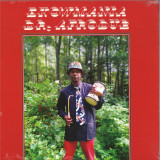
Seminal Afro-dub album "Dr. Afrodub" by Ghanaian Ekowmania aka Ekow Alabi Savage. The drummer, percussionist and singer who's played with Jimi Tenor & Kabukabu for more than 20 years explores the fields of classic Roots Reggae, Afro and Dub as well as uptempo modern African rhythms and ballads. This Jimi Tenor produced album is an expansion of Ekowmania's tribute song to Kwame Nkrumah (which is also released as 7" with different versions) and Tenor's electronic loops, which they developed into a full album in guitar player Lauri Kallio's country side studio in Kiikala, Finland. The album kicks off with a very heavy, club-ready and UK reggae-styled album mix of "Kwame Nkrumah", following up with 200% intensity on the voodooesque rhythm explosions of "Twerk Your Mind", then taking a 360 degree turn with the smoothness and laidback vibes of "Kiikala Reggae". Throughout its 9 cuts "Dr. Afrodub" always approach the balance of beautiful song writing and intensity in rhythm and melody, visiting the excellent and classically crafted 70's Roots tune "Dub Souljah", the upfront & tempo-fueled "Lagos Heavy" and ending with DJ Sotofett's mix of the albums ballad "Me Know".
CUT WITH EXCELLENCE BY TIMMION CUTTING LAB IN HELSINKI FINLAND.
- A1: Montego Bay - Everything (Paradise Mix) 04 59
- A2: Atelier - Got To Live Together (Club Mix) 06 06
- A3: Golem - Music Sensations 04 56
- B1: The True Underground Sound Of Rome Feat. Stefano Di Carlo - Gladiators 05 26
- B2: Eagle Parade - I Believe 04 26
- C1: Dj Le Roi - Bocachica (Detroit Version) 05 28
- C2: Green Baize - Synthetic Rhythm 01 41
- C3: M.c.j. Feat. Sima - Sexitivity (Deep Mix) 05 30
- D1: Kwanzaa Posse Feat. Funk Master Sweat - Wicked Funk (Afro Ambient Mix) 06 31
- D2: Progetto Tribale - The Bird Of Paradise 06 29
- D3: Mbg - The Quite 06 59
Vol 1[28,99 €]
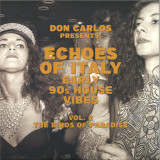
Googling “paradise house”, the first results to pop up are an endless list of European b&b’s with whitewashed lime façades, all of them promising “…an unmatched travel experience a few steps from the sea”. Next, a little further down, are the institutional websites of a few select semi-luxury retirement homes (no photos shown, but lots of stock images of smiling nurses with reassuring looks). To find the “paradise house” we’re after, we have to scroll even further down. Much further down.
It feels like yesterday, and at the same time it seems like a million years ago. The Eighties had just ended, and it was still unclear what to expect from the Nineties. Mobile phones that were not the size of a briefcase and did not cost as much as a car? A frightening economic crisis? The guitar-rock revival?! Certainly, the best place to observe that moment of transition was the dancefloor. Truly epochal transformations were happening there. From America, within a short distance one from the other, two revolutionary new musical styles had arrived: the first one sounded a bit like an “on a budget” version of the best Seventies disco-music – Philly sound made with a set of piano-bar keyboards! – the other was even more sparse, futuristic and extraterrestrial. It was a music with a quite distinct “physical” component, which at the same time, to be fully grasped, seemed to call for the knotty theories of certain French post-modern philosophers: Gilles Deleuze, Félix Guattari, Paul Virilio... Both those genres – we would learn shortly after – were born in the black communities of Chicago and Detroit, although listening to those vinyl 12” (often wrapped in generic white covers, and with little indication in the label) you could not easily guess whether behind them there was a black boy from somewhere in the Usa, or a girl from Berlin, or a pale kid from a Cornish coastal town.
Quickly, similar sounds began to show up from all corners of Europe. A thousand variations of the same intuition: leaner, less lean, happier, slightly less intoxicated, more broken, slower, faster, much faster... Boom! From the dancefloors – the London ones at least, whose chronicles we eagerly read every month in the pages of The Face and i-D – came tales of a new generation of clubbers who had completely stopped “dressing up” to go dancing; of hot tempered hooligans bursting into tears and hugging everyone under the strobe lights as the notes of Strings of Life rose up through the fumes of dry ice (certain “smiling” pills were also involved, sure). At this point, however, we must move on to Switzerland.
In Switzerland, in the quiet and diligent town of Lugano, between the 1980s and 1990s there was a club called “Morandi”. Its hot night was on Wednesdays, when the audience also came from Milan, Como, Varese and Zurich. Legend goes that, one night, none less than Prince and Sheila E were spotted hiding among the sofas, on a day-off of the Italian dates of the Nude Tour… The Wednesday resident and superstar was an Italian dj with an exotic name: Don Carlos. The soundtrack he devised was a mixture of Chicago, Detroit, the most progressive R&B and certain forgotten classics of old disco music: practically, what the Paradise Garage in New York might have sounded like had it not closed in 1987. In between, Don Carlos also managed to squeeze in some tracks he had worked on in his studio on Lago Maggiore. One in particular: a track that was rather slow compared to the BPM in fashion at the time, but which was a perfect bridge between house and R&B. The title was Alone: Don Carlos would explain years later that it had to be intended both in the English meaning of “by itself” and like the Italian word meaning “halo”. That wasn’t the only double entendre about the song, anyway. Its own very deep nature was, indeed, double. On the one hand, Alone was built around an angelic keyboard pattern and a romantic piano riff that took you straight to heaven; on the other, it showcased enough electronic squelches (plus a sax part that sounded like it had been dissolved by acid rain) to pigeonhole the tune into the “junk modernity” section, aka the hallmark of all the most innovative sounds of the time: music that sounded like it was hand-crafted from the scraps of glittering overground pop.
No one knows who was the first to call it “paradise house”, nor when it happened. Alternative definitions on the same topic one happened to hear included “ambient house”, “dream house”, “Mediterranean progressive”… but of course none were as good (and alluring) as “paradise house”. What is certain is that such inclination for sounds that were in equal measure angelic and neurotic, romantic and unaffective, quickly became the trademark of the second generation of Italian house. Music that seemed shyly equidistant from all the rhythmic and electronic revolutions that had happened up to that moment (“Music perfectly adept at going nowhere slowly” as noted by English journalist Craig McLean in a legendary field report for Blah Blah Blah magazine). Music that to a inattentive ear might have sounded as anonymous as a snapshot of a random group of passers-by at 10AM in the centre of any major city, but perfectly described the (slow) awakening in the real world after the universal love binge of the so-called Second Summer of Love.
For a brief but unforgettable season, in Italy “paradise house” was the official soundtrack of interminable weekends spent inside the car, darting from one club to another, cutting the peninsula from North to centre, from East to West coast in pursuit of the latest after-hours disco, trading kilometres per hour with beats per minute: practically, a new New Year’s Eve every Friday and Saturday night. This too was no small transformation, as well as a shock for an adult Italy that was encountering for the first time – thanks to its sons and daughters – the wild side of industrial modernity. The clubbers of the so-called “fuoriorario” scene were the balls gone mad in the pinball machine most feared by newspapers, magazines and TV pundits. What they did each and every weekend, apart from going crazy to the sound of the current white labels, was linking distant geographical points and non-places (thank you Marc Augé!) – old dance halls, farmhouses and business centres – transformed for one night into house music heaven. As Marco D’Eramo wrote in his 1995 essay on Chicago, Il maiale e il grattacielo: “Four-wheeled capitalism distorts our age-old image of the city, it allows the suburbs to be connected to each other, whereas before they were connected only by the centre (…) It makes possible a metropolitan area without a metropolis, without a city centre, without downtown. The periphery is no longer a periphery of any centre, but is self-centred”.
“Paradise house” perfectly understood all of this and turned it into a sort of cyber-blues that didn’t even need words, and unexpectedly brought back a drop of melancholic (post?)-humanity within a world that by then – as we would wholly realise in the decades to come – was fully inhuman and heartless. A world where we were all alone, and surrounded by a sinister yellowish halo, like a neon at the end of its life cycle. But, for one night at least, happy."

- For The Kids
- Send Some Flowers
- Sweet Baby Boy
- In The Club
- Fire In The House
- Omnia Sunt Communia
- Stuck In The Middle
- Lonely Boy
- I Don T Wanna Talk About Politics Feat Vic Ruggiero
- Two Sides Of Me
- What Is Wrong With Me
- For The Kids
- Send Some Flowers
- Sweet Baby Boy
They are in their thirties, meaning they are "too much too young" to have felt the vibrations of the ska revival of the late 1970s and early 1980s live, when The Specials, The Selecter, Madness and the likes of The Beat were electrifying England at a time when social tensions were running high and were getting brass missiles into the charts, hitting all of Europe. Far too young, it goes without saying, to have experienced the initial shakes of the music that would fuel all that was to come: 1960s Jamaican ska and its later evolutions, bluebeat or rocksteady, from which reggae drew its essence and fever.