Tom Jenkins hails from the high country of the South Wales Valleys, surrounded by the ex-coal mining communities and rugged landscape where he works on a sheep farm. Having previously been signed to Xtra Mile with his rock band Straight Lines (released two albums and toured with Motörhead, The Presidents of the USA and many more) he’s back with his second solo album. Written and recorded during lock down Jenkins worked alongside life-long friend and producer Todd Campbell between an old barn on the farm and Todd’s studio in the local area. The album features guest appearances from Phil Campbell (Motorhead), Marc Ford (The Black Crowes) and Paul Mullen (YOURCODENAMEIS:MILO, The Automatic) , Elijah Ford ( Gary Clark Jnr) and a few others that he has shared the road with over the years. Various singles from the album to be released throughout the year.
Search:l automat
Das neue, zweite Album des Trios Izzy Glaudini, Lola Dompé und Halle Saxon aus L.A. Produziert von Joo Joo Ashworth (Sasami, FROTH).
Auf 'Excess' entwickeln Automatic einen ganz eigenen, retrofuturistischen Motorik-Pop. Das Album bewegt sich an der imaginären Grenze, an der der Underground der 70er Jahre auf die Corporate-Kultur der 80er Jahre traf.
Es ist jener flüchtige Moment in der Geschichte, den sie als Ausgangspunkt für ihre Musik nehmen; ein Brennglas, um die Gegenwart zu betrachten und die zeitgenössische Unternehmenskultur und die ihr innewohnende Maßlosigkeit aufs Korn zu nehmen.
- A1: Selah Collins - Pick A Sound
- A2: Mikey Murka - Version
- A3: Errol Bellot - We Try
- A4: Kenny Knots - Version
- A5: Richie Davis - What A Wonderful Feeling
- B1: Peter Bouncer - Watch How The People Dancing
- B2: Richie Davis - Lean Boot
- B3: Kenny Knots - Version
- B4: Mikey Murka - Ready For The Dancehall Tonight
- B5: Mikey Murka - Version
- C1: Jack Wilson & Demon Rockers - You Ha Fe Cool
- C2: Mikey Murka - Version
- C3: Kenny Knots - Ring My Number
- C4: Version
- C5: Back Your Automatic
- D1: Control The Dancehall
- D2: Version
- D3: Chuck It
- D4: Ride The Rhythm
- D5: Version
- D6: Run Come Call Me
- A1: Love Song
- A2: Young Bastards
- A3: Stop It
- A4: Blind Man
- A5: Skin O Daayba - Complex Habits No.3
- A6: We Are Waiting
- B1: Mantra
- B2: Skin O Daayba - Feedbackless World
- B3: Cupping Glass
- B4: Half Monk Half Herring
- B5: Ukoidm - Fishing (Edit)
- B6: Eric
- B7: In The Garden
- B8: Sequencer
- C1: Who Are We
- C2: Hit
- C3: Yozti 2
- C4: Voices Cricket
- C5: Attempt To Raise Hell
- C6: Anna's Assignment
- D1: In Our Culture (Surname Version)
- D2: Lesson 4 Voices
- D3: Intermission
- D4: Chicken
- D5: Untitled
- D6: Against Soap
- D7: Bereshit
- D8: Caretakers
Black Truffle is pleased to announce Uri Katzenstein’s Audio Works, produced in collaboration with Holon’s Centre for Digital Art. Spanning sculptural installation, performance, video art, and many other media, Katzenstein’s absurdist, poetic, and often hilarious work made extensive use of sound and music. This, however, is the first release dedicated to the artist’s audio work, collecting 28 tracks produced between the early 1980s and 2017. Compiled from dozens of hours of recordings left uncatalogued (and in some instances unheard) at the artist’s death in 2018, these four sides are a treasure trove, offering a captivating glimpse into a uniquely uninhibited creative practice. Predominantly recorded alone, with some contributions from regular collaborators such as Ohad Fishof on the later pieces, many of these tracks stem from Katzenstein’s time living in New York in the 1980s. Feeding on the cross-pollination of post-punk energy, radical art practice, and new media possibilities that characterised the New York scene at this time, many of Katzenstein’s recordings squeeze multilayered vocal experimentation into synth-based miniatures with a distinctively pop twist, their forms ruptured with anarchic bursts of free-form electronics, sounds from self-built instruments, and field-recorded snatches of the outside world. Katzenstein’s electronic production calls up touchstones of skewed 80s art pop like Laurie Anderson, Ambitious Lovers, and Scritti Politti, but imbued with DIY directness and economy of means. The arrangements of synths, percussion, and noise elements are invigoratingly raw and, at times, almost austerely minimal. On ‘Intermission’, thick distorted chords accompany a wandering portamento melody, inhabiting the wayward carnival space of Roedelius’ most unhinged efforts. Many of the tracks centre on Katzenstein’s multi-tracked vocal performances, often moving between multiple languages, (most commonly English, German, French, and Hebrew). A bewildering range of vocal approaches are present on these pieces, from sweet wordless harmonies to hammed-up growls and monastic recitations. On ‘Skin O. Daayba – Complex Habits no. 3’, improvised resonance singing against a backdrop of echoing electronics and radio snatches. ‘Half Monk Half Herring’ layers multi-lingual syllabic fragments, crossing sound poetry techniques with melodic invention in a way rarely heard outside of Caetano Veloso’s Araçá Azul. On ‘Attempt to Raise Hell’, Katzenstein’s distorted voice spits out streams of alliterative nonsense (‘the hemlock of Henry, he was a hermit…purple pumpkin pulsates to pops’), while on the hilarious ‘Eric’, Katzenstein appears to instruct a small boy simultaneously in basic French and German conversation. On ‘Chicken’, vocal harmonies accompany the pecking and clucking of the titular fowl. Moving from bent, outsider synth pop to snatches of Jo Jones-esque automated instrumental clang and absurdist linguistic experiments, these are far more than footnotes to an artist’s gallery works. Accompanied by extensive, beautifully written liner notes by Roee Rosen and the little information that exists on the individual tracks, Katzenstein’s Audio Works inhabits an outer fringe of DIY pop and sonic experiment reminiscent of Pascal Comelade or Die Welttraumforscher, where accessible forms convey radical interrogations of song, word, and sound.
Blue Vinyl
Throughout his productive career, Carl Oesterhelt has proven to be an artist who finds it easy to move between musical genres and concepts. Much of his work has been within classical and chamber music, but he has also scored museum exhibitions and he is sometimes part of The Notwist crew as an angular figure on the Munich scene.
In Umor Rex we have been lucky enough to publish an array of Oesterhelt's universes. In Eleven Pieces for Synthesizer (Umor Rex 2019) we heard his kosmische side, where the connections with Harmonia or Klaus Schulze were amalgamated with ecclesiastical organ pieces and intense semi-automatic rhythms. A deeply melodic, fresh album. Pure syntax of the modern synthesizer. Further, in The Aporias of Futurism (Umor Rex 2021), in collaboration with Andreas Gerth (Driftmachine, Tied & Tickled Trio), Oesterhelt showed what is perhaps his darkest side —a work full of nuances within concrete music and midnight atmospheres. As deep and cerebral an album as it is surprising and catatonic.
Yet it seems that Carl Oesterhelt has another ace up his sleeve. Now he surprises us with The Dualistic Principle, a fantastic album full of weird but charming electronic melodies, rhythms that push the body to movement, sometimes syncopated and abstract, others permanent and fluid. In this work, Oesterhelt invited Johan Simons to give voice to the lyrics. The Dualistic Principle is a sort of rendition of a philosophical review or a nostalgic memory of the glamorous years. There is also underlying humor in the Post / Space-pop / Munich-disc assortment. The Dualistic Principle is the score to an imaginary film of contemporary hedonism.
All music & lyrics by Carl Oesterhelt. Voice by Johan Simons. Additional strings played by the Ensemble für synkretische Musik. Recorded in Munich & Bochum, Germany. Mastered by John Tejada in Sherman Oaks, USA. Artwork by Daniel Castrejón in Mexico City.
"Most of this record was created in the shadow of COVID and deep in the maw of Melbourne’s 2020 long winter lockdown. It is a meditation on the nature of connection.
Restricted to a 5km zone, one of the only people I saw outside my family during this time was my old friend and teacher, Ania Walwicz. We met in the overlap between our zones on the waterfront near Docklands to walk and talk on bright, cool winter afternoons. Those conversations became large in my thoughts when Ania suddenly passed away in September. Her voice was in my head as I worked on this music, trawling through threads of ideas, recordings made on my phone, and thoughts jotted down in notebooks.
Ania’s practice as a writer relied on ‘automatic’ processes. Her work was informed by everything she had read (a lot) but it was created in the manner of dreams. In a state where the subconscious might bubble up and the words arrange themselves into meaning bearing forms that resonate more than represent. I thought a lot about that as I made this music. I recorded everyday using the trumpet, my old Revox reel-to-reel, a couple of synths, a harmonium I lent from a friend, and whatever else was around. I worked mostly on just diving a little deeper each time I sat down to it.
Through the simple process of exhalation, I explored my relationship with the trumpet, which has been through so many twists and turns. I let the tones produced by my breath unfurl on long tape loops and degrade beyond recognition through pedal and plugin chains, until the only imprint of the initial gesture remained.
My process also involved long bike rides during which I’d listen to the work of previous days on ear buds, gliding through familiar streets made slightly strange by the absence of people and movement. Often my rides took me along Footscray Rd next to the port, and as I washed down towards Docklands past the old boat moorings I stopped pedalling to coast. The sounds from my darkened studio mingled with the low rush of air past my helmet, the click and whirr of my bike gears, a squalling bird, a whooshing car. And I remembered my last conversation with Ania. Sitting in the late afternoon sun, squinting against the light that raked across the water, she was telling me about all the different words for they have for blue in Polish and Russian, and how words don’t just change our perception of things, but also actually change the thing being perceived.
As I rode home that afternoon, I felt like anything was possible. "
Peter Knight
Los Angeles' Zen 2000 returns with its third release, the third and final chapter in its kick-off string of 7-inches. For this episode, we once again dip into the deep and diverse well of local talent for a single from Tim Jones, a.k.a. Ex.Pontoon.
“Coming Back” is a slinky, off-kilter slow burn, a slinky vocal groove snaking through SoCal G-funk refashioned into a crackly reggae dub wobble. The other side is a delirious and psychedelic trip into the desert, the fiery sun scorching the earth below. Icy guitars and a cavernous arrangement turn the sonic horizon into a shimmering mirage. For the digital bonus, an instrumental version of the B-side, further revealing the nuanced and delicate composition of the piece.
Locklead arrives on LOCUS in style as he drops a quartet of cuts via his ‘Blue Monday’ EP.
An artist undeniably in a purple patch following releases via Dungeon Meat, Vatos Locos, Dark Side Of The Sun and his debut album ‘Square One’ on Up The Stuss, Utrecht’s Locklead continues to flourish as one of the Netherlands’ hottest emerging house talents. Showing no signs of slowing down, his next release provides another signal of intent as he heads to FUSE sister imprint LOCUS for the first time. Following multiple appearances for the label at their London showcases, he now unveils four diverse and expansive offerings showcasing his far-reaching sound across his ‘Blue Monday’ EP.
A track that’s been the subject of ID requests for months, title cut ‘Blue Monday’ kicks things off in style as infectious vocals and spiralling synths go to work above a wormhole of a bassline to provide a peak-time cut already proven to work dancefloors. ‘Join The Tribe’ leans on tight rolling grooves guided by crisp organic drums licks, rumbling low-ends and off-kilter samples, while ‘Orbiting’ is a spacey journey into the late night hours. To close, Locklead takes things deeper as he layers rich chords, swinging drums and hazy vocals across a classy house effort to wrap up proceedings.
Winter’s glittery, holographic image takes on a darker shade in the grooves of their 4th album, What Kind of Blue Are You? The record sees Samira Winter return to the kind of hooky shoegaze of her early recordings. A darker, more world-weary perspective informs the honest and emotionally unguarded lyrics. Sonically, What Kind of Blue... is Winter’s greatest achievement yet. Texturally,, bellowing fuzz and wirey guitars evoke a new sonic territory. Tracks like “Atonement” (ft. Hatchie), “Good” (ft. Sasami) and “Fool” claw, scrape and wriggle their way into your ear. Produced by Joo Joo Ashworth (Sasami, Automatic, Dummy). Recently completed a US and Europe tour as part of Hatchie’s band. 4 pre-release singles and a video for “Atonement”. Featured guest peformances from Sasami Ashworth and Hatchie. Recent collaborations with Pachyman, Mile High Club, and Jorge Elbrecht. “Utterly charming kaleidoscopic dreampop... her perfect palette of sounds draws you in but she’s got the tunes to keep you around” Brooklyn Vegan // Tour Dates Europe & Australia (Supporting Hatchie). Sept 25th Bristol @ Louisiana, Sept 26th Manchester @ YES, Sept 27th London @ Village Underground. // Track Listing: Side A 01. Wish I Knew 02. Atonement 03. Good 04. Sunday 05. Crimson Enclosure Side B 06. Write It Out 07. Lose You 08. Fool 09. Mr. On-My-Mind 10. Kind Of Blue
- A1: Only Happy When It Rains
- A2: Queer
- A3: Stupid Girl
- A4: #1 Crush
- A5: Push It
- B1: I Think I’m Paranoid
- B2: Special
- B3: The World Is Not Enough
- B4: Androgyny
- B5: Cherry Lips (Go Baby Go!)
- B6: Why Do You Love Me
- C1: Bleed Like Me
- C2: Witness To Your Love*
- C3: Blood For Poppies
- C4: Automatic Systematic Habit
- C5: Empty
- D1: Even Though Our Love Is Doomed
- D2: No Horses
- D3: The Men Who Rule The World
- D4: No Gods No Masters
Two LP best of collection including all the hits and classic album tracks from the bands 1993 breakthrough album Garbage to their recent 2021 release No Gods No Masters.
The collection is being released on transparent yellow coloured vinyl and features brand new liner notes and a rare recording called ‘Witness to Your Love’.
When IANNIS XENAKIS (1922-2001), who had fought against the occupation as part of the communist Resistance, moved to Paris in 1947 it was the start of a highly creative and impressive career. XENAKIS not only studied composition with MESSIAEN and became one of the most innovative composers of the 20thcentury, he also worked as assistant to LE CORBUSIER and realized a.o. the Philips Pavilion for the World Exhibition in Brussels 1958. His compositions often are based on mathematical principles (in 1966 he founded the CEMAMu - Centre d'Etudes de Mathematique et Automatique Musicales), which give his music an unprecedented aesthetic and "shocking otherness" (The Guardian). The most famous works of XENAKIS, who won the Polar Music Prize (considered the unofficial Nobel Prize for music) in 1999, are his compositions for orchestra Metastasis, Pithoprakta and Terretektorh (where the 88 musicians are spread within the audience) and the electroacoustic compositions Persepolis (to be re-released later on as part of the PERIHEL series), Concret PH, Bohor and La Legende d'Eer where XENAKIS integrated his stochastic synthesis sounds for the first time. As legendary as this piece itself is the impenetrable thicket of versions and stories around La Legende d'Eer - it exists in different releases, wrong sample rates, digitized backwards ..., this now is a new version, using the 8-track-version that XENAKIS himself presented at Darmstädter Ferienkurse in august 1978. As the automatic spatialization is lost, this became the only original version of this composition and is presented here (mixed down to stereo by MARTIN WURMNEST who tried to preserve the spatial movements as perceptible as possible - mastered by RASHAD BECKER at D&M) for the very first time. La Legende d'Eer not only became a milestone of electroacoustic music but is also an important reference for noise and industrial musicians up to the present day!
Giorgia Angiuli’s 13 track album ‘Quantum Love’ on her UNITED label combines and contrasts fast, insistent dance beats with her signature melodic synths and dreamy lyrics; ‘an eclectic work including piano downtempo tracks and techno melodic tracks with ethereal vocals’ (Angiuli).
The multi-talented live artist/DJ/producer/vocalist/lyricist and studio-building tech wizard used lockdown as a creative nexus. Einstein’s ‘Imagination is more important than knowledge’ led her to explore quantum physics, while her first India tour inspired ongoing interest in sound meditation and philosophy, culminating in the LP.
‘Quantum Love’ has many moods and speeds; physics and philosophy, contemplative and full-on fast, sweet vocals, meaningful lyrics or purely instrumental, it’s all there. ‘’Quantum Love’ is my inner soundtrack to my recent transformation, summarized in the following sentences: we are made of energy, everything is vibration. We are each our own placebo, happiness can be a choice, we have all the elements inside us for the right path. Nature can teach us everything.’ (Giorgia Angiuli)
Press:
DJ Mag Feature
Flow Music Interview
DJ Mag Post
Four Four Magazine News Piece
DJ Feedback:
Sasha (Last Night On Earth) - solid!
Guy Mantzur (Kompakt, Bedrock, Lost & Found, Sudbeat) - love them all
Anthony Pappa (Selador) - The Timo Maas Remix is excellent.
AFFKT (Sincopat) - Superb remixes!
Fur Coat (Oddity / Delete) - Nice Armonica and Glowal remixes
Israel Sunshine (Fur Coat / Oddity) - Great job! digging all tracks specially Timo and Glowal
Animal Trainer (Mobilee / Stil Vor Talent) - fab remix by Armonica!
Dee Montero (Knee Deep in Sound, Selador Recordings, Anjunadeep) - Timo Maas mix for me
Siavash (You Plus One) - Glowal mix takes the cake in this ep
Chris Fortier (Thoughtless / Sullivan Room / Balance) - super super
Pisetzky (JUST THIS / Last Night On Earth / Oddity) - amazing giu
Sinca (Anjunadeep) - Great remix ep
James Trystan (Suara / Bedrock) - Feeling this!!! Timo Maas for me
Henri Bergmann (Automatik) - armonica always!
Cesar Romero (Simply City) nice!
juSt b (Bedrock / Configurations of Self) nice release, love the key work and vox.
Nhii (No Human Is Illegal) (Sounds of Khemit / Stil Vor / Kindisch) - Timo Maas remix right up my alley!
- A1: State Of The Nation
- A2: 3030
- A3: The Fantabulous Rap Extravaganza
- A4: Things You Can Do
- B1: Positive Contact
- B2: St Catherine St
- B3: Virus
- B4: Upgrade (A Baymar College Course)
- B5: New Coke
- C1: Mastermind
- C2: National Movie Review
- C3: Madness
- C4: Meet Cleofis Randolph The Patriarch
- C5: Time Keeps On Slipping
- C6: The News (A Wholly Owned Subidiary Of Microsoft Inc)
- D1: Turbulence (Remix)
- D2: The Fantabulous Rap Extravaganza (Part Ii)
- D3: Battlesong
- D4: Love Story
- D5: Memory Loss
- D6: The Assman A+O Speaks
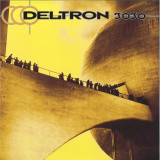
The super group Deltron 3030 is composed of producer Dan the Automator, rapper Del tha Funkee Homosapien and DJ Kid Koala and sometimes features guest artists who also take on varying futuristic pseudonyms. Originally released in 2000 on the now-defunct 75ARK record label, this hip hop concept album was released the same year as the Gorillaz' first 12" and is on a similar plane. Following the release of Deltron 3030, all three members participated in the Gorillaz' self-titled debut album. With Del aka Deltron Zero on vocals, Dan the Automator aka The Cantankerous Captain Aptos on production, and Kid Koala aka Skiznoid the Boy Wonder on turntables, this album takes the listener on a paranoid journey set in a dystopian year 3030 dealing with viruses, the apocalypse, an oppressive government, and a war waged against a huge company called the Corporate Bank of Time that rules the universe, all to the well-crafted and consistent musical backing of the Automator. Appearances by Damon Albarn (The Gorillaz, Blur), Prince Paul, Peanut Butter Wolf, DJ Money Mark, Paul Barman, Mark Bell (Bjork, production), Sean Lennon, and Mr. Lif compliment Del's vocal style and add the right amount of flavor to this classic period piece.
Auf „Tread“ steigert Ross From Friends die komplexen und gefühlsbetonten Qualitäten seines Produktionsstils, die Mixmag bereits dazu veranlassten, seine „eigenwillige Fingerfertigkeit“ zu loben, die „nicht nur dein Herz schmerzen lässt, sondern auch direkt aus deiner Brust tanzt“. „Tread“ ist eine Platte, die gleichzeitig glatt und melodisch, aber auch hervorragend tanzbar, nostalgisch und doch brillant modern ist, mit Anspielungen auf Sounds und Stile, die nicht so sehr reflektiert, sondern durch Weatheralls Linse gebrochen und neu kontextualisiert werden. Genauso einzigartig wie die Musik auf „Tread“ ist die Art und Weise, wie sie entstanden ist. Frustriert von den Arbeitsabläufen im kreativen Prozess, die bei der Aufnahme von Hardware und Instrumenten über einen Computer entstehen - die ständige Notwendigkeit, die Aufnahme zu starten und zu stoppen, alles zu speichern und zu katalogisieren - beschloss Weatherall, seine eigene Software zu schreiben und zu entwickeln. Das daraus resultierende Plugin mit dem Namen „Thresho“, das über Abletons Max For Live-Plattform erhältlich ist, startet die Aufnahme, sobald das Audiomaterial einen benutzerdefinierten Schwellenwert erreicht, und stoppt sie, sobald dieser Schwellenwert unterschritten wird, wobei die resultierenden Clips automatisch mit Zeitstempeln gespeichert und indiziert werden.
- A1: The Poet Acts
- A2: Morning Passages
- A3: Something She Has To Do
- A4: “For Your Own Benefit”
- B1: Vanessa And The Changelings
- B2: “I'm Going To Make A Cake”
- B3: An Unwelcome Friend
- B4: Dead Things
- C1: The Kiss
- C2: “Why Does Someone Have To Die?”
- C3: Tearing Herself Away
- D1: Escape!
- D2: Choosing Life
- D3: The Hours
‘Was there ever a more perfect film for Glass’s lyrical manner? He refers to his own past, but the way in which the material is treated transforms it inevitably into that eternal present. Such a feeling of fragile beauty is a rare achievement.’ – Gramophone
‘Simple and complex by turn, Glass’s score adds dignity and depth to the movie, and to the tragedies and triumphs, big or small, of ordinary life.’
– Guardian
‘Underpinning the anguish at the heart of The Hours a beautiful score. Glass’s motifs capture the passage of time and the universality of human experience.’ – Classic FM’s Best Soundtracks
Nonesuch releases Philip Glass’s award-winning soundtrack to The Hours on vinyl for the first time to coincide with its 20th anniversary and Glass’ 85th birthday concert season. Originally released in December 2002, Glass’s score to the Academy Award-winning film was itself nominated for an Academy Award, as well as a Golden Globe and a Grammy, and went on to win a BAFTA and a Classical BRIT.
Directed by Stephen Daldry, The Hours is the story of three women searching for more potent, meaningful lives. Based on Michael Cunningham’s 1999 Pulitzer Prize–winning novel, with a screenplay by David Hare, the film interweaves the stories of three women – a book editor in New York (Meryl Streep), a young mother in California (Julianne Moore), and the author Virginia Woolf (Nicole Kidman). Their stories intertwine, and finally come together in a surprising, transcendent moment of shared recognition.
Philip Glass’s score was conducted by Nick Ingman, with Michael Reisman on piano and the Lyric Quartet, and recorded at Abbey Road Studios and Air Studios, London. The score was a key element in this acclaimed triptych of dramatic tales. ‘The inter-cutting of personal stories over a wide span of time,’ said NPR, ‘is held together by a single music approach.’
In his original liner note, Michael Cunningham wrote, ‘Each novel I’ve written has developed a soundtrack of sorts; a body of music that subtly but palpably helped shape the book in question. The one constant since I started trying to write novels, however – my only ongoing act of listening fidelity – has been the work of Philip Glass. I love Glass’s music almost as much as I love Woolf’s Mrs. Dalloway. Glass, like Woolf, is more interested in that which continues than he is in that which begins, climaxes, and ends; he insists, as did Woolf, that beauty often resides more squarely in the present than it does in the present’s relationship to past or future. So, when I heard he’d agreed to contribute the music to the film version of The Hours, it seemed both inevitable and too good to be true. I’m not sure if I can offer any higher praise than this: When I saw the movie with the music added, I thought automatically of how I could use the soundtrack, when it came out, to help me finish my next book.’
“This is a movie about art and how art affects life," explains Philip Glass. “The story is very complicated and the music could take on a very important role in the film, as I saw it – to make it viewable, to make it comprehensible, so the stories of the three women in the film didn’t seem separate, that they were tied together. The music had to be the thread that tied the movie together. There’s no question that the emotional point of view is conveyed by the music. Music is the arrow you shoot in the air. Everything follows that.’
Born in Baltimore, Maryland, in 1937, Philip Glass is a graduate of the University of Chicago and the Juilliard School. By 1974, Glass had created a large collection of music for The Philip Glass Ensemble. The period culminated in the landmark opera, Einstein on the Beach. Since Einstein, Glass’s repertoire has grown to include music for opera, dance, theater, orchestra, and film. His scores have received Academy Award nominations (including Kundun and The Hours, both released on Nonesuch, as well as Notes on a Scandal) and a Golden Globe (The Truman Show). Recent works include Glass’s memoir, Words Without Music, Glass’s first Piano Sonata, opera Circus Days and Nights, and Symphony No. 14. Glass received the Praemium Imperiale in 2012, the US National Medal of the Arts from President Barack Obama in 2016, and 41st Kennedy Center Honors in 2018.
Nonesuch’s relationship with Glass began in 1985, with the release of the score for Paul Schrader’s Mishima. In addition to The Hours (2002) and Kundun (1997), over the years other Glass works on Nonesuch have included Einstein on the Beach (1993), Music in Twelve Parts (1996), the soundtracks for Powaqqatsi (1988) and Koyaanisqatsi (1998), Glass Box (2008), and Kronos Quartet’s Performs Philip Glass (1995), amongst others.
Demian Sky is a meticulous beatmaker, experienced musician, committed record store
manager, passionate DJ as well as excessive record collector and music enthusiast. His instrumental hip-hop debut »A Kraut Tale« is a narrative sound journey on 18 tracks. The song structures, the musical concept and the overall atmosphere of the record show very clearly that his influences are not only in hip-hop, but also in psychedelic and prog rock of the 60s and 70s. There are also some references to works of DJ Shadow, Dan The Automator, Cut Chemist, Gaslamp Killer and such. It is all the more astonishing that, contrary to possible expectations, all samples come from old German Schlager and Folk music records. The result is not a loose collection of individual pieces of music, but rather a coherent album with its own dramaturgy in two chapters.
Blue - also Antony Costa , Duncan James , Lee Ryan
und Simon Webbe -, das ist so ein Name, der einen
automatisch in die Boygroup-Ära transportiert: Sie waren
nicht nur einer der größten und erfolgreichsten Acts jener
Hochphase, sondern vor allem auch einer der besten. Auf
den drei Alben, die ihnen in den Nullerjahren
Spitzenplätze in den Charts (u.a. 3x #1 UK, 1x Top-10
DE) und reichlich Platin bescheren sollten, verschränkten
sie lässigen R&B mit hochauflösender Pop-Perfektion und
emotionalen Balladen, was der im Jahr 2000 gegründeten
Boygroup nicht nur 16 Millionen verkaufte Albumeinheiten
bescherte. Auch zwei BRITs räumten sie ab im
Königreich, wo sie gleich 11 Mal die Topregion der
UK-Singlecharts aufmischen konnten und davon gleich
noch drei Mal die #1 belegten.
Parallel zur Stadiontournee werden Blue im Herbst ihr
sechstes Album Heart & Soul veröffentlichen - ihr erstes
fürs neue Label Tag8 Music/BMG. Der neue Longplayer
unterstreicht und zelebriert all das, was die Band während
ihrer ersten Blütezeit ausmachte, denn er spielt immer
wieder auf die Vergangenheit an, bringt aber auch
kontinuierlich Neues ins Spiel. Ihr Trademark-Sound
schwingt im sorglos-ausgelassenen Titelsong, der von
MNEK (Beyoncé, Little Mix) mitkomponiert wurde,
genauso mit wie in der gefühlvollen Ballade "Magnetic",
bei der die Jungs mal wieder ihr ganzes umwerfendes
Stimmvolumen auspacken dürfen. Mit der Leadsingle
"Haven't Found You Yet" legen Blue einen Instant-Classic
vor, der klanglich eher in Richtung Justin Bieber oder
auch jüngere Coldplay-Hits geht. Man hört, dass sie
unbedingt alles geben wollten für Heart & Soul
King Gizzard & The Lizard Wizard return with new album K.G., their sixteenth since forming in 2010. In the wake of a global pandemic, it’s a collection of songs composed and recorded remotely after the six members of the band retreated to their own homes scattered around Melbourne, Australia. K.G. is a pure distillation of the King Gizzard sound, one that cherry picks the best aspects of previous albums and contorts them into new shapes via defiantly non-western rock scales.
King Gizzard & The Lizard Wizard are repressing their sixteenth album, K.G. n 2010. In the wake of a global pandemic, it’s a collection of songs that saw the six members of the band retreating to their own homes scattered around Melbourne, Australia to compose and record remotely. But have no fear! Not a drop of that unnamed alchemical something that makes this band so special is missing. This is the Gizz firing on all sonic cylinders, for if ever a band were built to swiftly adapt to adverse circumstance then it is them. Hell, on paper Covid-19, with its monstrous yet unseen face, ecological implications and new language, even sounds like an abandoned concept for a King Gizzard & the Lizard Wizard album.
Truth be told, the practicalities of the creation of K.G. is a side-issue. It is the contents and the sheer visceral power of music that matters. Music that will live on long after a virus has passed. Back in 2017 the band released Flying Microtonal Banana, now one of their most highly regarded albums. That it was the first of five released by the band that year and was only part the story – a story made all the remarkable by the fact it was recorded using a microtonal musical scale that requires quarter tone tunings, on instruments custom-made for the occasion. It spawned a plethora of live favourites such as ‘Rattlesnake’, ‘Sleep Drifter’, ‘Nuclear Fusion’ and ‘Billabong Valley’ and showed the wider world that the Gizz paint from a palette that extends far beyond the musical colours of western rock. Here were songs in tunings more common in traditional Turkish or Arabic music.
“FMB was one of the purest and most enjoyable recording experiences we’ve had, and the ideas just kept coming” explains de facto band leader and multi-instrumentalist Stu Mackenzie. “But we didn’t think we would play it live as the music dictated a new medium that requires different instruments, new flight cases and so. It was a liberating studio-based experiment which surprisingly translated seamlessly and spawned some of favourite songs to play live.”
So now they return to the microtonal tunings on K.G., an album best described as a pure distillation of the King Gizzard sound, one that cherry picks the best aspects of previous albums and contorts them into new shapes and via defiantly non-Western rock scales. There’s walk-on theme song ‘K.G.L.W’, the celestial disco-funk of ‘Intrasport’, the righteous life-giving staccato rock of ‘Ontology’, epic stoner-sludge closer ‘The Hungry Wolf Of Fate’, which ends the album in abrupt burst of white noise. All come together to represent the next-level of the expanding Gizz sound.
K.G. is both a stand-alone work and also part of a bigger musical picture. More news on that shall be forthcoming – fans of the band know by now that King Gizzard don’t do things by halves. If music were organic matter, then their albums are ever-changing entities: initial highlights are often superseded on further exploration, favourite tracks replaced by less obvious moments, while riffs or bursts of noise from four or five albums back might suddenly rear their heads again.