Some lucky folk managed to bag a copy of this when it was released as part of the Screamadelica 30th Anniversary 12" Singles Box. Suffice to say, many didn't. It's also probably a given to point out the British and global music scenes are still reeling from the untimely and sudden passing of Andrew Weatherall, a studio mastermind and club DJ icon who managed to influence everyone from ambient and techno heads to indie kids, classical fans and heads in just about any other sonic avenue you care to mention. Arguably, though, his most beloved work was around the Screamadelica era, carving out a landmark crossover album from Primal Scream's original material, making stars out of everyone involved and timeless, decade-spanning tracks from singles like 'Come Together' and 'Loaded'. 'Shine Like the Stars' brought that album to a close in spectacular, trippy, emotive style, and has never left our hearts since.
Search:l avenue
Fractal head rearrangement from Keith Fullerton Whitman on his first vinyl release in what feels like years, here blessing Japan’s NAKID label with a new instalment in his forever-evolving Generators project, arcing from bleeping post-Kosmische sounds into completely unexpected drum mutations in footwork and grime modes. It’s properly head melting gear that links the algorithmic mind-fukkery of Laurie Spiegel with the floor-bending rhythmic experimentation of Mark Fell, Rian Treanor or Jana Rush, and the first in a three part series that offers some of the strongest gear we’ve heard from one of the very best in the game.
Modular synth scientist, critic and historian Keith Fullerton Whitman first debuted his »Generators« set in 2009, using a modular setup to create non-repeating melodic patterns that basically came close to generating themselves. Over the course of hundreds of live shows (and a handful of releases on Root Strata, Editions Mego and other labels), Whitman glacially honed his process and allowed the concept to slither down different avenues, mutating as it picked energy from the various venues it was situated in. His rigorous method meant ‘Generators’ was never played out the same way twice, veering from psychedelic Kosmische experimentation to obliterated, off-grid Techno.
In 2019, on the tenth anniversary of the project, Whitman was invited by the GRM in Paris to set up in Studio C, where he avoided the arsenal of pristine, museum-worthy modular synthesizers and instead reprogrammed his classic ‘Generators’ patch. Recorded in a single take using luxe analog- to-digital convertors, the result is a 45-minute durational piece, split into two distinct sides for this release.“Very little manual interaction happened,” Whitman explains. The music is, as its title suggests, generative, and at this point basically sounds as if it reached its most advanced, final form. The first few minutes of the opening side mine the original theme, with clocked LFO shapes triggering oscillator blips in mind-expanding non-looping patterns. Soon, percussion enters the matrix, at first wrong-footing us with a 4/4 fake-out - possibly nodding to the piece’s 2010 Root Strata iteration - before splitting into staccato polyrhythmic abstractions of the most loose- limbed and deadly variety.
General MIDI drums can sound almost hilariously boxed-in, but handled by Whitman they show off a plastic cultural sheen to piercing effect, deployed in a way that re-draws the rhythmic bass music of someone like Jlin while nodding to Mark Fell and Rian Treanor’s quasi-generative dance explorations. These comparisons take on even more weight on the second side, where Whitman opens up his filters to allow the synth bleeps to sing even more loudly, introducing that all- important clap/hat interplay that dialogues with Atlanta and Chicago simultaneously.
Ferocious JP / US free jazz bomb. A rare meeting between the NYC free jazz scene and the Japanese free music scene. Old-style Gatefold LP, with rare photographs & liner notes by Alan Cummings.
Following hot on the heels of the first, mid-sixties generation of Japanese free jazz players like Kaoru Abe, Masayuki Takayanagi, Yōsuke Yamashita, Motoharu Yoshizawa, etc., an exciting second wave of younger players began to emerge in the seventies. Two of its leading members were the saxophonist Kazutoki Umezu and multi-instrumentalist Yoriyuki Harada. Both were post-war babies and immigrants to the city, Umezu from Sendai in the north and Harada from Shimane in the west. They first met as students in the clarinet department at the Kunitachi College of Music, a well-known conservatory in western Tokyo. Harada was already securing sideman gigs on bass with professional jazz groups and was active in student politics, making good use of his connections to set up jazz concerts on campus. It was around this time that the two began to play together in an improvised duo, with Umezu on clarinet and bass clarinet and Harada on piano. They also experimented with graphic scores and prepared piano.
These experiments eventually led to the creation of a trio, with a high-school student called Tetsuya Morimura on drums, that they decided to name Seikatsu Kōjyō Iinkai (Lifestyle Improvement Committee) in joking reference to the Marxist discourse of the student radicals of the time. Around 1973, Umezu and Harada decided to call it a day and go their separate ways. Umezu began playing with the Toshinori Kondo Unit and Harada with the Tadashi Yoshida Quintet. In 1974 Harada formed his own trio and began to play at jazz coffeehouses across Japan.
Then, in September 1974 Umezu travelled alone to New York, where he set about building connections with the loft jazz scene in the city. It was a fortuitous moment to arrive in New York. Rents were cheap in the Lower East Side, possibilities for squatting existed, so many musicians and artists had moved to the area. Umezu soon became known on the scene as Kappo and he started to make connections with some of the young musicians like David Murray, Arthur Blythe, and Oliver Lake. He recalls making the rounds of the lofts every evening, checking out the performances, and getting the chance to sit in with many groups including Juma Sultan’s Aboriginal Music Society and trumpeter Ted Daniel’s orchestra.
Things were going so well that Umezu wrote to Harada and invited him to come to New York. He accepted and arrived in the city in July 1975. Harada and Umezu took the opportunity to resume their artistic collaboration. Their first concert together in over two years took place on July 20th at another loft, Sunrise Studios at 122 2nd Avenue. Umezu remembers Sunrise as an unusually sunny loft with the rarest of things, a grand piano. He invited along Ahmed Abdullah, a trumpeter he had got to know while playing with Ted Daniel. Abdullah led his own group and was a long-term Sun Ra sideman. William Parker, one of the key figures in the loft jazz scene of the period, was on bass. Abdullah also brought along Rashid Sinan on drums. Sinan drummed in Abdullah’s units throughout the seventies, but he had also played on Frank Lowe’s immortal Black Beings album and collaborated with Arthur Doyle, playing on Doyle’s Alabama Feeling album. By all accounts the evening was a huge success, with speed and dynamism of Harada’s piano playing gaining him lots of support.
Since they had managed to save some money from their day jobs, Umezu and Harada decided to set up a recording session with the same line-up on August 11 at Studio We, where there was a well-equipped studio on the third floor. Umezu recalls the session as follows, Of course, we recorded our performances in one take, with zero retakes as far as I remember. On all the tracks we recorded, we moved as one unit, sharp and fast. That was the nature of Lifestyle Improvement Committee, New York Branch.
Umezu and Harada would later become known for the elements of parody and entertainment that they brought to their music, a freewheeling blend of pastiche, humour and on-stage performativity that paralleled the approaches of the Art Ensemble, Sun Ra, and Holland’s ICP. But here, on their first recordings, the humour element is not yet present. Instead, there is a febrile sense of joy in creation and connection. On the Umezu-penned “Kim”, for example, Harada opens the piece with a speedy exploration of the full-range of the keyboard, hitting hard on the bass keys to create a rhythmic bed out of which patterns begin to emerge. Umezu enters at a much slower pace, longer held notes that at first float weightlessly over the urgency of the piano before they begin in splinter and accelerate. When Parker and Sinan kick in, it’s a rollicking tempo with Parker plucking deep and hard and the left-handed Sinan skittering hard across the topside of his kit. Abdullah kicks in a glorious solo twelve minutes in, bright and breathy at once. The piece slows and grows more spacious towards the end, giving Parker a chance to showcase some arco work that shades beautifully into the air against Abdullah’s trumpet.
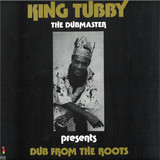
Tubby did three original dub albums, “Dub From The Roots, “The Roots Of Dub” and the third is “Brass Rockers” with Tommy McCook ’pon the flying cymbals. Where he mixed it with the horn going in and out in a dub way and one named “Shalom Dub” you can call Tubby’s too because he mixed the versions as they were off the forty fives.
King Tubby and Producer Bunny “Striker” Lee are intertwined in the birth of Dub Music. After discovering a mistake that made a “serious joke” (more of which later…) they went on to release the first pressings of this new musical genre namely “Dub Music”. Tubby’s vast knowledge of electronics and Bunny’s vast catalogue of rhythms would lay the foundations of what today is taken as a standard…. The Remix / Version cuts to an existing vocal tune.
Osborne “King Tubby” Ruddock was born in Kingston, Jamaican the 28th January 1941 and grew up in the High Holborn Street area of downtown Kingston. He studied electronics at Kingston’s National Technical College and also on two correspondence courses from the USA. When he had qualified, Tubby began repairing radios and other electrical appliances in a shack in the back yard of his mother’s home. His work in the early days included winding transformers and building amplifiers for Kingston’s Sound Systems. Tubby built his first Sound System in 1957 playing jazz and Rhythm and Blues at local weddings and birthday parties His reputation as a man who knew and understood both electronics and music grew steadily and as the sixties drew to a close. Tubby purchased his own basic two track equipment. He installed this alongside his dub cutting machine, a homemade mixing console and his impressive collection of Jazz albums in the back bedroom of his home at 18 Dromilly Avenue which he christened his music room.
Dynamic Sounds upgraded to sixteen track recording in 1972 and Tubby purchased, again with the help of a deal brokered by Bunny Lee. The old four track equipment and the MCI console from their Studio B. The four tracks now gave him far wider scope to work with and he began to create a new musical form where the bass and drum parts were brought up while the faders allowed Tubby to ease the vocal and rhythm in and out of the mix. It was only a matter of time before Tubby’s dub plate experiments began to make it on to vinyl and the first ever long playing King Tubby releases would feature a collection of his mixes to a selection of Striker’s rhythms. So please sit back and enjoy this historic set of sounds. Lovingly restored and with a few extra gems added to the CD editions. These releases were the first to carry the name of King Tubby and the first to credit the great musicians that contributed so much to the rhythms that made these albums possible.
Hope you enjoy the set……
Three fun, disco sample lead tracks from ex Southsea resident Sopp and a slammin’ remix by Inverness producer Mark Mackenzie
Sopp has been building his way into the scene since 2015. His sets blend a mix of highly energetic, bass heavy rhythms with disco inflections and odes to classic 90’s and 00’s rave scene. So far having released on Chequered Wax, QRUK, Moodygurl and TheBasement Discos. Each of his productions showing a different aspect of his behind the decks personality.
Radio play from the likes of Jamie Jones, Sarah Story, Shadow Child & Jaguar.
Selected DJ Feedback:
Jamie Jones - Digging it.
PEZNT - Whole EP is dope but I think Take Me will work for every true underground head. Great job!
Piem - Dope!!!!
Hifi Sean - This E.P is hotness !
Nathalie Capello - groooooveeeeeyy. Nice!
The Magician - I like "Living" a lot as well
Robert Owens - Cool tracks
Inland Knights - great versions....
Chrissy - nice one!
Raphael Hofman - just awesome!
Ramon Tapia - Dope pack right hurrrr!!
Ammo Avenue - wicked cuts! Take me is my fav
Mirko Paoloni - super bomb!
Round Table knights – Coolio
Oliver Dollar - nice one!
- A1: Triston Palma - Bad Boys
- A2: Tony Tuff - Never Trouble Trouble
- A3: Robert Ffrench - Single Life
- A4: Michael Palmer - String Up The Sound System
- A5: Puddy Roots - Champion Bubbler
- A6: Ashanti Waugh - Police Police
- A7: Triston Palma - Fancyness
- B1: Phillip Frazer - A Little Bit Of Love
- B2: Bill Blast - Barrel Mentality
- B3: Cutty Ranks & Triston Palma - Inner City Blues
- B4: Michael Forbes - Reggae Fever
- B5: Tony Carver - Ethiopia
- B6: Eddie Constantine - Strawberry
- B7: Rod Taylor - The Lord Is My Light
At the beginning of the eighties reggae music became increasingly in tune with what was happening in Kingston’s dance halls… probably more so than at any time since the sound system operators had started to make their own shuffle and boogie recordings in the late fifties. The international audience and the critics were too busy looking for a new Bob Marley to appreciate what was happening downtown and failed to acknowledge that this was a return to the real, raw roots of the music. Brash, confident, young record producers who were totally in tune with the youth audience stepped forward and seized the moment…
Oswald ‘Ossie’ Thomas began his apprenticeship in the music business at the age of fourteen and served his time as a record salesman for Bunny ‘Striker’ Lee and Winston ‘Niney The Observer’ Holness before moving on to Miss Sonia Pottinger’s Tip Top Records.
“I ended up working in three record stores on Orange Street from 1976 to 1981… Yeah man! Me deh ‘pon me bicycle till I buy my motorcycle! Them days records were coming out left, right and centre… every day!” Ossie Thomas
It was during his time with Miss Pottinger that Ossie began to produce records for himself and in 1979 Ossie and Phillip Morgan began the Black Solidarity label based deep in the Kingston ghetto on Delamere Avenue. Phillip initially inspired Ossie to start the label and soon Triston Palma, Phillip Frazer and “a youth named Gary Robertson” joined in although Gary later left for Canada.
The Soul Syndicate rehearsed in the Delamere Avenue area and Tony Chin gave Ossie a cut of a rhythm that he used for Triston Palma’s ‘A Class Girl’… the label’s inaugural release. The record was a sizeable success and paved the way for hit after hit after hit on Black Solidarity. Ossie worked with just about everybody who was anybody during this critical period of the music’s development including vocalists Robert Ffrench, Little John, Sugar Minott, Frankie Paul and most notably Triston Palma.
“But Delamere must be considered as a music street sheltering as it does such artists as Junior Byles, Don Angelo, Triston Palma, Phillip Frazer and producer Ossie of the Black Solidarity label…” Beth Lesser
And the man who had made his name in the business selling other people’s records now became one of the most important and influential record producers of the era.
With grateful thanks to: Paul Coote, Nick Hodgson & Hasse Huss
Last copies of ultra limited version on half & half black/red vinyl. Only around a 100 available!
“I learned long ago, never to wrestle with a pig” reasoned George Bernard Shaw. “You get dirty, and besides, the pig likes it.” True to form, Pigs Pigs Pigs Pigs Pigs Pigs Pigs have left the wiser of us aware that they are no band to be messed with. This is made manifest on ‘Viscerals’, their third proper, and an enormous leap forward in confidence, adventure and sheer intensity even from their 2018 breakthrough ‘King Of Cowards’.
Incisive in its riff-driven attack, infectiously catchy in its songcraft and more intrepid than ever in its experimental approach, ‘Viscerals’ is the sound of a leaner, more vicious Pigs, and one with their controls set way beyond the pulverising one-riff workouts of their early days. Yet Pigsx7 have effortlessly broadened their horizons and dealt with all these new avenues without sacrificing one iota of their trademark eccentricity, and the personality of this band has never been stronger, whether on the Sabbathian and philosophical warcry of ‘Reducer’, the debauched, Jane’s Addiction-tinged swagger of ‘Rubbernecker’, the Melvins vs Sonic Youth demoltion derby of ‘New Body’ or even the demented MBV-meets-Twisted-Sister party-banger from hell that is ‘Crazy In Blood’.
“We’re a peculiar bunch of people - a precarious balance of passion, intensity and the absurd” notes vocalist Matt Baty. Such is the unstoppable character of this unique and ever-porcine outfit; still the hungriest animals at the rock trough.
* Blu Mar Ten’s 2003 album “The Six Million Names Of God” gets a very limited repress with 75 hand numbered copies.
* Six Million Names Of God see’s the Blu Mar Ten trio showcase their musical influences in what has been hailed as a downtempo classic.
For the next release we head to Barbados and 1985 for the first official reissue of ‘Exit’ by Fire Flight. The best reissues succinctly capture a moment in time and this album provides a snapshot of Island life in the Caribbean region of the America’s in the middle of the 1980’s. The LP encompasses new wave, funk and early house rhythms with a backbone of calypso.
The idea for Fire Flight started with Carl “Beaver” Henderson, a musician, arranger and producer who initially provided back up band services for the Royal Bank of Trinidad & Tobago’s annual staff Calypso competition. In 1981 the idea quickly evolved into the 15 piece band that was Fire Flight who took Trinidad and Tobago’s performance spaces and annual carnival by storm with their electrifying life performances. The band also travelled to Toronto, Montreal and New York for their annual carnivals. In 1984 the band entered the now defunct Coral Sound Studios in Barbados to record their debut album. The driving force behind the LP was the band’s main songwriter Francis Escayg’s desire to explore alternative avenues of recognition for the band and to perform and thrive in the carnival off season. Highlights from the LP include the slow new wave funk of ‘Best Shot’ & ‘White Horse’, the melting pot of calypso, zouk and reggae influences on ‘Hard Life’ & ‘Mornin Lovin’ and the tropical proto house of ‘Wantin U’ that was a highlight of the Fire Flight live show.
The LP is pressed on heavyweight 180 Gram Vinyl with new full sleeve artwork from Bradley Pinkerton.
While previous albums, most notably Leland and Minutes of Sleep (2014) as well as two albums released as one half of the duo Aris Kindt (most notably the stellar Swann and Odette from 2017) have relied on singular thematic and narrative drives that were often of a personal, collaborative, or hermetic in nature, Thresholds is an album that aspires to sonic universality and the presentation of a fully formed psychoacoustical world. That being said it is not an “album of ideas”. Inspired by the ecological and political upheavals of the present and the role of speculative thought as an avenue of global transformation Thresholds is the work of a mature artist fully in control of his powers. Both expansive and nuanced the album widens the aperture of the affective possibilities of the electronic assemblage; themes skip from one track to the next, elevating and informing each other in tangible fields of abstract figuration. The titles, while often heady, concisely allude to strategies implicit in the construction and arrangement of the works: Cut Up, within the context of the album, is exactly that. Luck Takes a Step juxtaposes stately synths with just the right touch of playful fluctuation and latent atonality. The title track itself is a knotted mass of uncertainty and propulsive beats the breakdown of which is a nervous series of fits and starts that resonate not just within the track but as the fulcrum of the entire album: the threshold of our Threshold: “…we are caught up in our own original transversals of time to the point of dissolution, and that which remains a part of the contrivance of ourselves is ultimately that which crosses the threshold and is somehow, miraculously, reconstituted on the other side of it. Because it is via the threshold that we can best observe the conditions of experience as lived even as we cross to the other side of understanding, rejoining the ancient equilibriums of which we, in our depths, are comprised.” (From the liner notes)
No track overstays its welcome and with the help of standout vocalist Eliana Glass, and instrumentation by Dave Harrington (Darkside with Nicolas Jaar), Mark Nelson (Pan American), Will Shore, Greg Paulus and Gareth Redmond, and mixed by Phil Weinrobe, the result is a dizzyingly pure inward gaze that is first and foremost an album about connection.
- A1: Green Onions
- A2: Rinky-Dink
- A3: I Got A Woman
- A4: Mo' Onions
- A5: Twist & Shout
- A6: Behave Yourself
- A7: Squint-Eye (Bonus Track)
- B1: Stranger On The Shore
- B2: Lonely Avenue
- B3: One Who Really Loves You
- B4: Can't Sit Down
- B5: A Woman, A Lover, A Friend
- B6: Comin' Home Baby
- B7: Sit Still (The Mar Keys) (The Mar Keys)
60th Anniversary Edition[36,56 €]
Limited coloured marbled vinyl edition of this album Booker T. & the M.G.s formed as the house band for Stax Records and provided playbacks for numerous singers, including Wilson Pickett and Otis Redding. During a - recording break for Billy Lee Riley, 17-yearold keyboardist Booker T. Jones, guitarist Steve Cropper, Lewie Steinberg on bass and Al Jackson Jr. on drums began messing around with a bluesy organ riff. The president of Stax Records, Jim Stewart, was at
the mixing board. He liked what he heard and recorded it. The result: „Green Onions,“ with „Behave Yourself“ as the B-side.
The record became a hit when radio DJ Reuben Washington played it four times in a row, even before the band had a name. The single went to #1 on the US R&B chart, #3 on the pop chart, reached #7 in the UK
and sold over a million copies. The song was listed as one of the 500 greatest songs of all time by Rolling Stone magazine and received a Grammy Hall of Fame Award in 1999. It was followed by the allinstrumental album „Green Onions“, which is now a classic of the era.
The album was included in Robert Dimery‘s 1001 Albums You Must Hear Before You Die. Booker T. & the M.G.s have been called the most influential stylists in modern American music. Until the 2000s, they
played as the house band for countless world stars such as Bob Dylan, Stevie Wonder, Johnny Cash, Eric Clapton, George Harrison, Neil Young and many others.
How can one explain the lasting popularity of the bass clarinet in musical circles from Vienna to Brussels? Perhaps because its frequency range articulates an alternative to conventions of popular music, where "bass" is reserved primarily for rhythmic impulses and the very foundation of the music. Viennese bass clarinetist Susanna Gartmayer's playing can by no means be reduced to just this, rather, it scutinizes the entire sound universe: she can do rhythm and drone, not to mention melody and noise, often all at once. Who would be a more fitting collaborator than Stefan Schneider, with his minimalist rhythms and subtle cosmic exploration?
Together, Schneider and Gartmayer form the project So Sner, which owes its existence to a concert in 2015 at the Approximation Festival in Düsseldorf. Gartmayer's bass clarinet polyphonies so impressed Schneider that he quickly suggested a collaboration. That same year, they began recording the album "Reime" in Kraftwerk's former Kling Klang studio, which in 2015 became workspace and concert venue simply called Elektro Müller. The second part was recorded in the summer of 2020 in Düsseldorf-Kaiserswerth at Stammhaus church, whose interior wood paneling facilitated organic acoustics.
Susanna Gartmayer has been active as a musician and composer in various realms between experimental rock music, improvisation and multimedia sound performance since the early 2000s, releasing the album "Smaller Sad" with Christof Kurzmann and "Black Burst Sound Generator" with Brigitta Bödenauer in 2020. In addition to his solo project Mapstation, Düsseldorf-based musician and producer Stefan Schneider has been pursuing new avenues of experimental music in the here and now for over 20 years, in numerous collaborations with Sofia Jernberg, Krautrock pioneer Hans-Joachim Roedelius, or visual artist Katharina Grosse among others.
So Sner's sound is equally oriented towards experiment and tradition, whose roots can be traced back to the UK of the early 80s: an era in which soul and synth, jazz and industrial, avant-garde and polyrhythm were blended with the help of intellectualism and punk attitude in such a way that manifold sketches of possible music emerged which are only being colorized today. Like So Sner - from the very first stomp to the very last drop.
Olaf Karnik, Cologne, October 2021
Kobe JT showcases his sonic malleability on TINWHITE011: a tight 4-track EP which guides its listener assertively around the scene-defining avenues of UKG, from melodic garage house to dark two-step swings.
Blissful piano chords, vocal chops and skipping house rhythm imbue the opening track, "All I Do" with a soulful, uplifting groove. Equally as driven by melody, "Next DJ" makes room for more dynamic lower-ends as Kobe teams up with Northern force, The Phat Controlla, to deliver a club-ready speed garage banger.
The record's second half exposes the darker underbelly of Kobe's sound: hostile sub groans shade the stripped-back stepper "Lost In The Club" whilst the fragmented vocals on "Hope" lends the EP's full-bodied closer with an uneasy intensity.
- A1: Kaiser Chiefs - Ruby
- A2: P!Nk - Just Like A Pill
- A3: Owl City - Fireflies
- A4: Melee - Built To Last
- A5: Nelly Furtado - I'm Like A Bird
- A6: Orson - No Tomorrow
- A7: Elbow - Grounds For Divorce
- B1: The Script - Breakeven
- B2: Amy Winehouse - Back To Black
- B3: Daniel Bedingfield - Gotta Get Thru This
- B4: Keane - Everybody's Changing
- B5: Uncle Kracker - Follow Me
- B6: Gabriella Cilmi - Sweet About Me
- B7: The Black Eyed Peas - I Gotta Feeling
- C1: La Roux - Bulletproof
- C2: Groove Armada - My Friend
- C3: Joss Stone - Super Duper Love
- C4: The Dandy Warhols - Bohemian Like You
- C5: Corinne Bailey Rae - Put Your Records On
- C6: Train - Drops Of Jupiter
- C7: Duffy - Warwick Avenue
- D1: The Feeling - Fill My Little World
- D2: Sia - The Girl You Lost To Cocaine
- D3: Hoobastank - The Reason
- D6: Mika - Grace Kelly
- D7: Amy Macdonald - This Is The Life
- D8: The Fratellis - Chelsea Dagger
- D4: Alphabeat - Fascination
- D5: Tatu - All The Things She Said
Black Vinyl[38,45 €]
The Decades Collected compilations are part of the new Collected compilation series, which is a collaboration between Universal Music and Music On Vinyl. The compilations bring together the biggest names of each decade, combined with forgotten hits and less discovered gems, giving the listener an experience of listening to their favorite tunes while uncovering new musical grounds at the same time.
Various Artists - Zeroes Collected features Nelly Furtado “I’m Like A Bird”, The Script “Breakeven”, The Black Eyed Peas “I Gotta Feeling”, Alphabeat “Fascination”, T.A.T.U. “All The Things She Said” and Mika “Grace Kelly” amongst others.
Prong’s distinctive industrial metal sound influenced other bands such as Korn and Nine Inch Nails. Former New York club CBGB’s soundman Tommy Victor founded Prong in 1987 as his outlet for sonic fury. Having their roots in the thrash metal and hardcore scenes, Prong carved a niche for themselves - groovy, angry, massive; just perfect mosh music. The trio wrecked stages and impressed audiences all over the world.
Rude Awakening is Prong’s fifth album. Prong continued to refine their piercing attack on Rude Awakening, while simultaneously expanding their sonic vocabulary. Throughout the record, they continue to mix in industrial rhythms and effects - there are samples scattered all over the album - but the key to the success of Rude Awakening is the precise, drilling effect of the group’s jackhammer riffs.
Cardinal Fuzz / Acid Test are proud to present to you the debut LP from Black Holes Are Cannibals – ‘Surfacer’.
Formed around the uber talent of Chris Jude Watson (founder of ‘Snakes Don’t Belong In Alaska’) who in BHAC found a band to take his vision to the outer most limits. BHAC are a collective with a varying line and each time they record all the music is improvised as they let their collective and innate abilities guide them, but what does bind them are the touchstones of Drone and Minimalism that runs through the music they create or just plain HEAVY. Call them Drone Metal or Psychedelic it matters not as the music created is an immersive, all consuming and thought-provoking transcendental listening experience that awaits those brave enough to take the ride with BHAC.
‘Surfacer’ was recorded at First Avenue Studios in Newcastle by the band using a TASCAM DR40 and is the embodiment of pent-up emotions gathered and endured during lockdown as they zap out every ounce of feeling and anguish into this recording.
‘Surfacer’ is not an album for the faint of heart with 2 long tracks of transcendence that will challenge and push you to lose yourself in the sonic experience of the timbre / vibrations of droning instruments and throat vocalisations as BHAC weave together mesmerizing waves of sonic texture.
‘Surfacer’ draws influence from bands like Neptunian Maximalism, Qujaku, Neurosis and the visual work of Andrei Tarkovsky, Kenneth Anger and Larisa Shepitko which influence the energy and darker sounds of the music while still taking influence from more traditional psychedelic sounds and experimental places like Taj Mahal Travellers, Suzuki Junzo, Pauline Oliveros, Vahvistusharha, and Tōru Takemitsu aurally and visual energies from occult works like Jodorowsky's 'Holy Mountain', Helena Blavatsky and Hilma Af Klint's Alterpieces 1-3.
As Terence McKenna might have said – BHAC are best experienced when listened to in complete solitude in a dark room while you are doing nothing else. To experience this album to the fullest, you must not have any distractions. Just sit down, relax, plug in, and let this album take you up into outer space.
‘Surfacer’ is pressed on Heavy Black Vinyl and presented in a 350gsm Outer Sleeve with artwork that perfectly matches the music drawn by James Watts (Inspiration coming to James from an article on beaked whales being "more surfacer than diver" before we had that jam and thats what inspired his drawing of an abstract beaked whale skull for the cover).
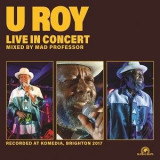
“And now for a gentleman who’s come all the way from Kingston, Jamaica and a place called Cling Cling Avenue. We present to you the one and only, the Originator, the Godfather, Daddy U Roy!”
U Roy had visited Brighton before but there was something special about that balmy night in August 2017, when he walked out on stage at the Komedia to a hero’s welcome and immediately got the crowd cheering and dancing. There was so much warmth and excitement generated that night, and it’s all captured on this final live album of the reggae superstar’s illustrious career.
U Roy wasn’t quite the originator, but he was the first Jamaican deejay to dominate the Top 3 places on both radio stations and turn his predecessors’ simple exhortations into an artform – one that evolved into a global phenomenon. It was his performances on King Tubby’s Hometown Hi-Fi that made him the talk of Jamaica and led him to Treasure Isle studio, where he voiced hits like Tide Is High and Wear You To The Ball. From then on his catchy, uplifting rhymes could be heard on radios and jukeboxes throughout the island, as well as from behind the control tower of his King Stur Gav sound-system, where MCs like Josey Wales, Brigadier Jerry and Charlie Chaplin learnt their craft. The veteran deejay, who died in February 2021, continued recording and touring into his late seventies, and without abandoning either his musical standards or Rastafarian beliefs. At his peak, U Roy voiced for Jamaica legends like Lee “Scratch” Perry, Bunny Lee and Channel One, in addition to several European labels. What most of his recordings have in common is a sense of hope and often joy, because even Get Up Stand Up is delivered with optimism. They are the qualities that come across on this life-affirming set, recorded in front of an appreciative audience, and backed by some of the UK’s finest reggae musicians.
Fine Place is a new duo comprising Frankie Rose (Vivian Girls, Crystal Stilts, Dum Dum Girls) and Matthew Hord (Running, Pop. 1280, Brandy). Based in Brooklyn, NYC together they’ve crafted a crystalline full length of nocturnal, electronic pop music that charts a way out the post-global, cyberpunk dystopian environment it was crafted in. Their debut album This New Heaven drenches minimalist song structures in post-industrial washes of sixstring delay and gothic post-punk synths. Presiding over it is the most evocative, emotive vocal performance Frankie
Rose has committed to tape to date.
Following Hord’s relocation from Chicago, the pair wanted to explore new avenues apart from their respective bands or solo projects. “The sound we were going for was an attempt to capture the dystopian feel of New York during a period of desertion by the wealthy. It was produced in a time-frame saturated in both uncertainty and serenity, and the soundscapes we created felt fitting and almost organic as a response to our surroundings. The title also reflects this in an arguably literal, maybe even satirical way.” Sonically, Fine Place references the pioneering mid-to-late 80s pioneers of icy melodrama The Cure and Cocteau Twins, while reflecting both the individuals’; music trajectories thus far. Modular synthesis triggers rhythm boxes and fluttery arps chirp around clanging 808-patterning as Rose’s reverb-laden vocal layering envelops the remaining headroom. The result is massive; a towering, shadowy music that embraces darkness while offering Rose’s bright vocal as chinks of light in the cracks; the production filling the head space of the beholder with preternatural imagery and emotional resonances that are real but not quite defined.
The title song propels forth out of the fog, scintillating with delayed guitar before the reverb-immersed vocal injects the human drama. The chorus constantly teases a big release but holds back creating a taut, dynamic tension. Cover Blind’s slow march makes full use of Rose’s layered vocal sinking and emerging from Hord’s bank of synths. Stand out It’s Your House is pure honey pouring from the speaker on a bank of of arps and near-hymnal vocal layering, a syrupy light offering in the mist. It’s an emotive highlight that only increases as the album progresses; Impressions Of Me is the Lynchian ballad that glides onward into the sunset. The album finishes on a choice re-interpretation of the 1989 track The Party Is Over by Belgian group Adult Fantasies, one of the great over-looked ballads of the era given an almost ecclesiastical makeover by Matthew Hord and Frankie Rose in 2021.
Says Hord: “This record was an incredibly challenging endeavor to make, as I had just come home from a European tour with another music project and wanted to invest into and focus on this collaboration with Frankie. I essentially reimagined how to approach writing basic sequences with the synthesizers I had been rehearsing and performing with for months prior to make something more accessible and pop- like for Frankie to build upon. Frankie is an unsung hero when it comes to mixing, and she was constantly mixing down and processing elements of the tracks to create different atmospheres as we forged forward with every song.”
This New Heaven is an ecstasy of sorts, a half-dream in the border between sleep and daylight.
- 1: Take My Hand
- 2: Something In My Eye
- 3: Medicine
- 4: Badger's Wake
- 5: World In Action
- 6: One By One
- 7: Take A Bow
- 8: October Sun
- 9: So Low
- 10: Summer Sun
- 11: Gather Up
- 12: Snuff Box Theme
- 13: Middle Of The East
- 14: Like Stone
- 15: Phantom Birds
- 16: Music For Insomniacs
- 17: Say It Again
- 18: The Innkeeper's Song (Live)
- 19: Obsessed & So Obscure
- 20: Woman
- 21: Solstice
5LP BOXSET VERSION[126,85 €]
‘Gather Up’ is the culmination of ten years on Acid Jazz for Matt Berry.
‘Gather Up’ comes as a beautifully packaged 4CD hardback book set with 28 pages of
illustrations and notes or a 5LP box set with a 64-page booklet and certificate of
authenticity signed by Matt.
‘Gather Up’ is also available as a standalone 21-track ‘Best Of’ on gatefold CD and red
coloured vinyl double LP.
The 55 tracks on the 4CD / 5LP sets are split between an anthology compilation that
tracks the very best tracks from his eight albums and associated singles for the label over
the last decade, an album of unreleased tracks and rarities, a demo version of his 2020
album ‘Phantom Birds’ (titled ‘Phantom First’) and the previously unreleased ‘Live At A
Festival’ album, which showcases Matt and his band The Maypoles in full flight.
The book included in both formats has an extended essay by Chris Catchpole which
reviews Matt’s musical career and an exclusive set of photo images culled from the
archive of Matt’s long time photographic collaborator Ben Meadows.
Following the huge acclaim earlier this year for Matt Berry’s eighth studio album, ‘The
Blue Elephant’, Acid Jazz release ‘Gather Up’, a compilation album encompassing the
singular musical adventures this extraordinary musician has taken over the past decade,
offering a revelatory and fascinating insight into the working process of a genuine musical
maverick and sonic explorer.
Over 10 years with Acid Jazz, Berry has released nine incredibly diverse albums
(including one live album). From the tangled-folk rock thickets of ‘Witchazel’ and ‘Kill The
Wolf’ (which features the song from which this release gets its name), to the out-there
explorations of ‘Music For Insomniacs’ or ‘TV Themes’’ retro-kitsch delights, through the
soul power in ‘Matt Berry & The Maypoles Live’ or the twilight grooves of ‘The Small
Hours’ to the classic pedal-steel songwriting of ‘Phantom Birds’ and the smorgasbord of
psychedelic sounds on ‘The Blue Elephant’, Berry’s journey has produced a feast for the
ears that twists and turns down more unexpected avenues than most artists could
manage over several careers.
‘Gather Up’ pulls together an excellent career spanning collection expertly compiled by
Berry, including non-album tracks such as ‘Snuff Box Theme’. No easy achievement
considering the sheer breadth, diversity and volume of his exceptional musical output.
[p] 16 Music for insomniacs [Part 4]
- 1: Take My Hand
- 2: Something In My Eye
- 3: Medicine
- 4: Badger's Wake
- 5: World In Action
- 6: One By One
- 1: Take A Bow
- 2: October Sun
- 3: So Low
- 4: Summer Sun
- 5: Gather Up
- 1: Theme From Snuff Box
- 2: Middle Of The East
- 3: Like Stone
- 4: Phantom Birds
- 5: Music For Insomniacs Part Iv
- 6: Say It Again
- 1: The Innkeepers Song Live
- 2: Obsessed & So Obscure
- 3: Woman
- 4: Solstice
- 1: Bigger Than A Dog (Original Witchazel Intro)
- 2: Take My Hand (Live On Absolute Radio)
- 3: Autumn (Witchazel Outtake)
- 4: The Dawn (From Myspace Ep 'Summer Sun' 2010)
- 5: Snuff Box Live Loop (Used Live Between 200 - 2012)
- 6: Catch Me In Time
- 7: Dark Beach (From Myspace Ep 'Summer Sun' 2010)
- 8: The Hangman (Acoustic Version 2007)
- 9: Wonder Theme (Became 'Something In My Eye')
- 10: Music For Insomniacs (Alternative Intro)
- 11: Theme From 'Sorry' (Live From Charlie Brooker's Screenwipe 2007)
- 12: Music For Insomnaics Rejected Theme
- 13: Walk With Samuel Devil Inside Me
- 14: Blankety Blank Vocal Intro
- 15: The Blue Elephant Trip Two
- 16: Sweet Velvet Became 'Seasons On Fire
- 17: The Blue Elephant Alternative Intro
- 1: Covered In Clowns
- 2: Get Her Out Of My Mind
- 3: I'm Going
- 4: Make It Go Away
- 5: Peter Cleopatra And The Windmill
- 6: Play On
- 7: Take A Bow
- 8: The Preacher's House
- 9: A Shot Rang Out In The Forest
- 10: The Wrong House
- 11: Where's My Love?
- 12: You Danced All Night
- 1: Medicine / So Low
- 2: Silver Sun
- 3: Theme From Snuffbox
- 4: Solstice
- 5: The Pheasant
2x 12 Inch[30,88 €]
‘Gather Up’ is the culmination of ten years on Acid Jazz for Matt Berry.
‘Gather Up’ comes as a beautifully packaged 4CD hardback book set with 28 pages of
illustrations and notes or a 5LP box set with a 64-page booklet and certificate of
authenticity signed by Matt.
‘Gather Up’ is also available as a standalone 21-track ‘Best Of’ on gatefold CD and red
coloured vinyl double LP.
The 55 tracks on the 4CD / 5LP sets are split between an anthology compilation that
tracks the very best tracks from his eight albums and associated singles for the label over
the last decade, an album of unreleased tracks and rarities, a demo version of his 2020
album ‘Phantom Birds’ (titled ‘Phantom First’) and the previously unreleased ‘Live At A
Festival’ album, which showcases Matt and his band The Maypoles in full flight.
The book included in both formats has an extended essay by Chris Catchpole which
reviews Matt’s musical career and an exclusive set of photo images culled from the
archive of Matt’s long time photographic collaborator Ben Meadows.
Following the huge acclaim earlier this year for Matt Berry’s eighth studio album, ‘The
Blue Elephant’, Acid Jazz release ‘Gather Up’, a compilation album encompassing the
singular musical adventures this extraordinary musician has taken over the past decade,
offering a revelatory and fascinating insight into the working process of a genuine musical
maverick and sonic explorer.
Over 10 years with Acid Jazz, Berry has released nine incredibly diverse albums
(including one live album). From the tangled-folk rock thickets of ‘Witchazel’ and ‘Kill The
Wolf’ (which features the song from which this release gets its name), to the out-there
explorations of ‘Music For Insomniacs’ or ‘TV Themes’’ retro-kitsch delights, through the
soul power in ‘Matt Berry & The Maypoles Live’ or the twilight grooves of ‘The Small
Hours’ to the classic pedal-steel songwriting of ‘Phantom Birds’ and the smorgasbord of
psychedelic sounds on ‘The Blue Elephant’, Berry’s journey has produced a feast for the
ears that twists and turns down more unexpected avenues than most artists could
manage over several careers.
‘Gather Up’ pulls together an excellent career spanning collection expertly compiled by
Berry, including non-album tracks such as ‘Snuff Box Theme’. No easy achievement
considering the sheer breadth, diversity and volume of his exceptional musical output.
p 16 Music for insomniacs [Part 4]